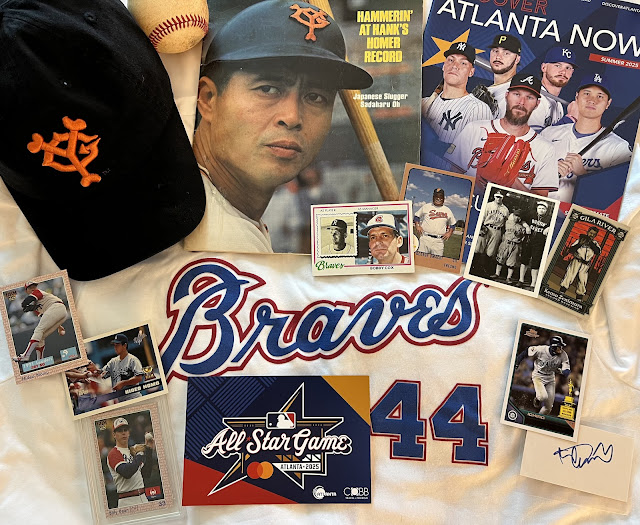
The Baseball’s Bridge Across the Pacific exhibit made a powerful return at the 2025 MLB All-Star Game in Atlanta, drawing thousands of fans to Truist Park from July 12–15. Presented by the Nisei Baseball Research Project with Major League Baseball, the Japanese American Citizens League, and MLB’s Diverse Business Partners program, the showcase celebrated the enduring legacy of Japanese American baseball, U.S.-Japan baseball relations, and its influence on the global game. This year’s edition featured new Georgia connections in Japanese baseball, rare artifacts, tributes to baseball pioneers Hank Aaron and Sadaharu Oh, and thought-provoking art by Ben Sakaguchi, while honoring the late MLB Ambassador Billy Bean. With its blend of history, culture, and human stories, the exhibit strengthened its call for a permanent exhibit in a museum and teased plans for the 2026 All-Star Game in Philadelphia during America’s 250th birthday celebration.
Every Tuesday morning we will post an article from SABR’s award-winning books Nichibei Yakyu: Volumes I and II. Each will present a different chapter in the long history of US-Japan baseball relations.
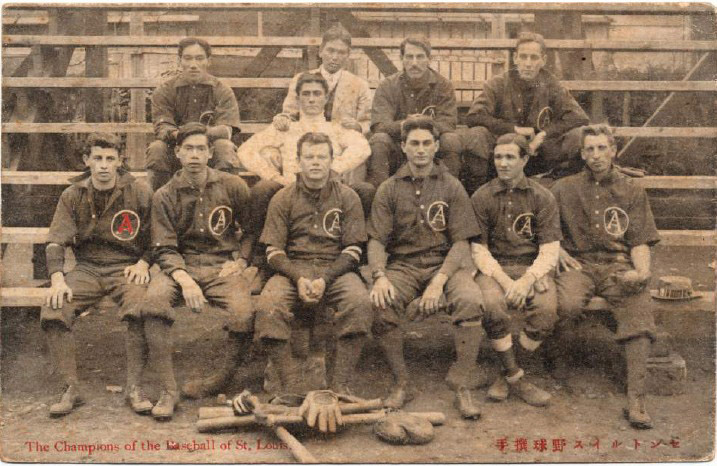
We will begin with the first foreign baseball club to visit Japan: the St. Louis team from Hawaii which arrived in 1907 and played ten games.
Located on the pathway between the US mainland and Japan, Hawaii was important in the history of US-Japan baseball exchanges. The baseball ties between the two islands began in 1907, triggered by a rivalry between two Tokyo universities.
In June 1907, Suejiro Ito was dispatched to Hawaii by the Toyo Migration Company to survey the labor situation of the 50,000 Japanese immigrants working in the sugar and pineapple fields. There, he came across a rumor that Waseda University was negotiating with Stanford University for a baseball team tour of Japan. Ito, a graduate of Keio University, thought, “I wanted my alma mater to be the first to invite a foreign team to Japan. Before Waseda.”
For many years the college teams were the pinnacle of baseball in Japan. Right after the turn of the twentieth century, a group of teams in the Tokyo area, Waseda, Keio, Gakushuin University, First Higher School, and the Yokohama Cricket and Athletic Club (YC&AC: a sports club of foreign residents), battled to be the top team in Japan. The two universities, Waseda and Keio, developed a fierce rivalry. The Waseda-Keio match was called the Sokei-sen (the abbreviation for Waseda-Keio game), and it was watched with great interest by baseball fans across the country.
The history of the Sokei-sen began as follows. Keio University founded its official university baseball club in 1892. Waseda, on the other hand, had to wait for nine years, until 1901, for its baseball club to be bom. In 1903 the latecomer Waseda University sent a written challenge to Keio University. Following proper etiquette, Waseda asked in a humble manner for the more experienced Keio team to teach them baseball. The letter read, “Our team is still underperforming, and our players are still immature. We would be honored to have a lesson from you in the near future.” The first game of the Sokei-sen was played on November 21, 1903, with Keio beating Waseda, 11-9.
However, things changed in 1905. Waseda upset Keio, not on the field but in the international scene. Waseda carried out a monumental tour of North America, becoming the first Japanese team to visit the United States. The Waseda team, led by baseball director Isoo Abe, swung around the US West Coast, winning seven games and losing 19 against colleges, high schools, and semipros. Although the results were not encouraging, Waseda brought back to Japan the latest in baseball techniques and strategies, known as “scientific baseball,” including the hit-and-run, second-shortstop cooperative play, and pregame warmup, as well as equipment such as baseball shoes and gloves. Waseda willingly shared the new knowledge with other teams. With this, Waseda became the leaders of Japanese baseball.
After the US tour, the Waseda-Keio rivalry flared up even more. In the fall of 1906, the two teams planned a three-game series. After Keio won the first game, the school’s cheering group congregated outside the home of Waseda’s founder, Count Shigenobu Okuma, and shouted, “Banzai Keio!” The Waseda students viewed this as an extreme insult. At the second game, Waseda packed the stands with 1,200 cheerers, in clear violation of the agreement that limited the cheering groups to 250. The horde celebrated Waseda’s victory by marching to the former home of the late Keio founder Yukichi Fukuzawa (who had died in 1901) and yelling, “Banzai Waseda!” Fearing a riot at the third game, Keio president Eikichi Kamata and Isoo Abe of Waseda agreed to cancel the final match. The Sokei-sen would not be played for years to come.
The void left by the extinction of the Sokei-sen caused a sense of crisis in Japan’s top baseball world. A number of attempts were made to revive the Sokei- sen, but all failed. For example, at the end of 1906, the Tokyo Sports Press Club made a vain effort to mediate between the two schools. Another attempt was made in the summer of 1907 when Leroy E. McChesney, baseball captain of the YC&AC, proposed a formation of Japan’s first baseball league “Keihin Yakyu Domei,” but Keio refused to join. Waseda won the first and last championship, as the league lasted only one fall season.
Ito was annoyed that Waseda had been the first Japanese team to travel abroad so he wanted to make sure that Keio would be the first to invite a foreign team to Japan. Luckily enough for Ito’s plan, Kakugoro Inoue, a graduate of Keio University and member of Japan’s House of Representatives, stopped in Honolulu on the way back from a four-month tour of Europe and the United States. On August 22, Ito met with Inoue to ask for his cooperation for Keio to bring over a baseball team from Hawaii. Inoue gave his word (“I will give my all for our alma mater”) and left for Japan.
Ito selected the St. Louis College alumni team for the Japan tour, because it had recently won the 1907 championship of the Honolulu Baseball League. The Pacific Commercial Advertiser thought highly of the team: “The makeup of this team is nearly as strong as any aggregation which could be picked up in the Territory [of Hawaii].” The Hawaiian Star noted that a Japanese student who had seen St. Louis play believed that the team would be a very attractive drawing card if it came to Japan.
The captain of the St. Louis team, Pat Gleason, brimmed with confidence and excitement: “We will certainly show those Japs something that they do not know about baseball, and the chances are we will come back with another championship tacked on our pennant.” It was a once-in-a-lifetime chance for many of the St. Louis players who had never been away from the islands.
Continue to read the full article on the SABR website
This YouTube video contains a hodgepodge of colorized footage from various 1950s MLB tours. This 13 minutes, 30 second video has scenes from the 1949 San Fransisco Seals tour, the 1953 New York Giants tour, the 1955 New York Yankees tour, and the 1956 Brooklyn Dodgers tour, as well as some Tokyo Big Six University action. Keep your eyes open for some rare footage of Hawaiian superstar Wally Yonamine.
After throwing out the first pitch at Yankee Stadium prior to the game on July 29, 2025, Masanori Murakami, the first Japanese to play in the Major Leagues, held a press conference at the stadium. Now 81 years old, Murakami recalled his days with the San Francisco Giants in 1964 and 1965 and recounted his interactions with MLB stars.
David Adler of MLB.com covered the event and penned this fun article.
During Induction Weekend 2025, the National Baseball Hall of Fame and Museum officially opened the Yakyu-Baseball exhibit with a private viewing for Hall of Fame players and NPB greats. After seeing the exhibit, Hall of Fame President Josh Rawitch moderated a press conference with Bobby Valentine, Jack Morris, Cal Ripken Jr., and Ozzie Press to talk about the exhibit and their experiences on the 1986 MLB All-Star tour of Japan. Among the many stars with ties to Japan to visit the exhibit were Ichiro Suzuki, Hideo Nomo, Masanori Murakami, LeRon Lee, Tuffy Rhodes, Adam Jones, Peter O’Malley, and Bobby Valentine.
All-time NPB batting leader LeRon Lee, Masanori “Mashi” Murakami, and Bobby Valentine
Valentine noted, “I think it’s a spectacular exhibit. … Not only are the aesthetics … pleasing but the knowledge that you gain by walking around that room [will lead to] a lot of understanding. I am really happy to be part of it.”
Ichiro examines his case in the Yakyu-Baseball exhibitHideo Nomo poses by his display at the Yakyu-Baseball exhibitMasanori Murakami points out his hat and glove in the Yakyu-Baseball exhibit
The exhibit focuses on how baseball has brought the countries and people of Japan and the United States closer together. Displays emphasize trans-Pacific interactions including player exchange, goodwill baseball tours, and the exchange of ideas and culture. Viewers will learn to appreciate Japan’s rich baseball history. To learn more about Yakyu-Baseball please see the links below for detailed discussions of the exhibit, which will be on the third floor of the Hall of Fame Museum for at least the next five years.
Koji Sato with Ichiro Suzuki
Koji Sato, the President of the Japanese American Association of New York, Inc, sees the exhibit as “a great honor. I have so much pride that Japanese baseball is being recognized in the United States. Growing up, I watched Japanese baseball but never thought that there would be such Japanese outstanding players such as Ichiro and Shohei Ohtani playing in the Major Leagues. Showing the 150 years of yakyu/baseball being played in the two nations and having an exhibit showcasing how it evolved is something worth seeing for all baseball fans. To have Ichiro join the ranks of Babe Ruth, Hank Aaron, Joe DiMaggio and Willie Mays is an incredible accomplishment. To be included in such elite company brings a sense of pride and joy to Japan and the Japanese people. I am hoping that with the induction of Ichiro into the Baseball Hall of Fame and the Yakyu-Baseball exhibit that there will be a lot of interest by Japanese tourists to visit.”
For details on the Yakyu-Baseball exhibit, please check out these articles.
In 1934 the Yomiuri newspaper sponsored a team of American League all-stars to tour Japan. The team included future Hall of Famers Babe Ruth, Lou Gehrig, Jimmie Foxx, Earl Averill, Charlie Gehringer, Lefty Gomez and Connie Mack as well as other stars and a backup catcher named Moe Berg. The All-Americans stayed for a month, played 18 games, and spawned professional baseball in Japan. You can read more about the tour in the book Banzai Babe Ruth.
This YouTube post contains colorized footage from the first two games of the tour (November 3 & 4, 1934)played at Meiji Jingo Stadium in Tokyo. Some of the colors are a bit off– some reds appear to be blue– but it’s still a fun window into the past.
The Los Angeles Dodgers have just released a fantastic video on Youtube called The Story of Nomomania. With great game footage and exclusive interviews with Hideo Nomo, Peter O’Malley, Mike Piazza, and Don Nomura, I think fans will truly enjoy watching.
So how can English speakers follow Asian baseball? There are now numerous ways to track professional baseball in Japan, Korea, and Taiwan even if you don’t read the native languages. Let’s look at each country in turn.
Japanese Baseball (NPB)
Just five years ago, it was difficult for English speakers outside of Japan to follow NPB, but now there are so many ways and sites to follow Japanese baseball that I can only list a small number here. Numerous sites post daily results, standings, and statistics on the web. Some sites that I find useful include the official website of Nippon Professional Baseball (NPB.jp), yakyucosmo.com, proeyekyuu.com, baseball reference.com, and flashscore.com. Japan-baseball.jp, the home page of Samurai Japan, contains schedules, rosters, scores, and information on all the national baseball teams. Those seeking more advance statistics may want to look atNPBstats.com and Delta Graphs which have incredible databases of traditional and sabermetric stats covering the entire history of Japanese professional baseball.The r/NPB group on Reddit is the most active social media site in English dedicated to NPB, with thirty-one thousand members in 2024. Members post game scores, standings, video highlights, and links to stories on other platforms. It is also a great place to ask questions about the game, learn how to buy tickets, find memorabilia, and read about other topics. One can also browse Japanese-language sport sites, such as Sportsnavi, and individual team sites and use a translation Ap, although I have not had much luck with this approach as the translations are often poor.
A great resource for following Japanese baseball is japanball.com, the home for the baseball tourism company JapanBall. Their site includes pages featuring each NPB team and stadium, articles on the history of the game and current players, exclusive interviews, current NPB news, game schedules and statistics, and information on their organized tours of Japan. You can also sign up for weekly updates on NPB via email.
One of the easiest ways to follow NPB is by subscribing to select YouTube channels. Pacific League TV Official is a Japanese-language channel that contains over twenty-two thousand videos, including game highlights, player profiles, and much more. Pacific League Marketing also has an English-language channel called Pacific League TV, with nearly two thousand videos. The channel contains highlights, features on top Japanese and foreign players, archived games with English commentary, a podcast, and my favorite: the top-ten plays of the week.
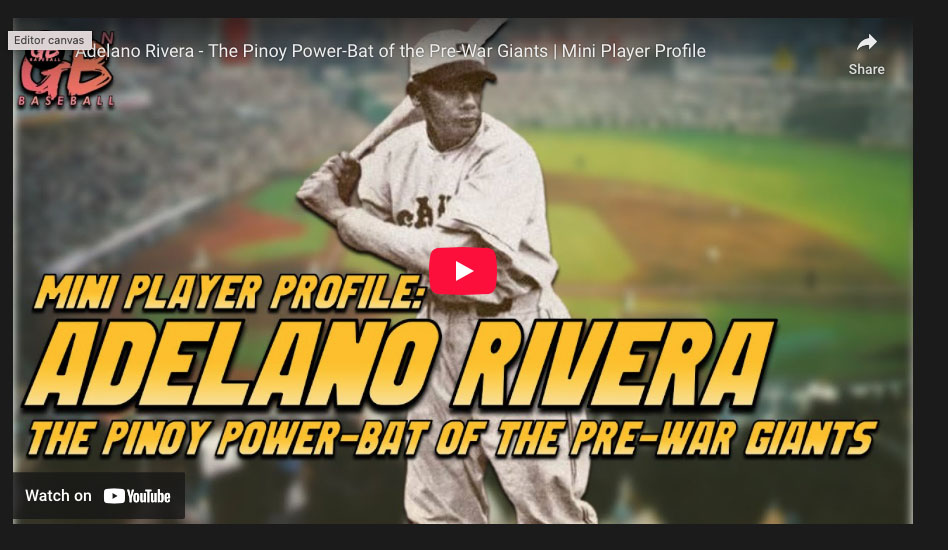
There are two other can’t-miss YouTube channels for English-speaking fans. The Gaijin Baseball channel is one of my favorites. It contains about one hundred videos on the history of Japanese baseball. The stories are well researched and often contain compelling narratives with great graphics. This is the best place on the web for a beginner to learn about the history of the game in Japan. JapanBall has recently started a YouTube channel which contains updates of the current season as well as features on individual players and selected topics.
In July 2025, former NPB and KBO player David McKinnon along with journalist Jasper Spanjaart created Pacificswings.com. This site features video discussions of Asian baseball along with interviews of current and past players.
Full games, albeit with Japanese commentators, are also available. Pacific League games are easily viewed on Pacific League TV, a subscription service run by Pacific League Marketing that provides live games and archived games dating back to 2012. As the name suggests, the service only contains games from the Pacific League, along with interleague games held in Pacific League ballparks. Besides the games, the Pacificleague.com website contains thousands of videos, including game highlights, player profiles, news, and feature stories and league and player stats. The website and the games are in Japanese only, but there is an English-language page providing directions on how to join and navigate the site. As discussed above, Pacficleague.com also runs two YouTube channels, one in Japanese and one in English.
There is no single location to watch Central League games, but one can subscribe to various teams’ streaming channels or subscribe to a Japanese cable TV package. For example, Nozomi provides over eighty Japanese channels, allowing one to watch many Central League games both live and archived for two weeks after the initial broadcast. Programs can also be recorded. More information on watching Japanese baseball games can be found in this excellent article on japanball.com.
Korean Baseball
For English-speaking baseball fans, following the Korea Baseball Organization (KBO) is easier than ever, thanks to a growing number of platforms offering games, highlights, and stats in English or with minimal language barriers.
The most comprehensive way to watch KBO games live in the U.S. is via SOOP, which streams every game live with Korean commentary. While it lacks English audio, it’s perfect for fans who want real-time access to all matchups.
For English-language coverage, the best option is the KBO Channel on Plex. Each day, one game is streamed live with Korean play-by-play, followed by a 24/7 replay stream of recent games, all featuring English AI commentary. This makes it easy for fans to catch up at any time and follow the season in their time zone.
If you prefer highlights, the official KBO YouTube channel is a reliable source. Although entirely in Korean, it features medium-form highlight packages for every game, with key hits, big strikeouts, full innings, and significant moments. The visual focus makes it easy to follow even without understanding the commentary.
For real-time stats and box scores, MyKBO Stats is the top destination for English speakers. Created by Dan Kurtz, the site provides live box scores, team and player stats, and historical data going back to 2013. It’s a must-bookmark for serious fans. You can also follow Kurtz on X (formerly Twitter) for regular updates and news.
For those looking for deeper analytics and historical data, STATIZ is a goldmine. Though the site is in Korean, it works well with browser-based translation tools and offers advanced stats and box scores all the way back to the league’s founding in 1982. It’s ideal for fans interested in diving into the numbers behind the game.
A few Korean news organizations provide KBO coverage in English. The most notable is the Yonhap News Agency, which regularly publishes game recaps, player profiles, and league developments. Their best-known KBO reporter is Jee-ho Yoo, a respected Seoul-based journalist and KBO expert whose work is a go-to resource for international readers.
Social media is another excellent way to stay connected. The X account “KBO in English” is run by an English-speaking fan based in Korea and offers regular updates and fan-friendly insights. It’s a great way to build familiarity with the league, players, and teams from a Western perspective. Also worth following is Daniel Kim (@DanielKimW), a bilingual baseball analyst who became widely known during ESPN’s KBO coverage in the early days of the COVID-19 pandemic.
While KBO content is still largely in Korean, English-speaking fans have options to follow the league. SOOP delivers every game live, Plex’s KBO Channel provides English commentary and 24/7 replays, MyKBO Stats covers real-time stats and historical data, and STATIZ offers deep analytics for those willing to use browser translation. Add in highlight reels on YouTube and fan-run social accounts, and there’s a whole ecosystem ready for English-speaking fans to dive into Korean baseball.
Taiwanese Baseball (CPBL)
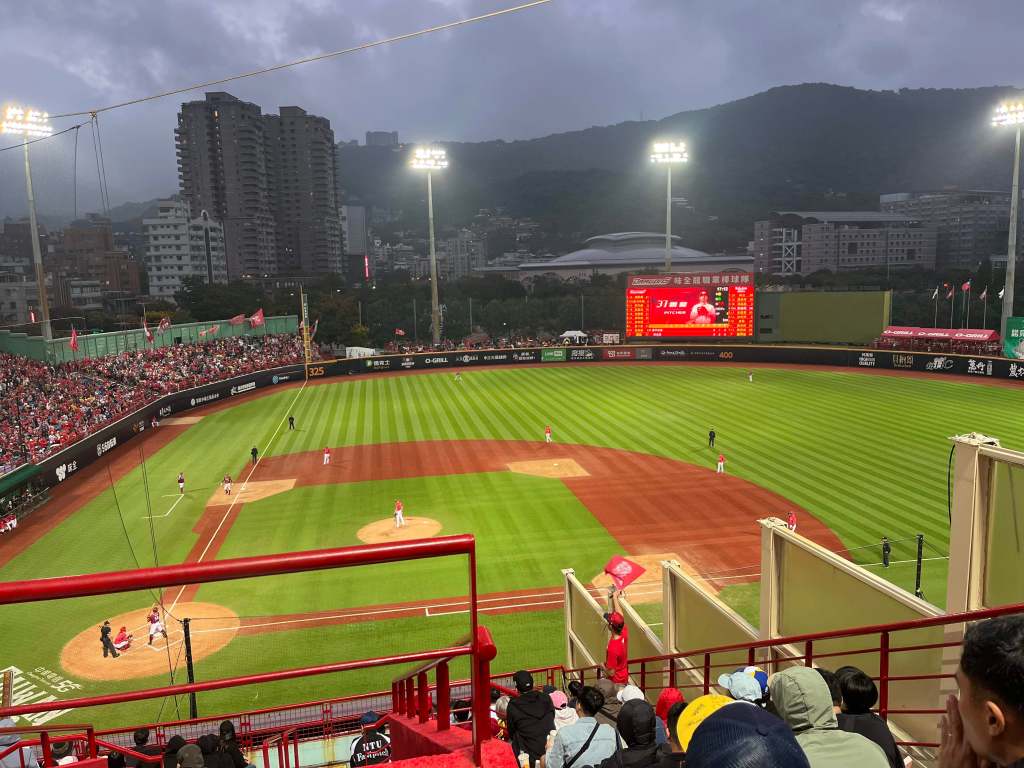
Founded in 1989, the CPBL is more popular than ever, having recently benefited from the completion of Taipei Dome in 2023 and Taiwan’s Premier12 championship in 2024. The league currently consists of six teams who play most of their home games in six stadiums across the country:
Taiwanese baseball has very limited English-language coverage. The best source currently is the CPBL official website, which publishes real-time box scores, season schedule, standings, team rosters, and stats in English. Besides the CPBL website, the only major resources for English speakers are:
CPBL Stats – news and stats in English; the site’s X account (@gocpbl) regularly posts news and video clips
r/cpbl on Reddit – predecessor to CPBL Stats and a good place for updates and questions
The Taipei Sun – a newer initiative to cover Taiwanese baseball, including players abroad, in English
To watch CPBL games, fans can stream via Twitch (available for some teams only) or purchase a CPBL TV subscription from HamiVideo. As of July 2025, subscription plans for home games for each team are ~$2.70/month, or for all games ~$10.30/month. CPBL Stats has an English Guide to CPBL TV that is a bit dated but should still be helpful.
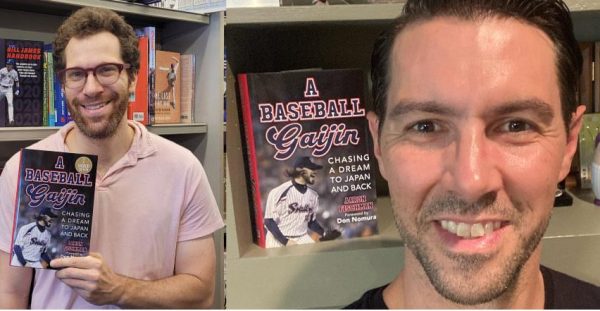
On Thursday, July 10, 2025 SABR’s Asian Baseball Research Committee hosted its first Zoom event. Our guests were former Yakult Swallows closer and Texas Ranger Tony Barnette and author Aaron Fischman. Tony and Aaron spoke about their Casey- Award-nominated book, A Baseball Gaijin, as well as Tony’e experiences in Japanese baseball.
This fascinating event can now be view in its entirety on SABR’s YouTube channel.






 SABR Asian Baseball Research Committee Blog