Category: Nichibei Yakyu

  • A Near Escape: the 1981 Kansas City Royals Tour of Japan

    A Near Escape: the 1981 Kansas City Royals Tour of Japan

    by Chris Hicks

    Every Monday morning we will post an article from SABR’s award-winning books Nichibei Yakyu: Volumes I and II. Each will present a different chapter in the long history of US-Japan baseball relations. This week Chris Hicks tells us about the 1981 Kansas City Royals visit to Japan.

    For decades it had been the hope of Matsutaro Shoriki, the owner of the Yomiuri Shimbun Group, a conglomerate that produces the Yomiuri Shimbunnewspaper and owns the Yomiuri Giants baseball team, that there would one day be a “true world series” played between the champions of the World Series and the Japan Series. After Matsutaro’s death in 1969, his son Toru continued the dream. The concept gained traction in 1971 when Commissioner Bowie Kuhn accompanied the Baltimore Orioles on their Japanese tour. When he returned to the States, Kuhn announced that he and the baseball commissioner of Japan, Nobumoto Ohama, had agreed to a “‘joint feasibility study’ of an international World Series.” Although no agreement emerged from the study, Shoriki continued to invite championship-caliber major-league teams to face off against the Japanese champion. Arrangements for the postseason tours, however, had to begin before the start of each season so Shoriki needed to guess which club would win the World Series. In 1974 he invited the New York Mets, a season after they had won the National League pennant, and in 1978 the Cincinnati Reds, but neither came to Japan as the reigning World Series champion.

    Early in 1981, Shoriki invited the Kansas City Royals, the defending American League champions, gambling on their continued success. Should the Royals win the 1981 World Series and the Yomiuri Giants win the Japan Series, then the eight scheduled games between the teams would fulfill the dream of a “true world series.” The Royals’ full schedule in Japan consisted of 17 games played in 14 cities between October 28 and November 24,1981.

    But the 1981 season was filled with frustration for the Royals. The team struggled in the first half of the season with a 20-30 record before the players union went on strike on June 12. The strike ended 50 days later. As the players returned to the field for the All-Star Game in Cleveland on August 9, the owners hammered out the logistics of the interrupted season. The division leaders when the strike began would face the division winners (based on records after the strike) of the post-strike season in the playoffs.

    Not long after the season resumed, the Royals fired manager Jim Frey and replaced him with Dick Howser. The team went on to win 30 of its last 53 games and finish at the top of the AL West Division in the season’s second half. The season’s arbitrary break into unequal halves shut some teams with overall winning records out of the playoffs. In the AL West, the Royals, with an overall 50-53 season record, went to the postseason while the Texas Rangers (57-48) and Chicago White Sox (54-52) stayed home. Royals third baseman George Brett, commenting on the Royals’ inclusion in the playoffs, said, “We don’t belong. We know it.” Oakland swept the Royals to advance to the second round of the playoffs.

    Looking for a better 1982 season, Howser used the games in Japan to test staff changes and prepare his team. Immediately after the season, the Royals had hired Cloyd Boyer as the pitching coach and Joe Nossek as the third-base coach so that these integral members of the coaching staff could use the trip to get to know the team’s players. Coach Jim Schaffer and minor-league instructor Gary Blaylock also accompanied the team.

    The Royals took nearly all of their regular players to Japan, including stars Brett, Frank White, Willie Wilson, Dennis Leonard, and Dan Quisenberry. The only regular not making the trip was center fielder Amos Otis, who had just signed a new two-year contract and declined to go, stating that his priority was healing a leg injury and preparing for the 1982 season. Howser brought along a handful of young players who spent most of the 1981 season with Triple-A Omaha. The tour offered an ideal opportunity to evaluate Onix Concepcion, Tim Ireland, Pat Sheridan, Daryl Motley, and Atlee Hammaker.

    For Hammaker, the Japan tour was not just about baseball. In 1954, after serving in the Korean War, his father, Col. Charles A. Hammaker, was stationed in Kyoto, where he met his future wife, Saeko. As a child, Atlee lived in Japan for a year with his grandparents, an aunt, and his mother while his father served in the Vietnam War. Hammaker’s grandmother was at the airport to greet her grandson and the rest of the Royals team when they arrived on October 28.

    The team spent two days resting and practicing before beginning the 17-game series on Saturday, October 31. The first two games were against the Central League champion Yomiuri Giants in what the organizers had hoped would be the opening games of the unofficial international world series.

    A crowd of 32,000 came to Korakuen Stadium in Tokyo to watch Jim Wright face Giants ace Suguru Egawa, who captured the 1981 Central League MVP honors with a 20-6 record and a 2.28 ERA. Despite giving up two hits in the first inning and six hits overall, Egawa pitched well, blanking the Royals though four innings. “[He] had good control today,” said Wilson. “He can make it in the majors.” By the fifth inning, however, Wilson noticed something. “He was running the same pattern on me, fastball, curveball, fastball, curveball. … [H]e threw the fastball, so I waited for the curve.” Wilson guessed right and sent the next pitch into the right-field stands to give the Royals a 2-0 lead. The Royals added another run in the seventh when Wilson singled to score Clint Hurdle. Meanwhile, Wright held the Giants to three hits before Hammaker entered the game in relief in the fifth inning. With his Japanese relatives in the stands watching, Hammaker pitched three one-hit, shutout innings to earn the 3-0 victory before Quisenberry closed out the game. Howser praised his pitchers’ performances: “Our pitchers were too good for the Giants.”

    In the third inning Hal McRae collided with Giants second baseman Kazunori “Toshio” Shinozuka while breaking up a double play, injuring his calf. McRae was removed from the field on a stretcher and taken to the hospital. He missed the next four games and was not at full strength when he returned.

    The second game between the Royals and Giants at Korakuen was an extra-inning nailbiter. The Royals scored in the fourth inning as Frank White doubled off Giants starter Takashi Nishimoto and later scored on a balk. The Giants came back with a vengeance in the bottom of the inning when Yasutomo Suzuki hit a two-run double and Takashi Yoshida hit a pitch from Rich Gale over the outfield wall to score three more runs, making it a 5-1 ballgame. The Royals responded with two in the fifth on a two-run home run by Onix Concepcion but missed an opportunity for a third run when Frank White was unable to knock in Willie Wilson, who tripled with two outs. Home runs by George Brett in the sixth and Jamie Quirk in the seventh tied the game, 5-5. The Giants had opportunities in the sixth and eighth innings but failed to score. Yomiuri reliever Mitsuo Sumi struck out seven Royals in a row in the eighth and ninth and the beginning of the 10th before Concepcion doubled, stole third, and scored on a single by Wilson. Renie Martin held the Giants scoreless in the bottom of the 10th for the thrilling 6-5 victory.

    The Royals enjoyed the Japanese fans and their cheering sections with their rhythmic chants accompanied by horns, drums, and whistles. Quisenberry and Martin made up songs to the beat. “We kinda hot dog for them during batting practice and make them laugh,” said Quisenberry. They’re so much nicer than American fans. No fights in the stands, always polite, quick to laugh.”

    The third game of the series had the Royals taking on a new opponent, the Japanese All-Stars, at Korakuen Stadium on Tuesday, November 3. Six future members of the Japanese baseball Hall of Fame appeared in the game: Yutaka Fukumoto, Tatsunori Hara, Choji Murata, Hiromitsu Ochiai, Tsutomu Wakamatsu, and Koji Yamamoto. The scoring got underway in the first on a two-run homer by Willie Aikens. But in the bottom of the first, Tomohisa Shoji began with a double off Larry Gura. Gura then walked Hiromichi Ishige and threw a wild pitch, allowing the runners to move up a base. Yamamoto singled Shoji home and Ochiai singled to score Ishige. Hara followed with a three-run inside-the-park home run to give the All-Stars a 5-2 lead. Shoji added another run with a solo homer in the second. Neither team scored again until the top of the seventh inning, when Brett hit a solo home run off reliever Tatsuo Komtasu. In the bottom of the inning, Ishige put the final nail in the Royals’ coffin with a solo homer of his own, handing the Royals their first defeat of the series. Japanese Crown Prince Akihito and Princess Michiko witnessed the 7-3 victory.

    The Royals saw new surroundings but a familiar opponent when they played in Sendai’s Miyagi Baseball Stadium against the Yomiuri Giants on November 5. Yomiuri began with a run in the first inning as Yasuyuki Nakai doubled off Atlee Hammaker and came home on Kazunori Shinozuka’s single. The Giants scored three more in the third. Starting pitcher Shoji Sadaoka singled, Tadashi Matsumoto tripled, and Nakai hit another double before scoring on a fly out by Shinozuka. Yomiuri struck for three more runs off relief pitcher Jim Wright in the seventh inning to make the final score 7-0. Sadaoka gave up just one hit in six innings and reliever Hisao Niura pitched three innings of two-hit shutout ball to draw the series even at two wins and two losses. Yomiuri manager Motoshi Fujita noted, “Sadaoka succeeded in keeping the balls low and his balls were quite well controlled today.”

    In the fifth game the Royals played southwest of Tokyo at Yokohama Stadium against a combined team of Taiyo Whales and Yomiuri Giants. The Royals had no trouble getting runners on base but struggled to get them across home plate in a 9-1 drubbing. In a sloppy first inning, the Japanese scored three runs on two walks, two errors by Brett, a sacrifice fly and a passed ball. The Royals pushed a run across in the second inning on Pat Sheridan’s sacrifice fly with the bases loaded but the Japanese added runs in the third and sixth innings to lead 5-1 before Tomio Tashiro sealed the game with a three-run homer in the seventh. The Giants-Whales added a final run in the eighth. The Royals offense left 13 runners on base. Howser noted, “Our boys are hitting well … but the ground is slippery resulting in many errors. We will try to win three straight games from Sunday.” While their husbands were playing, the wives did a little sightseeing. They visited Fuji-Hakone-Izu National Park and the Great Buddha, a 37-foot bronze statue dating from the thirteenth century, in Kamakura.

    The series returned to Korakuen Stadium as the Royals took on the Giants in the sixth game on Sunday, November 8. Kansas City jumped out to an early lead as Brett hit a solo home run (his third of the series) in the first off Yomiuri starter Hajime Kato, but the lead was fleeting as starter Dennis Leonard gave up a grand slam to Kenji Awaguchi in the third inning. Willie Aikens and Yasutomo Suzuki also hit solo home runs as Yomiuri won, 6-2. The loss was the Royals’ fourth straight and the visitors had a dismal 2-4 record.

    In Game 7 on Tuesday, November 10, at Seibu Stadium, a combined Yomiuri Giants-Seibu Lions team looked to hand the Royals their fifth straight loss. George Brett started things off with a two-run home run in the first inning off starter Masayuki Matsunuma. But the lead was lost in the second inning when the Japanese scored four against starter Paul Splittorff, highlighted by a two-run double by Hiromichi Ishige and a solo home run by Tatsunori Hara. Brett struck back with a solo homer in the third to narrow the score to 4-3. The Japanese however, solidified their lead in the next inning as Ishige doubled in two runs after a successful double steal by Yoshiie Tachibana and Takanori Okamura. Hara knocked in the final run in the fifth inning on a sacrifice fly to hand the Royals a 7-3 loss. With the loss, the Royals had dropped five straight, setting the record for the most consecutive losses by a major-league team in a postseason tour of Japan. After the game, Howser said he “regretted” being the first American pro manager to lose five straight in Japan. He noted that his pitching staff “was in poor condition” and that except for Brett the Royals “couldn’t buy a hit.”

    The Giants and Royals left the Tokyo area the next day. The fans at Kusanagi Ballpark in Shizuoka were treated to a pitchers’ duel between the Royals’ Mike Jones and the Giants’ Hisao Niura in the eighth game. Over the first five innings, Jones blanked the Giants on one hit and Niura nearly matched him with two hits surrendered. Kazuaki Fujishiro replaced Niura in the top of the sixth and gave up a leadoff double to U.L. Washington. Washington moved to third on a fly out and scored on John Wathan’s single. Relievers Renie Martin and Dan Quisenberry locked down the game with four innings of one-hit shutout ball as the Royals won, 1-0. “I’m relieved,” said Howser after the win. “Our pitching has shaped up and [I] think we could play better in the remaining games.”

    The next day, November 12, the teams traveled west to Nagoya, where Kansas City played a combined Yomiuri and Chunichi Dragons team in the ninth game of the series. Brett continued hitting the ball well, belting a solo homer off starter Tatsuo Komatsu in the first inning. From there on, however, the only scoring came from the Japanese squad. Royals starter Larry Gura struggled, giving up a two-run homer to Yasunori Oshima and two solo home runs to Masaru Uno. After the 5-1 loss, Howser noted, “A homer by George Brett isn’t enough to win a ballgame.”

    Games 10 through 12 occurred in the area around Kyoto and Osaka. The schedule also allowed time for the Royals to do some sightseeing. The group shot the rapids on the Hozu River in traditional flat-bottomed boats steered with oars and powered by the current and bamboo poles. They also went to Nijo Castle in Kyoto, a home of the Shogun from the early 1600s, that was later named a UNESCO World Heritage Site. The touring party not only enjoyed the cultural sites but also shopping and eating. “The Royals are eating plenty of things they can’t spell and … some things they’d rather not have identified,” wrote Mike McKenzie of the Kansas City Star. “We’re eating like kings,” said Quisenberry. “Some guys are gaining weight. Not getting like Sumo wrestlers, but gaining.” During his brief time in Japan, Quisenberry became a Sumo fan. “They’re better than our pro wrestling. They psych each other out, and they’re for real. I can’t understand anything they’re saying, but it’s fun to watch.”

    On Saturday, November 14, the Royals played a Yomiuri and Hankyu Braves combined team at Nishinomiya Stadium. The teams stayed locked in a pitching duel with the score tied 1-1 until the eighth inning. Royals starter Dennis Leonard surrendered just the one run and three hits in seven innings, while the Japanese used four pitchers to hold the Royals. In the top of the eighth, designated hitter Hal McRae clocked a two-run homer off reliever Tomoyuki Sekiguchi to take the lead. In the bottom half of the inning, Quisenberry relieved Leonard and gave up a two-run home run to Kenji Awaguchi that tied the game at 3-3. The game remained scoreless through the 10th inning and then was declared a tie.

    With the 3-6-1 record, the Japanese media claimed the Royals were either not taking the tour seriously or were just not that good. After the 10 games, the Japanese had outhit them .238 (78-for-328) to .217 (74-for-341) and outscored them 49 to 23. Fans complained that they paid $22 to $25 a ticket to see “a feeble American team.”

    “We are trying,” said Dennis Leonard. “They are just embarrassing us. We’ve been outhit, outpitched, outplayed. I think when we came over here, we thought it was going to be a cakewalk. Instead, we’re struggling.” George Brett said, “Nobody likes to lose. We’re professionals. We go out and try to win every game. We just can’t seem to get the big hit when we need it.”

    “The team is mad,” said Quisenberry. “It’s depressing. A lot of guys 5-feet-6 and 150 pounds are hitting home runs against us. Their pitchers are throwing straight fastballs, letter high, and we’re popping up and striking out. The game is over, and we’re beaten 7-1, and we can’t figure out why or how. … Players come back to the bench after striking out or giving up a key hit, and they’re mad at the world. Not quite like the regular season, but almost. We don’t like to get embarrassed.”

    Howser and some players blamed the losses on the lengthy layoff between the end of the Royals’ season and the start of the games in Japan, noting that the Japanese had ended their playoffs only days before the start of the tour. “Not working out before we came hurt us more than I thought it would,” noted McRae. “Personally, I’m not in good shape,” Leonard admitted. “In previous years, we probably could have overcome [the layoff],” said Frank White. “But the Japanese players have improved, especially their pitching.” Quisenberry agreed: “About 50 percent of the pitchers I’ve seen could play in the major leagues. They are much more surehanded than we are in the field. … Their hitters are very disciplined, hardly ever striking out with their short, compact swings.”

    Read the full version of this article on the SABR website

  • The 1979 Major League All-Star Series in Japan

    The 1979 Major League All-Star Series in Japan

    by Carter Cromwell

    Every Monday morning we will post an article from SABR’s award-winning books Nichibei Yakyu: Volumes I and II. Each will present a different chapter in the long history of US-Japan baseball relations. This week Carter Cromwell tells us about the 1979 MLB All-Stars visit to Japan.

    When a group of major-league baseball all-stars traveled to Japan in November 1979 for a series of games, it represented a shift, of sorts. Since the end of World War II, most baseball tours of Japan had been by single teams. A US all-star team had not played in Japan since the Eddie Lopat All-Stars made the trek after the 1953 season.

    The 1979 tour was dreamed up by Philadelphia Phillies Vice President Bill Giles and Cappy Harada, who was born in Santa Maria, California, to Japanese parents and at the time was director of the international division of the Major League Baseball Promotion Corporation. This was the first time the United States had sent complete American League and National League all-star teams to Japan for a series.

    The American squad was divided evenly among American Leaguers and National Leaguers and was managed by the Orioles’ Earl Weaver and the Dodgers’ Tom Lasorda respectively. The schedule ran from November 7 to November 20, with the US teams playing seven games against each other and a combined US club playing twice against a team of Japanese players.

    In the years since, the Japanese have consistently demonstrated their baseball prowess in various international competitions. But though it had made strides, the game in Japan in 1979 was still not the equal of the game in the United States, so the Japanese were eager to see the Americans play. Virtually every ticket for every game was sold in advance, with the most expensive costing $22,or about $89.79 in 2022 dollars.

    Of course, the Japanese weren’t unfamiliar with US players, since they could watch videotaped highlights of US games on television on Sundays, and newspapers and magazines in the country reported on the major leagues. An Associated Press story noted, “[Pete] Rose is at least as familiar a name in Japan as Jimmy Carter. The escapades of Reggie Jackson and the salary hassles of [Dave] Parker are followed with keen interest. Ever since American teachers introduced the game to Japan in the 1870s, the Japanese have looked upon America as baseball’s holy land – at the same time aspiring to build their own version to match it.”

    So actually seeing the Americans play in person was an exciting proposition.

    Though some like Jim Rice, George Brett, and Jack Clark had to pull out of the tour beforehand for various reasons, the US roster was loaded. It included eventual Hall of Famers Rod Carew, Lou Brock, Ozzie Smith, Ted Simmons, Paul Molitor, and Phil Niekro. The California Angels’ Don Baylor was coming off the best season of his career, in which he had hit 36 home runs, driven in 139 runs, and was voted the American League’s Most Valuable Player. Others might be classified in the so-called Hall of the Very, Very Good – players like Parker, Cecil Cooper, Lance Parrish, Larry Bowa, Bill Madlock, Jim Sundberg, Dennis Martinez, Tug McGraw, and Ken Singleton. Singleton, in fact, finished second to Baylor in the MVP voting that year after hitting 35 home runs, driving in 111 runs, and posting a .938 OPS. There was also Rose, who would be in the Hall if not for his gambling issues.

    “[Rose] is my favorite American player,” said Japanese Hall of Famer Sadaharu Oh, who holds the world career home-run record (868). “He never misses a game.”

    Nonetheless, a spokesman for the Japanese baseball commissioner’s office said the Japan team will be “playing to win.” And there was no doubt that it was a strong club. Compiled by a vote of sportswriters, it included eight players who would eventually gain induction into the Japanese Baseball Hall of Fame – first baseman Oh, plus outfielders Yutaka Fukumoto, Koji Yamamoto, and Tsutomu Wakamatsu, and pitchers Choji Murata, Keishi Suzuki, Hisashi Yamada, and Manabu Kitabeppu.

    Oh, of course, was the biggest name. He had even received a National Hero Award from the Japanese government after exceeding Hank Aaron’s career record of 755 home runs. Sometimes referred to as the Bamboo Bambino by the Japanese news media, he had a slash line of .301/.446/.634 over 22 seasons with the Yomiuri Giants. He drove in 2,170 runs in his career, even though the Nippon Professional Baseball season was 22 to 32 games shorter than that of the American majors.

    “I really like to watch Oh swing,” Rose said. “He picks up his front leg but doesn’t go forward until he’s ready to commit himself. He keeps his hands and his weight back until he’s ready to swing.”

    In 1979, at the age of 39, Oh had just completed his next-to-last season and had hit 33 home runs while batting .285, driving in 81 runs, and posting a .980 OPS. To many, that would have been very good, especially at that age, but Oh found it unacceptable. “I had a very disappointing year,” he said. “I hurt my side and missed several weeks. I had 33 home runs … but drove in only 81 runs. Five years ago, I had ‘only’ 33 home runs but drove in 118. And besides, the [Yomiuri] Giants finished 10½ games out this year. Very sad.”

    Other Japanese players were nearly as transcendent as Oh, though not well known to most Americans. An 11-time all-star, Tsutomu Wakamatsu posted a .319/.375/.481 career slash line, won two batting titles, and as of 2023 still held the second-highest career batting average in Nippon Professional Baseball history for players with 4,000 or more at-bats. He was the Central League Most Valuable Player and MVP of the Japan Series in 1978. In 1979 he batted .306 with an .871 OPS. Koji Yamamoto was a 13-time all-star for the Hiroshima Carp, a 10-time winner of the Diamond Glove Award, and seven consecutive seasons the leader in assists among outfielders. At the time of the 1979 series, he was coming off a .293 season with a 1.002 OPS.

    Yutaka Fukumoto played 20 seasons with the Hankyu Braves, a predecessor of today’s Orix Buffaloes, and posted a .291 batting average and .819 OPS, along with an otherworldly total of 1,065 stolen bases.

    American Leon Lee, who played 10 seasons in Japan, observed that Fukumoto “was a great base runner, too, adding, “I remember many times he would lead off a game by getting on base, stealing second, getting sacrificed to third, and scoring on a sacrifice fly.”

    On the pitching side, Choji Murata won 215 games over 23 seasons, 22 of them with the Lotte Orions. He was a three-time Pacific League ERA champion and threw five one-hitters. He had finished the 1979 season with 17 victories, a 2.96 earned-run average, and a 1.09 WHIP.

    Leon Lee’s brother Leron, who played in Japan for 11 seasons, remembered, “Choji Murata was … fabulous. He was the best pitcher I’ve seen except for Bob Gibson. In 1979, he pitched against the American All-Stars, and Ted Simmons … told me that Choji Murata was the best pitcher he ever faced in his life, bar none. That’s how good Murata was. He could throw 90 to 96 miles an hour consistently, had a great forkball, and he had this really funky windup with a high kick. I saw him throw an inside pitch that hit the bat below the label, broke it in half, and the ball had so much power that it went through the bat, hit the batter on his back leg, and rolled out into fair territory along with the head of the bat. Everybody in the stadium stopped for two or three seconds and looked. It was unbelievable for a ball to go through a bat and still have enough momentum to hit the batter in the leg and roll forward.”

    Though 1979 was a down year for Keishi Suzuki (10-8, 4.41 ERA), he spent 20 years with the Kintetsu Buffaloes and won 317 games with a 3.11 ERA and low 1.12 WHIP. He had eight 20-victory seasons and led the Pacific League in strikeouts eight times. Leron Lee learned about Suzuki very early on, the night before his first game in Japan, in fact. The team had a meeting to go over the opponents, and a scout went on and on about how good Suzuki was.

    “I said to [teammate] Jim Lefebvre that if this guy pitches like the scout says, we’re not going to get any hits tomorrow,” Lee said. “And, sure enough, Suzuki pitched a one-hitter! That guy was the best left-handed pitcher I ever faced. I faced Steve Carlton and several pretty good pitchers in the big leagues, but this guy was unbelievable. He was an absolutely fabulous pitcher who could have pitched in the major leagues very easily.”

    An interesting aside is that when he was the Kintetsu manager, Suzuki’s disputes with pitcher Hideo Nomo indirectly played a role in Nomo’s eventual signing with the Los Angeles Dodgers in 1995.

    In 19 seasons with Hiroshima, Manabu Kitabeppu was 213-141 and ranks 17th all-time in pitching victories in NPB. He was an all-star seven times. In 1986 he won the ERA title, took the MVP and Gold Glove awards and was named to the “Best Nine,” which includes the best player at each position in both the Central and Pacific Leagues, as determined by a pool of journalists. During the 1979 season, just his fourth in the NPB, he had won 17 games and allowed an average of just 1.6 walks per nine innings.

    Hisashi Yamada, Japan’s greatest submarine pitcher, was 284-166 in 20 seasons with the Hankyu Braves. His lifetime ERA was 3.18 and his WHIP a low 1.13. In the mid-1970s Yamada was the most dominant pitcher in Japanese baseball, winning three consecutive Pacific League MVP Awards (1976-1978). He was named to five Best Nine teams and 13 all-star squads, and won five Gold Glove Awards. In 1979 he had finished with a 21-5 record and a 2.73 ERA. Leon Lee said Yamada was the “toughest pitcher I ever faced in my 17-year professional career. He had great control and was never afraid to pitch inside. The biggest thing was that he completely controlled the tempo of the game and never gave the hitters time to get comfortable at the plate.” Leron Lee named players like Oh, Yamada, Murata, Suzuki, Yamamoto, and the Hanshin Tigers’ Masayuki Kakefu (also on the 1979 Japan All-Stars) among several he said could have been major leaguers.

    The schedule began on November 7 with the American League battling the National League at Yokohoma Stadium. The teams played each other again on November 8 (Kusanagi Stadium in Shizuoka), November 11 (Korakuen Stadium in Tokyo), November 12 (Seibu Stadium in Tokorozawa), November 13 (Nagoya Stadium), November 17 (Seibu Stadium in Tokorozawa), and November 18 (Yokohama Stadium).

    The NL stars won the first game 11-2 behind a 16-hit attack. The Chicago Cubs’ Dave Kingman hit a two-run homer, and Niekro picked up the win. In Game 2 the Nationals rallied from a 4-1 deficit to tie the game 5-5 on an eighth-inning sacrifice fly by Kingman. The contest was called after 10 innings because of a time limit in Japanese games.

    Game 3 went to the American League, 6-3, and the AL followed that with a 6-5 victory in Game 4 before 21,000 fans at Seibu Stadium, as Kansas City’s Willie Wilson singled home the winning run in the bottom of the ninth inning. The National League had scored three runs in the first inning and another in the second to lead 4-0 before the AL rallied.

    After that, though, the NL had its way, winning the last three games of the series by scores of 12-9 (after trailing by 7-0), 3-2, and 7-1 in the finale on a two-hitter by Niekro.

    For the Japanese fans, though, the most anticipated games of the series were the two between the United States and Japan. A wire-service story just prior the tour noted that the US players would be “scrutinized, idolized and analyzed for what makes their game different from the Japanese national pastime of ‘besuboru.’” And there were differences. The Japanese relied more on small ball and fundamentals, and they utilized off-speed pitches more often. The Americans, on the other hand, focused more on the big inning, especially with a manager like Weaver. In addition, both the baseball itself and the ballparks in Japan were slightly smaller.

    The first game took place November 14 before 31,000 fans in Nishinomiya, a city between Kobe and Osaka. Yamamoto, of the 1979 Japan Series champion Hiroshima Carp, hit a solo home run off US starter Niekro in the bottom of the second inning to give Japan a 1-0 lead. The Americans scored twice off Yamada in the top of the third inning, but the Japanese answered quickly with three runs in the bottom of the third to take a 4-2 lead.

    The US team came back with a run in the fourth when Cooper tripled and scored on a sacrifice fly by Madlock, and the Americans got a two-run home run by Simmons off Suzuki in the sixth to lead 5-4. Bowa then hit a solo homer off Japan’s Shigeru Kobayashi in the seventh, and that proved to be the difference as Japan got an RBI single from Kakefu of the Hanshin Tigers in the bottom of the inning to account for the final 6-5 score.

    Knuckleballer Niekro pitched three innings and allowed four hits, two walks, and two earned runs before being relieved by Oakland’s Rick Langford. Nonetheless, he baffled Oh, whom he struck out twice, once with the bases loaded and no one out. Oh said, “It felt like the ball was swaying left and right. I wasn’t able to hit it at all. It was a mysterious ball.” For the Japan side, Murata held the major leaguers hitless in the eighth and ninth innings, primarily with his forkball.

    After the game, US manager Weaver said, “It was a close game. I was worried and felt relieved that we won. There was little difference today with the pitchers of either team. [The Japanese] certainly could play major league baseball.” That, of course, was 16 years before Nomo proved the point by signing with the Dodgers and earning All-Star and Rookie-of-the-Year honors in his first season.

    Yukio Nishimoto, who had managed the Kintetsu Buffaloes to the 1979 Pacific League title and was leading the Japan All-Stars, said, “The Americans are speedier than the Japanese. … I’m afraid the difference is decidedly in their favor. We’d be lucky to win two games out of 10.”

    They got one six days later.

    A crowd of 42,000 at Tokyo’s Korakuen Stadium watched the Americans score single runs in the third inning (a home run by Parrish off the left-field foul pole against Japan starter Naoki Takahashi) and in the seventh (a sacrifice fly by the California Angels’ Carney Lansford) to lead 2-0. Six US pitchers held the Japanese scoreless until the bottom of the eighth inning, when Kinji Shimatani of the Hankyu Braves electrified the fans by ripping a 2-and-0 pitch from Cleveland’s Sid Monge for a three-run homer to give the Japanese a 3-2 lead. And that was enough, as Kitabeppu pitched the eighth inning and Tatsuo Komatsu of the Chunichi Dragons the ninth to get the save.

    Since the US and Japanese teams played just two games against each other, the final statistics do not represent a large sample size. For the Americans, Cecil Cooper was 2-for-3 in the one game he played, and Ted Simmons was 2-for-7 in two games with a home run and two RBIs. They were the only Americans to get more than one hit in the two games, as the team batted a minuscule .172. The US pitchers posted a 3.18 earned-run average over 17 innings and held the Japan stars to a .210 batting average.

    Virtually all the Japanese position players participated in both games, with Yasunori Oshima (Chunichi) batting .500 (1-for-2), Kakefu and Fukumoto each .429, and Hideji Kato (Hankyu) .333. On the pitching side, Murata did not allow a run in four innings while striking out five batters. Takahashi gave up just one run in four innings, while Yamada allowed two runs in three innings of work. The Japan ERA in the two games was 3.50.

    Overall, the tour was considered a success, though there was some complaining by players about the travel. One day, for example, eight buses and trains were necessary to get the group from a hotel in Tokyo to a ballpark and then to Nagoya.

    There was also some controversy when first Carew and then Rose went home early and Kingman had to be talked out of going home the same day Carew left. Japan’s Kyodo News Service quoted Rose as saying he had suffered a leg injury while going after a pop fly “and it’s been getting worse.” Rose had also arrived in Japan ahead of the others and had announced beforehand that he would not be staying until the end.

    As for Carew, American League spokesman Bob Fishel said he had injured a tendon in his right heel before the trip. Carew, however, said that the injury was just part of the reason for his leaving after playing in two games. He also felt league officials had not come through on prior commitments for endorsement and appearance income. He said he had been hesitant to make the trip but did so because of promises that he could make $40,000 to $50,000 in endorsements and appearances, in addition to the base pay of $11,000 to players on the winning team and $8,500 to those on the losing club.

    “Now I can’t help but feel that we were told these things simply so that we would say ‘yes’ to making the trip,” Carew said. “I definitely doubt that I’d ever make another. I had wanted to stay home, but they made it sound as if it was something I couldn’t pass up.”

    The Pittsburgh Pirates’ Bill Madlock said, “We’d been led to believe there would be ways to pick up extra money for endorsements. It just didn’t happen.” Cecil Cooper added, “I really was disappointed. I thought we would be involved in a lot more endorsements and things like that. Only a few players got them. I don’t think I would come back.”

    The expectation of ancillary income was due in part because Rose had been to Japan the previous year with the Cincinnati Reds and had been in demand for endorsements, television appearances, and autograph sessions. Joe Reichler, who at the time helped run the Major League Baseball Promotion Corporation, was quoted as saying, “I think a lot of the players saw how well [Rose] did and figured the same thing would happen to them. [But] there really were no firm commitments along these lines.”

    Milwaukee Brewers pitcher Lary Sorensen felt that that it was “not a big issue teamwide. Maybe it was for a few of the main guys. But I was young and just happy to be there.” And Singleton said in a 2021 conversation that “it didn’t matter to me one way or the other. Some guys may have been concerned about it, and it would have been OK if it had happened to me, but it was no big deal that it didn’t.”

    In the past there had been incidents of Americans going to Japan and behaving in a rude, arrogant, boorish manner. This time, they were generally considered to be well-behaved, though interpreter Toyo Kunimitsu sometimes saw them differently, as described in Robert Whiting’s seminal book about Japanese baseball, You Gotta Have Wa.

    The [US] All-Stars were rather tacky and rude,” said Kunimitsu, who worked as translator for foreign players with the Yakult Swallows and, later, the Chunichi Dragons. “Once we were on a long bus ride [and] John Candelaria, the pitcher for the [Pittsburgh] Pirates, had been drinking a lot of beer and had to urinate. So he urinated into a bucket and threw it out the window. I was shocked. The driver was really angry. He wanted me to throw Candelaria off the bus, but finally agreed to let him stay when Candelaria said he would stop drinking beer. I saw a lot of bad examples of spoiled Americans on that tour.”

    Nonetheless, the Americans took the games seriously, and many had positive memories.

    Parker had not wanted to come on the tour because of a bad knee, but he finally agreed and played in most of the games, even playing some in center field and sliding on his bad knee. The New York Yankees’ Bobby Murcer was said to have been upset that he did not get more playing time. Kingman, usually not accommodating to the media, stood on the sidelines after the first US-Japan game and answered question after question from reporters through an interpreter. Simmons could have returned home after the last AL-NL contest, but he volunteered to stay for the second game against Japan and played the entire game.

    “To me, this was the trip of a lifetime,” Simmons said. “I really have no complaints. I enjoyed it, and so did my wife. Japan is a country I [had] always wanted to visit, and to be able to do it this way is terrific.”

    Singleton said, “It was a great trip. We were treated well and enjoyed it tremendously.” Pitcher Rick Langford of Oakland said, “It’s an honor and a pleasure to be here [in Japan].” And Sorensen and Angels pitcher Mark Clear, both newlyweds, considered the trip to be their honeymoons.

    “I was just 23, had never been to Japan and had just gotten married, so I thought ‘Wow, what a great opportunity to travel and see some of the world,’” Sorensen said. “They treated us with great respect, and the games were great because the fans were so enthusiastic. It was like going to a football game in the U.S.

    “The whole trip was an autograph session,” he added with a laugh. “Whenever we’d go out, people would point at us and then ask for autographs. For the majority of us, it was a fabulous tour, and we thoroughly enjoyed it. It was a lot of fun.”

    Sorensen remembered a couple of amusing occurrences, one on the team plane. The Pirates had recently upset Weaver’s Baltimore Orioles to win the 1979 Word Series and, in the process, had adopted the Sister Sledge hit song “We Are Family” as their unofficial anthem. During a flight, Sorensen noticed Candelaria, Parker, and Madlock sneaking toward the front of the plane where Weaver was sitting.

    “They had a big boom box and blasted out ‘We Are Family,’” Sorensen said. “It didn’t bother Earl, but we all thought it was funny.”

    Sorensen recalled another time when a Japanese TV reporter was in the US dugout and providing live commentary during a game. As he was wont to do, Weaver got into a profanity-laced argument with a couple of the American umpires, and the reporter translated what was being said for his Japanese audience. However, when Weaver said something like “You’re a bleeping, bleep, bleep,” the reporter was stumped for a translation and simply repeated Weaver’s exact words over the air.

    Lou Brock, who had retired after the just-completed 1979 season, was honored after the final game for his fine career, and Lasorda gave big thanks to the Japanese, in particular chief sponsor Junichi Wada. “It was a great gift Mr. Wada gave the Japanese people,” Lasorda said. After the final game, both teams paraded around the perimeter of the stadium, and the fans came as close as possible to the field to give them a standing ovation.

    “Overall, it was a good experience,” Larry Bowa said. “There were problems with travel, and we all got tired. Going to Japan, however, was quite an experience.”

    Had the Japanese game made up some ground in its quest of equaling or surpassing the Americans? Weaver said after the first game that Japanese baseball had made tremendous improvement since his previous visit in 1971. All the players, he added, looked like potential home-run sluggers.

    Sorensen felt somewhat differently, though he could see that there was quality in the Japanese roster.

    At the time, I think the Japanese game was at the Triple-A level. The biggest thing was the size difference; we had size and skill sets that, at the time, were noticeably different. They didn’t have any (Shohei) Ohtanis then, although that’s changed over time. But there’s no question that they had some really good players, were fundamentally sound, and were very well prepared. They took the game very seriously, probably more so than we did, and they were more aggressive with small ball than we were. Skillwise, they had some infielders that could probably have been major leaguers. And while most of their pitchers didn’t throw hard, they were tough because they could throw a bunch of different pitches with different deliveries and from several arm angles.

    Singleton said he “wasn’t too impressed with the Japanese pitchers then, though they did a good job of mixing their offerings and using off-speed pitches.” He commented, “I was more impressed with them when I went back to Japan with the Orioles after the 1984 season. Since then, of course, they’ve had quite a few pitchers come over to the major leagues and do well. The two games were really competitive, though. We were more about power – the Japanese players would watch us in batting practice and were impressed. On the other hand, the Japanese played small ball really well.”

    As the Japan Times noted, “the gap that existed between American and Japanese baseball has been narrowed by the two U.S.-Japanese games.”

    Read the full version of this article on the SABR website

  • The Big Red Machine’s Last Hurrah: Cincinnati Reds Tour of Japan, 1978

    The Big Red Machine’s Last Hurrah: Cincinnati Reds Tour of Japan, 1978

    by Robert Kiyoshi Shadlow

    Every Monday morning we will post an article from SABR’s award-winning books Nichibei Yakyu: Volumes I and II. Each will present a different chapter in the long history of US-Japan baseball relations. This week Robert Kiyoshi Shadlow tells us about the Big red Machine’s 1978 visit to Japan.

    Pete Rose basked in the attention he was receiving from the Japanese press on Opening Day, April 6, 1978. His Cincinnati Reds were facing the visiting Houston Astros in a game that was being broadcast live to Japan. Rose interrupted the Japanese interpreter by boisterously proclaiming, “Let me answer that. I speak Japanese well. No, I won’t do it today, but I’ll do it tomorrow.” Then the interpreter explained to Pete, that the question was, “How do you feel?”

    The 11-man Japanese press corps was on a 10-day visit to Cincinnati, Dallas, New York, and San Francisco. Yasushi Matsui of Fuji Telecasting Company said, “[T]he demand and interest in American baseball is there (in Japan).” Two major-league baseball games per week were being broadcast to Japan for the first time in 1978. The Japanese reporters and photographers were also excited about the Big Red Machine’s coming 1978 postseason tour of Japan. Rose addressed Japanese fans, “Tell ’em we’re going to beat the hell out of their teams. … We want to win the World Series this year so we can go to Japan and win the world, world series.”

    From 1970 through 1976, the Big Red Machine averaged 98 wins a season as they won five division titles and made four World Series appearances, winning two of them. The Reds featured Hall of Famers Johnny Bench, Joe Morgan, and Tony Perez along with Pete Rose, Dave Concepción, George Foster, César Gerónimo, and Ken Griffey Sr. The Reds declined a tour of Japan after winning the 1976 World Series. A few months later, Perez was traded from the Reds to the Montreal Expos and another future Hall of Famer, Tom Seaver, was sent to Cincinnati from the New York Mets in 1977.

    In early December 1977, two or three major-league teams were being considered for a tour of Japan after the 1978 season. Commissioner Bowie Kuhn acknowledged, “There are a few teams who would like to go.” In October 1977, for example, Philadelphia Phillies traveling secretary Eddie Forenz was in Japan investigating accommodations for the Phillies. But on January 2, 1978, the Reds announced that the Japanese newspaper Yomiuri Shimbun would sponsor the team’s four-week tour of Japan beginning in late October 1978. They would face the Yomiuri Giants as well as combined teams throughout Japan.

    On May 26, 1978, Kuhn left for Japan for discussions about the Saturday and Monday Game of the Week broadcasts as well as This Week in Baseball. All three shows were being broadcast for the first time in Japan in 1978. The All-Star Game, league championships, and World Series were also scheduled to be shown in Japan that year. Kuhn was also preparing the way for the Reds’ postseason tour of Japan. Seventeen games were to be played in 13 cities: Tokyo, Sapporo, Sendai, Yokohama, Nagoya, Toyama, Nishinomiya, Osaka, Hiroshima, Kumamoto, Fukuoka, Kita-Kyushu, and Shizuoka.

    In 1978 Cincinnati had a strong 28-18 start by Memorial Day and was 49-37 at the All-Star break. A hard-fought season left them 2½ games behind the Los Angeles Dodgers in the National League West Division despite a 92-69 record before they embarked on the excursion to Japan. Cincinnati finished second in runs scored in the National League. The Big Red Machine’s offense was led by George Foster’s 40 home runs and 120 RBIs. There was hopeful speculation of a home-run-hitting contest between Foster and Japanese home-run king Sadaharu Oh. Johnny Bench hit 23 home runs while 37-year-old Pete Rose tied the 44-game National League single-season hitting streak record and recorded his 3,000th career hit. Tom Seaver won 16 games in 36 starts with a 2.88 ERA while Doug Bair had 28 saves with an ERA of 1.97.

    The Reds’ roster for the trip to Japan consisted of a 10-man pitching corps of Doug Bair, Bill Bonham, Pedro Borbón, Dan Dumoulin, Tom Hume, Mike LaCoss, Fred Norman, Mario Soto, Dave Tomlin, and Tom Seaver. Catchers were Johnny Bench and Vic Correll. Their six infielders were Dan Driessen, Mike Grace, Junior Kennedy, Ray Knight, Ron Oester, and Pete Rose. Outfielders Mickey Duval, George Foster, Ken Griffey, Mike Lum, and Champ Summers made the trip. Reds manager Sparky Anderson brought six coaches: Alex Grammas, Ted Kluszewski, Russ Nixon, Ron Plaza, George Scherger, and Larry Shepard.

    Technically, Mike Lum and Pete Rose, who had filed for free agency, were not members of the Reds. The Japan tour was significant for Lum, the first American-born player of Japanese ancestry in the majors. His mother was Japanese. Mike acquired the Lum surname when he was adopted by a Chinese couple.

    Paul Moskau was enraged when he found out that he was left off the Reds’ roster for the Japan tour. Moskau, already disenchanted after being sent to the minors at the end of spring training, exclaimed, “You feel like you are part of the team and twice they do this. Is Bonham going? Last time I talked to him, he was, with his arm in a cast.”

    Four other Reds players not making the trip were Davey Concepción, César Gerónimo, Ken Henderson, and Joe Morgan. Concepción wanted to stay in Venezuela to play winter baseball, while the other three were healing from injuries.

    Cincinnati farmhand Mickey Duval was one lucky guy. “[T]he Nashville Sounds (Double A) brought me to extended fall baseball in Tampa … and I did get to play with the big club for a month, but it was in Japan. When I was in Tampa, I was crushing it. I had a good year in Double A, and then [the Reds] said, ‘Do you feel like going to Japan? Gerónimo can’t make it.’ I got $9,000 for that month; I was only making $850 a month!”

    Accompanying the Reds was a delegation led by Kuhn, National League President Charles Feeney, and Reds President Dick Wagner along with six members of the Cincinnati front-office staff. National League umpire Lee Weyer also went along.

    As they left, comedian Bob Hope said, “The only advice I have for them is have their kimonos made here. They’ll fit better. I can’t wait to see Johnny Bench in a kimono with rice in his hair.”

    On October 25, 1978, the Reds flew off to Japan and landed with Pete Rose sliding headfirst into commercial endorsements from Japanese companies like Mizuno. Pete acknowledged that he was accompanying the team despite being a free agent because he had business commitments in Japan. He even observed, “[The Japanese] might want me to play there next year too.” The Associated Press reported that at least one member of the Reds was in discussions about playing in Japan in 1979.

    The Reds contingent was greeted by cheering fans at Tokyo’s Narita Airport. At the welcoming press conference, Rose said, “I’m very happy to be here. I’m very curious to see and watch the reaction of Japanese fans and baseball players.” Sparky Anderson declared, “The Japanese are going to see some super baseball. I’m sure we will show some real fine baseball. … Japanese ballplayers and fans will agree that we were one of the finest major league teams to ever visit here.” Bench added, “Fans here will be in for some fine baseball, and it will be hard for (the Japanese) to believe the way Foster hits balls over the wall.” For his part, Foster promised, “I’ll give it my best shots.”

    The Big Red Machine started working out in smoggy Korakuen Stadium in Tokyo less than 24 hours after landing in Japan. “Ohayo Gozai Masu (Good Morning),” Johnny Bench greeted Japanese photographers. Anderson warned the players who were still suffering from jet lag, “Nobody will get crazy.” Infielder Dan Driessen remarked about the jet lag, “It’s manageable right now. It’s totally a new experience (to play in Japan).” Reds coach Alex Grammas promised, “[The Japanese fans] are expecting us to win, and we are going to win.” Meanwhile, Pete Rose boasted that he had turned down an offer to play for the Seibu Lions for “more than a million dollars.” He added, “Yes, I’ll play in Japan … 17 games (for the tour).”

    Read the rest of the article on SABR.org

  • The 1974 New York Mets Goodwill Tour of Japan

    The 1974 New York Mets Goodwill Tour of Japan

    by Henry Tran

    Every Monday morning we will post an article from SABR’s award-winning books Nichibei Yakyu: Volumes I and II. Each will present a different chapter in the long history of US-Japan baseball relations. This week HENRY TRAN focus on the Mets 1974 trip to Japan.

    For certain kids growing up in Tokyo in the 1970s, three of the most popular sports to watch on television were baseball, pro wrestling, and roller derby. For Hanshin fans, there was not much to cheer during the 1974 season, except for Koichi Tabuchi, the best offensive catcher in the league at that time, the Japanese equivalent of Johnny Bench. Some of the favorite wrestling moments were seeing Tiger Jeet Singh and Antonio Inoki going at each other or the Destroyer teaming with Giant Baba to face off against Fritz von Erich or Abdullah the Butcher. Then there was the Thursday night Roller Derby of the Tokyo Bombers against the New York Bombers or the LA T-Birds. Baseball, however, always took priority over the others. The one annoying thing was that the baseball TV broadcasts began at from 7 P.M., and at 9 P.M., whether the game was in the middle of excitement or a blowout, suddenly a woman’s voice offered this message: “Kono ban gumi wa goran no su pon sa no tei kyo de okuri shimasu” (“This program is brought to you by the following sponsors”) and the broadcast was over. That was when anyone wanting to know how the game ended had to listen to it on the radio.

    The summer of 1974 had a treat for baseball fans: a US collegiate team visiting Japan for a series. Managed by the legendary Rod Dedeaux, the team was loaded with hitters. One of the highlights of the series was the game played at Meiji Jingu Stadium when pitcher Takashi Yamaguchi from Kansai University struck out 13 American batters in a 6-3 victory for Japan. Then an exciting Central League race between the Yomiuri Giants and the Chunichi Dragons made it a busy baseball summer. And Japanese fans were buzzing all summer long in anticipation of a visit by the New York Mets in November.

    Hank Aaron ended the 1973 season with 713 career home runs, and second-year skipper Yogi Berra engineered the New York Mets to the NL pennant. Across the Pacific Ocean, Japan’s most popular team, the Giants, captured their 15th Japan Series, winning in five games over the Nankai Hawks. The baseball landscape in 1974 was heading into an exciting era. The Mets were invited to Japan for a goodwill tour at the conclusion of the season. With Aaron breaking Babe Ruth’s home-run record on April 8, 1974, Japan invited him over for a home-run contest with Sadaharu Oh. November could not come soon enough for Japanese fans. Despite the Mets’ disappointing season in 1974, which ended with a 71-91 record and a fifth-place finish in the National League East Division, Japanese fans were eager to see Berra, the Yankees’ former star catcher, and his All-Star pitcher, Tom Seaver.

    On October 24 the Mets delegation arrived at Haneda International Airport in a chartered DC-8. As expected, the delegation was welcomed by hundreds of media members and fans. A lot of the fans remembered that Berra had come to Japan almost two decades earlier, in 1955, as a member of the Yankees. They were looking forward to seeing the Mets play 18 games in 12 cities. For different reasons, nine Mets players decided not to make the trip including Jerry Grote, Cleon Jones, George Stone, and Tug McGraw. Berra brought up Roy Staiger and Ike Hampton from Triple-A Tidewater. (Hampton later played a season for the Kintetsu Buffaloes.) The Mets also included on their roster Joe Torre, whom they had just acquired from St. Louis in exchange for Ray Sadecki and Tom Moore.

    During the tour the Mets faced the Yomiuri Giants 10 times; the other eight games were split between an All-Japan team and squads of the Giants and another Nippon Professional Baseball Organization team.

    Game 1: Mets vs. Giants

    Korakuen Stadium, home of the Yomiuri Giants for almost 30 years, was located next to Korakuen Amusement Park. With a capacity of 50,000, it was the second largest ballpark in the JPL behind Koshien, home of the rival Hanshin Tigers, which could hold 60,0000. In a race decided by percentage points a few weeks before, the Giants lost the Central League pennant to the Dragons by a record of 71-50-9 (.5867) to 70-49-11 (.5882) – the closest winning margin ever. The postseason was an emotional time for Yomiuri, because the country’s favorite player, Shigeo “Mr. Giant” Nagashima, retired.

    On October 26, a capacity crowd filled the stadium to see the 1973 Cy Young Award winner, Tom Seaver, on the mound. Seaver pitched three innings, giving up three runs. The Mets jumped to a quick 3-0 lead off starter Mitsuhiro Sekimoto (10-5, 2.28 ERA during the season). With New York leading, 7-6, going into the bottom of the eighth inning, Oh parked a grand slam off reliever Jerry Cram and the Giants won, 10-7. John Milner, Wayne Garrett, and Dave Schneck all hit homers for the Mets. The Giants’ offense was impressive, recording 16 hits.

    Game 2: Mets vs. Giants

    A crowd of 40,000 showed up for a Monday afternoon game at Korakuen. Jon Matlack was on the hill against Kazumi Takahashi. Matlack pitched four solid innings and the Mets led 4-2 on Don Hahn’s home run in the top of the fifth. However, as in Game 1, the Mets were not able to hang on to a lead, when reliever Jack Aker walked six runners to allow the Giants to tie the game in the bottom of the ninth. Shigeru Kobayashi and Osamu Shimano kept the Mets scoreless in the last five innings. Neither team scored in the 10th and the game was called a 4-4-tie. This was done mainly so the teams could catch a flight to Sapporo for Game 3 the next day. Mets manager Berra noticed that the Japanese style of play was more aggressive since his first visit in the 1950s. “They’ve improved a lot, they’re more aggressive now, they go for the hit-and-run play, and they bunt more,” he commented.

    Game 3: Mets vs. Giants

    After an opening loss and a tie, the Mets were looking for a win in Sapporo. The teams arrived at Maruyama Stadium on October 29, a ballpark built in 1934 that seated 25,000. Occasionally the Giants and other teams played regular-season games at Maruyama. Jerry Koosman got the start. Before the game, Tom Seaver gathered seven Yomiuri pitchers in center field and gave advice about his four pitches and mechanics. New York Times writer Joseph Durso wrote: “They stood in a quiet semicircle on the center field grass in Maruyama Stadium beneath majestic mountains colored in the yellow and red of autumn. Expensive chalet homes snuggled into the slopes leading to the ski jump built for the 1972 Winter Olympics. In parkas and coats, the early arrivals began to crowd the gentle hill beyond the outfield fence at the foot of the mountain, spreading blankets on the cold ground to watch for the next four hours while the Giants and New York Mets brought their traveling goodwill tour north. Wood-burning heaters warmed the players in the dugouts and Sapporo beer warmed the customers who had paid $10 for box seats.”

    The Giants got to Koosman early, scoring two runs in the bottom of the second inning, but the Mets responded with two in the top of the third off starter Mitsuhiro Sekimoto. The Mets took the lead, 4-2, on a two-run single by Felix Millan in the fourth before Yomiuri recaptured the lead with three in the bottom of the fifth. The Mets got a run off reliever Takaaki Taniyama to tie the game at 5-5 in the sixth, but in the bottom of that inning, the Giants went ahead on a home run by Kazumasa Kono off reliever Bob Miller to win the game, 6-5. For the third straight game, the Mets did not hold on to their lead.

    Game 4: Mets vs. Giants

    After the game the teams flew to Sendai, the capital city of Miyagi prefecture. As in Sapporo, there were no professional baseball teams in Sendai. The multipurpose Miyagi Athletic Stadium opened in 1952 with a capacity of 30,000: a mere 7,000 seats but standing room for 23,000. Tom Seaver faced off against Nobuhiro Tamai, pitched six innings and drove in a run in the top of the fifth. Ed Kranepool homered off Shigeru Kobayashi to tie the game at 2-2 in the top of the seventh, but reliever Hank Webb gave up the winning run in the bottom of the inning, making the final score 3-2. Yoshimasa Takahashi came in to save the game for the Giants in the top of the ninth. The Mets were winless in four tries.

    Game 5: Mets vs. Giants

    The Mets arrived in Fukushima prefecture after a 90-minute ride on a bullet train. Kaiseizan Stadium had just opened in 1974 and was owned by Koriyama City. On this October 31 afternoon, with the temperature in the 40s, 18,000 fans flooded into the park to see Bob Apodaca start against Tadao Yokoyama. After seven innings, the Mets had a familiar 2-0 lead, with runs in the second inning on a fielder’s choice and an unearned run in the sixth. Once again the Mets were not able to hold on to their lead, as the Giants scored three runs in the bottom of the eighth inning, two of them on a double by Toshimitsu Suetsugu to put them in the lead, 3-2. The Mets came back in the top of the ninth with a solo home run by John Milner, his second in the series, and the two teams settled for another 3-3 tie. After five games against the Giants, the Mets were still winless.

    Game 6: Mets vs. All-Japan

    The Mets were back to the familiar territory of Tokyo and Korakuen. A two-game series with the All-Stars was set for the weekend, in conjunction with Culture Day and the home-run contest between Hammerin’ Hank and Oh.

    Aaron arrived at Haneda Airport on November 1 after a 17-hour flight from Atlanta and was thrust into a press conference at the Hotel Okura in Minato-ku with his rival, Japanese home-run king Oh. Aaron had completed the 1974 season with 733 home runs and Oh had 634. The two home-run heavyweights would take several rounds of swings to see who would wear the crown. Aaron had not swung at a ball since Atlanta’s last game of the season, against Cincinnati on October 2. In that game, he parked a homer off the Reds’ reliever Rawly Eastwick in the seventh inning, his 20th of the season.

    Aaron and Oh were at the park taking batting practice at 10:30 A.M. The Mets and the All-Japan team were also there to prepare for their game after the home-run contest. Joe Pignatano, a coach for the Mets and a former catcher for the Dodgers, pitched to Aaron while batting practice pitcher Kuniyasu Mine threw to Oh. The 40-year-old Aaron was supposedly the underdog to the 34-year-old Oh, who had the home crowd of 50,000 behind him and was hitting against his familiar batting-practice pitcher.

    Aaron suggested the rules for the contest: Each batter would swing at 20 balls and whoever put the most into the stands would win. Aaron was being paid $50,000 and Oh $20,000. Oh won the coin toss and elected to go first. There were four rounds of five pitches in each. In the first round, Oh put three balls (measuring 330 feet, 396 feet, and 412 feet) into the right-field stands. Aaron followed with 396-foot and 380-foot homers. After one round, Oh led 3-2. In the second round, Oh put three more into the stands, one of them almost 400 feet. Aaron put four over the wall to tie the score at 6-6 after two rounds. In the third round Oh managed only one rocket, and Aaron hit three to take the lead, 9-7. In the final round, Oh put two over, including a 400-footer, to tie it at 9-9. Aaron parked a 429-foot blast with his third swing to win the contest, 10 homers to 9.

    After the two kings met in person, Aaron expressed his humble feeling about the contest: “Oh is only 34, he has a chance to hit over 800. Winning today’s contest proves nothing. If there is any meaning, it is that we made the fans happy.” The fans were happy indeed: they were treated to a one-time event.

    The game followed the contest and the Mets were still looking for their first win. Southpaw Jon Matlack was assigned to go against the best hitters of NPB. Yakult Swallows’ ace pitcher Hiromu Matsuoka, who was 17-15 with a 2.80 ERA during the season, started for the All-Japan team. Matlack pitched beautifully, giving up just two hits in eight innings, while Matsuoka struggled with the Mets hitters, surrendering six runs in 2⅔ innings. The Mets’ Joe Torre, Ron Hodges, and Ted Martinez homered in an 8-0 victory over the All-Stars. The All-Stars included future Hall of Famers Isao Harimoto, Tsutomu Wakamatsu, Yutaka Fukumoto, Koichi Tabuchi, Oh, and Nagashima, but the Japanese media speculated that the All-Stars were not as good as the Giants, who had won their ninth straight championship in 1973.

    Game 7: Mets vs. All-Japan

    The next day, November 3, the Mets and the All-Stars squared off again with Jerry Koosman on the mound against Keishi Asano, who went 12-15 with a 2.49 ERA during the season with the Yakult Swallows. The Mets trailed 2-1 going into the top of the ninth, but Felix Millan and Ed Kranepool homered to put New York ahead 4-2 (the eventual the final score) and give Harry Parker the win. The Mets’ pitching had held the best of NPB to two runs in 18 innings. Berra summarized in his own way: “It took us a week to catch up – the pitchers, at least. Hitters can usually hit – Aaron showed that Saturday in his home‐run contest against Oh. But pitchers can go stale, the way ours did.”

    Game 8: Mets vs. Giants

    The Mets were playing their fourth straight game at Korakuen with another sellout crowd of 50,000 and looked for their first win against the Giants behind Tom Seaver. Yomiuri, wanting to continue its unbeaten streak, put Tsuneo Horiuchi on the mound. Seaver doubled in two runs to put the Mets up 3-1 in the top of the second but in the bottom of the inning, Shigeru Takada hit a three-run homer to put the Giants back on top, 4-3. John Milner hit a tying home run in the third; it would be the Mets’ last run of the game. Kazumasa Kono hit a solo homer in the bottom of the third to regain the lead and Oh added a solo homer in the sixth to make it a 6-4 game. Yomiuri then scored three runs on five hits, a walk, and two errors in the seventh and another in the eighth to win 10-4. In all, the Giants pounded out 17 hits, including three home runs.

    That evening, the Mets and Giants attended a reception at the US Embassy. Hank Aaron was also in attendance and the players from both teams exchanged game feedback as Shigeo Nagashima’s wife, Akiko, translated. Akiko had gone to Kokomo High School in Indiana and the College of St. Teresa in Winona, Minnesota.

    Read the rest of the article on SABR.org

  • ‘We Are Trying to Close the Gap, but It Is Very Wide Yet’: The Baltimore Orioles’ 1971 Tour of Japan

    ‘We Are Trying to Close the Gap, but It Is Very Wide Yet’: The Baltimore Orioles’ 1971 Tour of Japan

    by Dennis Snelling

    Every Monday morning we will post an article from SABR’s award-winning books Nichibei Yakyu: Volumes I and II. Each will present a different chapter in the long history of US-Japan baseball relations. This week DENNIS SNELLING tells us about what was supposed to be a true World Series: the 1971 Baltimore Orioles visit to Japan

    Matsutaro Shoriki spent four decades dreaming of an international World Series matching the champion team of American baseball and that of the Japanese. He created Japan’s greatest team, sponsored by his newspaper and known over the years as either the Tokyo or Yomiuri Giants, as a means to fulfilling that dream.

    Beginning in the 1950s, serious attempts were made to bring a World Series champion to Japan, but it never quite worked out. Because of the lead time necessary for planning such an event, guesses as to a potential World Series champion had to be made. These proved wrong every time, almost as if a curse. The New York Giants seemed a good possibility in 1953, but Brooklyn instead captured the National League pennant. Two years later, the New York Yankees – a sure bet during the 1950s – accepted an invitation. That turned out to be the year they finally lost to the Dodgers in the fall classic. So Brooklyn was chosen the next year and, of course, lost the 1956 World Series to the Yankees.

    The Los Angeles Dodgers, champions twice in three years, were invited after the 1966 season – and lost the World Series, once again dashing the hopes of those wanting to see two champions play in Japan. Two years later the St. Louis Cardinals, winners of the 1967 World Series, were invited to tour in October 1968, and they too lost the subsequent fall classic, to the Detroit Tigers.

    Shoriki died in October 1969, and his son took up the cause. Six months after Shoriki’s death, the San Francisco Giants visited Japan for spring training and lost six of nine games against Japanese competition. Despite not facing a World Series champion, the Japanese were gaining confidence that they measured up – 3½ years earlier they had won eight of 18 games against the Dodgers.

    The Yomiuri Giants were invited to Florida in the spring of 1971 to play six exhibition games against major-league competition. They were the best Japan had to offer – the 1970 season marked the sixth consecutive championship the Giants had captured, with three more still to come.

    The roster was impressive, featuring three of the biggest names in Japanese baseball. Foremost was Sadaharu Oh, the legendary left-handed slugger and by far the most famous Japanese player among American fans. He was widely known for his distinctive batting style, highlighted by balancing on his back leg while swinging, a style that drew comparisons to Mel Ott. It reminded others of a flamingo. Oh had hit 40 or more home runs eight straight years through 1970, including 55 in 1964, despite seasons 20 games shorter than in the United States. Through the 1971 season, the 31-year-old Oh had hit 486 career home runs and would play nine more years, ultimately slugging at least 30 home runs for an incredible 19 consecutive years, and 868 home runs for his career.

    The most famous and popular player among Japanese fans was charismatic 34-year-old third baseman Shigeo Nagashima. A hero thanks to his dramatic game-winning walk-off, or “Sayonara,” home run in the first game Emperor Hirohito ever attended, Nagashima was exceptional both at bat and in the field, hitting 444 career home runs with a .305 batting average.

    The manager of the Giants, Tetsuharu Kawakami, was known as the “God of Batting.” The winner of five batting titles and the first Japanese player to reach 2,000 hits, he took over as manager in 1961, three years after his retirement as a player, and never suffered a losing season at the helm. After winning pennants in 1961 and 1963 but losing the Japan Series both times, Kawakami had captured Japan Series wins in six straight seasons. It was time to measure Japanese baseball against the best – the mighty Baltimore Orioles, American League standard-bearers two years running and defending World Series champions. They were favorites to repeat in 1971 and finally bring the late Matsutaro Shoriki’s dream one step closer to reality.

    The Orioles, fresh off a fall classic victory over the Cincinnati Reds, accepted an invitation in January 1971 for a monthlong tour after the next World Series. The schedule included 18 games, 11 of them against the Yomiuri Giants.

    A couple of weeks after the invitation was accepted, the Japanese sports newspaper Hochi Shimbun commissioned a computer simulation of a theoretical seven-game series between the Orioles and the Giants. The computer results had the Orioles winning four of the seven games, with the Giants winning two and one game ending in a 12-inning tie.

    The Giants and Orioles previewed their postseason matchup during spring training in Miami on March 11, one of the half-dozen exhibition games Yomiuri played in Florida. Players mingled before the game, seven Giants surrounding Brooks Robinson behind the batting cage, including 5-foot-7, 140-pound pitcher Akira Tanaka, who could not resist measuring his hand against that of the Orioles third baseman in comparison.

    The Japanese were particularly impressed by the sight of 6-foot-4 Boog Powell, who was introduced to Sadaharu Oh. During their conversation, Powell leaned his massive frame against Oh and whispered, “Fella, you make more money than I do.” Oh replied, “47 home runs,” his total for the 1970 season.

    Brooks Robinson told reporters that Lee Walls, a former All-Star outfielder who played in Japan in 1965, thought Oh to be one of the five best hitters he had ever seen. Scout Gordon Windhorn, recently retired as a player after six seasons with the Hankyu Braves, recalled his advice to American pitchers facing Oh after they saw his stance and curious one-legged pause during his swing. “You think you can change speeds on him, but you can’t. He’ll just stand there and wait and keep that right leg balanced.”

    For his part, Oh said he enjoyed playing against Americans. “Friendships are very important to me,” he declared. “I also benefit from the spirit of the American players – the way they slide, the way they make double plays. The Japanese are much more conservative.”

    The game played that day was competitive. Both teams scored in the first inning, with the Orioles adding runs in the fourth and sixth to take a 3-1 lead. After some back-and-forth, Baltimore was ahead, 6-3, going into the last frame.

    Sadaharu Oh slapped a run-scoring single in the ninth, his second of the day. Then, with two out and one on, Shigeo Nagashima hit a long fly ball down the line that appeared to have tied the game. “I thought it was a home run,” said Nagashima “But the wind helped it go foul.” He was then retired and Baltimore won, 6-4.

    The Giants took heart that they had held their own, although several of Baltimore’s stars, including Frank and Brooks Robinson and Boog Powell, played only portions of the game. Tetsuharu Kawakami said of the Orioles, “Their physical superiority seemed indeed overwhelming before the game, but I found later they were not as powerful as I thought.” The Giants came away confident that they belonged on the same field, and looked forward to October.

    Relations between Japan and the United States grew tense in the late 1960s and early 1970s, and Japan’s sensitivity always surfaced when the United States courted the attention of a rival. In July 1971, President Richard Nixon announced that his secretary of state, Henry Kissinger, had completed a secret trip to the People’s Republic of China that resulted in Nixon being invited to meet with Mao Zedong. The invitation was accepted, with the meeting to take place within a year. This sent shock waves through Japan, which feared being abandoned by the United States. A month earlier, it was thought that all differences had been resolved through a negotiation aimed at returning Japanese territories seized during World War II, with Okinawa reverting to Japanese control in 1972.

    But the Japanese government was embarrassed by Nixon’s actions, the lack of forewarning about an earthshaking shift in American foreign policy considered a lack of respect, especially with Japan openly entrenched in a policy – thought to be shared by the United States – banning relations with China.

    Then, a month after announcing he was going to Beijing, Nixon announced a 10 percent import surcharge as part of an economic recovery package, further straining relations with Japan. Japanese students, unhappy with a continued military presence of the United States on Okinawa beyond 1972, began rallying against the US and the agreement, which delayed Japanese ratification of the deal until late November, after the Orioles had left the country.

    That fall, Emperor Hirohito, in his 45th year on the throne, became the first reigning emperor to travel abroad, returning from Europe a week prior to the arrival of the Orioles. He visited briefly with President Nixon during his first stop, in Anchorage, Alaska, as the Northern Lights danced overhead, punctuating Nixon’s attempt to mend fences.

    1971 Baltimore Orioles Goodwill Tour ticket (Robert Fitts Collection)

    While the 1966 Dodgers visited without Sandy Koufax and Don Drysdale, the Orioles brought everyone. Frank and Brooks Robinson and Boog Powell were the offensive stars and Baltimore boasted a pitching staff featuring 20-game winners Jim Palmer, Dave McNally, Mike Cuellar, and Pat Dobson. Of course, the curse continued, with the Orioles dropping the 1971 World Series to Pittsburgh in seven games. So once again, the Japanese were frustrated in their attempt to stage an informal world championship series. The 72-person traveling party also included Commissioner Bowie Kuhn, American League President Joe Cronin, and umpire Jim Honochick. Pitching coach George Bamberger remained home, having suffered a recent heart attack.

    The Orioles arrived in Japan on October 21, greeted by several hundred fans and dozens of newspaper photographers. The next day they headed out to Korakuen Stadium for their first workout and were surprised by 5,000 rabid Japanese fans, digesting their every move. They seemed most in awe of the 260-pound Powell.

    Each Orioles player received $4,000 plus another $1,000 in spending money; meal tabs at the hotel were picked up by their Japanese hosts. Earl Weaver, legendary for his intensity, relaxed many of the rules for the trip. Players were allowed to grow mustaches, banned during the regular season, and to drink at the hotel bar, a domain traditionally restricted to the manager and coaching staff. Brooks Robinson grew a mustache. So did Mark Belanger, Mike Cuellar, Curt Motton, and Andy Etchebarren. By the end of the tour, reliever Eddie Watt sported a full beard. Frank Robinson opted for a Fu Manchu.

    Weaver also relaxed his strictly enforced dress code of coats and ties, and surprised many by drinking and playing cards with his men. “I told the players I would relax the rules … as long as they did not abuse the privileges. I also told them once we put the uniforms on, I expect the same performance and effort as in the regular season.”

    Two days after the team arrived in Japan, 15 of the Orioles wives held a shopping party where outfielder Curt Motton and his wife were staying, Room 1208 at the New Otani Hotel, which became an impromptu store thanks to George Speccks, who billed himself as George the Silk Man. He had been passing out his business card in the lobby, and Motton’s wife, Jackie, took him up on his offer, inviting the other wives to sift through a collection of silks, kimonos, watches, and cameras.

    “You can imagine the bedlam in my room with all these girls crowded in,” said Jackie Motton, shaking her head. “We went through thirty bottles of (Coca-Cola) and by the time it was over, I felt like I had thrown some kind of wild party.” She spent more than $250, buying 19 kimonos and happi coats. The nonstop hard-sell of George the Silk Man ultimately broke down just about everyone at some point during the tour. If you wanted it, George and his associates would sell it to you.

    Korakuen Stadium was the second largest in Japan and home of the Yomiuri Giants, who had played before more than 2.3 million paying customers in 1971, their ninth straight year topping two million, and more than twice the number drawn in Baltimore. The facility had its challenges. The outfield distances were short (295 feet down the lines, 380 to center) and the clubhouse was tiny, with no toilets or showers, so players dressed at the hotel. Catered meals were provided before games, served by tuxedo-clad waiters.

    Before the first game, Bowie Kuhn met with Japanese Prime Minister Eisaku Sato, while Earl Weaver told reporters he hoped to win six to seven of the 11 games against the Giants. Kuhn threw out the first ball and read a message from President Nixon, and the Orioles appeared wearing uniforms bearing their names in both English and Japanese.

    Baltimore easily won the first two games, knocking Japanese baseball experts back on their heels a bit. Jim Palmer won the opener, 8-4, despite allowing home runs to Yukinobu Kuroe and Koji Ano in the sixth inning. The Giants seemed shaky, committing five errors leading to four unearned runs. Brooks Robinson homered to spark a five-run second inning for Baltimore. Neither Oh nor Nagashima managed to get a hit, while Boog Powell slugged one over the fence for the Orioles.

    The second game matched Orioles veteran southpaw Mike Cuellar against Giants ace Tsuneo Horiuchi. Don Buford robbed Sadaharu Oh of a home run, keeping the Japanese star hitless in the first two contests. Frank Robinson, battling a strained Achilles tendon, homered on a Horiuchi changeup, one of three Baltimore round-trippers during an easy 8-2 win. Robinson praised the umpiring while noting that the strike zone was a bit high. He also suggested that Horiuchi, who allowed six runs in six innings, should rely more on his fastball.

    The Orioles were amused, but at the same time honored by the ceremonial atmosphere surrounding the contests. Before every game, a group of young women in kimonos presented Earl Weaver with a bouquet. During games, tuxedo-clad waiters served coffee and tea in the dugout. Even writers were treated well, provided with hot towels after the fourth inning.

    Read the rest of the article on SABR.org

  • ‘They Beat Us the Japanese Way’: The San Francisco Giants’ 1970 Spring Tour

    ‘They Beat Us the Japanese Way’: The San Francisco Giants’ 1970 Spring Tour

    by Steve Treder

    Every Monday morning we will post an article from SABR’s award-winning books Nichibei Yakyu: Volumes I and II. Each will present a different chapter in the long history of US-Japan baseball relations. This week Steve Treder writes about the 1970 San Francisco Giant’s spring training visit to Japan.

    The San Francisco Giants – a party of more than 60, including players, management, and staff, plus embedded sportswriters – boarded their chartered Japan Airlines jet at Tokyo’s Haneda Airport on the damp gray morning of Tuesday, March 31, 1970. Among the players, the prevailing mood was one of relief that their two-week ordeal in Japan was finally ending, spiked with a sense of annoyance at having to pull this damn slog in the first place. From their perspective, the tour – while offering bits of fun and adventure – had mostly been an exercise in discomfort, exhaustion, and competitive humiliation.

    Yet the club owner, 67-year-old Horace C. Stoneham, was settling into his first-class seat in a more ambivalent state of mind. To be sure, he was aware of the unhappiness among the players, and that pained him. Whatever else he was, Stoneham was an owner who cared deeply about his players – it would not be an exaggeration to say that he loved his ballplayers – and frustrating his boys, disappointing them in any way, was the last thing he ever intended to do. But as the operator of the business, he had broader concerns, and chief among them was the increasingly urgent need for cash revenue. The 1970 spring-training tour of Japan had netted the Giants a fat payday, something that was getting harder to find these days. This fact steeled Stoneham, reassuring him that, despite the trip’s problems, his decision to go was the right one. He’d done what he needed to do.

    Moreover, beyond the cold hard accounting, these two weeks of on-the-ground, in-the-flesh examination of the state of Japanese baseball had kindled in Horace Stoneham a familiar old sense of wonder and excitement, of boyish eagerness for the future. He hadn’t personally been over to Japan in 10 years (though he had engaged in long-distance baseball business with his Japanese friends and associates), and the progress and power now vividly demonstrated by Japanese baseball – not just as a modern business, but as a cultural spirit – delighted Stoneham. Even when things are at their toughest, he knew, when it all looks bleak, there’s always a fresh new way to go. The Giants owner knew this. His life’s work had demonstrated it to him, in so many ways. You just had to be looking for the new opportunities, and to make yourself ready for them. That was the thing. That was always the thing.

    Lefty’s Giants

    There was never any American major-league ballclub more indelibly connected to Japanese professional baseball than these Giants, whose full ownership Horace Stoneham had inherited from his father in 1936. Their first opponent on this tour’s schedule was none other than the perpetual powerhouse Yomiuri Giants – so christened in the spring of 1935 by their strategic adviser Lefty O’Doul. He named them in specific honor of the New York Giants, O’Doul’s final major-league team. The Yomiuri lads would forever be clad in Giants-style black-and-orange caps, uniforms, and regalia.

    When O’Doul was in New York with the Giants, he and Stoneham came to know each other well. When O’Doul’s career took him back to San Francisco, he and Stoneham sustained a good relationship. In 1945-46 their paths crossed again, when Stoneham’s Giants affiliated O’Doul’s Seals into their farm system, and in that period (as well as later), O’Doul was widely rumored as a candidate whenever Stoneham was thought to be pondering a managerial change.

    It was through the O’Doul connection that Stoneham’s Giants first toured Japan in the fall of 1953, and then again in 1960, at which point O’Doul was back on the (now San Francisco) Giants’ payroll as a hitting coach. In 1966, when O’Doul bought out his investment partners and became sole owner of the landmark San Francisco bar and restaurant bearing his name, the scuttlebutt was that he’d done it with the financial assistance of Stoneham. O’Doul would have been prominently engaged in the Giants’ 1970 Japan visit, too, but he’d so suddenly and sadly died in December of 1969. Among Lefty O’Doul’s vast legion of true friends distressed by his passing, not many had known him longer, or loved him more, than Horace Stoneham.

    Readily taking the torch from O’Doul, the key organizer of the 1970 tour was 48-year-old Tsuneo “Cappy” Harada. A native of Santa Maria, California, the son of Japanese immigrants, the bilingual Harada was spared internment during World War II, and instead was inducted into the US Army to serve as an intelligence officer. After the war he remained in Japan and soon became one of the key figures working with O’Doul to help heal the deeply wounded American-Japanese relationship with the tonic of baseball. When Stoneham’s Giants moved to San Francisco, they hired Harada, officially as a scout, specifically as their direct agent within the realm of Japanese baseball.

    Shared Goals

    The press accounts of the Giants’ 1970 tour reliably described it as a “goodwill” venture, dedicated to forging and expanding friendship between the two countries and their baseball communities. No doubt that much was true. But the tour wasn’t only that, or even mostly that. Fundamentally it was a business deal, designed and expected to deliver a profit to its sponsor, the Lotte Orions of the Japan Pacific League, as well as its invited guest star Giants.

    And for Stoneham’s Giants, generating some extra income wasn’t just a luxury. After enjoying consistently robust attendance in their first 10 years in San Francisco, the Giants saw ticket sales plummet with the arrival of the Athletics in Oakland in 1968. Stoneham needed this business. The deal he negotiated had favorable terms: The Orions would underwrite the Giants’ expenses, while guaranteeing Stoneham $150,000 from the proceeds.

    The Giants’ 1970 Japanese tour was a springtime visit, a first. All previous American excursions had taken place in the fall, at the conclusion of the US and Japanese seasons, and were thus understood to be “just fun” barnstorming exhibitions. Staging it in March instead made these games a part of the spring-training schedule for both the Giants and their opponents; while they were still exhibitions, these contests took on the purpose of training the participants for their coming regular seasons.

    For the Giants’ opponents, any disruption to their normal springtime routine was minimal: they were training in Japan anyway, and now they’d get to test themselves with some games against a formidable US major-league ballclub. As for the Giants themselves, Stoneham was no doubt considering this jaunt to be comparable to the springtime barnstorming schedules that were customary in earlier decades, as big-league teams played their way home after initial training at their “camp” somewhere in the South or Southwest.

    What Stoneham was perhaps not properly appreciating was that his 1970 ballplayers were too young to have experienced springtime barnstorming. These were creatures of the modern Cactus and Grapefruit Leagues, and they were accustomed to spring training (a) in balmy weather, (b) with minimal travel, and thus (c) allowing for extended daily and weekly routines of conditioning, practice, and in-game action – as well as American-style time off. To yank them away from Arizona in mid-March, put them on a marathon jet-lag-inducing flight to a faraway place notorious for cold and wet spring weather, and once there submit them to a wearying schedule that prohibited their usual daily routines, wasn’t the most player-friendly course of action.

    Nor were the games themselves anticipated to be cupcakes for San Francisco. In the assessment of Harada, “Our club is going over there next week expecting that it won’t have any easier time playing their clubs than it has been playing American teams in Arizona. The Japanese teams used to be comparable to our Class A minor leagues. But that was some time ago.”

    On March 15, a few days before the US team was scheduled to depart for Japan, the San Francisco Examiner reported:

    All of [the Giants players] are looking forward to the trip, but in varying degrees. Some fear the interruption of the normal spring training process could leave the Giants unprepared for the season opener at Candlestick. Others fear that cold weather in Japan could hamper them.

    The same article noted that Stoneham was doing his best to cheer them up: He was providing everyone with $500 spending cash, and players did look forward to shopping for pearls, cameras, and stereo equipment.

    Bumpy Ride

    The Giants’ flight from San Francisco, consuming nearly all of Wednesday, March 18, was an ominous start. Headwinds buffeted and slowed the plane, and the leg from Honolulu to Tokyo was itself a 10-hour barf-bag nightmare. When they finally landed in Japan, it was 45 degrees and windy.

    A welcoming party greeted them at the airport. Giants manager Clyde King, addressing the thronging press, vowed that his club was there on serious business, ready to play hard. Moreover, he noted that the team from Candlestick Park was “not afraid of cold weather.”

    The next morning the groggy Giants boarded a bus that inched through the city’s monumentally snarled traffic to Tokyo Stadium. There they worked out. The wind at the ballpark was described as “colder than Candlestick’s notorious breeze,” blowing straight in toward home plate with “a knife edge.” Hitters taking batting practice attempted to warm numb fingers over a smoldering bucket of charcoal. The infield grass was reported as “green but skimpy,” while the springtime outfield was “still brown from the cold wind.”

    The next day they played their first game, and lost to the Yomiuri Giants, 6-5, in 11 innings. Sadaharu Oh belted two home runs, including a walk-off game-winner, and Shigeo Nagashima homered as well. The day after that, also at Tokyo Stadium, in 39-degree overcast weather, the host Lotte Orions defeated their guests, 4-3, this time in 12 innings. Despite the gloom, a hardy band of San Francisco Giants Boosters some 100 strong, all the way from California – in loudly colorful attire, contrasting sharply with the drably clothed Japanese fans – lustily sang “Take Me Out to the Ball Game” and traded cheers with the Lotte faithful.

    After the game the Giants embarked upon their first intra-Japan road trip. It didn’t go well. Having already checked out of their Tokyo hotel that morning, the players had to wait in a long queue to shower and change, because the ballpark clubhouse had only two showers, and the Americans weren’t keen on using the large communal soaking tub. Then, without time to eat, they were jammed onto a tourist-class flight to Fukuoka, over 600 miles distant, and from there, packed like sardines with all their gear into two small buses for a 2½-hour ride to their hotel. Neither conveyance was designed for 6-foot-tall passengers.

    When they finally arrived at nearly midnight, the players were loudly displeased. As one veteran put it, “This is like the low minors.” Their ire was directed at travel arranger Cappy Harada. “Where’s Cappy?” they asked. “Why isn’t he here?” Alas, Harada was not there, having instead flown ahead with Stoneham to Kyoto, first class, to woo potential broadcast sponsors.

    In Shimonoseki the Giants at last won a game, though not without rancor. Lotte Orions manager Wataru Nonin complained that San Francisco pitcher Gaylord Perry was throwing a spitball:

    Umpire Al Kuboyama warned Perry that if he continued to rub his fingers over the back of his head he would call those pitches balls. Perry pretended to not understand and imitated the umpire’s motion with his gloved hand. After Perry left the game he started to run in the outfield – a standard practice in spring training in the States – and umpire Kuboyama chased him off the field. King protested, but the Japanese were very serious about the whole thing.

    The Giants lost their next game, making it three out of four defeats to begin the trip. This was widely noticed, given that no previous big-league American barnstormer had encountered much competitive challenge in Japan. Willie Mays, reflecting on how different this was from his previous visit, in 1960, assessed that the Japanese “play much better today as a team. They make fewer false moves and fewer mistakes. They don’t make any bad throws and don’t throw to the wrong base. They run the bases better, hit behind the runner and sacrifice. They have been very well coached.”

    Sportswriter Jim McGee concurred, but believed that wasn’t the only thing making it hard for these Giants:

    The improvement in Japanese baseball explains only in part why the Giants have been able to win only one game in four so far. The Giants record here does not mean that the Japanese are surpassing the Americans in baseball. There are other factors.

    For one thing, the Japanese clubs are ahead of the Giants in conditioning. The Giants are far from ready to open the National League season. The playing conditions are primitive compared with American fields and clubhouses. The weather has been bitterly cold.

    Also, the Japanese teams have been playing strictly to win while the Giants have been following spring training procedures – giving less experienced players a chance in every game. The Japanese managers change pitchers according to the situation, while manager Clyde King is letting his hurlers go a certain number of innings no matter what is happening.

    The tour then took the Giants to Osaka, and the weather only got worse: On the morning of March 25, they were greeted with snowfall. Willie McCovey, no stranger to knee trouble, visibly limped into the breakfast room. “My knee always hurts when it’s going to rain,” he observed, “but it didn’t tell me it was going to snow.”

    The snow let up to allow that day’s baseball, albeit with the temperature at about 50 degrees and the wind icy cold. The Giants played a doubleheader, beating the Lotte Orions 2-0 and losing to the Nankai Hawks, 9-0, along the way being shut out in three innings of relief pitching by Masanori Murakami, the former Giant. (The previous week a rumor had circulated that Stoneham was engaged in negotiations with the Hawks to reacquire Murakami in a trade; however valid that notion was, nothing ever came of it.)

    Former big-league second baseman Don Blasingame, who was with the Giants in 1960-61, had played in Japan for three years and was now a coach for the Hawks. He acknowledged the problematic spring weather:

    “I told [current Giants’ second baseman] Ron Hunt in St. Louis last winter to wear his long underwear over here for the tour,” Blasingame said. “I’ve started spring training over here as early as January 27 and it does get cold. I don’t mind it though. I guess I’ve gotten used to it. It’s no colder than a night game at Candlestick Park. This year it is staying colder a little longer.”

    By this time, Stoneham’s wisdom at choosing to undertake the spring tour was being roundly questioned in the San Francisco press:

    The difficulty … seems to lie with owner Horace Stoneham’s decision to pack up in the middle of spring training, upsetting the annual rites and leaving the Arizona sunshine to barnstorm in Japan. It’s cold and snowy over there and the surroundings are totally unfamiliar, and, well, it just isn’t anything like how a major league baseball player gets ready for the major league season.

    “I don’t know what it is exactly,” Hal Lanier, the Giants’ veteran shortstop, was quoted the other day. “I mean, Japan is an interesting place and the people have been hospitable and all that. Most of the guys pretty much agree on the subject, all due respect to Mr. Stoneham’s decision to make the trip. It just isn’t the same, know what I mean? We’re supposed to be concentrating on getting ready for the season and trying to win a pennant. We hope this trip won’t hurt our chances.”

    The fed-up Giants players now did what they could to assert some control. The team voted to tell Harada and the tour management to change the schedule: Instead of staying in Nagoya on March 26 for a day off, they opted to return to Tokyo a day early and spend their precious leisure hours in the big city. Their frustrations were again articulated in the press: there was almost no opportunity for practice outside of the games, as even batting practice was limited to 15 minutes before each game; pitchers were unable to take their usual daily running in the outfield, because the ballparks were so small that they’d have to run in front of the outfielders instead of behind them; and moreover, Japanese fans were angered at the sight of pitchers running during a game, considering it an insult, a signal that the Giants weren’t taking the competition seriously.

    The Long-Term Perspective

    Horace Stoneham, perplexed though he was by his players’ sour experience, was nevertheless able to perceive sweetness in the tour. His interest wasn’t only in making immediate money off these engagements. He was also keenly focused (notwithstanding his mid-1960s misunderstandings in attempting to recruit Murakami) on the development of Japan as a source of player talent for the Giants. Stoneham’s organization had been second to none in opening up the Caribbean region to major-league talent-harvesting in the 1950s and 1960s, and he believed that by investing in relationships and forging trusting partnerships in Japan, he could gain another competitive advantage here.

    With that in mind, Stoneham was warmly encouraged by what he was seeing on this tour. Most obviously, the generation of young Japanese nourished from childhood by an ample postwar diet had simply grown taller and stronger than their elders. Stoneham assessed that the average height of the Giants’ opposing players in 1953 had been perhaps 5-feet-3, then jumped to about 5-feet-6 or 5-feet-7 in 1960, and was now getting closer to 6 feet. The drawback of Japanese players being too small was rapidly becoming outmoded.

    And not only were modern Japanese players ever more athletic, they were vividly, as Willie Mays had observed, “well coached.” They demonstrated baseball technique and skill better than ever before, and if the top-tier Japanese leagues altogether weren’t quite major-league quality, they were clearly gaining ground. Unquestionably there were now several, perhaps dozens, of Japanese players capable of at least making the majors, if not excelling there. “In five years, the Japanese will be a source of players for American baseball,” Stoneham predicted. “The Japanese player will be a common sight on American clubs.”

    While that assessment rested upon a sound reckoning of the baseball talent issue, the assumption Stoneham displayed in making it was telling: It was right and proper, indeed inevitable, that the American big leagues would recruit all the best young Japanese talent for themselves. The best interests of Japanese ballclubs, and Japanese fans, weren’t part of the equation. Stoneham was plainly not anticipating that the Japanese professional baseball business itself, vastly better organized and more unified than any counterpart in Latin America, could and would refuse to accommodate the Americans in positioning Japan as just another major-league feeder.

    Yet there was another potentiality beyond even that, and this was one in which the interests of US and Japanese baseball might fully align: a high-level partnership. Perhaps a truly international World Series could be staged, and/or perhaps Japanese franchises could be incorporated into major-league baseball. What was emerging in Japan wasn’t just a cadre of world-class players, but a broader world-class baseball culture, and a tremendous fan base: a world-class baseball market.

    It was this aspect of baseball in Japan that most captivated Stoneham. He was aware that the Japanese public consumed 13 daily sports newspapers, with most of the content for most of the year devoted to baseball. He noted that from his bullet-train window between Nagoya and Tokyo he’d seen countless kids engaging in baseball games all through the countryside. He was particularly struck by the image of one lone boy in a field, a husky teenager not attending to his farm chores, but instead swinging a bat, practicing his cut.

    “You have to be impressed when you see them using any vacant space to play, including cobblestone streets,” said Stoneham. “The other day, I saw a group of boys going along the street carrying fishing poles and nets. I asked Cappy where they could fish because I couldn’t see water anywhere. He told me they weren’t going fishing. As soon as they found an empty lot, they’d stick the poles in the ground, put the nets on top and use them for a backstop for the catcher. Most of them were wearing getas, the shoes with wooden clogs. You haven’t seen baseball until you’ve seen a kid in his getas, running down a fly ball on a cobblestone street.”

    End of the Bumpy Ride

    On Sunday, March 29, the Giants concluded their schedule with a 10-6 loss to the Orions at Tokyo Stadium. It was their least impressive performance yet: Gaylord Perry was riddled for seven runs in the first three innings, Ron Hunt crudely booted two grounders, and catcher Dick Dietz dropped a simple throw, botching a force out at the plate. The defeat finalized the team’s tour record at 3-6, by far the worst ever compiled by an American visitor to Japan.

    Manager Clyde King squarely faced reality:

    “The Japanese beat us completely. That was a fact. No alibis, no excuses. They beat us the Japanese way, with thorough preparation and planning. I knew they were laying for us and tried to get the club ready for what they had to face. We didn’t do the job, that was all there was to it.”

    The misadventure was hooted in the San Francisco press: Reporter Jim McGee, who traveled with the team, concluded that “the Giants lost face in Japan,” and commented, “[W]hat happened … was a blow to [the players’] professional pride. They are nettled that they were sent there virtually unprepared and are now being castigated for not playing better.” Columnist Prescott Sullivan put it bluntly: “The Giants made asses of themselves over there.”

    And to add illness to insult, ace pitcher Juan Marichal was one of several Giants players who came down with colds and flu on the tour – hardly surprising given the conditions. But Marichal’s bout was especially severe:

    “We went to Japan and the weather was so cold. It was about 27 degrees, it was so cold. And the stadium was concrete all over which made it colder. And they don’t have any heaters in there or nothing. The only thing they have is charcoal you would burn to warm up, and quite a few players got sick. I was one of the guys that got sick, I caught a real bad cold.”

    By the time he returned to the States, Marichal had developed a respiratory infection, and was running a high fever. He was given multiple shots of penicillin, and that provoked a serious allergic reaction. He became dangerously ill, and had to be hospitalized. Marichal missed several weeks of play, and then pushed himself back to the mound before he’d regained his strength. For the first time in his brilliant career he was miserably ineffective, until at last rounding into form over the second half of the season.

    Whether it was caused by their tumultuous spring training tour or not – Marichal’s struggles surely didn’t help – the Giants started the 1970 regular season poorly. In late May, with the perennially contending team mired in fourth place, 12 games behind, Stoneham fired Clyde King.

    The Lotte Orions in 1970 went on to enjoy a marvelous season, a pennant-winning 80-47 campaign. Spring training had presented no problems for them.

    As for Horace Stoneham, his dreams of finding a competitive and financial revival for his Giants amid the gathering abundance of Japanese baseball were to be unfulfilled. Within five years, facing bankruptcy, he would be forced to put his beloved Giants – his family legacy and his life’s work – up for sale, and retire to Arizona.

    Read the rest of the article on SABR.org

  • Cardinals Take Care of Business in the Land of the Rising Sun (1968)

    Cardinals Take Care of Business in the Land of the Rising Sun (1968)

    Every Monday morning we will post an article from SABR’s award-winning books Nichibei Yakyu: Volumes I and II. Each will present a different chapter in the long history of US-Japan baseball relations. This week Mark Kanter writes about the 1968 St. Louis Cardinals visit to Japan.

    During 1968, with the United States and much of the world in turmoil, the National League champion St. Louis Cardinals traveled to Japan to play baseball and sightsee. Sponsored by the Yomiuri Shimbun, they played 18 games over 33 days from October 22 to November 24. The Cardinals had participated in a previous goodwill tour to Japan, in 1958, when they won 14 out of 16 games. Since that time, the Japanese had become more competitive against major-league competition, and held the visiting Los Angeles Dodgers to a 9-8-1 record in 1966.

    On Tuesday, October 22, a dozen days after the Cardinals lost the World Series to the Detroit Tigers in seven games, they traveled from Los Angeles to Tokyo on a Japan Airlines chartered plane. President Lyndon Baines Johnson promoted the tour by stating that the two countries had more in common than just baseball, but that baseball does bring them together.

    While on the plane during a fog delay at Los Angeles, Cardinals manager Red Schoendienst, Commissioner William D. Eckert, and future Hall of Famer Lou Brock were photographed discussing the 33-day tour. Schoendienst was asked which pitchers he would start in the first few games of the tour. He implied that the two-week layoff after the World Series might hamper the pitchers’ conditioning and that he was still figuring out the rotation.

    Each of the Cardinals players who participated in the series received $3,000 and an additional $750 from the Yomiuri Shimbun. The latter sum was provided in yen, which had to be spent in Japan. The $3,000 would be worth about $23,000 in 2022, and the $750 in yen would be worth about $2,455. The players’ wives were very happy to be included in the trip even if each player had to pay an extra $1,500 to bring them along.

    Before their departure, players Mike Shannon and Tim McCarver said they were interested in doing some hunting while in Japan. Bob Gibson, however, was ambivalent about participating in the tour. Immediately after the end of the World Series, he received a vaccination in his arm and was complaining about having to continue pitching after the long season and seven-game World Series. His pitching arm had ached since the second half of the season and he worried that his arm might get damaged with the extra games.

    The 1968 expansion draft was held between the World Series and the beginning of the tour. As a result, some of the players participating in the tour were actually no longer on the Cardinals roster. Pitcher Larry Jaster, whom the Cardinals had lost in the draft to the Montreal Expos, was nonetheless asked to go along. The Cardinals also took Bobby Tolan and Wayne Granger to Japan even though they had been traded to the Cincinnati Reds for Vada Pinson. The trade relieved the Cardinals from having to protect both Tolan and Granger in the expansion draft. The Cardinals traded Johnny Edwards to Houston, as well, in preparation for the draft. Edwards also made the trip.

    Though they lost the 1968 World Series to the Tigers, the Cardinals had won the Series in 1964 and 1967, and were one of the premier teams in the major leagues. Nevertheless, the Japanese felt that the series between the Cardinals and Yomiuri Giants would be very competitive. An anonymous Giants player suggested that the Cardinals did not seem that formidable. The Giants did seem to have an advantage because the Cardinals had played the tough seven-game World Series but then had a two-week layoff before starting play in Japan.

    A sportswriter from the Hochi sports newspaper wrote, “I think Japanese teams can win five, maybe six, in this tour. I saw all 20 American major league teams this summer, and frankly, I was disappointed by American baseball. Many of our techniques are equal or superior – like pitching control, bunting and umpiring accuracy.” But, the writer went on to say, “[T]he Japanese game lacks the professional attitude one finds in America. … There is no sense of adventure in our game. An American runner might try to go from first to second base if he thinks he has a chance. A Japanese wouldn’t even consider the possibility. Too much chance of losing face. In a word, what we need is more ‘hassuru’ [hustle].” Daryl Spencer, the former major leaguer then playing in Japan, agreed. “The base running is terrible, and so is the coaching,” he said. He noted that players did not run out groundballs if they felt certain that they were going to be out, and that many Japanese baserunners were thrown out because they kept their heads down not knowing the situation.

    As the games began, the Cardinals started poorly, losing two of the first five. They looked lethargic. Their pitching and hitting were somewhat mediocre, probably due to having just played the seven-game World Series, not practicing much during the two-week layoff, and jet lag. The first three games were played at Korakuen Stadium, in Tokyo, on Friday, October 25; Saturday, October 26; and Sunday, October 27.

    The Cardinals beat the Yomiuri Giants by a score of 9-8 in the first game. The Giants, the Japanese champions since 1965, pushed the Cardinals to the limit. Gibson, coming off one of the greatest seasons any pitcher had in the twentieth century, gave up five hits, two walks, and four runs, all earned, in just two innings. He was nursing his arthritic pitching elbow, having taken pills just before the game to dull the pain. Wayne Granger, who was no longer in the organization, came on in relief and was the Cardinals’ best pitcher for the game. His line was three innings pitched, one hit, three strikeouts, five bases on balls, and one run, which was earned. Steve Carlton took the mound in the sixth inning. Although Carlton struck out eight batters, he allowed five hits and was wowed by a 420-foot home run that Japanese slugger Sadaharu Oh pulled into the right-field bleachers.

    Carlton later credited Oh’s home run and the trip to Japan for the development of his signature slider. He told Steve Wulf of Sports Illustrated in 1994, “I knew how effective Bob Gibson’s slider was but Bob had elbow problems, so I had been looking for a way to throw the slider and minimize the wrist turn that causes elbow injuries. I had been fooling with a pitch, but in Japan, after Sadaharu Oh hit two home runs off me, I figured, what the heck. I threw Oh, a left-handed hitter, the slider. When he backed away and the ball was a strike, I knew I had something.” Exactly when this event occurred is unknown as Oh hit only a single home run off Carlton during the tour. In fact, after the opening-game home run, Oh did not get a hit off Carlton.

    Neither Gibson nor Carlton was a fan of the low mound at Korakuen Stadium. Nor would Gibson be a fan of the lower mound in the US major leagues for the 1969 season onward. Carlton complained that the mound was “almost flat compared to what I’m used to. I couldn’t get behind the ball.” After the opening game, manager Schoendienst suggested that Gibson was out of condition after not pitching since the end of the World Series.Tetsuharu Kawakami, the Giants’ manager, complained that the Cardinals were out of shape after Gibson was knocked out. Soon enough manager Kawakami would regret his complaint.

    The Giants beat the Cardinals 3-2 in the second game of the series. The Giants were led by outfielder Shigeru Takada, who had two hits and a stolen base. Takada, the 1968 Japan Central League Rookie of the Year, scored the first run of the game in the first inning when he scampered home as Akira Kunimatsu grounded into a double play started by shortstop Dal Maxvill. Giants pitchers Kunio Jonouchi and Yoshiyasu Tanebe held the Cardinals to two runs and five hits. The Giants were able to cobble together enough hits off Briles, Jaster, and Mike Torrez to win the game. Tanebe was the winner. Torrez took the loss when he gave up a game-winning single (today, it would be called a walk-off single) to second baseman Shozo Doi, with one out in the bottom of the ninth. Relief pitcher Tanebe scored the winning run. He made it on base after an unsuccessful sacrifice attempt to move Yasuharu Taki to second base. Tanebe went to second base when Torrez walked Takada. Tolan hit the only home run in the game.

    The Cardinals lost to the Japan All-Stars, 6-0, on October 27, again at Korakuen Stadium. Oh was the batting star of the game when he hit a grand slam in the eighth to put the game away for the All-Stars. Shortstop Kazuhide Funada of the Nishitetsu Lions hit a solo shot in the fifth inning, tallying the first run of the game. Pitchers Joe Hoerner, Mel Nelson, and Dick Hughes of the Cardinals were the victims of the All-Stars’ offensive barrage. Four Japanese pitchers, Mutsuo Minagawa of the Nankai Hawks, Yutaka Enatsu of the Hanshin Tigers, Minoru Murayama of the Tigers, and Fumio Narita of the Tokyo Orions, pitched for the All-Stars. Enatsu struck out seven Cardinals in three innings. He became a standout during the tour.

    The Japanese didn’t seem overly impressed with the Cardinals early in the tour. Some writers noted that the Giants would be even better once they got back third baseman Shigeo Nagashima (the 1968 Central League MVP) and center fielder Isao Shibata, who were both sidelined with health issues. “[A] Tokyo sportswriter spoke for many when he said: ‘I am disappointed in the Cardinals. There is no show, no excitement about them.’”

    On Tuesday, October 29, at Maruyama Stadium in Sapporo, the Cardinals defeated the Giants, 6-3. Joe Hague, a Cardinal prospect, hit a home run. Carlton and Granger pitched for the Cardinals. Granger was the winner of the game. Tsuneo Horiuchi was the one pitcher who pitched well for the Giants. He gave up one hit in two innings.

    After each game, the players and the coaching staff were showered with gifts like electric shavers, happi coats, photo albums, electronic equipment, and yen if they were the winning pitcher, manager, or best player. Their entourage was sometimes taken aback when presented with foods such as sushi, raw salmon, jellyfish, bean curd, and rice confections at Japanese restaurants. Sometimes, the players didn’t have a clue as to what they were eating. There were times when they could order up “American” food at their hotels. The Cardinals even met up with a number of interesting items in their dugouts, including charcoal pits and tea kettles.

    The Cardinals met the Giants again on October 30 at Miyagi Prefecture Stadium in Sendai, about 230 miles north of Tokyo. Gibson, who won the game, 8-1, was described as a “speedballer” in the Japan Times. He pitched five innings, giving up one hit, striking out six, and walking one. Jaster gave up three hits and three walks in four innings of mop-up work. Gibson appeared to be over his jet lag and inaction. Brock led off the game with a bunt single. Center fielder Curt Flood followed up with a single that moved Brock to third base with one out. Then catcher Tim McCarver hit a grounder to the pitcher, Kunio Jonouchi, who threw the ball away trying to get Flood at second. Brock scored and the floodgates opened, allowing the Cardinals to score four more runs in the frame when Orlando Cepeda, Hague, Shannon, and Phil Gagliano all followed with singles.

    The Cardinals hit a barrage of home runs in the rest of the series. For instance, in the sixth game of the tour, at Osaka Stadium, they beat the combined forces of the Giants and the Nankai Hawks, 7-1. Masanori “Mashi” Murakami started the game and pitched three no-hit innings. Murakami was the first Japanese to pitch in the major leagues. He had pitched for the San Francisco Giants in 1964 and 1965, with good results – 89⅓ innings with a 5-1 record, a 3.43 ERA, and 9 saves. He had a WAR of 1.6 for those two seasons. In 1968, pitching for the Nankai Hawks, he won 18 and lost 4 with an ERA of 2.38 and a WHIP of 1.019. Hague hit a home run for the Cardinals, while Oh hit his third home run of the series. In the 10th game, on November 7 at Toyano Stadium in Niigata, the Cardinals hit four home runs en route to an 8-1 win as Carlton and Torrez combined for a two-hitter. The only run scored by the Giants was on a home run by catcher Makoto Tsuchida. Flood (two home runs), Shannon, and Brock were the long-ball hitters for the Cardinals.

    The Cardinals became a buzzsaw from games 9 through 18 – whether they were facing the Giants, an all-star team, a combined Giants/Nishitetsu Lions team, a combined Giants/Chunichi Dragons team, or a combined Giants/Hiroshima Toyo Carp team. The Cardinals won eight and lost two games. They hit a total of 23 home runs in those 10 games and scored 69 runs to 48 by the Japanese.

    On November 8, a day off from games, some of the Cardinals players including, Brock, Cepeda, Ray Washburn, and Gibson, and coach Dick Sisler visited with Vietnam war wounded at various US military hospitals in Japan. Brock visited and signed autographs for wounded at the US Army Hospital at Camp Zama. Gibson, Cepeda, Washburn, and Sisler visited with the servicemen at Kishine Hospital while others visited Camp Oji and Camp Drake The servicemen discussed pitching with Washburn. Some Marines explained to the players that they were celebrating the anniversary of the start of the Marines. Gibson started to ask the other players and Sisler when and where the Marines had been formed. Sisler provided the date of 1775 and Washburn and Cepeda provided Philadelphia as the location. Gibson added that the Marines were started in a bar in that colonial city. Gibson suggested that his arm was hurting during the visit. After that, one of the Marines asked Gibson how his leg was feeling after being broken by a batted ball hit by Roberto Clemente in 1967. He said it was feeling good until he was asked about it.

    On Saturday, November 16, ABC’s Wide World of Sports televised the taped-delayed November 9 game against the Japan All-Stars at Tokyo Stadium. Gibson pitched five innings, struck out seven batters, walked six, and gave up three runs, all earned. He contributed offensively, too, with a single, a double, and a steal of second base. Gibson even struck out Oh twice. He did give up a three-run homer to Shinichi Eto in the first inning. Catcher Katsuya Nomura, who was the next batter, was the all-time Japan leader in career home runs at that point. Gibson got Nomura to fly out to right field.

    The Cardinals beat a combined Giants-Carp team in Hiroshima, 5-3, on November 12. Torrez pitched a complete-game seven hitter. Yoshiro Sotokoba of the Carp, who won the Central League ERA title, pitched three innings, giving up six hits, four walks, and four runs, all unearned. After the game, the Cardinals and their entourage went on a sightseeing trip to the Hiroshima Peace Memorial Park. While many of the players were too young to remember the 1945 bombings, they quickly understood the devastation that that holocaust created. Commissioner Eckert (a former Air Force lieutenant general), Schoendienst, and Musial laid wreaths at the memorial.

    In Nagoya, at Nagoya Stadium, on November 19, the Cardinals defeated a combination of Yomiuri Giants and Chunichi Dragons, 3-2. Torrez and Brock hit home runs. Torrez is forever remembered by legions of baseball fans for giving up Bucky Dent’s home run in the 163rd and final tiebreaker game of the 1978 AL East regular season, which propelled the Yankees into the ALCS. The Japanese team did score once in the fourth inning off Torrez.

    Every once in a while the Japanese team would come up with a pitching gem to defeat the Cardinals. The 16th game of the tour showcased Akira Takahashi, who pitched a two-hit shutout for the Giants. Brock and McCarver got the only hits in the game for the Cardinals. Takahashi didn’t record a strikeout. He had had an up-and down career until 1968. He became the Giants’ third starter from 1963 through 1965 with middling results. In 1963 he won 14 and lost 13 with a 2.80 ERA, which was third best for the Giants rotation. After 1965 he was moved to the bullpen. However, he had a renaissance year in 1968 when he became a part-time starter. He won nine and lost eight for the Giants in 1968 with an ERA of 2.90 and a WHIP of 1.026. Interestingly, he pitched only seven shutouts in his career: three in 1963, two in 1965, and two in 1971.

    The final game of the tour encapsulated the dominance of the Cardinals hitters over the Japanese. The game was played in Shizuoka, about 90 milessouthwest of Tokyo, on November 20. Exactly 34 years earlier, on November 20, 1934, in the same ballpark, Eiji Sawamura held Babe Ruth’s All-Americans to just one run as he fanned Charlie Gehringer, Ruth, Lou Gehrig and Jimmie Foxx in succession. Although Sawamura lost the game, 1-0, the outing had made him a national hero. But the 1968 game was different. The Cardinals won, 16-9, with 14 hits compared with the Giants’ 12. The Cardinals hit seven home runs – two by Cepeda, two by Ed Spiezio, and one each by Hague (a grand slam), Brock and Shannon. The Giants hit four home runs with Shigeru Takada and Isao Shibata hitting one apiece and Oh hitting his final two homers of the series. Jaster and Granger were the Cardinals pitchers. Granger ended up with the win.

    At the end of the final game, each of the Cardinals players gave a bat to a Giants player. They swapped caps and said sayonara. This may have been when Oh gave Brock one of his compressed bats. Oh had been using this kind of bat since the 1964 season. He started to use a hand-made bat made by Jun Ishii. Ishii was looking for a harder wood and started to make his bats using the wood from a male yachidamo tree. The water and air had to be removed from the wood to ensure that it was as hard as possible. The sound of the bat hitting the ball provided Oh with a sound like no other. Bowie Kuhn, who became commissioner in 1969, barred Brock from using the compressed bat. In Japan the use of a compressed bat was disallowed after Oh retired in 1980. The bat was thought to give an advantage to the hitter because the wood is condensed. However, the research is not definitive.

    Despite the Japanese media’s pre-tour belief that their countrymen would challenge the Cardinals, the Japanese did not fare as well as they had anticipated. St. Louis won the series, 13 games to 5. The Giants, winners of four consecutive Japanese titles on their way to nine in a row, as well as the Japanese all-star teams, were thoroughly dominated by the Cardinals’ hitting – even though they were not considered a great hitting team during the 1968 National League campaign.

    The Cardinals, who hit 73 home runs in the 162-game regular season, hit 30 in the 18-game series. Mike Shannon suggested that the Cardinals would hit 300 home runs in a season playing in the smaller parks and against Japanese pitching. Up-and-coming young pitcher Torrez, who won three and lost one on the tour, hit .571. He stated that the Japanese hitters would choke up after two strikes. They didn’t go for the long ball, except perhaps for Oh. His opinion was that US major-league hitters were more often looking for the long ball.

    Oh led all of the players with six home runs. He had hit 58 in the Japanese regular season. Brock, Cepeda, and Shannon each hit five home runs and Hague pitched in with four. Oh had the most hits, 21 (he hit .356). Brock had 20 hits. Cepeda led the tour with 17 RBIs; Oh and Hague were tied with 15. Granger had four wins along with a 2.21 ERA. Torrez had a 2.13 ERA and three wins. Gibson had 20 strikeouts, followed by Carlton with 17, Granger with 16, and Hanshin’s Yutaka Enatsu with 15. Enatsu pitched great against the Cardinals. He won two games while giving up only four hits and striking out 15 in nine innings, and had a 0.00 ERA. Gibson and Carlton were relatively mediocre on the tour. Gibson won two games while posting a 3.94 ERA in 16 innings. Carlton, who won one game, had a 5.40 ERA in 15 innings.

    At the end of the tour, the Cardinals entourage felt that Oh and Enatsu were ready to play in the US major leagues. Schoendienst was effusive in his praise for both players and suggested that Enatsu was one of the best left-handed pitchers he had ever seen. He noted that Oh probably wouldn’t come to the United States because of salary demands. Oh made about $97,000 and Enatsu made about $50,000. Both had lucrative product endorsement contracts as well.

    The major leagues have had a number of Japanese players who have done very well since 1968. They players include Hideo Nomo, Hideki Matsui, Ichiro Suzuki, Daisuke Matsuzaka, and Shohei Ohtani. Moreover, Japanese ballplayers won the first two World Baseball Classics, in 2006 and 2009. However, in 1968, the Cardinals were the Kings in Japan. Interestingly, the Cardinals had to wait another 14 years to win a pennant and participate in a World Series.

    read the rest of the article on SABR.org

  • 1966: The Dodgers Return to Japan

    1966: The Dodgers Return to Japan

    by Andy McCue

    Every Monday morning we will post an article from SABR’s award-winning books Nichibei Yakyu: Volumes I and II. Each will present a different chapter in the long history of US-Japan baseball relations. This week Andy McCue focuses on the 1966 Los Angeles Dodgers tour of Japan.

    By 1966, the bloom was coming off the chrysanthemum of Japan tours by major-league teams. Rebuilding US-Japan relations was less worrisome as the Japanese economy surged and Tokyo proved a stout ally for American fears about Russian and Chinese policies in Asia. Concerns about whether the tour would make money thrust themselves into the picture. The strain of major-league pennant races made more players reluctant to travel, and the lure of “exotic” Japan had dimmed.

    The changes showed up between the lines for the first time as an American team barely outlasted its Japanese rivals. Still, the 1966 tour provided the venue to regularize the official relationship between American and Japanese professional baseball.

    It had been a decade since the last Dodgers’ tour of Japan. That had been a Brooklyn Dodgers team that had just dropped a seven-game World Series to the New York Yankees after defeating them the previous year. This time it was a Los Angeles Dodgers team, which had just been swept in the World Series by the Baltimore Orioles a year after winning it all. The hoped-for match between the American and Japanese champions, a consistent hope of the Tokyo promoters, was thwarted yet again.

    The tour followed in the wake of a contentious battle between the San Francisco Giants and the Japanese Pacific League’s Nankai Hawks over pitcher Masanori Murakami. Murakami, whom Nankai lent to the Giants for American-style training, proved such a sensation that the Giants called him up late in the 1964 season. He pitched so well that they refused to return him to Nankai and kept him for the 1965 season. The Japanese team thought the two clubs had a gentleman’s agreement, the Giants thought they had a binding contract for Murakami’s services. After much negotiation and bitterness, he had returned to Nankai for 1966

    The bad feelings over Murakami hovered in June 1965 as the Yomiuri Shimbun withdrew its offer to sponsor a tour that fall by the Pittsburgh Pirates. For the Japanese newspaper, sponsoring a tour was a commercial venture and “[t]he Pirates are unknown in Japan and we did not want to risk going into the red,” said Kanzo Hashimoto, head of the company’s promotions department.

    Commissioner Ford Frick was holding to the contract he had worked out with the Japanese in 1955. Under that agreement, a major-league team could visit every two years, with the selection alternating between the National and American Leagues. The Pirates had been the first team to volunteer for the 1965 trip, Frick said, so they were chosen. The last team to visit Japan had been the Detroit Tigers in 1962, and the 1964 trip had been postponed because Tokyo was hosting the summer Olympics that year.

    Yomiuri, which also owned the Yomiuri Giants, Japanese professional baseball’s dominant team, turned to the Dodgers. Walter O’Malley had been steadily building a relationship with Japanese professional baseball in the years since his team’s 1956 visit. Japanese players and coaches had been hosted at spring training in Vero Beach as well as in Los Angeles. Dodger instructors, including Al Campanis and Tommy Lasorda, had made spring-training visits to conduct clinics in Japan. The newspaper executives knew the Dodgers would be a strong draw.

    Frick was annoyed at Yomiuri’s end run to the Dodgers and The Sporting News editorialized that it would not work. But by the spring of 1966, O’Malley and Toru Shoriki, president of the Yomiuri Group and its Giants, were negotiating terms for the trip. In a little over a month, the formal invitation was announced. A few weeks later, baseball owners approved the tour, rubber-stamping Yomiuri’s end run. Both the Dodgers and Shoriki’s Giants had been champions in 1965, and the matchup offered promising opportunities for promotion and to see how much Japanese professional baseball was progressing.

    Clouds appeared on the tour’s horizon even before the formal invitation. Dodgers shortstop Maury Wills, the prime offensive engine of a team that did not score well, was planning a career as an entertainer when his baseball career ended. The 33-year-old had permission to arrive a week late at 1965 spring training while he toured Japan playing his banjo and singing. But, general manager Buzzie Bavasi claimed he had revoked that permission during salary negotiations. Hard things were said on both sides before an agreement was reached for a $35,000 raise to $80,000 for 1966.

    Wills’s negotiations were overshadowed that spring by the revolutionary holdout of Dodgers aces Sandy Koufax and Don Drysdale. Drysdale’s appreciation of his value had been sparked by an offer from Japan of a $500,000 multiyear pact in late 1965. Frick threatened both Drysdale and the Japanese for a move he said would break Drysdale’s contract and jeopardize both the pitcher’s future and Japanese baseball’s relationship with the major leagues. The offer’s detail and whether it was real were never revealed as Drysdale chose to try to increase his salary and stay in the United States.

    In two innovations anathema to baseball owners, and especially Walter O’Malley, Drysdale and Koufax held out together and hired an agent. They asked for three years, with $200,000 annually for Koufax and $150,000 for Drysdale. Drysdale had earned a reported $75,000 in 1965, with Koufax slightly less. At first, Bavasi and O’Malley scoffed. But the hurlers hired an entertainment industry agent and began to work on deals for their own Japan tour and for movie studio and television contracts. The first movie opportunity fizzled, but Drysdale and Koufax ultimately appeared as actors. The leverage had its effect. Eventually, Koufax signed for $125,000 and Drysdale for $110,000.

    But the ripples went further. New Major League Baseball Players Association Executive Director Marvin Miller watched the holdout closely and pointed to the inequities of the process and the value of agents as he educated the board of the Players Association to the problems and the opportunities of negotiations. Within the Dodger organization, it gave Koufax and Drysdale much more freedom from management dictates. They would use that power to decline to accompany the team to Japan that fall.

    As the season progressed, there were increasing signs that other Dodgers were not enamored of the trip. The 1966 season was a grueling pennant race. The 1965 World Series winners led the league for only one day before gaining first place permanently on September 11. Their lead was never bigger than 3½ games. The season came to a close in a rain-splattered East Coast trip that included multiple doubleheaders. The Pittsburgh Pirates were not out of it until they lost the second game of a twin bill on October 1. The San Francisco Giants were eliminated only when Koufax won the second game of the Dodgers’ doubleheader in Philadelphia on October 2, the last day of the season. “Thank God it’s over,” said Koufax, echoing the sentiments of his teammates.

    The team’s exhaustion was clearly exhibited in the four-game World Series sweep at the hands of the Baltimore Orioles. The Dodgers’ offense managed only four runs in the four games.

    All this played into existing disenchantment with the Japan trip. As early as June, Phil Collier of the San Diego Union was reporting that Koufax, Drysdale, catcher John Roseboro, and outfielder Ron Fairly, the team’s player representative, were balking. “All we know is what we’ve read in the newspaper. The club hasn’t told us a thing,” Fairly told Collier. O’Malley had done all the negotiations with Shoriki without consulting the players. By August, Maury Wills’s name was added to the reluctants’ list.

    The front office brought pressure and most players fell into line. Ron Fairly said it was made clear to him that he would have to go. Wills tried to beg off with a sore knee. He’d twisted it beating out a bunt in July but had played on what was feared to be torn cartilage for the rest of the season. On the day he twisted his knee, he had 30 stolen bases. He would steal only eight the remainder of the season and had to be hypnotized to be willing to endure the pain from the knee and the raw patches on his legs from sliding. He too was told he had to go, but was promised he would play minimal amounts. Wes Parker told Walter O’Malley he had been to Japan before and wasn’t interested in seeing it again. Besides, he was sore and tired after the season. Parker was allowed to join Koufax and Drysdale with the stay-at-homes. Don Sutton, who had arm trouble surface in September, was held back on medical advice.

    The pitching situation was a severe blow as the Dodgers left California. Koufax, Drysdale, Claude Osteen, and Sutton had started 154 of the team’s 162 games. Only Osteen was on the trip, and manager Walter Alston suggested he was tired as well.Pitching had carried them to the pennant, giving up three runs a game, more than a run lower than the league average. Meanwhile, the offense was scoring 3.7 runs a game, third worst in the league. The Dodgers would face Japanese teams with the same anemic offense but a heavy sprinkling of arms from the bullpen and their minor-league system.

    The players who did go each received $3,000 and the equivalent of another $750 in yen from Yomiuri. The players talked of buying cameras and other electronics.

    The team left on the trip under a cloud of skepticism in the wake of the World Series. Typical was the Los Angeles Times’s Frank Finch’s story previewing the trip: “Having endeared themselves forevermore in the hearts of Marylanders with their peaceful visit to Baltimore last weekend, the Dodgers depart today for a goodwill tour of Japan.” Snide references to the World Series would populate headlines and stories throughout the trip.

    The team stopped in Honolulu for two exhibition games against teams of local major and minor leaguers with Bo Belinsky and Don Larsen brought in to provide the pitching. The Dodgers won both handily.

    While with the Dodger party in Honolulu, Commissioner William Eckert discussed a deal with his Japanese counterpart, Toshiyoshi Miyazawa, to cover future trips to Japan and, he hoped, avoid the disagreements that had clouded the Pirates’ proposed visit and the Dodgers’ eventual trip. They tentatively agreed that no team could visit Japan more than once in a six-year period and “no two teams from the same league can visit Japan more than two years in succession.”

    In Japan, expectations were high. “United States-Japan Battle of Champions” headlined the Yomiuri newspaper amid talk of a “real World Series.” The American military’s Far East Network announced it would broadcast most of the games. The 80-person Dodger delegation arrived in Tokyo on October 20 to the expected lavish greeting and a full slate of social events as well as ballgames. O’Malley blamed Koufax’s absence on a sore arm and said Drysdale had to attend to “business interests.” Asked by reporters if he foresaw a Japan-US International Series, O’Malley said, “I don’t see how you can prevent it. Japanese baseball is progressing admirably and the ballplayers are skillful. The public will demand it.” And, asked if the Dodgers would make a special effort to beat the Japanese champion Yomiuri Giants, O’Malley said, “definitely so.” Added Alston, “We’re on a four-game losing streak and want to win here.”

    The next day, Eckert presented Shoriki with a bronze plaque bearing an engraved message and signature from President Lyndon Johnson. After handing the message to Shoriki, Eckert also presented him with a World Series championship ring. It was the first World Series ring ever presented to a person not connected with a team participating in a World Series. “I myself and other Japanese concerned would like to further continue to promote Japan-U.S. friendly ties and contribution to peace, through baseball,” Shoriki said. The Dodgers worked out at Tokyo’s Korakuen Stadium in anticipation of the next day’s opener.

    Game 1: October 22, Tokyo

    The Dodgers started the tour with a bang, 21 hits including six homers in a 16-5 drubbing of the Yomiuri Giants. Willie Davis and Jim Lefebvre hit two homers apiece while Tommy Hutton and Osteen each hit one before 40,000 people at Korakuen. Yomiuri provided a 7,000 yen ($19.44 in those days) reward for each home run. The game story noted that the 21 hits were four more than the Dodgers had managed in the entire World Series. Outfielders Toshimitsu Suetsugu and Akira Kunimatsu each had two hits to lead the Giants. The Giants had wrapped up a Japan Series championship over the Nankai Hawks on Wednesday October 19, while the Dodgers had not played a serious game since October 9.

    Claude Osteen, Walt Alston and Willie Davis during the 1966 tour of Japan (Robert Fitts Collection)

    Game 2: October 23, Tokyo

    The Giants evened up the series as left-hander Akio Masuda shut out the visitors, 5-0, allowing just three singles. Another crowd of 40,000 saw Suetsugu provide the key hit with a triple. “We were just no good today,” said Alston. “The boys just couldn’t touch the Japanese southpaw. He had a sneaky fastball plus a good assortment of other pitches.”

    The defeat echoed loudly in the United States the following Saturday (October 29). ABC had sent Red Barber to Tokyo for its weekly Wide World of Sports. The segment reported on the Dodgers’ tour and focused on Masuda’s gem. He “made the Dodgers look like sleepwalkers, groping blindly and mechanically on the road to nowhere,” wrote Arthur Daley in the New York Times.

    Game 3: October 25, Sapporo

    The Dodgers returned to the victory column with a 3-1 win over the Giants at Maruyama Stadium in Japan’s northernmost major city. Despite a steady rain, a crowd of 30,000 watched left-hander Kazumi Takahashi, who was chosen to start because of his similarity to Masuda, give up run-scoring hits to Maury Wills, Lou Johnson, and Willie Davis. Davis’s RBI was aided by Sadaharu Oh’s error. Katsutoyo Yoshida drove in the Giants’ run. In an incident that would echo for several years, Wills sprained his injured knee rounding third base when a rain-soaked patch of grass gave way. He was immediately replaced by pinch-runner Tommy Dean.

    Game 4: October 26, Sendai

    The Giants evened up the series yet again, mowing down the Dodgers 13-6 at Miyagi Stadium before 32,000 fans. The 13 runs set a record for the most tallies by a Japanese team against an American professional club. Jim Barbieri gave the Dodgers an optimistic start with a leadoff home run, but Yukinobu Kuroe matched him in the bottom of the first. The Dodgers’ second featured four runs on a parade of singles, but it was the bottom of the second that proved decisive. The Giants pounded Osteen and young Joe Moeller for six runs on five hits and two walks with two outs. Dodger minor leaguer Leon Everitt gave up another four runs in the seventh inning.

    October 27 was a travel day and the Dodgers stopped in Tokyo on their way to Osaka. While there, Wills asked Walter O’Malley’s permission to return to the United States for medical treatment on his knee. O’Malley, already missing Koufax and Drysdale, refused. Wills said he had been promised he would only have to play a couple of innings a game but had played almost full games early in the series. He decided he needed to go and jumped on a flight to the United States.

    O’Malley was incensed. “As the captain of the team, a higher degree of devotion to duty was expected of Maury,” the owner said. Then, adding a subtle threat about Wills’s post-playing future, O’Malley added: “I thought this particular boy showed evidence of having executive ability, and so did others.” The Wills story would come to dominate US coverage of the trip.

    Game 5: October 28, Osaka

    After a travel day, the Dodgers faced off with a team of players chosen from the Giants and the Nankai Hawks, champions of Japan’s Pacific League. (The Giants were champions of the rival Central League.) Alan Foster, who had spent the 1966 season with the Dodgers’ Albuquerque farm club, shut out the Japanese team 5-0 in front of 19,000 fans at Osaka Stadium. Utility infielder John Kennedy contributed two home runs. (He had hit three during the regular season.) The game featured the Dodgers’ first meeting with Murakami in Japan. In his two years in the National League, Murakami had pitched 13 innings against the Dodgers, giving up only one earned run. For Nankai in 1966, Murakami had gone 6-4 with a 3.08 ERA. That day in Osaka, he gave up three runs in 1⅔ innings, including one of Kennedy’s blasts and another by Barbieri.

    Game 6: October 29, Nishinomiya

    The Dodgers’ bats livened up in a second game against an all-star squad, winning 7-1 in this Osaka suburb. Jim Brewer, Bob Miller, and Phil Regan stifled the Japanese team, while Lou Johnson and Tommy Davis contributed their first home runs of the tour. The crowd of 30,000 at Nishinomiya Stadium saw the Dodgers frustrate the All-Stars by turning four double plays.

    Game 7: October 30, Osaka

    The Dodgers got a measure of revenge against Masuda, their nemesis in the second game, as Dick Stuart and Nate Oliver reached him for home runs to key a five-run ninth inning and a 9-7 Dodgers victory at historic Koshien Stadium, home to Japan’s annual high-school tournament. Murakami started the game and pitched 3⅓ shutout innings, but the bullpen could not hold the lead. The All-Stars had taken the lead by beating up on Joe Moeller and Ron Perranoski for four runs in the seventh inning. Phil Regan and Nick Willhite restored order and shut out the Japanese team for the rest of the day. John Kennedy also homered for the Dodgers, while Teruyuki Takakura of the Nishitetsu Lions hit one for the All-Stars before 43,000 people.

    Game 8: November 1, Toyama

    The Giants rejoined the campaign in this seaside resort city and the Dodgers prevailed with a 5-2 victory. The score was tied 2-2 in the top of the eighth inning. Akio Masuda was brought in yet again, but pinch-hitter Dick Stuart drove in a run and Al Ferrara singled to drive in two more. Phil Regan shut down the Giants in the eighth and ninth for the win at Toyama Stadium before 23,000 fans.

    November 2 was a travel day and the Wills story was thickening. In Tokyo, an “embarrassed” O’Malley said he would be meeting Japanese Prime Minister Eisaku Sato on Friday and “try to explain and apologize for Wills.” O’Malley sought to frame it as a larger issue: “The United States is more or less involved in this loss of face caused by Wills’ defection.” O’Malley felt his long commitment to developing baseball as an international sport and building close ties with Japanese baseball was being undermined by Wills. The US government had not officially sponsored the trip but President Lyndon Johnson had sent a message of encouragement to the team.

    Wills, meanwhile, was proving elusive. He had gotten off his US-bound flight at a refueling stop in Honolulu. The Dodgers’ team physician, Dr. Robert Kerlan, said he had not heard from Wills. The shortstop/musician was soon spotted playing his banjo with Don Ho at Duke’s, a Honolulu night club, and at other spots around the city.

    In Japan, four groups of Dodgers visited four US military hospitals in the Tokyo area. The cultural and social obligations of the tour demanded time nearly every day with receptions, cocktail parties, golf outings, visits to tourist sites, and other diversions taking up the Dodgers’ between-games time. It was not a restful vacation.

    Game 9: November 3, Tokyo

    It was a Dodger homer barrage in an 8-5 victory over the Japan All-Stars as a crowd of 39,000 celebrated the Culture Day holiday at Korakuen Stadium. Ron Fairly hit bases-empty and three-run homers while Jeff Torborg and Jim Lefebvre slugged two-run shots. It would prove the high point of the trip, with the Americans now 7-2.

    Game 10: November 5, Tokyo

    After a day to reflect, the Japan All-Stars regrouped for an 8-2 win before 34,000 at Korakuen Stadium. Shinichi Eto of the Chunichi Dragons started the parade with a two-run homer in the first. The Giants’ Sadaharu Oh, who had led the Central League with 48 homers, contributed two more round-trippers. Jim Lefebvre’s bases-empty homer was the only protest by the Dodgers. “Too much Eto and too much Oh,” said Alston. “The barnstorming major leaguers never looked more listless,” wrote Pacific Stars and Stripes sports editor Lee Kavetski.

    Game 11: November 6, Tokyo

    The next day the Dodgers played at Korakuen Stadium before 34,000 people including Emperor Hirohito and Empress Nagako. The team was not up to royal scrutiny, losing 11-3 to the Japan All-Stars. Alan Foster’s first pitch was deposited in the left-field stands by the Giants’ Shigeo Nagashima. Yukinobu Kuroe of the Giants and pitcher Tetsuya Yoneda of the Hankyu Braves also homered. Ron Fairly and John Roseboro homered for the Dodgers. After the game, the Dodgers emerged from their dugout to tip their caps and wave to the royal couple, who had never seen a visiting American team before and had not been to a Japanese professional league game since 1959.

    Eckert and O’Malley made their visit to Prime Minister Sato. During a five-minute meeting at Sato’s official residence, the Americans presented a baseball with O’Malley’s signature and a pass good for all major-league games for the 1967 season. They also presented O’Malley’s apologies for Wills’s absence.

    “The Dodgers may have drawn blanks elsewhere, but they are diplomatic successes in Japan,” reported the Los Angeles Times’s Frank Finch. “No matter where they go, to a shrine, a restaurant or a ball park, they are besieged by the friendly grins of red-hot baseball fans. The official badge issued by Walter O’Malley to the touring troupe is like an open sesame. People who can’t read English instantly recognize the familiar ‘Dodgers’ name in its script form. ‘Doh-jars,’ with the accent on the second syllable, is one of the most popular words in Tokyo, Sapporo, Osaka, Sendai, Nagoya and other cities where the team has appeared.”

    Wills was still in Honolulu, although Bavasi, who was also in Hawaii on a cruise, said he thought the shortstop was in California. Wills was reported at a Democratic fundraiser starring Sammy Davis Jr. but brushed aside any questions about the situation. Kerlan said he still had not heard from Wills. Bavasi said there would be no discipline until all the facts were known. He said a post-World Series examination had found there was no need for an operation, but that if something had happened subsequently, Wills should be seeing Kerlan. “If he’s off playing the banjo somewhere, he must think the banjo is more important than baseball,” Bavasi said.

    Maury Wills attempts to turn a double play against the Yomiuri Giants (Robert Fitts Collection)

    Game 12: November 8, Okayama

    The combined Yomiuri-Nankai team returned as the Dodgers’ opponents and fell 10-2. Ron Fairly and Nate Oliver hit home runs, but the Dodgers’ biggest contributor was John Roseboro with a double, two singles, and four RBIs. The 20,000 fans in Okayama Stadium saw the Dodgers score six runs, including Oliver’s home run, in the ninth inning to blow the contest open.

    Game 13: November 9, Hiroshima

    The Japanese opposition was now a team combining the Giants and members of the hometown Hiroshima Carp. The teams played to a 10-inning 10-10 tie before 18,000 at Hiroshima Municipal Stadium. Earlier in the day, a 25-person Dodger delegation had placed a wreath on the site of the atomic bomb’s impact. The game was called because of the need to meet the travel schedule. The Dodgers built an early lead, 10-4 after seven innings, but the home team rallied with six runs in the eighth and ninth innings off Claude Osteen, Phil Regan, and Ron Perranoski. “Something is wrong with Osteen,” said Alston. “He just can’t seem to hit his stride on this tour. With 10 runs, we shouldn’t have had any trouble.” Dick Stuart, with two, John Kennedy, and Jim Lefebvre hit home runs to build the Dodgers’ early lead.

    Game 14: November 11, Kumamoto

    The series moved to the island of Kyushu, the Dodgers’ first move off the main island of Honshu. The opponent at Fujisaki Stadium was a team combined from the Giants and the Nishitetsu Lions, based in the nearby city of Fukuoka. Alan Foster and Ron Perranoski held down the locals while Jim Lefebvre produced two run-scoring doubles to propel the offense. Foster limited the Japanese to one hit until he tired in the eighth inning. With the 6-3 win, the Dodgers’ record stood at 9-4-1. They would not win another game.

    Game 15: November 12, Fukuoka

    The teams moved to Fukuoka’s Heiwadai Ball Park and the Japanese shut down the Dodgers, 4-0. Joe Moeller gave up all the runs in the first four innings. It was the National League champions’ fifth loss of the tour, the most by any visiting American professional club.

    Game 16: November 14, Kokura

    Moving to the northern tip of Kyushu, the Dodgers dropped a 3-1 game to the Yomiuri Giants, moving their record to 9-6-1. Eighteen-year-old Tsuneo Horiuchi of the Giants held the Dodgers to six hits before 20,000 at Kokura Stadium. In the third inning, Dodgers starter Nick Willhite walked two batters before Sadaharu Oh came to the plate. Oh blasted one over the fence, but then was called out for passing the runner who had started at first base, limiting the benefit to two runs. The Giants’ final run scored three innings later when Akira Kunimatsu doubled in Oh. The defeat left the Dodgers’ record against the Giants at 3-3.

    Game 17: November 15, Nagoya

    Now facing a combined team from the Giants and the Chunichi Dragons, the Dodgers dropped their third in a row before 28,000 at Chunichi Stadium. Home runs by Sadaharu Oh and Toshimitsu Suetsugu powered the Japanese team. The Dodgers’ third loss in a row marked the first time an American team had suffered such a streak.

    Also that day, the Japanese government awarded O’Malley its highest honor for a non-Japanese – the Order of the Sacred Treasure, Gold Rays with Neck Ribbon, recognizing his efforts to foster Japan-United States friendship through professional baseball.

    The Dodger wives felt rewarded as well. The spouses of Tommy Dean, Bob Miller, Ron Perranoski, John Roseboro, Dick Stuart, and Jeff Torborg had made the trip and seen the sights and the cultural performances. And done some shopping. “I must have visited and bought out every department store in Japan,” said Sue Ellen Perranoski. “I bought a pearl ring, Christmas cards, kimonos, toys and a truckload of other things.”

    Game 18: November 16, Shizuoka

    The tour, the worst by an American club in the history of the exchange, wound up with a 7-3 loss to the Yomiuri Giants, a game mercifully ended after seven innings because of darkness at Kusanagi Ball Park. It was the Dodgers’ eighth loss (9-8-1 overall) and their fourth straight defeat. Both were records for futility by an American team. For those viewing the tour as an international World Series, it meant the Giants had prevailed 4-3. The Giants jumped on Joe Moeller for four runs in the first inning and never looked back. The 21,000 in attendance saw Sadaharu Oh hit a grand slam, which would have been his third game in a row with a homer (and sixth for the series) except for his baserunning blunder in the 16th game. Al Ferrara homered in the Dodgers’ three-run sixth. Akio Masuda started and closed out his work with 3⅔ shutout innings.

    The post-mortems started immediately. Giants manager Tetsuharu Kawakami said the series clearly showed that the gap between Japanese and American professional baseball had narrowed.

    Comparing the 1966 tour to the one a decade earlier, he said, “We have learned a lot since then. Our baseball is at least 50 percent improved. Our bunting is better, the base runners are smarter now, and we play more inside baseball like the Americans.” Others were not so encouraged. Tokumi Matsumoto, a columnist for the Mainichi Daily News, quoted a fellow Japanese baseball writer: “It is obviously dangerous for the Japanese to believe the 9 win-8 loss-1 tie result indicates the Japanese pro ball standard is almost equal with that of the major leagues.”

    Dodgers manager Walter Alston said he was sorry over his team’s performance and offered specific praise for Oh, Masuda, and Horiuchi. He said he felt Japanese hitters, especially for power, had improved more than their pitchers since the Dodgers’ 1956 trip. Both managers noted that the absence of Koufax and Drysdale had had a big impact on the tour.

    After a day of relaxation and shopping on the 19th, the Dodgers’ charter plane left for Los Angeles on the 20th.

    For the Dodgers, the consequences were coming. Some came directly from the tour. Others had been pending over the season.

    The Dodgers party was still in Tokyo when the biggest blow fell. On November 18, Sandy Koufax announced that he was retiring. He knew he could keep competing and winning, but he also knew he risked permanent damage from an excruciatingly painful elbow that required extensive treatment before and after each start. O’Malley, still in Tokyo, wished him well.

    As baseball’s Winter Meeting started on November 28, Bavasi started other planned changes. Former batting champion Tommy Davis, who had been on the trip, was traded to the New York Mets for the second baseman the Dodgers thought they needed – Ron Hunt. Three days later, the inevitable consequence of the Japan trip fell into place. Wills was traded to the Pittsburgh Pirates for Bob Bailey and Gene Michael. Wills eventually had left Hawaii and visited Kerlan in Los Angeles. Kerlan said the knee was no worse than it had been at the end of the season. He prescribed extended rest, which had been the basis of Wills’s request to miss the Japan trip. Bavasi said this was the only time Walter O’Malley had forced his hand on a baseball decision. Wills, evidently forgiven, returned to the Dodgers in 1969.

    The remake of the Dodgers’ roster would not work well. The team fell into the second division for two years and wouldn’t win another pennant for eight years, or another World Series until 1981.

    Walter, and later Peter, O’Malley worked hard to improve and deepen relations with Japanese baseball. Yomiuri sent the Giants (and 21 Japanese reporters) to Vero Beach for joint spring training with the Dodgers in 1967. The Giants, or individual players, returned many times in the future and other Japanese professional and college teams would come for spring training. The Dodgers did not return to Japan until 1993, but these decades-long contacts were instrumental in the Dodgers’ ability to sign Hideo Nomo when he became the first major Japanese star to join an American major-league team in 1995.

    The agreement between the two commissioners had sparked Japanese dreams that they were evolving toward parity with the US major leagues. The relationships the O’Malleys and the Dodgers forged with Japanese baseball were instrumental in giving them the opportunity to sign Nomo, and effectively confirm Japanese baseball as a second-tier operation as its major stars could dream of better salaries and the satisfaction of competing successfully at the highest levels of professional baseball.

    ANDY McCUE, a former Board President of SABR, won the Seymour Medal for Mover and Shaker: Walter O’Malley, the Dodgers, and Baseball’s Westward Expansion. He is also the author of Baseball by the Books: A History and Complete Bibliography of Baseball Fiction and Stumbling Around the Bases: The American League’s Mismanagement in the Expansion Eras (University of Nebraska Press, 2022). He holds a master’s degree in Chinese history.

    Continue to read the full article on the SABR website
  • No Alibis: The Detroit Tigers’ 1962 Tour of Japan

    No Alibis: The Detroit Tigers’ 1962 Tour of Japan

    by Andrew Forbes

    Every Monday morning we will post an article from SABR’s award-winning books Nichibei Yakyu: Volumes I and II. Each will present a different chapter in the long history of US-Japan baseball relations. This week Andrew Forbes focuses on the Detroit Tigers 1962 visit to Japan.

    For the Detroit Tigers 1962 was a year to forget. They finished the season in fourth place, 10½ games behind the pennant-winning Yankees, with 16 fewer wins than the second-place 1961 Detroit club. The best the Tigers could muster in 1962 was second spot in the United Press International baseball experts’ poll of the season’s “No. 1 disappointment,” a single vote behind Roger Maris, who followed up his historic Babe-besting homer total with “only” 33 in 1962.

    As the Yankees and Giants were renewing hostilities in a rain-soaked World Series, the tired and disappointed Tigers limped off to Asia for a monthlong goodwill tour. As foul weather blanketed the Pacific, a coterie of Tigers trainers, wives, the traveling secretary, and team owner and President John E. Fetzer accompanied a scaled-back squad (just three outfielders and a nine-man pitching staff), first to Hawaii, where they squeezed in two games, and then on to Japan. The schedule called for excursions to Seoul and Okinawa before 17 matches against the best competition Japan could offer. Commissioner Ford C. Frick had planned to join the traveling party in Honolulu, but was held up stateside while inclement weather and stingy pitching stretched the World Series out to seven games over two weeks.

    The Tigers touched down in Tokyo on October 18 and participated in a press conference before heading off to the Imperial Hotel. On October 20 the players, executives, and wives were the guests of Japanese Foreign Minister Masayoshi Ohira at a cocktail party thrown in their honor. The Americans were formally introduced by Yetsuo Higa, the Hawaiian businessman who, along with the Mainichi newspaper corporation, was instrumental in planning the tour. Tigers President Fetzer gifted Ohira a set of silver cufflinks fittingly adorned with the heads of tigers.

    Commissioner Frick, having finally joined the group in Tokyo, revealed to the press the secondary – or perhaps even primary – reason for his presence, telling the Associated Press that he would meet with Japanese baseball officials to codify regulations surrounding the movement of players between the United States and Japan. “Before I leave we hope to agree on a definite set of rules under which American players can come to Japan,” Frick said, perhaps unintentionally signaling his belief that no Japanese player would ever be skilled enough to play pro ball in America.

    After successful tune-ups in Okinawa (where they “whipped a servicemen’s team,” 9-0, largely on the strength of Jim Bunning’s five no-hit innings) and Seoul (beating up on an all-star team, 8-0, thanks to a three-run shot by Bubba Morton), the Tigers returned to Tokyo and prepared to begin competition against Japanese squads.

    But the Detroiters would not be at full strength. Much of the Tigers’ trouble during the regular season could be chalked up to injuries, with starter Frank Lary (sore arm), outfielders Al Kaline (broken collarbone) and Billy Bruton (sore leg; broken jaw), and first baseman Norm Cash (broken finger) all missing significant time. By the time the team landed in Japan, Bruton was still unable to play, and Kaline was touch-and-go due to torn ligaments in his foot suffered during one of the games at Honolulu. The injury “definitely has slowed me up,” said Kaline. “It’s a real tough problem. But I’ll play with it taped up and do the best I can.” Given the injuries, and the fact that only three regular outfielders made the trans-Pacific journey (with Rocky Colavito remaining stateside to be by his wife’s side as she battled illness), manager Bob Scheffing would be doing a lot of juggling.

    On the eve of the slate’s first game, the Tigers made their first public appearance, taking in a night of entertainment at the Nichigeki Theater in downtown Tokyo. The players and their wives enjoyed a two-hour show by the Nichigeki’s dancers before the boys donned happi coats and took the stage. Scheffing introduced his players to the crowd, and each was presented with a bouquet of flowers. The appearance concluded with the athletes tossing rubber balls into the crowd; those who caught select balls adorned with a Tigers logo would be admitted to the next day’s game free of charge.

    The next afternoon Jim Bunning took the Tokyo Stadium mound for the Tigers in front of 27,000 spectators, including Crown Prince Akihito and Princess Michiko. After the ceremonial first pitch was handled by Japanese Foreign Minister Ohira to US Ambassador Edwin O. Reischauer, the Tigers wasted no time providing their starter some run support. Detroit’s hitters roughed up Daimai Orions starter Tomoo Wako, who did not make it out of the first. The Tigers put up eight runs in the opening frame, including a three-run homer by Jake Wood, to cruise to a 12-1 victory. Bunning contributed 5⅓ perfect innings before giving up four hits and giving way to reliever Terry Fox.

    Neither the Tigers nor the Orions came away unscathed, however. In the sixth inning, Detroit first baseman Norm Cash was struck behind the ear by Daimai lefty Shoichi Ono’s errant pitch, necessitating a hospital visit for X-rays, which showed no lasting damage. “I hope to play tomorrow,” said Cash. And Kaline reaggravated his foot injury in the first inning, toughing it out until the sixth when he was replaced by Bobo Osborne. Meanwhile, in the other clubhouse, Orions manager Mitsuo Uno was relieved of his duties by club President Masaichi Nagata. In his two years as manager, Uno had led Daimai to a 132-136-4 record and a pair of fourth-place finishes, so his employers may simply have seen the lopsided loss as the final straw.

    Scheduled games on Sunday against the Yomiuri Giants and Monday versus a combined team containing members of the Orions, the Kokutetsu Swallows, and the Taiyo Whales were washed out by rain, but the layoff allowed Frick and his officers to hammer out an agreement with their Japanese counterparts. Meeting at the Imperial Hotel, Frick, Tigers owner Fetzer, and AL President Joe Cronin sat down with Japanese Commissioner Yushi Uchimura, Pacific League President Fujio Nakazawa, and Central League President Ryuji Suzuki to formalize a deal that would “prohibit direct trades between Japanese clubs and American players, and vice versa by American major league clubs and Japanese players, without the commissioners’ approval.” In Frick’s view, the pact promised “smooth relations” across the Pacific, though it would take only two years for the commissioner to be proved wrong. The 1964 dispute between the San Francisco Giants and Nankai Hawks over the contract status of lefty reliever Masanori Murakami led Frick to write Uchimura decreeing that “all agreements, all understandings and all dealings and negotiations between Japanese and American baseball are cancelled.”

    The Tigers players also kept busy during the rainy days, as pitcher Phil Regan gave a Bible reading at Kawasaki Baptist Church, while Bunning, Cash, Scheffing, Kaline, and Dick McAuliffe, along with Hanshin Tigers pitcher (and Central League MVP) Minoru Murayama, appeared on the NHK-TV program My Secret.

    The Tigers – including Cash, recovered from his beaning, and Kaline – returned to the field after the two rainouts to face the recently crowned Japanese champion Toei Flyers at Korakuen Stadium. The Flyers outhit and outpitched Detroit, and played sharper defense. Knotted, 3-3, after nine innings, the game was declared a tie in keeping with an agreement struck at the tour’s commencement that forbade extra-inning games. Scheffing, however, complained that he would “prefer to let these exhibition games go into extra innings to settle it one way or another.”

    Things got worse the next day as the Tigers met the Yomiuri Giants in a makeup of their washed-out game, and the Giants “took a liking to the slow curves of right-hander Phil Regan,” and held on for a 3-2 win behind starter Minoru Nakamura, who tossed a complete game. “We have no alibis,” said Scheffing, whose squad now had only one win to show for their first three games in Japan. “We weren’t hitting and their pitcher had good control.”

    It was likely with some relief, then, that the Tigers greeted the opportunity to escape Tokyo and begin the road leg of their excursion, alighting first in Sapporo, where they handled a team consisting of Orions and Giants, 6-2, behind the bat of Bubba Morton and the pitching of Don Mossi. Thence to Osaka did the Tigers fly, where their game against the Hanshin Tigers at Koshien Stadium was rained out. But the visit did allow John Fetzer to invite their namesake club to their 1963 spring-training camp at Lakeland, Florida, with the American Tigers picking up all expenses accrued in the United States.

    Scheffing’s distaste for tie games might have been a factor in the decision to enter extra innings the next day, a Sunday afternoon at Nishinomiya Stadium. The Tigers and a mixed team of Japanese all-stars were tied, 3-3, after nine, but Detroit exploded for four runs in the 10th, with Flyers rookie hurler Yukio Ozaki the victim.

    Events in Nagoya on November 5, though, might have had the Tigers wishing they’d banked a couple of those runs, as Chunichi Dragons outfielder Shinichi Eto slugged two homers, added a pair of singles, and reached on an error, and the All-Stars (composed of Dragons, Giants, Orions, and Kintetsu Buffaloes) downed Detroit 6-4. Hank Aguirre surrendered five of the All-Stars’ runs, including Eto’s homer on the first pitch of the afternoon. If there was good news for the Americans it was that Billy Bruton’s jaw had healed to the point that he was able to pinch-hit – just in time to strike out to end the game.

    Said Scheffing, “Japanese baseball is a lot better than we were led to believe before we came over here.”

    Blasts by Cash, Kaline, and McAuliffe helped matters on November 6, when improving weather allowed Detroit to play Hanshin in Osaka after the earlier postponement. The American Tigers cruised, 11-4, with Cash contributing four RBIs. Chico Fernandez and Mike Roarke chipped in homers to help the Tigers blank the Nankai Hawks 3-0 on November 7. It appeared the Tigers were beginning to recall that they had led all of big-league baseball in home runs in 1962 with 209. The pleasing trend continued in Tokyo, as Detroit added four more homers – including another apiece for Cash and Kaline – to best a Swallows/Orions/Whales squad, 13-8, in a contest called in the top of the ninth due to darkness. At Hiroshima, homers from Cash, Kaline, and McAuliffe were more than enough to overcome the amassed strength of a Hiroshima Carp/Hankyu Braves/ Hanshin Tigers/Daimai Orions team, 8-1, with Jim Bunning going the distance for Detroit.

    For all their power, the Tigers had not yet hit a grand slam on Japanese soil. Norm Cash fixed that on November 10 at Fukuoka, against a side made up of Orions and Nishitetsu Lions. The clout helped Detroit come from behind to win, 6-4, improving the visitors’ record to 8-2 with a tie.35 The fireworks continued at Shimonoseki against the Taiyo Whales, as Detroit strolled to a 10-0 win that featured homers by Morton, McAuliffe, Cash (his sixth in seven games), and catcher Dick Brown.

    The big hits kept on coming after the Tigers landed in Shizuoka to face a team of Giants and Orions. Kaline notched another homer, and Bobo Osborne’s grand slam in the top of the ninth put the game away for Detroit, 12-7, with the last half-frame called due to darkness. Osborne’s shot was the Tigers’ 27th homer in 13 games on the Japanese tour. The ball left a mark on more than just the scoreboard; spectator Saku Masuda was gifted an autographed ball to go along with a bruise on her shoulder.

    Kaline homered yet again in Utsunomiya against the amalgamated might of the Giants and Orions, but it proved just about all the offense the Tigers could summon in a 6-3 loss, dropping their record to 10-3 with a tie – not shabby, but not the walk in the park they might have expected. Jim Bunning went seven innings but gave up four earned runs in the first and took the loss. Kaline homered again – his seventh – the ensuing afternoon at Miyagi Stadium in Sendai, and it was just enough to beat an all-star agglomeration of Flyers, Giants, and Orions, 4-3.

    An offday preceded the final games of the tour in Tokyo, but it apparently did Detroit little good. On an autumn Saturday afternoon at Korakuen Stadium, Hanshin Tigers ace Minoru Murayama, hurling for the All-Stars, turned in what Japanese baseball officials called “the greatest pitching performance by a Japanese since the late Eiji Sawamura lost a [one-run game] to Connie Mack’s All-Stars back in 1934,” a legendary outing that saw Sawamura strike out Charlie Gehringer, Ruth, Lou Gehrig, and Jimmie Foxx in a row. Surrendering just two hits, Murayama became the first Japanese pitcher to shut out a visiting American big-league team over a full nine innings. The Tigers’ first hit didn’t come until there were two out in the eighth, when Mike Roarke collected a cheap single to left. “We have no alibis for losing,” said Scheffing. “We just couldn’t hit that fella Murayama.” With the loss, the Tigers joined the 1956 Dodgers and the 1960 Giants as the only major-league squads to lose four games in Japan.

    “We gotta be tired,” said Scheffing. “It’s been a tiring trip after a long regular season.”

    The next day brought only moderately better results. Once again facing an All-Japan team, the Tigers registered a 3-3 tie in a game called after 10 innings due to darkness. McAuliffe homered for Detroit; Sadaharu Oh and the Orions’ Takao Katsuragi cleared the fence for the All-Stars. When play ceased, “a band played ‘Auld Lang Syne’ to close the series,” as the game marked the end of the scheduled exhibition itinerary. But officials announced one additional game between the Tigers and Japan’s All-Stars, to be played two days later, “a parting gesture of goodwill.” All proceeds of the bonus game were to be “donated to the 1964 Tokyo Olympics fund,” an “unparalleled” move, according to Japan’s Olympic Committee.

    Billy Bruton homered in the finale, and the Tigers rolled to a 7-2 win. For the purposes of the record books, however, the tour was officially over two days earlier, after the tie game, meaning that Detroit’s 11 wins, four losses, and two ties earned them “the worst record ever for a major league club coming to Japan.” The Tigers – “the big flops this year in the American League” – couldn’t even catch a break at the turnstiles; Detroit’s “total attendance of 383,370 for 17 games in Japan didn’t measure up to the 16-game attendance of the San Francisco Giants’ [441,000] and St. Louis Cardinals’ [430,000] tours in 1960 and 1958 respectively,” though in all fairness it should be noted that the Tigers battled soggy weather just about every step of the way.

    Before departing, Joe Cronin summed up what the American baseball emissaries had discovered in Japan in 1962. “The Japanese might be able to challenge American major league baseball in the next generation of players,” he told the press. “They are really something to see.

    Having been in Japan for over a month, the Tigers had seen enough. The schedule concluded, they flew home to lick their wounds, rest up, and prepare for the 1963 season.

    Continue to read the full article on the SABR website
  • Excerpt: In the Japanese Ballpark: Behind the Scenes of Nippon Professional Baseball

    Excerpt: In the Japanese Ballpark: Behind the Scenes of Nippon Professional Baseball

    Chapter 26: Bobby Valentine, Manager.

    from Off Base with Howard Cole, originally posted February6, 2026

    Because of their rich history in Los Angeles, the Dodgers (and their fans) know something about Japanese baseball. And so does the Robert K. Fitts, the author of several books on the subject. We excerpted his “Mashi: The Unfulfilled Baseball Dreams of Masanori Murakami, the First Japanese Major Leaguer” ahead of Shohei Ohtani’s L.A. debut in 2024, and are happy to tell you about his latest work now. It is “In the Japanese Ballpark: Behind the Scenes of Nippon Professional Baseball,” University of Nebraska Press, November 1, 2025, $21.99 Hardcover, $20.89 Kindle.

    Fitts devoted chapters about his interview subjects from every aspect of Japanese baseball under the sun. Twenty-six of them, including a player, umpire, manager, fan, cheerleader, beer girl, data analyst, general manager, assistant general manager, commissioner, agent and team owner.

    In fact, chapters regarding two managers, both with Dodgers connections, are included in the work: Trey Hillman, who was Don Mattingly’s bench coach from 2011 to 2013, and Bobby Valentine, a Dodgers minor and major leaguer from1968 through 1972, when he was included in a blockbuster trade which also sent Billy Grabarkewitz, Frank Robinson, Bill Singer and Mike Strahler to Anaheim for Andy Messersmith and Ken McMullen.

    Chapter 26: Bobby Valentine, Manager

    Former Major League player Bobby Valentine managed the Texas Rangers, New York Mets, and Boston Red Sox as well as the Chiba Lotte Marines in 1995 and 2005–2009. He led the Marines to the championship in 2005.

    I went to Japan for the first time in the early 1980s. I was invited by Mizuno Sporting Goods because at that time I was thought to be the first player to use a Mizuno glove in the Major Leagues. In 1978 Mizuno’s master glove maker, Nobuyoshi Tsubota, came to spring training in Florida and set up a little workshop in a Winnebago he parked on the street right outside the players’ parking lot. I was riding by on my bike, and I stopped in, and Tsubota-san made me a glove. I used it from that day on. Later that season, I was going to be in the starting lineup for some reason and the game was going to be on national television. Joe Torre was our manager, and his brother Frank was the vice president of Rawlings. The game was on a Saturday, and Frank came to the stadium on Friday night. When I arrived on Saturday morning to get ready for the game, the Mizuno label was ripped off my glove! But I used it, and it was the first time a Mizuno glove was used in the Majors— or so I thought. Later, we found out that Lou Gehrig had his glove stolen during the 1934 tour, and Mizuno made him a replacement that he used when he returned to the States.

    Then in 1986 I went over as a coach on the postseason All- Star tour. My first impression was that the players looked better than I thought they would. Then in 1989 I went over as part of the Japan- U.S. baseball summit that Tatsuro Hirooka put together. I got to meet a lot of the baseball hierarchy, including Shigeo Nagashima, Katsuya Nomura, and Hirooka-san. Once again, I was impressed, especially by a young player named Hiromitsu Ochiai. So, by the time I got there in 1995 to manage the Chiba Lotte Marines, I already had a good impression of Japanese baseball. Then in that first year, I got to work with Hirooka-san. I was amazed at his knowledge and his understanding of the game. He was as spectacular a baseball man as I had ever been around. And I had been around a lot of the older baseball guys in America. I had played baseball and been a young coach on the same staff as Frank Howard and George Bamberger, and I was really close to Tommy Lasorda and Al Campanis and then later Bobby Bragan.

    In the early 1990s most Americans’ understanding of Japanese baseball was totally misconceived. It was based on Tom Selleck and Mr. Baseball— almost totally based on that and the stories that guys told from their experiences. Most of the guys were bad storytellers, and most of them had an ugly American’s perspective. I think that some of the guys who could have told the story properly were never asked, or it never got into the mainstream media, which was presenting a very opinionated and uneducated view of Japanese baseball, in my opinion. 

    There was a lot of resistance to acknowledging the baseball culture of Japan. There was still prejudice, probably hangover effects from the war. I knew some Americans who had actually experienced World War II and had a preconceived prejudice of the Japanese being the enemy. It wasn’t acceptable by my standards, but I thought it to be natural. They were very comfortable having a predetermined opinion of what the culture was and what the baseball culture was in Japan. When I went over with the Major League All-Star team in 1986, to a man they played and respected the Japanese players. They said, “Hey man, that pitcher is pretty good. Hey, this guy can hit. Hey, they’re throwing from the outfield just like we are.” There was a reckoning from those who were seeing without blinders on. 

    When I got there in ’95, Japanese baseball culture had an inferiority complex. Nearly everyone believed that it was a lesser league, a lesser brand of baseball. A lot of that was based on a size and speed comparison. There wasn’t that really fast guy, and there wasn’t that really big guy who was born from Japanese parents. So, there was that physical inferiority, but there was also just the idea of watching a championship game from the United States on TV and having it called the World Championship and then watching your championship on TV and having it called the Japan Championship that lends itself to an inherent inferiority situation. 

    The same year that I first managed the Marines, Hideo Nomo came over to the States. I always thought of that as an exchange, basically the first player coming over here and the first manager going over there. We did a crossover. What I was expecting when I got to Japan was an enthusiastic fandom for Nomo, a superhero trying to do something that no one had ever done before. But instead, he was treated like an outsider, and the fans and the baseball community, mainly the older baseball community, were pulling against him at the beginning and saying he would fail. I remember having conversations with Hirooka-san and others, and they thought he was going to fall on his face, and they weren’t really rooting for him, which I found really amazing. Or maybe, in their hearts they were pulling for him, but they were embarrassed to come out and say it in case he failed. So, I’m not sure what the true mentality of the baseball hierarchy in Japan was at the beginning of Nomomania. I know what I heard, and I know what they said, but it’s such a different culture that sometimes you have to get an interpreter to understand what’s really meant. 

    After managing in Japan, I had an even greater appreciation of the Japanese game. I always thought it was real baseball, and then I got to experience it and I was like, “Holy cow!” When I brought the Marines to Arizona to practice in the spring of 1995, I had Nolan Ryan and Tom House come out to watch Hideki Irabu throw. He wasn’t like Nomo with the whirlwind windup and the split finger that confused everyone. He was actually someone who stood out there and had a fastball better than everyone else. And he was from Japan! 

    When I was the Mets manager in 1997, I went to Shigeo Nagashima’s spring camp, which started two weeks before we did, and I asked him if he could give me a pitcher who was not going to make the Yomiuri Giants ichi-gun (main team) so that I could take him to spring training and have him pitch for the Mets. He was like, “Why would you want to do that?” And I said because I want to show the Japanese community, as well as the U.S. community, that a guy who can’t pitch for your team can pitch for mine. So, I brought over Takashi Kashiwada, and he actually pitched for the Mets and did a decent job. 

    Measuring change is one of the hardest things in the world to do. You look back twenty years, and you realize that things have really changed, right? When I came back to manage the Marines in the mid-2000s, it seemed that the decade between my two stints was like the 1975 to 1985 decade in the States when times were changing. There had been a kind of cultural swing. I think that Nomo going to the States allowed a freedom of spirit to be attached to baseball in Japan.

    In 1995 I misunderstood why I was there. I thought I was there to teach the Japanese how to play the game, because that’s what I was told when I was being interviewed for the job. They said that Hirooka knew how to play the game, but the Japanese players really didn’t. As it turned out, they knew how to play the game. They just needed someone to let them know that they knew how to play the game. Ten years later when I went back, that was my mission, not teaching them how to play the game, but letting them understand that they knew it well enough to compete at any level. But by that time, Ichiro was doing his thing, and Matsui was on the Yankees, and that inferiority complex that I thought they had was no longer there. 

    There have been several noticeable changes since 1995, both on and off the field. One of the most challenging times of my life was getting the Japanese hierarchy to understand one thing that I thought they needed to change. They thought that a hitter should always swing down on the ball and hit ground balls because they weren’t big enough and strong enough to hit home runs. I argued, “How could you say that when the guy who hit more home runs than anybody on earth was a Japanese and my size?” You don’t have to be a big guy to hit it over the fence. What you need is a good swing. 

    But even Sadaharu Oh thought you should swing down at the ball. In 1995 I had weekly debates with Hirooka-san, who was on the same team with Oh and saw how Oh developed the swing that made him hit more home runs than anybody else who ever lived. And it was a downswing. So one time, after showing me videos in slow motion and stop action, Hirooka-san brought in a wonderfully fine-tuned samurai sword and a bundle of sticks bounded by a rope. In one of the great training exercises that Oh did with the sword, they hang this bundle of sticks, and you swing the sword, and if you swing properly, at the right angle with the right velocity, you go through that bundle as though it was a piece of paper. And if you don’t, then the sword ricochets back and it might hit you in the forehead and cut your head open! They had me try it. And they were right. If you went in at the right angle, and it was a bit of a downswing with the sword, it would go through. It went through on my first attempt. Then they had me swing up at it, and it bounced off, and the ricochet almost stabbed me in my backside!

    Bobby Valentine with former MLB pitcher Masato Yoshii. Courtesy of Jim Allen.

    That was all cool, but then I needed another two months to explain to Hirooka how a sword has no weight at the end of it, and a bat has a weight at the end of it. These interpretive conversations were multiple and always the same. I said the same thing, and he would always agree that he understood what I was saying, but that he didn’t agree with what I was saying. Then finally at the end of the year, and it was one of the most satisfying moments, he said to me, “I understand what you’re saying, and I understand that you are right, but I just don’t want the players to know that.” There was so much time and effort invested into this philosophy of hitting in Japan that they didn’t want to reverse it, so they just let it be. Luckily, some of the players kind of got the message. Today, many of the hitters in Japan, and in Korea for that matter, definitely have an upswing.

    The other major change is on the field. The Japanese now have incorporated the backhand as a standard way of fielding. In 1995 there was a rite of passage for those who entered the professional ranks of baseball in Japan. You had to field one thousand ground balls at one time without leaving the field, and while fielding them if you went to your right, you had to go so hard that you got in front of the ball. That was the way you fielded. When you went to your right, you always got in front of the ball, so the ball hit you in the chest if it didn’t go into the glove. But from about 1995, some of the infielders started to incorporate the backhand, and that made a big difference in their range factor and in their ability to throw the ball across the diamond more efficiently. 
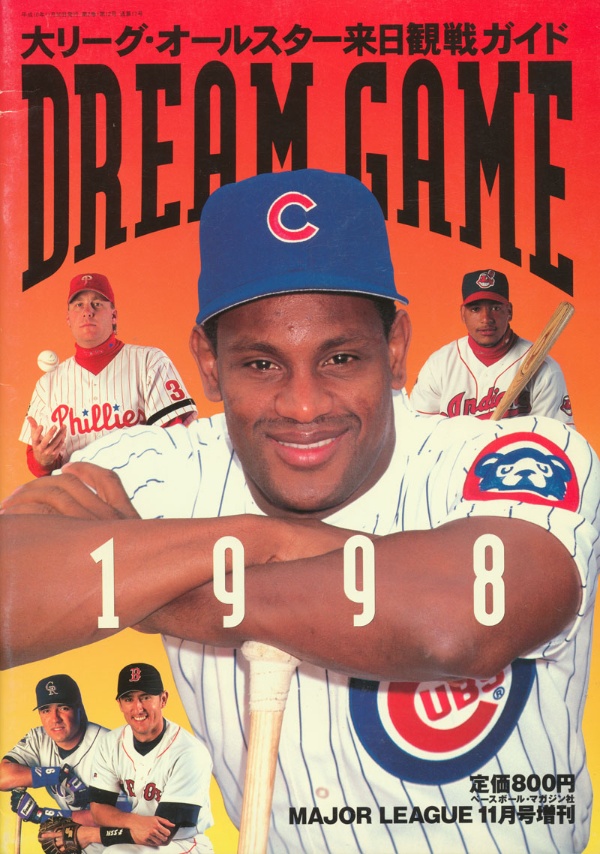
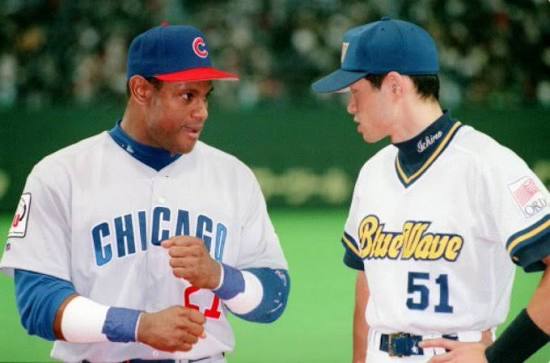
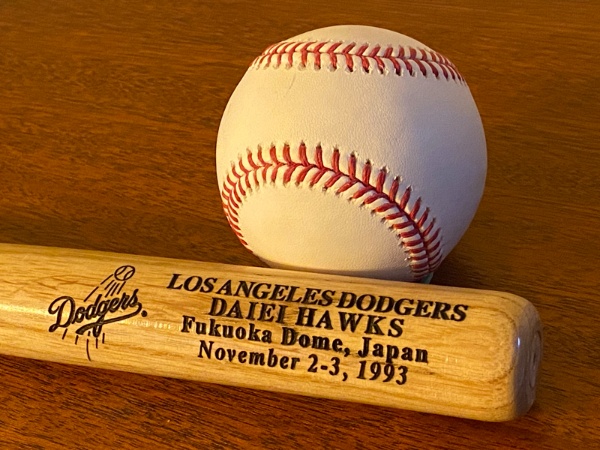
    Those are the two technical things that changed from the first time I got there. The hitting one is rather large and the fielding one is a little more subtle. By incorporating those two changes, the players now look very similar to the professional players in the States. 

    Another thing that’s changed— Japanese baseball now leans toward recovery, not only toward effort. The idea that doing more, and more was better, has changed just a little. When I got to Japan in 1995, to miss a minute of practice while your teammates were practicing, even if you had to go to the bathroom, would be frowned upon. Everyone played all the time, and there was no pitch limit. I instituted a 15 pitch-per- inning goal and a 135-per- game maximum. You would have thought that I was asking families to give away their first-born child! Suggesting that a pitcher should have a limitation on his pitches per inning and per game was unheard of in Japan. 

    While I was managing there, Masahiro Tanaka pitched twelve innings in the 2006 Koshien final that ended in a tie and then came back the next day and pitched seven innings. I mean, are you kidding me? It was some of the greatest stuff I’ve ever seen in my life. It was a badge of honor to leave it all out on the field. The idea that you had to come back and do it again the next day wasn’t necessarily part of the equation.

    A crazy example of this happened in my first year. After a game we lost, I got showered and dressed and then came out, and Hirooka, the general manager, was standing behind the batting cage, and my third baseman was taking batting practice. It’s about 11:30 at night. Sweat is pouring off of his chin, and he had just played nine innings. And the pitcher is throwing curveballs. I watched for a while because I figured, well, he needed practice hitting curveballs. And I watched for a little longer. I guess he needed a little more practice hitting curveballs. Then, I went over to Hirooka-san and asked, “So how long is he going to be hitting here tonight?” 

    And he said, “Until he can hit the curveball.” 

    Of course! I thought. There was no consideration that the next day was a day game, and it was going to be 93 degrees, and this guy had to go home, come back, and then play nine more innings. 

    That has changed. The players are not wearing themselves down as much, and that’s why I think the athletes now are bigger and stronger. They have time to recover and build rather than just breaking their bodies down through constant work.

    I have to touch on this. Somewhere it should be said, or maybe it shouldn’t be said, but it took Japan about twenty years to discourage players from smoking cigarettes. In traditional Japanese baseball culture, that was what you were supposed to do. If you looked at the back of a magazine, all the stars in the ads were smoking. And if they were smoking, you had to smoke. When I first got there in 1995, right behind the dugout there was something like a table with a grid on the top where you put your cigarette out and then just dropped it into this long ashtray. The guys would come in from the field and line up like it was buffet line, eight or nine of them smoking cigarettes. It was crazy! But that has changed as well. 

    You know that doing the same thing over and over again and expecting different results is insanity, but businesswise the Japanese teams had a way of doing the same thing over and over again and being very satisfied with the same result. So, when I came back in 2005, I was hired to do more than the managing. I was also there to help them transition into more of a Major League–type business, to help them run the club as a standalone business instead of an advertising vehicle for the international company that lends its name to the team.

    Akio Shigemitsu, who ran the club, was the son of the owner of Lotte, and he was only part Japanese, so he was seen as an outsider. I think that’s what gave him the idea to give Hirooka-san the go ahead to find a foreign manager. Shigemitsu-san wasn’t getting the weekly memo from Watanabe-san (the president of the Yomiuri Giants) that everything in Japanese baseball is great and don’t try to change a thing until I call and give you the go-ahead. He didn’t totally follow the marching orders. All of the interaction we ever had was at these very formal geisha dinners: private room, sitting on the floor, geisha gals pouring your sake, talking about the weather and all the other really important things that we could definitely agree on to make sure there wasn’t going to be any confrontation at this social event. But we would also talk about doing things a little differently to make the Marines a better team and business. 

    When Shigemitsu-san gave me the go-ahead to talk with people about marketing, it was marketing the mascot and the team brand. It was never marketing the players. Japanese baseball, just like Japanese culture, in my opinion, is such a closed culture. They treated baseball as an entertainment vehicle that was closed to the public. There was an idea that players should not interact with the fans. It was as if it would lower your image if you didn’t keep a barrier between the players and those who paid to see them play. I think what they wanted was the secretive, aloof, no-contact kind of superstar, the Joe DiMaggio type. But, marketing the player and promoting the player and letting the fans have contact with the player have changed for the better over the years. It’s now part of the business side that they’re trying to sell, not only the brand but also the talent. 

    Between-inning entertainment has also become part of the business. The teams always had the mascots, but now there are mascots, cheerleaders, plus other events between innings to entertain fans. Japanese teams have become more cognizant that they need the fans to have the game. At one time, the fans needed the game, so they provided the game. The mentality changed a little so that now the game needs the fans. I think they’re getting it now. It’s a different ownership situation. 

    But it was tough to change the marketing. Marketing is one of those weird concepts in Japan. People are supposed to want to buy your product, right? Having to persuade consumers is a newer concept, and baseball is one of the older and more conservative businesses there. For example, I almost needed an act of Congress to allow kids to come on the field after Sunday games and run around the bases.

    I’m concerned that NPH will become like the Negro Leagues. I tried to tell players that the good players should stay there and that the medium players should go to the States and make more money. But don’t take the stars away from their teams because that’s what MLB did to the Negro Leagues. The Negro Leagues were great leagues for their fans. The last Negro World Series was in 1949, two years after Jackie Robinson came to the Dodgers. That’s a whole story for another day, right? But that’s always my fear, that MLB is going to do that to another great league.

    I think a lot has been taken away from NPB because the players want to go where the grass is greener. They need to plant a few new lawns, and the beginning is to get new venues. You can then charge more money for suites and generate revenue from within the business itself rather than from the parent company. Then that money can be reinvested in R&D (research and development) and the minor leagues and in major league salaries and talent. 

    It looks like NPB is actually moving to do it with the Hokkaido new dome and the plans to renovate Jingu and make that into a spectacular downtown venue. The Giants are going to be forced to do something. Chiba, I hear, is going to spend over a billion dollars to build a new stadium along with Lotte and ZoZo in partnership. 

    One solution for NPB would be to increase their minor league system and their R&D. The problem with their system has been that they have eighty players in each organization. Thirty of them are basically on the ichi-gun (top team), and fifty of them are in the single ni-gun (minor league) team. The ni-gun manager has to keep sharp the guys who might come up to the big leagues as temporary replacements. Since there’s only one team, there is no room to develop young players. Sometimes, players are in the minor leagues for years without playing in a game. But they go to practice every day, five and six hours a day of practice. That’s the mentality: keep practicing, and you’ll get better. Well, I kept trying to tell them that they need to play to get better. It’s a game of playing, not just a game of hitting and throwing. Three of the organizations now have more than one minor league team, so that’s a start. 

    NPB also has to improve their feeder system. When you have four thousand high schools and eighty colleges playing baseball and then you draft only seventy or eighty kids a year, that is not forward thinking. They’ve got to spend more on developing players because there are a lot of players who fall through the cracks. Japanese kids develop physically later, and basically when they’re seventeen, they’re being judged whether or not they’re going to be a professional player. The feeder system has changed a little bit. It used to be Koshien to contract. Star in high school Koshien, and you get a contract. You’re one of the eighty players selected by a team. But now, teams are giving more opportunities for college and even industrial and independent league players to play professionally.

    Still, Japan needs to embrace the independent leagues. We have Minor League teams in the States that allow fans who aren’t close to a Major League franchise to go out and watch a professional baseball game. In Japan, there are independent league teams in all these little country towns. As in America, these should be seen as the place to go in the community. One could go to a baseball game with your kid and enjoy it and then go home without worrying about catching the last train out of Tokyo to get home. But the independent leagues haven’t built up a strong fan base. I was trying to expand the independent leagues when I was there because a stronger independent league system would produce more players for NPB. In 2006 when I was managing the Marines, I scouted independent teams, and I took a kid named Katsuya Kakunaka from an independent team in the draft. After I left, he wound up leading the league in hitting in 2012. 

    So anyway, that’s what I think NPB needs to do. They need to improve their facilities, create more minor league teams and more independent teams, and then they need to get together on what they’re doing. I think what they need to do eventually is change the baseball hierarchy. 

    And I think that’s already starting to change. And I think they should at least explore the possibility of having a division of Major League Baseball in Asia— not where teams are traveling back and forth between Asia and the United States, but where the winner of an Asian division enters the playoffs for a true world championship. Now, of course, that would change the model in Japan, and I don’t know that change is what they would really like to do. But I think that if baseball wants to expand and continue to grow worldwide, it would be better to merge and grow rather than just have MLB handpick talent and eliminate the competition.

    Of course, we have the WBC. But it interrupts the season. I don’t think that you’re ever going to get the best brand of baseball being played before the season. If it’s a true all-star situation, then I think it should be played midseason with everyone taking a break. Or it should be an Olympic sport played during the Winter Olympics. I always thought that would be the sensible thing to do, play the tournament in a dome during the Winter Olympics because it’s the off-season. 

    But you know, after winning the first one, and winning it often, I feel that Japan should get a bigger cut of the pie. I thought that they should have negotiated that from day one, but they didn’t. I felt and feel that it could be a big boost economically for the players. Also with the WBC, people will continue to say, “Oh, yeah, Japan only won because they take it more seriously. Japan only won because they practiced more before it started.” Well, if they’re going to practice more and use better players and be better prepared, which makes it a better event, then they should be rewarded economically for that. 

    My advice to American fans seeing their first Japanese game? Well, they should understand that the food is going to be better than they’ve ever had at a baseball park, so order properly: that the kegs are on legs and you’re going to get a very cold and foam-filled glass of beer that you absolutely have to have, and that you should pay attention to the game just like everyone else around you, because they won’t miss a pitch or an inning regardless of the score or who’s at the plate. The Japanese give the game that respect when they’re in the stands. There’s a better understanding of the game from the fans. It’s not necessarily vocalized or transmitted through action. If someone thinks something is good here in the States, they stand up in front of the person behind them and start yelling and waving their hands, regardless of whether the guy behind them can see. It’s a little different in Japan. But if you turn to the seventy-year- old woman to your left and ask what the count is, she’ll probably know. That should be appreciated. 

    The Japanese players will look and act in a very similar way, and they do that out of respect for the game. They feel that there’s a certain way to dress, a certain way to act when they’re on the field, a certain way to swing and miss in a very dramatic fashion. There are little moments of drama in a Japanese game that are kind of unique, but you have to know what you’re looking at to actually see them. There’s a little bit of Kabuki theater when they have a collision or get hit by a pitch or swing violently and miss or dive for a ball. Also, the idea of the count going full is respected a little more in Japan, that the battle has taken place and now it comes to this crescendo and the outcome will be on the next pitch. That’s Japanese baseball in its truest, purest form. The game is built around those moments. That’s why they love it.

    Off Base with Howard Cole is available on Substack

  • Baseball at the 1964 Tokyo Olympics

    Baseball at the 1964 Tokyo Olympics

    by Dave McNeely

    The 1964 Tokyo Olympics were the fifth time that baseball was included as a demonstration sport, following the 1912, 1936, 1952 and 1956 Olympiads.  The 1964 games, however, were different than the games before them in that more than one game would be played.

    Until recently, most English-language accounts of the 1964 Olympic baseball events described it as a single game played between a US team made up of college players against “a Japanese amateur all-star team”.  The game was played at Meiji Jingu Stadium in Tokyo on October 11th,1964 in front of 50,000 fans and was won by the US team by a score of 6-2.  One of the US players, Shaun Fitzmaurice, hit a home run on the first pitch of the game.

    As it turns out, this account is not entirely accurate.  There were actually TWO games that Team USA played in at Jingu Stadium that day – one against a team of Japanese collegiate players and one against a team of Japanese corporate league players.  Neither Japanese team should really be considered an “all-star” team.  The collegiate team was essentially the Komazawa University team (which had just won the All-Japan University Baseball Championship four months earlier) which was fortified with seven players from other colleges in Tokyo.  Similarly, the corporate league team was the Nippon Express team (which had won the Intercity Baseball Tournament – essentially the corporate league championship – two and a half months earlier) that was bolstered by seven players from other corporate league teams.

    Rod Dedeaux, the legendary USC baseball coach, was the manager of the US team.  He’d put together an all-star team of collegiate players for a 14-game tour of Japan and South Korea that included these two games in Tokyo.  The tour was organized to drum up interest in having baseball added to future Olympics.  The team would include eight players who would go on to play in the major leagues – Mike Epstein, Gary Sutherland, Chuck Dobson, Alan Closter, Dick Joyce, Jim Hibbs, Ken Suarez and the previously mentioned Shaun Fitzmaurice.  

    The baseball team was not considered part of the official US Olympic team and was not quartered in the Olympic Village.  Neither were they allowed to participate in the Opening Ceremony.  On the plus side, however, they were not subject to the curfew that the other athletes had and were able to enjoy the Tokyo nightlife deeper into the evening.  Similarly, the Japanese teams were not considered part of the official Japanese team and also did not take part in the Opening Ceremony.  

    The Japanese collegiate team (seen above with Team USA) was managed by Akihito Kobayashi, the head coach of the Komazawa University team.  Eleven of the eighteen players on the roster were from Komazawa with another two players coming from one of the University’s Tohto League rivals, Chou University.  The other five players came from Tokyo Big Six league schools – two from Hosei, two from Keio and one from Rikkio.  All the players wore Komazawa uniforms.

    Twelve members of this team would go on to have professional careers in NPB.  Tokuji “Atsushi” Nagaike of Hosei University was the biggest name here – he won two Pacific League MVP awards (1969 & 1971) and led the league in home runs and RBIs three times each.  Shozo Doi (Rikkio) and Toshimitsu Suetsugu (Chuo) were key members of the Yomiuri Giants team that won nine straight Nippon Series between 1965 and 1973 (known as the V9 Giants).  Doi managed the Orix BlueWave in the early 1990s and is most famous (infamous?) for saying that Ichiro Suzuki would never be able to hit with that batting stance.  Taisuke Watanabe (Keio) had thrown the first perfect game in Tokyo Big Six history five months before these games.

    The corporate league team (seen above with Team USA) was managed by Seiji Inaba, the head coach of Nippon Express.  Like the collegiate team, the corporate league team’s eighteen player roster featured eleven players from their manager’s team.  The other seven players consisted of two players each from Nippon Oil and Nippon Steel Pipe and one each from Sumitomo Metal, Nippon Columbia and Kanekalon Kaneka.  All the members of the team wore Nippon Express uniforms.

    Only three of these players would have professional careers.  The most interesting story of any of these players is Shigeo Kondo of Nippon Columbia who, after an eleven-year corporate league career, was taken by the Lotte Orions in the 1971 NPB draft.  At 29 years and one month, he was the oldest player drafted, a record he would hold for eleven years until 30-year and five-month-old Norio Ichimura was drafted by the Dragons in 1982.

    With the smoke of the Olympic cauldron (which had been lit during the Opening Ceremony the previous evening) at the National Stadium visible just beyond the left field stands of Jingu Stadium, the teams held their own “opening ceremony” before the two collegiate teams faced off in the first game.  While there’s no record of whether Fitzmaurice did indeed hit a home run on the first pitch of the game, the US team did score a run in the top of the first inning.  Japan matched that run in the bottom of the inning and went ahead 2-1 with a single run in the fifth inning.  Team USA tied the score in the top of the ninth and that’s how the game ended – a 2-2 tie.  The corporate league team proved no match for Team USA in the nightcap with Dedeaux’s squad shutting out Inaba’s by a score of 3-0.

    Team USA’s tour of Japan would conclude two weeks later with a doubleheader in Urawa.  Their first game against “a selected team from Saitama Prefecture” ended in a 3-3 tie while Nippon Express got their revenge by winning the second game 3-2.  The collegiate team would finish the Japanese portion of their tour with a record of 5-2-2. 

    Baseball would not return to the Olympics for twenty years when it was again a demonstration sport for the 1984 Los Angeles games.  Unlike the previous instances, the 1984 games featured an eight-team tournament rather than a single day event.  The only connection to the 1964 games was Rod Dedeaux, who would again manage Team USA.  The Japanese team took the “unofficial” gold medal with Team USA taking silver.  The two nations would swap spots at the 1988 Seoul games, the last that baseball would be played in as a demonstration sport.  It would become an official sport at the 1992 Barcelona games.

    Note – the photos for this post were taken from the “Japan National Team Uniform Catalog”, a book/magazine published by Baseball Magazine She in April of 2020.  The baseball cards are from the author’s personal collection.

    Dave McNeely has been collecting Japanese Baseball cards for more than 25 years and has been blogging about them since 2007.  His blog can be found at Japanese Baseball Cards.

  • San Francisco Baseball Returns to Japan: The 1960 Giants Goodwill Tour

    San Francisco Baseball Returns to Japan: The 1960 Giants Goodwill Tour

    by Robert Garratt

    Every Monday morning we will post an article from SABR’s award-winning books Nichibei Yakyu: Volumes I and II. Each will present a different chapter in the long history of US-Japan baseball relations. This week Rob Garratt tells us about Willie Mays and the San Francisco Giants 1960 visit to Japan.

    The San Francisco Giants enjoyed a banner year in 1960. After almost five years of planning by the city’s mayor and Board of Supervisors and two years of problem-plagued construction, the Giants’ new ballpark, Candlestick Park, opened in time for the 1960 season. It was a dream come true for Giants owner Horace Stoneham and it justified his move from New York at the end of the 1957 season. The Giants, with a new identity as a West Coast team, now had a permanent location in a new ballpark. The team drew well in its first year at Candlestick, and Stoneham was pleased. And while the Giants would miss out on the National League pennant in 1960, they did manage an exciting postseason, nonetheless. In October 1960, the San Francisco Giants traveled to Japan on a goodwill tour, carrying on a tradition of the city’s connection with Japanese baseball.

    San Francisco baseball was known to the Japanese public first through the energy of Frank “Lefty” O’Doul, a San Francisco native who visited Japan in the 1930s with American baseball teams, fell in love with the country and its people, and saw the potential there for good baseball.  O’Doul, who is enshrined in Japan’s Baseball Hall of Fame for his contribution to the Japanese game, took his San Francisco Seals Pacific Coast League team to Japan in 1949 (O’Doul was the Seals manager), the first time after World War II that an American team toured Japan. The team’s visit was endorsed by General Douglas MacArthur, the American administrator of Occupied Japan, who felt that the game would lift the spirits of the Japanese people and do wonders for diplomacy between two former foes. The Seals’ visit was a resounding success, with the team greeted by some of the largest crowds that had assembled publicly in Japan since the end of the war. By all accounts it was a successful diplomatic venture with the added bonus that it increased the popularity of the game in Japan.

    The Giants’ 1960 tour was the second postwar visit for a San Francisco ballclub and the second for Horace Stoneham as well. Stoneham took his New York Giants to Japan for an exhibition tour in 1953, the first single major-league team to do so. The Giants dominated the 1953 series with Japan, drubbing the Yomiuri Giants 11-1 in the opening game and going on to win nine straight games, finishing the series with 12 victories against one loss and one tie. The Japanese players may have lost on the field, but the Japanese people won their way into Stoneham’s heart. The tour itself made a great impression on the Giants’ boss, who was overwhelmed by the enthusiasm of the Japanese fans, and by the gracious hospitality of the Japanese officials. Treated as an international celebrity, he was moved by the attention and honor paid to the Giants as foreign guests and he was charmed by the country itself – its sights, its food, and its ceremonies and rituals that reflected a deep sense of culture. Stoneham was quoted as recognizing the goodwill gesture of the tour, especially its importance in strengthening the ties between the two countries.

    Those 1953 memories were dancing in Stoneham’s head in late 1959 when he received an invitation from Japanese officials for the Giants to return to Japan in the fall of 1960. The proposal was backed by Matsutaro Shoriki, owner of the Yomiuri Shimbun, one of the leading newspaper conglomerates in Japan, and brokered by Tsuneo “Cappy” Harada, a Nisei Japanese American who was helping develop Japanese baseball in the 1950s. Stoneham was so enthusiastic about the invitation that he sent Lefty O’Doul to Japan in the winter of 1959-60 to work with Harada and Shoriki to firm up the plans; O’Doul had been working for the Giants as a consultant since their arrival in San Francisco and Stoneham wanted to take full advantage of O’Doul’s ties with Japanese baseball. The initial discussions went well and by the summer of 1960, Shoriki and Harada presented the Giants with a formal plan for a tour of Japan.

    The proposed invitation called for the Giants to play a 16-game exhibition schedule in 10 Japanese cities, under Japanese rules and officiated by Japanese umpires, with participation by San Francisco’s “star players.” Shoriki was careful to insist on Giants star power, knowing that the likes of Willie Mays, Willie McCovey, and Orlando Cepeda would appeal to Japanese fans eager to see great hitting. Stoneham was more than happy to accept and returned the signed agreement in late August 1960. Twenty-two players agreed to travel to Japan, including Mays, McCovey, Cepeda, and a young Juan Marichal, all of them future Hall of Famers. Most of the Giants starters joined the tour as well, among them Felipe Alou, Jim Davenport, and pitchers Jack Sanford and Sam Jones. Included were club officials, headed by Stoneham and his wife, Valleda, acting manager Tom Sheehan, club secretary Eddie Brannick, team publicist Garry Schumacher, and O’Doul.

    The organizing Japanese committee pulled out all the stops. The schedule of events upon arrival was nothing short of breathtaking, with almost no hour unaccounted for in the daily routines. Everything was meticulously planned from a television press conference at the airport to a celebrity parade from the airport to the city. Crowds lined the 10-mile parade route and packed the rain-soaked streets in downtown Tokyo as the Giants made their way to the hotel. That evening a welcoming dinner reception was held at the Imperial Hotel and Stoneham read a message from San Francisco Mayor George Christopher, a special greeting to “[our] ‘sister city,’ expressing best wishes to the Japanese people on the 100th anniversary of US-Japan diplomatic relations.” On the second day more ceremonial activities took place as the Giants toured Yomiuri’s headquarters, visited the Nihon Television Studios, where the players were interviewed and introduced to Japan’s national TV audience, practiced for 1½ hours at Korakuen Stadium, and attended a reception in their honor at the US Embassy, hosted by Ambassador Douglas MacArthur II, the nephew of General MacArthur. Japanese planners had thought of every probability, working in “alternatives” for events and sightseeing, in case of changes due to bad weather. In what must have seemed a whirlwind pace of parades, receptions, and ceremonial lunches and dinners, the Giants, with very little time for themselves, might have thought that a game of baseball was almost anticlimactic.

    The 1960 San Francisco Giants arrive in Japan (National Baseball Hall of Fame Library, Cooperstown, New York)

    On the third day, the time finally came for the Giants to face the Yomiuri Giants in the inaugural game of the tour. But the visiting players would wait again as the game provided the Japanese with yet another opportunity for pregame pageantry, described by one source as part parade, part theater spectacle, as “shapely Japanese models and the Tokyo police band led the Japanese and American Giants around Korakuen Stadium as fireworks exploded, and balloons and pigeons soared skyward.”  Once the teams had finished the procession and the air had cleared, Ambassador MacArthur read a greeting from President Dwight Eisenhower that recalled the long history of exchanges between Japanese and American baseball players, noting the important role of the national pastime in both countries. The president’s message stressed the importance of this year’s exhibition series as a promotion of “the spirit of international understanding and co-operation essential to the peace of the world.” Then Matsutaro Shoriki threw out the traditional first ball and the game officially began, at last.

    Initially things did not fare well for the visitors, who were perhaps weary from international travel and overwhelmed by welcoming ceremonies. In the first two games of the scheduled 16-game tour, the Japanese beat San Francisco, much to the surprise and chagrin of some of the local sportswriters, who expressed a tinge of disappointment over the Japanese success. Writing for the Japan Times, Katsundo Mizuno labeled the Giants’ start as the “worst of any major league outfit” that ever visited Japan, and he wondered what was wrong with them. The headlines in the local coverage of the opening game reflected a mixture of shock with a dash of hyperbole: “Tokyo’s Yomiuri Giants Bomb San Francisco, 1-0” although the Japanese managed only two hits against Giants pitching.

    The first game was the only one in which San Francisco faced players from a single team. For the rest of the exhibition tour, the Giants played squads of all-stars drawn from the two Nippon Professional Baseball leagues. The Giants lost the second game, but managed a win in Game 3, prompting the Japanese journalists to collect their breath, astonished by the Americans’ poor start. “By squeaking past the Japan All-Stars 1-0 at Tokyo’s Korakuen stadium yesterday, the Giants have averted unheard of catastrophe for major league baseball. No visiting U.S. big league team has ever lost three games in a row in Japan.”  Hisanori Karita, a veteran Japanese baseball commentator, was quoted as demanding more “major-style action” from the visitors.

    When questioned by the Japanese press about their slow start, Giants players and team officials responded politely and diplomatically, although privately they must have wondered what the fuss was about, given that they were adjusting to international travel, a frenetic welcome schedule, and a foreign cultural environment. Interim Giants manager Tom Sheehan tried some American tongue-in-cheek humor, “I understand we’ve set a new record for major leaguers by losing two games in a row. We may lose all the remaining games, too, you know.” “We’ll play better tomorrow,” he added.

    The folksy Sheehan proved a truthful prognosticator. Games 4 and 5 were on the road, in Sapporo and Sendai, and the San Franciscans won them both, with plenty of offense including four home runs, three of them by Willie McCovey. The Giants then returned to Tokyo for two more games at Korakuen Stadium, which they split with the host team, giving them a 4-3 record for the series as they prepared to play the rest of the tour “on the road.” One highlight for the American squad was the attendance of Japanese royalty in Game 6 at Korakuen. Crown Prince Akihito and Crown Princess Michiko, guests of Matsutaro Shoriki, watched the Japanese all-stars erupt for 10 runs – the most they would score in any game of the tour – and beat the Giants, 10-7, before 32,000 fans. The crown prince and princess saw Willie Mays homer in the game, and then watched All-Star Isao Harimoto answer with a two-run blast of his own.

    For the remainder of the exhibition tour, the Giants played outside of Tokyo, on a swing throughout southern Japan taking them to seven cities: Toyama; a three-game series in Osaka; Fukuoka; Shimonoseki; Hiroshima; Nagoya; and finishing in Shizuoka. It was on this road trip that the Giants found their mojo, winning seven straight games. But it was the manner in which they won that was impressive. Unlike the games played in Tokyo, which were usually low-scoring and tight, most of the road games were one-sided, with the Giants’ bats coming alive, much to the delight of the Japanese fans, who expected to see home run fireworks from the likes of Mays, McCovey, and Cepeda.

    After an unusual game in Toyama in which the Giants banged out three home runs in the first inning to take a seven-run lead, only to see the All-Stars claw their way back, highlighted by a three-run homer by Kenjiro Tamiya off Mike McCormick – the game ended in 10 innings in a 7-7 tie – it was on to Osaka. The Giants found this stop to their liking, sweeping the three-game series in front of enthusiastic Osaka fans (the three games drew 90,000). During the Osaka series, they also enjoyed a day off touring the historic city of Kyoto.

    Then it was on to Fukuoka, where the Giants won decisively, 8-4, and then to Shimonoseki, where they beat the all-star team, 11-5, in a demonstration of offensive fire, hitting four home runs. In an example of the goodwill that underscored and permeated the entire baseball tour, there was a somber and emotional moment when the Giants arrived in Hiroshima. Prior to the game, which the Giants won, 4-1, Stoneham led the players and team officials to the Hiroshima Peace Memorial Park, where both Stoneham and Sheehan placed bouquets of flowers by the Memorial Cenotaph in a solemn ceremony honoring the memory of those Hiroshima citizens who died in the final days of World War II. After Hiroshima, the Giants traveled to Nagoya and put up big numbers once again in a 14-2 win. The last game of the tour was played at Shizuoka’s Kusanagi Stadium on November 13, won by the Japanese All-Stars, 3-2. The Giants totals for the series were 11 wins, 4 losses and 1 tie. After the game, the Giants boarded a train to Tokyo for three days of sightseeing before they flew home on Friday, November 18.

    *****

    Despite their slow start, the Giants finished their exhibition goodwill tour of Japan with a flurry and put up impressive numbers for the series, hitting 31 homers over 16 games, much to the delight of the Japanese fans; McCovey hit eight home runs, Mays seven, and Cepeda five. Mays hit .393 for the tour and was named by the all-star and Giants managers as the series’ Most Valuable Player. Giants pitching was strong as well, with an overall 2.41 ERA and 92 strikeouts in 142 innings. Sam Jones had a 3-0 record with an amazing 0.82 ERA; Juan Marichal posted a 1.55 ERA with a 2-0 record and a complete game; Mike McCormick had 22 strikeouts in 23 ⅔ innings.  In a memorable and significant moment for Japanese fans, Jones displayed his own version of goodwill when he went over to first base after hitting a batter and apologized to the hitter. There were other friendly exchanges between the Giants players and the all-stars throughout the tour, some of which involved discussions of techniques for hitting and pitching. Overall, the relations between the two teams were positive and gracious, with a healthy sense of mutual respect. The Japanese fans were also captivated by the tour and turned out in all the cities to welcome the Giants and attend the games. The fans’ enthusiasm was evident in the exhibition tour’s great success at the turnstiles. The Giants drew 441,000 for the 16 games, according to the Japan Baseball Commission and the Yomiuri Shimbun.

    *****

    For all the goodwill that came of the Giants’ visit, the tour was not without its controversy, however. Buoyed by the games and the enthusiastic Japanese response – both the total attendance and the ticker-tape parades in various cities that drew huge crowds – and heady about the future of cooperation between the United States and Japan, Ambassador MacArthur spoke at a farewell reception at the US Embassy of more baseball competition between the two countries. MacArthur was specific in his proposal; he envisioned a future world series between the American champion and the Japanese champion and even had a date in mind. He thought an initial exhibition series could be played in 1964, in concert with the Tokyo Olympic Games, which could lead to a more established series a few years later.

    His idea was immediately supported by Nobori Inouye, the commissioner of Japanese baseball. Both Lefty O’Doul and Cappy Harada also favored the idea and thought that with reasonable planning an international world series could take place perhaps in five or six years. Both men felt that Japanese baseball was improving rapidly and would offer good competition. So did Stoneham. In a press conference upon his return to San Francisco, the Giants boss remarked that he was “amazed” at the improvement of the Japanese players in the seven years since he first visited Japan. Moreover, Stoneham wanted a continued connection with Japanese baseball.

    But when Harada, who was working as a consultant to the Giants, brought the idea to Commissioner Ford Frick in New York, it was dead-on-arrival. Perhaps it was an idea that was too embryonic, requiring planning, research, and co-operation between organizations. Possibly Frick accepted the prevailing view of Japanese baseball as inferior to the American game. Or it might have been the process by which the idea took flight that Frick objected to, coming out of the blue from an American ambassador in Japan. What was certain, however, was that Frick wanted to assert his authority about such matters. He fired off an official statement indicating that no decision can be made about any international baseball series without input from the commissioner’s office, and suggested that he had no immediate plans to entertain such a proposal.

    Another controversy emerged during the tour involving the Giants’ interest in Japanese players. Upon Stoneham’s arrival in Japan, in an uncharacteristic slip of the tongue – Stoneham usually was tight-lipped about personnel matters, especially when it came to player acquisitions – the Giants’ owner commented that there were “several Japanese players we have heard about and are anxious to see.” Explaining that he would like to reach some formal agreement with a few Japanese clubs, he hoped to invite some players to the Giants’ spring training. These were just casual remarks folded into his words of appreciation of the Japanese invitation and nothing much was spoken about any plans or arrangements for the first 10 days of the tour. By the end of the second week, however, word had leaked to some in the press that Stoneham was interested in signing some Japanese players, or at least having them affiliate in some fashion with his organization, including a spring-training visit.

    While the newspapers were speculating, Stoneham was working quietly behind the scenes. When the Giants arrived in Osaka on November 3 for the three-game series, Stoneham extended an invitation to the Nankai Hawks, to have pitcher Tadashi Sugiura attend their 1961 spring training in Arizona. The Japanese responded almost immediately to the offer. Makoto Tachibana, the president of the Nankai Hawks, issued a statement to the local press rejecting Stoneham’s invitation and made it clear he was suspicious of the Giants’ motives.

    “I feel it isn’t only a case of having [Sugiura] attend the camp, but an underlying intention to hire him,” Tachibana said. “Even if this isn’t true, it can be considered that they may want to learn something from him, to – I hate to say it – steal his techniques.” Tachibana’s paranoia tended somewhat to the bizarre – “there is a possibility they want to use Sugiura for experiments” – but the Nankai owner’s root cause for worry was evident in his closing remarks to the press. He feared that Sugiura would be “separated from his team,” that is, playing for the Giants, “and we cannot permit a man as valuable to Japanese baseball to be used to his disadvantage.” The concern that Japanese baseball might lose some of its best players to American clubs was clear. There was also an invitation extended to a position player, Takeshi Kuwata, a third baseman for the Taiyo Whales, but that, too, came to nothing. The invitations and their subsequent refusals were minor incidents in the larger story of the tour, the games, the associations between players and the Japanese fans’ excitement over the competition, but they provided an interesting subplot to the 1960 Giants’ visit.

    Once home from Japan, Stoneham more or less confirmed Tachibana’s suspicions. In remarks to a local sportswriter at a post-tour press conference, the Giants boss praised the Japanese players, taking care to emphasize the improvements in the quality of play, the skill, and the athleticism of many Japanese players since his 1953 visit with his New York Giants team. He implied that a few of the Japanese players, chiefly pitchers, might be able to have good results immediately in the major leagues, something that Tom Sheehan had noticed on the tour. That Stoneham saw the potential of Japanese players is not surprising; he had become a keen observer of major-league talent over the years. What is surprising is how prescient his notions were in the fall of 1960. The thinking behind those public remarks would take shape quickly, much to the surprise of both the major leagues and Nippon Professional Baseball. Just three years later, Stoneham’s musings on Japanese players would materialize with a radical move that would change baseball history.

    In the fall of 1963, Cappy Harada, working for Stoneham as a scout and on the payroll with the Nankai Hawks as a consultant, came up with a proposal for cooperation between the two clubs. With Stoneham’s blessing, Harada arranged for three Hawks players – third baseman Tatsuhiko Tanaka, catcher Hiroshi Takahashi, and pitcher Masanori Murakami – to come to the United States for 1964 spring training and a chance to develop within the Giants’ minor-league system. According to the agreement, the Japanese players would participate in general spring training and then be assigned to minor-league teams for the rest of the season, Murakami at single A, and Tanaka and Takahashi at lower levels. Once the minor-league season was finished, the Giants sent the position players home to Japan, but kept Murakami, who had progressed so well in Fresno that he was called up to the big club in September. On Tuesday evening, September 1, 1964, in Shea Stadium, New York, Murakami made history as a baseball pioneer, pitching one inning of scoreless relief, the first Japanese national to play in the majors. He would pitch through the month of September and would return to the Giants for the 1965 season.

    Horace Stoneham has many achievements on his résumé as a baseball owner. After Jackie Robinson broke the color barrier with the Brooklyn Dodgers, Stoneham was soon to follow with the signing of African American players. He led the way in breaking a second barrier in the signing of Latino players. Along with Bill Veeck, he was responsible for founding the Cactus League in 1948. With his signing of Murakami, he broke another barrier in baseball, making the game global. It is tempting to think that this last achievement germinated in the stands at Japanese ballparks in 1960, as the Giants boss watched the Japanese players, especially the pitchers. He was certainly impressed enough with the players’ abilities to extend an invitation for two of them to come to spring training, even though the gesture did not bear fruit. Nonetheless, he sensed the latent talent in Japanese baseball. And perhaps on that 1960 tour, he saw the immediate future: a Japanese national wearing the uniform of the San Francisco Giants and playing in the major leagues.

    Continue to read the full article on the SABR website