Category: Japanese in MLB

  • Japan’s Favorite Players: No. 5, Hideo Nomo

    Japan’s Favorite Players: No. 5, Hideo Nomo

    by Thomas Love Seagull

    A recent poll for a TV special saw more than 50,000 people in Japan vote for their favorite retired baseball players. 20 players emerged from a pool of 9,000. Yes, they could only vote for players who are no longer active, so you won’t see Shohei Ohtani or other current stars on this list. Which is probably smart because I’m sure Ohtani would win by default. There are, however, players who were beloved but not necessarily brilliant, and foreign stars who found success after coming to NPB. Unsurprisingly, the list leans heavily towards the past 30 years, with a few legends thrown in for good measure.

    Over the next few weeks, I’ll be profiling each of these players. Some of these players I know only a little about, so this will be as much a journey for me as, hopefully, it will be for you. It’ll be a mix of history, stats, and whatever interesting stories I can dig up.

    For now, have a look at the list below and see how the public ranked them. I’ve included the years they played in NPB in parentheses.

    20. Alex Ramirez (2001-2013); 19. Yoshinobu Takahashi (1998-2015); 18. Warren Cromartie (1984-1990), 17. Takashi Toritani (2004-2021); 16. Suguru Egawa (1979-1987); 15. Katsuya Nomura (1954-1980); 14. Tatsunori Hara (1981-1995); 13. Kazuhiro Kiyohara (1985-2008); 12. Masayuki Kakefu (1974-1988); 11. Masumi Kuwata (1986-2006); 10. Atsuya Furuta (1990-2007); 9. Randy Bass (1983-1988); 8. Daisuke Matsuzaka (1999-2006, 2015-2016, 2018-2019, 2021); 7. Tsuyoshi Shinjo (1991-2000, 2004-2006); 6. Hiromitsu Ochiai (1979-1998); 5. Hideo Nomo (1990-1994); 4. Hideki Matsui (1993-2002); 3. Shigeo Nagashima (1958-1974); 2. Sadaharu Oh (1958-1980); 1. Ichiro Suzuki (1992-2000).

    The pitcher who refused to change, crossed an ocean, and altered baseball forever

    On the night of September 17, 1996, Hideo Nomo did something that almost certainly will never be done again. He walked out to the mound at Coors Field in Denver—the most hitter-friendly ballpark in the history of of Major League Baseball, a place so absurdly hostile to pitchers that the team eventually had to store baseballs in a humidor just to keep fly balls from becoming souvenirs—and threw a no-hitter.

    The Rockies that year were dangerous. They scored nearly 1000 runs. They hit 221 home runs. Three of their players hit 40 or more, including Ellis Burks, who led the league in runs scored and slugging percentage. They also led the league in attendance. The mile-high altitude thinned the air, making breaking balls misbehave and fastballs sail. Nomo himself had an 11.17 ERA in the park going into that game. He had never won there.

    He threw nine innings. He walked four. He struck out eight. He won, 9-0.

    No other pitcher has ever thrown a no-hitter at Coors Field. No one probably ever will. And that was just one night in the career of Hideo Nomo.

    There is a version of Nomo’s story that starts with the statistics, and those statistics are genuinely remarkable: 201 wins across two leagues and nearly two decades, 3,122 strikeouts, two no-hitters, a Rookie of the Year award on each side of the Pacific. But the numbers don’t quite capture what Nomo was, or what he meant, or what it cost him to become what he became.

    The better place to start is with a young man from Osaka who was told, at the age of 14, by the head coach of the top baseball high school in his city: “With that tornado windup, you’ll never make it.”

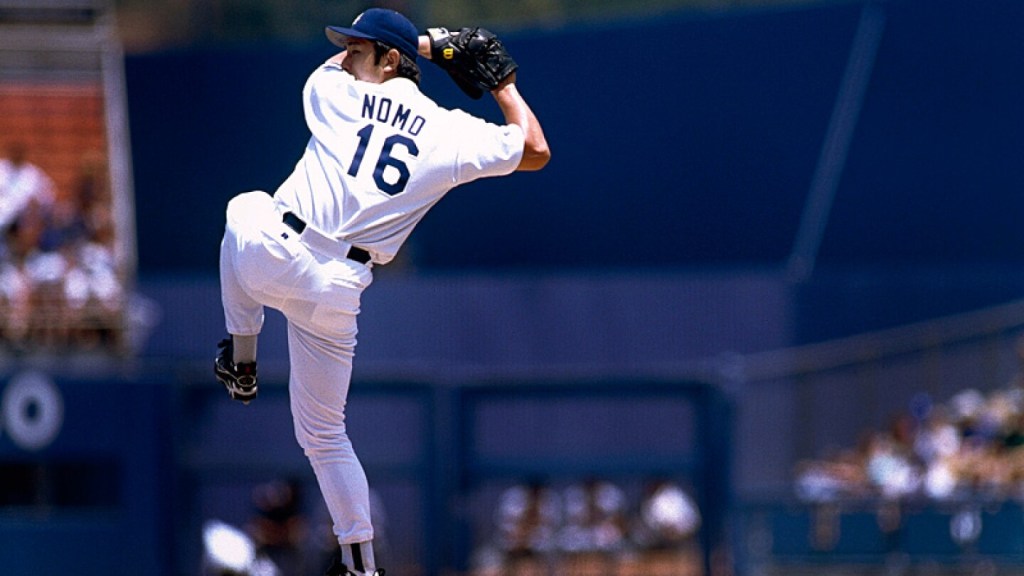
    Nomo had invented the windup himself, as a kid trying to impress his father. He figured that twisting his body and coiling away from the batter until his back faced home plate, pausing there for a suspended, theatrical moment before releasing the ball allowed him to throw harder. He was correct. He was also never going to change it, no matter who told him to. When asked about the delivery later in his career, he would say that no one had taught it to him, though he did admit that one piece of it, the hip-first drive toward the plate, came from watching Masaji Hiramatsu* of the Taiyo Whales as a boy and wanting to move like him. Buried inside the most spectacular pitching motion in baseball was a child’s act of imitation. That stubbornness, that absolute certainty about who he was and how he pitched, is as important to understanding Nomo as anything that happened between the chalk lines.

    *Hiramatsu won 201 games in his career, but his nickname was “The Glass Ace” because he missed so many games due to injuries and frequently catching colds.

    He enrolled instead at a lesser-known high school, dominated the local competition, and pitched a perfect game. One year ahead of him in the Osaka baseball scene was Kazuhiro Kiyohara, already a legend at PL Gakuen High School, already being called the greatest hitter in the country. Kiyohara later said he had never even heard of Nomo. That is how anonymous Nomo was, invisible to the very generation he would come to dominate.

    He joined a company team where he perfected his forkball with the kind of obsessive dedication that tends to separate the greats from mere mortals. The story goes that he taped a tennis ball between his index and middle fingers before bed each night, conditioning his grip while he slept.

    In 1989, eight teams selected Nomo in the first round of the NPB draft. Eight. That had never happened before. The Kintetsu Buffaloes won the lottery and signed him, with one condition written into the contract at Nomo’s insistence: they would not try to change his pitching form.

    The scouts and commentators who watched him in spring training of 1990 were not impressed. Even after the Tornado name was bestowed, the skeptics kept coming. Would he ever have real control? Could he hold up for a full season? Wouldn’t he break down eventually? In a rookie-year interview Nomo smiled faintly and said people had told him everything about his delivery was wrong. But, he added, once they actually watched him throw in a bullpen session, they tended to go quiet. After two early losses, he later recalled that stretch as the loneliest of his career; the dormitory felt like the only place he belonged. He said nothing publicly. He also changed nothing.

    His first win came on April 29 against the Orix Braves, when he struck out 17 batters, tying the Japanese single-game record, while allowing only two runs in a complete game. Afterward, rather than celebrate, he deflected entirely: because his teammates had scored so many runs, it had given him a sort of rhythm. That was the version of Nomo the public would come to know, one who was private and guarded, but also generous toward others.

    What followed was one of the greatest rookie seasons in Japanese baseball history. Nomo went 18-8 with a 2.91 ERA and 287 strikeouts, winning the Rookie of the Year, the MVP, and the Sawamura Award (the Japanese equivalent to the Cy Young) in the same breath. Oh, and he won the pitching Triple Crown. He was 21 years old. He led the Pacific League in wins and strikeouts for each of his first four seasons, a feat without precedent. The Tornado name was officially bestowed in late May, chosen by public contest from thousands of entries, arriving right in the middle of the season when he was still proving the critics wrong.

    He also led the league in walks during his first four years, and in wild pitches two times. Tornado was an apt nickname in more ways than one.

    The best part? He did nearly all of it with two pitches. A fastball and a forkball. That was essentially the entire arsenal. Shinichi Sato, who faced Nomo as a member of the Hawks, said there is simply no other starter who has ever gotten away with two pitches at that level.

    What made the two pitches so devastating was the delivery that preceded them. Orestes Destrade, the Cuban-born slugger who played for the Seibu Lions, described the experience of standing in the batter’s box against Nomo this way: because Nomo turned his back to the plate and paused—that eerie, still moment where everything stopped, just like in the eye of a storm—timing him was nearly impossible. You couldn’t sync up with it. The ball came from nowhere and went somewhere unexpected. When reporters kept asking Nomo about strikeouts, he waved them off every time: “Strikeouts are just a result. What matters is the team winning.” It wasn’t false modesty. It was the same principle he had lived by since he was a boy twisting his body in a schoolyard. “If I change my own way,” he once said, “it’s over.”

    His teammates from that era remember something else too: Nomo finished what he started. Eiji Kiyokawa, a reliever, said bluntly that Nomo was the kind of ace who pitched nine innings and left nothing for the bullpen. It wasn’t arrogance. It was a starter’s code, a sense of personal responsibility for the game he was given. He pitched 22 complete games in 1991—still the most by any pitcher in Japan since the end of the Showa era—and threw 3,996 pitches that season. Nearly four thousand pitches in a single year. Manager Akira Ohgi, an easygoing man who trusted his players and left them alone, simply kept handing Nomo the ball, start after start, around 145-150 pitches a time. Nomo, for his part, kept taking it. What else was an ace pitcher to do?

    In 1991, Nomo set the all-time Japanese record by striking out ten or more batters in six consecutive starts. What makes the streak stranger, and more revealing, is his record during it: 2-4. He struck out at least ten batters in every one of those six games, threw complete games in five of them, and lost four times. He was unhittable and yet, the Buffaloes team kept losing anyway. That same year the All-Star Game offered a rare glimpse of a different Nomo entirely. In the second game, played in Hiroshima, the Pacific League ran out of position players in extra innings and had to send Nomo up as an emergency pinch-hitter. He borrowed an Orix helmet (remember, he played for Kintetsu*) put it on, and walked to the plate grinning. He never swung the bat. Three pitches later he took a called third strike and walked back to the dugout to a roaring ovation from the full stadium. It was the most cheerful strikeout anyone had ever seen. The crowd loved it. Nomo seemed to as well.

    *Of course, Orix and Kintetsu would merge following the 2004 season to form the Orix Buffaloes. Foreshadowing, anyone?

    He later said that his loyalty to Ohgi ran so deep precisely because Ohgi trusted him completely, never meddled, never second-guessed. Ohgi gave Nomo the ball and got out of the way. That relationship, more than anything else, is what made what came next so difficult. After two consecutive second place finishes, Ohgi resigned. His replacement was franchise legend and 300-game winner Keishi Suzuki. Suzuki’s management style was the complete opposite of Ohgi’s.

    No game illustrated Nomo’s resilience more strangely than the one on July 1, 1994, against the Seibu Lions. Nomo walked 16 batters, a Japanese baseball record that stands to this day, with at least one walk in every single inning. The home plate umpire called a ball 105 times. Kazuhiro Kiyohara, who drew three of those walks, the same man who had never heard of Nomo growing up, shrugged afterward and said you couldn’t sit on any particular pitch when a pitcher was that wild; the wildness itself became a kind of weapon. The color commentator on the broadcast, former manager Senichi Hoshino, said simply that he was exhausted by the end of it. If he’d been managing, he would have pulled Nomo long ago. The patience on display, Hoshino noted with a laugh, belonged not to Nomo but to Suzuki. Nomo threw 191 pitches and finished with a complete-game win, allowing three runs. Afterward he was unapologetic but unsatisfied: “I wasn’t able to pitch my game at all.” That was Nomo. He stayed out there for 191 pitches in a game he considered a failure, and won.

    Then the relationship with Suzuki soured entirely. The manager wanted Nomo to run more, throw more, and alter his mechanics. “Throw until you die” was, by one account, Suzuki’s actual philosophy of pitcher conditioning. He told a radio audience that Nomo’s form would never hold up. Meanwhile, the front office treated its franchise pitcher with a remarkable combination of condescension and indifference, offering no salary increase after four consecutive win and strikeout titles, trying to force him into voluntary retirement rather than grant him free agency, and telling him, flatly, that he was not considered the team’s ace.

    Nomo would later say that he didn’t originally dream of playing in America. He just couldn’t play for Suzuki anymore. But the dream, it turned out, had been there all along. His locker at Fujiidera Stadium, the Buffaloes home, was covered wall to wall with baseball cards of Ken Griffey Jr., Roger Clemens, and other great American stars of the era. The training room down the hall looked the same. He had been staring at those faces for years, imagining what it would feel like to face them. When a reporter caught him in the summer of 1994, mid-rehabilitation, and Nomo told him quietly that he wanted to try the major leagues next year, he was smiling as he said it.

    The loophole his agent Don Nomura found was elegant in its simplicity. The NPB’s voluntary retirement clause said nothing about foreign leagues. If Nomo retired from Japanese baseball, he could sign anywhere in the world. The clause had never been used this way before. It was a loophole that only existed because no one had ever thought to use it and because no Japanese star had ever wanted to leave badly enough, or been brave enough, to try.

    The media was not kind about it. The conventional wisdom was that Nomo was running away, or chasing money, or both. He arrived in America with his reputation in Japan in tatters and his salary reduced from roughly $1.4 million to a minor-league contract worth $100,000. The Dodgers’ GM told him that a major league contract was not given but earned. Nomo nodded and said nothing. The strike was still ongoing when he arrived; if it dragged on, he faced the possibility of earning as little as $60,000 pitching in the minors. And this was for a man with a wife, children, and a salary back home that had been roughly 25 times that. He didn’t flinch. “It’ll start eventually,” he said. “Starting in the minors would be fine.”

    Meanwhile, American baseball in the spring of 1995 was not in a great mood. The previous season had ended in a players’ strike that wiped out the World Series. Fans were furious. Attendance was cratering. The sport had spent years building goodwill and watched it drain away in a dispute that looked, to most observers, like very rich people arguing with slightly less rich people about money.

    Into this particular moment stepped a 26-year-old pitcher from Osaka with a motion unlike anything American fans had ever seen, throwing a forkball that dropped off the table and a fastball that arrived from an angle that made no logical sense. He made his major league debut on May 2 at Candlestick Park in San Francisco, retiring Barry Bonds and Matt Williams along the way and pitching five shutout innings. Millions of people in Japan watched live on television, where the first pitch came at 5:33 in the morning. Only about 16,000 people were in the stadium.

    By June, the stadiums were full. Nomo went 6-0 that month with a 0.89 ERA. He pitched at least eight innings in each of his six starts. He threw back-to-back complete-game shutouts with 13 strikeouts each, a feat no Dodger pitcher had ever accomplished. He was the starting pitcher for the National League in the All-Star Game, the first NL rookie to start since another Dodger sensation, Fernando Valenzuela, in 1981. His boyhood idol, Nolan Ryan, threw out the ceremonial first pitch. The term “Nomomania” entered the languages on both sides of the Pacific.

    Before the season, someone had asked Nomo what he felt he owed to Japanese baseball. His answer was not what anyone expected. “I have to do this,” he said. “If I fail, it will brand all Japanese players who come after me as failures.” He was twenty-six years old, pitching on a continent where almost no one knew his name, and he had already accepted responsibility for an entire generation that hadn’t arrived yet.

    Nomo finished the season 13-6 with a 2.54 ERA and a league-leading 236 strikeouts. He won the Rookie of the Year Award, edging out Chipper Jones. He finished 4th in Cy Young voting.

    The years that followed were the full, complicated arc of a pitcher’s life, the brilliant stretches and the injured ones, the reinventions and the setbacks. He pitched an unfathomable game in Colorado. He had elbow surgery. He was traded. He was released. He became the first Japanese-born player to hit a home run in MLB*. He bounced from the Mets to the Brewers to the Tigers to the Red Sox, and then, in 2001, he did something that almost no pitcher in history has done: he threw a second no-hitter, this one in his Boston debut, against the Baltimore Orioles. Nomo became only the fourth pitcher ever to throw a no-hitter in both leagues. He was, briefly, a star again.

    *The second was Dave Roberts. The third was Nomo’s former Kintetsu teammate Masato Yoshii, who was a big influence on his desire to join MLB. The two would be reunited on the Mets in 1998.

    He returned to the Dodgers and had two more solid seasons before the body finally gave out. His tornado windup, that beautiful, impractical, singular motion he had invented as a child and refused to surrender his entire career, was diagnosed as the source of damage to his shoulder. Without it, he wasn’t Nomo anymore. He pitched a few more years, trying, and retired in 2008 at 39.

    His place in history depends on where you’re standing. He received six votes for the Baseball Hall of Fame in his first year of eligibility. Six. He was inducted into the Japanese Baseball Hall of Fame the same year, in his first year of eligibility, becoming the youngest inductee in history.

    Make of that what you will.

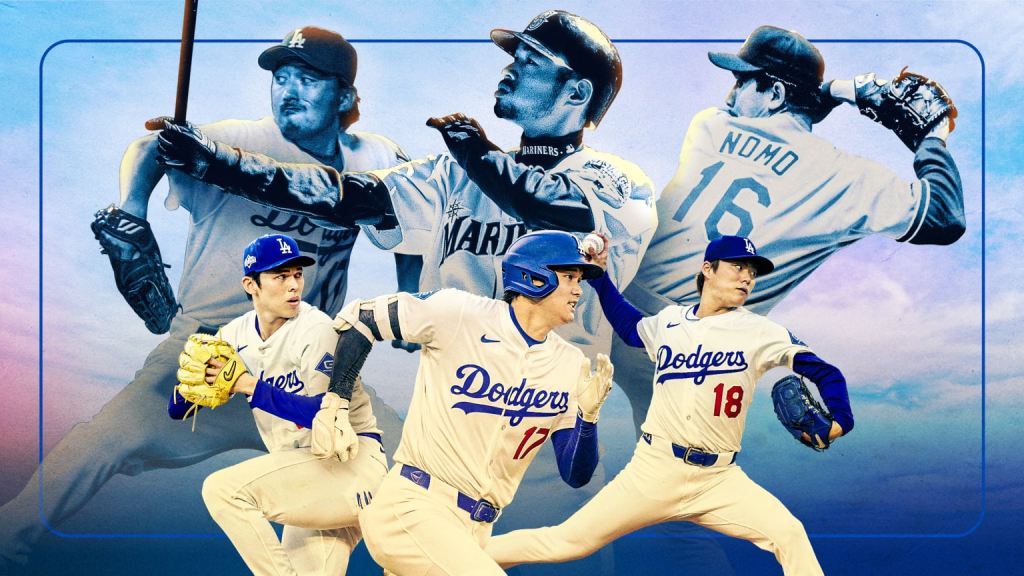
    What Nomo really did, beyond the wins and the strikeouts and the two no-hitters, was open a door that had not existed before him. Since his arrival in 1995, more than 50 Japanese-born players have come to the major leagues. Ichiro. Matsui. Daisuke. Tanaka. Ohtani. None of it happens, or at least none of it happens when it did, without Nomo going first.

    Ichiro recognized how important Nomo was. “Before Hideo came over here, everyone had an image of Major League Baseball and people looked at players over here as monsters because they were so big. We were able to watch more MLB games and were able to get an image of, ‘Maybe I can play in the big leagues.’”

    Tommy Lasorda, who managed the Dodgers for two decades and knew a pioneer when he saw one, put it plainly: if Nomo had not succeeded, nowhere near as many Japanese players would be in the major leagues today. He had the talent for it, Lasorda said, and he had the character for it. Both were required.

    When Ichiro announced in the fall of 2000 that he was coming to the major leagues, a reporter asked Nomo for his reaction. “Ichiro has to do this,” he said. The same words, the same logic, passed forward to the next man through the door that Nomo had opened.

    He invented his delivery as a boy, was told it would ruin him, and refused to change it. He found a loophole in the rules, crossed an ocean under a cloud of criticism, and proceeded to help save baseball’s relationship with its own fans at one of the most fragile moments in the sport’s history. He threw a no-hitter at Coors Field. He is, by any honest accounting, one of the most important figures the game has produced in the last hundred years, and one of the most underappreciated.

    During Ichiro’s Hall of Fame speech in Cooperstown, he thanked Nomo in Japanese, and pointed out his courage for challenging the majors.

    But before all of that, before Dodger Stadium and the All-Star Game and Coors Field, there was a final night at Fujiidera Stadium. October 18, 1990. A meaningless late-season game, already out of the standings, and yet 16,000 fans showed up just to see him. Ohgi sent him out for one batter in the ninth, a one-run lead to protect. Nomo threw five pitches, all fastballs. The last one was clocked at 148 kilometers per hour (92 mph). Strike three. The crowd erupted: cheering, clapping, beating megaphones, confetti falling from the stands. Nomo wiped the sweat from his face, stepped off the mound, and turned to bow to the crowd. Then he walked back to the press room, answered questions in his characteristically flat, unhurried way, and as he was leaving, turned back one more time. “I hope for your continued support next year!” He smiled and added playfully, “Please keep things quiet during the off-season.”

    The tornado touched down in 1990. The world of baseball was never the same.

    Thomas Love Seagull’s work can be found on his Substack Baseball in Japan
    https://thomasloveseagull.substack.com

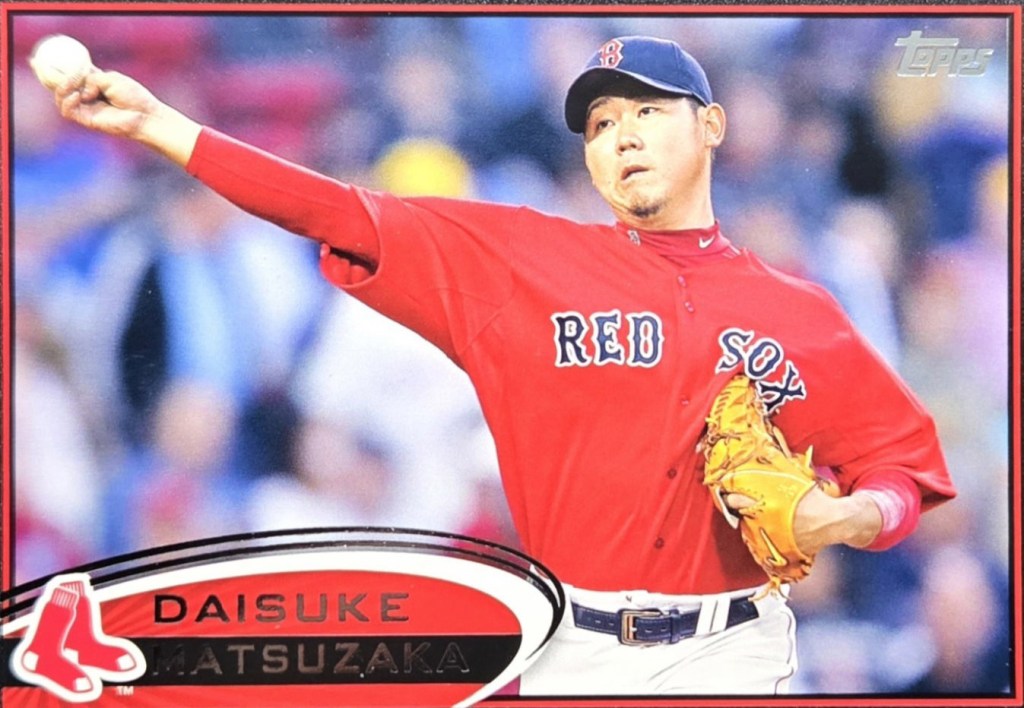
  • Japan’s Favorite Players: No. 8, Daisuke Matsuzaka

    Japan’s Favorite Players: No. 8, Daisuke Matsuzaka

    A recent poll for a TV special saw more than 50,000 people in Japan vote for their favorite retired baseball players. 20 players emerged from a pool of 9,000. Yes, they could only vote for players who are no longer active, so you won’t see Shohei Ohtani or other current stars on this list. Which is probably smart because I’m sure Ohtani would win by default. There are, however, players who were beloved but not necessarily brilliant, and foreign stars who found success after coming to NPB. Unsurprisingly, the list leans heavily towards the past 30 years, with a few legends thrown in for good measure.

    Over the next few weeks, I’ll be profiling each of these players. Some of these players I know only a little about, so this will be as much a journey for me as, hopefully, it will be for you. It’ll be a mix of history, stats, and whatever interesting stories I can dig up.

    For now, have a look at the list below and see how the public ranked them. I’ve included the years they played in NPB in parentheses.

    20. Alex Ramirez (2001-2013); 19. Yoshinobu Takahashi (1998-2015); 18. Warren Cromartie (1984-1990), 17. Takashi Toritani (2004-2021); 16. Suguru Egawa (1979-1987); 15. Katsuya Nomura (1954-1980); 14. Tatsunori Hara (1981-1995); 13. Kazuhiro Kiyohara (1985-2008); 12. Masayuki Kakefu (1974-1988); 11. Masumi Kuwata (1986-2006); 10. Atsuya Furuta (1990-2007); 9. Randy Bass (1983-1988); 8. Daisuke Matsuzaka (1999-2006, 2015-2016, 2018-2019, 2021); 7. Tsuyoshi Shinjo (1991-2000, 2004-2006); 6. Hiromitsu Ochiai (1979-1998); 5. Hideo Nomo (1990-1994); 4. Hideki Matsui (1993-2002); 3. Shigeo Nagashima (1958-1974); 2. Sadaharu Oh (1958-1980); 1. Ichiro Suzuki (1992-2000).

    The pitcher who turned Koshien into theater and emerged as the Monster of the Heisei Era

    Every baseball country has its sacred ground.

    In America, it might be Yankee Stadium. Or the old one, at least. In the Dominican Republic, it might be Estadio Quisqueya. In Japan it is a ballpark called Koshien.

    Generations of high school players have stood on that field dreaming of becoming legends. Most leave in tears, collecting a small bag of dirt from the infield as a souvenir.

    On August 19, 1998, a seventeen-year-old pitcher threw 250 pitches at Koshien Stadium.

    The game lasted seventeen innings. It started in the morning and stretched into lunchtime. By the end of it the pitcher could barely lift his arm.

    The next day he came back and helped his team win one of the most famous comeback games in the history of Japanese high school baseball.

    The day after that, he threw a no-hitter in the championship game.

    That pitcher was Daisuke Matsuzaka. He became known as Heisei no Kaibutsu—the Monster of the Heisei Era.

    Matsuzaka was born in Aomori Prefecture in 1980 but grew up in Tokyo’s Koto ward. His parents named him after another famous pitcher, Daisuke Araki, who had been a star at Waseda Jitsugyo High School.

    Before baseball, Matsuzaka trained in kendo, starting at age five. The training was harsh. His instructor was known for pushing young students relentlessly, but it built strength in his back and wrists. Years later, when a child asked him how to throw faster, Matsuzaka answered simply: try kendo.

    But at first, Matsuzaka was not quite the legend people remember. At Yokohama High he was known as “Sabori no Matsu,” roughly “Matsu the Slacker,” because he did not like to practice. Then, during a 1997 regional tournament, he lost a game on a wild pitch.

    The loss changed him. He began training obsessively.

    By his third year, he could throw over 150 kilometers per hour (93 mph), a rare velocity for a high school pitcher at the time. His slider was devastating. His stamina seemed limitless.

    In 1998, he helped lead his team to the spring championship. But it was during the summer tournament that he became something larger than life.

    Koshien is not simply a stadium. For Japanese high school baseball, it is something closer to a shrine. The tournament fills the stands every summer and attracts enormous television audiences. Families sometimes move so their sons can attend schools strong enough to reach it. High school kids become household names overnight.

    Even before the tournament began, opposing coaches knew what they were facing. Shiro Mabuchi of Meitoku Gijuku watched him pitch earlier that year and shook his head.

    “That kid,” he said, “is a monster.”

    Matsuzaka laughed when people repeated the nickname.

    “Monster? I don’t really look like one.”

    He didn’t. He looked like a skinny teenager with the face of an angel but the arm of a devil. And once he stepped onto the mound, his expression changed. The fastball exploded from his hand. The slider seemed to snap downward at the last instant.

    Yokohama’s path to the championship unfolded like a drama that kept growing more intense. In the quarterfinals, Matsuzaka threw 250 pitches over 17 innings against PL Gakuen in one of the longest games in tournament history.

    It began earlier than he liked. The first pitch came at 8:30 in the morning. For Matsuzaka, that meant waking around 4:30 a.m. after barely sleeping. Pitchers often struggle to sleep after throwing because their bodies remain wired with adrenaline, and that night he lay awake until nearly two in the morning.

    Later he joked that the biggest reason he struggled early in the game was simple.

    “It was too early.”

    Matsuzaka had another unusual pregame habit. On the bus to games he liked to eat potato chips and drink Coca-Cola. It was his way of relaxing before pitching.

    The game itself quickly turned into a test of endurance.

    PL Gakuen jumped ahead early, scoring three runs. For several innings Matsuzaka struggled to find his rhythm. Later he said that in those first innings he felt as if his body hadn’t quite woken up yet.

    Yokohama fought back. In the fourth inning, catcher and captain Yoshio Koyama hit a two-run home run. By the middle innings, the game had become a back-and-forth struggle.

    And gradually, Matsuzaka began to feel the change.

    By the late innings the ball started to come out of his hand with more life. The longer the game continued, the stronger he felt.

    Which was good because the game stretched into extra innings.

    At one point, Yokohama took a one-run lead in the eleventh inning. Matsuzaka himself reached base with a hard ground ball and eventually scored the go-ahead run.

    Yet even then he didn’t believe the game was over.

    Later he said that the strangest feeling during that game was the sense that it would never end. Even when Yokohama moved ahead, he somehow felt that the game would continue.

    Perhaps part of him didn’t want it to end. 

    There was also a moment of frustration. In the eleventh inning, Matsuzaka allowed a game-tying hit to Hiroaki Onishi on a curveball he had not wanted to throw. Catcher Koyama had called for it, and Matsuzaka followed the sign.

    Afterward he told him quietly, “We shouldn’t throw a curve to Onishi.”

    Koyama’s answer was simple.

    “Then shake me off.”

    But Matsuzaka rarely shook off his catcher. He preferred to trust the call and find a way to execute it.

    The game kept going. After sixteen innings of play, the game was tied at 7 apiece.

    At some point, teammate Ryota Tokiwa walked over and tapped Matsuzaka on the shoulder.

    “Don’t worry,” he said. “I’ll hit one.”

    In the seventeenth inning, Tokiwa did exactly that. Yokohama won 9-7.

    The next day brought an even stranger scene.

    After throwing 250 pitches against PL Gakuen, Matsuzaka did not start the semifinal against Meitoku Gijuku. Instead he appeared in the lineup as the cleanup hitter and left fielder, his pitching arm wrapped in tape.

    Meitoku dominated early. By the middle of the eighth inning, Yokohama trailed 6-0 and the game seemed finished. But Yokohama scored four runs in the bottom half to close the gap.

    Then Matsuzaka began throwing in the bullpen.

    Years later he admitted that no coach had told him to warm up. He had gone there on his own, hoping the staff would see him and realize he was ready to pitch.

    Even from the stands the change in atmosphere was obvious.

    When he tore the tape from his arm and walked to the mound in the ninth inning, the noise swelled into something closer to a roar. Matsuzaka later admitted he had noticed the television camera beside him before ripping off the tape. Even at seventeen, he understood the theater of the moment.

    Matsuzaka retired the side. In the bottom of the inning, Yokohama scored three runs and completed one of the most improbable come-from-behind victories in the history of the tournament.

    People often say that monsters live at Koshien. The phrase refers to the strange magic of the tournament—the sudden comebacks, the impossible reversals, the games that twist in ways nobody expects.

    But in the summer of 1998 it felt as if Yokohama had somehow learned how to tame those monsters.

    The team itself was unusually unified. Players such as Takeshi Goto and Masaaki Koike later said the atmosphere inside the team mattered as much as Matsuzaka’s pitching.

    During the tournament Goto struggled badly at the plate. One night he returned to the hotel discouraged. The phone rang. It was Matsuzaka calling from the next room.

    “Don’t worry about today,” he told him. “We’re counting on you tomorrow.”

    The next day Goto delivered key hits in Yokohama’s comeback victory.

    And then came the championship game against Kyoto Seisho. The final pitch of the tournament was a sweeping slider. Kyoto Seisho’s Yugo Tanaka swung through it.

    Matsuzaka turned toward the scoreboard and raised both arms into the air.

    Later he admitted he had partly turned for the cameras. This was his final stage, after all.

    The scoreboard still showed zeros in the column for hits.

    It was the first no-hitter in a championship game in nearly sixty years. Yokohama completed a season that included four national titles—Meiji Jingu, the spring and summer Koshien tournaments, and the National Sports Festival—and finished 44-0 in official games.

    Watching the tournament unfold, Kyoto Seisho’s manager later said simply:

    “It was Matsuzaka’s tournament.”

    The Monster of the Heisei Era had arrived.

    Yet Matsuzaka’s story was not only about domination. When he was in junior high school, his father’s company went bankrupt. The family sold their car so they could afford tuition at Yokohama High School. His mother worked part-time to support the household. His younger brother eventually attended a public school rather than a private one to reduce expenses.

    For Matsuzaka, success in baseball meant more than fame. He said openly that he wanted to turn professional and earn money.

    The 1998 draft quickly became the Daisuke Matsuzaka draft. Three teams selected him in the first round: the Saitama Seibu Lions, the Yokohama BayStars, and the Nippon-Ham Fighters.

    Matsuzaka himself hoped to join Yokohama and even suggested he might play corporate baseball if another team drafted him.

    Instead, Seibu manager Osamu Higashio drew the winning lottery ticket.

    “It’s not that easy,” Matsuzaka said afterward. “Out of courtesy I’ll talk with them, but my feelings haven’t changed.”

    Eventually he agreed to sign after Higashio presented him with the game ball from his own 200th career win. He took the traditional ace number: 18.

    Almost immediately the country experienced what newspapers called “Daisuke Fever.”

    Restaurants created dishes named after him. Fans packed spring training. The crowds became so overwhelming that the team once dressed pitcher Shinji Taninaka in Matsuzaka’s number 18 uniform as a decoy.

    His first professional start came on April 7, 1999 against the Fighters.

    The first pitch of his career was a fastball. 149 kilometers per hour.

    Strike one.

    After that, he struck out veteran slugger Atsushi Kataoka with a 155 km/h fastball. At one point during the game, veteran pitcher Tetsuya Shiozaki told him he was throwing too hard to last nine innings.

    Matsuzaka answered calmly: he had only thrown one pitch at full effort.

    He won the game.

    From there, the season only grew more spectacular.

    He faced Ichiro Suzuki and struck him out three times. He dominated the All-Star Game with five strikeouts. He declared after one outing that his confidence had changed “from belief to certainty.”

    By the end of the year he had 16 wins, the league lead, and became Rookie of the Year.

    A high school pitcher had entered professional baseball and immediately become one of its best players.

    For several years he became the dominant pitcher in Nippon Professional Baseball. Matsuzaka led the Pacific League in wins three straight years from 1999 through 2001. He piled up strikeouts and innings with astonishing durability, often pitching on short rest. He won the Sawamura Award in 2001*. He helped lead the Lions to a Japan Series victory in 2004.

    *He went 15-15 that year but led the league in games started, complete games, wins (and losses), innings pitched, and strikeouts.

    He threw from a three-quarter arm slot, pausing briefly in his windup before exploding toward the plate. His fastball averaged around 147 km/h and could climb into the mid-150s, paired with a devastating slider and a deep mix of secondary pitches. His quick delivery made it difficult for runners to steal.

    He loved pitching. He loved throwing deep into games. And sometimes he threw a lot: well over 150 pitches. He pitched 38 complete games across three seasons from 2004-2006.

    Command was not always perfect. Matsuzaka sometimes struggled with walks, partly because his release point could move and his lower body sometimes lost stability. But when his pitches were right, hitters described the ball as exploding.

    Some said his fastball moved like that of a left-handed pitcher.

    If Japan had a must-win game in those years, the ball usually went to Matsuzaka.

    At the 2000 Sydney Olympics. he pitched brilliantly despite Japan narrowly missing a medal. At the 2004 Athens Olympics. he helped secure bronze.

    Then came the World Baseball Classic.

    In 2006, Matsuzaka won all three of his starts—including the championship game against Cuba—and was named tournament MVP. When Japan repeated as champion in 2009, he won the award again.

    Across eight seasons with Seibu, he captured three Best Nine selections, seven Golden Gloves, four strikeout titles, and two ERA championships.

    After the 2006 season, the Boston Red Sox paid $51.1 million just for the right to negotiate with him.

    In Boston, he became known as Dice-K*.

    *My least favorite nickname of all time.

    In 2007, he struck out 201 batters and helped the Red Sox win the World Series. In Game 3, he became the first Japanese pitcher to start a World Series game and even drove in two runs with a hit. In 2008 he went 18-3, the most wins ever by a Japanese pitcher in a major-league season.

    Scouts marveled at the movement on his pitches, and for a time rumors circulated that he threw a mysterious gyroball. Matsuzaka himself seemed amused by the myth. He said he wasn’t sure what people meant by it.

    Injuries later reshaped his career. But he returned to Japan and even won Comeback Player of the Year for the Chunichi Dragons in 2018 before retiring in 2021.

    His final appearance came at Seibu’s home park. He faced one batter, Yokohama High alumnus Kensuke Kondoh, and threw five pitches. The fastest reached 118 kilometers per hour.

    Afterward, he walked slowly around the field while fans applauded.

    Then Ichiro Suzuki stepped onto the field and handed him flowers.

    Matsuzaka began to cry.

    He finished his career with 170 wins and more than two thousand strikeouts across Japan and Major League Baseball. He remains the only player to have won all four: the Summer Koshien, the Japan Series, the World Baseball Classic, and the World Series.

    But numbers alone do not explain why fans loved him.

    They loved him because he loved pitching and because he never seemed afraid of the moment. And because for a generation of fans, the story of modern Japanese baseball begins with one unforgettable image:

    A seventeen-year-old pitcher at Koshien, turning toward the scoreboard and raising his arms.

    Thomas Love Seagull’s work can be found on his Substack Baseball in Japan
    https://thomasloveseagull.substack.com

  • The Greatest Piece of Diplomacy Ever: The 1949 Tour of Lefty O’Doul and the San Francisco Seals

    The Greatest Piece of Diplomacy Ever: The 1949 Tour of Lefty O’Doul and the San Francisco Seals

    by Dennis Snelling

    Every Tuesday morning we will post an article from SABR’s award-winning books Nichibei Yakyu: Volumes I and II. Each will present a different chapter in the long history of US-Japan baseball relations. This week Dennis Snelling focuses on one of the most important pieces of baseball diplomacy in history: the 1949 San Francisco Seals tour of Japan

    There are moments, sometimes fleeting, often accidental, when sport transcends mere athletic competition. These moments are not judged by wins or losses, nor by runs scored or surrendered. The baseball tour of Japan undertaken by Lefty O’Doul and his San Francisco Seals in October 1949 serves as a prime example—an event that changed the course of history.

    At the tour’s conclusion, General Douglas MacArthur, Supreme Commander of the Allied Powers in Japan, declared, “This trip is the greatest piece of diplomacy ever. All the diplomats put together would not have been able to do this.”

    In a letter supporting a campaign aimed at Lefty O’Doul gaining membership in the National Baseball Hall of Fame at Cooperstown, MacArthur’s successor, General Matthew Ridgway, wrote, “Words cannot describe Lefty’s wonderful contributions, through baseball, to the postwar rebuilding effort.”

    In September 1945, a month after Japan’s surrender, reporter Harry Brundidge landed in the country and was barraged with queries about O’Doul. Lefty’s old friend Sotaro Suzuki, who first met O’Doul in New York in 1928 and was instrumental in organizing the 1934 tour featuring Babe Ruth, wanted Lefty to know he was okay. Emperor Hirohito’s brother inquired about the San Francisco ballplayer. Prince Fumimaro Konoe, the former prime minister of Japan, told Brundidge that O’Doul should have been a diplomat.

    If the 1934 tour was a watershed moment in the history of baseball between the United States and Japan, then 1949 served as a bookend, providing a yardstick for the Japanese after they had been shut off from the rest of the baseball world for 13 years. And, while he is not enshrined in Cooperstown, the 1949 tour is a major reason that Lefty O’Doul is in the Japanese Baseball Hall of Fame.

    Immediately after the end of the war, Douglas MacArthur was tasked with maintaining order in an occupied Japan, while at the same time maintaining the morale of its citizens. Communists were gaining a foothold, taking advantage of everyday Japanese life that was harsh, plagued with shortages of food, housing, and other basic necessities. Ruins and rubble pockmarked the country’s major cities, and families were disrupted by severe illness and death. Orphans hustled on the streets to survive, bullied, abused, and used; most of them homeless because existing orphanages could accommodate—at best—one-tenth of the need. Those who did make it into orphanages were sometimes stripped of their clothing in winter to prevent their escape.

    MacArthur saw sports as a means to boost the spirit of the Japanese, and assigned General William Marquat and his aide-de-camp, a California-born Japanese American named Tsuneo “Cappy” Harada, to rebuild athletic facilities around the country. University and professional baseball soon flourished, and in 1948 the amateur game was boosted through an affiliation with the National Baseball Congress, which served as an umbrella organization for semi-pro baseball in the United States and was expanding its reach to other countries. Within two years a Japanese team, All-Kanebo, was hosting a team from Fort Wayne, Indiana, in a well-received “Inter-Hemisphere Series,” won by Fort Wayne in five games.

    While local baseball remained extremely popular, it was not enough to arrest the decline in morale, leading MacArthur to grill his aides about the deteriorating situation. The story goes that Cappy Harada proposed an American baseball tour, recalling the one that had brought Babe Ruth to Japan 15 years earlier. He further suggested minor-league manager and two-time National League batting champion Lefty O’Doul, widely considered the most popular living American player by the Japanese, as the man to lead such a mission.

    MacArthur reportedly replied, “What are you waiting for?”

    O’Doul had spent three years pushing for just such a tour and was indeed interested. In March 1949 General Marquat announced that he was deciding between two proposals, one involving O’Doul and his PCL San Francisco Seals, and the other Bob Feller and his All-Stars.

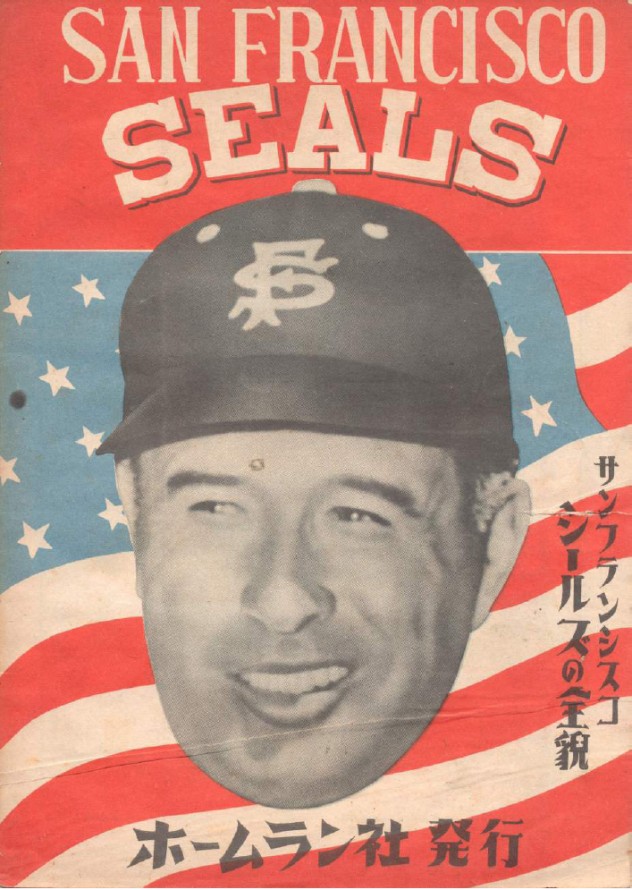
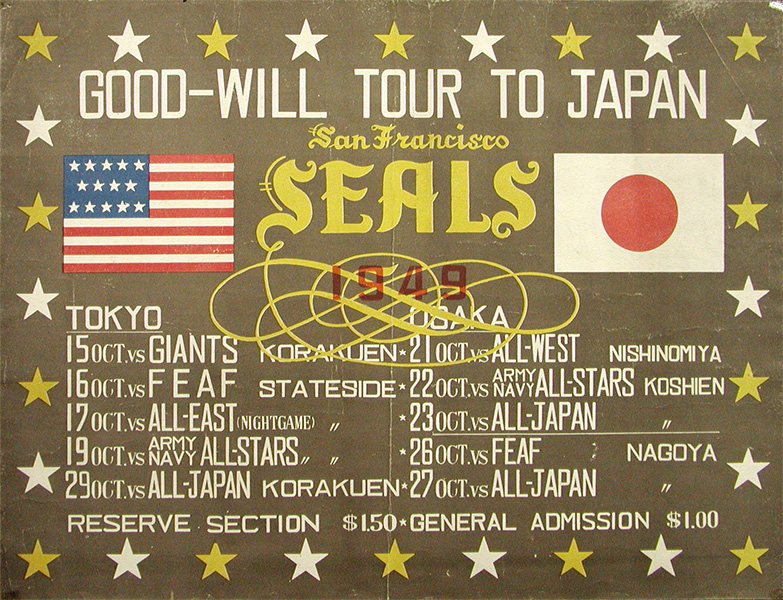
    San Francisco Seals 1949 Tour of Japan Program with Lefty O’Doul. 

    O’Doul enthusiastically made his pitch, declaring, “I think we can contribute something to postwar Japan.” While his plan involved minor-league players versus Feller’s big leaguers, the veteran manager held an advantage due to his popularity and willingness to play for expenses only. He lobbied Marquat to choose his proposition over Feller’s, arguing, “A well-trained team which has been playing together all season doubtless could demonstrate much more than a group of all-stars who had been on different teams all season.”

    Marquat agreed, and in July 1949, Seals general manager Charlie Graham Jr. arrived in Japan to finalize what was hoped to be a 22-game tour beginning in mid-October.

    Graham was quoted as saying that General MacArthur told him, “The arrival of the Seals in Japan would be one of the biggest things that has happened to the country since the war.” Graham said that the General added, “It takes athletic competition to put away the hatred of war and it would be a great event for Japan politically, economically, and every other way.”

    Lefty O’Doul had visited Japan more than a half-dozen times by 1949, highlighted by trips while still an active player in 1931 and 1934, the latter of which led to an opportunity for him to play a role in establishing the first successful Japanese professional team, the Tokyo Giants. He had even helped that team stage two tours of the United States, in 1935 and 1936.

    Now, 15 seasons into managing the San Francisco Seals, O’Doul was on a plane in October 1949 bound for Japan. There was some disappointment that for financial reasons the schedule had been pared to 10 games, but O’Doul couldn’t help experiencing an emotional mix of excitement and anxiety, reflecting the gravity of the moment.

    Even so, he and his players were unprepared for the reception that awaited. The motorcade, led from Shimbashi Station by the Metropolitan Police band, was greeted by, according to some accounts, nearly one million people lining a route that stretched five miles. By all accounts, it was the largest gathering in Japan since the end of the war.

    The players were astounded by the reception. “It got the boys off on the right foot,” crowed an enthusiastic Seals owner Paul Fagan. Charlie Graham Jr. sputtered, “I couldn’t believe it. Never have we seen such a demonstration anywhere.” Infielder Dario Lodigiani exclaimed, “You would have thought we were kings.”

    As the 22-vehicle caravan wound through the streets of downtown Tokyo, the players were nearly obscured by a five-color flurry of confetti flung from office windows while they attempted to navigate a sea of humanity pinching the thoroughfare, fans close enough for the players to shake hands, and even sign a few autograph books. O’Doul shouted above the din, “This is the greatest ever!”

    It was at this point O’Doul realized that when he greeted those along the route with a triumphant “banzai,” it was not returned.

    “I noticed how sad the Japanese people were,” recalled O’Doul during an interview nearly 20 years later. “When we were there in ’31 and ’34, people were waving Japanese and American flags and shouting ‘banzai, banzai.’ This time, no banzais. I was yelling ‘Banzai’, but the Japanese just looked at me.”

    O’Doul asked Cappy Harada, “How come they don’t yell banzai?” Harada replied, “That’s the reason you’re here, Lefty. To build up the morale so that they will yell ‘banzai’ again.”

    The players spent their second day in Japan as a guest of Douglas MacArthur, highlighted by a luncheon served at the general’s home. MacArthur made a few remarks acknowledging the undertaking, and reminded the athletes of the importance he placed on the tour. He then turned to O’Doul and, noting his dozen-year absence from the country and the esteem in which he was held by Japanese baseball fans, told the Seals manager, “You’ve finally come home.” In public, players were treated as celebrities, provided special badges with their names printed in both English and Japanese so they would be recognized wherever they went. According to Seals outfielder Reno Cheso, every team member was assigned a car and driver, standing at the ready 24 hours a day.

    The Americans were quickly exposed to the Japanese mania for baseball. There were more than two dozen magazines devoted to the sport in Tokyo alone, and the game was played everywhere, all the time. “It was nothing to see Japanese kids playing ball on the streets and in vacant lots as early as six o’clock in the morning,” noted Dario Lodigiani—without revealing whether he was witnessing this as he was rising for the day, or as he was crawling back to his hotel following a raucous night.

    And then there were the autograph seekers—none of the Seals had ever seen anything like it, O’Doul included. Bellboys served as lookouts, and when the players returned to their hotel they confronted a gauntlet of fans in the lobby, each with baseballs and autograph books at the ready.

    “I remember the hordes of people who used to line up seeking Babe Ruth’s autograph when the Babe was at the height of his career,” said O’Doul. “But that was a bit more than a puddle of beseeching humanity compared to the ocean we encountered on every street comer, store, and hotel lobby in Kobe and Tokyo.”

    Many were repeat customers, looping back multiple times to obtain a signature on a ball or a program. Seals owner Paul Fagan was approached by one such man for three straight mornings. When he appeared for a fourth day in a row, Fagan asked him why he wanted another autograph from him. The man cheerfully replied, “All I need is four of your signatures and I can swap them for one of O’Doul’s!”

    The evening after lunch with MacArthur, O’Doul quashed a potential rumble at the Tokyo Sports Center, during a rally held in the team’s honor. People had lined up for nine hours in anticipation of gaining admittance; while 15,000 successfully obtained a coveted seat, 2,000 more remained outside, frustrated when the doors were locked.

    Made aware of the situation, which threatened to turn ugly, O’Doul rushed outside and apologized for not being able to admit the unlucky fans. He then told them, “I think speaking to you personally will no doubt serve to promote goodwill and friendship.” The crowd peacefully dispersed.

    The day before the first game, following a two- hour workout that included his taking a few swings, O’Doul made it clear that the Seals would respect their opponents. “In order to show our gratitude,” he said, “we intend to fight to the best of our ability and win the first goodwill game with the Giants with our best members.”

    The manager of the Tokyo Yomiuri Giants, Osamu Mihara—who had broken O’Doul’s ribs in a collision at first base during the 1931 tour—also vowed to use his best lineup, with one exception; his starting pitcher would be Tokuji Kawasaki, arguably the team’s third- best hurler. Mihara gambled that Kawasaki’s unusual breaking pitches would surprise the Americans. Since this would be the only meeting between the Seals and the team O’Doul had helped launch, Mihara’s choice disappointed many Japanese commentators, who had wanted to measure how their best professional team matched up against O’Doul’s squad.

    Fifty-five thousand fans jammed Korakuen Stadium for the tour’s first contest—the largest crowd ever to attend a game there. The stands were packed three hours before the first pitch despite a steady drizzle that had threatened cancellation.

    O’Doul addressed the fans before the game began, and the crowd roared its approval when he began his speech with a single word—a word he knew they would appreciate. The word was, “Tadaima,” translated in English as “I am home.”

    He presented a dozen American bats to each manager of the Japanese professional teams, and received thanks from the Japanese chairman of the event, Frank Matsumoto. Cappy Harada then introduced the Seals players to the crowd, and Mrs. Douglas MacArthur threw the ceremonial first ball to Seals pitcher Con Dempsey.

    Controversy would not absent itself from this event. The Japanese were surprised—and thrilled—when the national anthems of both nations were played and their flags flew together, the first such instance since the war. In contrast to the deep emotional response of the crowd, some in the American military contingent were angered by the display.

    Cappy Harada then ignited a firestorm by saluting both flags, a gesture that did not go unnoticed by the crowd. That salute, coming from a Japanese American no less, further infuriated some of Harada’s fellow American officers, who wanted him punished immediately. Complaints reached General MacArthur, who quashed the objections by revealing that he not only approved, but had asked Harada to do it, and Harada continued to do so for the remainder of the tour. O’Doul was pleased by the raising of the flags, and reflected on the emotion of that day. “I looked at the Japanese players and fans,” he remembered nearly two decades later. “Tears. [Their eyes] were wet with tears. Later, somebody told me my eyes weren’t too dry either.”

    The Seals easily won the opener, 13-4, even though San Francisco starter Con Dempsey was less than sharp, having been idle for three weeks. The 52-year- old O’Doul, energized by his return to Japan, grabbed a bat in the eighth and grounded out as a pinch-hitter. Pittsburgh Pirates left-hander Bill Werle, a former Seal added to the roster because several of the current Seals could not make the trip, relieved Dempsey and hit two batters in the fifth, but settled down and struck out the side the next inning. Werle closed the game with a one- two-three ninth, a pair of strikeouts and a slow roller to the mound. Werle’s opposite, Kawasaki—chosen because Osamu Mihara thought he would prove more effective against the Seals lineup—failed to make it out of the first inning. Afterward, Kawasaki blamed his underwhelming performance on the American horsehide baseballs that were used, complaining that they were more slippery than the cowhide baseball normally employed by the Japanese.

    Continue to read the full article on the SABR website

  • NHK’s Deeper Look Focuses on Japanese Baseball with Rob Fitts

    NHK’s Deeper Look Focuses on Japanese Baseball with Rob Fitts

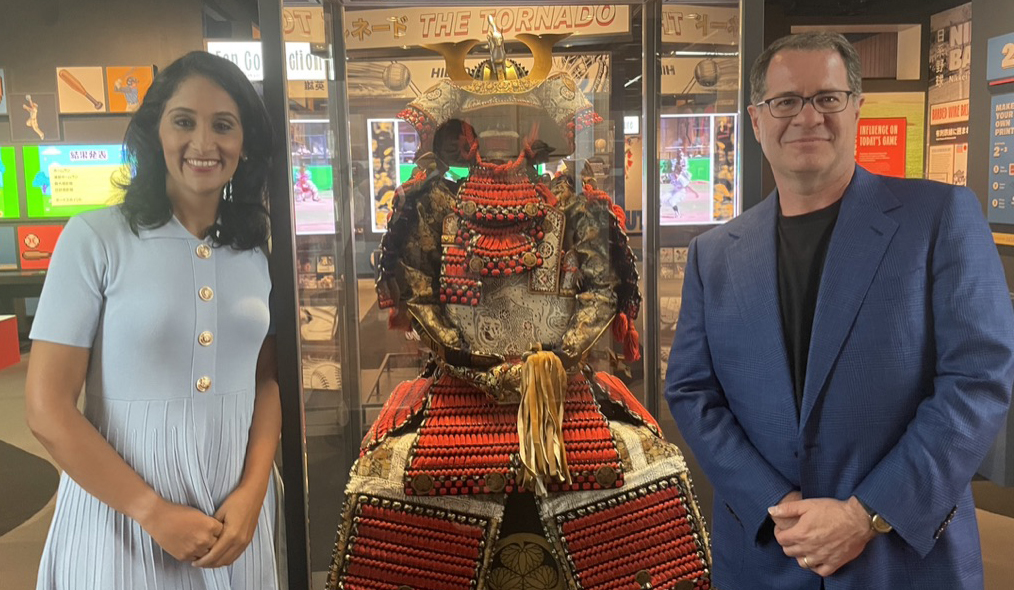
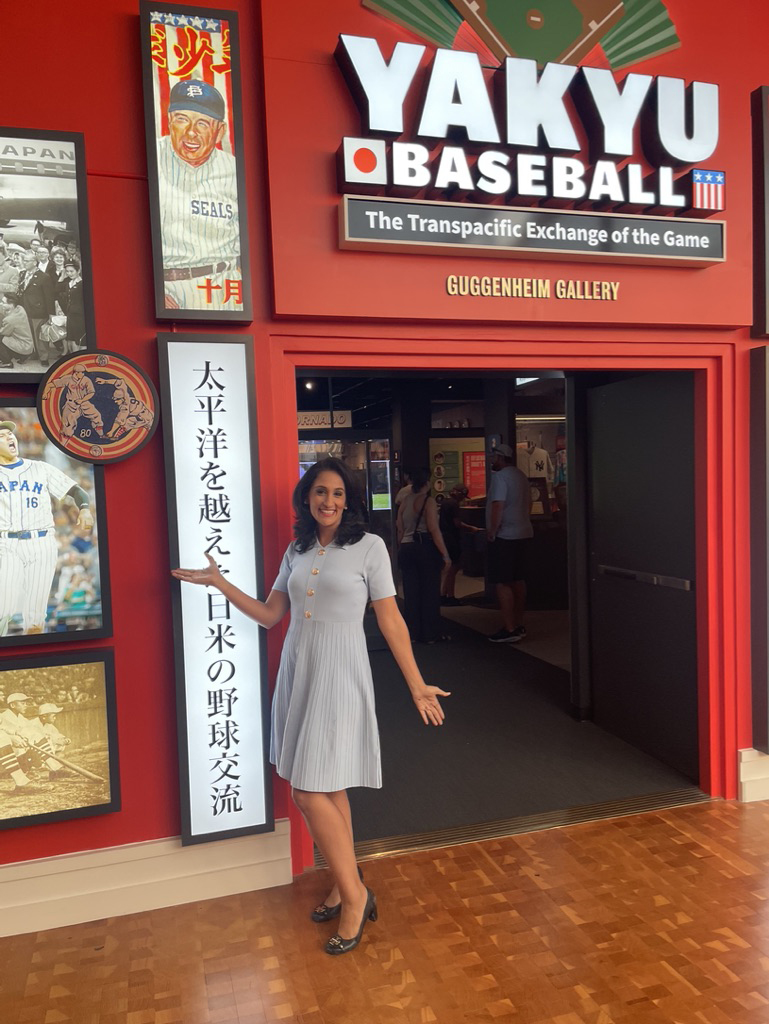
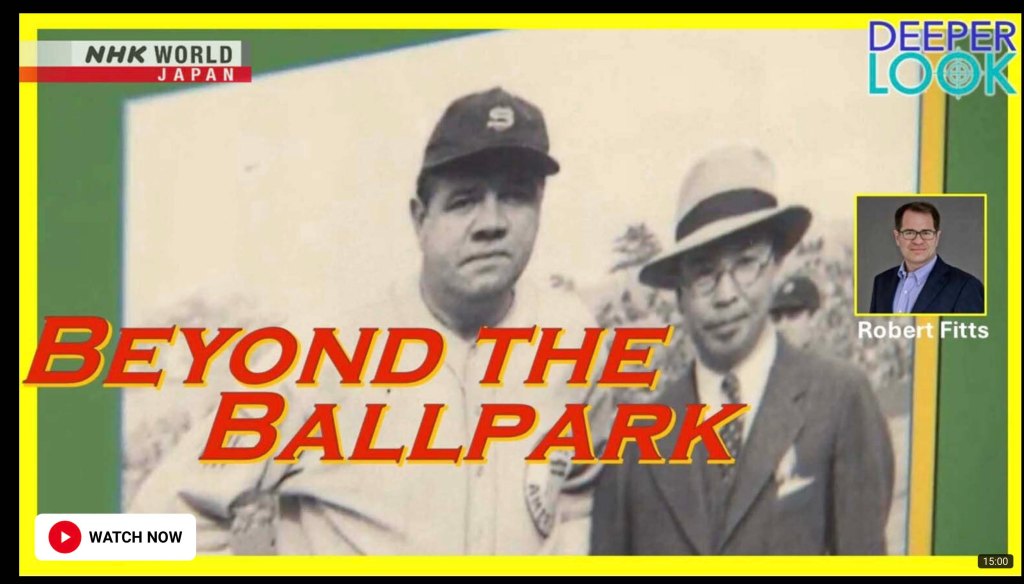
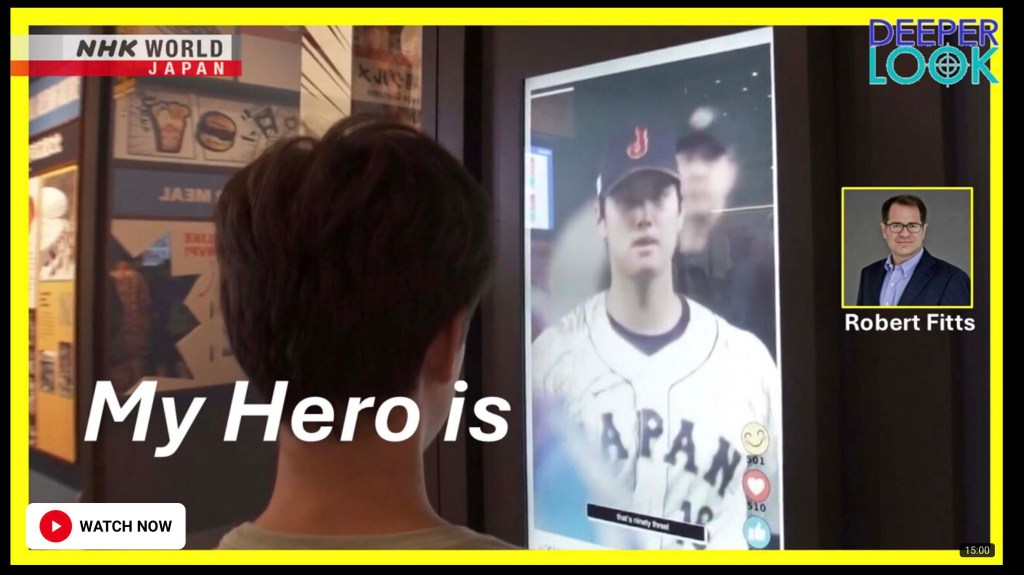
    NHK World-Japan’s Deeper Look host Del Irani visited the Yakyu-Baseball exhibit at the National Baseball Hall of Fame and Museum in Cooperstown to examine the history of Japan- U.S. relations through baseball.

    In this two-part series, Irani interviews SABR’s Asian Research Committee Chair Robert Fitts about the the long history of Japan-U.S. baseball interaction, baseball diplomacy, and the cultural importance of Japanese playing in Major League Baseball.

    https://www3.nhk.or.jp/nhkworld/en/shows/2100064/

    https://www3.nhk.or.jp/nhkworld/en/shows/2100065/

  • Masanori “Mashi” Murakami Spins Tales of MLB Legends

    Masanori “Mashi” Murakami Spins Tales of MLB Legends

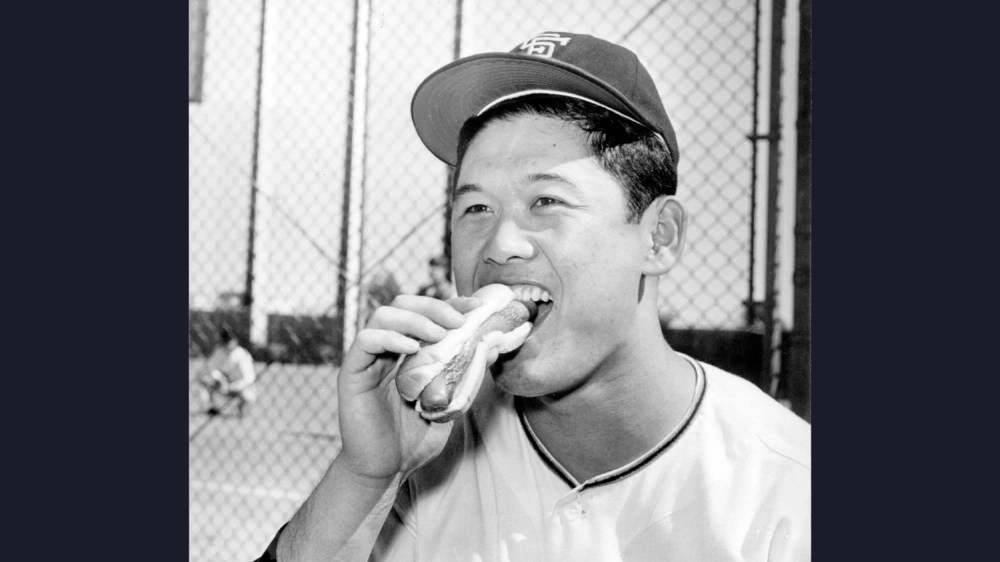
    After throwing out the first pitch at Yankee Stadium prior to the game on July 29, 2025, Masanori Murakami, the first Japanese to play in the Major Leagues, held a press conference at the stadium. Now 81 years old, Murakami recalled his days with the San Francisco Giants in 1964 and 1965 and recounted his interactions with MLB stars.

    David Adler of MLB.com covered the event and penned this fun article.

    https://www.mlb.com/news/masanori-murakami-recounts-memories-of-mlb-legends

  • Stars Visit Yakyu-Baseball Exhibit at Cooperstown

    Stars Visit Yakyu-Baseball Exhibit at Cooperstown

    by Rob Fitts

    During Induction Weekend 2025, the National Baseball Hall of Fame and Museum officially opened the Yakyu-Baseball exhibit with a private viewing for Hall of Fame players and NPB greats. After seeing the exhibit, Hall of Fame President Josh Rawitch moderated a press conference with Bobby Valentine, Jack Morris, Cal Ripken Jr., and Ozzie Press to talk about the exhibit and their experiences on the 1986 MLB All-Star tour of Japan. Among the many stars with ties to Japan to visit the exhibit were Ichiro Suzuki, Hideo Nomo, Masanori Murakami, LeRon Lee, Tuffy Rhodes, Adam Jones, Peter O’Malley, and Bobby Valentine.

    All-time NPB batting leader LeRon Lee, Masanori “Mashi” Murakami, and Bobby Valentine

    Valentine noted, “I think it’s a spectacular exhibit. … Not only are the aesthetics … pleasing but the knowledge that you gain by walking around that room [will lead to] a lot of understanding. I am really happy to be part of it.” 

    The exhibit focuses on how baseball has brought the countries and people of Japan and the United States closer together. Displays emphasize trans-Pacific interactions including player exchange, goodwill baseball tours, and the exchange of ideas and culture. Viewers will learn to appreciate Japan’s rich baseball history. To learn more about Yakyu-Baseball please see the links below for detailed discussions of the exhibit, which will be on the third floor of the Hall of Fame Museum for at least the next five years.

    Koji Sato with Ichiro Suzuki

    Koji Sato, the President of the Japanese American Association of New York, Inc, sees the exhibit as “a great honor. I have so much pride that Japanese baseball is being recognized in the United States. Growing up, I watched Japanese baseball but never thought that there would be such Japanese outstanding players such as Ichiro and Shohei Ohtani playing in the Major Leagues. Showing the 150 years of yakyu/baseball being played in the two nations and having an exhibit showcasing how it evolved is something worth seeing for all baseball fans. To have Ichiro join the ranks of Babe Ruth, Hank Aaron, Joe DiMaggio and Willie Mays is an incredible accomplishment. To be included in such elite company brings a sense of pride and joy to Japan and the Japanese people. I am hoping that with the induction of Ichiro into the Baseball Hall of Fame and the Yakyu-Baseball exhibit that there will be a lot of interest by Japanese tourists to visit.” 

    For details on the Yakyu-Baseball exhibit, please check out these articles.

    https://baseballhall.org/yakyu

    https://www.facebook.com/watch/?v=1558007181823022

    https://www.espn.com/mlb/story/_/id/45844305/ichiro-suzuki-hall-fame-cooperstown-ohtani-japanese-baseball

    https://www.mlb.com/news/baseball-hall-of-fame-opens-new-exhibit-ahead-of-induction-weekend

    https://www.mlb.com/news/baseball-hall-of-fame-opens-new-exhibit-ahead-of-induction-weekend

  • Ichiro

    Ichiro

    A great article on Ichiro Suzuki on MLB.com that is worth sharing

    https://www.mlb.com/news/featured/ichiro-suzuki-lasting-impact-on-baseball-japan

  • Check out the new video The Story of Nomomania!

    Check out the new video The Story of Nomomania!

    The Los Angeles Dodgers have just released a fantastic video on Youtube called The Story of Nomomania. With great game footage and exclusive interviews with Hideo Nomo, Peter O’Malley, Mike Piazza, and Don Nomura, I think fans will truly enjoy watching.