Since the latest shakeup of the MLB playoff format that created the first-round bye in 2022, there has been discussion every fall about byes, rust, and time off. There are many people who are absolutely convinced that a bye is actually a negative for you, because it causes your bats to go cold and hurts your chances in the following round. When teams with byes struggled in 2022 and 2023, this position was (supposedly) vindicated. And even without a bye, there was a lot of concern and comments about the 2025 Dodgers being rusty following their long layoff after the NLCS. Of course, that worked out fine for them in the end.
After four years of this new format, we still do not really have a large enough sample size to draw any firm conclusions. However, something that often goes unmentioned in this discussion is that we have other top level professional leagues to look at. We have decades of data from the KBO, which makes heavy use of byes in their playoff system. (NPB and Taiwan’s CPBL also use playoff byes but they come with additional caveats and it wouldn’t be fair to compare them to MLB.) Throwing in the last 20 years of Korean baseball, we actually do have a reasonable sample size. Here’s what we’ve got:
In MLB, teams with the first-round bye are 9-7 so far. That’s obviously a positive record, but it’s a small sample and nothing definitive.
In the KBO, however, we have a much more telling story. The league uses a stepladder style playoff where the #3 seed gets a single bye, the #2 seed gets a double bye, and the #1 seed gets a triple bye straight to the finals. Over the past 20 years, teams with a triple bye are 9-2 (the triple bye was added 11 seasons ago), teams with a double bye are 15-5, and teams with a single bye are 11-9. If you want to reduce that to a binary bye/no bye, then teams with byes are 35-16. And when combined with MLB results, they are 44-23.
What this tells us overall is that byes clearly are an advantage; in raw numbers, teams with a bye are far more likely to win a series than those without. The team that had a bye straight to the Korean Series is 18-2 in the last 20 years. This seems to go against our intuition that a bye would not help your performance. In say, American football, it makes perfect sense that being physically rested and having an extra week to prepare your X’s and O’s would be a sizable advantage, but in baseball nobody really believes it works that way. And I don’t think that’s actually what the data is telling us here. Don’t forget that the higher seeded teams that earned the byes are, naturally, the best teams. In other words, the best teamin the KBO is 18-2 in the last 20 Korean Series. I don’t interpret this excellent record of teams with byes as proof that they make you play better; rather I interpret it that byes have more or less zero impact on your play and thus the series usually just goes to the better team regardless of byes, time off, or alleged rust.
As an aside, I’d also like to posit that even if rust proved to be a real statistical concern, it is still almost certainly advantageous to have a first-round bye. Real playoff series are not a coin flip, but for simplicity’s sake we will call playoff series 50/50 in this example. Let’s say that “rust” knocks your chances of winning the Division Series from 50% down to 40%. That’s still a 40% chance of reaching the LCS. If you do not have a bye and have to play the additional round, you have a 50% chance to reach the DS and then a 50% chance to reach the LCS from there, which is only a 25% chance to reach the LCS overall. So, unless you think rust is an almost insurmountable disadvantage, you’d still try your luck with the rust over having to play an extra round.
The KBO data strongly suggests that the “rust disadvantage” is nonexistent. But what about the former and current players who have complained about rust and are adamant that it is a real disadvantage? Are we supposed to just ignore them because math says so? I don’t think this is a healthy approach to any baseball problem. Instead, we should consider the differences in approaches between the KBO and MLB. In Korea, teams play practice games during their layoffs. And if you have a 20-day long triple bye, you might play a lot of practice games and run an almost mini-Spring Training during that time. The pitchers keep their arms loose and the hitters maintain their rhythm by playing in exhibitions and having more in-depth practices than what you would normally do during the regular season. I don’t know what goes on inside a KBO team, or an MLB team, but I know that whatever the Korean teams are doing to prepare during a bye is working, and it’s also nothing that can’t be replicated in North America.
Major League Baseball is no longer insulated the way it once was. All thirty clubs have contacts in the KBO and could find out all they could ever want to know about what a typical KBO top seed is doing to battle rust. It is worth noting that since the original furor of those first two years, most MLB teams have started scheduling their own practice games during byes, and so far it seems to be getting the job done. But as long as the concerns exist, particularly among your own players, clubs should be looking to do more preparation to fully eradicate those concerns. That might mean more physical prep, or it might mean literally showing them the data and convincing them that it’s not worth worrying about as long as they prepare properly.
In the end, the case against the bye is dead in my mind. It is something that is very much worth playing for in the regular season, and any concerns about rust can be fully mitigated with proper preparation. If I were a team in the Dodgers’ situation where you have a full week off after the LCS, I would consider trying to play some practice games during that time too. There is no need to use any real pitchers, but you can keep your bats, gloves, and brains in rhythm against minor leaguers. To me, this is a case where both North American fans and teams would do well to pay attention to the wider baseball world. For the curious fan, this debate about playoff rust is a question that has already been answered abroad. And from a team’s perspective, it is a problem that has already been solved by somebody else.
The baseball film Moneyball depicts a moment when one club tried to understand baseball in a completely different way. The 2002 Oakland Athletics questioned the conventional wisdom that permeated the baseball world. By acquiring undervalued players through sabermetrics, they redesigned their team. Similar attempts did not appear only in the United States.
In Korean baseball history, the 1990s were a time when even the word “data” was unfamiliar. Even in this environment, there were people who questioned an operating style that relied on intuition. The starting point was not a front office meeting or a research report. It was a single book written by a baseball fan.
Lotte at the end of the 1980s, having lost its direction
In the late 1980s, Korean professional baseball still remained a “people’s game.” A manager’s experience and instincts, trust in veteran players, and internal organizational inertia were the standards for team operations. When results were bad, the manager was replaced, and when momentum was good, existing methods were maintained. Long term development and structural reform were always pushed to the back. The Lotte Giants, who finished last in 1989 and stayed in the lower ranks in 1990, were likewise a team that had lost its way amid this inertia. The fandom was overwhelming, but the team had no explanation for why it was losing.
A perspective formed outside baseball
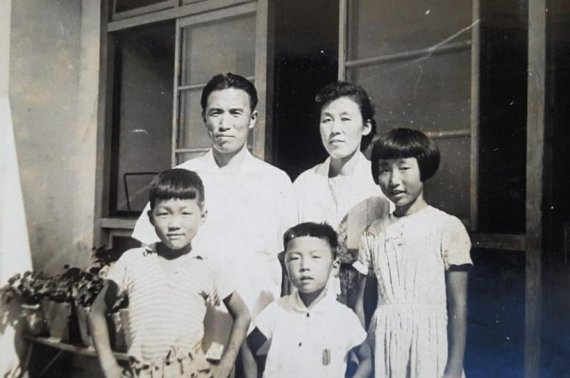
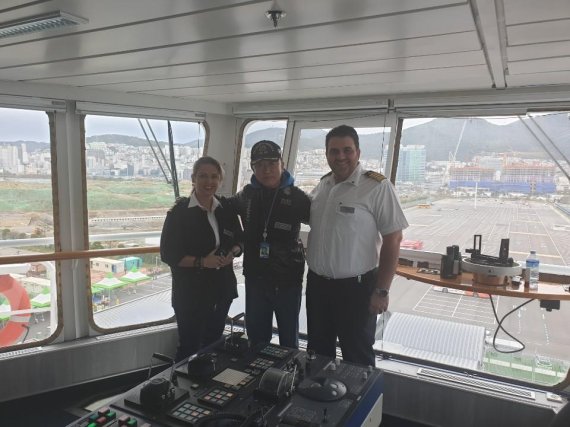
Around this time, there was one person who looked at the team from a completely different angle. His name was Jeong-gyu Song. He was born in Busan and studied at Korea Maritime University, which trains navigators. He then began his career as a deck officer on merchant ships. Later, he was promoted to captain at a U.S. shipping company, making the sea his workplace. Baseball was not his profession, but his interest ran deep.
Baseball fan Jeong-gyu Song (front center), who chose the path of a navigator under the influence of his father, a professor at Korea Maritime University
Long voyages gave him time to study baseball. Through Japanese professional baseball newspapers, American sports magazines, and Major League related books, he naturally came to place Korean baseball alongside overseas baseball and compare their structures. The differences became increasingly clear. At the time, player usage in Korean baseball relied excessively on intuition, and team management lacked a consistent philosophy. There was no system to systematically develop prospects, and responsibility for poor performance always fell on the field staff. Jeong-gyu Song began recording and accumulating the problems he felt while thinking about the Lotte Giants.
Choosing records instead of protests
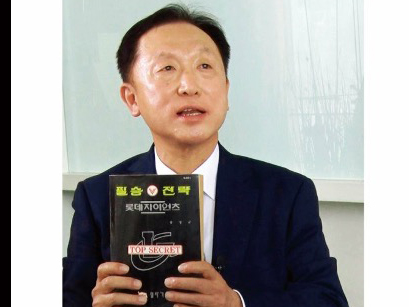
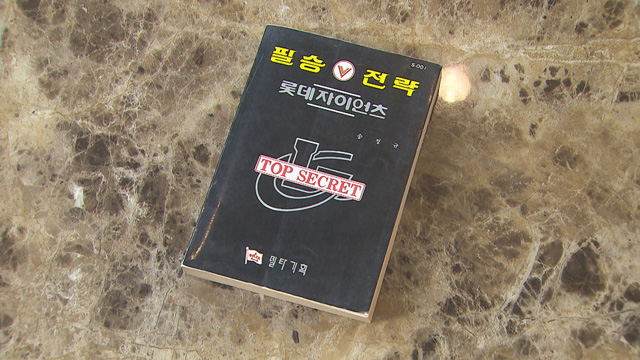
Jeong-gyu Song did not initially intend to write a book. He called the club several times to explain the team’s problems. However, the opinions of an “ordinary fan” were repeatedly brushed aside. Deciding that conveying things verbally no longer worked, he chose to organize his thoughts and leave them as a written record. After seven months, during which he even set up his own publishing company, The Winning Formula: Lotte Giants’ Top Secret was released into the world.
A book that is still talked about among Korean baseball fans today
It was self published, and sales were not high. However, the contents were concrete. The role of the front office, standards for player usage, and the necessity of a long term development system were organized by topic. From today’s perspective, these are not unfamiliar ideas, but at the time they were novel problem statements in Korean baseball. The book gradually spread by word of mouth. Unexpectedly, it reached the hands of Lotte owner Jun-ho Shin.
Becoming a general manager with a single book
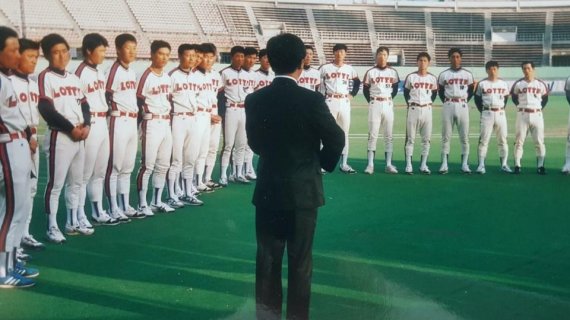
In 1991, the Lotte Giants made a radical choice. Jeong-gyu Song was appointed general manager. Former sailor, late 30s, no practical experience in baseball team operations. In the front office culture of the time, it was a highly unusual appointment. Internal reactions were cold. Open turf battles and exclusion followed, and there were even times when, because budget cooperation was not provided, he had to go out personally to look for sponsors.
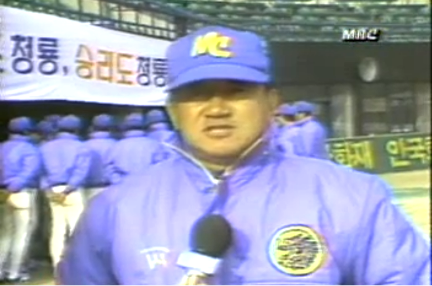
Jeong-gyu Song greeting the players after taking office
His operating philosophy was also different. He spoke about statistical analysis, the strong number two hitter theory, and the need for a development system. Concepts that are familiar now were met then with reactions like “that sounds like baseball comics.” However, change quickly appeared in results. In his first year, 1991, Lotte rose to fourth place and advanced to the postseason. They surpassed one million spectators in a single season for the first time in professional baseball history. In 1992, they even won the Korean Series.
The experiment ended, but the questions remained
The championship was not the end. Internal conflicts still remained. An assessment arose that he “damaged organizational harmony.” This evaluation was reported to club management. Jeong-gyu Song, who encountered this while on his honeymoon, resigned voluntarily after returning home. Since then, Lotte has gone more than 30 years without another championship.
He is also known as Korea’s top expert in the field of maritime economics, combining practice and theory
He returned to the shipping industry. Afterward, he continued working in key positions in shipping and port related organizations. Even after mandatory retirement, he has continued to advise on and contribute to major issues in Korea’s shipping and port sectors. His distance from baseball grew, but his perspective remained sharp. In 2024, he appeared on a Busan regional radio broadcast and became a topic of conversation again after predicting Lotte’s preseason ranking with considerable accuracy. Decades have passed, but he left the impression that his eye for the team had not changed.
The Winning Formula: Lotte Giants’ Top Secret is now an out of print book. Rather than a theoretical text, it is closer to a record of one fan asking questions and working through the answers. Attempts similar to Moneyball clearly existed in Korean baseball as well. However, they did not take root as a successful management strategy, nor did they expand into a popular narrative. Even so, this attempt showed a brief but meaningful possibility in Korean baseball.
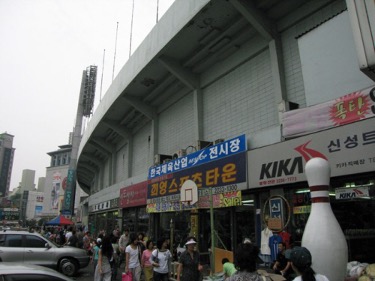
Dongdaemun, the Beginning of Korean Baseball Brands The roots of Korea’s baseball equipment industry began in the alleyways surrounding Dongdaemun Stadium in Seoul. In the early 1970s, sporting goods shops that had been scattered throughout Jongno and Euljiro gradually gathered around the stadium, naturally forming a commercial district. Here, every task needed for baseball was carried out, from glove repair and production to bat processing and uniform embroidery and number patching. In an era when overseas brands were difficult to access, what mattered most to players was not the brand name, but which shop’s craftsman had made the equipment. Dongdaemun was not only a famous shopping district, but also the heart of Korean baseball equipment manufacturing.
Streets and shops around Dongdaemun Stadium, once the center of Korea’s baseball equipment industry
Although Dongdaemun Stadium was demolished in a redevelopment project in 2009, its culture did not disappear. Merchants spread out to large commercial complexes such as the 16-story Good Morning City, Jamsil Sports Mall, and areas around Euljiro. Even today, through this network, many amateur baseball teams, youth clubs, and women’s baseball teams continue to produce uniforms and team equipment. Only the location has changed. Dongdaemun still functions as the practical center of Korea’s baseball equipment industry.
The Origins of Handmade Gloves: Gimhae Industrial Company and JOE LEE The point at which glove manufacturing in Korea took shape as an industry dates back to 1967 in Eomgung-dong, Busan. Gimhae Industrial Company, founded by the late Gwang-jo Lee, was Korea’s first specialized baseball glove factory. Every process was done by hand. From leather cutting to stitching, steam molding, and final lacing, skilled workers participated in each stage through a division of labor.
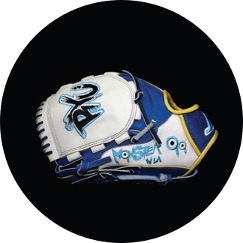
A JOE LEE glove used for practice by Hyun-jin Ryu during his time with the Los Angeles Dodgers
Despite passing through multiple crises, including the IMF financial crisis, competition from low-priced Chinese products, and the recent pandemic, Gimhae Industrial Company’s production system has been maintained. In 1991, the premium brand JOE LEE was launched, inheriting the philosophy of Gwang-jo Lee. It continued a production approach focused on craftsmanship rather than mass production, and its performance was proven in actual play by professional players including Hyun-jin Ryu. JOE LEE remains a symbol of domestically made gloves crafted by artisans. It is a case that shows the Korean baseball equipment industry has accumulated real manufacturing expertise beyond simple distribution.
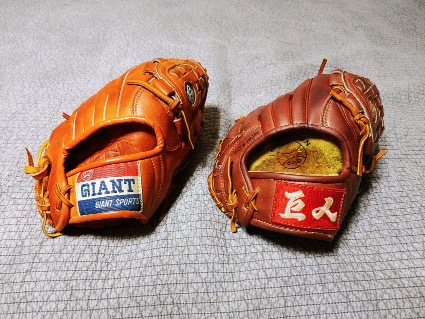
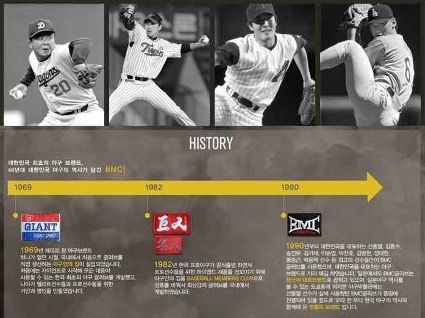
The Growth of Korea’s First Brand, BMC The representative Korean domestic brand is undoubtedly BMC. It began in 1969 by producing player gloves under the name “Giant,” and was reorganized under its current brand name following the launch of the KBO in 1982. It then rapidly gained popularity by combining professional player sponsorships with distribution network expansion. In bromide photos from the 1990s and 2000s, most players wore BMC gloves, and it was also the most commonly encountered brand in the Dongdaemun commercial district.
BMC gloves long favored by famous Korean baseball players such as Park Chan Ho Park and Byung-hyun Kim
From the late 2000s, BMC expanded its direction toward a premium strategy. To pursue high-end positioning, new products of the highest quality were required. Through this process, the Alkan and Royalty series were created. These series use Seto and Terada line leathers processed by Maruhashi in Japan, materials also used in top-tier Mizuno models. When Japanese brands productize gloves with the same materials, they are priced very high, but BMC maintained domestic production systems and kept prices relatively reasonable. As a result, it earned a reputation in the field as a “high-quality glove with strong value for money.”
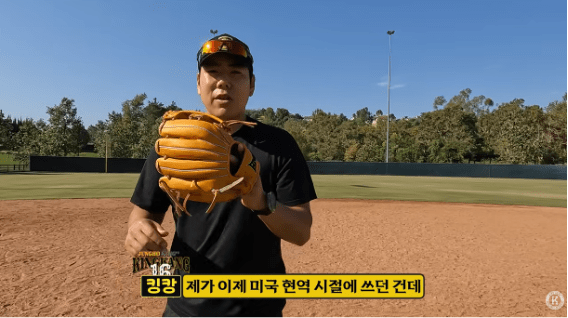
A BMC glove actually used by Jung-ho Kang in MLB
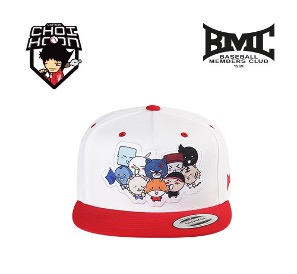
Trust Built Alongside the League BMC has long been active as an officially certified KBO brand. It has consistently supplied official game balls, umpire equipment, and team goods, growing alongside the league on the field. In the 2025 season as well, it continues to handle production of official game balls and the supply of umpire equipment. By releasing collaborative products with teams and the league, such as team-character snapback caps, it is also expanding its points of contact with fans.
A collaborative cap created by popular baseball cartoonist Hoon Choi and BMC
By steadily building brand self-reliance, BMC has established a position that is not easily replaceable on both the distribution and manufacturing sides. Within this flow, brand operations are currently centered on Fusion Sports Korea (FSK). Multiple baseball brands such as Kang’s Studio, Diamond, and Morimoto are managed together, forming a relatively stable supply structure that spans equipment production to distribution. A brand that began in the alleyways of Dongdaemun has grown to a position where it supplies standard equipment used in the league.
At present, the Korean baseball equipment market includes a range of brands centered around BMC, including SPS, Incojava, Fandom Korea, and Atoms and Altis, each building its own domain. SPS has expanded overseas distribution through entry into the Japanese market. Incojava operates high-end lines using Japanese Seto leather and American Texas steerhide, and also handles OEM production for Louisville Slugger and Easton. Fandom Korea has earned a dedicated following with its North Skip leather models, while Atoms and Altis are targeting the premium market based on Japanese manufacturing technology.
Behind this growth are advancements in production processes such as the adoption of Maruhashi leather, hydraulic vacuum processing, uniform stitching, and steam molding. Korean brands no longer remain as inexpensive alternatives. From producing official league equipment to engaging in global OEM collaborations, the manufacturing culture that began in the alleyways of Dongdaemun continues quietly today.
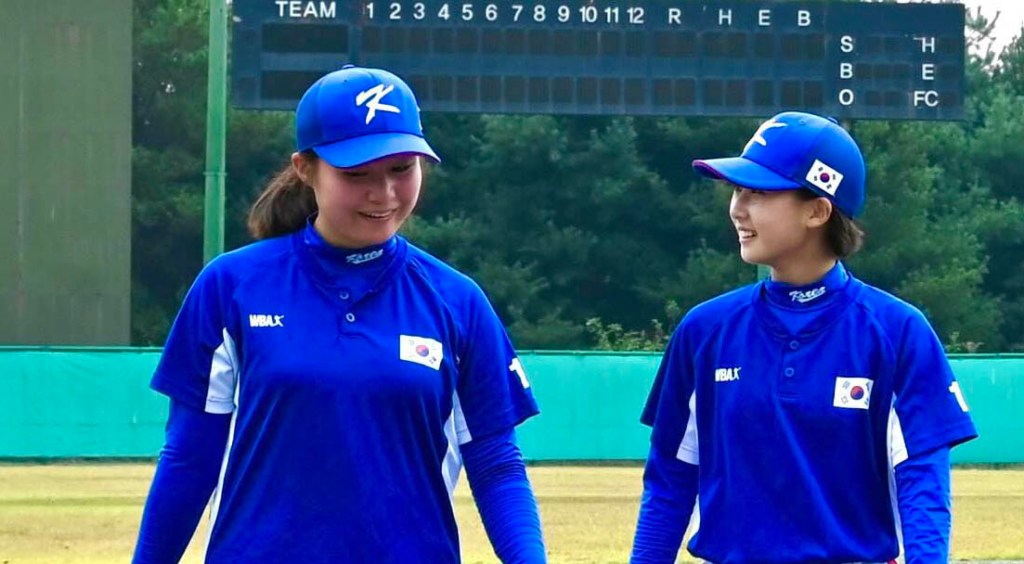
Women’s baseball exists in Korea across a range of organizations, but finding clear information, especially in English, can be difficult. Teams, tournaments, and national-level activities are often managed through different baseball bodies, and women’s baseball is not always easy to distinguish from men’s or softball programs.
This list pulls together some of the leading organizations connected to women’s baseball in Korea as a basic reference point. It’s meant for people who are curious about how women’s baseball is organized, where events and national teams are managed, and which institutions are involved, particularly readers outside Korea who may not be familiar with the local baseball landscape.
Korea Baseball Organization (KBO)
Korea Baseball Organization, which operates the KBO League. As part of the Amateur Baseball Week initiative, it organizes and broadcasts the Women’s Baseball All-Star Game.
It oversees student baseball, women’s baseball, amateur baseball, softball, and other baseball leagues outside the KBO League. It is also working to identify and develop women’s baseball players, including hosting a softball camp in 2025.
Korea Women’s Baseball Federation, which oversees the women’s national baseball team and nationwide tournaments. The largest women’s baseball tournament in Korea, the LX Cup, is also announced and managed through this organization.
To learn more about women’s baseball in Korea tune into SABR Asian Baseball Research Committee’s zoom interview with Hyeonjeong Shim, a former pitcher with the Korean National team.
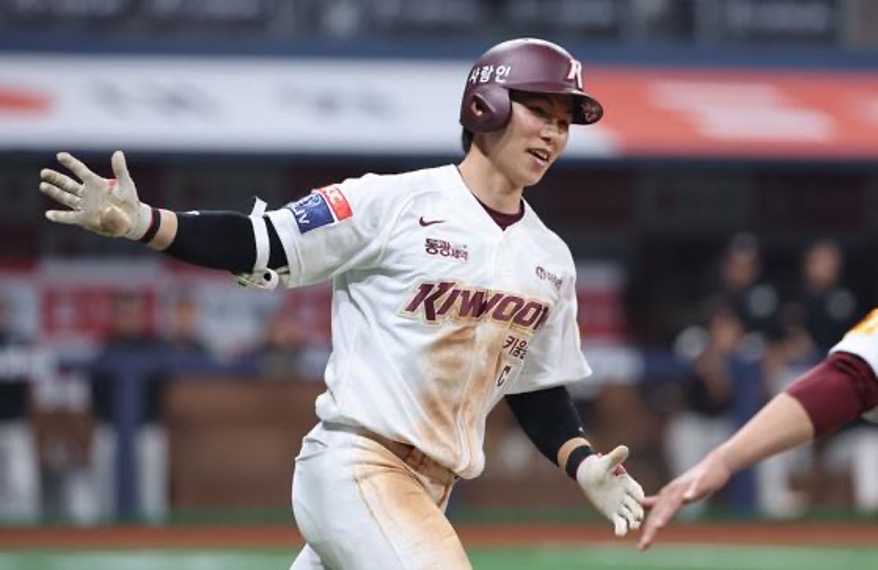
Kiwoom Heroes are a club with a unique character within the KBO League. In their history, they are the only self-sustaining team in the KBO without a parent corporation. Even so, they have produced as many as five Major League players in a short span of time. This article introduces Kiwoom Heroes and tells the stories of how they sent their core players to the big leagues.
A Poor Club, the Heroes
In 2008, the Heroes were newly formed by taking over the players and coaching staff of the “Hyundai Unicorns” baseball club, which had been dissolved the year before. On paper they were a new expansion team, but people in the baseball world and the fans regarded the Heroes as the successor to Hyundai. The Heroes based themselves in the capital city of Seoul, but the fan base of Seoul was already shared between two founding year clubs from 1982, the LG Twins and the Doosan Bears. Because of this, the Heroes’ fan base came to be made up mainly of underdog oriented fans whose loyalty was not tied to the home region and fans in the southwestern part of Seoul, such as Guro District, Geumcheon District, and Yangcheon District, which are relatively close to the home stadium.
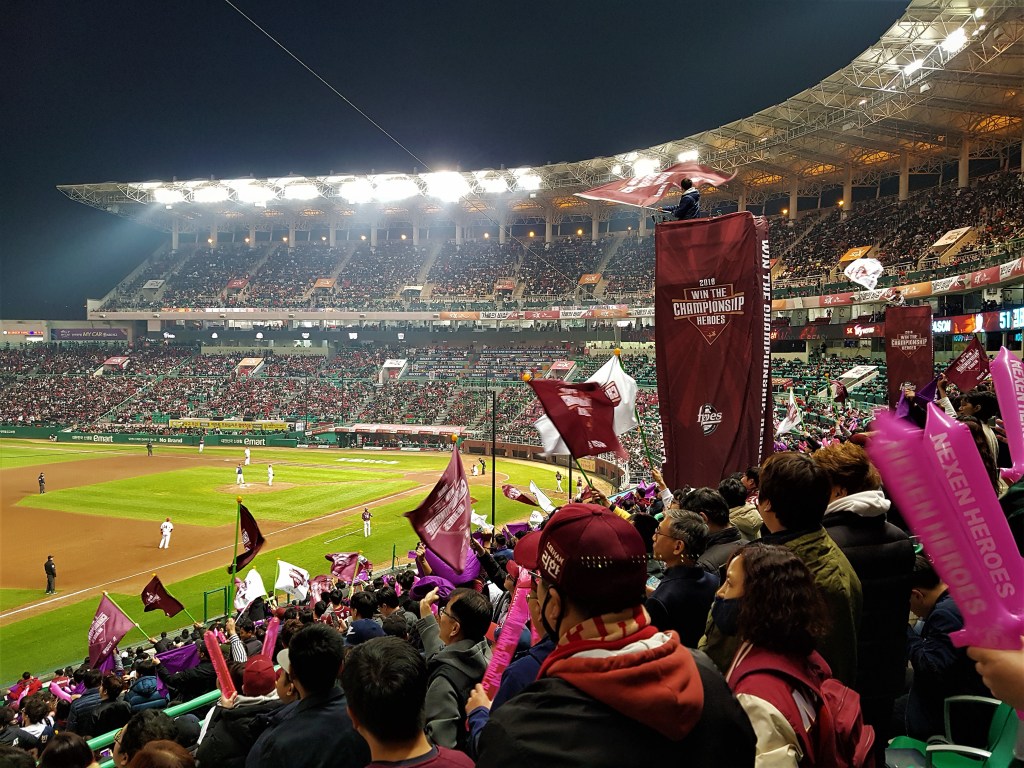
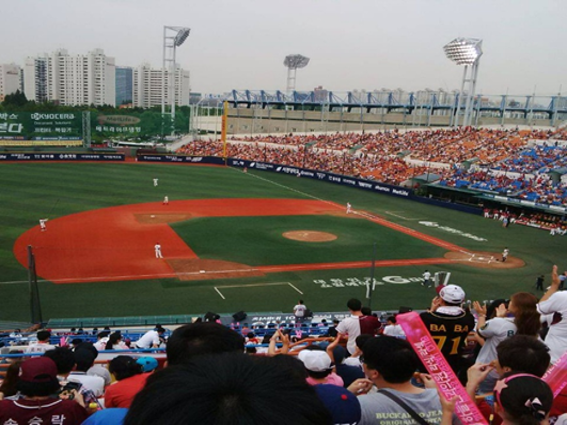
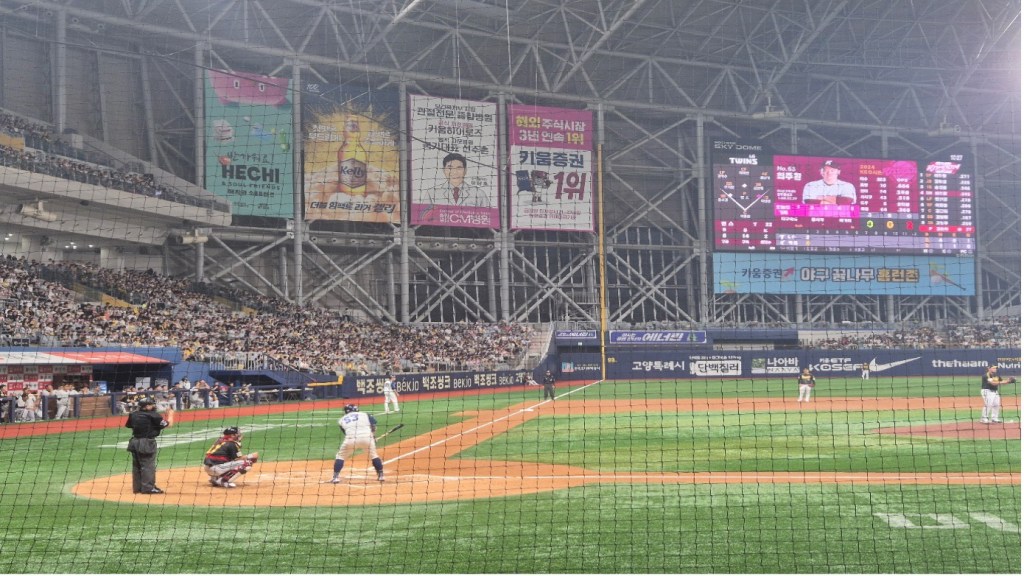
Mokdong Stadium, the former home ballpark of the Nexen HeroesGocheok Sky Dome, the current home ballpark of the Kiwoom Heroes
Other KBO baseball clubs are operated as subsidiaries of large corporations. Even when a club takes a loss, the parent company adds hundreds of billions of won each year to the team’s finances as support. By contrast, the Heroes operate as a business entity themselves. Therefore, the club must gather its operating funds by recruiting sponsors from various companies. The fact that the Heroes have no parent company has, in an ironic way, made it easier for them to sign large-scale sponsorship contracts. For example, large corporations like Lotte or Samsung, which have many subsidiaries in a wide range of industries, are reluctant to have companies that compete with their subsidiaries appear as sponsors of their baseball clubs. The Heroes, however, have been able to recruit partner companies from a variety of industries as sponsors. The club divides its sponsors into six tiers, including Main Partner, Platinum, Gold, Silver, Bronze, and General Partner. Depending on the tier, sponsors receive priority in placing their advertisements in visible spots such as on helmets, jerseys, and caps, and on the outfield fences of the ballpark. As of 2025, 49 companies are participating as sponsors of the Heroes.
2025 Kiwoom Heroes sponsorship status from the Heroes official website
The largest source of income for Kiwoom is its naming sponsorship agreements. The sponsor at the very top tier, the Main Partner, fills this role. Over the years, many companies have provided funds and promoted their brands by entering into naming sponsorship agreements. Woori Tobacco in 2008, Nexen Tire from 2010 to 2018, and Kiwoom Securities from 2019 have each represented the club with their names. The reason the team is currently called Kiwoom Heroes is that Kiwoom Securities agreed to pay the club fifty billion won over five years. In this way, the present-day Heroes stand in a situation that is completely different from the days when the Hyundai Unicorns, backed by the support of the large Hyundai conglomerate, were one of the most powerful teams in the league.
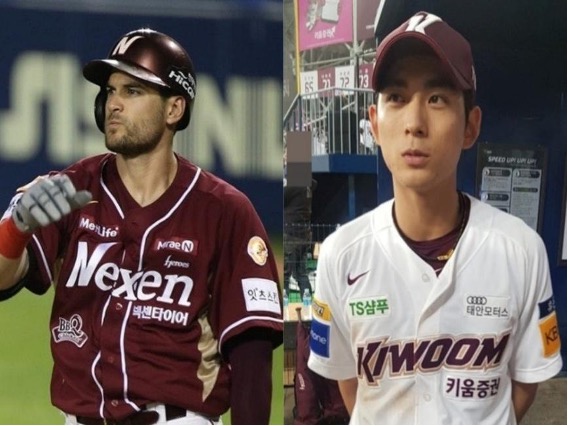
Nexen-Kiwoom Heroes uniforms
The Background of Producing Major Leaguers
Even so, compared to other clubs, the Heroes’ financial condition has not been good, and they have had to tighten their belts every year. The easiest method for the club to secure cash has been selling players. From the early days of the club, the Heroes sustained themselves by transferring starting players through trades or free agency and using the transfer fees and compensation money they received. For example, when they sent away prospects Won-sam Jang, a left-handedpitcher drafted in the Hyundai Unicorns era, and Jae-gyun Hwang, a right-handed hitting infielder, the Heroes received transfer fees of three point five billion won, and two billion won, respectively.
In 2015, when right-handed hitting outfielder Han-joon Yoo, who had hit 20 home runs the year before, and right-handedrelief pitcher Seung-lak Son, a former saves leader, moved as free agents to expansion team KT Wiz and the Lotte Giants, the Heroes received a total of two point four billion won in compensation from those two teams. The club gained revenue, but Heroes fans had to watch their own players display their talents for other teams, which left a bitter feeling. In the end, the production of Major Leaguers was also not a matter of choice but a necessity for the club to survive. Posting fees for overseas transfers are much higher than domestic transfer fees. Because of that, the club encouraged its players all the more strongly to go to the United States. The vacancies left by departing starting players were filled by new players, and the club chose a strategy of “developmental rebuilding,” in which they raised these players as starters and then transferred them again. A representative example of this is the line of shortstops that the team has produced in order, from Jung-ho Kang to Ha-seong Kim to Hyeseong Kim.
The fact that the club gave many opportunities to rookies and maintained a relatively free team atmosphere also contributed greatly to the production of Major Leaguers. In fact, when Jung Hoo Lee won the KBO Rookie of the Year award in 2017, he said in an interview, “I am grateful to the manager for giving many opportunities to someone like me who was lacking.” When Ha-seong Kim received the Golden Glove Award in 2019, he said, “I am grateful to the club for creating an environment where rookies can run around freely.” After the 2025 season, one of the team’s core players, infielder Sung-mun Song, also declared that he would attempt to move to the United States, and the Heroes are now taking on the challenge of producing their sixth Major Leaguer.
Jung-ho Kang, Byung-ho Park, Ha-seong Kim, Jung Hoo Lee, Hyeseong Kim (Posting fees and contract amounts were four years, 11 million dollars, four years, 12 million dollars, four years, 28 million dollars, and a three-plus-two-year deal worth 22 million dollars, respectively.)
The Shadow of the Heroes
However, behind this virtuous cycle, there have also been controversies. Although the departures to MLB were presented as success stories, the fundamental way the club operates has not changed significantly. Instead of reinvesting the posting fees in the club’s infrastructure, the Heroes have often cut spending further and chosen cheaper methods, even when signing players. In many cases, they have filled spots that could not be filled with their own prospects by signing players who had been released by other teams. Among such acquisitions, only a few, such as left-handed hitting outfielder Yongkyu Lee, who had been with the Hanwha Eagles, right-handed pitcher Changmin Lim from the Doosan Bears, and right-handed hitting infielder Sunjin Oh from the Lotte Giants, managed to play meaningful roles. The club’s philosophy has also shown itself clearly in the recruitment of foreign players. The Heroes signed left-handed pitcher Andrew Van Hekken for $250,000 in 2012, right-handed pitcher Jake Brigham for $450,000 in 2017, right-handed hitting outfielder Jerry Sands for $100,000 in 2018, and left-handed pitcher Eric Jokisch for $500,000 in 2019, all on relatively low-costdeals. By good fortune, these players became among the best in the league, but not all foreign players turned out that way. Many of the foreign players signed by the Heroes were frequently replaced because of injuries or poor performance.
Even after the club’s finances returned to the black, the Heroes still showed a stingy attitude toward investing in players, and some fans, tired of this, have steadily turned away from the club. On top of this, the Heroes have tried to scoop up even talented amateur players. Since the 2020s, it has become common for the club to trade mid-level players in order to receive draft picks. Through this, the Heroes have obtained more rookies than other teams. However, many Heroes fans express dissatisfaction with the attitude of sacrificing the present while looking excessively only to the future. Then, is the development of the prospects they acquire going well? Recent moves suggest that this is not the case. Right-handedpitcher Jae-young Jang, who joined the club with a huge signing bonus of 900 million won, an unusually large amount for Kiwoom, eventually converted to hitting due to control problems. Yun-ha Kim, known as the nephew of former Major Leaguer Chan Ho Park, has recorded only one win in two seasons and is struggling in the first team. Catcher Dong-heon Kim, who was drafted with a pick obtained by sending away the team’s starting catcher Dong-won Park, missed an entire year after undergoing elbow surgery.
The pillars of the team have left, and as lineups have been filled with players lacking experience, the team’s overall strength has weakened. An even bigger problem is that the second team, which should be the channel for developing players through systematic training, is also weak. The strategy of using rookies immediately in the first team has, in an ironic way, become a cause of weakening the second team, which is responsible for player development. The Heroes often use rookies in the first team in the same season they are drafted. For rookies, it may feel good to get immediate opportunities, but problems of overuse, injuries, and game quality inevitably follow. Even so, with no clear alternatives, a system in which players are developed “by force” in the first team has become fixed.
In the 2025 opening game, eight rookies were registered on active rosters across the ten teams in the league, and three of them belonged to the Heroes. The fact that the Heroes neglect their second team has become known not only to insiders but also to fans. The Heroes’ second team has changed its training base three times, leaving the old Goyang Wondang Baseball Stadium used by the Hyundai Unicorns second team, moving to Gangjin in South Jeolla Province from 2010 to 2013, then to Hwaseong in Gyeonggi Province from 2014 to 2018, and finally returning to Goyang in 2019. In particular, the Gangjin Baseball Stadium in South Jeolla Province, which served as the second team’s training ground from 2010 to 2013, is about 400 kilometers, roughly 248 miles, away from Mokdong Baseball Stadium in Seoul, making it the height of inefficiency. The poor conditions of the stadium and the inadequate meals for second team players became recurring sources of controversy.
In recent years, as KBO clubs have realized the importance of their second teams, they have begun to build new ballparks and invest heavily in player development. The Heroes, who have lacked sufficient financial resources from the beginning, have not been able to even consider such investments. A club that barely has enough to operate the first team has no room to pay attention to the second team, and in the second team, there are no players ready to be called up to the first team, creating a vicious cycle. As these various problems piled up, the Heroes have finished in a distant last place for three consecutive years since 2023. The limits of the low-cost, high-efficiency baseball that the Heroes pursued are now being exposed. Even so, the club is in a situation where it puts its energy only into trading players and collecting prospects, instead of investing in the reinforcement of the roster. Recently, KBO clubs have discussed revisions to the salary cap system. The subject was to create not only an upper limit but also a lower limit in order to induce a certain minimum level of investment. At the KBO board meeting held on September 23, 2025, the league decided on a maximum lower limit of 6.06538 billion won and plans to implement the system beginning in 2027. Many see this as a measure aimed at the Heroes, who invest relatively little. Despite many disadvantages, such as being a self-sustaining club and having a shallow fan base, the Heroes have reached the Korean Series three times and have become the original club of five Major Leaguers. Free from the need to consider a parent company’s interests, the Heroes once created miraculous stories and brought a fresh breeze to the league. Now, however, the Heroes are closer to being the “ugly duckling” of the league than to their past glory. The club’s other nickname, the MLB Academy, can be read as a survival strategy that has been turned into marketing rather than a pure badge of honor.
Gwangju Jeil High School, known as Gwangju Ilgo, is located in Gwangju Metropolitan City in the southwestern region of Korea and is the school that has produced the greatest number of Major League Baseball players in the country. In the early 2000s, Jae Weong[c1] Seo of the New York Mets and Los Angeles Dodgers, Byung-hyun Kim of the Arizona Diamondbacks and Boston Red Sox, and Hee-seop Choi of the Chicago Cubs and Los Angeles Dodgers reached the MLB stage one after another. Although the three played for different teams, they shared the distinction of being Gwangju Ilgo alumni, and they were called the Gwangju Ilgo Trio as they demonstrated the international competitiveness of Korean baseball. In the mid-2010s, Jung-ho Kang of the Pittsburgh Pirates became the first KBO hitter to move directly to MLB, opening a new path. In 2025, Kim Sung Joon signed with the Texas Rangers as the next emerging player. A total of five Gwangju Ilgo alumni have signed with MLB organizations, the most among Korean high schools. The school also ranks among the highest domestically for producing KBO league players, with 119 Gwangju Ilgo graduates appearing in first division games as of 2024.
1924, The Spark of Anti-Japanese Spirit That Began on a Baseball Field
Baseball at Gwangju Ilgo was not simply a sport from the beginning but a symbol of resistance and pride. The baseball team, founded in 1923, is one of the oldest in Korean high school baseball. In June of the following year, the baseball team of what was then Gwangju Higher Common School defeated a Japanese select team called Star by a score of 1 to 0 in an exhibition match. In colonial Korea, the victory of Korean students over a Japanese team was a rare moment of national joy. The field filled with cheers as players and spectators celebrated together, shouting manse. The atmosphere changed abruptly when Star’s manager, Ando Susumu, stormed onto the field in protest, causing chaos as spectators and players clashed, and the Japanese cheering section also joined. Japanese police intervened, and Ando claimed that he had been struck in the forehead by a spike, identifying nine Gwangju players as the attackers. They were immediately detained. Outraged students launched a schoolwide strike that lasted three months. This incident marked the first organized student protest against colonial rule and served as a catalyst for the 1929 Gwangju Student Independence Movement. A monument to the movement still stands on the school grounds. Before national tournaments, Gwangju Ilgo players bow their heads before the monument, renewing their resolve never to give up. This tradition grew into the team’s philosophy, and their strong fundamentals and concentration reflect this spirit.
Gwangju Ilgo students reenacting the starting point of the Gwangju Student Independence Movement
1980, The Silent Time That Baseball in Gwangju Protected
If Gwangju Ilgo in the 1920s contained an anti-Japanese consciousness, then its baseball in the 1980s walked alongside the era of democratization. In the spring of 1980, citizen protests for democracy against the military regime took place in Gwangju. This event, which is called the May 18 Gwangju Democratization Movement, became a major turning point in modern Korean history. At the time, some Haitai Tigers players were still students, and that generation experienced up close the confusion and sacrifice that engulfed the entire city. The atmosphere of that time, when soldiers fired guns at citizens, left a deep impression on the team’s attitude. The more their home city, Gwangju, fell into turmoil, the more the Haitai Tigers players banded together and comforted the hearts of citizens with strong teamwork and hustle play. Former Haitai Tigers player Chae-geun Jang was in Gwangju on May 18. He remembers it as follows. “There were helicopters, soldiers, and the sound of gunfire. At night, we turned off the lights and stayed quiet. I even remember seeing bodies on the street.” Jang said that when May came, fans and players naturally spoke about those memories. For several years afterward, due to political instability, home games were not held in Gwangju around May 18. The government, concerned about large crowds in the Gwangju area around the May 18 memorial, requested that the Korea Baseball Organization adjust its schedule. As a result, throughout the 1980s, the Haitai Tigers had to play games in other regions around May 18. Only in 2000, the twentieth anniversary of the democratization movement, was a home game in Gwangju finally held again on May 18.
In 1986, the military regime instructed the KBO to move the May 18 game in Gwangju to another region
Even so, Haitai did not waver. Beginning with their first Korean Series championship in 1983, they went on to win four consecutive titles from 1986 to 1989, five championships in the 1980s, and four more in the 1990s, establishing what came to be called the Haitai dynasty. At the center of this dynasty were core players from Gwangju Ilgo such as Dong-yeol Sun, Lee[c1] Kang-chul Lee, and Jong-beom Lee. With solid fundamentals and concentration as their weapons, they led the team and helped raise the overall standard of Korean professional baseball. In this way, baseball in Gwangju took root as a source of regional pride.
The Characteristics and Development Environment of the Gwangju Region
The intense baseball passion in Gwangju began during the golden age of the Haitai Tigers in the 1980s and 1990s. Haitai’s repeated championships became a source of pride for the region, and baseball took firm root as Gwangju’s representative sport. From this period on, parents increasingly tried to raise their children as baseball players, and Gwangju came to be recognized as a city where one could succeed through baseball. Gwangju is a mid-sized city with a population of around 1.4 million. In general, in a city of this size in Korea, maintaining elementary, middle, and high school baseball teams in a stable way is difficult, but Gwangju is an exception. Baseball teams at schools across the region operate on a steady basis, and youth baseball teams are also active. This environment has led to a youth baseball culture in which many players set Gwangju Ilgo as their target school. In addition to Gwangju Ilgo, there are other prestigious baseball schools in the city,such as Jinheung High School and Dongseong High School, the former Gwangju Commercial High School. These schools also have experience winning national tournaments, but in terms of the concentration of player resources and students who hope to advance, Gwangju Ilgo stands at the top. Former KBO technical committee chair In-sik Kim evaluated the situation by saying that while Busan divides its talent between Kyungnam High and Busan High, in Gwangju, the player pool is concentrated at Gwangju Ilgo. Gwangju Ilgo recruits players not only from Gwangju but from all across South Jeolla Province, and promising prospects from middle schools in the area, such as Mudeung Middle School and Chungjang Middle School, as well as nearby cities including Naju and Suncheon, also join the program. As a result, internal competition becomes very intense, and players who pass through that competition show a high level of fundamentals, physical conditioning, and game focus.
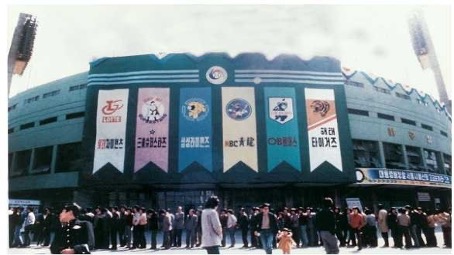
Founding members of the Haitai Tigers
Industrialization and economic growth in Korea have taken place mainly in the capital region, meaning Seoul and Gyeonggi, and in the Gyeongsang region, including Busan, Daegu, Ulsan, and the surrounding provinces. In contrast, the Honam region has had a relatively weaker economic base. Because of this, baseball has been seen as a realistic career path through which one can raise social status by effort and performance. In such an environment, when parents made decisions about their children’s future, they often favored sports, especially baseball. This culture has continued across generations up to the present. Gwangju Ilgo still supports the roots of Korean baseball today. Even as generations change, the philosophy of valuing fundamentals and mental strength has not changed. From its founding in 1923 to MLB advancement in 2025, Gwangju Ilgo has been both the place that has created the present of Korean baseball over a century and the site where its future is being prepared.
Professional sports in Korea began in earnest in the 1980s. At the time, Korea had industrialized, and the economy was more stable than before, but the country was still under military rule. Before the voices for democracy and press freedom grew stronger, President Chun Doo-hwan’s government fostered the sports industry to divert public dissatisfaction (along with films and the sex industry, this was called the “3S Policy”).
The government encouraged major corporations, which played a large role in the Korean economy, to establish professional baseball teams. Responding to this, corporations formed teams. On December 11, 1981, the Korea Baseball Organization (KBO) was founded. Soon after, in March 1982, the Korean Professional Baseball League (KBO League) opened. From then on, Korea’s international baseball exchange began to center around the KBO League.
Sammi Superstars – based in Incheon/Gyeonggi-do/Gangwon-do/5 provinces of North Korea
Lotte Giants – based in Busan/Gyeongsangnam-do
Samsung Lions – based in Daegu/Gyeongsangbuk-do
Haitai Tigers (now KIA Tigers) – based in Gwangju/Jeolla
OB Bears (now Doosan Bears) – based in Daejeon/Chungcheong
In 1985, the OB Bears relocated to Seoul, and Binggrae Eagles (now Hanwha Eagles) filled the gap. In 1990, the Ssangbangwool Raiders (disbanded in 1999) joined, starting the true 8-team structure of the 1990s. However, during the 1997 financial crisis, ownership changes and team dissolutions created a turbulent history. Despite this, baseball’s popularity grew, leading to the creation of more teams. The current 10-team system was completed in 2015 with the founding of the Suwon-based kt wiz.
From its start in 1982 until the mid-1990s, the KBO League consisted only of Korean players. International exchange was minimal, and overseas Koreans or Koreans with Japanese pro experience filled the role of “foreign players.” Notable examples include pitcher Myeong-bu Jang (Japanese name: Hiroaki Fukushi) and player-manager In-chun Baek of MBC Blue Dragons.
At that time, the gap between Korean and Japanese baseball was far greater than today. In-chun Baek’s record of a .412 batting average in 1982 (still the KBO’s only .400 hitter) and Myeong-bu Jang’s 30-win season in 1983 both reflected that disparity.
In 1998, Korea finally introduced its foreign player system, about 15 years after the league’s founding. Since then, players from Japan, the United States, Mexico, the Dominican Republic, Venezuela, Puerto Rico, and Curaçao, among others, have joined. With superior physical ability, they brought powerful batting and dominant pitching.Korean players, competing with them, raised their skills to international levels. This led to global success: silver medals in the 2006 and 2009 World Baseball Classic, and a gold medal at the 2008 Beijing Olympics, proving Korea’s competitiveness in world baseball.
From the mid-1990s, more Korean student athletes also challenged foreign leagues. Some skipped the KBO and went directly abroad after graduation. In 1994, Chan Ho Park became the first to enter Major League Baseball. After him came pitchers Jin-ho Cho, Byung-hyun Kim, Jae-weong Seo, hitters Hee-seop Choi, Shin-soo Choo, Ji-man Choi, and others.
Meanwhile, many KBO players at that time went to Japan first instead of the U.S. Legends such as pitcher Dong-yeol Sun, shortstop Jong-beom Lee, pitcher Sang-hoon Lee, pitcher Dae-sung Koo, and slugger Seung-yeop Lee all advanced to Japanese baseball.
Direct movement of Korean pros to the U.S. began in the 2000s. Players like Hyun-jin Ryu, Jung-ho Kang, Byung-ho Park, Ha-seong Kim, and Jung Hoo Lee used the posting system to reach MLB. Student athletes also continue to pursue MLB directly after high school, examples include Hyun-il Choi, Jun-seok Shim, Ji-hwan Bae, Hyeong-chan Eom, and Won-bin Cho.
Recently, a unique trend has emerged: foreign players who played in the KBO return to MLB, a phenomenon called “reverse export” in Korea. Merrill Kelly, now a pitcher for the Texas Rangers, is a prime example. Others such as Chris Flexen, Erick Fedde, and Mike Tauchman also polished their skills in Korea before resuming MLB careers.
In the past, the KBO was just an option for players who failed to adjust in MLB. Now, it is positioned as a springboard for returning to MLB. Seeing these “reverse export” successes, many foreign players knock on the KBO’s door before directly attempting MLB.
Thus, the KBO has become not only a field of opportunity for Korean players but also for foreign players. Through this cross-border exchange, the league has become a stage where new baseball stories continue to unfold.
MLB fans are familiar with the MLBPA. Strikes, negotiations, and collective action are deeply etched into the history of American sports. However, in Korean professional baseball (KBO), player rights were long treated as a taboo. Players were stars, yet at the same time they were almost like property of the club. If they spoke up, consequences awaited them. But the cries of a few players eventually began to change history.
Dong-won Choi: The First Voice for Player Rights
In the 1984 Korean Series, Lotte Giants ace Dong-won Choi led the team to victory in four out of five games. He was the hero of Busan and a symbol of Korean baseball. Yet at the peak of his career, he began another fight, this time about rights. At that time, Korean players were treated like the property of the club. Salaries were unilaterally dictated. If they raised objections, release or trade awaited them. Injuries were to be borne solely by the players, and there were no mechanisms to guarantee life after retirement. Dong-won Choi pointed out that “players’ lives are treated too lightly” and pushed to establish a players’ association.
Dong-won Choi, regarded as a symbol of athlete rights in Korean sports
His demands were simple: abolish the salary cap and floor, introduce a player pension, and allow an agent system. Looking back now, they were completely reasonable proposals. But the clubs resisted, and the media denounced him: “How can a player earning hundreds of millions talk about unions?” Public opinion was cold. Choi was not alone. He sought legal counsel through acquaintances and also turned to Jae-in Moon, who was working as a labor lawyer in Busan at the time. Though he would later become President of South Korea, back then he was a young lawyer defending workers’ rights. This scene shows how unfamiliar and even dangerous the idea of “players are workers too” was in Korean society at the time.
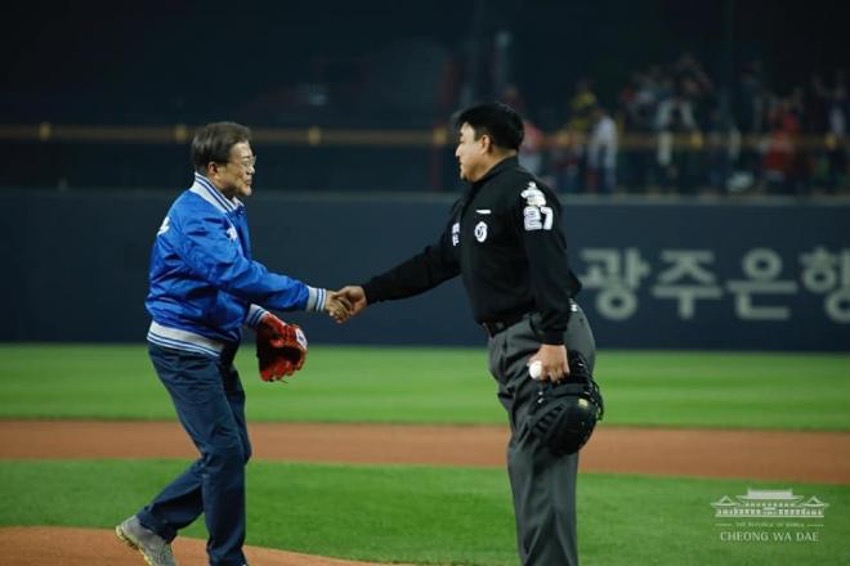
President Jae-in Moon encouraging Soo-won Choi, the younger brother of the late Dong-won Choi and a professional umpire (2017)
However, without institutional support, the attempt could not last long. The price was harsh. He was traded overnight, from the symbol of Busan to Samsung. Everyone knew it was retaliatory, but there was no official explanation. Later he said, “Players are workers too. But I was too far ahead of my time.” His challenge ended in frustration, but it was the first voice ever raised in Korean baseball. Just as Curt Flood fought a lonely battle against the reserve clause in MLB, Dong-won Choi planted the seed in Korea.
The Players’ Association: From Frustration and Turmoil to Recognition
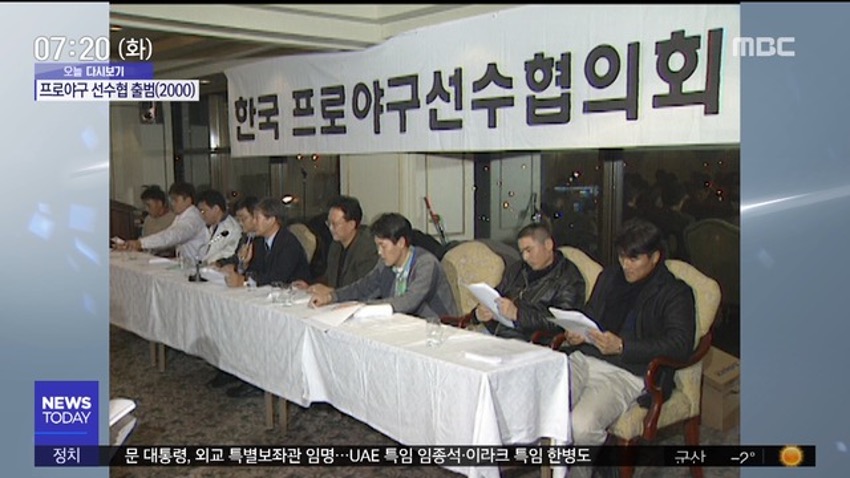
The seed planted by Choi did not die out. In the 1990s, Dong-yeol Sun and Sang-hoon Lee attempted to reestablish a players’ association. But faced with the wall of the clubs and the absence of legal structures, they ultimately failed. Still, traces remained, the growing recognition that “rights can be discussed.” In the winter of 1999, stars including Jun-hyuk Yang took the lead. The movement to form a players’ association led to the inaugural general meeting in early 2000, but due to lack of preparation and internal conflict, it fell into chaos. The KBO declared it would release as many as 75 players to stop the movement. The secretary-general at the time even said in an interview, “The league will function without those players.” But such pressure only backfired. Player rights were no longer an internal issue but a matter of public debate.
The second attempt, made after the 2000 season, was different. They emphasized procedure and strengthened internal representation. The first president was Jin-woo Song, a veteran pitcher from Hanwha. He is the all-time wins leader in Korean professional baseball. The fact that such a legend stood at the forefront showed that the players’ association was no longer just a minority voice but an institution representing the entire league. With the support of civil society and public opinion, the players’ association was finally recognized by the KBO in January 2001.
January 22, 2000, Launch of the Professional Baseball Players Association
But recognition did not mean stability. Core players such as Jun-hyuk Yang, Hae-young Ma, Jung-soo Shim, and Ik-sung Choi had to endure retaliatory trades and disadvantages. The history of player rights in Korean baseball is one of institutional recognition accompanied by simultaneous suppression. In 2009, six players from Hyundai Unicorns were declared free agents for participating in players’ association activities. This time, even players who had not been involved in the association sent letters of protest to media outlets. “This is too much.” The issue of rights grew from the concern of a few to that of the entire community.
This scene overlaps with MLB history. In the 1960s and 1970s, when Marvin Miller led the MLBPA as its first full-time executive director, it was the same. His leadership earned the trust of the players, and through strikes and negotiations he secured collective bargaining rights. The moment Jin-woo Song became the face of the Korean players’ association resembles the moment in the United States when Miller brought the MLBPA into the institutional mainstream.
Player Protection: Voices Rise Again
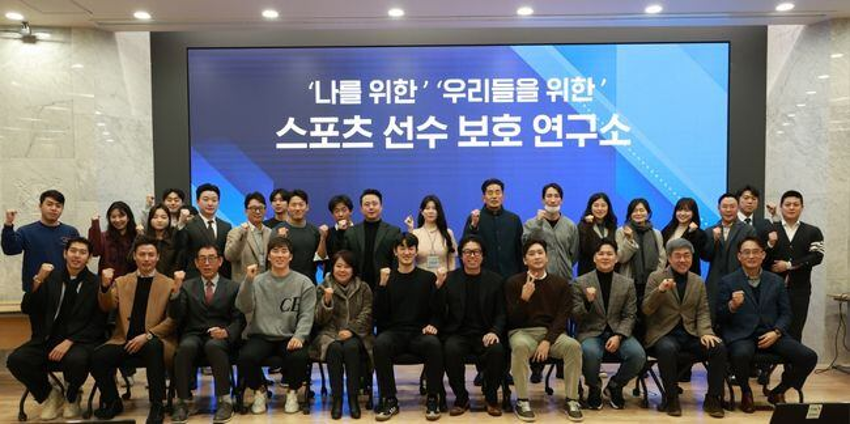
Ik-sung Choi was one of the players who stood at the very front during the establishment of the players’ association. But the cost was severe. Due to a retaliatory trade, he had to leave his team overnight. Though he continued playing through frustration, he eventually retired. Many players, bearing similar wounds, chose silence, but he kept speaking. Even after retirement, he did not stop. He founded the Sports Athlete Protection Research Institute and in 2024 held Korea’s first-ever Player Protection Forum. Active players like Kyung-min Heo of Doosan and Young-pyo Ko of KT stood on stage alongside retired players such as Soo-chang Shim and Dae-eun Lee. It was also symbolic that the players’ association and the retired players’ association participated together. In the past, such a coalition would have been unthinkable.
The First Sports Player Protection Forum in Korea (2024)
At the forum, topics such as injury compensation, post-retirement life, and the power imbalance between clubs and players were openly discussed. These were once conversations reserved for barrooms, but now they were addressed in institutional language before the media and the fans. MLB fans would find this scene familiar as well. When Curt Flood fought against the reserve clause, he was completely isolated. But his sacrifice became the starting point for major league free agency, and Marvin Miller institutionalized it through the MLBPA. The way Ik-sung Choi expanded his personal wounds into intergenerational and collective solidarity through the forum after retirement mirrors that very process.
And he did not stop. Through the institute he established, he also joined hands with the Korean Professional Football Players Association, expanding solidarity beyond baseball to other sports.
The Message Left for Korean Baseball
The protection of player rights in Korean baseball started late and has followed a difficult path. The challenge of Dong-won Choi against club abuse of power, the collective strength that brought the players’ association into the institutional sphere, and the return of Ik-sung Choi who organized Korea’s first Player Protection Forum, all these steps have formed today’s movement.
Yet even now in Korea, players are often seen not as “workers” but as “independent contractors.” Criticism persists over whether well-paid stars have the right to speak of rights. But the essence of rights is not about income level. The right to be respected in the workplace and to safeguard one’s body and future safely is not determined by salary scale.
The message of Korean baseball is clear: players are workers and human beings deserving of respect. Rights do not emerge on their own. They take root only through sacrifice, solidarity, and the empathy of society. The journey for rights in Korean baseball continues to this day.
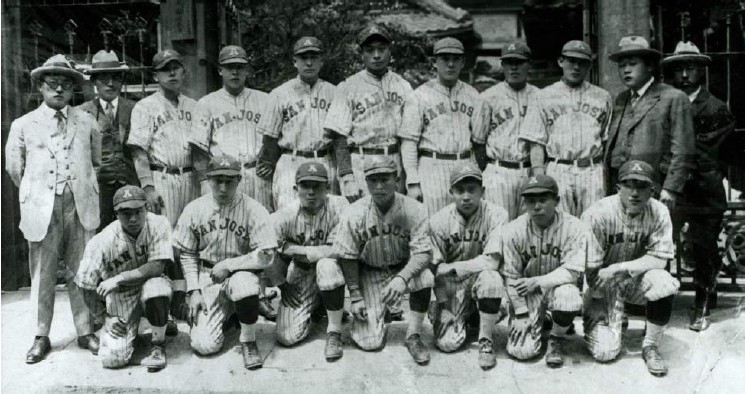
Every Tuesday morning we will post an article from SABR’s award-winning books Nichibei Yakyu: Volumes I and II. Each will present a different chapter in the long history of US-Japan baseball relations. This week Ralph Pearce discusses the Japanese American San Jose Asahi’s 1925 tour of Japan and Korea.
The San Jose Asahi Baseball Club was one of a number of Japanese teams to organize in Northern California between 1903 and 1915. Other cities to organize early teams included San Francisco, Oakland, Alameda, and Florin. The name Asahi means Morning Sun in Japanese and was a popular team name. San Jose’s first Asahi team was made up of Issei (first-generation immigrants) players and lasted only a few years. In 1918 one of the former Issei players encouraged a young Nisei (second-generation) fellow, Jiggs Yamada, to reconstitute the team with Nisei players. Jiggs, a catcher, enlisted the assistance of 15-year-old pitcher Russell Hinaga, and the two soon put a team together.
Unlike the Issei players, these young Nisei players were bom in the United States and had attended English-language schools with a largely Caucasian enrollment. Because of this, both a generational and cultural gap existed between the Issei and Nisei. Through the shared love of baseball, Nisei teams like the San Jose Asahi helped bridge this divide. In the early 1920s, a sympathetic newspaper columnist in San Jose, Jack Graham, encouraged the Asahi to extend that bridge by participating in games outside the Japanese leagues. This participation drew the larger San Jose community to the Asahi Diamond in Japantown, and there Caucasians began to mingle with Japanese Americans, helping to establish familiarity and friendship.
Another bridge in the making was the growing baseball friendship between the United States and Japan. Japan’s enthusiasm for the game had been spreading since its introduction in the 1870s. The tradition of international baseball exchanges began with Waseda University’s 1905 tour of the American West Coast and continues to this day. This friendship through the two nations’ shared love of baseball helped foster cultural appreciation and understanding.
San Jose’s opportunity to visit Japan came in 1925 at the invitation of Meiji University, whose baseball club had toured the United States the year before. The timing couldn’t have been better for the Asahi; several of the players—Jiggs Yamada, Morio “Duke” Sera, Fred Koba, and Earl Tanbara—were anticipating retirement from the team. It was agreed that they would stay with the Asahi until their return from Japan.
It is believed that Meiji University provided some funds for tour expenses, though much of the burden was on the team and its Issei supporters. The first obstacle was the cost of transporting 17 passengers to and from Japan. Jiggs Yamada explained how this was accomplished:
Well first, we had to get some way to go to Japan. A boat was the only thing we could get. We happened to have a boy, Earl Tanbara. … Tanbara’s folks, mother and father, worked for the Dollar Steamship Company family in Piedmont. So when he graduated high school, we had his father talk to Mr. Dollar and ask him if he could do us a favor. He said, “Sure, as soon as Earl [goes] to Cal [Berkeley] and graduated, he’s got to work for me at the steamship company.” They were going to open up an agent in India. So he said, “Sure, if he promises to do that, I can have him going on our boat to Japan.” .. .So that’s how we got to go to Japan on a boat. People figured it was funny how we got to go to Japan . because at that time the steamship boat was expensive.
A few days before departure, Asahi supporter Seijiro Horio gave $800 to Nobukichi Ishikawa, the team’s treasurer. This appears to have been the primary funding source for the team’s trip.
Jack Graham publicized the coming tour to Japan in a number of articles. On March 18, 1925, the day before the team departed, he wrote: “There will be a big delegation of fans in attendance and a bumper crowd of Japanese fans will be on hand to see their favorite sons in their final game in this city. The Asahi team will sail on Saturday for Japan, where they will play a series of games in the flowery kingdom. On their return, they will stop in the Hawaiian Islands, where they will play seven or more games. It will be the latter part of June before they return. The Asahi team has made many friends in this city by their gentlemanly manner in playing the national game, and whenever they stage a game here there is always sure to be a big turn-out.”
The next day, Graham ran a column praising the Asahi and encouraging local pride in the team as representatives of San Jose. A large photograph of the team ran at the top of the sports section, remarkable in that images of local teams rarely appeared in either American or Japanese American papers at the time. The caption read in part: “The Japanese Asahi baseball team will leave San Jose on the first leg of its joumey to the land of cherry blossoms this morning, when it takes the train to San Francisco where it will stay until Saturday, when it will embark on the President Cleveland for Japan.”
The team members making the trip to Japan were pitchers Jimmy Araki and Russell Hinaga; catchers Ed Higashi and Jiggs Yamada; first baseman Harry Hashimoto; second baseman Tom Sakamoto; third baseman Morio “Duke” Sera; shortstop Fred Koba; third baseman-outfielder Sai “Cy” Towata; outfielders Frank Takeshita, Frank Ito, and Earl Tanbara; and utility players Jitney Nishida and Jimmie Yoshida. While the team was in Japan, the strong Asahi “B” team continued to play in San Jose against teams of its caliber. Asahi Diamond was also made available for use by other local teams and management of the diamond was temporarily turned over to locals Happy Luke Williams and Chet Maher.
The Asahi, along with the trip’s manager, Kichitaro Okagaki, and its treasurer, Nobukichi Ishikawa, left San Francisco on March 21, 1925, and a little over two weeks later they arrived in Japan, giving them about a week to recover before their first game. When the team arrived in Japan, Earl Tanbara purchased two Mizuno baseball scorebooks. Earl kept meticulous track of each game, including dates, locations, and the names of all the players.
The Asahi played their first game on Thursday, April 9, against their hosts Meiji University. They lost 8-2 with Araki going the distance on the Meiji grounds. The Asahi played their second game on Saturday, April 11, against Waseda University. They were playing better now, though they lost in a 12-9 slugfest. Russ Hinaga and Jimmy Araki shared the pitching chores, Frank Ito got a double, Harry Hashimoto had a triple, and Cy Towata and Earl Tanbara hit home runs. Each side recorded only one error.
The Asahi played their third game two days later with a rematch against their hosts, Meiji University. Jimmy Araki again pitched the entire game with Ed Higashi doing the catching. Araki was knocked around for a 9-4 loss, despite a batch of errors by Meiji. Next up—the very next day—was Keio University, another tough team. If the Asahi were ready for a win, it would have to wait for another day. Araki and Hinaga pitched the team to a 20-4 shellacking, the Asahi racking up seven errors along the way.
Two days later, on April 16, the Asahi faced Tokyo Imperial University. Once again Araki and Hinaga teamed up. The team was sharper that day, making only one error. Harry Hashimoto hit two doubles, chalking up a run. That was the Asahi’s only run, though, to six for Tokyo and their fifth loss in five games. The Asahi played for the love of the game, but they were serious competitors and this situation was not acceptable. Jiggs Yamada explained the problem and the remedy:
We didn’t play so good because our legs were shaking and all that and the ball was different. It was a regular size American ball, but the cowhide, it slips. The pitcher couldn’t play, pitch curves or anything and the players themselves couldn’t throw the bases, so we couldn’t play good. So finally we told the manager [Okagaki] of our team “Get us some American balls.” So they sent us a one dozen box of American balls, then we started to play different. Then we started to play our regular play.
Teammate Duke Sera confirmed the situation, saying that after leaving Tokyo, the manager saw to it that future Japanese teams could use their own baseballs when they were in the field, and that the Asahi players would use American balls when they were in the field.
On April 18, the Asahi played yet another strong university nine. This time it was against Hosei. Jimmy Araki took to the mound for the Asahi and despite several errors, the team finally got its first win. The Asahi won 7-4 and scored all their runs in the first three innings, thanks in part to a home run by Araki himself. The team followed up a week later with a 25-5 victory over Sendai, with Hinaga pitching and Araki sharing left field with Tanbara. The Asahi suffered another loss on May 1, against Takarazuka before beginning a 13-game winning streak.
The Asahi had played their first six games in Tokyo against strong university teams before venturing north to Sendai. From Sendai, they headed south about 500 miles to Osaka. They played three games in the Osaka area and one game in nearby Kyoto. In the game against Kyoto Imperial University, Tom Sakamoto hit a dramatic “Sayonara Home Run” or walk-off home run in the 10th inning to win 3-2.
From Osaka, the team headed south to Hiroshima for two games. As they traveled the country by train, they continued to accumulate wins and, more importantly, became acquainted with the land of their parents.
One of the players, Duke Sera, had been bom in Hawaii, and then raised by his uncle in Hiroshima. His uncle had sent him to Stanford University to complete his education. When the team visited Hiroshima, Duke’s uncle held a reception for the team. According to Yamada, when the uncle met Duke and the team he quipped, “What the hell are you doing with this bunch here? You’re supposed to be studying!”
After the final game in Hiroshima on May 12, the Asahi traveled 400 miles back to Tokyo. It was the team’s original intention to return to the United States sometime in June. Whatever plans they may have had, however, were altered upon their return to Tokyo (except for Duke Sera, who had to return to his studies at Stanford). Jiggs shared the change of plans:
Continue to read the full article on the SABR website
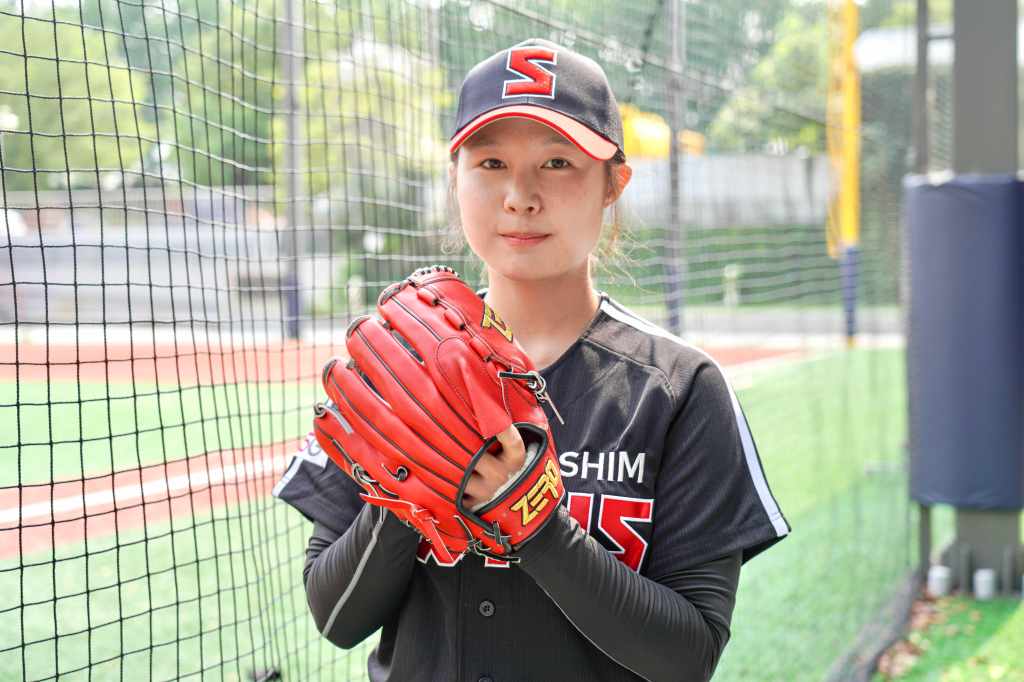
SABR’s Asian Baseball Committee is excited to host former Korean Women’s National Baseball Team pitcher Hyeonjeong Shim for a Zoom chat on November 21, 2025, at 9pm EST. The program will begin with a short presentation and a live interview hosted by Zac Petrillo, followed by a Q&A session with viewers. You must sign up below to attend.
Hyeonjeong Shim is a former pitcher for the Korea Women’s National Baseball Team (2022) and has appeared on YouTube’s Pro Neighborhood Baseball (PDB) as well as in multiple media interviews. She is currently a Public Relations Intern at the Korea Anti-Doping Agency and a student at Kyung Hee University, majoring in Physical Education and Cultural Entertainment. She was also a member of the winning team at the 2023 KSPO Olympic Academy.
Hyeonjeong Shim will talk about her journey/experience in women’s baseball in Korea, some background/history of women in baseball, her experiences on the national team, how she interfaces with the KBO, and what she is working on today/plans to do in the future.
Asian Baseball Committee Meeting
When: Nov 21, 2025 09:00 PM Eastern Time (US and Canada)
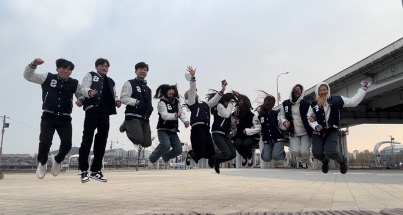
It’s been over 40 years since professional baseball took root in Korea. It’s now gone beyond being just a sport and has deeply permeated Korean daily life and culture. Traces of baseball can be found not only in the cheers and songs at the stadium but also in everyday scenes outside the ballpark. One such example is the sight of students on university campuses wearing matching jackets as a group. This jacket, called the “gwajam,” actually originated from the “baseball jacket,” and today it has become the uniform of youth. More than just a fashion item, this jacket has found its place in Korean society. But how did it get there?
A Tradition Born with the Harvard Baseball Team
The roots of the baseball jacket trace back to 19th-century American college baseball traditions. At the time, Harvard’s baseball team awarded its starting players sweaters embroidered with the school’s initials. These were known as letterman sweaters. They weren’t just for warmth, they were symbols of honor, proof of one’s baseball skill and achievement.
Over time, the tradition evolved into a more practical jacket: wool for the body, providing warmth, and leather for the sleeves, offering durability against friction and wind. This combination was perfect for athletes braving cold weather on the field. At the same time, the two-tone design of wool and leather created a bold look that expressed school colors and identity. With its blend of function and symbolism, the “varsity jacket” became an iconic symbol of American college sports.
Early Harvard baseball team in the 19th century
The Birth of the “Baseball Jacket” in Korea
This jacket entered Korea in the 1980s, coinciding with the launch of professional baseball. The two-tone design of wool body and leather sleeves resembled the thick warm-up jackets worn by players in the dugouts. In fact, players from the MBC Blue Dragons, one of the founding teams, were often seen wearing such jackets with their blue uniforms. This became a familiar sight to fans.
When combined with the popular image from American dramas and movies, “baseball teams wear varsity jackets,” Koreans naturally began calling this unfamiliar jacket yagujamba (baseball jacket). Unlike its difficult English name, the simple and catchy Korean nickname stuck instantly with the public.
By the late 1990s, university sports teams and clubs began adopting baseball jackets as group uniforms. It’s said that Seoul National University’s rugby team was the first to make them, which is often cited as the origin of the Korean-style gwajam (short for “gwahak jamba,” or “department jacket”).The trend soon spread to academic departments, and the naming system took hold: school/department name on the front, and name/student ID/graduation year on the back. So widespread was the practice that almost every Korean university student came to own at least one. More than showing belonging, gwajam became a symbol of youth itself, carrying memories of that time.
Over time, the gwajam branched out into more variations beyond the original baseball jacket: long padded coats for winter, hoodies for mobility, and custom jackets for individuality. Though the forms changed, the core remained the same: wearing the same jacket together to affirm belonging and share memories. Just as baseball teams express identity through uniforms, the gwajam became another kind of uniform showcasing the collective bonds of students.
Another Legacy Left by Baseball
In the U.S., the varsity jacket symbolized the achievements of outstanding athletes. In Korea, however, the gwajam was reborn as an expression of group solidarity. Though its direct link to baseball seems small, the survival of the name “baseball jacket” owes much to the cultural symbolism of professional baseball in Korea.
Baseball did not end at the stadium. Its name carried over into campus life, becoming part of the landscape of youth. Years later, when one pulls out a gwajam from the closet and wears it again, the cheers, laughter, and time spent with friends come rushing back.The name borrowed from baseball isn’t just a label, it’s proof that Korean baseball culture has deeply embedded itself beyond the game, into everyday life and memories of youth. That’s why even today, the baseball jacket remains the uniform of youth, a testament to the enduring power of baseball culture.
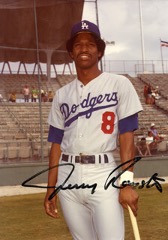
At the end of 2007, the Lotte Giants needed a breakthrough to end their long slump. The team’s performance was declining, and fans’ frustration was mounting. At that time, Bobby Valentine, who was managing the Chiba Lotte Marines in Japan, was asked by Lotte’s ownership to recommend a new manager. Without hesitation, Valentine introduced his longtime friend, Jerry Royster.
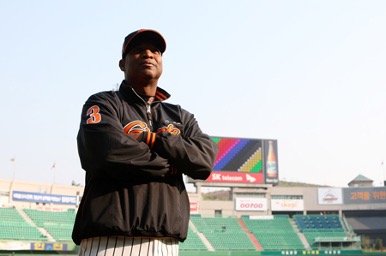
Arriving in Busan, Royster became the first foreign manager in KBO history. A utility player who spent 16 years in Major League Baseball moving between the infield and outfield, he took on the Korean stage after retiring as a player and working as a coach and minor league manager. At that time, the idea of a foreign skipper was almost unthinkable, and the Korean baseball world viewed it with both curiosity and concern.When the 2008 season began, a new scene unfolded at Sajik Baseball Stadium in Busan. With the slogan “No Fear,” Lotte declared an aggressive brand of baseball under its new manager. Fans quickly embraced the American leader, calling him simply “Royster” instead of the formal “manager.” Beyond nationality, the very fact that a foreigner was officially holding the reins of a KBO team was a symbolic milestone.
Royster stayed in Korea for only three years, but in that short time he left an indelible mark on the team and its fans. For years, Lotte had been mockingly nicknamed “8888577.” This number string represented their final standings from 2001 to 2007, mostly finishing dead last (8th place) in the eight-team league. Among fans, “8888577” became shorthand for failure and despair.
But everything changed after Royster took over in 2008. Though Lotte never won a championship under him, the team reached the postseason three years in a row. A club long accustomed to losing now had the confidence that “we can win.” At a time when team identities in Korean baseball were fading, Lotte regained a strong identity: a team that fought until the last out, one that played bold, attacking baseball.
After contract renewal talks broke down in 2010, Lotte fans raised funds themselves to publish a newspaper ad supporting manager Royster: ‘Why Not Royster?’
The Philosophy of Fearless Play
Royster’s baseball philosophy could be summed up in two words: “No Fear.” He valued bold attempts over results. Hitters were encouraged to swing aggressively, runners to take the extra base, and pitchers to trust their decisive pitch without shrinking back.
This message, “don’t be afraid of failure,” stood in sharp contrast to the conservative, risk-averse approach typical of the KBO then, leaving a strong impression. Players experienced new freedom, and fans delighted in the refreshing style of play. “No Fear” became more than a slogan; it fused with Busan’s passionate cheering culture and grew into a symbol.
His leadership also broke from the authoritarian style common in Korea. He shared emotions with players in the dugout and greeted fans first after games, rare sights in the KBO then. Rather than stressing authority, he emphasized communication and empathy. Asked “Who is the best player?” he always answered, “Every player is a good player.”While ordinary in the U.S., this philosophy was a fresh shock in Korea. In a culture of hierarchy, his trust-based, autonomy-driven style gave players a sense of ownership. That’s why players like Sung-hwan Jo, Dae-ho Lee, and Jae-gyun Hwang later called him a “mentor.”
Royster became more than a figure in the dugout, he was tied to Korean society. Even after he left in 2010, whenever a managerial change loomed, the phrase “like Royster again” resurfaced in media and fan discussions.
The “No Fear” mantra became a cultural keyword shared across Korean baseball fandom. Even today, his name resurfaces in charity games, broadcasts, and YouTube interviews. At the 2024 Hope Plus Charity Baseball Game in Sajik Stadium, he returned as honorary manager, greeted with roaring applause as he once again shared the “No Fear” spirit. For fans, Royster remains a living presence, not just a figure of the past.
Royster’s presence also influenced Korean society. Until the late 2000s, racially discriminatory expressions against Black people were often used casually in Korea. In 2008, a player posted a racial slur aimed at Royster on his personal SNS, which immediately sparked backlash. Unlike in the past, when such things might have been brushed aside, this time the player had to issue a public apology, because Royster was respected not just as a coach but as a leader.
From that moment, such remarks were no longer tolerable. His presence became a real-life lesson for Korean baseball in diversity and respect, fostering an attitude of evaluating a leader beyond race.
Royster’s impact continues today. Lotte has gone through many managers since, but every era is still compared to “the Royster years.” A style of baseball where players and fans breathe together and play fearlessly, that philosophy lives on as a benchmark beyond wins and losses. His name remains a reminder not of mere nostalgia, but of the direction Korean baseball should strive toward.














 SABR Asian Baseball Research Committee Blog