Category: Korea

  • ‘Tibucil’ is the barometer of Korean baseball’s popularity

    ‘Tibucil’ is the barometer of Korean baseball’s popularity

    by Taein Chun

    The SPC–KBO Collaboration: The Birth of KBO Bread

    To gauge the popularity of professional baseball in Korea, you don’t have to rely only on stadium attendance or TV ratings. Just look at the little stickers hidden inside convenience-store bread packs, known as “띠부씰 (Tibucil).” Short for “떼었다 붙이는 스티커 (tear-and-stick stickers),” the term has long been a pop-culture symbol linking generations and industries. Today, it also serves as a barometer of baseball’s popularity.

    The Seeds of a Fan Culture

    The Tibucil craze began in the late 1980s, when stickers featuring celebrities or cartoon characters were slipped inside bread packaging. Kids swapped them during school breaks. In 1999, 국찐이빵 (Gukjin Bread), modeled after comedian Kim Guk-jin, and 찬호빵 (Chan-ho Bread), named for MLB pitcher Park Chan-ho, sold 600,000–700,000 packs per day, sparking a nationwide boom. In the 2000s, 포켓몬빵 (Pokémon Bread) pushed sticker collecting to its peak.

    That generation of elementary school collectors are now thirty- and forty-somethings with spending power, sharing the habit anew with their children.

    Gukjin Bread (left) and Chan-ho Bread (right)

    KBO League Joins In: The Arrival of KBO Bread

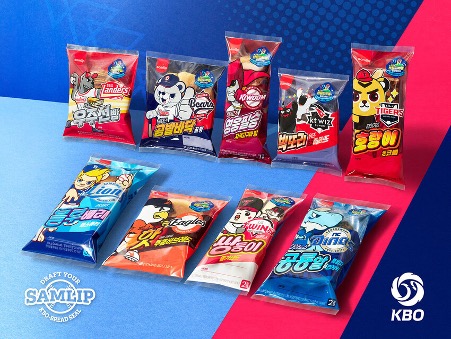
    In spring 2025, this collecting culture fused directly with the KBO League. SPC Samlip launched “크보빵 (KBO Bread),” created with nine clubs and stuffed with 215 random baseball Tibucil across ten product types. The design encouraged fans to hunt down “내 팀, 내 선수 (my team, my player).”

    The craze was instant. One million packs sold in just three days, and 10 million in 41 days, matching the blistering pace of Pokémon Bread’s 2022 revival. The sales surge coincided with KBO’s record 10 million spectators in 2024, and projections of 12 million in 2025. Stadium fever spilled over directly into Tibucil mania.

    From Stickers to Baseball Culture

    The KBO Bread phenomenon soon moved beyond limited-edition stickers. In May 2025, SPC released a follow-up line, “모두의 크보빵 (Everyone’s KBO Bread),” featuring 180 stickers of team uniforms and 26 of national-team uniforms.

    The concept expanded, too. Popular “야푸 (yagu food / baseball food)” like chicken, nachos, and burritos were reimagined as bread and snacks: 끝내기 홈런 미트 부리또 (Walk-off Home Run Meat Burrito), 몸 쪽 꽉찬 양념치킨볼(Inside Fastball Spicy Chicken Balls), 4-6-3 카라멜 땅콩 베이스 샌드 (4-6-3 Caramel Peanut Base Sandwich). Product names themselves echoed baseball lingo, heightening fan engagement.Thus, what began as a small sticker evolved into an experience spanning culture, food, and merchandise, keeping baseball’s momentum burning.

    Everyone’s KBO Bread, released in February 2025

    Connecting Stadiums and Convenience Stores

    From the start, KBO Bread became a central marketing tool. Between March 20 and April 21, 2025, SPC ran a “크보빵띠부씰 드래프트 이벤트 (KBO Bread Tibucil Draft Event)”: post your sticker with hashtags #크보빵 and #띠부씰드래프트 on social media for chances to win a pure-gold baseball, iPad Mini, national-team uniforms, team goods, or ballpark tickets.

    Follow-up campaigns tied to 모두의 크보빵 (Everyone’s KBO Bread) included photo contests and “도감 완성 (album completion)” challenges. Convenience stores near stadiums handed out stadium-exclusive stickers. Clubs devised their own twists. The Hanwha Eagles offered the fiery 이글이글 핫투움바 브레드 (Eagle-Hot Ttuk-Ttu-mba Bread), NC Dinos sold 공룡알 흑임자 컵케이크 (Dinosaur Egg Black Sesame Cupcakes).

    This spurred a lively ecosystem: buying bread at stores, swapping duplicates online or at meet-ups, and filling feeds with proof photos and unboxing videos. Rare Tibucil fetched premiums many times over retail. Much like MLB baseball cards, but in Korea, more entwined with everyday life.

    A Sudden End After 73 Days

    But after just 73 days, the KBO Bread boom came to a halt. The reason: an industrial accident at SPC’s Siwha factory and the resulting boycott.

    SPC had already faced scrutiny after repeated workplace accidents, including the 2022 death of a 23-year-old female worker caught in bakery machinery. When another accident struck a production site in spring 2025, boycott calls surged. SPC halted production to stem the backlash, and the product disappeared.Scarcity drove prices sky-high. A Do-young Kim national-team sticker resold for ₩15,000, a Hyun-jin Ryu for ₩13,000, five to ten times retail. Ironically, the discontinuation only intensified the collector craze, birthing a new “단종템 프리미엄 (discontinued-item premium)” culture.

    Photo of KBO Bread Tibucil stickers

    What Tibucil Teaches About Korean Baseball

    The Tibucil boom revealed three lessons for Korean baseball:

    1. An affordable gateway. For under ₩2,000, kids could “own” their team or player, lowering the entry barrier compared to pricier caps or jerseys.
    2. An online–offline bridge. Though sold in convenience stores, Tibucil extended naturally into social media, secondhand markets, and stadium exclusives.
    3. A real-time popularity index. Sticker trade velocity and prices quickly signaled which players and teams were hot, providing insights for marketers.

    Even though KBO Bread are gone for now, the message is clear: small collectibles, smartly tied to fandom, can expand touchpoints, blend online and offline, and serve as live metrics of buzz. One day, another little collectible might just set Korean baseball aflame again.

  • From Monsters to Fighters: The Turf War in Korean Baseball Entertainment

    From Monsters to Fighters: The Turf War in Korean Baseball Entertainment

    By Hunhee Cho

    The KBO League has ten professional teams, but every fan recognizes an unofficial 11th team: the Strongest Monsters (now the Blazing Fighters). The Monsters first appeared on JTBC’s variety show Strongest Baseball (known to Americans as A Clean Sweep, and currently airing on Netflix). The premise was simple: retired players who had once excelled in the KBO form a team and compete against high school, university, and minor league teams. If they fail to maintain a winning percentage above .700 for the season, the program ends. The logline was straightforward, but the results were surprising.

    Strongest Baseball Shakes Up the Game in Korea

    TV shows where retired players form a team and play baseball have existed before, with Back to the Ground on MBN as a prime example. But those programs stopped at simply evoking nostalgia for legendary players. Strongest Baseball went a step further, setting a .700 winning-percentage target and giving viewers a clear reason to cheer for the team as if it were a real professional club.

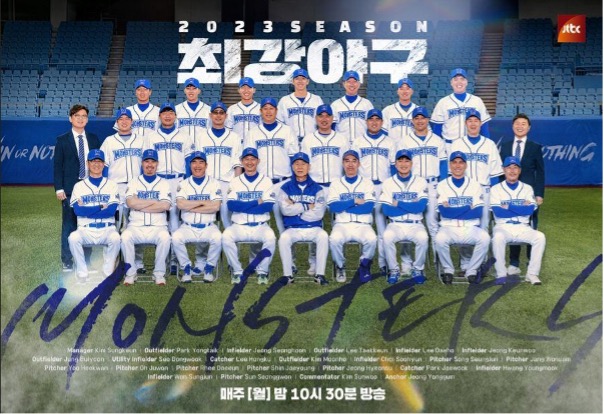
    Strongest Monsters Team Roster, 2023 Season

    Strongest Baseball rewrote the playbook for Korean baseball entertainment. On game days, Jamsil Baseball Stadium – the largest in Korea, with over 20,000 seats – was sold out. Like a pro team, the Monsters had their own fight songs and sold jerseys. 

    Above all, the true value of Strongest Baseball lies in how it sparked the popularity of the KBO League. By adopting a variety show format that anyone could enjoy without pressure, it allowed viewers to naturally learn the rules of baseball. As a result, it broke down one of professional baseball’s biggest entry barriers: its complicated rules. The Strongest Monsters also faced high school teams, introducing promising young players to the audience. Fans who had supported these prospects continued to follow them into the KBO once they were drafted. From 2022 to 2024, the years during which Strongest Baseball aired, KBO League’s annual attendance rose from 6.07 million to 8.10 million to 10.88 million. In boosting the league’s popularity, Strongest Baseball clearly served as a catalyst.

    The future seemed bright, but that expectation fell apart. The Strongest Monsters roster now plays under the name Blazing Fighters, and the show’s title has changed from Strongest Baseball to Blazing Baseball. Meanwhile, the show Strongest Baseball remains, with a new roster preparing for broadcast. So, what happened in between?

    The Conflict Between JTBC and Studio C1

    The split into two programs began with a dispute between the broadcaster and the production company. The original Strongest Baseball was produced by Studio C1 and aired by JTBC. Each season began with open tryouts, and season four was no exception – until February 2025, just weeks before tryouts, when JTBC abruptly announced their cancellation.

    Studio C1 quickly countered, stating that tryouts would proceed as planned. Indeed, they did, but the incident brought the JTBC–C1 conflict into the open. The next flashpoint was production costs: JTBC accused C1 of overbilling and withholding financial records and announced it would replace the production company.

    C1 fired back, claiming JTBC had withheld live game revenue for two years without disclosing the amounts. They also declared they would continue producing the program independently. The dispute escalated into lawsuits, which are still ongoing.

    From Strongest Monsters to Blazing Fighters

    Fans’ attention shifted to the players – whichever side retained the Monsters’ core identity would inherit its fanbase. The winner was C1. Except for Sim Soo-chang and Oh Ju-won, the entire roster sided with C1. With the players’ backing, CEO Jang Si-won quickly began production on a new show, rebranding Strongest Baseball as Blazing Baseball and renaming the team Blazing Fighters.

    Blazing Fighters on the field

    Challenges persisted after the Fighters’ debut. When C1 uploaded Blazing Baseball episodes to YouTube, JTBC filed complaints, leading to repeated takedowns. The turning point came from business deals: despite legal risks, the Fighters signed a home stadium contract with the city of Daejeon, secured a uniform deal with Wilson, and sold patch ads to sponsors including Kakao Pay Securities.

    C1’s biggest win was landing a live broadcast contract with SBS Plus, a major terrestrial channel. Now, for the first time, a baseball variety show streamed games like a professional team. To top it off, C1 launched its own platform, where fans could watch Blazing Baseball without fear of takedowns. While it has generated less buzz than seasons 1-3 (because those streamed on Netflix), Blazing Baseball still sells out Gocheok Sky Dome tickets in just five minutes.

    The Trials of Strongest Baseball

    Meanwhile, Strongest Baseball has faced headwinds before even airing. Only two players from the original Monsters stayed with the JTBC version. JTBC quickly filled the roster with other retired players, but a bigger issue arose when hiring a new manager.In late June, JTBC announced Lee Jong-beom, a coach for kt wiz, as the new Strongest Baseball manager – right in the middle of the KBO season. With kt in a tight pennant race, the loss of a coach angered the team’s fans, who directed their frustration at both Lee and JTBC. Lee explained that he accepted the job because he believed “reviving Strongest Baseball will greatly advance Korean baseball,” but public opinion remained cold. Already criticized by the original fanbase, the show now lost neutral viewers as well.

    Thumbnail of the teaser for Strongest Baseball

    Strongest Baseball is slated to premiere in September, but its teaser videos are filled with more comments supporting Blazing Baseball and criticizing JTBC.

    So now the question is, will Blazing Baseball keep its old fanbase and remain on top? Or will Strongest Baseball use JTBC’s corporate power to turn the tide? Whether JTBC or C1 ultimately prevails, one fact remains: this is a turning point in Korean baseball entertainment as well as the growing popularity of the game in Korea. 

    How this saga ends could have a massive impact on whether Korean baseball continues its shocking rise and the way it will be seen on the international stage for years to come. 

  • Korea’s Journey into Organized Baseball Before the Founding of the KBO by Jongho Kim

    Korea’s Journey into Organized Baseball Before the Founding of the KBO by Jongho Kim

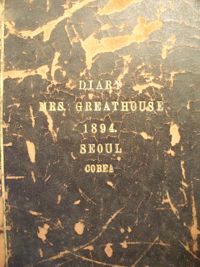
    The KBO League was founded in 1982. But long before its launch, baseball was already part of Korean life. From the first known instance of baseball on the Korean Peninsula in 1894 to 1981, how did Korean baseball connect with the wider world?

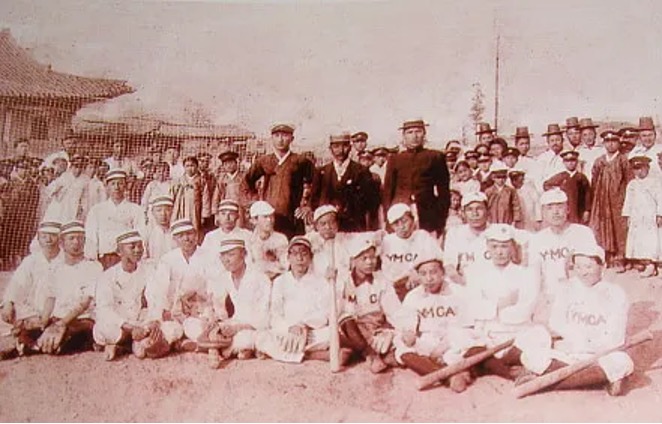
    The first established baseball team with a primarily Korean roster was the Hwangseong YMCA Baseball Team, founded in 1904. Philip L. Gillette (1872–1938), an American Protestant missionary, evangelized various Western sports to Korea: basketball, skating, baseball, and more. Among them, baseball captured the attention of many young Koreans. A game played by catching a ball with a large glove and hitting it with a wooden bat to score runs was unlike anything Koreans had seen before.Gillette formed the team, ordered baseball equipment directly from the United States, and trained the players himself. Their first game, against the German School team in 1906, marked the beginning of competition beyond Seoul, as the YMCA squad traveled to Kaesong, Pyongyang, and other cities to face school teams there.

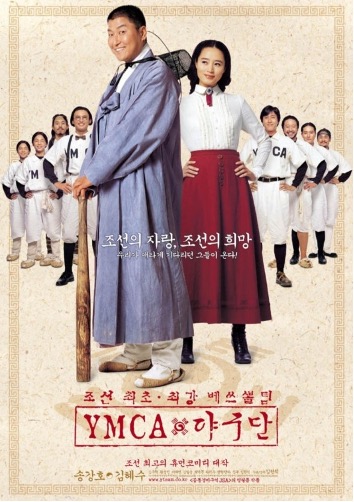
    Poster from the 2002 film “YMCA Baseball Team”

    Full-scale international exchange began in 1912. From November 5 to 12 of that year, the team traveled to Japan to play a series of games against Japanese students. On November 7, 1912, they recorded their first-ever victory against a Japanese school. In an era when Korea was under Japanese colonial rule, news of a win over Japan gave great encouragement to Koreans enduring those dark times.

    However, the following year, missionary Gillette was expelled, and several players were wrongfully arrested. The team was ultimately disbanded.

    Despite ongoing Japanese colonial rule, baseball persisted. In 1922, a Major League All-Star team visited Korea. In 1925, the University of Chicago baseball team and an American women’s baseball team also came to play, keeping the spirit of international baseball alive. Another milestone came on May 23, 1923, when Heo Seong, fresh from studying in the U.S., founded the Joseon Baseball Umpires’ Association, Korea’s first organized umpiring body.

    The real turning point came in 1925 with the construction of Dongdaemun Baseball Stadium (then called Gyeongseong Baseball Stadium, demolished in 2007). With a dedicated ballpark in place, numerous amateur clubs sprang up, mostly led by young Koreans.

    After liberation from Japan in 1945, eight industrial-league teams were founded: the Financial Union Baseball Team, Joseon Transportation Baseball Team, Gyeongseong Electric Baseball Team, Joheung Bank Baseball Team, Namsun Electric Baseball Team, Joseon Electric Baseball Team, Samguk Coal Baseball Team, and Jungang Industrial Baseball Team. In the fall tournament of 1946, six more teams joined – such as the Post Office (Communications Bureau) Baseball Team, the Railway Bureau Baseball Team, and the Seoul City Bureau Baseball Team, further expanding the industrialz`-league ecosystem.

    Even during the post–Korean War slump in baseball, change was in the air. In 1956, a Zainichi Korean student team visited from Japan, followed by a Japanese industrial-league team in 1961. These exchanges opened the door for Japanese players to come to Korea, and for Korean players to go to Japan’s professional leagues.

    One famous case was Baek In-chun, a former industrial-league player who joined Japan’s Toei Flyers (now the Nippon-Ham Fighters). In the opposite direction, Kim Sung-keun came from Japan to continue his baseball career in Korea’s industrial league. Whereas industrial teams before the 1960s were mostly run by public institutions, Korea’s rapid industrialization in the 1960s–70s saw banks and private companies forming and operating their own corporate teams.

    Industrial-league baseball reached its peak in 1975, the year the Lotte Giant (precursor to today’s Lotte Giants) was formed. These industrial teams didn’t compete in a regional-franchise-based league like modern pro teams; instead, they were company teams made up largely of employees, operating in a kind of workplace baseball system.It wasn’t until the spring of 1982 that professional baseball, the KBO League, officially began. While industrial-league baseball gradually faded into history after that, baseball as a sport became deeply woven into everyday Korean life.

  • Diary Reference Pushes Earliest Date of Baseball in Korea to 1894.

    Diary Reference Pushes Earliest Date of Baseball in Korea to 1894.

    As many sources still list 1896 as the earliest known baseball game in Korea, the SABR Asian Baseball Committee has decided to call attention to this 2016 article by baseball historian Patrick Bourogo that provides evidence that the game was played in Korea as early as 1894.

    https://www.koreatimes.co.kr/sports/20160329/baseball-in-korea-goes-back-further-than-you-might-think

  • How to Follow Asian Professional Baseball

    How to Follow Asian Professional Baseball

    by Zac Petrillo, Jerry Chen, and Rob Fitts

    So how can English speakers follow Asian baseball? There are now numerous ways to track professional baseball in Japan, Korea, and Taiwan even if you don’t read the native languages. Let’s look at each country in turn.

    Japanese Baseball (NPB)

    Just five years ago, it was difficult for English speakers outside of Japan to follow NPB, but now there are so many ways and sites to follow Japanese baseball that I can only list a small number here. Numerous sites post daily results, standings, and statistics on the web. Some sites that I find useful include the official website of Nippon Professional Baseball (NPB.jp), yakyucosmo.comproeyekyuu.com, baseball reference.com, and flashscore.comJapan-baseball.jp, the home page of Samurai Japan, contains schedules, rosters, scores, and information on all the national baseball teams. Those seeking more advance statistics may want to look atNPBstats.com and Delta Graphs which have incredible databases of traditional and sabermetric stats covering the entire history of Japanese professional baseball.The r/NPB group on Reddit is the most active social media site in English dedicated to NPB, with thirty-one thousand members in 2024. Members post game scores, standings, video highlights, and links to stories on other platforms. It is also a great place to ask questions about the game, learn how to buy tickets, find memorabilia, and read about other topics. One can also browse Japanese-language sport sites, such as Sportsnavi, and individual team sites and use a translation Ap, although I have not had much luck with this approach as the translations are often poor.


    A great resource for following Japanese baseball is japanball.com, the home for the baseball tourism company JapanBall. Their site includes pages featuring each NPB team and stadium, articles on the history of the game and current players, exclusive interviews, current NPB news, game schedules and statistics, and information on their organized tours of Japan. You can also sign up for weekly updates on NPB via email. 

    One of the easiest ways to follow NPB is by subscribing to select YouTube channels. Pacific League TV Official is a Japanese-language channel that contains over twenty-two thousand videos, including game highlights, player profiles, and much more. Pacific League Marketing also has an English-language channel called Pacific League TV, with nearly two thousand videos. The channel contains highlights, features on top Japanese and foreign players, archived games with English commentary, a podcast, and my favorite: the top-ten plays of the week.

    There are two other can’t-miss YouTube channels for English-speaking fans. The Gaijin Baseball channel is one of my favorites. It contains about one hundred videos on the history of Japanese baseball. The stories are well researched and often contain compelling narratives with great graphics. This is the best place on the web for a beginner to learn about the history of the game in Japan. JapanBall has recently started a YouTube channel which contains updates of the current season as well as features on individual players and selected topics.

    In July 2025, former NPB and KBO player David McKinnon along with journalist Jasper Spanjaart created Pacificswings.com. This site features video discussions of Asian baseball along with interviews of current and past players.

    Full games, albeit with Japanese commentators, are also available. Pacific League games are easily viewed on Pacific League TV, a subscription service run by Pacific League Marketing that provides live games and archived games dating back to 2012. As the name suggests, the service only contains games from the Pacific League, along with interleague games held in Pacific League ballparks. Besides the games, the Pacificleague.com website contains thousands of videos, including game highlights, player profiles, news, and feature stories and league and player stats. The website and the games are in Japanese only, but there is an English-language page providing directions on how to join and navigate the site. As discussed above, Pacficleague.com also runs two YouTube channels, one in Japanese and one in English.


    There is no single location to watch Central League games, but one can subscribe to various teams’ streaming channels or subscribe to a Japanese cable TV package. For example, Nozomi provides over eighty Japanese channels, allowing one to watch many Central League games both live and archived for two weeks after the initial broadcast. Programs can also be recorded. More information on watching Japanese baseball games can be found in this excellent article on japanball.com

    Korean Baseball

    For English-speaking baseball fans, following the Korea Baseball Organization (KBO) is easier than ever, thanks to a growing number of platforms offering games, highlights, and stats in English or with minimal language barriers.

    The most comprehensive way to watch KBO games live in the U.S. is via SOOP, which streams every game live with Korean commentary. While it lacks English audio, it’s perfect for fans who want real-time access to all matchups.

    For English-language coverage, the best option is the KBO Channel on Plex. Each day, one game is streamed live with Korean play-by-play, followed by a 24/7 replay stream of recent games, all featuring English AI commentary. This makes it easy for fans to catch up at any time and follow the season in their time zone.

    If you prefer highlights, the official KBO YouTube channel is a reliable source. Although entirely in Korean, it features medium-form highlight packages for every game, with key hits, big strikeouts, full innings, and significant moments. The visual focus makes it easy to follow even without understanding the commentary.

    For real-time stats and box scores, MyKBO Stats is the top destination for English speakers. Created by Dan Kurtz, the site provides live box scores, team and player stats, and historical data going back to 2013. It’s a must-bookmark for serious fans. You can also follow Kurtz on X (formerly Twitter) for regular updates and news.

    For those looking for deeper analytics and historical data, STATIZ is a goldmine. Though the site is in Korean, it works well with browser-based translation tools and offers advanced stats and box scores all the way back to the league’s founding in 1982. It’s ideal for fans interested in diving into the numbers behind the game.

    A few Korean news organizations provide KBO coverage in English. The most notable is the Yonhap News Agency, which regularly publishes game recaps, player profiles, and league developments. Their best-known KBO reporter is Jee-ho Yoo, a respected Seoul-based journalist and KBO expert whose work is a go-to resource for international readers.

    Social media is another excellent way to stay connected. The X account “KBO in English” is run by an English-speaking fan based in Korea and offers regular updates and fan-friendly insights. It’s a great way to build familiarity with the league, players, and teams from a Western perspective. Also worth following is Daniel Kim (@DanielKimW), a bilingual baseball analyst who became widely known during ESPN’s KBO coverage in the early days of the COVID-19 pandemic. 

    While KBO content is still largely in Korean, English-speaking fans have options to follow the league. SOOP delivers every game live, Plex’s KBO Channel provides English commentary and 24/7 replays, MyKBO Stats covers real-time stats and historical data, and STATIZ offers deep analytics for those willing to use browser translation. Add in highlight reels on YouTube and fan-run social accounts, and there’s a whole ecosystem ready for English-speaking fans to dive into Korean baseball.

    Taiwanese Baseball (CPBL)

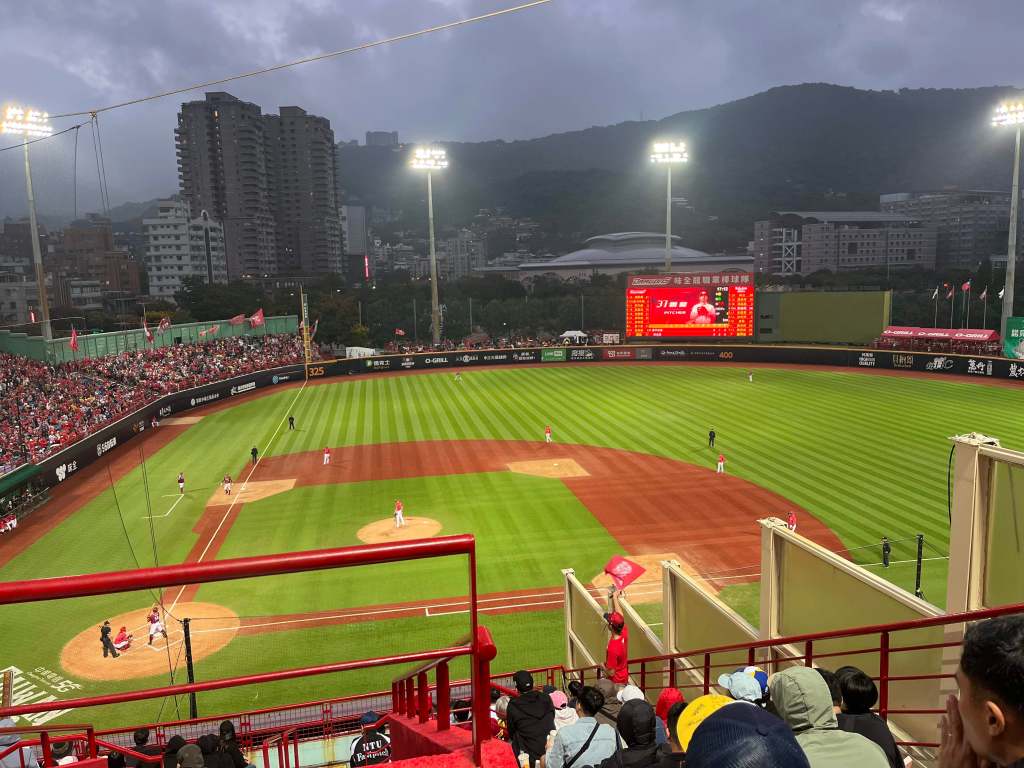
    Founded in 1989, the CPBL is more popular than ever, having recently benefited from the completion of Taipei Dome in 2023 and Taiwan’s Premier12 championship in 2024. The league currently consists of six teams who play most of their home games in six stadiums across the country:

    • CTBC Brothers – Intercontinental Stadium, Taichung (YouTube)
    • Fubon Guardians – Xinzhuang Stadium, New Taipei (YouTube)
    • Rakuten Monkeys – Rakuten Taoyuan Stadium, Taoyuan (YouTube)
    • TSG Hawks – Chengcing Lake Stadium, Kaohsiung (YouTube)
    • Uni-President Lions – Tainan Municipal Stadium, Tainan (YouTube)
    • Wei Chuan Dragons – Tianmu Stadium, Taipei (YouTube)

    Taiwanese baseball has very limited English-language coverage. The best source currently is the CPBL official website, which publishes real-time box scores, season schedule, standings, team rosters, and stats in English. Besides the CPBL website, the only major resources for English speakers are:

    • CPBL Stats – news and stats in English; the site’s X account (@gocpbl) regularly posts news and video clips
    • r/cpbl on Reddit – predecessor to CPBL Stats and a good place for updates and questions
    • The Taipei Sun – a newer initiative to cover Taiwanese baseball, including players abroad, in English

    To watch CPBL games, fans can stream via Twitch (available for some teams only) or purchase a CPBL TV subscription from HamiVideo. As of July 2025, subscription plans for home games for each team are ~$2.70/month, or for all games ~$10.30/month. CPBL Stats has an English Guide to CPBL TV that is a bit dated but should still be helpful.