Category: Nichibei Yakyu

  • All-Stars, Amateurs and Acrimony: Gene Doyle’s 1920 Tour of Japan

    All-Stars, Amateurs and Acrimony: Gene Doyle’s 1920 Tour of Japan

    by John Harney

    Every Tuesday morning we will post an article from SABR’s award-winning books Nichibei Yakyu: Volumes I and II. Each will present a different chapter in the long history of US-Japan baseball relations. Today John Harney focuses on the 1920 major league tour of Japan..

    It began with big dreams and ended in chaos and farce. The 1920 tour was a lot of things all at once: a high profile, all-star tour that served as a diplomatic mission to engender positive relationships between two rising global powers, the United States and the Empire of Japan; a largely successful business enterprise planned and carried out by experienced entrepreneurs; and a debacle that saw a baseball tour with high hopes collapse in acrimony and accusations of skullduggery. Certainly, it was not boring.

    The first mentions of the tour in the American press started to show up in the late spring and early summer of 1920. California-based sports promoter Gene Doyle was promising big things. Specifically, Doyle sought to take an all-star team to Japan to play in exhibition games against local teams. Boasting the cream of the American professional ranks, the tour would feature teams representing each of the major leagues. Doyle had successfully persuaded Buck Weaver, star third baseman of an impressive Chicago White Sox team that had rather surprisingly lost to the Cincinnati Reds in the World Series the season before, to lead the group to Japan.

    It was not solely an American enterprise. Doyle was in partnership with two Japanese businessmen, Yumindo Kushibiki and Tommy Tominaga. Kushibiki was by this time a well-known figure in the United States, known as the “Japanese Exhibition King” for his work in introducing the American public to Japanese cultural artifacts at the Columbian Exposition at Chicago in 1893 and, closer in proximity to the 1920 tour, the Panama-Pacific International Exposition of 1915 in San Francisco. Tominaga was more of an obscure figure, an “Americanized Japanese” who had attended high school in Los Angeles but graduated from Waseda University, a bright star in both Japan’s academic and baseball worlds. In truth, he was a fairly minor player who succeeded in establishing himself as a go-between for Kushibiki and Doyle, but his involvement helped give credence to the feasibility of a tour to Japan and lent the endeavor an air of cultural exchange as an act of American generosity.

    The advantages of the tour seemed clear enough, at least to Doyle, who utilized a network of contacts in the California press to hype up interest. The visit of John McGraw and Charles Comiskey’s World Tour to Japan in 1913 gave sufficient precedent, and Doyle and his fellow organizers sang all the right notes. This tour would deepen friendship between the two countries, and also allow the Americans to assist their fellow baseball people in Japan to kick-start professional baseball in that country. The commercial advantages also appeared to be evident and the American papers, long since used to the reality of barnstorming and offseason financial opportunities for baseball players, naturally went along in those assumptions.

    From the start, then, Doyle’s tour—and in the months to come and in the years since it would come to be associated primarily with its central organizer and promoter more than any of the players—was a hybrid of naked commercial interest and a somewhat ambivalent commitment to deepening cultural ties across the Pacific and facilitating a natural leadership position for the United States in the growth of the game across the world. Doyle had big plans; but it wasn’t to be.

    For one thing, Weaver did not join them. Embroiled in the growing Black Sox scandal of the fall of 1920, he dropped out of the tour. He had been the big draw, the biggest name attached to the tour on the day of its announcement. Doyle had intended for Weaver to serve as captain of the AL team and de facto head of the playing squad as a whole. Initially, this had seemingly been successful: By July, Doyle was able to claim that Weaver had helped in signing a host of major leaguers, including St. Louis Browns first baseman George Sisler, Detroit Tigers catcher Eddie Ainsmith, and Weaver’s White Sox teammate Happy Felsch. Tominaga and others talked a big game indeed, happily comparing the coming tour to the around-the-world Giants-White Sox Tour of 1913. It was not to be. Ainsmith, however, stuck with Doyle, and along with Sam Bohne, a Seattle Indian about to begin a career with the Cincinnati Reds in 1921, formed the core leadership of the team. The other big names evaporated.

    The rest of the purportedly all-star group was made up of players from the Pacific Coast League, many of whom had a veneer of legitimacy by having had a cup of coffee in the majors. Outfielder Herbert Harrison Hunter had played a handful of games over the years with the New York Giants, the Chicago Cubs, and most recently the Boston Red Sox. Jack Sheehan had appeared briefly for the Brooklyn Robins. One player, catcher Everett Gomes, was so unknown, even to the press on the West Coast, that in reports on the tour they would refer to him simply as “Catcher Gomes.” Still Doyle persevered. Early plans of a tour around California were scrapped, and they moved to head directly to East Asia with a brief stopover in Honolulu.

    The Hawaiian reception to the tour was enthusiastic. The local lodge of Elks served as hosts and sponsors of the team, and, expecting a dawn arrival, planned to treat the visitors to a sightseeing trip by automobile around Honolulu, followed by a formal lunch and a game later in the afternoon. The Hawaiian hosts got their game—Ainsmith led the AL team to victory over the NL players—but in the end the tourists stopped by the islands for only a few hours. The players returned to the S.S. Korea shortly after and were soon on their way. Doyle was on a high. “So far the trip has been a success,” he wrote to the Los Angeles Express’s Harry Grayson, painting a pretty picture. The players were all in good spirits: Ainsmith was living up to his role of tour captain well, “[f]ull of pepper and keeps the [players] hustling.” Bohne was growing a mustache, and another PCL veteran, Portland Beaver Sammy Ross, was doing a bang-up job running the Filipino band on the entertainment committee. Doyle wanted to be very clear: All was well. So united were the boys, in fact, that to a man they were livid with Minneapolis Millers infielder Carl Sawyer, the latest player to drop out. “[W]hat the gang thinks of him isn’t fit for print,” Doyle told Grayson.

    This merry band arrived in Japan ready for anything and everything. The Japanese baseball world gave it to them. The visit, coming in late November and December in the offseason between fall and spring collegiate seasons, was primed for the attention of an enthusiastic and knowledgeable baseball-loving public. Baseball in Japan by 1920 was continuing to grow, with increasingly sophisticated youth and collegiate baseball infrastructures but a still-nascent professional scene. Excitement for the visit of the Americans was high. The Osaka Mainichi Shimbun reported on the anticipated arrival of the team on November 22, scheduled at 3:30 P.M. on the S.S. Korea. The article showcased large photographic inserts featuring a number of the players, including the aforementioned Carl Sawyer. News of Sawyer’s “treachery” had not yet reached the Japanese editors. The Americans themselves were ready for Japan, the paper said that they had been “swinging bats and leaping about the deck” of the ship in anticipation of landfall near Tokyo.

    The opening game in Japan, a competition between teams representing the AL and the NL to fit the tour’s billing as an all-star tour from the major leagues, took place on November 25. The occasion had actually been delayed two days by rain, despite Doyle and Kushibiki’s original intention for the players to get to work almost as soon as they made landing in Japan, perhaps taking to the field on the day of arrival. Nevertheless, the opening exhibition was a success. The NL came out 2-1 winners, but Ainsmith was heralded as the big star, blasting the only home run of the game.

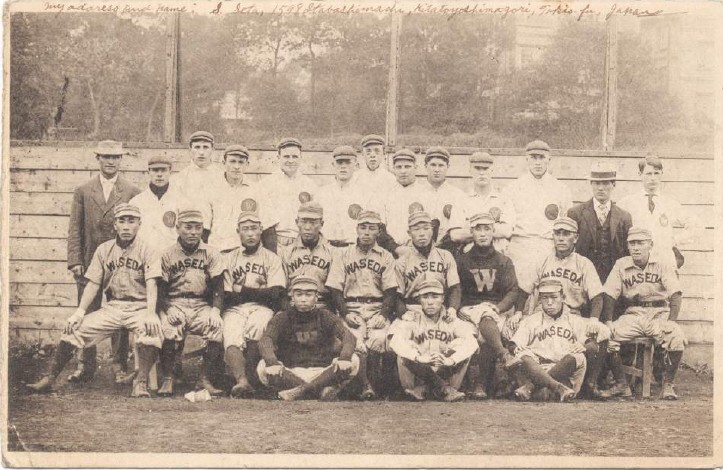
    The Americans played their first game against Japanese collegiate opposition the next day. Waseda University was home to arguably the most prestigious baseball program in Japan. Waseda had played the first intercollegiate varsity baseball game in the country, a 1903 contest vs. Keio University. By 1920, Waseda was one of six major college teams. In 1924, these teams would formally come together to compete annually in the “Big Six League”; but already the universities played each other in a de facto annual championship with fall and spring seasons. The All-American team faced four collegiate teams in total: Waseda, Keio, Meiji University, and Hosei University. This represented the top tier of Japanese baseball talent, the best-drilled, and—despite their youth—the most competitively seasoned.

    Continue to read the full article on the SABR website

  • Returning Home: The 1914 Seattle Nippon and Asahi Japanese American Tours

    Returning Home: The 1914 Seattle Nippon and Asahi Japanese American Tours

    by Robert Fitts

    Every Tuesday morning we will post an article from SABR’s award-winning books Nichibei Yakyu: Volumes I and II. Each will present a different chapter in the long history of US-Japan baseball relations. In this article Robert Fitts discusses the first Japanese American teams to visit Japan.

    INTRODUCTION

    Between 1890 and 1910, over 100,000 Japanese immigrated to the West Coast of the United States. Many settled in the urban centers of San Francisco, Los Angeles, and Seattle. Within a few years, each of these immigrant communities had thriving baseball clubs. The first known Japanese American team was the Fuji Athletic Club, founded in San Francisco around 1903. A second Bay Area team, the Kanagawa Doshi Club, was created the following year. That same year, newsmen at the Rafu Shimpo organized Los Angeles’s first Issei (Japanese immigrant) team. Other clubs followed in the wake of Waseda University’s 1905 baseball tour of the West Coast. Many players learned the game while still in Japan at their high schools or colleges. Others picked up the sport in the United States. The first Japanese professional club was created the following year by Guy Green of Lincoln, Nebraska. His Green’s Japanese Base Ball Team, consisting of Japanese immigrants from Los Angeles, barnstormed throughout the Midwest in the spring and summer of 1906.

    Seattle’s first Japanese American club, called the Nippon, was also organized in 1906. Shigeru Ozawa, one of the founding players, recalled that the team was not very good at first and was able to play only the second-tier White amateur nines. By 1907 the team had a large local following. In its first appearance in the city’s mainstream newspapers, the Seattle Star noted that “before one of the largest crowds seen at Woodlands park the D.S. Johnstons defeated the Nippons, the fast local Jap team, by a score of 11 to 5.” In May 1908, before a game against the crew of the USS Milwaukee,the Seattle Daily Times reported that the Nippon “have picked up the fine points of the great national game rapidly from playing the amateur teams around here every Sunday.”

    Two months later, the Daily Times featured the team when it took on the all-female Merry Widows. Mistakenly referring to the Nippons as “the only Japanese baseball club in America,” the newspaper reported, “when these sons of Nippon went up against the daughters of Columbia, viz., the Merry Widow Baseball Club, it is a safe assumption that the game played at Athletic Park yesterday afternoon was the most unique affair in the annals of the national game.” Over a thousand fans, including many Japanese, watched the Nippons win, 14-8.

    Soon after the game with the Merry Widows, second baseman Tokichi “Frank” Fukuda and several other players left the Nippon and created a team called the Mikado. The Mikado soon rivaled the Nippons as the city’s top Japanese team, with the Seattle Star calling them “one of the fastest amateur teams in the city.” In both 1910 and 1911, the Mikado topped the Nippon and Tacoma’s Columbians to win the Northwest Coast’s Nippon Baseball Championship.

    As Fukuda’s love for baseball grew, he realized the game’s importance for Seattle’s Japanese. The games brought the immigrants together physically and provided a shared interest to help strengthen community ties. It also acted as a bridge between the city’s Japanese and non-Japanese population, showing a common bond that he hoped would undermine the anti-Japanese bigotry in the city.

    In 1909 Fukuda created a youth baseball team called the Cherry—the West Coast’s first Nisei (Japanese born outside of Japan) squad. Under Fukuda’s guidance, the club was more than just a baseball team. Katsuji Nakamura, one of the early members, explained in 1918, “The purpose of this club was to contact American people and understand each other through various activities. We think it is indispensable for us. Because there are still a lot of Japanese people who cannot understand English in spite of the fact that they live in an English-speaking country. That often causes various troubles between Japanese and Americans because of simple misunderstandings. To solve that issue, it has become necessary that we, American-born Japanese who were educated in English, have to lead Japanese people in the right direction in the future. We have been working the last ten years, according to this doctrine.”

    As the boys matured, the team became stronger on the diamond and in 1912 the top players joined with Fukuda and his Mikado teammates Katsuji Nakamura, Shuji “John” Ikeda, and Yoshiaki Marumo to form a new team known as the Asahi. Like the Cherry, the Asahi was also a social club designed to create the future leaders of Seattle’s Japanese community, and forge ties with non-Japanese through various activities, including baseball. Once again the new club soon rivaled the Nippon as Seattle’s top Japanese American team.

    THE NIPPON TOUR

    During the winter of 1913-14, Mitomi “Frank” Miyasaka, the captain of the Nippon, announced that he was going to take his team to Japan, thereby becoming the first Japanese American ballclub to tour their homeland. To build the best possible squad, Miyasaka recruited some of the West Coast’s top Issei players. From San Francisco, he recruited second baseman Masashi “Taki” Takimoto. From Los Angeles, Miyasaka brought over 30-year-old Kiichi “Onitei” Suzuki. Suzuki had played for Waseda University’s reserve team before immigrating to California in 1906. A year later, he joined Los Angeles’s Japanese American team, the Nanka. He also founded the Hollywood Sakura in 1908. In 1911 Suzuki joined the professional Japanese Base Ball Association and spent the season barnstorming across the Midwest. Miyasaka’s big coup, however, was Suzuki’s barnstorming teammate Ken Kitsuse. Recognized as the best Issei ballplayer on the West Coast, in 1906 Kitsuse had played shortstop for Guy Green’s Japanese Base Ball Team, the first professional Japanese club on either side of the Pacific. He was the star of the Nanka before playing shortstop for the Japanese Base Ball Association barnstorming team in 1911. Throughout his career, Kitsuse drew accolades for his slick fielding, blinding speed, and heady play.

    To train the Nippons in the finer points of the game, Miyasaka hired 38-year-old George Engel (a.k.a. Engle) as a manager-coach. Although Engel had never made the majors, he had spent 14 seasons in the minor leagues, mostly in the Western and Northwest Leagues, as a pitcher and utility player. Miyasaka also created a challenging schedule to ready his team for the tour. They began their season with games against the area’s two professional teams from the Northwest League. On Sunday, March 22, they lost, 5-1, to the Tacoma Tigers, led by player-manager and future Hall of Famer Joe “Iron Man” McGinnity. The following Sunday the Seattle Giants, which boasted seven past or future major leaguers on the roster, beat them 5-1. Despite the one-sided loss, the Seattle Daily Times noted, “the Nippons … walked off Dugdale Field yesterday afternoon feeling well satisfied with themselves for they had tackled a professional team and had made a run.”

    In April 1914, Keio University returned for its second tour of North America. After dropping two games in Vancouver, British Columbia and a third to the University of Washington, Keio met the Nippons on April 9 at Dugdale Park in what the Seattle Daily Times called “the world’s series for the baseball championship of Japan.” On the mound for Keio was the great Kazuma Sugase, the half-German “Christy Mathewson of Japan,” who had starred during the school’s 1911 tour. The team also included future Japanese Hall of Famers Daisuke Miyake, who would manage the All-Nippon team against Babe Ruth’s All-Americans in 1934, and Hisashi Koshimoto, a Hawaiian-born Nisei who would later manage Keio.

    Nippons manager George Engel was in a quandary. His usual ace Sadaye Takano was not available and as Keio would host his team during its coming tour of Japan, he needed the Nippons to prove they could challenge the top Japanese college squad. Engel reached out to William “Chief’ Cadreau, a Native American who had pitched for Spokane and Vancouver in the Northwestern League, one game for the 1910 Chicago White Sox, and would later pitch a season for the African American Chicago Union Giants. Pretending that he was a Japanese named Kato, Cadreau started the game. According to the Seattle Star, “Engel was very careful to let the Keio boys know that Kato, his pitcher, was deaf and dumb. But later in the game Kato became enthused, as ball players will, and the jig was up when he began to root in good English.” Nonetheless, Cadreau handled Keio relatively easily, striking out 13 en route to a 6-3 victory.

    Throughout the spring and summer, the Nippons continued to face the area’s top teams, including the African American Keystone Giants, to prepare for the trip to Japan. Yet in their minds, the most important matchup was the three-game series against the Asahi for the Japanese championship. The Nippons took the first game, 4-2, on July 12 at Dugdale Park but there is no evidence that they finished the series. Not to be outdone by their rivals, the Asahi also announced that they would tour Japan later that year. Sponsored by the Nichi-nichi and Mainichi newspapers, the Asahi would begin their trip about a month after the Nippons left for Japan.

    The Nippon left Seattle aboard the Shidzuoka Maru on August 25. Their departure went unreported by the city’s newspapers as international news took precedence. Germany had invaded Belgium on August 4, opening the Western Front theater of World War I. Throughout the month, Belgian, French, and British troops battled the advancing Germans. Just days before the ballclub left for Japan, the armies clashed at Charleroi, Mons, and Namur with tens of thousands of casualties. On August 23, Japan declared war on Germany and two days later declared war on Austria.

    After two weeks at sea, the Nippon arrived at Yokohama on September 10. The squad contained 11 players: George Engel, Frank Miyasaka, Yukichi Annoki, Kyuye Kamijyo, Masataro Kimura, Ken Kitsuse, Mitsugi Koyama, Yohizo Shimada, Kiichi Suzuki, Sadaye Takano, and Masashi Takimoto. Accompanying the ballplayers was the team’s cheering group, consisting of 21 members and led by Yasukazu Kato. The group planned to attend the games to cheer on the Nippon and spend the rest of their time sightseeing.

    As the Shidzuoka Maru docked, a group of reporters, Ryozo Hiranuma of Keio University, Tajima of Meiji University, and a few university players came on board to welcome the visiting team. The group then took a train to Shinbashi Station in Tokyo, where they were met by the Keio University ballplayers at 2:33 P.M. The Nippon checked in at the Kasuga Ryokan in Kayabacho while the large cheering group, which needed two inns to accommodate them, settled down at the Taisei-ya and Sanuki-ya.

    Only two hours later, the Nippon arrived at Hibiya Park for practice. Not surprisingly, after the voyage they were not in top form. The Tokyo Asahi noted, “Even though the Seattle team is composed of Japanese, their ball-handling skills are as good as American players, and … their agile movements are very encouraging. … They hit the ball with a very free form, but yesterday, they did not place their hits very accurately, most likely due to fatigue. … The Seattle team did not have a full-fledged defensive practice with each player in position, so we did not know how skilled they were in defensive coordination, but we heard that the individual skills of each player were as good as those of Waseda and Keio. In short, the Seattle team has beaten Keio University before, so even though they are Japanese, they should not be underestimated. On top of that, they have good pitching, so games against Waseda University and Keio University are expected to arouse more than a few people’s interest, just like the games against foreign teams in the past.”

    The Nippon would stay in Japan for almost four months, but the baseball tour itself consisted of just eight games—all played during September against Waseda and Keio Universities. The players spent the rest of the time traveling through their homeland and visiting family and friends.

    Continue to read the full article on the SABR website

  • The 1913-1914 Chicago White Sox-New York Giants World Tour

    The 1913-1914 Chicago White Sox-New York Giants World Tour

    by Stephen D. Boren and James Elfers

    Every Tuesday morning we will post an article from SABR’s award-winning books Nichibei Yakyu: Volumes I and II. Each will present a different chapter in the long history of US-Japan baseball relations. Today Stephen D. Boren and James Elfers discuss the Chicago White Sox and New York Giants stop in Japan during their 1913-14 world tour.

    On January 27, 1913, John McGraw of the National League champion New York Giants and Charles Comiskey, owner of the American League Chicago White Sox, announced their plans for a world tour to be held after the 1913 World Series. The tour would be modeled after the 1888-1889 “Great Baseball Trip Around the World” when A.G. Spalding’s Chicago National League Club, led by captain Adrian “Cap” Anson, and a team selected from the National League and American Association by John M. Ward traveled the globe playing in New Zealand, Australia, Ceylon, (Egypt, and Europe. When Comiskey heard of the Spalding world trip he supposedly stated, “Someday I will take a team of my own around the world.”

    The tour would begin in Cincinnati and the teams would barnstorm across the country until they reached Vancouver, British Columbia, on November 19. From there, they would sail to Japan, China, the Philippines, Australia, Ceylon, Egypt, Italy, France, and the United Kingdom, before returning to New York on March 6, 1914. Comiskey’s close friend Ted Sullivan, a former manager and minor league executive, was named the advance scout to organize the tour, and sailed from San Francisco to Honolulu, Japan, and Australia. While Spalding’s tour had supposedly broken even, Sullivan felt that this one would make money. A few months later, Comiskey’s advance agent, Dick Bunnell, sailed for Europe to complete the arrangements on that continent.

    In June 1913, after White Sox manager James Callahan “called on President Woodrow Wilson to explain the proposed world tour … Wilson expressed his approval not only because he said he considered himself a base ball fan, but because he thought the movement might result in the creation of an international league.” Wilson also thought the tour might help advance international peace and amity.

    Many New York players were not enthusiastic about the proposed tour. The original plan required each person to personally put up $1,500 for expenses and for all to share equally in the profits. The players thought it would be a great trip but too expensive. The sponsors understood the players’ reluctance to make the financial commitment. McGraw initially refused to discuss the trip until the Giants were sure of winning the pennant and thus a share of the World Series money, until on July 29 he held a team meeting and for the first time officially informed his players of the world tour. He showed them the financial arrangements and received a large number of positive commitments, from Christy Mathewson and Chief Meyers among others. Meanwhile, Comiskey and Callahan began contacting players from other American League teams in case their players refused to go under the proposed conditions.

    On September 24 Charles Comiskey announced that 75 people would go on the World Tour. Each player would be required to post $300 to guarantee his appearance on the ship but once on board, the money would be refunded. For such an unprecedented tour with so many passengers, great logistic and fiscal planning was needed, and both Comiskey and McGraw were prepared to write checks of $100,000 to defray additional expenses.

    On October 7 Harry M. Grabiner, Comiskey’s personal representative, announced that he was finalizing the plans for the massive around-the-world trip. He said he expected the tour to be the largest sporting event ever. Preliminary reports from foreign countries suggested that baseball would be a worldwide topic before the players returned home. Grabiner said he had multiple requests for exhibition games from American Western cities. The tour was advertised like a circus with long billboard posters. Arrangements were made to film the games in foreign cities, as well as life on the ship and receptions with foreign monarchs and ambassadors.

    The tour left Chicago on the night of October 19 on a special train of five all-steel cars including an observation car and a combination baggage and buffet car. This traveling hotel was the party’s home as they barnstormed across the Midwest and West Coast, playing 31 games in 27 cities, before sailing for Japan from Vancouver a month later.

    By the time the teams reached Vancouver, their rosters had shrunk. Christy Mathewson and Chief Meyers decided not to accompany the teams across the Pacific. To even the squads, the White Sox loaned Urban “Red” Faber to the Giants. The final Giants roster consisted of pitchers Bunny Hearn (Giants), George Wiltse (Giants), and Faber (White Sox); catcher Ivey Wingo (Cardinals); first baseman Fred Merkle (Giants); second baseman Larry Doyle (Giants); third baseman Hans Lobert (Phillies); shortstop Mickey Doolin (Phillies); and outfielders Lee Magee (Cardinals), Jim Thorpe (Giants), and Mike Donlin (Giants).

    Of the 11 “New York” players, there were only three pitchers. There were no backup infielders, outfielders, or catchers. Counting Mike Donlin, who did not play in the major leagues in 1913 (he did return to the Giants in 1914), there were only six actual members of the New York Giants, and of those six, only Merkle and Doyle were regulars. Hearn had been in only two games (1-1 record) and Wiltse had not won a single game.

    In the end, few of the White Sox players were willing to go. Of the 13 players on the roster, only six were White Sox and one was manager Callahan, who had played in only six games all season. There were three pitchers but no backup infielders. The official “White Sox” roster consisted of pitchers Jim Scott (White Sox), Joe Benz (White Sox), and Walter Leverenz (St. Louis Browns); catchers Andy Slight (Des Moines, Western League) and Jack Bliss (Cardinals); first baseman Tom Daly (White Sox); second baseman Germany Schaefer (Washington Senators); shortstop Buck Weaver (White Sox); third baseman Dick Egan (Brooklyn Robins); and outfielders Tris Speaker (Red Sox), Sam Crawford (Tigers), and Steve Evans (Cardinals). Jack Bliss had previously been to Japan as a member of the 1908 Reach All-Americans.

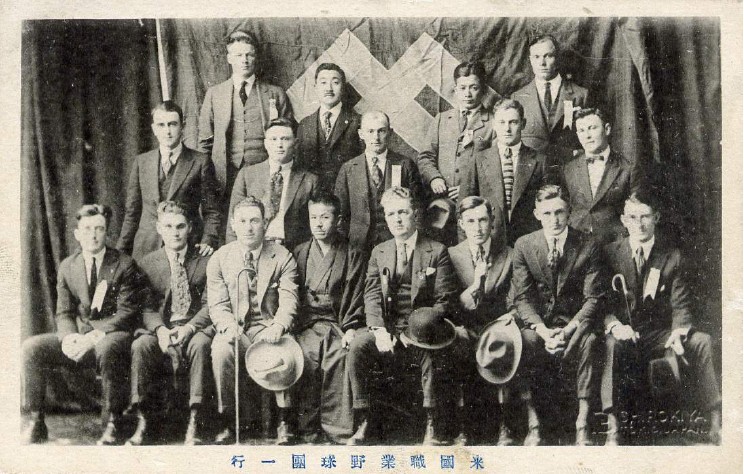
    Besides the 24 players, the party included McGraw; Comiskey; umpires Bill Klem and Jack Sheridan; Chicago secretary N.L. O’Neil; A.P. Anderson (manager of the tour); Dick Bunnell (manager and director of the tour); Ted Sullivan (author and lecturer); and Chicago newspaper writers Gus Axelson (Record-Herald) and Joseph Farrell (Tribune). There were also wives, McGraw’s personal physician, Dr. Frank Finley, several children, and other friends.

    On November 19, 1913, the tourists boarded the RMS Empress of Japan in Vancouver and began their journey across the Pacific. For 17 days, the passengers endured tossing seas, driving rains, and even a typhoon. Most of the players suffered from seasickness and some, like Tris Speaker and Red Faber, could barely eat. On December 6 they finally arrived in Yokohama, three days behind schedule. Prior to their arrival, only three American college squads and one professional team had traveled to Japan. The lone professional team, the Reach All-Americans, consisted mostly of minor-league players with a smattering of undistinguished major leaguers. McGraw and Comiskey’s clubs would showcase major-league stars to the Japanese fans for the first time.

    Continue to read the full article on the SABR website
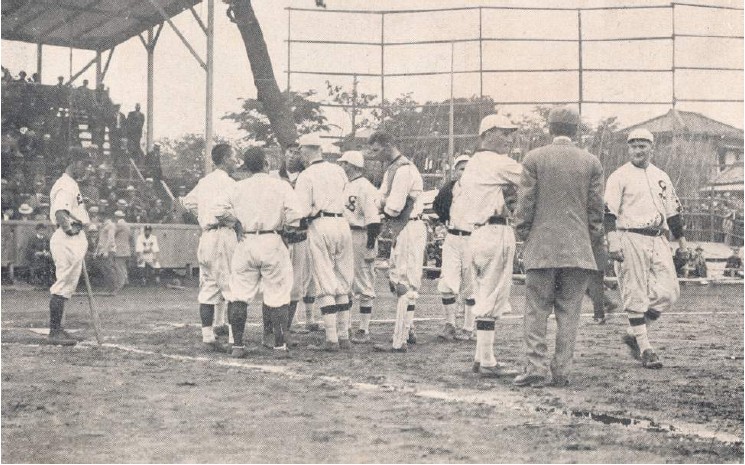
  • Declaration of Victory: The Meaning and Achievements of the Stanford University Baseball Team’s 1913 Japan Tour

    Declaration of Victory: The Meaning and Achievements of the Stanford University Baseball Team’s 1913 Japan Tour

    by Yusuke Suzumura

    Every Tuesday morning we will post an article from SABR’s award-winning books Nichibei Yakyu: Volumes I and II. Each will present a different chapter in the long history of US-Japan baseball relations. Here Yusuke Suzumura discusses Stanford University’s 1913 tour of Japan.

    The Stanford University Baseball Team is closely connected to the development of baseball in Japan. This stems from 1904-05, when Waseda University was planning an expedition to the United States and negotiated with different universities there, and Stanford University was the first to respond. One of the reasons Stanford accepted Waseda’s request was that Zentaro Morikubo was a student at Stanford and facilitated negotiations between the two universities. Zentaro was the son of Sakuzo Morikubo, a member of the House of Representatives in Japan’s Imperial Diet; Zentaro later became a member of the Japan Amateur Athletic Association and was appointed a member of the Japan Baseball Umpires’ Association (an organization founded in 1916 with the intent of spearheading the establishment of baseball rules in Japan). As such, Zentaro Morikubo was a prominent figure in the baseball world at the time.

    The Waseda team traveled to the United States in 1905, played against the Stanford Cardinals twice, and lost both games. They lost because the Waseda team’s play did not extend much beyond the rudimentary stages of throwing and hitting the ball, whereas the Stanford team approached the sport in an organized and systematic manner.

    On March 31,1913, Keio University announced an invitation to the Stanford University baseball team to visit Japan later that spring. At the time, St. Mary’s College and Santa Clara University were the two best college baseball teams on the West Coast, and Stanford was second to these universities, alongside the University of California and the University of Washington. Stanford had won games against all of these universities before they visited Japan, and therefore Keio was “expected to probably lose.”

    An 11-man contingent boarded the passenger ship Nippon Maru and departed San Francisco on May 10, 1913. Graduate student R.W. Wilcox was the manager. The players were Ray Maple, pitcher; Al Gragg, pitcher; Leslie Dent, catcher; Tom Workman, first base; Louis Cass, second base; Pete McCloskey, third base; Zeb Terry, shortstop; Arthur Halm, left field; Walter Argabrite, center field; and Heinie Beeger, right field.

    The trip was scheduled for 10 weeks, longer than any previous trip by a Stanford team. They planned to play at least 12 games, starting with Keio in Japan, with a two-week visit to Hawaii on the way home. Keio provided 7,000 yen ($3,500) to cover the trip expenses. In 1913, 7,000 yen was equivalent to approximately 28 million yen (approximately $240,000) in 2022. In addition, the Stanford baseball team raised $200 from a match against the Santa Cruz Colored Giants; the university donated $250; and the Quadrangle Club donated $50, making for a total of $500. With the funds provided from the Japanese side and the donations from Stanford, the large amount of money they were able to raise suggests high expectations for the trip in both countries.

    The Stanford group arrived at Yokohama around 8 A.M. on May 27. The Japan Times reported, “Immediately after the health inspection, the six-foot huskies were swarmed by a gang of newspaper reporters, and the Keio ball players and students who went out in a launch to meet them. ‘Banzai’ and college cheers were exchanged on the deck.” The team held a press conference at the request of the Japanese press, in which they described how they spent their time training during the 17-day voyage on the Nippon Maru. “Thankfully, the seas were calm, so we were able to practice every day. We still ended up dropping 15 of the four-dozen balls into the sea. However, perhaps because of the daily practice, everyone gained weight, with some of us gaining as much as 12 kg [about 26 pounds].”

    Obviously, the team had indulged in a comfortable lifestyle during the voyage. However, when the Stanford players arrived at Yokohama, despite their massive weight gain, their physiques drew little attention from the Japanese, who remarked only that their physiques were “imposing.”

    By way of example, the Yomiuri Shimbun favorably introduced the players in the following terms: “They are all elegant young gentlemen, dressed in winter suits and caps. Their physiques seem particularly imposing when one looks at the All-Philippines Baseball Team. Based on this alone, they would seem to have the power to overwhelm the Japanese baseball world.”

    The All-Philippines Baseball Team had come to Japan on May 10, and had planned to stay until June 1 and play a total of 10 games with Waseda, Keio, Meiji University, and Yokohama Commercial School. Some of the games were canceled due to rain, and the Philippines team ended up playing eight games, of which it won only one, against Waseda, losing the other seven.

    The All-Philippines Baseball Team was said to have “selected the very best of Philippine baseball,” with a total of 16 members, of which 13 were players, and one was a substitute. The players were generally of medium build and height, and while three had excellent physiques, another three were of smaller stature. While the results of the games are not necessarily always decided on the basis of physique, when one considers that the Philippines team had won only one out of the eight games, it is perhaps unsurprising that people thought that physique played a part in the team’s poor performance. The comment that “[t]heir physiques seem particularly imposing when one looks at the All-Philippines Baseball Team” can be taken not only as a comparison of the physiques of the All-Philippines players and the Stanford University players but also as an indication that there were high expectations for the latter based on the superiority of their physiques.

    It should be noted that an article in the Tokyo Asahi Shimbun reported that “the players bore no signs of fatigue and were very comfortable during their 17-day voyage, with each gaining about 750 g [about 1.5 pounds].” Compared with the Yomiuri Shimbun article, none of the players seems to have gained a large amount of weight. While it is difficult to judge which description is accurate, we can nevertheless deduce that the players did indeed gain weight during the voyage.

    The Stanford team was evaluated favorably by the Japanese during their time in Japan, as illustrated by the Tokyo Asahi Shimbun: “They are all the very best of young gentlemen morally influenced by Dr. Jordan, who resembled a messenger of the god of peace, and they seem to be very pleasant and friendly upon first meeting in the American style.”

    “Dr. Jordan” was David Starr Jordan, who became the first president of Stanford University in 1891 and also became the first chancellor of the university in June 1913. Jordan visited Japan frequently from 1900 to investigate his academic specialty of ichthyology, the study of fish. Moreover, Jordan was a researcher, university administrator, anti-imperialist, and antiwar activist. Rather than his role as an ichthyologist and educator, the assessment of Jordan in Japan related to his opposition to the anti-Japanese-immigration movement in the United States, which was the most significant concern between the two countries at the time; he was on the side of the Japanese, arguing that “no parliament should pass the Japanese Exclusion Act.” In addition, he was described as “a great player for peace” who “loved peace and was convinced that peace was a global truth.”

    Thus, the baseball players were depicted as gentlemen inspired by Jordan precisely because they were at Stanford University. In addition, the more distinctive players in the group were thus described:

    Pigeon-toed and with a liking for beans, Cass is the odd man out in the group—so pigeon-toed in fact that his fellows tease him every which way. He made everyone laugh by saying that he was going to advertise himself in the papers as a pigeon-toed rickshaw man when he arrived in Tokyo. Argabrite’s family runs a bean shop, and he also has a great liking for beans, hence the nickname “Bean.” Workman is extremely timid and never left his lifeboat during the voyage.

    While matters such as physique and family business have nothing to do with baseball itself, these topics were a good source of information to better know the players. The fact that such articles seeking to convey the personalities of the players were published, even if they were primarily intended to amuse the readers and satisfy their curiosity, demonstrates that people had a high level of interest in the Stanford University baseball team.

    Having thus attracted people’s attention, how did the Stanford players adjust once they were in Japan? They started practicing at 1 P.M. on May 28 at Keio University’s Tsunamachi Grounds, with the practice lasting for 1 hour and 30 minutes. Second baseman Cass hit a succession of home runs to left field and left fielder Halm hit “a fire-breathing home run like a powerful cannon” with a long shot to right field. In defensive practice, the players threw the ball with machine-like accuracy, catching even difficult throws. Although they had not yet shown their full potential, the Stanford players were praised as “the epitome of the American national sport.”

    The players’ track records were good as well, and as a team they were the strongest since the Stanford University baseball team was founded. They were said to be among the best teams on the West Coast, having won four times and lost once against Santa Clara University, which had previously defeated the Waseda University baseball club, 10-2. The cleanup hitter was Louis Cass, and the ace pitcher was Ray Maple, a side- arm thrower. Maple, first baseman Tom Workman, and shortstop Zeb Terry had such a high level of skill that they had been invited to join professional clubs. Maple turned down an offer to join the Philadelphia Athletics, Walkman received an offer from the Boston Red Sox, and Terry was invited to join the Portland Beavers of the Pacific Coast League and later had a seven-year major league career.

    Given this context, it was thought that Keio, Meiji, and the Tomon Club, which consisted of graduates of the Waseda University baseball club, would not be able to compete with the Stanford team. In fact, the Stanford team did not perform as well as its track record would have suggested.

    Continue to read the full article on the SABR website

  • Restart of Legend: The Waseda-Chicago Rivalry 1910-2008

    Restart of Legend: The Waseda-Chicago Rivalry 1910-2008

    by Christopher Frey

    Every Tuesday morning we will post an article from SABR’s award-winning books Nichibei Yakyu: Volumes I and II. Each will present a different chapter in the long history of US-Japan baseball relations. In this article Christopher Frey focuses on the long history of the University of Chicago and Waseda University’s ties through baseball.

    On the fourth day of spring in the 20th year of the Imperial Heisei era, just as the cherry blossoms were starting to bloom, another chapter in one of the most significant stories in US-Japan sports history was about to be written. It was Saturday, March 22, 2008, and while the Boston Red Sox held off the Hanshin Tigers and the Oakland Athletics rallied to beat the Yomiuri Giants in an exhibition double bill at Tokyo Dome, what really mattered that day was the long-awaited return of another American baseball team: the University of Chicago Maroons.

    The Chicago squad was coming for its sixth Japan tour, once again at the invitation of Waseda University, as part of that prestigious Tokyo-based institution’s 125th-anniversary celebrations. Given that the first time the Maroons came was in 1910 while the last had been in 1930—not to mention Waseda’s five return tours between 1911 and 1936—Chicago’s arrival was touted as renewing a nearly 100-year-old rivalry, with promotional posters and merchandise declaring it to be the “Restart of Legend.”

    The matchups between Waseda and Chicago in the late-Meiji, Taisho, and early-Showa eras were truly epic battles fought on both sides of the Pacific, yet they sprang from the labors of an idealistic Japanese professor with support of two Maroons turned missionaries, so these baseball exchanges were always imbued with goodwill. As the 10 series were contested over the course of three decades, American dominance slowly gave way to spirited Japanese play inspired by the unlikely pairing of a manager who derided putting too much importance on results and his team’s former captain turned coach who became hellbent on winning. And although the two teams were torn apart by war, the baseball ties between Chicago and Waseda would fully heal when at long last their legendary rivalry was restarted in 2008.

    The bond between Waseda and Chicago began forming in 1904, shortly after Fred Merrifield—former standout third baseman and Maroons captain—was sent to Tokyo as a missionary by the American Baptist Union. By the time Merrifield arrived, Waseda had just won Japan’s college baseball crown quite impressively, doing so only a few years after Professor Isoo Abe—one-time pastor and graduate of Doshisha and Hartford Theological Seminary—established their first full-fledged team in 1901. Abe had inspired his men to the title by promising that if they won he would arrange a trip across the Pacific to play against other university nines. Upon learning that a former Chicago ballplayer was teaching Sunday school nearby, Abe begged the American to become their part-time coach. Merrifield was happy to help and spent several days a week with the club. Although he wasn’t able to accompany Waseda to the United States due to his missionary obligations, he suggested they take a token of his baseball pedigree with them by adopting the same type and color of lettering he had worn while playing for his alma mater. So Abe’s team embarked on the first-ever foreign trip by a Japanese sports team donning jerseys with “Waseda” emblazoned in the same shade of maroon worn by Chicago. Merrifield then said in a letter published by the Chicago Tribune: “Give the Japanese player a little more training in the fine points of the game and I prophesy he will hit your curves, field and slide with the zest, and make his share of the fun. And then, after bowing politely to the umpire, he will go home and teach his younger brother to do still better at the great game of baseball.”

    After Waseda returned with a decent record of 7-19, Merrifield resumed coaching the team. By early 1907 he and Abe were trying to arrange a tour all the way to Chicago; but before a plan could be set, an illness forced his resignation from the Baptist Union. Yet it still seemed providence was at play, for another former Maroon standout was soon on his way.

    Alfred Place, who hit a club-best .357 playing alongside Merrifield in 1900, was being sent over by the Foreign Christian Ministry.  It was reported that “[h]e will work among the students of the Imperial and Waseda universities … and while he is teaching them athletics, he will also endeavor to win them over to Christianity.” After arriving in Tokyo in January of 1908, Place helped Waseda secure wins over the University of Washington later that year and the University of Wisconsin during its Japan tour in 1909. Now with some success against American teams on both sides of the Pacific, on April 18,1910, Abe wrote to University of Chicago Director of Athletics Alonzo Amos Stagg, issuing a formal invitation:

    It is a great pleasure for me to ask you if it is possible for the University of Chicago baseball team to come over to Japan. … If you come here next fall, all the baseball fans will surely welcome you with open arms. … You know Fred Merrifield and Alfred Place have done a great deal in coaching our teams, and we believe we can give you tolerably good games if you would come here.

    It was agreed that Chicago would tour Japan that October and play five games against both Waseda and Keio University. Although Stagg regretted to inform Abe he couldn’t “visit Japan with the boys” due to football-coaching duties, he would do everything he could to ensure that his team was ready. After receiving Place’s scouting reports as well as insights from Merrifield, who was now living in Michigan, captain J.J. Pegues later recalled, “[W]e determined to go prepared to play our best game,” while noting that they spent the summer practicing and playing against local semipro teams. Pegues added, “As a result, we were really in better shape for a hard series in the fall than during the regular spring college season. … The teams of Waseda and Keio also spent the summer months in practice; so that all three teams were in the pink of condition.”

    The Chicago team even took lessons on Japanese language and culture, then were honored with letters of introduction to the Imperial Japanese government from President William Howard Taft and Secretary of State Philander C. Knox. Shortstop Robert Baird recounted in 1976 that their trip was deemed “an opportunity for each member of the team to consider himself as an American ambassador of goodwill to improve relations between the two countries.” Baird added, “Even today, sixty-six years later, I am sure that every one of us accepted this responsibility to a high degree.” All of this preparation served them well, for upon arriving at Yokohama aboard the Kamakura Maru on September 26, 1910, they were surrounded by reporters. As Pegues later detailed in an article for The Independent:

    Thruout [sic] our stay we were considered not only as guests of Waseda University, but also as guests of the Japanese nation, and while objects of constant curiosity, we were at the same time subject to every form of Japanese politeness. Also I may say that while the Japanese stared at us constantly and questioned us continually, we returned both stares and questions with interest, as they seemed far stranger to us than we can have seemed to them. … When we were hauled thru the streets of Yokohama in “rickshaws,” on our way to the train for Tokio [sic], we insisted on leaving the tops of our man-drawn carriages down in spite of the steady rain; so that we might have an unobstructed view of the strange sights … and it was only thru stern necessity that we forewent sightseeing during our first few days in Tokio [sic], and devoted our time to practising [sic] for the games now close at hand.

    Pegues noted how they were “requested to practice in secret as far as possible, and without previous announcement, as it was feared students would desert their class-room work to watch us in action.” Yet large crowds still came to see the Maroons train, leading him to declare, “Only a ‘world’s series’ could excite such interest at home, and we looked forward with much curiosity to the first game.” In the meantime, the players stayed at the Imperial Hotel and were guests of honor at a banquet held at a Western-style restaurant fit for dignitaries, with Abe presiding while the American team’s chaperone, Professor Gilbert Bliss, said the University of Chicago hoped to return the favor the following year.

    Stagg had appointed his ace, Harlan Orville “Pat” Page, as the team’s player-manager, who, in addition to his baseball duties, served as a “Special Correspondent” for the Chicago Tribune. In Page’s report about that evening, he described how, “Following the twenty courses of both American and Japanese variety the two teams sang their alma mater, and the old Chicago yell drowned out the Waseda battle cry, although the new dress suits of the Maroons interfered with the vocal efforts.” The US ambassador to Japan, Thomas O’Brien, also hosted Chicago along with players from both the Japanese universities, as well as “a number of the Japanese nobility,” including Waseda’s founder and former Prime Minister Shigenobu Okuma. “After a musical concert the guests adjourned to the garden, where American dainties were served,” Page recalled, and then added that “Mr. O’Brien promised to be with the Maroons at the games.”

    When the day finally arrived for the opener, “The fences were draped with red and white bunting and the entrance festooned with American and Japanese flags,” Pegues recalled and then noted, “Practically all of the spectators had entered the field when we arrived, an hour and a half before the game was to commence, and as we passed in we were greeted with a great outburst of handclapping.” Despite lopsided support for Waseda, Pegues acknowledged how “[e]veryone rose to salute us and then settled down once more and waited for the game to start.” Before getting underway, Waseda’s cheer captain Nobuyoshi “Shinkei” Yoshioka—infamously known as the “Heckling Tiger Beard Shogun”—led a parade of the team’s most hard-core supporters down behind the third-base line. Yoshioka had been recruited a few years earlier to lead the cheering squad after Abe observed that students in America would chant their “college yell to take away the enemy’s spirit.”

    Continue to read the full article on the SABR website

  • Voyage to The Land of the Rising Sun: The Wisconsin Badger Nine’s 1909 Trip to Japan

    Voyage to The Land of the Rising Sun: The Wisconsin Badger Nine’s 1909 Trip to Japan

    by Joe Niese

    Every Tuesday morning we will post an article from SABR’s award-winning books Nichibei Yakyu: Volumes I and II. Each will present a different chapter in the long history of US-Japan baseball relations. Today Joe Niese focuses on the Wisconsin Badger’s 1909 tour of Japan.

    In 1905, President Theodore Roosevelt sent his eldest daughter, Alice, and Secretary of War William Howard Taft on a tour of the Far East, making stops in China, Japan, Korea, and the Philippines. The trip was part of Roosevelt’s plan to act as mediator in the Russo- Japanese War, in the process solidifying the United States’ place in the hierarchy of trading in the Orient. While the visit was successful on both accounts, by the end of the decade the relationship between Japan and the United States was growing contentious over actions being taken in South Manchuria (China). In essence, the United States was on the brink of being blocked out of Oriental trading by Japan’s South Manchurian train line. Taft, who became president in 1909, saw an opportunity to work toward an agreement of some kind, where both countries could continue to utilize the area. Hoping that a resolution could be made, Taft saw a prospect for bonding in one of the two nations’ few common grounds—the baseball diamond. The University of Wisconsin-Madison had a series of games planned for the fall in Japan, and Taft wanted to capitalize on the game’s international appeal.

    Baseball was one of the University of Wisconsin’s first athletic teams. The first recorded game was played on April 30,1870, when the university’s team, the Mendotas, thumped the Capital City Club, 53-18. In 1877 a baseball association was formed. By the first decade of the 1900s, the school’s baseball program had become a victim of the game’s nationwide success. Seemingly every club and fraternity on campus was fielding a team. In January 1909, when financial constraints arose, university officials proposed that the intercollegiate team be dropped in favor of skating and intramural baseball. Ultimately, the plan never came to fruition, but the baseball team, under coach Tom Barry, did little to prove its worth, ending with a 4-8 record and a fifth-place finish in the Big Ten Conference.

    During the tepid 1909 season, Genkwan Shibata, a native of Toyama, Japan, and an honor student in the university’s commerce program, had been negotiating a series of games between the school team and ballclubs in Japan. “Shibby” worked with Professor Masao Matsuoka of Tokyo’s Keio University (a 1907 alumnus of Wisconsin) to bring the plan to fruition. Just before commencement, it was announced that the university would send a baseball team to Japan in the fall for a series of games. To offset some of the cost, Keio helped sponsor the trip, guaranteeing up to $4,000 toward Wisconsin’s finances. This was the second time in as many years that an American university had traveled to Japan to play an exhibition series. The previous fall, Waseda University sponsored a trip for the University of Washington.

    Due to Barry’s commitments as the head football coach, a replacement baseball coach was sought out. The university didn’t have to look far, turning to part-time political science faculty member Charles McCarthy. The timing couldn’t have been any better for McCarthy, who had recently suffered a self-described “nervous breakdown.” A renaissance man, he had been steeped in work for the past decade. After obtaining his doctorate in American history from Wisconsin-Madison in 1901, McCarthy helped set up the Wisconsin Legislative Library.  His knowledge of economics made him a frequent sounding board for President Roosevelt. He remained at the university as a part-time political science lecturer and assistant football coach. He was also heavily involved in the state’s progressive movement and the political movement’s quintessential work, the “Wisconsin Idea.”

    As much as McCarthy was involved in politics, he was an athlete at heart. Despite his slight frame, McCarthy had been an All-American fullback and standout punter at Brown University. While attending law school at the University of Georgia, he took over the football coaching duties from Glenn Scobey “Pop” Warner. He coached for two years (1897-98), leading the team to a 6-3 record. When he came to Wisconsin as a doctoral student, he immediately immersed himself in the athletic program, focusing on football. In the years leading up to the trip to Japan (1907-09), he “played an extremely important part in the athletic situation” at the university.

    In addition to McCarthy acting as coach and university representative, Shibata was named business manager and interpreter. Ned Jones was the press correspondent.  Everyone on the Badgers’ 13-man roster was a Wisconsinite: catchers Elmer Barlow and Arthur Kleinpell; pitchers Douglas Knight and Charles Nash; first baseman Mike Timbers; second basemen John Messmer and Kenneth Fellows; third baseman Arthur Pergande; shortstops J. Allen Simpson and Oswald Lupinski; and outfielders David Flanagan, Harlan Rogers, and R. Waldo Mucklestone.

    The Badgers didn’t have any future major leaguers, but they were a talented group. Knight pitched for former big leaguer Emerson “Pink” Hawley’s Oshkosh Indians of the Wisconsin-Illinois League while waiting for the trip. Barlow and Messmer attracted interest from professional ball teams. Messmer, the team’s best all-around athlete, was the university’s first nine-letter winner, collecting three each in football, baseball, and track.  He also captained the swim team, dabbled in water polo, and was a “prime candidate for the crew team,” perhaps the school’s most popular and competitive athletic team.  Rogers was a three-sport star (football, basketball, and baseball).

    In July, University president Charles R. Van Hise received a letter from President Taft, an ardent baseball fan, for McCarthy to pass along to Thomas J. O’Brien, the ambassador to Japan. It read:

    My dear Ambassador: I am advised that the faculty of the University of Wisconsin has accepted the invitation of the Keio University of Japan to play a series of ten games of baseball with the Japanese university in the month of September.

    I am glad such a trip is to be undertaken, as it can not but be of advantage to the universities in the encouragement of manly sports and athletics, and will lead to a better understanding between the universities of the two countries.

    I shall greatly appreciate any courtesies of consideration within your power which you may be able to extend to the team while in Japan which may add to the usefulness and pleasure of their visit there.

    Continue to read the full article on the SABR website
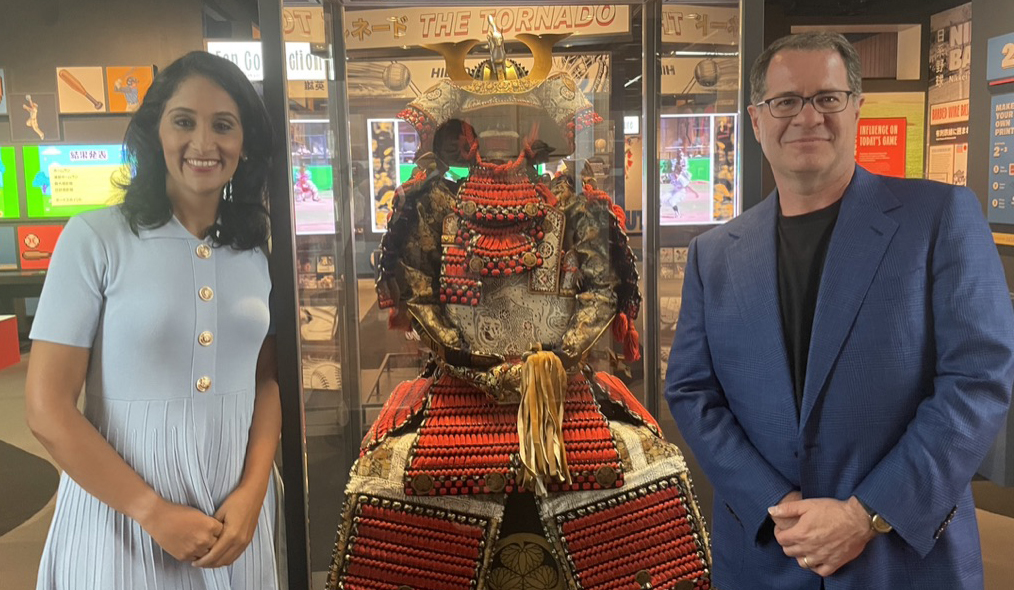
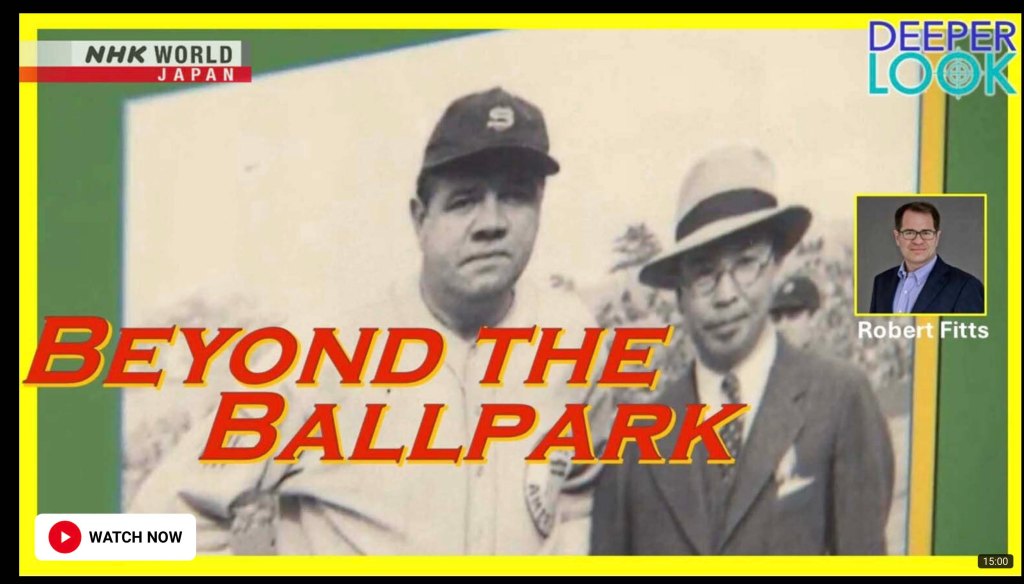
  • NHK’s Deeper Look Focuses on Japanese Baseball with Rob Fitts

    NHK’s Deeper Look Focuses on Japanese Baseball with Rob Fitts

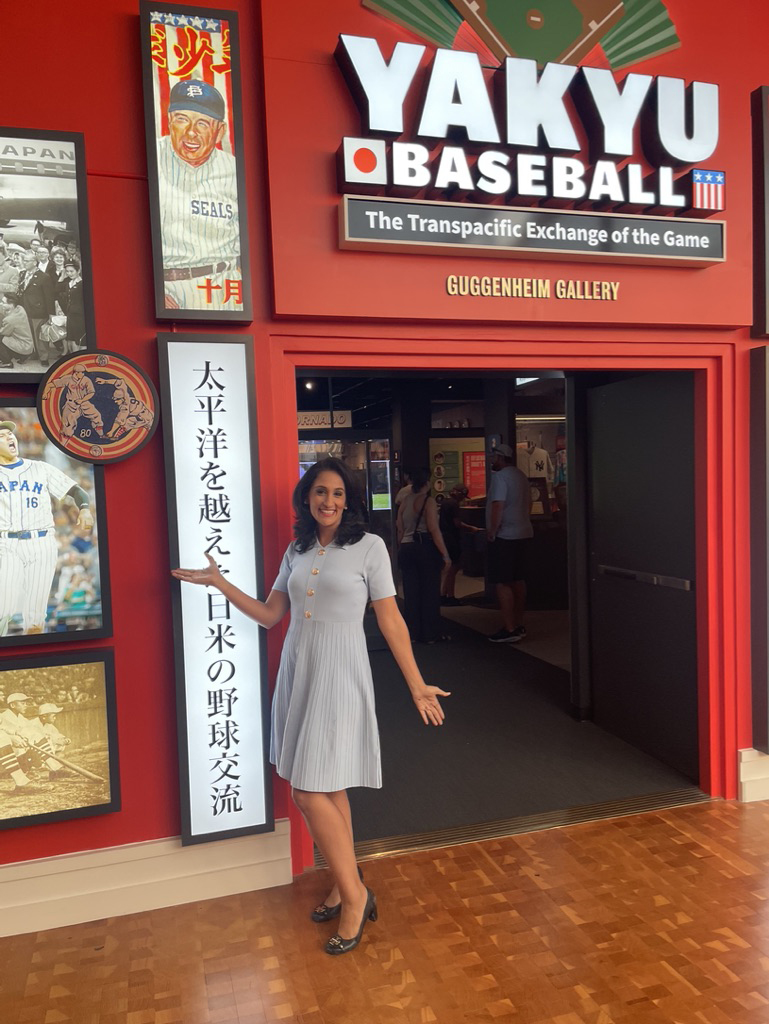
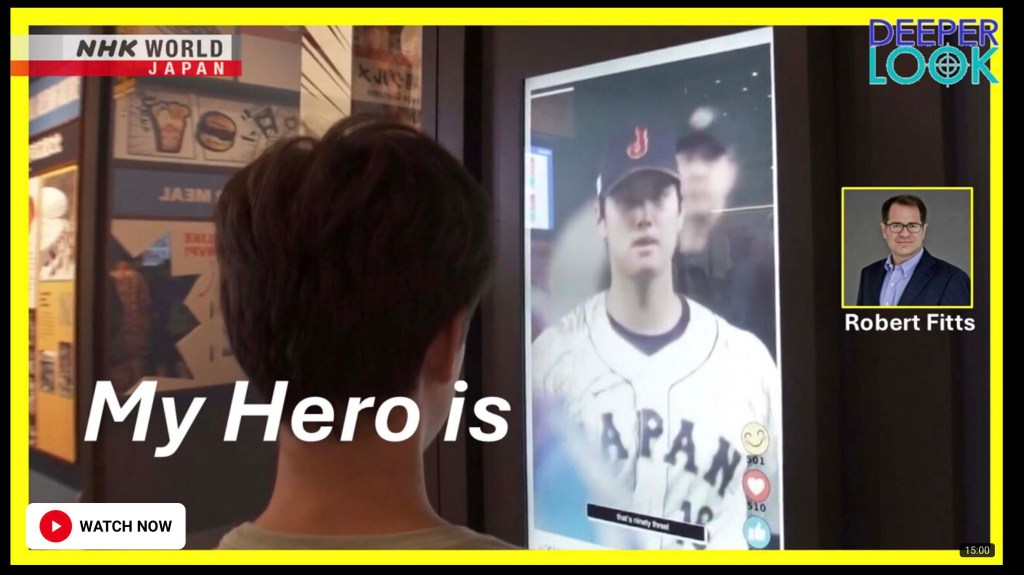
    NHK World-Japan’s Deeper Look host Del Irani visited the Yakyu-Baseball exhibit at the National Baseball Hall of Fame and Museum in Cooperstown to examine the history of Japan- U.S. relations through baseball.

    In this two-part series, Irani interviews SABR’s Asian Research Committee Chair Robert Fitts about the the long history of Japan-U.S. baseball interaction, baseball diplomacy, and the cultural importance of Japanese playing in Major League Baseball.

    https://www3.nhk.or.jp/nhkworld/en/shows/2100064/

    https://www3.nhk.or.jp/nhkworld/en/shows/2100065/

  • The 1908 Reach All-American Tour of Japan

    The 1908 Reach All-American Tour of Japan

    by Robert K. Fitts

    Every Tuesday morning we will post an article from SABR’s award-winning books Nichibei Yakyu: Volumes I and II. Each will present a different chapter in the long history of US-Japan baseball relations. In this article Robert Fitts describes the first professional baseball tour of Japan.

    The “King of Baseball” was on the prowl for a new opportunity. Mike Fisher, known by everybody as Mique, was a bom promoter and bom self-promoter. He was a risk taker, tackling daunting projects with enthusiasm and usually succeeding. He was the quintessential late-nineteenth-century American man; through hard work and gumption this son of a poor Jewish immigrant transformed himself into a West Coast baseball magnate.

    Bom in New York City in 1862, Fisher grew up in San Francisco. Renowned for his speed, he played baseball in the California League during the 1880s before an industrial accident in March 1889 damaged his left hand and sidelined his career. Fisher soon became a policeman in Sacramento, rising to the rank of detective. During his time away from the game, he put on weight and by 1903 was a repeat champion in the fat men’s races held at local fairs.

    In February 1902, a new opportunity presented itself when the California League offered Fisher the Sacramento franchise. Fisher pounced on it. In December 1902, the league transformed into the Pacific Coast League, but within a year Fisher relocated his franchise to Tacoma, Washington. Hampered by poor attendance, despite winning the 1904 championship, Fisher sold his share in the team but stayed on as manager as the franchise moved to Fresno in 1906. But his stay in Fresno was short as he left the team after the 1906 season. Without a franchise, Fisher turned to promoting and, in the fall of 1907, took a squad of PCL all-stars to Hawaii.

    “So pleased is Mike Fisher with the reception that his team has met with here,” reported the Hawaiian Gazette, “that he is already planning for more worlds to conquer. He is now laying his lines for a trip to be made … next year, which will extend farther yet from home. … The plan, as outlined by Fisher, will include a start from San Francisco, with a team composed exclusively of players from the National and American leagues,” and a stop in Hawaii before continuing on to Japan, China, and the Philippines. It was the first time an American professional squad headed to the Far East.

    By early December 1907, Fisher had teamed up with Honolulu athlete and sports promoter Jesse Woods to organize the trip.  Woods sent a flurry of letters to Asian clubs to gauge their interest. In February, John Sebree, the president of the Manila Baseball League, responded “that Manila would meet any reasonable expense in order to see some good fast baseball by professional players.” In early March, Woods received a letter from the Keio University Baseball Club stating that they would help arrange games in Japan for the American team. The Hawaiian Gazette noted, “This was good news for Woods, who has been in doubt as how such a trip would be received by the Japanese. There has been so much war talk that Woods was afraid that Japanese might refuse to play baseball with us.” A letter in early April from T. Matsumura, the captain of the Yokohama Commercial School team, confirmed the enthusiasm for the tour in Japan: “When you visit our country, you would certainly receive a most hearty welcome from our baseball circles.” Isoo Abe, the manager of the Waseda University team, added, “We are preparing to give you a grand ovation. We are going to make you feel at home, and we will strive to make your visit to Japan to be one that will linger long in your memories.”

    In late June, Woods sailed for Asia to finalize the details for the tour. The touring team was now known as the Reach All-Americans. With the name change, it is likely that the A.J. Reach Company sponsored the team but despite extensive research, the nature of the sponsorship is unknown. Woods’s reports from the Far East were encouraging. “I have all the arrangements made. Forfeit money is up everywhere, and everything is on paper. The team will take in Japanese and Chinese ports and Manila.”

    While Woods was working out the itinerary, Fisher built his roster. As usual, he thought big. It would be “a galaxy of the best players in the country.” He began by engaging Jiggs Donahue, the Chicago White Sox’ slick-fielding first baseman, to manage and help recruit the team. “I do not know why Mike Fisher came to me to ask me to get up the team, for I did not know him,” Donahue told a reporter. “I will willingly undertake the work, however, for I believe it will prove to be a grand trip and a success.” Donahue quickly recruited fellow Chicagoans Frank Chance, Orval Overall, and Ed Walsh and began working on the leagues’ two biggest stars, Honus Wagner and Napoleon Lajoie. “Both Wagner and Lajoie are said to be enthusiastic over the plan,” reported the Inter Ocean of Chicago, “but cannot decide whether or not they will be able to arrange their affairs in such a way as to make the trip, which will last two or three months.”  By June, Fisher had added New York Highlanders star Hal Chase, Chicago’s Doc White, and Bill Bums of the Senators. Although Wagner and Lajoie declined the invitation, Fisher’s team received a boost on August 23 when Ty Cobb announced that he would join the tour. The recently married star planned to take his bride on the trip as a honeymoon.

    Continue to read the full article on the SABR website
  • The 1908 University of Washington Tour of Japan

    The 1908 University of Washington Tour of Japan

    by Carter Cromwell

    Every Tuesday morning we will post an article from SABR’s award-winning books Nichibei Yakyu: Volumes I and II. Each will present a different chapter in the long history of US-Japan baseball relations. In this article Carter Cromwell discusses the first US university baseball team to tour Japan.

    Links between Japan and the Seattle area are nothing new. They were first forged in the late nineteenth century when Japanese began immigrating to the Pacific Northwest, and they’ve strengthened over the years. One of the consequential connections has been baseball.

    In 1905 a team from Japan’s Waseda University toured the American West Coast and played against various US teams. That led to a trip to Japan three years later by a group of a dozen University of Washington players, and those two journeys set the stage for frequent travels by Japanese and Seattle teams. The 1914 Seattle Nippon was the first Japanese American club to go to Japan, and the 1921 Suquamish Tribe became the first Native American team to do so. Teams from the University of Washington also made trips to Japan in 1913, 1921, and 1926 (and then returned 55 years later, in 1981). Before World War II, 13 clubs from the Pacific Northwest traveled to Japan, and about a dozen Japanese university teams made the reverse trip. The 1908 University of Washington tour was the first US collegiate tour of Japan and the first by a mainland US team. It was made possible by arrangements completed by Professor Isoo Abe, a Japanese college athletic instructor who had been the driver behind Waseda’s trip to the United States in 1905. Professor Abe—known in Japan as the “Father of University Baseball”—had been impressed by the hospitality shown by the University of Washington and the Seattle residents during the 1905 visit. In addition, the University of Washington had accepted the largest number of Japanese students in the United States at the time and was familiar to the Japanese people.

    Abe had persuaded his university to subsidize the 1905 tour, despite the fact that Japan was fighting a war with Russia at the time. Baseball historian Kerry Yo Nakagawa said, “From a baseball standpoint, [Waseda was] the best team in Japan, and they wanted to test the water of American baseball at the university level. They wanted to dissect the American game, use it as a laboratory to learn.”

    Three years later, that still held true, and Waseda invited the University of Washington to come to Japan. Washington did not send its official team, but all 11 players making the trip had played for the Huskies and were from the state of Washington. They included first baseman Webster Hoover of Everett, pitcher Huber Grimm of Centralia, right fielder Byron Reser of Walla Walla, second baseman Arthur Hammerlund of Spokane, catcher Roy Brown and pitcher Earle Brown of Bellingham, third baseman Ralph Teats and center fielder Leo Teats of Tacoma, and shortstop Walter Meagher, pitcher Ed Hughes, and left fielder Percy Logerlof of Seattle. Howard Gillette managed the team.

    Continue to read the full article on the SABR website
  • Baseball’s Bridge Across the Pacific Returns to MLB’s All-Star Village

    Baseball’s Bridge Across the Pacific Returns to MLB’s All-Star Village

    by Bill Staples, Jr.

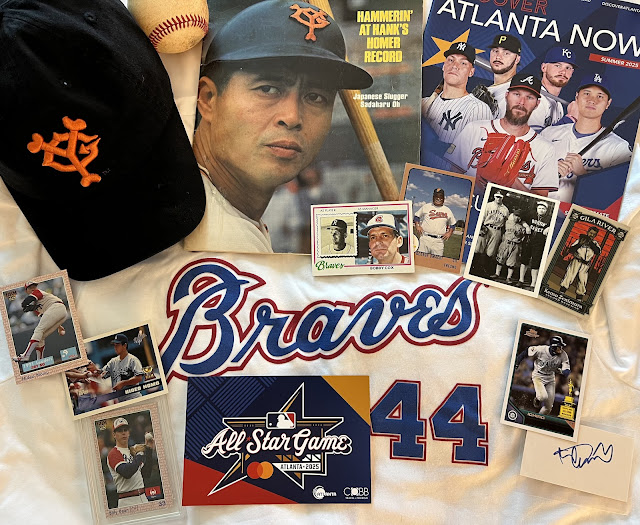
    The Baseball’s Bridge Across the Pacific exhibit made a powerful return at the 2025 MLB All-Star Game in Atlanta, drawing thousands of fans to Truist Park from July 12–15. Presented by the Nisei Baseball Research Project with Major League Baseball, the Japanese American Citizens League, and MLB’s Diverse Business Partners program, the showcase celebrated the enduring legacy of Japanese American baseball, U.S.-Japan baseball relations, and its influence on the global game. This year’s edition featured new Georgia connections in Japanese baseball, rare artifacts, tributes to baseball pioneers Hank Aaron and Sadaharu Oh, and thought-provoking art by Ben Sakaguchi, while honoring the late MLB Ambassador Billy Bean. With its blend of history, culture, and human stories, the exhibit strengthened its call for a permanent exhibit in a museum and teased plans for the 2026 All-Star Game in Philadelphia during America’s 250th birthday celebration.

    Read the full story here

    https://billstaples.blogspot.com/2025/07/baseballsbridge-across-pacific-exhibit.html

  • Nichibei Yakyu: 1907 St. Louis Baseball Team From Hawaii Tours Japan

    Nichibei Yakyu: 1907 St. Louis Baseball Team From Hawaii Tours Japan

    by Yoichi Nagata

    Every Tuesday morning we will post an article from SABR’s award-winning books Nichibei Yakyu: Volumes I and II. Each will present a different chapter in the long history of US-Japan baseball relations.

    We will begin with the first foreign baseball club to visit Japan: the St. Louis team from Hawaii which arrived in 1907 and played ten games.

    Located on the pathway between the US mainland and Japan, Hawaii was important in the history of US-Japan baseball exchanges. The baseball ties between the two islands began in 1907, triggered by a rivalry between two Tokyo universities.

    In June 1907, Suejiro Ito was dispatched to Hawaii by the Toyo Migration Company to survey the labor situation of the 50,000 Japanese immigrants working in the sugar and pineapple fields. There, he came across a rumor that Waseda University was negotiating with Stanford University for a baseball team tour of Japan. Ito, a graduate of Keio University, thought, “I wanted my alma mater to be the first to invite a foreign team to Japan. Before Waseda.”

    For many years the college teams were the pinnacle of baseball in Japan. Right after the turn of the twentieth century, a group of teams in the Tokyo area, Waseda, Keio, Gakushuin University, First Higher School, and the Yokohama Cricket and Athletic Club (YC&AC: a sports club of foreign residents), battled to be the top team in Japan. The two universities, Waseda and Keio, developed a fierce rivalry. The Waseda-Keio match was called the Sokei-sen (the abbreviation for Waseda-Keio game), and it was watched with great interest by baseball fans across the country.

    The history of the Sokei-sen began as follows. Keio University founded its official university baseball club in 1892. Waseda, on the other hand, had to wait for nine years, until 1901, for its baseball club to be bom. In 1903 the latecomer Waseda University sent a written challenge to Keio University. Following proper etiquette, Waseda asked in a humble manner for the more experienced Keio team to teach them baseball. The letter read, “Our team is still underperforming, and our players are still immature. We would be honored to have a lesson from you in the near future.” The first game of the Sokei-sen was played on November 21, 1903, with Keio beating Waseda, 11-9.

    However, things changed in 1905. Waseda upset Keio, not on the field but in the international scene. Waseda carried out a monumental tour of North America, becoming the first Japanese team to visit the United States. The Waseda team, led by baseball director Isoo Abe, swung around the US West Coast, winning seven games and losing 19 against colleges, high schools, and semipros. Although the results were not encouraging, Waseda brought back to Japan the latest in baseball techniques and strategies, known as “scientific baseball,” including the hit-and-run, second-shortstop cooperative play, and pregame warmup, as well as equipment such as baseball shoes and gloves. Waseda willingly shared the new knowledge with other teams. With this, Waseda became the leaders of Japanese baseball.

    After the US tour, the Waseda-Keio rivalry flared up even more. In the fall of 1906, the two teams planned a three-game series. After Keio won the first game, the school’s cheering group congregated outside the home of Waseda’s founder, Count Shigenobu Okuma, and shouted, “Banzai Keio!” The Waseda students viewed this as an extreme insult. At the second game, Waseda packed the stands with 1,200 cheerers, in clear violation of the agreement that limited the cheering groups to 250. The horde celebrated Waseda’s victory by marching to the former home of the late Keio founder Yukichi Fukuzawa (who had died in 1901) and yelling, “Banzai Waseda!” Fearing a riot at the third game, Keio president Eikichi Kamata and Isoo Abe of Waseda agreed to cancel the final match. The Sokei-sen would not be played for years to come.

    The void left by the extinction of the Sokei-sen caused a sense of crisis in Japan’s top baseball world. A number of attempts were made to revive the Sokei- sen, but all failed. For example, at the end of 1906, the Tokyo Sports Press Club made a vain effort to mediate between the two schools. Another attempt was made in the summer of 1907 when Leroy E. McChesney, baseball captain of the YC&AC, proposed a formation of Japan’s first baseball league “Keihin Yakyu Domei,” but Keio refused to join. Waseda won the first and last championship, as the league lasted only one fall season.

    Ito was annoyed that Waseda had been the first Japanese team to travel abroad so he wanted to make sure that Keio would be the first to invite a foreign team to Japan. Luckily enough for Ito’s plan, Kakugoro Inoue, a graduate of Keio University and member of Japan’s House of Representatives, stopped in Honolulu on the way back from a four-month tour of Europe and the United States. On August 22, Ito met with Inoue to ask for his cooperation for Keio to bring over a baseball team from Hawaii. Inoue gave his word (“I will give my all for our alma mater”) and left for Japan.

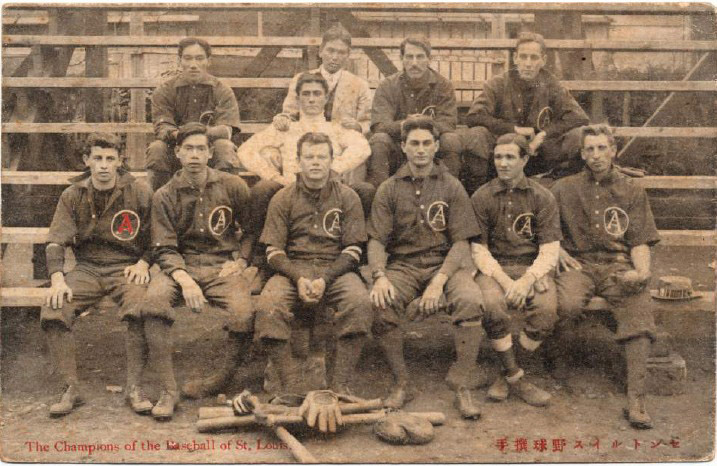
    Ito selected the St. Louis College alumni team for the Japan tour, because it had recently won the 1907 championship of the Honolulu Baseball League. The Pacific Commercial Advertiser thought highly of the team: “The makeup of this team is nearly as strong as any aggregation which could be picked up in the Territory [of Hawaii].” The Hawaiian Star noted that a Japanese student who had seen St. Louis play believed that the team would be a very attractive drawing card if it came to Japan.

    The captain of the St. Louis team, Pat Gleason, brimmed with confidence and excitement: “We will certainly show those Japs something that they do not know about baseball, and the chances are we will come back with another championship tacked on our pennant.” It was a once-in-a-lifetime chance for many of the St. Louis players who had never been away from the islands.

    Continue to read the full article on the SABR website
  • 1950s Nichibei Yakyu (MLB Tour) Footage

    1950s Nichibei Yakyu (MLB Tour) Footage

    This YouTube video contains a hodgepodge of colorized footage from various 1950s MLB tours. This 13 minutes, 30 second video has scenes from the 1949 San Fransisco Seals tour, the 1953 New York Giants tour, the 1955 New York Yankees tour, and the 1956 Brooklyn Dodgers tour, as well as some Tokyo Big Six University action. Keep your eyes open for some rare footage of Hawaiian superstar Wally Yonamine.

    https://www.youtube.com/watch?v=5dM8BL70CH4&t=6s