
A recent poll for a TV special saw more than 50,000 people in Japan vote for their favorite retired baseball players. 20 players emerged from a pool of 9,000. Yes, they could only vote for players who are no longer active, so you won’t see Shohei Ohtani or other current stars on this list. Which is probably smart because I’m sure Ohtani would win by default. There are, however, players who were beloved but not necessarily brilliant, and foreign stars who found success after coming to NPB. Unsurprisingly, the list leans heavily towards the past 30 years, with a few legends thrown in for good measure.
Over the next few weeks, I’ll be profiling each of these players. Some of these players I know only a little about, so this will be as much a journey for me as, hopefully, it will be for you. It’ll be a mix of history, stats, and whatever interesting stories I can dig up.
For now, have a look at the list below and see how the public ranked them. I’ve included the years they played in NPB in parentheses.
20. Alex Ramirez (2001-2013); 19. Yoshinobu Takahashi (1998-2015); 18. Warren Cromartie (1984-1990), 17. Takashi Toritani (2004-2021); 16. Suguru Egawa (1979-1987); 15. Katsuya Nomura (1954-1980); 14. Tatsunori Hara (1981-1995); 13. Kazuhiro Kiyohara (1985-2008); 12. Masayuki Kakefu (1974-1988); 11. Masumi Kuwata (1986-2006); 10. Atsuya Furuta (1990-2007); 9. Randy Bass (1983-1988); 8. Daisuke Matsuzaka (1999-2006, 2015-2016, 2018-2019, 2021); 7. Tsuyoshi Shinjo (1991-2000, 2004-2006); 6. Hiromitsu Ochiai (1979-1998); 5. Hideo Nomo (1990-1994); 4. Hideki Matsui (1993-2002); 3. Shigeo Nagashima (1958-1974); 2. Sadaharu Oh (1958-1980); 1. Ichiro Suzuki (1992-2000).
The pitcher who turned Koshien into theater and emerged as the Monster of the Heisei Era
Every baseball country has its sacred ground.
In America, it might be Yankee Stadium. Or the old one, at least. In the Dominican Republic, it might be Estadio Quisqueya. In Japan it is a ballpark called Koshien.
Generations of high school players have stood on that field dreaming of becoming legends. Most leave in tears, collecting a small bag of dirt from the infield as a souvenir.
On August 19, 1998, a seventeen-year-old pitcher threw 250 pitches at Koshien Stadium.
The game lasted seventeen innings. It started in the morning and stretched into lunchtime. By the end of it the pitcher could barely lift his arm.
The next day he came back and helped his team win one of the most famous comeback games in the history of Japanese high school baseball.
The day after that, he threw a no-hitter in the championship game.
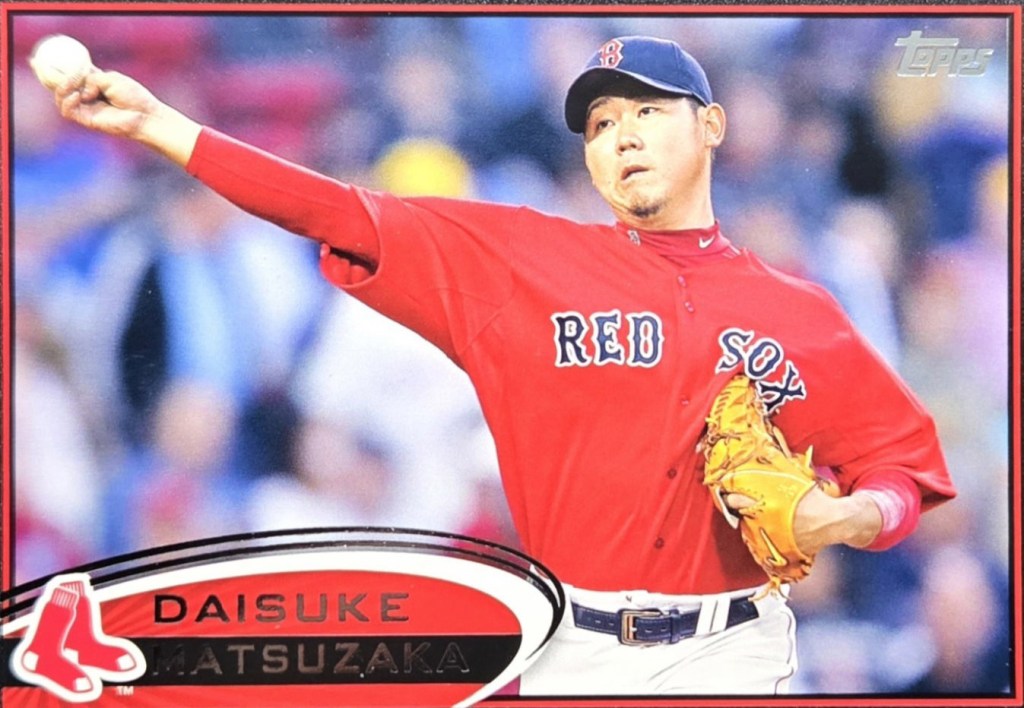
That pitcher was Daisuke Matsuzaka. He became known as Heisei no Kaibutsu—the Monster of the Heisei Era.
Matsuzaka was born in Aomori Prefecture in 1980 but grew up in Tokyo’s Koto ward. His parents named him after another famous pitcher, Daisuke Araki, who had been a star at Waseda Jitsugyo High School.
Before baseball, Matsuzaka trained in kendo, starting at age five. The training was harsh. His instructor was known for pushing young students relentlessly, but it built strength in his back and wrists. Years later, when a child asked him how to throw faster, Matsuzaka answered simply: try kendo.
But at first, Matsuzaka was not quite the legend people remember. At Yokohama High he was known as “Sabori no Matsu,” roughly “Matsu the Slacker,” because he did not like to practice. Then, during a 1997 regional tournament, he lost a game on a wild pitch.
The loss changed him. He began training obsessively.
By his third year, he could throw over 150 kilometers per hour (93 mph), a rare velocity for a high school pitcher at the time. His slider was devastating. His stamina seemed limitless.
In 1998, he helped lead his team to the spring championship. But it was during the summer tournament that he became something larger than life.
Koshien is not simply a stadium. For Japanese high school baseball, it is something closer to a shrine. The tournament fills the stands every summer and attracts enormous television audiences. Families sometimes move so their sons can attend schools strong enough to reach it. High school kids become household names overnight.
Even before the tournament began, opposing coaches knew what they were facing. Shiro Mabuchi of Meitoku Gijuku watched him pitch earlier that year and shook his head.
“That kid,” he said, “is a monster.”
Matsuzaka laughed when people repeated the nickname.
“Monster? I don’t really look like one.”
He didn’t. He looked like a skinny teenager with the face of an angel but the arm of a devil. And once he stepped onto the mound, his expression changed. The fastball exploded from his hand. The slider seemed to snap downward at the last instant.
Yokohama’s path to the championship unfolded like a drama that kept growing more intense. In the quarterfinals, Matsuzaka threw 250 pitches over 17 innings against PL Gakuen in one of the longest games in tournament history.
It began earlier than he liked. The first pitch came at 8:30 in the morning. For Matsuzaka, that meant waking around 4:30 a.m. after barely sleeping. Pitchers often struggle to sleep after throwing because their bodies remain wired with adrenaline, and that night he lay awake until nearly two in the morning.
Later he joked that the biggest reason he struggled early in the game was simple.
“It was too early.”
Matsuzaka had another unusual pregame habit. On the bus to games he liked to eat potato chips and drink Coca-Cola. It was his way of relaxing before pitching.
The game itself quickly turned into a test of endurance.
PL Gakuen jumped ahead early, scoring three runs. For several innings Matsuzaka struggled to find his rhythm. Later he said that in those first innings he felt as if his body hadn’t quite woken up yet.
Yokohama fought back. In the fourth inning, catcher and captain Yoshio Koyama hit a two-run home run. By the middle innings, the game had become a back-and-forth struggle.
And gradually, Matsuzaka began to feel the change.
By the late innings the ball started to come out of his hand with more life. The longer the game continued, the stronger he felt.
Which was good because the game stretched into extra innings.
At one point, Yokohama took a one-run lead in the eleventh inning. Matsuzaka himself reached base with a hard ground ball and eventually scored the go-ahead run.
Yet even then he didn’t believe the game was over.
Later he said that the strangest feeling during that game was the sense that it would never end. Even when Yokohama moved ahead, he somehow felt that the game would continue.
Perhaps part of him didn’t want it to end.
There was also a moment of frustration. In the eleventh inning, Matsuzaka allowed a game-tying hit to Hiroaki Onishi on a curveball he had not wanted to throw. Catcher Koyama had called for it, and Matsuzaka followed the sign.
Afterward he told him quietly, “We shouldn’t throw a curve to Onishi.”
Koyama’s answer was simple.
“Then shake me off.”
But Matsuzaka rarely shook off his catcher. He preferred to trust the call and find a way to execute it.
The game kept going. After sixteen innings of play, the game was tied at 7 apiece.
At some point, teammate Ryota Tokiwa walked over and tapped Matsuzaka on the shoulder.
“Don’t worry,” he said. “I’ll hit one.”
In the seventeenth inning, Tokiwa did exactly that. Yokohama won 9-7.
The next day brought an even stranger scene.
After throwing 250 pitches against PL Gakuen, Matsuzaka did not start the semifinal against Meitoku Gijuku. Instead he appeared in the lineup as the cleanup hitter and left fielder, his pitching arm wrapped in tape.
Meitoku dominated early. By the middle of the eighth inning, Yokohama trailed 6-0 and the game seemed finished. But Yokohama scored four runs in the bottom half to close the gap.
Then Matsuzaka began throwing in the bullpen.
Years later he admitted that no coach had told him to warm up. He had gone there on his own, hoping the staff would see him and realize he was ready to pitch.
Even from the stands the change in atmosphere was obvious.
When he tore the tape from his arm and walked to the mound in the ninth inning, the noise swelled into something closer to a roar. Matsuzaka later admitted he had noticed the television camera beside him before ripping off the tape. Even at seventeen, he understood the theater of the moment.
Matsuzaka retired the side. In the bottom of the inning, Yokohama scored three runs and completed one of the most improbable come-from-behind victories in the history of the tournament.
People often say that monsters live at Koshien. The phrase refers to the strange magic of the tournament—the sudden comebacks, the impossible reversals, the games that twist in ways nobody expects.
But in the summer of 1998 it felt as if Yokohama had somehow learned how to tame those monsters.
The team itself was unusually unified. Players such as Takeshi Goto and Masaaki Koike later said the atmosphere inside the team mattered as much as Matsuzaka’s pitching.
During the tournament Goto struggled badly at the plate. One night he returned to the hotel discouraged. The phone rang. It was Matsuzaka calling from the next room.
“Don’t worry about today,” he told him. “We’re counting on you tomorrow.”
The next day Goto delivered key hits in Yokohama’s comeback victory.
And then came the championship game against Kyoto Seisho. The final pitch of the tournament was a sweeping slider. Kyoto Seisho’s Yugo Tanaka swung through it.
Matsuzaka turned toward the scoreboard and raised both arms into the air.
Later he admitted he had partly turned for the cameras. This was his final stage, after all.
The scoreboard still showed zeros in the column for hits.
It was the first no-hitter in a championship game in nearly sixty years. Yokohama completed a season that included four national titles—Meiji Jingu, the spring and summer Koshien tournaments, and the National Sports Festival—and finished 44-0 in official games.
Watching the tournament unfold, Kyoto Seisho’s manager later said simply:
“It was Matsuzaka’s tournament.”
The Monster of the Heisei Era had arrived.
Yet Matsuzaka’s story was not only about domination. When he was in junior high school, his father’s company went bankrupt. The family sold their car so they could afford tuition at Yokohama High School. His mother worked part-time to support the household. His younger brother eventually attended a public school rather than a private one to reduce expenses.
For Matsuzaka, success in baseball meant more than fame. He said openly that he wanted to turn professional and earn money.
The 1998 draft quickly became the Daisuke Matsuzaka draft. Three teams selected him in the first round: the Saitama Seibu Lions, the Yokohama BayStars, and the Nippon-Ham Fighters.
Matsuzaka himself hoped to join Yokohama and even suggested he might play corporate baseball if another team drafted him.
Instead, Seibu manager Osamu Higashio drew the winning lottery ticket.
“It’s not that easy,” Matsuzaka said afterward. “Out of courtesy I’ll talk with them, but my feelings haven’t changed.”
Eventually he agreed to sign after Higashio presented him with the game ball from his own 200th career win. He took the traditional ace number: 18.
Almost immediately the country experienced what newspapers called “Daisuke Fever.”
Restaurants created dishes named after him. Fans packed spring training. The crowds became so overwhelming that the team once dressed pitcher Shinji Taninaka in Matsuzaka’s number 18 uniform as a decoy.
His first professional start came on April 7, 1999 against the Fighters.
The first pitch of his career was a fastball. 149 kilometers per hour.
Strike one.
After that, he struck out veteran slugger Atsushi Kataoka with a 155 km/h fastball. At one point during the game, veteran pitcher Tetsuya Shiozaki told him he was throwing too hard to last nine innings.
Matsuzaka answered calmly: he had only thrown one pitch at full effort.
He won the game.
From there, the season only grew more spectacular.
He faced Ichiro Suzuki and struck him out three times. He dominated the All-Star Game with five strikeouts. He declared after one outing that his confidence had changed “from belief to certainty.”
By the end of the year he had 16 wins, the league lead, and became Rookie of the Year.
A high school pitcher had entered professional baseball and immediately become one of its best players.
For several years he became the dominant pitcher in Nippon Professional Baseball. Matsuzaka led the Pacific League in wins three straight years from 1999 through 2001. He piled up strikeouts and innings with astonishing durability, often pitching on short rest. He won the Sawamura Award in 2001*. He helped lead the Lions to a Japan Series victory in 2004.
*He went 15-15 that year but led the league in games started, complete games, wins (and losses), innings pitched, and strikeouts.
He threw from a three-quarter arm slot, pausing briefly in his windup before exploding toward the plate. His fastball averaged around 147 km/h and could climb into the mid-150s, paired with a devastating slider and a deep mix of secondary pitches. His quick delivery made it difficult for runners to steal.
He loved pitching. He loved throwing deep into games. And sometimes he threw a lot: well over 150 pitches. He pitched 38 complete games across three seasons from 2004-2006.
Command was not always perfect. Matsuzaka sometimes struggled with walks, partly because his release point could move and his lower body sometimes lost stability. But when his pitches were right, hitters described the ball as exploding.
Some said his fastball moved like that of a left-handed pitcher.
If Japan had a must-win game in those years, the ball usually went to Matsuzaka.
At the 2000 Sydney Olympics. he pitched brilliantly despite Japan narrowly missing a medal. At the 2004 Athens Olympics. he helped secure bronze.
Then came the World Baseball Classic.
In 2006, Matsuzaka won all three of his starts—including the championship game against Cuba—and was named tournament MVP. When Japan repeated as champion in 2009, he won the award again.
Across eight seasons with Seibu, he captured three Best Nine selections, seven Golden Gloves, four strikeout titles, and two ERA championships.
After the 2006 season, the Boston Red Sox paid $51.1 million just for the right to negotiate with him.
In Boston, he became known as Dice-K*.
*My least favorite nickname of all time.
In 2007, he struck out 201 batters and helped the Red Sox win the World Series. In Game 3, he became the first Japanese pitcher to start a World Series game and even drove in two runs with a hit. In 2008 he went 18-3, the most wins ever by a Japanese pitcher in a major-league season.
Scouts marveled at the movement on his pitches, and for a time rumors circulated that he threw a mysterious gyroball. Matsuzaka himself seemed amused by the myth. He said he wasn’t sure what people meant by it.
Injuries later reshaped his career. But he returned to Japan and even won Comeback Player of the Year for the Chunichi Dragons in 2018 before retiring in 2021.
His final appearance came at Seibu’s home park. He faced one batter, Yokohama High alumnus Kensuke Kondoh, and threw five pitches. The fastest reached 118 kilometers per hour.
Afterward, he walked slowly around the field while fans applauded.
Then Ichiro Suzuki stepped onto the field and handed him flowers.
Matsuzaka began to cry.
He finished his career with 170 wins and more than two thousand strikeouts across Japan and Major League Baseball. He remains the only player to have won all four: the Summer Koshien, the Japan Series, the World Baseball Classic, and the World Series.
But numbers alone do not explain why fans loved him.
They loved him because he loved pitching and because he never seemed afraid of the moment. And because for a generation of fans, the story of modern Japanese baseball begins with one unforgettable image:
A seventeen-year-old pitcher at Koshien, turning toward the scoreboard and raising his arms.
Thomas Love Seagull’s work can be found on his Substack Baseball in Japan
 SABR Asian Baseball Research Committee Blog