
by Thomas Love Seagull
A recent poll for a TV special saw more than 50,000 people in Japan vote for their favorite retired baseball players. 20 players emerged from a pool of 9,000. Yes, they could only vote for players who are no longer active, so you won’t see Shohei Ohtani or other current stars on this list. Which is probably smart because I’m sure Ohtani would win by default. There are, however, players who were beloved but not necessarily brilliant, and foreign stars who found success after coming to NPB. Unsurprisingly, the list leans heavily towards the past 30 years, with a few legends thrown in for good measure.
Over the next few weeks, I’ll be profiling each of these players. Some of these players I know only a little about, so this will be as much a journey for me as, hopefully, it will be for you. It’ll be a mix of history, stats, and whatever interesting stories I can dig up.
For now, have a look at the list below and see how the public ranked them. I’ve included the years they played in NPB in parentheses.
20. Alex Ramirez (2001-2013); 19. Yoshinobu Takahashi (1998-2015); 18. Warren Cromartie (1984-1990), 17. Takashi Toritani (2004-2021); 16. Suguru Egawa (1979-1987); 15. Katsuya Nomura (1954-1980); 14. Tatsunori Hara (1981-1995); 13. Kazuhiro Kiyohara (1985-2008); 12. Masayuki Kakefu (1974-1988); 11. Masumi Kuwata (1986-2006); 10. Atsuya Furuta (1990-2007); 9. Randy Bass (1983-1988); 8. Daisuke Matsuzaka (1999-2006, 2015-2016, 2018-2019, 2021); 7. Tsuyoshi Shinjo (1991-2000, 2004-2006); 6. Hiromitsu Ochiai (1979-1998); 5. Hideo Nomo (1990-1994); 4. Hideki Matsui (1993-2002); 3. Shigeo Nagashima (1958-1974); 2. Sadaharu Oh (1958-1980); 1. Ichiro Suzuki (1992-2000).
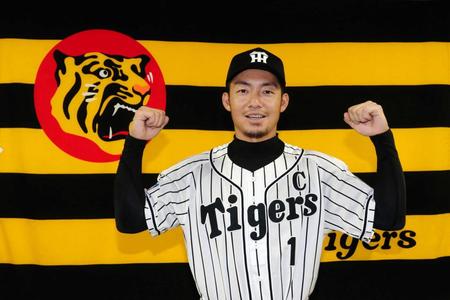
17. Takashi Toritani (2004-2021
What is the most underrated skill in baseball?
It isn’t power.
It isn’t speed.
It just might be something far less glamorous: showing up, every day, with the same seriousness, for a very long time.
Takashi Toritani did that better than almost anyone who ever played the game in the history of Japanese professional baseball.
From 2004 to 2019, Toritani was the Hanshin Tigers’ shortstop (and later third baseman and second baseman) in the way a metronome keeps time. He didn’t announce himself. He didn’t demand attention. He was simply there—day after day, inning after inning, season after season—until the routine itself became historic.
If you were trying to explain his career in one sentence (and that is never a fair thing to do) it might sound something like this: he was always there. Not occasionally. Not usually. Always.
He was there for 1,939 consecutive NPB games.
He was there for 13 straight seasons without missing a single game.
He was there through position changes, through declining numbers, through pain that would have sent many others quietly to the bench.
And because he was always there, his career slowly accumulated into something enormous.
That sentence, though, suggests inevitability. It suggests iron.
The truth was far more messy.
Toritani grew up in western Tokyo and learned balance before he learned baseball, excelling in judo as a boy. He was naturally left-handed, corrected to the right by a father who believed reliance was weakness, then nudged back toward the left by a coach who noticed what wouldn’t go away. Even early, his life in sports was shaped not by insistence, but by adjustment.
In junior high school, severe knee pain nearly ended everything. He planned to quit. He didn’t. He watched practice before he joined in again. He learned to wait.
What’s often missed is that this intensity was not always there. Toritani has said that he didn’t truly decide to become a professional until he reached university. Before that, baseball was something he loved among many things. He played because it was fun.
Then the goal became clear.
From that point on, he stripped his life down. When he wasn’t eating or sleeping, he thought about baseball. Not because anyone demanded it, but because he chose it. Reliability, for Toritani, was not a gift. It was a decision he made and kept honoring.
At Seibo Gakuen High School the climb was steady, not spectacular.
At Waseda University it became unmistakable. He started immediately. He never left the lineup. He won a Triple Crown early, struggled later, recalibrated. He stripped his dorm room of distractions, trained obsessively, and studied movement with near-scientific devotion. Coaches trusted him because he removed anxiety: he would be there tomorrow.
When the Hanshin Tigers drafted him in 2003, other teams wanted him. Toritani chose dirt infields over money and certainty over glamour. The choice fit.
His rookie year was uneven—starts, demotions, survival. By 2005, survival turned into permanence. He played every game, became the everyday shortstop, and helped Hanshin win the league pennant. Rhythm took over.
Shortstop is baseball’s truth serum. It exposes everything—range, hands, footwork, instincts, concentration. And it is merciless with age. Most shortstops don’t leave the position on their own terms. The position leaves them.
Toritani resisted longer than almost anyone.
Managers trusted him.
Pitchers relied on him.
Advanced metrics agreed.
Calm, it turns out, is a measurable skill.
At the plate, Toritani’s greatness came from something even rarer than power: refusal.
He did not chase pitches. He did not guess. Most importantly, he did not negotiate with pitches he didn’t believe in. That stubbornness was trained deliberately. Even in practice, he would not swing at a pitch he judged to be a ball, even if the batting-practice pitcher threw it, even if an umpire might have called it a strike. He trusted his own definition more than authority.
A thousand walks came from that belief.
When Toritani reached 1,000 career walks, he did so without the usual resume of power. Few home runs. Very few intentional walks. Pitchers weren’t avoiding him. They were pitching to him and losing the battle.
In 2011, during an era when offense collapsed across the league, Toritani led the Central League in on-base percentage. Hits were scarce. He simply found another way to help his team win.
That was another gift of his: adaptation.
And yes, sometimes he drove in runs.
In 2010, as a shortstop, he drove in 104 of them—a number that still feels slightly unreal for baseball in Japan. Shortstops are supposed to connect lineups, not carry them. Toritani didn’t chase power or reinvent himself. He used bat control, favored the left side, and let situations dictate his swings. The runs accumulated quietly.
In Nishinomiya, for a franchise defined by noise and emotion, Toritani was the stabilizer.
When Toritani reached 2,000 hits, it did not come quietly. On September 8, 2017, at Koshien Stadium, he lined a pitch into the right-center gap, stopped at second base, removed his helmet, and stood there while the crowd applauded. A former college teammate, Hiroyasu Tanaka, crossed the field to hand him flowers. Toritani smiled.
Later, he said the hit he remembered most wasn’t that one.
It was the first.
Two thousand hits were not a destination. They were the result of showing up every day and letting time do the work.
Earlier that season, a fastball had broken his nose. He returned the next night wearing a face guard and swung anyway. He made outs. He fouled pitches off. He stayed in the game.
People called him an Iron Man, and the streak justified the name. But “Iron Man” suggests invincibility, and Toritani was never that.
They also called him the Indomitable Man, which comes closer to the truth.
He played through broken bones—back, ribs, face. He returned without ceremony. The streak survived not because he was never hurt, but because he kept playing anyway.
Asked why, Toritani didn’t talk about records. He talked about responsibility. About fans who might only come to the ballpark that day. About the real fear that missing time could cost him his position. Over time, the streak itself became a reason to keep going.
When the streak finally stopped, it did so without ceremony. He began the game on the bench, never entered, watched a 1-0 loss pass quietly, and afterward said only that consecutive games always end someday, offering thanks not for the record itself, but for the managers who had kept writing his name into the lineup.
He knew that, eventually, time would demand compromise.
The range faded. The metrics dipped. Positions changed. Shortstop gave way to third base, then second, and finally the bench.
Toritani accepted all of it.
But when he became a part-time player, something unfamiliar happened. For the first time in his baseball life, he admitted he didn’t know how to prepare. He had always been a player whose value emerged over days, weeks, seasons. Reduce him to one at-bat, one moment, and the map disappeared.
And yet, the instinct never left.
Toritani once said that when he first turned professional, he set a simple, stubborn goal: to be ready to play shortstop at 40. Not to start. Not to be promised anything. Just to be ready.
“I’m not someone who gets lost thinking about life,” he said. “I deal with what’s in front of me.”
When Hanshin moved on, it wasn’t cruel. It was baseball. He finished the season anyway. He played shortstop one last time. He left with more than 2,000 hits, more than 1,000 walks, and a legacy defined not by moments, but by continuity.
Then came winter. Silence. And finally, a call from the Chiba Lotte Marines.
The role was small. The salary was modest. The number 00. He ran as a pinch runner, slid headfirst to score a walk-off run, played every infield position (including first base for the first time) and quietly set a national record* for games played at shortstop in a uniform few associated with him.
*A record since broken by Hayato Sakamoto.
At nearly 40, he was an Opening Day shortstop again. He returned to Koshien as a visitor and lined a pinch-hit RBI, drawing applause from both sides. Eventually even judgment and pain tolerance yielded. He retired. At the press conference, he didn’t linger on numbers. He said thank you.
Looking back, Toritani said the most dangerous moment in a career is the instant a player believes a dream has already been fulfilled. His own great ambition had once been the major leagues, and when that passed, he replaced it with new goals guided by a phrase he had carried since childhood: don’t see a crisis as a pinch, see it as a chance.
The day after his 2,000th hit, Toritani recorded his 2,001st.
It was a walk-off home run.
But that hit was never the point.
The point was everything that came before it: the pitches not swung at, the ground balls converted into outs, the days answered with a quiet yes.
He was always there.
Thomas Love Seagull’s work can be found on his Substack Baseball in Japan
 SABR Asian Baseball Research Committee Blog