
by Taein Chun
The First Foreign Manager in the KBO
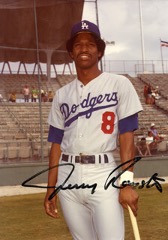
At the end of 2007, the Lotte Giants needed a breakthrough to end their long slump. The team’s performance was declining, and fans’ frustration was mounting. At that time, Bobby Valentine, who was managing the Chiba Lotte Marines in Japan, was asked by Lotte’s ownership to recommend a new manager. Without hesitation, Valentine introduced his longtime friend, Jerry Royster.
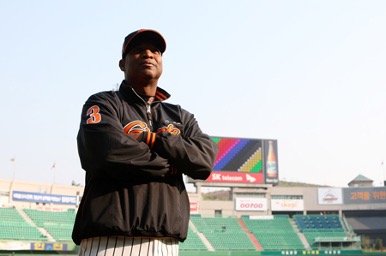
Arriving in Busan, Royster became the first foreign manager in KBO history. A utility player who spent 16 years in Major League Baseball moving between the infield and outfield, he took on the Korean stage after retiring as a player and working as a coach and minor league manager. At that time, the idea of a foreign skipper was almost unthinkable, and the Korean baseball world viewed it with both curiosity and concern.When the 2008 season began, a new scene unfolded at Sajik Baseball Stadium in Busan. With the slogan “No Fear,” Lotte declared an aggressive brand of baseball under its new manager. Fans quickly embraced the American leader, calling him simply “Royster” instead of the formal “manager.” Beyond nationality, the very fact that a foreigner was officially holding the reins of a KBO team was a symbolic milestone.
A Short but Powerful Three Years
Royster stayed in Korea for only three years, but in that short time he left an indelible mark on the team and its fans. For years, Lotte had been mockingly nicknamed “8888577.” This number string represented their final standings from 2001 to 2007, mostly finishing dead last (8th place) in the eight-team league. Among fans, “8888577” became shorthand for failure and despair.
But everything changed after Royster took over in 2008. Though Lotte never won a championship under him, the team reached the postseason three years in a row. A club long accustomed to losing now had the confidence that “we can win.” At a time when team identities in Korean baseball were fading, Lotte regained a strong identity: a team that fought until the last out, one that played bold, attacking baseball.

The Philosophy of Fearless Play
Royster’s baseball philosophy could be summed up in two words: “No Fear.” He valued bold attempts over results. Hitters were encouraged to swing aggressively, runners to take the extra base, and pitchers to trust their decisive pitch without shrinking back.
This message, “don’t be afraid of failure,” stood in sharp contrast to the conservative, risk-averse approach typical of the KBO then, leaving a strong impression. Players experienced new freedom, and fans delighted in the refreshing style of play. “No Fear” became more than a slogan; it fused with Busan’s passionate cheering culture and grew into a symbol.
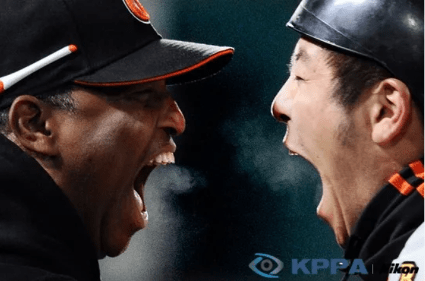
His leadership also broke from the authoritarian style common in Korea. He shared emotions with players in the dugout and greeted fans first after games, rare sights in the KBO then. Rather than stressing authority, he emphasized communication and empathy. Asked “Who is the best player?” he always answered, “Every player is a good player.”While ordinary in the U.S., this philosophy was a fresh shock in Korea. In a culture of hierarchy, his trust-based, autonomy-driven style gave players a sense of ownership. That’s why players like Sung-hwan Jo, Dae-ho Lee, and Jae-gyun Hwang later called him a “mentor.”
Royster as a Cultural Keyword
Royster became more than a figure in the dugout, he was tied to Korean society. Even after he left in 2010, whenever a managerial change loomed, the phrase “like Royster again” resurfaced in media and fan discussions.
The “No Fear” mantra became a cultural keyword shared across Korean baseball fandom. Even today, his name resurfaces in charity games, broadcasts, and YouTube interviews. At the 2024 Hope Plus Charity Baseball Game in Sajik Stadium, he returned as honorary manager, greeted with roaring applause as he once again shared the “No Fear” spirit. For fans, Royster remains a living presence, not just a figure of the past.

A Black Leader in a Homogeneous Society
Royster’s presence also influenced Korean society. Until the late 2000s, racially discriminatory expressions against Black people were often used casually in Korea. In 2008, a player posted a racial slur aimed at Royster on his personal SNS, which immediately sparked backlash. Unlike in the past, when such things might have been brushed aside, this time the player had to issue a public apology, because Royster was respected not just as a coach but as a leader.
From that moment, such remarks were no longer tolerable. His presence became a real-life lesson for Korean baseball in diversity and respect, fostering an attitude of evaluating a leader beyond race.
Royster’s impact continues today. Lotte has gone through many managers since, but every era is still compared to “the Royster years.” A style of baseball where players and fans breathe together and play fearlessly, that philosophy lives on as a benchmark beyond wins and losses. His name remains a reminder not of mere nostalgia, but of the direction Korean baseball should strive toward.
 SABR Asian Baseball Research Committee Blog