
by Thomas Love Seagull
A recent poll for a TV special saw more than 50,000 people in Japan vote for their favorite retired baseball players. 20 players emerged from a pool of 9,000. Yes, they could only vote for players who are no longer active, so you won’t see Shohei Ohtani or other current stars on this list. Which is probably smart because I’m sure Ohtani would win by default. There are, however, players who were beloved but not necessarily brilliant, and foreign stars who found success after coming to NPB. Unsurprisingly, the list leans heavily towards the past 30 years, with a few legends thrown in for good measure.
Over the next few weeks, I’ll be profiling each of these players. Some of these players I know only a little about, so this will be as much a journey for me as, hopefully, it will be for you. It’ll be a mix of history, stats, and whatever interesting stories I can dig up.
For now, have a look at the list below and see how the public ranked them. I’ve included the years they played in NPB in parentheses.
20. Alex Ramirez (2001-2013); 19. Yoshinobu Takahashi (1998-2015); 18. Warren Cromartie (1984-1990), 17. Takashi Toritani (2004-2021); 16. Suguru Egawa (1979-1987); 15. Katsuya Nomura (1954-1980); 14. Tatsunori Hara (1981-1995); 13. Kazuhiro Kiyohara (1985-2008); 12. Masayuki Kakefu (1974-1988); 11. Masumi Kuwata (1986-2006); 10. Atsuya Furuta (1990-2007); 9. Randy Bass (1983-1988); 8. Daisuke Matsuzaka (1999-2006, 2015-2016, 2018-2019, 2021); 7. Tsuyoshi Shinjo (1991-2000, 2004-2006); 6. Hiromitsu Ochiai (1979-1998); 5. Hideo Nomo (1990-1994); 4. Hideki Matsui (1993-2002); 3. Shigeo Nagashima (1958-1974); 2. Sadaharu Oh (1958-1980); 1. Ichiro Suzuki (1992-2000).
The thinking pitcher who survived by understanding the game
Baseball has always loved its certainties: the tall pitcher, the overpowering fastball, the obvious prodigy. Masumi Kuwata was none of those things. He was small for a professional pitcher, barely 174 centimeters tall when he debuted, reserved where others were loud, thoughtful about his craft where others relied on instinct. Even as a teenager surrounded by giants, he looked ordinary enough to be overlooked.
And yet, from almost the beginning, baseball seemed to bend toward him.
He was born on April 1, 1968, in Yao City, Osaka, the youngest student in his class because of his birthday*. That detail followed him everywhere. He was always smaller, always younger, always forced to compete against boys who seemed physically ahead. Instead of discouraging him, it shaped him. Kuwata learned early that survival in baseball would not come from strength but from understanding.
*In Japan, children start school in April after turning six. Those born on April 1 begin that same April, while those born on or after April 2 start the following year.
He began playing in elementary school. Exactly when he joined is unclear, but one moment remained vivid to Kuwata: he quit. Bullied by older players, he walked away from organized baseball for a time and spent months throwing a ball alone against a wall. His father, Taiji, devised unusual training methods built on creativity rather than repetition, such as removing all the cotton from his son’s baseball gloves so that it would hurt if he caught the ball poorly. By fifth grade, Masumi was already a primary pitcher. Teammates remembered not just velocity but control and the uncanny sense that the ball went exactly where he wanted it to.
By middle school, opponents spoke about him with disbelief. Catcher Shuji Nishiyama, his childhood friend and teammate and future two-time Best Nine award winner, later said Kuwata threw around 140 kilometers per hour (about 87 mph) even then, but what stunned hitters was precision. The ball arrived only where the mitt was set. Years later Nishiyama would say that among every pitcher he had ever seen, Kuwata remained the greatest in total ability.
When he entered PL Gakuen High School in 1983, he arrived alongside a player who embodied certainty itself: Kazuhiro Kiyohara, already famous for prodigious power. Compared to towering teammates and fearsome sluggers, the quiet right-hander barely stood out. Coaches initially did not expect much from him as a hitter, and he was not immediately a regular. He even told his mother he was thinking of leaving the team. Her response was simple: even as a backup, remain a pitcher for three years and finish what you started.
What changed everything was a simple throwing drill. While other players lobbed high, arcing throws to gain distance, Kuwata fired low, direct throws nearly eighty meters. When upperclassmen told him to throw higher, he simply replied, “I’m a pitcher,” and continued the same way. Coach Junji Nakamura decided at that moment to develop him as one.
Opportunity arrived when other pitchers faltered. As a first-year student wearing number 17, he took the mound in the Osaka tournament and dominated. Soon he was leading PL Gakuen to Koshien, Japanese high school baseball’s grandest stage.
At fifteen years old, Kuwata became the ace of a national champion.
The partnership between Kuwata and Kiyohara, the KK Combo, became a social phenomenon. Together they carried PL Gakuen to five consecutive Koshien appearances, winning twice and finishing runner-up twice. Kuwata compiled 20 Koshien victories, a postwar record, and struck out 150 batters while also hitting six home runs. He pitched, fielded, and hit with startling completeness, once describing batting as feeling like playing catch: move the glove, or bat, precisely to the ball’s center.
There were moments that already hinted at the player he would become. Facing elite competition, he sometimes sensed outcomes before they happened. On one famous home run, he later said he knew the ball would leave the park the instant it left the pitcher’s hand, as if guided by something beyond calculation, what he called an unseen force rather than his own power.
Even then, Kuwata approached baseball differently. At the time, there existed a widely discussed belief in Japanese baseball that summer Koshien championship pitchers rarely succeeded as professionals. Many arrived famous and left injured. Kuwata, undersized and already heavily used, heard those doubts clearly. Rather than resist them emotionally, he treated them as a problem to solve. If Koshien heroes burned out early, how could he last longer? He began studying training methods, nutrition, recovery, and mechanics while still a teenager, determined to build a pitcher who could survive years into the future rather than dominate briefly in the present.
He also believed baseball contained something spiritual, but never mystical without effort. He prayed not for success but to be guided toward “the best path,” convinced that hard work allowed the baseball gods to notice you.
The path turned complicated in 1985.
The professional draft that year centered on Kiyohara, who openly desired to join the Yomiuri Giants. Kuwata publicly declared he would attend Waseda University instead. Most teams respected that decision and avoided drafting him.
Then the Giants selected him first overall.
The moment detonated into controversy. Kiyohara, watching the draft, wept openly. Rumors spread that Kuwata and the Giants had arranged a secret agreement. Protest calls flooded his family home. The episode became known as the “KK Draft Incident,” one of Japanese baseball’s most bitter controversies since the Egawa affair. The Giants seem to be involved in a lot of those.
Kuwata denied any secret deal. He had merely decided privately that if the Giants selected him first, he would turn professional; otherwise he would attend Waseda. The decision had not been deception so much as the hesitation and confusion of a seventeen-year-old caught between dreams. Giants manager Sadaharu Oh insisted the selection had long been planned, praising Kuwata’s situational intelligence and recalling a triple play he had executed at Koshien as evidence of extraordinary baseball instinct. Still, at seventeen years old, he entered professional baseball already cast, unfairly, as a villain.
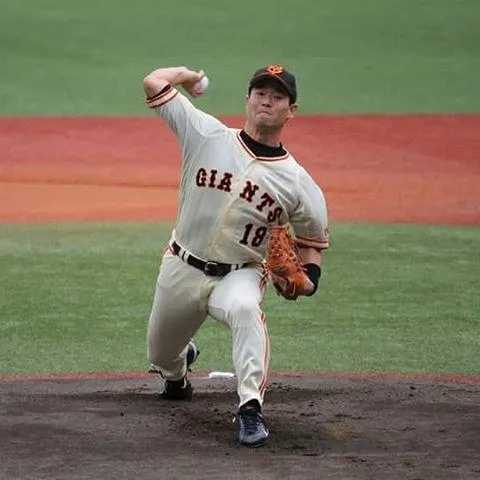
The burden followed him into his rookie season. He was given number 18, the number of ace pitchers. But while Kiyohara starred immediately for Seibu and won Rookie of the Year, Kuwata struggled, finishing 2-1 with a 5.14 ERA. Fans doubted him and critics mocked him. He later admitted fearing he might be released within a few years if nothing changed.
Instead of retreating, he doubled down on study. He experimented with nutrition, recovery, and conditioning when few players did, icing his arm when coaches discouraged it and expanding his repertoire one deliberate step at a time.
In high school he had limited himself to a fastball and curveball as a personal challenge. As a professional he added a slider, then began refining a split-finger fastball he continually modified throughout his career. He even gave it a name: the Thunderball. Kuwata approached pitching like a craftsman refining tools. He studied anatomy and sports science, arguing that some commonly feared pitches were misunderstood, and insisted that understanding the body mattered as much as throwing harder.
The results arrived quickly. In 1987, his second season, Kuwata transformed into one of the league’s best pitchers, posting a 15-6 record with a 2.17 ERA, winning the Eiji Sawamura Award and the Central League ERA title while still a teenager, helping the Giants capture the pennant. He became the youngest Opening Day starter in Giants history the following year. He won a Gold Glove, made the Best Nine, and began a run of excellence that established him as one of the Central League’s defining pitchers.
Kuwata could throw in the low 90s in his younger days. But his success came not only from overpowering hitters but through precision and imagination. Former Hiroshima Carp catcher Mitsuo Tatsukawa later said Kuwata could do everything—pitch, field, and hit better than many position players—recalling a moment when a coach suggested intentionally walking a batter to face Kuwata, only to be told Kuwata was the more dangerous hitter. He fielded brilliantly, won eight Gold Gloves (tied for the most ever by a pitcher) and later joked that defense was his greatest skill, batting second, pitching third.
His curveball became legendary as a pitch that seemed to rise before dropping sharply, later complemented by a slow looping version that American observers would call a “rainbow curve.” Timing, not speed, became his weapon. He manipulated rhythm the way a musician manipulates tempo, sometimes choosing to fall behind in counts to exploit a hitter’s expectations.
By the late 1980s, the Giants’ rotation revolved around three pitchers: Masaki Saito, Hiromi Makihara, and Kuwata*. They became known as the “Three Pillars,” and each represented a different philosophy. Saito, a sidearm power pitcher who would collect three Sawamura Awards and an MVP, imposed himself on hitters. Makihara, the 1983 Rookie of the Year and future author of a perfect game, relied on rare physical gifts. Kuwata won through strategy and control. Teammates later said no single ace existed among them; the strength of the staff came from the certainty that if one failed, another would win the next day.
In 1989 Kuwata won a career-high seventeen games and helped lead Yomiuri to a Japan Series title. Yet controversy returned in 1990 when reports linked him to improper financial relationships through acquaintances, including leaking his scheduled pitching dates, sparking media outrage and even discussion in the Diet. Though cleared of gambling involvement, he received a one month suspension and heavy fine. The incident deepened a strange divide in his public image: respected within baseball for professionalism yet viewed by many fans through lingering suspicion.
He responded the only way he knew: by pitching. After serving his suspension, he returned with consecutive shutouts and finished second behind Saito in wins and ERA. In 1994, everything came together. Kuwata went 14-11 with a 2.52 ERA, led the league with 185 strikeouts, and won the Central League MVP award. That year culminated in one of the most famous games in Japanese baseball history: the October 8 showdown between the Yomiuri Giants and Chunichi Dragons, winner take all for the pennant.
The atmosphere felt national in scale. Early chances slipped away amid nerves. Defensive plays and baserunning mistakes hinted at the pressure both teams felt. Manager Shigeo Nagashima committed completely, deploying his three pillars in succession: Makihara, then Saito on short rest, and finally Kuwata.
Dragons players later admitted their greatest fear was not whether Kuwata would pitch, but when. Late innings against him felt different; the game slowed to his rhythm.
When Kuwata entered in the seventh inning, he was exhausted. He had prepared specifically for this game, even cutting short a previous start to preserve strength, yet fatigue weighed heavily. He later admitted he felt afraid. Not of failure, but of the magnitude of the moment.
In the eighth inning, Kazuyoshi Tatsunami, Kuwata’s former teammate and roommate at PL Gakuen, reached base with a desperate head-first slide that dislocated his shoulder, symbolizing the Dragons’ final push. The tying run loomed. Kuwata escaped without allowing a run.
In the ninth, with two outs remaining, he delivered a high curveball. The batter, Tetsuya Komori, swung through it for strike three. The Giants were pennant winners, and Kuwata stood at the center of one of Japanese baseball’s defining moments. For many fans, the image that remained was not the celebration but Kuwata’s fist, clenched in quiet triumph after surviving the most pressurized innings of his career. The Giants would go on to defeat the Seibu Lions in the Japan Series, with Kuwata finally overcoming Kiyohara on baseball’s biggest stage.
By then, public perception had changed. The player once booed for entering the league, once suspected of gambling on baseball, was now indispensable.
Then came the injury.
In 1995, chasing a pop-up, Kuwata tore ligaments in his right elbow and underwent Tommy John surgery. The damage cost him nearly two seasons and altered his career permanently. He returned in 1997 after surgery, no longer overpowering but determined to survive through intellect.
Adaptation defined him. In 1998 he won 16 games and captured the league’s highest winning percentage. In 2002, at age thirty-four, he achieved one of baseball’s most improbable resurgences, posting a 2.22 ERA to win the title again, fifteen years after his first, the longest gap between ERA titles in NPB history.
That season captured Kuwata at his purest. In one complete-game shutout, he signaled to his fielders where the final out would land before throwing the pitch that produced exactly that result, a routine fly ball to right. Teammates laughed, but it revealed how he pitched: not reacting to outcomes, but imagining them first.
Kuwata also challenged traditions throughout his career. He opposed corporal punishment in amateur baseball, criticized excessive training culture, advocated scientific conditioning, and insisted professionalism meant preparation as much as endurance. Teammates admired his discipline; younger players called him demanding but fair. At violent, hierarchical PL Gakuen, he became known as “an angel” for refusing to participate in hazing while still holding teammates to rigorous standards. He argued that violence reflected laziness in coaching.
Despite his excellence, he finished his Japanese career with 173 victories, short of the symbolic 200-win milestone revered in Japan. Statistics alone never fully explained him. He hit .216 with seven home runs, fielded like an infielder, and won admiration for professionalism that extended beyond the field. A lifelong non-smoker, he even pushed for smoke-free locker rooms.
Near the end of his career, as performance declined, he pursued one final dream. In 2007, at age thirty-nine, he signed a minor league contract with the Pittsburgh Pirates, aided by pitching coach Jim Colborn, who understood Japanese baseball. A freak collision with an umpire during spring training tore ankle ligaments and nearly ended the attempt before it began. Kuwata rehabbed, reached Triple-A, and soon received a call to the majors.
On June 10, 2007, at Yankee Stadium, Masumi Kuwata became the third-oldest post-war rookie in MLB history after Satchel Paige and Diomedes Olivo. He allowed a home run to Alex Rodriguez but later struck out Ichiro Suzuki and recorded several scoreless outings. Struggles followed, and after nineteen appearances he was released. He finished with no victories and a 9.43 ERA, but by then numbers were beside the point.
“I have no regrets,” he said afterward. How could he? He went from being the youngest kid in his class to one of the oldest kids in the majors.
Kuwata often said, “Baseball is of the heart.” The phrase did not mean emotion alone. For Kuwata, heart meant preparation, curiosity, discipline, and respect for the game as something larger than results. Even in retirement he continued training, occasionally surprising observers by throwing sharp fastballs well into his fifties.
He showed that baseball could be studied, shaped, and reimagined. That intelligence could compete with size. That resilience could matter as much as brilliance. That a career could contain both suspicion and redemption, injury and renewal, doubt and quiet mastery. Kuwata compared pitching to rock-paper-scissors. Control the timing of the reveal, and victory follows.
He once said that success was not luck but effort witnessed by the baseball gods.
Masumi Kuwata spent his career trying to become someone those gods would notice.
And in the end, they did.
Thomas Love Seagull’s work can be found on his Substack Baseball in Japan
 SABR Asian Baseball Research Committee Blog