Tag: Tae-in Chun

  • The Runner Stranded at Second Base, Su-hyeok Lim

    The Runner Stranded at Second Base, Su-hyeok Lim

    By Tae-in Chun

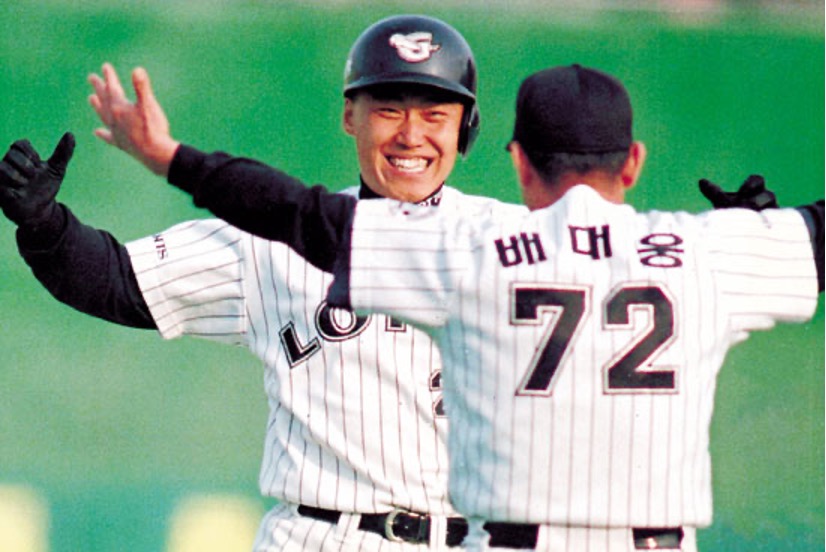
    Su-hyeok Lim was a catcher who played for the Lotte Giants in the 1990s. As an offensively capable catcher, he played an important role in the middle of the lineup. In 1995, he hit 15 home runs, and in 1996, he posted a .311 batting average, firmly establishing himself as the team’s starting catcher. At the time, Korean professional baseball was a league dominated by strong pitching, so a catcher who could produce that kind of offense was rare.

    He is also remembered as a player who came through in big games. In the 1995 Korean Series, he drove in the winning run, and in the 1999 playoffs, he came in as a pinch hitter in the ninth inning and hit a game-tying two-run home run. For Lotte fans, he was the kind of player who inspired hope in decisive moments.

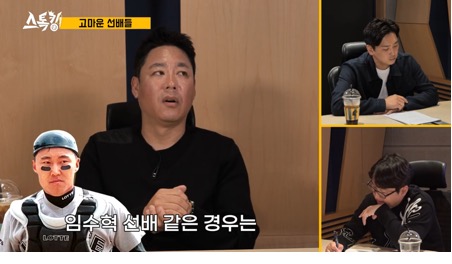
    He was also a special presence to his teammates. Gi-moon Choi, who played with him on the Lotte Giants, remembers Lim as the senior teammate who first helped him adjust to the club. The two had been roommates during their time with the national team and the military team, and they also lived together in Lotte. As fellow catchers, they could have become rivals, but Lim looked after his junior teammate with unusual care instead. Choi later recalled that Lim helped him in many ways so he could settle into the new team.

    Su-hyeok Lim as remembered by his teammate Gi-moon Choi

    Lim had shown warning signs about his physical condition even before the incident. Choi said he once saw Lim suddenly sit down on the bench during running drills and check his pulse. His heartbeat was irregular, stopping for a long moment before starting again. Lim himself would smile brightly and say, “I guess I need to rest a bit,” but the people around him did not fully grasp how serious it was.

    On the night before the game against the LG Twins at Jamsil Baseball Stadium on April 18, 2000, the two sat in their room at the team lodging, talking while sharing corn. Lim had handed it over saying, “My father grew this at home.” For Choi, that ordinary moment became their final everyday memory. The next day, something no one expected happened.

    Cardiac arrest during the game, and a stadium that was unprepared

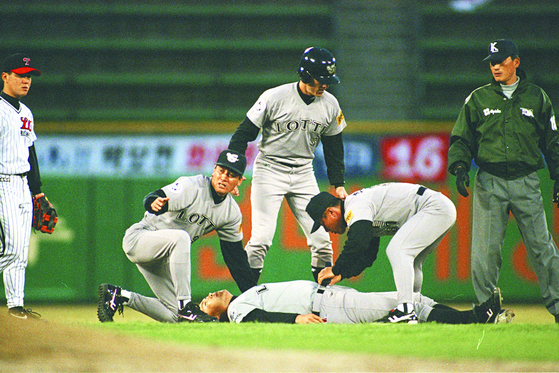
    During the Lotte Giants’ turn at bat, with Seong-hwan Jo stepping into the batter’s box, Su-hyeok Lim, who was on second base, suddenly collapsed. He lost consciousness and fell to the ground with his legs trembling.

    Su-hyeok Lim suddenly collapsing at second base, and the field turning tense

    The team trainer ran out in a hurry, but the scene was chaotic. There was no properly established emergency response manual, and CPR was not performed immediately. The players and trainers could only wait for the stretcher to arrive. The situation was very different from today’s stadiums. Now, professional baseball stadiums have ambulances from partner hospitals on standby and emergency medical staff on site. But at the time, there was no ambulance immediately waiting, and the emergency medical system was not fully in place.

    Lim was carried on a stretcher to the dugout and then transported to the hospital. His pulse and breathing were restored with difficulty, but he never regained consciousness. He was ultimately diagnosed as being in a vegetative state. The cause was arrhythmia. His heart beat irregularly, cutting off blood flow to the brain and eventually leading to cardiac arrest.

    The incident left a deep shock on Korean sports. At the same time, it raised a painful question: was the stadium truly prepared to protect a player’s life? After the accident, criticism grew over emergency response systems at sports venues, and professional sports began strengthening safety systems, including keeping ambulances on standby and assigning medical staff on site. Beyond sports, schools and public institutions also expanded CPR and AED training, and public awareness of emergency response gradually increased.

    Solidarity and change in the sports world after the accident

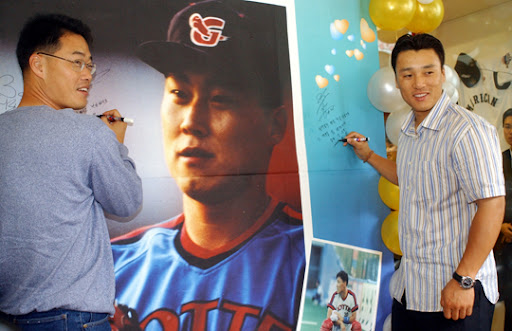
    Hae-young Ma and Seung-yeop Lee of the Samsung Lions taking part in an event to help Su-hyeok Lim

    Right after the accident, the baseball world and the wider sports community began organizing efforts to help Lim. The KBO held fundraising events, and players also participated in raising money for his medical expenses. During the All-Star Game, part of the prize money was donated for his treatment. Athletes from other sports also joined in. Football player Byung-ji Kim donated prize money, and many other athletes and clubs contributed donations. The Hyundai Unicorns players’ association even sent part of its monthly dues to support treatment costs. Later, the Heroes club also continued fundraising events in Lim’s memory.

    In December 2002, Chan-ho Park, who was then playing in Major League Baseball, also joined the effort. Wishing for Lim’s recovery as he battled a brain tumor, Park donated his Rawlings glove and a signed baseball to a charity auction. The items were sold for 4.68 million won (approximately $3,200), and the proceeds went toward medical expenses. Park also visited Lim’s hospital room in person, comforting the family and wishing for his recovery.

    In Busan, the Lotte Giants players’ association took the lead in continuing events to help Lim. These were usually held at a barbecue restaurant run by Seong-beom Ko, a former Lotte Giants player who operated a chain in the Busan and South Gyeongsang area. Players welcomed local residents, served food themselves, and spent time with fans. Some events also took the form of one-day beer hall fundraisers for adult fans. At the venues, memorabilia such as signed baseballs and uniforms were sold, and time was set aside for photos.

    This was before the ideas of club social contribution and charity events were as widely used as they are today, but the events naturally became a way of connecting the local community with baseball. A wide range of people took part, from children and students to adult fans, and it became a special chance for players and fans to meet in the same space and talk directly.

    From 2000 to 2013, Lotte Giants players continued leading events to support Su-hyeok Lim’s family

    The legacy Su-hyeok Lim left behind

    Lim’s accident did not end as the tragedy of one player. It became a turning point that changed the way Korean sports looked at player safety.

    That change ended up saving lives. In 2011, football player Young-rok Shin collapsed from cardiac arrest during a match, but thanks to CPR and an AED, he regained consciousness after 50 days. It was a case in which the strengthened emergency response system, built in the aftermath of Lim’s accident, worked. In 2017, during a youth national team match, Tae-wook Jung also collapsed, but his teammates responded quickly and saved him. Central defender Sang-min Lee secured his airway, and the other players followed the manual as well, preventing the worst-case outcome.

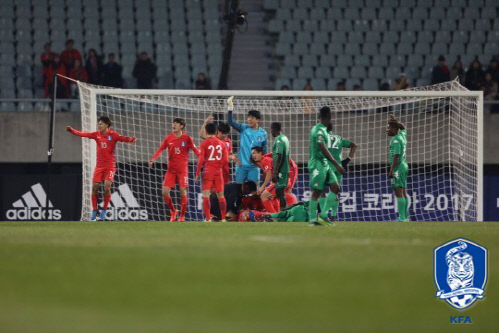
    Players securing the safety of a collapsed teammate

    His name still remains on the field. Number 20, the number Su-hyeok Lim wore with the Lotte Giants, remained unused for a long time after he was placed on the free agent release list. A few players later wore it, but since 2016 it has once again remained unused. After it became known that the club rejected a player’s request for the number, saying, “That is Su-hyeok Lim’s number,” it has effectively been managed like a semi-permanently retired number. Even now, as time has passed, his name and number remain as a memory that calls to mind the safety and responsibility sports must protect.

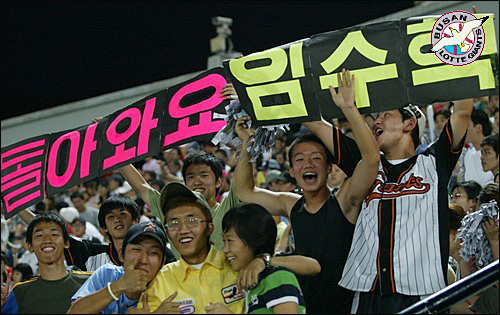
    In 2005, fans cheering while holding “Come Back, Su-hyeok Lim” support cards

  • Sailor Turned General Manager by a Single Book

    Sailor Turned General Manager by a Single Book

    by Tae-in Chun

    The baseball film Moneyball depicts a moment when one club tried to understand baseball in a completely different way. The 2002 Oakland Athletics questioned the conventional wisdom that permeated the baseball world. By acquiring undervalued players through sabermetrics, they redesigned their team. Similar attempts did not appear only in the United States.

    In Korean baseball history, the 1990s were a time when even the word “data” was unfamiliar. Even in this environment, there were people who questioned an operating style that relied on intuition. The starting point was not a front office meeting or a research report. It was a single book written by a baseball fan.

    Lotte at the end of the 1980s, having lost its direction

    In the late 1980s, Korean professional baseball still remained a “people’s game.” A manager’s experience and instincts, trust in veteran players, and internal organizational inertia were the standards for team operations. When results were bad, the manager was replaced, and when momentum was good, existing methods were maintained. Long term development and structural reform were always pushed to the back. The Lotte Giants, who finished last in 1989 and stayed in the lower ranks in 1990, were likewise a team that had lost its way amid this inertia. The fandom was overwhelming, but the team had no explanation for why it was losing.

    A perspective formed outside baseball

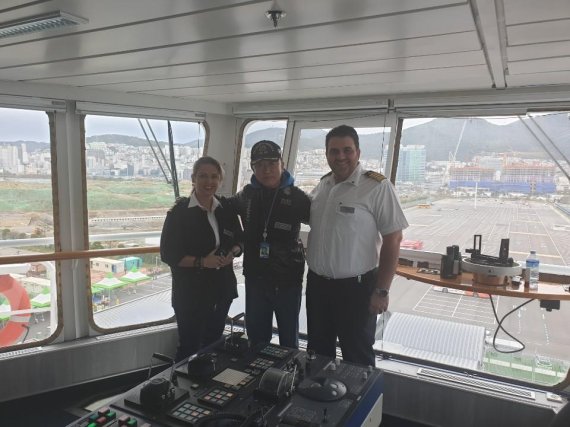
    Around this time, there was one person who looked at the team from a completely different angle. His name was Jeong-gyu Song. He was born in Busan and studied at Korea Maritime University, which trains navigators. He then began his career as a deck officer on merchant ships. Later, he was promoted to captain at a U.S. shipping company, making the sea his workplace. Baseball was not his profession, but his interest ran deep.

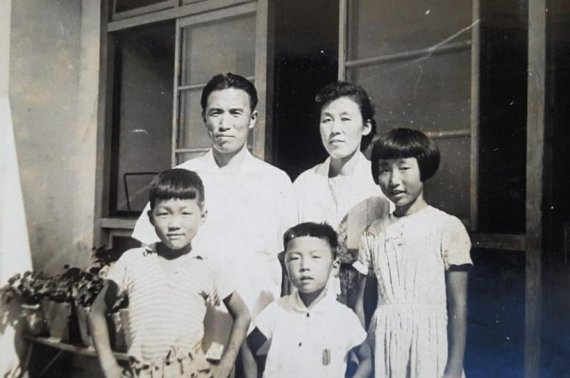
    Baseball fan Jeong-gyu Song (front center), who chose the path of a navigator under the influence of his father, a professor at Korea Maritime University

    Long voyages gave him time to study baseball. Through Japanese professional baseball newspapers, American sports magazines, and Major League related books, he naturally came to place Korean baseball alongside overseas baseball and compare their structures. The differences became increasingly clear. At the time, player usage in Korean baseball relied excessively on intuition, and team management lacked a consistent philosophy. There was no system to systematically develop prospects, and responsibility for poor performance always fell on the field staff. Jeong-gyu Song began recording and accumulating the problems he felt while thinking about the Lotte Giants.

    Choosing records instead of protests

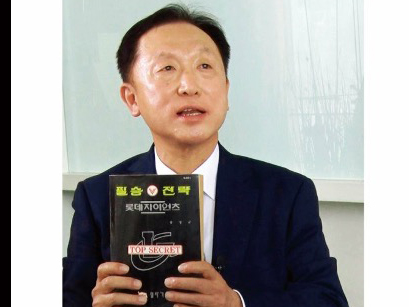
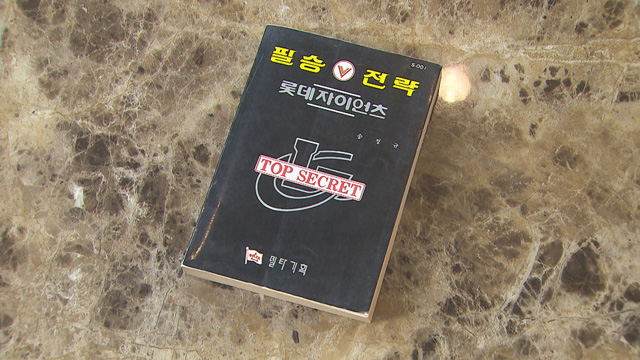
    Jeong-gyu Song did not initially intend to write a book. He called the club several times to explain the team’s problems. However, the opinions of an “ordinary fan” were repeatedly brushed aside. Deciding that conveying things verbally no longer worked, he chose to organize his thoughts and leave them as a written record. After seven months, during which he even set up his own publishing company, The Winning Formula: Lotte Giants’ Top Secret was released into the world.

    A book that is still talked about among Korean baseball fans today

    It was self published, and sales were not high. However, the contents were concrete. The role of the front office, standards for player usage, and the necessity of a long term development system were organized by topic. From today’s perspective, these are not unfamiliar ideas, but at the time they were novel problem statements in Korean baseball. The book gradually spread by word of mouth. Unexpectedly, it reached the hands of Lotte owner Jun-ho Shin.

    Becoming a general manager with a single book

    In 1991, the Lotte Giants made a radical choice. Jeong-gyu Song was appointed general manager. Former sailor, late 30s, no practical experience in baseball team operations. In the front office culture of the time, it was a highly unusual appointment. Internal reactions were cold. Open turf battles and exclusion followed, and there were even times when, because budget cooperation was not provided, he had to go out personally to look for sponsors.

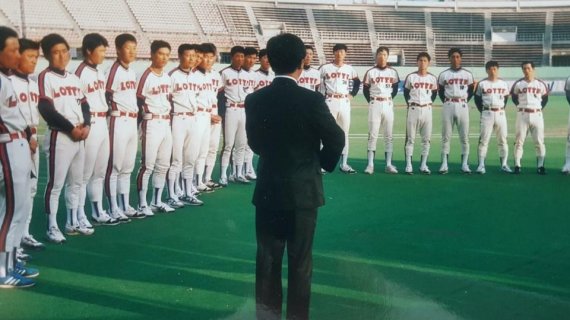
    Jeong-gyu Song greeting the players after taking office

    His operating philosophy was also different. He spoke about statistical analysis, the strong number two hitter theory, and the need for a development system. Concepts that are familiar now were met then with reactions like “that sounds like baseball comics.” However, change quickly appeared in results. In his first year, 1991, Lotte rose to fourth place and advanced to the postseason. They surpassed one million spectators in a single season for the first time in professional baseball history. In 1992, they even won the Korean Series.

    The experiment ended, but the questions remained

    The championship was not the end. Internal conflicts still remained. An assessment arose that he “damaged organizational harmony.” This evaluation was reported to club management. Jeong-gyu Song, who encountered this while on his honeymoon, resigned voluntarily after returning home. Since then, Lotte has gone more than 30 years without another championship.

    He is also known as Korea’s top expert in the field of maritime economics, combining practice and theory

    He returned to the shipping industry. Afterward, he continued working in key positions in shipping and port related organizations. Even after mandatory retirement, he has continued to advise on and contribute to major issues in Korea’s shipping and port sectors. His distance from baseball grew, but his perspective remained sharp. In 2024, he appeared on a Busan regional radio broadcast and became a topic of conversation again after predicting Lotte’s preseason ranking with considerable accuracy. Decades have passed, but he left the impression that his eye for the team had not changed.

    The Winning Formula: Lotte Giants’ Top Secret is now an out of print book. Rather than a theoretical text, it is closer to a record of one fan asking questions and working through the answers. Attempts similar to Moneyball clearly existed in Korean baseball as well. However, they did not take root as a successful management strategy, nor did they expand into a popular narrative. Even so, this attempt showed a brief but meaningful possibility in Korean baseball.

  • From Dongdaemun Alleyways to the KBO Official Ball: The Present of Korean Baseball Brands

    From Dongdaemun Alleyways to the KBO Official Ball: The Present of Korean Baseball Brands

    by Tae-in Chun

    Dongdaemun, the Beginning of Korean Baseball Brands
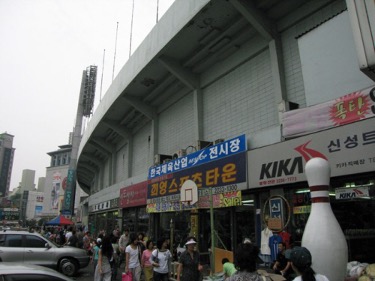
    The roots of Korea’s baseball equipment industry began in the alleyways surrounding Dongdaemun Stadium in Seoul. In the early 1970s, sporting goods shops that had been scattered throughout Jongno and Euljiro gradually gathered around the stadium, naturally forming a commercial district. Here, every task needed for baseball was carried out, from glove repair and production to bat processing and uniform embroidery and number patching. In an era when overseas brands were difficult to access, what mattered most to players was not the brand name, but which shop’s craftsman had made the equipment. Dongdaemun was not only a famous shopping district, but also the heart of Korean baseball equipment manufacturing.

    Streets and shops around Dongdaemun Stadium, once the center of Korea’s baseball equipment industry

    Although Dongdaemun Stadium was demolished in a redevelopment project in 2009, its culture did not disappear. Merchants spread out to large commercial complexes such as the 16-story Good Morning City, Jamsil Sports Mall, and areas around Euljiro. Even today, through this network, many amateur baseball teams, youth clubs, and women’s baseball teams continue to produce uniforms and team equipment. Only the location has changed. Dongdaemun still functions as the practical center of Korea’s baseball equipment industry.

    The Origins of Handmade Gloves: Gimhae Industrial Company and JOE LEE
    The point at which glove manufacturing in Korea took shape as an industry dates back to 1967 in Eomgung-dong, Busan. Gimhae Industrial Company, founded by the late Gwang-jo Lee, was Korea’s first specialized baseball glove factory. Every process was done by hand. From leather cutting to stitching, steam molding, and final lacing, skilled workers participated in each stage through a division of labor.

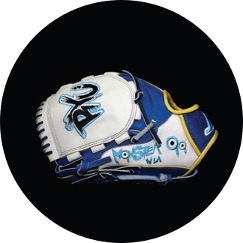
    A JOE LEE glove used for practice by Hyun-jin Ryu during his time with the Los Angeles Dodgers

    Despite passing through multiple crises, including the IMF financial crisis, competition from low-priced Chinese products, and the recent pandemic, Gimhae Industrial Company’s production system has been maintained. In 1991, the premium brand JOE LEE was launched, inheriting the philosophy of Gwang-jo Lee. It continued a production approach focused on craftsmanship rather than mass production, and its performance was proven in actual play by professional players including Hyun-jin Ryu. JOE LEE remains a symbol of domestically made gloves crafted by artisans. It is a case that shows the Korean baseball equipment industry has accumulated real manufacturing expertise beyond simple distribution.

    The Growth of Korea’s First Brand, BMC
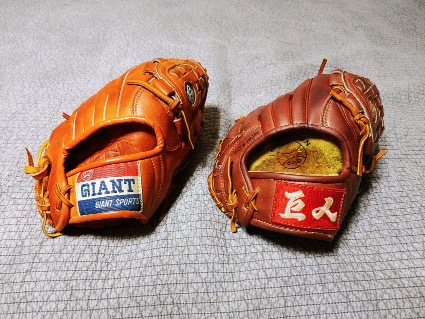
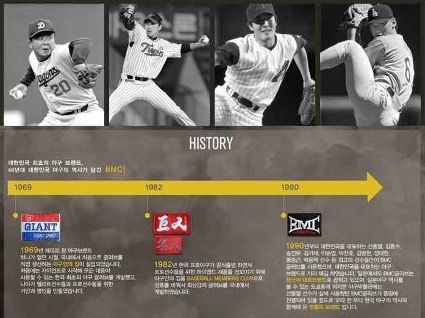
    The representative Korean domestic brand is undoubtedly BMC. It began in 1969 by producing player gloves under the name “Giant,” and was reorganized under its current brand name following the launch of the KBO in 1982. It then rapidly gained popularity by combining professional player sponsorships with distribution network expansion. In bromide photos from the 1990s and 2000s, most players wore BMC gloves, and it was also the most commonly encountered brand in the Dongdaemun commercial district.

    BMC gloves long favored by famous Korean baseball players such as Park Chan Ho Park and Byung-hyun Kim

    From the late 2000s, BMC expanded its direction toward a premium strategy. To pursue high-end positioning, new products of the highest quality were required. Through this process, the Alkan and Royalty series were created. These series use Seto and Terada line leathers processed by Maruhashi in Japan, materials also used in top-tier Mizuno models. When Japanese brands productize gloves with the same materials, they are priced very high, but BMC maintained domestic production systems and kept prices relatively reasonable. As a result, it earned a reputation in the field as a “high-quality glove with strong value for money.”

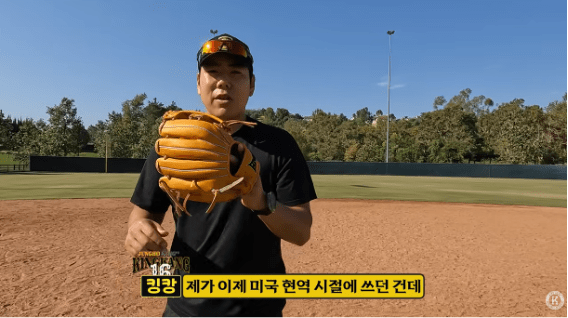
    A BMC glove actually used by Jung-ho Kang in MLB

    Trust Built Alongside the League
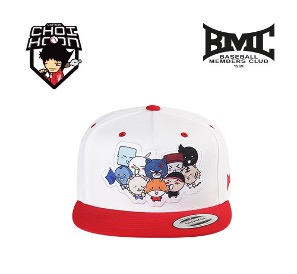
    BMC has long been active as an officially certified KBO brand. It has consistently supplied official game balls, umpire equipment, and team goods, growing alongside the league on the field. In the 2025 season as well, it continues to handle production of official game balls and the supply of umpire equipment. By releasing collaborative products with teams and the league, such as team-character snapback caps, it is also expanding its points of contact with fans.

    A collaborative cap created by popular baseball cartoonist Hoon Choi and BMC

    By steadily building brand self-reliance, BMC has established a position that is not easily replaceable on both the distribution and manufacturing sides. Within this flow, brand operations are currently centered on Fusion Sports Korea (FSK). Multiple baseball brands such as Kang’s Studio, Diamond, and Morimoto are managed together, forming a relatively stable supply structure that spans equipment production to distribution. A brand that began in the alleyways of Dongdaemun has grown to a position where it supplies standard equipment used in the league.

    At present, the Korean baseball equipment market includes a range of brands centered around BMC, including SPS, Incojava, Fandom Korea, and Atoms and Altis, each building its own domain. SPS has expanded overseas distribution through entry into the Japanese market. Incojava operates high-end lines using Japanese Seto leather and American Texas steerhide, and also handles OEM production for Louisville Slugger and Easton. Fandom Korea has earned a dedicated following with its North Skip leather models, while Atoms and Altis are targeting the premium market based on Japanese manufacturing technology.

    Behind this growth are advancements in production processes such as the adoption of Maruhashi leather, hydraulic vacuum processing, uniform stitching, and steam molding. Korean brands no longer remain as inexpensive alternatives. From producing official league equipment to engaging in global OEM collaborations, the manufacturing culture that began in the alleyways of Dongdaemun continues quietly today.