

by Tim Sokol
In many sports, the journey doesn’t end when you win your national championship. Continental, or sometimes even intercontinental glory beckons for the strongest and most ambitious teams. Look at the success of the UEFA Champions League, the Copa Libertadores, and the other continental trophies in club football. Look at EuroLeague basketball, which is far more prestigious than any domestic league in Europe. The idea of competing against teams from outside your own league is an appealing one. There is both excitement in reaching an even higher level of competition and also a novelty in playing new opponents. High level baseball leagues have largely never embraced this idea, with the most notable exception being the Caribbean Series for top winter league teams, but even that is somewhat of an all-star series when you dig into the roster rules and circumstances surrounding winter league ball. The Caribbean Series is awesome, but I don’t think it is quite the same thing as a “Champions League” type tournament between full-length season national champions. The WBSC has recently organized an Americas Champions League and found minimal success so far. There has basically been one honest effort at a “Champions League” style tournament as we generally understand the idea, and so I would like to look back at the now-defunct Asia Series.
The first Asia Series was in 2005, but the lineage can actually be traced back a decade earlier, to a 1995 tournament sometimes known in English as the “Asia Pacific Super Baseball Championship” or the Asian Pacific Cup. This was a tournament hosted by the Daiei Hawks, who came in 5th place in the Pacific League that year. They invited teams from Taiwan, Korea, and Australia to participate in a two-day single elimination tournament. The Hawks were upset in the first round by the Uni-President Lions (CPBL) and wound up in 3rd place. The Hanwha Eagles (KBO) defeated the Australian League All-Stars in the other first round game. The Lions would go on to win the title, though only a few Lions fans seem to remember or care these days. This tournament received limited media coverage at the time and is largely forgotten today, but it is worth mentioning as an early foray into continental competition.
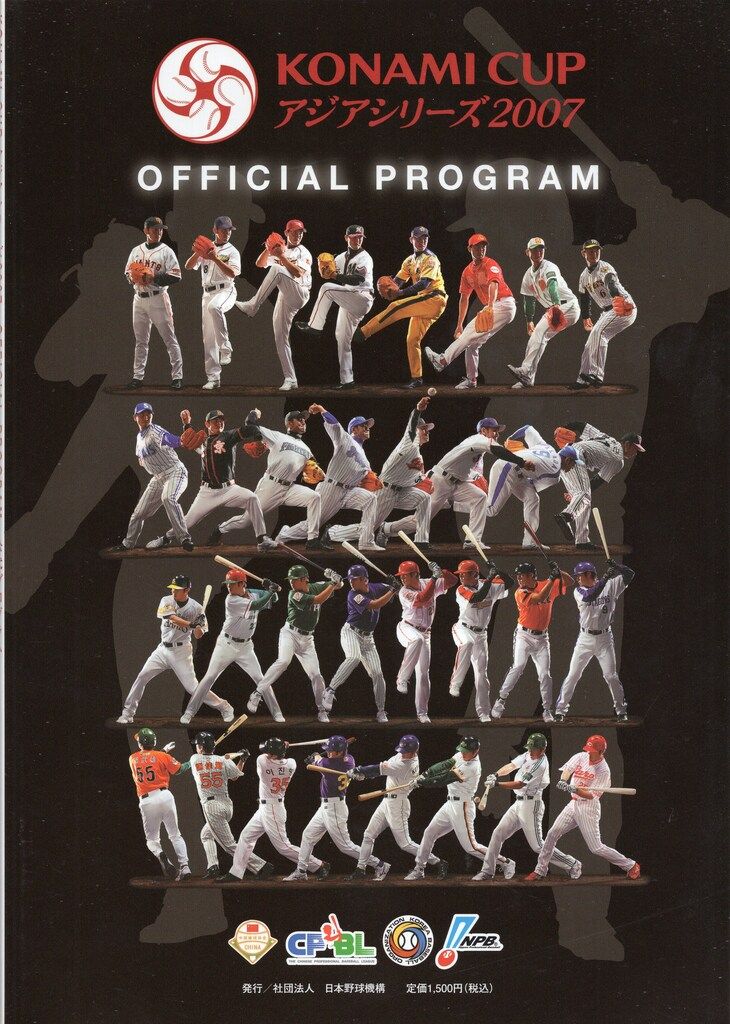
A decade later, baseball executives decided to try the idea again in a more official capacity. The Asia Series was created for the 2005 season with Konami announced as the title sponsor, making the official name of the competition the Konami Cup Asia Series. The Chiba Lotte Marines, the tournament favorites, won all of their games without too much difficulty and capped it off with a 5-3 victory over the Samsung Lions in the final. The event, hosted at the Tokyo Dome, produced mixed crowds. When the Marines were playing, fans showed up, including over 37,000 people at the final. When the other teams were playing, attendance was paltry. Only 6,340 were on hand for the decisive group game between the Sinon Bulls and Samsung Lions that would determine who advanced to the championship.
In 2006, with the tournament once again at the Tokyo Dome, attendance dropped sharply as NPB was represented by Hokkaido rather than the more locally based Chiba. This edition saw the favorites threatened for the first time, with Taiwan’s La New Bears losing to Hokkaido by just one run in both the group stage and in the final. And in 2007, the breakthrough was finally made when the KBO’s SK Wyverns beat the Chunichi Dragons in the group stage, handing NPB its first loss in the Asia Series. Chunichi would go on to get revenge over the Wyverns in the final, 6-5. Attendance remained closer to 2006 levels rather than the heights of 2005.
While these tournaments produced some good games, there was also an inherent problem with this format. Though there was a vast gulf in talent between the three premier Asian leagues, they were still all stocked with professional players and the weaker teams were still capable of competing with the stronger ones over a short tournament like this. The same cannot be said for the China Stars, who were a representative all-star team from the Chinese Baseball League. The CBL was not a professional league and was of such inferior quality to the other three leagues that even an all-star team proved completely uncompetitive; the China Stars played nine games in these three years and lost all nine, mostly by very large margins. In 2008 the CBL sent the champion Tianjin Lions rather than an all-star team, and the Lions also went 0-3.
2008 marked a big turning point for the competition. Evidently unhappy with how things were going, title sponsor Konami ended their partnership with the tournament, leaving the name as just the Asia Series. Other sponsors followed suit. And perhaps most importantly, in Japan the tournament was moved off of terrestrial television to satellite channels with a much smaller reach. The competition had never been on the firmest financial ground, but now it found itself in an untenable situation. Amidst further declining attendance despite the presence of the Saitama Seibu Lions, the tournament produced some gripping baseball including a nailbiter final in which Seibu walked off the Uni-President 7-Eleven Lions in the 9th for a 1-0 victory. And so despite the 2008 edition ending on a high note, the tournament’s future looked bleak.
In 2009, due to lack of funding and willing sponsors, the Asia Series was cancelled. The general understanding around the industry seems to have been that this was a temporary cancellation rather than a permanent one, and there was clearly still some appetite for the idea. That year administrators organized the NPB-KBO Club Championship, a single game winner-take-all replacement for the Asia Series to be held in Nagasaki. A half-filled stadium watched the Yomiuri Giants beat the Kia Tigers 9-4.
In 2010, though there were originally plans to revive the Asia Series in Taiwan, this idea was shelved due to a conflict with the 2010 Asian Games. But the interleague clashes continued. This time the KBO Champion SK Wyverns tied a two-game series 1-1 with the CPBL’s Brother Elephants. No game three was scheduled. Then the Wyverns headed to the Tokyo Dome for another NPB-KBO Championship where they were blanked by the Marines. These games were once again moderately but not overwhelmingly successful, and as shown by the scheduling of a two game series, were thought of closer to exhibitions than to any serious continental competition.
In 2011, the Asia Series made its formal return, back to the original format with four teams. Gone was the Chinese League, having been replaced by the previous champion of the Australian League. The tournament was hosted in Taichung and Taoyuan and once again saw limited attendance outside of when the home team played. Just 4,000 people showed up to watch the Samsung Lions defeat the Fukuoka SoftBank Hawks to become the first non-Japanese team to win the competition. The theory that Taiwanese fans would come out in big numbers to watch NPB teams seemed to have been proven wrong. But still, the tournament trudged on, expanding to six teams in 2012.
That expansion led to a new format with two groups of three. Participating teams were the champions from Japan, Korea, Taiwan and Australia, as well as an extra team from Korea (the Lotte Giants, who qualified as hosts) and the return of the China Stars. The Lamigo Monkeys and Yomiuri Giants topped the groups, with the Giants winning 6-3 in the final.
The 2013 Asia Series would be the last, and kept the six team format, though the China Stars were replaced by an Italian club, Fortitudo Bologna, who were the reigning winners of the European Cup. This time Taiwan hosted and thus received two bids rather than one. The Italians performed as expected, but the shock came when neither Japan nor Korea were represented in the final. Instead, it was the Canberra Cavalry who claimed the first trophy for Australia, defeating the Uni-Lions in Taichung.
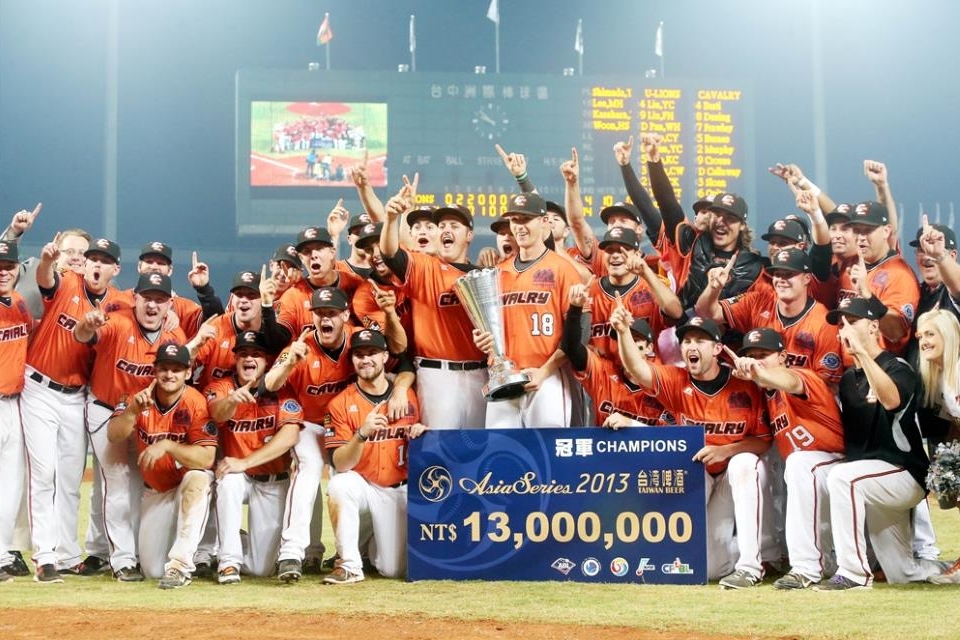
The tournament ended on a strange note, with Canberra player Matt Blazynski claiming that he had been offered money to throw the semifinal match against Samsung. The CPBL and Taiwanese police investigated the claim and determined that Blazynski’s story was full of inconsistencies, and the CPBL released a statement calling it “a fabricated lie.” Without really having any details we can only speculate, but the CPBL does have a long history of match-fixing scandals, and it seems like an unusual story for a player to lie about. On the other hand, athletes do tell strange lies sometimes. Ryan Lochte comes to mind. In any case, Blazynski didn’t even play in the tournament and obviously Canberra, the eventual champions, did not throw any games. We didn’t know it at the time, but this saga was basically the end of the Asia Series. The tournament did not return in 2014, and has not been played again since.
So where does that leave us? Undoubtedly the idea of the Asia Series sounds neat in theory, so why didn’t it work? I think there are quite a few reasons we can point to. The fourth league (after NPB/KBO/CPBL) was never a perfect fit. China (and Italy) simply didn’t have the quality to be competitive, and Australia has the problem of being a winter league and thus the tournament takes place at a strange time for them. A European invite does not move the needle, though there were rumors of eventually inviting teams from stronger leagues such as Mexico. The calendar also became too crowded with other events. We saw one tournament cancelled to make room for the Asian Games, and NPB at this time was still playing their exhibition series against MLB All-Stars in some years. Nowadays we have the Premier12 in this window sometimes. All of those events are higher profile and much more lucrative than the Asia Series.
All that said, obviously if viewership was booming the powers that be would have found a way to make it work. The number one reason that the Asia Series is not around today is that not enough people watched, not enough people cared, and not enough money was made. Fans I heard from all gave me a variation of the same answer: The tournament was a cool idea, but we (the fans) only *kind-of* cared and the teams and players only *kind-of* took it seriously. Undoubtedly, there were great moments. Look at the scenes of Chiba clinching the 2005 title and it is obvious that the result mattered to people. But despite the highs, the tournament was never truly elevated to the place of being a serious trophy on par with winning your domestic league. Major media outlets didn’t give it much credence. Attendance was not great. Some players and managers gave good PR answers when asked about the competition, while others were open about the fact that they weren’t interested.
And so the natural follow up question: Could this type of tournament work in the future? Never say never, but for now a return seems unlikely. National team baseball is a much more financially sound usage of that calendar space and there isn’t really a lot of clamor for another Asia Series outside of the hardcore baseball nerd demographic. I would love to see it but it’s really hard to pull off as you need full buy-in from players (especially pitchers) and organizations and fans. If everyone involved doesn’t treat it as a serious continental championship, then it becomes nothing more than a glorified exhibition. So you’d probably need a lot of prize money and a lot of prestige associated with the tournament to get everyone to care. Maybe that prestige comes over time as you host the series and it gets slightly more and more important with each passing year, but you need to be able to survive that build-up period without folding. And as we saw with the Asia Series’ original run(s), that is the tricky part.

