Professional sports in Korea began in earnest in the 1980s. At the time, Korea had industrialized, and the economy was more stable than before, but the country was still under military rule. Before the voices for democracy and press freedom grew stronger, President Chun Doo-hwan’s government fostered the sports industry to divert public dissatisfaction (along with films and the sex industry, this was called the “3S Policy”).
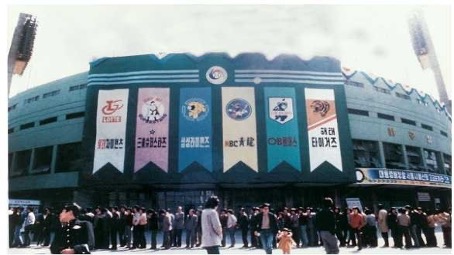
The government encouraged major corporations, which played a large role in the Korean economy, to establish professional baseball teams. Responding to this, corporations formed teams. On December 11, 1981, the Korea Baseball Organization (KBO) was founded. Soon after, in March 1982, the Korean Professional Baseball League (KBO League) opened. From then on, Korea’s international baseball exchange began to center around the KBO League.
Sammi Superstars – based in Incheon/Gyeonggi-do/Gangwon-do/5 provinces of North Korea
Lotte Giants – based in Busan/Gyeongsangnam-do
Samsung Lions – based in Daegu/Gyeongsangbuk-do
Haitai Tigers (now KIA Tigers) – based in Gwangju/Jeolla
OB Bears (now Doosan Bears) – based in Daejeon/Chungcheong
In 1985, the OB Bears relocated to Seoul, and Binggrae Eagles (now Hanwha Eagles) filled the gap. In 1990, the Ssangbangwool Raiders (disbanded in 1999) joined, starting the true 8-team structure of the 1990s. However, during the 1997 financial crisis, ownership changes and team dissolutions created a turbulent history. Despite this, baseball’s popularity grew, leading to the creation of more teams. The current 10-team system was completed in 2015 with the founding of the Suwon-based kt wiz.
From its start in 1982 until the mid-1990s, the KBO League consisted only of Korean players. International exchange was minimal, and overseas Koreans or Koreans with Japanese pro experience filled the role of “foreign players.” Notable examples include pitcher Myeong-bu Jang (Japanese name: Hiroaki Fukushi) and player-manager In-chun Baek of MBC Blue Dragons.
At that time, the gap between Korean and Japanese baseball was far greater than today. In-chun Baek’s record of a .412 batting average in 1982 (still the KBO’s only .400 hitter) and Myeong-bu Jang’s 30-win season in 1983 both reflected that disparity.
In 1998, Korea finally introduced its foreign player system, about 15 years after the league’s founding. Since then, players from Japan, the United States, Mexico, the Dominican Republic, Venezuela, Puerto Rico, and Curaçao, among others, have joined. With superior physical ability, they brought powerful batting and dominant pitching.Korean players, competing with them, raised their skills to international levels. This led to global success: silver medals in the 2006 and 2009 World Baseball Classic, and a gold medal at the 2008 Beijing Olympics, proving Korea’s competitiveness in world baseball.
From the mid-1990s, more Korean student athletes also challenged foreign leagues. Some skipped the KBO and went directly abroad after graduation. In 1994, Chan Ho Park became the first to enter Major League Baseball. After him came pitchers Jin-ho Cho, Byung-hyun Kim, Jae-weong Seo, hitters Hee-seop Choi, Shin-soo Choo, Ji-man Choi, and others.
Meanwhile, many KBO players at that time went to Japan first instead of the U.S. Legends such as pitcher Dong-yeol Sun, shortstop Jong-beom Lee, pitcher Sang-hoon Lee, pitcher Dae-sung Koo, and slugger Seung-yeop Lee all advanced to Japanese baseball.
Direct movement of Korean pros to the U.S. began in the 2000s. Players like Hyun-jin Ryu, Jung-ho Kang, Byung-ho Park, Ha-seong Kim, and Jung Hoo Lee used the posting system to reach MLB. Student athletes also continue to pursue MLB directly after high school, examples include Hyun-il Choi, Jun-seok Shim, Ji-hwan Bae, Hyeong-chan Eom, and Won-bin Cho.
Recently, a unique trend has emerged: foreign players who played in the KBO return to MLB, a phenomenon called “reverse export” in Korea. Merrill Kelly, now a pitcher for the Texas Rangers, is a prime example. Others such as Chris Flexen, Erick Fedde, and Mike Tauchman also polished their skills in Korea before resuming MLB careers.
In the past, the KBO was just an option for players who failed to adjust in MLB. Now, it is positioned as a springboard for returning to MLB. Seeing these “reverse export” successes, many foreign players knock on the KBO’s door before directly attempting MLB.
Thus, the KBO has become not only a field of opportunity for Korean players but also for foreign players. Through this cross-border exchange, the league has become a stage where new baseball stories continue to unfold.
Every Tuesday morning we will post an article from SABR’s award-winning books Nichibei Yakyu: Volumes I and II. Each will present a different chapter in the long history of US-Japan baseball relations. This week Kat Williams discusses the Philadelphia Bobbies 1925 doomed visit to Japan.
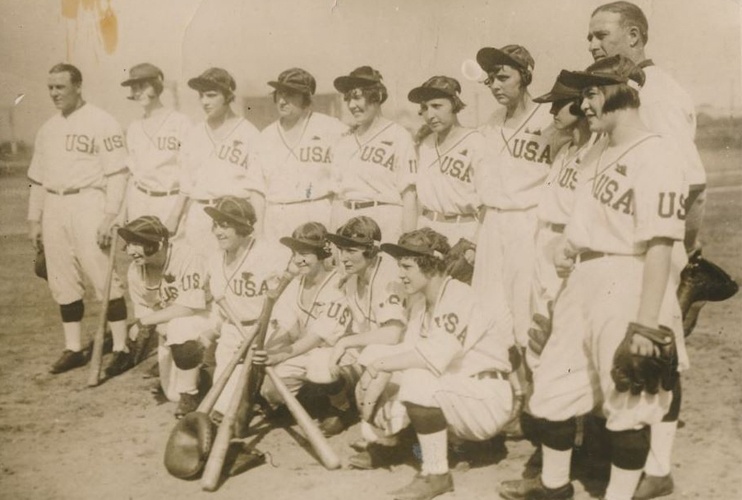
“Crack! The ball hits the bat. Smack! That ball hits Edith Houghton’s waiting glove at short who quickly throws to first to get the batter and all in a twinkling of an eye. These women play the game in a manner that would no doubt delight the heart of many a manager who ever saw them play.”
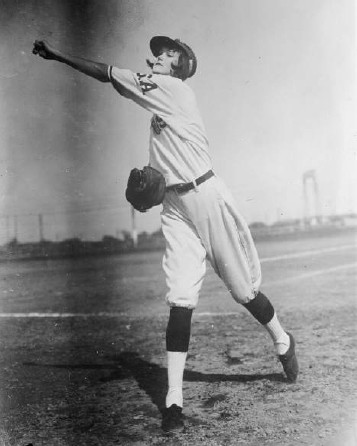
Leona Kearns of the 1925 Philadelphia Bobbies in Japan. (Library of Congress, Prints & Photographs Division, LC-DIG-ggbain-38869)
Writing about a baseball game between the Passaic Girls and the Lansdale Chryslermen, this unnamed reporter was shocked to see women play baseball with talent and dedication. “It was surprising to watch the brand of ball that these girls can play,” he continued. “They take their baseball in a serious way and all the jeering of the “wise guys’ who stand on the sidelines and do the looking on cannot daunt them.” Even the crowd’s “jeers soon turn to cheers when they see the girls in real action.” The reporter’s shock at the women’s quality of play was not a new phenomenon. Rather, it echoed hundreds of other local news reports about female baseball players written in sports pages during the early 1920s. Why so shocked? Did they not read each other’s work?
Perhaps it was a lack of public interest in women’s baseball that kept reporters from recognizing a growing trend? But that wasn’t the case. Even reports of large crowds and fervent fans did not stick in the minds of sports reporters. Approximately 1,500 fans showed up to the Lansdale, Pennsylvania, game, roughly 20 percent of the town’s population. Meanwhile, in Maple Shade, New Jersey, the largest crowd of the season came to watch the “famous invading lassies,” the Philadelphia Bobbies, play the local baseball club. In that game, shortstop Edith Houghton had five hits, including two doubles and a home run. By this time, the late 1920s, Houghton had been widely written about. She was a standout on the Philadelphia Bobbies team that toured Japan in 1925 and was so well-known that fans in small towns clamored to see her play. There was public interest. Still, in story after story, sports reporters seemed shocked to see women playing baseball at a high level.
Were they skeptical of other reporters’ assessment of good baseball? Some of the language was kind of over the top. In a Philadelphia Inquirer article, “The Quaker City Maids of the Diamond,” Gordon Mackey hailed the play of Edith Houghton and Edith Ruth. “Both members liked to play baseball and they COULD play the game—make no mistake on that score.” In a baseball barnstorming tour their play was legendary but, “like Alexanders in skirts or Hannibals in bloomers, they longed for other worlds to conquer after they had cleaned up most of the alleged sterner sex in duels of the diamond in 1925.” Houghton “could play shortstop in a way that would make Joe Boley toss his glove in the air and yell, “bravo,’” and Ruth was “the holder of the initial sack and how she can go after those quick throws and hug that base is nobody’s business.” Team play was also lauded with the same exaggerated language. “What an infield. They work with the rhythm and snappiness that is characteristic of any big-league team.” That over-the-top language—Hannibals in Bloomers and shouts of bravo!—made the players appear aberrant. There is almost a freakshow quality to the enthusiastic description.
Reporters’ continued surprise at women’s good play was most certainly related to the more common descriptions of women’s baseball which emphasized the players’ femininity.” For decades reporters introduced female players as “neat,” “attractive in their uniforms,” and as “spectacles.” They simply skipped over a discussion of their play and instead focused on their appearance, their “dainty hands,” and how it must have been hard for them to hold the glove. They marveled at their “feminine strength” and how hard it must have been to play against “professional strength.” They were used to writing about women who were, in their eyes, not very talented and unwilling to get dirty or to take the game seriously. A report about the Hollywood Bloomer girl team began, “A bevy of beauties from Hollywood, California took time out from powdering their noses and gave a picked team of the Coca Cola Greys the battle of their lives. … The ladies put up a good game but couldn’t stand up under the strain.” Even when their play was good and the individual talent exceptional, reporters were still likely to describe games as “an unusual tussle,” played by nine “fair maidens.” Most women had been described in these terms for decades. Just because they donned a baseball uniform did not mean that would change.
To reporters and to many men who played, managed, or promoted baseball, there was a set of expectations, standards for play, and a distinct language used to discuss the game and its male players. There were no such expectations or standards for women. As a result, women’s play was judged against that of men, making it difficult for them to be seen as talented players. So they were not. Because it was unfathomable to even think of women in actual baseball terms—a slugger, a hurler, or aggressive on the basepaths—a whole other language emerged to describe women’s baseball. Reporters sprinkled some baseball terms in among talk of their physical appearance—”The longlegged beauty on the third base bag sure can play the hot corner.”And because women were used to being described this way they did not resist. They just kept playing.
Women’s insistence on playing and the dilemma of reporters tasked with reporting on their games ultimately combined to establish a separate set of standards and expectations for female baseball players. And over time, two separate baseball spheres, one for men and one for women. From our twenty-first-century perspective, we could claim that these gender-specific standards worked against women who sought legitimacy as baseball players. It could be argued that creating separate baseball spheres took agency or control away from women. Nothing could be further from the truth.
Existing in separate spheres was not new to women. They lived, worked, and studied under a different set of standards than men. So it was likely no surprise to them that the same would happen within the game of baseball. As they had always done, though, women never stopped pushing against the boundaries forced upon them. They learned the game, played it, and from within their baseball sphere, they defined for themselves what baseball meant. They set their own standards and, most significantly, they defined baseball success in their own terms. As it was for men, winning games, playing well, and making money were all part of women’s definition of success, but that was only the beginning. Baseball was an opportunity, a new experience, and a location where women could excel in an endeavor previously off-limits to them. Playing the game provided women with a chance to see the country and ultimately the world. It allowed them to make their own money and to realize a sense of independence. To many players, success was found in the opportunities baseball afforded them and not only in the box score.
There are many examples to illustrate the ways in which women embraced their separate baseball sphere and used it to their benefit, but none is more engaging than the story of the Philadelphia Bobbies and their 1925 barnstorming tour of Japan. The Bobbies’ tour provides an opportunity to show how women not only embraced their separate baseball sphere but used it to challenge traditional definitions of baseball success and to define for themselves how and where they fit into the narrative of baseball. The tour shows how one set of baseball standards were used to plan, guide, and then judge the tour, and how another set, the ones defined and accepted by the women themselves, provide a completely different interpretation. One side saw the tour as an unmitigated disaster, while the other saw it as a great success.
Continue to read the full article on the SABR website
MLB fans are familiar with the MLBPA. Strikes, negotiations, and collective action are deeply etched into the history of American sports. However, in Korean professional baseball (KBO), player rights were long treated as a taboo. Players were stars, yet at the same time they were almost like property of the club. If they spoke up, consequences awaited them. But the cries of a few players eventually began to change history.
Dong-won Choi: The First Voice for Player Rights
In the 1984 Korean Series, Lotte Giants ace Dong-won Choi led the team to victory in four out of five games. He was the hero of Busan and a symbol of Korean baseball. Yet at the peak of his career, he began another fight, this time about rights. At that time, Korean players were treated like the property of the club. Salaries were unilaterally dictated. If they raised objections, release or trade awaited them. Injuries were to be borne solely by the players, and there were no mechanisms to guarantee life after retirement. Dong-won Choi pointed out that “players’ lives are treated too lightly” and pushed to establish a players’ association.
Dong-won Choi, regarded as a symbol of athlete rights in Korean sports
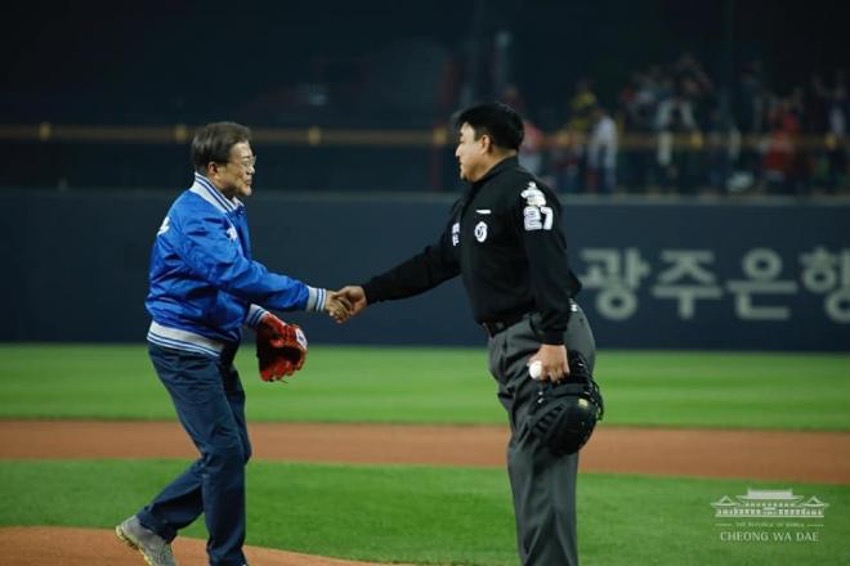
His demands were simple: abolish the salary cap and floor, introduce a player pension, and allow an agent system. Looking back now, they were completely reasonable proposals. But the clubs resisted, and the media denounced him: “How can a player earning hundreds of millions talk about unions?” Public opinion was cold. Choi was not alone. He sought legal counsel through acquaintances and also turned to Jae-in Moon, who was working as a labor lawyer in Busan at the time. Though he would later become President of South Korea, back then he was a young lawyer defending workers’ rights. This scene shows how unfamiliar and even dangerous the idea of “players are workers too” was in Korean society at the time.
President Jae-in Moon encouraging Soo-won Choi, the younger brother of the late Dong-won Choi and a professional umpire (2017)
However, without institutional support, the attempt could not last long. The price was harsh. He was traded overnight, from the symbol of Busan to Samsung. Everyone knew it was retaliatory, but there was no official explanation. Later he said, “Players are workers too. But I was too far ahead of my time.” His challenge ended in frustration, but it was the first voice ever raised in Korean baseball. Just as Curt Flood fought a lonely battle against the reserve clause in MLB, Dong-won Choi planted the seed in Korea.
The Players’ Association: From Frustration and Turmoil to Recognition
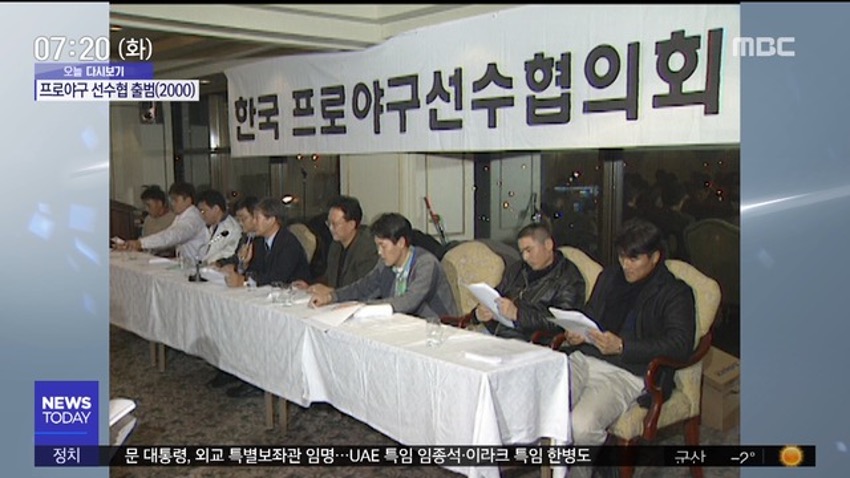
The seed planted by Choi did not die out. In the 1990s, Dong-yeol Sun and Sang-hoon Lee attempted to reestablish a players’ association. But faced with the wall of the clubs and the absence of legal structures, they ultimately failed. Still, traces remained, the growing recognition that “rights can be discussed.” In the winter of 1999, stars including Jun-hyuk Yang took the lead. The movement to form a players’ association led to the inaugural general meeting in early 2000, but due to lack of preparation and internal conflict, it fell into chaos. The KBO declared it would release as many as 75 players to stop the movement. The secretary-general at the time even said in an interview, “The league will function without those players.” But such pressure only backfired. Player rights were no longer an internal issue but a matter of public debate.
The second attempt, made after the 2000 season, was different. They emphasized procedure and strengthened internal representation. The first president was Jin-woo Song, a veteran pitcher from Hanwha. He is the all-time wins leader in Korean professional baseball. The fact that such a legend stood at the forefront showed that the players’ association was no longer just a minority voice but an institution representing the entire league. With the support of civil society and public opinion, the players’ association was finally recognized by the KBO in January 2001.
January 22, 2000, Launch of the Professional Baseball Players Association
But recognition did not mean stability. Core players such as Jun-hyuk Yang, Hae-young Ma, Jung-soo Shim, and Ik-sung Choi had to endure retaliatory trades and disadvantages. The history of player rights in Korean baseball is one of institutional recognition accompanied by simultaneous suppression. In 2009, six players from Hyundai Unicorns were declared free agents for participating in players’ association activities. This time, even players who had not been involved in the association sent letters of protest to media outlets. “This is too much.” The issue of rights grew from the concern of a few to that of the entire community.
This scene overlaps with MLB history. In the 1960s and 1970s, when Marvin Miller led the MLBPA as its first full-time executive director, it was the same. His leadership earned the trust of the players, and through strikes and negotiations he secured collective bargaining rights. The moment Jin-woo Song became the face of the Korean players’ association resembles the moment in the United States when Miller brought the MLBPA into the institutional mainstream.
Player Protection: Voices Rise Again
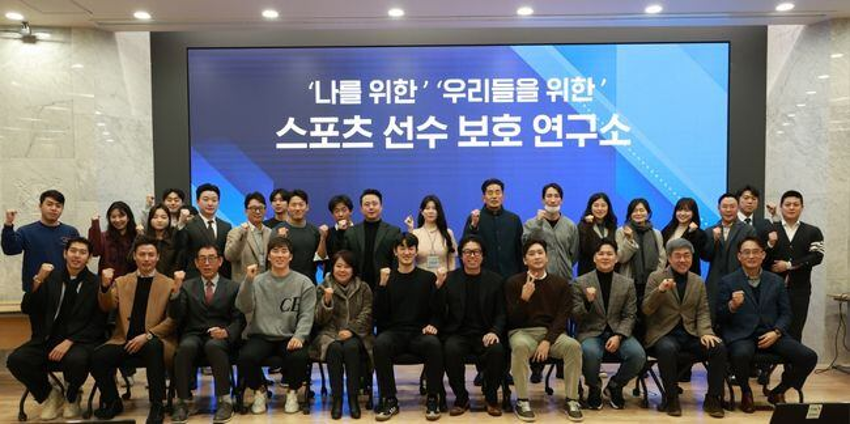
Ik-sung Choi was one of the players who stood at the very front during the establishment of the players’ association. But the cost was severe. Due to a retaliatory trade, he had to leave his team overnight. Though he continued playing through frustration, he eventually retired. Many players, bearing similar wounds, chose silence, but he kept speaking. Even after retirement, he did not stop. He founded the Sports Athlete Protection Research Institute and in 2024 held Korea’s first-ever Player Protection Forum. Active players like Kyung-min Heo of Doosan and Young-pyo Ko of KT stood on stage alongside retired players such as Soo-chang Shim and Dae-eun Lee. It was also symbolic that the players’ association and the retired players’ association participated together. In the past, such a coalition would have been unthinkable.
The First Sports Player Protection Forum in Korea (2024)
At the forum, topics such as injury compensation, post-retirement life, and the power imbalance between clubs and players were openly discussed. These were once conversations reserved for barrooms, but now they were addressed in institutional language before the media and the fans. MLB fans would find this scene familiar as well. When Curt Flood fought against the reserve clause, he was completely isolated. But his sacrifice became the starting point for major league free agency, and Marvin Miller institutionalized it through the MLBPA. The way Ik-sung Choi expanded his personal wounds into intergenerational and collective solidarity through the forum after retirement mirrors that very process.
And he did not stop. Through the institute he established, he also joined hands with the Korean Professional Football Players Association, expanding solidarity beyond baseball to other sports.
The Message Left for Korean Baseball
The protection of player rights in Korean baseball started late and has followed a difficult path. The challenge of Dong-won Choi against club abuse of power, the collective strength that brought the players’ association into the institutional sphere, and the return of Ik-sung Choi who organized Korea’s first Player Protection Forum, all these steps have formed today’s movement.
Yet even now in Korea, players are often seen not as “workers” but as “independent contractors.” Criticism persists over whether well-paid stars have the right to speak of rights. But the essence of rights is not about income level. The right to be respected in the workplace and to safeguard one’s body and future safely is not determined by salary scale.
The message of Korean baseball is clear: players are workers and human beings deserving of respect. Rights do not emerge on their own. They take root only through sacrifice, solidarity, and the empathy of society. The journey for rights in Korean baseball continues to this day.
Every Tuesday morning we will post an article from SABR’s award-winning books Nichibei Yakyu: Volumes I and II. Each will present a different chapter in the long history of US-Japan baseball relations. This week Ralph Pearce discusses the Japanese American San Jose Asahi’s 1925 tour of Japan and Korea.
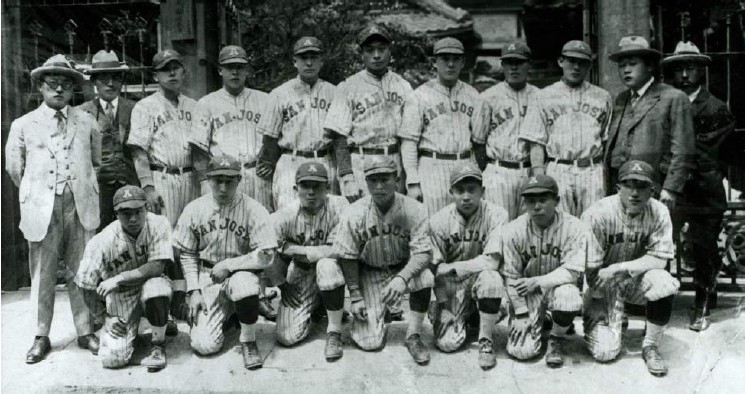
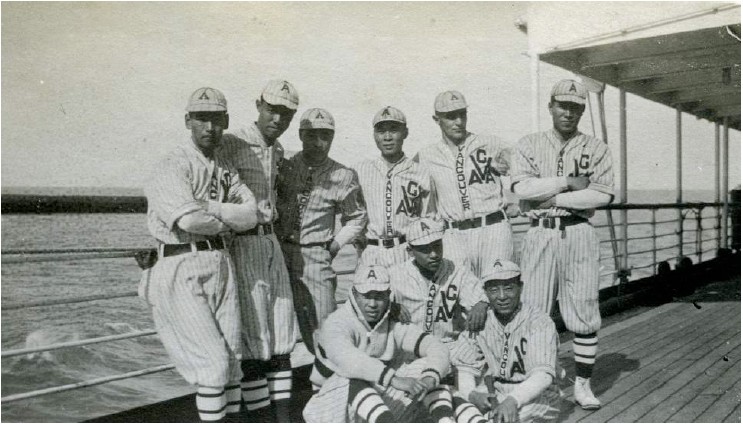
The San Jose Asahi Baseball Club was one of a number of Japanese teams to organize in Northern California between 1903 and 1915. Other cities to organize early teams included San Francisco, Oakland, Alameda, and Florin. The name Asahi means Morning Sun in Japanese and was a popular team name. San Jose’s first Asahi team was made up of Issei (first-generation immigrants) players and lasted only a few years. In 1918 one of the former Issei players encouraged a young Nisei (second-generation) fellow, Jiggs Yamada, to reconstitute the team with Nisei players. Jiggs, a catcher, enlisted the assistance of 15-year-old pitcher Russell Hinaga, and the two soon put a team together.
Unlike the Issei players, these young Nisei players were bom in the United States and had attended English-language schools with a largely Caucasian enrollment. Because of this, both a generational and cultural gap existed between the Issei and Nisei. Through the shared love of baseball, Nisei teams like the San Jose Asahi helped bridge this divide. In the early 1920s, a sympathetic newspaper columnist in San Jose, Jack Graham, encouraged the Asahi to extend that bridge by participating in games outside the Japanese leagues. This participation drew the larger San Jose community to the Asahi Diamond in Japantown, and there Caucasians began to mingle with Japanese Americans, helping to establish familiarity and friendship.
Another bridge in the making was the growing baseball friendship between the United States and Japan. Japan’s enthusiasm for the game had been spreading since its introduction in the 1870s. The tradition of international baseball exchanges began with Waseda University’s 1905 tour of the American West Coast and continues to this day. This friendship through the two nations’ shared love of baseball helped foster cultural appreciation and understanding.
San Jose’s opportunity to visit Japan came in 1925 at the invitation of Meiji University, whose baseball club had toured the United States the year before. The timing couldn’t have been better for the Asahi; several of the players—Jiggs Yamada, Morio “Duke” Sera, Fred Koba, and Earl Tanbara—were anticipating retirement from the team. It was agreed that they would stay with the Asahi until their return from Japan.
It is believed that Meiji University provided some funds for tour expenses, though much of the burden was on the team and its Issei supporters. The first obstacle was the cost of transporting 17 passengers to and from Japan. Jiggs Yamada explained how this was accomplished:
Well first, we had to get some way to go to Japan. A boat was the only thing we could get. We happened to have a boy, Earl Tanbara. … Tanbara’s folks, mother and father, worked for the Dollar Steamship Company family in Piedmont. So when he graduated high school, we had his father talk to Mr. Dollar and ask him if he could do us a favor. He said, “Sure, as soon as Earl [goes] to Cal [Berkeley] and graduated, he’s got to work for me at the steamship company.” They were going to open up an agent in India. So he said, “Sure, if he promises to do that, I can have him going on our boat to Japan.” .. .So that’s how we got to go to Japan on a boat. People figured it was funny how we got to go to Japan . because at that time the steamship boat was expensive.
A few days before departure, Asahi supporter Seijiro Horio gave $800 to Nobukichi Ishikawa, the team’s treasurer. This appears to have been the primary funding source for the team’s trip.
Jack Graham publicized the coming tour to Japan in a number of articles. On March 18, 1925, the day before the team departed, he wrote: “There will be a big delegation of fans in attendance and a bumper crowd of Japanese fans will be on hand to see their favorite sons in their final game in this city. The Asahi team will sail on Saturday for Japan, where they will play a series of games in the flowery kingdom. On their return, they will stop in the Hawaiian Islands, where they will play seven or more games. It will be the latter part of June before they return. The Asahi team has made many friends in this city by their gentlemanly manner in playing the national game, and whenever they stage a game here there is always sure to be a big turn-out.”
The next day, Graham ran a column praising the Asahi and encouraging local pride in the team as representatives of San Jose. A large photograph of the team ran at the top of the sports section, remarkable in that images of local teams rarely appeared in either American or Japanese American papers at the time. The caption read in part: “The Japanese Asahi baseball team will leave San Jose on the first leg of its joumey to the land of cherry blossoms this morning, when it takes the train to San Francisco where it will stay until Saturday, when it will embark on the President Cleveland for Japan.”
The team members making the trip to Japan were pitchers Jimmy Araki and Russell Hinaga; catchers Ed Higashi and Jiggs Yamada; first baseman Harry Hashimoto; second baseman Tom Sakamoto; third baseman Morio “Duke” Sera; shortstop Fred Koba; third baseman-outfielder Sai “Cy” Towata; outfielders Frank Takeshita, Frank Ito, and Earl Tanbara; and utility players Jitney Nishida and Jimmie Yoshida. While the team was in Japan, the strong Asahi “B” team continued to play in San Jose against teams of its caliber. Asahi Diamond was also made available for use by other local teams and management of the diamond was temporarily turned over to locals Happy Luke Williams and Chet Maher.
The Asahi, along with the trip’s manager, Kichitaro Okagaki, and its treasurer, Nobukichi Ishikawa, left San Francisco on March 21, 1925, and a little over two weeks later they arrived in Japan, giving them about a week to recover before their first game. When the team arrived in Japan, Earl Tanbara purchased two Mizuno baseball scorebooks. Earl kept meticulous track of each game, including dates, locations, and the names of all the players.
The Asahi played their first game on Thursday, April 9, against their hosts Meiji University. They lost 8-2 with Araki going the distance on the Meiji grounds. The Asahi played their second game on Saturday, April 11, against Waseda University. They were playing better now, though they lost in a 12-9 slugfest. Russ Hinaga and Jimmy Araki shared the pitching chores, Frank Ito got a double, Harry Hashimoto had a triple, and Cy Towata and Earl Tanbara hit home runs. Each side recorded only one error.
The Asahi played their third game two days later with a rematch against their hosts, Meiji University. Jimmy Araki again pitched the entire game with Ed Higashi doing the catching. Araki was knocked around for a 9-4 loss, despite a batch of errors by Meiji. Next up—the very next day—was Keio University, another tough team. If the Asahi were ready for a win, it would have to wait for another day. Araki and Hinaga pitched the team to a 20-4 shellacking, the Asahi racking up seven errors along the way.
Two days later, on April 16, the Asahi faced Tokyo Imperial University. Once again Araki and Hinaga teamed up. The team was sharper that day, making only one error. Harry Hashimoto hit two doubles, chalking up a run. That was the Asahi’s only run, though, to six for Tokyo and their fifth loss in five games. The Asahi played for the love of the game, but they were serious competitors and this situation was not acceptable. Jiggs Yamada explained the problem and the remedy:
We didn’t play so good because our legs were shaking and all that and the ball was different. It was a regular size American ball, but the cowhide, it slips. The pitcher couldn’t play, pitch curves or anything and the players themselves couldn’t throw the bases, so we couldn’t play good. So finally we told the manager [Okagaki] of our team “Get us some American balls.” So they sent us a one dozen box of American balls, then we started to play different. Then we started to play our regular play.
Teammate Duke Sera confirmed the situation, saying that after leaving Tokyo, the manager saw to it that future Japanese teams could use their own baseballs when they were in the field, and that the Asahi players would use American balls when they were in the field.
On April 18, the Asahi played yet another strong university nine. This time it was against Hosei. Jimmy Araki took to the mound for the Asahi and despite several errors, the team finally got its first win. The Asahi won 7-4 and scored all their runs in the first three innings, thanks in part to a home run by Araki himself. The team followed up a week later with a 25-5 victory over Sendai, with Hinaga pitching and Araki sharing left field with Tanbara. The Asahi suffered another loss on May 1, against Takarazuka before beginning a 13-game winning streak.
The Asahi had played their first six games in Tokyo against strong university teams before venturing north to Sendai. From Sendai, they headed south about 500 miles to Osaka. They played three games in the Osaka area and one game in nearby Kyoto. In the game against Kyoto Imperial University, Tom Sakamoto hit a dramatic “Sayonara Home Run” or walk-off home run in the 10th inning to win 3-2.
From Osaka, the team headed south to Hiroshima for two games. As they traveled the country by train, they continued to accumulate wins and, more importantly, became acquainted with the land of their parents.
One of the players, Duke Sera, had been bom in Hawaii, and then raised by his uncle in Hiroshima. His uncle had sent him to Stanford University to complete his education. When the team visited Hiroshima, Duke’s uncle held a reception for the team. According to Yamada, when the uncle met Duke and the team he quipped, “What the hell are you doing with this bunch here? You’re supposed to be studying!”
After the final game in Hiroshima on May 12, the Asahi traveled 400 miles back to Tokyo. It was the team’s original intention to return to the United States sometime in June. Whatever plans they may have had, however, were altered upon their return to Tokyo (except for Duke Sera, who had to return to his studies at Stanford). Jiggs shared the change of plans:
Continue to read the full article on the SABR website
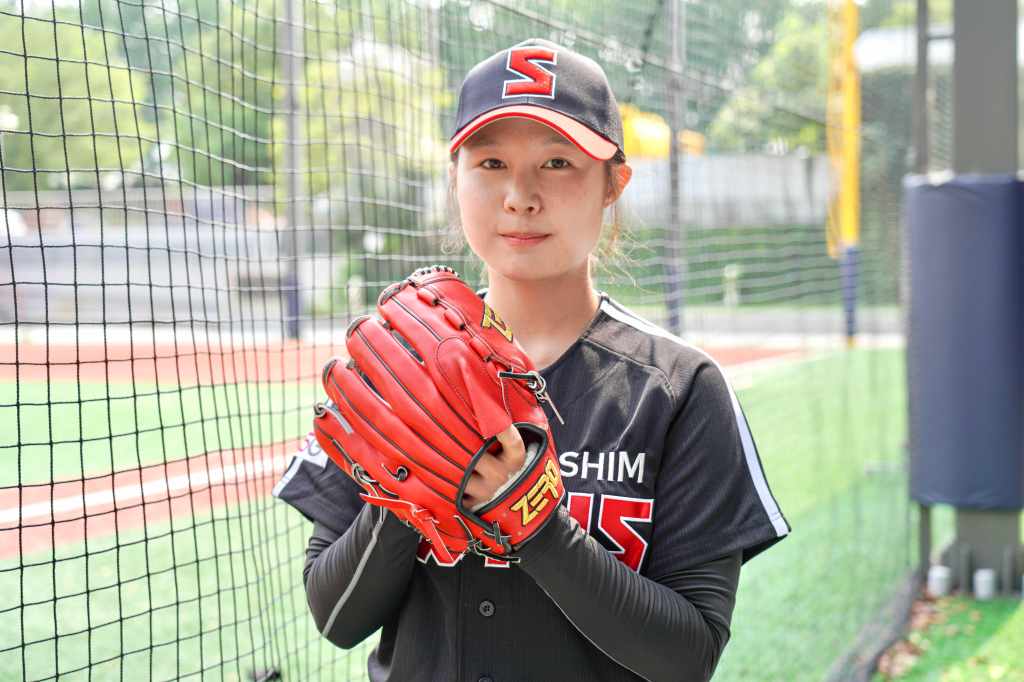
SABR’s Asian Baseball Committee is excited to host former Korean Women’s National Baseball Team pitcher Hyeonjeong Shim for a Zoom chat on November 21, 2025, at 9pm EST. The program will begin with a short presentation and a live interview hosted by Zac Petrillo, followed by a Q&A session with viewers. You must sign up below to attend.
Hyeonjeong Shim is a former pitcher for the Korea Women’s National Baseball Team (2022) and has appeared on YouTube’s Pro Neighborhood Baseball (PDB) as well as in multiple media interviews. She is currently a Public Relations Intern at the Korea Anti-Doping Agency and a student at Kyung Hee University, majoring in Physical Education and Cultural Entertainment. She was also a member of the winning team at the 2023 KSPO Olympic Academy.
Hyeonjeong Shim will talk about her journey/experience in women’s baseball in Korea, some background/history of women in baseball, her experiences on the national team, how she interfaces with the KBO, and what she is working on today/plans to do in the future.
Asian Baseball Committee Meeting
When: Nov 21, 2025 09:00 PM Eastern Time (US and Canada)
Every Tuesday morning we will post an article from SABR’s award-winning books Nichibei Yakyu: Volumes I and II. Each will present a different chapter in the long history of US-Japan baseball relations. This week Bill Staples, Jr. tell us about one of the most important Japanese American baseball players–Kenichi Zenimura and three of the tours he organized.
Few baseball fans know the story of early twentieth-century Nikkei (Japanese American) baseball. Despite this lack of awareness, the Nikkei impact is still visible in today’s game. It’s subtle, though, visible only to the well-informed. The legacy is not a retired uniform number displayed inside a major-league ballpark, but the names on the back of the uniforms. In 2022 those names are Akiyama, Darvish, Kikuchi, Maeda, Ohtani, Sawamura, and Suzuki—and in 2025, it will almost certainly include Ichiro on a plaque in the National Baseball Hall of Fame.
The national pastime has unofficially become the international pastime, and this is the enduring legacy of Nikkei baseball and the work of pioneers like Kenichi Zenimura (1900-1968).
During the years 1923 to 1930, no major-league team barnstormed in Japan. The highest-caliber competition from the United States during this time came in the form of Nikkei and Negro League teams like Zenimura’s Fresno Athletic Club (FAC) and the Philadelphia Royal Giants. During this major-league void, Nikkei and Negro Leaguers helped elevate the level of play in Japan and set the stage for the 1931 and 1934 tour of stars like Lou Gehrig and Babe Ruth, and the start of the professional Japanese Baseball League in 1936.
In 1962 Zenimura was crowned the “Dean of Nisei Baseball” by veteran Fresno Bee sports reporter Tom Meehan. Shortly after Zeni’s death in 1968, the same sentiment was echoed by Bee reporter Ed Orman. Approximately 25 years later, baseball historian Kerry Yo Nakagawa refined that tribute for a new audience, calling Zenimura “The Father of Japanese American Baseball.” Nakagawa and others believe that Zeni deserves this title for his unparalleled career and collective impact as a player, manager, and global ambassador.
PREWAR GOODWILL AMBASSADOR
Between 1905 and 1940, roughly one out of four (26.5 percent) tours across the Pacific featured a Nikkei team visiting Japan. When examining the tours between 1923 and 1940, Zenimura’s impressive impact becomes apparent. Of the 53 tours during this period, Zenimura was involved, to some degree, with 17 (32 percent) of those efforts. When he himself was not traveling, Zeni supported or influenced 14 different tours by other Nikkei teams, visiting Japanese ballclubs, Negro League teams, and major-league all-stars.
The following is an in-depth look at Zenimura’s three major tours—1924, 1927, and 1937—in which he participated directly, allowing him to shine in his homeland of Japan.
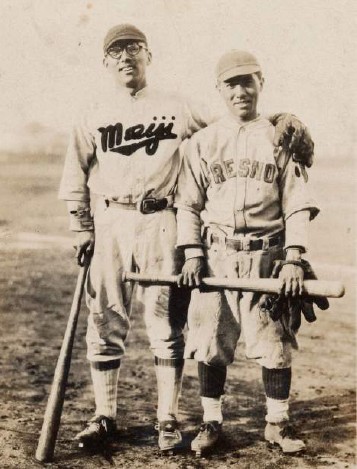
Kenichi Zenimura (right) with his cousin Tasumi Zenimura (left) in 1928.
THE 1924 TOUR
The seeds for Zenimura’s 1924 tour were planted on Independence Day in 1923 when the Fresno Athletic Club battled the Seattle Asahi for the National Nikkei Baseball Championship. The Asahi had earned the respect of the baseball world by winning the majority of their games during tours to Japan between 1915 and 1923. In a best-of-three series, the FAC defeated the Asahi to become the undisputed Nikkei baseball champions. With the victory, Fresno also won the right to tour Japan the following year.
In preparation for the tour, the FAC scheduled games against high-caliber competition, including the Pacific Coast League Salt Lake City Bees, who conducted spring training in Fresno. In a three-game series, the FAC surprised the Bees with a 6-4 victory in game one, marking the first time a Nikkei team defeated a PCL ballclub. The series also marked the presence of Frank “Lefty” O’Doul. Newly signed from San Francisco, O’Doul did not compete in the loss, but his powerful bat helped the Bees take games 2 and 3.
More important than O’Doul’s on-field performance was the historical significance of his involvement. The gregarious southpaw would later be enshrined in the Japanese Baseball Hall of Fame for his life’s work as a celebrated ambassador of US-Japan baseball relations. Most likely, this 1924 encounter marks O’Doul’s first interaction with ballplayers of Japanese ancestry.
On September 2, 1924, the FAC boarded the SS President Pierce for Japan.Six weeks later they stepped inside Koshien Stadium to play their first opponent, Daimai. The FAC recorded a shutout 5-0 victory behind the arm of Kenso “The Boy Wonder” Nushida. Fresno pitchers did not allow a run until their third game, on October 14, a 4-3 loss in a rematch with Daimai.
During their 46-day stay in Japan (October 11 to November 26), the Fresno team traveled approximately 1,300 miles (about 2,100 kilometers), covering nine cities—starting in Osaka, with stops in smaller locales between Hiroshima, Tokyo, and Yokohama. They played 27 games, finishing with a 20-7 record and an overall .741 winning percentage.
After watching the Fresno captain compete on the field, a reporter with the Japan Times wrote, “Zenimura is one of the smartest and most colorful players the writer had ever seen. He was the terror of the diamond, a man who played every position in baseball. He was tricky, shrewd and positive poison to every opponent.”
In Tokyo, Zeni penned his thoughts on the Japan tour experience in a letter to the Fresno Morning Republican, which was published on December 5. It read:
Tokyo, Japan November 16, 1924
Mr. T.P. Spink Sports Editor, The Republican.
Dear Sir: –
The Fresno team is doing a [sic] good work in Japan and so far our record stands 18 victories and 5 lost. In today’s game we played against Keio and defeated them by the score of 8-to-4. We gave the last four runs in the last of the ninth after two men gone.
In Japan it doesn’t pay to win a game in a far margin. If we do then there won’t be any crowd coming to the next game, saying that we are too strong for this Japan team and so on. We had many examples in Osaka.
Beat Diamonds
One day we played against the pro team of Osaka which is known as Diamonds and in our first game we defeated them by a score of ll-2. In this game quite a many fans [sic] came to see the outcome but on the following day with the same teams there was hardly any people in the stand[s]. For this reason, it is hard for the visiting team to play a game in Japan.
Another thing disadvantaging us is the way these Tokyo umpires calls [sic] on decisions against us. … I can’t figure the way these umpires make a bad decision when ever the play is close. We had enough of the raw decisions in Tokyo, but what can we do in Japan!!!
Meet Champions
Tomorrow we are playing against Waseda, the intercollegiate champions of Japan. We hope to beat them badly and by the time this letter reaches you, you will be able to get the result.
On the way to the States I am figuring of stopping over to Honolulu and spend my Christmas and New Year’s there. About five of the players are going to do the same and eleven of the remaining players will be in Fresno by 13th of December 1924.
As soon as the team reaches to Fresno we would like to play a three game series with the Fresno Tigers.
Yours truly,
K. ZENIMURA (Captain).
The Waseda contest mentioned in the letter resulted in a 3-2 loss for Fresno. FAC lost the game, but won the respect of the opposing manager, Chujun Tobita. He praised the visiting team’s baseball skills, saying they were “amazing” in their demonstration of technique and power.
Continue to read the full article on the SABR website
Every Tuesday morning we will post an article from SABR’s award-winning books Nichibei Yakyu: Volumes I and II. Each will present a different chapter in the long history of US-Japan baseball relations. This week Adam Berenbak tells us about the 1922 MLB tour led by Herb Hunter.
THE PLOT
The Polo Grounds. New York’s National League champs were on the verge of beating the mighty Yankees for the second year in a row. The 1922 World Series was once again a series in one park, as each game for the past two years had found a home at Coogan’s Bluff. As the triumph neared, Herbert Hunter, a former Giant attending the game, received a cablegram inviting him and the stars of the Series on a tour of Japan. Eager to capitalize on this moment, he recruited several Yanks and Giants, including the dashing George Kelly, to make the trip across the Pacific. Little did they know that they had just been swept up in an international plot to corrupt baseball, a plot not too distant from the Black Sox conspiracy that had nearly ruined faith in the great game.
Luckily for the history of the sport, this was not the truth of the 1922 tour of Japan, nor a plot in any sense other than fictional. The United Pictures Company had assembled a team of actors, both American and Japanese, as well as a loose script about an international conspiracy plot, to travel with the group of major-league all-stars, assembled by Hunter, during their trip overseas.Known officially as the All-American Baseball Team but often called the Herb Hunter All-Stars, they sailed across the Pacific after the 1922 season to face college and club teams that represented the height of Japanese talent. In addition to the professional actors, the American and Japanese ballplayers portrayed themselves in the film, participating in the unique experience of acting on two stages at once—in front of the crowds that gathered in Japanese ballparks as well as future crowds in theaters. It might be said that somewhere between fact and fiction lies the truth, and while the tour did not produce the kind of melodrama filmgoers would be eager to view, the games generated their own drama and myths, straddling that line between fact and fiction in the legacy of international baseball.
VANCOUVER
The Canadian Pacific Railway train number 1 arrived in British Columbia on October 17, 1922, carrying with it the team of major leaguers set to sail for Japan and begin a tour of baseball diplomacy. On the 19th the Vancouver weather held and the touring pros, led by Herb Hunter, opened their trip with a 16-1 walloping of Ernie Paepke’s local squad, providing a thrill to a crowd that had little access to major-league ball as well as a proper warm-up prior to the long boat ride to Japan. During the game, George Kelly, Irish Meusel, Joe Bush, and Fred Hofmann all saw playing time. Because all four had participated in the recent World Series, this technically broke the rules against Series stars barnstorming together. However, due to the pickup nature of the game, neither the press nor the players, and especially not the fans, seemed to care. The team boarded the Empress of Canada for Honolulu immediately after the game.
Once aboard and on their way, the team received a telegram from Judge Kenesaw Mountain Landis, hired as commissioner two years prior to clean up the game wrecked by what has become known as the Black Sox Scandal. Reports had reached Landis that the barnstorming rules he guarded with such ferocity had been broken. Just the year before, he had chastised, suspended, and fined Babe Ruth for similar barnstorming infractions. He was furious, especially after only reluctantly giving Hunter permission for the tour. The tourists communicated with home via Bob Brown, sponsor of the Vancouver game, to whom they messaged a wireless reply to Judge Landis’s barnstorming complaint. Brown in turn sent an explanation over the wire assuring Landis that there was no intentional rule-breaking and that the entire experience fostered nothing but goodwill and economic possibilities in the Northwest. What went unmentioned in the press was that the game was not on the printed schedule, and it was probably the unscheduled barnstorming that added to Landis’s ire. Landis made no reply but was reported sleepless over the incident. His objections to barnstorming, along with his reported racial prejudice, combined with the events of the 1922 tour to shape the relationship between US and Japanese baseball for the next decade.
Tour organizer Herbert Harrison Hunter had been a professional ballplayer since 1914, and signed with John McGraw’s Giants in 1915. Though he had been touted as a sure-bet prospect, Hunter was never able to fulfill those promises in New York or anywhere else in the big leagues. He had first made his way to Japan as part of the 1920 Gene Doyle tour that featured primarily Pacific Coast League players. An eccentric among eccentrics, and more of an entertainer on baseball’s stage, Hunter was always a dandy (to McGraw’s consternation and confusion), and enjoyed sticking out, wearing “a fresh chrysanthemum every day” and touring the nightlife of Tokyo as a celebrity. During the 1920 tour, Hunter began coaching the Waseda University nine. He seemed to enjoy the way the students looked up to him; he treated them to elaborate dinners and allowed them to worship him.
Herb Hunter
He found work back in the States in 1921, playing the majority of the year in the South Atlantic League before an end-of-season call-up to the St. Louis Cardinals. In the fall Branch Rickey released him in support of his endeavors in Japan. Though Hunter, bom in Boston on Christmas Day 1895, had played in only 39 games over four seasons with the Giants, Red Sox, Cardinals, and Cubs, his major-league experience, however brief, was highly valued in Japan. In the winter of 1921 and into early 1922, Hunter returned to Japan to coach both Waseda and Keio Universities and developed a friendship with the “father of Japanese baseball,” Isoo Abe.
With Abe’s help, a sponsorship by Mariya Sporting Goods, and the backing of the Mainichi Shimbun newspaper company, Hunter sought to arrange for a group of major leaguers, including Babe Ruth, to tour Japan after the end of the 1922 season.
Having witnessed the unrealized potential of the 1920 Doyle tour, as well as the value in the promise of Ruth, he knew the revenue was there. And it wouldn’t hurt to align himself with Ruth, the most popular player in the world, to achieve his financial and celebrity ambitions. After spending the whole winter in Japan, he sailed back in February of 1922 with a mission to build a roster, armed with a guarantee of $50,000, though it would be only to cover expenses. Hunter envisioned this as the first of what would be annual tours, with him at the center, his mission to promote himself as much as to establish regular international competition with a real “world series.”
Although Hunter had also worked with Keio as well as other teams that would eventually form the Big Six University system, it was his relationship with the Waseda team that played the biggest role in getting the first real major-league tour of Japan under way. Waseda was eager to become the dominant team in Japan as well as the foremost ambassador of the Japanese game. Between the beginning of 1920 and the All-Stars’ visit in the fall of 1922, the team had faced US competition seven times on both sides of the Pacific. Instrumental in their drive were Abe, who had founded the Waseda team and had led the first-ever transcontinental tour when his team traveled the US West Coast in 1905, and Chujun Tobita, a man on a mission. Tobita had played with the Waseda nine back in 1910 when the University of Chicago had beaten them soundly, and the loss inspired the second baseman. Now the manager of Waseda, he drove the team with his famous “death training,” developed to hone the skills and spirit of the young players. Success, in part, meant beating Chicago, and “[i]f the players do not try so hard as to vomit blood in practice, then they cannot hope to win games.”
With Waseda’s support, the backing of the Mainichi Shimbun, a tentative agreement from both American League President Ban Johnson and Landis that goodwill tours would benefit the game (as long as its participants conducted themselves as diplomats and nobody got injured), and even the support of President Warren Harding, who noted the tour’s “real diplomatic value,” Hunter assembled an all-star squad for the 1922 tour.
But first a roster would need to be constructed. Rogers Hornsby, Harry Heilmann, and Frank Frisch topped Hunter’s list, but all of his backers in Japan were especially pining for home-run hitters Babe Ruth and George “High Pockets” Kelly. Near the height of his fame, Ruth was a draw everywhere he went, and Japanese fans reportedly clamored for a chance to see him in person—something that didn’t happen for another 12 years. Ruth proved to be unattainable, and most of the others declined for various reasons—even an invitation to Art Nehf that was initially accepted fell through when John McGraw requested that he stay stateside.
In the end, Hunter secured the 1921 National League home run king George Kelly and put together a team featuring members of the 1922 World Series competitors. Included with Kelly were fellow Giants Casey Stengel and Irish Meusel, along with Waite Hoyt, Fred Hofmann, and Joe Bush from the Yankees. Also on the team were future Hall of Famer Herb Pennock, Amos Strunk, Brooklyn outfielder Bert Griffith, Luke Sewell, Riggs Stevenson, and Bibb Falk. Rounding out the group was John “Doc” Lavan, Hunter’s ex-teammate on the Cardinals. The agreement with Landis included a clause that the players would receive no 1923 contract until they reported to spring training in good health after returning from the tour. New York Sun sportswriter Frank O’Neill joined as an organizer as well as reporter, along with George Moriarty, who was along as much to be the eyes and ears of Landis as umpire. It may have been Moriarty who had reported the barnstorming infraction, but nonetheless his role seemed to be keeping an eye on the proclivities of some of those players prone to take a drink outside the confines of Prohibition. Some of the organizers’ and players’ wives accompanied the team, a request made in light of the 1920 tour’s unruly behavior.
After arriving in Yokohama on the last day of October, the Americans checked into the Tokyo Imperial Hotel. The hotel was one of the few structures to survive the great earthquake that struck Japan in September of the following year. That disaster, known as the Great Kanto Earthquake, devastated Tokyo and led to fires and tsunamis that killed more than 100,000 people.
Japan’s fortunes had fluctuated since the end of the Meiji period, a decade prior to Hunter’s tour. The silk market, and the stock market along with it, had crashed in 1920, and the country’s place on the world stage was precarious. Tension between the United States and Japan was high as arguments were about to begin in front of the US Supreme Court regarding barring immigrants of Asian descent from becoming naturalized American citizens.28 The importance of the diplomatic aspect of baseball tours grew as these tensions grew, and the 1922 tour proved how successful the tours could be. This diplomatic endeavor was showcased on the baseball diamond at the Shibaura Grounds in Tokyo’s Minato ward.
Continue to read the full article on the SABR website
The Clyde Sukeforth Chapter (ME/NH) in conjunction with the Gardner-Waterman Chapter (VT) offers a special presentation with SABR Member Rob Fitts in a Zoom Meeting on Wednesday, November 5, 2025 at 7 PM Eastern, 4 PM Pacific. All baseball fans are welcome!
Fitts will talk about his new book and provide an introduction to Japanese baseball.
In the Japanese Ballpark: Behind the Scenes of Nippon Professional Baseball
This book takes you deep inside the heart of Japan’s national pastime—far beyond the box scores and highlight reels. To discover what truly sets Japanese baseball apart, author Robert Fitts went straight to the source: the players, managers, umpires, team owners, mascots, beer girls, and lifelong fans who live and breathe the sport. Through their personal stories and behind-the-scenes insights, you’ll get an insider’s look at how the game works, and what makes Japanese baseball unique—and so much fun. Get a front-row seat to the traditions, strategies, and spirit that define baseball in Japan. From the passion of the fans to the precision of the game, every page offers eye-opening stories and insights you won’t find anywhere else. Whether you’re a die-hard fan or just discovering the magic of the Japanese game, In the Japanese Ballpark can help you fully experience every pitch, hit, and cheer.
Robert Fitts has published eleven books and numerous articles on the history of baseball in Japan and Japanese baseball cards. He received his Ph.D. in historical archaeology from Brown University and ran excavations in New York City before turning to baseball history. He is the founder and chair of the Society of American Baseball Research’s Asian Baseball Committee and recently received the society’s Chadwick Award for lifetime contributions to baseball history. He currently is a curatorial consultant for the Yakyu-Baseball exhibit at the National Baseball Hall of Fame in Cooperstown.
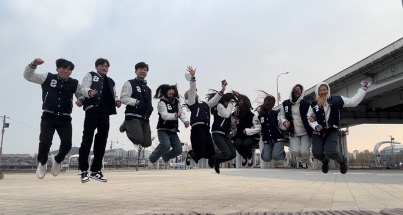
It’s been over 40 years since professional baseball took root in Korea. It’s now gone beyond being just a sport and has deeply permeated Korean daily life and culture. Traces of baseball can be found not only in the cheers and songs at the stadium but also in everyday scenes outside the ballpark. One such example is the sight of students on university campuses wearing matching jackets as a group. This jacket, called the “gwajam,” actually originated from the “baseball jacket,” and today it has become the uniform of youth. More than just a fashion item, this jacket has found its place in Korean society. But how did it get there?
A Tradition Born with the Harvard Baseball Team
The roots of the baseball jacket trace back to 19th-century American college baseball traditions. At the time, Harvard’s baseball team awarded its starting players sweaters embroidered with the school’s initials. These were known as letterman sweaters. They weren’t just for warmth, they were symbols of honor, proof of one’s baseball skill and achievement.
Over time, the tradition evolved into a more practical jacket: wool for the body, providing warmth, and leather for the sleeves, offering durability against friction and wind. This combination was perfect for athletes braving cold weather on the field. At the same time, the two-tone design of wool and leather created a bold look that expressed school colors and identity. With its blend of function and symbolism, the “varsity jacket” became an iconic symbol of American college sports.
Early Harvard baseball team in the 19th century
The Birth of the “Baseball Jacket” in Korea
This jacket entered Korea in the 1980s, coinciding with the launch of professional baseball. The two-tone design of wool body and leather sleeves resembled the thick warm-up jackets worn by players in the dugouts. In fact, players from the MBC Blue Dragons, one of the founding teams, were often seen wearing such jackets with their blue uniforms. This became a familiar sight to fans.
When combined with the popular image from American dramas and movies, “baseball teams wear varsity jackets,” Koreans naturally began calling this unfamiliar jacket yagujamba (baseball jacket). Unlike its difficult English name, the simple and catchy Korean nickname stuck instantly with the public.
By the late 1990s, university sports teams and clubs began adopting baseball jackets as group uniforms. It’s said that Seoul National University’s rugby team was the first to make them, which is often cited as the origin of the Korean-style gwajam (short for “gwahak jamba,” or “department jacket”).The trend soon spread to academic departments, and the naming system took hold: school/department name on the front, and name/student ID/graduation year on the back. So widespread was the practice that almost every Korean university student came to own at least one. More than showing belonging, gwajam became a symbol of youth itself, carrying memories of that time.
Over time, the gwajam branched out into more variations beyond the original baseball jacket: long padded coats for winter, hoodies for mobility, and custom jackets for individuality. Though the forms changed, the core remained the same: wearing the same jacket together to affirm belonging and share memories. Just as baseball teams express identity through uniforms, the gwajam became another kind of uniform showcasing the collective bonds of students.
Another Legacy Left by Baseball
In the U.S., the varsity jacket symbolized the achievements of outstanding athletes. In Korea, however, the gwajam was reborn as an expression of group solidarity. Though its direct link to baseball seems small, the survival of the name “baseball jacket” owes much to the cultural symbolism of professional baseball in Korea.
Baseball did not end at the stadium. Its name carried over into campus life, becoming part of the landscape of youth. Years later, when one pulls out a gwajam from the closet and wears it again, the cheers, laughter, and time spent with friends come rushing back.The name borrowed from baseball isn’t just a label, it’s proof that Korean baseball culture has deeply embedded itself beyond the game, into everyday life and memories of youth. That’s why even today, the baseball jacket remains the uniform of youth, a testament to the enduring power of baseball culture.
Every Tuesday morning we will post an article from SABR’s award-winning books Nichibei Yakyu: Volumes I and II. Each will present a different chapter in the long history of US-Japan baseball relations. This week Satoshi Matsumiya and Yobun Shima focus on the 1921 tour of Japan by the Vancouver Asahi.
The Vancouver Asahi team was formed in 1914 with players who were mostly graduates of the Vancouver Japanese Community National School. Ihachi Miyasaki (a.k.a. Matsujiro Miyasaki), who ran a transportation business, became the manager of the team, which was organized through the Shiga Prefecture network and Matsumiya stores’ connections. The team played and practiced in vacant lots near the school and at Powell Grounds.
In 1918, the Asahi was reorganized under the leadership of president Sotojiro Matsumiya by recruiting top players from nearby Japanese Canadian teams (such as the Yamato, Mikado, and Victoria Nippon) to form a stronger team now named the Asahi Baseball Club. In July 1918 they formed the Vancouver International League with Caucasian teams and started to play league games. That year, the Asahi finished second in the International League but lost the playoffs. The following year, they won the International League with an overwhelming record of 11 wins and 1 loss. Although the Asahi featured a full lineup of Japanese players against White teams who were bigger and more powerful, they showed that teamwork and smart game play could win the league championship. Japanese Canadian baseball fans were excited by the victory and gathered at the Powell Street Grounds to share their hopes for an Asahi tour to Japan. But team members said, “No, it’s too early for that. We will have to polish our team’s skills before demonstrating them to the Japanese people in our ancestral country.”
In 1920 the presidency of the Asahi team changed to Henry Masataro Nomura, who decided to rename the team the Asahi Athletic Club, withdraw from the International League, and join the higher-ranked Vancouver City League to improve Asahi’s performance. Nomura had relocated in 1917 from St. Louis to Vancouver, where he started practicing dentistry on the second floor of Royal Bank. He was a passionate advocate of a theory for healthy baseball and sports but some of the players did not agree with him and they sometimes rebelled.
Asahi finished third in the City League in the 1920 season with a record of 10 wins and 14 losses. At the end of the season, there was a resurgence of talk about a tour to Japan. Some Japanese Canadians enthusiastically proposed that the team should demonstrate their baseball ability in their ancestral country to help raise the spirits of the team’s players. It was around this time that Yuji Uchiyama, one of the Asahi players, had returned to Vancouver after accompanying the Seattle Mikado team on their Japan tour. Uchiyama told the Asahi players about the current baseball situation in Japan. The Japanese Canadian Nisei (second-generation) players, who hoped of visiting their motherland, listened to him with shining eyes, and the team’s expectations for a tour to Japan rose at once. Nomura, as the leader of the team, showed great interest in the idea of a Japan tour and told many people about the plan to help gain support. Nevertheless, six players (Barry Kiyoshi Kasahara, Harry Miyasaki, Junji George Ito, Bull Oda, Tom Nichi Matoba and Sotaro Matsumiya) decided to withdraw from the Asahi team to form a new baseball club named the Vancouver Asahi Baseball Team (also known as the Tigers). The two groups were not in agreement over whether to go on the Japan tour. It was also rumored that they were divided over Nomura’s management policy.
Nomura’s Asahi Athletic Club rejoined the City League while the new Vancouver Asahi Baseball Team (the Tigers) joined the Terminal League, which had been previously known as the International League. Therefore, the two Asahi teams played in separate leagues. At the end of the 1921 season, the Asahi Athletic Club decided to follow Nomura’s plan and go on a tour to Japan.
On August 24, the day of the departure for Japan, a send-off party for the team was held at the Yang Ming Lou restaurant. Tour leader Nomura said, “We have been negotiating with Makoto [Shin] Hashido of the Japan Athletic Association for a long time. And they decided to invite us to Japan officially, so here we are today. The games will be played mainly against the Japanese university teams. And we will also visit Hokkaido plus Kansai to foster friendship between Japan and Canada.”
The touring party consisted of 19 members: 12 Japanese players, four Caucasian players, and three leaders. These were Henry Masataro Nomura and his wife, Lovenda; scorer Yosomatsu (Nishizaki) Horii; umpire Dr. Fletcher; pitchers Mickey Kitagawa (captain), Tokikazu Tanaka, and Tat Larson; catchers Yo Horii, and Jack Wyard; first baseman Happy Yoshioka; second basemen Joe Nimi and Yuji Uchiyama (manager); third baseman Ernie Paepke (coach); shortstop George Iga; left fielders Joe Brown and Tamotsu Miyata; center fielder Eddie Kitagawa; right fielder Ted Furumoto; and substitute Takashi Kikukawa. The four Caucasian players were added to the Japan tour team for promotional reasons and to reinforce the squad.
The players’ spirits were high because the Japan trip was not only a tour of their ancestral country but was also a mission to promote friendship between Canada and Japan and to introduce British Columbian industry. The players received new uniforms, enjoyed the send-off party, and each expressed his determination to do his best. At 11:30 P.M., about 200 Japanese Canadians and Caucasians gathered at the pier to see the team off. The players lined up on the deck of the Kashima Maru with bouquets of flowers in their hands, donated by volunteers, and shouted “Banzai! Banzai!” The ship sailed off with a whoosh that pierced the air. A series of reports about the tour were to be written by manager Yuji Uchiyama and sent to the Tairiku Nippo (Continental Daily Newspaper) in Vancouver under the title “The Baseball Tour.”
The trip to Japan took two weeks. Also traveling on the Kashima Maru was the University of Washington baseball team, which was also touring Japan. In all, 10 teams from North America and Hawaii toured Japan that year: the University of California, Washington University, the Hawaiian Nippon, the Hawaiian Hilo, the Hawaii All-Stars, the Canadian Stars, the Suquamish Indians, the Sherman Indians, the Seattle Asahi, and the Vancouver Asahi. All of them were hoping to play with Japanese university teams. This phenomenon showed how popular Japanese baseball had become and how active baseball exchanges between Japan and the United States were.
As the voyage progressed, the Asahis played catch, ran, and played pepper on the deck during the day to prevent their bodies from getting too slow. Sometimes, their precious baseballs flew overboard into the sea. In the evening they met to discuss strategy and learn the signs. There were some players, however, who could not get up from their beds owing to seasickness.
On September 9 in the evening, after the long voyage, the Kashima Maru at last dropped anchor at Yokohama Port.
Continue to read the full article on the SABR website
In the spring of 1942, 15-year-old Momo Nagano needed a way to fill her time.
She was imprisoned at the Manzanar Relocation Center along with approximately 10,000 other people of Japanese ancestry. When she’d arrived with her mother and two brothers, she’d been horrified.
The detention facility was located in the middle of the desert, about 225 miles northeast of Los Angeles. As I describe in my book “When Can We Go Back to America? Voices of Japanese American Incarceration during World War II,” barbed wire surrounded the perimeter and armed soldiers peered down from guard towers. The toilets and showers lacked partitions, and Nagano was forced to stand in long lines for hours in mess halls that served canned food. Her bed was a metal cot. She was directed to stuff straw into a bag for a makeshift mattress. She didn’t know whether she and her family would ever be able to return to their Los Angeles home.
One day, the teenager decided to pick up a glove and play softball. Her son, Dan Kwong, told me in an interview that Nagano ended up playing catcher for The Gremlins, one of the camp’s many women’s softball teams.
“In one game, a batter connected with the ball and then threw the bat, clocking my mom in the nose, breaking it,” he said. “But despite her injury, she still enjoyed playing, even though she didn’t think her team was very good.”
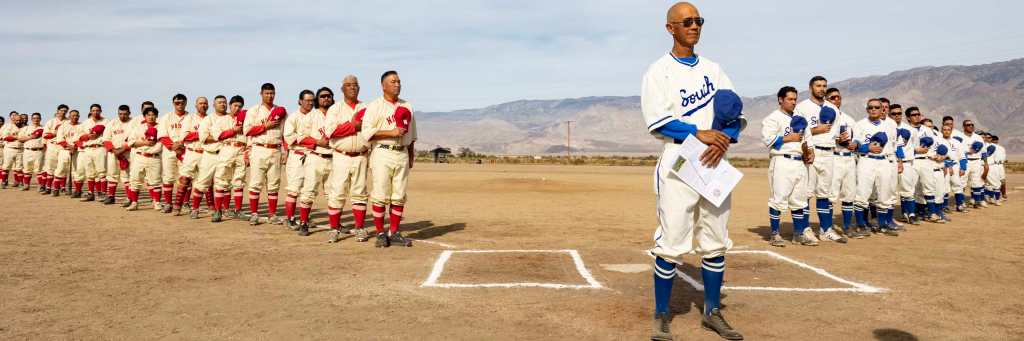
Eighty years later, the descendants of prisoners – such as Nagano’s son, Kwong – are playing baseball again in Manzanar. Thanks to an effort spearheaded by Kwong, a baseball field on the site has been restored as a way to both celebrate the resiliency of so many prisoners and memorialize this dark period in U.S. history.












 SABR Asian Baseball Research Committee Blog