Author: asianbaseballb45a112232

  • Fake Scout – A Case of Mistaken Identity 

    Fake Scout – A Case of Mistaken Identity 

    by Mark Kozlevcar 

    On June 4,2026, I was at Samsung Lions Park in Daegu, watching The NC Dinos play the Lions on a Thursday evening. I was in the midst of a Korean Baseball trip, seeing all ten KBO teams play in all nine KBO stadiums. I was sitting in very good seats. These seats included tables in front of them for food, drinks, and keeping score. As always when I am in Korea, I was wearing one of my Los Angeles Dodgers Korean Heritage jerseys, and I was keeping score of the game

    T. I. Won, one of KBO’s premier pitchers, and soon to be free agent, was toeing the rubber for the Samsung Lions. Dinos fans thought that I might have been there to scout shortstop J. W. Kim. Like most games nowadays, the game was being televised. Between pitches, I was incorrectly identified as a possible “Dodger Scout.” 

    The text reads “Won Tae -in observing LA Dodgers scout?”

    Here is a link into the Instagram post and the youtube post from the TV coverage showing me keeping score: 

    https://tinyurl.com/FakeScout1

    https://www.youtube.com/shorts/Pfsrr9JWsc4

    While not very many people keep score during games anywhere anymore, it seemed to me, that there were even fewer people than usual, especially Koreans, that keep score. My keeping score apparently attracted the attention of the KBO Broadcast (SBS Sports) TV directors, and thus the speculation began. 

    The blogosphere latched on to the story and speculation abounded on the internet about who I was, and whether I was there to “kidnap” the Lions’ Won or the Dinos’ Kim for the Dodgers.

    As it is for most things, the truth did come out, and a nation of KBO fans can now sleep more soundly in the knowledge that I was exhibiting, as the article cited below states, “the passion of a fan who loves baseball too much”; and that I was not there to kidnap anyone on behalf of the Dodgers.

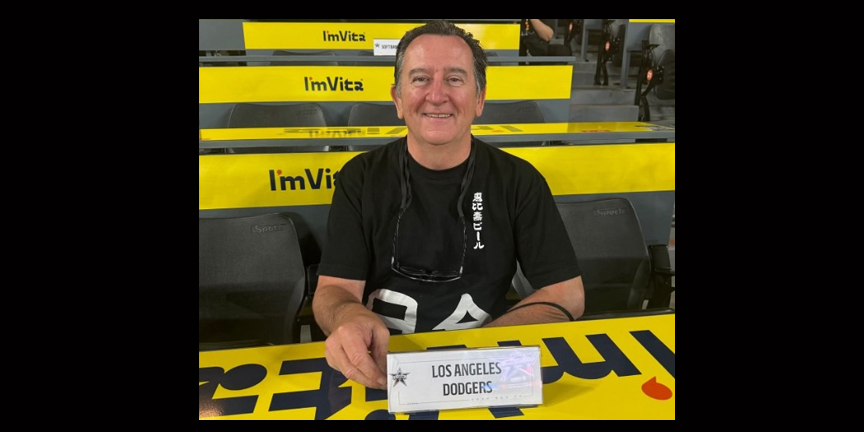
    A few days later, I attended a Korean High School vs. College All Star Game that did have Dodger Scouts in attendance. After the game I sneaked down to the Dodgers table for the picture shown below.

    Fake Scout at Daejeon Hanwha Life Ballpark – Photo by CouchNacho_Baseball

    When the legend becomes fact, print the legend.

  • The 2004 MLB All-Stars Tour of Japan

    The 2004 MLB All-Stars Tour of Japan

    by Trevor Raichura

    Every Monday morning we will post an article from SABR’s award-winning books Nichibei Yakyu: Volumes I and II. Each will present a different chapter in the long history of US-Japan baseball relations. This week Trevor Raichura tells us MLB-Japan All-Star series.

    It was the best of times, it was the worst of times. One of the longest droughts in baseball history came to an end in 2004 when the Boston Red Sox won their first World Series since 1918. With that victory, a new age was dawning. One in which even the Chicago Cubs could start hoping for a title of their own sooner rather than later. (And it came, in 2016.)

    However, on the other side of the ocean, Nippon Professional Baseball experienced one of the most trying, core-changing seasons in its history. Two Pacific League teams, the Orix BlueWave and the Kintetsu Buffaloes, reached an agreement to merge at season’s end, leaving an imbalance (five teams) in league structure.

    The players, voicing concern over the potential ramifications of this merger (one possibility floating around was a reduction from 12 to 8 teams in a single-league format), went on strike for two days. (This was the first and only strike in NPB history.) However, instead of downsizing, the league searched for a corporation to form an expansion team. The two main candidates were Livedoor, an internet company, and Rakuten, a commerce conglomerate owned by Hiroshi Mikitani, which won the right to join NPB, forming the Tohoku Rakuten Golden Eagles in 2005.

    Amid the restructuring of the league came the announcement that interleague play would begin during the coming season, a draft scandal, and rumors of a second merger between two more flailing Pacific League franchises. On top of this, Japan was coming out of 2004 still feeling the sting of losing their semifinal match against unheralded Australia at the Summer Olympics in Athens. They would ultimately take the Bronze, but it was a disappointing finish for a nation expecting to contend for the Gold.

    The 2004 Japan All-Star Series was more than just a feel-good series of friendly games between star players from two baseball organizations. Japan yearned to show it belonged in the conversation of baseball juggernauts. It needed to assure its fan base that the health of its de facto national sport was sound as well. And so, when the MLB representatives came to play eight games in 10 days at five domed stadiums across Japan, winning was actually important to one of the teams.

    The 28 major leaguers comprised 19 Americans, 3 Venezuelans, 2 Dominicans, 2 Puerto Ricans, and 2 Japanese – Kazuhisa Ishii and Akinori Otsuka, who had played the previous season with the Los Angeles Dodgers and San Diego Padres respectively.

    The All-MLB Roster

    • Pitchers: Kiko Calero (St. Louis Cardinals), Roger Clemens (Houston Astros), Kazuhisa Ishii (Los Angeles Dodgers), Ray King (St. Louis Cardinals), Scott Linebrink (San Diego Padres), Kyle Lohse (Minnesota Twins), Jason Marquis (St. Louis Cardinals), Akinori Otsuka (San Diego Padres), Jake Peavy (San Diego Padres), Mark Redman (Oakland Athletics), Chris Reitsma (Atlanta Braves), Francisco Rodriguez (Anaheim Angels), Scot Shields (Anaheim Angels), Dontrelle Willis (Florida Marlins)
    • Catchers: Johnny Estrada (Atlanta Braves), Victor Martinez (Cleveland Indians)
    • Infielders: Hank Blalock (Texas Rangers), Alex Cora (Los Angeles Dodgers), Marcus Giles (Atlanta Braves), David Ortiz (Boston Red Sox), Jack Wilson (Pittsburgh Pirates), Michael Young (Texas Rangers)
    • Outfielders: Moisés Alou (Chicago Cubs), Miguel Cabrera (Florida Marlins), Carl Crawford (Tampa Bay Devil Rays), Manny Ramirez (Boston Red Sox), Vernon Wells (Toronto Blue Jays), Brad Wilkerson (Montreal Expos)
    • Coaching Staff: Bruce Bochy (San Diego Padres), Jim Colborn (Los Angeles Dodgers), Pat Corrales (Atlanta Braves), Bill Robinson (Florida Marlins)

    Note: Albert Pujols (Cardinals), Alfonso Soriano (Rangers), Miguel Tejada (Orioles), and LaTroy Hawkins (Cubs) were selected but did not participate due to injury.

    The All-NPB Roster

    • Pitchers: Nagisa Arakaki (Fukuoka Daiei Hawks), Ryota Igarashi (Tokyo Yakult Swallows), Kei Igawa (Hanshin Tigers), Hirotoshi Ishii (Tokyo Yakult Swallows), Takeharu Kato (Yokohama Bay Stars), Hiroyuki Kobayashi (Chiba Lotte Marines), Hisashi Iwakuma (Kintetsu Buffaloes), Daisuke Matsuzaka (Seibu Lions), Koji Mise (Fukuoka Daiei Hawks), Koji Uehara (Yomiuri Giants), Shunsuke Watanabe (Chiba Lotte Marines), Kazuo Yamaguchi (Orix BlueWave), Yukiya Yokoyama (Hokkaido Nippon-Ham Fighters)
    • Catchers: Shinnosuke Abe (Yomiuri Giants), Atsuya Furuta (Tokyo Yakult Swallows), Kenji Johjima (Fukuoka Daiei Hawks)
    • Infielders: Kazuya Fukuura (Chiba Lotte Marines), Hirokazu Ibata (Chunichi Dragons), Makoto Imaoka (Hanshin Tigers), Akinori Iwamura (Tokyo Yakult Swallows), Hiroyuki Nakajima (Seibu Lions), Toshihisa Nishi (Yomiuri Giants), Michihiro Ogasawara (Hokkaido Nippon-Ham Fighters)
    • Outfielders: Norihiro Akahoshi (Hanshin Tigers), Takahiro Saeki (Yokohama Bay Stars), Shigenobu Shima (Hiroshima Toyo Carp), Hitoshi Tamura (Yokohama Bay Stars), Kazuhiro Wada (Seibu Lions)
    • Coaching Staff: Sadaharu Oh (Fukuoka Daiei Hawks), Takao Obana (Fukuoka Daiei Hawks), Hiromasa Arai (Fukuoka Daiei Hawks)

    Note: Fan selections Kosuke Fukudome (Chunichi Dragons), Yoshinobu Takahashi (Yomiuri Giants), Tsuyoshi Shinjo (Hokkaido Nippon-Ham Fighters), Nobuhiko Matsunaka (Fukuoka Daiei Hawks), Tomohiro Nioka (Yomiuri Giants), Hiroki Kokubo (Yomiuri Giants), plus manager selection Tadahito Iguchi (Fukuoka Daiei Hawks) did not participate due to sickness and/or injury.

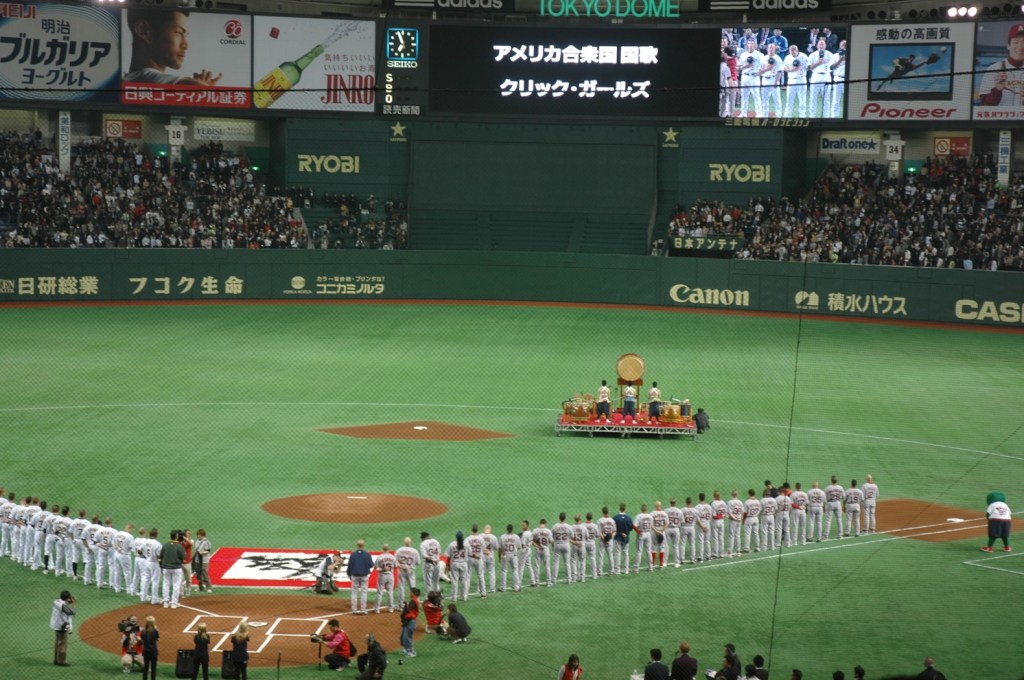
    Starting on November 5, 2004, the two teams played three games in three days at Tokyo Dome. They took a day off to travel to Fukuoka, located in southwestern Japan. After a single game there, they migrated east to Osaka for a game the next day. The very next day they flew up to the northernmost island of Hokkaido to play a game in Sapporo. Then it was down to Nagoya in central Japan, followed by a day of rest. The series wrapped up where it started, in Tokyo, on November 14.

    Game 1: November 5, Tokyo Dome

    Among those in attendance were Japanese-born major-league players Kazuo Matsui (New York Mets), Tomo Ohka (Montreal Expos), and Shingo Takatsu (Chicago White Sox). Also celebrating the opening of the tournament was the US ambassador to Japan, Howard H. Baker Jr., who said the tour was beginning to take on an atmosphere similar to the World Series in recent years.

    Much of the focus in this game was on MLB starter Roger Clemens, who at age 42 had already won six Cy Young Awards in his illustrious career. It took the NPB All-Stars until the bottom of the fifth inning to open the scoring with two runs (one earned) off Clemens. Japanese shortstop Hirokazu Ibata said after the game that Clemens felt a lot closer to home plate than regular pitchers do because of his intimidating size. Kenji Johjima said Clemens was beyond the realm of good pitchers: His fastball was fast, his forkball was amazing, and he was grateful to just make contact with his pitches. Clemens left the game before finishing the fifth inning, much to his dismay. He said it was hard for him to figure out the hitters, with this being his first time ever facing them, but that, all things considered, he felt he had done well.

    The major leaguers, who had been stymied by starter Koji Uehara up to this point, put up three runs in the top of the sixth. David Ortiz singled home Carl Crawford and Hank Blalock, and the pinch-runner for Ortiz, Brad Wilkerson, scored on Vernon Wells’s sacrifice fly. Ortiz said he had noticed that Uehara’s forkball was coming in low on other batters, but the one he got hold of stayed up in the zone. That said, he felt that if Uehara were able to adjust to the major league strike zone and get ahead in counts, he would have no problems succeeding in America.

    The MLB All-Stars put up four more runs in the top of the seventh on five singles and a walk, all coming against Kazuo Yamaguchi, to win 7-2. Kiko Calero earned the win by completing the fifth inning for Clemens.

    After the game, Clemens said, “I really enjoyed it but I was surprised that the crowd was more quiet compared to last time I visited here (1992).” Manager Bruce Bochy said Ortiz was the spark plug that helped his team overcome a two-run deficit, and that they would need to keep playing this way in order to win more games in this series. Japanese manager Sadaharu Oh said he had hoped his team would win while the major leaguers were still adjusting to Japan, but that they would need to hit better. He also had high praise for the MLB hitters’ bat speed.

    This game was of added interest because Uehara grew up idolizing Clemens and even attended Game Three of the 2004 National League Championship Series in Houston, for which Clemens was the Astros’ starter. “There was a lot I could learn by watching the game live. But I would not have gone all that way if I wasn’t also interested in pitching there someday,” Uehara said. The two were able to sit down and talk to each other on November 3 when the MLB team arrived in Japan, and Clemens signed a jersey and gave it to Uehara. “I have never before and will probably never again pay that much attention to how another pitcher goes about his business on the mound during the game,” an awestruck Uehara said after the game. “I have tried to model my own form after his. The signed uniform will get framed and hung in my house.”

    Game 2: November 6, Tokyo Dome

    The first-ever Japanese major-league player, left-handed pitcher Masanori Murakami, threw out the ceremonial first pitch while wearing a San Francisco Giants uniform. The 60-year-old commented that he was looking forward to seeing a lot of good games in the series.

    The scoring in this seesaw battle began in the bottom of the first with Carl Crawford’s leadoff home run off starter Shunsuke Watanabe. The NPB All-Stars responded with Norihiro Akahoshi’s two-run triple in the top of the second.

    The MLB team tied the game in the bottom of the frame, as Brad Wilkerson doubled Vernon Wells home. David Ortiz then hit the most talked-about home run of the entire tour in the bottom of the fourth, taking Watanabe deep to right. The estimated distance of his home run was 160 meters (525 feet). “I knew when I hit it that I got all of it,” Ortiz said. “I thought for a second that it might land in the Dominican (Republic). It was a 3-and-0 count, maybe he didn’t think I would swing. He’s not exactly like (MLB reliever) Takatsu, but pitchers like him who have an unorthodox delivery are hard to hit. But I saw the ball well, and he threw it right down the middle, so [hitting a home run] is to be expected.” Watanabe took the blow in stride, commenting, “It felt like he hit that ball almost twice the length of the stadium. You can’t make any mistakes against these guys.” He was even a little self-deprecatory, joking, “It actually felt good to be part of one of the best home runs ever hit.”

    The talk about Ortiz’s home run did not end there. Carl Crawford said, “If that building had not been a dome, there is no telling how far it would have traveled.” Daisuke Matsuzaka speculated that if they had used NPB regulation balls, which were livelier than MLB balls, the home run could have traveled more than 180 meters (590 feet). Bruce Bochy said it was the longest home run he had ever seen. Furthermore, Hirotoshi Ishii, who later in the game struck Ortiz out, said, “He looked mad at the end when I did not challenge him with my fastball. But I took the matchup seriously and after seeing what he did to the last fastball he faced, I could not dare to throw him another one.”

    With the Japanese down a run in the top of the fifth, Akahoshi scored on Akinori Iwamura’s single to tie the game, 3-3. After the game, Bochy had high praise for Akahoshi: “He’s an exciting player. Just like Crawford, he is able to make a difference with his speed and his bat. Very impressive.”

    The game was decided in the bottom of the eighth, as Victor Martinez and Wilkerson hit back-to-back RBI singles to help their team win 5-3. Said Ortiz: “We came here to win. We’re still a little tired, but we’re going to keep on playing hard.”

    Kyle Lohse started for the MLB team, surrendering three runs in 4⅔ innings. “We’re playing in (Hideki) Matsui’s home country. We have to be careful and throw well,” he commented postgame.

    The win went to Chris Reitsma, who pitched a clean eighth inning. Sadaharu Oh said that despite his team having a chance to win, the MLB squad was playing hard, too. He was glad that it was not a one-sided affair and hoped his team would do better the next day. As for Ortiz’s home run, he said with a smile, “It was perfect. His batting is all about power.”

    Read the full version of this article on the SABR website

  • Major League Baseball’s 2002 All-Star Tour of Japan

    Major League Baseball’s 2002 All-Star Tour of Japan

    by Roberta J. Newman

    Every Monday morning we will post an article from SABR’s award-winning books Nichibei Yakyu: Volumes I and II. Each will present a different chapter in the long history of US-Japan baseball relations. This week Roberta Newman focuses on the 2002 MLB-Japan All-Star series.

    The glossy, color print advertisement for the 2002 All-Star Japan Series features an exterior shot of a terminal at Tokyo Narita airport. But instead of planes pulling up to the gates, giant baseball bats of various makes and models encircle the building, as if preparing to disgorge passengers. Below the image the ad copy reads “Zenbei Rainichi” (All-Americans Arrive in Japan) and below that in a smaller font, “Nichibei Yakyu 2002” (Japan America Baseball 2002). Next to small type across the bottom, headshots of six players, from both Major League Baseball (MLB) and Nippon Professional Baseball (NPB) including Ichiro Suzuki, Barry Bonds, and Hideki Matsui are arrayed in a row. The winner of a major global advertising award in 2003, this clever print ad, designed to be placed in glossy magazines and other color publications, is clearly aimed at a large, knowledgeable consumer base. Produced by BBDO Japan, it is a quality advertisement that suggests quality entertainment.

    The event, the 2002 MLB-NPB All-Star Series, was a seven-game series, played over nine days, from November 9 to 17. In addition, the MLB team played a warm-up game against the Japanese champion Yomiuri Giants. It was the eighth Nichibei All-Star Series, held in even-numbered years between 1986 and 2006, with the exception of 1994, the strike year. The MLB All-Star team was led by manager Art Howe, who had just signed a four-year, $9.4 million contract to manage the New York Mets. Accompanying Howe were headline stars Barry Bonds, Ichiro Suzuki, Bernie Williams, Roberto Alomar, and Jason Giambi. Every game was broadcast live on Nippon TV (NTV), and the Japanese press corps was large, as it usually is for events featuring national baseball heroes.

    Interest in the best players from each league competing against one another appeared to be high. Just ahead of both the 2002 and 2003 seasons, Sony issued a SquareSoft-designed Playstation2 game entitled Nichibei Pro Yakyu: Final League (Japanese-America Pro Baseball), pitting player-created teams from Japan and the United States against each other. Potential virtual rosters would no doubt have resembled the lineups competing in the actual series. On the publishing end, the book Nichibei Puroyakyu Chinbamen Meijajji (literally Excellent and Absurd Judges for Rare Settings in Japan and US Professional Baseball), written by the Pacific League record-keeper and statistics columnist for Shukan Baseball, Isao Chiba, provided Japanese fans of the international matchup the opportunity to test their trivia skills.

    Coverage of the all-star series by the English-language press was sparse and limited in scope. Even the generally enthusiastic Japan Times, Japan’s foremost English-language newspaper, devoted fewer column inches than might be expected to the series. There were occasional game accounts, but not for every contest. Moreover, the paper offered only line scores, as opposed to complete box scores. What coverage there was in the English-language press, both North American and Japanese, coalesced around a central theme, the fate of Yomiuri Giants’ slugging super-star Hideki Matsui. With Matsui poised to sign with a major-league team – speculation correctly centered on the New York Yankees – the game coverage took a backseat to Matsui-mania.

    The coming All-Star Series also caused media to ponder the fate of Japanese professional baseball, given the impending departure of one of its biggest stars. An article on the front page of the November 5 English-language edition of the Mainichi Shimbun asked, “Is Japanese Baseball a Farm System for the Bigs?” It is a rhetorical question, answered with, “[T]he loss of [Hideki Matsui] to MLB means that a further hollowing out of Japanese professional baseball is probably inevitable.” He wrote, “To hear some people talk, the future of Nippon Pro Baseball as we know it, is on the line. When Matsui follows Ichiro and Kazuhiro Sasaki to the Show, they say, it will signal that the NPB has become nothing more than a launching pad to the big leagues.”

    Perhaps expectedly, members of the American press approached this question from the opposite perspective. Anthony McCarron, the Yankees beat writer for the New York Daily News, opined, “Matsui, an icon akin to Michael Jordan in Japan,” joining an MLB team would be “something Japanese fans are eager to see.” Of the frontrunners for Matsui’s services, McCarron wrote, the Yankees “have done extensive ground work in Japan recently, including establishing a working agreement with the (Yomiuri) Giants and sending stars Bernie Williams and Jason Giambi to play in Japan with a group of major-league all-stars.” Clearly, McCarron was less concerned about the “hollowing out” process than the Japanese journalists. The point, however, was the same. Japanese baseball was becoming a feeder for the majors. In this light, the all-star series served two purposes; it provided a showcase for Japanese players contemplating a move to US baseball, and it created an opportunity for interested major-league teams to send emissaries to help convince Japanese targets that their particular teams were right for them.

    Perhaps no one was clearer about the role of the 2002 All-Star Series as a Matsui-centric undertaking than Filip Bondy of the Daily News. He wrote, “The eight-game, four-city baseball series beginning on Saturday between Major League and Japan League stars has become as much a shopping trip as a competition. Every American team, including the Mets, wants to wheel a cart through these East Asian aisles. Howe, as manager of the Major League stars, has a perfect view of the merchandise.” Although referring to Matsui and his NPB teammates as “merchandise” is less-than journalistic in tone – something that was characteristic of Bondy’s writing in general – his point was well-taken. From either a Japanese or American perspective, the 2002 international celebration of baseball had certainly taken on an acquisitional tone, and Matsui was the prize quarry.

    While Matsui-mania may have been the order of the day, a few English-language newspapers previewed the series and the participating players with enthusiasm. The Nanaimo (British Columbia) Daily News listed the entire MLB roster, but featured players who were either Canadian nationals or played for Canadian teams. The paper foregrounded Eric Hinske of the Toronto Blue Jays in its coverage and noted that he would be joined by Montreal native Eric Gagne and Montreal Expos pitchers Bartolo Colon and Tomo Ohka, a Japanese native, alongside the likes of Bonds.

    In the same vein, the South Florida Sun Sentinel of Fort Lauderdale focused its attention on the two Florida Marlins joining the tour. Profiling Derrek Lee, the Sun Sentinel underscored his family’s history with professional Japanese baseball. His uncle, Leron Lee, played for a decade with the Lotte Orions. His father, Leon Lee, was also an Orion, and later a Yokohama Taiyo Whale and a Yakult Swallow. In 2003 Leon Lee would make history. After joining the Orix Blue Wave as hitting coach, he replaced Hiromichi Ishige as manager early in the season, becoming the first African American to manage in Japanese professional baseball. Given his family’s history, Derrek Lee made an ideal subject for a pre-tour preview. Discussing Japanese baseball, Lee noted, “They treat you so well over there. They don’t have basketball and football, so baseball is their sport. If you do well, they’ll treat you good. [Leon] was pretty big over there and the fans loved him. Some guys have a tough time making the adjustment, because if you don’t do well, it can be tough.” Lee added, “It’s not as different as you would think. It’s pretty Westernized. A lot of people over there, especially now, speak English. It’s not all just raw fish and kimonos.”

    The Japan Times’ sole Matsui-free preview centered on David Eckstein of the World Series champion Anaheim Angels. The article, headlined “Lil’ Angel Packs a Big League Punch,” by staff writer Rob Smaal, presented Eckstein’s small stature as evidence that similar-sized Japanese players could, in fact, succeed in the majors. Eckstein, himself, mentioned Ichiro as proof-positive. The article concluded with a discussion of the Angel’s taste in food. Smaal wrote, “While Eckstein holds Japanese ballplayers in high regard, he’s not quite as fond of some of the local cuisine. ‘I’m not a Sushi man,’ Eckstein says. ‘In fact, I don’t eat fish at all. But I do love beef, so I’ve been told that I’ve got to try some of that Kobe beef, maybe tonight.’” The same Japan Times issue also included a photograph of Barry Bonds and Yomiuri Giants owner Tsuneo Watanabe dressed in traditional happi coats breaking open a sake barrel with decorative baseball bats.

    Happi coats and sushi aside, the tour’s ostensible purpose was to play baseball, and play they did. In their first game, the MLB squad faced off against the Yomiuri Giants at the Tokyo Dome in front of a sellout crowd of 55,000. In this case, rare game coverage appeared in the Sunday New York Times sports section. Given that the college sports, NFL, and NBA seasons were well underway, this was somewhat unusual. But their focus was not. Theoretically, the MLB team was facing the Japanese champions, but to read the article, the Giants had just one player on the field. The headline read: “Japanese Star Receives Taste of Future Against U.S. Stars.” Describing the scene on the field, the article observed, “The stadium speakers blared the rock song ‘We Are the Champions’ before Matsui’s at-bats and he took a curtain call after the game. But Matsui had little luck showcasing his talents in front of his hometown fans and visiting major league scouts. He grounded out softly to third in the second inning and struck out swinging in the fourth before singling to right field in the seventh inning. He lined out to shortstop in his final at-bat.” Rather, Bonds and Giambi did all the slugging. The article continued, “Matsui, playing center field, barely gave chase as Giambi’s first and Bonds’s second home runs sailed over his head into the stands.” Only two other Giants are mentioned, starting pitcher Yusaku Iriki, who gave up the aforementioned home runs, and Yoshinobu Takahashi, the right fielder, in the article’s conclusion. Asked if he was considering following his countryman to the major leagues, Takahashi replied, “‘I’ll have to see how Matsui does. If he doesn’t do so well, I’m not sure I could do well in America, either.” The rest of the article is a fine example of Matsui-mania: It mentions that a rumored two-year deal with worth $23 million was supposedly already in place with the New York Yankees, even though the team could not officially begin negotiating with Matsui until November 13.  Both the slugger and the Yankees denied the claim.

    The general tenor of the New York Times’s coverage was echoed in the Japan Times. Two prominent headlines dominated the sports pages after the game. As if readers might forget who was the star of the show, staff writer Dan Latham made no bones about it. Under the headline “‘Godzilla’ Is Just Getting Warmed Up,” he wrote, “Hideki Matsui may not have cleared the fences, but that doesn’t mean he failed to impress.” Whom did he impress? According to Latham, the answer is Bonds and Howe. Speaking in fluent baseball clichés, Howe opined, “He batted well tonight. He hit the ball hard.” Bonds, eschewing the type of standard response issued by Howe, used the opportunity to make an indirect pitch to Matsui. A repeat all-star tour attendee, Bonds commented, “I’ve had the opportunity to play with him a couple of times. He’s a good player and he’ll put on a good show for everybody before the series is over. He’s their main guy and I’d like to play with him over there in San Francisco.” Earlier, Bonds also remarked on how good Matsui would look in a different Giants uniform.

    In an accompanying article in the Japan Times headlined “Bonds, MLB All-Stars Teach Giants a Lesson,” writer Junji Noda pulled no punches. “On a night when Hideki Matsui was the focus of attention, it was the major league’s [sic] most dominant hitters who showed the Yomiuri Giants center fielder what the term ‘slugger’ really means.” Matsui and his Giants teammates did not fare well at all in the article. Noda wrote that Bonds and Giambi used their home-run power to “humiliate the Japan Series champion.” Although the article paid scant attention to it, Bonds and Giambi were not the only players to contribute to the Giants’ loss. The sluggers did account for four homers, but second baseman Roberto Alomar and shortstop Eckstein also contributed to the MLB squad’s victory. A combination of three MLB pitchers gave up just five hits, with J.C. Romero surrendering the Japanese club’s sole run, batted in by catcher Shinnosuke Abe. Ichiro did not play.

    The all-star series began in earnest on November 10. Once again, the MLB team played in front of a sellout audience of 55,000 in the Tokyo Dome. This time, the outcome was anything but humiliating for the NPB All-Stars. Right-hander Koji Uehara struck out Barry Bonds three times and Giambi twice. According to the New York Times, one of the few English-language publications to have paid attention to the contest (the Japan Times having limited its coverage to a line score), “Barry Bonds opened a seven-game all-star series with one of his worst games in a year and a half.”  In fact, prior to this game, the last time Bonds stuck out three times was on August 8, 2001, a full season and a half before. Uehara, Matsui’s Yomiuri teammate, allowed only one run, a solo homer by Torii Hunter in the fifth inning. Japan won the contest, 8-4. The Times did mention that the NBP team was powered by former major leaguer Alex Cabrera of the Seibu Lions, who homered and drove in three runs. It also reported that Cabrera’s teammates recorded 18 hits against five MLB pitchers. And of course, it gave the requisite Matsui communique. Seemingly far more important than Cabrera’s excellent game was Matsui’s two-run double off Brad Penny, his only hit of the game.

    From Tokyo, the teams traveled to Fukuoka to play in front of another large crowd at the sold-out Fukuoka Dome. In contrast to previous tour coverage by the Japan Times, the paper’s perfunctory account mentioned Matsui but once – his line-drive hit off starter Mark Buehrle’s shoulder. Prior to his exit, Buehrle gave up five hits and four runs in three innings. Reliever Miguel Batista didn’t fare any better, tying his successor for futility, allowing four runs on seven hits over four innings. The game’s 8-2 outcome was clearly communicated in the Japan Times headline, “Japan Blasts MLB Stars.” In an attempt not to show up his opponents, winning pitcher Kenshin Kawakami was deferential. “I had imagined I would allow a lot more runs. We’re using (larger) major league balls that I’m not used to, but my curveballs broke more than they did during the regular season,” he explained, almost apologetically.

    The MLB All-Stars fared only slightly better against the NPB team the following day in Osaka. Once again the ballpark was packed, and once again the NPB All-Stars won. The same day as Barry Bonds heard that he had won his fifth MVP award, he hit a solo home run, as did teammate Torii Hunter, but they were not enough to offset the Japanese offense. And once again, Matsui was the headliner in the Japan Times’s reporting. It was, however, a different Matsui. Covering the game, Noda observed, “It’s probably time someone came up with another nickname for Seibu Lions shortstop Kazuo Matsui. Matsui, who is known as ‘Little’ Matsui in comparison to Yomiuri Giants slugger Hideki ‘Godzilla’ Matsui, came through with some clutch hitting, going 4 for 5 with three RBIs to lead the Japan All-Stars to an 8-6 win.” Noda also noted Kazuo Matsui’s scheduled free agency at the end of the 2003 season. (He left Japan and signed with the New York Mets for 2004.) One reason for the shift of focus from Godzilla to Little Matsui was the former’s poor performance at the plate. Hideki went 0-for-5 and did not contribute to his team’s barrage of 16 hits.

    But Hideki Matsui did not lack for column inches. In the same issue of the Japan Times, columnist Marty Kuehnert’s speculation on the Japanese free agent’s potential for success ran under the headline, “Godzilla Doesn’t Need His Momma Looking After Him Anymore.” Kuehnert wasn’t joking. According to the columnist, “The funniest (Japanese originated) rumors now about Matsui’s chances of success deal with the fact that he is a 28-year-old bachelor, and how could he possibly take care of himself in America. After all, in Japan his mother journeys from Ishikawa Prefecture … every other week to clean his apartment, wash his clothes and make enough food to fill his refrigerator. Now mom, and dad, are both concerned about whether their little boy, all 186 cm and 95 kg [6-feet-1, 209 pounds] of him, could survive on his own in America.”

    After a day off, the All-Star Series moved to Sapporo. David Lennon of Long Island’s Newsday reported, “It’s snowing here on the northern island of Hokkaido, and 30 degrees cooler than any other stop on this all-star tour, but Art Howe is feeling some heat.” He continued, “The inside joke among the Americans traveling here is that Howe is already in serious trouble with the New York media, a bloodthirsty group that pounced on Howe from the moment he was hired by the Mets. But it was the usually reverent Japanese media who showed some bite following Tuesday’s 8-6 loss at funky Osaka Dome. A Japanese reporter to Howe: ‘Do you feel any pressure, like you’re standing at the edge of a cliff?’” Howe’s team took a much needed step back from the precipice in the fourth all-star matchup, edging the NPB team 6-5 in freezing Hokkaido in front of another packed house, just shy of a sellout, at the Sapporo Dome. Once again Bonds and Giambi both homered. So, too, did Japan’s third baseman, Norihiro Nakamura. Bonds’ home run, a grand slam in the top of the sixth inning off Hirotoshi Ishii, gave his team a 6-4 lead. Both “Little” and “Big” Matsui went hitless.

    The MLB All-Stars continued their comeback at the Tokyo Dome on November 15. Again, there was scant coverage of the game. In a short paragraph, the New York Times mentioned only Bonds’ offensive contribution – a fourth-inning RBI double – in the 4-0 MLB victory. MLB pitchers Randy Wolf, Mike Fetters, and J.C. Romero combined for a two-hit shutout. Seemingly more important to the Times was the contest before the contest. In a mini-home run derby, Bonds defeated Matsui, 8-5, with each taking 20 swings.

    The next day, November 16, the MLB bats promised by BBDO’s beautiful print ad finally landed at the Tokyo Dome. Once again, Noda covered the game for the Japan Times, writing, “The big boys found a new way to win, and it had nothing to do with anyone’s power. The major league All-Star team stuck to the short ball and timely hitting, while the Japanese All-Stars made critical errors as the visiting team scraped out a 12-7 victory to knot the seven-game series 3-3.” With 18 hits to their credit (though only Bernie Williams homered), “scraped” may not be the most accurate term to describe the MLB squad’s victory. Every starter had at least one base hit by the fifth inning. “One only needed to look down the MLB score card to see how badly they humiliated (starting pitcher Hisashi) Iwakuma,” wrote Noda. Certainly, Iwakuma did not have his best day, giving up 12 hits and seven earned runs in four innings, but he remained positive and did not seem humiliated. “They’re amazing indeed,” he said of his opponents. “I’m not saying this because I lost, but I enjoyed [the game]. … Still, I’m disappointed.” Although the NPB All-Stars doubled the MLB’s home-run output, with two blasts off the bat of “Little” Matsui, and had 11 hits overall, it was not enough to overcome Iwakuma’s outing.

    The seventh and final all-star matchup was also played at Tokyo Dome.27 And as in the previous game, the MLB squad emerged with the win, by a score of 4-2. With only a 2-1 lead, Filip Bondy wryly observed, “The major leaguers started boarding buses to distant Narita Airport in the sixth inning yesterday, as if these vehicles were the last transport out of Saigon. Barry Bonds, not unexpectedly, was among the first group. He was removed for a pinch-runner and headed for an early flight for the West Coast. Bartolo Colon and Bernie Williams left for another flight to Kennedy. With the game and the series on the line, the team’s best players were going, going, gone.”

    Down 4-2, the Japanese rallied in the ninth. After Kazuo Matsui singled and reached second with one out, Norihiro Nakamura crushed a fly to deep center field. Torii Hunter sprinted after the ball, leapt, and crashed into the wall at full speed as he made the spectacular catch, robbing Nakamura of at least a double. “Little” Matsui tagged up and went to third. With two outs, Hideki Matsui came to the plate. But in his last game in Japan, “Godzilla left his old stomping grounds with more of a whimper than a bang” as he hit a weak ground ball to second to end the game. Although Matsui had performed well in the final game, going 1-for-3 with two walks, the series had been a disappointment as he had hit only .161 (5-for-31) with no home runs.

    Godzilla had been outshined by both “Little” Matsui, who led the Japanese squad with a .423 average and seven RBIs, and Ichiro Suzuki, who went 4-for-4 with a double and a stolen base in the final game and hit .355 during the series. “When I was playing for Japan, the U.S. teams were always unbeatable,” Ichiro told Bondy, “I was thinking, ‘What if we lose when I’m on the Major League team. That was not going to be funny.’”

    With the game and series over, Matsui-mania returned in full force. In an article headlined “Giambi Sees Big Things Ahead for ‘Godzilla,’” Noda wrote, “As hard as it is to imagine a Japanese ballplayer batting in the heart of the order for the New York Yankees, Jason Giambi won’t second guess Hideki Matsui’s potential.” At a press conference conducted before the sixth game of the series, Giambi spoke about the NPB’s role as feeder for the major leagues, but with a positive spin. According to the Japan Times, Giambi noted that Matsui “has created more than enough noise in Japan, which has become ‘a new avenue’ for Major League Baseball scouts and owners searching for the next Ichiro.” Giambi, not so obliquely referring to the Matsui-centric coverage, noted, “He’s a phenomenal player who had accomplished some incredible feats in Japan. Of course he’s getting a lot of attention right now because he’s talking about coming over to the U.S. and playing baseball. To these people out here, that’s big. Ichiro came over and he’s played well. They’re hoping if he does go over, he’ll play well. So he definitely deserves the hype he’s getting.”

    The Yankees first baseman also offered his assessment of other NPB All-Stars and their major-league potential. “‘Little’ Matsui, he’s a phenomenal player. The kid who pitched the first night (Yomiuri’s Koji Uehara), very good. … I heard there’s another kid who’s got a groin injury (Seibu Lions pitcher Daisuke Matsuzaka) but is supposed to be as good as Uehara.” Kazuo Matsui went on to play seven seasons with the Mets, the Colorado Rockies, and the Houston Astros. Both Uehara and Matsuzaka would follow the Matsuis to the major leagues. Uehara spent nine seasons in the United States, playing for the Baltimore Orioles, the Texas Rangers, the Boston Red Sox, and the Chicago Cubs, before returning to the Yomiuri Giants for two more seasons. Matsuzaka spent six seasons with the Red Sox and two with the Mets, winning the Rookie of the Year Award in 2007 and helping Boston win a World Series.

    Yankees general manager Brian Cashman and President Randy Levine did not leave Japan with the alacrity of some of the MLB All-Stars, but stayed for a few extra days, ostensibly to announce an agreement with the Yomiuri Giants. The agreement entailed a general information exchange, scouting reports from both teams, support for the Japanese team with the development of Latin American prospects, support for New York with the development of Asian players, and reciprocity regarding information about players’ rehabilitation and conditioning. It did not, insisted Cashman and Levine, have anything to do with Matsui.

    Roughly a month after the tour, Hideki Matsui did, in fact, sign with the Yankees, inking a three-year deal worth $21 million. Asked why he would leave Japan to play in the United States, Matsui replied, “It’s just my will, thought and belief that I want to play in the big leagues.” The former Giant joined the Yankees for the 2003 season and made himself an instant fan favorite by hitting a grand slam in his first game in the Bronx. After seven seasons and the 2009 World Series MVP Award, the Yankees did not offer him another contract. Rather, he played for the Los Angeles Angels of Anaheim for a season, followed by a season each with the Oakland Athletics and the Tampa Bay Rays. Over the 10 seasons, Matsui made $83,250,000 in salary, and perhaps even more in Japanese product endorsements as an international superstar.

    While Matsui and the other 2002 all-stars achieved success on both sides of the Pacific, one import – this time American – did not fare so well. According to the Village Voice, once New York’s preeminent alternative weekly, “To give locals the full American experience the powers that be brought along the Phillie Phanatic, whose ungainly boogie to the strains of ‘Kung Fu Fighting’ (a Chinese art, mind you) earned rapturous applause. Anaheim’s Rally Monkey, by contrast, met with politely baffled silence.” Of course, furry mascots, emblems of kawaii culture, a culture of cuteness, have long been popular in Japan. Although Japanese fans might have been hard-pressed to describe the Phanatic as cute, it is easy to see how the furry green creature would strike a chord with them. A video monkey, however, was a hard sell.

    Unfortunately, as Filip Bondy observed, American baseball fans seem to have been more interested in a jumping primate than the Japan All-Star Series “Why? Nobody knows, really. The series should be an important test of will and talent. It should be the Ryder Cup, the Davis Cup and the World Cup.” Although Bondy’s question was purely rhetorical, there may, in fact, be at least one answer to it. Other than scattered coverage by Bondy, David Lennon, the New York Times, and the odd local interest piece, the series was largely ignored by the American and Canadian press. The series did not garner more than a one-line mention in The Sporting News and received no coverage in Sports Illustrated. Even with sparse information available about the series, it might have drawn more North American attention had it been televised. But it was not.

    “The reasons the games weren’t carried in the United States seem to illustrate some flawed thinking about the sport by its own executives and the relationship between the game and television networks. Granted, these games weren’t going to be ratings blockbusters. Heck, the World Series was the lowest-rated one in history,” wrote Newsday’s Steve Zipay. MLB approached ESPN but was turned down. “They said they had a very crowded schedule of regular-season games, college football, NBA, NFL, hockey, tennis, and golf and that their plate was full,” said MLB’s executive vice president for business, Tim Brosnan. According to Zipay, MLB did not approach other networks, such Fox Sports Net, MSG, SNY, or YES, as they assumed that these smaller networks would have little interest in broadcasting the games. [It] “seems like a missed opportunity,” concluded Zipay. Ultimately, Hideki Matsui, the Yankees, and the US major leagues were the true winners of the 2002 All-Star Series, while Japanese baseball, whose biggest stars crossed the Pacific for a bigger stage, and North American baseball fans lost.

    Read the full version of this article on the SABR website
  • Korea’s Senior-Junior Culture, From Obedience to Respect

    Korea’s Senior-Junior Culture, From Obedience to Respect

    by Sion Ahn

    18.44 meters. The distance between the mound and home plate. Unlike a pitch thrown by a pitcher, which reaches the catcher in the blink of an eye, it took a long time for the hearts of seniors and juniors to reach one another. That was because of the senior-junior culture represented by school years and class cohorts. In Korean baseball in the past, senior-junior culture also became a justification for violence that suppressed individuals and enforced team discipline.

    On March 21, 1979, Yonsei University lost 4-2 to Dongguk University in a college baseball tournament. A pitcher named Chul-soon Park started the game and gave up two runs, and then a pitcher named Dong-won Choi came in and gave up two more, allowing four runs in total. These two pitchers would later become legendary figures in the KBO. After the loss, the upperclassmen on the Yonsei University baseball team gathered the underclassmen together. In a session meant to look back on the game, the seniors beat the juniors in the name of disciplining them. At that gathering, Chul-soon Park struck Dong-won Choi with a baseball bat. As a result, Dong-won Choi suffered a serious back injury that left his underwear soaked with blood and required two weeks of treatment. Later, this injury would put the brakes on Dong-won Choi’s professional career and become one of the causes of his early retirement. It was later revealed that this violence against juniors had not happened only once, but had also occurred after a previous practice game and after a game against Korea University the year before. Years later, Chul-soon Park chose this as the incident he regretted most in his life. But it reflected the dark side of the atmosphere of the times, when violence was tolerated if it was for the sake of victory, and of a senior-junior culture in which it was not seen as strange for seniors to punish juniors in the name of discipline.

    The team discipline of the Haitai Tigers in the 1980s and 1990s, the predecessor of today’s KIA Tigers, was also famously fierce. Unlike today, Korean professional baseball at the time was based on a strong regional franchise system. The Tigers, located in the Honam region, had an overwhelming number of players from Honam, and this created a powerful bond that could not be found anywhere else. From a distance, the close bond within the team seemed to reduce disputes or conflict among players. But when behavior violated the rules between seniors and juniors, beatings and physical punishment would immediately follow. Juniors had to prepare the field and snacks before games, and it is said that they could even be slapped if they laughed during practice when the team mood was bad. On top of that, there were various forms of discipline, such as gatherings after games and fanning cigarette smoke away from seniors when they smoked. There were even separate “discipline chiefs” who strongly controlled this atmosphere.

    As an extension of this atmosphere, unwritten rules also emerged in Korean baseball. Korean baseball has unwritten rules that include not only respect for the opposing team and its players, but also respect for seniors. For example, when pitchers hit a senior player at bat with a pitch, if they do not bow and apologize, they are seen as players without manners toward seniors. Conversely, if a junior batter is hit by a pitch thrown by a senior pitcher and shows discomfort, it is taken as a challenge to the senior, and the atmosphere in the ballpark pushes the junior into the position of being a rude player. In addition, when a junior hits a home run off a pitch thrown by a senior pitcher, celebrating too much or running the bases slowly is also seen as an act that does not respect the senior. In this way, the dark side of senior-junior culture forced freedom of expression into the frame of “manners” and gave birth to new unwritten rules.

    The wind of change began to blow through this vertical culture in Korean baseball because of players who started to see the role of seniors not as “domination,” but as “support.” Players who disliked having trained under a dominating atmosphere tried, once they reached the position of seniors, to lead their teams in a different atmosphere. Historically, seniors led teams through fear and power. Now, they lead through a kind of leadership that passes their experience and strengths on to juniors. Unlike the past, when seniors gathered everyone together and used violence over every mistake made by juniors, seniors now approach juniors directly, talk to them so that they can come to realizations on their own, and offer advice.

    Korean baseball no longer moves under a strict and rigid atmosphere. It does not kill individuality, suppress freedom, or force only one person’s way on everyone else. Shin-soo Choo and Kwang-hyun Kim take juniors overseas and help them train, while Hyun-jin Ryu personally covers the cost of juniors’ overseas training and asks them to actively ask questions. In this way, seniors are instead approaching juniors directly.

    Furthermore, there are no longer juniors who find it difficult even to ask questions because they are afraid of seniors. Instead, there are now many juniors who directly ask about seniors’ strengths, learn from them, and try to make those strengths their own. Juniors ask directly about pitching methods, hitting know-how, and situational judgment, and they try to receive those skills. This attitude among juniors has raised not only the level of teams, but also the overall standard of the league. In this way, seniors in Korean baseball today have become not figures who block the growth of juniors and feel jealous of them, but figures who actively support juniors so that they can grow.

    Korean baseball has evolved from an atmosphere of “obedience,” born from the darkness of past senior-junior culture, into “respect” for one another. Dong-won Choi’s back, injured by a senior, hurt terribly, and the hit-by-pitches that could not even be expressed because of senior-junior relationships hurt as well. But healthy communication, achieved without simply passing those pains down unchanged, has given the next generation of leading figures in Korean baseball both strong ability and a better atmosphere.

  • The 2000 All-Star Series in Japan

    The 2000 All-Star Series in Japan

    by Dave Wilkie

    Every Monday morning we will post an article from SABR’s award-winning books Nichibei Yakyu: Volumes I and II. Each will present a different chapter in the long history of US-Japan baseball relations. This week DAVE WILKIE tells us about the 2000 MLB vs Japan All-Star Series.

    Japanese baseball was front and center as the excitement of the new millennium kicked off with an unprecedented Opening Day celebration and ended with a matchup between two star-studded teams battling for world baseball supremacy. Between these two major events, Japan’s greatest closer would win the American League’s Rookie of the Year Award, and the first full-time position player would attempt to make the jump from Japanese superstar to major-league legend.

    Japan has a long history of hosting American baseball teams, including many prominent White major-league and Black Negro League teams from the past. In 1986 a new competition began, pitting major-league All-Stars against NPB All-Stars in a biennial series that continued in this form until 2006. (The 1994 matchup was canceled because of the US players strike.) There were 11 such events and by the 2000 version the dominance of the major leaguers had been firmly established.

    Setting the stage for the 2000 All-Star Series was the major leagues’ first Opening Day ever played outside of North America, pitting the New York Mets against Sammy Sosa’s Chicago Cubs. Sosa was an icon in Japan thanks to his visit in 1998 when he launched three home runs, batted a sensational .481, and ran away with the series MVP award. It didn’t hurt that Japanese slugging superstar Hideki Matsui of the Yomiuri Giants was also one of Sosa’s biggest fans. After Matsui slugged a home run in front of his counterpart in an exhibition game before the Opening Day series, he said, “It’s good to hit a home run in front of Sammy because he taught me how to bat last year.” Matsui’s praise for Sosa didn’t stop there. He added, “I learned a lot from Sammy Sosa about hitting technique.” Matsui had performed well in the previous two Japan All-Star Series and was once again set to compete in the 2000 contest. Hideki “Godzilla” Matsui had already proven his dominance in Japan and he was paving the way for his eventual jump to the major leagues.

    The two-game Opening Day series marked the first time major-league baseball played games that counted in Japan and the players were wary of the 16-hour flight and how it might affect the first few weeks of the season. Some 55,000 watched as the teams split the two games, played on March 29 and 30. Commissioner Bud Selig hoped that this series would be a stepping stone to a future in which American teams would be pitted against their Japanese rivals to determine a true world series champion. Baseball ambassador and lifelong Dodgers luminary Tommy Lasorda agreed when he stated, “I wouldn’t be surprised if sometime soon – not in my lifetime, ’cause I’m too old – the winner of the American World Series would play the winner of the Japanese World Series. I think that would be fantastic.” Lasorda, along with Hall of Famers Hank Aaron and Ernie Banks, also made the trip to Japan.

    The fall’s All-Star Series consisted of eight games, played between November 3 and November 12, in five Japanese cities. Although the tour was planned months in advance, the major league roster was announced just a week before the trip. The squad of 15 position players and 13 pitchers included Barry Bonds, Roberto and Sandy Alomar, Carlos Delgado, Jeff Kent, Gary Sheffield, Randy Johnson, and Kazuhisa Sasaki.

    At the helm for the Major League All-Stars was future Hall of Fame manager Bobby Cox who brought a powerhouse team with him to Japan.Highlights from his managerial career included four Manager of the Year Awards, 15 divisional titles, and a World Series championship with the Atlanta Braves in 1995. He was also famously ejected from 165 games, by far the most by any manager in major-league history. Cox had this to say about his team’s preparation and the long flight to Japan from the States: “We hadn’t played in a long time, but we had three excellent workouts. Today everybody felt pretty good. If we had to play yesterday, that would have been tough, but the second day’s not bad.”

    The Japanese team consisted of most of the country’s top stars with the notable exception of Ichiro Suzuki, who sat out the series as he negotiated a move to the major leagues. The roster included Hideki Matsui, Kenji Johjima, Tsuyoshi Shinjyo, Atsuya Furuta, and So Taguchi. Japanese baseball god and the country’s most popular star, Shigeo Nagashima, was set to manage the first two games for the Japanese team. Mr. Baseball, as Nagashima was called in Japan, had just guided the legendary Yomiuri Giants to a six-game victory over the Fukuoka Daiei Hawks in Japan’s version of the World Series, the Japan Series. Making the victory even sweeter, he triumphed over his old rival and teammate, the world’s all-time home run king, Sadaharu Oh. Oh would take over the managerial duties for the Japanese All-Stars for the third game of the series. Nagashima and Oh won nine straight Japan Series titles between 1965 and 1973 as Yomiuri Giants teammates and played together for a remarkable 16 seasons. Their personalities were like night and day, though, with Nagashima playing the role of the movie star. He was animated, good looking and humorous, and played the game with a joyous abandon. Oh, on the other hand, was a baseball samurai, aikido- and kendo-trained and far more robotic in his approach to the game. He also slugged 868 home runs, far outpacing his American peers, Hank Aaron and Babe Ruth. But Oh would always live in Nagashima’s shadow, as Lou Gehrig would live in Babe Ruth’s. The Hawks took the first two games of the Japan Series, but then the mighty Giants swept the next four to secure the championship led by Mr. Baseball and Godzilla, who took home the series MVP honors.

    Game 1 in the Japan/Major League All-Star Series was set for November 3, and New York Met Jay Payton was the only returning player from the Opening Day festivities. Payton’s Mets were coming off a World Series loss to the New York Yankees. Payton had played well, appearing in all five games and hitting .333 with a home run and three RBIs. He seemed excited to be back in Japan, exclaiming, “It’s nice because I started the season here and I’m finishing up here.” Payton placed third in the National League Rookie of the Year voting and continued his success in Game 1 of the All-Star Series, going 2-for-4 with an RBI in the MLB All-Stars’ 8-5 triumph. Japan’s starting pitcher, Hisanori Takahashi was tagged for six earned runs in three innings and took the loss. Takahashi was coming off a stellar rookie season for the champion Yomiuri Giants that saw him go 9-6 with a 3.18 ERA. Takahashi also shined with a Game 5 shutout against the Daiei Hawks in the Japan Series that year but didn’t have his stuff against the Major League All-Stars, serving up home run balls to Roberto Alomar, Sheffield, and Delgado before exiting the game. Takahashi would get his chance in the major leagues, pitching well in 2010 and 2011 until age got the best of him. Kazuhiro Sasaki pitched a perfect ninth for the Major League All-Stars to earn the save and Bonds chipped in with the team’s fourth home run.

    Takeshi Yamasaki had a fine game for the Japanese All-Stars, going 2-for-3 with two runs scored, a double, and a walk. In 1987, as an 18-year-old, Yamasaki played for the Los Angeles Dodgers’ Gulf Coast League team before returning to Japan full-time. He was unable to record a hit in 10 at-bats for the Dodgers farm club, but etched out a solid career in the Japanese leagues, smashing 403 home runs and driving in 1,215 runs in a career spanning 25 years. After belting two hits in the opener of the series, Yamasaki slumped and failed to record another hit, going 0-for-10 the rest of the way.

    In what must have felt like an uphill climb for the Japanese team they faced 6-foot-10 left-handed fireball pitching ace Randy Johnson in Game 2 of the series. The Big Unit was coming off a 19-7 season with the Arizona Diamondbacks in which he struck out a mind-boggling 347 batters in 248⅔ innings. Japan’s 5-foot-7 leadoff hitter, Toshihisa Nishi, stepped to the plate against Johnson in the top of the third inning. Nishi was also a member of the title-winning Yomiuri Giants, stroking .360 in the Japan Series, and was named to his second all-star squad for the 2000 season. Nishi was best known for his defense at second base and won four consecutive Gold Gloves between 1999 and 2002. (After his career in Japan ended, he signed with the Lancaster (Pennsylvania) Barnstormers, an independent Atlantic League team, becoming their first Japanese player in a strange ending to his professional career.) Nishi laced a double to right center, scoring Kenji Johjima, to put Japan on the board. Johnson lasted only three innings, leaving down 2-1, but registered seven strikeouts in his brief outing.

    The game was tied going into the bottom of the ninth, after Japan tied the score with three runs on five hits in the top of the fifth inning. Unfortunately for Japan, usually reliable closer Masahide Kobayashi gave up a walk-off “sayonara” home run to light-hitting shortstop Omar Vizquel.

    Japan’s bats finally came alive in Game 3 as the team pounded out eight runs in the first two innings off shell-shocked MLB starter Livan Hernandez. It was a balanced attack as all nine starters managed at least one hit. Sadaharu Oh took over the managerial reigns for the Japanese club on this occasion. Tatsuhiko Kinjo was the game’s star. Kinjo’s 2000 rookie season was one for the ages as the infielder pounded the ball at a .346 clip, capturing the Central League batting title and rookie of the year honors in the process. Kinjo was drawing comparisons to perennial batting champ Ichiro Suzuki at the time, but ultimately he would never live up to these lofty expectations, partially due to an ongoing battle with his weight. His Game 3 performance included rapping out four hits in four at-bats, scoring three runs and driving in two in Japan’s 20-hit attack. Kinjo commented on his showing. “I had confidence I could play good defense, but I was happy I hit so well. It’s nice that the major leaguers now know my name.” In addition to Kinjo’s heroics, Nishi recorded his second straight three-hit game and both Hideki Matsui and Tsuyoshi Shinjo had three hits. The final score was 14-2 as Japan’s bullpen held the MLB squad scoreless for the last six innings.

    Kazuhiro Sasaki, in his first year with the Seattle Mariners, was named the American League Rookie of the Year on the day off between Games 3 and 4, although the 32-year-old had spent the previous 10 seasons as Japan’s top closer and all-time saves leader. Sasaki was the second-oldest player to win the award – Negro League great Sam Jethroe was 33 when he won the award in 1950 –and the second Japanese player to win it after Hideo Nomo in 1995. Sasaki had this to say about the honor. “I did not think I was going to receive this award because I did play in Japan for ten years.” He also spoke about how the Japanese leagues compared to US major-league baseball. “It is very difficult to say, but I can tell you the level of baseball in America and Japan are very different. America is definitely higher. The level in Japan is coming along.” Sasaki had four very good seasons with the Mariners, but homesickness led him back to Japan in 2004 when he walked away from the final year of his contract and $8.5 million to be with his family. For his many accomplishments, Kazuhiro Sasaki was inducted into Japan’s Hall of Fame in 2014.

    The rules laid out before the series dictated that all games would be limited to nine innings and this came into play in the fourth game of the competition. Japan led, 2-1, after seven innings, but the MLB All-Stars tied it up in the eighth on Payton’s triple and Bonds’ RBI single. That was the extent of the scoring and the game ended in a 2-2 tie. Starting pitcher Tomohiro “Johnny” Kuroki was the standout for the Japan team, hurling five innings and allowing just three hits and one earned run. Kuroki added eight strikeouts before leaving the game up 2-1. Kuroki, a fan favorite of the Chiba Lotte Marines, was plagued by injuries throughout his career and retired seven years later at the age of 33. In 2013 Kuroki was the pitching coach for the Nippon Ham Fighters when 18-year-old Shohei Ohtani made his debut. Kuroki coached him for five years and had this to say about his star pupil in 2018: “A player like that is a treasure. He has a chance to make history and the entire Fighters organization worked to help him get there. But the person who worked the hardest was him. He has a strong heart.”

    Tomoaki Kanemoto was Japan’s top hitter in the Game 4 tie, going 2-for-4 with an RBI and a stolen base. Kanemoto had a magnificent career and was best known for his 1,766-consecutive-game streak. The streak included an incredible run of 1,492 consecutive games in which he played every inning without rest, easily outdistancing Cal Ripken’s major-league streak of 903. On the day Kanemoto passed Ripken, the Orioles ironman congratulated him with a message on the scoreboard and a bat with “Congratulations, keep playing” inscribed on it. Kanemoto wrapped up his 21-year career in 2012 with 476 homers, 1,521 RBIs, 2,539 hits, 1,430 runs, and a .285 lifetime average. Out of all these accomplishments, Kanemoto was most proud of going 1,002 straight plate appearances without hitting into a double play. His remarkable career was rewarded with election to the Japan Baseball Hall of Fame in 2018.

    The Japanese All-Stars once again fell short in Game 5. A scoreless battle was broken up in the top of the seventh inning when hits by Game 2 hero Omar Vizquel and Barry Bonds put the visitors up for good. The major-league team took the game, 5-1, as Masahide Kobayashi once again faltered in relief and could not keep his team in the game.

    On November 9, the day Game 6 took place, the Orix Bluewave of Japan’s Pacific League announced that they had accepted a bid of $13,125,000 from an undisclosed major-league team for the right to negotiate for the services of Japanese superstar and seven-time batting champion Ichiro Suzuki. This would give Ichiro the chance to become the first full-time position player to make the leap to the major leagues. Bobby Cox shared his thoughts about the lifetime .353 hitter: “If some team is offering that much money for just the right to negotiate, he’s got to be a great player. If he’s as good as I’ve heard, he’ll obviously be the first Japanese position player in the majors and could open the door for more (non-pitchers to go to the major leagues).” Ichiro, of course, went on to stardom with the Seattle Mariners and is expected to be a shoo-in for the Hall of Fame when he becomes eligible in 2025.

    Game 6 was a masterful pitching duel won by the Japanese team, 1-0. The powerful MLB team was limited to a lone hit, a sixth-inning single by Shawn Green. Starting pitcher Hisanori Takahashi more than made up for his Game 1 shellacking by no-hitting the American team through his five innings of work. Major-league starter Randy Johnson was almost as effective, going four innings and striking out seven. In Johnson’s two starts in the series he racked up an amazing 14 strikeouts in seven innings. First baseman Michihiro Ogasawara drove in the winning run in the eighth with a double, scoring teammate Tatsuhiko Kinjo with the game’s only tally.

    Ogasawara was at the top of his game after the 2000 season in which he batted .329 with 31 homers and 102 RBIs. He also scored 126 runs, a Pacific League record at the time. Ogasawara joined the exclusive Meikyukai Golden Players Club when he finished his career with 2,180 hits. This club rewards players who achieve lifetime marks of 200 wins, 250 saves, or 2,000 hits. Ogasawara finished his spectacular career with 383 home runs, 1,198 RBIs, and a career batting average of .309. At his retirement news conference in 2015 he said, “I feel relieved, kind of like this day has finally come. I have got all kinds of mixed feelings but feel refreshed.” Ogasawara added back-to-back MVP awards in 2006 and 2007 and collected six Golden Gloves and seven Best Nine Awards to round out his impressive résumé.

    Game 7, much like Game 3, was not a competitive contest, only this time it was the major leaguers doing all the damage. Japan led 3-0 after three innings, but the top of the fourth inning sealed Japan’s fate. The disastrous inning included six hits and was capped off by a Barry Bonds three-run home run, his third homer of the series, as the visitors scored eight runs. The major leaguers pounded out seven doubles in the game including two by Troy Glaus, who contributed five RBIs. Takashi Ishii was hit hard and coughed up seven earned runs in four laborious innings. In what was almost a mirror image of Game 3, the MLB team ran away with it, 13-5.

    Ishii’s claim to fame was his MVP performance for the Seibu Lions in the 2004 Japan Series, when he won the deciding seventh game with a masterful six-inning, three-hit, no-run showing against the Chunichi Dragons. For the series Ishii won two games without surrendering a run in 13 innings, giving up just five hits and striking out eight. The unlikely hero was an underwhelming 1-5 during the regular season with a 4.65 ERA in 14 starts. This was the first time a pitcher had ever won more games in a Japan Series than he did in the whole regular season.

    Game 7 was the clincher for the MLB team; the victory put them up four games to two with a tie and only one game remaining. Nevertheless, Game 8 turned out to be an exciting matchup and a good showcase for two of Japan’s soon-to-be defectors. Flamboyant fan favorite Tsuyoshi Shinjo went 2-for-2 and drove in two runs to give him five RBIs for the series, and Hideki Matsui had three hits in Japan’s 5-4 loss. Matsui and Shinjo would find themselves in the major leagues within three years of this contest, with Shinjo becoming the second position player to make the journey after Ichiro. Of the two, Matsui attained more success, becoming the first power hitter to make the transition. Matsui crushed 20 or more homers in five of his 10 major-league seasons and eclipsed the 100-RBI mark four times. The highlight of Matsui’s major-league stay was his 2009 World Series MVP award for the champion New York Yankees. In that Series, Matsui hit an otherworldly .615 with three home runs and eight RBIs. Matsui is a member of both the Meikyukai and Japan’s Baseball Hall of Fame.

    The MLB All-Stars, as was the case in most of these season-ending events, were the victors, taking the series five games to two with one tie. Fittingly, former Japanese star Kazuhiro Sasaki finished off the home team with his second save of the series in the Game 8 finale. “It might have been better if this was the deciding game,” Cox said, “but still it was pretty dramatic with the hometown hero coming on to play in front of the Japanese fans and pitch against the Japanese all-stars and strike out the last two batters.”

    Closer inspection shows a much more even competition. Japan led in batting average, .301 to .284, on-base-percentage, doubles, and stolen bases, but was horribly overmatched in the slugging department, hitting only two home runs to the MLB team’s nine. Japan also out fielded their counterparts, committing just three errors in the eight-game series, but it was pitching that eventually let them down. Forty-one earned runs given up in eight games was insurmountable for a team that relied on small ball to eke out victories.

    Barry Bonds was the undisputed MVP of the series, launching four home runs and driving in nine runs. He walked only twice in 30 plate appearances, a stark contrast to how he was pitched to, or not pitched to, by US moundsmen. The decision to pitch to Bonds may have been a deciding factor in the series outcome. Bonds seemed to enjoy his experience and made numerous trips to Japan during his career. “It’s a great honor,” he said of his MVP award. “But we came here as a team to win and that’s the most important thing. We also wanted to make it exciting for the Japanese fans and I think we did a good job of that.”

    The Alomar brothers, Roberto and Sandy, figured prominently in the series. Sandy had the top batting average for the MLB team, outhitting his Hall of Fame brother .444 to .353. Sandy Alomar Jr. caught 1,324 games in his 20-year career, mostly for the Cleveland Indians. Alomar was the unanimous choice for American League Rookie of the Year in 1990 and was also the first rookie catcher to start an All-Star Game. Alomar, like many catchers, struggled with injuries throughout his playing career and managed only four seasons in which he reached 100 games played.

    Bobby Cox may have summed up the visit best when he stated, “(The tour) is extremely well organized, the ballparks are great, and the people are fabulous. It’s a great thing for us to see a different place, different culture. I wish we had two or three more ballgames because I’m not ready to go yet.” The Japanese play a different style of baseball than their American counterparts, and the debate will rage on as to the level of play, but the skipper’s sentiments truly captured the spirit of baseball and the goodwill of the games played between these two baseball-crazed nations.

    Read the full version of this article on the SABR website

  • Beyond Korea, Japan, and the United States: All the Way to Australia and China, the Path Built by Dae-sung Koo

    Beyond Korea, Japan, and the United States: All the Way to Australia and China, the Path Built by Dae-sung Koo

    by Tae-in Chun

    In Korean baseball, overseas expansion was long narrowed to two choices: NPB and MLB. Going overseas meant these two leagues, and it was not easy to think first of other options. It was not that the system blocked them, but there were few attempts to widen the range of choices. Most players followed the proven path, and that choice was also a way to guarantee a more stable career.

    Dae-sung Koo’s challenge, which began within this flow, was different. He started his career in Korea, then passed through Japan and the United States. Under the usual pattern, the choices would have ended there. But even after returning to Korea, he did not stop. He headed to the Australian league, and later expanded his field of activity all the way to the Chinese league. In that way, a path that had not existed before was created.

    From Daejeon High School and Hanyang University to Becoming Hanwha’s Closer

    Dae-sung Koo lifting the trophy with a teammate after winning the 1999 Korean Series

    A practice game at a high school in Daejeon in the late 1980s. In the ninth inning, he created a bases-loaded situation himself with consecutive walks. It was a situation where a replacement could have come in, but he remained on the mound. He then struck out all three batters in a row and ended the inning. After the game, he said of the situation, “It’s fun.”

    Because of the way he handled crises shown in this scene, he was once called one of “baseball’s three great eccentrics” along with Byung-hyun Kim and Sung-hoon Jung. During his time at Daejeon High School, he was used as a central pitcher from his first year, and made his name by winning the 1987 Cheongryonggi National High School Baseball Tournament.

    After graduating from high school, he entered the Hanyang University baseball team. From his first year, he helped the team win three major college baseball titles, and he was selected for the national team after winning the Best Pitcher award in all three tournaments. Later, together with Min-tae Jung, he led Hanyang University’s mound and helped create the golden age of college baseball.

    He also showed his presence in international tournaments. At the 1989 Intercontinental Cup, he faced Japan’s Hideo Nomo and recorded a complete-game loss after allowing three runs over 10 innings. Although it was not a victory, the game left the impression that he was a pitcher strong against Japan. Later, in an International Baseball Federation tournament, he earned a complete-game win against Japan after allowing one run over 10 innings, and he also made his name on the international stage with a shutout win against the United States and the Outstanding Pitcher award at the 1991 Intercontinental Cup.

    In 1992, when he was a senior, he was the center of the team’s pitching staff. At the time, Hanyang University often used left-hander Myung-joo Cha and right-hander Chan-ho Park as starters, while Dae-sung Koo handled middle relief and closing duties. Chan-ho Park later named him the best left-hander in Korea in an interview.

    After entering the professional ranks, he established himself as a closer for the Binggrae-Hanwha Eagles. He won the 1999 Korean Series and was named MVP, and while moving between starting and relief roles, he recorded both wins and saves. In 2001, he transferred to the Orix BlueWave of Nippon Professional Baseball.

    The Pitching Form He Changed in Japan, and the Scene He Left in New York

    MLB content introducing the scene in which Dae-sung Koo hit a double off Randy Johnson during his time with the New York Mets in 2005

    During his time with the Orix BlueWave in Nippon Professional Baseball, he needed time to adjust early on. But from his second year, he produced stable results. He ranked second in the Pacific League in ERA, and from 2001 to 2004, he moved between starting and relief roles while maintaining an ERA in the three-run range. Because the team remained near the bottom of the standings, the attention he received was not large compared with his performance.

    In Japan, he modified his pitching form. The turning point came when Senichi Hoshino, who was on Japan’s coaching staff during the Korea-Japan Super Game, personally told him that his pitches could be read from the position of his glove and the movement of his arm. Based on that, he adjusted his motion so that the ball would be revealed later. In the process, the rotation of his body became larger. It developed into a form in which he hid the ball until the release point, and the so-called “twist” pitching form took shape.

    In 2004, during the process of the club’s merger, he recorded the final win before the team name was changed. The team was later reorganized as the Orix Buffaloes. He chose to enter Major League Baseball and joined the New York Mets in 2005.

    In Major League Baseball, he pitched in middle relief, appearing in 33 games and recording an ERA in the three-run range without a win or loss. He also received one opportunity at the plate. In a 2005 game against the New York Yankees, he hit a double off Randy Johnson. Then, on a bunt by José Reyes, he saw that the area near catcher Jorge Posada was open and charged all the way home to score. At the time, Mike Piazza said he would donate one million dollars if Dae-sung Koo got a hit in his next at-bat. And it did, in fact, lead to a donation.

    A Challenge That Continued in Australia

    Dae-sung Koo returning to the mound at age 53 in 2023

    After Major League Baseball, he returned to Korea and pitched again for Hanwha. He later announced his retirement in 2010. But he did not leave the mound. That year, he joined the Sydney Blue Sox of the Australian Baseball League.

    He recorded a save in the league’s opening game, leaving the first save in ABL history. With that record, he became a pitcher who had recorded saves in all three leagues: Korea, Japan, and Australia. That season, he became the league’s first saves champion with 12 saves. After that, he moved between closer and middle relief roles, and in the 2013–14 season, he again served as closer, recording an ERA in the two-run range and double-digit saves.

    After his playing career, he served as pitching coach for the Sydney Blue Sox before becoming manager of Geelong Korea. The team operated in a format in which KBO prospects played as one team in the ABL during the offseason. In that way, the prospects were able to play games alongside players from Major League Baseball, the minor leagues, and the Japanese league. Through this process, many Korean baseball prospects were discovered. Through his experience with Geelong Korea, Chang-ki Hong established himself as a starting outfielder for the LG Twins, and Seung-hyun Baek converted from hitter to pitcher.

    In 2019, he returned to the mound again. At the time, he was the manager of Geelong Korea and was 50 years old. During a game, he personally appeared as a pitcher and threw one scoreless inning. Of his 17 pitches, 10 were strikes. It was an event-style appearance arranged in consultation with the ABL.

    Dae-sung Koo returned to the mound again in 2023. He was registered as an official player and appeared in a league game for the first time in four years. He was 53 years old at the time and threw pitches in the low 120 km/h range. MLB.com also covered the appearance and introduced his activities.

    Dae-sung Koo’s autobiography, Daesung Bulpae, published in 2021

    His choices did not end in Australia. He became the first manager of the Shanghai Dragons in the Chinese Baseball City League[오전1] , founded in 2025. At the new club, he took charge of both player composition and season operations, and former KBO players also joined as the team was formed.

    In the end, Dae-sung Koo directly showed that Japan and the United States are not the only stages where Korean baseball players and coaches can be active. That is why his next choice naturally draws curiosity as well. Dae-sung Koo’s baseball life is still ongoing.


     [오전1]Chinese Professional Baseball(CPB)

  • Major League Baseball’s Historic Opening Day Series: New York Mets vs. Chicago Cubs, 2000

    Major League Baseball’s Historic Opening Day Series: New York Mets vs. Chicago Cubs, 2000

    by Scott Melesky

    Every Monday morning we will post an article from SABR’s award-winning books Nichibei Yakyu: Volumes I and II. Each will present a different chapter in the long history of US-Japan baseball relations. This week Scott Melesky focuses on MLB’s first Opening Series in Japan.

    The year 2000 was not just the beginning of a new century for humanity but also marked a new era in Major League Baseball’s relationship with Japan as the New York Mets and Chicago Cubs opened the season in Tokyo. US major-league squads had been touring Japan since 1908 but the 2000 Opening Day Series showcased the first regular-season games played in Japan. It was a rousing success for major-league baseball and Japanese fans. Tickets for both games sold out less than five hours after they went on sale in January. A total of 110,000 fans attended the two games. The games were covered by 125 foreign journalists representing 51 international news organizations and by 250 Japanese media representatives. It was regarded as one of the most important international baseball events ever staged.

    For the New York Mets and manager Bobby Valentine, traveling to foreign countries to play regular-season games was not a new experience. In 1996 the Mets played three games against the San Diego Padres on August 16-18 at the Estadio Beisbol de Monterrey in Monterrey, Mexico. New York lost two out of three games in the series. In 2000 they became the first major-league team to play games in two different countries outside the United States and Canada. The Chicago Cubs were making their first international foray after being named a replacement for their Midwest rivals, the St. Louis Cardinals, who were originally supposed to play the Mets in the opener. The Cardinals declined after Mark McGwire expressed his disapproval of playing regular-season games overseas. The Cubs agreed to the trip in mid-August, and details were worked out over the next two months. Though the 1999 home-run king McGwire did not play in Japan, the local fans got to see runner-up Sammy Sosa in person.

    Both teams were going in opposite directions heading into the Opening Day Series. Mets players Bobby Jones, Edgardo Alfonzo, John Franco, and Rey Ordonez remained from the 1996 team that had played in Mexico four years earlier. Since that trip, the Mets had gone 71-91 and finished in fourth place in the NL East in 1996 before they rebounded in 1997 and 1998 with identical 88-74 records, finishing third and second in the division respectively. In 1999 the Mets finished second in the NL East with a 97-66 record and defeated the Arizona Diamondbacks three games to one in the National League Division Series before falling to the Atlanta Braves four games to two in the National League Championship Series.

    As the Mets were ascending, the Chicago Cubs were on the decline. Since 1996, the Cubs had three losing seasons (although they did make the National League Division Series in 1998 but were swept in three games by the Atlanta Braves). In 1999 the Cubs finished in last place in the NL Central Division with a record of 67-95.

    Major League Baseball’s decision to play two regular-season games in Japan was a culmination of talks with the host country that dated back to the 1970s. In 1979 the San Francisco Giants and San Diego Padres agreed to play a three regular-season games in March 1980 in Yokohama. Unfortunately for US and NPB fans alike, these games were canceled for two reasons. Leadership in both lands worried that the cold and rainy weather that typified Japan in March would cause the game to be rained out and the Major League Baseball Players Association balked at the early date to begin the regular season. It took two more decades to secure the first regular-season major-league games in Japan.

    By 2000, things had changed. American baseball games were shown on NHK Satellite and SKY PerfecTV!, increasing Japanese fans’ interest in the American games. Five domed ballparks had been built since 1979, negating the effects of rainy or windy weather. These indoor facilities piqued the interest of Commissioner Bud Selig and the Players Association and they negotiated with Japan Pro Baseball Commissioner Hiromori Kawashima to move forward with regular-season games in Japan.

    The 2000 MLB Opening Day Series was historic for Major League Baseball and also for North American professional sports leagues. MLB became the third North American professional league to play regular-season games in Japan. The NHL began the trend in 1976 and played a total of 10 games in 1997-98 and 2000. The NBA also played 10 regular-season games in Japan in 1990, 1992, 1994, 1996, and 1999. The NFL entertained Japanese sports fans with 10 preseason games between 1976 and 1998 but as of 2022 had not played a regular-season game in Japan.

    The Opening Day Series was also a “homecoming” for several members of the Mets and Cubs. Valentine was making his first appearance in Japan since 1995, when he managed the Chiba Lotte Marines. He would return to Japan in 2004 to manage the Marines for six years, highlighted by winning the Japan Series in 2005. Mets pitcher Pat Mahomes, father of NFL star quarterback Patrick Mahomes, played for the Yokohama Bay Stars in 1997 and 1998. Cubs pitcher Brian Williams played for the Fukuoka Daiei Hawks in 1998. Chicago outfielder Damon Buford lived in Japan as a child, while his father Don played with the Taiheiyo Club Lions and Nankai Hawks from 1973 to 1976.

    The main challenge for the Mets and Cubs would be combating jet lag and fatigue from the airplane trips to Tokyo. The time difference between the US East Coast and Japan was 14 hours. Both teams scheduled ample time to shake off effects of jet lag when they returned to the United States after their week in Japan.

    New York Mets pitcher Mike Hampton was concerned about the physical and mental adjustments he would have to make playing in Japan. “Japan’s going to be a tough trip,” Hampton said. “I just hope everybody adapts all right and gets through it. It’s going to be exciting to go over there and play, but it’s going to be tough. It could take its toll. Hopefully, the effects aren’t too severe, and it doesn’t affect us the first week or two weeks.” “It’s baseball, whether we play in the U.S. or Japan. The field is the same. We’ll be playing a talented Cubs team. I’m looking forward to the challenge.”

    Before facing off against each other in the Tokyo Dome, the Cubs and Mets each played two exhibition games against NPB’s Seibu Lions and Yomiuri Giants with identical results. Both teams defeated the Lions and lost to the Giants.

    In the Cubs’ exhibition opener against the Giants, Japanese fans were excited to see Sammy Sosa. He was two years removed from hitting 66 home runs in 1998 and primed to show an international audience his hitting power. On March 27, against the Yomiuri Giants, Sosa was hitless in four at-bats. The hometown Giants led by Hideki Matsui and Yoshinobu Takahashi provided the offensive fireworks, each hitting a home run in the game, which was appreciated by the fans. Matsui would become a New York Yankee in 2003 and play in the United States for 10 years until 2012. Giants pitcher Kimiyasu Kudo proved to be equally potent on the mound, as he shut down the Cubs bats, highlighted by a first-inning strikeout of Sosa. Sosa said he was impressed by Kudo’s strong and dominant pitching, which led to a 6-0 victory for the Giants. “Good pitching is going to stop good hitters,” Sosa told the Chicago media after the game. “I have to give them credit for that.”

    Despite the presence of Sosa and other Cubs superstars at the game, the Tokyo Dome crowd remained mostly silent for the duration of at the exhibition game but did get excited with the sighting of US Baseball Hall of Famers Hank Aaron and Ernie Banks, who attended the game. Giants players Daisuke Motoki and Takayuki Shimizu exited their dugout when they saw the duo and asked Aaron and Banks to autograph a bat. After receiving this prized collectible, Motoki and Shimizu showed off the bat to an elated Japanese sports media contingent.

    After being shut out by the Giants, the Cubs were shut out in the first two innings of their second exhibition game in Tokorozawa against the Seibu Lions. Things changed for the Cubs in the top of the third inning when Jeff Huson scored on an error by second baseman Hiromasa Tamano. Seibu regained control of the game and took a 5-3 lead entering the ninth inning when a small controversy occurred. After Mark Grace homered to make it a one-run game, the next batter, Henry Rodriguez, had a 3-and-2 count when Lions manager Osamu Higashio decided to use another pitcher to close out Rodriguez’s at-bat. He wanted to call on Yoshihiro Doi, who had just started to throw in the bullpen. In a bit of gamesmanship, Higashio tried to convince the umpire that his pitcher had sustained an injury to give Doi extra time to warm up. Chicago manager Don Baylor became enraged by Higashio’s manipulation and came out of the dugout screaming and protesting. Higashio backed down. The Cubs took advantage of Doi not being ready; Rodriguez doubled, and Damon Buford followed with a two-run home run to earn the victory. Buford said the win was very important for the Cubs, even though the game was just an exhibition. “It is great feeling to save face for the Cubs,” he said. “We have some confidence coming into the game [against the Mets].”

    In the Mets exhibition against the Seibu Lions, Glendon Rusch, the Mets’ fifth starter, pitched five shutout innings of one-hit ball en route to an 8-1 victory. Future Hall of Famer Mike Piazza had two run-scoring singles in the win. The Lions featured former major-league players Reggie Jefferson and Tony Fernandez. The Mets outhit their Japanese counterparts, 15-5. There was some humor before the game. In the ceremonial first pitch, Asahi TV host and comedian Kyotaka Nambara accidentally hit future Hall of Famer and New York Mets left fielder Rickey Henderson. After being hit by the pitch, Henderson playfully flopped on his back. Nambora then low-bridged Henderson and they wrestled near home plate before hugging, to the fans’ delight. Inspired by the humorous beginning of the game, Henderson had three hits and one RBI in the Mets’ victory.

    Both teams had a more difficult time with the Yomiuri Giants. The future 2000 NPB champions beat the Mets 9-5 and the Cubs 6-0. The Mets’ four pitchers in this game were from the team’s farm team in Norfolk, Virginia. They were no match for the seasoned Giants batters, who tallied 12 hits for eight runs. The game was humbling for players from both teams. “Everybody’s kind of anxious to go,” Mike Piazza said. “Every year brings a curiosity.”

    “You want to find the intangibles, find the ‘wa,’” Piazza added with a smile, referring to the Japanese word for spirit. Valentine walked to home plate after the Mets’ 9-5 loss to Giants and bowed deeply to their dugout to show respect for his opponent. He said the games between the Mets, Cubs, and Giants would produce “a true world champion, not just an American champion.”

    The Cubs and the Mets met in the historic opener on March 29. The game was not only the first such opener outside the United States, it was also the earliest Opening Day and the first time since 1869 that the Cincinnati Reds did not play in the traditional first game of the season. The 14-hour time difference between Tokyo and New York and the 15-hour time difference between Tokyo and Chicago also made the game time for Americans the earliest start time in major-league history 4:08 A.M. (Central Time) and 5:08 (Eastern Time). The early start times concerned US fans. Commissioner Selig said he was surprised by the early times but was not involved in the decision on starting times for the two games. “It was done for the Japanese people,” Selig said.

    The games were covered by Fox Sports in the United States and on Nippon Hoso (1242 khz on the radio in Tokyo) in Japan. Marty Kuehnert and former New York Yankee and Seibu Lion Orestes Destrade did the English language play-by-play for both games for Nippon Hoso. Kuehnert became a senior adviser to the Japanese professional baseball team Tohoku Rakuten Golden Eagles. He was also the team’s first general manager and Nippon Professional Baseball’s first foreign general manager. Kuehnert was impressed with what he witnessed. “My thoughts about the two games were that it was thrilling to see the ‘real thing’ after many years of seeing many MLB exhibition games,” he said. “Everyone associated with the games, fans, media, and staff, were most impressed that they got to see major leaguers giving a hundred percent for the first time in Japan. These first official MLB games outside of North America in 2000 were so successful they gave huge impetus to have many more, and thus we have had nine subsequent series, four more of them in Japan.”

    The two games had a distinct NPB flavor. Both teams had advertisements on their caps and jerseys for the sponsoring Yomiuri Shimbun, a division of the company that owns the Yomiuri Giants. The Tokyo Dome was full of excited Japanese baseball fans – many wearing surgical masks to protect themselves from a very high pollen season. Crown Prince Naruhito was in attendance and took in the game from his royal box. The Japanese baseball fans enjoyed their sushi with chopsticks from their bento boxes. The fans did refrain from their traditional singing and chanting and using horns and drums as they do during the NPB regular season.  Before the first contest, five women dressed in traditional kimonos gave flowers to the four US major-league umpires and both teams.

    Former Houston Astros starting pitcher Mike Hampton was making his Mets debut in the opener and struggled mightily. He walked nine batters, threw a wild pitch, and gave up four hits in five innings. Still, he surrendered just two runs. Jon Lieber, Chicago’s starting pitcher, put the clamps on the Mets for seven innings, as the Cubs entered the bottom of the eighth inning with a 5-1 lead. But then relief pitcher Brian Williams walked Edgardo Alfonzo and gave up a home run to Mike Piazza to tighten Chicago’s lead to 5-3 before retiring the next three batters.

    The game had two significant controversies. The dirt on the playing field was extremely soft and it put the players in danger. It almost led to leg injuries to Mets third baseman Robin Ventura and outfielder Darryl Hamilton, who both got stuck in the sand during their at-bats. The Tokyo Dome grounds crew tried to fix the soft dirt but because they lacked a sufficient amount of clay, they failed to get the field in proper playing condition.

    The second controversy happened in the bottom of the ninth inning. Cubs skipper Don Baylor inserted relief pitcher Rick Aguilera and had Jeff Huson take Jose Nieves’ place at shortstop. Valentine noticed that Baylor had mistakenly left Huson off his lineup card, making him ineligible for the game. He complained to home-plate umpire Randy Marsh that Huson was ineligible. Baylor told Valentine and Marsh that he accidentally wrote backup catcher Jeff Reed’s name twice on the lineup card instead of correctly writing Huson. Marsh let the game continue with Huson in it. Valentine was upset with the decision and protested it with two outs and Matt Franco on the plate. Aguilera closed out the game and Valentine immediately rescinded his protest.

    The second game matched the drama of the first one. It was an 11-inning battle and a pitchers’ duel. Starters Rick Reed for the Mets and Kyle Farnsworth for the Cubs shut down their opponents’ offenses for the first four innings as both teams were scoreless. Each team got a run in the fifth. In the seventh inning, the Mets’ Rickey Henderson stole second base, becoming the first player since Ted Williams to steal a base in four different decades.

    In the top of the 11th inning, pitcher Danny Young, making his major-league debut, entered the game for the Cubs. He got the first two batters out, then gave up a single to Todd Zeile, and walked Rey Ordoñez and Melvin Mora, loading the bases. Benny Agbayani, pinch-hitting for Mets pitcher Dennis Cook, hit a grand slam to put the Mets up 5-1. The Cubs went down quickly in the bottom of the inning, and both teams returned to the United States with a 1-1 record in the regular season.

    The Cubs finished the season sixth in the National League Central Division with a 65-97 record, while the Mets finished second in the National League East with a 94-68 record, earning a wild-card slot in the National League postseason. They defeated the San Francisco Giants, three games to one, in the National League Division Series and the St. Louis Cardinals, four games to one, in the National League Championship Series, before losing to their crosstown rival New York Yankees in the World Series.

    The success of the 2000 Opening Day Series in Japan paved the way for major-league baseball to play regular-season games in Japan in 2004, 2008, 2012, and 2019. “The five official MLB series played in Japan got MLB personnel, including scouts, used to coming over to Japan to search for talent,” noted Marty Kuehnert. “Right after this 2000 series the Seattle Mariners signed flame-throwing reliever Kazuhiro Sasaki, and a year later they also signed the magnificent Ichiro Suzuki. The floodgates opened, and they will not be closed.” Since the 2000 series, more than 60 NPB players, including Ichiro, Hideki Matsui, and Shohei Ohtani, have played in the North American major leagues.

    Read the full version of this article on the SABR website
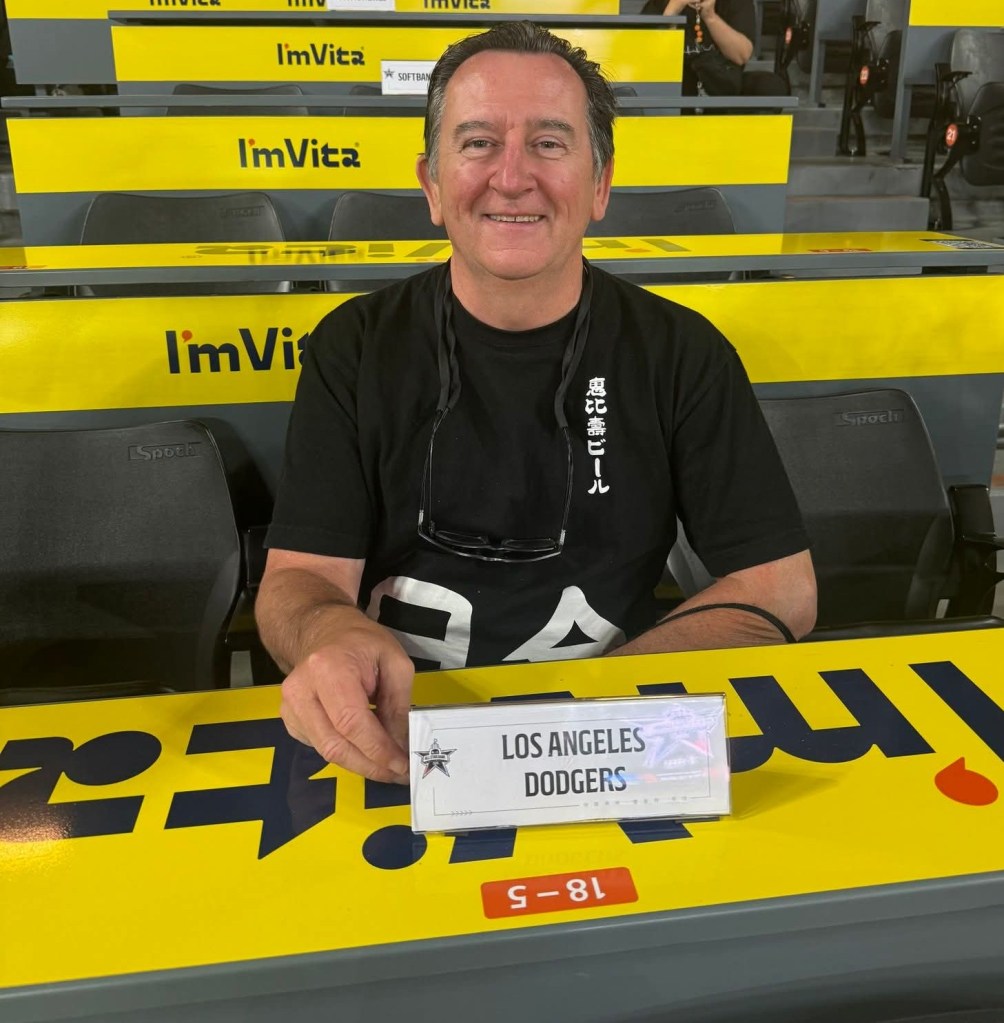
  • Akihiro “Ike” Ikuhara: Friendship Beyond Borders

    Akihiro “Ike” Ikuhara: Friendship Beyond Borders

    By Brent Shyer and Robert Schweppe

    This article was originally published on Walteromalley.com

    History will remember Akihiro “Ike” Ikuhara as a man who courageously followed his dream.

    Ikuhara might have enjoyed a long baseball coaching career in his native-born Japan, but he had aspirations that exceeded that goal, one that would take him across the Pacific Ocean to the United States of America. Borders would never define Ikuhara. Instead, he crossed borders and developed friendships around the world.

    A native of Kawara, Fukuoka, Japan, he played baseball as a catcher for prestigious Waseda University in Tokyo, where he graduated with his Bachelor of Science degree as a law major in 1959. Ikuhara worked for Riccar Sewing Machine Company (1959-1961) before playing semi-pro ball as a first baseman and then landing a position as Head Baseball Coach (1961-1964) at Asia University, Tokyo.

    But, still restless to pursue his dream of learning more about the business side of professional baseball in the United States, Ikuhara had a plan. He sought out well-respected Yomiuri columnist Sotaro Suzuki’s assistance for an introduction to Dodger President Walter O’Malley. Ikuhara went to visit Suzuki at his home in Yokohama. Multiple times when Ikuhara approached him, Suzuki wanted to think about it. Ikuhara was an avid reader of Suzuki’s columns and years earlier had also followed the excitement of the Dodgers 1956 Goodwill Tour to Japan. “Gil Hodges, Roy Campanella, Duke Snider – those were awfully big names,” once told the Los Angeles Times. “I couldn’t believe I was seeing them.”1 It whet his appetite to see more American baseball.

    In fact, Suzuki was more than a columnist, he was emissary to Matsutaro Shoriki, the “father of professional baseball in Japan” and had arranged the details of that trip with O’Malley. Suzuki was also credited with helping to bring baseball back to fans in Japan during Allied Occupation and Reconstruction after World War II.

    Ikuhara persisted and he decided to bring his wife Kimiko dressed in a kimono with him to Suzuki’s residence. She and Suzuki’s wife Toku spoke at the door and finally the Ikuharas were invited into the home’s drawing room. After asking many questions, Suzuki was convinced of Ikuhara’s sincerity and he crafted a letter of introduction to O’Malleyon February 8, 1965 about a 28-year-old who doesn’t speak English but wants to travel to America and learn about the business side of baseball.

     “I have met a very promising man who has recently come to me and my home quite often to become a good friend through baseball,” Suzuki wrote to O’Malley. He continued about the baseball coach, “So far I have observed his actions in the camp (an instructional camp conducted by Tommy Lasorda and Dodger scout Kenny Myers) and have known Ikuhara to be alert, earnest, and a very hard worker.”

    Then, in concluding, Suzuki makes this bold prediction, “I am sure he shall be a good help to your organization some days in the future.”

     In the letter, Suzuki suggested that Ikuhara begin by traveling that spring to Dodgertown, Vero Beach, Florida, where Suzuki would accompany him. On his friend’s recommendation, O’Malley was happy to oblige and hired Ikuhara. First, Ikuhara had to secure $7,000 to make the trip and pay for expenses for two years. Kimiko’s father and Ikuhara’s dad Sashichiro, who was an elementary school teacher, made that possible. Once the funding was achieved, friends from Waseda and Asia Universities, plus family members, gathered at Haneda Airport in Tokyo the first week of March, 1965 to see Ikuhara off and wish him well, as he boarded Japan Air Lines to Los Angeles, unsure of when he would return.

     On March 12, 1965, Ikuhara and Suzuki flew in the Dodger-owned Lockheed Electra II airplane, “Kay O’”, christened for the First Lady of the Dodgers Kay O’Malley and headed to Vero Beach, Florida. Walter O’Malley was at the Vero Beach Airport to greet Suzuki and meet Ikuhara. Kimiko temporarily stayed in Japan to raise their son Mutsuo.

    Peter O’Malley and Akihiro “Ike” Ikuhara at Holman Stadium, Dodgertown, Vero Beach, Florida circa 1965. Ikuhara started his Dodger baseball executive career at Dodgertown in the spring of 1965.

    Ikuhara started immediately with the Dodgers at Dodgertown to learn the basic operations of a major league front office and its seven days per week work schedule. He was an early riser and would outwork anyone with his dedication. Following his spring at Dodgertown, Ikuhara was asked to join Peter O’Malley in Spokane, Washington where Peter was President and General Manager of the Spokane Indians, Dodgers’ Triple-A affiliate of the Pacific Coast League, for two years (1965-66). Among Ikuhara’s many responsibilities, he managed the clubhouse in Spokane. O’Malley helped him to improve his English language skills and since Ikuhara was still removed from his wife and son, they frequently shared meals together while working long hours at the ballpark. The two bonded and became good friends.

    The Tokyo Yomiuri Giants created a special pin to commemorate the team in 1966 for the Dodgers Goodwill Tour to Japan.
    During Dodgers’ 1966 Goodwill Tour to Japan, (L-R): Kay O’Malley; Peter O’Malley; Japan Baseball Hall of Fame executive Akihiro “Ike” Ikuhara; Japan sports columnist Sotaro Suzuki, member of the Japan Baseball Hall of Fame.

    In June, 1966 with encouragement from Walter and Peter, Ikuhara finally had his family join him in Spokane. That fall, Ikuhara became invaluable to the Dodgers in planning and executing the details of the Dodgers Goodwill Tour to Japan, where they played 18 exhibition games throughout the country. The Dodger traveling party was happy to have his assistance throughout the trip. Upon returning to Japan for the 1966 Dodgers Goodwill Tour, Ikuhara said, “It was like a dream.”2     

    Akihiro “Ike” Ikuhara, a graduate of Waseda University in Japan, working in the Dodger ticket office.
    Akihiro “Ike” Ikuhara became Assistant to President Peter O’Malley in 1982. He is shown at the Dodgertown, Vero Beach, Florida ticket office. Ikuhara worked closely with Peter O’Malley to develop international baseball friendships and the emergence of players from Asia to play in the major leagues. Ikuhara was elected to the Japan Baseball Hall of Fame in 2002.

    When Peter moved to Los Angeles as Vice President, Stadium Operations in 1967, Ikuhara went as well to further his baseball business education at Dodger Stadium. Ikuhara purchased a home for his family in Gardena, CA. His career encompassed several front office jobs, including working in ticket sales, marketing, accounting, scouting, player development and minor league operations, plus as interpreter. Ikuhara also worked in the press box during games, controlling with great accuracy the ball, strike and out indicators on the Dodger Stadium right field scoreboard. The Dodgers found him extremely dedicated, first to arrive in the morning at Dodger Stadium. Ikuhara also was an avid runner who was regularly in the Dodger Stadium parking lots. He was also a man of great character, honest, and a good listener.

    Akihiro “Ike” Ikuhara (left) and Dodger President Peter O’Malley are in Tokyo in late October for the 1970 Japan Series between the Tokyo Yomiuri Giants and the Lotte Orions. The Los Angeles Times reported that fall that O’Malley is the first official of a Major League Baseball team to attend the Japan Series.
    Akihiro “Ike” Ikuhara, Assistant to President Peter O’Malley, circa 1990 at Dodgertown, Vero Beach, Florida. He would write Spring Training information and rules in Japanese for the guests from Japan.

    Peter O’Malley was named Dodger President on March 17, 1970 as his dad became Dodger Chairman of the Board. As Peter became more involved with pursuing groundbreaking international opportunities, Ikuhara was by his side. When the professional Tokyo Yomiuri Giants were invited by the O’Malley family to spend multiple spring trainings at Dodgertown, Ikuhara served as goodwill ambassador for and supervised those visits in 1967, 1971, 1975, and 1981, plus the professional Chunichi Dragons from Nagoya, Japan in 1988. Ike handwrote all the Dodgertown Spring Training information and rules in Japanese for the guests to make everyone feel welcome. 

    On February 12, 1980, Dodger executives are welcomed with a sign to the Mitsubishi Electric Company in Nagasaki, Japan for a scale-model demonstration of Diamond Vision technology. Center of photo, Fred Claire, Dodger Vice President, Public Relations and Promotions; Peter O’Malley, Dodger President; Akihiro “Ike” Ikuhara, interpreter; Bob Smith, Director of Stadium Operations, Los Angeles Dodgers.

    In February, 1980, Ikuhara went with O’Malley to Tokyo as the Dodgers and Yomiuri Giants owner Toru Shoriki established a “friendly agreement” for more front office and coaching exchanges. They also traveled to Nagasaki, Japan with other Dodger executives to see a demonstration of Mitsubishi Electric Corporation’s cutting-edge technology, the Diamond Vision full-color matrix screen on a 1/30th scale. O’Malley was impressed and committed to install the world’s first, large full-color video screen in time for the 1980 MLB All-Star Game at Dodger Stadium in July. That decision changed forever how in-game entertainment was presented to fans.  

    O’Malley, accompanied by Ikuhara, worked closely for many years pursuing and advocating baseball to become a gold medal sport in the Olympic Games. It involved constant travel, meetings, correspondence, phone calls and establishing friendships in order to succeed with International Olympic Committee (IOC) voting members worldwide. O’Malley visited Japan on a regular basis to meet with the Baseball Commissioner, League Presidents, team owners, executives, managers and many friends. Ikuhara was his trusted interpreter and traveling companion. 

    Ikuhara was sought by team owners in Nippon Professional Baseball as an executive to run their ballclubs, but his loyalty to the O’Malley family made him turn those opportunities down.

    In February, 1982, Ikuhara was named Assistant to the President and was indispensable in Peter’s efforts of diplomacy to develop and expand the global growth of baseball. He assisted as interpreter and in making friendships the world over. That same year, Peter’s friend Dr. Shigeyoshi Matsumae, founder and president of Tokai University, Tokyo had an idea to assist the international baseball movement. He suggested that Peter and Ikuhara travel to Moscow, Russia and he would open the door through his friendships there.

    In October, 1982, Dr. Matsumae provided the entrée for O’Malley and Ikuhara to seek support from Soviet Union Minister of Sports Sergei Pavlov for baseball to become an official Olympic sport, while at the same time offering the Dodgers’ assistance to the Russians in developing baseball. O’Malley, who had to cancel joining Ikuhara at the last minute, provided a letter of introduction to Ikuhara to hand carry to Pavlov, from Pavlov’s good friend Dr. Matsumae.

    Thus October 7, 1982 marked the first time baseball in the Western Hemisphere made official “contact” with the Soviet Union. The meeting, held in Moscow, was also attended by Isao “Dutch” Odachi, baseball coach and baseball advisor to Dr. Matsumae. “The message was that we would appreciate it if Russia would not veto baseball and Dr. Matsumae was planning to build a baseball stadium at Moscow State University on Lenin Hill in Moscow,” said O’Malley. Ikuhara and Odachi then traveled to Lausanne, Switzerland to meet Dr. Arpad Csanadi (from Hungary), chairman of the IOC Programing Committee, with the message that Pavlov (also president of the USSR National Olympic Committee) would not oppose the movement for baseball to become an official Olympic sport.      

    (L-R): Dr. Shigeyoshi Matsumae, founder and president, Tokai University, Tokyo; Akihiro “Ike” Ikuhara; Peter O’Malley, President, Los Angeles Dodgers (1970-1998); and Rod Dedeaux, College Hall of Fame baseball coach from USC (standing behind). Dr. Matsumae, a Japan Baseball Hall of Famer, visited Dodger Stadium on June 14, 1983 and sat in the Chairman’s Box with Peter O’Malley.
    (L-R): Former Baseball Commissioner Bowie Kuhn, Dodger President Peter O’Malley and Assistant to the Dodger President Akihiro “Ike” Ikuhara. Kuhn, O’Malley and Ikuhara are in Seoul, South Korea from February 9-10, 1985 for important meetings of the International Baseball Association (IBA) to discuss the possible inclusion of baseball as a gold medal sport for the 1988 Olympic Games to be held in Seoul.

    Dr. Robert Smith, President of Association International Baseball Amateur, the organization responsible for international amateur baseball known as AINBA; Baseball Commissioner Bowie Kuhn; legendary USC Head Baseball Coach Rod Dedeaux; and O’Malley’s leadership led to the inclusion of baseball as a demonstration sport in the Games of the XXIII Olympiad in Los Angeles. Ikuhara was involved in helping to support O’Malley during that significant time in international baseball history. The popularity of baseball at Dodger Stadium in an eight-team exhibition tournament was capped by Japan defeating the USA in the finals. Baseball was the third most attended event during the 1984 Olympics. As an artistic and financial success, the tournament provided impetus for baseball’s gold medal status two years later on October 13, 1986 as voted by the IOC. The first Olympic Games with baseball added to the official program as a gold medal sport was in Barcelona in 1992.

    On the bus celebrating the opening of “Dodger Baseball Field” at the Tianjin Institute of Physical Culture, People’s Republic of China, September 12, 1986. (L-R): Senichi Hoshino, NHK-TV baseball analyst and Japan Baseball Hall of Fame pitcher, Chunichi Dragons; Japan Baseball Hall of Famer Akihiro “Ike” Ikuhara; and Ikuo Ikeda, Publisher, Baseball Magazine Sha (Japan). The field was privately built by Dodger President Peter O’Malley, a first in China.
    Dodger President Peter O’Malley shakes hands with Akihiro “Ike” Ikuhara, his assistant during a dinner celebrating the opening of “Dodger Baseball Field”, privately built by O’Malley at TIanjin Institute of Physical Culture, People’s Republic of China, September 12, 1986. Ikuhara, the only MLB executive from the USA now in the Japan Baseball Hall of Fame, was a trusted interpreter and traveling companion who frequently accompanied O’Malley on international goodwill trips.

    O’Malley had a desire to privately build the first baseball field in the People’s Republic of China. It took many trips to China and developing friendships at the highest levels of government and sports, but O’Malley and Ikuhara persisted in the pursuit, hosting baseball leaders and elected officials at Dodger Stadium, considering potential sites, sending Dodger instructors to Kunming for clinics, and attending meetings in China.  

    The result of years of establishing those friendships was “Dodger Baseball Field” in China at the Tianjin Institute of Physical and Cultural Education (about 120 kilometers from Beijing). Dedication ceremonies were held on September 12, 1986 and O’Malley and Ikuhara invited numerous international baseball leaders and friends to attend the joyous occasion, including Dr. Matsumae;  former Baseball Commissioner Bowie Kuhn; former USC Baseball Head Coach Rod Dedeaux; Little League Baseball President Dr. Creighton Hale; Dr. Bob Smith, President, International Baseball Association (IBA); and Japan Baseball Hall of Fame pitcher Senichi Hoshino. Dodger Baseball Field became home to countless youth, amateur, collegiate and professional baseball games over decades of use and greatly assisted in the development of the sport in China.

    In February, 1987, Ikuhara and Dodger batting instructor Ben Hines traveled to Nagoya to assist the development of the professional Chunichi Dragons.

    In 1988, Ikuhara was personally asked to mentor struggling left-hand pitcher Masahiro Yamamoto of Japan’s Chunichi Dragons, who was on the verge of being cut. Through the long, hot Florida summer with the Single-A Vero Beach Dodgers, Ikuhara encouraged Yamamoto and taught him a new pitch – the screwball – and it propelled Yamamoto’s career like a rocket. Yamamoto was inducted into the Japan Baseball Hall of Fame in 2022, his 29-season career with Chunichi lasting until he was 50. He won 219 games.

    On January 18, 2009 in Nagoya, Japan, Masahiro Yamamoto, Hall of Fame pitcher of the professional Chunichi Dragons, stands on the stage with an image of his friend and mentor Japan Baseball Hall of Famer Akihiro “Ike” Ikuhara in the background. The party celebrates Yamamoto’s 200th career victory in 2008 and was attended by Peter O’Malley.

    “It’s fair to say that I am a 200-win pitcher made by Ike’s knowledge,” said Yamamoto in 2009 about his mentor Ikuhara. “He loved coaching me, so I wish he was still alive to see my success today. He just loved baseball so much and day after day he taught me how important fundamentals were. I learned the whole basis in Vero Beach…I couldn’t have asked for a better career.”

    Masahiro Yamamoto, a 2022 Japan Baseball Hall of Fame left-hand pitcher, returned to Dodgertown, Vero Beach, Florida to film the prestigious nationwide show “Another Sky” in Japan. In 2016, Yamamoto selected Historic Dodgertown as the Nippon TV Network program features an interview with a guest at their most memorable place in the world. Dodgertown is where Yamamoto turned his baseball career around in 1988. The professional Chunichi Dragons of Nagoya held spring training at Dodgertown and they wanted to accelerate Yamamoto’s development. Staying and pitching for the Vero Beach Dodgers, Yamamoto was mentored by Akihiro “Ike” Ikuhara, Assistant to O’Malley. Yamamoto would return to the Dragons and pitch for them from 1988 to 2015 becoming a Hall of Famer. He always gives credit to O’Malley and Ikuhara for the role they played in launching his career.

    On February 24, 2016, Yamamoto made a triumphant return to Historic Dodgertown, Vero Beach, Florida to film Japan’s prestigious nationwide show “Another Sky”. The format of the Nippon TV Network program features an interview with a guest at their most memorable place in the world and Yamamoto selected Dodgertown because it turned his baseball career around in 1988 under the tutelage of Ikuhara. At the time, Ikuhara told Yamamoto, “Never give up. If you do, that’s the end.” The young pitcher took that advice to heart and kept moving forward.   

    (L-R): Peter O’Malley, Dodger President; Miichiro Katoh, Chairman, Chunichi Shimbun and owner of Chunichi Dragons; unidentified; Akihiro “Ike” Ikuhara, assistant to Dodger President Peter O’Malley; unidentified. O’Malley welcomes Katoh to the Vero Beach Airport adjacent to Dodgertown, Vero Beach, Florida with a Dodger jacket. The Chunichi Dragons trained at Dodgertown for two and a half weeks, February 15-March 5, 1988 and played the Dodgers during an exhibition game on March 3.
    While Japan’s professional Chunichi Dragons are training at Dodgertown, Vero Beach, Florida, two baseball coaches from Russia — Alexander Ardatov and Guela Chikhradze — are introduced at a press conference held by Dodger President Peter O’Malley. Interpreting for the Japanese media is Akihiro “Ike” Ikuhara next to O’Malley, his longtime assistant. Dodgertown was the site of numerous cultural and international baseball exchanges.
    (L-R): Front row – Director, Dodgertown Terry Reynolds; Dodger President Peter O’Malley; Alexander Ardatov, coach from Russia; David Osinski, Executive Director, International Baseball Federation; Guela Chikhradze, baseball coach from Russia. Back row – Akihiro “Ike” Ikuhara, assistant to Dodger President Peter O’Malley; Satoru Ryo Nakayama, President of the Chunichi Dragons. O’Malley hosts baseball coaches Guela Chikhradze and Alexander Ardatov from Russia for lunch in the dining room at Dodgertown, Vero Beach, Florida. The coaches were visiting Dodgertown to learn more about training techniques and instruction to help a fledgling baseball program in Russia. The coaches were at Dodgertown from February 22-26, 1988.

    In 1988 Spring Training at Dodgertown, O’Malley invited two baseball coaches from Russia to visit and stay at the site to learn about the Dodger way to play the game. At the same time, the Chunichi Dragons were training at Dodgertown. Ikuhara and O’Malley held a press conference in which Ikuhara fielded questions from reporters from Japan and interpreted them for O’Malley and also the Russian coaches. He would then translate back into Japanese for the visiting press. Ikuhara took questions from the American writers and translated them into Japanese for the Chunichi manager and staff and then interpreted the answers back into English. It was truly a moment of diplomacy through baseball.  

    Dodger President Peter O’Malley is in Moscow, Russia for groundbreaking ceremonies for the first field dedicated solely to baseball in Russia, privately constructed by Dr. Shigeyoshi Matsumae, founder of Tokai University, Tokyo. O’Malley is joined by his longtime assistant Akihiro “Ike” Ikuhara on the trip starting April 17, 1988 and they stand next to an artist’s rendering of Matsumae Baseball Stadium. O’Malley and Ikuhara returned for the dedication ceremonies of Matsumae Baseball Stadium on September 1, 1989 on the campus of Moscow State University, Lenin Hill.
    (L-R): Unidentified; Dodger President Peter O’Malley; Dr. Shigeyoshi Matsumae, founder and president, Tokai University, Tokyo; Dr. Creighton Hale, President, Little League Baseball; Akihiro “Ike” Ikuhara, Assistant to Dodger President, June 27, 1988, Tokyo.

    On April 17, 1988, O’Malley and Ikuhara made a goodwill trip to Moscow to attend the Groundbreaking Ceremony for Matsumae Baseball Stadium at Moscow State University, a $3.2 million project donated by friend Dr. Matsumae. It was to be the first baseball-only stadium built in the Soviet Union. Rod Dedeaux, the USA Olympic baseball coach in 1964 and 1984, and IBA President Dr. Smith joined them for the historic event. On September 1, 1989, O’Malley and Ikuhara returned to Moscow as guests of Dr. Matsumae for the Grand Opening of Matsumae Stadium and a four-team tournament, another milestone in international baseball history.

    Ikuhara teamed with Japan Baseball Hall of Famer Shigeo Nagashimato broadcast the World Series in Japan from 1981-1986.

    The author of two baseball books in Japanese, Ikuhara wrote: “The Man Who Survives the Race” in 1984 and “Dodger Way: A Winning Tradition” in 1985. In 1997, his wife Kimiko authored a book, “The Man Who Married the Dodgers”.

    (L-R): Dr. Creighton Hale, President, Little League Baseball; Ike Ikuhara, Assistant to Dodger President Peter O’Malley. Dr. Hale was formerly a physiologist who invented a plastic batting helmet for Little Leaguers. His innovation and care for Little League Baseball led him to be named president in 1974 and later became its Chief Operating Officer where he grew Little League to more than 80 countries. He, Peter O’Malley and Ikuhara frequently traveled on behalf of international baseball.
    (L-R): Akihiro “Ike” Ikuhara, assistant to Dodger President Peter O’Malley; Ralph Avila, Dodger Vice President, Campo Las Palmas; Carlos Garcia, Minister of Sport, Nicaragua; Peter O’Malley, Dodger President. On January 18, 1992, Peter O’Malley helped to dedicate Dodgers Little League Friendship Field (known as Amistad Dodgers) in Managua, Nicaragua. O’Malley privately built the stadium which seats 3,000 fans and was painted blue in honor of the Dodgers

    In October 1990, Ikuhara went with O’Malley to Managua, Nicaragua for the Nicaraguan National Baseball Tournament. Ikuhara recalled in an interview, “Later, Peter was thinking out loud and he said, ‘We really need to do something to help them.’ And I told him, ‘Peter, every time you leave the country you spend money!’”3 Ikuhara and O’Malley returned to Managua for the grand opening of Dodgers Little League Friendship Field (known as Amistad Dodgers) on January 18, 1992, which was privately built by O’Malley for the youth of Nicaragua. The 3,000-seat field was appropriately painted blue and was opened by Nicaragua President Violeta Barrios de Chamorro. Dr. Creighton Hale, President, Little League Baseball, then MLB pitcher Dennis Martinez, and Rod Dedeaux, legendary USC head baseball coach were at the dedication.  

    In April 1992, O’Malley asked Ikuhara to help Kazushige Nagashima, son of Tokyo Yomiuri Giants Hall of Famer Shigeo Nagashima, while with the Vero Beach Dodgers in the Florida State League. Third baseman Nagashima returned to play three seasons with the Giants after a year in Vero Beach under Ikuhara’s supervision. 

    On October 26, 1992, Ikuhara passed away at age 55. O’Malley traveled to Tokyo to attend the January 27, 1993 memorial service in honor of his longtime friend and assistant. O’Malley said, “Ike was an extraordinary individual and had the trust and friendship of everyone he worked with. He was truly the Dodgers’ international goodwill ambassador and he will be deeply missed.”

    Peter O’Malley, President, Los Angeles Dodgers, from 1970-1998, addresses the attendees at the memorial service to honor Akihiro “Ike” Ikuhara on January 27, 1993 in Tokyo. Ikuhara passed away on October 26, 1992, having worked for the Dodgers since 1965. He served as Assistant to the President from 1982 until his passing, working closely with O’Malley forging friendships and international baseball relationships.
    (L-R): Renzo Ishii; Sadaharu Oh; Shigeo Nagashima. Renzo Ishii, longtime head baseball coach at Waseda University, Tokyo, Japan and a Japan Baseball Hall of Famer and Sadaharu Oh, Japan Baseball Hall of Fame slugger from the Tokyo Yomiuri Giants, listen to Japan Baseball Hall of Famer Shigeo Nagashima as he addresses the attendees of the memorial service to honor Akihiro “Ike” Ikuhara on January 27, 1993 in Tokyo.

    Longtime sports columnist Allan Malamud wrote, “The international expertise, goodwill and warmth of Akihiro (Ike) Ikuhara, Peter O’Malley’s longtime assistant who died this week, will be missed at Dodger Stadium.”4

    Dodger President Peter O’Malley with Dodger Manager Tommy Lasorda during the 1993 Dodgers Friendship Series in Fukuoka, Japan. Lasorda and the Dodgers wore a special rectangular black patch with the name “IKE” to commemorate O’Malley’s longtime assistant Akihiro “Ike” Ikuhara, who passed on October 26, 1992. The Dodgers played three exhibition games in Taiwan, the first MLB team to play in Taiwan, and two exhibition games against the Daiei Hawks and Tokyo Yomiuri Giants combined teams in Fukuoka, Japan.

    Ichiro Yoshikuni, Commissioner of Baseball in Japan, recognized Ikuhara’s significant contributions to improving baseball and promoting goodwill between the U.S. and Japan at the memorial service. To honor the memory of Ikuhara, the Los Angeles Dodgers wore a special black “IKE” rectangular patch on their uniforms (right sleeves) during the 1993 Friendship Series to Taiwan and Japan.

    On January 11, 2002, Ikuhara became the only major league executive from the United States to be elected to the Japan Baseball Hall of Fame. Induction ceremonies took place on July 12, 2002 during the Japanese League All-Star Game at Tokyo Dome. O’Malley traveled to Tokyo to participate, alongside Ikuhara’s family members and Dodger executives.

    Ike Ikuhara, Assistant to President Peter O’Malley, at Dodger Stadium, Los Angeles. He worked in conjunction with Peter O’Malley for the growth of international baseball, including baseball as a gold medal sport in the Olympic Games, a dream realized with IOC approval in 1986. Ikuhara was posthumously elected to the Japan Baseball Hall of Fame in 2002.
    (L-R): Akihiro “Ike” Ikuhara, standing; Peter O’Malley seated at O’Malley’s office, Dodger Stadium, Los Angeles, circa 1990.

    Harry Missildine of the Moscow-Pullman Daily News reported on the significance of Ike Ikuhara and his election to the Japan Baseball Hall of Fame on January 25, 2002. “Walter and Peter O’Malley, valued and enhanced the Dodger association with Japanese baseball. The team played postseason tours in Japan and it was Ikuhara who helped coordinate the second trip there in 1966…A cheery, good-looking, smart, enthusiastic young man, Ike’s love and respect for the game were profound.”5 

    (L-R): Waseda University, Dean, School of Sports Science, Katsuo Yamazaki; Peter O’Malley. On May 16, 2003, O’Malley is the guest speaker for the 2003 Akihiro “Ike” Ikuhara and Peter O’Malley Memorial Sports Management Class at Waseda University in Tokyo. A plaque commemorating Ikuhara is permanently placed at Waseda University, Tokyo, his alma mater. O’Malley held a series of 12 classes from 2003-2009 featuring an all-star lineup of lecturers.
    Peter O’Malley speaks at the July 29, 2006 Akihiro “Ike” Ikuhara and Peter O’Malley Memorial Sports Management Class at Waseda University, Tokyo. The guest lecturer was Masato Mizuno, Chairman, Mizuno Corporation and was the seventh of 12 lectures presented by the class from 2003-2009.

    In 2003, to honor his longtime friend, Peter developed, established, and sponsored the Akihiro “Ike” Ikuhara and Peter O’Malley Memorial Sports Management Class at Waseda University as a way of encouraging and helping students to pursue a career in sports business. “When he attended Waseda University there was no department emphasizing and encouraging a career in sports management yet he succeeded with the Dodgers as a key executive,” O’Malley said. Ikuhara’s former Waseda Head Baseball Coach Renzo Ishii was instrumental in assisting to connect O’Malley with University President Katsuhiko Shirai and the new School of Sports Sciences Dean, Katsuo Yamazaki to establish the class.

    A series of 12 lectures with prominent speakers including two U.S. Presidents – George H.W. Bush in 2006 and George W. Bush in 2009 – ensued.

    In 2010, the Waseda University baseball team visited with Peter O’Malley in Los Angeles. The team also went to the gravesite of Walter O’Malley and Ikuhara to pay their respects. The 1994 Waseda baseball team was the first amateur team to visit Dodgertown, Vero Beach, Florida and train alongside the major league Dodgers. After that experience, longtime Waseda Head Baseball Coach Renzo Ishii, a 2020 Japan Baseball Hall of Famer, expressed appreciation to O’Malley by sending an exquisite helmet and suit of armor (“Katchuu” in Japanese), a replica of a Nanban (lit. “Southern Barbarian”), or Western, armor made in the late 16th century. Such European pieces of armor were coveted at that time by samurai, as they provided superior defense against the emerging threat of firearms on the battlefield.    

    In 2013, Ikuhara’s brother Nobuhisa wrote a biography about Ike’s storied life and donated copies to the National Baseball Hall of Fame in Cooperstown, Japan Baseball Hall of Fame and Waseda University. That same year, an exhibit at the Japan Baseball Hall of Fame called “Baseball in Japan and the O’Malley Family:  A Lasting Friendship” displayed items related to the O’Malleys and Ikuhara. Japan Baseball Commissioner Ryozo Kato said about Ikuhara, “He was truly a person who brought American and Asian baseball together.”

    In 2019, an exhibit of Ikuhara’s remarkable career was held in his hometown bringing full circle to a man with a dream.

  • The 1998 Super Dome All-Star Series in Japan

    The 1998 Super Dome All-Star Series in Japan

    by Elias Toney

    Every Monday morning we will post an article from SABR’s award-winning books Nichibei Yakyu: Volumes I and II. Each will present a different chapter in the long history of US-Japan baseball relations. This week Elias Toney tell us about the 1998 MLB vs Japan all-star series.

    For baseball, 1998 was a banner year. The home-run race between Mark McGwire and Sammy Sosa made headlines worldwide and caused a surge in interest in the game after years of flagging attendance and viewership. For a group of major-league players and coaches, the season didn’t end with the last out of the World Series; the 1998 tour of Japan brought many significant stars to Japan. However, despite the immense fanfare of the 1998 major-league season and the massive star power it produced for a handful of players, later analysis would cast a shadow over the accomplishments and celebratory mood of that season, due in large part to the role played by performance-enhancing drugs. In a striking parallel, the 1998 NPB season was likewise tainted by scandal – a sign-stealing scandal that called into question the integrity of the staff of one of Japanese baseball’s most storied franchises, the Fukuoka Daiei Hawks. The 1998 tour also provided an early proving ground for a number of Japanese players who became household names in North America in a few short years. It was the last tour prior to the implementation of the posting system for major-league teams to sign Japanese talent.

    The 1998 home-run race between Mark McGwire of the St. Louis Cardinals and Sammy Sosa of the Chicago Cubs to break Roger Maris’s single-season home-run record of 61 increased the public profile of both men and became a major storyline for the duration of the season. McGwire was the first to break Maris’s record by hitting 70 home runs to Sosa’s 66. However, Sosa finished the season with NL MVP honors.

    The excitement generated by the home-run race was the capstone on a season that saw ticket sales go up 12 percent from 1997. Speaking prior to the tour, players union executive director Donald Fehr connected the success of the 1998 season with the upcoming tour, saying, “Nineteen ninety-eight will be remembered as the best baseball season in decades, perhaps the best season of this century. No one wants this season to end. This year’s All-Star Tour will be a fitting finale.”

    McGwire was offered the opportunity to play in Japan, but declined. Sosa, however, decided to cap off his career year by joining the tour. Katsutoshi Tsuzaki, a reporter for the sponsoring Japanese newspaper Yomiuri Shimbun, told reporters from the Orlando Sentinel, “They’re both very popular. But Sosa is more characteristic of the Japanese.”

    Sosa viewed the tour as an opportunity to raise money for the Sammy Sosa Foundation which he had founded in June 1998, specifically to support his efforts at relief after Hurricane Georges hit the Dominican Republic.

    The series, called the Super Dome All-Star Series, consisted of eight games, all played in the domed stadiums in Tokyo, Osaka and Fukuoka. Excitement was high among Japanese fans for the Major League Baseball-Nippon Professional Baseball exhibitions. For the first time, they were given a direct role in deciding which of NPB’s stars would face off against their major-league counterparts; the opening game lineup, as well as the manager for the Japanese team, was to be decided by popular vote. The manager would then select the remaining 19 players.

    Japanese fans picked the starting battery of right-hander Kenshin Kawakami of the Chunichi Dragons and catcher Atsuya Furuta of the Yakult Swallows. For the infield the fans elected Kazuhiro Kiyohara and Toshihisa Nishi of the Yomiuri Giants, and Akira Eto of the Hiroshima Carp, giving the Central League the lion’s share of infielders, although a Seibu Lion, Kazuo Matsui, rounded them out. As with the infield, two Giants outfielders were elected to the starting lineup – Hideki Matsui and Yoshinobu Takahashi. Joining them was Ichiro Suzuki of the Orix Blue Wave.

    Shigeo Nagashima of the Giants was elected to manage the NPB squad. He in turn selected four players from the Yokohama BayStars, three from the Fukuoka Daiei Hawks, two each from the Chiba Lotte Marines, Nippon Ham Fighters, and Carp, and one each from the Dragons, Swallows, Lions, and Hanshin Tigers to stock his full roster of 28.

    Also new for the Japanese team was a fixed roster for the duration of the series. In a November 6, 1998, article, Pacific Stars and Stripes described the significance of the change, stating, “The 28-man roster is a break from past tours, where players were rotated in and out throughout the series, giving a large number of players a chance to compete against major leaguers. The system was believed to be unfair because the visitors seldom faced the same pitcher twice in the series.”

    Although exhibitions in spirit, the tour also had a financial incentive. Each major-league player who agreed to join the trip was given a base salary of $85,000 with all expenses covered. In addition, the first three games had prize money of 5 million yen (about $43,500), with that amount doubled to 10 million yen (about $87,000) for the latter four games.

    The first game was an exhibition between visiting MLB All-Stars and the Yomiuri Giants, which had finished fourth in the Central League at 73-62-0, on the Giants’ home field at the Tokyo Dome on November 6, before a sellout crowd.

    Hawaiian-born sumo wrestler Konishiki, dressed in a full Giants uniform with number 333, threw out the ceremonial first pitch. On his trip to the visitors’ dugout after leaving the mound, Konishiki found himself highly popular among the major-league players. He told reporters, “Everyone wanted my autograph. I was a little embarrassed by all the attention.”

    Giants fans greeted their squad with their customary cheers of support. The major league players, however, were greeted with a stony silence when they were up to bat, with one exception: Sosa received massive cheers and applause for each of his at-bats. In return Sosa thrilled the fans in his first at-bat in Japan, taking Giants starter Yusaku Iriki deep to right field, with the ball just staying fair. Ever the showman, Sosa told the press, “I hit a home run not only for me, but for the people of Japan.”

    Manager Mike Hargrove used five pitchers to keep the Giants at bay, including Philadelphia Phillies ace Curt Schilling, who started the game, limiting the Giants to one run. The MLB All-Stars beat the Giants 4-1 in a strong start to their visit to Japan.

    Upon his arrival in Japan, Sosa had indicated a desire to meet with all-time Japanese home-run king Sadaharu Oh. However, when asked about Hideki Matsui, who had led NPB with 34 home runs in 1998, Sosa made an unforced error, telling the press, “This is my first time in Japan so I don’t know the players but I will know Mr. What’s His Name? But I would like to talk to him and find out what position that he plays and what he does just so we can have a little bit of conversation.”

    The first meeting between Matsui and Sosa, prior to the game, was no less awkward than Sosa’s initial remarks. No translator was available, limiting what the two sluggers could discuss, but signed bats were exchanged. Matsui said of their first encounter, “We wished each other good luck and said do your best. Then I watched him practice hitting. His swing is very strong and very fast.”

    The following day, November 7, the MLB All-Stars again found themselves playing at the Tokyo Dome, this time against the elected and appointed NPB All-Stars. Although they were in Japan for exhibitions, the realities of the offseason and free agency couldn’t completely be left behind in North America. The first game of the All-Star Series coincided with the first day when major-league teams could hold talks with new free agents. A few hours before taking the field, outfielder Devon White gave verbal agreement to a three-year contract with the Los Angeles Dodgers. However, he had left for Japan while still an Arizona Diamondback and had only that uniform with him, necessitating that he play the tour in that kit. “It doesn’t feel weird at all,” White reflected. “I’m in Japan and I’m here to represent the major leagues and coming out here and playing ball.”

    Offseason realities didn’t affect just the players. The Cleveland Plain Dealer reported on November 15, the last day of the Super Dome All-Star Series, that Hargrove had left voicemails for Indians general manager John Hart every day of the tour to discuss potential free-agent signings.

    The major-league squad struck in the second, again with Sosa accounting for the first run when he scored on Javy Lopez’s single to left. Although he scored the first MLB run in what ended up being an 8-1 rout of the NPB All-Stars, Sosa found himself without a home run to support his team and thrill the Japanese fans. He described his performance ruefully, saying, “I’m sorry I didn’t help the team today. Tomorrow I’ll try to do better.”

    The offensive star for the major-league team was Manny Ramirez, who hit a three-run home run in the seventh inning and a two-run homer in the ninth. Andruw Jones also hit a home run. This 8-1 offensive explosion was to set the tone for the MLB All-Stars, at least when they played in the Tokyo Dome.

    On November 8 Hargrove was at the Tokyo Dome prior to the start of the second game of the All-Star Series when he felt something that likely put him on familiar, if shaky, footing. A 4.9-magnitude earthquake had hit the Tokyo area. “I thought someone was shaking my chair,” Hargrove said. This was not his first time managing a game affected by an earthquake. On May 2, 1996, Hargrove had been managing the Indians in a game at the Seattle Kingdome that was postponed due to a magnitude 5.4 earthquake.

    Game 2 in Tokyo proceeded as scheduled and there were no reports of casualties or serious damage. The earthquake also did little to diminish the enthusiasm of the sellout crowd of 55,000 at the Tokyo Dome. Pregame festivities included an opportunity for the visiting major-league players and coaches to meet with Sadaharu Oh, then manager of the Fukuoka Daiei Hawks and serving on the coaching staff for the NPB All-Stars. The MLB players ran across the diamond for a chance to meet Oh with the exception of Sammy Sosa, who had had what the Pacific Stars and Stripes described as “a private audience with the pope of power hitters.”

    The major-league team was unshaken by the earthquake, jumping out to a three-run first inning. The first two pitches of the game thrown by NPB starter Kenshin Kawakami were hit for singles by Fernando Vina and Jason Kendall. Carlos Delgado then launched a home run to right-center, giving the MLB All-Stars a 3-0 lead.

    The NPB All-Stars scored in the second on a sacrifice fly by catcher Motonobu Tanishige that knocked in Atsushi Kataoka. That, however, accounted for the only run given up by starter Rick Helling.

    One inning later the major-league stars put up five more runs. Sosa hit a bases-loaded double that scored two runs. He finished his night 3-for-4. Sosa’s double was followed by a sacrifice fly by Manny Ramirez and an RBI double by Garret Anderson. Two more runs were provided by Delgado in the fourth when he launched his second home run of the game, giving the MLB All-Stars an impressive 10-1 lead.

    The NPB squad was not ready to give up yet. In the sixth inning they sent nine men to the plate and scored five runs. But the Japanese rally was ultimately stopped short with Trevor Hoffman getting the save. The final score was 10-7 in favor of the MLB All-Stars.

    Nevertheless, the major-league squad had positive things to say about the NBP rally. “They’re really good batters so it’s surprising that we kept them down for five innings,” said Kendall. “We knew they were going to get their hits sooner or later.” With this victory, the MLB All-Stars had swept their first three games in the Japanese capital. The next three games took them “on the road,” away from the confines of the Tokyo Dome.

    After three wins in Tokyo, two against the NPB All-Stars, the series shifted to a single game played at the Fukuoka Dome, home of the Hawks, on November 10.

    The MLB All-Stars took a 1-0 lead in the top of the first on Sosa’s sacrifice fly off Kazuhiro Takeda, driving in Andruw Jones. The lead did not last, however, as the Japanese team took the lead on a two-run home run by Hideki Matsui in the bottom of the inning. This home run gave the NPB All-Stars their first lead of the series.

    The NPB team added to its lead in the fifth. Kazuo Matsui reached first by being hit on the foot by a pitch. He stole second base and then third. On the latter play, catcher Javy Lopez’s throw skipped away, allowing Matsui to score. The Japanese added two runs in the sixth inning in support of Takeda. Pitching in front of his hometown crowd, Takeda retired 11 MLB All-Star hitters in a row at one point. The lead afforded to the NPB squad by their offensive explosion held, with the Japanese team taking its first victory of the series, 6-3.

    Hideki Matsui was pleased with his performance in Fukuoka and thus far on the tour. He indicated that this series was more than just a handful of fun exhibitions for him, commenting: “I really would like to play in the big leagues someday. It’s obviously just a dream. In the meantime, I’d like to try to reach the high level set by major league players. I was concerned that I could not play at such a high level if I played there. These series are a way for me to try.”

    The fourth game was played on November 11 at the Osaka Dome, home of the then Kintetsu Buffaloes. In contrast to the three prior matchups, this game was a pitchers’ duel. The NPB All-Stars started Tetsuro Kawajiri on the mound. For Kawajiri – who was on the NPB roster as a replacement for the injured Kazuhiro Sasaki – it was his first start in over a month. The MLB All-Stars started Curt Schilling.

    The two pitchers were both supported by solid defensive efforts. After seeing NPB runners steal 12 bases in 12 attempts in the first three games, the major-league catchers finally got even when Jason Kendall was able to throw out two runners, Takuro Ishii and Hideki Matsui, in the first two innings. Not to be outdone, NPB fielders gave Kawajiri great support, turning two double plays and throwing two runners out at the plate, eliminating two-thirds of the six MLB All-Star runners. The first play at the plate was controversial, with Devon White appearing to some observers to be safe. Hargrove said at the conclusion of the tour, “[The MLB All-Stars] took it very personal. … Very personal, because we thought that we got (screwed).”

    Bolstered by solid defense, Kawajiri also had an excellent outing, allowing only one hit over the first six innings. After the game he described his strategy for neutralizing the powerful MLB All-Star lineup. “I just kept the ball down and threw lots of off-speed pitches,” Kawajiri explained. “I wanted to get major league hitters to swing at bad pitches and keep them off balance.”

    The NPB squad broke a 0-0 stalemate in the sixth when Schilling gave up a walk, a single, and a walk. Ichiro Suzuki then hit a sacrifice fly, driving in a run.

    The NPB team held on to its 1-0 lead with Kawajiri throwing 8⅓ innings of scoreless ball before being relieved with runners at first and second. Akinori Otsuka came in to close and after Nomar Garciaparra stole third, Jason Kendall hit a fly ball to shallow center. Garciaparra attempted to score but became the second major-league runner thrown out on the plate courtesy of a well-aimed, well-timed throw by Hideki Matsui.

    After the game, both Hargrove and Nagashima had high praise for Kawajiri. Hargrove attributed some of the difficulty his batters had with Kawajiri to his unorthodox submarine pitching style. “While there have been pitchers with the same motion and delivery as him in the major leagues, there haven’t been many,” he said. Kawajiri’s impressive outing evened the series at two games apiece with three remaining.

    Game 5 in Osaka on November 12 coincided with Sosa’s 30th birthday. He celebrated by splitting a cake with some Japanese youth baseball players before taking the field.

    Jason Giambi hit a double to left in the third inning and was driven home on a sacrifice fly from Andruw Jones, giving the MLB All-Stars their first run in 14 innings against the NPB All-Stars.

    Starter Jamie Moyer went five innings. NPB manager Shigeo Nagashima praised Moyer’s efforts to keep Japanese runners from moving up, saying, “Moyer had a very good pick-off move and stopped us from executing our running game. When we face another major-league pitcher who doesn’t have as good a move, I think we’ll be back at our running game.” Moyer also helped limit the number of opportunities for Japanese runners to steal by allowing only two hits and two walks. Four relievers – Dan Plesac, Mike Jackson, Tom Gordon, and Hoffman – allowed only three additional hits, with Hoffman again recording the save. The MLB All-Stars won 2-0, their only win away from Tokyo.

    Sosa celebrated his birthday by getting two hits, a single, and a double. The double came in the ninth inning. Sosa advanced on a wild pitch and scored on a sacrifice fly by Vinny Castilla.

    The series returned to the Tokyo Dome on November 14 for the final two games. The return appeared to reinvigorate the major-league squad’s bats.They struck early with a leadoff single in the bottom of the first by Fernando Vina. Vina scored on a single to right field by Sosa. That was the start of a big night for both men. In the second, Vina struck again, hitting a home run with two men on that just made it over the wall in right field.

    Sosa had his best night at the plate in this game, going 4-for-4 with four RBIs. Sosa’s biggest hit of the night was his own three-run home run in the sixth inning, his second home run since arriving in Japan and his first against the NPB All-Star team. Indeed, Sosa had gone 23 at-bats in Japan since hitting a home run in his first game against the Giants. Sosa commented about his low home-run total: “When I came here, I think people were looking for me to hit home runs. The type of game that I’ve been playing, I’m a complete player and I’m not going to go out there every day and try to hit home runs. I’ve been doing a lot of things, getting a lot of base hits and a lot of doubles and steal[ing] bases.”

    The MLB All-Stars won, 9-0, with starter Rick Helling giving up four hits in five innings. This win clinched the series for the major-league squad, which led the Japanese team, 4-2, with only one game remaining. “We said we have to win this series today and not mess around with it,” Vina said. “We got it together. Everybody realizes that we came a long way and we didn’t come here to lose. This is major-league baseball. We’re representing everybody.”

    With one final game to play, however, it was premature for the players and managers to draw conclusions from the tour yet.

    Despite the blowout series clincher, both squads opted to put on a show for the fans in the final game of the series on November 15, culminating in a come-from-behind 9-8 win for the MLB All-Stars.

    The major league team got on the board first, taking a 1-0 lead in the second. That lead did not last long. Akira Eto scored in the bottom of the second on an RBI groundout by Motonobu Tanishige. The NPB team scored two more runs in the third inning with Ichiro Suzuki smacking an RBI triple and scoring a run driven in by Hideki Matsui.

    The NPB players appeared to have blown the game wide open when in the fourth they chased MLB starting pitcher Al Leiter, who gave up seven runs total in three-plus innings pitched.

    The MLB All-Stars didn’t want to finish their time in Japan being blown out, however. In the fifth inning, Sammy Sosa hit his third and final home run of the tour. Jason Giambi made it back-to-back home runs with his own shot, cutting the NPB lead to 7-5. The major-league team continued to add runs, ultimately regaining the lead in the top of the eighth thanks to RBI singles by Garret Anderson and Javier Lopez. Brett Tomko, who relieved Leiter, went 3⅓ innings and got the win. Jason Giambi recorded the final out of the series on Norihiro Nakamura’s foulout, giving Tom Gordon the save and the MLB team a final 5-2 record against the NPB All-Stars and a 6-2 record overall for their time in Japan.

    At the conclusion of the tour, the victorious MLB All-Stars reflected fondly on both their own performances and those of their hosts. In his autobiography, written with Marcos Breton, Sosa said, “I went to Japan and played in several exhibition games before wildly enthusiastic fans. I fed off their energy, and in 24 at-bats, I got 12 hits – a .500 average – with three homers and 9 RBI, earning me MVP honors on a team of major-league all-stars.”

    Sosa’s efforts to use the tour to raise attention and funds for his charitable efforts in the Dominican Republic were a success. Between 1998 and 2000, NPB donated $25,000 to the Sammy Sosa Foundation. In addition Sosa raised 4.6 million yen in a memorabilia auction at the Tokyo Foreign Correspondents Club at the conclusion of the tour; and a further 2 million yen was donated by Japanese corporate interests. Sosa also met with Japanese Foreign Minister Masahiko Komura on November 16 to request continued Japanese assistance to the Dominican Republic in the wake of Hurricane Georges.

    Prior to the final game of the tour, Mike Hargrove took off the kid gloves he had been using with the Japanese press, telling Pacific Stars and Stripes: “Even though we lost two ball games, I’m surprised how much better the American team is than the Japanese. I’ve tried to be real diplomatic with the Japanese press. They ask you how the Japanese have stacked up, and in general on the whole, they don’t.”

    Hargrove’s critique of the NPB All-Stars was wide-ranging. He cited only one player, shortstop Kazuo Matsui, as being of major-league caliber. Notably, he was dismissive of the talents of both Ichiro Suzuki and Hideki Matsui: “Matsui and Ichiro can probably be role players on a major league team but I don’t think they could play every day.” Hargrove did add a codicil to his critique of the NPB All-Stars, describing NPB pitching as “the strongest thing I’ve seen [on the tour].”

    Regardless of Hargrove’s opinion of the Japanese team, Ichiro Suzuki was awarded the title of Most Remarkable Player of the series. Sosa said of Ichiro, “He’s got a lot of ability. He can run, hit, throw and field. I told him maybe I’ll see him in the major leagues.”

    The 1998 Super Dome Series could not be isolated from events in the larger baseball world and especially from separate scandals that arose in both NPB and the major leagues during and after the 1998 season.

    Sadaharu Oh had followed the McGwire-Sosa home-run race closely. Sports Illustrated’s Richard Deitsch described Oh’s fascination with the race: “With the exploits of Mark McGwire and Sammy Sosa being played up on the front pages of Japan’s dailies and on NHK-TV, Oh followed this year’s home run chase as if he lived on Waveland Avenue. ‘The games were on television very early in the morning, so they were hard to watch,’ he says. ‘But I always checked the highlights.’”

    Oh and Sosa met before the second game of the series. Oh told the press Sosa would be an atypical hitter in Japan, explaining, “Every hitter has his own logic about hitting. Japanese hitters wait longer so they can just make contact. Sosa is more aggressive and attacks the ball early in the strike zone.” Both home-run kings, however, would soon be linked to scandals.

    The Daiei Hawks, which Oh was managing at the time, were implicated in a sign-stealing scandal at their home ballpark, the Fukuoka Dome, host to the third game of the Super Dome Series. The novelty of the alleged Hawks scandal in the world of Japanese baseball was described by Mark D. West in his book Secrets, Sex and Spectacle: The Rules of Scandal in Japan and the United States:

    Baseball’s Sammy Sosa was found with cork in his bat, but in Japan, such individual cheating scandals are rare. The closest equivalent in Japanese baseball is a scandal involving the Fukuoka Daiei Hawks in which the Hawks stole hand signals used by opposing catchers and pitchers at the Fukuoka Dome. Several people were involved. Reportedly, a Hawks official watched TV in a back room, read the sign, walkie-talkied it to a student planted in the stands, and the student moved a megaphone to signal the Hawks batter. Stealing signs is seen as a minor infraction in Japan – Japanese players routinely sneak a glance at the catcher’s hands – but this group effort, all for the good of the team, went too far.

    Novelty aside, the allegations of cheating were treated as a serious matter by NPB and were reported widely in the Japanese press. So serious were the charges that it was reported that, if found to have been involved in the alleged plot, Oh could face a lifetime ban from NPB.

    An investigation was launched into the matter in the 1998-1999 offseason. Some questions were raised regarding the nature and thoroughness of the investigation. The scandal fizzled, however, when the Hawks were not found to have been involved in any wrongdoing. No one was punished and Oh continued as the Hawks’ manager. But the public nature of the allegations prompted the Pacific League to take precautionary action. In The Hidden Language of Baseball: How Signs and Sign Stealing Have Influenced the Course of Our National Pastime, author Paul Dickson wrote, “Oh was exonerated when a team investigation found no evidence of the scheme, suggesting a less than flawless policing system, but an agreement was made between the Pacific League and its clubs to punish ‘suspicious acts’ during the course of a game, including a ban on a runner on second stealing from the catcher.”

    The scandal that Sosa was drawn into during and especially after the 1998 season was of a very different nature. Allegations of PED usage by the home-run race rivals surfaced during the season but largely focused on Mark McGwire at the outset.

    Although not confirming or denying that Sosa used PEDs in 1998, the New York Times claimed in an article in June 2009 that he had tested positive for PEDs in the first MLB-administered test of players in 2003. Those tests were ostensibly anonymous, but the names of at least some of the players said to have tested positive leaked after the records of the tests were seized by federal agents. The substance Sosa was said to have tested positive for was not identified.

    Sosa denied any use of PEDs in the 1998 season and throughout his career. While persistent rumors followed him, MLB has never officially sanctioned Sosa for the use of PEDs. Sosa has been informally punished in the baseball world, including estrangement from the Chicago Cubs and exile from Wrigley Field until he admits to the use of PEDs and makes other atonements.

    Thus, while both Sosa and Oh were implicated in scandals after the 1998 Super Dome Series, they have had very different outcomes for their careers, reputations, and status in their leagues.

    The Aftermath

    Shortly after the end of the 1998 tour a new system of signing NPB players to major-league rosters was implemented in December 1998: the posting system. Although questions of its fairness for the players involved were raised, it was a clear sign that the two leagues were increasingly acting in concert. Robert Whiting described the mechanics of the system, writing, “In December 1998, the new agreement, forged between the respective commissioner’s offices of Major League Baseball and Nippon Professional Baseball, went into effect. … In the posting system, all 30 major league clubs in the United States would be allowed to bid for a Japanese player, made available by a Japanese club, with the exclusive negotiating rights going to the club which submits the highest bid.”

    Ichiro Suzuki made his first direct overture to a major-league team in the spring of 1999 in preparation for his impending NPB free agency when he visited the spring-training camp of the Seattle Mariners. For Ichiro, part of the desire to attempt to make a big-league roster arose from his playing against MLB All-Star teams in both 1996 and 1998. Although still under contract with the Orix Blue Wave in 1999, Ichiro told the press, “Sometimes you just have to physically try things out.”  Finally, in November 2000 the Blue Wave and the Mariners negotiated a $13,125,000 deal under the auspices of the posting system and Ichiro was free to pursue his goal of playing for a major-league team.

    Spring training 1999 had one other holdover from the 1998 Super Dome Series. In a tongue-in-cheek article in the Chicago Tribune before the start of the tour, sportswriter Joe Knowles wrote, “Cubs General Manager Ed Lynch had only three small requests for Sammy Sosa while the slugger tours Japan with a major-league all-star team:

    1. Don’t get hurt.
    2. Stay away from the blowfish.
    3. Save plenty of luggage space for souvenirs, like maybe a matching lefty-righty set of authentic Japanese relief pitchers.”

    Sosa didn’t bring help for the Cubs’ bullpen back from Japan with him – it is unclear if that was due to the size of his suitcases – but he would later claim that he did bring certain mannerisms. In a spring-training game on March 17, 1999, against the Arizona Diamondbacks, Sosa hit two home runs and, to the fury of Arizona pitcher Todd Stottlemyre, bowed to the crowd after each. Sosa would claim that he picked up the gesture from Japanese pitchers who he said bowed to him before his at-bats on the 1998 tour. Stottlemyre criticized the gesture, leading to a brief war of words in the press. Sosa ultimately bowed to the pressure of his critics, including some of his Cubs teammates, never bowing to American fans again. Thus, the odd spring epilogue to the fall Super Dome Series took its final bow.

    In many respects 1998 was a complex year for baseball, one filled with great excitement and public attention, in both the United States and Japan. However, while they took different forms, both the major leagues and NPB saw scandals emerge in 1998 that would lead to changes in rules and in how players and teams were viewed by fans. The 1998 Super Dome Series fell at the end of that complex season, as almost an afterthought. But the 1998 tour also allowed a generation of baseball players from either side of the Pacific to see how each other played the game, and to showcase their own skills, talents, and styles. This also came at a time when the relationship between baseball in North America and Japan was evolving, culminating in the creation of the posting system.

    While memories of the 1998 seasons may be inexorably tied with stories of alleged wrongdoing and scandal by some of the year’s biggest stars, the 1998 tour allowed a cadre of NPB and major-league players to meet, compete and learn from one another and gave Japanese fans the chance to see up close the dynamic that had made the 1998 major-league season one of the most successful in years. Within a few short seasons, some of the NPB players who took part in the tour would be household names in America – in many cases as teammates with and opponents of some of the players they opposed in November 1998. The 1998 Super Dome Series was, in some respects, merely a set of eight exhibition games in three Japanese cities. However, as it occurred at a time of immense fan interest in baseball, as well as dynamic changes to the game on both sides of the Pacific, its legacy can safely be said to be more than just eight sellouts, a pair of shutouts and the unfortunate sobriquet of “Mr. What’s-His-Name.”

    Read the full version of this article on the SABR website
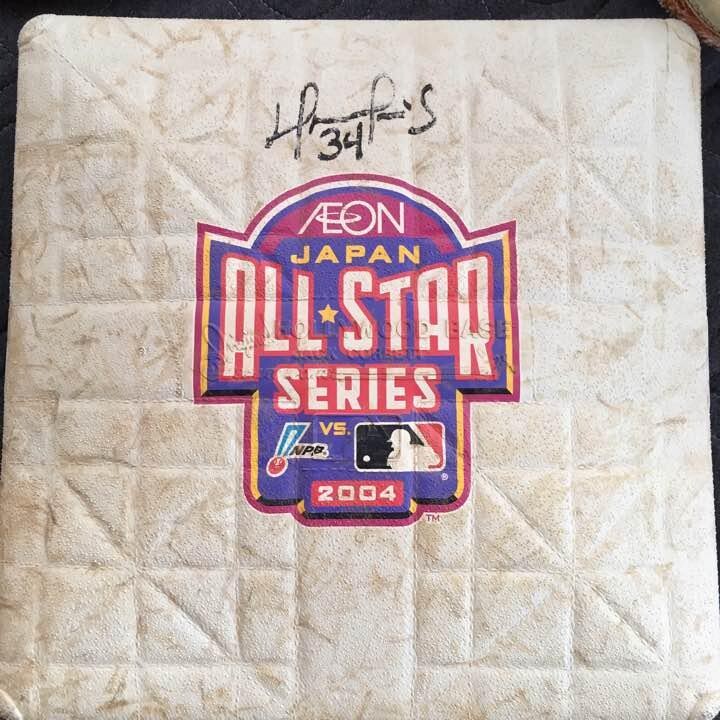
  • AFRICANS IN JAPANESE INDEPENDENT LEAGUES

    AFRICANS IN JAPANESE INDEPENDENT LEAGUES

    by Carter Cromwell

    Africa isn’t on most radar screens when it comes to baseball, but it’s beginning to show up – at least as a speck – in Japan.

    On one hand, Africa was the last of the six major continents to develop the sport and the most recent one to have produced a major league player, which happened in 2017 when South African Gift Ngoepe made his debut.

    However, baseball is being played in Africa, and it’s growing, albeit on a small scale and often hindered by minimal resources and infrastructure. Estimates are that 20 or so African countries have baseball programs, with Uganda and South Africa the furthest ahead. Baseball/softball academies exist in Cameroon, Kenya, Uganda, South Africa, Nigeria, Botswana, and Zimbabwe – the most prominent being the one in Uganda operated by the Los Angeles Dodgers. People on the ground in countries such as Malawi, Benin, Tanzania, Mozambique, and Niger are working with youngsters to cultivate interest in the game. 

    Additional evidence of progress is the growing number of Africans playing in the Japanese independent leagues. Last year, Ugandans Fred KyazzeAllan Kabenge, and Isabirye Musa Azed – all pitchers – and Dennis Kasumba, a catcher, played for the Asahikawa Be:Stars of the Hokkaido Frontier League. At the same time, Ugandan Kato Edrine pitched for the Hyogo Bravers of the Kansai Independent League. 

    Kyazze had a couple of saves and a strikeout rate of 13.9 per nine innings, while Musa had an earned-run average of 2.98 and held opposing batters to a .185 average. 

    The number has grown this season, as the Be:Stars have seven Africans on the team. Besides Kasumba and Kabenge, they have infielders Twaise Geiven and Bernard Eluk, pitchers Morris Ogwal and Erick Ojara from Uganda, and pitcher Dau John Wol Deng of South Sudan. The Be:Stars also signed Mouki Kora from Benin, but he has yet to be placed on the roster. Edrine, 19, has moved on to the Tokushima Indigo Socks of the Shikoku Island League.

    Eluk, 18, Geiven, 16, Ogwal, 17, and Ojara, 18, represented Uganda at the U-18 Baseball World Cup African Qualifier in 2023. Edrine, Kyazze, Azed, Ojara, Ogwal, and Eluk previously trained at the Dodgers’ academy.

    Allan Kabenge in the 2025 Japan Winter League. (Photo courtesy of Andy Berglund)

    Rather than returning to their home countries at the end of the season, the players are spending the entire year in Japan to continue training and developing. 

    In addition, the Saitama Seibu Lions of Japan’s Nippon Professional Baseball (NPB) signed the pitchers Azedand Kyazze and will have them play for their developmental club Shinano in the Baseball Challenge League – another indication of clubs broadening their scouting and development efforts. 

    In fact, the Lions have developed a stated overseas strategy with the objective of strengthening the scouting, acquisition, and development of foreign players “who are expected to play an active role in the future in NPB.”

    Other NPB teams, such as the SoftBank Hawks, Yomiuri Giants, and Orix Buffaloes, have expanded their lower division systems as a way to compete for international talent, but none so far has had the geographic focus of the Lions. While NPB teams have usually concentrated on the Americas and Taiwan when recruiting players from outside Japan, Seibu is also looking in areas in which they will have little or no competition from NPB or MLB teams. 

    “The [Seibu] goal is not to just find one diamond in the rough – it’s to create a permanent infrastructure where African players can move from the independent leagues to NPB developmental contracts and then to active 70-man NPB rosters,” said Matt Soren. Soren pitched one season in the Philadelphia Phillies system, has played and coached in Africa and now runs Diamond in the Rough, a non-profit aimed at facilitating important connections between coaches, players, and organizations in the African countries.

    The Yomiuri Giants maintain “Sports and Development” initiatives through the Japan International Cooperation Agency (JICA), dispatching volunteers to promote baseball globally, and the JICA connection has played a significant role in the Africa pipeline.

    Katsuhisa Tanaka began teaching baseball in Uganda in 2011 through the JICA and eventually helped coach the national team that finished second in the 2019 Africa Cup Baseball Championship. He spent seven years in Uganda before returning to Japan, where he now coaches in the Japan Winter League and has been the conduit through which a number of Africans have gotten to play in Japan. 

    “Early on, we were able to set up a baseball association through cooperation between the Japanese and Ugandan governments,” Tanaka said. “We started building a baseball and softball community that has continued to grow.”

    Kato Edrine with Hyogo Bravers in 2025

    Edrine came from that community. “Baseball is still a minor sport in Uganda,” he said, “but I first encountered it when I was six years old through Tanaka, who came from Japan. I started attending an academy when I was 12.”

    “Tanaka is trying to make players better and get them to Japan to play,” said Andy Berglund, who serves as an international scout for MLB’s Milwaukee Brewers, has coached for the South Africa national team, and worked as lead consultant for the former MLB European and African Academy. “He’s one of the most respected guys. He’s put years into it. Tanaka is huge for these guys – he’s in Japan and has spent a good amount of time in Uganda, so he can combine both worlds.”

    Tanaka also started a baseball academy in 2025 near Uganda’s capital city of Kampala. 

    “The idea behind establishing the academy was to get more support and visibility for people interested in baseball and, thereby, create more opportunities,” he added. “There is definitely interest in the game in Uganda, and those who participate work very, very hard. Now that a few Ugandans have signed with MLB and independent teams, more young players have the same dream.”

    Tanaka has been bringing Ugandan prospects to the Japan independent leagues since 2012, the first being Paul Wafula, who played for Hyogo, then known as the Blue Sanders, in the Kansai Independent League. According to Tanaka, Wafula is coaching at the academy in Gayaza. 

    Bernard Okello is another who has been around baseball in Uganda for quite a while and has both observed and been part of the growth. He started coaching in 2009 when he was just 14, played a season in the Japanese independent leagues in 2014, and then returned to Uganda to continue fostering the game’s growth.

    Ugandan coach Bernard Okello helps facilitate getting players to Japan. (Photo courtesy of Bernard Okello)

    “Tanaka came over as a volunteer and saw that there was potential,” Okello said, “but we lacked opportunity and coaches then. There was no one to guide the kids and push them ahead.

    “I started working to get players over to Japan in 2022,” he continued. “Although the Dodgers have their academy, not everyone can get in, and the Dodgers say that if a kid isn’t ready by the time he’s 18 or 19, he won’t have a chance to get signed by an MLB club. So getting some of these kids to Japan – some that don’t necessarily get seen by MLB scouts – can help provide opportunities. 

    “Most of the players now in Japan were in the district in which I coached, and I also coached a team in school. I’ve known some of these players since they were as young as seven years old.”

    The path to Japan is especially important because it is difficult these days for citizens of many countries to get visas to come to the U.S. – whether to play collegiately or professionally. Also, there has not been an MLB academy in Africa since 2016. 

    “When the MLB academy was in South Africa, players knew that was a chance to get some visibility, but they had nowhere to go after that was shut down,” Okello said. “Now, though, we have the pipeline to Japan.”

    Jaz Shergill instructing Ugandan youngsters. (Photo courtesy of Jaz Shergill)

    Jaz Shergill is a Canadian who has pitched in Australia, Canada, Europe, South Africa, and the U.S. independent leagues. While in South Africa, he began teaching baseball to youngsters through a non-profit group. After he returned to Canada, he got involved with a baseball organization in Uganda, which inspired him to found Every Child Deserves a Chance (ECDC) in 2018. The organization has since worked to support the growth of baseball in Uganda, and Okello is ECDC’s head of development.

    “I think Japan is starting to realize there’s a deep pool of high-level talent in Uganda capable of competing at those levels,” Shergill said. “Because of that, there have been more recruiting trips to Uganda over the past few years, with more players being identified and signed. Japan has actually been bringing Ugandan players over for a good while, but since ECDC’s inception in 2018, the number of players going to Japan has increased significantly.”

    Okello and Shergill say that Geiven, Dau John Wol Deng, Edrine, and Kabenge were involved in ECDC, as were pitchers David Matoma and Joseph Deng, who are now in the Pittsburgh and Los Angeles Dodgers organizations, respectively.

    Of the group now with the Be:Stars, Okello says Eluk, Ojara, and Geiven “are probably the three I look most at right now, but the others have ability.” Okello said Wol Deng is just 15 and has a fastball ranging into the mid- to high-80s (mph). Ogwal reportedly has a smooth, repeatable delivery; Geiven is said to be a talented defender; and Eluk has a good combination of power and speed. The signing of Kora, Okello said, shows that the Japan-Africa bridge is expanding beyond East Africa.

    Berglund is familiar with Kasumba and Kabenge, who is David Matoma’s half-brother. 

    “I coached Kabenge 10 years ago when he was a teenager,” Berglund said. “I saw him at an MLB tryout camp. He was raw but had good talent. And I knew about Kasumba because of all the social media stuff he’s done. Then I saw them both when I helped coach in the Japan Winter League last year. Kabenge made some mechanical adjustments and was touching upper 80s with his fastball and could spin the ball pretty well.”

    Andy Berglund (3rd from right) with Ugandan players during his time with the MLB Academies.  (Photo courtesy of Andy Berglund)

    Kasumba, in his second season with the Be:Stars, gained recognition when the workout videos he posted on social media went viral. He comes from a very low-income family and has eight siblings. His father was killed in a civil war; his mother left when he was two months old; and he was raised by a grandmother. At 14, he went to work in a slaughterhouse. 

    “I quit baseball then because I had to work,” Kasumba said. “But my coach [Wafula, the first player Tanaka brought to Japan] said he’d help whenever I could come back. I started doing four practices a day and posting on Instagram and Twitter. I’m the only person who can help the family be better off. Baseball is a way I can be successful.”

    Kasumba said he’s been limited thus far by an ankle injury. He played in the MLB Draft League in 2023 and 2024 and plans to play there again next year. 

    “I like blocking, and my framing is very good, but I need to up my skills,” he said. “My aim is to get into some showcases so I can be seen by scouts.”

    Tanaka said, “I first knew Dennis in 2014 when he joined a team we started. He was 10 at the time. He didn’t have access to much equipment, but he was doing everything he could to train with different objects. He has a lot to learn, but he’s getting better. He works extremely hard.”

    This is the fifth season in Japan for Edrine, whose first coach was Okello, and he believes he’s taken a step up by landing with Tokushima. Working in a relief role, he features a fastball, slider, and forkball. He says his fastball touched 148 kph (91.7 mph) a year ago, but is a tick lower now – “I need to get my velo back.”

    “Considering the coaching know-how that has been built up here and the support system provided by the staff, this is a place where I can grow,” he said. “I want to develop my skills and someday play in a higher league or in the majors.

    “Scouts are going to Uganda more now,” he added. “SoftBank [of the NPB] sends its scouts, for example. Also, the [Yomiuri] Giants. There weren’t as many scouts going there before I came, but it’s made a difference that I and a few others like Kasumba and Kabenge are playing here.”

    Soren believes that “they’ll all get drastically better there – when they get away from the pressures of home. They’ll love the whole thing and will go 100 percent. I would not be surprised if some eventually get signed for NPB development teams.”

    Everyone, though, understands that growing the game is a process. There are still issues with less equipment, qualified coaches, and standardized facilities than necessary. 

    Berglund said, “It’s too bad that the MLB academy no longer exists, but some of these guys back then got a taste of what training should be like, and now they’re paying it forward – training kids who are now 11, 12, 13. These guys are talented, but they’re playing on back fields and sometimes without shoes and much other equipment. The Dodgers have realized that there is much untapped potential there, but it will take more initiative [to get things going faster].”

    Still, if more Africans can get to the independent leagues in Japan, it may lead to greater opportunities for them and others.

    Soren believes that the Japanese independents are a viable option because “Japan is less business oriented [than MLB] in terms of players. There’s no money to be made from African baseball at the moment. That’s a generation away.”

    Tanaka added that “Some of the NPB teams are scouting the independent leagues and are interested in keeping track of these guys. I’ve been involved with Ugandan baseball for more than 10 years, and it has grown in ways I never expected.”

  • The 1996 Sun Super Major Series in Japan

    The 1996 Sun Super Major Series in Japan

    by Blair Williams


    Every Monday morning we will post an article from SABR’s award-winning books Nichibei Yakyu: Volumes I and II. Each will present a different chapter in the long history of US-Japan baseball relations. This week Blair Williams focuses on the 1996 MLB – Japan All-Star Series.

    “I don’t know how else to feel,” Hideo Nomo said – almost sarcastically – to Japanese reporters following Game 2 of the 1996 Sun Super Major Series. A blue Dodgers cap adorned Nomo’s head, the intertwined letters “L” and “A” announcing the pitcher’s allegiance to the American powerhouse team. Japanese by birth and citizenship, Nomo was the first Japanese national to play in major-league baseball in 30 years. Now, he returned to Japan to face his former colleagues from Nippon Professional Baseball, the baseball league that he had voluntarily retired from to escape the decades-long labor dispute that prevented Japanese players from playing abroad.

    “The way I feel hasn’t changed at all, but I’d like to ask the people of Japan if they hate me now,” Nomo finished, his eyes looking heavy and downcast. The English interpreter for the American media stumbled over her translation, carefully phrasing for the media that would report Nomo’s words across the globe. Nomo sighed at the end of that sentence and finished in English: “Yes.” Yes, the opinion of the Japanese people about his employment with the Los Angeles Dodgers did matter to him. For the 1996 tour was not just about a baseball competition; it was a litmus test of whether the Japanese fans would support a Japanese national playing for another country.

    Whether it was the 1994 major-league baseball strike or the long-standing severance of formal relations between the US-based major leagues and NPB that made it nearly impossible for Japanese nationals to play in the majors, labor conditions colored the 1996 Sun Super Major Series between the NPB All-Stars and major-league all-stars. In 1993 NPB introduced free agency to its business for the first time. However, the new right for a player to seek his own contract applied only to seasoned veterans who had been in the league for at least 10 years. Despite the new contract leverage for players, the highest-paid player in NPB, Hiromitsu Ochiai, earned only 30 percent as much as the highest-paid major-league player at the time. In 1994 major-league players began what became the longest strike in American sports history. This strike among American players resulted in the cancellation of not only the 1994 World Series, but also of the 1994 exhibition tour between the major leagues and NPB.

    When major-league players returned to action in 1995, the salaries for the highest-paid players in each league (Barry Bonds and Cecil Fielder) grew over 25 percent in value from the pre-strike highest-paid players. As superstars received massive sums of money, the post-strike labor environment propelled the highest-paid players into even grander contracts that made them the envy of the world. Meanwhile, NPB players earned comparatively little and were ineligible to enter the major-league ecosystem because of a labor dispute that had occurred 30 years earlier over the contract of Masanori Murakami, who was the only Japanese national to play in the majors at the time. In short, a spat over one contract that happened a generation earlier had prevented any Japanese from competing for those lucrative contracts. Yet by the 1980s, the Japanese All-Stars squared off every two years in exhibition games against the MLB All-Stars, almost as if they were equals on the baseball field. Something had to change.

    In 1995 Japanese agent Don Nomura enticed Hideo Nomo – a five-year NPB veteran who was another five years away from free agency in NPB – to voluntarily retire from his NPB contract with the Kintetsu Buffaloes and enter the National League as an independent free agent. This loophole terminated the Buffaloes’ control over Nomo’s employment, and the Los Angeles Dodgers signed Nomo to a contract exceeding $2 million per year. While Nomo had been a star pitcher for four of his NPB years, after his move to the Dodgers he made nearly as much per year as NPB free-agent pioneer Hiromitsu Ochiai, a 16-time all-star who had been a player for nearly 20 years and held several league records. Nomo had discovered the path to riches, but in the process, he wondered if he had forsaken his countrymen.

    Nomo’s controversial move to the majors helps contextualize why he seemed less than thrilled taking the mound against his countrymen in the 1996 Sun Super Major Series. Whether stated overtly or subtly, there was the question of Nomo’s loyalty to Japan. Most of the MLB All-Star roster playing in the series hailed from the United States or its territory Puerto Rico; three Dominican players and one Venezuelan also graced the roster. Nomo stood out as the only player on the MLB All-Star roster who hailed from outside the Western hemisphere. Meanwhile, due to NPB’s strict geographical and racial limits for its players, Japanese nationals made up the entire NPB All-Star roster. Therefore, when Nomo pitched, he was the only person in the entire series pitching against one of his countrymen.

    “I’d like to ask Japanese people if they hate me now,” Nomo had solemnly said to that room of reporters after his appearance in Game 2 of the series. The answer from the Japanese public was a resounding, “No, we still love you.”

    The setting for Nomo’s performance was at a tenuous time for Japan. With the Cold War over, Japan was no longer needed as the bulwark of American capitalism in Asia. In 1994 Tomiichi Murayama became the first non-conservative prime minister of Japan since 1947, ending a half-century of conservative leadership. In contrast to the vigilant nationalism that propelled the Japanese economy to become the second most powerful in the world in the 1970s and 1980s, Prime Minister Murayama began a reconciliation tour with Japan’s geographical neighbors. Meanwhile, prominent conservative politician Ishihara Shintaro published a nationalist missive, The Japan That Can Say No, which began with a long lamentation over the weakness of the Japanese athlete that spoke to the greater weakness of the Japanese nation. Ishihara – who would later become a longtime governor of Tokyo and lead the charge to secure the 2020 Tokyo Olympics – wrote in 1991:

    [I] sometimes wonder if Japan is not becoming a nation of ETs, that charming visitor from outer space with an oversized head and spindly arms and legs. If that is the course of evolution, ET-like human beings will first appear in Japan. That would explain why we did so poorly at the [1988] Seoul Olympics, winning only a handful of gold medals. Maybe that miserable performance indicates that we are acquiring an unconventional, sophisticated temperament and life-style. As a nation, however, we would be better off if our Olympic athletes won a basket of medals and the younger generation did strenuous work.

    Ishihara’s lament that Japan’s reliance on the technology sector – from the Sony Walkman to Nintendo and Sega video games, from animated movies to small and efficient Toyota cars – had left its people so physically enfeebled that they resembled that helpless alien in the movie E.T., who had flown light years across space only to be made captive by some neighborhood youths equipped with flashlights, dirt bikes, and candy pieces.

    In the minds of politicians like Ishihara, international athletic events like the Sun Super Major Series stood as evidence of the persisting physical weakness among the Japanese people. Japan had lost three out of the previous four competitions. And now Hideo Nomo toed the rubber in the Tokyo Dome donning not a Kintetsu Buffaloes uniform but Dodger Blue. The American team was sponsored by – and indeed the Series itself bore the name of – the American technology firm Sun Microsystems. In 1995 Sun Microsystems released the Java programming language that paved the way for the modern internet and computational infrastructure that we all currently live in. In short, the American team represented not only physical superiority, but it also wore the vanguard of the future of technology on its caps. It was not the Sony Series, or the Nintendo Series, or the Toyota Series. It was the Sun Super Major Series. At the center of the endeavor, Nomo and his signature tornado-style windup earned wins for the American team. Fans clamored to the ballparks to see not the Japanese team, but to see the Japanese man who had left Japan. The question on Nomo’s mind was whether they came to cheer, or to jeer. As the series proceeded, the answer clearly pointed to cheering.

    The Sun Super Major Series began on November 1, 1996, in the Tokyo Dome. Although the MLB All-Stars featured an array of legendary hitters who probably need no introduction – Barry Bonds, Alex Rodriguez, Cal Ripken Jr., Gary Sheffield, Mike Piazza – the pitching lineup was rather peculiar. In the era of John Smoltz, Greg Maddux, and Roger Clemens (none of whom were on the tour) – and in a series that had such a rich narrative of intrigue with Nomo’s return to Japan, the leadoff pitcher for the US team was the remarkably unexciting AL Cy Young Award winner Pat Hentgen. Hentgen had finished third in the majors in wins in 1996 and led the league in innings pitched (265⅔), which was likely due to his low strikeout rate of six batters per nine innings. Hentgen started three of the seven games and his pitch-to-contact style meant he would rack up the most innings of any MLB starter.

    Hentgen struggled out of the gate against the Japanese All-Stars in the first game, allowing a leadoff hit to 23-year-old Ichiro Suzuki, who had just finished his third year as a full-time starter for the Orix Blue Wave. With 116 stolen bases already to his name, Ichiro showed off his speed by stealing second. Hentgen then allowed a walk before facing Hideki Matsui, who had hit 91 home runs in his four years with the Yomiuri Giants. Matsui hit a weak groundball to third base. Robin Ventura fielded the ball but fell, filling the bases on his error. The next batter, Kazuhiro Kiyohara, smashed a weak curveball down the left-field line, emptying the bases with a double. By the time Hentgen got out of the first inning – on a sliding catch in the outfield by Brady Anderson – he had given up five runs. The MLB All-Stars caught up by the fifth inning on some sloppy fielding errors by the NPB team. Then side-armer Tetsuro Kawajiri gave up a home run to deep center field that tied the game, 5-5. The Mets’ John Franco entered in relief of Pedro Martinez (who wore the uniform of the now-defunct Montreal Expos) and allowed Ichiro Suzuki to score, which gave the Japanese All-Stars a 6-5 victory in front of 43,000 fans in the Tokyo Dome.

    The game the next night was the one Japan had been waiting for. A crowd of 55,000 packed their way into the Tokyo Dome to cheer Hideo Nomo as he played in his first game on Japanese soil since retiring from his NPB contract. The first at-bat of the game was nothing more than a legendary matchup: Hideo Nomo vs. Ichiro Suzuki. So many fans took photos of Nomo – with their flashes popping away as if they were paparazzi on the red carpet – that the public-address announcer had to ask people to put their cameras away. Nomo pitched from his famous tornado windup, and Ichiro slapped a pitch right up the middle, right through Nomo’s legs, for a single. Nomo calmed down afterward, finishing three innings of scoreless pitching with three strikeouts.

    The crowd cheered Nomo after each out. Nomo responded with a tight and brief grip of his hat brim to signal his appreciation.

    The TV cameras closed in on Nomo’s face after each inning, capturing his stoic façade as he walked to the dugout. Nomo completed his outing dispassionately. After he got Ichiro out in his second at-bat, Ichiro stared back at Nomo. He wanted a reaction from Nomo, but the pitcher remained stoic until he arrived back in the MLB dugout, where he placed a windbreaker on his pitching arm and shared some laughs with his teammates. The MLB All-Stars claimed the game, 6-1. Even though Nomo was the centerpiece of the tour, he started the second game of the series instead of the first because he would then be in line to start the sixth game, which would take place in Nishinomiya, a city neighboring Nomo’s hometown of Osaka before a crowd in the legendary Koshien Stadium.

    After the second game, the next few games of the tournament branched out to highlight the diversity of Japanese baseball. In the third game the US team’s opposition was the NPB’s Central League All-Stars, featuring players from the Yomiuri Giants and other Tokyo-based NPB teams. The MLB All-Stars won, 4-2. There were three solo home runs, by Cal Ripken Jr. and Steve Finley for the US team and Matsui for the Japanese. Shigeki Noguchi took the loss for NPB while Jeff Brantley claimed the win for MLB.

    The fourth game was played at the home stadium of the Seibu Lions, just outside Tokyo on the Seibu Railway Lines. In front of a much smaller crowd, 33,000, the MLB All-Stars claimed a 2-1 victory over the full NPB All-Star team that would finish out the rest of the series. As Pat Hentgen was wont to do, he pitched most of the game efficiently, allowing only one NPB run before giving way to José Mesa for the save.

    For the fifth game, the teams moved to Fukuoka, on the island of Kyushu on the far western end of Japan. The MLB All-Stars jumped out to a 4-1 lead thanks in part to a solo home run by Barry Bonds. But Pedro Martinez couldn’t hold a lead. The 25-year-old Martinez – who went on to be considered by many to be the greatest pitcher of his generation if not arguably all-time – loaded the bases in the fifth inning. Jeff Brantley came in relief and allowed a bases-clearing triple to NPB All-Star Kazuyoshi Tatsunami. Martinez allowed five runs in 4⅔ innings. Steve Finley saved Martinez from the loss column with a two-run single in the sixth. As MLB carried a lead into the eighth inning, reliever Troy Percival fielded a bunt poorly and overthrew first base, allowing Yutaka Wada to score and tie the game. This game ended in a 6-6 tie because the teams did not play extra innings during the series. MLB All-Stars manager Dusty Baker remarked that it was the first tie he had been a part of in his major-league career.

    For the finale, the MLB team took its 3-1-1 lead into Koshien Stadium in Nishinomiya, a city near the metropolises of Kobe and Osaka and about 300 miles southwest of Tokyo. There is perhaps no more revered sports ground in Japan than Koshien, the home of the annual high-school baseball tournament. The tournament was once the biggest sporting event in the world. Since the 1920s, organizers invited thousands of boys from across the Japanese Empire to compete on its dirt-only infield for the honor of being called the best baseball team in Asia. Although the annual high-school baseball tournament still is a significant cultural event for Japan, there is no longer the sense of militaristic nationalism that once colored it. Koshien now stands as the oldest active stadium – of any sport – in Japan, and it was a homecoming for Nomo to pitch on its field.

    Koshien Stadium had been a common stopping point for so many other international tours, and it’s important to emphasize that it is a field designed for pre-modern high-school players. The infield is entirely dirt, and it always has been that way. There is no grass or turf to slow down or impede a groundball. The pitcher’s mound is lower than a regulation mound. Players warm up nearly within arm’s reach of the bleachers. Homemade videotape footage of Nomo’s performance in 1996 at Koshien exists, and the camera operator was right next to Nomo’s warm-up spot. We can clearly see Nomo on the paltry Koshien mound, and it seems that nerves troubled him this time. Nomo gave up four runs on four hits over four innings, but the MLB All-Stars rallied to win, 11-8. By the end of the game, 26 hits had littered the high-school baseball field, with Andrés Galarraga and Gary Sheffield crushing home runs.

    In a postgame interview, Nomo said that he wasn’t worried about his poor performance; he merely wanted to perform before his home crowd to give them “a taste of Major League Baseball.” Of course, the crowd had seen major-league baseball before, even at this field, where Nomo had been part of the 1992 Japanese team that played the touring MLB All-Stars. But this time, Nomo was part of the major leagues, and likely what he wanted to show his home crowd was the possibility that Japanese people could join major-league baseball – the league that had prevented their entry for so long.

    The series finished out quietly on the Japanese east coast with games in Yokohama and Tokyo. In Yokohama, a small crowd of 27,000 was rewarded with a 6-4 NPB All-Stars win. Hideki Matsui crushed a grand slam off MLB starter Shane Reynolds in the second inning, putting the NPB team up 6-0. Reynolds calmed down, however, and he was needed to eat up innings after MLB had used seven pitchers in the previous two games. Reynolds went the distance and nearly claimed a win when his teammates scored four runs in the seventh inning before NPB relievers shut down the MLB offense and saved the second win for the Japanese.

    The final game, at the Tokyo Dome on November 11, drew another full house of fans. A total of 13 pitchers took to the mound as offenses unloaded for an 8-8 tie. Mike Piazza, who was popular with the Japanese fans because he was Nomo’s catcher on the Dodgers, thrilled the crowd with the only home run of the game. The MLB All-Stars won the series, four victories to two, with two ties, and Steve Finley of the San Diego Padres (8-for-20, 9 RBIs) was named the Most Valuable Player.

    The 1996 tour hinted at the future of Japanese players in US major-league baseball. Even as Hideo Nomo pitched for the MLB All-Stars, another Japanese pitcher, Hideki Irabu, was negotiating to enter the majors. Irabu’s entry into the American League in 1997 resulted in the creation of the posting system, which would later bring players like Ichiro Suzuki and Hideki Matsui to the United States. Both had faced off against Nomo in the 1996 Sun Super Major Series. As Nomo kept telling the media, he wanted to show off his performance as a major leaguer. Nomo showed the way for others to join the major leagues and sign increasingly lucrative contracts and play in a different – and often more global – competitive atmosphere than existed in Japan. In short, Nomo’s role on the tour was not only to demonstrate that Japanese nationals could effectively play baseball at the major-league level, but to demonstrate that their fellow Japanese fans would support this new era of Japanese players appearing abroad.

    The 1996 Sun Super Major Series was won not just by the MLB All-Stars, but by Hideo Nomo. He wondered out loud if Japanese fans and players liked him anymore. And Japanese fans and players answered almost in unison: Hai. Yes, the Japanese were thrilled that Nomo had basically integratedmajor-league baseball for Japanese players. Nomo’s success in the United States and his pathbreaking move to leave Japan – even at a time when the nation and state felt most vulnerable – opened new avenues of business and culture creation that benefited later players like Ichiro and Matsui. Although the 1996 Sun Super Major Series lasted a little over a week, the implications of the event could be seen for years to come.

    Read the full version of this article on the SABR website