
Congratulation to Yuriko Romer for this great review of her film Diamond Diplomacy in the Japan Times.
https://www.japantimes.co.jp/sports/2025/10/16/baseball/baseball-film-yuriko-gamo-romer-japan-usa/
Asian Baseball History and Culture is Our Passion
Congratulation to Yuriko Romer for this great review of her film Diamond Diplomacy in the Japan Times.
https://www.japantimes.co.jp/sports/2025/10/16/baseball/baseball-film-yuriko-gamo-romer-japan-usa/
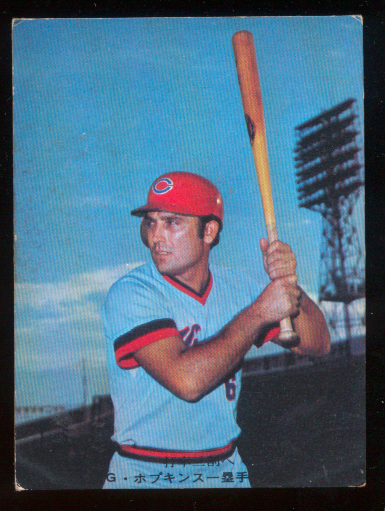
On October 15, 1975, the Hiroshima Toyo Carp arrived in Tokyo to play the Yomiuri Giants needing a win to clinch the Central League pennant. In the Carp’s 25-year history, they had never finished above third place.
Carp first baseman Gail Hopkins remembers:
There was obviously a lot of pressure on us, and the guys were starting to feel it. Wally Yonamine’s team, the Chunichi Dragons, had been even with us in the standings but we went up a game on them. We were at the point where we controlled our own destiny. If we won, we would win the pennant. If we didn’t win, then we had to play the next day and we’d still have to win that game and it would also depend on what happened with Chunichi, which was off in another place playing while we were playing in Tokyo.
The stands were packed. The stadium was full with 50,000 fans. That stadium was always full even though the Giants were 27 games behind us. They drew 3.05 million people that year. About 15,000 to 20,000 people came to the game from Hiroshima They had these rice spoons from Miyajima, which is an island right near Hiroshima. When something went well for us, our fans would smack these spoons together. So, there was this incessant clicking of the spoons going on during the game.
Pitching for us was Yoshiro Sotokoba and he was really throwing the ball very well. The pitcher they had throwing against us was a left-hander named Hisao Niura and he was a big guy, about six feet, and he threw pretty hard. He had pretty good stuff and he was pitching very well that night, so we didn’t have a whole lot of chances.
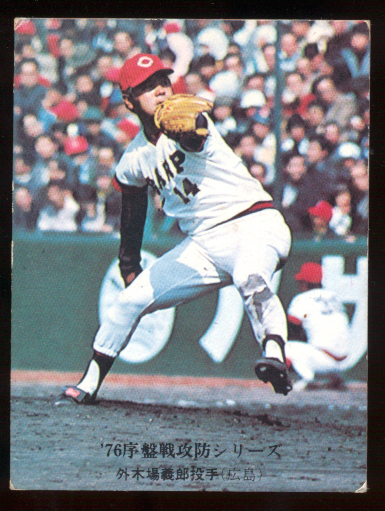
We scored the first run in the fifth inning. Our catcher, Hiroyuki Michihara, came to bat and he hit a ground ball down the third baseline. Davey Johnson was playing third base for the Giants, and he had to move toward the line. When he went to make the play, the ball hit off his glove and he obscured the baseline from the umpire. The umpire called the ball fair, and it was, but there was a big argument between the Giants manager Shigeo Nagashima and the umpire. Nagashima said it was a foul ball and put on a show. It was his first year as a manager and he was terrible. I mean he was truly terrible as a manager. But anyway, the ball was fair, and then our catcher was sacrificed to second. Then Tsuyoshi Oshita hit the ball off the wall and their left fielder could get there in time and Michihara scored to make it 1-0.
When the game started, we had a lot of fans supposing us, but most of the people there, at least half of the people or more, were Giants fans and were cheering for the Giants. As the game went along, it was getting more and more exciting and the fans were clearly engaged. There was also a change in the way the fans were cheering. We seemed to gain support.
In the sixth inning, the Giants had two runners on with one out and Sadaharu Oh coming up, so we walked Oh to load the bases. The next batter was a right-handed big outfielder named Toshimitsu Suetsugu. He was a formidable player. He hit a ground ball to Oshita at second base who turned it to shortstop Toshiyuki Mimura and Mimura threw it to me to turn the double play to get out of the inning. That was the biggest risk for us in the game. Had we not made that play at least one or two runs might have scored.

In the ninth inning, things were really pretty tight. The guys on the bench were getting kind of anxious. We had made a pitching change in the eighth inning and brought in Motoyasu Kaneshiro. He had won 20 games the year before, but he got into a car wreck and he didn’t play for a while, so Joe Lutz converted him from a starter into a relief pitcher. He was kind of a submarine pitcher—he wasn’t way down underneath but he was below sidearm, and he threw the ball pretty hard. Well, he led off the ninth inning and checked his swing on a pitch and hit a blooper into right center that dropped for a single. The next batter was Oshita, and Oshita put down one of the best bunts I’ve ever seen. Oshita could run fairly well, and he laid a bunt down the first baseline just like you’re supposed to do. The ball was about three feet off the line and by the time the pitcher and the first baseman got to the ball, Oshita was by them and it was a base hit.
So, with one out and runners on first and second in the ninth inning, they changed pitchers. They brought in this left-hander Kazumi Takahashi. He was their leading left-hand relief pitcher. Mimura came up and Takahashi struck out Mimura on really good pitch.
When I came up, my goal was to try to hit the ball hard somewhere and drive a run in. I wasn’t thinking about anything else. My style of hitting in 1975 was different than I did in the States. In the States, I had a wide stance and basically hit the ball where it was pitched. In Japan, I tried to pull everything. The first pitch he threw was a breaking ball away for a ball. For the second pitch, I was guessing fastball and if I didn’t get it, I would take it. He threw a breaking ball, so I took it for the first strike. Then he threw a fastball, and I checked my swing and it hit my bat for a foul. That really irritated me because it put me in the hole with the pitch count. At this point, my goal was just to put the ball in play. He came back and threw another breaking ball in the dirt.
The Carp fans were clapping the rice spoons together and those things made a lot of noise! Then, Takahashi threw another breaking ball in the dirt [making it a full count]. Now, I knew that he had to throw a strike because if he didn’t, he was going to have to face Koji Yamamoto with the bases loaded. If I wanted a pitch to hit hard, it would be just like his next pitch, inside and around thigh high. And that was it. As they say, “Sayonara Aka-chan!” Of course, that was the ball game right there. When it’s 1-0, the worst hitter on their club could tie the game [with one swing] but now they had to come back and score three.
I, of course, was elated when I hit the ball out. I wasn’t thinking about that because at that point my goal was to make solid contact and just to drive in a run, but he put the ball right there in my wheelhouse. I didn’t over swing and it went all the way to the back of the stadium. It made the tension level in the dugout relax because we had pretty good bullpen and Kaneshiro was really doing well so we were in good shape.
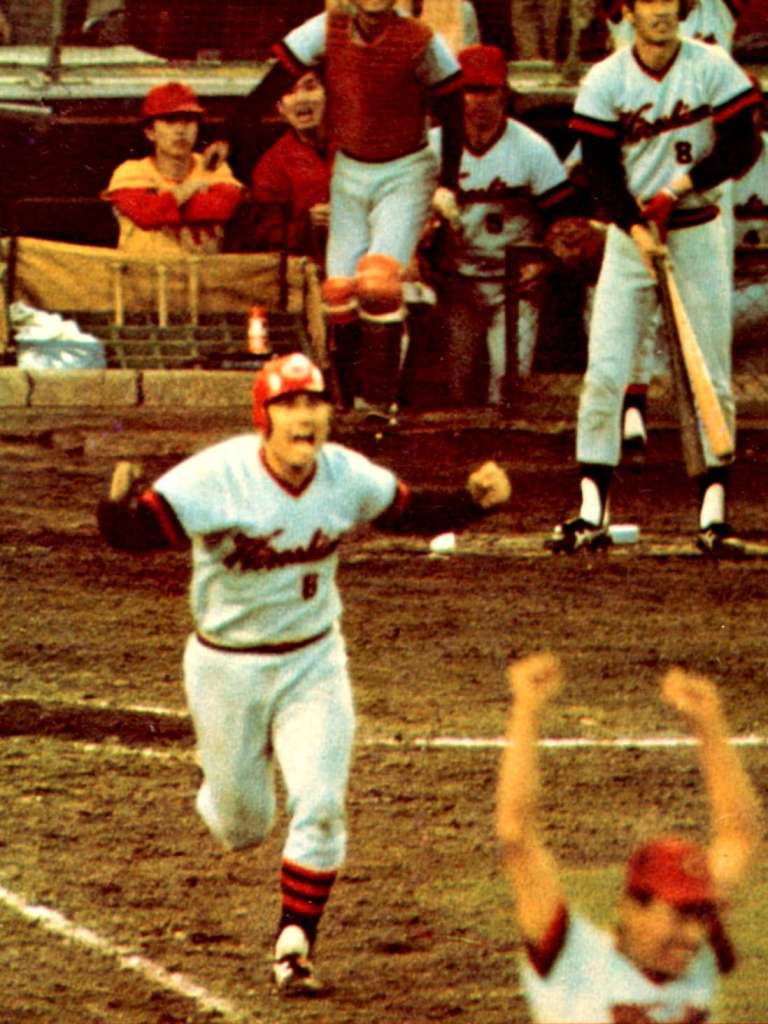
The clubhouses were different [in Japan] from what we have here. We have big clubhouses, where you can get sandwiches and you’ve got all your personal stuff. There, the clubhouses weren’t big. They weren’t sophisticated. They didn’t have a place where you could sit down and have beer when the game was over. The visiting teams would even get dressed in their hotels! So, we didn’t have a big celebration after we clinched, like they do here with champagne or beer. We just went back home to Hiroshima on the train the next day and then we had a big parade.

by Yoichi Nagata, Mark Brunke and Rob Fitts
Every Tuesday morning we will post an article from SABR’s award-winning books Nichibei Yakyu: Volumes I and II. Each will present a different chapter in the long history of US-Japan baseball relations. Today Yoichi Nagata, Mark Brunke and Rob Fitts focus on the two Native American baseball tours of Japan which both took place in 1921. This article was selected as a winner of the 2023 McFarland-SABR Baseball Research Award.
In the late nineteenth century as the American frontier closed, the myth of the Wild West began. Buffalo Bill’s Wild West show, dime novels, and, later, Western movies created a fictitious past dominated by stereotypes of cowboys, gunslingers, and Indians. In most of these genres, Native Americans were depicted as exotic, almost non-human, wild and cruel savages. This stereotype proliferated throughout the United States, Europe, and even Japan. Nonetheless, Wild West entertainment became popular throughout the United States and Europe. In 1921 two baseball promoters tried separately to capitalize on this international fad by bringing Native American baseball teams to Japan. But neither tour turned out as planned.
The genesis for these tours took place on the Nebraska plains in 1895 when Guy Wilder Green, a law student at the University of Nebraska and player-manager of the Stromsburg town baseball club, organized a game against the Genoa Indian Industrial School. To his surprise, “Even in Nebraska, where an Indian is not at all a novelty … when the Indians came to Stromsburg, business houses were closed and men, women and children turned out en masse. … I reasoned that if an Indian base ball team was a good drawing card in Nebraska, it ought to do wonders further east if properly managed.” After graduating from law school in 1897, Green created the All-Nebraska Indian Base Ball Team (soon shortened to the Nebraska Indians) which became one of the nation’s most popular barnstorming baseball clubs. From 1897 to 1906 the Nebraska Indians played 1,637 games in 17 states and Canada.
In 1906 much of the United States was enthralled by all things Japanese. Japan had just emerged as the improbable victor in the Russo-Japanese War, and the Waseda University baseball club had recently toured the West Coast. Green decided to capitalize on the fad by creating an all-Japanese baseball club to barnstorm across the Midwest. It became the first Japanese professional team on either side of the Pacific, as pro ball would not come to Japan until 1921.

Although Green would advertise that he had “scour[ed] the [Japanese] empire for the best men obtainable,” he did nothing of the sort. In early 1906 Green instructed Dan Tobey, the Caucasian captain of the Nebraska Indians, to form a team from Japanese immigrants living in California. Led by player-manager Tobey, Green’s Japanese Base Ball Team embarked on a 25-week tour that covered over 2,500 miles through nine Midwestern states as they played about 170 games against town teams and independent clubs. Despite success on the diamond, Green disbanded the club at the end of the season. Two members of the squad, Tozan Masuko and Atsuyoshi “Harry” Saisho, went on to organize their own Japanese barnstorming teams and eventually the Native American tours of Japan.
TOZAN MASUKO AND THE 1921 SUQUAMSSH TOUR
Born in 1881 in the village of Niida in Fukushima Prefecture, Tozan Masuko spent most of his childhood in Tokyo, where he became enamored with the newspaper industry.To further his education, he came to the United States on his own at the age of 14 in 1896. He attended an American high school, where he fell in love with baseball. After graduation, he became a reporter for Shin Sekai in San Francisco before moving to Los Angeles to work for the Rafu Shimpo in 1904. There, he joined the newspaper’s baseball team and accompanied Guy Green’s Japanese Base Ball team during its 1906 barnstorming tour, occasionally filling in as a utility player or umpire.
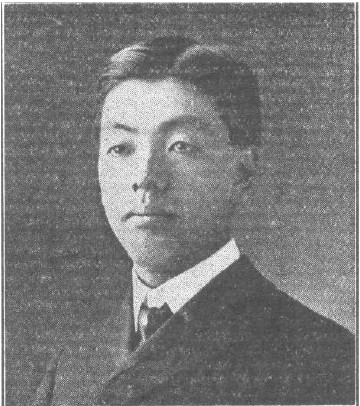
In 1907 the Rafu Shimpo transferred Masuko to Denver, where he decided to create his own professional Japanese barnstorming team. The Mikado’s Japanese Base Ball Team played 22 games in the summer of 1908 in Colorado, Kansas, and Missouri before rain cut its season short. The following year, he teamed with Harry Saisho to organize another barnstorming team called the Japanese Base Ball Association, which planned to tour the Midwest. That tour also failed after just a few games. During both tours, Masuko tried to promote the teams with exaggerations and outright lies, claiming his squads of local immigrants were “composed of the best nine players from the Japanese Empire … picked from the colleges of Japan … straight from the Orient.” Tozan remained in Denver as editor of the Denver Shimpo for nine more years before moving to Salt Lake City to become editor of the Utah Nippo in 1917. By 1920, however, Masuko had moved to Yokohama, Japan. Drawing on his past experience promoting the Mikado’s and JBBA baseball teams, Tozan decided to become a sports promoter. The endeavor did not go well: A tendency to exaggerate and a lack of scruples got in the way.
Masuko began his new career by bringing Ad Santel and Henry Weber to Japan to “test the relative merits of American wrestling with Japanese jujitsu.” Santel, who is still considered one of the greatest “catch wrestlers” of all time, was the reigning world light-heavyweight champion. Since 1914 he had been wrestling Japan’s top judo champions—often defeating them easily. As a result, he was well-known in Japan. Weber, a 6-foot, 200-pound blond who “looked like a Greek god,” was not Santel’s equal on the mat but was nonetheless a renowned wrestler and Santel’s manager.
A large crowd met Santel and Weber on the pier as they arrived in Yokohama on February 26, 1921. Beneath banners bearing the wrestlers’ names in both English and Japanese, kimono-clad girls presented the visitors with wreaths of flowers and bouquets as the crowd cheered “Banzai!” Tozan accompanied the wrestlers to Tokyo, where they would spend the next week preparing for a match against Japan’s experts from the Kodokan Judo Institute—the school created by the sport’s founder, Jigoro Kano.
Although Masuko had arranged for a prominent judo expert to provide opponents for Santel and Weber, he had never contacted the Kodokan itself. Members of the school were outraged when they heard of Masuko’s plans. Kodokan representatives decreed that any student who took part in the match would be expelled, as “the spirit of Bushido prevents … taking part in any professional show of judo.”
Despite the edict, several judo experts accepted the challenge and wrestled Santel and Weber on March 5 and 6 at Yasukuni Shrine. Sellout crowds of 6,000 to 8,000 attended each day, bringing in an estimated 24,000 yen. After the matches, the wrestlers asked for their 35 percent cut of the gate receipts plus reimbursement for their travel expenses. Masuko, however, claimed that the matches had produced a profit of only 196 yen and promised to pay when cash became available. They next went to Nagoya, where Tozan had arranged two more matches. Despite strong attendance, the wrestlers still did not receive their money. A few days later in Osaka, Santel and Weber refused to enter the ring unless they were paid upfront. Masuko coughed up 300 yen and the matches took place. Noting the large crowds, the wrestlers demanded 1,000 yen prior to the third match. After much wrangling, they eventually accepted a check from a local promoter.
The next morning, when Santel presented the check at the bank, he was told that the promoter had no account, making the check worthless. Returning to the Osaka promoter’s office, Santel learned that Masuko and the local promoter “had drawn on the money due to them until there was nothing left.” The American wrestlers searched in vain for Tozan, who had left Osaka and gone into hiding.
A sympathetic judo expert stepped forward and arranged bouts to raise enough money for Santel and Weber to return to the United States. As he left, Santel told reporters, “Our stay in Japan has been very pleasant in some ways, and we will not carry away the impression that everyone here is bad. … There are swindlers everywhere and we just happen to become connected with two in Japan.” Santel and Weber declined to bring charges against Masuko as legal fees and further time in Japan would have been prohibitively expensive.
A few months later, Tozan once again brought athletes to Japan. This time he returned to the sport he loved and planned to bring the first Native American baseball club to Japan. On July 2, 1921, he arrived in Seattle on board the Fushimi Mara. By the first week of August, Masuko was making arrangements for a team of Suquamish Indians, a group of Native Americans from the western shores of Puget Sound, who had been playing baseball since the late nineteenth century, to accompany him back to Japan. How Masuko learned of the Suquamish team is unknown, but the Bremerton Searchlight reported, “In their efforts to secure an all-Indian ball team for the trip, the promoters have tried out practically every Indian ball team on the coast and the fact that the Suquamish team was finally chosen is a considerable boost for the local players.”
Masuko, who said he was a representative of the Sennichitochi Real Estate and Building Corporation of Osaka, claimed the Suquamish were being invited by Meiji University.
Howard Myrick, who ran the Seattle branch of the A.G. Spalding & Brothers sporting-goods company, was responsible for assembling the squad but the exact relationship between Masuko and Spalding is unknown. The Suquamish players believed their contracts were with Spalding, but, to their chagrin, that would not be the case.
On the morning of August 6, 1921, at 10 A.M., Masuko and the Suquamish ballclub boarded the Alabama Mara at Pier 6 in Seattle and sailed for Yokohama. The squad was an amalgamation of teenage outfielders, semipro veterans, and a legendary pitcher who was called “the Chief Bender of the Northwest.” He threw a fastball, a curve, and a signature pitch called the “clam ball” that would rise as it approached the hitter.Accompanying the Suquamish was a semipro team from Ballard, Washington, that had been renamed the Canadian Stars for the Japanese visit.The teams planned to stay in Japan for about two months.
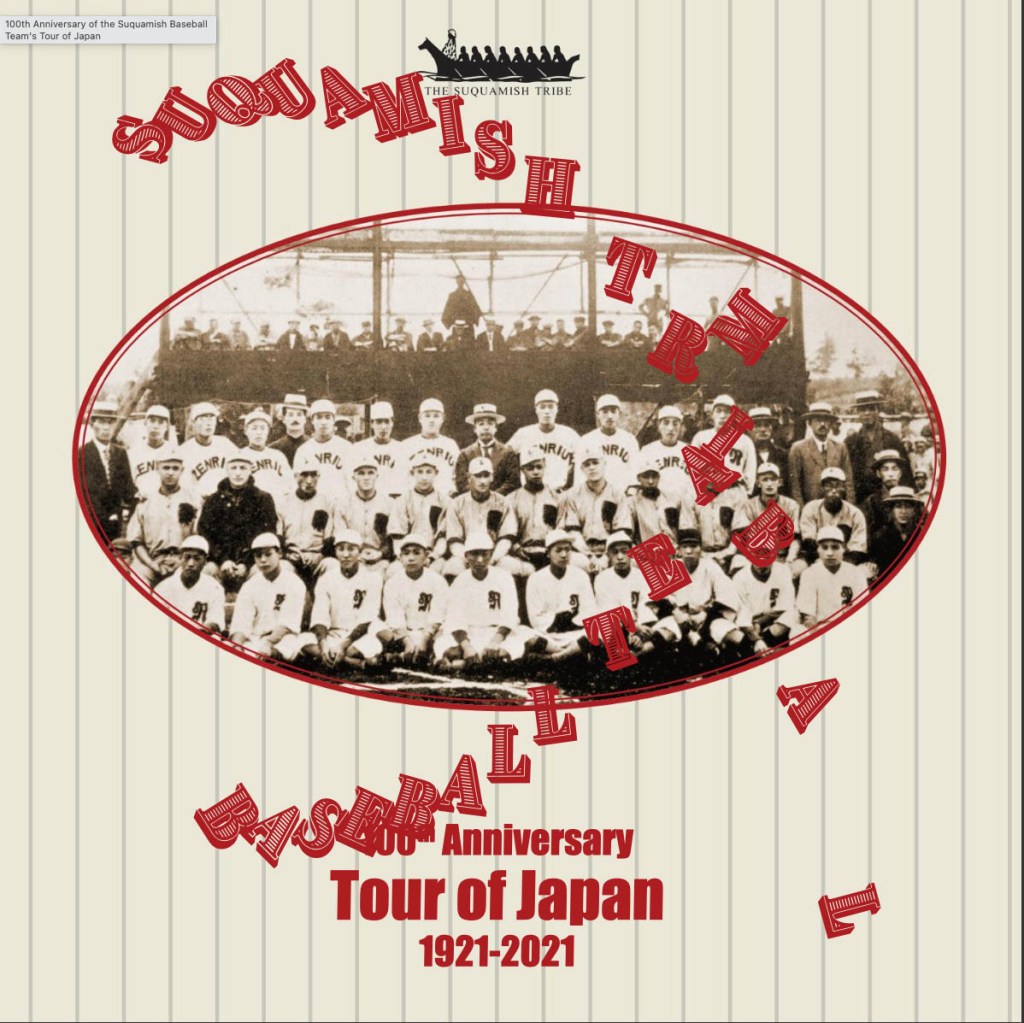
The Canadian Stars and the Suquamish teams were familiar with each other. They met two weeks earlier on July 24, with the Canadian Stars, at that time called the Ballard Merchants, winning, 11-3. The game was started by the main pitchers for both teams. The purveyor of the “clam ball,” 31-year-old Louie George, started for Suquamish, and a future major-league pitcher, 24-year-old Rube Walberg, in a breakout semipro season that would catapult him into professional baseball, started for Ballard. The Suquamish had Arthur Sackman pitching relief and Lawrence Webster was at catcher. The game was previewed in the Seattle Daily Times on July 22, giving us an idea of the perception of the Suquamish style of play: “The Ballard Merchants are going to Suquamish, looking for an easy game, but you never can tell about Indian ball players, as they do not do what is expected of them. In some cases, they break up all kinds of defensive plays by hitting pitch-outs for home runs and making their opponents very uncomfortable.” The Suquamish team was referred to in the same newspaper as being “made up of the best Indian ball players in the Northwest.”
The regular Suquamish team that competed in Seattle area semipro games formed the core of the team that traveled to Japan. Many of their regular players, however, could not travel for two months because of work and stayed home. Enough players stayed behind that the Suquamish had a separate team that continued playing to the end of the semipro season in October.
Seven players on the touring team were members of the Suquamish Tribe: Lawrence “Web” Webster, 22 years old, catcher and outfielder; Charles Thompson, 28, third base and shortstop; Harold “Monte” Belmont, 18, outfield; Roy Loughrey, 20, outfield; Woody Loughrey, 17, outfield; Richard Temple, 18, center field and utility; and Arthur Sackman, 17, outfield and pitcher. The five younger players had experience playing baseball at Indian boarding schools.
Needing to supplement the core of the Suquamish club, the team brought along Louie George and four nonnative players—known as “boomers.” The 31-year-old George was a member of the Port Gamble S’Klallam Tribe and, according to the Seattle Daily Times, “is the star of the team. This pitcher is a veteran of many tight pitching duels with Seattle hurlers, having played with Indian teams for years. He also is a heavy slugger and a good outfielder.” Having lost the end of his thumb in a motorcycle accident, George threw an unusual pitch he called a “clam ball.” His nephew Ted George remembered, “It was a pitch that rolled off a shortened thumb at a unique angle … rising as it approached the batter. … It befuddled hitters … and when mixed with a blazing fastball and killer curve became stuff of legend.”
The nonnative “boomers” were 31-year-old Lee “Bill” Rose, first base, catcher, and utility, who became the team’s captain; 27-year-old Roy “Cannon Ball” Woolsey, pitcher, outfield, and coach; 27-year-old James C. Smith, second base; and 23-year-old John Lukanovic, outfield, first base, and pitcher. All four were longtime Northwest Coast semipro players.
Woody Loughrey recalled that during the 16-day trip to Japan, the squad “worked out on the ship, out on the open deck. See it got pretty rough all right” and on “the better days, why, we worked out up there playing catch and running up and down the deck.” Lawrence Webster added, “[T]hat continued rise and fall of those boats itself was awful monotonous, so we started playing catch on the boat. And we started out with about three dozen baseballs so we could keep our arms in shape. By the time we got over there, we had two, just two, not two dozen. That’s all we had [the rest went overboard]. So we hung on to those two and we got over, and we got some new ones that was made over in that country. And there was quite a bit of difference in the baseball. While the size was practically the same, theirs was dead, you’d hit it and it wouldn’t go very far.”
The two clubs arrived in Yokohama on the steamer Alabama at noon on August 22,1921. The Suquamish immediately went to their inn to change into uniforms and then to the Yokohama Park Grounds to practice. “A big gathering of Japanese fans” waited at the park “to give the invading teams an enthusiastic welcome … and to watch their every movement with bat and glove.” The clubs were expected to stay in Japan for two months, playing collegiate teams in Tokyo and touring the country.
Promoter Tozan Masuko bragged to reporters that he had a big tour planned and that his powerful Native American squad would battle against the top Japanese teams. “The tour would start in Tokyo against Meiji University, and then the Indians will play Waseda, Keio, Hosei and Rikkyo Universities, Mita and Tomon Clubs and others. After the Tokyo series, they will go to the Tohoku region with Meiji University, playing in Fukushima, Morioka, Hokkaido, Niigata, and Nagaoka before heading to Kansai for games against Daimai and Star Clubs and other teams. Though depending on circumstances, they are eager to barnstorm even in Shikoku, Kyushu, Manchuria and Korea.”
But none of this was true. Meiji University had neither committed to sponsor the tour nor travel with the visitors to Tohoku. In fact, Masuko had not arranged any games and would put together the schedule on the fly.
Continue to read the full article on the SABR website
by Taein Chun
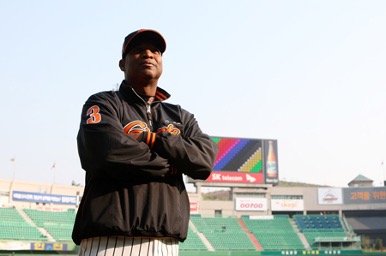
At the end of 2007, the Lotte Giants needed a breakthrough to end their long slump. The team’s performance was declining, and fans’ frustration was mounting. At that time, Bobby Valentine, who was managing the Chiba Lotte Marines in Japan, was asked by Lotte’s ownership to recommend a new manager. Without hesitation, Valentine introduced his longtime friend, Jerry Royster.
Arriving in Busan, Royster became the first foreign manager in KBO history. A utility player who spent 16 years in Major League Baseball moving between the infield and outfield, he took on the Korean stage after retiring as a player and working as a coach and minor league manager. At that time, the idea of a foreign skipper was almost unthinkable, and the Korean baseball world viewed it with both curiosity and concern.When the 2008 season began, a new scene unfolded at Sajik Baseball Stadium in Busan. With the slogan “No Fear,” Lotte declared an aggressive brand of baseball under its new manager. Fans quickly embraced the American leader, calling him simply “Royster” instead of the formal “manager.” Beyond nationality, the very fact that a foreigner was officially holding the reins of a KBO team was a symbolic milestone.
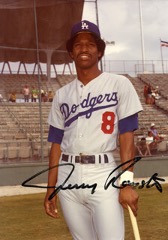
Royster stayed in Korea for only three years, but in that short time he left an indelible mark on the team and its fans. For years, Lotte had been mockingly nicknamed “8888577.” This number string represented their final standings from 2001 to 2007, mostly finishing dead last (8th place) in the eight-team league. Among fans, “8888577” became shorthand for failure and despair.
But everything changed after Royster took over in 2008. Though Lotte never won a championship under him, the team reached the postseason three years in a row. A club long accustomed to losing now had the confidence that “we can win.” At a time when team identities in Korean baseball were fading, Lotte regained a strong identity: a team that fought until the last out, one that played bold, attacking baseball.

Royster’s baseball philosophy could be summed up in two words: “No Fear.” He valued bold attempts over results. Hitters were encouraged to swing aggressively, runners to take the extra base, and pitchers to trust their decisive pitch without shrinking back.
This message, “don’t be afraid of failure,” stood in sharp contrast to the conservative, risk-averse approach typical of the KBO then, leaving a strong impression. Players experienced new freedom, and fans delighted in the refreshing style of play. “No Fear” became more than a slogan; it fused with Busan’s passionate cheering culture and grew into a symbol.
His leadership also broke from the authoritarian style common in Korea. He shared emotions with players in the dugout and greeted fans first after games, rare sights in the KBO then. Rather than stressing authority, he emphasized communication and empathy. Asked “Who is the best player?” he always answered, “Every player is a good player.”While ordinary in the U.S., this philosophy was a fresh shock in Korea. In a culture of hierarchy, his trust-based, autonomy-driven style gave players a sense of ownership. That’s why players like Sung-hwan Jo, Dae-ho Lee, and Jae-gyun Hwang later called him a “mentor.”
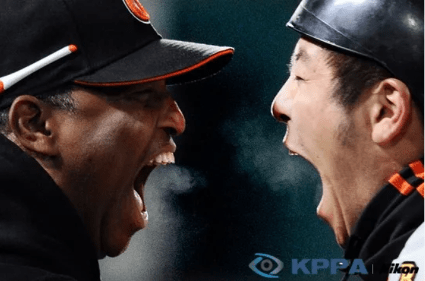
Royster became more than a figure in the dugout, he was tied to Korean society. Even after he left in 2010, whenever a managerial change loomed, the phrase “like Royster again” resurfaced in media and fan discussions.
The “No Fear” mantra became a cultural keyword shared across Korean baseball fandom. Even today, his name resurfaces in charity games, broadcasts, and YouTube interviews. At the 2024 Hope Plus Charity Baseball Game in Sajik Stadium, he returned as honorary manager, greeted with roaring applause as he once again shared the “No Fear” spirit. For fans, Royster remains a living presence, not just a figure of the past.

Royster’s presence also influenced Korean society. Until the late 2000s, racially discriminatory expressions against Black people were often used casually in Korea. In 2008, a player posted a racial slur aimed at Royster on his personal SNS, which immediately sparked backlash. Unlike in the past, when such things might have been brushed aside, this time the player had to issue a public apology, because Royster was respected not just as a coach but as a leader.
From that moment, such remarks were no longer tolerable. His presence became a real-life lesson for Korean baseball in diversity and respect, fostering an attitude of evaluating a leader beyond race.
Royster’s impact continues today. Lotte has gone through many managers since, but every era is still compared to “the Royster years.” A style of baseball where players and fans breathe together and play fearlessly, that philosophy lives on as a benchmark beyond wins and losses. His name remains a reminder not of mere nostalgia, but of the direction Korean baseball should strive toward.
by John Harney
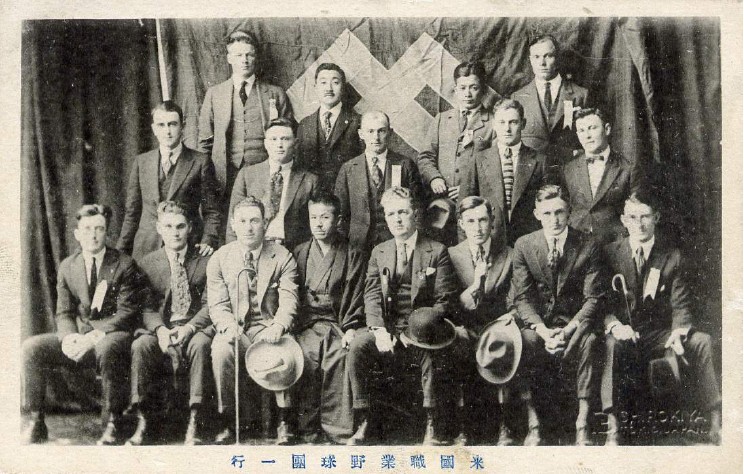
Every Tuesday morning we will post an article from SABR’s award-winning books Nichibei Yakyu: Volumes I and II. Each will present a different chapter in the long history of US-Japan baseball relations. Today John Harney focuses on the 1920 major league tour of Japan..
It began with big dreams and ended in chaos and farce. The 1920 tour was a lot of things all at once: a high profile, all-star tour that served as a diplomatic mission to engender positive relationships between two rising global powers, the United States and the Empire of Japan; a largely successful business enterprise planned and carried out by experienced entrepreneurs; and a debacle that saw a baseball tour with high hopes collapse in acrimony and accusations of skullduggery. Certainly, it was not boring.
The first mentions of the tour in the American press started to show up in the late spring and early summer of 1920. California-based sports promoter Gene Doyle was promising big things. Specifically, Doyle sought to take an all-star team to Japan to play in exhibition games against local teams. Boasting the cream of the American professional ranks, the tour would feature teams representing each of the major leagues. Doyle had successfully persuaded Buck Weaver, star third baseman of an impressive Chicago White Sox team that had rather surprisingly lost to the Cincinnati Reds in the World Series the season before, to lead the group to Japan.
It was not solely an American enterprise. Doyle was in partnership with two Japanese businessmen, Yumindo Kushibiki and Tommy Tominaga. Kushibiki was by this time a well-known figure in the United States, known as the “Japanese Exhibition King” for his work in introducing the American public to Japanese cultural artifacts at the Columbian Exposition at Chicago in 1893 and, closer in proximity to the 1920 tour, the Panama-Pacific International Exposition of 1915 in San Francisco. Tominaga was more of an obscure figure, an “Americanized Japanese” who had attended high school in Los Angeles but graduated from Waseda University, a bright star in both Japan’s academic and baseball worlds. In truth, he was a fairly minor player who succeeded in establishing himself as a go-between for Kushibiki and Doyle, but his involvement helped give credence to the feasibility of a tour to Japan and lent the endeavor an air of cultural exchange as an act of American generosity.
The advantages of the tour seemed clear enough, at least to Doyle, who utilized a network of contacts in the California press to hype up interest. The visit of John McGraw and Charles Comiskey’s World Tour to Japan in 1913 gave sufficient precedent, and Doyle and his fellow organizers sang all the right notes. This tour would deepen friendship between the two countries, and also allow the Americans to assist their fellow baseball people in Japan to kick-start professional baseball in that country. The commercial advantages also appeared to be evident and the American papers, long since used to the reality of barnstorming and offseason financial opportunities for baseball players, naturally went along in those assumptions.
From the start, then, Doyle’s tour—and in the months to come and in the years since it would come to be associated primarily with its central organizer and promoter more than any of the players—was a hybrid of naked commercial interest and a somewhat ambivalent commitment to deepening cultural ties across the Pacific and facilitating a natural leadership position for the United States in the growth of the game across the world. Doyle had big plans; but it wasn’t to be.
For one thing, Weaver did not join them. Embroiled in the growing Black Sox scandal of the fall of 1920, he dropped out of the tour. He had been the big draw, the biggest name attached to the tour on the day of its announcement. Doyle had intended for Weaver to serve as captain of the AL team and de facto head of the playing squad as a whole. Initially, this had seemingly been successful: By July, Doyle was able to claim that Weaver had helped in signing a host of major leaguers, including St. Louis Browns first baseman George Sisler, Detroit Tigers catcher Eddie Ainsmith, and Weaver’s White Sox teammate Happy Felsch. Tominaga and others talked a big game indeed, happily comparing the coming tour to the around-the-world Giants-White Sox Tour of 1913. It was not to be. Ainsmith, however, stuck with Doyle, and along with Sam Bohne, a Seattle Indian about to begin a career with the Cincinnati Reds in 1921, formed the core leadership of the team. The other big names evaporated.
The rest of the purportedly all-star group was made up of players from the Pacific Coast League, many of whom had a veneer of legitimacy by having had a cup of coffee in the majors. Outfielder Herbert Harrison Hunter had played a handful of games over the years with the New York Giants, the Chicago Cubs, and most recently the Boston Red Sox. Jack Sheehan had appeared briefly for the Brooklyn Robins. One player, catcher Everett Gomes, was so unknown, even to the press on the West Coast, that in reports on the tour they would refer to him simply as “Catcher Gomes.” Still Doyle persevered. Early plans of a tour around California were scrapped, and they moved to head directly to East Asia with a brief stopover in Honolulu.
The Hawaiian reception to the tour was enthusiastic. The local lodge of Elks served as hosts and sponsors of the team, and, expecting a dawn arrival, planned to treat the visitors to a sightseeing trip by automobile around Honolulu, followed by a formal lunch and a game later in the afternoon. The Hawaiian hosts got their game—Ainsmith led the AL team to victory over the NL players—but in the end the tourists stopped by the islands for only a few hours. The players returned to the S.S. Korea shortly after and were soon on their way. Doyle was on a high. “So far the trip has been a success,” he wrote to the Los Angeles Express’s Harry Grayson, painting a pretty picture. The players were all in good spirits: Ainsmith was living up to his role of tour captain well, “[f]ull of pepper and keeps the [players] hustling.” Bohne was growing a mustache, and another PCL veteran, Portland Beaver Sammy Ross, was doing a bang-up job running the Filipino band on the entertainment committee. Doyle wanted to be very clear: All was well. So united were the boys, in fact, that to a man they were livid with Minneapolis Millers infielder Carl Sawyer, the latest player to drop out. “[W]hat the gang thinks of him isn’t fit for print,” Doyle told Grayson.
This merry band arrived in Japan ready for anything and everything. The Japanese baseball world gave it to them. The visit, coming in late November and December in the offseason between fall and spring collegiate seasons, was primed for the attention of an enthusiastic and knowledgeable baseball-loving public. Baseball in Japan by 1920 was continuing to grow, with increasingly sophisticated youth and collegiate baseball infrastructures but a still-nascent professional scene. Excitement for the visit of the Americans was high. The Osaka Mainichi Shimbun reported on the anticipated arrival of the team on November 22, scheduled at 3:30 P.M. on the S.S. Korea. The article showcased large photographic inserts featuring a number of the players, including the aforementioned Carl Sawyer. News of Sawyer’s “treachery” had not yet reached the Japanese editors. The Americans themselves were ready for Japan, the paper said that they had been “swinging bats and leaping about the deck” of the ship in anticipation of landfall near Tokyo.
The opening game in Japan, a competition between teams representing the AL and the NL to fit the tour’s billing as an all-star tour from the major leagues, took place on November 25. The occasion had actually been delayed two days by rain, despite Doyle and Kushibiki’s original intention for the players to get to work almost as soon as they made landing in Japan, perhaps taking to the field on the day of arrival. Nevertheless, the opening exhibition was a success. The NL came out 2-1 winners, but Ainsmith was heralded as the big star, blasting the only home run of the game.
The Americans played their first game against Japanese collegiate opposition the next day. Waseda University was home to arguably the most prestigious baseball program in Japan. Waseda had played the first intercollegiate varsity baseball game in the country, a 1903 contest vs. Keio University. By 1920, Waseda was one of six major college teams. In 1924, these teams would formally come together to compete annually in the “Big Six League”; but already the universities played each other in a de facto annual championship with fall and spring seasons. The All-American team faced four collegiate teams in total: Waseda, Keio, Meiji University, and Hosei University. This represented the top tier of Japanese baseball talent, the best-drilled, and—despite their youth—the most competitively seasoned.
Continue to read the full article on the SABR website

by Jongho Kim
Many Korean baseball players have challenged overseas leagues from the past to the present. Public attention has mostly focused on those who entered American or Japanese baseball. However, some players have taken on challenges in lesser-known leagues. The topic of this article is the “third baseball leagues” outside the U.S. and Japan, specifically the Mexican League and Latin American winter leagues, as experienced by Korean players.
Korean Players in the Mexican League
The summer league commonly known as the “Mexican League” has a history of 100 years, but in Korea, it has little recognition or popularity. Even so, as many as seven Korean players have played in Mexico. The first “Mexican leaguer,” and the Korean player who spent the longest time there, was Won Kuk Lee.

Born in Seoul in 1948, Lee was a right-handed pitcher with a blazing fastball. In high school, he threw pitches close to 150 km/h (about 93 mph), drawing attention from Japanese scouts.
He moved to Japan in 1965 and joined the Tokyo Orions (now Chiba Lotte Marines) in 1966. However, he pitched in only one game in Japan. In 1968, the Orions sent him to the U.S. for training. He joined the Single-A Fresno Giants under the San Francisco Giants, later moving through the Detroit Tigers and Milwaukee Brewers farm systems, but was released in 1970.
Through a friend’s recommendation, he learned about the Mexican League and flew to Mexico in 1972. That year, with Piratas de Sabinas, he posted an 11–11 record and a 3.27 ERA. In 1973, he went 16–13 with a 2.30 ERA, showing his full potential. In 1974, he became a founding member of Mineros de Coahuila (now Acereros de Monclova) and remained a rotation starter until 1980. He wrapped up his Mexican career with Petroleros de Poza Rica in 1982 and returned to Korea in 1983 at the age of 35.
Over 10 years, he recorded 336 games, 149 wins, 128 losses, a 2.81 ERA, and 1,126 strikeouts, numbers still remembered in Mexico. In 1983, he briefly joined the KBO’s MBC Blue Dragons (now LG Twins), going 1–1 with a 4.42 ERA before retiring.
Seventeen years later, Kyung Hwan Choi (now a baseball commentator) became the first Korean hitter in the Mexican League. A left-handed outfielder, he signed with the California Angels (now Los Angeles Angels) in 1995 and played in the minors before joining Sultanes de Monterrey in 1999. He later played for Algodoneros de Unión Laguna before moving to the KBO in 2000.
At the same time in 1999, three other Koreans entered the Mexican League: Wonseong Ma (RHP, Rieleros de Aguascalientes), Sangyeong So (RHH OF, Langosteros de Cancun), and Gilnam Hong (RHP, Guerreros de Oaxaca). All were former OB Bears (now Doosan Bears) second-team players who continued short careers in Mexico after being released.
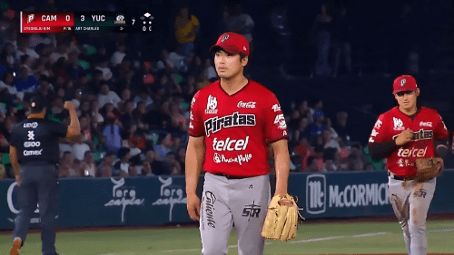
The last KBO player to challenge the Mexican League was Jinwoo Kim, a pitcher with the Kia Tigers, who appeared for Sultanes de Monterrey in 2019. In 2025, Gyeongju Kim, a Korean pitcher from an American independent team, joined Piratas de Campeche.
Korean Players in Latin American Winter Leagues
Latin American winter leagues are held from October to January in countries such as the Dominican Republic, Mexico, Venezuela, Colombia, and Puerto Rico. These short leagues are often filled with free agents hoping to reach MLB or Asian leagues, or current players seeking to maintain game sharpness during the offseason.
Korean teams generally dislike sending players abroad in winter due to concerns about injuries or fatigue. As a result, Koreans in these leagues are usually MLB or minor league players.
Only two KBO players have played in winter leagues: Youngsik Kang (LHP) and Junhyeok Heo (RHP) of the Lotte Giants, who briefly joined Leones del Escogido in the Dominican League during the 2007–08 season.

Other examples include:
These stints were short-lived, but they represented turning points in their baseball careers abroad. They also left behind a lesson for younger players: “In baseball, there are always countless paths.”

by Robert Fitts
Every Tuesday morning we will post an article from SABR’s award-winning books Nichibei Yakyu: Volumes I and II. Each will present a different chapter in the long history of US-Japan baseball relations. In this article Robert Fitts discusses the first Japanese American teams to visit Japan.
INTRODUCTION
Between 1890 and 1910, over 100,000 Japanese immigrated to the West Coast of the United States. Many settled in the urban centers of San Francisco, Los Angeles, and Seattle. Within a few years, each of these immigrant communities had thriving baseball clubs. The first known Japanese American team was the Fuji Athletic Club, founded in San Francisco around 1903. A second Bay Area team, the Kanagawa Doshi Club, was created the following year. That same year, newsmen at the Rafu Shimpo organized Los Angeles’s first Issei (Japanese immigrant) team. Other clubs followed in the wake of Waseda University’s 1905 baseball tour of the West Coast. Many players learned the game while still in Japan at their high schools or colleges. Others picked up the sport in the United States. The first Japanese professional club was created the following year by Guy Green of Lincoln, Nebraska. His Green’s Japanese Base Ball Team, consisting of Japanese immigrants from Los Angeles, barnstormed throughout the Midwest in the spring and summer of 1906.
Seattle’s first Japanese American club, called the Nippon, was also organized in 1906. Shigeru Ozawa, one of the founding players, recalled that the team was not very good at first and was able to play only the second-tier White amateur nines. By 1907 the team had a large local following. In its first appearance in the city’s mainstream newspapers, the Seattle Star noted that “before one of the largest crowds seen at Woodlands park the D.S. Johnstons defeated the Nippons, the fast local Jap team, by a score of 11 to 5.” In May 1908, before a game against the crew of the USS Milwaukee,the Seattle Daily Times reported that the Nippon “have picked up the fine points of the great national game rapidly from playing the amateur teams around here every Sunday.”
Two months later, the Daily Times featured the team when it took on the all-female Merry Widows. Mistakenly referring to the Nippons as “the only Japanese baseball club in America,” the newspaper reported, “when these sons of Nippon went up against the daughters of Columbia, viz., the Merry Widow Baseball Club, it is a safe assumption that the game played at Athletic Park yesterday afternoon was the most unique affair in the annals of the national game.” Over a thousand fans, including many Japanese, watched the Nippons win, 14-8.
Soon after the game with the Merry Widows, second baseman Tokichi “Frank” Fukuda and several other players left the Nippon and created a team called the Mikado. The Mikado soon rivaled the Nippons as the city’s top Japanese team, with the Seattle Star calling them “one of the fastest amateur teams in the city.” In both 1910 and 1911, the Mikado topped the Nippon and Tacoma’s Columbians to win the Northwest Coast’s Nippon Baseball Championship.
As Fukuda’s love for baseball grew, he realized the game’s importance for Seattle’s Japanese. The games brought the immigrants together physically and provided a shared interest to help strengthen community ties. It also acted as a bridge between the city’s Japanese and non-Japanese population, showing a common bond that he hoped would undermine the anti-Japanese bigotry in the city.
In 1909 Fukuda created a youth baseball team called the Cherry—the West Coast’s first Nisei (Japanese born outside of Japan) squad. Under Fukuda’s guidance, the club was more than just a baseball team. Katsuji Nakamura, one of the early members, explained in 1918, “The purpose of this club was to contact American people and understand each other through various activities. We think it is indispensable for us. Because there are still a lot of Japanese people who cannot understand English in spite of the fact that they live in an English-speaking country. That often causes various troubles between Japanese and Americans because of simple misunderstandings. To solve that issue, it has become necessary that we, American-born Japanese who were educated in English, have to lead Japanese people in the right direction in the future. We have been working the last ten years, according to this doctrine.”
As the boys matured, the team became stronger on the diamond and in 1912 the top players joined with Fukuda and his Mikado teammates Katsuji Nakamura, Shuji “John” Ikeda, and Yoshiaki Marumo to form a new team known as the Asahi. Like the Cherry, the Asahi was also a social club designed to create the future leaders of Seattle’s Japanese community, and forge ties with non-Japanese through various activities, including baseball. Once again the new club soon rivaled the Nippon as Seattle’s top Japanese American team.
THE NIPPON TOUR
During the winter of 1913-14, Mitomi “Frank” Miyasaka, the captain of the Nippon, announced that he was going to take his team to Japan, thereby becoming the first Japanese American ballclub to tour their homeland. To build the best possible squad, Miyasaka recruited some of the West Coast’s top Issei players. From San Francisco, he recruited second baseman Masashi “Taki” Takimoto. From Los Angeles, Miyasaka brought over 30-year-old Kiichi “Onitei” Suzuki. Suzuki had played for Waseda University’s reserve team before immigrating to California in 1906. A year later, he joined Los Angeles’s Japanese American team, the Nanka. He also founded the Hollywood Sakura in 1908. In 1911 Suzuki joined the professional Japanese Base Ball Association and spent the season barnstorming across the Midwest. Miyasaka’s big coup, however, was Suzuki’s barnstorming teammate Ken Kitsuse. Recognized as the best Issei ballplayer on the West Coast, in 1906 Kitsuse had played shortstop for Guy Green’s Japanese Base Ball Team, the first professional Japanese club on either side of the Pacific. He was the star of the Nanka before playing shortstop for the Japanese Base Ball Association barnstorming team in 1911. Throughout his career, Kitsuse drew accolades for his slick fielding, blinding speed, and heady play.
To train the Nippons in the finer points of the game, Miyasaka hired 38-year-old George Engel (a.k.a. Engle) as a manager-coach. Although Engel had never made the majors, he had spent 14 seasons in the minor leagues, mostly in the Western and Northwest Leagues, as a pitcher and utility player. Miyasaka also created a challenging schedule to ready his team for the tour. They began their season with games against the area’s two professional teams from the Northwest League. On Sunday, March 22, they lost, 5-1, to the Tacoma Tigers, led by player-manager and future Hall of Famer Joe “Iron Man” McGinnity. The following Sunday the Seattle Giants, which boasted seven past or future major leaguers on the roster, beat them 5-1. Despite the one-sided loss, the Seattle Daily Times noted, “the Nippons … walked off Dugdale Field yesterday afternoon feeling well satisfied with themselves for they had tackled a professional team and had made a run.”
In April 1914, Keio University returned for its second tour of North America. After dropping two games in Vancouver, British Columbia and a third to the University of Washington, Keio met the Nippons on April 9 at Dugdale Park in what the Seattle Daily Times called “the world’s series for the baseball championship of Japan.” On the mound for Keio was the great Kazuma Sugase, the half-German “Christy Mathewson of Japan,” who had starred during the school’s 1911 tour. The team also included future Japanese Hall of Famers Daisuke Miyake, who would manage the All-Nippon team against Babe Ruth’s All-Americans in 1934, and Hisashi Koshimoto, a Hawaiian-born Nisei who would later manage Keio.
Nippons manager George Engel was in a quandary. His usual ace Sadaye Takano was not available and as Keio would host his team during its coming tour of Japan, he needed the Nippons to prove they could challenge the top Japanese college squad. Engel reached out to William “Chief’ Cadreau, a Native American who had pitched for Spokane and Vancouver in the Northwestern League, one game for the 1910 Chicago White Sox, and would later pitch a season for the African American Chicago Union Giants. Pretending that he was a Japanese named Kato, Cadreau started the game. According to the Seattle Star, “Engel was very careful to let the Keio boys know that Kato, his pitcher, was deaf and dumb. But later in the game Kato became enthused, as ball players will, and the jig was up when he began to root in good English.” Nonetheless, Cadreau handled Keio relatively easily, striking out 13 en route to a 6-3 victory.
Throughout the spring and summer, the Nippons continued to face the area’s top teams, including the African American Keystone Giants, to prepare for the trip to Japan. Yet in their minds, the most important matchup was the three-game series against the Asahi for the Japanese championship. The Nippons took the first game, 4-2, on July 12 at Dugdale Park but there is no evidence that they finished the series. Not to be outdone by their rivals, the Asahi also announced that they would tour Japan later that year. Sponsored by the Nichi-nichi and Mainichi newspapers, the Asahi would begin their trip about a month after the Nippons left for Japan.
The Nippon left Seattle aboard the Shidzuoka Maru on August 25. Their departure went unreported by the city’s newspapers as international news took precedence. Germany had invaded Belgium on August 4, opening the Western Front theater of World War I. Throughout the month, Belgian, French, and British troops battled the advancing Germans. Just days before the ballclub left for Japan, the armies clashed at Charleroi, Mons, and Namur with tens of thousands of casualties. On August 23, Japan declared war on Germany and two days later declared war on Austria.
After two weeks at sea, the Nippon arrived at Yokohama on September 10. The squad contained 11 players: George Engel, Frank Miyasaka, Yukichi Annoki, Kyuye Kamijyo, Masataro Kimura, Ken Kitsuse, Mitsugi Koyama, Yohizo Shimada, Kiichi Suzuki, Sadaye Takano, and Masashi Takimoto. Accompanying the ballplayers was the team’s cheering group, consisting of 21 members and led by Yasukazu Kato. The group planned to attend the games to cheer on the Nippon and spend the rest of their time sightseeing.
As the Shidzuoka Maru docked, a group of reporters, Ryozo Hiranuma of Keio University, Tajima of Meiji University, and a few university players came on board to welcome the visiting team. The group then took a train to Shinbashi Station in Tokyo, where they were met by the Keio University ballplayers at 2:33 P.M. The Nippon checked in at the Kasuga Ryokan in Kayabacho while the large cheering group, which needed two inns to accommodate them, settled down at the Taisei-ya and Sanuki-ya.
Only two hours later, the Nippon arrived at Hibiya Park for practice. Not surprisingly, after the voyage they were not in top form. The Tokyo Asahi noted, “Even though the Seattle team is composed of Japanese, their ball-handling skills are as good as American players, and … their agile movements are very encouraging. … They hit the ball with a very free form, but yesterday, they did not place their hits very accurately, most likely due to fatigue. … The Seattle team did not have a full-fledged defensive practice with each player in position, so we did not know how skilled they were in defensive coordination, but we heard that the individual skills of each player were as good as those of Waseda and Keio. In short, the Seattle team has beaten Keio University before, so even though they are Japanese, they should not be underestimated. On top of that, they have good pitching, so games against Waseda University and Keio University are expected to arouse more than a few people’s interest, just like the games against foreign teams in the past.”
The Nippon would stay in Japan for almost four months, but the baseball tour itself consisted of just eight games—all played during September against Waseda and Keio Universities. The players spent the rest of the time traveling through their homeland and visiting family and friends.
Continue to read the full article on the SABR website

by Nobby Ito
Do you know that the NPB’s first ever overseas games were held in China? It was in 1940, from July 31 to August 23, the official regular season games were played in Manchuria (present-day Northeast China), which Japan controlled at the time. A total of 72 games were played in a double round-robin format, with each team playing 16 games.
The fundamental national policy of the Japanese government at the time was to “build a new order in Greater East Asia, centered on the Imperial Nation and based on the strong union of Japan, Manchuria, and China.” Companies were rapidly expanding into Manchuria, and Manchurian immigration was a major national initiative. As part of this effort, all professional baseball teams visited Manchuria and played games there for about a month. Travel between cities was by third-class sleeper train, with games immediately upon arrival, maintaining a grueling schedule. Players suffered from bedbugs on trains and in inns.
“At the lodgings, we were tormented by swarms of bedbugs. Everyone’s thighs and stomachs were covered in pink bite marks, but we couldn’t change lodgings. Even during games, we scratched away.” (Michinori Tsubouchi, “Baseball in Wind and Snow: Half a Century,” March 25, 1987, Baseball Magazine Sha)
Tetsuji Kawakami: “I woke up in the middle of the night to find bedbugs swarming everywhere. Since I was practically naked, they bit me all over, and the itching woke me up.” “Unable to bear it, I consulted with Chiba and Yoshihara. We tried placing dishes filled with alcohol under the table legs, and the bugs couldn’t climb up anymore. I spread a futon on the table and finally managed to sleep.“ (Takamitsu Kawakami, ”My Father’s Jersey Number Was 16,” Asahi Shimbun Publishing, 1991)
The balls used were cheap, shoddy products that wouldn’t fly at all, making the games themselves poor, but the event was a commercial success. Attendance: 137,499 people. Revenue: 229,660 yen.
The results for the nine participating teams were as follows:
Tokyo Giants: 14 wins, 2 losses; Osaka Tigers: 11 wins, 5 losses; Hankyu: 10 wins, 5 losses, 1 tie; Nagoya: 10 wins, 5 losses, 1 tie; Eagles: 7 wins, 8 losses, 1 tie; Tokyo Senators: 5 wins, 7 losses, 4 ties; Nagoya Kinko: 5 wins, 11 losses; Nankai: 3 wins, 11 losses, 2 ties; Lions: 2 wins, 13 losses, 1 tie.
If you read Japanese, you can learn more about the 1940 season in Manchuria in Kunio Sakamoto’s book The Manchuria League of Century 2600.


Dongdaemun Baseball Stadium and Suengui Baseball Stadium
by Jeonghyun Won
Korea’s First Baseball Stadium: Dongdaemun Baseball Stadium
The history of baseball is not complete if we only look at the records of players and teams. The stadiums where the games are played are just as integral to baseball’s story. In the United States, the birthplace of baseball, the first baseball field is believed to have been Elysian Fields in Hoboken, New Jersey, built in the early-to-mid 1800s. Although it no longer exists, records say that the first official baseball game took place there on June 19, 1846. Korea’s first baseball stadium also, unfortunately, no longer exists. Where one now finds Dongdaemun Design Plaza (DDP), one of Seoul’s most famous tourist attractions, once stood Dongdaemun Stadium, the birthplace of Korean baseball. The history of Dongdaemun Stadium parallels Korea’s own painful modern history. In 1925, during the Japanese colonial era, the Japanese government constructed Gyeongseong Stadium as part of its policy to indoctrinate and control the Korean population. This was the beginning of Dongdaemun Stadium. After Korea’s liberation, the stadium was renamed Seoul Stadium.
At that time, Seoul Stadium was the mecca of Korean sports and the beating heart of the nation. The stadium hosted the most popular sporting events in Korea, including high school baseball tournaments and international competitions like the Asian Baseball Championship. It was here that Choi Dong-won, one of the greatest pitchers in Korean baseball history, recorded an astonishing 17 consecutive hitless innings. The legendary rivalry between Kim Geon-woo and Park No-jun, one of the defining rivalries of the early professional baseball era, also began here. The very first game in the history of the Korea Baseball Organization (KBO) (MBC Blue Dragons vs. Samsung Lions, 1982) was held at Seoul Stadium, and in 1985 the OB Bears (now the Doosan Bears), the first KBO champions, used the stadium as their home ground for an entire season.
But Seoul Stadium could not escape the flow of time. In preparation for the 1986 Asian Games and the 1988 Seoul Olympics, the government built the new Seoul Sports Complex in Jamsil. Seoul Stadium lost its position as the center of Korean sports, was renamed Dongdaemun Stadium, and entered a period of gradual decline.

High school baseball games continued to be held there, but the stadium was overshadowed by the popularity of professional baseball. To make matters worse, the decades-old facilities were increasingly shunned by players and spectators alike. In the mid-2000s, one baseball insider remarked, “The artificial turf is practically like concrete—if you make a mistake, you could get seriously injured. The dugouts are so cramped that players have to stand throughout the entire game. The bathrooms and other facilities are terrible, making things just as uncomfortable for fans[ZP1] [c2] .”[i]After years of debate, Dongdaemun Stadium finally closed its doors on November 13, 2007, following the Seoul High School Baseball Fall Championship final between Baemyung High School and Chungam High School.
The Heart of Incheon Baseball: Suengui Baseball Stadium
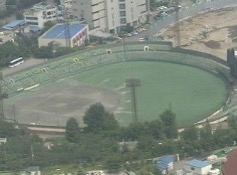
If one only thinks about today’s professional baseball scene, the cities that come to mind are Seoul, Gwangju, or Busan. But Incheon also has every right to call itself a “baseball city.” Records show that as early as 1897, students of the Incheon English Night School played one of Korea’s first baseball games there. Incheon Commercial & Industrial High School (now Incheon High School) even represented Korea several times at Koshien, Japan’s most prestigious high school baseball tournament, during the Japanese colonial period.
Suengui Baseball Stadium was the site of countless memories for Incheon’s baseball-loving citizens. Built about ten years after Dongdaemun Stadium, Suengui opened its gates in 1934. During the heyday of high school baseball, Incheon High School and Incheon Dongsan High School were among the most dominant teams in the country, and Suengui Stadium was packed to capacity almost every day. Even after the start of professional baseball, fans continued to flock to the stadium. The Sammi Superstars (one of the KBO’s inaugural teams), and later the Cheongbo Pintos and the Taepyeongyang Dolphins, all used Suengui as their home stadium. However, the professional teams’ results paled in comparison to those of the legendary local high school teams. In the 20 seasons of professional baseball played at Suengui, the postseason was hosted there only four times.
The gap between the fans’ overflowing passion and their teams’ underwhelming performance sometimes led to a rowdy, almost “hooligan-like” fan culture. While baseball fandom throughout Korea could be unruly in the early professional years, Incheon fans were considered especially intense, earning the nickname “Dowon Warriors” (Dowon Stadium was another common name for Suengui Stadium due to its proximity to Dowon Station). During Sammi’s infamous 18-game losing streak, fans once blocked the players’ bus and even demanded hearings with the team’s manager. But this passion also helped advance Korea’s fan culture. In the 1980s, before organized cheering squads existed, Suengui had an unofficial cheer captain, Mr. Kim Young-sik, who would rally the fans, lead applause, and chant the players’ names, setting the foundation for the lively cheering culture that KBO fans know today.
Suengui Stadium later served as the home of the Hyundai Unicorns and SK Wyverns, but in 2001 it relinquished its “home of pro baseball” status to Munhak Baseball Stadium. Eventually, the site was redeveloped for a soccer-specific stadium and residential apartments, and Suengui passed into history.
“As Long as We Remember, It Never Truly Disappears”
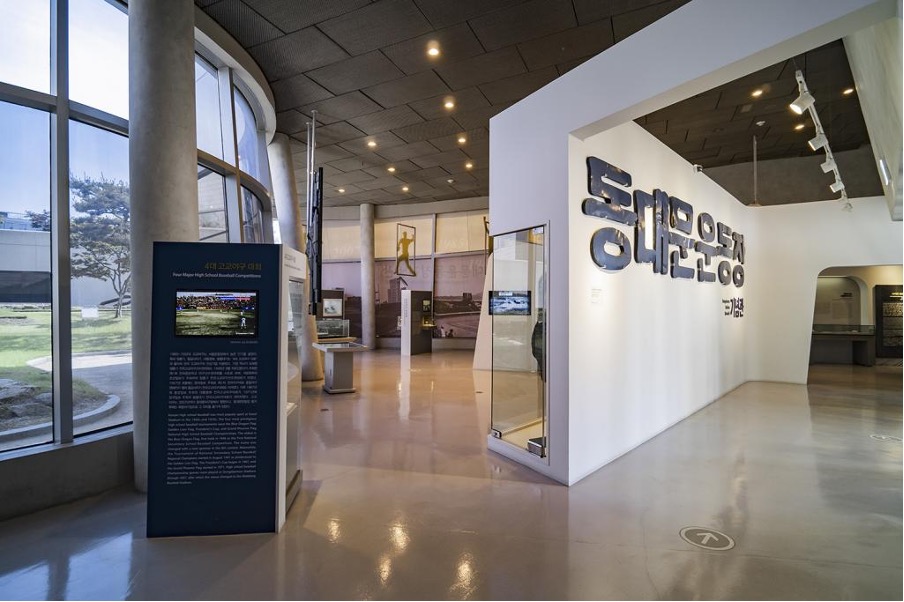
Today, if you visit Euljiro 7-ga in Seoul or Dowon-dong in Incheon, you won’t find a baseball stadium. But the spirit of the ballparks can still be felt. Inside Dongdaemun Design Plaza, the Dongdaemun Stadium Memorial Hall preserves the history of the stadium and displays equipment used there. At Incheon’s Dowon Station underpass, an exhibition called the “Incheon Sports Timeline” briefly recounts the history of Suengui Stadium. Through these spaces, one hopes that American baseball fans, and fans everywhere, can gain a deeper appreciation for Korean baseball and enjoy it even more.
[i] “Dongdaemun Design Plaza (DDP) – Past and Present, and the Stories Buried Beneath It,” Redian (Seoul, Korea), September 6, 2019, (https://www.redian.org/news/articleView.html?idxno=136378 (last accessed September 23, 2025).

by Stephen D. Boren and James Elfers
Every Tuesday morning we will post an article from SABR’s award-winning books Nichibei Yakyu: Volumes I and II. Each will present a different chapter in the long history of US-Japan baseball relations. Today Stephen D. Boren and James Elfers discuss the Chicago White Sox and New York Giants stop in Japan during their 1913-14 world tour.
On January 27, 1913, John McGraw of the National League champion New York Giants and Charles Comiskey, owner of the American League Chicago White Sox, announced their plans for a world tour to be held after the 1913 World Series. The tour would be modeled after the 1888-1889 “Great Baseball Trip Around the World” when A.G. Spalding’s Chicago National League Club, led by captain Adrian “Cap” Anson, and a team selected from the National League and American Association by John M. Ward traveled the globe playing in New Zealand, Australia, Ceylon, (Egypt, and Europe. When Comiskey heard of the Spalding world trip he supposedly stated, “Someday I will take a team of my own around the world.”
The tour would begin in Cincinnati and the teams would barnstorm across the country until they reached Vancouver, British Columbia, on November 19. From there, they would sail to Japan, China, the Philippines, Australia, Ceylon, Egypt, Italy, France, and the United Kingdom, before returning to New York on March 6, 1914. Comiskey’s close friend Ted Sullivan, a former manager and minor league executive, was named the advance scout to organize the tour, and sailed from San Francisco to Honolulu, Japan, and Australia. While Spalding’s tour had supposedly broken even, Sullivan felt that this one would make money. A few months later, Comiskey’s advance agent, Dick Bunnell, sailed for Europe to complete the arrangements on that continent.
In June 1913, after White Sox manager James Callahan “called on President Woodrow Wilson to explain the proposed world tour … Wilson expressed his approval not only because he said he considered himself a base ball fan, but because he thought the movement might result in the creation of an international league.” Wilson also thought the tour might help advance international peace and amity.
Many New York players were not enthusiastic about the proposed tour. The original plan required each person to personally put up $1,500 for expenses and for all to share equally in the profits. The players thought it would be a great trip but too expensive. The sponsors understood the players’ reluctance to make the financial commitment. McGraw initially refused to discuss the trip until the Giants were sure of winning the pennant and thus a share of the World Series money, until on July 29 he held a team meeting and for the first time officially informed his players of the world tour. He showed them the financial arrangements and received a large number of positive commitments, from Christy Mathewson and Chief Meyers among others. Meanwhile, Comiskey and Callahan began contacting players from other American League teams in case their players refused to go under the proposed conditions.
On September 24 Charles Comiskey announced that 75 people would go on the World Tour. Each player would be required to post $300 to guarantee his appearance on the ship but once on board, the money would be refunded. For such an unprecedented tour with so many passengers, great logistic and fiscal planning was needed, and both Comiskey and McGraw were prepared to write checks of $100,000 to defray additional expenses.
On October 7 Harry M. Grabiner, Comiskey’s personal representative, announced that he was finalizing the plans for the massive around-the-world trip. He said he expected the tour to be the largest sporting event ever. Preliminary reports from foreign countries suggested that baseball would be a worldwide topic before the players returned home. Grabiner said he had multiple requests for exhibition games from American Western cities. The tour was advertised like a circus with long billboard posters. Arrangements were made to film the games in foreign cities, as well as life on the ship and receptions with foreign monarchs and ambassadors.
The tour left Chicago on the night of October 19 on a special train of five all-steel cars including an observation car and a combination baggage and buffet car. This traveling hotel was the party’s home as they barnstormed across the Midwest and West Coast, playing 31 games in 27 cities, before sailing for Japan from Vancouver a month later.
By the time the teams reached Vancouver, their rosters had shrunk. Christy Mathewson and Chief Meyers decided not to accompany the teams across the Pacific. To even the squads, the White Sox loaned Urban “Red” Faber to the Giants. The final Giants roster consisted of pitchers Bunny Hearn (Giants), George Wiltse (Giants), and Faber (White Sox); catcher Ivey Wingo (Cardinals); first baseman Fred Merkle (Giants); second baseman Larry Doyle (Giants); third baseman Hans Lobert (Phillies); shortstop Mickey Doolin (Phillies); and outfielders Lee Magee (Cardinals), Jim Thorpe (Giants), and Mike Donlin (Giants).
Of the 11 “New York” players, there were only three pitchers. There were no backup infielders, outfielders, or catchers. Counting Mike Donlin, who did not play in the major leagues in 1913 (he did return to the Giants in 1914), there were only six actual members of the New York Giants, and of those six, only Merkle and Doyle were regulars. Hearn had been in only two games (1-1 record) and Wiltse had not won a single game.
In the end, few of the White Sox players were willing to go. Of the 13 players on the roster, only six were White Sox and one was manager Callahan, who had played in only six games all season. There were three pitchers but no backup infielders. The official “White Sox” roster consisted of pitchers Jim Scott (White Sox), Joe Benz (White Sox), and Walter Leverenz (St. Louis Browns); catchers Andy Slight (Des Moines, Western League) and Jack Bliss (Cardinals); first baseman Tom Daly (White Sox); second baseman Germany Schaefer (Washington Senators); shortstop Buck Weaver (White Sox); third baseman Dick Egan (Brooklyn Robins); and outfielders Tris Speaker (Red Sox), Sam Crawford (Tigers), and Steve Evans (Cardinals). Jack Bliss had previously been to Japan as a member of the 1908 Reach All-Americans.
Besides the 24 players, the party included McGraw; Comiskey; umpires Bill Klem and Jack Sheridan; Chicago secretary N.L. O’Neil; A.P. Anderson (manager of the tour); Dick Bunnell (manager and director of the tour); Ted Sullivan (author and lecturer); and Chicago newspaper writers Gus Axelson (Record-Herald) and Joseph Farrell (Tribune). There were also wives, McGraw’s personal physician, Dr. Frank Finley, several children, and other friends.
On November 19, 1913, the tourists boarded the RMS Empress of Japan in Vancouver and began their journey across the Pacific. For 17 days, the passengers endured tossing seas, driving rains, and even a typhoon. Most of the players suffered from seasickness and some, like Tris Speaker and Red Faber, could barely eat. On December 6 they finally arrived in Yokohama, three days behind schedule. Prior to their arrival, only three American college squads and one professional team had traveled to Japan. The lone professional team, the Reach All-Americans, consisted mostly of minor-league players with a smattering of undistinguished major leaguers. McGraw and Comiskey’s clubs would showcase major-league stars to the Japanese fans for the first time.
Continue to read the full article on the SABR website

by Bill Maloney
Victor Starffin was more than a great pitcher. He wasn’t just a Giant on the field, but also a giant off the field. The first 300 game winner in Japan amazed baseball fans all throughout his career, from his amateur days as a young teenager, wowing crowds in Asahikawa, to the end of his career, winning his 300th game with the Tombo Unions. Since his career and his tragic passing at the age of 40 years old, Starffin’s legacy as a ballplayer has been well documented and known.
However, due to his early passing, his two daughters, Natasha and Elizabeth, sadly did not have much time with their father. As a mother, while watching her children at play, it dawned on Natasha that her father had passed away by the time she was their age. Up until then, she had known about his achievements but, she says, “didn’t really care who he was.”
At its essence, the film Tokyo Giant: The Legend of Victor Starffin is about Natasha and Elizabeth connecting with their father all these years later, as well as reuniting with each other after over four decades. The film speaks to the unending bonds of family across centuries, wars, and oceans.
It shows Japan as the nation grows into an international power, following its Westernization, industrialization, and victory in the Russo-Japanese War. During this time, Japan and the U.S. gradually inch towards war, with hostilities increasing, despite their mutual admiration for each other, which was on display during the 1934 American League All-Star team’s tour of Japan.
Starffin’s family fled Russia during the violent, ghastly Russian Revolution. Victor’s father was an officer in the army of Nicholas II, the last tsar of Russia, and bribed the drivers of carriages full of frozen corpses to let them hide amongst the corpses so they could escape the Red Army. The Starffins initially settled in Harbin, located in Manchuria, before emigrating to Hokkaido, Japan’s northernmost prefecture, as refugees and the only Russians in their new city of Asahikawa.
Japan had recently started accepting refugees because of international pressure from nations criticizing them for not doing so. A little over ten years before Starffin was born, Japan defeated Russia in the Russo-Japanese War and agreed to the Treaty of Portsmouth. For his notable contributions in brokering the treaty between Russia and Japan, President Theodore Roosevelt became the first American to win a Nobel Peace Prize. Japanese leaders were denounced for what were perceived by the Japanese people to be the treaty’s lenient terms.

Tokyo Giant: The Legend of Victor Starffin captures the increasing hostility that foreigners in Japan, known as gaijin, faced. Victor was bullied as a kid and sports was the only way he could make friends and get along with his classmates. Because of his size and strength, he was seen as a leader. Even though he was the greatest pitcher in Japanese history, his daughters also experienced the same anti-foreigner sentiments. Due to this mistreatment, after Elizabeth left Japan in her youth, she did not return for forty-three years, when she returned for the filming of this documentary.
Starffin was a prodigious baseball talent during his youth, with his goal being that of winning the Summer Koshien baseball tournament. When Matsutarō Shōriki, the owner of the Yomiuri Shimbun, was forming a baseball team to compete against the 1934 American League All-Stars, he invited the high-school pitcher to join the team, but Starffin declined to. At the time, the elder Starffin was imprisoned after killing his lover, a Russian girl who worked at the family’s teahouse. Initially, he claimed it was a crime of passion, but later accused her of being a Soviet spy. Shōriki, who previously was the chief secretary of the Tokyo Metropolitan Police Department, heard about the father’s crime and blackmailed Victor, saying that if he didn’t play for his All-Nippon team, then the Starffin family would be deported back to Russia, which, as it was then controlled by the Soviets, would be a death sentence for the family. Having no choice, Starffin joined Shōriki’s team.
The 1934 All-American tour of Japan was years in the making, with Shōriki spending years trying to persuade Babe Ruth to come to Japan to play there. What convinced “The Sultan of Swat” to entertain the Japanese fans with his thunderous home runs was that he was to be celebrated as “The King of Baseball,” which was particularly important to him as he was at the very lowest of his career. Joseph Grew, the American ambassador to Japan, said “Babe Ruth… is a great deal more effective Ambassador than I could ever be.” Ruth’s family, including his adopted daughter Julia Ruth Stevens and granddaughter Linda Ruth Tosetti, make appearances in the documentary, providing insight about the tour and commentary about a parallel in Ruth and Starffin both being dissatisfied with how their careers ended.
Whereas the Americans perceived baseball to be a game that should be leisurely enjoyed, the Japanese viewed it as a training for the harsh battles of life. The games against Ruth and his fellow all-stars were about more than baseball. They were about national pride. Japanese fans thought that if they could beat Americans in their game of baseball, then they could also be victorious against them in other arenas.
The tour upset Japanese nationalists. One stabbed Shōriki for being “unpatriotic” for bringing Babe Ruth and other American ballplayers to Japan. After the All-Nippon team became Japan’s first professional baseball team following the tour, many more Japanese fans were upset. Professional baseball was seen as not pure and a “freak show.” When the team played at Meiji Jingu Stadium, near the shrine where Emperor Meiji and Empress Shōken are worshipped, they were seen as committing sacrilege and defiling the area.
It is painful to see how Starffin and his daughters were so mistreated. He was suspected of being a spy and even had to change his name, which his daughters point out in a heartbreaking scene where they show league most valuable player awards he received in consecutive seasons while playing for the Tokyo Giants, one referring to him as Victor Starffin while another uses the name of Suda Hiroshi, a name he adopted when he was forced to use a Japanese name in order to continue playing. During World War II, he was sent to a detention camp.
The film’s highlighting of the discrimination and persecution that Starffin faced helps the viewer understand the spirit that he brought to the ballpark as he marched towards 300 wins as a member of the Tombo Unions, a new ballclub full of aged players. Japanese baseball historian Masaru Ikei says that “he might have been burning off his resentment from his wartime oppression.”
Interviews with former friends, classmates, and teammates of Starffin’s illuminate the person behind the astounding pitching. It’s heartening to see each of them share their warm memories of him. Starffin Stadium in Asahikawa is the only municipal stadium named after a private person in Japan. Yasuyuki Takakuwa, a childhood friend of Starffin’s, was so inspired by his friend that he worked to get the stadium named after him.
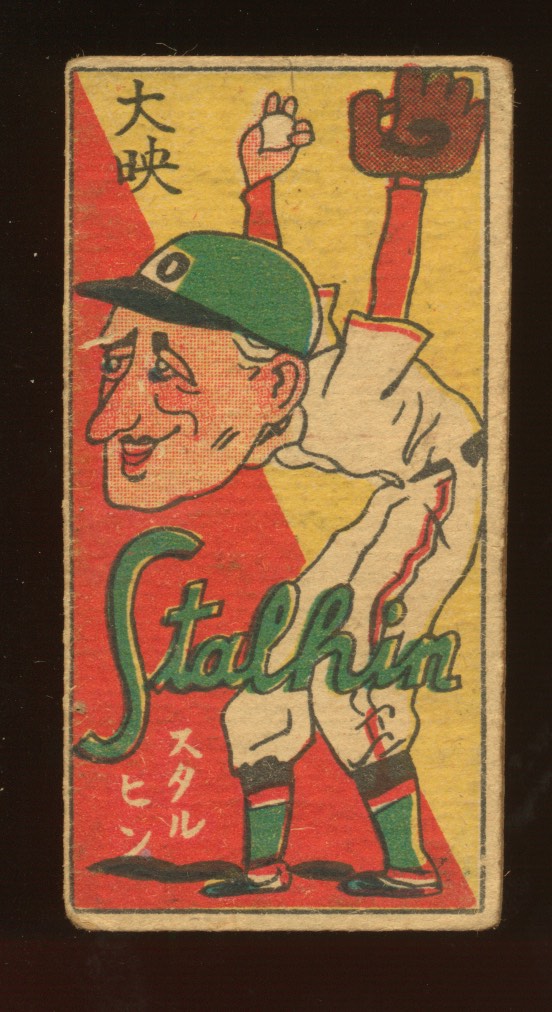
This documentary is about more than just Starffin himself. It is about a family reuiniting with each other. Natasha and Elizabeth, separated since they were young, come together with each other, their father, and other family members. Elizabeth says “I know who he[, my father,] is now, what kind of a person he was, and [that] makes him, in my mind, a lot bigger of a person.” Their cousin, Oleg, who Elizabeth visits in her father’s birthplace of Nizhny Tagil, a city slightly east of the Asia-Europe continental border, says “[f]or me, more than anything, it’s a family reunited. An entire century passed, and we’re together again.”
In an animated scene that brings to mind the catch between John and Roy Kinsella, father and son, in Field of Dreams, Tokyo Giant: The Legend of Victor Starffin concludes with a loving game of catch between Victor, Elizabeth, and Natasha, who says “my father has always been in my heart. I’ve felt that he always watches over me from heaven.” This heartwarming moment reminds the audience of the importance of family and is a testament to the enduring love that the Starffin family has for each other. Released in 2022 and directed by Tchavdar Georgiev, this film can be streamed on Amazon Prime Video and Roku. Tokyo Giant: The Legend of Victor Starffin is a film not only about baseball and history, but, most notably, also, one about the Starffin family’s grace, persevering courage, and motivating journey of reconnection. I highly recommend this film.
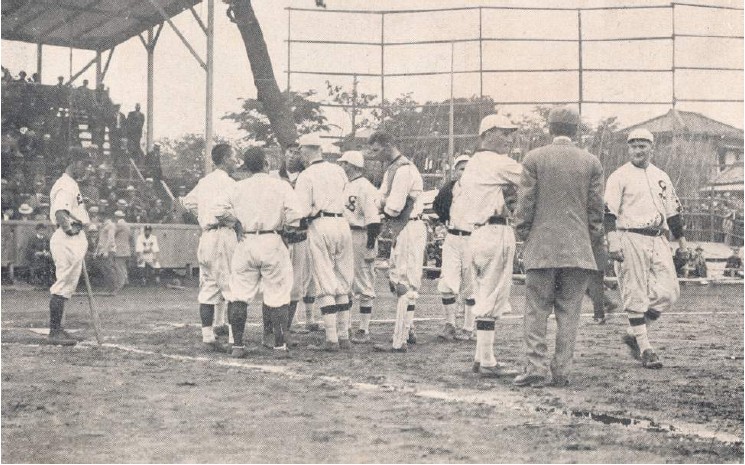
by Yusuke Suzumura
Every Tuesday morning we will post an article from SABR’s award-winning books Nichibei Yakyu: Volumes I and II. Each will present a different chapter in the long history of US-Japan baseball relations. Here Yusuke Suzumura discusses Stanford University’s 1913 tour of Japan.
The Stanford University Baseball Team is closely connected to the development of baseball in Japan. This stems from 1904-05, when Waseda University was planning an expedition to the United States and negotiated with different universities there, and Stanford University was the first to respond. One of the reasons Stanford accepted Waseda’s request was that Zentaro Morikubo was a student at Stanford and facilitated negotiations between the two universities. Zentaro was the son of Sakuzo Morikubo, a member of the House of Representatives in Japan’s Imperial Diet; Zentaro later became a member of the Japan Amateur Athletic Association and was appointed a member of the Japan Baseball Umpires’ Association (an organization founded in 1916 with the intent of spearheading the establishment of baseball rules in Japan). As such, Zentaro Morikubo was a prominent figure in the baseball world at the time.
The Waseda team traveled to the United States in 1905, played against the Stanford Cardinals twice, and lost both games. They lost because the Waseda team’s play did not extend much beyond the rudimentary stages of throwing and hitting the ball, whereas the Stanford team approached the sport in an organized and systematic manner.
On March 31,1913, Keio University announced an invitation to the Stanford University baseball team to visit Japan later that spring. At the time, St. Mary’s College and Santa Clara University were the two best college baseball teams on the West Coast, and Stanford was second to these universities, alongside the University of California and the University of Washington. Stanford had won games against all of these universities before they visited Japan, and therefore Keio was “expected to probably lose.”
An 11-man contingent boarded the passenger ship Nippon Maru and departed San Francisco on May 10, 1913. Graduate student R.W. Wilcox was the manager. The players were Ray Maple, pitcher; Al Gragg, pitcher; Leslie Dent, catcher; Tom Workman, first base; Louis Cass, second base; Pete McCloskey, third base; Zeb Terry, shortstop; Arthur Halm, left field; Walter Argabrite, center field; and Heinie Beeger, right field.
The trip was scheduled for 10 weeks, longer than any previous trip by a Stanford team. They planned to play at least 12 games, starting with Keio in Japan, with a two-week visit to Hawaii on the way home. Keio provided 7,000 yen ($3,500) to cover the trip expenses. In 1913, 7,000 yen was equivalent to approximately 28 million yen (approximately $240,000) in 2022. In addition, the Stanford baseball team raised $200 from a match against the Santa Cruz Colored Giants; the university donated $250; and the Quadrangle Club donated $50, making for a total of $500. With the funds provided from the Japanese side and the donations from Stanford, the large amount of money they were able to raise suggests high expectations for the trip in both countries.
The Stanford group arrived at Yokohama around 8 A.M. on May 27. The Japan Times reported, “Immediately after the health inspection, the six-foot huskies were swarmed by a gang of newspaper reporters, and the Keio ball players and students who went out in a launch to meet them. ‘Banzai’ and college cheers were exchanged on the deck.” The team held a press conference at the request of the Japanese press, in which they described how they spent their time training during the 17-day voyage on the Nippon Maru. “Thankfully, the seas were calm, so we were able to practice every day. We still ended up dropping 15 of the four-dozen balls into the sea. However, perhaps because of the daily practice, everyone gained weight, with some of us gaining as much as 12 kg [about 26 pounds].”
Obviously, the team had indulged in a comfortable lifestyle during the voyage. However, when the Stanford players arrived at Yokohama, despite their massive weight gain, their physiques drew little attention from the Japanese, who remarked only that their physiques were “imposing.”
By way of example, the Yomiuri Shimbun favorably introduced the players in the following terms: “They are all elegant young gentlemen, dressed in winter suits and caps. Their physiques seem particularly imposing when one looks at the All-Philippines Baseball Team. Based on this alone, they would seem to have the power to overwhelm the Japanese baseball world.”
The All-Philippines Baseball Team had come to Japan on May 10, and had planned to stay until June 1 and play a total of 10 games with Waseda, Keio, Meiji University, and Yokohama Commercial School. Some of the games were canceled due to rain, and the Philippines team ended up playing eight games, of which it won only one, against Waseda, losing the other seven.
The All-Philippines Baseball Team was said to have “selected the very best of Philippine baseball,” with a total of 16 members, of which 13 were players, and one was a substitute. The players were generally of medium build and height, and while three had excellent physiques, another three were of smaller stature. While the results of the games are not necessarily always decided on the basis of physique, when one considers that the Philippines team had won only one out of the eight games, it is perhaps unsurprising that people thought that physique played a part in the team’s poor performance. The comment that “[t]heir physiques seem particularly imposing when one looks at the All-Philippines Baseball Team” can be taken not only as a comparison of the physiques of the All-Philippines players and the Stanford University players but also as an indication that there were high expectations for the latter based on the superiority of their physiques.
It should be noted that an article in the Tokyo Asahi Shimbun reported that “the players bore no signs of fatigue and were very comfortable during their 17-day voyage, with each gaining about 750 g [about 1.5 pounds].” Compared with the Yomiuri Shimbun article, none of the players seems to have gained a large amount of weight. While it is difficult to judge which description is accurate, we can nevertheless deduce that the players did indeed gain weight during the voyage.
The Stanford team was evaluated favorably by the Japanese during their time in Japan, as illustrated by the Tokyo Asahi Shimbun: “They are all the very best of young gentlemen morally influenced by Dr. Jordan, who resembled a messenger of the god of peace, and they seem to be very pleasant and friendly upon first meeting in the American style.”
“Dr. Jordan” was David Starr Jordan, who became the first president of Stanford University in 1891 and also became the first chancellor of the university in June 1913. Jordan visited Japan frequently from 1900 to investigate his academic specialty of ichthyology, the study of fish. Moreover, Jordan was a researcher, university administrator, anti-imperialist, and antiwar activist. Rather than his role as an ichthyologist and educator, the assessment of Jordan in Japan related to his opposition to the anti-Japanese-immigration movement in the United States, which was the most significant concern between the two countries at the time; he was on the side of the Japanese, arguing that “no parliament should pass the Japanese Exclusion Act.” In addition, he was described as “a great player for peace” who “loved peace and was convinced that peace was a global truth.”
Thus, the baseball players were depicted as gentlemen inspired by Jordan precisely because they were at Stanford University. In addition, the more distinctive players in the group were thus described:
Pigeon-toed and with a liking for beans, Cass is the odd man out in the group—so pigeon-toed in fact that his fellows tease him every which way. He made everyone laugh by saying that he was going to advertise himself in the papers as a pigeon-toed rickshaw man when he arrived in Tokyo. Argabrite’s family runs a bean shop, and he also has a great liking for beans, hence the nickname “Bean.” Workman is extremely timid and never left his lifeboat during the voyage.
While matters such as physique and family business have nothing to do with baseball itself, these topics were a good source of information to better know the players. The fact that such articles seeking to convey the personalities of the players were published, even if they were primarily intended to amuse the readers and satisfy their curiosity, demonstrates that people had a high level of interest in the Stanford University baseball team.
Having thus attracted people’s attention, how did the Stanford players adjust once they were in Japan? They started practicing at 1 P.M. on May 28 at Keio University’s Tsunamachi Grounds, with the practice lasting for 1 hour and 30 minutes. Second baseman Cass hit a succession of home runs to left field and left fielder Halm hit “a fire-breathing home run like a powerful cannon” with a long shot to right field. In defensive practice, the players threw the ball with machine-like accuracy, catching even difficult throws. Although they had not yet shown their full potential, the Stanford players were praised as “the epitome of the American national sport.”
The players’ track records were good as well, and as a team they were the strongest since the Stanford University baseball team was founded. They were said to be among the best teams on the West Coast, having won four times and lost once against Santa Clara University, which had previously defeated the Waseda University baseball club, 10-2. The cleanup hitter was Louis Cass, and the ace pitcher was Ray Maple, a side- arm thrower. Maple, first baseman Tom Workman, and shortstop Zeb Terry had such a high level of skill that they had been invited to join professional clubs. Maple turned down an offer to join the Philadelphia Athletics, Walkman received an offer from the Boston Red Sox, and Terry was invited to join the Portland Beavers of the Pacific Coast League and later had a seven-year major league career.
Given this context, it was thought that Keio, Meiji, and the Tomon Club, which consisted of graduates of the Waseda University baseball club, would not be able to compete with the Stanford team. In fact, the Stanford team did not perform as well as its track record would have suggested.
Continue to read the full article on the SABR website
 SABR Asian Baseball Research Committee Blog