This YouTube video contains a hodgepodge of colorized footage from various 1950s MLB tours. This 13 minutes, 30 second video has scenes from the 1949 San Fransisco Seals tour, the 1953 New York Giants tour, the 1955 New York Yankees tour, and the 1956 Brooklyn Dodgers tour, as well as some Tokyo Big Six University action. Keep your eyes open for some rare footage of Hawaiian superstar Wally Yonamine.
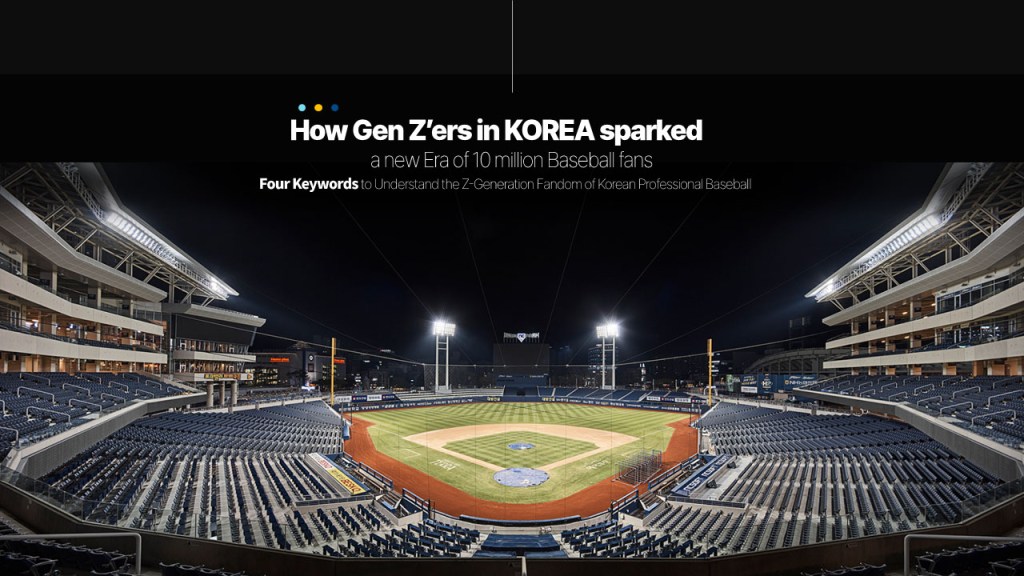
Hunhee Cho and Eunwoo Jung will present How GenZ’ers in Korea Sparked a New Era of 10 Million Baseball Fans
Join us on September 4, 2025 at 8 pm EST for SABR’s Asian Baseball Research Committee Monthly Zoom Presentation.
Baseball is hot in Korea! With nearly 11 million fans annually, the Korea Baseball Organization (KBO) is surging in popularity, especially among Gen Z Koreans. This post-pandemic boom has sparked new attention from researchers and industry watchers alike.
In this virtual presentation, Hunhee Cho and Eunwoo Jung will share findings from their quantitative and qualitative studies examining this cultural and sporting shift. Their research offers fresh insights that may also hold relevance for Major League Baseball (MLB) and Nippon Professional Baseball (NPB). A live Q&A will follow the presentation. We invite your questions and reflections.
After throwing out the first pitch at Yankee Stadium prior to the game on July 29, 2025, Masanori Murakami, the first Japanese to play in the Major Leagues, held a press conference at the stadium. Now 81 years old, Murakami recalled his days with the San Francisco Giants in 1964 and 1965 and recounted his interactions with MLB stars.
David Adler of MLB.com covered the event and penned this fun article.
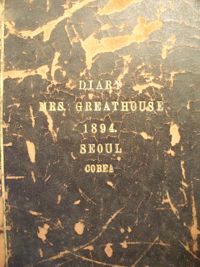
As many sources still list 1896 as the earliest known baseball game in Korea, the SABR Asian Baseball Committee has decided to call attention to this 2016 article by baseball historian Patrick Bourogo that provides evidence that the game was played in Korea as early as 1894.
During Induction Weekend 2025, the National Baseball Hall of Fame and Museum officially opened the Yakyu-Baseball exhibit with a private viewing for Hall of Fame players and NPB greats. After seeing the exhibit, Hall of Fame President Josh Rawitch moderated a press conference with Bobby Valentine, Jack Morris, Cal Ripken Jr., and Ozzie Press to talk about the exhibit and their experiences on the 1986 MLB All-Star tour of Japan. Among the many stars with ties to Japan to visit the exhibit were Ichiro Suzuki, Hideo Nomo, Masanori Murakami, LeRon Lee, Tuffy Rhodes, Adam Jones, Peter O’Malley, and Bobby Valentine.
All-time NPB batting leader LeRon Lee, Masanori “Mashi” Murakami, and Bobby Valentine
Valentine noted, “I think it’s a spectacular exhibit. … Not only are the aesthetics … pleasing but the knowledge that you gain by walking around that room [will lead to] a lot of understanding. I am really happy to be part of it.”
Ichiro examines his case in the Yakyu-Baseball exhibitHideo Nomo poses by his display at the Yakyu-Baseball exhibitMasanori Murakami points out his hat and glove in the Yakyu-Baseball exhibit
The exhibit focuses on how baseball has brought the countries and people of Japan and the United States closer together. Displays emphasize trans-Pacific interactions including player exchange, goodwill baseball tours, and the exchange of ideas and culture. Viewers will learn to appreciate Japan’s rich baseball history. To learn more about Yakyu-Baseball please see the links below for detailed discussions of the exhibit, which will be on the third floor of the Hall of Fame Museum for at least the next five years.
Koji Sato with Ichiro Suzuki
Koji Sato, the President of the Japanese American Association of New York, Inc, sees the exhibit as “a great honor. I have so much pride that Japanese baseball is being recognized in the United States. Growing up, I watched Japanese baseball but never thought that there would be such Japanese outstanding players such as Ichiro and Shohei Ohtani playing in the Major Leagues. Showing the 150 years of yakyu/baseball being played in the two nations and having an exhibit showcasing how it evolved is something worth seeing for all baseball fans. To have Ichiro join the ranks of Babe Ruth, Hank Aaron, Joe DiMaggio and Willie Mays is an incredible accomplishment. To be included in such elite company brings a sense of pride and joy to Japan and the Japanese people. I am hoping that with the induction of Ichiro into the Baseball Hall of Fame and the Yakyu-Baseball exhibit that there will be a lot of interest by Japanese tourists to visit.”
For details on the Yakyu-Baseball exhibit, please check out these articles.
In 1934 the Yomiuri newspaper sponsored a team of American League all-stars to tour Japan. The team included future Hall of Famers Babe Ruth, Lou Gehrig, Jimmie Foxx, Earl Averill, Charlie Gehringer, Lefty Gomez and Connie Mack as well as other stars and a backup catcher named Moe Berg. The All-Americans stayed for a month, played 18 games, and spawned professional baseball in Japan. You can read more about the tour in the book Banzai Babe Ruth.
This YouTube post contains colorized footage from the first two games of the tour (November 3 & 4, 1934)played at Meiji Jingo Stadium in Tokyo. Some of the colors are a bit off– some reds appear to be blue– but it’s still a fun window into the past.
This post is a summary of a talk, titled “Lend-Lease Athletes: John Britton & Jimmie Newberry, Post-Integration Negro Leagues, and Japanese Pro Baseball at the end of the US Occupation” to be given at the Negro League Baseball Museum in Kansas City, Missouri, July 26th, 11AM, during the weekend that Ichiro Suzuki will become the first Japanese born player to be inducted into the National Baseball Hall of Fame.
Amid the celebration of Ichiro as the first Japanese baseball superstar to be enshrined in Cooperstown, I thought it important to recall two pioneers at another intersection of multiple baseball firsts – involving the Negro Leagues, Japanese pro ball, Jewish baseball and Major League Baseball. While their story isn’t new, Induction weekend seems like the right time to revisit these two amazing athletes.
Before Jimmie Newberry and John Britton made history as the first African American ballplayers to suit up in Nippon Professional Baseball (Jimmy Bonner, a veteran of Black independent teams, pitched several games in the earliest iteration of pro ball in Japan for Dai Tokyo in 1936), they each put together solid careers in the Negro American League, primarily with the Birmingham Black Barons. Both were looking for work after the 1951 Season when Bill Veeck provided an opportunity.
In March of 1951, Bill Veeck, then owner of several minor league clubs including Oklahoma City and Dayton, had scouted several Japanese players (all from the Mainichi Orions of Japan’s Pacific League), including Kaoru Betto and Hiroshi Oshita, but with his eye specifically on pitcher Atsushi Aramaki. Already plotting to sweep in to purchase the St. Louis Browns in July of that year, Veeck had not shed his propensity stretching the rules of the game and thumbing his nose at tradition and sought to bring a Japanese pro to the majors. On Dec 28, 1951, (at the NY opening of the Saints and Sinners Club), Veeck met with Teijiro Kurosaki, GM of the Orions, himself on a scouting trip to find American ballplayers, to discuss purchasing Aramaki’s contract for the Browns.
He could not seal the deal. By early 1952 Abe Saperstein (a minority stockholder in the Browns) was charged with developing contractual relationships with Japanese teams that would lead to the acquisition of Japanese stars to play in the US. Saperstein not only had relationships with Newberry, Britton, the Black Barons and the NAL, but was in regular contact with Japanese business interests as he planned several Japanese tours with the Harlem Globetrotters (who Veeck had helped promote through 1951). What unfolded was a relationship with the Hankyu Braves.
The Treaty of San Francisco ended the US Occupation of Japan on April 28, 1952, and on that day Veeck announced that he had reached an agreement with the Braves that would include loaning the newly acquired (to their minor league system) slugger John Britton and pitcher Jimmie Newberry from the Browns. Despite Veeck’s statement of diplomacy, the eventual goal was to open ties to the extent that NPB teams would negotiate the contracts of stars like Aramaki (who would go on to the Japanese Hall of Fame). Additionally, the timing was conspicuous, as contract negotiation would be much more feasible in a post-occupation world. Having brought 42-year-old Satchel Paige to the majors when he ran the Indians, Veeck was no stranger to controversy in pursuit of victory. As Veeck was also infamous for his promotional antics with the Browns, which would include the Eddie Gaedel incident, his motivation for fielding Japanese born players in the US remains murky. Whether it was a gimmick, a true attempt at competitive advantage, or a way to mine cheap labor, is unclear. It could be all three. Veeck’s reputation, as well as Saperstein’s problematic relationship with supporting and exploiting marginalized athletes (see Rebecca Alpert’s “Out of Left Field”) provide valuable context to what would be a first step in post-war international baseball contract negotiation.
Jimmie Newberry and John Britton had both been stars of the Birmingham Black Barons and veterans of the Negro League World Series, as well as former teammates of Willie Mays. Both would end up as Pacific League All Stars in 1952, and Britton would stay for a second season with the Braves, paving the path for Larry Raines and Jonas Gaines. He is probably the only person to face both Satchel Paige and Victor Starffin (he hit a home run off the latter). Neither Newberry nor Britton would make the Majors, for the Browns nor any other team.
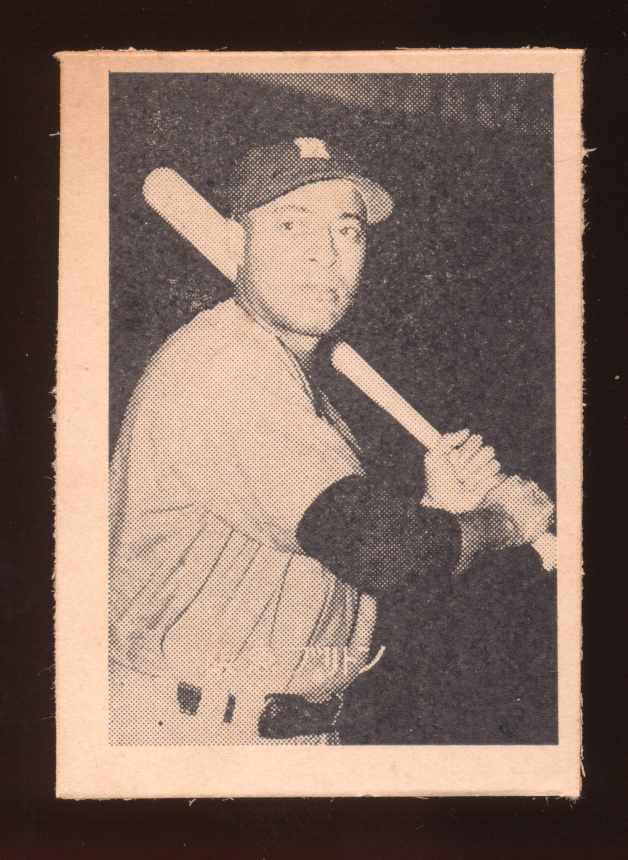
John Britton, 1952 Yamakatsu bromide
Both of these pioneers have their own SABR bios, and their story appears in several well-known books on baseball in Japan (including “Wally Yonamine” by Rob Fitts), so there is not much in the way of new scholarship here. However, it’s interesting to note that several reports appearing in overseas newspapers refer to the two as “Lend-Lease” ball players, a journalistic embellishment referring to the famous policy in which the US lent weapons, goods and food to support the war effort at ostensibly no cost, but with provisions for eventual debt repayment. The act pre-dated Pearl Harbor by six months, an oversized event perhaps bookended by the official end to the occupation.
The term seems to be unintentionally inciteful. Beyond the obvious reference to Veeck’s machinations, and elements of diplomacy and international trade & support in a kind of battle (i.e. sports), “Lend-Lease” as a term can be seen as reflective of how professional baseball players, and especially marginalized ballplayers, including Japanese and Black ballplayers, were seen as property or commodities. This resonates especially with the history of slavery and racism imbedded in the African American baseball experience. The fact that both Newberry and Britton not only excelled but laid the groundwork for the success of future Black athletes in Japan is a testament to overcoming the “Lend-Lease” perspective. However, “lend lease” also reflects the reality of their situation as more and more Negro League teams began to disband, and baseball jobs were hard to come by. The fear of many Black sportswriters (including Joe Bostic) regarding how integration would affect the future of the Negro Leagues was no doubt a part of the reticence of Japanese clubs to deal with Major League Baseball. This seems even more instructive in light of the failure of Veeck or Saperstein to promote them to the Browns, or to lure Japanese talent to the US.
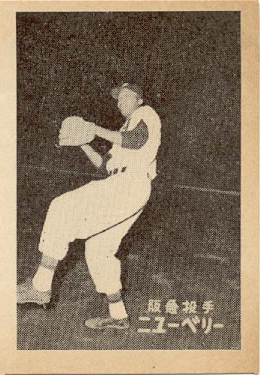
Jimmie Newberry, 1952 Yamakatsu bromide
In part, one might attribute some of Newberry and Britton’s success to cultural differences. Time and time again there are stories of African American ballplayers, before and after integration, who found a more hospitable reception in the cities and states of South & Central America, escaping the racism these men endured as they traveled the US. While some racist imagery can be found of Newbery and Britton’s stay in Japan, and there has always been a noted resistance for the majority of Japanese pro baseball to welcome foreigners (especially Americans), both players found a similarly hospitable reception and enjoyed their time in the country. In addition, this occurs at the end of the US occupation, a time of complex feelings towards the US in Japan, although in the world of baseball an overwhelmingly receptive one to western culture.
Though ultimately unsuccessful, in the immediate sense, as an avenue to build a contractual bridge between Japan and the US as a way for Japanese players to head west, this episode was an important step in both forging a path for greater acceptance of Black and US born ballplayers as well as establishing the diplomatic framework for the relationship between NPB and MLB teams – one that would eventually lead to Masanori Murakami, Hideo Nomo, Ichiro and beyond.
The Los Angeles Dodgers have just released a fantastic video on Youtube called The Story of Nomomania. With great game footage and exclusive interviews with Hideo Nomo, Peter O’Malley, Mike Piazza, and Don Nomura, I think fans will truly enjoy watching.
So how can English speakers follow Asian baseball? There are now numerous ways to track professional baseball in Japan, Korea, and Taiwan even if you don’t read the native languages. Let’s look at each country in turn.
Japanese Baseball (NPB)
Just five years ago, it was difficult for English speakers outside of Japan to follow NPB, but now there are so many ways and sites to follow Japanese baseball that I can only list a small number here. Numerous sites post daily results, standings, and statistics on the web. Some sites that I find useful include the official website of Nippon Professional Baseball (NPB.jp), yakyucosmo.com, proeyekyuu.com, baseball reference.com, and flashscore.com. Japan-baseball.jp, the home page of Samurai Japan, contains schedules, rosters, scores, and information on all the national baseball teams. Those seeking more advance statistics may want to look atNPBstats.com and Delta Graphs which have incredible databases of traditional and sabermetric stats covering the entire history of Japanese professional baseball.The r/NPB group on Reddit is the most active social media site in English dedicated to NPB, with thirty-one thousand members in 2024. Members post game scores, standings, video highlights, and links to stories on other platforms. It is also a great place to ask questions about the game, learn how to buy tickets, find memorabilia, and read about other topics. One can also browse Japanese-language sport sites, such as Sportsnavi, and individual team sites and use a translation Ap, although I have not had much luck with this approach as the translations are often poor.
A great resource for following Japanese baseball is japanball.com, the home for the baseball tourism company JapanBall. Their site includes pages featuring each NPB team and stadium, articles on the history of the game and current players, exclusive interviews, current NPB news, game schedules and statistics, and information on their organized tours of Japan. You can also sign up for weekly updates on NPB via email.
One of the easiest ways to follow NPB is by subscribing to select YouTube channels. Pacific League TV Official is a Japanese-language channel that contains over twenty-two thousand videos, including game highlights, player profiles, and much more. Pacific League Marketing also has an English-language channel called Pacific League TV, with nearly two thousand videos. The channel contains highlights, features on top Japanese and foreign players, archived games with English commentary, a podcast, and my favorite: the top-ten plays of the week.
There are two other can’t-miss YouTube channels for English-speaking fans. The Gaijin Baseball channel is one of my favorites. It contains about one hundred videos on the history of Japanese baseball. The stories are well researched and often contain compelling narratives with great graphics. This is the best place on the web for a beginner to learn about the history of the game in Japan. JapanBall has recently started a YouTube channel which contains updates of the current season as well as features on individual players and selected topics.
In July 2025, former NPB and KBO player David McKinnon along with journalist Jasper Spanjaart created Pacificswings.com. This site features video discussions of Asian baseball along with interviews of current and past players.
Full games, albeit with Japanese commentators, are also available. Pacific League games are easily viewed on Pacific League TV, a subscription service run by Pacific League Marketing that provides live games and archived games dating back to 2012. As the name suggests, the service only contains games from the Pacific League, along with interleague games held in Pacific League ballparks. Besides the games, the Pacificleague.com website contains thousands of videos, including game highlights, player profiles, news, and feature stories and league and player stats. The website and the games are in Japanese only, but there is an English-language page providing directions on how to join and navigate the site. As discussed above, Pacficleague.com also runs two YouTube channels, one in Japanese and one in English.
There is no single location to watch Central League games, but one can subscribe to various teams’ streaming channels or subscribe to a Japanese cable TV package. For example, Nozomi provides over eighty Japanese channels, allowing one to watch many Central League games both live and archived for two weeks after the initial broadcast. Programs can also be recorded. More information on watching Japanese baseball games can be found in this excellent article on japanball.com.
Korean Baseball
For English-speaking baseball fans, following the Korea Baseball Organization (KBO) is easier than ever, thanks to a growing number of platforms offering games, highlights, and stats in English or with minimal language barriers.
The most comprehensive way to watch KBO games live in the U.S. is via SOOP, which streams every game live with Korean commentary. While it lacks English audio, it’s perfect for fans who want real-time access to all matchups.
For English-language coverage, the best option is the KBO Channel on Plex. Each day, one game is streamed live with Korean play-by-play, followed by a 24/7 replay stream of recent games, all featuring English AI commentary. This makes it easy for fans to catch up at any time and follow the season in their time zone.
If you prefer highlights, the official KBO YouTube channel is a reliable source. Although entirely in Korean, it features medium-form highlight packages for every game, with key hits, big strikeouts, full innings, and significant moments. The visual focus makes it easy to follow even without understanding the commentary.
For real-time stats and box scores, MyKBO Stats is the top destination for English speakers. Created by Dan Kurtz, the site provides live box scores, team and player stats, and historical data going back to 2013. It’s a must-bookmark for serious fans. You can also follow Kurtz on X (formerly Twitter) for regular updates and news.
For those looking for deeper analytics and historical data, STATIZ is a goldmine. Though the site is in Korean, it works well with browser-based translation tools and offers advanced stats and box scores all the way back to the league’s founding in 1982. It’s ideal for fans interested in diving into the numbers behind the game.
A few Korean news organizations provide KBO coverage in English. The most notable is the Yonhap News Agency, which regularly publishes game recaps, player profiles, and league developments. Their best-known KBO reporter is Jee-ho Yoo, a respected Seoul-based journalist and KBO expert whose work is a go-to resource for international readers.
Social media is another excellent way to stay connected. The X account “KBO in English” is run by an English-speaking fan based in Korea and offers regular updates and fan-friendly insights. It’s a great way to build familiarity with the league, players, and teams from a Western perspective. Also worth following is Daniel Kim (@DanielKimW), a bilingual baseball analyst who became widely known during ESPN’s KBO coverage in the early days of the COVID-19 pandemic.
While KBO content is still largely in Korean, English-speaking fans have options to follow the league. SOOP delivers every game live, Plex’s KBO Channel provides English commentary and 24/7 replays, MyKBO Stats covers real-time stats and historical data, and STATIZ offers deep analytics for those willing to use browser translation. Add in highlight reels on YouTube and fan-run social accounts, and there’s a whole ecosystem ready for English-speaking fans to dive into Korean baseball.
Taiwanese Baseball (CPBL)
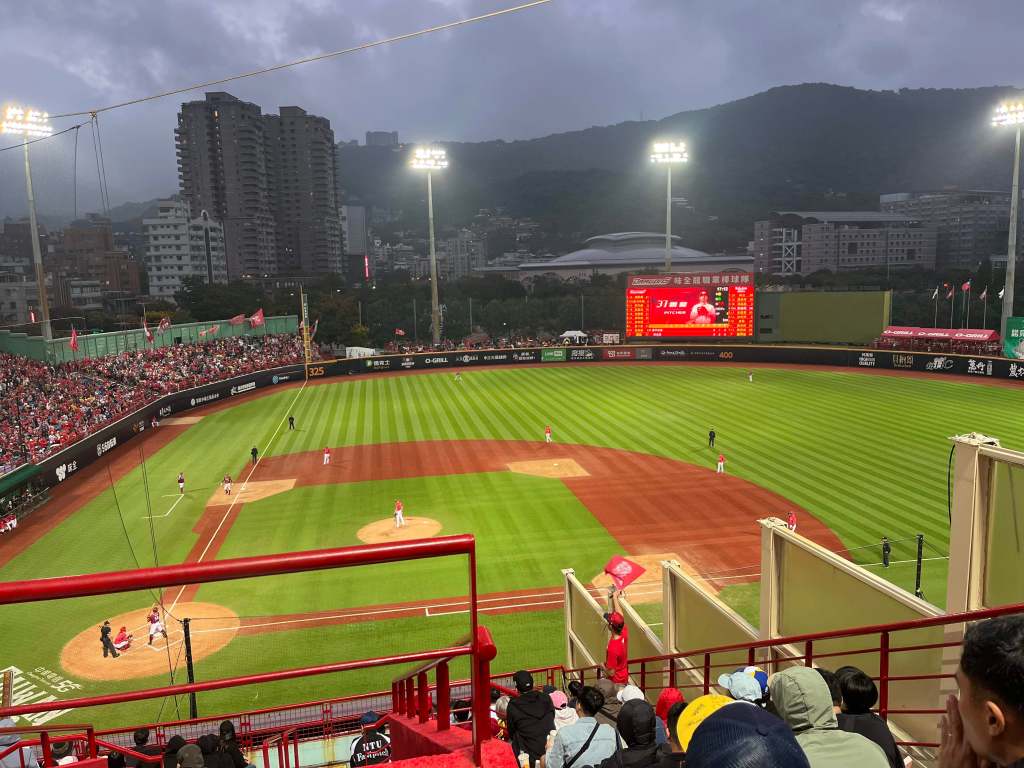
Founded in 1989, the CPBL is more popular than ever, having recently benefited from the completion of Taipei Dome in 2023 and Taiwan’s Premier12 championship in 2024. The league currently consists of six teams who play most of their home games in six stadiums across the country:
Taiwanese baseball has very limited English-language coverage. The best source currently is the CPBL official website, which publishes real-time box scores, season schedule, standings, team rosters, and stats in English. Besides the CPBL website, the only major resources for English speakers are:
CPBL Stats – news and stats in English; the site’s X account (@gocpbl) regularly posts news and video clips
r/cpbl on Reddit – predecessor to CPBL Stats and a good place for updates and questions
The Taipei Sun – a newer initiative to cover Taiwanese baseball, including players abroad, in English
To watch CPBL games, fans can stream via Twitch (available for some teams only) or purchase a CPBL TV subscription from HamiVideo. As of July 2025, subscription plans for home games for each team are ~$2.70/month, or for all games ~$10.30/month. CPBL Stats has an English Guide to CPBL TV that is a bit dated but should still be helpful.









 SABR Asian Baseball Research Committee Blog