Tag: history

  • Sailor Turned General Manager by a Single Book

    Sailor Turned General Manager by a Single Book

    by Tae-in Chun

    The baseball film Moneyball depicts a moment when one club tried to understand baseball in a completely different way. The 2002 Oakland Athletics questioned the conventional wisdom that permeated the baseball world. By acquiring undervalued players through sabermetrics, they redesigned their team. Similar attempts did not appear only in the United States.

    In Korean baseball history, the 1990s were a time when even the word “data” was unfamiliar. Even in this environment, there were people who questioned an operating style that relied on intuition. The starting point was not a front office meeting or a research report. It was a single book written by a baseball fan.

    Lotte at the end of the 1980s, having lost its direction

    In the late 1980s, Korean professional baseball still remained a “people’s game.” A manager’s experience and instincts, trust in veteran players, and internal organizational inertia were the standards for team operations. When results were bad, the manager was replaced, and when momentum was good, existing methods were maintained. Long term development and structural reform were always pushed to the back. The Lotte Giants, who finished last in 1989 and stayed in the lower ranks in 1990, were likewise a team that had lost its way amid this inertia. The fandom was overwhelming, but the team had no explanation for why it was losing.

    A perspective formed outside baseball

    Around this time, there was one person who looked at the team from a completely different angle. His name was Jeong-gyu Song. He was born in Busan and studied at Korea Maritime University, which trains navigators. He then began his career as a deck officer on merchant ships. Later, he was promoted to captain at a U.S. shipping company, making the sea his workplace. Baseball was not his profession, but his interest ran deep.

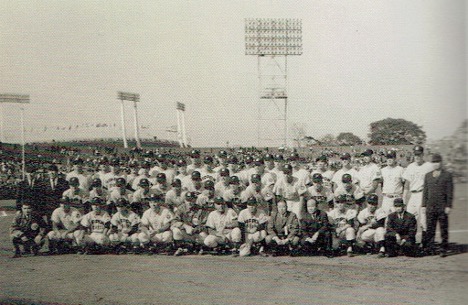
    Baseball fan Jeong-gyu Song (front center), who chose the path of a navigator under the influence of his father, a professor at Korea Maritime University

    Long voyages gave him time to study baseball. Through Japanese professional baseball newspapers, American sports magazines, and Major League related books, he naturally came to place Korean baseball alongside overseas baseball and compare their structures. The differences became increasingly clear. At the time, player usage in Korean baseball relied excessively on intuition, and team management lacked a consistent philosophy. There was no system to systematically develop prospects, and responsibility for poor performance always fell on the field staff. Jeong-gyu Song began recording and accumulating the problems he felt while thinking about the Lotte Giants.

    Choosing records instead of protests

    Jeong-gyu Song did not initially intend to write a book. He called the club several times to explain the team’s problems. However, the opinions of an “ordinary fan” were repeatedly brushed aside. Deciding that conveying things verbally no longer worked, he chose to organize his thoughts and leave them as a written record. After seven months, during which he even set up his own publishing company, The Winning Formula: Lotte Giants’ Top Secret was released into the world.

    A book that is still talked about among Korean baseball fans today

    It was self published, and sales were not high. However, the contents were concrete. The role of the front office, standards for player usage, and the necessity of a long term development system were organized by topic. From today’s perspective, these are not unfamiliar ideas, but at the time they were novel problem statements in Korean baseball. The book gradually spread by word of mouth. Unexpectedly, it reached the hands of Lotte owner Jun-ho Shin.

    Becoming a general manager with a single book

    In 1991, the Lotte Giants made a radical choice. Jeong-gyu Song was appointed general manager. Former sailor, late 30s, no practical experience in baseball team operations. In the front office culture of the time, it was a highly unusual appointment. Internal reactions were cold. Open turf battles and exclusion followed, and there were even times when, because budget cooperation was not provided, he had to go out personally to look for sponsors.

    Jeong-gyu Song greeting the players after taking office

    His operating philosophy was also different. He spoke about statistical analysis, the strong number two hitter theory, and the need for a development system. Concepts that are familiar now were met then with reactions like “that sounds like baseball comics.” However, change quickly appeared in results. In his first year, 1991, Lotte rose to fourth place and advanced to the postseason. They surpassed one million spectators in a single season for the first time in professional baseball history. In 1992, they even won the Korean Series.

    The experiment ended, but the questions remained

    The championship was not the end. Internal conflicts still remained. An assessment arose that he “damaged organizational harmony.” This evaluation was reported to club management. Jeong-gyu Song, who encountered this while on his honeymoon, resigned voluntarily after returning home. Since then, Lotte has gone more than 30 years without another championship.

    He is also known as Korea’s top expert in the field of maritime economics, combining practice and theory

    He returned to the shipping industry. Afterward, he continued working in key positions in shipping and port related organizations. Even after mandatory retirement, he has continued to advise on and contribute to major issues in Korea’s shipping and port sectors. His distance from baseball grew, but his perspective remained sharp. In 2024, he appeared on a Busan regional radio broadcast and became a topic of conversation again after predicting Lotte’s preseason ranking with considerable accuracy. Decades have passed, but he left the impression that his eye for the team had not changed.

    The Winning Formula: Lotte Giants’ Top Secret is now an out of print book. Rather than a theoretical text, it is closer to a record of one fan asking questions and working through the answers. Attempts similar to Moneyball clearly existed in Korean baseball as well. However, they did not take root as a successful management strategy, nor did they expand into a popular narrative. Even so, this attempt showed a brief but meaningful possibility in Korean baseball.

  • The Bums in the Land of the Rising Sun: How the 1956 Dodgers’ Tour of Japan Marked the End of a Dynasty

    The Bums in the Land of the Rising Sun: How the 1956 Dodgers’ Tour of Japan Marked the End of a Dynasty

    by Robert Fitts

    Every Monday morning we will post an article from SABR’s award-winning books Nichibei Yakyu: Volumes I and II. Each will present a different chapter in the long history of US-Japan baseball relations. This week Rob Fitts focuses on the Brooklyn Dodgers 1956 tour of Japan where Jackie Robinson played his final game.

    The Brooklyn Dodgers straggled into Idlewild Airport in Jamaica, Queens, on the morning of October 11, 1956. It had been a long, grueling season, ending the day before with a 9-0 shellacking by the Yankees in the seventh game of the World Series. Now, less than 18 hours later, the Dodgers were leaving for a four- week goodwill tour of Japan.

    The subdued party of 60 consisted of club officials, players, family members, and an umpire. Although participation was voluntary, most of the team’s top players had decided to take advantage of the $3,000 bonus that came with the all-expenses-paid trip.1 Noticeably absent were Sandy Koufax, who was sharpening his game in Puerto Rico; Sandy Amoros, who was playing in Cuba; and World War II vet Carl Furillo who proclaimed, “I want no part of it. I’ve seen Japan once and there’s nothing there I want to see again.”2

    As they readied to board the private flight to Los Angeles, Don Newcombe and his wife were missing. The Dodgers ace had won 27 games during the season and would win both the National League Most Valuable Player and Cy Young Awards. But he had failed spectacularly in the World Series, getting knocked out in the second inning of Game Two, and in the fourth inning of Game Seven. When asked about the up-coming trip after the Game Seven loss, Newcombe snapped, “Nuts to the trip to Japan!” “There’ll be trouble if he’s not on that plane!” countered Dodgers General Manager Buzzie Bavasi.3

    Just after 11 A.M. the big pitcher arrived at the airport without wife or luggage. “The Tiger is here!” he announced as he boarded. He had spent the morning at the Brooklyn Courthouse to answer a summons on an assault charge for punching a parking attendant who had made a wisecrack about his Game Two performance. The plane left on time and after a stop in Los Angeles arrived in Honolulu at 5:30 P.M. on October 12.4

    The Dodgers spent five days in Hawaii, attending banquets, sightseeing, sunbathing on Waikiki Beach, and playing three games against local semipro teams. As expected, Brooklyn won the first two contests comfortably, beating the Maui All-Stars, 6-0, behind 20-year-old Don Drysdale’s seven perfect innings on October 13 and the Hawaii Milwaukee All-Stars, 19-0, the next day. On the 15th, Don Newcombe took the mound against the Hawaii Red Sox. Spectators serenaded him with boos and jeers as the Red Sox scored three times in the second inning and chased him from the game in the fourth. “I can’t believe that I am still the target for abuse after getting 5,000 miles away from Brooklyn. I never want to come back here again! I didn’t want to make this trip in the first place,” he complained after Brooklyn pulled out a 7-3 win in the 10th inning. “This abuse thing has me worried,” he added. “I am afraid the emotional effect might continue to grow and become a detriment to my future career.”5 After a day of sightseeing, the Dodgers left for Japan on a 10 P.M. overnight flight.

    The plane touched down at Tokyo’s Haneda Airport at 3:25 P.M. the following day, five hours behind schedule after mechanical trouble forced a seemingly endless stopover on Wake Island. A light rain fell from the gray sky. The weary players trudged off the plane and down the metal stairs to the tarmac where they were greeted by the first group of dignitaries and reporters. “Man, we’re beat,” Jackie Robinson complained as he left the plane. “We are all very tired,” Duke Snider added, “but we’re glad to be here. If we have a chance to shower and clean up, we’ll feel much better.”6

    Japanese dignitaries and 40 kimono-clad actresses, bearing bouquets of flowers, welcomed the Dodgers as a crowd of fans waved from the airport’s spectator ramp. During a brief press conference, team owner Walter O’Malley proclaimed that “his players would play their best … and hoped that the visit would contribute to Japanese-American friendship.” “We hope to give the Japanese fans some thrills,” said Robinson.7

    Despite the delay and relentless drizzle, thousands of flag-waving fans lined the 12-mile route from Haneda Airport to downtown Tokyo. Although many of the players longed for a shower, a warm meal, and a soft bed, they would not see their hotel for hours. After a brief stop at the Yomiuri newspaper’s headquarters, the team went straight to a reception at the famous Chinzanso restaurant. As they arrived, the hosts presented each visitor with a happi coat made to resemble a Dodgers warmup jacket and a hachimaki (traditional headband). Dressed in their new garb, the Dodgers mingled with baseball officials, diplomats, and Japanese ballplayers for several hours. Exhausted, the Dodgers finally checked into the Imperial Hotel around 9 P.M. Some of the younger players, however, went back out, attending “a giddy round of parties” before staggering back to the hotel in the wee hours of the morning.8

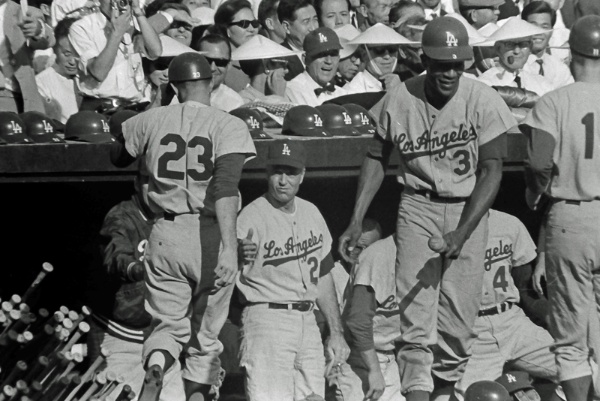
    Fred Kipp, Gil Hodges, Wally Yonamine, Vin Scully, Roy Campanella and Don Demeter at the October 18 reception at Chinzanso, Tokyo. (Rob Fitts Collection)

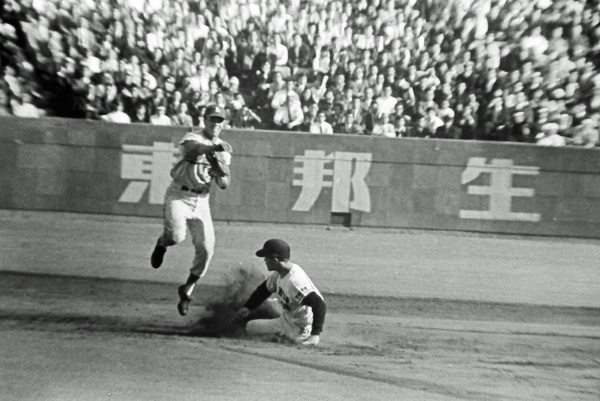
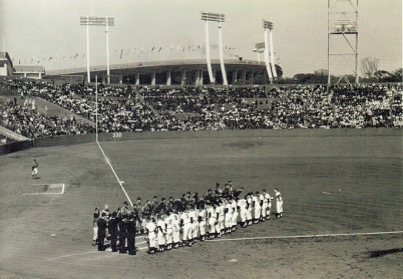
    Weary from the trip and the late night, the players struggled to get out of bed the next morning for the opening game against the Yomiuri Giants at Korakuen Stadium. Ceremonies began at 1 P.M. with the two teams parading onto the field in parallel lines behind a pair of young women clad in fashionable business suits. Each woman held a large sign topped with balloons, bearing the team’s name in Japanese. As the Giants marched on the field, some of the Dodgers gaped in surprise. “We went over there with typical American misconceptions,” Vin Scully later wrote. “We expected the local teams to be stocked with little yellow, bucktooth men wearing thick eyeglasses. When they first walked onto the field in Tokyo, I heard one of our players yell, ‘Hey fellas, we’ve been mousetrapped!’ One of the first ballplayers out of the dugout was a pitcher who was six feet four. … They averaged five feet ten or so, and they were all built like athletes.”9

    Like the Dodgers, the Yomiuri Giants had just finished an exhausting season topped with a defeat in the Japan Series two days earlier. The Japan Timesnoted, “The Giants, battered and worn in their losing bid for the Japan championship …, are regarded as a pushover for the Bums. The Brooklyn club is expected to win their opener by a margin of over ten runs.”10 But that is not what happened.

    The Giants jumped out to a quick 3-0 lead off Don Drysdale. At 6-feet-5 he towered over most of his Japanese opponents and expected to dominate them with his overpowering side-arm fastball. But as Scully noted, “Another misconception we had was that our big pitchers would be able to blow them down with fastballs. We were dead wrong. They murdered fastball pitching. Our guys would rear back and fire one through here and invariably the ball would come back even harder than it was thrown. They hit bullets.”11

    Brooklyn battled back to take a 4-3 lead in the fourth on five hits, including homers by Robinson and Gil Hodges. But that would be all for Brooklyn as relief pitcher Takumi Otomo, who had beaten the New York Giants in 1953, stifled the Dodgers for 5 2/3 innings. Homers by Kazuhiko Sakazaki and Tetsuharu Kawakami in the eighth gave Yomiuri a 5-4 upset victory. “The fans,” wrote Leslie Nakashima of the Honolulu Advertiser, “could hardly believe the Dodgers had been beaten.”12 Otomo had struck out 10 in his second win over a major-league team.

    Since the major-league tours began in 1908, the game was just the fifth victory by a Japanese team against 124 loses.13 After the loss, manager Walt Alston made no excuses, “They just beat us. They hit and we didn’t.” Duke Snider had a particularly bad day, striking out three times and being caught off base for an out. “We’re pretty tired,” he explained. “But that’s no excuse. We’re all in good physical shape and should have won. A good night’s sleep tonight and we’ll roll.” “We’ll snap out of it,” predicted Robinson. Pee Wee Reese agreed: “We don’t expect to lose any more. But,” he added, “we didn’t expect to lose this one either.”14

    As predicted, the Dodgers bounced back the next day. Masaichi Kaneda, recognized by most experts as Japan’s all-time greatest pitcher, began the game for the Central League All-Stars by loading the bases on two walks and a single before being removed from the game with a sore elbow. Roy Campanella greeted relief pitcher Noboru Akiyama with a towering drive into the last row of the left-field bleachers to put the Dodgers up, 4-0. Campy added another home run in the third inning to pace Brooklyn to an easy 7-1 victory as Clem Labine pitched a four-hit complete game.15

    On Sunday, October 21, approximately 45,000 fans packed Korakuen Stadium to watch Don Newcombe face the All-Japan team—a conglomeration of the top Japanese professionals. Newcombe’s outing lasted just 17 pitches. He began by walking Hawaiian Wally Yonamine, then surrendered a home run and three consecutive singles before Alston took the ball.16 The former ace “stormed from the hill” and stumbled into the clubhouse “like a sleepwalker … jerkily, almost aimlessly. He wore the frozen expression of a kid who’s just seen his puppy run over. Wonder, shock, disbelief, hurt. Pinch me, I’m dreaming. … Slowly he picked up his shower shoes, detoured a sportswriter to get to his jacket. Then out the back door, back to the hotel.”17

    After the eventual 6-1 loss, manager Walter Alston noted, “Newk wasn’t right again today. … He’s not throwing natural.”18 Reese explained, “He’s still got it (the World Series) on his mind. It’s getting to be a terrible thing. Not only does he feel he’s letting himself down, he feels he’s letting the club down. … Don doesn’t say much, but it’s building up and building up inside him. It could run him out of baseball.”19

    Unfortunately, Reese’s assessment was prophetic. The next day, Newcombe announced that he had injured his elbow in the final game of the regular season. It hurt to throw curveballs. He had kept the injury to himself, hoping that rest would cure the ailment. Although his arm may have healed, Newcombe never fully recovered from the psychological injury of the blown 1956 World Series. He had begun drinking heavily in the early 1950s and his alcohol abuse intensified after the loss. After a mediocre 1957 season, he was traded to Cincinnati in 1958 and would be out of the major leagues after the 1960 season. He played his final season with the Chunichi Dragons of Japan in 1962—coached by Wally Yonamine, who had begun the onslaught on that fateful day in Tokyo.

    With the loss, the Dodgers became the first professional American club to lose two games on a Japanese tour. Criticism came from both sides of Pacific. “The touring Flatbushers once again were disemboweled by a band of local samurai,” wrote Bob Bowie of the Japan Times.20 “The Dodgers are known for their fighting spirit,” noted radio quiz-show host Ko Fujiwara, “but they have shown little spirit in the games here thus far.”21 The Associated Press reported that “most Japanese fans have been disappointed in the caliber of ball played so far by the Brooklyns,” but Yoshio Yuasa, the former manager of the Mainichi Orions, offered the harshest criticisms.22 “I can sympathize that the Dodgers are in bad condition from fatigue after a hectic pennant race, the World Series and travel to Japan and that they are in a terrific slump, but they are even weaker than was rumored at bat against low, outside pitches and we are very disappointed to say the least. … It would not be an overstatement to say that we no longer have anything to learn from the Dodgers.”23

    Roy Campanella, Jakie Robinson, and Duke Snider signing autographs for Japanese fans. Cappy Harada is in the dugout. (Rob Fitts Collection)

    The US media picked up these criticisms, reprinting the stories in large and small newspapers across the country. “Japanese Baseball Expert Hints Brooks Are Bums,” screamed a headline in the New York Daily News on October 23.24 Three days later, a Daily News headline noted, “Bums ‘Too Dignified,’ Say Japanese Hosts.” The accompanying article explained that some Japanese experts believed that the Dodgers were “too quiet and dignified on the playing field … and … were acting like they were all trying to win good conduct medals” rather than playing hard-nosed baseball.25

    After a day of rest, the Dodgers flew to Sapporo in northern Japan for a rematch against the Yomiuri Giants. Before the game, Walter O’Malley addressed the team. Starting pitcher Carl Erskine recalled, “Mr. O’Malley was very upset. He thought it was a scar on the name of the Dodgers to have gone to Japan and lost two games.”26 “He was embarrassed. He held a team meeting and read the riot act. He said, ‘I know this is a goodwill tour and I want you to be gentlemen. Sign autographs and be cordial. However, when you put on that Dodger uniform, I want you to remember Pearl Harbor!’”27

    Erskine was near perfect, giving up three hits and a walk but never allowing a runner to reach second base as he faced just 27 batters. But the Dodgers continued to struggle at the plate, failing to score until Duke Snider led off the ninth inning with a 380-foot homer over the right-center-field wall to give Brooklyn a 1-0 victory.28

    Despite the win, many Japanese were not pleased with the Dodgers’ performance. An Associated Press article noted that Tokuro Konishi, a broadcaster and former manager, “and other experts agreed that most Japanese fans have been disappointed in the caliber of ball played so far by the Brooklyns. … Konishi said he believed the two losses could be chalked up to the fatigue from the grueling National League pennant race and seven game World Series.”29 “The Dodgers’ ‘old men’ are tired,” noted Bob Bowie of the Pacific Stars and Stripes. “Pee Wee Reese and Jackie Robinson and Gil Hodges and Duke Snider and Roy Campanella are so weary it’s an effort for them to put one foot before another. It’s been a long season and they are anxious to get back home and relax before heading for spring training in February.”30

    Indeed, the “Boys of Summer” were aging. The core of the team had been together nearly a decade. The starting lineup averaged 32 years old with Robinson and Reese both at 37. Their weariness showed on the playing field. After four games, the team was hitting just .227 against Japanese pitching. Both management and fans knew it was time to change, and the team had plenty of young talent. At the top of the list were power hitters Don Demeter, who hit 41 home runs in 1956 for the Texas League Fort Worth Cats, and his teammate, first baseman Jim Gentile, who hit 40. Outfielder Gino Cimoli had ridden Brooklyn’s bench in 1956 and was now ready for a more substantial role. Smooth-fielding Bob Lillis from the Triple-A affiliate in St. Paul seemed to be the heir of Pee Wee Reese at shortstop while his teammate Bert Hamric would fight for a role in team’s crowded outfield. On the mound, knuckleballer Fred Kipp hadjust won 20 games for the Montreal Royals and looked ready to join Brooklyn’s rotation. The tour of Japan was an ideal chance try out these players. As the tour progressed, Alston moved more prospects into the starting lineup.

    In the fifth game, held in Sendai, Alston gave Kipp the start and backed him up with Gentile at first, Demeter in center and Cimoli in left. For seven innings Kipp baffled the All-Kanto All-Stars, a squad drawn from the Tokyo-area teams, with his knuckleball—a pitch rarely used in the Japanese leagues, while the hurler’s fellow rookies racked up five hits during an easy 8-0 win.31

    Don Drysdale started game six in Mita, a small city about 60 miles northeast of Tokyo. For seven innings the promising young pitcher dominated the Japanese. Then, the Japanese erupted for three runs in the bottom of the eighth inning, breaking a streak of 29 straight shutout innings by Dodger pitching. With the scored tied, 3-3, after nine innings, the Dodgers requested that they end the game so that the team could catch their scheduled train back to Tokyo.32 Although it was not a win, an Associated Press writer called the result “a moral victory for Japanese baseball.”33 After six contests, the National League champions were 3-2-1—the worst record of any visiting American professional squad.

    Despite the Dodgers’ poor start, the Japanese fans adored the team packed with household names. About 150,000 spectators attended the first five games while hundreds of thousands more, if not millions, watched the games on television or listened to them on the radio.34 “There is widespread interest in the Dodgers and their style of play,” an Associated Press article noted. All of the sports dailies and many of the mainstream newspapers covered each game in detail—often including exclusive interviews and pictorial spreads of the players. Many dailies ran “sequence shots of various Dodgers in action.”35

    Although the Dodgers were winning over the Japanese fans, their opponents on the diamond were unimpressed. Ace pitcher Masaichi Kaneda noted, “The pitchers this time were not as good as [on the previous major-league tours]. … On the bench, I was looking forward to hitting. I had never had that feeling before.”36 Shortstop Yasumitsu Toyoda agreed: “Even their fastballs didn’t look fast enough.”37 Kazuhiro Yamauchi, the star outfielder for the Mainichi Orions who hit .313 in 48 at-bats during the tour, complained that the Dodgers lacked hustle. “The Yankees [during the 1955 tour] would always try for an extra base on a hit, while some Dodger runners stopped dead.”38 Yamauchi also noted that the Dodgers had trouble with low, outside pitches. “All our pitches have been aiming for the outside comer.” Yomiuri right-hander Takehiko Bessho added, “Most of them were not good at hitting curveballs. …I wasn’t [even] scared of Campanella. He looked huge, but only he could hit in one spot … the high inside corner. … If an umpire called [a low outside pitch] a strike, he complained. He was just desperate.”39

    During a November 11 round-table interview moderated by Masanori Ochi, several Japanese players bristled when asked about a training session run by Dodgers coach Al Campanis. Campanis was actively promoting his book, The Dodgers’ Way to Play Baseball, which had been translated into Japanese. “We attended it, but we already knew ‘how to throw a slider,’” Tetsuharu Kawakami snidely told Ochi. “They only told us what we already knew. I think we practice small tactics more than they do.” “Al Campanis only talked about general things,” Takehiko Bessho added, “and nothing was new.”40

    Oblivious to the Japanese players’ feelings, after the tour Campanis told Dan Daniels of The Sporting News, “For the good of Japanese ball, it would be well to send several American coaching staffs there for the purpose of staging clinics rather than having a different team visit each year. Of course, that wouldn’t be the sort of spectacle the fans would want, but it would be more helpful to the progress of Japanese ball. We held one clinic while we were over there, and I never had a more attentive audience. They want to learn our methods and a few clinics would help them tremendously.”41

    Underwhelmed by the Dodgers, some of the Japanese players began to jeer their opponents. The Dodgers were undoubtedly unaware as the “rudeness” consisted mainly of addressing the visitors by their first names—an offensive act in Japan, especially in the mid-1950s. The players confessed during the November 11 round table interview:

    Yasumitsu Toyoda: (Looking at Kaneda,) Remember you jeered at him [Newcombe] in Mito, something like ‘Come on, Don!’ He was offended by that.

    Masaichi Kaneda: We became good at jeering. Our pronunciation became better.

    Takehiko Bessho: You [Kaneda] were best at it. You called the first baseman [Gino] Cimoli, ‘Gino, Gino,’ and he turned and smiled at you. When the game is over, you were like ‘Goodbye Gino.’

    Masaichi Kaneda: ‘Come on, Don’ was a good one!

    Masanori Ochi: Did you jeer at the other major leaguers like the Yankees?

    Masaichi Kaneda: No, we just did it this year.

    Takehiko Bessho: That was because we were winning.

    Masaichi Kaneda: Alright, I will say ‘Hey Don!’ to his face. If he gets angry, I will hide quickly!42

    Undoubtedly sensing the players’ distain, Fujio Nakazawa, a commentator and future member of the Japan Baseball Hall of Fame, cautioned his countrymen. “The two victories over the Dodgers should be no reason for jubilation among the players here. They should by no means become conceited. Japanese ballplayers have much to learn from the Dodgers, who have not complained about their busy schedule which started the day after their arrival. The Dodger players are always cheerful and play hard. A defeat does not discourage them.”43

    Perhaps sparked by the ongoing criticism, perhaps finally rested, the Dodgers began winning in late October as the rookies led the way. On October 27 in Kofu, Gentile hit two home runs and Demeter and Cimoli each hit one during a 12-1 romp over an allstar squad of players drawn from the Tokyo-area professional teams. The next day, Gentile went 5-for-5 with another home run as the Dodgers beat All-Japan, 6-3, in Utsunomiya.44 On October 31 Kipp pitched two-hit ball and Gentile and Demeter each homered to pace Brooklyn to a 4-2 win over All-Japan. During these games the players began showing a little fighting spirit. Somehow, they learned the Japanese word “mekura,” meaning “blind,” and began shouting it at the umpire after questionable calls.45

    “Some of those ballparks were small, [holding] 20,000 or 25,000,” Carl Erskine remembers. “There were acres of bicycles in the parking lots. After the games were over, the men were all lined up along the ditch by the side of the road relieving themselves. I guess they had a couple of beers. So, it was a little unusual leaving the ballpark and passing rows and rows of men. That was a strange sight!”46

    On the evening of October 31, the team arrived in Hiroshima and checked into the Hotel New Hiroshima, an ultra-modem structure near the Peace Park and ballpark. Local officials warned the players not to leave the hotel unescorted at night as gang-related crime made the area unsafe for tourists. The following morning the team visited the Peace Park and posed with their hats in their hands in front of the Memorial Cenotaph, the saddle-shaped concrete arch that bears the name of each person killed in the atomic bomb blast.

    In a solemn ceremony before the start of the 2 P.M. game, the Dodgers presented city officials with a bronze plaque reading: “We dedicate this visit in memory of those baseball fans and others who died by atomic action on Aug. 6, 1945. May their souls rest in peace and with God’s help and man’s resolution peace will prevail forever, amen.”47

    Walter O’Malley, Walt Alston, and Yomiuri Giants manager Shigeru Mizuhara. (Rob Fitts Collection)

    Walter O’Malley, Walt Alston, and Yomiuri Giants manager Shigeru Mizuhara. (Rob Fitts Collection)

    The emotion from the morning boiled over during the game against the Kansai All-Stars. In the bottom of the third inning with the Japanese already up 1-0 and one out and a runner on second, future Hall of Fame umpire Jocko Conlon called Kohei Sugiyama safe at first on what looked to be a groundout. Incensed, Jackie Robinson walked over to first to protest the call. “Everybody knew Jocko had missed the play because he was in back of the plate and couldn’t see clearly,” Robinson explained.48 Conlon, of course, did not reverse his decision so Robinson persisted, eventually arguing “so loud and so long” that Conlon tossed him from the game. “I never told him how to play ball,” Conlon said after the game, “and he, or anybody else, can’t tell me how to run a ball game.”49

    Kansai padded its lead to 4-1 before Brooklyn tied the game in the sixth on Roy Campanella’s three-run homer. The Dodgers went ahead in the seventh in a bizarre inning. After recording an out, reliever Yukio Shimabara walked Jim Gilliam, who stole second base and then moved to third on a passed ball. Shimabara then walked both Reese and Snider. With the bases loaded, Campanella fouled out to the catcher. Gilliam decided to take matters into his own hands. With two outs and the bases still jammed, he stole home to give the Dodgers the 5-4 lead. Rattled, Shimabara then made a mistake to Jim Gentile, who pounded the ball into the stands for a three-run homer. Brooklyn tacked on another two in the ninth for a 10-6 victory.50

    After the Dodgers won 14-0 on November 2, the Japanese squads rebounded. On the 3rd the Dodgers and the All-Japan team entered the eighth inning knotted 7-7 before Brooklyn erupted for another seven to win 14-7. The following day, Japanese aces Takehiko Bessho and Masaichi Kaneda held the Dodgers to just one run for eight innings as the hosts entered the ninth leading 2-1. The Dodgers rallied in the ninth as Snider led off with a 480-foot home run to tie the game. Two outs later with the bases loaded, Robinson tried to steal the lead with a surprise two-out squeeze play. But Jackie missed the bunt and Demeter was tagged out on his way to the plate. In the bottom of the inning, Tetsuharu Kawakami, the hero of the opening game, came through again with a bases-loaded single to win the game.51

    On the 7th the Dodgers squeaked out a 3-2 win over the All-Japan squad in Nagoya. Gil Hodges, however, stole the headlines. Alston started the normally staid first baseman in left field and to keep himself amused Hodges “pantomimed the action after almost every play for five innings. He mimicked the pitcher and the ball’s flight through the air, the catcher and the umpire. When a Dodger errored, Hodges glowered and pointed his finger. He made his legs quiver, shook his fist, stamped on the ground, swung his arms, frowned and smiled in the fleeting instant between pitches.” The fans loved it, cheering him so loudly as he left the game in the eighth inning that “[y]ou’d have thought it was Babe Ruth leaving.”52

    Vin Scully recalled how Hodges’s antics eased a tense moment. “During a game before an overflow crowd, one of our players was called out on strikes and, in a childish display of petulance, dropped his bat on the plate, took off his helmet and hurled it to the ground with such force that it bounced up on top of the Dodger dugout. The crowd was shocked. The Japanese had never seen an umpire held up to such humiliation and it was an embarrassing moment for us in the Brooklyn party. Gil saved the day. While the crowd still sat in stunned silence, Gil suddenly appeared, jumped up on the dugout roof and approached the helmet as if it was a dangerous snake. He circled it warily, made a couple of tentative stabs at it, and quickly pounced on it, tossed it back on the field and then it did a swan dive off the top of the dugout. The fans beat their palms and shouted until they were hoarse.”53

    The Dodgers and All-Japan met again the next day at Shizuoka, a small town at the foot of Mt. Fuji, where 22 years earlier the All-Nippon behind 17-year-old Eiji Sawamura nearly beat Babe Ruth’s All-Americans. Once again the Japanese team thrilled the fans of Shizuoka as pinch-hitter Kohei Sugiyama of the All-Japan squad broke a 2-2 tie in the bottom of the ninth with a walk-off single.54 With their fourth loss, criticism of the Dodgers’ performance continued. An International News Service article headlined, “Fans Debate Reasons for Dodger Losses” asked, “Are Japanese baseball teams improving, major leaguers getting careless or the Brooklyn Dodgers just getting old?”55

    On November 9 the Dodgers returned to Tokyo for a rematch with their hosts the Yomiuri Giants. Once again, the game was tight. Home runs by Jim Gentile and Herb Olson as well as an inside-the-park homer by Giants catcher Shigeru Fujio left the score tied up after nine innings. Jim Gilliam led off the top of the 11th with a single and two outs later stood on second base as Jackie Robinson strode to the plate. Yomiuri manager Shigeru Mizuhara called for an intentional walk but Giants ace Takehiko Bessho refused. After some discussion, Mizuhara allowed Bessho to challenge Robinson. Jackie jumped on the first pitch, pounding it foul “far over the left-field stands.” On the next offering, he “drove a hot grounder through the pitcher’s box,” bringing Gilliam home to win the game.56

    The win seemed to energize both the Dodgers and Robinson. They won the next two games easily, 8-2 and 10-2, as Jackie went 2-for-5 with two runs and two RBIs. After the game in Tokyo on November 12, the Dodgers flew to the southern city of Fukuoka to make up a game that had been rained out on October 30.

    Fittingly, the final meeting of the 19-game series was tight. Nineteen-year-old phenom Kazuhisa Inao and Kipp dueled for eight innings, each surrendering one run. The score remained tied as Duke Snider led off the top of the ninth with a groundball to first, which the usually sure-handed Tokuji Iida muffed, allowing Snider to advance to third base. Robinson strode to the plate—unknowingly for the last time in his professional career—and grounded a single between third and short to score Snider and give the Dodgers the lead. After two outs and a walk, Don Demeter singled and Robinson crossed home plate for the final time. Immediately after the 3-1 victory, the Dodgers flew back to Tokyo and after a day of rest, returned to the United States.

    Brooklyn’s tour of Japan marked the end of an era. Robinson retired soon after returning to the United States. The team’s troubles on the diamond continued in 1957 as they finished in a distant third place. It was time to rebuild. The games in Japan allowed many of the younger players to display their skills. Jim Gentile, for example, led the team with a .471 batting average, 8 home runs, and 19 RBIs, while Fred Kipp won three games and posted a 1.26 ERA in 43 innings.

    Although Alston and others claimed that fatigue had led to the Dodgers’ poor showing on the diamond, they also conceded that the greatly improved Japanese had put up stiff competition. National League President Warren Giles, who accompanied the Dodgers to Japan, noted, “[T]he quality of baseball in that country is improving steadily and the day may come when the ablest players of Japan will compete on even terms with the best the United States has to offer.”57 Walter O’Malley concurred, telling reporters that the Japanese clubs would be nearly even with US ballclubs in the not-too-distant future. “Their pitchers have uncanny accuracy. They rarely walk anyone. In fielding, particularly in the infield, the Japanese teams are really excellent. Some Japanese players could play on teams in contention in pennant races here, or at least on the better minor league clubs.”58

    When asked if any of the Japanese players were ready for the majors, Al Campanis responded:

    There’s one fellow who must have been really good in his prime. He’s 38 years old now [actually 36] and they tell me he hasn’t hit under .300 for 18 straight years [actually eight]. I would have liked to [have] got a crack at him a few years back. His name is Kawakami. … High in my book were three others. A shortstop named Toyoda … was the best hitter in his league. His arm might have been a little short, but he had everything else. Then there was a catcher, Fujio, in his first year of pro ball. Never saw anyone with a better arm. Man, he had a rifle. Good receiver, too, and a fair hitter. But the number one prospect in my judgment was a pitcher named Sho Horiuchi, a 21-year-old right hander with the Yomiuri Giants.59

    The following spring, the Dodgers invited Fujio and Horiuchi along with their manager Shigeru Mizuhara, to spring training at Dodgertown to help them mature as players. The invitation began a long friendship between the two clubs. The Giants would be the Dodgers’ guests at Vero Beach in 1961, 1967, 1971, and 1975 and the two clubs would maintain close relations for over 65 years.

    NOTES

    1 “All Dodgers’ O’Malley Gets Is Ride,” New York Daily News, October 13, 1956: 36.

    2 “Dodgers Invited to Tour Japan in Fall; Most Favor Trip, but Furillo Votes No,” New York Times, May 2, 1956: S36.

    3 Ed Wilks, Newcombe ‘Gets Lost’ After Humiliation,” Monroe (Louisiana) News-Star, October 11, 1956: 12.

    4 United Press, “Dodgers Arrive at 5:30 P.M. Today,” Honolulu Advertiser, October 12, 1956: 14; Carl Lundquist, “Flatbushers Full of Frolic as They Leave For Japan,” The Sporting News, October 17, 1956: 13.

    5 Tom Hopkins, “Sportraitures,” Honolulu Star-Bulletin, October 18, 1956: 38; Red McQueen, “Dodgers Outdraw Yankees,” Honolulu Advertiser,October 16, 1956: 14.

    6 Associated Press, “Bums Arrive in Tokyo,” Passaic (New Jersey) Herald-News, October 18, 1956: 46.

    7 United Press, “Japanese Fans Defy Rain to Hail Dodgers,” New York Daily News, October 19, 1956: 155.

    8 Vin Scully, “The Dodgers in Japan,” Sport, April 1957: 92; Bob Bowie, “Actresses, Flowers, Cheers Welcome Tourists to Tokyo,” The Sporting News,October 24, 1956: 9.

    9 Scully.

    10 “Bums Open Game with Giants Today,” Japan Times, October 19, 1956: 5.

    11 Scully.

    12 Leslie Nakashima, “Dodgers Beaten 5-4 by Yomiuri Giants in Japan,” Honolulu Advertiser October 20, 1956: 14.

    13 >Other victories came in 1922, 1951, 1953 against the Eddie Lopat All-Stars, and 1953 against the New York Giants. The Royal Giants’ tours are excluded from these figures as not all of their results are known.

    14 Mel Derrick, “Alston Explains: ‘They Hit, and We Didn’t,’” Pacific Stars and Stripes, October 20, 1956: 23.

    15 Bob Bowie, “Dodgers Belt Central Loop Stars 7-1,” Pacific Stars and Stripes, October 21, 1956: 24.

    16 Mel Derrick, “Newcombe a Study in Dejection After Loss,” Pacific Stars and Stripes, October 22, 1956: 24.

    17 Bob Bowie, “All-Stars Rout Brooks 6-1,” Pacific Stars and Stripes, October 22, 1956: 24; Derrick, “Newcombe a Study,” 24.

    18 Derrick.

    19 Derrick.

    20 Bowie, “All-Stars Rout Brooks 6-1.”

    21 United Press, “Dodgers’ Good Behavior Mystifies Japanese Fan,” Honolulu Advertiser, October 26, 1956: 14.

    22 Associated Press, “Japanese Can Learn from Bums,” Hawaii Tribune-Herald (Hilo, Hawaii), October 23, 1956: 7.

    23 United Press, “Banzais Changed to Brickbats for Dodgers on Japanese Tour,” New York Times, October 23, 1956: 42.

    24 United Press, “Japanese Baseball Expert Hints Brooks Are Bums,” New York Daily News, October 23, 1956: 124.

    25 United Press, “Bums ‘Too Dignified,’ Say Japanese Hosts,” New York Daily News, October 26, 1956: 125.

    26 Carl Erskine, telephone interview with author, February 10, 2020.

    27 Carl Erskine, Tales from the Dodger Dugout (Champaign, Illinois: Sports Publishing, 2000), 65.

    28 United Press, “Brooks Nip Giants 1-0 on Snider’s Home Run,” Pacific Stars and Stripes, October 24, 1956: 24.

    29 Associated Press, “Japanese Can Learn from Bums,” Hawaii Tribune-Herald, October 23, 1956: 7.

    30 Bob Bowie, “Newk’s Tribulations,” Pacific Stars and Stripes, October 24, 1956: 22.

    31 “Brooks Whitewash All-Kanto Nine, 8-0,” Japan Times, October 25, 1956: 8.

    32 Associated Press, “Kanto All-Stars Tie Dodgers 3-3,” Pacific Stars and Stripes, October 27, 1956: 24.

    33 Associated Press, “Kanto All-Stars Tie Dodgers 3-3.”

    34 Bob Bowie, “Gates Spin as Bums Battle for Wins in Japan,” Sporting News, October 31, 1956: 7.

    35 Associated Press, “Japanese Can Learn from Bums.”

    36 “A Round Table Talk,” Baseball Magazine, 11, no. 12 (December 1956): 76-83.

    37 “A Round Table Talk.”

    38 Associated Press, “Yankees Showed More Hustle Than Dodgers,” Honolulu Star Bulletin, November 14, 1956: 44.

    39 “A Round Table Talk.”

    40 “A Round Table Talk.”

    41 Dan Daniel, “Over the Fence,” The Sporting News, November 28, 1956: 12.

    42 “A Round Table Talk.”

    43 United Press, “Japanese Warned against ‘Conceit,’” Pacific Stars and Stripes, October 28, 1956: 20.

    44 Although English-language sources list Gentile going 4 for 4, official Japanese sources have him at 5 for 5.

    45 >Associated Press, “Japan’s Pitchers Surprise Brooks,” Pacific Stars and Stripes, October 30, 1956: 19.

    46 Erskine, telephone interview.

    47 Associated Press, “Dodgers to Dedicate Game to Bomb Victims,” Pacific Stars and Stripes, October 29, 1956: 24.

    48 “Dodgersvs. Kansai All Stars at Hiroshima Stadium, Hiroshima—November 1, 1956,” walteromalley.comhttps://www.walteromalley.com/en/dodger-history/international-relations/1956-Summary_November-1-1956. Retrieved October 25, 2020.

    49 “Jackie Drops Verbal Bomb at Hiroshima—Gets Thumb,” The Sporting News, November 14, 1956: 4.

    50 Hochi Sports, November 2, 1956: 2; “Dodgers vs. Kansai,” United Press, “Dodgers Top Kansai, 10-6; Robby Chased,” New York Daily News,November 2, 1956: 175.

    51 Associated Press, “Bums Win 14-7 Before 60,000,” Honolulu StarBulletin, November 3, 1956: 11; Associated Press, “Labine of Dodgers Loses in Japan, 3-2,” New York Times, November 5, 1956: 44.

    52 Associated Press, “Hodges Delights Fans with Baseball Performance,” Pacific Stars and Stripes, November 8, 1956: 22.

    53 Scully.

    54 United Press, “Dodgers Downed by Japanese, 3-2,” New York Times, November 9, 1956: 37.

    55 International News Service, “Fans Debate Reasons for Dodger Losses,” Pacific Stars and Stripes, November 8, 1956: 19.

    56 United Press, “Dodgers Edge Tokyo Giants 5-4,” Pacific Stars and Stripes, November 10, 1956: 24.

    57 Tom Swope, “‘Japanese Players Gaining Major Status Fast’—Giles,” The Sporting News, November 21, 1956: 2.

    58 United Press, “O’Malley Praises Japanese Baseball,” Pacific Stars and Stripes, November 30, 1956: 24.

    59 Daniel.

    60 Yoshikazu Matsubayashi, Baseball Game History: Japan vs, U.S.A. (Tokyo: Baseball Magazine, 2004), 92; Nippon Professional Baseball Records, https://www.2689web.com/nb.html; “Dodgers Individual Batting Results,” Baseball Magazine, 11, no. 12 (December 1956): 64.

    Continue to read the full article on the SABR website

    https://sabr.org/journal/article/the-bums-in-the-land-of-the-rising-sun-how-the-1956-dodgers-tour-of-japan-marked-the-end-of-a-dynasty/

  • Good Optics: The 1955 Yankees Tour of Japan

    Good Optics: The 1955 Yankees Tour of Japan

    by Roberta Newman

    Every Monday morning we will post an article from SABR’s award-winning books Nichibei Yakyu: Volumes I and II. Each will present a different chapter in the long history of US-Japan baseball relations. This week  Roberta Newman highlights the New York Yankees 1955 tour of Japan.

    On Thursday, October 20, 1955, the New York Yankees and their entourage landed at Tokyo’s Haneda Airport to begin a three-week, 16-game goodwill tour of Japan. There, they were mobbed by kimono-clad young women bearing bouquets, an eager press corps, and a thousand devoted fans. The result was chaos, as children, autograph seekers,joumalists, businessmen, and advertisers of all stripes besieged the Yankees party. But the airport crowd was tiny compared with the throng lining the streets of Tokyo. An estimated 100,000 turned out to shower the motorcade—23 vehicles carrying the players and coaching staff, team co-owner Del Webb, general manager George Weiss, Commissioner Ford Frick, and accompanying wives—with confetti and ticker tape. They were also showered with rain from Typhoon Opal, but the weather, which caused significant damage and loss of life elsewhere in Japan, did little to dampen the crowd’s enthusiasm.

    The Yankees were not the only American visitors to arrive in Japan on that day. Former New York Governor and failed presidential candidate Thomas E. Dewey also landed in Tokyo on the Japanese leg of his world tour, with the stated aim of learning about Japan’s recent economic advances. In reality, Dewey’s aim was to spread pro-American Cold War propaganda to a new democracy still finding its political direction, a nation he called “one of the keystones to any sound system of freedom.” Dewey stayed but four days, his visit gamering little coverage in the English- language press. In contrast, the Yankees remained in the spotlight and on the pages of newspapers for the entirety of their visit. If influence can be measured by column inches, the Yankees’ impact on Japanese attitudes toward America far outweighed that of the political power broker.

    Ten years before the Yankees arrived, Japan was thoroughly beaten, exhausted from fighting the “Emperor’s holy war.” Of the early postwar period, historian John W. Dower writes:

    Virtually all that would take place in the several years that followed unfolded against this background of crushing defeat. Despair took root and flourished in such a milieu; so did cynicism and opportunism—as well as marvelous expressions of resilience, creativity, and idealism of a sort possible only among people who have seen an old world destroyed and are being forced to imagine a new one.

    For the Japan that greeted the Yankees, this new world had just begun to become a reality. The year 1955—Showa 30 or the 30th year of Emperor Hirohito’s reign by the Japanese dating system—marked the beginning of what would be called the Japanese Miracle, a period of unprecedented economic growth that lasted more than three decades. Ironically, war was the engine that drove the Japanese Miracle—the Cold War. In 1945, Japanese industry was crippled—almost one-third of its capacity had been demolished. With staggering unemployment rates among an educated labor force, combined with the country’s advantageous geographic location near Korea, China, and the USSR, Japan became an ideal place to establish new war-related industries and revive old ones. In a very real sense, Japanese manufacturers played an active part of what President Dwight D. Eisenhower would come to call the “military-industrial complex” in his 1961 farewell speech. Nevertheless, in 1955, relations between the United States and Japan were occasionally tense, the United States fearing that Japan, like India, would take a neutral position in the power struggle between it and the Soviet Union. It did not. Instead, it became one of the United States’s strongest allies. But the strength of that alliance was still wobbly as the two nations negotiated an ultimately successful trade deal, one that would see Japan’s entry into the General Agreement on Tariffs and Trade (GATT) and become a player in the global economy.

    Though clearly not as delicate as treaty talks with international implications, negotiations to bring the Yankees to Japan were handled with care. In a very broad sense, these negotiations were a microcosm of the larger, far more complicated economic and political talks. In June, during the broadcast of a “good will talk” for the Voice of America, Yankees manager Casey Stengel, who had toured Japan in 1922 as part of an all-star outfit, let it slip that he might be returning. An anonymous source within the Yankees intimated that the team had, in fact, been discussing the possibility of a tour, as had several other clubs. Although there may have been other teams under consideration, it had to be the Yankees. As New York World Telegram and Sunsports columnist and Sporting News contributor Dan Daniel observed, “Information from U.S. Army sources says that baseball enthusiasm over there (in Japan) and rooting support for the pennant effort of the Yankees have achieved unprecedented heights.” Daniel, who covered the New York team, became the primary source of information regarding tour negotiations, though he did not cover the tour itself. But he was not the only sportswriter to weigh in. Writing in the Nippon Times, F.N. Mike concurred, noting, “The Yankees is a magic name here, where every household not only follows baseball doings in Japan, but also that in America. The Yankees, of all others epitomizes big-time baseball in the States, just as Babe Ruth, who helped to build up its name and who led the great 1934 All-Americans to Japan, represented baseball in America individually.” And not only were the Yankees the most recognizable and most popular American team in Japan, but their very brand meant “American baseball” and, by extension, America, to the Japanese, in the most positive sense.

    Before the Yankees front office would consent to the visit, it required assurance that both governments were on board. More importantly, even after they were invited to tour by sponsor Mainichi Shimbun, the second largest newspaper in Japan, the organization would not begin to plan a tour without a formal invitation from the Japanese. The Japanese government laid down certain conditions, most specifically, that the visiting team would not be compensated. According to Daniel, “the proposition offers no financial gain to the club. Nor would any of the players receive anything beyond an all-expense trip for themselves and their wives.” In fact, it was absolutely essential that the team agree to forgo any type of payment. Writing in Pacific Stars and Stripes, columnist Lee Kavetski observed, “Each Yankee player is likely to be asked to sign an acceptance of non-profit conditions before making the trip.” Kavetski continued, “It is recalled an amount of unpleasantness developed from the Giants’ 1953 tour. Upon completion of the tour, some of Leo Durocher’s players complained that they had been misled and jobbed about financial remuneration. There was absolutely no basis for the complaint. And the beef unjustly placed Japanese hosts in a bad light.” This was hardly goodwill. Indeed, it was a public-relations disaster that extended into the realm of foreign relations. Kavetski noted, “As Joe DiMaggio, who has been to Japan twice, said to New York sports writer Dan Daniel, ‘Stengel’s players can perform a great service to baseball and to international friendship if they sign up for the trip even though there is no prospect for personal financial gain.’”

    Why did the bad behavior of a few American baseball players border on an international incident? On April 28, 1952, the San Francisco Peace Treaty, signed by 49 nations, including the United States and Japan, officially ended World War II. It also ended the Allied Occupation. As such, the Giants were guests in a newly sovereign nation trying to find its way and to establish its identity on a global stage. Tour sponsor Yomiuri Shimbun, Japan’s largest newspaper, promised to pay each player 60 percent of the gate of their final two games in Osaka in return for their participation. Unfortunately, the resulting figure was smaller than the players expected. Only 5,000 of the 24,000 who attended the first of those games actually bought tickets. As a result, each player was to be paid $331, in addition to “walking around money.” While this was no small amount—it translates to approximately $3,550 in 2021 dollars—it was nowhere near the $3,000 they believed they would net. Writing in Pacific Stars and Stripes, Cpl. Perry Smith noted, “The individual players did not appreciate the ‘giving away of the remaining 19,000 tickets and six team members refused to dress for the final contest.” Although they were eventually persuaded to take the field, they were not happy. This represented a significant cut in revenue for players accustomed to making good money during the offseason.

    Although the players thought they had a legitimate beef, their complaints did not play well in the press. To demand more was a public insult. Conditions in Japan had certainly improved by 1953, when the Giants toured, but they were far from ideal. Poverty and unemployment were still an issue, as was Japan’s huge national debt. That representatives of a wealthy nation demanded payment from the representatives of a newly emerging nation looked especially bad. That the players themselves were no doubt viewed as wealthy by individual Japanese could not have helped, either. It was essential that the Yankees not make the same mistake, treating their hosts as inferior and not worthy of due respect.

    In 1955, US-Japanese relations were still a work in progress. While arrangements for the tour were being discussed, Japanese Deputy Prime Minister Mamoru Shigemitsu visited the United States for talks with Secretary of State John Foster Dulles. At a press conference, Shigemitsu, who simultaneously served as Japan’s foreign minister, “emphasized the desire of his government for a more independent partnership with the United States.” For Japan to make what Shigemitsu called “a fresh start,” he said, “we must talk things over frankly with the United States and see that the two governments understand each other.” Of course, Shigemitsu’s conference with Dulles had nothing directly to do with the goodwill baseball tour. But as he suggested, conditions laid down by a government seeking recognition of its independence had to be given their due. And given the timing, it would have been terrible optics were the insult to be repeated.

    Ultimately, the Yankee players agreed and the tour was organized, but not before another major wrinkle had to be ironed out. Once Mainichi Shimbunoffered its sponsorship, its chief competitor, Yomiuri Shimbun, countered with an offer to another team. Commissioner Frick was not having any of it. He responded negatively, announcing that simultaneous Japanese tours by two major-league clubs was out of the question—it would be one or none. Following their own delicate negotiation, competitors Mainichi and Yomiuri came to their own agreement. The two papers would sponsor tours by American clubs in alternating years.

    On August 23 George Weiss announced that the visit would proceed. Beginning with five games in Hawaii and ending with several more in Okinawa and Manila, the Yankees would leave New York shortly after the World Series on October 8 and planned to return on November 18. Included in the group of 64 travelers were many of the players’ wives, though some planned to stay behind in Hawaii. Among these wives were those of Andy Carey, Eddie Robinson, and Johnny Kucks, all of whom were on their honeymoons.

    The schedule, which included games in Tokyo, Osaka, Kyushu, Sendai, Sapporo, Nagoya, and Hiroshima, was announced on September 24. Tickets, which went on sale on October 1 for the Tokyo games to be played at Korakuen Stadium, ranged in price from 1,200 yen (approximately $3.33) for special reserved seats, to 300 yen (approximately 83 cents) for bleacher seating. Games at other stadiums would top out at 1,000 yen (approximately $2.77). According to Japan’s National Tax Agency, in 1955 private sector workers earned an average annual salary of 185,000 yen (approximately $513). This was a great improvement from the poverty of the early postwar years. Indeed, it was approaching twice the annual salary that private sector workers earned in 1950. But even a ticket to the bleachers would have been a considerable reach for the average worker. As a result, it is safe to assume that the live spectatorship for the Yankees games would have consisted primarily of well-off Japanese as well as American servicemen. Other Japanese fans had to make do with newspaper coverage, radio and, in many cases, television. Realistically speaking, television receivers were extremely expensive, making individual ownership rare—in 1953, for example, even the least expensive receivers cost more than a year’s wages for the average Japanese consumer. But this didn’t mean that television was only for the wealthy. As in the United States, sets were placed strategically in front of retail establishments in order to draw customers. Far more common, however, was the institution of gaito terebi, plaza televisions, sets situated in accessible public spaces, which gave rise to the practice of communal viewing. This would have enabled many Japanese fans to watch the games.

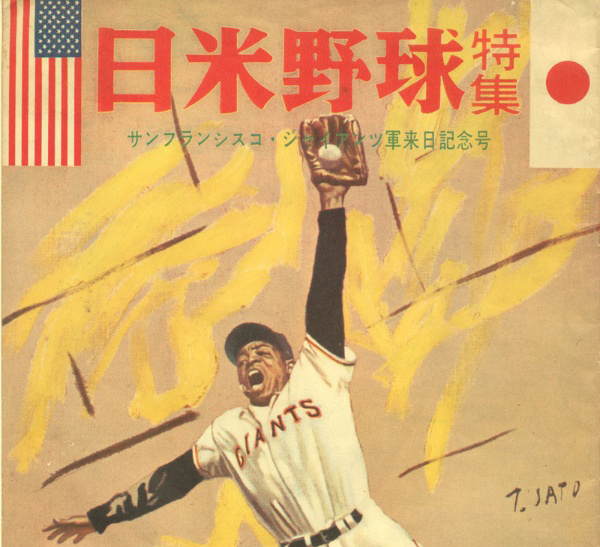
    Cover of the 1955 Yankees’ Japan tour program featuring Mickey Mantle. (Rob Fitts Collection)

    A Japanese poster promoting the series announced, “Unprecedented—the marvelous terrific team of our time—Champion of the Baseball World—New York Yankees—coming! Sixteen games in the whole country.” While not entirely accurate—the Yankees went on to lose the World Series to the Brooklyn Dodgers in seven games after the poster was printed—it did not matter to Japanese fans. Given the public response to the team’s arrival in Tokyo, the Yankees were, in fact, the “marvelous terrific team” of l955.

    That the series had a purpose beyond “goodwill” was publicly stated by Vice President Nixon, speaking on behalf of President Eisenhower, on October 12. Eisenhower had, in fact, been involved with the planning, according to Del Webb. Prior to arranging the tour, Webb had discussed its potential benefits with the president, Secretary Dulles, and General Douglas MacArthur, former commander of the Allied powers in Japan. “I asked the president last summer if he thought a trip by the Yankees might help bring the American and Japanese people closer to each other,” said Webb. “He said it would.” So it was no surprise that Nixon made a statement, addressing Commissioner Frick, expressing the president’s best wishes. Nixon wrote, “Appearances in Japan by an American major league baseball team will contribute a great deal to increased mutual understanding between the people of the United States and the people of Japan, and thus to the cause of a just and lasting peace, which demands the continued friendship and cooperation of the nations of the Free World.” It was up to the Yankees, Nixon implied, to help cement the US-Japanese alliance, assuring that Japan would come down on the side of “freedom” rather than neutrality in the ongoing struggle against the unfree Soviet bloc. Of course, the vice president’s statement was a clear example of the inflated rhetoric of Cold War propaganda. But the message was unavoidable. Public relations played an essential role in geopolitics, and this tour was, above all else, an exercise in public relations.

    Having fared well on their Hawaiian stop, winning all five games against a mixture of local teams and armed forces all-stars, and having survived their mobbing at the airport, the Yankees began their hectic schedule. The sodden but jubilant welcome was followed by a series of events, receptions, and press conferences. The next day, the team worked out while Stengel, who would serve as the face of the club, and Weiss attended a luncheon at the Foreign Correspondents’ Club. Lest it be thought that the tour consisted only of propaganda, the proceedings included their fair share of frivolous fun, which was also covered in the press. At the club, Stengel was presented with a gift—a large box, labeled “For 01’ Case.” According to the Nippon Times,“Stengel stood patiently by while bearers deposited the box at his feet. Then, lo and behold, a pretty girl in a kimono crashed through the wrapping pounding her fist into a baseball glove in the best tradition of the game.” Sensing an opportunity to get in on the act, Weiss “went through the motions of putting the girl’s name to a contract.” In what might, in twenty-first-century terms, be considered in very bad taste, Weiss asked her how much she wanted. But under the circumstances, Weiss’s actions were just part of the fun. Nevertheless, Stengel took a moment to emphasize the true nature of the tour. The Yankees were in Japan “on a serious mission of good will.”

    It would be nice to say that the first game, held on Saturday, October 22, went off without a hitch. But rarely does this happen when there are so many moving parts. This time, Opal did more than just soak a parade. The typhoon caused a postponement of Game Five of the Japanese championship series between the Nankai Hawks and the Yomiuri Giants, which was scheduled to be played at Korakuen Stadium on Friday. As a result, the Yankees contest had to be moved to the evening to accommodate both games. A smaller crowd than expected—35,000, about 5,000 shy of a capacity crowd—turned out to see the Yankees make quick work of the Mainichi Orions, beating the Japanese team 10-2. After Kaoru Hatoyama, the wife of the prime minister, threw out the first pitch—the very first wife of a head of state to do so at a major-league game, exhibition or otherwise—fans and dignitaries were treated to a 10-hit barrage by the Yankees, including two home runs and a triple by rookie catcher Elston Howard. The Orions countered with seven hits, but committed a costly first-inning error in their loss. The crowd, which included Thomas E. Dewey and his wife, was not disappointed.

    Baseball, however, never completely supplanted diplomacy, as Prime Minister Hatoyama greeted the Yankees, Frick, and their entourage at a reception. Among the many photo ops, one stood out. Hatoyama, having been presented with a Yankees hat by Stengel, became the first Japanese prime minister to wear a baseball cap.

    Continue to read the full article on the SABR website

  • Carp Tales: Marty Brown

    Carp Tales: Marty Brown

    by Robert K, Fitts

    As a player I had kind of an up and down career. I played a year and a half, two years, in the big leagues, off and on, and it just didn’t look as though that [an MLB career] was going to happen. I played for Charlie Manuel, who managed the Phillies in the World Series and had played in Japan as well. He was managing Cleveland Indians AAA team, and he wanted me on his team. I ended up being kind of a utility player. I went to him and said, “Hey man, I would love to play in Japan.” I was really not the prototypical player to go to Japan because they wanted a Jessie Barfield or Lloyd Mosby, those type of guys. But Hiroshima is a smaller market, and they had an interest. When their scout came over to see me, I performed very well, and he signed me.

    When I went over, I really went into it wholeheartedly. I wanted to make a good impression. I did all their practice stuff. I was doing everything. Man, at the end of the year I was tuckered out! It was just their workload, what they did, plus we practice differently. Americans here practice full tilt, like in a game, whereas Japanese sometimes back off. They get a lot out of 70%. That’s just how they practice. You hear about some of the ridiculous things that they do, like they’ll go take 1000 swings, right? Well, there’s nobody that can do that full tilt. One of the examples on the pitching side, is Hiroki Kuroda, who pitched for me when I was managing. He just had a chip removed from his elbow and on his first day back, he said, “I want to throw a 100-pitch bullpen.” I said, “Why would you want to do that?” “Don’t worry,” he said, “I’ll throw probably 15 full tilt. I’ll back off on everything else.”  He just wanted to show the press that he was healthy. That was very important to him.

    I didn’t know a lot about Japanese baseball before I went over. I knew Mr. Baseball and I had friends who had gone over; some were successful, some weren’t. The guys who were really successful in the States were not always so successful in Japan. There was a different mindset when it came to Japanese baseball, as opposed to American baseball. I think the speed of the game in the United States is obviously faster. Players can adapt to the speed of the game, whereas in Japan they have a way of being successful that works for them and that’s what they want to do. They don’t deviate from that very much. It’s a kind of old school like mid 1940s. They still practice a lot that way.

    [When I joined the Carp in 1992] everybody was upbeat about how the team had done the year before. [They had won the Central League pennant]. I had some really good teammates, like Tomonori Maeda and Kenjiro Nomura. Akira Etoh was there. He led the league in home runs, and I hit behind him normally. 1992 was a pretty satisfying year for me individually. I had a pretty good season. There were a lot of really good players, but we had aging pitching staff. Manabu Kitabeppu was getting older. It was unfortunate that we just kind of ran out of pitching, because we had such a good nucleus of position players. We just didn’t have enough bullpen [arms] to really take care of the bigger-tier teams. The Giants were difficult, and the Swallows were really a good team at that time with Atsuya Furuta and their manager [Katsuya] Nomura-san. So, it was a really challenging season, but we played well. It was a lot of fun and I really enjoyed Hiroshima, especially the fans and the atmosphere. That was pretty cool. The following year [1993], we had some issues with injuries, myself included. That was difficult.

    I was always an aggressive player. It’s just the way I’ve always played. I think a lot of players on the Japanese teams were surprised because it was not the norm. I can remember, [early in the season] scoring from first base on a double. As I came into home, the ball was getting there just as I came to the plate and I knocked the catcher over. The ball popped out and I scored, and we ended up winning by a run. People didn’t like the fact that I knocked the catcher over. But as I got up, I tried to see if I could help because I think I broke his collar bone. Everybody could see that I was trying to help him because it was a televised game against the Giants. So, everybody saw me as being hardnosed and they just knew how I played. They were pretty accepting. I think some of the fans in Hiroshima actually enjoyed it.

    When I was a player, there was a veteran locker room in Hiroshima, and there was a rookies locker room. The rookies didn’t stay with the veterans unless the rookie had a friend who was a veteran. I was in the veteran locker room. It was very small and all of my teammates smoked like fish! [As a foreign player] you can feel isolated sometimes, and you have to learn how to live with it. I didn’t speak the language very well at all. Also, I was by myself. Louis Medina got hurt his first year, so I didn’t have a teammate. Robinson Checo, a young Latin kid came over, but he didn’t know any English. They called me in to interpret for him, but I didn’t know Spanish! So, I went in and said, “Que pasa?” That’s about all I knew.  There were a lot of really quirky things like that that happened over there.

    After I stopped playing, I managed in the Minor Leagues. As a AAA manager in Buffalo, we had some good teams. In 2004 we won a championship and in 2005, we had another good team, but we ended up losing in the playoffs. A good friend of mine, Erik Schullstrom was a scout for Hiroshima, and he said, “How would you feel about managing for the Carp?” I said, “Oh, man, that that would be a great opportunity. I’d love to do that.” He went back and introduced the idea to the owner (I had played for his father). He came to Charlotte, and we had an interview, and they said “Yeah, let’s do this.” That’s kind of how it went down. It was a little difficult at first.

    I think I was kind of a stopgap until they got a Japanese manager in there after I was gone. I don’t think it was ever intended for me to win as a manager. I think in their mind they just wanted to try to get somebody else ready and then when they were ready, they could go ahead and kick me loose, which that was fine with me. Didn’t have a problem with that. It was what it was. I thought we did a lot of really good things and I enjoyed my time there as a manager and a player.

    Koji Yamamoto was my manger when I played for the Carp and also managed just before I was hired in 2006. Yamamoto is just a super guy. The two nicest people I was around in baseball would be Sadaharu Oh, who I managed against, and Yamamoto-san. He really wanted me to help [the Carp], and he was very positive about me coming over there. That was pretty cool. As an American managing in Japan, some guys get paranoid because they think somebody’s going to do something to sabotage [the changes] they’re trying to get through. I didn’t have that. Some of my coaching staff were former teammates of mine and they wanted to see change. The Carp hadn’t won in a while and so they wanted to see an American way of doing things and then get back to Japanese style at some point refreshed.

    The way Yamamoto would work the bullpen, it was about complete games. For example, he would leave Hiroki Kuroda in to complete a game because Kuroda at 60% was better than everybody else in the bullpen. Yamamoto-san wouldn’t even go down and ask Kuroda if he was okay. He would just leave him in there. And Kuroda wasn’t going to say anything. He just kept doing it. I got to manage Kuroda for a while, and said, “Would you rather go through and face these guys, the meat of the order, for the fourth time in the ninth inning when you’re dead tired, or would you rather hand it over to the bullpen when you’ve done your job for that day with a certain amount of pitches? That keeps you healthier.”  We even tried him on four days rest. We didn’t really have to, but we tried it just because he wanted to show people in the States that he could do it. And he did okay. He was just not used to it. He was used to pitching every Sunday. That’s another thing that’s different over there, the rotation and how they worked it. Star players were always going to pitch on Sunday, and they announced their pitchers. There were never any flip flops or any of that. As a manager I didn’t understand that. The ownership was like, “Well, [the fans] want to know when they’re going to pitch.” And I said, “Well, they will come [to the ballpark] anyway.” We went through this one time, when Kuroda, pitching on short rest, pitched on a Saturday. It’s just a different mindset. I did it a little more of the American way when I was there, but I [ultimately] did what the owner wanted to do. It was his team.

    When I played, [most Japanese pitchers threw a] four-seamed fastball and a slider, sometimes a breaking ball like a curveball, and some guys would throw a change up. That’s kind of how everything was when I was a player, but as I started to manage, it was different. The players wanted to experiment with the split finger. They wanted to take their repertoire up a notch.  Kenta Maeda, Masahiro Tanaka, Hisashi Iwakuma, and Kuroda, I managed all those guys, were the top line pitchers in Japan, and they always wanted to experiment with new pitches. That was really never brought up back when I was playing. So, it was good to see how it evolved like that. I think it was good for them and a lot of those players were motivated to get to the States and play. All four of those guys did.

    Takahiro Arai was one of my favorite players in Hiroshima. The year before I managed, Arai had won a home run title. The first year I managed, Jeff Livesey was the head coach. Jeff had just showed up to spring camp at Nichinan, so we dressed up one of our interns in Arai’s uniform. He was really skinny, and Arai was a big guy. We got it all set up and I told Jeff, “This guy is the home run king, and he wants to take batting practice strictly for you because you’re going to be the hitting coach and you haven’t seen him hit.” Jeff saw the intern and he went, “Man, he’s not a real big guy, is he?” I just said, “No, no, he’s not that big.” The intern got in there and he swung at the first three pitches and missed them. He was slamming his bat and doing stuff that the Japanese players just wouldn’t do. He was great. He was a good actor. Finally, he popped one up and he pretended like it was going to be a home run but it didn’t get out of the infield. Jeff [was looking worried]. Finally, Arai came out and introduced himself, and then Jeff realized that the guys have tricked him. That was a really funny moment. We tried to lighten things up because Japanese don’t normally do stuff like that. We tried to have a lot of fun, but we worked really hard too.

    I named some co-captains the first year when I was manager. I named Tomonori Maeda and Hiroki Kuroda captains because they didn’t get along. Maeda didn’t really want to do any of that. Whereas Kuroda took charge, and he would say, “Hey, we need to do this” and would come into my office and talk to me about stuff. Those two guys really were good. Maeda and I were actually teammates when I played. He was an outstanding center fielder. He could play. When he was only 17 years old, 18 years old, he was a stud. He had all five tools. He could run, could throw, could hit, could hit for power. He was really a top tier player, but he didn’t say anything because he was a young player. He wouldn’t say anything out of the ordinary to ruffle any feathers back then. When he was young, he was an MLB caliber player. If he went over [to the States], he would have had to get adjusted, and that would be the only fear I would have had, that he couldn’t adjust to the American type of playing. He had to do things his own way and that didn’t fly in the United States back then like it does today. He could still play at times [when I managed him], but he couldn’t play in the field anymore. He got to the point where he was kind of just a pinch hitter. The Hiroshima people loved him. He was a mainstay there.

    Tomoaki Kanemoto was also a teammate of mine and then I managed against him. When Kanemoto became free agent after the 2002 season, the front office had to make a decision between resigning Maeda or Kanemoto. That was a difficult thing. The owner chose Maeda, whereas Kanemoto went on to be the next Cal Ripken with Hanshin. A lot of people really wanted to see Kanemoto stay. I would have loved to have had him on my team because he was a good friend of mine. He had tools and he was strong. You could see that he was going to be a good player.

    Having a small budget has always been a challenge for Hiroshima. I played for Kohei Matsuda, the father of the current owner, before he passed. He would go out and get a player if he thought a foreign player could help them win.  He wouldn’t care about spending money to get him. It whereas the ownership now is more constrained. So, I never had the opportunity to pick out an American player when I was the manager. You might think that was kind of weird. I had some good players, but we didn’t get that frontline American player that I thought would take us over the top.

    I never managed at the Major League level in the United States. I spent a lot of time in AAA and AAA is more of a development type situation. I always showed up every day to win but I never sacrificed development for winning. If we weren’t winning, I was not going to take the number one, two, or three prospect out of the game. I might give him a day off, but I was not going to take him out of the lineup. I think that’s just an understanding of everybody who is in development in the United States. That’s what they truly believe. Development was a big thing for me, and I knew we had to do that in Hiroshima as well. I just had to figure out a different way to do it. So it was different in that respect. I think the players did have a bit of a challenge, me being American and wanting to do things a little bit differently at times, but I didn’t do it all the time. I tried to make adjustments.

    For example, in Japan all of the teams take infield [practice] the same way. They never vary from that, and they take infield every day. Very seldom at the Major League level do teams take infield anymore. If guys want to get in some early work and take some ground balls, or maybe some fly balls if they are an outfielder, they’ll get those in before practice even starts. Even as a Minor League manager I didn’t have my guys take infield every day, but I had them do it often because they were developing. I tried to introduce American-style infield drills to the Carp. We an American style infield [drill] one day and then we would go back and do the Japanese style infield. They didn’t like the American infield. It wasn’t the same. But they could do it and never miss a ball. It was pretty amazing how they could do it, but they just liked it their way. I just finally gave up and said, “Yeah, let’s do it your way. You guys look clean with it.”

    When I started, the team was not in good working condition. They had walked over 500 people the year before I got there, and when you play in a little stadium, like Hiroshima, that makes things very difficult. You can’t walk that many. It leads to giving up three-run homers every other inning. That was their demise. But we got them back on track by making sure we pitched ahead in the count. We cut our walks down to just under 400. When our pitchers had a 2-2 or 3-2 count, they were always looking for a swing and a miss, but we really didn’t have strikeout type pitchers. We had contact type guys, but they didn’t really understand that. They thought they needed a swing and miss to not give up a hit, and that wasn’t the case. Working on that improved us tremendously during the first year when I started managing.

    I also wanted to get rid of the hogwash. Like we would practice for six hours a day, finish up, and guys would be dead tired, and somebody would tell them that they needed to go to the parking lot and keep swinging the bat for another hour. I thought that was a waste of time. Get your rest, get something good to eat, and get ready to work hard the next day. So, I started taking them to the pool and making them swing a bat in the pool after they got done with practice. Some guys liked that, some guys didn’t. The point was they were not getting anything out of sitting in the parking lot, smoking cigarettes and swinging a bat. That was not really what we needed. If you’re going to do something, do it with purpose. I think I brought some of that to the table. It wasn’t as though I was trying to change everything. I just didn’t understand how come there wasn’t any change. But when it came down to it, it was a Japanese team and I was an American manager so I would just try to introduce ideas.

    Some of the Japanese managers would do things that you would never see in the U.S. For example, one of the Dragons better hitters was a two-hole hitter. When he would get on base with one out, the Dragons manager Hiromitsu Ochiai would bunt his three-hole hitter and then let the four-hole hitter come up with two outs. I was like “Hell, yeah, that’s perfect for us!” With two outs all we had to do was get that guy out and the inning was over, or don’t pitch to him at all, and go for the next guy. [But my pitchers would insist on pitching to him] and that four-hole hitter would get a hit. It never failed. I would ask my pitchers, “Why are you doing that?”  It was almost like an unwritten rule that they couldn’t put him on and couldn’t pitch around him. They had to make him swing at their pitch and get him out. That was very discouraging to me. Ochiai just kept doing it. I was like, “God Dang it. What are you doing here?” It was so different.  

    The way they would line up defensively was also different from in the U.S. You would see a third baseman playing even with the bag, right next to the bag, and there would be nobody out with a leadoff hitter up or the seven or eight-hole hitter up. Why would you do that? [Well] they were actually looking for a ball to be hit off the end of the bat. They just wanted to cover everything. But you have got to give something up to get something. You want to double play ball? Then, you have to cheat and get to double-play depth. That’s just the way we treat the game over here. To them, it’s not an option. They were going to cover every possibility. If there was a swinging bunt, they were going to cover it.

    They would try to take away a double by staying on the line but that would leave a huge gap on the left side of the infield. I was like, “Guys were kind of kicking ourselves in the throat here. What are we doing?” A few little things like that I would change around, but it was very difficult to get them to understand it, especially the veteran players. They had a way to position that they were used to. They would want to play at a certain place on the field, and I’d be like, “Well, that doesn’t make sense. You’re giving up too much.” That was a little frustrating, but I got through it. It was not a big deal.

    Here’s one thing that I had never seen happen before [I went to Japan]. When I managed, there were some players who if they had a few bad outings or maybe they weren’t hitting really great would come into my office and say, “Hey, think I need to go down to the minor leagues for ten days and then I’ll come back.” They might not pick up a ball [down there] but when they came back, they were just kind of regrouped and refreshed and they went out and did what they used to do. That’s way different from what we do in the States. I never imagined that that would happen.

    My closer did that to me one time. He had already blown two saves, and he blew another lead, but we ended up coming back to win the game. He came into my office and said, “I think I need to go to the minor leagues.” And I said, “Do you want me to tell the media, or do you want to tell them? He said, “I’d rather you tell them.” So, he threw me under the bus. I told management about it, and they didn’t think anything about it. They were just fine with it. They said, “He’s not been very good. Maybe he needs a little rest.” So, I think it was probably normal for a Japanese player to do that if he’s had some failure. Can you imagine somebody doing that here? I was blown away.

    Overall, I got along great with the umpires in Japan, but we all have situations in which you get heated on the field and if you don’t then something’s wrong. [As a manager] you’ve got to show your team and your players that you are willing to fight for them and it’s us against them. And if they’re not going to make a proper call, then you have a right to say what you need to say. There was a particular umpire, I won’t mention his name, who had trouble seeing. He’d make a really bad call, and I’d ask him in so many words, “Are you ***ing blind!?” And he would look at me and, I almost felt sorry for him, say, “Yeah, I can’t see very well.”  I was like, what the hell? I’ve never had an umpire say that before!

    I would go to the umpiring group and ask them the rulings on something or what they saw in a certain situation. I got along with them fine. I would go over and talk to the guys who had thrown me out of games. It was no big deal. Japanese managers didn’t really do that. They would go out and bump them and hit them, and then they would stay in the game, whereas I would just talk to them and get thrown out. I think my interpreter got me into more trouble than what I really did. He would get fired up more than I would, and he’d say stuff and it looked like I was saying it, and I wasn’t really saying it!

    [Editor’s note: Marty became famous throughout Japan on May 7, 2006, for throwing first base during a dispute with the umpires].

    Well, I had an American pitcher, Mike Romano, on the mound and there was a close play at first base and the umpire called the runner safe. He was one of my favorite umpires over there. His name was Katsumi Manabe. I didn’t know if he was safe or not, it was a tough call. Manabe didn’t know English that well, and I think Mike said, “Well, that was a fucking horseshit call!” Well, Manabe thought that Mike was calling him that. It was just the third inning and Manabe threw my starter out of the game. I went out there, and I’m like, “Oh, God, I’ve got to waste some time here so we can get somebody warmed up enough to get them in the game.” So, I started arguing with the umpires, and as I was arguing with the umpires, I noticed they all had stopwatches. I didn’t know what the hell they had those stopwatches for. Anyway, I was talking, and I was getting heated up, but I still was going to have to waste some more time because we were not going to have anybody ready soon.

    Finally, the umps said, “That’s enough. You need to go back to the dugout.” I was like, “What?” And they said, “Yeah, your time is up. You can’t go over the amount of time to argue this call.” So, I was like, “Oh, you’re not going to throw me out after all the hell I put you through here?”  They just looked at me, and said, “You’re done.” And they started walking away. I had to figure out a way to waste more time, so I just picked up first base and threw it out into right field. All four of them threw me out at once! All four! That was the first time that had ever happened.

    The Carp’s owner made red T-shirts that said, “Danger! My manager throws bases.” He put that out there and they sold them as souvenirs. Pretty good marketing idea. That didn’t bother me any. What did bother me is that first time I got tossed, they finned me 1000 bucks. And the next time I got tossed, it was going to be 2000. My coaching staff thought it was great when I got tossed and the team really liked it. It showed some energy because none of the other Japanese managers really did that. I went to the coaching staff, and I said, “Listen, I can’t do this anymore.” So the coaching staff got together and they paid my fine. I thought that was pretty amazing. They didn’t say anything to the players. The coaches leaked it out that I didn’t feel that I could get tossed because management was not going to help pay the fines. Well, management ended up coming back and said, “If we feel that it’s a worthy cause and you can get tossed, we’ll pay your fine.”

    With the history of the city, and the bombing, the culture of Hiroshima is about rebuilding and fighting. “We’re not giving up!” I think that really stands out in Hiroshima and with the fans there. The fans make trips to Tokyo, and they have their own cheering section. They’re just great. If I had to compare them to a team in the States as far as fan base, I’d say the Cardinals. The reason I say that is the Cardinals do very little during the course of the winter to get better, but it always seems to work out because their fan base is behind them all the time and a lot of guys just need that little extra jump. So yeah, Hiroshima is just a special place. I think it’s more about the people there. I think the rebuilding of the team and putting the money back into the team now has really helped them as far as competing in the league. Hiroshima’s new stadium is off the wall great. It’s awesome. Nippon Ham’s new stadium is also really good. With Japan’s culture, loving baseball the way they do, making all these new stadiums and places for the fans to go has been pretty amazing.

    My time in Japan was a really enjoyable experience, both as a manager and as a player. I really did love it. Also, I met my wife there, so I brought the best part of Japan home with me!


    Read more Carp Tales on Rob’s blog

    https://www.robfitts.com/blog

  • Japan’s Favorite Players: No. 19, Yoshinobu Takahashi

    Japan’s Favorite Players: No. 19, Yoshinobu Takahashi

    He never dreamed of being a professional, but ended up giving it his all

    by Thomas Love Seagull

    A recent poll for a TV special saw more than 50,000 people in Japan vote for their favorite retired baseball players. 20 players emerged from a pool of 9,000. Yes, they could only vote for players who are no longer active, so you won’t see Shohei Ohtani or other current stars on this list. Which is probably smart because I’m sure Ohtani would win by default. There are, however, players who were beloved but not necessarily brilliant, and foreign stars who found success after coming to NPB. Unsurprisingly, the list leans heavily towards the past 30 years, with a few legends thrown in for good measure.

    Over the next few weeks, I’ll be profiling each of these players. Some of these players I know only a little about, so this will be as much a journey for me as, hopefully, it will be for you. It’ll be a mix of history, stats, and whatever interesting stories I can dig up.

    For now, have a look at the list below and see how the public ranked them. I’ve included the years they played in NPB in parentheses.

    20. Alex Ramirez (2001-2013); 19. Yoshinobu Takahashi (1998-2015); 18. Warren Cromartie (1984-1990), 17. Takahashi Toritani (2004-2021; 16. Suguru Egawa (1979-1987); 15. Katsuya Nomura (1954-1980); 14. Tatsunori Hara (1981-1995); 13. Kazuhiro Kiyohara (1985-2008); 12. Masayuki Kakefu (1974-1988); 11. Masumi Kuwata (1986-2006); 10. Atsuya Furuta (1990-2007); 9. Randy Bass (1983-1988); 8. Daisuke Matsuzaka (1999-2006, 2015-2016, 2018-2019, 2021); 7. Tsuyoshi Shinjo (1991-2000, 2004-2006); 6. Hiromitsu Ochiai (1979-1998); 5. Hideo Nomo (1990-1994); 4. Hideki Matsui (1993-2002); 3. Shigeo Nagashima (1958-1974); 2. Sadaharu Oh (1958-1980); 1. Ichiro Suzuki (1992-2000).

    No. 19: Yoshinobu Takahashi (1998-2015)

    Yoshinobu Takahashi never really wanted to be a baseball player.

    Even as a kid in Chiba—already stronger and more skilled than the boys around him—baseball felt like something he did well, not something that belonged to him. When asked what he wanted to be when he grew up, he might say “baseball player,” but without conviction. It felt like a hypothetical. He thought his parents felt the same way.

    He grew up the youngest of three brothers in a household where baseball was practiced daily. His father, who had played through high school, coached him relentlessly, yet tried to make sure baseball never crowded out education or life. He didn’t even have any idols when he was young. When Yoshinobu cried on the way to practice and declared he wanted to quit, his older brothers resorted to physical means to force him to go.

    He tried to quit more than once. He never succeeded.

    By middle school, Takahashi was dominant, pitching and hitting cleanup for a Pony League team that won national championships. Still, he believed baseball would end someday. His mother insisted he attend Toin Gakuen High School in Kanagawa as a boarding student. Takahashi resisted. His father resisted, too. 

    Years later, he would say that living away from home taught him independence and gratitude at the same time.

    At Toin Gakuen, Takahashi stood out immediately. He hoped to remain a pitcher. His coach watched him hit once and moved him into the lineup. He played in two Summer Koshien tournaments, became team captain, and finished his high school career with 30 home runs. His final summer ended in disappointment, without a Koshien appearance.

    If high school shaped his independence, Keio University shaped his worldview. He chose Keio not because it was a pipeline to professional baseball, but because of the Tokyo Big6 League and the desire to compete in the Waseda-Keio rivalry. 

    Takahashi enrolled in the law school, studying political science, and thrived in the Tokyo Big6 League. He won a Triple Crown, broke Koichi Tabuchi’s 30-year-old home run record*, and played every inning of every game for four years. Yet what he remembered most about Keio was not dominance, but diversity—older players, late starters, students who treated baseball as only one part of a larger life. Coaches respected individuality. Players were treated like adults.

    *Tabuchi was drafted by the Hanshin Tigers and was named Rookie of the Year in 1969.

    In 1997, before he played a professional game, Takahashi starred for Japan in the Intercontinental Cup. He hit .419, drove in 16 runs in nine games, played flawless right field, and helped Japan rout Cuba in the gold medal game by homering and driving in 5 runs, snapping a 151 game winning streak in international games for Cuba.

    Drafted by the Yomiuri Giants, he hit .300 as a rookie, won a Gold Glove (the first rookie outfielder to do so), and made the All-Star team. He finished second in Rookie of the Year voting*. In 1999, he delivered what might have been the best season of his career: .315, 34 home runs, 98 RBIs, elite defense, Best Nine honors. The season ended early when he broke his collarbone crashing into the outfield wall.

    *Kenshin Kawakami won the award by going 14-6 with a 2.57 ERA. I always thought he should have gotten more chances in MLB.

    At the time, it seemed dramatic. Later, it felt like foreshadowing.

    Takahashi played the outfield without caution. Diving catches, full-speed collisions, fearless throws, he did them all. He was told to stop diving. He understood the instruction, but he couldn’t follow it.

    The legendary Shigeo Nagashima had taught him that a professional’s duty was to move the hearts of the fans, that someone in the stands might be seeing him play for the only time in their life. Takahashi took that literally. “The moment I think I can catch it,” he once said, “my head goes blank.”

    The early 2000s were defined by excellence and accumulation: Gold Gloves, All-Star selections, steady power, international success with the national team. He starred in the 2001 Baseball World Cup, the 2003 Asian Championship, and the 2004 Olympics. He tied and set league records for consecutive hits and plate appearances reaching base. He helped the Giants win championships.

    After 2004, his career changed shape. Injuries arrived in spades: shoulder surgery, ankle surgery, back pain, broken ribs, muscle strains. From 2005 onward, Takahashi played more than 100 games in a season only three times. He moved across the outfield, then to first base, always adjusting, always in pain.

    In 2007, healthy again, he reinvented himself as a leadoff hitter and produced one of the finest seasons in the Central League: .308/.404/.579, 35 home runs, league-leading slugging, Gold Glove, Best Nine. He set an NPB record with 9 first-inning leadoff home runs. It was his last great, uninterrupted year.

    Late in his career, the Giants cut his salary by more than half—the largest reduction in team history to that point. Takahashi smiled and signed immediately. “Of course it went down,” he said. “They still want me.”

    That was enough.

    He played 17 seasons with the Giants, appeared in four Japan Series, won three of them, reached 300 home runs, and never once seemed concerned with whether the numbers told the whole story. Even back in college, his coach remarked that while he was very particular about the outcome of games, he didn’t seem to care at all when it came to his own records or awards.

    In 2014, his father died. The day after the funeral, Takahashi played and homered. He looked briefly toward the sky as he rounded the bases. That was all.

    At the end of the 2015 season, with his body finally finished, the Giants offered him their managerial job. He accepted. He would say that managing allowed him to see baseball in a new light.

    Takahashi never reached 2,000 hits. His body wouldn’t allow it. But he battled all the same. Even diminished, he reached base. Even injured, he delivered. He never stopped playing like someone might be seeing him for the first and only time.

    And that, more than any career numbers or award totals, is how he earned the love and admiration of fans across the country.

    Thomas Love Seagull’s work can be found on his Substack Baseball in Japan
    https://thomasloveseagull.substack.com

  • The 1953 Eddie Lopat All-Stars’ Tour of Japan

    The 1953 Eddie Lopat All-Stars’ Tour of Japan

    by C. Paul Rogers III

    Every Monday morning we will post an article from SABR’s award-winning books Nichibei Yakyu: Volumes I and II. Each will present a different chapter in the long history of US-Japan baseball relations. This week  C. Paul Rogers III tells us about the 1953 Major League All-Stars visit to Japan.

    Eddie Lopat was a fine, soft-tossing southpaw during a 12-year baseball career with the Chicago White Sox and most famously the New York Yankees. Called the Junkman because of his assortment of off-speed pitches, Lopat was also something of a baseball entrepreneur. He not only ran a winter baseball school in Florida, but, after barnstorming in Japan with Lefty O’Doul’s All-Stars following the 1951 major-league season, was very receptive to Frank Scott’s plan to put together a star-studded assemblage of major leaguers to again tour Japan after the 1953 season. Scott, a former traveling secretary of the Yankees who had since become a promoter, proposed calling the team the Eddie Lopat All-Stars. By 1953, after O’Doul’s 1949 breakthrough overseas trip to Japan with his San Francisco Seals of the Pacific Coast League, postseason tours to the Land of the Rising Sun had become more common. In fact, in 1953 the New York Giants also barnstormed in Japan at the same time as did Lopat’s team. For the Lopat tour, Scott secured the Mainichi Newspapers, owners of the Mainichi Orions of Japan’s Pacific League, as the official tour sponsor.

    Lopat and Scott spent much of the 1953 regular season recruiting players for the tour, including a somewhat reluctant Yogi Berra. Unbeknownst to Yogi, he was already a legend among Japanese baseball fans. At the All-Star Game in Cincinnati, a Japanese sportswriter who was helping Lopat and Scott with their recruiting was aware of Berra’s reputation as a chowhound and told Yogi about the exotic foods he would be able to consume in Japan. Yogi was skeptical, however, and wondered if bread was available in Japan. When the writer and Lopat both assured Yogi that Japan did indeed have bread, he signed on for the tour.

    Under the prevailing major-league rules, barnstorming “all-star teams” were limited to three players from any one team. With that constraint, a stellar lineup of major leaguers signed on for the tour including, in addition to Berra, future Hall of Famers Mickey Mantle, Robin Roberts, Eddie Mathews, Bob Lemon, Nellie Fox, and Enos Slaughter. All-Star-caliber players like Eddie Robinson, Curt Simmons, Mike Garcia, Harvey Kuenn (the 1953 American League Rookie of the Year), Jackie Jensen, and Hank Sauer committed as well, as did Gus Niarhos, who was added to serve as a second catcher behind Berra. Whether a slight exaggeration or not, they were billed as “the greatest array of major league stars ever to visit Japan.”

    Lopat and his Yankees teammates Mantle and Berra were fresh off a tense six-game World Series win over the Brooklyn Dodgers in which all had played pivotal roles. Lopat had won Game Two thanks to a two-run eighth-inning homer by Mantle, while Berra had batted .429 for the Series. A casualty to the tour because of the long season and World Series, however, was the 21-year-old Mantle, who, after battling injuries to both knees during the year, needed surgery and was a late scratch. Lopat quickly added Yankees teammate Billy Martin, who had hit .500 with 12 hits and eight runs batted in in the Series to win the Baseball Writers’ MVP Award.

    The Lopat All-Stars were to first play four exhibition games in Colorado and began gathering at the famous Broadmoor Hotel in Colorado Springs on October 6. Baseball had a no-fraternizing rule then and many of the players looked forward to getting to know ballplayers from other teams and from the other league. The Phillies’ Robin Roberts, who was known for his great control on the mound, remembered spotting fellow hurler Bob Lemon of the Cleveland Indians in the bar at the Broadmoor and going over to introduce himself. Lemon asked Roberts what he wanted to drink and Roberts said, “I’ll have a 7-Up.”

    Lemon didn’t say anything but pulled out a pack of cigarettes and offered Roberts one. Roberts said, “No, thanks, I don’t smoke.”

    Lemon chuckled and said, “No wonder you don’t walk anyone.”

    The Lopat team’s opposition in Colorado was a squad of major leaguers put together by White Sox manager Paul Richards and highlighted by pitchers Billy Pierce and Mel Parnell, infielders Pete Runnels and Randy Jackson, and outfielders Dave Philley and Dale Mitchell.

    The big-league sluggers quickly took to the rarefied Colorado air as the teams combined for nine home runs in the first contest, a 13-8 victory for the Lopat All-Stars over the Richards group on October 8 in Pueblo. The 21-year-old Mathews, coming off a gargantuan 47-homer, 135-RBI season with the Braves, slugged two circuit shots (including one that traveled 500 feet), as did the Cubs’ 36-year-old Hank Sauer, the Cardinals’ 37-year-old Enos Slaughter, and, for the Richards team, Detroit catcher Matt Batts. Two days later, the Lopats blasted the Richards team 18-7 in Colorado Springs before the four-game series shifted to Bears Stadium in Denver for the final two contests. The results were the same, however, as the Lopat team won in the Mile-High City 8-4 and 14-8, the latter before a record crowd of 13,852, as fourtime American League All-Star Eddie Robinson of the Philadelphia A’s and Mathews both homered off Billy Pierce and drove in four runs apiece.

    Mathews went 7-for-8 in the two Denver contests and posted Little League-like numbers for the whole Colorado series, driving in 17 runs in the four games, while the veteran Slaughter had 12 hits, including two homers, two triples, and three doubles.

    The Lopat All-Stars then flew to Honolulu for more exhibition games after a brief stopover in San Francisco. On October 12 and 13 they played a pair of games in Honolulu against a local team called the Rural Red Sox and it did not take long for disaster to strike. In the first inning of the first game before a jammed-in crowd of 10,500, Mike Garcia of the Indians was struck in the ankle by a line drive after delivering a pitch. Garcia, who had won 20, 22, and 18 games the previous three seasons, was unable to push off from the mound after the injury and had to leave the game. Although Garcia stayed with the team for most of the tour, he was able to pitch only sparingly in Japan.

    Despite the loss of Garcia, the major leaguers clobbered the locals 10-2 and 15-0. After the second game, first baseman Robinson, who had homered in the rout, was stricken with a kidney-stone attack and was briefly hospitalized. He quickly recovered and resumed the tour for the All-Stars, who had brought along only 11 position players.

    On October 14 the Lopat squad flew to Kauai, where they pounded out 22 hits and defeated the Kauai All-Stars, 12-3, on a makeshift diamond fashioned from a football field. World Series MVP Martin was honored before the game and given a number of gifts, including an aloha shirt and a calabash bowl. He celebrated by smashing a long home run in his first time at bat and later adding a double and a single. The homer sailed through goalposts situated beyond left field, leading Robin Roberts to quip that it should have counted for three runs.

    The big leaguers next flew to Hilo on the Big Island, where on October 17, 5,000 saw them defeat a local all-star-team, 8-3, in a game benefiting the local Little League. But much more serious opposition awaited them back in Honolulu in the form of a three- game series against the Roy Campanella All-Stars, a team of African American major leaguers headed by Campanella, the reigning National League MVP, and including stellar players like Larry Doby, Don Newcombe, Billy Bruton, Joe Black, Junior Gilliam, George Crowe, Harry “Suitcase” Simpson, Bob Boyd, Dave Hoskins, Connie Johnson, and Jim Pendleton.

    The Lopats won the first game, 7-1, on the afternoon of October 18 over an obviously weary Campanella team that had flown in from Atlanta the previous day, with a plane change in Los Angeles. Jackie Jensen, then with the Washington Senators, was the hitting star with two home runs, while the Phillies’ Curt Simmons allowed only a single run in eight innings of mound work. By the next night, Campy’s squad was in much better shape and defeated the Lopat team 4-3 in 10 innings behind Joe Black.

    Roberts pitched the first nine innings for the Lopats with Yogi Berra behind the plate. In one at-bat, Campanella hit a towering foul ball behind the plate. Campy actually knocked the glove off Yogi’s hand on the follow-through of his swing. Berra looked down at his glove on the ground and then went back and caught the foul ball barehanded.

    Roberts picked up Yogi’s glove and handed it to him, asking him if he was okay. Yogi said, “That friggin’ ball hurt like hell.”

    Over the years Roberts wondered if he had somehow made that story up, since he never again saw a bat knock the glove off a catcher’s hand. Over 30 years later, he saw Berra at an Old-Timers game in Wrigley Field in Chicago and asked him about it. Yogi said, “That friggin’ ball hurt like hell,” the exact thing he had said in 1953.

    On October 20 Campanella’s squad won the rubber game, 7-1, behind the three-hit pitching of Don Newcombe. Nellie Fox displayed rare power by homering for the Lopats’ only run, while George Crowe hit two homers and Junior Gilliam one for the Campanellas.

    The Lopat team stayed at the famous Royal Hawaiian Hotel on Waikiki Beach and had such a great time in Hawaii that many didn’t want to leave. Many of the players had brought their wives but some like Eddie Mathews, Billy Martin, and Eddie Robinson were single and so enjoyed the Honolulu nightlife. Not surprisingly given his before and after history, Martin got into a dispute with a guard at a performance of hula dancers attended by the entire team and sucker-punched him. Fortunately for Martin, no charges appear to have been brought.

    The Lopat squad did have a schedule to keep and flew on a Pan American Stratocruiser to Tokyo’s Haneda Airport, arriving at 1:05 P.M. on October 22. They could scarcely have anticipated the frenzied reception they received. Although the New York Giants had been in the country for a week and had played five games, thousands of Japanese greeted the plane. After being officially greeted by executives from the trip sponsor, Mainichi, and receiving gifts from beautiful young Japanese women, the ballplayers climbed into convertibles, one player per car, to travel to the Nikkatsu Hotel, which would be their headquarters. The trip, which would normally take about 30 minutes, took almost three hours because of the throngs of fans lining the route and pressing against the cars as Japanese mounted and foot police were overwhelmed. Eddie Mathews likened it to the pope in a motorcade without police or security while it reminded Robin Roberts of a ticker-tape parade in New York City.

    That evening the Americans were guests at a gigantic pep rally in their honor at the Nichigeki Theater, where Hawaiian-born Japanese crooner Katsuhiko Haida introduced each player. American Ambassador John M. Allison also hosted a reception at the US Embassy for both the Lopats and the New York Giants, who had just returned to Tokyo from Sendai.

    Eddie Lopat All-Stars vs. Mainichi Orions, October 23, 1953 (Rob Fitts Collection

    The Lopat squad’s first game was the following afternoon, October 23, against the Mainichi Orions in Korakuen Stadium before 27,000. The Orions, who had finished fifth out of seven teams in Japan’s Pacific League, had the honor of playing the initial game due to its ownership by the Mainichi newspapers. Jackie Jensen won a home-run-hitting contest before the game by smacking six out of the yard, followed by Futoshi Nakanishi of the Nishitetsu Lions with three and then Berra, Mathews, and Hank Sauer with two each. Bobby Brown, stationed in Tokyo as a US Army doctor, was seen visiting in the dugout with his Yankee teammates Lopat, Berra, and Martin before the contest.

    The US and Japanese Army bands played after the home-run-hitting contest, followed by helicopters dropping bouquets of flowers to both managers. Another helicopter hovered low over the field and dropped the first ball but stirred up so much dust from the all-dirt infield that the start of the game was delayed.

    The game finally began with Curt Simmons on the mound for the Americans against southpaw Atsushi Aramaki. The visitors plated a run in the top of the second on a single by Sauer, a double by Robinson, and an error, but the Orions immediately rallied for three runs in the bottom half on three bunt singles and Kazuhiro Yamauchi’s double. The Orions led 4-1 heading into the top of the ninth but the Lopats staged a thrilling rally to tie the score behind a walk to Mathews, a two-run homer by Sauer, and Robinson’s game-tying circuit clout.

    Garcia, who had relieved Simmons in the seventh inning, was still pitching in the 10th but after allowing a single, reaggravated the leg injury suffered in Hawaii. He was forced to leave the game with the count of 1 and 1 against the Orions’ Charlie Hood, who was a minor-league player in the Phillies organization. (Hood was in the military stationed in Japan and had played 25 games for Mainichi during the season.) When Garcia had to depart, Lopat asked for volunteers to pitch. Roberts, sitting in the dugout, said he would and went out to the mound to warm up.

    During the game Roberts had told Bob Lemon next to him that he was familiar with Hood from Phillies spring training and that he was a really good low-ball hitter. Then, on his first pitch, Roberts threw Hood a low fastball which he ripped down the right-field line for a game-winning double. Lemon ribbed Roberts for the rest of the trip about his throwing a low fastball to a low-fastball hitter. In one of baseball’s little coincidences, Roberts and Lemon would both be elected to the Hall of Fame on the same day in 1976, 23 years later.

    The Lopat squad’s loss in the opener was only the third ever suffered by an American team of major leaguers in a postseason tour of Japan. The All-Stars were certainly embarrassed by losing to a mediocre team and afterward Roberts told the Japanese press, “Look, it’s a goodwill trip and so this was some of our goodwill. You won the first game, but you won’t win anymore.”

    Continue to read the full article on the SABR website

  • Japan’s Favorite Former Ballplayers: #20 Alex Ramirez

    Japan’s Favorite Former Ballplayers: #20 Alex Ramirez

    How 50,000 fans ranked Japan’s most beloved retired stars

    by Thomas Love Seagull

    A recent poll for a TV special saw more than 50,000 people in Japan vote for their favorite retired baseball players. 20 players emerged from a pool of 9,000. Yes, they could only vote for players who are no longer active, so you won’t see Shohei Ohtani or other current stars on this list. Which is probably smart because I’m sure Ohtani would win by default. There are, however, players who were beloved but not necessarily brilliant, and foreign stars who found success after coming to NPB. Unsurprisingly, the list leans heavily towards the past 30 years, with a few legends thrown in for good measure.

    Over the next few weeks, I’ll be profiling each of these players. Some of these players I know only a little about, so this will be as much a journey for me as, hopefully, it will be for you. It’ll be a mix of history, stats, and whatever interesting stories I can dig up.

    For now, have a look at the list below and see how the public ranked them. I’ve included the years they played in NPB in parentheses.

    20. Alex Ramirez (2001-2013); 19. Yoshinobu Takahashi (1998-2015); 18. Warren Cromartie (1984-1990), 17. Takahashi Toritani (2004-2021; 16. Suguru Egawa (1979-1987); 15. Katsuya Nomura (1954-1980); 14. Tatsunori Hara (1981-1995); 13. Kazuhiro Kiyohara (1985-2008); 12. Masayuki Kakefu (1974-1988); 11. Masumi Kuwata (1986-2006); 10. Atsuya Furuta (1990-2007); 9. Randy Bass (1983-1988); 8. Daisuke Matsuzaka (1999-2006, 2015-2016, 2018-2019, 2021); 7. Tsuyoshi Shinjo (1991-2000, 2004-2006); 6. Hiromitsu Ochiai (1979-1998); 5. Hideo Nomo (1990-1994); 4. Hideki Matsui (1993-2002); 3. Shigeo Nagashima (1958-1974); 2. Sadaharu Oh (1958-1980); 1. Ichiro Suzuki (1992-2000).

    No. 20: Alex Ramirez

    The only foreign player to record 2,000 hits in NPB


    Charlie Manuel used to tell him stories.

    That’s how this whole thing begins—not with a contract or a scout or a dream, but with the manager of the Cleveland Indians, a man with a thick country accent and a Yakult Swallows heart, leaning against a batting cage and talking about Japan.

    Manuel was one of the few Americans who had thrived in NPB. He won the Japan Series as a member of the Swallows in 1978. He signed with the Kintetsu Buffaloes and took home the Pacific League MVP in 1979. His nickname in Japan? The Red Demon. He knew the language of the league, the rhythm of its days, the fierce courtesy, the relentless work, the joy buried under the discipline.

    Alex Ramirez listened because he respected Manuel.

    But he did not yet understand him.

    “Charlie told me baseball equals Japanese culture,” Ramirez recalled years later. “Back then, I didn’t understand how baseball and culture could be linked. Now I understand it completely.”

    At the time, it had sounded like one of those mysterious lines you hear from someone wiser than you. It was meaningful, but maybe only in retrospect.

    Besides, the other players Ramirez talked to painted very different pictures of Japan.

    Most had struggled.

    Most had returned home with bad stories and worse statistics.

    Their message was: Good luck. You won’t last.

    Manuel’s message was: If you open yourself to Japan, Japan will open itself to you.

    And Ramirez, wonderfully and stubbornly, did not believe either one completely.

    He prepared for his trip to Japan the way any sensible ballplayer would: he watched Mr. Baseball a dozen or so times.

    In the movie, translators famously shrink long speeches into short summaries, sometimes to comedic effect. Ramirez took this as documentary realism.

    “I thought the interpreters were going to lie to me,” he said. “Like in the movie, the player talks for a minute, and the translator says two words.”

    So when he arrived in Tokyo in 2001, he was prepared for deception, confusion, and culture clash.

    He was not prepared for loneliness.

    “The players would talk to me,” he said, “but I couldn’t understand. And I couldn’t say what I wanted to say. It became pressure.”

    The language barrier hit harder than the pitching. And the pitching, with its forkballs and cutters and relentless precision, hit pretty hard.

    In the clubhouse, the food consisted of onigiri and ramen. He felt there was nothing to eat.

    For a while, Japan felt like a puzzle whose pieces didn’t quite fit together. 

    But fortunately, there was Tsutomu Wakamatsu.

    Wakamatsu, the Yakult manager, had a way of making the world slow down. He did not try to turn Ramirez into a Japanese hitter. He simply gave him space and structure and trust.

    Wakamatsu, of course, is a Yakult legend. His nickname is Mr. Swallows and his uniform number, 1, is honored* by the team.

    “If I hadn’t started with Wakamatsu,” Ramirez said, “I wouldn’t be in the Hall of Fame today.”

    And slowly, day by day, Ramirez began to see what Manuel had meant.

    The long practices were not punishment, they were pride.

    The silence wasn’t coldness, it was concentration.

    The discipline wasn’t rigidity, it was devotion.

    Baseball wasn’t separate from life.

    It was woven into the fabric of everything.

    Once he understood that, he didn’t just adjust: he blossomed.

    What happened next is one of the most beautiful second acts in baseball history.

    Eight All-Star selections.

    Four Best Nine awards.

    Four RBI titles.

    A batting title.

    Two home-run crowns.

    Two MVP awards.

    Two Japan Series championships, with two different teams.

    He hit .301 over thirteen seasons.

    He averaged 29 homers a year.

    He collected 2,000 hits, the first foreign player ever to do so.

    And the fans called him “Rami-chan.”

    The affectionate “chan,” the nickname given to children, pets, and beloved personalities.

    He had come to Japan expecting to “teach the game.”

    Japan had ended up teaching him something far larger, that baseball equals Japanese culture.

    In 2019, Ramirez became a Japanese citizen. He had absorbed it, and became a part of it.


    He was voted into the Japanese baseball Hall of Fame, along with Randy Bass, in 2023. 

    On induction day, he stepped to the microphone and did something that explained everything.

    He thanked his interpreters and assistants.

    He said their names. All of them.

    He honored the people who had helped him find his way in Japan.

    Charlie Manuel had been right: baseball and culture were inseparable.

    Thomas Love Seagull’s work can be found on his Substack Baseball in Japan
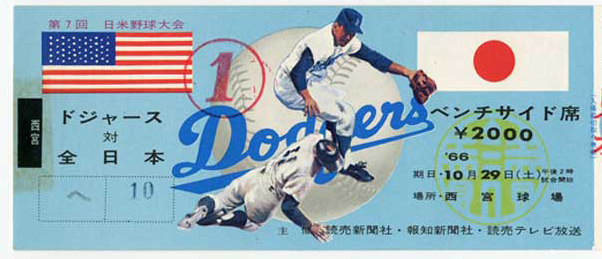
    https://thomasloveseagull.substack.com

  • The Cold War, a Red Scare, and the New York Giants’ Historic Tour of Japan in 1953

    The Cold War, a Red Scare, and the New York Giants’ Historic Tour of Japan in 1953

    by Steven Wisensale

    We have moved the Nichibei Yakyu series to Mondays to make room for a new series of articles by Thomas Love Seagull debuting this Wednesday, January 14.

    Every Monday morning we will post an article from SABR’s award-winning books Nichibei Yakyu: Volumes I and II. Each will present a different chapter in the long history of US-Japan baseball relations. This week Steven Wisensale tells us about the New York Giants trip toJapan in 1953.


    On the morning of June 29, 1953, readers of the Globe Gazette in Mason City, Iowa, were greeted by a headline on page 13: “New York Giants Invited to Tour Japan This Fall.”

    The Associated Press in Tokyo reported that Shoji Yasuda, president of the Yomiuri Shimbun, had formally invited Horace Stoneham, owner of the New York Giants, to bring his team to Japan for a goodwill tour after the season. The tour was to commemorate the 100th anniversary of Commodore Matthew Perry’s arrival in Japan in 1853, when he forced the isolated nation’s ports to open to the world.

    An excited Stoneham quickly sought and was given approval for the trip from the US State Department, the Defense Department, and the US Embassy in Tokyo. The tour was also endorsed by Baseball Commissioner Ford Frick. However, two hurdles remained for Stoneham: He needed his fellow owners to suspend the rule that prohibited more than three members of a major-league team from playing in postseason exhibition games. And at least 15 Giants on the major-league roster had to vote yes for the tour.

    With respect to the first hurdle, previous postseason tours had consisted primarily of major-league allstars, not complete teams. The 1953 Giants, however, became trailblazers as the first squad to tour Japan as a complete major-league team. The second rule was a requirement set forth by the Japanese sponsors of the tour. They wanted their Japanese players to compete against top-quality major leaguers.

    WAIVER IS GRANTED

    The waiver Stoneham sought was granted by team owners on July 12 when they gathered in Cincinnati for the All-Star Game “We will now proceed with our plans for the goodwill tour,” said an upbeat Stoneham.

    Another person who was extremely happy with the owners’ decision to support the Giants’ tour of Japan was Tsuneo “Cappy” Harada. Harada was a US Army officer serving with the American occupation force in postwar Japan and an adviser to the Yomiuri Giants. One of his tasks was to restore morale among the Japanese people through sports, particularly baseball. It was Harada who suggested to General Douglas MacArthur that the San Francisco Seals be invited to Japan for a goodwill tour in 1949. Working closely with Lefty O’Doul, Harada coordinated the tour, which MacArthur later declared was “the greatest piece of diplomacy ever,” adding, “all the diplomats put together would not have been able to do this.” O’Doul would play a central role in 1953 by assisting Harada in coordinating the Giants’ tour.

    After the owners granted approval, Harada flew to Honolulu, where he met with city officials and baseball executives to share the news that Hawaii would host two exhibition games during the team’s layover on their journey to Japan.

    At a press conference on July 18 in Honolulu, Harada explained why the Giants were chosen for the tour: They were the oldest team in major-league baseball, and they had Black players. A Honolulu sports- writer observed: “The presence of colored stars on the team will help show the people of Japan democracy at work and point out to them that all the people in the United States are treated equally.”

    Harada’s statement was not exactly accurate. First, while the Giants were one of the oldest professional teams, they were not the oldest. Five other teams preceded them: the Braves, Cubs, Cardinals, Pirates, and Reds. And Harada’s statements regarding racial diversity and “equality for all” were misleading. By the end of the 1953 season only eight of the 16 major-league clubs were integrated. Jim Crow laws were firmly in place in at least 17 states and the Supreme Court’s decision in Brown v. Board of Education, which ended segregated schooling, was a year away. However, Harada was correct in emphasizing the visual impact an integrated baseball team on the field could have on fans, and society as a whole, as Jackie Robinson taught America in 1947.

    The Giants also were selected because of Harada’s close relationship with Lefty O’Doul and O’Doul’s strong connection to Horace Stoneham, which began in 1928 when Lefty played for the Giants. At one point Stoneham even considered hiring O’Doul as his manager. Harada, who was bilingual, lived in Santa Maria, California, where, in the spring of 1953, he arranged for the Yomiuri Giants to hold their spring-training camp. Working closely together, Harada and O’Doul (with Stoneham’s approval) scheduled an exhibition game in Santa Maria between the New York Giants and their Tokyo namesake. O’Doul introduced Harada to Stoneham, and the seeds for the Japan tour were planted.

    A CLUBHOUSE VOTE

    The one remaining hurdle was a positive vote by at least 15 Giants. Prior to voting, they were told that the tour would take place from mid-October to mid-November. They would play two games in Hawaii on their way to Japan, 14 games in Japan, and a few games in Okinawa, the Philippines, and Guam before returning home. They understood that all expenses would be covered by the Japanese, and they should expect to make about $3,000, depending on paid attendance at the games. On July 25, when the Giants lost, 7-5, to the Cincinnati Reds on a Saturday afternoon before 8,454 fans at the Polo Grounds, the team voted 18 to 7 to go to Japan.

    Two players who voted yes were Sal Maglie and Hoyt Wilhelm. Several weeks later Maglie backed out, citing his ailing back, which needed to heal during the offseason. Ronnie Samford, an infielder and the only minor leaguer to make the trip, replaced Maglie. Hoyt Wilhelm faced a dilemma: His wife was pregnant. But his brother was serving in Korea. He chose to make the trip when he learned he could visit his brother during the tour.

    Only two players’ wives opted to make the trip and at least one dropped out prior to departure. One obvious absentee was the Giants’ sensational center fielder who was the Rookie of the Year in 1951: Willie Mays. Serving in an Army transport unit in Virginia, he would not be discharged until after the tour ended, but in time for Opening Day in 1954.

    Players who voted no provided a variety of reasons for their decisions. Alvin Dark and Whitey Lockman cited business commitments made before the invitation arrived; Rubén Gómez was committed to playing another season of winter ball in his native Puerto Rico; Bobby Thomson’s wife was pregnant; Larry Jansen preferred to stay home with his large family in Oregon; and Dave Koslo wanted to rest his aging arm. Tookie Gilbert also voted no but offered no reason for his decision.

    Nonplayers in the traveling party included owner Stoneham and his son, Peter; manager Leo Durocher and his wife, Hollywood actress Laraine Day; Commissioner Frick and his wife; Mr. and Mrs. Lefty O’Doul; equipment manager Eddie Logan; publicist Billy Goodrich; team secretary Eddie Brannick and his wife; and coach Fred Fitzsimmons and his wife. Also making the trip was National League umpire Larry Goetz, who was appointed by National League President Warren Giles and Commissioner Frick.

    The traveling party’s itinerary was straightforward. Most members left New York on October 8 and, after meeting the rest of the group in San Francisco, flew to Hawaii on October 9 and played two exhibition games. They left Honolulu on October 12 and arrived in Tokyo on October 14. After completing their 14-game schedule against Japanese teams, they left Tokyo on November 10 for Okinawa, the Philippines, and Guam before returning to the United States.

    Another team of major leaguers was touring Japan at the same time. Eddie Lopat’s All-Stars, including future Hall of Famers Yogi Berra, Enos Slaughter, Eddie Mathews, Nellie Fox, Robin Roberts, and Bob Lemon, and recent World Series hero Billy Martin, were sponsored by the Mainichinewspaper, one of Yomiuri Shimbun’s major competitors. Lopat’s team won 11 of 12 games and earned more money than the New York Giants.

    THE TOUR IN HISTORICAL CONTEXT

    When Dwight D. Eisenhower assumed the US presidency on January 20, 1953, he inherited a Cold War abroad that was intertwined with the nation’s second Red Scare at home. The Soviet Union engulfed Eastern Europe with what Winston Churchill referred to as an iron curtain; and China, which witnessed a Communist revolution in 1949, became a major threat in Asia. On June 25, 1950, nearly 100,000 North Korean troops invaded US-backed South Korea, commencing the Korean War, which lasted until 1953.

    The invasion had a major impact on Japan-US relations. In particular, the United States had to reevaluate how to address the rise of communism in Asia as well as quell the growing opposition to US military bases in Japan. On September 8, 1951, representatives of both countries met in San Francisco to sign the Treaty of Peace that officially ended World War II and the seven-year Allied occupation of Japan, which would take effect in the spring of 1952. Japan would be a sovereign nation again, but the United States would still maintain military bases there for security reasons that would benefit both countries. In short, “it was during the Korean War that US-Japan relations changed dramatically from occupation status to one of a security partnership in Asia,” opined an American journalist. And such an arrangement needed to be nurtured by soft-power diplomacy in the form of educational exchanges, visits by entertainers, and tours by major-league baseball clubs. In 1953 the New York Giants served as exemplars of soft power under the new partnership between the United States and Japan.

    A CELEBRATORY ARRIVAL AND A SUCCESSFUL TOUR

    The Giants easily won their two games in Hawaii. The first was a 7-2 win against a team of service allstars, and the second was a 10-1 victory over the Rural Red Sox, the Hawaii League champions in 1953. Also present in Honolulu was Cappy Harada, who talked of his dream of seeing a “real World Series” between the US and Japanese champions, while emphasizing that the quality of Japanese baseball was getting closer to the level of play of American teams. He noted that the Yomiuri Giants and the New York Giants had split two games during spring training. “We beat the Americans in California and they beat us in Arizona,” he said. Then, almost in the form of a warning to the traveling party that was about to depart for Japan, Harada reminded reporters that Yomiuri was a powerhouse, having led its league by 16 games.

    When the Pan American Stratocruiser carrying the Giants landed at Tokyo’s Haneda International Airport at 1:00 P.M. on October 14, it was swarmed by Japanese officials, reporters, photographers, and fans. Consequently, the traveling party could not move off the tarmac for more than an hour before boarding cars for a motorcade that wound its way through Tokyo streets lined with thousands of cheering fans waving flags, hoping to get a glimpse of the American ballplayers.

    That evening in the lobby of the Imperial Hotel, Leo Durocher boldly stated that he expected his Giants to win every game on the tour. He also expected a home-run barrage by his club because the Japanese ballparks were so small. “We shouldn’t drop a game to any of these teams while we’re over here,” he boasted. Perhaps realizing that his comment was not the most diplomatic way to open the tour, Durocher quickly put a positive spin on his view of the Yomiuri Giants in particular. “They are the best-looking Japanese ball team I’ve seen,” he said. “They showed a great deal of improvement during their spring workouts in the States.”  Yomiuri would win their third straight Japanese championship two days later.

    Over the next two days, the visiting Giants attended a large welcoming luncheon, participated in a motorcade parade through Tokyo, and held workouts at Korakuen Stadium. “Giants Drill, Leo’s Antics Delight Fans” read a headline in Pacific Stars and Stripes on October 16, the day before the series opened. Each day Durocher and several of his players conducted a one-hour clinic on the “fundamentals of American baseball.” A photo captured the Giants demonstrating a rundown play between third base and home.

    Before the Giants’ arrival, the US Armed Forces newspaper Stars and Stripes published a two-page spread profiling the players on both teams.  For the Japanese people, a Fan’s Guide was distributed widely. Gracing the cover was a color photograph of Leo Durocher with his arm around Yomiuri Giants manager Shigeru Mizuhara, a World War II veteran who had spent five years in a Soviet prison. Inside the guide were ads linked to baseball and numerous photos and profiles of players from both the New York Giants and Eddie Lopat’s All-Stars. Near the back of the guide, however, was an error: a photo of Mickey Mantle. Mantle had backed out of the trip with Eddie Lopat to undergo knee surgery in Missouri.

    THE GAMES

    The team’s 14-game schedule was broken down into five games with the Yomiuri Giants, five games against the Central League All-Stars, two games with the All-Japan All-Stars, and single contests with the Chunichi Dragons and the Hanshin Tigers. The first three games were played in Tokyo’s Korakuen Stadium, which held 45,000 fans.

    Continue to read the full article on the SABR website

  • Joe DiMaggio’s Last Hurrah: The 1951 Lefty O’Doul All-Star Tour

    Joe DiMaggio’s Last Hurrah: The 1951 Lefty O’Doul All-Star Tour

    by Robert K. Fitts

    Every Tuesday morning we will post an article from SABR’s award-winning books Nichibei Yakyu: Volumes I and II. Each will present a different chapter in the long history of US-Japan baseball relations. This week Rob Fitts writes about how Lefty O’Doul brought a MLB all-star team, featuring Joe DiMaggio, to Japan in 1951.

    In 1951 American troops still occupied Japan, but their mission had shifted. Rather than seeing the country as a former enemy to be subjugated, Japan was now viewed as an ally in the fight against communism. As the war in Korea raged, Japan became a strategic center for United Nations troops, providing a supply base, command center, and behind-the-lines support that included hospitals. It became vital to US policy that democracy flourish in Japan and that ties between the two nations remain strong.

    Since the end of World War II, US forces had consciously used the shared love of baseball to help bind the two nations together. To this end, Maj. Gen. William F. Marquat, the occupation forces’ Chief of Economic and Scientific Section, had restarted Japanese professional and amateur baseball immediately after the war. He also worked closely with Frank “Lefty” O’Doul to organize baseball exchanges. O’Doul made three trips to Japan between 1946 and 1950, bringing over the San Francisco Seals in 1949 and Joe DiMaggio in 1950. In August 1951, O’Doul announced that after the season he would return to Japan for the fourth time; this time taking an all-star team of major leaguers and Pacific Coast League stars on a goodwill tour to bolster ties between the two countries.

    Sponsored by the Yomiuri newspaper, and organized by Sotaro Suzuki, the team was to play 16 games during a four-week trip starting in mid-October. The roster included American League batting champ Ferris Fain, Bobby Shantz, and Joe Tipton of the Athletics; Joe DiMaggio, Billy Martin, and Eddie Lopat of the Yankees; Dom DiMaggio and Mel Parnell of the Red Sox; Pirates Bill Werle and George Strickland; and PCL standouts Ed Cereghino, Al Lyons, Ray Perry, Dino Restelli, Lou Stringer, Chuck Stevens, and Tony “Nini” Tornay. To accommodate the All-Stars’ schedule, Japanese baseball Commissioner Seita (also known as Morita) Fukui canceled the final games of the Nippon Professional Baseball League so that the Japan Series could be concluded before the all-stars arrived.

    As the all-star squad was about to depart, Joe DiMaggio made a stunning announcement. He was considering hanging up his spikes. In a meeting in New York, Yankees President Dan Topping supposedly told his star, “You are going to Japan. … You will have a lot of time for thought. So, think it over, and when you get back to New York, call me up and we will go over this matter again.”

    O’Doul’s team gathered in San Francisco on October 15 and the next day boarded a Boeing 307 Stratoliner for the long flight to Hawaii. After an hour’s delay before takeoff, the plane finally departed. Thirty minutes later, an engine began to sputter and then died. “Boy, was I scared,” recalled Bobby Shantz. “It’s no fun to have a motor conk out and see nothing below you but Pacific Ocean!” The Stratoliner returned safely to San Francisco and after three hours of repairs tried again. As the plane neared Hawaii, O’Doul told his players to change into their uniforms. The team was scheduled to play a 7:30 P.M. game in Honolulu and although they would be late, Lefty planned to keep the engagement.

    Once they touched down at 9:45 P.M., a police escort whisked the ballplayers to Honolulu Stadium, where 15,000 fans were still waiting for the visitors to arrive. By 10:30 they were playing ball. The exhausted All-Stars put in a poor performance against the local semipros. The Hawaiians scored six off Shantz and Lopat as starting pitcher Don Ferrarese (who had played minor-league ball and eventually had an eight- year major-league career) held the visitors to a single run in four innings before the All-Stars erupted for five in the fifth inning to tie the score. Reliever Ed Correa, however, stymied the All-Stars for the remainder of the contest, striking out eight, as the Hawaiians pushed across two more runs to win 8-6. To the great disappointment of the crowd, Joe DiMaggio did not start and only appeared as a pinch-hitter in the eighth inning -Correa fanned him on three pitches. One irate fan later wrote to the Honolulu Star-Bulletin:

    Do you honestly think that the way you let 15,000 people down the other night is true sportsmanship? Folks came piling into the Honolulu stadium at7:00 PM and waited for six hours. … They came in droves, young and old. Old women carrying babies, dads with their kids, who should have been in bed in order to be ready for school the next day. And for what? … they all came for the one purpose of seeing one man in action, Joe DiMaggio. All through the game an old grandmother sat holding her grandson, who kept asking, ‘Where’s DiMaggio, Gramma, where’s DiMaggio? And when he finally did appear for an instant in the 8th, I looked over at them, and they were still waiting there, sound asleep! Yep, Lefty, you sure let us down.

    After the game ended at 12:55 A.M., the All-Stars trudged back to the airport and boarded a flight to Tokyo.

    General Marquat met the team when it arrived at Haneda Airport at 4:30 P.M. After a brief press conference, Marquat ushered the players into 15 convertibles for a parade through downtown Tokyo.

    As dark fell, nearly a million fans lined the streets of Tokyo to welcome the team. “I never saw so many people in my life,” recalled Shantz. “Baseball worshipping Japanese fans choked midtown Tokyo traffic for an hour and rocked the city with screams of ‘Banzai DiMaggio!’ … in a tumultuous welcome,” the United Press reported.“Magnesium flares flashed through the sky as the motorcade inched through the mob. DiMaggio and O’Doul were in the lead convertible, just behind a Military Police jeep that used its hood to push back the mob to clear a path. ‘Banzai DiMaggio! Banzai O’Doul!’the mob shouted. Scraps of paper rained from the windows of office buildings.”

    Yets Higa, a Honolulu businessman who accompanied the team to Japan, said, “The cars finally slowed down to almost a snail’s pace as thousands of Japanese baseball fans walked right up to the cars to touch the celebrities from America. The crowd intensified its enthusiasm as an American band played Stars and Stripes [Forever]. The whole thing was so fantastic that I couldn’t believe my eyes. Never in my life have I seen such a tremendous welcome given to any team.” The “surging crowds gave the ball players one of the greatest receptions ever accorded any visitors to Japan,” added the Nippon Times}

    The next afternoon, Thursday, October 18, 5,000 spectators showed up at Meiji Jingu Stadium (renamed Stateside Park by the occupation forces) to watch the visiting ballplayers practice. O’Doul and DiMaggio remained the center of attention. “When O’Doul walks off or on the field, going to his car, walking to the locker room or any other time he appears in public, people seemed to spring right out of the ground. Baseball fans of all ages press in on him and beg for an autograph or just mill around, trying to catch a glimpse of ‘Refty.’ Joe DiMaggio is the same way. … It becomes almost impossible for him to move from one place to another for the people who want him to sign cards, baseballs, scraps of paper, old notebook covers or anything they happen to have handy.”

    That evening more than 3,000 fans jammed the Nippon Gekijo, Asia’s largest movie theatre, to see the ballplayers. Thousands more waited outside after being turned away from the sold-out event. During the brief ceremony, Sotaro Suzuki introduced the players as each stepped forward and bowed to the audience. After the introductions, O’Doul spoke: “The long war with cannons and machine-guns is ended. Let’s promote Japanese-American friendship by means of balls and gloves. There is no sport like baseball to promote friendship between two countries. Oyasuminasai [goodnight].”

    On October 19, after 10,000 fans came to watch them practice, the ballplayers met with Gen. Matthew B. Ridgway, commander of the United Nations forces in Korea and the Supreme Commander of the Allied Powers in Japan. The general told the team that he was “very happy the major leaguers had come to Japan and felt sure their visit would promote good relations between the United States and Japan.” Ridgway also asked if the squad could travel to Korea to entertain the troops.

    The gates of Korakuen Stadium opened at 8 A.M. the following day to accommodate the expected throng for the opening game against the Yomiuri Giants. The players themselves arrived for practice at 11:40. By 1:30, 50,000 fans packed the stands as baseball comedian Johnny Price began his show. Often known as Jackie, Price had been a longtime semipro and minor-league player (with 13 major-league at-bats for the Cleveland Indians in 1946), who had turned to comedy. During the 1940s and ‘50s, he performed at minor- and major-league parks across the United States. His act included accurately pitching two baseballs at the same time, blindfolded pitching, bunting between his legs, catching pop flies down his pants, and both playing catch and batting while hanging upside down by his ankles from a swing set. His signature act featured shooting baseballs hundreds of feet in the air with an air-powered “bazooka” and then catching them from a moving jeep. The Japanese fans adored the show, having never seen anything like it in their serious games.

    At 1:45, an announcer introduced the two teams and numerous dignitaries as they lined up on the field. Just as the pregame ceremonies and long-winded speeches seemed endless, General Marquai yelled, “Let’s get on with the ball game!” and a few minutes later the teams took the field.

    The Yomiuri Giants had just completed one of their most successful seasons, running away with the Central League pennant by 18 games and then topping the Nankai Hawks in the Japan Series, four games to one. Their star-studded roster included seven future members of the Japanese Baseball Hall of Fame. Nevertheless, “manager Shigeru Mizuhara readily admitted that his championship team didn’t have a chance, but he promised his ball players will be hustling all the way to put up a good fight.”

    It did not take long for the All-Stars to grab the lead. After starter Takehiko Bessho retired leadoff batter Dom DiMaggio on a fly to right field, Billy Martin beat out a grounder to the shortstop. Ferris Fain then stroked a line-drive single into center field, sending Martin to third. Joe DiMaggio stepped to the plate and on a 2-2 count, “answering the fervent pleas of the fans” slammed a sharp single by the third baseman to score Martin. But a nifty double play turned by second baseman Shigeru Chiba ended the inning.

    Leading off the bottom of the first for Yomiuri was Lefty O’Doul’s protégé Wally Yonamine. Yonamine was the first American star to play in the Japanese leagues after World War II. Frustrated by not reaching the inaugural Japan Series in 1950, Yomiuri executives wanted to import an American player to strengthen their lineup and teach the latest baseball techniques.

    They reasoned that hiring a Caucasian player so soon after the end of the war would lead to difficulties, so instead they searched for the best available Japanese American player. They soon settled on Hawaiian-born Yonamine, who had not only just finished a stellar year with the Salt Lake City Bees of the Pioneer League but had also become the first man of Japanese descent to play professional football when he joined the San Francisco 49ers in 1947. In his first season with Yomiuri, Yonamine became an instant star, batting .354 with 26 stolen bases. He went on to have a 12-year Hall of Fame career in Japan.

    Yonamine battled starter Mel Parnell before drawing a walk. With a one-out single by Noboru Aota, the Giants threatened to even the score, but Parnell got out of the jam and proceeded to shut down Yomiuri for the next five innings. In the meantime, Bessho retired the next 10 All-Stars and the fifth inning began with the score still 1-0. Two errors, a walk, and a single in the fifth, however, increased the All-Stars’ lead to 4-0. The Americans tacked on another three runs and Bill Werle came on in relief of Parnell, holding Yomiuri scoreless for the 7-0 victory.

    Continue to read the full article on the SABR website

  • The Greatest Piece of Diplomacy Ever: The 1949 Tour of Lefty O’Doul and the San Francisco Seals

    The Greatest Piece of Diplomacy Ever: The 1949 Tour of Lefty O’Doul and the San Francisco Seals

    by Dennis Snelling

    Every Tuesday morning we will post an article from SABR’s award-winning books Nichibei Yakyu: Volumes I and II. Each will present a different chapter in the long history of US-Japan baseball relations. This week Dennis Snelling focuses on one of the most important pieces of baseball diplomacy in history: the 1949 San Francisco Seals tour of Japan

    There are moments, sometimes fleeting, often accidental, when sport transcends mere athletic competition. These moments are not judged by wins or losses, nor by runs scored or surrendered. The baseball tour of Japan undertaken by Lefty O’Doul and his San Francisco Seals in October 1949 serves as a prime example—an event that changed the course of history.

    At the tour’s conclusion, General Douglas MacArthur, Supreme Commander of the Allied Powers in Japan, declared, “This trip is the greatest piece of diplomacy ever. All the diplomats put together would not have been able to do this.”

    In a letter supporting a campaign aimed at Lefty O’Doul gaining membership in the National Baseball Hall of Fame at Cooperstown, MacArthur’s successor, General Matthew Ridgway, wrote, “Words cannot describe Lefty’s wonderful contributions, through baseball, to the postwar rebuilding effort.”

    In September 1945, a month after Japan’s surrender, reporter Harry Brundidge landed in the country and was barraged with queries about O’Doul. Lefty’s old friend Sotaro Suzuki, who first met O’Doul in New York in 1928 and was instrumental in organizing the 1934 tour featuring Babe Ruth, wanted Lefty to know he was okay. Emperor Hirohito’s brother inquired about the San Francisco ballplayer. Prince Fumimaro Konoe, the former prime minister of Japan, told Brundidge that O’Doul should have been a diplomat.

    If the 1934 tour was a watershed moment in the history of baseball between the United States and Japan, then 1949 served as a bookend, providing a yardstick for the Japanese after they had been shut off from the rest of the baseball world for 13 years. And, while he is not enshrined in Cooperstown, the 1949 tour is a major reason that Lefty O’Doul is in the Japanese Baseball Hall of Fame.

    Immediately after the end of the war, Douglas MacArthur was tasked with maintaining order in an occupied Japan, while at the same time maintaining the morale of its citizens. Communists were gaining a foothold, taking advantage of everyday Japanese life that was harsh, plagued with shortages of food, housing, and other basic necessities. Ruins and rubble pockmarked the country’s major cities, and families were disrupted by severe illness and death. Orphans hustled on the streets to survive, bullied, abused, and used; most of them homeless because existing orphanages could accommodate—at best—one-tenth of the need. Those who did make it into orphanages were sometimes stripped of their clothing in winter to prevent their escape.

    MacArthur saw sports as a means to boost the spirit of the Japanese, and assigned General William Marquat and his aide-de-camp, a California-born Japanese American named Tsuneo “Cappy” Harada, to rebuild athletic facilities around the country. University and professional baseball soon flourished, and in 1948 the amateur game was boosted through an affiliation with the National Baseball Congress, which served as an umbrella organization for semi-pro baseball in the United States and was expanding its reach to other countries. Within two years a Japanese team, All-Kanebo, was hosting a team from Fort Wayne, Indiana, in a well-received “Inter-Hemisphere Series,” won by Fort Wayne in five games.

    While local baseball remained extremely popular, it was not enough to arrest the decline in morale, leading MacArthur to grill his aides about the deteriorating situation. The story goes that Cappy Harada proposed an American baseball tour, recalling the one that had brought Babe Ruth to Japan 15 years earlier. He further suggested minor-league manager and two-time National League batting champion Lefty O’Doul, widely considered the most popular living American player by the Japanese, as the man to lead such a mission.

    MacArthur reportedly replied, “What are you waiting for?”

    O’Doul had spent three years pushing for just such a tour and was indeed interested. In March 1949 General Marquat announced that he was deciding between two proposals, one involving O’Doul and his PCL San Francisco Seals, and the other Bob Feller and his All-Stars.

    San Francisco Seals 1949 Tour of Japan Program with Lefty O’Doul. 

    O’Doul enthusiastically made his pitch, declaring, “I think we can contribute something to postwar Japan.” While his plan involved minor-league players versus Feller’s big leaguers, the veteran manager held an advantage due to his popularity and willingness to play for expenses only. He lobbied Marquat to choose his proposition over Feller’s, arguing, “A well-trained team which has been playing together all season doubtless could demonstrate much more than a group of all-stars who had been on different teams all season.”

    Marquat agreed, and in July 1949, Seals general manager Charlie Graham Jr. arrived in Japan to finalize what was hoped to be a 22-game tour beginning in mid-October.

    Graham was quoted as saying that General MacArthur told him, “The arrival of the Seals in Japan would be one of the biggest things that has happened to the country since the war.” Graham said that the General added, “It takes athletic competition to put away the hatred of war and it would be a great event for Japan politically, economically, and every other way.”

    Lefty O’Doul had visited Japan more than a half-dozen times by 1949, highlighted by trips while still an active player in 1931 and 1934, the latter of which led to an opportunity for him to play a role in establishing the first successful Japanese professional team, the Tokyo Giants. He had even helped that team stage two tours of the United States, in 1935 and 1936.

    Now, 15 seasons into managing the San Francisco Seals, O’Doul was on a plane in October 1949 bound for Japan. There was some disappointment that for financial reasons the schedule had been pared to 10 games, but O’Doul couldn’t help experiencing an emotional mix of excitement and anxiety, reflecting the gravity of the moment.

    Even so, he and his players were unprepared for the reception that awaited. The motorcade, led from Shimbashi Station by the Metropolitan Police band, was greeted by, according to some accounts, nearly one million people lining a route that stretched five miles. By all accounts, it was the largest gathering in Japan since the end of the war.

    The players were astounded by the reception. “It got the boys off on the right foot,” crowed an enthusiastic Seals owner Paul Fagan. Charlie Graham Jr. sputtered, “I couldn’t believe it. Never have we seen such a demonstration anywhere.” Infielder Dario Lodigiani exclaimed, “You would have thought we were kings.”

    As the 22-vehicle caravan wound through the streets of downtown Tokyo, the players were nearly obscured by a five-color flurry of confetti flung from office windows while they attempted to navigate a sea of humanity pinching the thoroughfare, fans close enough for the players to shake hands, and even sign a few autograph books. O’Doul shouted above the din, “This is the greatest ever!”

    It was at this point O’Doul realized that when he greeted those along the route with a triumphant “banzai,” it was not returned.

    “I noticed how sad the Japanese people were,” recalled O’Doul during an interview nearly 20 years later. “When we were there in ’31 and ’34, people were waving Japanese and American flags and shouting ‘banzai, banzai.’ This time, no banzais. I was yelling ‘Banzai’, but the Japanese just looked at me.”

    O’Doul asked Cappy Harada, “How come they don’t yell banzai?” Harada replied, “That’s the reason you’re here, Lefty. To build up the morale so that they will yell ‘banzai’ again.”

    The players spent their second day in Japan as a guest of Douglas MacArthur, highlighted by a luncheon served at the general’s home. MacArthur made a few remarks acknowledging the undertaking, and reminded the athletes of the importance he placed on the tour. He then turned to O’Doul and, noting his dozen-year absence from the country and the esteem in which he was held by Japanese baseball fans, told the Seals manager, “You’ve finally come home.” In public, players were treated as celebrities, provided special badges with their names printed in both English and Japanese so they would be recognized wherever they went. According to Seals outfielder Reno Cheso, every team member was assigned a car and driver, standing at the ready 24 hours a day.

    The Americans were quickly exposed to the Japanese mania for baseball. There were more than two dozen magazines devoted to the sport in Tokyo alone, and the game was played everywhere, all the time. “It was nothing to see Japanese kids playing ball on the streets and in vacant lots as early as six o’clock in the morning,” noted Dario Lodigiani—without revealing whether he was witnessing this as he was rising for the day, or as he was crawling back to his hotel following a raucous night.

    And then there were the autograph seekers—none of the Seals had ever seen anything like it, O’Doul included. Bellboys served as lookouts, and when the players returned to their hotel they confronted a gauntlet of fans in the lobby, each with baseballs and autograph books at the ready.

    “I remember the hordes of people who used to line up seeking Babe Ruth’s autograph when the Babe was at the height of his career,” said O’Doul. “But that was a bit more than a puddle of beseeching humanity compared to the ocean we encountered on every street comer, store, and hotel lobby in Kobe and Tokyo.”

    Many were repeat customers, looping back multiple times to obtain a signature on a ball or a program. Seals owner Paul Fagan was approached by one such man for three straight mornings. When he appeared for a fourth day in a row, Fagan asked him why he wanted another autograph from him. The man cheerfully replied, “All I need is four of your signatures and I can swap them for one of O’Doul’s!”

    The evening after lunch with MacArthur, O’Doul quashed a potential rumble at the Tokyo Sports Center, during a rally held in the team’s honor. People had lined up for nine hours in anticipation of gaining admittance; while 15,000 successfully obtained a coveted seat, 2,000 more remained outside, frustrated when the doors were locked.

    Made aware of the situation, which threatened to turn ugly, O’Doul rushed outside and apologized for not being able to admit the unlucky fans. He then told them, “I think speaking to you personally will no doubt serve to promote goodwill and friendship.” The crowd peacefully dispersed.

    The day before the first game, following a two- hour workout that included his taking a few swings, O’Doul made it clear that the Seals would respect their opponents. “In order to show our gratitude,” he said, “we intend to fight to the best of our ability and win the first goodwill game with the Giants with our best members.”

    The manager of the Tokyo Yomiuri Giants, Osamu Mihara—who had broken O’Doul’s ribs in a collision at first base during the 1931 tour—also vowed to use his best lineup, with one exception; his starting pitcher would be Tokuji Kawasaki, arguably the team’s third- best hurler. Mihara gambled that Kawasaki’s unusual breaking pitches would surprise the Americans. Since this would be the only meeting between the Seals and the team O’Doul had helped launch, Mihara’s choice disappointed many Japanese commentators, who had wanted to measure how their best professional team matched up against O’Doul’s squad.

    Fifty-five thousand fans jammed Korakuen Stadium for the tour’s first contest—the largest crowd ever to attend a game there. The stands were packed three hours before the first pitch despite a steady drizzle that had threatened cancellation.

    O’Doul addressed the fans before the game began, and the crowd roared its approval when he began his speech with a single word—a word he knew they would appreciate. The word was, “Tadaima,” translated in English as “I am home.”

    He presented a dozen American bats to each manager of the Japanese professional teams, and received thanks from the Japanese chairman of the event, Frank Matsumoto. Cappy Harada then introduced the Seals players to the crowd, and Mrs. Douglas MacArthur threw the ceremonial first ball to Seals pitcher Con Dempsey.

    Controversy would not absent itself from this event. The Japanese were surprised—and thrilled—when the national anthems of both nations were played and their flags flew together, the first such instance since the war. In contrast to the deep emotional response of the crowd, some in the American military contingent were angered by the display.

    Cappy Harada then ignited a firestorm by saluting both flags, a gesture that did not go unnoticed by the crowd. That salute, coming from a Japanese American no less, further infuriated some of Harada’s fellow American officers, who wanted him punished immediately. Complaints reached General MacArthur, who quashed the objections by revealing that he not only approved, but had asked Harada to do it, and Harada continued to do so for the remainder of the tour. O’Doul was pleased by the raising of the flags, and reflected on the emotion of that day. “I looked at the Japanese players and fans,” he remembered nearly two decades later. “Tears. [Their eyes] were wet with tears. Later, somebody told me my eyes weren’t too dry either.”

    The Seals easily won the opener, 13-4, even though San Francisco starter Con Dempsey was less than sharp, having been idle for three weeks. The 52-year- old O’Doul, energized by his return to Japan, grabbed a bat in the eighth and grounded out as a pinch-hitter. Pittsburgh Pirates left-hander Bill Werle, a former Seal added to the roster because several of the current Seals could not make the trip, relieved Dempsey and hit two batters in the fifth, but settled down and struck out the side the next inning. Werle closed the game with a one- two-three ninth, a pair of strikeouts and a slow roller to the mound. Werle’s opposite, Kawasaki—chosen because Osamu Mihara thought he would prove more effective against the Seals lineup—failed to make it out of the first inning. Afterward, Kawasaki blamed his underwhelming performance on the American horsehide baseballs that were used, complaining that they were more slippery than the cowhide baseball normally employed by the Japanese.

    Continue to read the full article on the SABR website

  • The 1935 Wheaties All-Americans: A Boxful of Global Ambition

    The 1935 Wheaties All-Americans: A Boxful of Global Ambition

    by Keith Spalding Robbins

    Every Tuesday morning we will post an article from SABR’s award-winning books Nichibei Yakyu: Volumes I and II. Each will present a different chapter in the long history of US-Japan baseball relations. This week Keith Spalding Robbins examines a little-known amateur tour from 1935.

    “Last year in the Guide it was the pleasure of the editor to call attention to the fact that the Japanese had so thoroughly grasped Base Ball that they were bent on some day playing an American team for the international championship.” So proclaimed John Foster in the 1913 Spalding’s Guide. That anticipated “some day” finally arrived in November of 1935; that “American team” was the Wheaties All-Americans. The nascent beginnings of the hoped-for “international championship” series participants were the Wheaties All-Americans and Tokyo’s best amateurteams.

    The 1935 Wheaties All-Americans were not just a team, but part of a multi-year effort to create a global sports organization. The team was the brainchild of Leslie “Les” Mann, a former major-league player who became a college coach and leading organizer and promoter of amateur baseball. Mann wanted to make baseball an Olympic sport and to create organized international competition. But first the European- based Olympic Committee had to be convinced that the American national pastime would be appropriate for their global games.

    Given the complex requirements established by the International Olympic Committee, it took Mann five years to create the new necessary domestic and international amateur baseball organizations to push his plan forward. By 1935 he had the pieces in place to stage an amateur baseball exhibition in Tokyo “to encourage Japan to form an amateur organization … for participation in [an] Olympic Baseball championship,” and to show Olympic officials that baseball was a viable and legitimate international sport. The 1935 Wheaties All-Americans were trailblazers on a global goodwill baseball mission—to bring baseball to the Olympic Games.

    THE GREAT FINANCIAL CHALLENGE

    Initially, Mann had promises of financial support from the major leagues, and the A.G. Spalding & Bros, firm. As the Great Depression wore on and corporate profits declined, that support waned. Needing more financial resources for the expensive transpacific journey, Mann went looking outside the traditional sports funding sources, and found General Mills. Thus, the team was dramatically introduced to the American public by Wheaties Cereal on the Jack Armstrong, All American Boy radio show. This amateur ballclub was known as the 1935 Wheaties All-Americans.

    UNEASE WITH COMMERCIAL SPONSORSHIP NAME

    The Minneapolis cereal producer subsidized the trip for $12,000, and the “Wheaties” name was prominently displayed on the left sleeve of the players’ uniform. Yet the name “Wheaties” is not listed in many sources describing the team. The Japanese Olympic committee objected to the name as a symbol of the commercial corruption of amateur sport.The Japan Advertiser and the Japan Times & Mail, for example, did not use the Wheaties name when referring to the team, yet the Honolulu Advertiser called it by its Wheaties moniker.

    SELECTING THE TEAM

    With his trademark bravado, Les Mann announced that the final player selections were taken from a baseball talent pool of 500,000 to 1 million American youths. To narrow the pool, Mann and General Mills created a contest. Consumers could nominate an amateur player by writing his name on a Wheaties box top and mailing it to Mann. Players with the most box-top votes would be given a tryout. Some 1,000 players were nominated out of the countless thousands of Wheaties breakfast cereal box tops submitted. This list was narrowed down to a final 100, who were then reviewed by trusted scouts and a selection committee. Other players were added to the list through recommendations of top collegiate and amateur coaches. Forty players were then selected to the first and second teams and announced in newspapers in the fall of 1935. The final candidates for the Japan trip were announced nationally in late September. This was the first nationally selected amateur baseball All-American team.

    THE 1935 WHEATIES ALL-AMERICANS

    The final team included 16 ballplayers: pitchers George Adams (Colorado State University), Lou Briganti (Textile High School, Manhattan), George Simons (University of Pennsylvania), Hayes Pierce (Tennessee Industrial School, Nashville), and Fred Heringer (Stanford University); catchers Ty Wagner (Duke University) and Dirk Offringa (Ridgefield High School, Wyckoff, New Jersey); infielders Bob Chiado (Illinois Wesleyan College), Leslie McNeece (Fort Lauderdale High School), Alex Metti (Fisher Foods, Cleveland), Frank Scalzi (University of Alabama), Ted Wiklund (Kansas City), and Ralph Goldsmith (Illinois Wesleyan); outfielders Jeff Heath (Garfield High School, Seattle), Ron Hibbard (Western Michigan Teachers College), and Emmett “Tex” Fore (University of Texas). The manager was Max Carey and the coaches Les Mann and Herb Hunter.

    The players were selected not only for their ability but also for their character to act as ambassadors during a nearly three-month-long trip to a foreign land. The team also reflected Mann’s habits of clean living and notable positive behaviors. Carey, an old-school veteran player, gruffly lamented, “Only two of them smoke, and none of ’em drink. What kind of a ball team is this?”

    Briganti, McNeece, and Offringa were teenagers, and all but McNeece had graduated from high school. Metti, Pierce, Simons, and Wiklund were well-established amateur or semipro ballplayers. Wiklund’s semipro career was unique; he attended Missouri Teachers College at Warrensburg and was the starting guard for their basketball team, but the college had no baseball team. His baseball fame was generated at the local sandlot Ban Johnson Amateur League of Kansas City, where he was the league MVP. Heringer and Wagner had graduated from college that spring and kept their amateur status active. Scalzi returned to Tuscaloosa to finish his college career as a three-year starter and Alabama’s team captain, and led the club to three consecutive SEC baseball titles. Scalzi’s immortality in Alabama sports history was cemented: He was football Coach Bear Bryant’s college roommate. Wagner was the captain of coach Colby Jack Coombs’ winning Duke baseball team. Adams, Chiado, Goldsmith, Fore, and Hibbard were underclassmen ballplayers. Hibbard also had played for the Battle Creek (Michigan) Postum team against the 1935 barnstorming Dai Nippon Baseball Club. Like Babe Ruth, he too was struck out by the Japanese great Eiji Sawamura. Hibbard was the only player who had faced Japanese opposition before the trip.

    The All-Americans boarded the NYK line’s passenger ship Taiyo Maru on October 17 in San Francisco, with a scheduled arrival at Yokohama on November 3. The joyous troupe posed for syndicated newspaper photos in their grand quasi-Olympic apparel. The ballplayers wore white buck shoes, white dress pants, white shirts, red neckties, red sweater-vests, and resplendent and elegant dark blue baseball sweaters. The embossed logo was Art Deco-inspired, with giant USA letters and an eagle emblem atop a red and white shield. Adding to the ensemble, all the players wore the now-traditional USA signature Olympic beret. Honoring their bat sponsor, many were holding their Louisville Sluggers high.

    JAPANESE TOURISTS

    Once in Japan, the ballplayers were given the special tourist treatment and were well feted. Staying at the historic Imperial Hotel, they attended private receptions at the Pan-Pacific Club, the US Embassy, and the Japanese government’s Education Department. Iesato Tokugawa, a member of the Japanese royal family and chairman of the 1940 Japanese Olympic Committee, sponsored a banquet for the American baseball tourists.  Bob Chiado and his Illinois collegiate teammate, Ralph Goldsmith, were overwhelmed by the authentic Japanese cuisine experience. Writing back to his hometown newspaper, Chiado remarked:

    They say that [the sukiyaki’s] aroma is a great appetizer for it is said to be a mixture of all those best kitchen smells which excite the salivary glands and thus make the mouth water but neither Ralph nor I could eat it. … [A]bout all we could do was to eat the rice, and the dessert, which was persimmons. … The main feature of the suki yaki dinner is a large fish, done up artistically. At this time, we were using chop sticks and sitting on the floor. After this came some raw fish, and some more fish, and “Goldie” and I were happy when the party was over.

    In typical first-time tourist behavior, the more sushi the mid-westerners saw and were offered, the more they became homesick. The lumbering first baseman and football player lamented, “I will still stick to those big T-bone steaks.”

    Chiado overcame his fear of raw fish to enjoy and admire Japanese architecture, the scenic mountainous landscape, and the island nation’s unique cultural and historic sites. The team traveled north to the Kinugawa Onsen and spent the night in Nikko. “We lived native for the night here, all sleeping on the floor, in keeping with an old Japanese custom” on traditional tatami mats, Chiado noted with a tourist’s pride of accomplishment. The team visited the famous Dawn Gate, the Sacred Stable, and the famous vermillion-lacquered bridge at the Futarasan-jinja shrine. Then the team hiked through the snow to the mountain peaks. Overwhelmed with the scenic views of the numerous majestic waterfalls, Chiado wrote back home glowingly, “The Nikko Shrine is probably the most beautiful sight in Japan, if not the world.”

    Some of the baseball tourists carried with them letters of introduction to selected Japanese officials and industry leaders. New Jersey’s Dirk Offringa carried a letter of introduction from the governor of New Jersey to certain dignitaries in Tokyo. The letter allowed Offringa to create a collection of souvenirs that made him a popular presenter when he returned to New Jersey.

    Back in Tokyo, the intrepid Midwestern tourist/ reporter Chiado found city life modern and familiar. Chiado noted the abundance of both taxicabs and bicycles, including specialized department-store delivery bicycles darting throughout the Japanese metropolis. He noted how expensive individual automobile ownership was due to high gas prices and taxes and that Tokyo streets were overflowing with thousands of taxis. Chiado reported on up-to-date Tokyo, which had “all the modern devices and equipment of any of our leading cities and compares favorably with Chicago.”

    Being college athletes, they were keenly observant of their opponents. The Japanese college experience was six years, not the United States’ traditional four years. Unlike the small-town, coed Illinois Wesleyan where he played, Chiado noted that all the opponents came from male-only urban universities with student bodies of 10,000-plus. Being a starter on the baseball team as an underclassman, Chiado was taken aback by the Japanese seniority system. He remarked, “[E]ven if a freshman was a stronger player in Japan, than a four-year man, he would not play because of seniority.” Chiado noted with some envy that Japanese baseball players received preferential and exceptional collegiate athletic treatment, “The college teams all have special houses to live in and are not scattered about campus … as are our boys.”

    Witnessing how the game was played in Japan with an air of respectful honor, Chiado wrote, “They are a jump ahead of us certainly as to sportsmanship.” Ever respectful of the experience, Chiado concluded that the Japanese baseball tourist experience was both “a marvelous trip” and educational, commenting, “We have learned a great deal.”

    HIGHLY SKILLED EXHIBITIONS

    By 1935, Tokyo’s Big Six Collegiate Baseball League teams had played many American college teams and beaten them handily. In March of 1935, the Harvard nine’s lack of performance was described as “[t]he least said … the better. … [T]hey underestimated the strength of the Japanese collegians.” In August, Yale’s varsity nine faced the same fate. The Elis’ baseball coach, former big-leaguer Smoky Joe Wood, remarked pensively, “I know exactly what the Japanese college teams can do. … [T]hey are mighty tough. … [I]f we are lucky enough to win half our games, I shall consider the trip a success.” Yale was not lucky, going 4-6-1.

    Beating the Big Six teams and capturing the favor of a smart, rabid Japanese baseball fan would be challenging, a Ruthian task. Chiado remarked that manager Mann and coaches Carey and Hunter stressed the serious nature of the trip and noted that the 1935 Wheaties All-Americans “were not out for ajoyride.” Much was at stake, as the Wheaties All-Americans vs. Japanese Big Six Series would determine the unofficial amateur champion of the baseball world. Moreover, a successful tour would help persuade the Japanese authorities tojoin the 1936 Olympic baseball exhibition game in Berlin and to establish future tournaments, fulfilling Les Mann’s Olympic baseball ambitions.

    DIFFERENT BASEBALL APPROACHES

    The series presented a test of different baseball philosophies. Japanese teams were noted for playing a “small ball” offensive game, while the American approach focused more on power hitting. Japanese batters were noted for their keen understanding of the strike zone, being aware of game situations, employing bunts, and hitting behind the runners as needed. Hayes Pierce noted that his fellow pitchers were pressured when runners got on, since “the first thing they think of when they get on base is to steal.” But Max Carey, had who led the National League in stolen bases in 10 seasons, was not impressed, stating in US papers that the Japanese players were not as fast as perceived.

    BASEBALL AS METAPHOR

    Japanese national pride in achieving parity with the United States on both the baseball diamond and high seas was a driving force in 1935. In his articles, Chiado observed, “When a Japanese boy plays against an American, he has his country at heart, and wins for his country.” In November, as the Wheaties All- Americans played the Big Six colleges on the Meiji Jingu diamond, British, American, and Japanese diplomats were preparing their governments’ positions on naval strength for the 1935 London Naval Conference. The British and American position called for a weaker Japanese naval ship ratio of 10:10:7, while the Japanese position sought parity and no quotas. Chiado concluded: “Every time a Japanese nine beats an American team, the natives feel that it is just like winning a war.”

    THE BALLGAMES

    The All-Americans had five days to regain their legs from three weeks at sea, practice, and do some sightseeing before their first game. They wound up playing just eight games, after some scheduled games were rained out. All the games were played during the day, which allowed time for banquets and sightseeing and helped avoid the November cold.

    ontinue to read the full article on the SABR website