Tag: Sadaharu Oh

  • Japan’s Favorite Players: No. 2, Sadaharu Oh

    Japan’s Favorite Players: No. 2, Sadaharu Oh

    by Thomas Love Seagull

    A recent poll for a TV special saw more than 50,000 people in Japan vote for their favorite retired baseball players. 20 players emerged from a pool of 9,000. Yes, they could only vote for players who are no longer active, so you won’t see Shohei Ohtani or other current stars on this list. Which is probably smart because I’m sure Ohtani would win by default. There are, however, players who were beloved but not necessarily brilliant, and foreign stars who found success after coming to NPB. Unsurprisingly, the list leans heavily towards the past 30 years, with a few legends thrown in for good measure.

    Over the next few weeks, I’ll be profiling each of these players. Some of these players I know only a little about, so this will be as much a journey for me as, hopefully, it will be for you. It’ll be a mix of history, stats, and whatever interesting stories I can dig up.

    For now, have a look at the list below and see how the public ranked them. I’ve included the years they played in NPB in parentheses.

    20. Alex Ramirez (2001-2013); 19. Yoshinobu Takahashi (1998-2015); 18. Warren Cromartie (1984-1990), 17. Takashi Toritani (2004-2021); 16. Suguru Egawa (1979-1987); 15. Katsuya Nomura (1954-1980); 14. Tatsunori Hara (1981-1995); 13. Kazuhiro Kiyohara (1985-2008); 12. Masayuki Kakefu (1974-1988); 11. Masumi Kuwata (1986-2006); 10. Atsuya Furuta (1990-2007); 9. Randy Bass (1983-1988); 8. Daisuke Matsuzaka (1999-2006, 2015-2016, 2018-2019, 2021); 7. Tsuyoshi Shinjo (1991-2000, 2004-2006); 6. Hiromitsu Ochiai (1979-1998); 5. Hideo Nomo (1990-1994); 4. Hideki Matsui (1993-2002); 3. Shigeo Nagashima (1958-1974); 2. Sadaharu Oh (1958-1980); 1. Ichiro Suzuki (1992-2000).

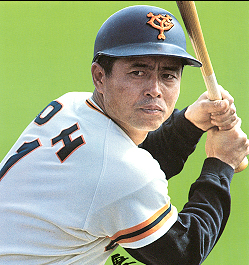
    The man standing on one leg who became the greatest power hitter in the history of the sport

    Katsuya Nomura was drinking in the Ginza district of Tokyo when Sadaharu Oh walked in.

    Nomura was the best catcher in the Pacific League, a future Hall of Famer, a man who would eventually hit 657 home runs and manage four pennant winners. He was also, at this moment, the home run king of Japanese baseball, the man who had broken the record the previous season with 52. He invited Oh to join him.

    They drank and laughed and talked baseball. Then, around nine o’clock, Oh set down his glass and stood up.

    “Nomura-san,” he said, “I’m sorry to leave early. But Arakawa-san is waiting for me.”

    Nomura couldn’t believe it. He tried to pull Oh back. Come on, stay, we haven’t seen each other in a while. Oh shook his head. Hiroshi Arakawa, his hitting coach, was waiting. There was practice to be done.

    Oh left.

    Nomura sat there for a long moment after the door closed. “Ah,” he thought. “Someday he’s going to pass me.”

    He was right. He was more than right. By the time it was all over, Oh hadn’t merely passed Nomura. He had passed Babe Ruth. He had passed Hank Aaron. He had hit 868 home runs in a professional career, more than any player in the history of the sport. He had won fifteen home run titles, nine MVP awards, two Triple Crowns. He had anchored nine consecutive Japan Series championships. He had become the most decorated player in the history of Japanese baseball, and perhaps, depending on how you weigh these things, the greatest power hitter who ever lived.

    To understand how it all began, you need to understand what happened on the night of June 30, 1962.

    Oh was twenty-two years old and somewhat of a disappointment. He had come to the Yomiuri Giants as one of the most celebrated high school pitchers in Japan. As a left-handed flamethrower from Waseda Jitsugyo, he led his team to a national championship, once threw a no-hitter in extra innings at the sacred Koshien tournament, and had been pursued by every team in the country. There were reports he was signing with the Hanshin Tigers but the Giants, after learning he wasn’t planning on going to university, signed him for a figure that was extraordinary for a high school player.

    At his first training camp, the coaching staff realized he didn’t have the skills to be a professional pitcher so he was made a first baseman. But there was one problem: he couldn’t hit.

    Not at first. He had a few memorable moments. His first professional hit came on April 26, 1959 and was a home run. He said afterward that rounding the bases felt like running on clouds. He would hit 867 more. None of them, probably, felt quite like that one.

    He also homered in front of the emperor along with Shigeo Nagashima. But he batted a paltry .161 in his rookie season. He struck out 72 times in 193 at-bats, which works out to roughly one strikeout every three times up. The fans at Korakuen Stadium, the Giants home ballpark in central Tokyo, began a chant every time he came to the plate: Oh! Oh! Sanshin Oh!—King! King! Strikeout King! The “Oh” they were mocking was his surname, which means “king.” The irony was not exactly subtle.

    Off the field, the young Oh was less a serious professional than a teenager with money and time. He stayed out past curfew. He drank in Ginza. He slept until noon. He shared a room briefly with Nagashima, who later recalled the experience with obvious amusement: “No matter how much I shook him and said ‘Hey, Wan-chan!’ he would say ‘Sorry, just five more minutes please’ and go right back to sleep.”

    “Wan-chan,” by the way, was what Oh’s friends and teammates called him. His surname in Chinese is Wang, and also “wan” is close to how one, his uniform number, sounds in Japanese.

    Then one morning in the fall 1959, Oh opened the sports newspaper and read that Fumio Kitsugi, a powerful first baseman from Waseda University, was joining the Giants. Oh put down the paper and stood up. Kitsugi was a first baseman. Oh was a first baseman. If Kitsugi* took the position, Oh would be sitting on the bench. He went to practice that day with different eyes, and he never entirely stopped.

    *Kitsugi only played parts of two seasons with Yomiuri before being released. He signed with the Swallows for the 1962 season but retired at the end of the year.

    In his second and third seasons he improved, but not quite enough. He hit .270 and led the team with 17 home runs in 1960, but fell to .253 with 13 home runs in 1961. By late June in his fourth year, he was in a slump with only nine home runs, and he was being yanked from the lineup, and the situation had become desperate enough that after a 0-for-2 night on June 30, his manager pulled him from the game entirely.

    That night, Oh got into Arakawa’s car and they drove to Arakawa’s house.

    Hiroshi Arakawa was not a famous man. He had played nine seasons as an outfielder for the Mainichi Orions and never hit more than .270. What made him remarkable was something else entirely: he was a devoted student of Zen philosophy, a man who had spent years thinking about the relationship between mental stillness and physical movement, about the way the samurai tradition of focused, explosive action mapped onto the act of hitting a baseball. He had been brought on as the Giants’ hitting coach that spring at the suggestion of shortstop Tatsuro Hirooka, who had watched Arakawa work miracles with another struggling hitter.

    Now, late on the night of June 30, Arakawa looked at Oh and told him what he needed to do.

    The problem, Arakawa had concluded, was timing. Oh was starting his swing too late. His upper and lower body were moving at different speeds. The solution he proposed was something almost no one had ever tried in Japanese professional baseball.

    “Tomorrow,” Arakawa said, “when the pitcher lifts his leg, you lift yours.”

    Oh later said he didn’t fully remember how the one-legged stance began. I was in a slump, and one day Arakawa told me to try lifting my right foot, and in that at-bat everything just exploded. What the records show is this: on July 1, 1962, in the first game of a doubleheader against the Taiyo Whales in Kawasaki, batting leadoff, Sadaharu Oh lifted his right leg off the ground and became the most dangerous hitter in Japan.

    In his first at-bat he slapped a single to right. In his second at-bat, on an 0-and-2 count, he drove a pitch into the right field seats for his tenth home run of the season. In the fourth at-bat, with the bases loaded, he cleared them with a hit to center. Five at-bats, three hits, four runs batted in.

    The reporters didn’t even notice the new stance. Not one newspaper the next morning mentioned it. It was only when Oh kept hitting—one home run, then two, then three that week, then ten in the month of July alone—that people began to say: wait, what is he doing up there?

    He was standing on one leg.

    More specifically: as the pitcher entered his windup, Oh would lift his right foot off the ground, balancing entirely on his left leg, the tip of his bat tilted toward the mound. He would hold that position and then, in the moment of release, he would plant his foot and fire. The stance looked precarious, almost comic. He looked like a flamingo. But it was, in fact, the result of years of refinement and the product of one of the most extraordinary training regimens in the history of professional sports.

    Because Arakawa did not just tell Oh to lift his leg. He also made him swing a samurai sword.

    The logic was Zen: to hit a baseball with consistency, you needed to achieve a state of perfect mental clarity in the moment before action. A samurai drawing his sword against an opponent had to be entirely present, entirely focused, thoughts of fear and failure and the crowd purged from his mind. Arakawa brought in a master of iaido. the art of sword-drawing, and Oh spent hours and then years swinging an actual katana in Arakawa’s house, the blade cutting through a strip of paper hanging from the ceiling on a thread, the goal being not the cutting itself but the emptying of the mind that the cutting required.

    The floors of Arakawa’s training room wore down from the friction of Oh’s footwork. They had to replace the tatami mats repeatedly. A flooring manufacturer, hearing about this, developed a new kind of sports tatami based on the problem. Oh’s training literally changed how floors were built in Japan.

    Arakawa died in December 2016, at eighty-six. In his final years, when people asked him about Oh, he always gave the same answer. “The essence of martial arts,” he said, “is the mastery of an unshakeable mind. Oh, through his years of training, became a true master of that path.” He donated the sword he had used to teach Oh to the Baseball Hall of Fame inside Tokyo Dome, where it is still on display.

    Here is where the story gets complicated because the story of Sadaharu Oh is not simply the story of a man who worked very hard and became great.

    Oh’s father, Shifuku, had come to Japan from China in 1922. He ran a Chinese restaurant in Tokyo’s Sumida City. He carried a Chinese passport. He was arrested during the war on suspicion of being a foreign spy and Sadaharu’s earliest childhood memories included being carried on his mother’s back as they fled their neighborhood during the American firebombings that destroyed much of Tokyo.

    Sadaharu was born in 1940, the son of a Chinese father and a Japanese mother. He grew up speaking only Japanese. He went to Japanese schools. He played for the most beloved Japanese team. He became Japan’s most decorated baseball player. He was, by any measure of the lived experience, Japanese.

    But he was never allowed to forget that he was not, in the eyes of many, purely Japanese.

    He could not compete in the National Athletic Competition in high school because the tournament was restricted to native Japanese citizens. His team went to the event and insisted he wear his uniform anyway. They let him sit in the dugout. He just couldn’t play. He later described this as the most painful moment of his youth, more painful than any defeat on the field.

    Throughout his playing career, the newspaper coverage that celebrated his home runs also contained regular reminders that he was of Chinese descent. He could never become a Japanese citizen without renouncing his Chinese passport*, and he refused to do this because to renounce that passport felt to him like a betrayal of his father. His father had worked hard and built something in a country that had never fully welcomed him, and Sadaharu would not erase that.

    *His passport is for the Republic of China as it still governed the mainland when his father left for Japan. So he actually holds a Taiwanese passport.

    Oh was beloved, yes, but he was never beloved the way his teammate Shigeo Nagashima was beloved. Nagashima, the third baseman, was the face of Japanese baseball in a way that Oh, despite his superior statistics, could never quite become. Nagashima was exuberant and theatrical and purely Japanese. Oh was quiet and disciplined and half Chinese. The crowds screamed for both of them. But they screamed differently.

    Oh understood this. He wrote about it in his autobiography with characteristic honesty and without particular bitterness. He admitted that he could never match Nagashima in pure popularity, and he admitted that this had driven him to become something Nagashima couldn’t. “Nagashima-san was the eldest son of the Giants, the face, the one who carried all the responsibility. I was the second son, free to pursue records in my own way. That freedom is probably what let me accomplish what I did.”

    What he accomplished:

    In 1964, at twenty-four years old, Oh hit 55 home runs in a single season, a record that stood in Japan for nearly four decades. He hit them with such force—24 of the 55 traveled more than 120 meters (393 feet), and three cleared the stadium entirely—that the image some people have of him as a late-career craftsman hitting soft shots over short fences is simply wrong. The young Sadaharu Oh was a monster, a destroyer, a man who hit a ball into the concourse of an ice skating rink adjacent to Korakuen Stadium and who once drove a ball that struck the outfield light fixtures so hard the sound rang out across the park.

    That same season, the visiting Hiroshima Carp introduced a defensive alignment against him: six fielders deployed to the right side of the diamond, the entire left side of the field left open. It was almost identical to the shift Cleveland Indians manager Lou Boudreau had invented for Ted Williams eighteen years earlier. Oh, like Williams, refused to take the easy hit the other way. “It felt like a trap,” Oh said. “But I’m not especially clever, so I had no choice but to hit the way I always do.” He hit the ball over the shift instead. He hit it into the seats.

    Two days before the shift appeared, Oh had hit four home runs in a single game against the Hanshin Tigers. Four consecutive at-bats, four consecutive home runs, a feat that had never been done before. He had been hitless in his previous eight at-bats going into that game. “Even I was surprised,” he said afterward.

    He won the home run title in 1962. And then he won it again in 1963. And 1964. And 1965. And 1966. And 1967. And 1968. And 1969. And 1970. And 1971. And 1972. And 1973. And 1974. Thirteen consecutive home run titles. The MLB record is seven by Ralph Kiner. Oh won thirteen straight, and wound up with fifteen home run titles in total.

    He walked more than any player in Japanese history. 2,390 career bases on balls, a figure that eclipsed Babe Ruth’s American record at the time of Oh’s retirement. Only Barry Bonds has more. In his greatest single season, 1974, he drew 158 walks and was intentionally walked 45 times. Forty-five times, the opposing team decided it was safer to put him on base than to face him. His on-base percentage that season was .532. His OPS was 1.293. These numbers have not been approached in Japan since. His career on-base percentage is .446, higher than Bonds.


    He also scored more runs than anybody in Japanese history, crossing the plate 1,967 times. He won four batting titles and thirteen RBI titles. He won two Triple Crowns. He earned nine Golden Gloves for his work at first, and was named MVP nine times as well.

    In November 1974, Hank Aaron came to Japan for a home run exhibition. Forty thousand plus people filled Korakuen Stadium to watch the two men take turns hitting into the stands. Aaron, who had broken Ruth’s record earlier that spring, went first: ten home runs in twenty swings. Oh followed: nine. Aaron won, barely, in one of the stranger athletic competitions of the century—two old men (by baseball standards) hitting balls into the seats of a stadium in Tokyo while tens of thousands of people watched in a near-religious trance.

    Oh later wrote that he was saddened when Aaron retired in 1976. Not because the competition was over, but because he had genuinely loved having something to chase.

    He caught Aaron on September 3, 1977, in the third inning of a game against the Yakult Swallows at Korakuen Stadium. The pitcher was Yasujiro Suzuki, a tall right-hander the Swallows called Jumbo. Suzuki had told reporters before the game, as a joke: I guess I’ll be going to Saipan. The team had promised a trip to Saipan to whatever pitcher surrendered the record-breaking home run.

    The at-bat lasted six pitches. The stadium was wound so tight the crowd could barely breathe. Suzuki worked carefully: a ball outside, a fastball for a strike, a ball inside, a foul tip, a ball outside again. Full count.

    The sixth pitch was a sinker that drifted toward the middle of the plate.

    At 7:10 in the evening, Sadaharu Oh hit a line drive into the right field seats. Six paper balls exploded along the first and third base lines. Fireworks went off behind the outfield wall. The stadium became one enormous sound.

    Oh touched home plate, bounced once on both feet as a small, involuntary celebration, the kind of thing a coach had had to instruct him to do, since he had trained himself for twenty years not to show emotion after home runs, and was immediately engulfed by his teammates.

    After the game he found Suzuki in the hallway and apologized.

    Suzuki, to his credit, declined the Saipan trip. A professional’s pride, he explained. He had thrown the pitch so he would live with the consequences.

    He finished the season 13-9 and helped the Swallows win their first pennant. Oh later said he had followed Suzuki’s career closely after that night and had been genuinely moved by what the pitcher made of himself.

    Oh knew he was done in August of 1980. He told no one except his manager. That manager was, of course, none other than Shigeo Nagashima, his partner, his teammate, the other half of the ON Cannon, the man who had always been more beloved by the fans and who had always, privately, driven Oh to reach further than he thought he could. Oh told Nagashima he was retiring at season’s end. Nagashima talked him out of it. Oh stayed in the lineup, hit his thirtieth home run in October, and then told Nagashima again. Nagashima talked him out of it again. Then, before Oh could announce anything, Nagashima himself was dismissed by the Giants’ front office, a firing so sudden and unexpected that it sparked a boycott campaign against the team’s parent newspaper. Oh found himself still in uniform, now under a new manager, Motoshi Fujita, who asked him to stay on as player and assistant coach. He wavered. He was forty years old and hitting .236 but he was still Sadaharu Oh, still the Giants’ cleanup hitter, and the thought of abandoning the team in a moment of chaos weighed on him.

    In the end, he chose his own standard. It was the only standard he had ever really respected.

    At the retirement press conference, he sat before the reporters and smiled throughout. His eyes were full of tears.

    “It may sound presumptuous,” he said, “but I could no longer bat the way Sadaharu Oh bats. That happened more and more, one game at a time. I considered the possibility of combining playing with coaching duties, but to continue playing any longer would not be good for the team, the fans, or myself.”

    A few days later, he was at the Giants’ practice facility at the Tama River. There was no period of mourning, no transition. He had been a player and now he was a coach.

    The farewell ceremony came later, at the season-ending fan appreciation day. There was no dramatic flourish, no theatrical lap around the stadium. Oh gave a speech, walked to first base, the position he had manned for twenty-two years, and set his first baseman’s mitt down on the bag, quietly. That was all. He struck out in his genuine last at-bat. Then he took to the pitchers mound one last time and gave up a home run. Baseball is funny that way.

    He managed the Giants, then the Fukuoka Daiei Hawks, a team that had spent decades losing in a city that loved baseball and received very little in return. The Hawks years were humbling at first, the kind of humbling that a man accustomed to winning nine championships in a row is not prepared for. But he stayed, and he rebuilt, and in 1999, forty years after his first professional season, Sadaharu Oh won his first championship as a manager. It was, by all accounts, as meaningful to him as any of the eleven he had won as a player.

    He managed Japan’s national team in the first World Baseball Classic, in 2006, and won it. At the victory celebration, a foreign reporter asked him: are you Japanese or Chinese?

    “My father is Chinese,” Oh said, “and my mother is Japanese. I was born here and raised here and educated here and I have spent my life in Japanese professional baseball. Without any doubt, I am Japanese.”

    It was the most direct he had ever been on the subject, and he was sixty-five years old when he said it.

    You can argue about the comparisons to Aaron and Ruth and Bonds. People do argue about them, and they always will, and the arguments are not pointless. The quality of pitching, the size of the parks, the nature of the baseball all matter, and honest people can reach different conclusions about how much they matter.

    But here is what is not arguable: Sadaharu Oh spent twenty-two years hitting a baseball at the highest level available to him, in a country where baseball was the national religion, against opponents who had devoted their lives to stopping him, and he did it with a discipline and a focus that his peers and rivals and opponents all described in the same way. They described it as something close to frightening.

    Oh once said, when Ichiro asked him if batting had ever felt easy: “Every time I thought I’d grasped it, it would slip away. That happened over and over. It never felt easy, not once in my career.”

    Ichiro said later that this had been a kind of relief to hear. If Oh had never solved it either, then the struggle was simply what hitting was.

    There is one more thing worth knowing about Sadaharu Oh.

    He almost never refused to sign an autograph. He answered fan letters. He wrote back to children. Oh once said, with characteristic understatement: “My autograph probably isn’t worth very much.” That wasn’t modest. What he meant was that he had given so many of them that they were probably not worth much more than the paper they were on.

    The morning after he tied Hank Aaron’s record with his 755th home run, Oh stepped out of his house to find more than 160 fans waiting for him. Three police cars had been dispatched to manage the crowd. Oh signed for every single one of them.

    The policy traced back to a day when he was a boy at Korakuen Stadium watching the Giants. He went around asking players for autographs. Most of them said no. Only one said yes: Hawaiian-born outfielder named Wally Yonamine, who had come to Japan in the early 1950s and spent his career being treated as an outsider, a foreigner, a man who did not quite belong. Yonamine had signed without hesitation.

    Oh made a promise to himself that day: if he ever became a professional baseball player, he would be like Yonamine. He would never turn a child away.

    It is possible that Oh recognized something in Yonamine that he would spend his own career navigating: the experience of being celebrated and othered at the same time, of belonging completely to a place that would not quite claim you as its own. Or perhaps it was simpler than that. Perhaps a man had been kind to a boy, and the boy never forgot.

    That is the thing about Sadaharu Oh that the numbers, enormous as they are, do not quite convey. He was not a man who found the answer and went along with it. He was a man who understood that there was no final answer, only practice, only the next swing, only the paper hanging from the ceiling and the sword in his hands and the mind emptied of everything except the present moment.

    Eight hundred and sixty-eight times, the ball left the park.

    And every single one of them was earned.

    Thomas Love Seagull’s work can be found on his Substack Baseball in Japan
    https://thomasloveseagull.substack.com

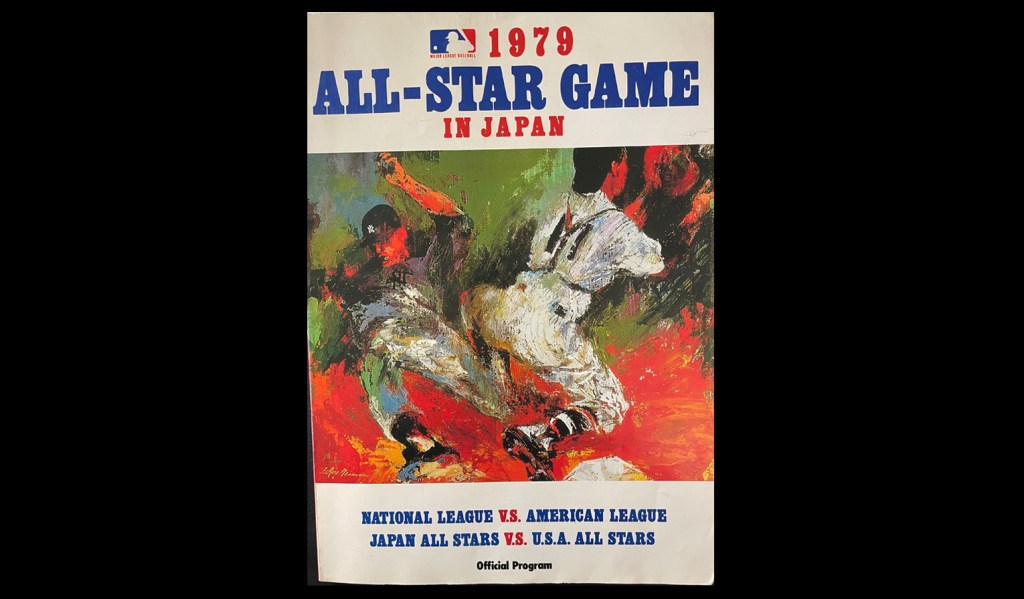
  • The 1979 Major League All-Star Series in Japan

    The 1979 Major League All-Star Series in Japan

    by Carter Cromwell

    Every Monday morning we will post an article from SABR’s award-winning books Nichibei Yakyu: Volumes I and II. Each will present a different chapter in the long history of US-Japan baseball relations. This week Carter Cromwell tells us about the 1979 MLB All-Stars visit to Japan.

    When a group of major-league baseball all-stars traveled to Japan in November 1979 for a series of games, it represented a shift, of sorts. Since the end of World War II, most baseball tours of Japan had been by single teams. A US all-star team had not played in Japan since the Eddie Lopat All-Stars made the trek after the 1953 season.

    The 1979 tour was dreamed up by Philadelphia Phillies Vice President Bill Giles and Cappy Harada, who was born in Santa Maria, California, to Japanese parents and at the time was director of the international division of the Major League Baseball Promotion Corporation. This was the first time the United States had sent complete American League and National League all-star teams to Japan for a series.

    The American squad was divided evenly among American Leaguers and National Leaguers and was managed by the Orioles’ Earl Weaver and the Dodgers’ Tom Lasorda respectively. The schedule ran from November 7 to November 20, with the US teams playing seven games against each other and a combined US club playing twice against a team of Japanese players.

    In the years since, the Japanese have consistently demonstrated their baseball prowess in various international competitions. But though it had made strides, the game in Japan in 1979 was still not the equal of the game in the United States, so the Japanese were eager to see the Americans play. Virtually every ticket for every game was sold in advance, with the most expensive costing $22,or about $89.79 in 2022 dollars.

    Of course, the Japanese weren’t unfamiliar with US players, since they could watch videotaped highlights of US games on television on Sundays, and newspapers and magazines in the country reported on the major leagues. An Associated Press story noted, “[Pete] Rose is at least as familiar a name in Japan as Jimmy Carter. The escapades of Reggie Jackson and the salary hassles of [Dave] Parker are followed with keen interest. Ever since American teachers introduced the game to Japan in the 1870s, the Japanese have looked upon America as baseball’s holy land – at the same time aspiring to build their own version to match it.”

    So actually seeing the Americans play in person was an exciting proposition.

    Though some like Jim Rice, George Brett, and Jack Clark had to pull out of the tour beforehand for various reasons, the US roster was loaded. It included eventual Hall of Famers Rod Carew, Lou Brock, Ozzie Smith, Ted Simmons, Paul Molitor, and Phil Niekro. The California Angels’ Don Baylor was coming off the best season of his career, in which he had hit 36 home runs, driven in 139 runs, and was voted the American League’s Most Valuable Player. Others might be classified in the so-called Hall of the Very, Very Good – players like Parker, Cecil Cooper, Lance Parrish, Larry Bowa, Bill Madlock, Jim Sundberg, Dennis Martinez, Tug McGraw, and Ken Singleton. Singleton, in fact, finished second to Baylor in the MVP voting that year after hitting 35 home runs, driving in 111 runs, and posting a .938 OPS. There was also Rose, who would be in the Hall if not for his gambling issues.

    “[Rose] is my favorite American player,” said Japanese Hall of Famer Sadaharu Oh, who holds the world career home-run record (868). “He never misses a game.”

    Nonetheless, a spokesman for the Japanese baseball commissioner’s office said the Japan team will be “playing to win.” And there was no doubt that it was a strong club. Compiled by a vote of sportswriters, it included eight players who would eventually gain induction into the Japanese Baseball Hall of Fame – first baseman Oh, plus outfielders Yutaka Fukumoto, Koji Yamamoto, and Tsutomu Wakamatsu, and pitchers Choji Murata, Keishi Suzuki, Hisashi Yamada, and Manabu Kitabeppu.

    Oh, of course, was the biggest name. He had even received a National Hero Award from the Japanese government after exceeding Hank Aaron’s career record of 755 home runs. Sometimes referred to as the Bamboo Bambino by the Japanese news media, he had a slash line of .301/.446/.634 over 22 seasons with the Yomiuri Giants. He drove in 2,170 runs in his career, even though the Nippon Professional Baseball season was 22 to 32 games shorter than that of the American majors.

    “I really like to watch Oh swing,” Rose said. “He picks up his front leg but doesn’t go forward until he’s ready to commit himself. He keeps his hands and his weight back until he’s ready to swing.”

    In 1979, at the age of 39, Oh had just completed his next-to-last season and had hit 33 home runs while batting .285, driving in 81 runs, and posting a .980 OPS. To many, that would have been very good, especially at that age, but Oh found it unacceptable. “I had a very disappointing year,” he said. “I hurt my side and missed several weeks. I had 33 home runs … but drove in only 81 runs. Five years ago, I had ‘only’ 33 home runs but drove in 118. And besides, the [Yomiuri] Giants finished 10½ games out this year. Very sad.”

    Other Japanese players were nearly as transcendent as Oh, though not well known to most Americans. An 11-time all-star, Tsutomu Wakamatsu posted a .319/.375/.481 career slash line, won two batting titles, and as of 2023 still held the second-highest career batting average in Nippon Professional Baseball history for players with 4,000 or more at-bats. He was the Central League Most Valuable Player and MVP of the Japan Series in 1978. In 1979 he batted .306 with an .871 OPS. Koji Yamamoto was a 13-time all-star for the Hiroshima Carp, a 10-time winner of the Diamond Glove Award, and seven consecutive seasons the leader in assists among outfielders. At the time of the 1979 series, he was coming off a .293 season with a 1.002 OPS.

    Yutaka Fukumoto played 20 seasons with the Hankyu Braves, a predecessor of today’s Orix Buffaloes, and posted a .291 batting average and .819 OPS, along with an otherworldly total of 1,065 stolen bases.

    American Leon Lee, who played 10 seasons in Japan, observed that Fukumoto “was a great base runner, too, adding, “I remember many times he would lead off a game by getting on base, stealing second, getting sacrificed to third, and scoring on a sacrifice fly.”

    On the pitching side, Choji Murata won 215 games over 23 seasons, 22 of them with the Lotte Orions. He was a three-time Pacific League ERA champion and threw five one-hitters. He had finished the 1979 season with 17 victories, a 2.96 earned-run average, and a 1.09 WHIP.

    Leon Lee’s brother Leron, who played in Japan for 11 seasons, remembered, “Choji Murata was … fabulous. He was the best pitcher I’ve seen except for Bob Gibson. In 1979, he pitched against the American All-Stars, and Ted Simmons … told me that Choji Murata was the best pitcher he ever faced in his life, bar none. That’s how good Murata was. He could throw 90 to 96 miles an hour consistently, had a great forkball, and he had this really funky windup with a high kick. I saw him throw an inside pitch that hit the bat below the label, broke it in half, and the ball had so much power that it went through the bat, hit the batter on his back leg, and rolled out into fair territory along with the head of the bat. Everybody in the stadium stopped for two or three seconds and looked. It was unbelievable for a ball to go through a bat and still have enough momentum to hit the batter in the leg and roll forward.”

    Though 1979 was a down year for Keishi Suzuki (10-8, 4.41 ERA), he spent 20 years with the Kintetsu Buffaloes and won 317 games with a 3.11 ERA and low 1.12 WHIP. He had eight 20-victory seasons and led the Pacific League in strikeouts eight times. Leron Lee learned about Suzuki very early on, the night before his first game in Japan, in fact. The team had a meeting to go over the opponents, and a scout went on and on about how good Suzuki was.

    “I said to [teammate] Jim Lefebvre that if this guy pitches like the scout says, we’re not going to get any hits tomorrow,” Lee said. “And, sure enough, Suzuki pitched a one-hitter! That guy was the best left-handed pitcher I ever faced. I faced Steve Carlton and several pretty good pitchers in the big leagues, but this guy was unbelievable. He was an absolutely fabulous pitcher who could have pitched in the major leagues very easily.”

    An interesting aside is that when he was the Kintetsu manager, Suzuki’s disputes with pitcher Hideo Nomo indirectly played a role in Nomo’s eventual signing with the Los Angeles Dodgers in 1995.

    In 19 seasons with Hiroshima, Manabu Kitabeppu was 213-141 and ranks 17th all-time in pitching victories in NPB. He was an all-star seven times. In 1986 he won the ERA title, took the MVP and Gold Glove awards and was named to the “Best Nine,” which includes the best player at each position in both the Central and Pacific Leagues, as determined by a pool of journalists. During the 1979 season, just his fourth in the NPB, he had won 17 games and allowed an average of just 1.6 walks per nine innings.

    Hisashi Yamada, Japan’s greatest submarine pitcher, was 284-166 in 20 seasons with the Hankyu Braves. His lifetime ERA was 3.18 and his WHIP a low 1.13. In the mid-1970s Yamada was the most dominant pitcher in Japanese baseball, winning three consecutive Pacific League MVP Awards (1976-1978). He was named to five Best Nine teams and 13 all-star squads, and won five Gold Glove Awards. In 1979 he had finished with a 21-5 record and a 2.73 ERA. Leon Lee said Yamada was the “toughest pitcher I ever faced in my 17-year professional career. He had great control and was never afraid to pitch inside. The biggest thing was that he completely controlled the tempo of the game and never gave the hitters time to get comfortable at the plate.” Leron Lee named players like Oh, Yamada, Murata, Suzuki, Yamamoto, and the Hanshin Tigers’ Masayuki Kakefu (also on the 1979 Japan All-Stars) among several he said could have been major leaguers.

    The schedule began on November 7 with the American League battling the National League at Yokohoma Stadium. The teams played each other again on November 8 (Kusanagi Stadium in Shizuoka), November 11 (Korakuen Stadium in Tokyo), November 12 (Seibu Stadium in Tokorozawa), November 13 (Nagoya Stadium), November 17 (Seibu Stadium in Tokorozawa), and November 18 (Yokohama Stadium).

    The NL stars won the first game 11-2 behind a 16-hit attack. The Chicago Cubs’ Dave Kingman hit a two-run homer, and Niekro picked up the win. In Game 2 the Nationals rallied from a 4-1 deficit to tie the game 5-5 on an eighth-inning sacrifice fly by Kingman. The contest was called after 10 innings because of a time limit in Japanese games.

    Game 3 went to the American League, 6-3, and the AL followed that with a 6-5 victory in Game 4 before 21,000 fans at Seibu Stadium, as Kansas City’s Willie Wilson singled home the winning run in the bottom of the ninth inning. The National League had scored three runs in the first inning and another in the second to lead 4-0 before the AL rallied.

    After that, though, the NL had its way, winning the last three games of the series by scores of 12-9 (after trailing by 7-0), 3-2, and 7-1 in the finale on a two-hitter by Niekro.

    For the Japanese fans, though, the most anticipated games of the series were the two between the United States and Japan. A wire-service story just prior the tour noted that the US players would be “scrutinized, idolized and analyzed for what makes their game different from the Japanese national pastime of ‘besuboru.’” And there were differences. The Japanese relied more on small ball and fundamentals, and they utilized off-speed pitches more often. The Americans, on the other hand, focused more on the big inning, especially with a manager like Weaver. In addition, both the baseball itself and the ballparks in Japan were slightly smaller.

    The first game took place November 14 before 31,000 fans in Nishinomiya, a city between Kobe and Osaka. Yamamoto, of the 1979 Japan Series champion Hiroshima Carp, hit a solo home run off US starter Niekro in the bottom of the second inning to give Japan a 1-0 lead. The Americans scored twice off Yamada in the top of the third inning, but the Japanese answered quickly with three runs in the bottom of the third to take a 4-2 lead.

    The US team came back with a run in the fourth when Cooper tripled and scored on a sacrifice fly by Madlock, and the Americans got a two-run home run by Simmons off Suzuki in the sixth to lead 5-4. Bowa then hit a solo homer off Japan’s Shigeru Kobayashi in the seventh, and that proved to be the difference as Japan got an RBI single from Kakefu of the Hanshin Tigers in the bottom of the inning to account for the final 6-5 score.

    Knuckleballer Niekro pitched three innings and allowed four hits, two walks, and two earned runs before being relieved by Oakland’s Rick Langford. Nonetheless, he baffled Oh, whom he struck out twice, once with the bases loaded and no one out. Oh said, “It felt like the ball was swaying left and right. I wasn’t able to hit it at all. It was a mysterious ball.” For the Japan side, Murata held the major leaguers hitless in the eighth and ninth innings, primarily with his forkball.

    After the game, US manager Weaver said, “It was a close game. I was worried and felt relieved that we won. There was little difference today with the pitchers of either team. [The Japanese] certainly could play major league baseball.” That, of course, was 16 years before Nomo proved the point by signing with the Dodgers and earning All-Star and Rookie-of-the-Year honors in his first season.

    Yukio Nishimoto, who had managed the Kintetsu Buffaloes to the 1979 Pacific League title and was leading the Japan All-Stars, said, “The Americans are speedier than the Japanese. … I’m afraid the difference is decidedly in their favor. We’d be lucky to win two games out of 10.”

    They got one six days later.

    A crowd of 42,000 at Tokyo’s Korakuen Stadium watched the Americans score single runs in the third inning (a home run by Parrish off the left-field foul pole against Japan starter Naoki Takahashi) and in the seventh (a sacrifice fly by the California Angels’ Carney Lansford) to lead 2-0. Six US pitchers held the Japanese scoreless until the bottom of the eighth inning, when Kinji Shimatani of the Hankyu Braves electrified the fans by ripping a 2-and-0 pitch from Cleveland’s Sid Monge for a three-run homer to give the Japanese a 3-2 lead. And that was enough, as Kitabeppu pitched the eighth inning and Tatsuo Komatsu of the Chunichi Dragons the ninth to get the save.

    Since the US and Japanese teams played just two games against each other, the final statistics do not represent a large sample size. For the Americans, Cecil Cooper was 2-for-3 in the one game he played, and Ted Simmons was 2-for-7 in two games with a home run and two RBIs. They were the only Americans to get more than one hit in the two games, as the team batted a minuscule .172. The US pitchers posted a 3.18 earned-run average over 17 innings and held the Japan stars to a .210 batting average.

    Virtually all the Japanese position players participated in both games, with Yasunori Oshima (Chunichi) batting .500 (1-for-2), Kakefu and Fukumoto each .429, and Hideji Kato (Hankyu) .333. On the pitching side, Murata did not allow a run in four innings while striking out five batters. Takahashi gave up just one run in four innings, while Yamada allowed two runs in three innings of work. The Japan ERA in the two games was 3.50.

    Overall, the tour was considered a success, though there was some complaining by players about the travel. One day, for example, eight buses and trains were necessary to get the group from a hotel in Tokyo to a ballpark and then to Nagoya.

    There was also some controversy when first Carew and then Rose went home early and Kingman had to be talked out of going home the same day Carew left. Japan’s Kyodo News Service quoted Rose as saying he had suffered a leg injury while going after a pop fly “and it’s been getting worse.” Rose had also arrived in Japan ahead of the others and had announced beforehand that he would not be staying until the end.

    As for Carew, American League spokesman Bob Fishel said he had injured a tendon in his right heel before the trip. Carew, however, said that the injury was just part of the reason for his leaving after playing in two games. He also felt league officials had not come through on prior commitments for endorsement and appearance income. He said he had been hesitant to make the trip but did so because of promises that he could make $40,000 to $50,000 in endorsements and appearances, in addition to the base pay of $11,000 to players on the winning team and $8,500 to those on the losing club.

    “Now I can’t help but feel that we were told these things simply so that we would say ‘yes’ to making the trip,” Carew said. “I definitely doubt that I’d ever make another. I had wanted to stay home, but they made it sound as if it was something I couldn’t pass up.”

    The Pittsburgh Pirates’ Bill Madlock said, “We’d been led to believe there would be ways to pick up extra money for endorsements. It just didn’t happen.” Cecil Cooper added, “I really was disappointed. I thought we would be involved in a lot more endorsements and things like that. Only a few players got them. I don’t think I would come back.”

    The expectation of ancillary income was due in part because Rose had been to Japan the previous year with the Cincinnati Reds and had been in demand for endorsements, television appearances, and autograph sessions. Joe Reichler, who at the time helped run the Major League Baseball Promotion Corporation, was quoted as saying, “I think a lot of the players saw how well [Rose] did and figured the same thing would happen to them. [But] there really were no firm commitments along these lines.”

    Milwaukee Brewers pitcher Lary Sorensen felt that that it was “not a big issue teamwide. Maybe it was for a few of the main guys. But I was young and just happy to be there.” And Singleton said in a 2021 conversation that “it didn’t matter to me one way or the other. Some guys may have been concerned about it, and it would have been OK if it had happened to me, but it was no big deal that it didn’t.”

    In the past there had been incidents of Americans going to Japan and behaving in a rude, arrogant, boorish manner. This time, they were generally considered to be well-behaved, though interpreter Toyo Kunimitsu sometimes saw them differently, as described in Robert Whiting’s seminal book about Japanese baseball, You Gotta Have Wa.

    The [US] All-Stars were rather tacky and rude,” said Kunimitsu, who worked as translator for foreign players with the Yakult Swallows and, later, the Chunichi Dragons. “Once we were on a long bus ride [and] John Candelaria, the pitcher for the [Pittsburgh] Pirates, had been drinking a lot of beer and had to urinate. So he urinated into a bucket and threw it out the window. I was shocked. The driver was really angry. He wanted me to throw Candelaria off the bus, but finally agreed to let him stay when Candelaria said he would stop drinking beer. I saw a lot of bad examples of spoiled Americans on that tour.”

    Nonetheless, the Americans took the games seriously, and many had positive memories.

    Parker had not wanted to come on the tour because of a bad knee, but he finally agreed and played in most of the games, even playing some in center field and sliding on his bad knee. The New York Yankees’ Bobby Murcer was said to have been upset that he did not get more playing time. Kingman, usually not accommodating to the media, stood on the sidelines after the first US-Japan game and answered question after question from reporters through an interpreter. Simmons could have returned home after the last AL-NL contest, but he volunteered to stay for the second game against Japan and played the entire game.

    “To me, this was the trip of a lifetime,” Simmons said. “I really have no complaints. I enjoyed it, and so did my wife. Japan is a country I [had] always wanted to visit, and to be able to do it this way is terrific.”

    Singleton said, “It was a great trip. We were treated well and enjoyed it tremendously.” Pitcher Rick Langford of Oakland said, “It’s an honor and a pleasure to be here [in Japan].” And Sorensen and Angels pitcher Mark Clear, both newlyweds, considered the trip to be their honeymoons.

    “I was just 23, had never been to Japan and had just gotten married, so I thought ‘Wow, what a great opportunity to travel and see some of the world,’” Sorensen said. “They treated us with great respect, and the games were great because the fans were so enthusiastic. It was like going to a football game in the U.S.

    “The whole trip was an autograph session,” he added with a laugh. “Whenever we’d go out, people would point at us and then ask for autographs. For the majority of us, it was a fabulous tour, and we thoroughly enjoyed it. It was a lot of fun.”

    Sorensen remembered a couple of amusing occurrences, one on the team plane. The Pirates had recently upset Weaver’s Baltimore Orioles to win the 1979 Word Series and, in the process, had adopted the Sister Sledge hit song “We Are Family” as their unofficial anthem. During a flight, Sorensen noticed Candelaria, Parker, and Madlock sneaking toward the front of the plane where Weaver was sitting.

    “They had a big boom box and blasted out ‘We Are Family,’” Sorensen said. “It didn’t bother Earl, but we all thought it was funny.”

    Sorensen recalled another time when a Japanese TV reporter was in the US dugout and providing live commentary during a game. As he was wont to do, Weaver got into a profanity-laced argument with a couple of the American umpires, and the reporter translated what was being said for his Japanese audience. However, when Weaver said something like “You’re a bleeping, bleep, bleep,” the reporter was stumped for a translation and simply repeated Weaver’s exact words over the air.

    Lou Brock, who had retired after the just-completed 1979 season, was honored after the final game for his fine career, and Lasorda gave big thanks to the Japanese, in particular chief sponsor Junichi Wada. “It was a great gift Mr. Wada gave the Japanese people,” Lasorda said. After the final game, both teams paraded around the perimeter of the stadium, and the fans came as close as possible to the field to give them a standing ovation.

    “Overall, it was a good experience,” Larry Bowa said. “There were problems with travel, and we all got tired. Going to Japan, however, was quite an experience.”

    Had the Japanese game made up some ground in its quest of equaling or surpassing the Americans? Weaver said after the first game that Japanese baseball had made tremendous improvement since his previous visit in 1971. All the players, he added, looked like potential home-run sluggers.

    Sorensen felt somewhat differently, though he could see that there was quality in the Japanese roster.

    At the time, I think the Japanese game was at the Triple-A level. The biggest thing was the size difference; we had size and skill sets that, at the time, were noticeably different. They didn’t have any (Shohei) Ohtanis then, although that’s changed over time. But there’s no question that they had some really good players, were fundamentally sound, and were very well prepared. They took the game very seriously, probably more so than we did, and they were more aggressive with small ball than we were. Skillwise, they had some infielders that could probably have been major leaguers. And while most of their pitchers didn’t throw hard, they were tough because they could throw a bunch of different pitches with different deliveries and from several arm angles.

    Singleton said he “wasn’t too impressed with the Japanese pitchers then, though they did a good job of mixing their offerings and using off-speed pitches.” He commented, “I was more impressed with them when I went back to Japan with the Orioles after the 1984 season. Since then, of course, they’ve had quite a few pitchers come over to the major leagues and do well. The two games were really competitive, though. We were more about power – the Japanese players would watch us in batting practice and were impressed. On the other hand, the Japanese played small ball really well.”

    As the Japan Times noted, “the gap that existed between American and Japanese baseball has been narrowed by the two U.S.-Japanese games.”

    Read the full version of this article on the SABR website