
by Thomas Love Seagull
A recent poll for a TV special saw more than 50,000 people in Japan vote for their favorite retired baseball players. 20 players emerged from a pool of 9,000. Yes, they could only vote for players who are no longer active, so you won’t see Shohei Ohtani or other current stars on this list. Which is probably smart because I’m sure Ohtani would win by default. There are, however, players who were beloved but not necessarily brilliant, and foreign stars who found success after coming to NPB. Unsurprisingly, the list leans heavily towards the past 30 years, with a few legends thrown in for good measure.
Over the next few weeks, I’ll be profiling each of these players. Some of these players I know only a little about, so this will be as much a journey for me as, hopefully, it will be for you. It’ll be a mix of history, stats, and whatever interesting stories I can dig up.
For now, have a look at the list below and see how the public ranked them. I’ve included the years they played in NPB in parentheses.
20. Alex Ramirez (2001-2013); 19. Yoshinobu Takahashi (1998-2015); 18. Warren Cromartie (1984-1990), 17. Takashi Toritani (2004-2021); 16. Suguru Egawa (1979-1987); 15. Katsuya Nomura (1954-1980); 14. Tatsunori Hara (1981-1995); 13. Kazuhiro Kiyohara (1985-2008); 12. Masayuki Kakefu (1974-1988); 11. Masumi Kuwata (1986-2006); 10. Atsuya Furuta (1990-2007); 9. Randy Bass (1983-1988); 8. Daisuke Matsuzaka (1999-2006, 2015-2016, 2018-2019, 2021); 7. Tsuyoshi Shinjo (1991-2000, 2004-2006); 6. Hiromitsu Ochiai (1979-1998); 5. Hideo Nomo (1990-1994); 4. Hideki Matsui (1993-2002); 3. Shigeo Nagashima (1958-1974); 2. Sadaharu Oh (1958-1980); 1. Ichiro Suzuki (1992-2000).
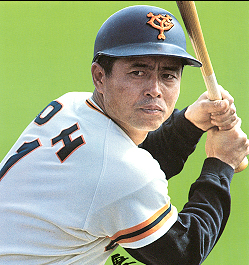
The man standing on one leg who became the greatest power hitter in the history of the sport
Katsuya Nomura was drinking in the Ginza district of Tokyo when Sadaharu Oh walked in.
Nomura was the best catcher in the Pacific League, a future Hall of Famer, a man who would eventually hit 657 home runs and manage four pennant winners. He was also, at this moment, the home run king of Japanese baseball, the man who had broken the record the previous season with 52. He invited Oh to join him.
They drank and laughed and talked baseball. Then, around nine o’clock, Oh set down his glass and stood up.
“Nomura-san,” he said, “I’m sorry to leave early. But Arakawa-san is waiting for me.”
Nomura couldn’t believe it. He tried to pull Oh back. Come on, stay, we haven’t seen each other in a while. Oh shook his head. Hiroshi Arakawa, his hitting coach, was waiting. There was practice to be done.
Oh left.
Nomura sat there for a long moment after the door closed. “Ah,” he thought. “Someday he’s going to pass me.”
He was right. He was more than right. By the time it was all over, Oh hadn’t merely passed Nomura. He had passed Babe Ruth. He had passed Hank Aaron. He had hit 868 home runs in a professional career, more than any player in the history of the sport. He had won fifteen home run titles, nine MVP awards, two Triple Crowns. He had anchored nine consecutive Japan Series championships. He had become the most decorated player in the history of Japanese baseball, and perhaps, depending on how you weigh these things, the greatest power hitter who ever lived.
To understand how it all began, you need to understand what happened on the night of June 30, 1962.
Oh was twenty-two years old and somewhat of a disappointment. He had come to the Yomiuri Giants as one of the most celebrated high school pitchers in Japan. As a left-handed flamethrower from Waseda Jitsugyo, he led his team to a national championship, once threw a no-hitter in extra innings at the sacred Koshien tournament, and had been pursued by every team in the country. There were reports he was signing with the Hanshin Tigers but the Giants, after learning he wasn’t planning on going to university, signed him for a figure that was extraordinary for a high school player.
At his first training camp, the coaching staff realized he didn’t have the skills to be a professional pitcher so he was made a first baseman. But there was one problem: he couldn’t hit.
Not at first. He had a few memorable moments. His first professional hit came on April 26, 1959 and was a home run. He said afterward that rounding the bases felt like running on clouds. He would hit 867 more. None of them, probably, felt quite like that one.
He also homered in front of the emperor along with Shigeo Nagashima. But he batted a paltry .161 in his rookie season. He struck out 72 times in 193 at-bats, which works out to roughly one strikeout every three times up. The fans at Korakuen Stadium, the Giants home ballpark in central Tokyo, began a chant every time he came to the plate: Oh! Oh! Sanshin Oh!—King! King! Strikeout King! The “Oh” they were mocking was his surname, which means “king.” The irony was not exactly subtle.
Off the field, the young Oh was less a serious professional than a teenager with money and time. He stayed out past curfew. He drank in Ginza. He slept until noon. He shared a room briefly with Nagashima, who later recalled the experience with obvious amusement: “No matter how much I shook him and said ‘Hey, Wan-chan!’ he would say ‘Sorry, just five more minutes please’ and go right back to sleep.”
“Wan-chan,” by the way, was what Oh’s friends and teammates called him. His surname in Chinese is Wang, and also “wan” is close to how one, his uniform number, sounds in Japanese.
Then one morning in the fall 1959, Oh opened the sports newspaper and read that Fumio Kitsugi, a powerful first baseman from Waseda University, was joining the Giants. Oh put down the paper and stood up. Kitsugi was a first baseman. Oh was a first baseman. If Kitsugi* took the position, Oh would be sitting on the bench. He went to practice that day with different eyes, and he never entirely stopped.
*Kitsugi only played parts of two seasons with Yomiuri before being released. He signed with the Swallows for the 1962 season but retired at the end of the year.
In his second and third seasons he improved, but not quite enough. He hit .270 and led the team with 17 home runs in 1960, but fell to .253 with 13 home runs in 1961. By late June in his fourth year, he was in a slump with only nine home runs, and he was being yanked from the lineup, and the situation had become desperate enough that after a 0-for-2 night on June 30, his manager pulled him from the game entirely.
That night, Oh got into Arakawa’s car and they drove to Arakawa’s house.
Hiroshi Arakawa was not a famous man. He had played nine seasons as an outfielder for the Mainichi Orions and never hit more than .270. What made him remarkable was something else entirely: he was a devoted student of Zen philosophy, a man who had spent years thinking about the relationship between mental stillness and physical movement, about the way the samurai tradition of focused, explosive action mapped onto the act of hitting a baseball. He had been brought on as the Giants’ hitting coach that spring at the suggestion of shortstop Tatsuro Hirooka, who had watched Arakawa work miracles with another struggling hitter.
Now, late on the night of June 30, Arakawa looked at Oh and told him what he needed to do.
The problem, Arakawa had concluded, was timing. Oh was starting his swing too late. His upper and lower body were moving at different speeds. The solution he proposed was something almost no one had ever tried in Japanese professional baseball.
“Tomorrow,” Arakawa said, “when the pitcher lifts his leg, you lift yours.”
Oh later said he didn’t fully remember how the one-legged stance began. I was in a slump, and one day Arakawa told me to try lifting my right foot, and in that at-bat everything just exploded. What the records show is this: on July 1, 1962, in the first game of a doubleheader against the Taiyo Whales in Kawasaki, batting leadoff, Sadaharu Oh lifted his right leg off the ground and became the most dangerous hitter in Japan.
In his first at-bat he slapped a single to right. In his second at-bat, on an 0-and-2 count, he drove a pitch into the right field seats for his tenth home run of the season. In the fourth at-bat, with the bases loaded, he cleared them with a hit to center. Five at-bats, three hits, four runs batted in.
The reporters didn’t even notice the new stance. Not one newspaper the next morning mentioned it. It was only when Oh kept hitting—one home run, then two, then three that week, then ten in the month of July alone—that people began to say: wait, what is he doing up there?
He was standing on one leg.
More specifically: as the pitcher entered his windup, Oh would lift his right foot off the ground, balancing entirely on his left leg, the tip of his bat tilted toward the mound. He would hold that position and then, in the moment of release, he would plant his foot and fire. The stance looked precarious, almost comic. He looked like a flamingo. But it was, in fact, the result of years of refinement and the product of one of the most extraordinary training regimens in the history of professional sports.
Because Arakawa did not just tell Oh to lift his leg. He also made him swing a samurai sword.
The logic was Zen: to hit a baseball with consistency, you needed to achieve a state of perfect mental clarity in the moment before action. A samurai drawing his sword against an opponent had to be entirely present, entirely focused, thoughts of fear and failure and the crowd purged from his mind. Arakawa brought in a master of iaido. the art of sword-drawing, and Oh spent hours and then years swinging an actual katana in Arakawa’s house, the blade cutting through a strip of paper hanging from the ceiling on a thread, the goal being not the cutting itself but the emptying of the mind that the cutting required.
The floors of Arakawa’s training room wore down from the friction of Oh’s footwork. They had to replace the tatami mats repeatedly. A flooring manufacturer, hearing about this, developed a new kind of sports tatami based on the problem. Oh’s training literally changed how floors were built in Japan.
Arakawa died in December 2016, at eighty-six. In his final years, when people asked him about Oh, he always gave the same answer. “The essence of martial arts,” he said, “is the mastery of an unshakeable mind. Oh, through his years of training, became a true master of that path.” He donated the sword he had used to teach Oh to the Baseball Hall of Fame inside Tokyo Dome, where it is still on display.
Here is where the story gets complicated because the story of Sadaharu Oh is not simply the story of a man who worked very hard and became great.
Oh’s father, Shifuku, had come to Japan from China in 1922. He ran a Chinese restaurant in Tokyo’s Sumida City. He carried a Chinese passport. He was arrested during the war on suspicion of being a foreign spy and Sadaharu’s earliest childhood memories included being carried on his mother’s back as they fled their neighborhood during the American firebombings that destroyed much of Tokyo.
Sadaharu was born in 1940, the son of a Chinese father and a Japanese mother. He grew up speaking only Japanese. He went to Japanese schools. He played for the most beloved Japanese team. He became Japan’s most decorated baseball player. He was, by any measure of the lived experience, Japanese.
But he was never allowed to forget that he was not, in the eyes of many, purely Japanese.
He could not compete in the National Athletic Competition in high school because the tournament was restricted to native Japanese citizens. His team went to the event and insisted he wear his uniform anyway. They let him sit in the dugout. He just couldn’t play. He later described this as the most painful moment of his youth, more painful than any defeat on the field.
Throughout his playing career, the newspaper coverage that celebrated his home runs also contained regular reminders that he was of Chinese descent. He could never become a Japanese citizen without renouncing his Chinese passport*, and he refused to do this because to renounce that passport felt to him like a betrayal of his father. His father had worked hard and built something in a country that had never fully welcomed him, and Sadaharu would not erase that.
*His passport is for the Republic of China as it still governed the mainland when his father left for Japan. So he actually holds a Taiwanese passport.
Oh was beloved, yes, but he was never beloved the way his teammate Shigeo Nagashima was beloved. Nagashima, the third baseman, was the face of Japanese baseball in a way that Oh, despite his superior statistics, could never quite become. Nagashima was exuberant and theatrical and purely Japanese. Oh was quiet and disciplined and half Chinese. The crowds screamed for both of them. But they screamed differently.
Oh understood this. He wrote about it in his autobiography with characteristic honesty and without particular bitterness. He admitted that he could never match Nagashima in pure popularity, and he admitted that this had driven him to become something Nagashima couldn’t. “Nagashima-san was the eldest son of the Giants, the face, the one who carried all the responsibility. I was the second son, free to pursue records in my own way. That freedom is probably what let me accomplish what I did.”
What he accomplished:
In 1964, at twenty-four years old, Oh hit 55 home runs in a single season, a record that stood in Japan for nearly four decades. He hit them with such force—24 of the 55 traveled more than 120 meters (393 feet), and three cleared the stadium entirely—that the image some people have of him as a late-career craftsman hitting soft shots over short fences is simply wrong. The young Sadaharu Oh was a monster, a destroyer, a man who hit a ball into the concourse of an ice skating rink adjacent to Korakuen Stadium and who once drove a ball that struck the outfield light fixtures so hard the sound rang out across the park.
That same season, the visiting Hiroshima Carp introduced a defensive alignment against him: six fielders deployed to the right side of the diamond, the entire left side of the field left open. It was almost identical to the shift Cleveland Indians manager Lou Boudreau had invented for Ted Williams eighteen years earlier. Oh, like Williams, refused to take the easy hit the other way. “It felt like a trap,” Oh said. “But I’m not especially clever, so I had no choice but to hit the way I always do.” He hit the ball over the shift instead. He hit it into the seats.
Two days before the shift appeared, Oh had hit four home runs in a single game against the Hanshin Tigers. Four consecutive at-bats, four consecutive home runs, a feat that had never been done before. He had been hitless in his previous eight at-bats going into that game. “Even I was surprised,” he said afterward.
He won the home run title in 1962. And then he won it again in 1963. And 1964. And 1965. And 1966. And 1967. And 1968. And 1969. And 1970. And 1971. And 1972. And 1973. And 1974. Thirteen consecutive home run titles. The MLB record is seven by Ralph Kiner. Oh won thirteen straight, and wound up with fifteen home run titles in total.
He walked more than any player in Japanese history. 2,390 career bases on balls, a figure that eclipsed Babe Ruth’s American record at the time of Oh’s retirement. Only Barry Bonds has more. In his greatest single season, 1974, he drew 158 walks and was intentionally walked 45 times. Forty-five times, the opposing team decided it was safer to put him on base than to face him. His on-base percentage that season was .532. His OPS was 1.293. These numbers have not been approached in Japan since. His career on-base percentage is .446, higher than Bonds.
He also scored more runs than anybody in Japanese history, crossing the plate 1,967 times. He won four batting titles and thirteen RBI titles. He won two Triple Crowns. He earned nine Golden Gloves for his work at first, and was named MVP nine times as well.
In November 1974, Hank Aaron came to Japan for a home run exhibition. Forty thousand plus people filled Korakuen Stadium to watch the two men take turns hitting into the stands. Aaron, who had broken Ruth’s record earlier that spring, went first: ten home runs in twenty swings. Oh followed: nine. Aaron won, barely, in one of the stranger athletic competitions of the century—two old men (by baseball standards) hitting balls into the seats of a stadium in Tokyo while tens of thousands of people watched in a near-religious trance.
Oh later wrote that he was saddened when Aaron retired in 1976. Not because the competition was over, but because he had genuinely loved having something to chase.
He caught Aaron on September 3, 1977, in the third inning of a game against the Yakult Swallows at Korakuen Stadium. The pitcher was Yasujiro Suzuki, a tall right-hander the Swallows called Jumbo. Suzuki had told reporters before the game, as a joke: I guess I’ll be going to Saipan. The team had promised a trip to Saipan to whatever pitcher surrendered the record-breaking home run.
The at-bat lasted six pitches. The stadium was wound so tight the crowd could barely breathe. Suzuki worked carefully: a ball outside, a fastball for a strike, a ball inside, a foul tip, a ball outside again. Full count.
The sixth pitch was a sinker that drifted toward the middle of the plate.
At 7:10 in the evening, Sadaharu Oh hit a line drive into the right field seats. Six paper balls exploded along the first and third base lines. Fireworks went off behind the outfield wall. The stadium became one enormous sound.
Oh touched home plate, bounced once on both feet as a small, involuntary celebration, the kind of thing a coach had had to instruct him to do, since he had trained himself for twenty years not to show emotion after home runs, and was immediately engulfed by his teammates.
After the game he found Suzuki in the hallway and apologized.
Suzuki, to his credit, declined the Saipan trip. A professional’s pride, he explained. He had thrown the pitch so he would live with the consequences.
He finished the season 13-9 and helped the Swallows win their first pennant. Oh later said he had followed Suzuki’s career closely after that night and had been genuinely moved by what the pitcher made of himself.
Oh knew he was done in August of 1980. He told no one except his manager. That manager was, of course, none other than Shigeo Nagashima, his partner, his teammate, the other half of the ON Cannon, the man who had always been more beloved by the fans and who had always, privately, driven Oh to reach further than he thought he could. Oh told Nagashima he was retiring at season’s end. Nagashima talked him out of it. Oh stayed in the lineup, hit his thirtieth home run in October, and then told Nagashima again. Nagashima talked him out of it again. Then, before Oh could announce anything, Nagashima himself was dismissed by the Giants’ front office, a firing so sudden and unexpected that it sparked a boycott campaign against the team’s parent newspaper. Oh found himself still in uniform, now under a new manager, Motoshi Fujita, who asked him to stay on as player and assistant coach. He wavered. He was forty years old and hitting .236 but he was still Sadaharu Oh, still the Giants’ cleanup hitter, and the thought of abandoning the team in a moment of chaos weighed on him.
In the end, he chose his own standard. It was the only standard he had ever really respected.
At the retirement press conference, he sat before the reporters and smiled throughout. His eyes were full of tears.
“It may sound presumptuous,” he said, “but I could no longer bat the way Sadaharu Oh bats. That happened more and more, one game at a time. I considered the possibility of combining playing with coaching duties, but to continue playing any longer would not be good for the team, the fans, or myself.”
A few days later, he was at the Giants’ practice facility at the Tama River. There was no period of mourning, no transition. He had been a player and now he was a coach.
The farewell ceremony came later, at the season-ending fan appreciation day. There was no dramatic flourish, no theatrical lap around the stadium. Oh gave a speech, walked to first base, the position he had manned for twenty-two years, and set his first baseman’s mitt down on the bag, quietly. That was all. He struck out in his genuine last at-bat. Then he took to the pitchers mound one last time and gave up a home run. Baseball is funny that way.
He managed the Giants, then the Fukuoka Daiei Hawks, a team that had spent decades losing in a city that loved baseball and received very little in return. The Hawks years were humbling at first, the kind of humbling that a man accustomed to winning nine championships in a row is not prepared for. But he stayed, and he rebuilt, and in 1999, forty years after his first professional season, Sadaharu Oh won his first championship as a manager. It was, by all accounts, as meaningful to him as any of the eleven he had won as a player.
He managed Japan’s national team in the first World Baseball Classic, in 2006, and won it. At the victory celebration, a foreign reporter asked him: are you Japanese or Chinese?
“My father is Chinese,” Oh said, “and my mother is Japanese. I was born here and raised here and educated here and I have spent my life in Japanese professional baseball. Without any doubt, I am Japanese.”
It was the most direct he had ever been on the subject, and he was sixty-five years old when he said it.
You can argue about the comparisons to Aaron and Ruth and Bonds. People do argue about them, and they always will, and the arguments are not pointless. The quality of pitching, the size of the parks, the nature of the baseball all matter, and honest people can reach different conclusions about how much they matter.
But here is what is not arguable: Sadaharu Oh spent twenty-two years hitting a baseball at the highest level available to him, in a country where baseball was the national religion, against opponents who had devoted their lives to stopping him, and he did it with a discipline and a focus that his peers and rivals and opponents all described in the same way. They described it as something close to frightening.
Oh once said, when Ichiro asked him if batting had ever felt easy: “Every time I thought I’d grasped it, it would slip away. That happened over and over. It never felt easy, not once in my career.”
Ichiro said later that this had been a kind of relief to hear. If Oh had never solved it either, then the struggle was simply what hitting was.
There is one more thing worth knowing about Sadaharu Oh.
He almost never refused to sign an autograph. He answered fan letters. He wrote back to children. Oh once said, with characteristic understatement: “My autograph probably isn’t worth very much.” That wasn’t modest. What he meant was that he had given so many of them that they were probably not worth much more than the paper they were on.
The morning after he tied Hank Aaron’s record with his 755th home run, Oh stepped out of his house to find more than 160 fans waiting for him. Three police cars had been dispatched to manage the crowd. Oh signed for every single one of them.
The policy traced back to a day when he was a boy at Korakuen Stadium watching the Giants. He went around asking players for autographs. Most of them said no. Only one said yes: Hawaiian-born outfielder named Wally Yonamine, who had come to Japan in the early 1950s and spent his career being treated as an outsider, a foreigner, a man who did not quite belong. Yonamine had signed without hesitation.
Oh made a promise to himself that day: if he ever became a professional baseball player, he would be like Yonamine. He would never turn a child away.
It is possible that Oh recognized something in Yonamine that he would spend his own career navigating: the experience of being celebrated and othered at the same time, of belonging completely to a place that would not quite claim you as its own. Or perhaps it was simpler than that. Perhaps a man had been kind to a boy, and the boy never forgot.
That is the thing about Sadaharu Oh that the numbers, enormous as they are, do not quite convey. He was not a man who found the answer and went along with it. He was a man who understood that there was no final answer, only practice, only the next swing, only the paper hanging from the ceiling and the sword in his hands and the mind emptied of everything except the present moment.
Eight hundred and sixty-eight times, the ball left the park.
And every single one of them was earned.
Thomas Love Seagull’s work can be found on his Substack Baseball in Japan


Leave a Reply