
The KBO League was founded in 1982. But long before its launch, baseball was already part of Korean life. From the first known instance of baseball on the Korean Peninsula in 1894 to 1981, how did Korean baseball connect with the wider world?
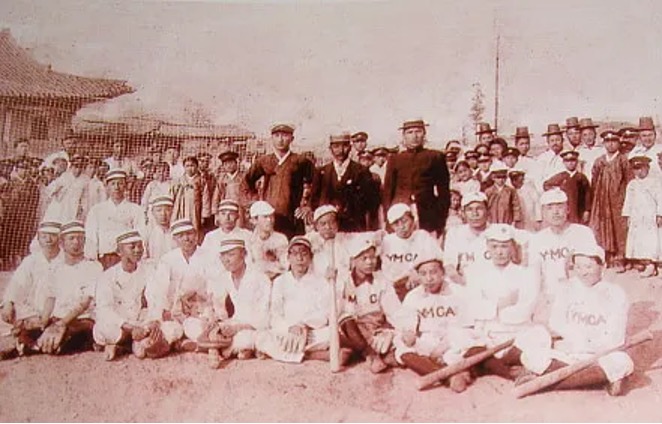
The first established baseball team with a primarily Korean roster was the Hwangseong YMCA Baseball Team, founded in 1904. Philip L. Gillette (1872–1938), an American Protestant missionary, evangelized various Western sports to Korea: basketball, skating, baseball, and more. Among them, baseball captured the attention of many young Koreans. A game played by catching a ball with a large glove and hitting it with a wooden bat to score runs was unlike anything Koreans had seen before.Gillette formed the team, ordered baseball equipment directly from the United States, and trained the players himself. Their first game, against the German School team in 1906, marked the beginning of competition beyond Seoul, as the YMCA squad traveled to Kaesong, Pyongyang, and other cities to face school teams there.
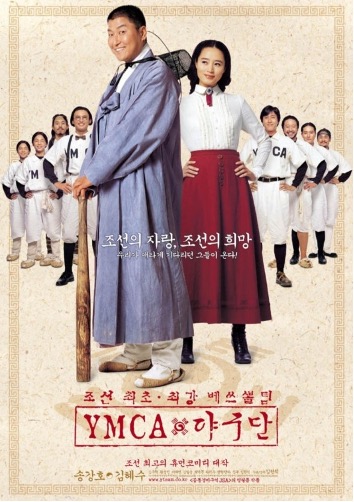
Full-scale international exchange began in 1912. From November 5 to 12 of that year, the team traveled to Japan to play a series of games against Japanese students. On November 7, 1912, they recorded their first-ever victory against a Japanese school. In an era when Korea was under Japanese colonial rule, news of a win over Japan gave great encouragement to Koreans enduring those dark times.
However, the following year, missionary Gillette was expelled, and several players were wrongfully arrested. The team was ultimately disbanded.
Despite ongoing Japanese colonial rule, baseball persisted. In 1922, a Major League All-Star team visited Korea. In 1925, the University of Chicago baseball team and an American women’s baseball team also came to play, keeping the spirit of international baseball alive. Another milestone came on May 23, 1923, when Heo Seong, fresh from studying in the U.S., founded the Joseon Baseball Umpires’ Association, Korea’s first organized umpiring body.
The real turning point came in 1925 with the construction of Dongdaemun Baseball Stadium (then called Gyeongseong Baseball Stadium, demolished in 2007). With a dedicated ballpark in place, numerous amateur clubs sprang up, mostly led by young Koreans.
After liberation from Japan in 1945, eight industrial-league teams were founded: the Financial Union Baseball Team, Joseon Transportation Baseball Team, Gyeongseong Electric Baseball Team, Joheung Bank Baseball Team, Namsun Electric Baseball Team, Joseon Electric Baseball Team, Samguk Coal Baseball Team, and Jungang Industrial Baseball Team. In the fall tournament of 1946, six more teams joined – such as the Post Office (Communications Bureau) Baseball Team, the Railway Bureau Baseball Team, and the Seoul City Bureau Baseball Team, further expanding the industrialz`-league ecosystem.
Even during the post–Korean War slump in baseball, change was in the air. In 1956, a Zainichi Korean student team visited from Japan, followed by a Japanese industrial-league team in 1961. These exchanges opened the door for Japanese players to come to Korea, and for Korean players to go to Japan’s professional leagues.
One famous case was Baek In-chun, a former industrial-league player who joined Japan’s Toei Flyers (now the Nippon-Ham Fighters). In the opposite direction, Kim Sung-keun came from Japan to continue his baseball career in Korea’s industrial league. Whereas industrial teams before the 1960s were mostly run by public institutions, Korea’s rapid industrialization in the 1960s–70s saw banks and private companies forming and operating their own corporate teams.
Industrial-league baseball reached its peak in 1975, the year the Lotte Giant (precursor to today’s Lotte Giants) was formed. These industrial teams didn’t compete in a regional-franchise-based league like modern pro teams; instead, they were company teams made up largely of employees, operating in a kind of workplace baseball system.It wasn’t until the spring of 1982 that professional baseball, the KBO League, officially began. While industrial-league baseball gradually faded into history after that, baseball as a sport became deeply woven into everyday Korean life.
 SABR Asian Baseball Research Committee Blog
Leave a comment