
by Tim Sokol
Since the latest shakeup of the MLB playoff format that created the first-round bye in 2022, there has been discussion every fall about byes, rust, and time off. There are many people who are absolutely convinced that a bye is actually a negative for you, because it causes your bats to go cold and hurts your chances in the following round. When teams with byes struggled in 2022 and 2023, this position was (supposedly) vindicated. And even without a bye, there was a lot of concern and comments about the 2025 Dodgers being rusty following their long layoff after the NLCS. Of course, that worked out fine for them in the end.
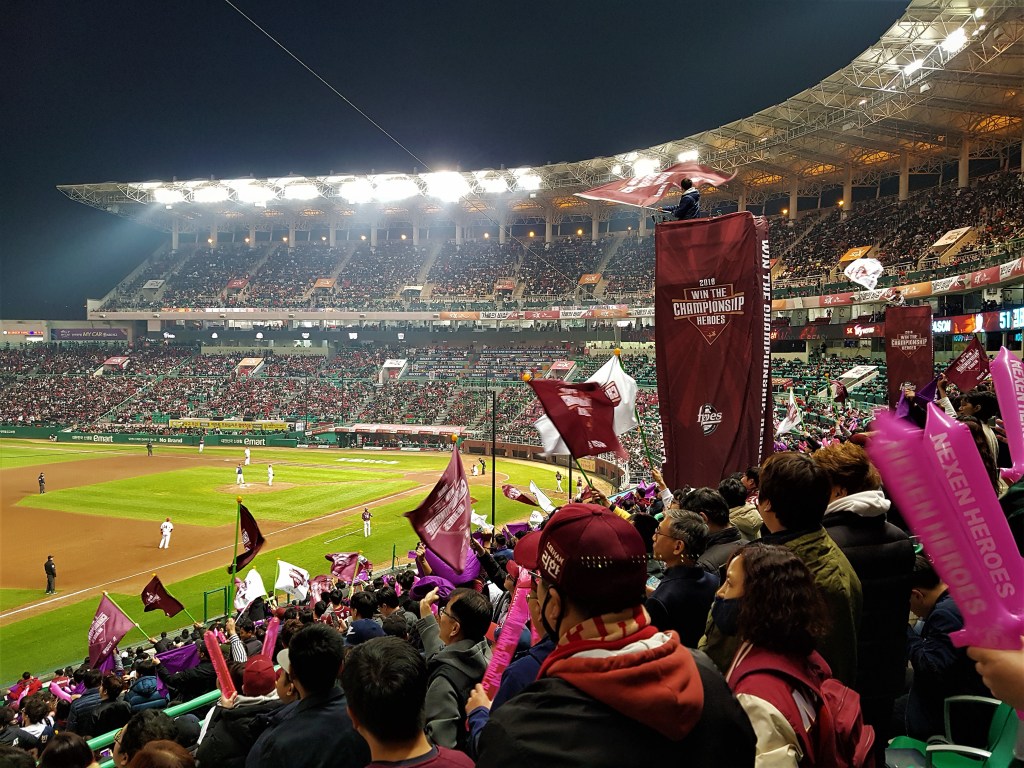
After four years of this new format, we still do not really have a large enough sample size to draw any firm conclusions. However, something that often goes unmentioned in this discussion is that we have other top level professional leagues to look at. We have decades of data from the KBO, which makes heavy use of byes in their playoff system. (NPB and Taiwan’s CPBL also use playoff byes but they come with additional caveats and it wouldn’t be fair to compare them to MLB.) Throwing in the last 20 years of Korean baseball, we actually do have a reasonable sample size. Here’s what we’ve got:
In MLB, teams with the first-round bye are 9-7 so far. That’s obviously a positive record, but it’s a small sample and nothing definitive.
In the KBO, however, we have a much more telling story. The league uses a stepladder style playoff where the #3 seed gets a single bye, the #2 seed gets a double bye, and the #1 seed gets a triple bye straight to the finals. Over the past 20 years, teams with a triple bye are 9-2 (the triple bye was added 11 seasons ago), teams with a double bye are 15-5, and teams with a single bye are 11-9. If you want to reduce that to a binary bye/no bye, then teams with byes are 35-16. And when combined with MLB results, they are 44-23.
What this tells us overall is that byes clearly are an advantage; in raw numbers, teams with a bye are far more likely to win a series than those without. The team that had a bye straight to the Korean Series is 18-2 in the last 20 years. This seems to go against our intuition that a bye would not help your performance. In say, American football, it makes perfect sense that being physically rested and having an extra week to prepare your X’s and O’s would be a sizable advantage, but in baseball nobody really believes it works that way. And I don’t think that’s actually what the data is telling us here. Don’t forget that the higher seeded teams that earned the byes are, naturally, the best teams. In other words, the best teamin the KBO is 18-2 in the last 20 Korean Series. I don’t interpret this excellent record of teams with byes as proof that they make you play better; rather I interpret it that byes have more or less zero impact on your play and thus the series usually just goes to the better team regardless of byes, time off, or alleged rust.
As an aside, I’d also like to posit that even if rust proved to be a real statistical concern, it is still almost certainly advantageous to have a first-round bye. Real playoff series are not a coin flip, but for simplicity’s sake we will call playoff series 50/50 in this example. Let’s say that “rust” knocks your chances of winning the Division Series from 50% down to 40%. That’s still a 40% chance of reaching the LCS. If you do not have a bye and have to play the additional round, you have a 50% chance to reach the DS and then a 50% chance to reach the LCS from there, which is only a 25% chance to reach the LCS overall. So, unless you think rust is an almost insurmountable disadvantage, you’d still try your luck with the rust over having to play an extra round.
The KBO data strongly suggests that the “rust disadvantage” is nonexistent. But what about the former and current players who have complained about rust and are adamant that it is a real disadvantage? Are we supposed to just ignore them because math says so? I don’t think this is a healthy approach to any baseball problem. Instead, we should consider the differences in approaches between the KBO and MLB. In Korea, teams play practice games during their layoffs. And if you have a 20-day long triple bye, you might play a lot of practice games and run an almost mini-Spring Training during that time. The pitchers keep their arms loose and the hitters maintain their rhythm by playing in exhibitions and having more in-depth practices than what you would normally do during the regular season. I don’t know what goes on inside a KBO team, or an MLB team, but I know that whatever the Korean teams are doing to prepare during a bye is working, and it’s also nothing that can’t be replicated in North America.
Major League Baseball is no longer insulated the way it once was. All thirty clubs have contacts in the KBO and could find out all they could ever want to know about what a typical KBO top seed is doing to battle rust. It is worth noting that since the original furor of those first two years, most MLB teams have started scheduling their own practice games during byes, and so far it seems to be getting the job done. But as long as the concerns exist, particularly among your own players, clubs should be looking to do more preparation to fully eradicate those concerns. That might mean more physical prep, or it might mean literally showing them the data and convincing them that it’s not worth worrying about as long as they prepare properly.
In the end, the case against the bye is dead in my mind. It is something that is very much worth playing for in the regular season, and any concerns about rust can be fully mitigated with proper preparation. If I were a team in the Dodgers’ situation where you have a full week off after the LCS, I would consider trying to play some practice games during that time too. There is no need to use any real pitchers, but you can keep your bats, gloves, and brains in rhythm against minor leaguers. To me, this is a case where both North American fans and teams would do well to pay attention to the wider baseball world. For the curious fan, this debate about playoff rust is a question that has already been answered abroad. And from a team’s perspective, it is a problem that has already been solved by somebody else.
 SABR Asian Baseball Research Committee Blog
Leave a comment