
By Tae-in Chun
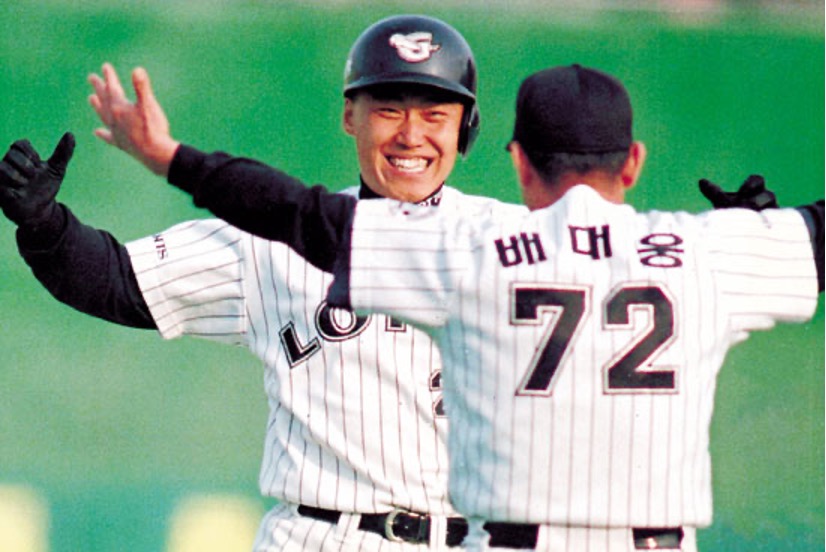
Su-hyeok Lim was a catcher who played for the Lotte Giants in the 1990s. As an offensively capable catcher, he played an important role in the middle of the lineup. In 1995, he hit 15 home runs, and in 1996, he posted a .311 batting average, firmly establishing himself as the team’s starting catcher. At the time, Korean professional baseball was a league dominated by strong pitching, so a catcher who could produce that kind of offense was rare.
He is also remembered as a player who came through in big games. In the 1995 Korean Series, he drove in the winning run, and in the 1999 playoffs, he came in as a pinch hitter in the ninth inning and hit a game-tying two-run home run. For Lotte fans, he was the kind of player who inspired hope in decisive moments.
He was also a special presence to his teammates. Gi-moon Choi, who played with him on the Lotte Giants, remembers Lim as the senior teammate who first helped him adjust to the club. The two had been roommates during their time with the national team and the military team, and they also lived together in Lotte. As fellow catchers, they could have become rivals, but Lim looked after his junior teammate with unusual care instead. Choi later recalled that Lim helped him in many ways so he could settle into the new team.
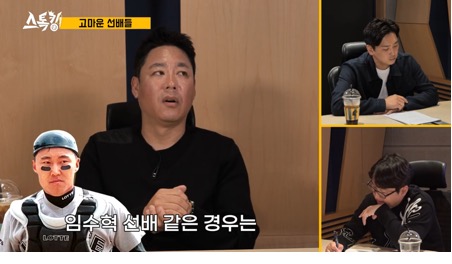
Lim had shown warning signs about his physical condition even before the incident. Choi said he once saw Lim suddenly sit down on the bench during running drills and check his pulse. His heartbeat was irregular, stopping for a long moment before starting again. Lim himself would smile brightly and say, “I guess I need to rest a bit,” but the people around him did not fully grasp how serious it was.
On the night before the game against the LG Twins at Jamsil Baseball Stadium on April 18, 2000, the two sat in their room at the team lodging, talking while sharing corn. Lim had handed it over saying, “My father grew this at home.” For Choi, that ordinary moment became their final everyday memory. The next day, something no one expected happened.
Cardiac arrest during the game, and a stadium that was unprepared
During the Lotte Giants’ turn at bat, with Seong-hwan Jo stepping into the batter’s box, Su-hyeok Lim, who was on second base, suddenly collapsed. He lost consciousness and fell to the ground with his legs trembling.
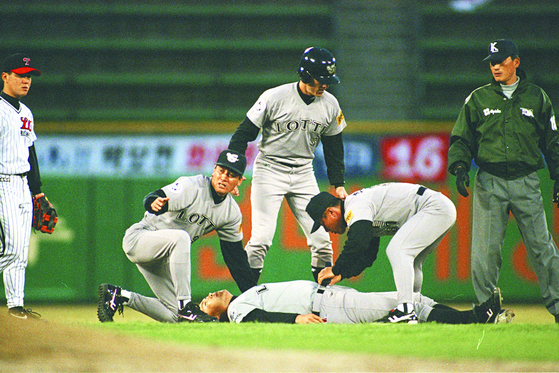
The team trainer ran out in a hurry, but the scene was chaotic. There was no properly established emergency response manual, and CPR was not performed immediately. The players and trainers could only wait for the stretcher to arrive. The situation was very different from today’s stadiums. Now, professional baseball stadiums have ambulances from partner hospitals on standby and emergency medical staff on site. But at the time, there was no ambulance immediately waiting, and the emergency medical system was not fully in place.
Lim was carried on a stretcher to the dugout and then transported to the hospital. His pulse and breathing were restored with difficulty, but he never regained consciousness. He was ultimately diagnosed as being in a vegetative state. The cause was arrhythmia. His heart beat irregularly, cutting off blood flow to the brain and eventually leading to cardiac arrest.
The incident left a deep shock on Korean sports. At the same time, it raised a painful question: was the stadium truly prepared to protect a player’s life? After the accident, criticism grew over emergency response systems at sports venues, and professional sports began strengthening safety systems, including keeping ambulances on standby and assigning medical staff on site. Beyond sports, schools and public institutions also expanded CPR and AED training, and public awareness of emergency response gradually increased.
Solidarity and change in the sports world after the accident
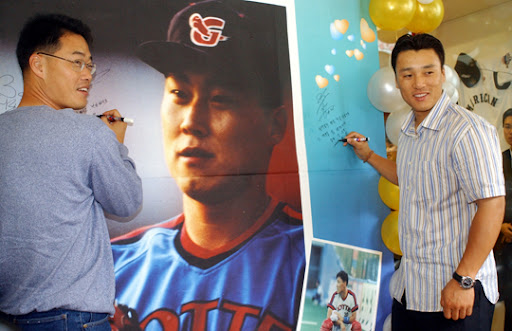
Right after the accident, the baseball world and the wider sports community began organizing efforts to help Lim. The KBO held fundraising events, and players also participated in raising money for his medical expenses. During the All-Star Game, part of the prize money was donated for his treatment. Athletes from other sports also joined in. Football player Byung-ji Kim donated prize money, and many other athletes and clubs contributed donations. The Hyundai Unicorns players’ association even sent part of its monthly dues to support treatment costs. Later, the Heroes club also continued fundraising events in Lim’s memory.
In December 2002, Chan-ho Park, who was then playing in Major League Baseball, also joined the effort. Wishing for Lim’s recovery as he battled a brain tumor, Park donated his Rawlings glove and a signed baseball to a charity auction. The items were sold for 4.68 million won (approximately $3,200), and the proceeds went toward medical expenses. Park also visited Lim’s hospital room in person, comforting the family and wishing for his recovery.
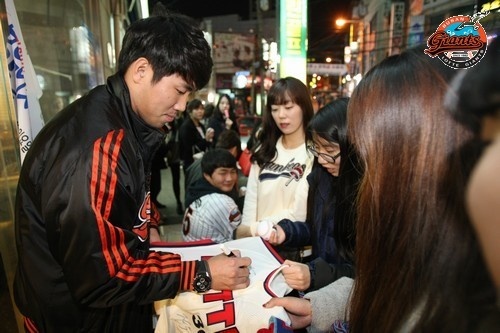
In Busan, the Lotte Giants players’ association took the lead in continuing events to help Lim. These were usually held at a barbecue restaurant run by Seong-beom Ko, a former Lotte Giants player who operated a chain in the Busan and South Gyeongsang area. Players welcomed local residents, served food themselves, and spent time with fans. Some events also took the form of one-day beer hall fundraisers for adult fans. At the venues, memorabilia such as signed baseballs and uniforms were sold, and time was set aside for photos.
This was before the ideas of club social contribution and charity events were as widely used as they are today, but the events naturally became a way of connecting the local community with baseball. A wide range of people took part, from children and students to adult fans, and it became a special chance for players and fans to meet in the same space and talk directly.
The legacy Su-hyeok Lim left behind
Lim’s accident did not end as the tragedy of one player. It became a turning point that changed the way Korean sports looked at player safety.
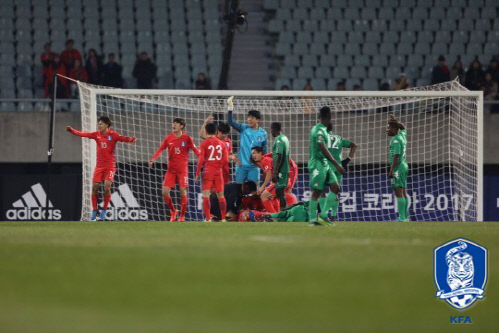
That change ended up saving lives. In 2011, football player Young-rok Shin collapsed from cardiac arrest during a match, but thanks to CPR and an AED, he regained consciousness after 50 days. It was a case in which the strengthened emergency response system, built in the aftermath of Lim’s accident, worked. In 2017, during a youth national team match, Tae-wook Jung also collapsed, but his teammates responded quickly and saved him. Central defender Sang-min Lee secured his airway, and the other players followed the manual as well, preventing the worst-case outcome.
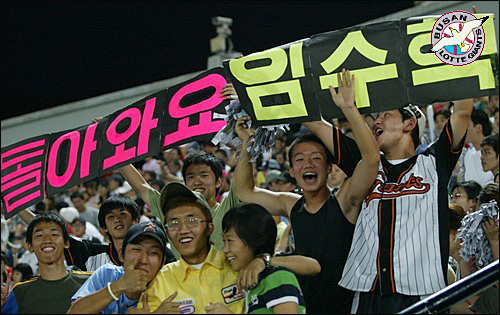
His name still remains on the field. Number 20, the number Su-hyeok Lim wore with the Lotte Giants, remained unused for a long time after he was placed on the free agent release list. A few players later wore it, but since 2016 it has once again remained unused. After it became known that the club rejected a player’s request for the number, saying, “That is Su-hyeok Lim’s number,” it has effectively been managed like a semi-permanently retired number. Even now, as time has passed, his name and number remain as a memory that calls to mind the safety and responsibility sports must protect.
 SABR Asian Baseball Research Committee Blog
Leave a comment