Women’s baseball exists in Korea across a range of organizations, but finding clear information, especially in English, can be difficult. Teams, tournaments, and national-level activities are often managed through different baseball bodies, and women’s baseball is not always easy to distinguish from men’s or softball programs.
This list pulls together some of the leading organizations connected to women’s baseball in Korea as a basic reference point. It’s meant for people who are curious about how women’s baseball is organized, where events and national teams are managed, and which institutions are involved, particularly readers outside Korea who may not be familiar with the local baseball landscape.
Korea Baseball Organization (KBO)
Korea Baseball Organization, which operates the KBO League. As part of the Amateur Baseball Week initiative, it organizes and broadcasts the Women’s Baseball All-Star Game.
It oversees student baseball, women’s baseball, amateur baseball, softball, and other baseball leagues outside the KBO League. It is also working to identify and develop women’s baseball players, including hosting a softball camp in 2025.
Korea Women’s Baseball Federation, which oversees the women’s national baseball team and nationwide tournaments. The largest women’s baseball tournament in Korea, the LX Cup, is also announced and managed through this organization.
To learn more about women’s baseball in Korea tune into SABR Asian Baseball Research Committee’s zoom interview with Hyeonjeong Shim, a former pitcher with the Korean National team.
The story of a Little League champion turned tech czar offers insights
by Jerry Chen
Originally published on The Taipei Gun, December 17, 2025
For a country widely known for its dominance in semiconductor manufacturing, Taiwan is actually quite behind in the integration of technology in baseball.1 So, no, while we are seeing “AI-powered” baseball camps and other innovations in the U.S., even if mostly gimmicky, the Taiwanese are not yet arming youth players with AI.
The real news: Basegarden, a youth baseball foundation focused on rural Taiwan, partnered with tech company MetaAge to donate laptops to rural schools and present a seminar on AI. While not as provocative, this small step is arguably more significant in a culture where, historically, athletics and academics are separated at a young age.
Let’s rewind 50 years. Youth baseball development was largely a nationalist initiative in the 1970s. Chiang Kai-shek’s authoritarian government, still fixated on “taking back the mainland” and decades away from democratizing, saw its diplomatic influence start to crumble. It needed a way to solidify its legitimacy and found this in what I will call the “youth baseball arbitrage.”2 It was a formulation to take advantage of the U.S.’s relaxed attitude toward training young players and its concurrent fascination and coverage of world competition in Little League Baseball.
The nationalist impulse
After sending a Taichung team that won the Little League World Series (LLWS) title in 1969 and receiving international coverage, the winning formula became simple in the 1970s:
This was evidently a self-sustaining cycle and resulted in a win-at-all-cost mentality. At worst, it fostered unsavory tactics discussed in Andrew Morris’s Colonial Project, National Game.4 At best, the national obsession spurred specialization and generated a pipeline of young winners. Teams from Taiwan won 17 titles in a three-decade stretch starting in 1969, not to mention the wins at the Senior and Big League levels.
Exactly how Taiwan or Chiang’s government was portrayed seemed secondary to the fact that there was any coverage at all. All press was good press at that point. Chiang’s government was expelled from the United Nations in 1971, and Taiwan remains unrepresented in many international organizations to this day.
Nonetheless, the national baseball craze produced cohorts of top players like Yuen-Chih Kuo but also byproducts like the unlikely story of Cheng-Wen Wu.
Yuen-Chih Kuo (left) with the LLWS trophy (Photo: Taiwan Cultural Memory Bank / Central Daily News)
A tale of two champions
Yuen-Chih Kuo, or Genji Kaku as he is known in Japan,5 was born in 1956 in Taitung, southeastern Taiwan. He was a pitching phenom who caught national attention in 1969, the year Taiwan held a national team identification tournament to organize a national superteam.
Kuo excelled on the mound, reportedly throwing a 13-inning, 220-pitch(!) complete game at one point, and batted .350 in the tournament to earn a spot on the Taichung Golden Dragons. The Taiwanese all-star team won the Far East region and then powered past Canada, Ohio, and California to win the 1969 LLWS title. This was the first ever championship won by a team from Taiwan.
Kuo’s baseball career took off a few years later. He signed with the Chunichi Dragons in 1981 and never looked back. His fastball reached 151 km/h (about 94 mph) in his NPB debut. Over his 16-year career in Japan, Kuo recorded 106 wins, 116 saves, a 3.22 ERA, and 1,415 strikeouts. He was inducted into the Taiwanese Baseball Hall of Fame in 2019.
Many players that were part of the pipeline of champions, like Yuen-Chih Kuo, came from rural and indigenous communities. They devoted their schooling years almost exclusively to baseball. Most, unlike Kuo, would not reach his level of success, or anywhere close to it. For a Taiwanese athlete trained for professional baseball, Kuo achieved the traditionally ideal outcome.
The Tainan Giants in 1971 (Photo: National Archives Administration)
Cheng-Wen Wu, our second protagonist, was born in 1958 in Tainan, southern Taiwan. Like many of his classmates, he played baseball at school. In 1971, two years after Taichung’s historic win, Wu’s Tainan Giants entered the LLWS as the Far East regional champions and also dominated. A standout pitcher, Wu threw a shutout in the 11-0 win against Hawaii in the semifinals. In the championship game, Tainan defeated Gary, Indiana, led by future MLB player and manager Lloyd McClendon.
The glorious win in Williamsport may have turned out to be the least remarkable feat in Wu’s life in the context of Taiwanese history. After all, it was replicated by eight other Taiwanese teams over the next decade.
After his baseball career, which did not extend much further, Wu received degrees in electrical and computer engineering, first from the prestigious National Taiwan University (NTU) then from the University of California, Santa Barbara, where he earned his master’s and Ph.D. Following his extensive schooling, Wu joined the faculty of the National Tsing Hua University (NTHU) and eventually became vice president of NTHU. He was one of eight candidates running to become president of his alma mater NTU.
In 2024, Cheng-Wen Wu became minister of the National Science and Technology Council, stewarding the research and development of some of the world’s most advanced technology. As Taiwan’s “tech czar,” Wu oversees the funding of academic research and the development of industrial complexes like the famed Hsinchu Science Park.
Wu’s career path could not have differed more from Kuo’s. Even though his baseball career peaked early, his integration into the world outside of baseball is truly a blueprint for educating young players. Five decades after their shared experiences as Little League champions, they are linked once again in the modern age.
Competing futures of youth baseball
The thread that brings Kuo and Wu together is another ballplayer, former CTBC Brothers outfielder and Hualien native Szu-Chi Chou. Chou was born in a small town in Hualien called Guangfu, or Fata’an in Amis. He is a three-time recipient of a youth baseball scholarship established by Yuen-Chih Kuo.
According to Chou, he was only able to afford a left-handed glove because of the scholarship. Chou’s professional baseball career spanned 20 years. He is a four-time Taiwan Series champion (all with the CTBC Brothers / Brother Elephants) and MVP in 2012.
Inspired by Kuo’s philanthropy, Chou founded Basegarden in 2013 to support youth baseball players in rural Taiwan. However, unlike Kuo’s scholarship, Basegarden focuses on the players’ academic pursuits, often outside of baseball. It has partnered with TSMC to offer career resources and broaden professional opportunities, for example.
So, a Kuo protege is now helping the next generation of baseball players build tech literacy and diversify their career paths. In essence, he is working to produce more Cheng-Wen Wus. The future is bright for Taiwanese youth baseball players who will all become well-rounded students and excel in other fields beyond their playing careers … right?
Not exactly. For one thing, the nationalist impulse is still there. After Team Taiwan won the 2024 Premier12 title, EasyCard Corporation announced it would donate to the Taiwan Indigenous Baseball Development Association, with the explicit goal of producing future indigenous players that can bring home more golds.
The Taiwanese want to see their country win. Players are viewed as tools to help achieve that goal, and indigenous communities have historically been the perfect toolboxes to draw from. That means continued specialization into sports for marginalized kids with little pathways to alternative careers—the opposite of what Basegarden is aiming to achieve. The irony is that when it comes to putting Taiwan back on the map, winning countless Little League titles seems pretty ineffective.
Will there be another Yuen-Chih Kuo? Almost certainly.6 The more important question is: Will there be another Cheng-Wen Wu? A Little League champion turned tech czar (or industry titan or leading artist)? We shall see in a few years, or decades.
Covering the bases
The TSG Hawks have re-signed slugger Steven Moya to a one-year deal. Hawks right-handed pitcher Spenser Watkins announced his retirement. Baseball Americaprojectsleft-hander Wei-En Lin to be the Athletics’ No. 4 starter in 2029. Former Chicago Cubs pitcher Jen-Ho Tseng, who was non-tendered by the Rakuten Monkeys, reportedly agreed to terms on a deal with the Wei Chuan Dragons.
1 Statcast (using the PITCHf/x camera system, then the TrackMan radar system) was installed in all 30 MLB stadiums in 2015; as of 2025, two of the six CPBL teams do not yet use TrackMan, and one uses just a portable unit.
2 With the majority of the country, some 85% of the population, having lived through Japanese rule and embraced what was known to them as a Japanese game, Chiang’s newcomer government, explicitly anti-Japanese, saw its usefulness and reluctantly accepted baseball.
3 Whether this nation meant “Free China” (as in the grand project supported by Chiang’s regime who arrived just two decades prior) or “Taiwan” (as in the physical land with which most countrymen were inclined to identify), or some combination of the two national identities, was contentious and remains a debatable topic.
4 I also discuss this in my article published in NINE: A Journal of Baseball History and Culture.
5 Kuo’s name has also been translated as Yen-Tsu Kuo, as he was registered in the Little League system.
6 National resources continue to be poured into player development. Plenty of professional players have performed at the highest level in Japan and beyond.
For more on Taiwanese baseball, follow Jerry Chen’s site, The Taipei Sun
Every Tuesday morning we will post an article from SABR’s award-winning books Nichibei Yakyu: Volumes I and II. Each will present a different chapter in the long history of US-Japan baseball relations. This week Keith Spalding Robbins examines a little-known amateur tour from 1935.
“Last year in the Guide it was the pleasure of the editor to call attention to the fact that the Japanese had so thoroughly grasped Base Ball that they were bent on some day playing an American team for the international championship.” So proclaimed John Foster in the 1913 Spalding’s Guide. That anticipated “some day” finally arrived in November of 1935; that “American team” was the Wheaties All-Americans. The nascent beginnings of the hoped-for “international championship” series participants were the Wheaties All-Americans and Tokyo’s best amateurteams.
The 1935 Wheaties All-Americans were not just a team, but part of a multi-year effort to create a global sports organization. The team was the brainchild of Leslie “Les” Mann, a former major-league player who became a college coach and leading organizer and promoter of amateur baseball. Mann wanted to make baseball an Olympic sport and to create organized international competition. But first the European- based Olympic Committee had to be convinced that the American national pastime would be appropriate for their global games.
Given the complex requirements established by the International Olympic Committee, it took Mann five years to create the new necessary domestic and international amateur baseball organizations to push his plan forward. By 1935 he had the pieces in place to stage an amateur baseball exhibition in Tokyo “to encourage Japan to form an amateur organization … for participation in [an] Olympic Baseball championship,” and to show Olympic officials that baseball was a viable and legitimate international sport. The 1935 Wheaties All-Americans were trailblazers on a global goodwill baseball mission—to bring baseball to the Olympic Games.
THE GREAT FINANCIAL CHALLENGE
Initially, Mann had promises of financial support from the major leagues, and the A.G. Spalding & Bros, firm. As the Great Depression wore on and corporate profits declined, that support waned. Needing more financial resources for the expensive transpacific journey, Mann went looking outside the traditional sports funding sources, and found General Mills. Thus, the team was dramatically introduced to the American public by Wheaties Cereal on the Jack Armstrong, All American Boy radio show. This amateur ballclub was known as the 1935 Wheaties All-Americans.
UNEASE WITH COMMERCIAL SPONSORSHIP NAME
The Minneapolis cereal producer subsidized the trip for $12,000, and the “Wheaties” name was prominently displayed on the left sleeve of the players’ uniform. Yet the name “Wheaties” is not listed in many sources describing the team. The Japanese Olympic committee objected to the name as a symbol of the commercial corruption of amateur sport.The Japan Advertiser and the Japan Times & Mail, for example, did not use the Wheaties name when referring to the team, yet the Honolulu Advertiser called it by its Wheaties moniker.
SELECTING THE TEAM
With his trademark bravado, Les Mann announced that the final player selections were taken from a baseball talent pool of 500,000 to 1 million American youths. To narrow the pool, Mann and General Mills created a contest. Consumers could nominate an amateur player by writing his name on a Wheaties box top and mailing it to Mann. Players with the most box-top votes would be given a tryout. Some 1,000 players were nominated out of the countless thousands of Wheaties breakfast cereal box tops submitted. This list was narrowed down to a final 100, who were then reviewed by trusted scouts and a selection committee. Other players were added to the list through recommendations of top collegiate and amateur coaches.Forty players were then selected to the first and second teams and announced in newspapers in the fall of 1935. The final candidates for the Japan trip were announced nationally in late September. This was the first nationally selected amateur baseball All-American team.
THE 1935 WHEATIES ALL-AMERICANS
The final team included 16 ballplayers: pitchers George Adams (Colorado State University), Lou Briganti (Textile High School, Manhattan), George Simons (University of Pennsylvania), Hayes Pierce (Tennessee Industrial School, Nashville), and Fred Heringer (Stanford University); catchers Ty Wagner (Duke University) and Dirk Offringa (Ridgefield High School, Wyckoff, New Jersey); infielders Bob Chiado (Illinois Wesleyan College), Leslie McNeece (Fort Lauderdale High School), Alex Metti (Fisher Foods, Cleveland), Frank Scalzi (University of Alabama), Ted Wiklund (Kansas City), and Ralph Goldsmith (Illinois Wesleyan); outfielders Jeff Heath (Garfield High School, Seattle), Ron Hibbard (Western Michigan Teachers College), and Emmett “Tex” Fore (University of Texas). The manager was Max Carey and the coaches Les Mann and Herb Hunter.
The players were selected not only for their ability but also for their character to act as ambassadors during a nearly three-month-long trip to a foreign land. The team also reflected Mann’s habits of clean living and notable positive behaviors. Carey, an old-school veteran player, gruffly lamented, “Only two of them smoke, and none of ’em drink. What kind of a ball team is this?”
Briganti, McNeece, and Offringa were teenagers, and all but McNeece had graduated from high school. Metti, Pierce, Simons, and Wiklund were well-established amateur or semipro ballplayers. Wiklund’s semipro career was unique; he attended Missouri Teachers College at Warrensburg and was the starting guard for their basketball team, but the college had no baseball team. His baseball fame was generated at the local sandlot Ban Johnson Amateur League of Kansas City, where he was the league MVP. Heringer and Wagner had graduated from college that spring and kept their amateur status active. Scalzi returned to Tuscaloosa to finish his college career as a three-year starter and Alabama’s team captain, and led the club to three consecutive SEC baseball titles. Scalzi’s immortality in Alabama sports history was cemented: He was football Coach Bear Bryant’s college roommate. Wagner was the captain of coach Colby Jack Coombs’ winning Duke baseball team. Adams, Chiado, Goldsmith, Fore, and Hibbard were underclassmen ballplayers. Hibbard also had played for the Battle Creek (Michigan) Postum team against the 1935 barnstorming Dai Nippon Baseball Club. Like Babe Ruth, he too was struck out by the Japanese great Eiji Sawamura. Hibbard was the only player who had faced Japanese opposition before the trip.
The All-Americans boarded the NYK line’s passenger ship Taiyo Maru on October 17 in San Francisco, with a scheduled arrival at Yokohama on November 3. The joyous troupe posed for syndicated newspaper photos in their grand quasi-Olympic apparel. The ballplayers wore white buck shoes, white dress pants, white shirts, red neckties, red sweater-vests, and resplendent and elegant dark blue baseball sweaters. The embossed logo was Art Deco-inspired, with giant USA letters and an eagle emblem atop a red and white shield. Adding to the ensemble, all the players wore the now-traditional USA signature Olympic beret. Honoring their bat sponsor, many were holding their Louisville Sluggers high.
JAPANESE TOURISTS
Once in Japan, the ballplayers were given the special tourist treatment and were well feted. Staying at the historic Imperial Hotel, they attended private receptions at the Pan-Pacific Club, the US Embassy, and the Japanese government’s Education Department. Iesato Tokugawa, a member of the Japanese royal family and chairman of the 1940 Japanese Olympic Committee, sponsored a banquet for the American baseball tourists. Bob Chiado and his Illinois collegiate teammate, Ralph Goldsmith, were overwhelmed by the authentic Japanese cuisine experience. Writing back to his hometown newspaper, Chiado remarked:
They say that [the sukiyaki’s] aroma is a great appetizer for it is said to be a mixture of all those best kitchen smells which excite the salivary glands and thus make the mouth water but neither Ralph nor I could eat it. … [A]bout all we could do was to eat the rice, and the dessert, which was persimmons. … The main feature of the suki yaki dinner is a large fish, done up artistically. At this time, we were using chop sticks and sitting on the floor. After this came some raw fish, and some more fish, and “Goldie” and I were happy when the party was over.
In typical first-time tourist behavior, the more sushi the mid-westerners saw and were offered, the more they became homesick. The lumbering first baseman and football player lamented, “I will still stick to those big T-bone steaks.”
Chiado overcame his fear of raw fish to enjoy and admire Japanese architecture, the scenic mountainous landscape, and the island nation’s unique cultural and historic sites. The team traveled north to the Kinugawa Onsen and spent the night in Nikko. “We lived native for the night here, all sleeping on the floor, in keeping with an old Japanese custom” on traditional tatami mats, Chiado noted with a tourist’s pride of accomplishment. The team visited the famous Dawn Gate, the Sacred Stable, and the famous vermillion-lacquered bridge at the Futarasan-jinja shrine. Then the team hiked through the snow to the mountain peaks. Overwhelmed with the scenic views of the numerous majestic waterfalls, Chiado wrote back home glowingly, “The Nikko Shrine is probably the most beautiful sight in Japan, if not the world.”
Some of the baseball tourists carried with them letters of introduction to selected Japanese officials and industry leaders. New Jersey’s Dirk Offringa carried a letter of introduction from the governor of New Jersey to certain dignitaries in Tokyo. The letter allowed Offringa to create a collection of souvenirs that made him a popular presenter when he returned to New Jersey.
Back in Tokyo, the intrepid Midwestern tourist/ reporter Chiado found city life modern and familiar. Chiado noted the abundance of both taxicabs and bicycles, including specialized department-store delivery bicycles darting throughout the Japanese metropolis. He noted how expensive individual automobile ownership was due to high gas prices and taxes and that Tokyo streets were overflowing with thousands of taxis. Chiado reported on up-to-date Tokyo, which had “all the modern devices and equipment of any of our leading cities and compares favorably with Chicago.”
Being college athletes, they were keenly observant of their opponents. The Japanese college experience was six years, not the United States’ traditional four years. Unlike the small-town, coed Illinois Wesleyan where he played, Chiado noted that all the opponents came from male-only urban universities with student bodies of 10,000-plus. Being a starter on the baseball team as an underclassman, Chiado was taken aback by the Japanese seniority system. He remarked, “[E]ven if a freshman was a stronger player in Japan, than a four-year man, he would not play because of seniority.” Chiado noted with some envy that Japanese baseball players received preferential and exceptional collegiate athletic treatment, “The college teams all have special houses to live in and are not scattered about campus … as are our boys.”
Witnessing how the game was played in Japan with an air of respectful honor, Chiado wrote, “They are a jump ahead of us certainly as to sportsmanship.” Ever respectful of the experience, Chiado concluded that the Japanese baseball tourist experience was both “a marvelous trip” and educational, commenting, “We have learned a great deal.”
HIGHLY SKILLED EXHIBITIONS
By 1935, Tokyo’s Big Six Collegiate Baseball League teams had played many American college teams and beaten them handily. In March of 1935, the Harvard nine’s lack of performance was described as “[t]he least said … the better. … [T]hey underestimated the strength of the Japanese collegians.”In August, Yale’s varsity nine faced the same fate. The Elis’ baseball coach, former big-leaguer Smoky Joe Wood, remarked pensively, “I know exactly what the Japanese college teams can do. … [T]hey are mighty tough. … [I]f we are lucky enough to win half our games, I shall consider the trip a success.” Yale was not lucky, going 4-6-1.
Beating the Big Six teams and capturing the favor of a smart, rabid Japanese baseball fan would be challenging, a Ruthian task. Chiado remarked that manager Mann and coaches Carey and Hunter stressed the serious nature of the trip and noted that the 1935 Wheaties All-Americans “were not out for ajoyride.” Much was at stake, as the Wheaties All-Americans vs. Japanese Big Six Series would determine the unofficial amateur champion of the baseball world. Moreover, a successful tour would help persuade the Japanese authorities tojoin the 1936 Olympic baseball exhibition game in Berlin and to establish future tournaments, fulfilling Les Mann’s Olympic baseball ambitions.
DIFFERENT BASEBALL APPROACHES
The series presented a test of different baseball philosophies. Japanese teams were noted for playing a “small ball” offensive game, while the American approach focused more on power hitting. Japanese batters were noted for their keen understanding of the strike zone, being aware of game situations, employing bunts, and hitting behind the runners as needed. Hayes Pierce noted that his fellow pitchers were pressured when runners got on, since “the first thing they think of when they get on base is to steal.” But Max Carey, had who led the National League in stolen bases in 10 seasons, was not impressed, stating in US papers that the Japanese players were not as fast as perceived.
BASEBALL AS METAPHOR
Japanese national pride in achieving parity with the United States on both the baseball diamond and high seas was a driving force in 1935. In his articles, Chiado observed, “When a Japanese boy plays against an American, he has his country at heart, and wins for his country.” In November, as the Wheaties All- Americans played the Big Six colleges on the Meiji Jingu diamond, British, American, and Japanese diplomats were preparing their governments’ positions on naval strength for the 1935 London Naval Conference. The British and American position called for a weaker Japanese naval ship ratio of 10:10:7, while the Japanese position sought parity and no quotas. Chiado concluded: “Every time a Japanese nine beats an American team, the natives feel that it is just like winning a war.”
THE BALLGAMES
The All-Americans had five days to regain their legs from three weeks at sea, practice, and do some sightseeing before their first game. They wound up playing just eight games, after some scheduled games were rained out. All the games were played during the day, which allowed time for banquets and sightseeing and helped avoid the November cold.
ontinue to read the full article on the SABR website
Kiwoom Heroes are a club with a unique character within the KBO League. In their history, they are the only self-sustaining team in the KBO without a parent corporation. Even so, they have produced as many as five Major League players in a short span of time. This article introduces Kiwoom Heroes and tells the stories of how they sent their core players to the big leagues.
A Poor Club, the Heroes
In 2008, the Heroes were newly formed by taking over the players and coaching staff of the “Hyundai Unicorns” baseball club, which had been dissolved the year before. On paper they were a new expansion team, but people in the baseball world and the fans regarded the Heroes as the successor to Hyundai. The Heroes based themselves in the capital city of Seoul, but the fan base of Seoul was already shared between two founding year clubs from 1982, the LG Twins and the Doosan Bears. Because of this, the Heroes’ fan base came to be made up mainly of underdog oriented fans whose loyalty was not tied to the home region and fans in the southwestern part of Seoul, such as Guro District, Geumcheon District, and Yangcheon District, which are relatively close to the home stadium.
Mokdong Stadium, the former home ballpark of the Nexen HeroesGocheok Sky Dome, the current home ballpark of the Kiwoom Heroes
Other KBO baseball clubs are operated as subsidiaries of large corporations. Even when a club takes a loss, the parent company adds hundreds of billions of won each year to the team’s finances as support. By contrast, the Heroes operate as a business entity themselves. Therefore, the club must gather its operating funds by recruiting sponsors from various companies. The fact that the Heroes have no parent company has, in an ironic way, made it easier for them to sign large-scale sponsorship contracts. For example, large corporations like Lotte or Samsung, which have many subsidiaries in a wide range of industries, are reluctant to have companies that compete with their subsidiaries appear as sponsors of their baseball clubs. The Heroes, however, have been able to recruit partner companies from a variety of industries as sponsors. The club divides its sponsors into six tiers, including Main Partner, Platinum, Gold, Silver, Bronze, and General Partner. Depending on the tier, sponsors receive priority in placing their advertisements in visible spots such as on helmets, jerseys, and caps, and on the outfield fences of the ballpark. As of 2025, 49 companies are participating as sponsors of the Heroes.
2025 Kiwoom Heroes sponsorship status from the Heroes official website
The largest source of income for Kiwoom is its naming sponsorship agreements. The sponsor at the very top tier, the Main Partner, fills this role. Over the years, many companies have provided funds and promoted their brands by entering into naming sponsorship agreements. Woori Tobacco in 2008, Nexen Tire from 2010 to 2018, and Kiwoom Securities from 2019 have each represented the club with their names. The reason the team is currently called Kiwoom Heroes is that Kiwoom Securities agreed to pay the club fifty billion won over five years. In this way, the present-day Heroes stand in a situation that is completely different from the days when the Hyundai Unicorns, backed by the support of the large Hyundai conglomerate, were one of the most powerful teams in the league.
Nexen-Kiwoom Heroes uniforms
The Background of Producing Major Leaguers
Even so, compared to other clubs, the Heroes’ financial condition has not been good, and they have had to tighten their belts every year. The easiest method for the club to secure cash has been selling players. From the early days of the club, the Heroes sustained themselves by transferring starting players through trades or free agency and using the transfer fees and compensation money they received. For example, when they sent away prospects Won-sam Jang, a left-handedpitcher drafted in the Hyundai Unicorns era, and Jae-gyun Hwang, a right-handed hitting infielder, the Heroes received transfer fees of three point five billion won, and two billion won, respectively.
In 2015, when right-handed hitting outfielder Han-joon Yoo, who had hit 20 home runs the year before, and right-handedrelief pitcher Seung-lak Son, a former saves leader, moved as free agents to expansion team KT Wiz and the Lotte Giants, the Heroes received a total of two point four billion won in compensation from those two teams. The club gained revenue, but Heroes fans had to watch their own players display their talents for other teams, which left a bitter feeling. In the end, the production of Major Leaguers was also not a matter of choice but a necessity for the club to survive. Posting fees for overseas transfers are much higher than domestic transfer fees. Because of that, the club encouraged its players all the more strongly to go to the United States. The vacancies left by departing starting players were filled by new players, and the club chose a strategy of “developmental rebuilding,” in which they raised these players as starters and then transferred them again. A representative example of this is the line of shortstops that the team has produced in order, from Jung-ho Kang to Ha-seong Kim to Hyeseong Kim.
The fact that the club gave many opportunities to rookies and maintained a relatively free team atmosphere also contributed greatly to the production of Major Leaguers. In fact, when Jung Hoo Lee won the KBO Rookie of the Year award in 2017, he said in an interview, “I am grateful to the manager for giving many opportunities to someone like me who was lacking.” When Ha-seong Kim received the Golden Glove Award in 2019, he said, “I am grateful to the club for creating an environment where rookies can run around freely.” After the 2025 season, one of the team’s core players, infielder Sung-mun Song, also declared that he would attempt to move to the United States, and the Heroes are now taking on the challenge of producing their sixth Major Leaguer.
Jung-ho Kang, Byung-ho Park, Ha-seong Kim, Jung Hoo Lee, Hyeseong Kim (Posting fees and contract amounts were four years, 11 million dollars, four years, 12 million dollars, four years, 28 million dollars, and a three-plus-two-year deal worth 22 million dollars, respectively.)
The Shadow of the Heroes
However, behind this virtuous cycle, there have also been controversies. Although the departures to MLB were presented as success stories, the fundamental way the club operates has not changed significantly. Instead of reinvesting the posting fees in the club’s infrastructure, the Heroes have often cut spending further and chosen cheaper methods, even when signing players. In many cases, they have filled spots that could not be filled with their own prospects by signing players who had been released by other teams. Among such acquisitions, only a few, such as left-handed hitting outfielder Yongkyu Lee, who had been with the Hanwha Eagles, right-handed pitcher Changmin Lim from the Doosan Bears, and right-handed hitting infielder Sunjin Oh from the Lotte Giants, managed to play meaningful roles. The club’s philosophy has also shown itself clearly in the recruitment of foreign players. The Heroes signed left-handed pitcher Andrew Van Hekken for $250,000 in 2012, right-handed pitcher Jake Brigham for $450,000 in 2017, right-handed hitting outfielder Jerry Sands for $100,000 in 2018, and left-handed pitcher Eric Jokisch for $500,000 in 2019, all on relatively low-costdeals. By good fortune, these players became among the best in the league, but not all foreign players turned out that way. Many of the foreign players signed by the Heroes were frequently replaced because of injuries or poor performance.
Even after the club’s finances returned to the black, the Heroes still showed a stingy attitude toward investing in players, and some fans, tired of this, have steadily turned away from the club. On top of this, the Heroes have tried to scoop up even talented amateur players. Since the 2020s, it has become common for the club to trade mid-level players in order to receive draft picks. Through this, the Heroes have obtained more rookies than other teams. However, many Heroes fans express dissatisfaction with the attitude of sacrificing the present while looking excessively only to the future. Then, is the development of the prospects they acquire going well? Recent moves suggest that this is not the case. Right-handedpitcher Jae-young Jang, who joined the club with a huge signing bonus of 900 million won, an unusually large amount for Kiwoom, eventually converted to hitting due to control problems. Yun-ha Kim, known as the nephew of former Major Leaguer Chan Ho Park, has recorded only one win in two seasons and is struggling in the first team. Catcher Dong-heon Kim, who was drafted with a pick obtained by sending away the team’s starting catcher Dong-won Park, missed an entire year after undergoing elbow surgery.
The pillars of the team have left, and as lineups have been filled with players lacking experience, the team’s overall strength has weakened. An even bigger problem is that the second team, which should be the channel for developing players through systematic training, is also weak. The strategy of using rookies immediately in the first team has, in an ironic way, become a cause of weakening the second team, which is responsible for player development. The Heroes often use rookies in the first team in the same season they are drafted. For rookies, it may feel good to get immediate opportunities, but problems of overuse, injuries, and game quality inevitably follow. Even so, with no clear alternatives, a system in which players are developed “by force” in the first team has become fixed.
In the 2025 opening game, eight rookies were registered on active rosters across the ten teams in the league, and three of them belonged to the Heroes. The fact that the Heroes neglect their second team has become known not only to insiders but also to fans. The Heroes’ second team has changed its training base three times, leaving the old Goyang Wondang Baseball Stadium used by the Hyundai Unicorns second team, moving to Gangjin in South Jeolla Province from 2010 to 2013, then to Hwaseong in Gyeonggi Province from 2014 to 2018, and finally returning to Goyang in 2019. In particular, the Gangjin Baseball Stadium in South Jeolla Province, which served as the second team’s training ground from 2010 to 2013, is about 400 kilometers, roughly 248 miles, away from Mokdong Baseball Stadium in Seoul, making it the height of inefficiency. The poor conditions of the stadium and the inadequate meals for second team players became recurring sources of controversy.
In recent years, as KBO clubs have realized the importance of their second teams, they have begun to build new ballparks and invest heavily in player development. The Heroes, who have lacked sufficient financial resources from the beginning, have not been able to even consider such investments. A club that barely has enough to operate the first team has no room to pay attention to the second team, and in the second team, there are no players ready to be called up to the first team, creating a vicious cycle. As these various problems piled up, the Heroes have finished in a distant last place for three consecutive years since 2023. The limits of the low-cost, high-efficiency baseball that the Heroes pursued are now being exposed. Even so, the club is in a situation where it puts its energy only into trading players and collecting prospects, instead of investing in the reinforcement of the roster. Recently, KBO clubs have discussed revisions to the salary cap system. The subject was to create not only an upper limit but also a lower limit in order to induce a certain minimum level of investment. At the KBO board meeting held on September 23, 2025, the league decided on a maximum lower limit of 6.06538 billion won and plans to implement the system beginning in 2027. Many see this as a measure aimed at the Heroes, who invest relatively little. Despite many disadvantages, such as being a self-sustaining club and having a shallow fan base, the Heroes have reached the Korean Series three times and have become the original club of five Major Leaguers. Free from the need to consider a parent company’s interests, the Heroes once created miraculous stories and brought a fresh breeze to the league. Now, however, the Heroes are closer to being the “ugly duckling” of the league than to their past glory. The club’s other nickname, the MLB Academy, can be read as a survival strategy that has been turned into marketing rather than a pure badge of honor.
Every Tuesday morning we will post an article from SABR’s award-winning books Nichibei Yakyu: Volumes I and II. Each will present a different chapter in the long history of US-Japan baseball relations. This week Rob Fitts writes about Babe Ruth and the ALL Americans’ 1934 visit to Japan.
Katsusuke Nagasaki’s breath billowed as he loitered outside the Yomiuri newspaper’s Tokyo offices. The morning of February 22, 1935 was chilly. But that was good; nobody would look twice at his bulky overcoat. Matsutaro Shoriki, the owner of the Yomiuri Shimbun, was late. Nagasaki strolled up and down the block, trying to remain inconspicuous.
Finally, at 8:40 A.M. a black sedan cruised down the street. Nagasaki halted in front of a bulletin board by the building’s entrance. He studied the announcements as a short, balding man with thick-framed glasses emerged from the car. As Shoriki began to climb the stairs into the building, Nagasaki strode forward, pulling a short samurai sword from beneath his coat. The blade flashed through the air, striking Shoriki’s head. The bloodied newspaper owner stumbled forward, as Nagasaki fled.
Later that day, Nagasaki walked into a local police station and gave a detailed confession. The primary reason for the assassination attempt: Shoriki had defiled the memory of the Meiji Emperor by allowing Babe Ruth and his team of American all-stars to play in the stadium named in honor of the ruler.
Three months earlier, nearly a half-million Japanese had lined the streets of Tokyo to welcome the ballplayers to Japan. The players’ motorcade was led by Ruth in an open limousine. At 39, he had grown rotund, and just weeks before had agreed to part ways with the New York Yankees. But to the Japanese, he still represented the pinnacle of the baseball world. Sharing the car was his former teammate Lou Gehrig. The rest of the All-American baseball team, distributed three or four per car, followed: manager Connie Mack, Jimmie Foxx, Earl Averill, Charlie Gehringer, Lefty Gomez, Lefty O’Doul, and a gaggle of lesser-known stars.
Only one player didn’t seem to belong—a journeyman catcher with a .238 career batting average named Moe Berg. Although he was not an All-Star caliber player, his off-the-field skills would explain his inclusion on the team. Berg was a Princeton University and Columbia Law School graduate who had already visited Japan in 1932. He was multilingual, causing a teammate to joke that Berg could speak a dozen languages but couldn’t hit in any of them. Berg would eventually become an operative for the Office of Strategic Services (OSS), the forerunner of the CIA, and many believe that the 1934 trip to Japan was his first mission as a spy.
The pressing crowd reduced the broad streets to narrow paths just wide enough for the limousines to pass. Confetti and streamers fluttered down from multistoried office buildings, as thousands waved Japanese and American flags and cheered wildly. “Banzai! Banzai, Babe Ruth!” echoed through the neighborhood. Reveling in the attention, the Bambino plucked flags from the crowd and stood in the back of the car waving a Japanese flag in his left hand and an American in his right. Finally, the crowd couldn’t contain itself and rushed into the street to be closer to the Babe. Traffic stood still for hours as Ruth shook hands with the multitude.
Ruth and his teammates stayed in Japan for a month, playing 18 games in 12 cities. But there was more at stake than sport: Japan and the United States were slipping toward war as the two nations vied for control over China and naval supremacy in the Pacific. Politically Japan was in turmoil. From the 1880s through 1920s, Japan had enjoyed a form of democracy. This period saw great strides in modernization, a flourishing of the arts, and close ties to the United States. Yet, as Japan’s power grew, so did its nationalism. A growing minority of Japanese citizens felt that the country should take its place among the world powers by expanding its military and colonizing its neighbors. Ultranationalist societies began assassinating liberal politicians and members of the free press. By the early 1930s, the civilian government could no longer control elements of the military. In 1931 nationalistic officers engineered the invasion of Manchuria and twice plotted to overthrow the government. War between the United States and Japan seemed inevitable.
Politicians on both sides of the Pacific hoped that the goodwill generated by the tour and the two nations’ shared love of baseball could help heal their growing political differences. Many observers, therefore, considered the all-stars’ joyous reception significant. An article in the New York Times, for example, said, “The Babe’s big bulk today blotted out such unimportant things as international squabbles over oil and navies.” Connie Mack added that the tour was “one of the greatest peace measures in the history of nations.”
Yet, not all Japanese wished the nations reunited. At the Imperial Japanese Army Academy, just two miles northwest of the parade, a group known as the Young Officers was planning a bloody coup d’etat, an upheaval that would jeopardize the tour’s success and put the players’ lives at risk. In another section of Tokyo, Nagasaki and his ultranationalist War Gods Society met at their dojo. Their actions would tarnish the tour with bloodshed.
The 1934 tour began not as a diplomatic mission but as a publicity stunt to attract readers to the Yomiuri Shimbun. Matsutaro Shoriki had purchased the financially troubled newspaper in 1924 and quickly turned it into Tokyo’s third-largest daily by increasing its entertainment sections.
In 1931 Shoriki decided to bolster sports coverage by sponsoring a team of American all-stars to play in Japan. The team, which included Lou Gehrig, Lefty Grove, and five other future Hall of Famers, won each of the 17 games against Japanese university and amateur teams, and the newspaper’s circulation soared. But Shoriki wasn’t satisfied. The major-league team had lacked the greatest drawing card in baseball—Babe Ruth.
Shoriki immediately began organizing a second tour. Working closely with Sotaro Suzuki, a sportswriter who had lived in New York for nearly a decade, and National League batting champion Lefty O’Doul, Shoriki lined up the powerful 1934 squad. Most of the players’ wives accompanied their husbands on the trip, and the Ruths brought along their 18-year-old daughter, Julia. The tourists boarded the luxury liner Empress of Japan in Vancouver, British Columbia, on October 20 and, after a stop in Honolulu, arrived in Yokohama on November 2.
Although American teachers had introduced baseball in 1872, Japan didn’t have a professional league. To challenge the Americans, Shoriki brought together Japan’s best amateur players to form the All-Nippon team. The team included 11 future members of the Japanese Baseball Hall of Fame and numerous colorful personalities.
Two players, in particular, stood out. The first was hard to miss: 18-year-old Victor Starffin was the blondhaired, blue-eyed, 6-foot-3 son of a Russian military officer who had served Czar Nicholas II. During the Russian Revolution, the Starffins escaped by traveling in a freight train packed with typhoid patients, and later by hiding from the Red Army in a truck carrying corpses. After years on the run, the family settled in Japan. Young Victor fell in love with baseball and soon became a regional star. He hoped to play college ball, but in 1933 his father was convicted of killing a young Russian woman who worked in his teashop. The Yomiuri newspaper promised to use its influence to help Victor’s father if the young man would forsake college and play for the All-Nippon team.
The All-Nippon squad also included a young American who hoped to become the first ethnic Japanese to make the major leagues. Jimmy Horio was born in Hawaii and left for California to follow his dreams at the age of 20. He played semipro for several years without breaking into Organized Baseball. Hearing that Shoriki was creating a team to challenge the visiting major leaguers, Horio traveled to Tokyo to try out. He hoped a stellar performance against the All-Americans would lead to a major-league contract. As a switch-hitter with power, Horio made the AllNippon team easily and hit cleanup, but would fail to impress the Americans.
Over the next four weeks, the All-Americans and All-Nippon traveled together throughout Japan, visiting the northern island of Hokkaido; the industrial cities of Yokohama, Nagoya, and Osaka; the ancient capital of Kyoto; Kokura on the southern island of Kyushu; and, of course, Tokyo.
The tour began with two games at Tokyo’s Meiji Jingu Stadium. Prior to the games, fans camped out overnight to secure the best general-admission seats. They followed the Babe’s every move. A reporter stated, “The fans went crazy each time Ruth did anything—smiled, sneezed, or dropped a ball.” One old man brought a pair of high-powered binoculars, amusing himself and neighboring fans by focusing on the Bambino’s famous broad nose, making his nostrils fill the lens. Another fan, who worked in a textile factory designing kimono and undergarment patterns, had a novel plan. He would sit as close as possible to the field and study the Bambino’s face. He would memorize every feature, every wrinkle. Then he would return to the factory and create a pattern of the Babe’s face for a new line of Babe Ruth underwear. He was certain he would become rich.
The Babe relished the attention and transformed into a comedian. During batting practice, he purposely missed some pitches—twisting himself around like a pretzel before falling over. Later, he began a game of shadow ball—hitting an imaginary grounder to Rabbit McNair at shortstop, who fielded it convincingly and started a double play, timed with perfect realism. The opening game itself was less interesting than Ruth’s antics. It pitted the All-Americans against the Tokyo Club, a team of recently graduated players from the Tokyo area, not the All-Nippon squad. It took just a few minutes for the fans, and players, to realize the difference in skill level between the two teams—the ball even sounded louder when coming off the American bats. The Americans seemed to score at will, pilling up 17 runs to Tokyo’s 1. To the crowd’s disappointment, none of the Americans hit a home run. Afterward, the Babe apologized for not going deep, telling reporters, “I was a little tired today, but tomorrow I will do my best to hit a home run.”
The next day, November 4, the All-Americans played their first game against All-Nippon. It was the first time in history that true all-star teams representing the two countries clashed. Prior to the 1930s, visiting American professional teams were a mishmash of stars,journeymen, and minor-league players, and while the 1931 American club was a legitimate all-star team, it played only Japanese collegiate and company squads. The All-Nippon lineup featured six future Hall of Famers—Naotaka Makino, Hisanori Karita, Osamu Mihara, Minoru Yamashita, Jiro Kuji, and pitcher Masao Date. Although Date pitched “courageously,” and limited the All-Americans to five runs, the game’s outcome seemed inevitable. Jimmie Foxx, Lou Gehrig, and Earl Averill homered, with Averill going out twice. On the other side of the scorecard, American pitcher Joe Cascarella dominated the Japanese, giving up just three hits and walking only two.
Next, the All-Americans traveled north. As they boarded a ferry to cross the straits to reach Hokkaido, officials handed each traveler a small map with three coastal areas circled in red. Large cursive writing proclaimed, “Photographing, sketching, surveying, recording, flying over the fortified zone, without the authorization of the commanding officer of this fortress are strictly prohibited by order.” The handout was not an empty threat. Japan was paranoid about espionage, and officials even inspected Ruth during the trip to make sure that he wasn’t taking photographs. But neither the proscription nor the officials stopped Moe Berg. Defying the warning, Berg whipped out his camera and filmed the area.
The teams played two games in the northern provinces, enduring bone-chilling winds and frosted fields. Once again, the Americans won comfortably. On November 8 in Hakodate, the All-Americans took control of the game minutes after the first pitch as Averill hit a two-out, first-inning grand slam. Meanwhile, Lefty Gomez dazzled the fans and opponents with both his speed and control. Up 5-1, manager Ruth brought in third baseman Jimmie Foxx to close out the game. The burly third baseman preserved the victory by allowing just one run in the final three innings. The following day in Sendai, Ruth went deep twice and Gehrig, Foxx, and Bing Miller each hit one out in a 7-0 American victory.
As the teams returned to Tokyo, two dozen army officers met at an isolated restaurant. Their purpose—to overthrow the Japanese government.
The Great Depression had hit rural Japan particularly hard, leading to widespread starvation. At the same time, large trading companies, known as zaibatsu, flourished due to the unstable markets and rampant inflation. The conspirators, led by Captain Koji Muranaka, belonged to the loosely organized Young Officers movement. The Young Officers felt that Japan’s government had betrayed its citizens by putting the interests of big business before the welfare of the populace. The group advocated the violent overthrow of civilian rule, the declaration of martial law, and the Emperor taking direct control of the government. The divine Emperor, they believed, would end rural poverty by redistributing wealth and would lead Japan to world prominence by conquering Asia.
On November 27 Japan’s parliament would meet in a special session. Once the politicians gathered, the Young Officers and their troops planned to attack the Diet Building, slaughter the civilian government, and seize power. Other sympathetic troops would battle loyalist regiments in the streets of Tokyo. No mention was made of Babe Ruth and the ballplayers, but as the Imperial Hotel faced the Emperor’s palace and was just a few blocks from the Diet Building, Muranaka’s plan put the Americans in the line of fire.
Continue to read the full article on the SABR website
Gwangju Jeil High School, known as Gwangju Ilgo, is located in Gwangju Metropolitan City in the southwestern region of Korea and is the school that has produced the greatest number of Major League Baseball players in the country. In the early 2000s, Jae Weong[c1] Seo of the New York Mets and Los Angeles Dodgers, Byung-hyun Kim of the Arizona Diamondbacks and Boston Red Sox, and Hee-seop Choi of the Chicago Cubs and Los Angeles Dodgers reached the MLB stage one after another. Although the three played for different teams, they shared the distinction of being Gwangju Ilgo alumni, and they were called the Gwangju Ilgo Trio as they demonstrated the international competitiveness of Korean baseball. In the mid-2010s, Jung-ho Kang of the Pittsburgh Pirates became the first KBO hitter to move directly to MLB, opening a new path. In 2025, Kim Sung Joon signed with the Texas Rangers as the next emerging player. A total of five Gwangju Ilgo alumni have signed with MLB organizations, the most among Korean high schools. The school also ranks among the highest domestically for producing KBO league players, with 119 Gwangju Ilgo graduates appearing in first division games as of 2024.
1924, The Spark of Anti-Japanese Spirit That Began on a Baseball Field
Baseball at Gwangju Ilgo was not simply a sport from the beginning but a symbol of resistance and pride. The baseball team, founded in 1923, is one of the oldest in Korean high school baseball. In June of the following year, the baseball team of what was then Gwangju Higher Common School defeated a Japanese select team called Star by a score of 1 to 0 in an exhibition match. In colonial Korea, the victory of Korean students over a Japanese team was a rare moment of national joy. The field filled with cheers as players and spectators celebrated together, shouting manse. The atmosphere changed abruptly when Star’s manager, Ando Susumu, stormed onto the field in protest, causing chaos as spectators and players clashed, and the Japanese cheering section also joined. Japanese police intervened, and Ando claimed that he had been struck in the forehead by a spike, identifying nine Gwangju players as the attackers. They were immediately detained. Outraged students launched a schoolwide strike that lasted three months. This incident marked the first organized student protest against colonial rule and served as a catalyst for the 1929 Gwangju Student Independence Movement. A monument to the movement still stands on the school grounds. Before national tournaments, Gwangju Ilgo players bow their heads before the monument, renewing their resolve never to give up. This tradition grew into the team’s philosophy, and their strong fundamentals and concentration reflect this spirit.
Gwangju Ilgo students reenacting the starting point of the Gwangju Student Independence Movement
1980, The Silent Time That Baseball in Gwangju Protected
If Gwangju Ilgo in the 1920s contained an anti-Japanese consciousness, then its baseball in the 1980s walked alongside the era of democratization. In the spring of 1980, citizen protests for democracy against the military regime took place in Gwangju. This event, which is called the May 18 Gwangju Democratization Movement, became a major turning point in modern Korean history. At the time, some Haitai Tigers players were still students, and that generation experienced up close the confusion and sacrifice that engulfed the entire city. The atmosphere of that time, when soldiers fired guns at citizens, left a deep impression on the team’s attitude. The more their home city, Gwangju, fell into turmoil, the more the Haitai Tigers players banded together and comforted the hearts of citizens with strong teamwork and hustle play. Former Haitai Tigers player Chae-geun Jang was in Gwangju on May 18. He remembers it as follows. “There were helicopters, soldiers, and the sound of gunfire. At night, we turned off the lights and stayed quiet. I even remember seeing bodies on the street.” Jang said that when May came, fans and players naturally spoke about those memories. For several years afterward, due to political instability, home games were not held in Gwangju around May 18. The government, concerned about large crowds in the Gwangju area around the May 18 memorial, requested that the Korea Baseball Organization adjust its schedule. As a result, throughout the 1980s, the Haitai Tigers had to play games in other regions around May 18. Only in 2000, the twentieth anniversary of the democratization movement, was a home game in Gwangju finally held again on May 18.
In 1986, the military regime instructed the KBO to move the May 18 game in Gwangju to another region
Even so, Haitai did not waver. Beginning with their first Korean Series championship in 1983, they went on to win four consecutive titles from 1986 to 1989, five championships in the 1980s, and four more in the 1990s, establishing what came to be called the Haitai dynasty. At the center of this dynasty were core players from Gwangju Ilgo such as Dong-yeol Sun, Lee[c1] Kang-chul Lee, and Jong-beom Lee. With solid fundamentals and concentration as their weapons, they led the team and helped raise the overall standard of Korean professional baseball. In this way, baseball in Gwangju took root as a source of regional pride.
The Characteristics and Development Environment of the Gwangju Region
The intense baseball passion in Gwangju began during the golden age of the Haitai Tigers in the 1980s and 1990s. Haitai’s repeated championships became a source of pride for the region, and baseball took firm root as Gwangju’s representative sport. From this period on, parents increasingly tried to raise their children as baseball players, and Gwangju came to be recognized as a city where one could succeed through baseball. Gwangju is a mid-sized city with a population of around 1.4 million. In general, in a city of this size in Korea, maintaining elementary, middle, and high school baseball teams in a stable way is difficult, but Gwangju is an exception. Baseball teams at schools across the region operate on a steady basis, and youth baseball teams are also active. This environment has led to a youth baseball culture in which many players set Gwangju Ilgo as their target school. In addition to Gwangju Ilgo, there are other prestigious baseball schools in the city,such as Jinheung High School and Dongseong High School, the former Gwangju Commercial High School. These schools also have experience winning national tournaments, but in terms of the concentration of player resources and students who hope to advance, Gwangju Ilgo stands at the top. Former KBO technical committee chair In-sik Kim evaluated the situation by saying that while Busan divides its talent between Kyungnam High and Busan High, in Gwangju, the player pool is concentrated at Gwangju Ilgo. Gwangju Ilgo recruits players not only from Gwangju but from all across South Jeolla Province, and promising prospects from middle schools in the area, such as Mudeung Middle School and Chungjang Middle School, as well as nearby cities including Naju and Suncheon, also join the program. As a result, internal competition becomes very intense, and players who pass through that competition show a high level of fundamentals, physical conditioning, and game focus.
Founding members of the Haitai Tigers
Industrialization and economic growth in Korea have taken place mainly in the capital region, meaning Seoul and Gyeonggi, and in the Gyeongsang region, including Busan, Daegu, Ulsan, and the surrounding provinces. In contrast, the Honam region has had a relatively weaker economic base. Because of this, baseball has been seen as a realistic career path through which one can raise social status by effort and performance. In such an environment, when parents made decisions about their children’s future, they often favored sports, especially baseball. This culture has continued across generations up to the present. Gwangju Ilgo still supports the roots of Korean baseball today. Even as generations change, the philosophy of valuing fundamentals and mental strength has not changed. From its founding in 1923 to MLB advancement in 2025, Gwangju Ilgo has been both the place that has created the present of Korean baseball over a century and the site where its future is being prepared.
Every Tuesday morning we will post an article from SABR’s award-winning books Nichibei Yakyu: Volumes I and II. Each will present a different chapter in the long history of US-Japan baseball relations. This week Dennis Snelling tells us about the 1931 Major League tour of Japan.
It was a tour initially framed by the dreams of retired fringe major-league outfielder Herb Hunter, the continuing quest of a Japanese newspaper publisher to bring Babe Ruth to Japan before he retired as a player, and the metastasizing of Japanese militarism.
The tour ended with the best baseball team to visit Japan up to that time—including seven future Hall of Famers—winning all 17 games they played in the country, Japan’s political landscape in violent disarray, Babe Ruth still not having visited the country, and the beginning of the end of Herb Hunter’s global baseball aspirations.
By 1931, Hunter was considered “Baseball’s Ambassador to Japan.” He had first crossed the Pacific Ocean 11 years earlier with a group of minor-league and marginal major-league players. During that trip, Hunter partnered with pitcher Charlie Robertson to earn money on the side, coaching the Waseda University baseball team.
Hunter developed an affinity for the country— and the potential it offered him to make his mark on the baseball world—returning in 1921 to coach the baseball teams of both Waseda and Keio universities, wearing a chrysanthemum in his lapel each day. The San Francisco Chronicle reacted to this news by derisively challenging its readers to visualize the ex-San Francisco Seals outfielder coaching baseball to anyone, since Hunter’s reputation was that of the proverbial million-dollar athlete with a ten-cent head. He was physically gifted, but legendary for his onfield blunders.
He once executed an outstanding running catch with the bases loaded and one out in the ninth, only to absent-mindedly exit for the clubhouse, oblivious to the fact that the ball was still in play. On another occasion, with two out and the bases loaded, he decided to showboat on an easy fly, making a one-handed swipe at the ball, which he dropped. Three runs scored.
It was said that Hunter had once nearly spiked himself dodging a line drive. “He played that ball like a camel,” the account went. “He was not hurt but he had a narrow escape. A lot of runs scored while Herbie was untangling himself.”
Even when Hunter’s efforts won a game, it sometimes resulted from a bonehead move. He stole home in a game against Portland on a 3-and-0 count and two runners on base. He was called safe, his run the eventual game-winner despite the fact that he never touched home plate, not to mention that during the play the shocked hitter had backed into the catcher, which should have been ruled interference. Al C. Joy of the hometown San Francisco Examiner wrote, “Just why he stole home at that particular moment nobody seems to know. And just why Umpire Casey did not call him out for several reasons nobody seems to know.”
Despite his shortcomings, Hunter’s connections to Japanese universities enabled him to organize a troupe of major leaguers to Japan in 1922, and make several subsequent visits, including in 1928, when he enlisted Ty Cobb, Bob Shawkey, and Fred Hofmann. Hunter was now ready to bring another team of major-league all-stars to the Orient in 1931.
But he was not to be wholly in charge of the effort. Commissioner Kenesaw Mountain Landis, mindful of the international implications of such an event, and noting Hunter’s checkered success with past ventures—especially when it came to handling money—permitted the tour to proceed only under the supervision of veteran sportswriter Fred Lieb.
Hunter acquiesced—he had no choice—and once the tour was approved by major-league owners in mid-January, he prepared to finalize arrangements with Japan’s largest newspaper, Mainichi Shimbun.
Catching wind of Hunter’s intentions, Matsutaro Shoriki, publisher of the rival Yomiuri Shimbun, intercepted him, ultimately persuading the American to award his newspaper exclusive sponsorship of the tour’s Tokyo segment. When Mainichi Shimbun backed out of sponsoring games in other parts of the country, Shoriki stepped in despite the added, and significant, financial burden, gambling that the event would put his publication on the map.
Arrangements complete, Hunter returned to his home in Red Bank, New Jersey, where he managed a semipro team headquartered on his diamond, Hunter’s Field, while Fred Lieb pursued ballplayers for the trip.
A 14-man roster was ultimately secured, including four 1931 World Series participants: A1 Simmons, Mickey Cochrane, Lefty Grove, and Frankie Frisch. To Shoriki’s disappointment there would be no Babe Ruth—who claimed barnstorming and movie commitments—but Ruth’s teammate and co-American League home run champion Lou Gehrig would be there. So would Willie Kamm, Rabbit Maranville, Muddy Ruel, George Kelly, Lefty O’Doul, Larry French, and Tom Oliver. Boston Braves pitcher Bruce Cunningham, a right-hander who had won only three of 15 decisions in 1931, and outfielder Ralph Shinners, who was just completing his career in the International League, rounded out the roster.
Fred Lieb had thought the All-Stars unbeatable— although they did not start out that way.
The team initially gathered in California in early October for a series of games in the Bay Area, and lost four of five against lineups composed almost entirely of Pacific Coast League players. The third game, against the San Francisco Seals, proved the most embarrassing. Lefty Grove, who arrived after the first two games along with the other World Series participants, took the mound and was battered for six runs in the first inning. The All-Stars began pointing fingers, with Grove loudly complaining about not having enough time to warm up. The left-hander settled down, shutting out San Francisco from the second inning through the fifth and striking out seven. But the All-Stars lost, 7-4, while collecting only four hits.
Stateside exhibitions complete, the All-Stars boarded the luxury liner Tatsuta Maru for Japan; ship captain Shunji Ito, a talented golfer, accommodated the Americans by converting his deck-side course into a batting cage. On the way, there was a quick stop in Honolulu to play another tune-up game against locals.
During the brief sojourn in Hawaii, the team slaughtered a group of local semipros, 10-0, before 12,000 fans—many of them arriving from other islands. The famously dour Grove displayed uncharacteristic enthusiasm afterward, declaring himself enamored with Hawaii and musing, “.. .wonder what my chances are of buying a small place here, I can use this old sunshine in January and February.”
While the All-Stars cavorted in paradise, events in Asia were unfolding at a dramatic and dangerous pace. A month before the players’ departure for Japan, a renegade faction of the military, seeking war with China, destroyed a section of the South Manchuria Railway and blamed it on the Chinese. This contrivance provided the pretext for Japan to invade Manchuria; the Japanese government was caught off-guard by its own armed forces, but did nothing of consequence to curtail the action, and was widely condemned in the court of world opinion. As a result, the country the American ballplayers entered was far more dangerous and unstable than they appreciated.
1931 tour program featuring Lou Gehrig
Thousands of enthusiastic Japanese baseball fans were on hand when the Tatsuta Maru docked following its two-week passage. After the mayors of Yokohama and Tokyo made brief presentations, the players boarded a special train bound for the capitol. There, the party was met by limousines waiting to convey them through the streets of downtown Tokyo.
Fred Lieb described the journey “a continual ovation.” Special flags combining the emblems of the American and Japanese national banners were provided to those lining the route. Fans jammed the streets, pressing in on the motorcade as shouts of “banzai” and “welcome” rained down from office windows. Some of the more enthusiastic jumped onto limousine running boards to shake the hand of Rabbit Maranville or Lefty Grove—repeatedly shouting “Thirty-One!” at the latter in recognition of his total wins for Philadelphia that year.
The Americans were flabbergasted. “I will remember this reception to my dying day,” remarked Lou Gehrig. “I do not know of anything in my entire career that has touched me as much as this welcome.” Frankie Frisch added, “It made me feel like a great military hero or a man who had flown across the Pacific.”
Other than George Kelly, who had been a member of Hunter’s 1922 All-Stars, none of the players had previously visited Japan. The world was more compartmentalized than today, and the visitors were surprised and astonished by the modernity of Tokyo, on course to becoming one of the world’s major cities. At the same time, there were obvious differences in food, language, and customs—it was both fascinating and disorienting.
Because Japan lacked professional baseball, the Americans would challenge college teams from the Tokyo Big Six University League—the highest level of baseball in the country—as well as all-star teams of alumni from those colleges and a few industry-sponsored squads.
Despite massive unemployment in Japan due to the collapse of the silk industry, 65,000 attended the opening contest; the ceremonial first pitch was thrown by Japanese Education Minister Tanaka, decked out in formal dress, including a top hat. The starting pitcher for Rikkyo University, Takeshi Tsuji, pitched well, allowing only four hits and four runs, all unearned, in six innings. Three of the unearned runs were due to missed fly balls by the Japanese right fielder, who did not wear sunglasses—according to Fred Lieb, it was considered cowardly to use them.
Al Simmons complimented Tsuji afterward for his deceptive sidearm delivery and impressive control, but the first game was an easy, 7-0, win for the All-Stars behind Bruce Cunningham, who allowed only two hits.
The second game nearly resulted in a shocking Japanese victory. Masao Date, pitching for Waseda University, impressed Lieb, who afterward said that the Americans felt he would be a major league prospect if he were in the States. Date calmly escaped a first-inning bases-loaded jam by fooling Frankie Frisch on a full-count curveball, taken for strike three.
The game was tied, 1-1, until the seventh, when Larry French surrendered a bases-loaded two-run double that gave Waseda a 3-1 lead. French, the possessor of an explosive temper, was removed from the game and furiously hurled his glove in disgust upon reaching the bench, cursing and screaming, “I’ve traveled nine thousand miles to be knocked out of the box by a bunch of Japanese college players!”
Things did not get better. With only three pitchers along for the tour, others were utilized as emergency hurlers, including Lou Gehrig, who relieved French and allowed two more runs to score on a wild pitch and an out, stretching Waseda’s lead to four runs.
Lieb, whom Landis had made responsible for the comportment of the players, watched in horror as French began hurling racial epithets from the bench. He attempted to shush the pitcher, pointing to Viscount Taketane Sohma, sitting at the end of the bench. Sohma, director of general offices at the Imperial Palace, had been educated in America and understood every word. To Lieb’s relief, he diplomatically chose not react to French’s tirade, which continued despite Lieb’s entreaties.
The Americans ultimately stormed back to win, 8-5, saving French the embarrassment of losing, as Masao Date tired while Lefty Grove, who replaced Gehrig, struck out six straight batters on 19 pitches to end the game. Lieb later revealed that the All-Stars were arguing among themselves on the bench until Date walked the bases loaded and Lefty O’Doul promptly cleared them with a double to key a seven-run eighth inning.
Continue to read the full article on the SABR website
This 1982 documentary on Gary Carter’s visit to Japan is dated and at times cringy by today’s standards but is nevertheless interesting and contains some great footage of Japanese baseball from the 1982 season.
DUBAI, United Arab Emirates – Birthed just three and a half years ago, Baseball United took a major step toward adulthood this November.
Formed to bring professional baseball to a region with little exposure to the game, Dubai-based Baseball United had staged a two-game showcase in November 2023 involving several former Major League Baseball (MLB) standouts; then the Arab Classic a year later that matched the national teams of nine countries; and an exhibition series in February 2025 between two of its teams.
But when Karan Patel of the Mumbai Cobras threw a fastball to Pavin Parks of the Karachi Monarchs at 8:21pm on November 14, it marked a significant milestone. It was the first pitch of the first game of the first regular season of the first professional baseball league representing the Middle East and South Asia. And it took place in the first and only pro baseball facility in the region – Baseball United Ballpark.
Parks, by the way, hit that first pitch over the left field fence for a home run, and he hit another in the ninth inning as part of a five-run rally that lifted Karachi to a 6-4 victory.
“We’ve visualized this for three years, and – as I stand before you now – it looks even better than in my dreams,” Baseball United co-founder and CEO Kash Shaikh told the crowd of approximately 3,000 prior to the opening game.
Former major-leaguer Mariano Duncan, who manages the Mumbai team and has been with the league from early on, said, “We’ve finally brought a baseball season to Dubai. There’s a lot more work to do, but I’m happy we’ve been able to take this big step.”
The November 14 contest began a one-month season in which each of the four teams will play nine games, followed by a best-of-three series for the championship. All the clubs – the Arabia Wolves and Mid East Falcons, along with the Cobras and Monarchs – play at Baseball United Ballpark with games broadcast in several countries and streamed live on YouTube.
The league is attempting the yeoman’s task of germinating the game in what might seem like infertile soil – creating something from scratch, as Shaikh has said. To do this, Baseball United has worked to develop the fan experience – something always important but especially so in this case since the game is unknown to a large portion of the potential fan base.
“It’s a long process to really grow the fan base,” Shaikh said. “We’re taking the game where most people don’t know it. This is the most under-developed region as far as baseball goes, so this is going to take some time. We have to do is make sure people enjoy the overall experience.”
John Miedrich, a co-owner and executive vice president of operations, concurred: “We’re talking about teaching the game, of course, but it’s just as important to teach the fan experience. Baseball is so new to the region that most people don’t have an understanding of the game, but if they have a good overall experience when they attend, there’s a chance they’ll come back.”
Similar to games in Japan and Korea, the games feature cheering sections on each side with people waving towels, as well as bands in the left field and right field stands. There is music throughout, a dance team that sometimes performs between innings, kids racing mascots around the bases between innings once per game, and a youngster enthusiastically announcing “Play Ball” to the crowd. And perhaps the most unique innovation is having each starting pitcher enter the game from the bullpen while riding a camel.
If a game is tied after nine innings, a home-run derby, or swing-off, will decide the winner. Each team’s nominated player gets 10 swings to hit as many home runs as possible. If the hitters tie, a sudden-death swing-off occurs.
Each team has a designated runner it can use once per inning, without the man he replaces being removed from the game.
As many as three times in a game, the team at bat can declare a “Money Ball”. A bright yellow ball replaces the regular white one, and if the player at bat hits a home run, it doubles the number of runs scored. If the batter is walked or hit by a pitch, the Money Ball rolls over to the next batter.
“Fireball” – If the team in the field calls a fireball and the current batter strikes out, the inning is over, regardless of how many outs there were at the time. Each team is allowed three fireballs per game.
“We started the fireball this year because people said we had rules to help the teams at bat but nothing to help the pitchers,” Shaikh said. “Some people like the rules, and others don’t, but we think this makes us stand out a little more.”
Antonio Barranca, an American and catcher for the Arabia Wolves who played two years in the Atlanta Braves organization, said, “It’s kind of crazy – but fun – to see some things like the new rules and pitchers riding on camels. It makes the league a little different and helps them get their brand out.”
At a media event the day before the opener, Shaikh pointed out left and right fields to the media members and had to make it clear that the second baseman doesn’t actually position himself on the base. He also explained the “charge” fanfare and the seventh-inning stretch during which fans sing “Take Me Out to the Ball Game”. Then he invited them to play a game of catch with the likes of co-owner and former major league catcher Robinson Chirinos and others.
Likewise, the television commentators sometimes explained situations likely not understood by those new to the game. For example: why there is no need to tag a runner on a force play.
The population of Dubai is approximately 90 percent expatriate, and more than a few residents come from baseball-playing countries such as the U.S., Canada, Japan, Korea, Taiwan, and others. Baseball also has some similarities to cricket, which has a large, rabid following in countries like India and Pakistan.
“To spread the word, we’ve been talking a lot with people from the various embassies, the Philippine softball family; the cricket people from Australia, New Zealand, India, and Pakistan; and others,” Miedrich said.
The league has, in part, constructed the team rosters with an eye toward attracting fans of different nationalities. A check of the rosters, shows that, while many of the players are American, there are players born in 23 other countries – from Europe, North America, South America, Central America, the Caribbean, South Asia, and East Asia.
Seven players have MLB experience, the most prominent being outfielder Alejandro de Aza of the Mid East Falcons. More than 20 players have been in the minor league organizations of MLB teams; more than 40 have played in independent leagues; and at least seven have played in European leagues.
Shaikh pointed out that “Mumbai has two players from the Philippines [shortstop Lord De Vera and outfielder Ian Mercado], as well as six from India. Karachi has four Pakistanis – look out for Musharraf Khan, a 6-7 pitcher – and there are 14 Japanese players on the Mid East Falcons.”
The Japanese contingent includes former Nippon Professional Baseball (NPB) stars Munenori Kawasaki, Hiroyuki Nakajima, and Shuhei Fukuda; others with NPB experience; and Manato Tanai, an 18-year-old shortstop who was the fifth pick in the 2024 NPB draft and is considered one of the Yokohama DeNA BayStars’ better prospects. Kawasaki is 44 years old, Nakajima 43, and Fukuda 36. Kawasaki spent five seasons in MLB with Seattle, Toronto, and the Chicago Cubs.
Hiroyuki Nakajima
“The Falcons are quickly becoming a fan favorite in Japan,” Shaikh said on a recent game broadcast,[i]“with 60 percent of the roster composed of Japanese. It’s a great mix of veterans and young prospects.”
Three other Japanese – outfielder Yo Kanahara and pitchers Yudai Mizushina and Shotaro Nakata – earned their spots by winning a reality show competition produced by Japan’s Tokyo Broadcast System (TBS) network, which also broadcasts the games.
“The show started with 300 players, and just the three were chosen,” according to Chiharu Yamamura, Baseball United’s senior director of Japan Operations. “I worked with TBS on the series, and they want to do it again next year – maybe even export the show format to other countries.”
Several of the Japanese played leading roles in Mid East’s first game November 19. Kazuki Yabuta and Shotaro Kasaharacombined with Mizushina and former major leaguer Severino Gonzalez to pitch the league’s first no-hitter in a 2-0 victoryover Karachi. Kawasaki had two hits, including a double that led to the Falcons’ first run, and Kanahara scored both runs as the designated runner.
Through December 2, Kawasaki and Nakajima were each averaging .353 and Fukuda .188. Tanai showed off a good arm, but had just two hits in his first 15 at bats before going 3-3 with two walks against Mumbai on December 2. Yabuta had an 0.63 earned-run mark after 14 1/3 innings along with 23 strikeouts and four walks, and Kasahara had pitched 2 2/3 scoreless innings. Haru Yoshioka, a 19-year-old BayStars prospect, had a 2.45 ERA through 3 2/3 innings, and Shuto Sakurai, who has pitched in NPB for both Yokohama and Rakuten, was 1-0 and had struck out nine batters in six innings.
“Kawasaki has been incredible – such an ambassador for the game,” Shaikh said. “He’s 44 now but still in great shape, and I see him at the cricket fields [next to the ballpark] teaching the young kids.”
Munenori Kawasaki
Mid East manager Dennis Cook, a former MLB pitcher who also runs the Polish national team with Arabia manager John McLaren, said Kawasaki “is a little long in the tooth, but he can still play. He, Nakajima, and Fukuda are fundamentally sound, won’t strike out a lot, and will put the ball in play.”
Baseball United is betting that a long-term, grass-roots approach will eventually bear fruit, but getting to this point has been no easy task.
“This whole project was exciting because it was an empty canvas here, but it was daunting because it was an empty desert,” Shaikh said. “I had an idea of [the size of the task] beforehand but didn’t know the level it would take in training and so forth. And I didn’t realize how much government relations there was to do – with the federations, tourism councils, and government officials. That’s been a crazy part of the journey.
“I knew it would be the hardest thing I’ve ever done, but it’s been even harder.”
Duncan, the Mumbai manager, said he’s been associated with Baseball United since the early days and that he got Hall-of-Famer Barry Larkin involved. As a co-founder, Larkin is senior vice president and leads player development strategies and initiatives.
“I was asked to help find investors, and Barry was the first person I thought about,” Duncan said. “Knowing that he’d been involved internationally as coach of the Brazil WBC (World Baseball Classic) team, I thought he’d be the perfect guy.”
For his part, Larkin said he had been to India a number of years ago as part of a government program during the George W. Bush and Barack Obama administrations.
“I worked a lot of baseball tryouts, camps, and clinics in New Delhi,” Larkin said. “I didn’t see many baseball-specific skills there, but I noticed that there was a lot of athleticism. I said to myself that if I ever got a chance to come back to this region and do something, I’d do it.”
Larkin said he went to Shaikh, whom he had known from some previous promotional projects, and Dubai was eventually chosen as a base of operations “because it’s more centrally located.”
As for progress, Shaikh points to accomplishments such as the events held in 2023, 2024, and early 2025; partnering with media outlets such as TBS in Japan, PTV, the national broadcaster in Pakistan, and Zee Entertainment Enterprises in India, both of which will broadcast all this season’s games live; signing up sponsors, including some from the U.S. and Japan; and getting the ballpark built.
The league said that three million viewers watched the international broadcast of the February 2025 series between the Wolves and Falcons and that 17 linear and digital broadcast partners carried the games, with viewership in more than 100 countries.
Appearing on the broadcast of a recent game, Shaikh said that the broadcasts of the opening game attracted approximately seven million viewers. “That’s an MLB All-Star Game-level [of viewership],” he said, “and it’s going to continue adding up.”
Another data point is views of the games streamed over YouTube. The 11 games through December 2 attracted approximately 163,000views, with per-game views ranging from a low of 7,200 to a high of 24,000.
The ballpark is a story in itself. The original plan had been to play on a modified cricket pitch, but scheduling became an issue, as other events sometimes had priority and bumped baseball to other dates.
“We were the red-headed stepchild,” Shaikh said wryly. “We realized that we couldn’t have a season without having our own stadium.”
So he and his team built Baseball United Ballpark next to a soccer/rugby stadium and a cricket ground – in just 38 days.
“A year ago, this was all dust and dirt,” Shaikh said proudly with a sweep of his arm. “Now, it’s our Field of Dreams here in the desert.”
Its dimensions are identical to those of Yankee Stadium, and it has top-quality lighting with seating for approximately 3,000 fans. If it becomes necessary, the current stands can be expanded higher, and there is room down the lines to add more sections. The stands, as well as the food and drink setups, can be stored when not in use.
Except for the mound, the field is covered with artificial turf, the same as used by the NPB’s Yokohama DeNA BayStars. Carlos Mirabal, Baseball United’s director of baseball operations, did much of the work on this, leveraging contacts he made in Japan during the six seasons he pitched for NPB’s Nippon-Ham Fighters.
“We have to wash the turf to keep the dust off, but we’ll use a lot less water than if we had natural grass,” Mirabal explained. “The area around the mound is a combination of mud from Pakistan and the U.S. Most of it is Pakistan mud, but the area around the rubber and where the pitchers land is American mud because it’s softer.”
Karim Ayubi, an outfielder and Curacao native who has played in the Boston Red Sox organization since 2021, said, “This is a very impressive setup. It surprised me. The turf is good because it’s soft enough and doesn’t get as hot during the days as some turfs do.”
So, going forward . . .
“We want to make sure everyone gets playing time and experiences this journey,” former major league shortstop Jay Bell, who manages the Karachi team, said. “Ultimately, we’re here to represent baseball and help it expand – that’s more important than anything.”
Larkin said, “We want to be a very competitive league; that’s the main thing. Regardless of whether the level of play is rookie league, Class A, AA or whatever. We want our players to get exposure and have chances to play at higher levels. Like the two kids from the Philippines. There is no pro ball there, so maybe playing here will give them a shot somewhere else. Or [Pavin] Parks – maybe he turns out to be a Kyle Schwarber type of guy.”
Jacob Teter, an outfielder/first baseman formerly in the Baltimore Orioles and Houston Astros organizations, looked at this as being an opportunity, as well. “It’s really great to see them bring baseball to a place that doesn’t have it and give guys like me a chance to play and show what we can do. I’ve never been to this part of the world, but I get to come here and play baseball. That’s pretty cool.”
Lou Helmig, a first baseman/outfielder and German national who spent time in the Philadelphia Phillies system and last year was in the U.S. independent leagues, said, “I love this. It’s a new opportunity to make things happen.”
As for next season, Shaikh said “the plan is to have two additional teams and for each team to play 15 games. If we can get another venue, we might lengthen the season to two or two-and-a-half months. The dream scenario is to play during most of the November – February time frame and in multiple locations, but there is a lot to figure out with logistics and politics.”
In March 2024, Baseball United announced a partnership with the Saudi Baseball and Softball Federation that gives the league an unlimited term to host games and tournaments in Saudi Arabia and includes rights to new Baseball United franchises that will represent Riyadh, Jeddah, and Dammam. But there is much to work out before that happens.
“A limiting factor there is getting partners to help build ballparks,” Shaikh said. “The Saudi sports scene is experiencing massive transformation now in a lot of areas – the 2034 World Cup will be there – and pretty much all the venues are under construction or on lockdown, so we’ve been slower about moving into Saudi.”
For the moment, the primary goal is to put the existing operations on solid footing.
“We’ve come further in three years than anyone expected,” Shaikh said. “The challenge now is to build momentum over the course of this season. Our goal is sustainability, and these next two years are really important.”
NOTES: Miedrich said Baseball United has development programs in India and Pakistan and that the one in Pakistan is near the city of Peshawar, in territory heavily influenced by the Pakistani Taliban. Taliban members sometimes watch baseball training sessions while carrying weapons and wearing bandoliers. Because of tribal custom, the players must wear long pants during workouts, regardless of the temperature . . . With the ballpark’s field almost entirely covered with artificial turf, there is no dirt around the bases or in the batters’ boxes. It was amusing to see hitters automatically start to smooth out the dirt as they approached the plate – only to realize that there was none . . . A dance team performed between innings. While these are almost always comprised entirely of women, there were two men on this eight-person team, and a number of fans remarked on it . . . Of the four umpires, two were from the Czech Republic (Zdenek Zidek and Frantisek Pribyl) and two from Mexico (Jair Fernandez and Humberto Saiz). Zidek has experience umpiring in the U.S. affiliated minor leagues . . . There is no place at the ballpark to store a regular (metal) batting cage – colloquially called a “turtle” – so Baseball United uses an inflatable one.
END TEXT
Unless otherwise noted:
All quotes from Kash Shaikh are from a Zoom interview that took place September 9, 2025, and from in-person interviews September 14-16, 2025.
All quotes from Barry Larkin, John Miedrich, Mariano Duncan, Jay Bell, Dennis Cook, Chiharu Yanamura, Lou Helmig, and Karim Ayubi are from in-person interviews September 14-16, 2025.
Quotes from Antonio Barranca are from a telephone interview September 15, 2025.
Quotes from Jacob Teter are from a telephone interview September 16, 2025.
In addition, the author consulted baseballreference.com and baseballunited.com.
Every Tuesday morning we will post an article from SABR’s award-winning books Nichibei Yakyu: Volumes I and II. Each will present a different chapter in the long history of US-Japan baseball relations. This week Tom Hawthorn tells us about Ty Cobb’s visit to Japan.
On an off-day on the road in Cleveland, Tyrus Raymond Cobb, hailed for much of his career as the greatest player the game had ever known, announced his impending retirement. It was September 17, 1928. He had last been a starter in late July when he batted second for the Philadelphia Athletics before trotting out to right field. He went 2-for-5 that day with a single and a double, scoring what would be the winning run in a 5-1 game on a passed ball. Since then, he had been used sparingly as a pinch-hitter, going 1-for-9.
The Georgia Peach was in his 24th season, a 41-year-old man who was now caught stealing more often than not. He appeared in only 95 games for Connie Mack’s team. While his .323 batting average was far from disgraceful, it was still his poorest performance in two decades.
Many of his younger teammates spent the rare offday at the racetrack. Cobb invited reporters to gather in his room at the glamorous Hollenden Hotel, where he handed each of them a typewritten statement in which he announced his retirement even “while there still may remain some base hits in my bat.” The player spoke informally with the writers for hours, examining his career (he called Carl Weilman the toughest pitcher he faced) and expressing a desire to do nothing but enjoy his family’s company for a year. The only item on his agenda was some winter hunting near his home in Augusta, Georgia.
“I am just baseball tired and want to quit,” Cobb said. “I will be leaving baseball with a lot of regrets and still with a light heart. It’s hard to pull away from a game to which one has given a quarter-century of his best manhood and which paved the road to lift me to a place of prominence and affluence.”
He had been for a time the highest-paid player in the game, earning nearly a half-million dollars in salary over the seasons, while investments in a car company later absorbed by General Motors, as well as in Coca-Cola from his home state, ensured that he faced few future privations.
The news of his pending retirement was greeted by newspapers as the passing of an era.
“He is worth more than a million dollars,” noted the Morning Call of Allentown, Pennsylvania, “and is not worrying about his future or the price of pork chops.”The newspaper predicted that he might become a minority owner of a franchise in the high minors.
Cobb recorded his 4,189th hit, a double, against the Washington Senators as a pinch-hitter on September 3. He played what would be his final game in the majors eight days later, popping out to Mark Koenig at shortstop to lead off the ninth in a 5-3 loss at Yankee Stadium. He would get his final two hits in an A’s uniform in Toronto in an exhibition game at Maple Leaf Stadium on September 14. Then it was on to Cleveland to sit on the bench.
For a player reputed to be ill-tempered, he was wistful about spending time with his family.
“Guess it’s time to get out of the game and play with my kids before they grow up and leave me,” he said in announcing his pending retirement. “And there’s that trip to Europe that I promised Mrs. Cobb this year.”
His wife, Charlotte Marion Lombard, known as Charlie, did not get to see Europe in 1928. Three weeks after the hotel room session to announce his retirement, Cobb was traveling through Virginia on his way home to Georgia when he told friends of plans to play baseball overseas. In Japan.
The news broke nationally on October 7 when the Associated Press carried on its wires a news item based on a Richmond Times-Dispatch story. The report said Cobb would spend seven weeks in Asia, accompanied by former pitcher Walter Johnson, the manager of the Newark Bears of the International League.
Three days later, George A. Putnam, secretary-owner of the San Francisco Seals and a friend of Cobb’s, offered further details. The player was going to give lectures on the game. He was also going to suit up and play with university teams. The tour was sponsored by the Osaka newspaper Mainichi Shimbun and four universities—Waseda, Meiji, Osaka, and Keio, whose own baseball team had toured the United States for six weeks earlier in the year.
The Pittsburgh Press had a scoop on the pending trip by several days. Sporting editor Ralph Davis, who was in New York to cover the first game of the World Series on October 4, slipped in a final paragraph at the end of his lengthy report on the Yankees’ 4-1 victory over the St. Louis Cardinals. He noted that Cobb had popped into the press box at Yankee Stadium and mentioned that he was off to Japan later in the month with two players on a tour organized by Herb Hunter.
Hunter, whose own major-league career as a weak-hitting infielder-outfielder lasted 39 games with four different teams, first traveled to Japan with Doyle’s 1920 All-Americans and ended up coaching at several Japanese universities after the tour. In 1922, after what was his final season as a player, he led an all-star team of players, including Waite Hoyt, Herb Pennock, Casey Stengel, and George “High Pockets” Kelly, on a successful tour of Japan, Korea, China, the Philippines, and Hawaii. Hunter would go on to become a baseball ambassador, making at least 10 goodwill trips to Japan between 1920 and 1937.
A month before Cobb made his announcement, Hunter got a cablegram from Japan inviting him to bring over another team of major leaguers. The assignment was going to be difficult, as active players were now banned from playing exhibition games after October 31. Hunter hoped whatever disappointment the hosts might feel would be assuaged by bringing the greatest all-around player the game had seen. According to Cobb biographer Charles C. Alexander, Hunter offered Cobb $15,000 for his services.
Also joining the tour were Bob Shawkey, a savvy right-hander who had gone 195-150 over 15 seasons as a starter in the majors, mostly with the Yankees. When they released him after the 1927 season, Shawkey held team records for wins, shutouts, strikeouts, and innings pitched. He was a pitching coach and starter with the Montreal Royals in 1928, going 9-9.
His catcher was former Yankees teammate Fred Hofmann, a 34-year-old journeyman who when once asked how he batted (right, left, or switch), responded, “Poor.” He was nicknamed “Bootnose” for an obvious facial feature. Hofmann hit .226 for the Boston Red Sox in 1928 in what proved to be his final major-league campaign, though he continued playing in the minors until age 43.
Joining the three players was Ernest Cosmos “Ernie” Quigley, a stocky umpire bom in the Canadian province of New Brunswick. Quigley lettered at the University of Kansas as a football player and hurdler in track and field for the Jayhawks. A limited minor-league career gave way to coaching football and officiating in three sports. By the time he retired, he estimated he had worked 400 college football games, 1,400 college basketball games (as well as the 1936 US Olympic qualifying tournament), and more than 3,000 major-league games. He officiated three Rose Bowl games and six World Series, the most notable being the one remembered as the 1919 Black Sox series.
Tagging along were Seals owner Putnam and travel agent Frank Ploof of Tacoma, Washington, described as a sponsor of the trip. The latter, who stood nearly 6-feet tall though weighing just 150 pounds, posed for a photograph in a baseball uniform with the three players.
After traveling across the continent to Seattle, Cobb met with Japanese consul Suemasa Okamoto and his wife. He also led his tour mates, bolstered by local players, in defeating an amateur team from West Seattle by 12-5. Cobb went 4-for-6.
The baseball tourists boarded the steamship SS President Jefferson of the American-Oriental Mail Line in Seattle on October 20, the ship departing at 11 A.M. Cobb was accompanied by his wife and three youngest children, Herschel, Beverly, and James. Quigley and Hunter were also joined by their families. Although some newspapers were still reporting that Johnson was on the tour, the old pitcher had backed out after signing days earlier to manage the Washington Senators.
Continue to read the full article on the SABR website
Every Tuesday morning we will post an article from SABR’s award-winning books Nichibei Yakyu: Volumes I and II. Each will present a different chapter in the long history of US-Japan baseball relations. This week Bill Staples Jr discusses the Philadelphia Royal Giants 1927 visit to Japan.
Kazuo Sayama, baseball historian, author, and member of the Japanese Baseball Hall of Fame (enshrined in 2021), states with great passion and conviction that had it not been for the tours of the Negro Leagues’ all-star Philadelphia Royal Giants in 1927 and the early 1930s, a professional baseball league in Japan would not have started when it did, in 1936.
“There is no denying that the major leaguers’ visits were the far bigger incitement to the birth of our professional league. We yearned for better skill in the game,” said Sayama. “But if we had seen only the major leaguers, we might have been discouraged and disillusioned by our poor showing. What saved us was the tours of the Philadelphia Royal Giants, whose visits gave Japanese players confidence and hope.”
Sayama first learned about the Royal Giants as a member of the Society for American Baseball Research in the early 1980s. Like the fictional Ray Kinsella, who heard voices telling him to build a baseball diamond in the middle of his cornfield, Sayama was a man possessed during much of the early part of that decade, researching and documenting the history of the Royal Giants.
Also fueled by the desire to honor the Black US soldiers who coached him as a boy in Yokohama during the post-World War II occupation, Sayama hit the library stacks and microfiche in the archives and traveled the world interviewing anyone with a connection to the team.
In doing so he discovered that the Negro Leaguers had visited Japan just as many times as the famous All-American major leaguers during the 1920s and 1930s (three times each), yet historians on both sides of the Pacific had all but forgotten the Philadelphia Royal Giants.
“It is unfair that no words of gratitude have been spoken by the Japanese to this team,” lamented Sayama. He changed that by publishing his seminal work in Japan in 1985, Kuroki Yasashiki Jaiantsu, which details the events of their tours and the impact the team made while in Japan. Best of all, he captured firsthand accounts from many Japanese players who competed against the all-Black team, men who were so impressed and impacted by the touring players’ unique blend of baseball skill and human kindness that it inspired a term of endearment from Japanese players—with gratitude and fondness in their hearts, they referred to their guests as “Gentle Black Giants.”
The Philadelphia Royal Giants were indeed the first all-Black team to play in Japan, but their games did not mark the first time for Black and Japanese baseball teams to compete head-to-head on a diamond. The history of games between ballplayers of Japanese ancestry and Black teams dates to at least May 19, 1908, when the Issei (first-generation Japanese in America) Mikado’s Japanese Base Ball Team from Denver played the Lexington (Missouri) Tigers. But earlier undocumented games probably took place. After that contest, and long before the Royal Giants set sail for Japan in 1927, dozens of such games occurred. Of those matchups, the following are noteworthy for their ties to the Royal Giants:
December 4, 1915, Honolulu—Chinese Travelers vs. 25th Infantry Wreckers. Outfielder Andy Yamashiro, the first Japanese American to sign a contract in Organized Baseball (in 1917), honed his skills competing in Hawaii as a member of the mixed-Asian Chinese Travelers (comprising Chinese, Japanese and Hawaiian players) against top-Black talent like Wilbur “Bullet” Rogan, Robert Fagen, Dobie Moore, and Oscar “Heavy” Johnson, all members of a military team known as the 25th Infantry Wreckers. Fagen and Rogan later barnstormed across the Pacific as members of the Royal Giants.Yamashiro managed the Hawaii Asahi ballclub that competed against the Royal Giants in 1927.
June 2, 1924, Washington, DC—Meiji University vs. Howard University. This game marked the first time a visiting team from Japan defeated an all-Black team. The Meiji roster included Saburo Yokoza- wa, a second baseman who in 1927 would compete against the Royal Giants in Japan as a member of the Daimai club.
September 6, 1925, Los Angeles—Fresno Athletic Club vs. L.A. White Sox. Over 3,000 fans packed into White Sox Park to witness Kenichi Zenimura’s Japanese nine defeat Lon Goodwin’s ballclub, 5-4. This encounter led to a rematch a year later, setting the wheels in motion for Goodwin to take his ballclub to Japan in 1927.
Plans to take a Negro League team to Japan were proposed in the early 1920s but failed to materialize. On February 21, 1921, the Chicago Defenderwrote, “A syndicate of Japanese here representing authorities at Waseda, Tokio [sic], Yokohama and Kobe Universities in Japan, announced last week that they are eager to take an all-star baseball team made up of members of the Race to their fatherland next fall for a series of games. A large sum of money has been deposited in a local bank to defray all expenses, which guarantees the proposition is in good faith.”
The goals of the planned 1921 tour were ambitious. “The spokesman further stated that … the main idea is to put baseball on a firm foundation, and to have the interest manifested in the pastime [in Japan] as in this country [United States].” The stars never aligned for that Negro Leagues all-star tour of Japan to occur. That would take another five years.
As a follow-up to their thriller in 1925, Lon Goodwin and Zenimura scheduled a rematch for the L.A. White Sox and the Fresno Athletic Club (FAC), a doubleheader in Fresno over the Fourth of July weekend, 1926. Zenimura’s team, bolstered by a few non-Japanese players, called themselves the Fresno All-Stars. They defeated the L.A. White Sox in both games, 9-4 and 4-3.
Off the field, it was customary for Zeni to invite visiting teams to social outings the night before a game. Thus, the Fourth of July weekend created the opportunity for Zenimura and Goodwin to discuss the possibility of parallel tours of Japan in the future.
Born in Hiroshima, Japan, Zenimura had visited his motherland as a baseball ambassador a few times prior to 1926. In 1921-22 he traveled to Hiroshima, where he coached baseball at Koryo High School. In 1924 he returned with his FAC, completing a successful 46-day tour of Japan, playing 28 games and finishing with a 21-7 record.
By the summer of 1926, Zeni already had plans in place for another tour of Japan for the following spring. He had learned valuable lessons during the first tour and shared them with the Fresno press. “In Japan it doesn’t pay to win a game [by] a far margin. If we do then there won’t be any crowd coming to the next game … One day we played against the pro team of Osaka which is known as Diamonds and in our first game we defeated them by a score of 11-2. In this game quite a many fans [sic] came to see the outcome but on the following day with the same teams there was hardly any people in the stand[s]. For this reason, it is hard for the visiting team to play a game in Japan.”
Months later, Goodwin received a chance to put Zenimura’s advice into practice. On December 21, approximately five months after the series in Fresno, the Nippu Jiji reported that Goodwin’s L.A. White Sox—not the Philadelphia Royal Giants—had received an invitation to tour Japan from officials in Fukuoka City, one of the locations where the FAC competed during the 1924 tour.
To help plan his team’s tour, Goodwin turned to Joji “George” Irie, a Japanese native who was known in Los Angeles’s Little Tokyo area as an active sports and entertainment manager. The Japanese Who’s Who in California described Irie as a man “with an impressive mien and stature of such dignity,” adding that professionally he was “agile and enthusiastic, quick to weigh the interests, and daring enough to take any means to achieve his ends; his inscrutable ability defies imagination for his swiftness and vehemence.”
Bom in 1885 in the Yamaguchi Prefecture of Japan, Irie arrived in the United States at age 20 and went east to study law at the University of Pennsylvania. He returned to California in the early 1920s and worked as a translator in sectors that served the legal needs of the Japanese immigrant community. He eventually caught the attention of Yoshiaki Yasuda, president of the Japan-US Film Exchange Company, who hired him to be the organization’s secretary. In that role, he helped Yasuda oversee the world of entertainment in LA’s Little Tokyo, including sumo, kembu (Japanese sword-fight theater), baseball, and gambling. In 1935, several years after Irie’s involvement in the Royal Giants ended, Yasuda was assassinated by the yakuza (Japanese mob). According to Professor Kyoko Yoshida, this murder, coupled with the photos of the Royal Giants posing with sumo and other figures of Japan’s underworld, suggest that Irie’s work might have placed himself, Goodwin, and the Royal Giants, in close proximity to the Japanese mob during the 1927 tour.
Before the team departed for Japan, Irie sent officials there an advance roster of the players slated to join the tour. The names reflected on the list included all of the members of the Philadelphia Royal Giants entry in the 1926-1927 California Winter League: O’Neal Pullen, C; Frank Duncan, 1B-C; Newt Allen, 2B; Newt Joseph, 3B; Willie Wells, SS; James Raleigh “Biz” Mackey, SS, P, C; Carroll “Dink” Mothell, Utility; Norman “Turkey” Steames, OF; Herbert “Rap” Dixon, OF; Crush Holloway, OF; Andy Cooper, P; Bill Foster, P; George Harney, P; Wilbur “Bullet Joe” Rogan, P-OF.
Of those 14 players, Goodwin could persuade only five to take him up on his offer to tour Japan—Pullen, Duncan, Mackey, Dixon, and Cooper. Goodwin had fallen out of favor with organized Negro Leagues baseball in the East, and delivered a parting shot when the team sailed off for Japan. “The National Negro and the Eastern Leagues are cutting salaries to a place where a ballplayer is not fairly paid for services rendered,” Goodwin told the press.
To fill out the roster, Goodwin recruited players from his semipro team, the L.A. White Sox. Thus, when the ship pulled away from Los Angeles on March 9, 1927, the revamped Philadelphia Royal Giants roster comprised O’Neal Pullen, C; Frank Duncan, 1B-C; Robert Fagen, 2B; Jesse Walker, 3B; James Raleigh “Biz” Mackey, SS, P, C; John Riddle, 3B-SS; Julius “Junior” Green, OF; Herbert “Rap” Dixon, OF; Joe Cade, OF; Andy Cooper, P; Ajay Johnson, P; Eugene Tucker, P; Alexander “Slowtime” Evans, P; Lonnie Goodwin, manager; and George Irie, promoter/ interpreter.
As a result of the roster change, the team chemistry changed too. For the five members of the Philadelphia Royal Giants of the California Winter League, baseball was their full-time profession. For the others, it was a passion and an extracurricular activity outside of their day jobs. For example, Ajay Johnson was a police officer who would later become one of the first Black lieutenants in LAPD history. John Riddle attended the University of Southern California, where he also played football and earned a degree in architecture. Joe Cade was a US Navy Veteran and firefighter, who became a favorite in Hawaii to fans with military ties. The captain of the team was Mackey, whose ability to play multiple positions combined with his laid-back demeanor and patience in teaching others made him the perfect fit as a team leader on a goodwill tour.
After a rocky 5,497-mile, 20-day journey crossing the Pacific Ocean, the Royal Giants arrived in Yokohama on March 29. The team spent two days working out their sea legs and preparing to do battle against the best college, amateur, and industrial leagues teams Japan had to offer. Their first game, against the Mita Club, was scheduled for April l.
Coverage by Yakyukai (Baseball World) magazine revealed that the Japanese media misunderstood the ethnicity of their dark-skinned guests. “The ‚ÄòPhiladelphia Royal Giants’ sounds like a magnificent name. This team of American Indians became very famous. …”
Setting aside the mix-up on players’ racial backgrounds, Yakyukai detailed the events of the first game: “The stadium was jam-packed because people had heard that the black players had the reputation of being a powerful team. While the Mita Club were practicing on the field, the Royal Giants entered with big smiles and were welcomed by loud applause from the crowd. They wore off-white jerseys just like the Sundai uniform. The Royal Giants started to entertain the fans. They began light warm-ups and batting practice. They hit very well for sure. All their hits looked like line drives. They were well-built and physically much stronger than Mita’s batters. During fielding practice, the shortstop, Mackey, showed off his strong arm. The speed of the ball was like a bullet. The first baseman (Duncan) also performed well with his slick glove work. Both Mackey and the first baseman shined among the infielders. However, some flaws in their fielding skills were noticeable. If the Japanese team were to stand a chance, they needed to take advantage of the Giants’ weak points. … There were two umpires, Ikeda and Oki. The game started with the Mita going to bat first. The pitchers were Takeo Nagai and Cooper.”
Continue to read the full article on the SABR website
Author Robert Fitts will talk about his new book In the Japanese Ballpark: Behind the Scenes of Nippon Professional Baseball and highlight key differences between the American and Japanese games. A cocktail reception and book signing will follow.
Fitts is the author of 11 books on Japanese baseball and is the curatorial consultant to the Yakyu-Baseball exhibit at the National Baseball Hall of Fame in Cooperstown.

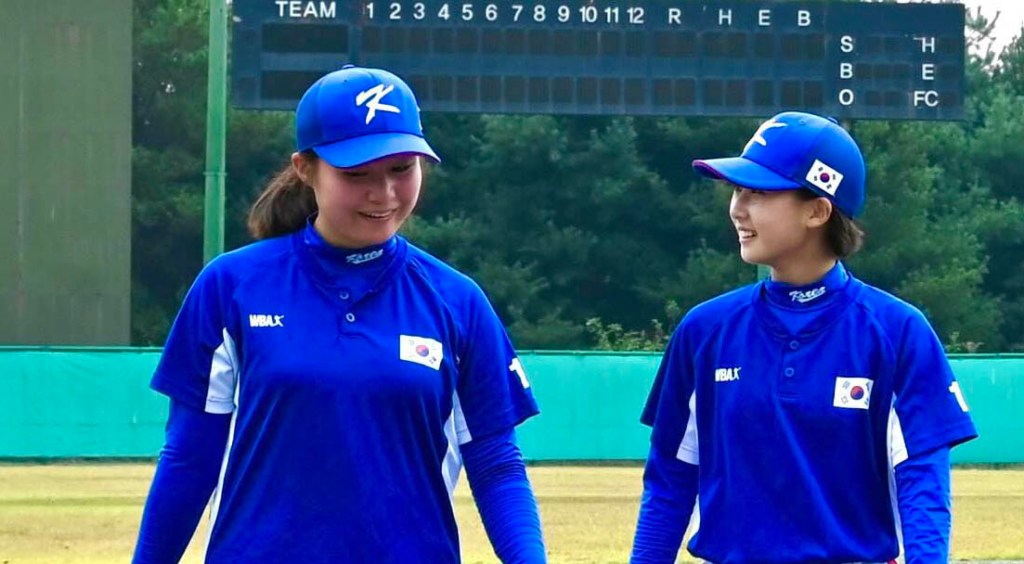
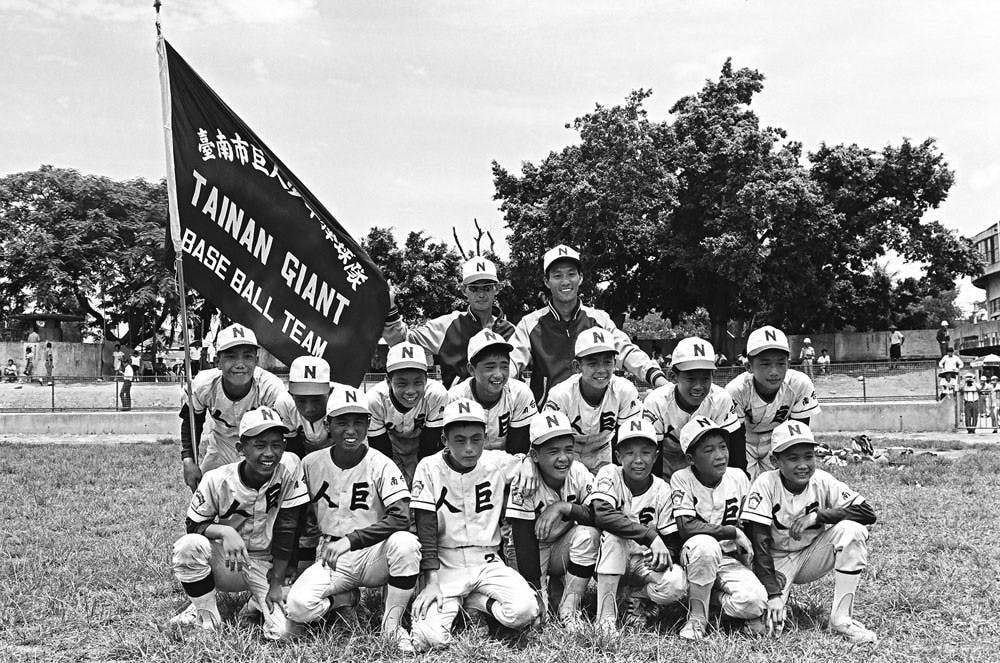
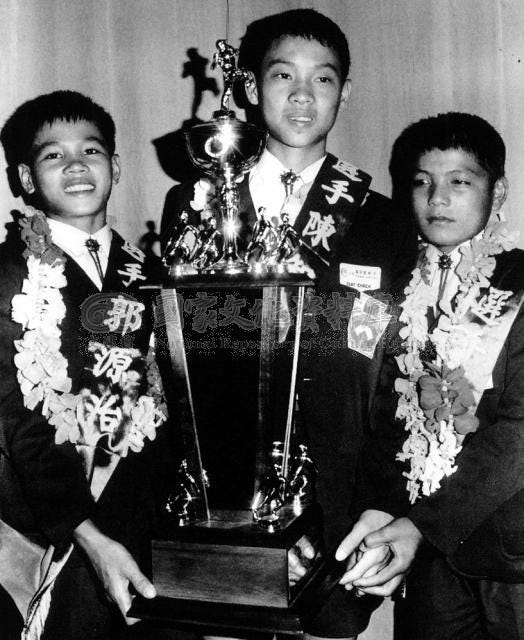
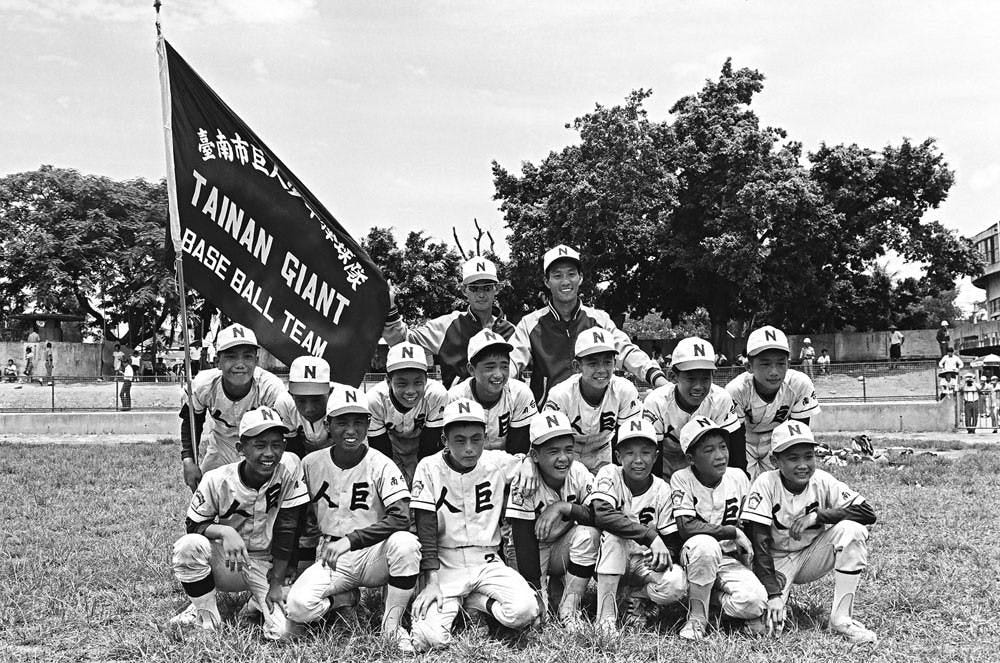
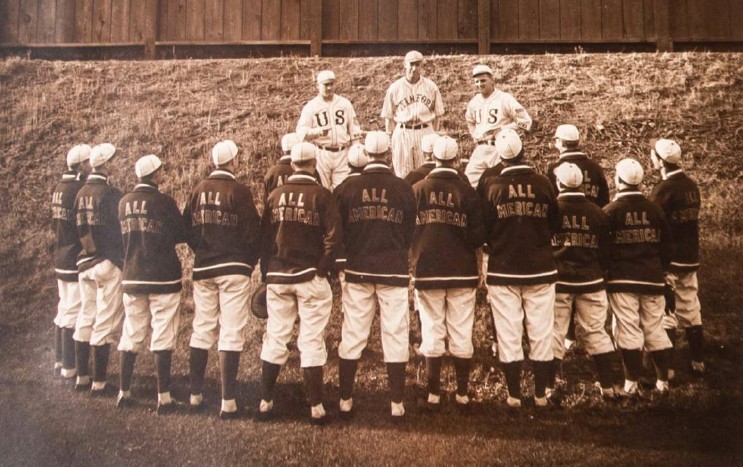
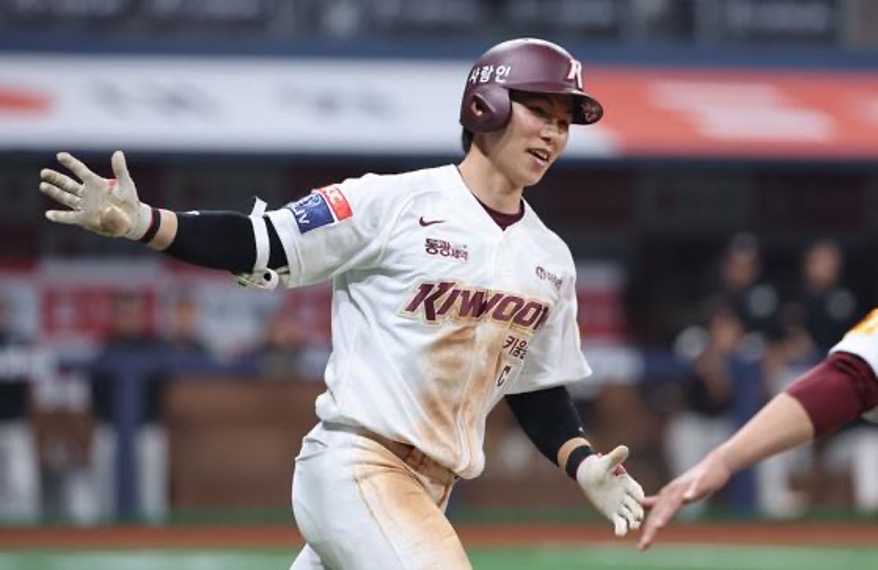
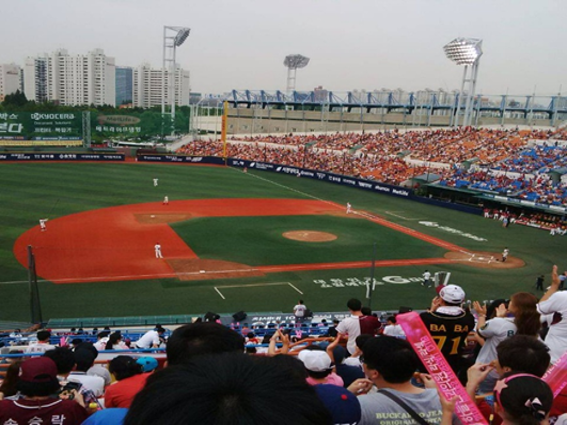


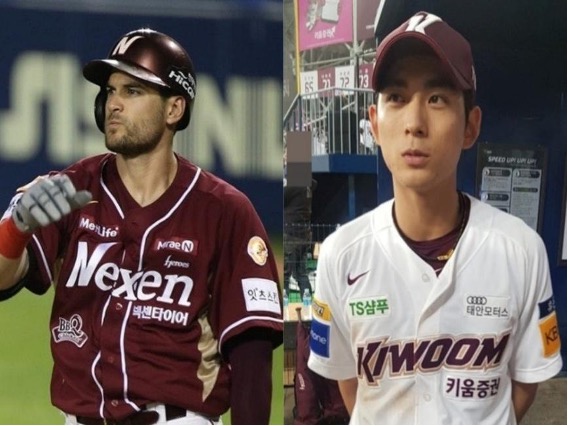

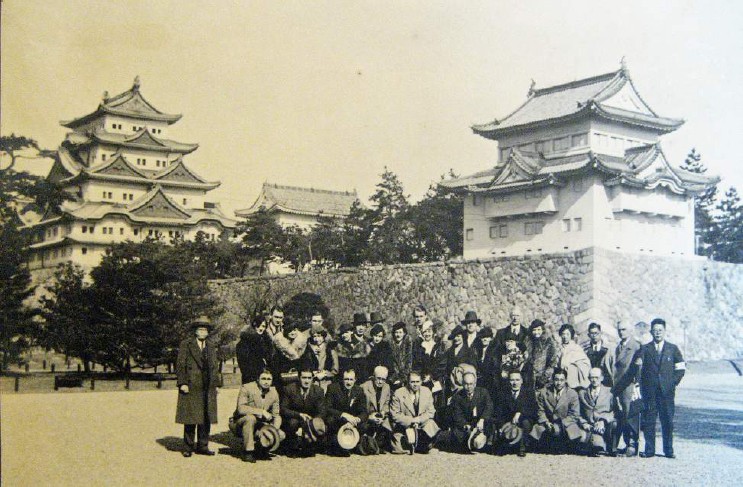
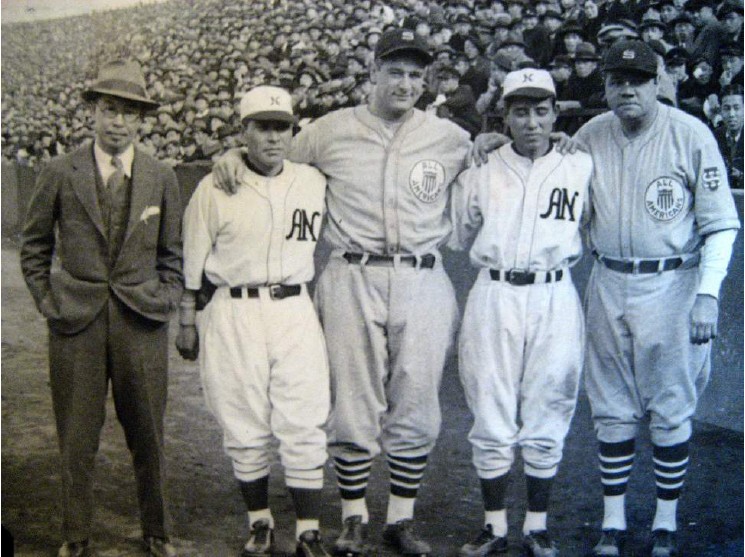




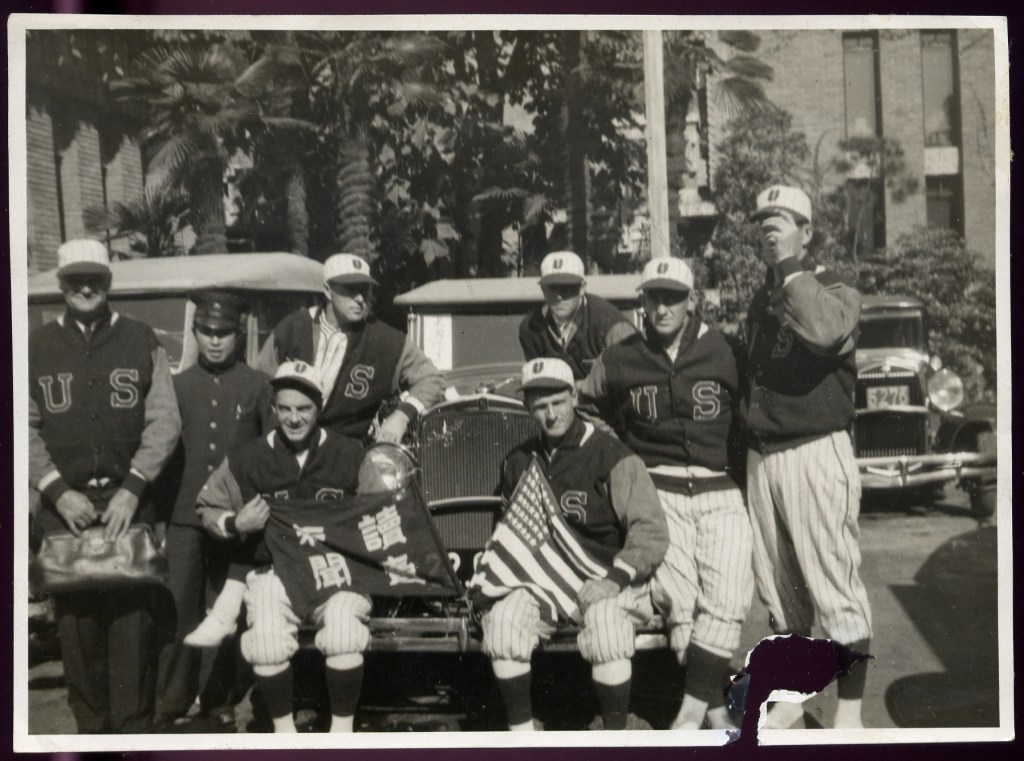


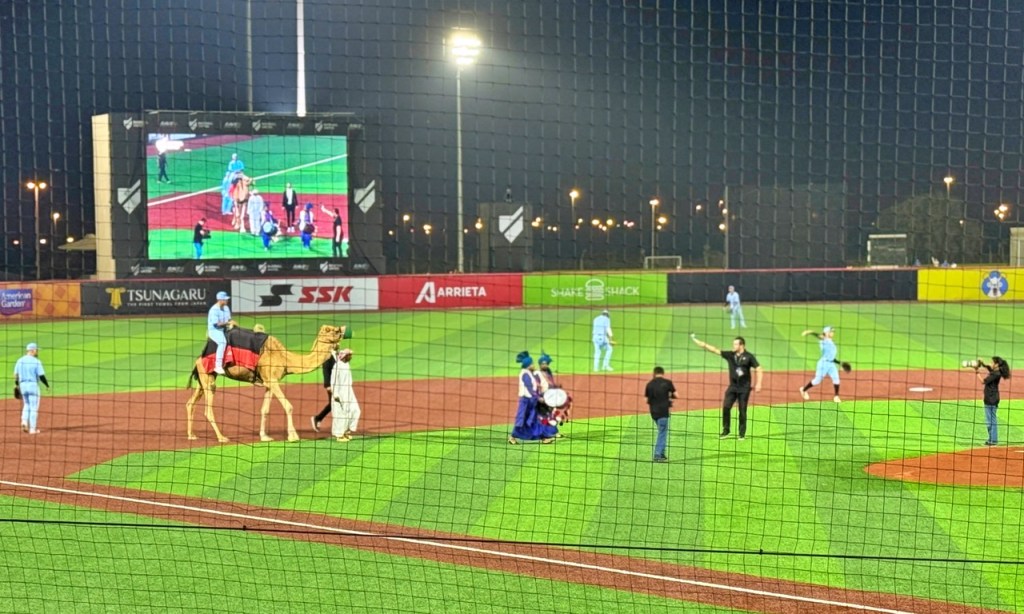
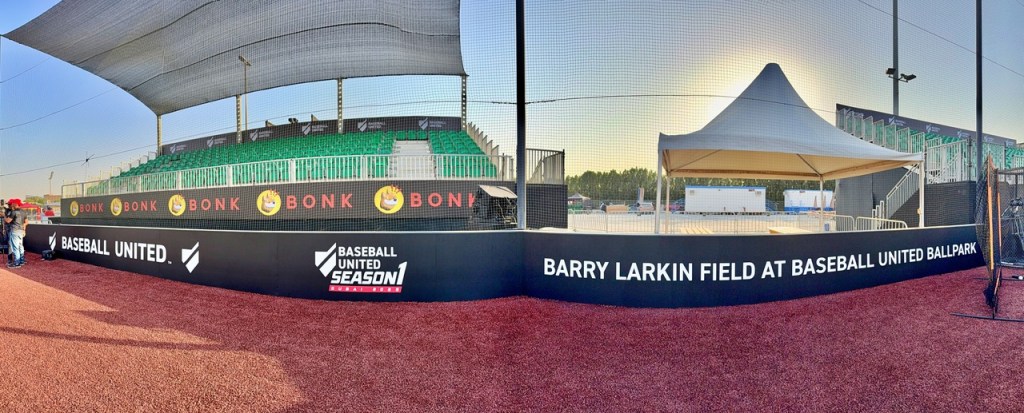
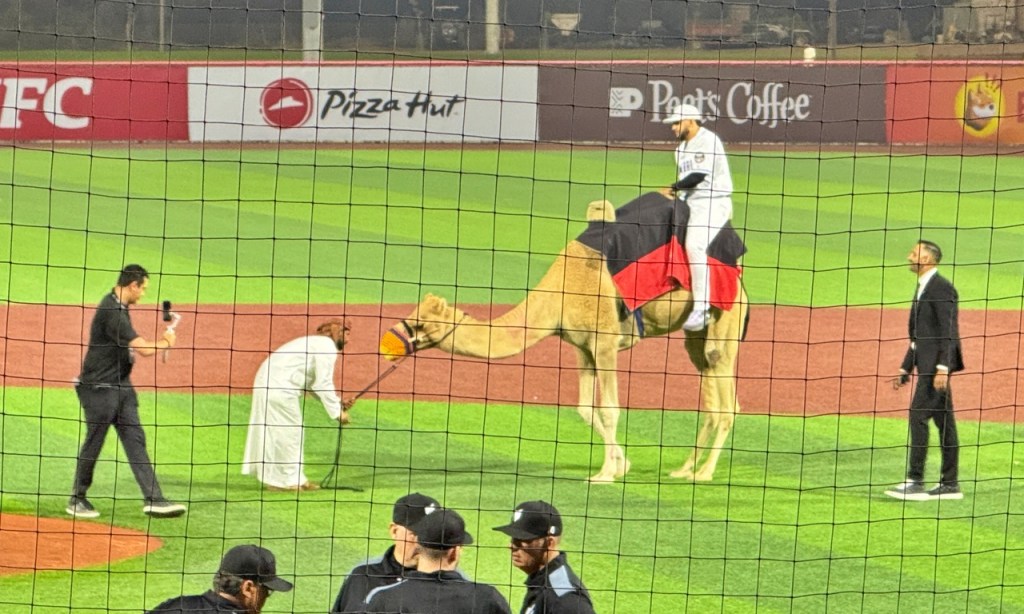

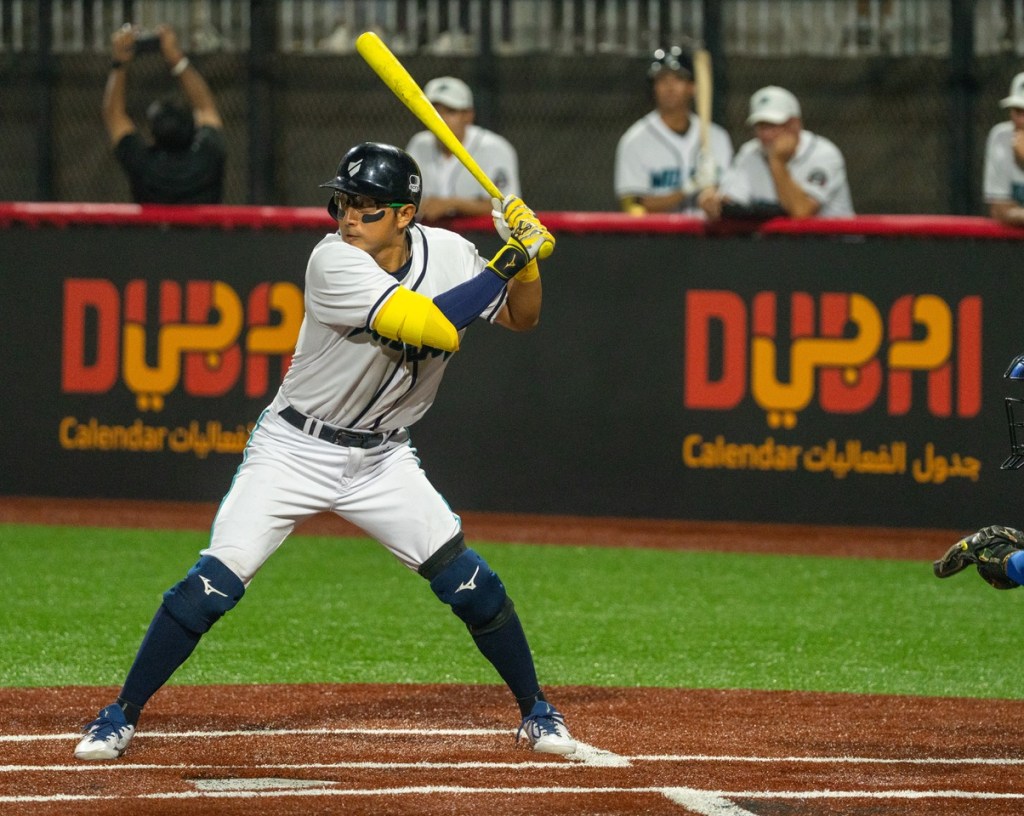


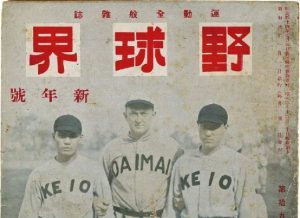


 SABR Asian Baseball Research Committee Blog