Category: Uncategorized

  • Godzilla Returns: The 2004 MLB Opening Series in Japan

    Godzilla Returns: The 2004 MLB Opening Series in Japan

    by Robert K. Fitts

    Every Monday morning we will post an article from SABR’s award-winning books Nichibei Yakyu: Volumes I and II. Each will present a different chapter in the long history of US-Japan baseball relations. This week Robert Fitts tells us about Hideki Matsui’s triumphant return to Japan with the 2004 New York Yankees.

    “The Yankees are coming! The Yankees are coming!” wrote Marty Kuehnert in the Japan Times. “If you haven’t heard, you’re not a resident who has paid even the slightest attention to TV or radio broadcasts, or print media. It’s hard to miss the news that the New York Yankees are coming to Japan. … Media reports liken it to the arrival of Babe Ruth and Lou Gehrig who led a MLB All-Star team to Japan in 1934, and was the catalyst for Japanese professional baseball. … Others are saying it is even bigger … and more along the lines the arrival of U.S. Admiral Matthew Perry in 1853 which helped spur the Meiji Restoration.”

    “This is the [Yomiuri] Giants’ 70th anniversary, and also the 70th anniversary of Japanese professional baseball,” noted Kota Ishijima, head of Yomiuri’s overseas operations. “And for that 70th, who comes back? The Yankees, and our beloved son, Hideki Matsui.”

    On November 1, 2002, two days after leading the Yomiuri Giants to the Japan Series championship, Hideki Matsui announced that he would leave Japanese baseball for the major leagues. At the height of his career, he was the most popular player in Japan, outshining even all-time great Ichiro Suzuki. The 28-year-old free agent had played 10 seasons with the Giants, winning three Central League MVP Awards as he hit .304 with 332 home runs. “It was painful to tell my coaches, but my personal desire to go over there and play didn’t go away,” he told reporters at an early-morning press conference. “I’m proud to have played in Japanese baseball and I think it will reinvigorate Japanese baseball if I go over there and play well. I also think new stars will emerge in Japan.”

    The New York Yankees became early favorites to sign the slugger, nicknamed Godzilla because of acne scarring on his face and his tremendous power with the bat, and on December 19, 2002, they agreed to a three-year, $21 million deal. Although Yomiuri fans were disappointed with the news, nearly all supported Matsui’s decisions. “It’s a bit disappointing that he will be gone from Japan’s ballparks,” said Japan’s Chief Cabinet Secretary Yasuo Fukuda. “On the other hand, there are increasingly more global major stages for Japanese players, so I feel proud in that regard. I have mixed feelings.” “I’m looking forward to seeing how many home runs he will hit in the majors,” added Prime Minister Junichiro Koizumi.

    Matsui’s major-league career began on Opening Day, March 31, 2003, as he hit the first pitch he saw for an RBI single off Roy Halladay. A week later, at the Yankees’ home opener, he hit a dramatic grand slam. Although his production dipped in late April and May, he hit .394 with a 1.157 OPS in June, catapulting him into the All-Star Game as a fan-elected starter. He finished the season having played in all 163 of the Yankees’ games, hitting .287 with 16 home runs and finishing second in the American League Rookie of the Year Award voting.

    But Matsui’s true impact came off the field. “He’s not only helping us win games on the field,” Yankees general manager Brian Cashman explained, “he’s helping the business side. He generates money not just in New York for us, but overseas.” Soon after the signing, the Yankees and the Yomiuri Corporation established a joint venture called “Yomiuri YankeeNets Marketing” in Tokyo designed to attract Japanese sponsors and sell Yankees tickets to Japanese tourist agencies. “Japanese fly in on package tours from Japan to watch a three-game series in New York, buy Yankees jerseys and Matsui bobblehead dolls, then fly back,” noted Japanese baseball expert Bob Whiting. Japanese attendance at Yankee Stadium increased from around 1,000 per game in 2001 to 5,000 per game in 2003. Sales of Matsui jerseys, T-shirts, and souvenirs soared in early 2003. The Dentsu Consumer Research Center concluded that “Matsui’s overall economic effect for the New York area (including travel, hotels, restaurants, etc.) would reach $500 million for five years.” “Matsui has made a large enough impact on New York’s economy to be hired to promote it by the city’s convention and visitors bureau,” Whiting added.

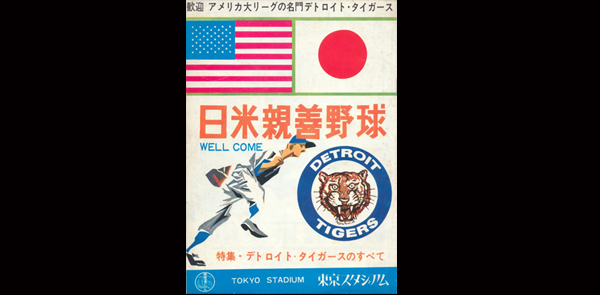
    Major League Baseball decided to capitalize on Matsui’s popularity to promote the league’s brand in Japan. In mid-November of 2003, Bob DuPuy, MLB’s chief operating officer, wrote to the Yankees asking them to shift their 2004 season-opening series against the Tampa Bay Devil Rays from New York to Tokyo. The Yankees had not played in Japan since 1955 and George Steinbrenner had forbidden his players to join the major-league all-star teams traveling to the country (until 2002, when he sent Bernie Williams and Jason Giambi with the goal of wooing Matsui to the Yankees). After a few weeks of negotiations, the Yankees agreed to the trip if they could be the away team in Tokyo and the Devil Rays would play their previously scheduled first homestand against the Yankees at Yankee Stadium. But not all of the Yankees were in favor of the trip. Mike Mussina was particularly vocal in his opposition, complaining about how the trip would disrupt his routine and how the long flights could adversely affect the Yankees.

    As ballclubs, the Yankees and Devil Rays were polar opposites. New York had won 101 games in 2003, finishing first in the American League East Division, but lost a frustrating World Series to the Florida Marlins. After the season the team lost starting pitchers Roger Clemens, Andy Pettitte, and David Wells to free agency. Determined to produce a champion, the Yankees reshaped the roster through blockbuster trades and free-agent signings. In December they acquired starting pitchers Kevin Brown from the Dodgers and Javier Vazquez from the Expos. In February they traded for superstar Alex Rodriguez and took on most of his 10-year, $252 million contract – an amount that dwarfed all other sports contracts at the time. The Yankees supplemented these stars by signing All-Star free agents Gary Sheffield, Ruben Sierra, Kenny Lofton, and Tom Gordon. In all, the team opened spring training with 17 former All-Stars on the roster. When they arrived in Japan, the team’s payroll stood at $182.8 million.

    In contrast, the Devil Rays’ payroll was a measly $29.2 million. The team had finished last in the American League East for every season since its creation in 1998. Its highest-paid player was former Yankee Tino Martinez at $7.5 million, followed by Aubrey Huff at $2.66 million, although the team’s most talented player was undoubtedly 22-year-old outfielder Carl Crawford, who would emerge as a star during the 2004 season. Martinez was not the only former Yankee on Tampa’s roster. In January, the team had hired former Yankees bench coach Don Zimmer, who had a long history with Japanese baseball. Zimmer first arrived in Japan in 1956 as a 25-year-old member of the Brooklyn Dodgers. On June 23 Hal Jeffcoat had hit Zimmer in the face with a high and inside fastball, shattering his cheekbone. The severe injury ended his season, but the Dodgers took Zimmer to Japan to help him regain his form. Zimmer hit only .091 in 22 at-bats but the experience helped him rebound to become the team’s utility infielder in 1957. After leaving the majors in 1965, Zimmer played a year with the Toei Flyers. It was a tough season, both on and off the diamond. Zimmer did not adapt well to Japanese culture or cuisine and hit a measly .182 in 203 at-bats. Twenty-four years later, he returned to Japan as the manager of the 1990 major-league all-stars. Once again, Japan was unkind to Zimmer as his squad became the first American professional team to have a losing record in a postseason goodwill tour.

    The teams left Florida on separate charter flights around 5 P.M. on Thursday, March 25. After the 17-hour flight, five busloads of Yankees, including Yogi Berra and Reggie Jackson, arrived at their hotel shortly after 2 A.M. on Saturday, March 27. (The extra “day” was accounted for by their crossing the international date line.) The Devil Rays checked in about an hour later. “I went to sleep at 4,” explained Derek Jeter, “got up at 5:30. Then I went back to sleep for about an hour, ate, [and] went back to sleep for 45 minutes.”

    The jet-lagged and weary players arrived at Tokyo Dome in the early afternoon for a public workout. 34,500 fans, mostly children in baseball uniforms, “shrieked for hours” as “six aisles filled with cheerleaders wearing Yankees and Devil Rays jerseys and hot pants, shaking silver and gold pompoms,” cheered along. The kids, who were primarily there to see Matsui, “squealed with delight as the video board focused on the … star … as soon as he emerged from the third base dugout to stretch.” “We had a chance to see some of their faces when Matsui walked by,” said Jeter. “It was something special. I think it’s something they’re going to remember for the rest of their lives.”

    “Hideki is like Michael Jordan; he’s the man when it comes to Japan. … He is as big as anybody on the planet over there,” noted Jason Giambi. “It’s a little bit like the Beatles arriving in New York,” added assistant general manager Jean Afterman. “I guess it was J.F.K. who said, ‘I’m the man who accompanied Jacqueline Kennedy to Paris.’ Well, we’re the team that’s accompanying Hideki Matsui back to Tokyo.” “[W]e are proud of Hideki as a representative of the Japanese people,” explained Gaku Tashiro of Sankei Sports. “He’s very gentle, a very good guy. Japanese fans understand what he wanted to do. I know some Giants fans love him still. I’m sure he will hear big cheers in the Tokyo Dome.”

    “Because of Hideki, other Yankees are famous now,” said Tashiro. “Japanese fans recognize who they are – Giambi, A-Rod, Jeter. They are going to have big cheers, too.” “The Yankees were like rock stars in this baseball crazy land,” the Associated Press’s Ronald Blum observed. “Everywhere they went, people looked at them with awe, as if they were larger than life creatures.” “I didn’t know what to expect,” Jeter said. “But it’s kind of amazing – you go somewhere and people recognize you. It’s kind of overwhelming, considering how far away we are.”

    After the workout, the teams, their families, and Commissioner Bud Selig joined other dignitaries at a reception thrown by Yomiuri Chairman Tsuneo Watanabe. Dressed in festive happi coats, players used baseball bats to break open sake barrels to start the party. Then, none too soon for many of the jet-lagged visitors, the players staggered back to the hotel and did their best to get a full night’s rest before the exhibition games the next day.

    The exhibition games began at noon on March 28 with the Devil Rays playing the Hanshin Tigers at Tokyo Dome. Former Yankee Hideki Irabu took the mound for the Tigers. Irabu, who had starred for the Lotte Chiba Marines, had signed a four-year, $12.8 million contract with the Yankees in 1997. Despite tantalizing flashes of brilliance, he had three disappointing seasons in New York, drawing the ire of George Steinbrenner, who called him a “fat pussy toad.” In disgrace, he was traded to Montreal after the 1999 season, where his mediocrity continued. After playing for the Texas Rangers in 2002, he returned to Japan to play for Hanshin. When a reporter asked if he wanted to see his old teammates while the Yankees were in Tokyo, Irabu curtly responded, “No, I don’t.”

    Against Tampa, Irabu once again flashed his potential brilliance. Relying on control and breaking balls instead of power, he began by striking out Carl Crawford and Julio Lugo, then retired six of the next seven batters. In six innings he scattered six hits (including two solo home runs), walked nobody, and stuck out five. “He was mixing up his pitches,” Lugo commented. “He threw some tough curves, and I couldn’t pick up his split at the beginning. I think he’s a big leaguer. He’s got great stuff.” Devil Rays manager Lou Piniella noticed, “He looked much more relaxed pitching here than he did before, especially when he pitched for the Yankees. … He seemed like he was in control of the ball game. He pitched exceedingly well.”

    Meanwhile the Tigers had little trouble with the Devil Rays’ pitching. Starter Doug Waechter lasted just three innings, giving up seven hits and a walk. The Tigers struck for three runs in the third on five singles and an error. They added two more runs in the fifth as Hanshin’s George Arias homered off Jorge Sosa and another in the sixth, giving Irabu a 6-1 lead as he left the game.

    Hanshin’s bullpen, however, could not hold the lead. Tampa scored three in the eighth as Rocco Baldelli hit a two-out, three-run homer off Tomoyuki Kubota, and tied the game, 7-7, when Lugo hit a two-run blast with two outs in the top of the ninth off Yuya Ando. After the Tigers failed to score in the bottom of the ninth, the game ended in a 7-7 tie. “That’s a good team,” Piniella said after the game. “They got good pitching and played well in the field. They’re not a power-hitting club but they hit it to all areas of the field.”

    The enthusiasm of the Hanshin fans surprised the American players. Their famous oendan (cheering club) blew their horns and whistles, pounded their drums, waved their flags, and chanted their players’ fight songs. “It was sort of, um … interesting, with the festivities going on in the stands the whole time,” said Piniella. “With the drums going and the banners, it took a while to get used to. But it was fun. It was a fun atmosphere.” “I thought it was pretty cool,” added Rocco Baldelli. “I was bobbing my head in the outfield. It was pretty catchy. … They support their team. It must be nice. Every guy that comes up for their team, regardless of if he’s coming off the bench or pitching, they’re all for him, screaming his name. That must feel pretty good as a player.”

    That evening 55,000 fans congregated at Tokyo Dome. A fair-like atmosphere pervaded the plaza in front of the main gate. In the background, the Ferris wheel at the Dome’s amusement park lit up the dark sky as the roller coaster rumbled along, occasional shrieks from the passengers clearly audible over the dull murmur of the crowd. Throngs surrounded the souvenir stands as fans bought Yankees and Giants caps and jerseys, plastic orange clapping sticks, and other mementos.

    For many Japanese fans, this night’s exhibition game between the Yankees and Giants was the most important game of the tour. “It’s not [just] an exhibition game,” explained the Giants’ American outfielder Tuffy Rhodes. “It’s an international World Series game. It’s Game 7 of the international World Series.”

    The game began with Masaichi Kaneda, Japan’s only 400-game winner, throwing out the ceremonial first pitch to catcher Yogi Berra. The two had faced each other during the 1953 Eddie Lopat and 1955 Yankees tours. The stiff-moving 71-year-old Kaneda, dressed in a gray suit with tie, bounced the pitch to Berra, who, wearing his pinstriped Yankees uniform, spryly fielded the errant throw on one hop.

    The sold-out crowd watched Yankees starter Jose Contreras take on Yomiuri’s back-of-the-rotation starter Hisanori Takahashi. To honor Matsui, Torre started him in center field and placed him in the cleanup spot, his spots when he played for Yomiuri. Both teams went down in order in the first with Contreras striking out the side.

    The fans rose to their feet and roared as Matsui came to the plate to lead off the top of the second. Blue Oyster Cult’s “Godzilla” bared over the loudspeakers. As he dug in, the ballpark sparkled as thousands of camera flashes went off. The Giants’ oendan drummers in left field banged out a rhythm: boom, boom, boom, boom-boom. The fans responded: “Home run, Mat-sui!” Home run, Mat-sui!” Boom, boom, boom, boom-boom, answered the drums. The deafening cheer continued throughout the at-bat.

    Takahashi wounded up and threw a high fastball. Ball one. Next came a wicked curve, breaking down as Matsui swung over it for a strike. He swung through the next pitch as well. One ball, two strikes. Another high fastball, Matsui checked his swing. Two and two. On the fifth pitch, Takahashi went for the outside corner, but Matsui sliced it foul. Matsui stepped out of the batter’s box, adjusted his belt, and dug back in.

    The fans grew louder, pounding their orange plastic sticks in time with the drums. The upper deck felt as though it was shaking. The chant, “Home run, Mat-sui!” intensified. On the Yankees bench Joe Torre turned to coach Rob Thomson and said, “Wouldn’t it be something if he hit a home run here?”

    Takahashi wound up and tried to sneak a 63-mph curveball by Matsui, but it hung up over the plate. Matsui connected with a loud pop, driving the pitch deep into the right-center-field bleachers. The crowd erupted as the stony-faced Matsui calmly trotted around the bases, only allowing himself to smile after he reached the safety of the crowded dugout.

    Godzilla had returned to Tokyo.

    “Knowing this guy,” backup catcher John Flaherty had told catching coach Gary Tuck, “he’ll probably go deep the first at-bat. You almost have to expect it now,” he added later. “We saw it last year when he hit the grand slam on Opening Day in New York. It’s his personality. You expect it, and he delivers.” But, “it’s hard to do,” added Jeter. “It’s hard enough to hit a home run in batting practice, let alone in a game. He’s a special player to be able to deal with all the attention and scrutiny and deliver like that.”

    Yomiuri tied the ballgame in the third, but the Yankees surged ahead in the fourth as Matsui led off with a single, an out later Giambi singled, and Posada hit a three-run homer. New York tacked on another two runs in the fifth; Jeter led off with a home run, Matsui walked and then scored as a deep drive by Giambi popped out of center fielder Tuffy Rhodes’s glove. The Giants staged a brief comeback attempt in the bottom of the ninth as a single, an error, and a groundout led to a run, but Mariano Rivera closed out the 6-2 victory. “I was really happy to receive such a warm welcome and it gave me power today,” Matsui told reporters after the game. “I just felt like I did what I was expected to do and it’s all thanks to the fans. I just want to keep playing well as the season gets started.”

    Early the next morning, the exhausted and jet-lagged Yankees straggled into Tokyo Dome to prepare for their noon game with the Hanshin Tigers. To please the 52,000 spectators, Torre started most of his regulars, but they made little difference in the game’s outcome as the Yankees’ starter, Donovan Osborne, could not hold back the Tigers’ offense.

    With the Tigers down 1-0 in the bottom of the second, George Arias led off with a single. After Takashi Toritani struck out, Osborne surrendered consecutive singles to Akihiro Yano, Atsushi Fujimoto, and Makoto Imaoka to give the Tigers a 2-1 lead. The next batter, Norihiro Akahoshi, laid down a perfect bunt for a hit as Fujimoto scored. Osborne then walked Mike Kinkade before Tomoaki Kanemoto drove in Imaoka and Akahoshi with a broken-bat single to right-center field. Arias, in his second at-bat of the inning, singled in Kinkade and Kanemoto to put Hanshin ahead 7-1.

    New York retaliated with three runs in the fourth on a two-run homer by John Flaherty and Jeter’s RBI single, and another run in the fifth on a mammoth, 521-foot Tony Clark home run to narrow the gap to 7-5. The Tigers, however, padded their lead in the fifth with an inside-the-park home run as Darren Bragg misjudged Akihiro Yano’s fly ball. After falling to the turf, the ball bounded away from Bragg as Yano circled the bases. Hanshin added three more in sixth on a three-run homer by Arias. Trailing 11-5, the Yankees attempted a two-out comeback in the top of the ninth, scoring twice before Jeff Williams closed out the game for the Tigers’ 11-7 victory.

    Matsui, who was removed after the fourth inning along with most of the Yankees stars, told reporters, “I would have loved to play more for the fans, but the opening game is tomorrow. … I feel good about how I am hitting now. … I’m looking forward to the opener tomorrow.”

    Although the game received scant coverage in the next morning’s newspapers, 47,000 fans packed Tokyo Dome in the evening to watch the Yomiuri Giants take on the Devil Rays. The game began well for the Giants as Toshihisa Nishi singled and Takayuki Shimizu walked to start the game. An out later, Yoshinobu Takahashi singled to drive in Nishi. But that ended the scoring for the home team. Tampa starter Mark Hendrickson gave up just one more hit over the next four innings before relievers Dewon Brazelton and Jesus Colome pitched four innings of shutout ball.

    Yomiuri starter Masanori Hayashi held the major leaguers scoreless, surrendering just one hit while striking out five, in three innings before Tampa took advantage of the Giants’ bullpen. In the fourth inning, the Devil Rays went ahead on a two-run home run by Jose Cruz Jr. Cruz drove in another run with a sacrifice fly in the sixth before Robert Fick drove the ball over the right-field fence with a runner on to give Tampa a 5-1 lead. The Devil Rays tacked on two more runs in the seventh to win 7-1.

    After the warm-up games, the Yankees and Devil Rays readied themselves for the start of the regular season on Tuesday, March 30.

    Following the Opening Day ceremonies, which included first pitches thrown by Japanese Prime Minister Koizumi and former New York Mayor Rudolph Giuliani, the 2004 major-league season began at 7:14 P.M. Tokyo time (5:14 A.M. EST). The Yankees, acting as the visiting team but wearing their home pinstripes with the addition of a three-inch sleeve patch bearing the sponsor Ricoh’s name in red, batted first against Victor Zambrano.

    The new-look Yankees’ season started off well. After Derek Jeter grounded out, Matsui ripped a fastball into the right-center-field gap for a double. Alex Rodriguez came to the plate in his first at-bat as a Yankee and struck out looking. With two outs, Jason Giambi hit a 1-and-0 pitch into the left-field stands to give New York a 2-0 lead.

    Mike Mussina took the mound for New York. Even after arriving in Japan, he continued to carp about the trip. Suffering from jet lag, he had not slept well, and rather than seeing Tokyo had cloistered himself in his hotel room except for “three quick trips for food.” He later told reporters that he had “subsisted mostly on Ritz crackers and chips.” “It’s a mindset,” Gary Sheffield commented. “If you think negative, it’s going to be negative. If you think you’re tired, you know you’re going to be tired.”

    Although the game started out well for Mussina as he retired the Devil Rays in order in the first, Torre noted that “Mussina wasn’t as sharp as he can be.” He gave up two hits in the second inning and another in the third before Tampa Bay tied the game in the fourth as Mussina walked Cruz and Martinez ahead of a two-run, broken-bat single by Toby Hall.

    The score remained deadlocked until the sixth, when Rodriguez and Sheffield both doubled to put New York ahead 3-2. The lead, however, did not last long as Cruz led off the bottom of the inning with a homer to right. Martinez then doubled off his old teammates before Julio Lugo followed with a double to deep center field, scoring Martinez. Hall stroked another double to score Lugo, giving the Devil Rays a 5-3 lead, which chased Mussina from the game. Tampa Bay scored three more in the bottom of the seventh on an RBI single by Huff and a Martinez home run to seal an 8-3 victory.

    The upset headlined sports pages across the United States: “Yankees Look Lost in Tokyo”; “Tampa Too Much”; “Sluggish Yanks Roughed Up.” “We looked flat,” said Yankees special adviser Reggie Jackson. “But how do you look good when you give up 15 hits? You don’t look good. You don’t pitch good, you don’t look good. … If we lose tomorrow we won’t be in a 747 going home. It will be B&O, the Baltimore & Ohio Railroad.”

    The following evening Kevin Brown took the mound for the Yankees against Geremi Gonzalez. Brown struggled early as Carl Crawford led off the bottom of the first with a single, stole second, and two outs later came home on Aubrey Huff’s single. But Brown settled down and shut out the Devil Rays for the next six innings, surrendering just four more hits before leaving the game after throwing just 77 pitches. “He was awesome,” exclaimed Jorge Posada after the game. “He got a lot of one- and two-pitch ground-ball outs, and that’s why he was in the game so long. He got better and he got stronger. He’s got very good movement on his pitches, a lot of depth, and that’s why he got a lot of ground balls.”

    Tampa Bay maintained its 1-0 lead until the top of the third when Lofton singled with two outs and stole second before Gonzalez walked Jeter. Matsui then knocked Gonzalez’s first pitch into right field, scoring Lofton. With runners at the corners, Rodriguez came to the plate with a chance to put the Yankees to top but instead grounded to third to end the inning.

    The next inning, New York took the lead as Tony Clark hit a two-run homer into the right-center-field seats. With one out and one on in the fifth, Matsui padded the score by slamming an 89-mph fastball over the right-field wall. Giambi was then hit by a pitch and Sheffield walked before Posada homered to put the Yankees ahead 8-1. They added four more runs in the seventh on five hits capped by Posada’s second homer of the night.

    At the end of the 12-1 Yankees victory, Matsui was declared the star of the game (despite Posada’s two home runs and six RBIs). In a ceremony held at home plate, Godzilla received a samurai helmet. He held the prize aloft “slowly turning his body as if he were a figurine in a music box as 55,000 fans chanted his name.” “Hopefully, we can have many more games like this,” he said during the ceremony. “I’m the happiest man in the world.”49 “He’s unbelievable,” said Posada. “He can come home and do all the things he did in front of people waiting for him to do it. That’s tough to do.”

    The two teams left Japan the next morning, arriving back in Florida on Thursday, April 1. Most of the players enjoyed the trip. “This town’s fun,” said Jason Giambi about Tokyo. “You’ve got to experience this town. It’s like Vegas and New York rolled into one.” Some sampled the nightlife in Roppongi, bought electronics in Akihabara, dined on sushi and sake, explored the city. “Tokyo is a beautiful city to visit,” concluded Lou Piniella. “I was shocked that there’s no trash,” said Derek Jeter. “Even though there’s thousands and thousands of people, millions of people, walking the streets, there is no trash. That was amazing to me.” “I don’t like being in a plane such a long time,” said Julio Lugo. “But to tell you the truth, it was worth it … to come over here. I had a nice experience. I love it. I love the fans here. I think they’re great.”

    From a marketing perspective, the trip was an overwhelming success. Matsui’s heroics and modest demeanor increased the popularity of the already popular New York Yankees. “[Matsui] did an unbelievable job of handling everything he’s had to go through over here,” observed Kevin Brown. “He’s so completely focused and comfortable. You tip your hat for a very professional effort.” “It’s mission accomplished as far as the state of the game,” added Rodriguez. “When you talk about growing the game, I think the New York Yankees can do that better than any other team in the world.”

    But not everyone praised the endeavor. In a vitriolic condemnation of the Opening Day tour, Thomas Boswell of the Washington Post objected to the early start times and blatant commercialism. Calling the trip “baseball’s grab-a-yen travesty,” he wrote:

    How trashy can baseball get? This Opening Day was surely a tip-off. … Baseball’s traditional spring showcase game – one of its supposed jewels – has now shared the same pre-dawn TV time slot as “this channel is not yet available” and a religious infomercial.

    The start of the baseball season is supposed to be a spirit-lifting American institution, an announcement of spring. Instead, what may be remembered from this game was that, for the first time in big league history, the players themselves were used as human billboards. … [R]ight there on the Yankees hats and jerseys – the ones that are considered too elegantly traditional to have the players’ own names on the back – were garish ads for various companies, both in English and in Japanese kanji.

    Let’s hope those Japanese fans bought plenty of Hideki Matsui bobble-head dolls because the price baseball paid to sell more trinkets and TV ads in Asia was high – in self-respect.

    The editors of the Japan Times, however, argued that Boswell had missed the more important issue. “[Boswell’s] displeasure strikes us as misplaced and unfortunate. … The truth is, baseball may be America’s national pastime, as it is Japan’s and some other countries’ as well, but the game’s future is a global one. … It makes sense to celebrate that fact rather than alternatively deny and decry it. Besides, … to watch the Japanese fans joyously root for an American team (the Yankees, of course, along with revered Hideki Matsui) is to realize the potential of sports as an instrument of friendship.”

    Read the full version of this article on the SABR website

    https://sabr.org/journal/article/godzilla-returns-the-2004-mlb-opening-series-in-japan

  • Fake Scout – A Case of Mistaken Identity 

    Fake Scout – A Case of Mistaken Identity 

    by Mark Kozlevcar 

    On June 4,2026, I was at Samsung Lions Park in Daegu, watching The NC Dinos play the Lions on a Thursday evening. I was in the midst of a Korean Baseball trip, seeing all ten KBO teams play in all nine KBO stadiums. I was sitting in very good seats. These seats included tables in front of them for food, drinks, and keeping score. As always when I am in Korea, I was wearing one of my Los Angeles Dodgers Korean Heritage jerseys, and I was keeping score of the game

    T. I. Won, one of KBO’s premier pitchers, and soon to be free agent, was toeing the rubber for the Samsung Lions. Dinos fans thought that I might have been there to scout shortstop J. W. Kim. Like most games nowadays, the game was being televised. Between pitches, I was incorrectly identified as a possible “Dodger Scout.” 

    The text reads “Won Tae -in observing LA Dodgers scout?”

    Here is a link into the Instagram post and the youtube post from the TV coverage showing me keeping score: 

    https://tinyurl.com/FakeScout1

    https://www.youtube.com/shorts/Pfsrr9JWsc4

    While not very many people keep score during games anywhere anymore, it seemed to me, that there were even fewer people than usual, especially Koreans, that keep score. My keeping score apparently attracted the attention of the KBO Broadcast (SBS Sports) TV directors, and thus the speculation began. 

    The blogosphere latched on to the story and speculation abounded on the internet about who I was, and whether I was there to “kidnap” the Lions’ Won or the Dinos’ Kim for the Dodgers.

    As it is for most things, the truth did come out, and a nation of KBO fans can now sleep more soundly in the knowledge that I was exhibiting, as the article cited below states, “the passion of a fan who loves baseball too much”; and that I was not there to kidnap anyone on behalf of the Dodgers.

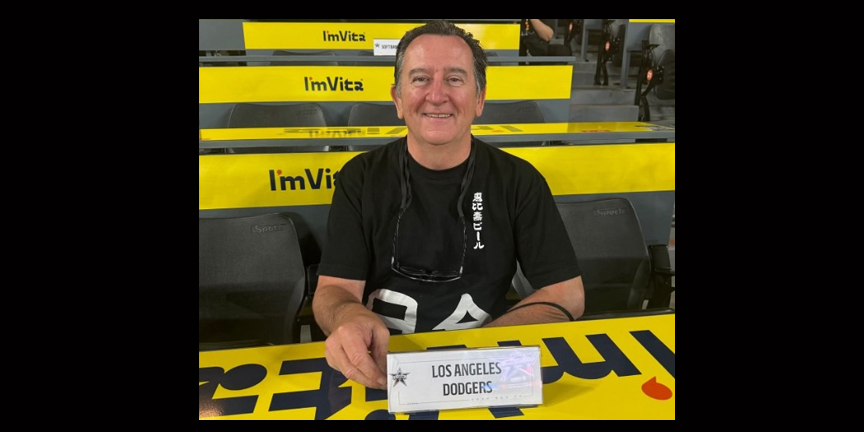
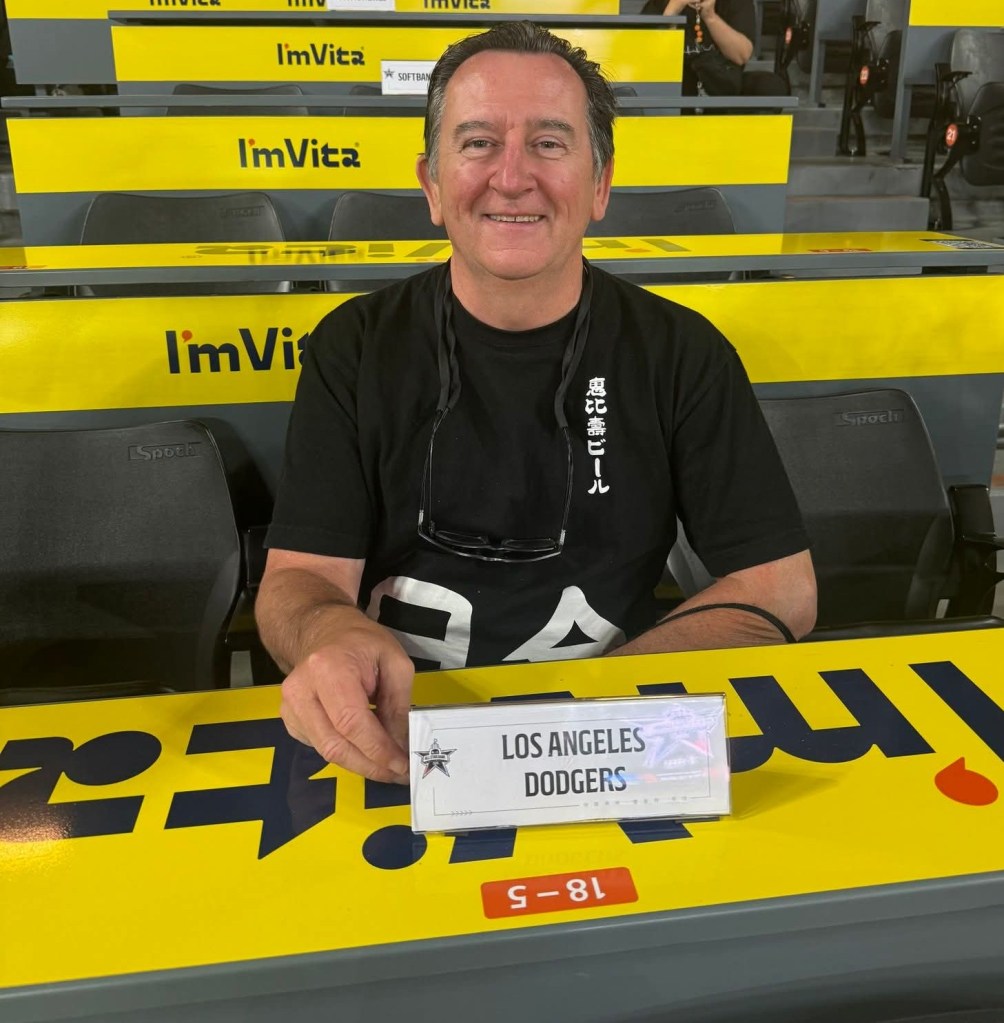
    A few days later, I attended a Korean High School vs. College All Star Game that did have Dodger Scouts in attendance. After the game I sneaked down to the Dodgers table for the picture shown below.

    Fake Scout at Daejeon Hanwha Life Ballpark – Photo by CouchNacho_Baseball

    When the legend becomes fact, print the legend.

  • Major League Baseball’s Historic Opening Day Series: New York Mets vs. Chicago Cubs, 2000

    Major League Baseball’s Historic Opening Day Series: New York Mets vs. Chicago Cubs, 2000

    by Scott Melesky

    Every Monday morning we will post an article from SABR’s award-winning books Nichibei Yakyu: Volumes I and II. Each will present a different chapter in the long history of US-Japan baseball relations. This week Scott Melesky focuses on MLB’s first Opening Series in Japan.

    The year 2000 was not just the beginning of a new century for humanity but also marked a new era in Major League Baseball’s relationship with Japan as the New York Mets and Chicago Cubs opened the season in Tokyo. US major-league squads had been touring Japan since 1908 but the 2000 Opening Day Series showcased the first regular-season games played in Japan. It was a rousing success for major-league baseball and Japanese fans. Tickets for both games sold out less than five hours after they went on sale in January. A total of 110,000 fans attended the two games. The games were covered by 125 foreign journalists representing 51 international news organizations and by 250 Japanese media representatives. It was regarded as one of the most important international baseball events ever staged.

    For the New York Mets and manager Bobby Valentine, traveling to foreign countries to play regular-season games was not a new experience. In 1996 the Mets played three games against the San Diego Padres on August 16-18 at the Estadio Beisbol de Monterrey in Monterrey, Mexico. New York lost two out of three games in the series. In 2000 they became the first major-league team to play games in two different countries outside the United States and Canada. The Chicago Cubs were making their first international foray after being named a replacement for their Midwest rivals, the St. Louis Cardinals, who were originally supposed to play the Mets in the opener. The Cardinals declined after Mark McGwire expressed his disapproval of playing regular-season games overseas. The Cubs agreed to the trip in mid-August, and details were worked out over the next two months. Though the 1999 home-run king McGwire did not play in Japan, the local fans got to see runner-up Sammy Sosa in person.

    Both teams were going in opposite directions heading into the Opening Day Series. Mets players Bobby Jones, Edgardo Alfonzo, John Franco, and Rey Ordonez remained from the 1996 team that had played in Mexico four years earlier. Since that trip, the Mets had gone 71-91 and finished in fourth place in the NL East in 1996 before they rebounded in 1997 and 1998 with identical 88-74 records, finishing third and second in the division respectively. In 1999 the Mets finished second in the NL East with a 97-66 record and defeated the Arizona Diamondbacks three games to one in the National League Division Series before falling to the Atlanta Braves four games to two in the National League Championship Series.

    As the Mets were ascending, the Chicago Cubs were on the decline. Since 1996, the Cubs had three losing seasons (although they did make the National League Division Series in 1998 but were swept in three games by the Atlanta Braves). In 1999 the Cubs finished in last place in the NL Central Division with a record of 67-95.

    Major League Baseball’s decision to play two regular-season games in Japan was a culmination of talks with the host country that dated back to the 1970s. In 1979 the San Francisco Giants and San Diego Padres agreed to play a three regular-season games in March 1980 in Yokohama. Unfortunately for US and NPB fans alike, these games were canceled for two reasons. Leadership in both lands worried that the cold and rainy weather that typified Japan in March would cause the game to be rained out and the Major League Baseball Players Association balked at the early date to begin the regular season. It took two more decades to secure the first regular-season major-league games in Japan.

    By 2000, things had changed. American baseball games were shown on NHK Satellite and SKY PerfecTV!, increasing Japanese fans’ interest in the American games. Five domed ballparks had been built since 1979, negating the effects of rainy or windy weather. These indoor facilities piqued the interest of Commissioner Bud Selig and the Players Association and they negotiated with Japan Pro Baseball Commissioner Hiromori Kawashima to move forward with regular-season games in Japan.

    The 2000 MLB Opening Day Series was historic for Major League Baseball and also for North American professional sports leagues. MLB became the third North American professional league to play regular-season games in Japan. The NHL began the trend in 1976 and played a total of 10 games in 1997-98 and 2000. The NBA also played 10 regular-season games in Japan in 1990, 1992, 1994, 1996, and 1999. The NFL entertained Japanese sports fans with 10 preseason games between 1976 and 1998 but as of 2022 had not played a regular-season game in Japan.

    The Opening Day Series was also a “homecoming” for several members of the Mets and Cubs. Valentine was making his first appearance in Japan since 1995, when he managed the Chiba Lotte Marines. He would return to Japan in 2004 to manage the Marines for six years, highlighted by winning the Japan Series in 2005. Mets pitcher Pat Mahomes, father of NFL star quarterback Patrick Mahomes, played for the Yokohama Bay Stars in 1997 and 1998. Cubs pitcher Brian Williams played for the Fukuoka Daiei Hawks in 1998. Chicago outfielder Damon Buford lived in Japan as a child, while his father Don played with the Taiheiyo Club Lions and Nankai Hawks from 1973 to 1976.

    The main challenge for the Mets and Cubs would be combating jet lag and fatigue from the airplane trips to Tokyo. The time difference between the US East Coast and Japan was 14 hours. Both teams scheduled ample time to shake off effects of jet lag when they returned to the United States after their week in Japan.

    New York Mets pitcher Mike Hampton was concerned about the physical and mental adjustments he would have to make playing in Japan. “Japan’s going to be a tough trip,” Hampton said. “I just hope everybody adapts all right and gets through it. It’s going to be exciting to go over there and play, but it’s going to be tough. It could take its toll. Hopefully, the effects aren’t too severe, and it doesn’t affect us the first week or two weeks.” “It’s baseball, whether we play in the U.S. or Japan. The field is the same. We’ll be playing a talented Cubs team. I’m looking forward to the challenge.”

    Before facing off against each other in the Tokyo Dome, the Cubs and Mets each played two exhibition games against NPB’s Seibu Lions and Yomiuri Giants with identical results. Both teams defeated the Lions and lost to the Giants.

    In the Cubs’ exhibition opener against the Giants, Japanese fans were excited to see Sammy Sosa. He was two years removed from hitting 66 home runs in 1998 and primed to show an international audience his hitting power. On March 27, against the Yomiuri Giants, Sosa was hitless in four at-bats. The hometown Giants led by Hideki Matsui and Yoshinobu Takahashi provided the offensive fireworks, each hitting a home run in the game, which was appreciated by the fans. Matsui would become a New York Yankee in 2003 and play in the United States for 10 years until 2012. Giants pitcher Kimiyasu Kudo proved to be equally potent on the mound, as he shut down the Cubs bats, highlighted by a first-inning strikeout of Sosa. Sosa said he was impressed by Kudo’s strong and dominant pitching, which led to a 6-0 victory for the Giants. “Good pitching is going to stop good hitters,” Sosa told the Chicago media after the game. “I have to give them credit for that.”

    Despite the presence of Sosa and other Cubs superstars at the game, the Tokyo Dome crowd remained mostly silent for the duration of at the exhibition game but did get excited with the sighting of US Baseball Hall of Famers Hank Aaron and Ernie Banks, who attended the game. Giants players Daisuke Motoki and Takayuki Shimizu exited their dugout when they saw the duo and asked Aaron and Banks to autograph a bat. After receiving this prized collectible, Motoki and Shimizu showed off the bat to an elated Japanese sports media contingent.

    After being shut out by the Giants, the Cubs were shut out in the first two innings of their second exhibition game in Tokorozawa against the Seibu Lions. Things changed for the Cubs in the top of the third inning when Jeff Huson scored on an error by second baseman Hiromasa Tamano. Seibu regained control of the game and took a 5-3 lead entering the ninth inning when a small controversy occurred. After Mark Grace homered to make it a one-run game, the next batter, Henry Rodriguez, had a 3-and-2 count when Lions manager Osamu Higashio decided to use another pitcher to close out Rodriguez’s at-bat. He wanted to call on Yoshihiro Doi, who had just started to throw in the bullpen. In a bit of gamesmanship, Higashio tried to convince the umpire that his pitcher had sustained an injury to give Doi extra time to warm up. Chicago manager Don Baylor became enraged by Higashio’s manipulation and came out of the dugout screaming and protesting. Higashio backed down. The Cubs took advantage of Doi not being ready; Rodriguez doubled, and Damon Buford followed with a two-run home run to earn the victory. Buford said the win was very important for the Cubs, even though the game was just an exhibition. “It is great feeling to save face for the Cubs,” he said. “We have some confidence coming into the game [against the Mets].”

    In the Mets exhibition against the Seibu Lions, Glendon Rusch, the Mets’ fifth starter, pitched five shutout innings of one-hit ball en route to an 8-1 victory. Future Hall of Famer Mike Piazza had two run-scoring singles in the win. The Lions featured former major-league players Reggie Jefferson and Tony Fernandez. The Mets outhit their Japanese counterparts, 15-5. There was some humor before the game. In the ceremonial first pitch, Asahi TV host and comedian Kyotaka Nambara accidentally hit future Hall of Famer and New York Mets left fielder Rickey Henderson. After being hit by the pitch, Henderson playfully flopped on his back. Nambora then low-bridged Henderson and they wrestled near home plate before hugging, to the fans’ delight. Inspired by the humorous beginning of the game, Henderson had three hits and one RBI in the Mets’ victory.

    Both teams had a more difficult time with the Yomiuri Giants. The future 2000 NPB champions beat the Mets 9-5 and the Cubs 6-0. The Mets’ four pitchers in this game were from the team’s farm team in Norfolk, Virginia. They were no match for the seasoned Giants batters, who tallied 12 hits for eight runs. The game was humbling for players from both teams. “Everybody’s kind of anxious to go,” Mike Piazza said. “Every year brings a curiosity.”

    “You want to find the intangibles, find the ‘wa,’” Piazza added with a smile, referring to the Japanese word for spirit. Valentine walked to home plate after the Mets’ 9-5 loss to Giants and bowed deeply to their dugout to show respect for his opponent. He said the games between the Mets, Cubs, and Giants would produce “a true world champion, not just an American champion.”

    The Cubs and the Mets met in the historic opener on March 29. The game was not only the first such opener outside the United States, it was also the earliest Opening Day and the first time since 1869 that the Cincinnati Reds did not play in the traditional first game of the season. The 14-hour time difference between Tokyo and New York and the 15-hour time difference between Tokyo and Chicago also made the game time for Americans the earliest start time in major-league history 4:08 A.M. (Central Time) and 5:08 (Eastern Time). The early start times concerned US fans. Commissioner Selig said he was surprised by the early times but was not involved in the decision on starting times for the two games. “It was done for the Japanese people,” Selig said.

    The games were covered by Fox Sports in the United States and on Nippon Hoso (1242 khz on the radio in Tokyo) in Japan. Marty Kuehnert and former New York Yankee and Seibu Lion Orestes Destrade did the English language play-by-play for both games for Nippon Hoso. Kuehnert became a senior adviser to the Japanese professional baseball team Tohoku Rakuten Golden Eagles. He was also the team’s first general manager and Nippon Professional Baseball’s first foreign general manager. Kuehnert was impressed with what he witnessed. “My thoughts about the two games were that it was thrilling to see the ‘real thing’ after many years of seeing many MLB exhibition games,” he said. “Everyone associated with the games, fans, media, and staff, were most impressed that they got to see major leaguers giving a hundred percent for the first time in Japan. These first official MLB games outside of North America in 2000 were so successful they gave huge impetus to have many more, and thus we have had nine subsequent series, four more of them in Japan.”

    The two games had a distinct NPB flavor. Both teams had advertisements on their caps and jerseys for the sponsoring Yomiuri Shimbun, a division of the company that owns the Yomiuri Giants. The Tokyo Dome was full of excited Japanese baseball fans – many wearing surgical masks to protect themselves from a very high pollen season. Crown Prince Naruhito was in attendance and took in the game from his royal box. The Japanese baseball fans enjoyed their sushi with chopsticks from their bento boxes. The fans did refrain from their traditional singing and chanting and using horns and drums as they do during the NPB regular season.  Before the first contest, five women dressed in traditional kimonos gave flowers to the four US major-league umpires and both teams.

    Former Houston Astros starting pitcher Mike Hampton was making his Mets debut in the opener and struggled mightily. He walked nine batters, threw a wild pitch, and gave up four hits in five innings. Still, he surrendered just two runs. Jon Lieber, Chicago’s starting pitcher, put the clamps on the Mets for seven innings, as the Cubs entered the bottom of the eighth inning with a 5-1 lead. But then relief pitcher Brian Williams walked Edgardo Alfonzo and gave up a home run to Mike Piazza to tighten Chicago’s lead to 5-3 before retiring the next three batters.

    The game had two significant controversies. The dirt on the playing field was extremely soft and it put the players in danger. It almost led to leg injuries to Mets third baseman Robin Ventura and outfielder Darryl Hamilton, who both got stuck in the sand during their at-bats. The Tokyo Dome grounds crew tried to fix the soft dirt but because they lacked a sufficient amount of clay, they failed to get the field in proper playing condition.

    The second controversy happened in the bottom of the ninth inning. Cubs skipper Don Baylor inserted relief pitcher Rick Aguilera and had Jeff Huson take Jose Nieves’ place at shortstop. Valentine noticed that Baylor had mistakenly left Huson off his lineup card, making him ineligible for the game. He complained to home-plate umpire Randy Marsh that Huson was ineligible. Baylor told Valentine and Marsh that he accidentally wrote backup catcher Jeff Reed’s name twice on the lineup card instead of correctly writing Huson. Marsh let the game continue with Huson in it. Valentine was upset with the decision and protested it with two outs and Matt Franco on the plate. Aguilera closed out the game and Valentine immediately rescinded his protest.

    The second game matched the drama of the first one. It was an 11-inning battle and a pitchers’ duel. Starters Rick Reed for the Mets and Kyle Farnsworth for the Cubs shut down their opponents’ offenses for the first four innings as both teams were scoreless. Each team got a run in the fifth. In the seventh inning, the Mets’ Rickey Henderson stole second base, becoming the first player since Ted Williams to steal a base in four different decades.

    In the top of the 11th inning, pitcher Danny Young, making his major-league debut, entered the game for the Cubs. He got the first two batters out, then gave up a single to Todd Zeile, and walked Rey Ordoñez and Melvin Mora, loading the bases. Benny Agbayani, pinch-hitting for Mets pitcher Dennis Cook, hit a grand slam to put the Mets up 5-1. The Cubs went down quickly in the bottom of the inning, and both teams returned to the United States with a 1-1 record in the regular season.

    The Cubs finished the season sixth in the National League Central Division with a 65-97 record, while the Mets finished second in the National League East with a 94-68 record, earning a wild-card slot in the National League postseason. They defeated the San Francisco Giants, three games to one, in the National League Division Series and the St. Louis Cardinals, four games to one, in the National League Championship Series, before losing to their crosstown rival New York Yankees in the World Series.

    The success of the 2000 Opening Day Series in Japan paved the way for major-league baseball to play regular-season games in Japan in 2004, 2008, 2012, and 2019. “The five official MLB series played in Japan got MLB personnel, including scouts, used to coming over to Japan to search for talent,” noted Marty Kuehnert. “Right after this 2000 series the Seattle Mariners signed flame-throwing reliever Kazuhiro Sasaki, and a year later they also signed the magnificent Ichiro Suzuki. The floodgates opened, and they will not be closed.” Since the 2000 series, more than 60 NPB players, including Ichiro, Hideki Matsui, and Shohei Ohtani, have played in the North American major leagues.

    Read the full version of this article on the SABR website

  • Let’s Talk Korean Baseball with Jee-ho Yoo. Zoom Event Monday June 22, at 8pm EST

    Let’s Talk Korean Baseball with Jee-ho Yoo. Zoom Event Monday June 22, at 8pm EST

    SABR’s Asian Baseball Committee will host a virtual Zoom meeting at 8:00 p.m. EDT on Monday, June 22, 2026. All baseball fans are welcome to attend.

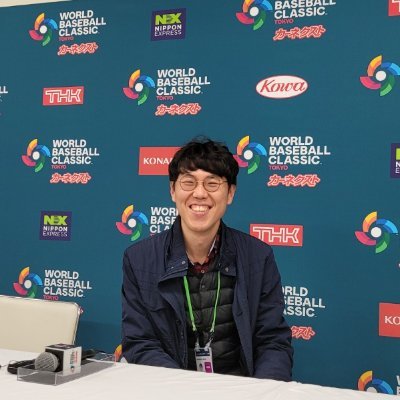
    Our guest is Jee-ho Yoo, a well-known sportswriter in Korea and the only credentialed English writer for the Korea Baseball Organization. 

    Jee-ho Yoo is a sports writer for Yonhap News Agency based in Seoul, South Korea. A graduate of the University of Toronto, Jeeho is the only English-language writer credentialed to cover the Korea Baseball Organization. He has traveled all over the world to report on six Summer and Winter Olympic Games, six Summer and Winter Asian Games, four World Baseball Classics and two FIFA World Cups. In 2020, Jeeho was a frequent on-air guest for ESPN’s telecasts of KBO games, giving viewers in the United States and around the world a closer look at how the South Korean league was able to pull off a full season during the COVID-19 pandemic. Jeeho was born in Seoul and lived in Toronto from 1995 to 2002, during which time he, unfortunately, became a fan of all Toronto sports teams. Jeeho still hasn’t recovered from the Blue Jays’ loss in Game 7 of the 2025 World Series.


    Register in advance for this Zoom meeting:
    https://us02web.zoom.us/meeting/register/UO9adqeITyqntKUMkQDp4g

    After registering, you will receive a confirmation email containing information about joining the meeting.

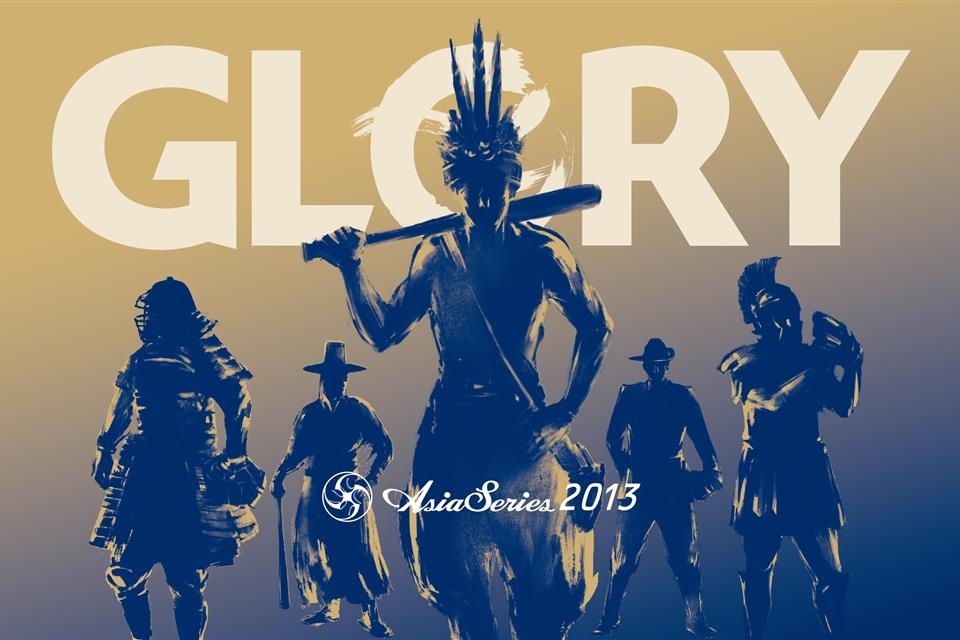
  • A Brief History of the Asia Series

    A Brief History of the Asia Series

    by Tim Sokol

    In many sports, the journey doesn’t end when you win your national championship. Continental, or sometimes even intercontinental glory beckons for the strongest and most ambitious teams. Look at the success of the UEFA Champions League, the Copa Libertadores, and the other continental trophies in club football. Look at EuroLeague basketball, which is far more prestigious than any domestic league in Europe. The idea of competing against teams from outside your own league is an appealing one. There is both excitement in reaching an even higher level of competition and also a novelty in playing new opponents. High level baseball leagues have largely never embraced this idea, with the most notable exception being the Caribbean Series for top winter league teams, but even that is somewhat of an all-star series when you dig into the roster rules and circumstances surrounding winter league ball. The Caribbean Series is awesome, but I don’t think it is quite the same thing as a “Champions League” type tournament between full-length season national champions. The WBSC has recently organized an Americas Champions League and found minimal success so far. There has basically been one honest effort at a “Champions League” style tournament as we generally understand the idea, and so I would like to look back at the now-defunct Asia Series.

    The first Asia Series was in 2005, but the lineage can actually be traced back a decade earlier, to a 1995 tournament sometimes known in English as the “Asia Pacific Super Baseball Championship” or the Asian Pacific Cup. This was a tournament hosted by the Daiei Hawks, who came in 5th place in the Pacific League that year. They invited teams from Taiwan, Korea, and Australia to participate in a two-day single elimination tournament. The Hawks were upset in the first round by the Uni-President Lions (CPBL) and wound up in 3rd place. The Hanwha Eagles (KBO) defeated the Australian League All-Stars in the other first round game. The Lions would go on to win the title, though only a few Lions fans seem to remember or care these days. This tournament received limited media coverage at the time and is largely forgotten today, but it is worth mentioning as an early foray into continental competition. 

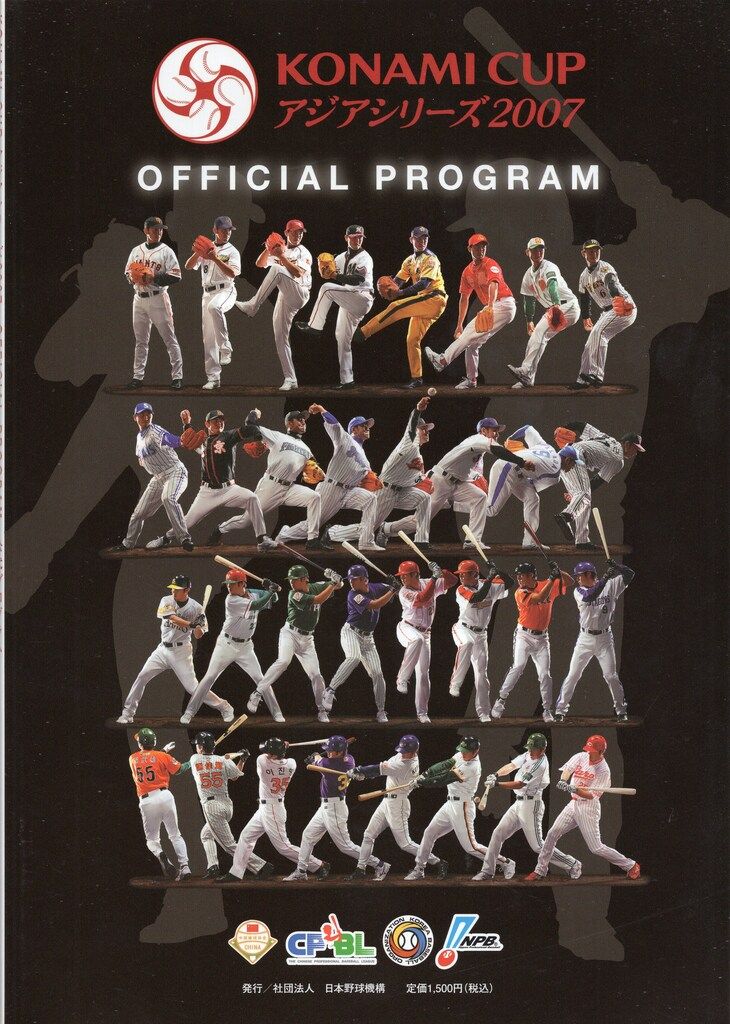
    A decade later, baseball executives decided to try the idea again in a more official capacity. The Asia Series was created for the 2005 season with Konami announced as the title sponsor, making the official name of the competition the Konami Cup Asia Series. The Chiba Lotte Marines, the tournament favorites, won all of their games without too much difficulty and capped it off with a 5-3 victory over the Samsung Lions in the final. The event, hosted at the Tokyo Dome, produced mixed crowds. When the Marines were playing, fans showed up, including over 37,000 people at the final. When the other teams were playing, attendance was paltry. Only 6,340 were on hand for the decisive group game between the Sinon Bulls and Samsung Lions that would determine who advanced to the championship. 

    In 2006, with the tournament once again at the Tokyo Dome, attendance dropped sharply as NPB was represented by Hokkaido rather than the more locally based Chiba. This edition saw the favorites threatened for the first time, with Taiwan’s La New Bears losing to Hokkaido by just one run in both the group stage and in the final. And in 2007, the breakthrough was finally made when the KBO’s SK Wyverns beat the Chunichi Dragons in the group stage, handing NPB its first loss in the Asia Series. Chunichi would go on to get revenge over the Wyverns in the final, 6-5. Attendance remained closer to 2006 levels rather than the heights of 2005.

    While these tournaments produced some good games, there was also an inherent problem with this format. Though there was a vast gulf in talent between the three premier Asian leagues, they were still all stocked with professional players and the weaker teams were still capable of competing with the stronger ones over a short tournament like this. The same cannot be said for the China Stars, who were a representative all-star team from the Chinese Baseball League. The CBL was not a professional league and was of such inferior quality to the other three leagues that even an all-star team proved completely uncompetitive; the China Stars played nine games in these three years and lost all nine, mostly by very large margins. In 2008 the CBL sent the champion Tianjin Lions rather than an all-star team, and the Lions also went 0-3.

    2008 marked a big turning point for the competition. Evidently unhappy with how things were going, title sponsor Konami ended their partnership with the tournament, leaving the name as just the Asia Series. Other sponsors followed suit. And perhaps most importantly, in Japan the tournament was moved off of terrestrial television to satellite channels with a much smaller reach. The competition had never been on the firmest financial ground, but now it found itself in an untenable situation. Amidst further declining attendance despite the presence of the Saitama Seibu Lions, the tournament produced some gripping baseball including a nailbiter final in which Seibu walked off the Uni-President 7-Eleven Lions in the 9th for a 1-0 victory. And so despite the 2008 edition ending on a high note, the tournament’s future looked bleak.

    In 2009, due to lack of funding and willing sponsors, the Asia Series was cancelled. The general understanding around the industry seems to have been that this was a temporary cancellation rather than a permanent one, and there was clearly still some appetite for the idea. That year administrators organized the NPB-KBO Club Championship, a single game winner-take-all replacement for the Asia Series to be held in Nagasaki. A half-filled stadium watched the Yomiuri Giants beat the Kia Tigers 9-4. 

    In 2010, though there were originally plans to revive the Asia Series in Taiwan, this idea was shelved due to a conflict with the 2010 Asian Games. But the interleague clashes continued. This time the KBO Champion SK Wyverns tied a two-game series 1-1 with the CPBL’s Brother Elephants. No game three was scheduled. Then the Wyverns headed to the Tokyo Dome for another NPB-KBO Championship where they were blanked by the Marines. These games were once again moderately but not overwhelmingly successful, and as shown by the scheduling of a two game series, were thought of closer to exhibitions than to any serious continental competition. 

    In 2011, the Asia Series made its formal return, back to the original format with four teams. Gone was the Chinese League, having been replaced by the previous champion of the Australian League. The tournament was hosted in Taichung and Taoyuan and once again saw limited attendance outside of when the home team played. Just 4,000 people showed up to watch the Samsung Lions defeat the Fukuoka SoftBank Hawks to become the first non-Japanese team to win the competition. The theory that Taiwanese fans would come out in big numbers to watch NPB teams seemed to have been proven wrong. But still, the tournament trudged on, expanding to six teams in 2012.

    That expansion led to a new format with two groups of three. Participating teams were the champions from Japan, Korea, Taiwan and Australia, as well as an extra team from Korea (the Lotte Giants, who qualified as hosts) and the return of the China Stars. The Lamigo Monkeys and Yomiuri Giants topped the groups, with the Giants winning 6-3 in the final. 

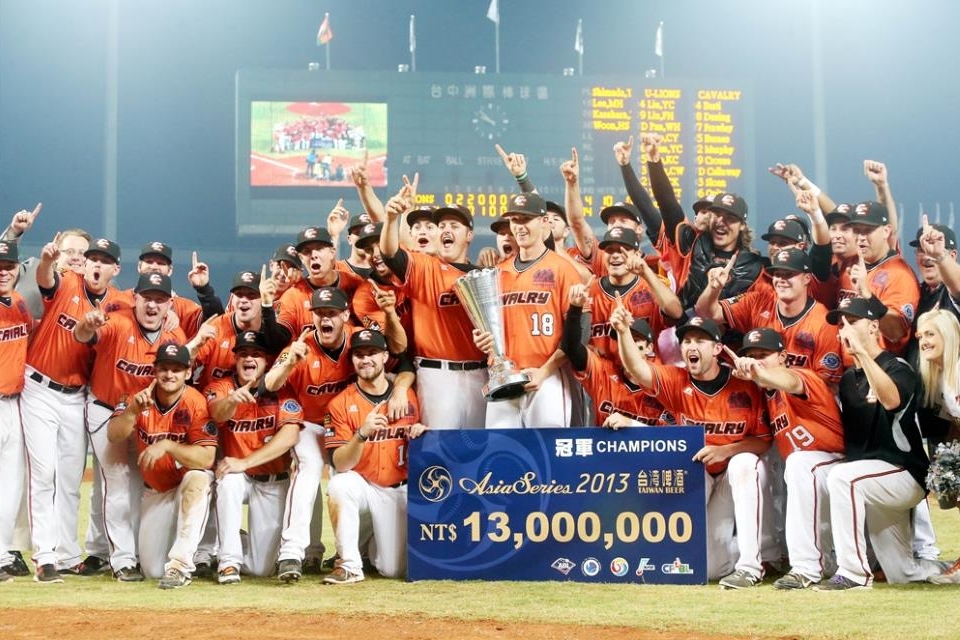
    The 2013 Asia Series would be the last, and kept the six team format, though the China Stars were replaced by an Italian club, Fortitudo Bologna, who were the reigning winners of the European Cup. This time Taiwan hosted and thus received two bids rather than one. The Italians performed as expected, but the shock came when neither Japan nor Korea were represented in the final. Instead, it was the Canberra Cavalry who claimed the first trophy for Australia, defeating the Uni-Lions in Taichung. 

    The tournament ended on a strange note, with Canberra player Matt Blazynski claiming that he had been offered money to throw the semifinal match against Samsung. The CPBL and Taiwanese police investigated the claim and determined that Blazynski’s story was full of inconsistencies, and the CPBL released a statement calling it “a fabricated lie.” Without really having any details we can only speculate, but the CPBL does have a long history of match-fixing scandals, and it seems like an unusual story for a player to lie about. On the other hand, athletes do tell strange lies sometimes. Ryan Lochte comes to mind. In any case, Blazynski didn’t even play in the tournament and obviously Canberra, the eventual champions, did not throw any games. We didn’t know it at the time, but this saga was basically the end of the Asia Series. The tournament did not return in 2014, and has not been played again since.   

    So where does that leave us? Undoubtedly the idea of the Asia Series sounds neat in theory, so why didn’t it work? I think there are quite a few reasons we can point to. The fourth league (after NPB/KBO/CPBL) was never a perfect fit. China (and Italy) simply didn’t have the quality to be competitive, and Australia has the problem of being a winter league and thus the tournament takes place at a strange time for them. A European invite does not move the needle, though there were rumors of eventually inviting teams from stronger leagues such as Mexico. The calendar also became too crowded with other events. We saw one tournament cancelled to make room for the Asian Games, and NPB at this time was still playing their exhibition series against MLB All-Stars in some years. Nowadays we have the Premier12 in this window sometimes. All of those events are higher profile and much more lucrative than the Asia Series. 

    All that said, obviously if viewership was booming the powers that be would have found a way to make it work. The number one reason that the Asia Series is not around today is that not enough people watched, not enough people cared, and not enough money was made. Fans I heard from all gave me a variation of the same answer: The tournament was a cool idea, but we (the fans) only *kind-of* cared and the teams and players only *kind-of* took it seriously. Undoubtedly, there were great moments. Look at the scenes of Chiba clinching the 2005 title and it is obvious that the result mattered to people. But despite the highs, the tournament was never truly elevated to the place of being a serious trophy on par with winning your domestic league. Major media outlets didn’t give it much credence. Attendance was not great. Some players and managers gave good PR answers when asked about the competition, while others were open about the fact that they weren’t interested. 

    And so the natural follow up question: Could this type of tournament work in the future? Never say never, but for now a return seems unlikely. National team baseball is a much more financially sound usage of that calendar space and there isn’t really a lot of clamor for another Asia Series outside of the hardcore baseball nerd demographic. I would love to see it but it’s really hard to pull off as you need full buy-in from players (especially pitchers) and organizations and fans. If everyone involved doesn’t treat it as a serious continental championship, then it becomes nothing more than a glorified exhibition. So you’d probably need a lot of prize money and a lot of prestige associated with the tournament to get everyone to care. Maybe that prestige comes over time as you host the series and it gets slightly more and more important with each passing year, but you need to be able to survive that build-up period without folding. And as we saw with the Asia Series’ original run(s), that is the tricky part.

  • DEVELOPMENT OF BASEBALL IN SAUDI ARABIA

    DEVELOPMENT OF BASEBALL IN SAUDI ARABIA

    by Carter Cromwell

    Probably few are aware of it, but baseball has a history in Saudi Arabia. Until recently, though, it was like an old, rarely perused book that had long gathered dust in the attic. 

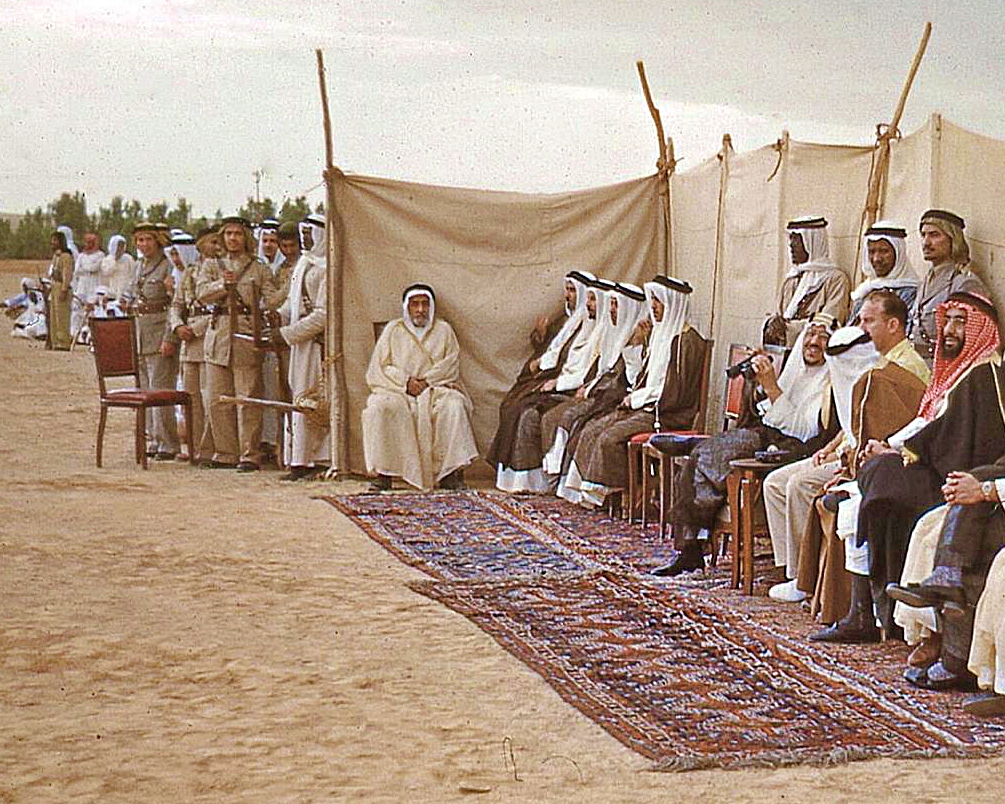
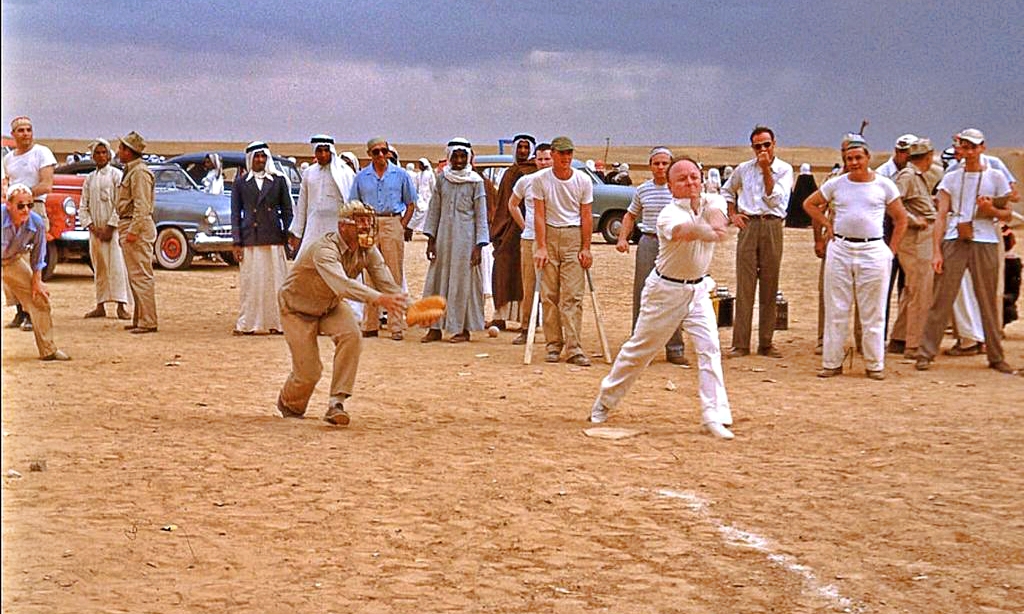
    Not many know that Americans brought baseball to Saudi Arabia in the early 1930s when companies began searching there for oil, which was finally discovered in 1938. Then-king Saud even attended a game in 1954. Children of expat employees of the Arabian American Oil Company (Aramco) played baseball in Dhahran, whose team advanced to the Little League World Series 23 times before interest slackened for a number of years. 

    But now there is an effort to update the story for a larger audience. Much is yet to be written, but people from the governmental level on down are working to change the narrative. 

    In part, this reflects the pivot toward sports that some Middle East countries have made in recent years, the Saudi-sponsored LIV Golf Tour and Qatar’s hosting of the 2022 World Cup football (soccer) tournament being two examples. It also fits with Saudi Vision 2030, the goal of which is to increase diversification in the country economically, socially, and culturally. 

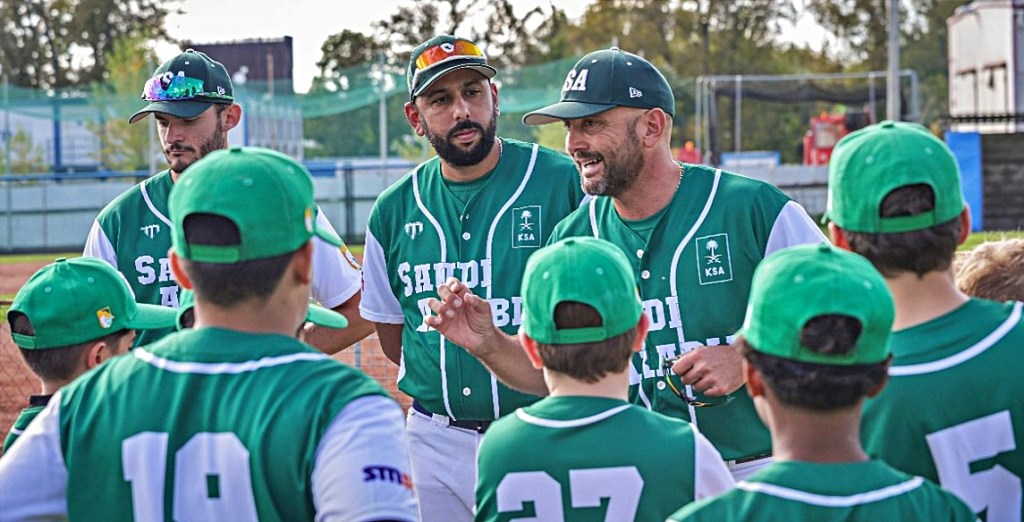
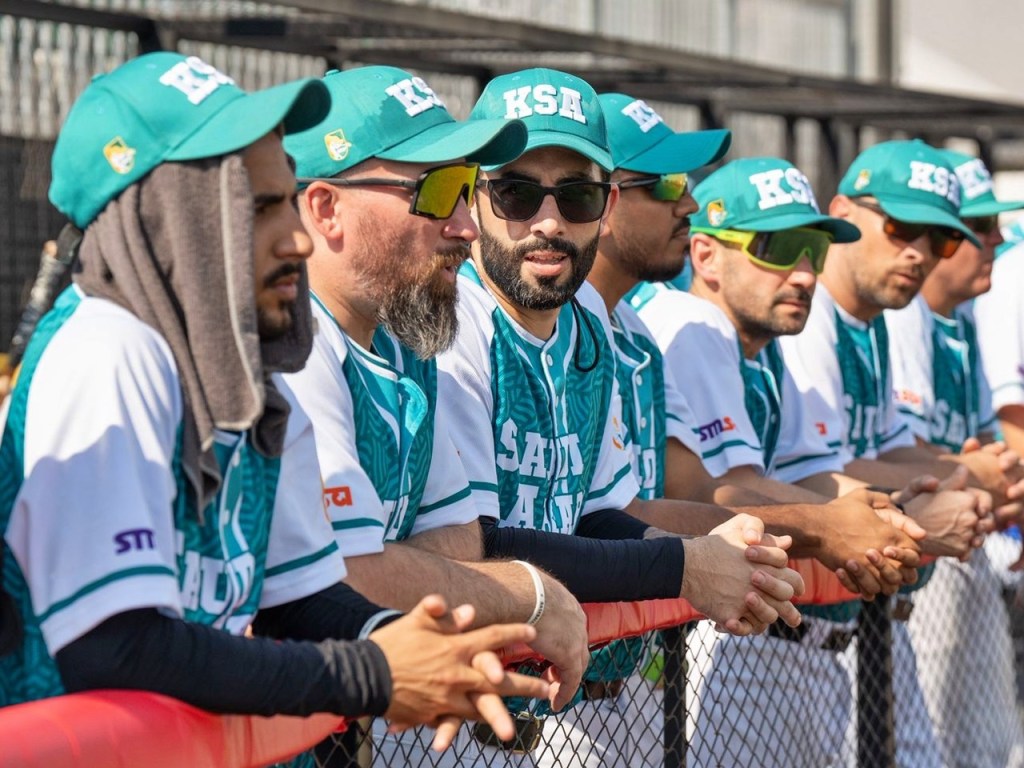
    The Saudi Baseball and Softball Federation (SBSF) was established in late 2019. Baseball United, the Dubai-based professional league that played its initial regular season late last year, is working with the federation to develop the sport, and the Dhahran Youth Baseball Association (DYBA) is rebuilding a program that had gone into decline.

    It is unquestionably a long-term project, but it’s happening.

    Nayef Bin-Humaid is president of the Saudi Baseball and Softball Federation. He lived for 10 years in the United States, mostly near Washington, D.C. His interest in baseball began when he would go with friends to games of MLB’s Washington Nationals. After returning to his home country, he eventually landed in a government job with a project for Vision 2030.

    “I was approached in December 2019 by the Saudi Olympic Committee, which was interested in establishing a governmental body supporting baseball,” Bin-Humaid said. “That would feed into one of the pillars of Vision 2030 in terms of expanding sports activities in the country and, more importantly, expand the game for Saudis.”

    Nayef bin-Humaid
    “Photo courtesy of Nayef bin-Humaid”

    Bin-Humaid was elected president of the federation and got to work immediately, only to be delayed by the Covid-19 pandemic.

    “We started in January 2020, and our first order of business was to find out who was playing the game in Saudi, who wants to play, and what could we do to expand the game within the country,” he said. “We started by going into American and Japanese communities, as well as others that we thought might include people who were interested in baseball. Though baseball is not that popular here, we were surprised to find that there were Saudis who loved the game, wanted to participate, and follow MLB teams closely.”

    Covid-19 soon hit and put a lot of efforts on hold, but the working group was still able to develop a plan and the necessary steps. It connected the Saudi federation with the Asian Baseball Federation and the World Baseball Softball Confederation, while also obtaining seed funding from the Saudi Ministry of Sport. 

    “That enabled us to hire some employees, kick-start a marketing campaign, and get a few other things in motion,” Bin-Humaid said. 

    Jean-Michel Mayeur came on as technical director of the Saudi federation in 2024. The native of France has a long background as a player and coach, directing a baseball academy in Montpellier for nearly 20 years. 

    “I’m excited because I understand the potential here, but it’s going to take a while to develop,” he said. “It’s a big challenge. The main focus now is grassroots development.”

    Bin-Humaid echoed that, saying, “We’re definitely working to develop at the grassroots levels. We’re very lucky to have someone like Jean-Michel who loves the game, is great with kids, and has run an academy. He took on the challenge of coming to a foreign country with the game in its very early stages and help put together a development plan that we can take to schools.”

    The efforts currently focus on a number of areas, including:

    • Working with schools to get baseball instruction into physical education curricula so that more Saudis will be exposed to the game
    • A partnership with the Yokohama DeNA BayStars of Japan’s top professional league to bring some young Saudi players to clinics there
    • Integrating Baseball5 programs into school curricula as a pathway to baseball
    • Establishment of Saudi national teams in baseball, softball, and Baseball5
    • Staging tournaments
    • Working to develop leagues, so players can get consistent competition

    “We’re working hard to get baseball into schools,” Mayeur said. “Getting people interested early on is key. First, we need to teach physical education teachers how to teach baseball. The goal is to have classes during the school days and then after-school activities involving baseball. Baseball5 should help people get interested, too, since you don’t need a ton of equipment or have to train pitchers.”

    Joan Bonhaure, Karim Mejri, and Jean-Michael Mayeur

    Mayeur also noted the need to establish academies; train coaches, players, scorekeepers, and umpires; organize tryouts and tournaments; build more fields that meet regulation standards; establish leagues; and … well, a lot of stuff.

    “The list is long,” Mayeur acknowledged, “but we’ve made progress. We’ve established national teams in baseball, softball, and Baseball5, and having the partnership with the BayStars is really nice. We have four Saudi kids, ages 13-16, there to get instruction and observe the pro team’s practices. We hope to send more in the future, and also have some Saudi teams go there to compete against high school players.”

    Owen Reid of Reid Baseball is an independent consultant who conducts clinics in various countries, many of which – such as Tunisia, Bangladesh, Thailand, Malaysia, Indonesia, and Kyrgyzstan – are not on the baseball map. He started holding clinics in Saudi Arabia in 2016 and made more than 30 visits before moving there with his family early in 2025.

    “I’ve seen the game shift from being a novelty to an option, and now it’s more and more becoming an opportunity for families and Saudi kids eager to challenge themselves with something new,” Reid said. “It’s still true that most of the players I work with are expats, but I’ve seen encouraging growth in the number of Saudi ballplayers. And what excites me most is retention.  Once they try it, they often stay with it. Curiosity is turning into commitment.”

    Bin-Humaid said, “We have around 1,000 registered players in the country now. We focus on kids who are interested and show potential. We monitor them and work to keep them in the game, even when they go abroad to university and play. We’ve taken some to camps in places like eastern Europe, France, and the Dominican Republic, in addition to Japan. We hope to carry the torch for advancement of the game in western Asia.”

    He added that there are now baseball coaches in about a dozen high-level private schools, since physical education classes in public schools mostly focus on football (soccer). 

    For his part, Reid has increasingly worked with coaches, as well as players, and said, “By equipping coaches in Saudi Arabia with the tools, language, and standards to create positive baseball environments, we multiply the impact. The more educated and empowered coaches are, the more impact they can have on the next generation of people and ballplayers.”

    Under the terms of its partnership with the Saudi federation, announced in March 2024, Baseball United has the right to establish franchises in Riyadh, Jeddah, and Dammam. Baseball United will help promote the game across the region, develop local talent in Saudi Arabia, and design training programs and curricula for players, coaches, and umpires at both the amateur and professional levels. The league will also look to host future tournaments and league games in Saudi Arabia.

    Kash Shaikh, who will leave his role as chairman and CEO of Baseball United effective March 1, has led the organization since its inception four years ago.  He has a personal connection that helps drive his interest in bringing baseball to the region – he lived in Dhahran for three years while his parents worked in the oil industry, and he played Little League baseball there.

    “For the longer term, we have a 15-year partnership to bring baseball to Saudi. This is the most under-developed region as far as baseball goes, so we’re doing as much as possible to help the sport grow. We’re helping with the Saudi national team program – we put a team on the field last fall for the Baseball United Arab Classic. We’re also helping from a resource and financial standpoint, as well as bringing expertise to the training and curriculum programs.”

    Bin-Humaid added, “Baseball United has made a significant commitment to developing the game here. They sponsored one of our tournaments, which involved people from various embassies in Riyadh, and they also committed to sending expert coaches and trainers when we need them.”

    Mayeur also sees Baseball United’s participation as a positive: “The partnership is huge. We need to make baseball fashionable for the kids. Once they get teams in Saudi, it will give people a reason to come watch. We need that kind of thing to push development.”

    Bin-Humaid also noted the importance of the long-standing baseball community in Dhahran. 

    “Luckily, we connected with the baseball community in eastern Saudi – the Aramco people in Dhahran,” he said. “The coaches, parents, and kids there are very much into it.”

    Erich Sutterlin (third from left) and teammates from the Saudi Arabia national team. Photo courtesy of Erich Sutterlin

    Erich Sutterlin, president of the Dhahran Youth Baseball Association (DYBA) and a school teacher in the Aramco community, added, “The federation identified us as an entry point for finding baseball talent in the Kingdom. Several of our players participate in international tournaments under the auspices of the federation and the Saudi Committee. We’re separate from an organizational standpoint, but our players benefit from being involved with their teams.

    “The relationship with the SBSF has led to some interesting developments such as a Baseball5 club at our school, which has helped introduce the game to players from countries that don’t have strong baseball backgrounds,” Sutterlin continued. “And the SBSF has visited schools and encouraged the Saudi players in our leagues to invite their friends so they can learn about baseball.” 

    Getting more Saudis playing the game is a major part of the federation’s mission, of course, and there has been some progress in Dhahran. Sutterlin said that a 12-U team played in a tournament in the Czech Republic in September 2025, finishing second out of 12 teams, and a 15-U team comprised of expats and Saudis competed in a tournament in Italy in November. He noted, however, that “the expat and Saudi kids here don’t go to school together, so it’s more of a challenge to get the Saudis to play. The ones that do participate are often children of ‘mixed’ parentage.”

    Still, there is progress. As Reid remarked, “I see Saudi families returning season to season and ballplayers coming back to the field each time I return to Dhahran.”

    Glenn Makechnie, Sutterlin’s predecessor as head of the DYBA and a geologist with Aramco, said that there are Saudis playing in every age group, and also on the travel teams. “They’re still in the minority, but we’re inclusive of kids at all skill levels, not just the more interested ones. Recently, one team had 11 different nationalities among the 13 players.  And while the number of Saudi participants is low, some of our best players are Saudis.  There are some on our 12-U and 15-U travel teams who are performing very well. 

    “We also collaborate with the Little League in Qatar, which is very active and hosts regional tournaments. Two American high schools there have programs, as well.”

    This comes after baseball interest in the Aramco community trended downward for more than a decade. After the long period of success from 1983-2011, the Dhahran Little League team was shifted to the Asia-Pacific region, which was more competitive. That, combined with a shrinking expat population at Aramco that reduced the pool of potential players and baseball-savvy parents, resulted in less success and dwindling interest in attending the Little League tournament. 

    After the 2017 season, when the program struggled to get nine players to fill out an all-star team, the DYBA’s board of directors let the association’s Little League charter expire. Overall participation fell off, and the Covid-19 pandemic exacerbated the decline.  The program was completely shut down from the spring of 2020 until the fall of 2021.

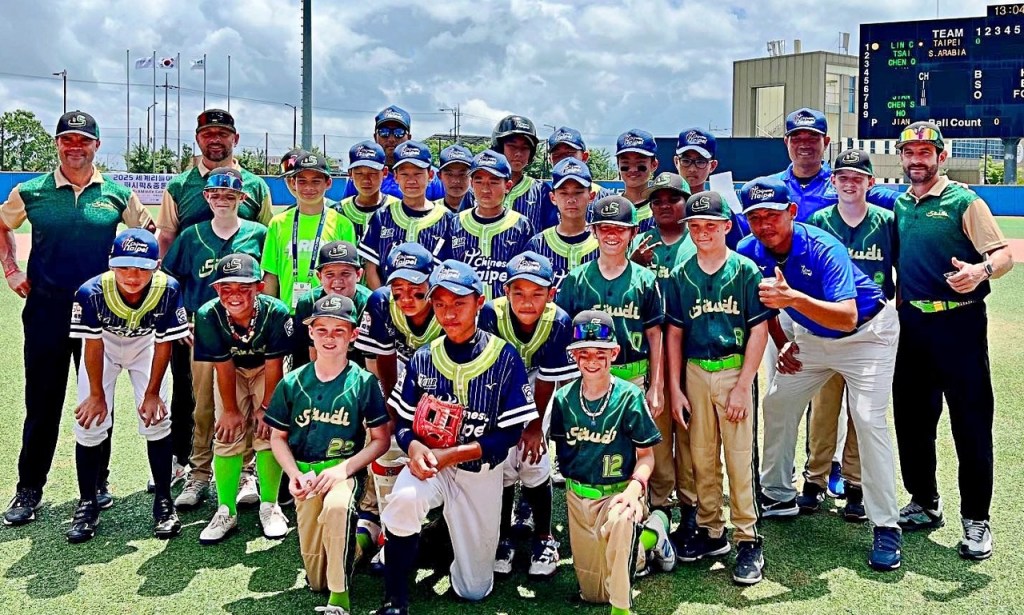
    The DYBA Little League just after playing Chinese Taipei in the 2025 Asia-Pacific & Middle East Tournament in South Korea.  Photo courtesy of Erich Sutterlin

    “When we tried to reboot after Covid, we could barely field two teams for a 12-U kid-pitch division,” Makechnie said. “It’s taken a monumental effort from all involved to grow the league back to where it is today. We’ve had great support from parents internally and from external resources such as the SBSF and Reid Baseball.”

    Makechnie said there are parallel programs within the Aramco community – youth baseball supported by Aramco and a chartered Little League initiative that “intertwines with the youth baseball program.” There are approximately 260 young people playing on the various teams, including T-ball, and there are 20-25 girls playing softball, with some of the latter also involved with baseball. In addition, there is a new senior league that utilizes pitching machines, rather than live pitchers. “There aren’t enough older people who can pitch,” he said wryly.

    “We’ve really had to re-think our goals and organizational structure to create meaningful baseball experiences for all our membership,” Makechnie continued. “Even though the North American expat population is decreasing, overall baseball participation is about the same. That’s good in a way, but it also means we have fewer baseball-savvy people helping, so we’ve had to get creative. We’re probably the most unique baseball organization in the world.”

    Now, interest is expanding again, although it hasn’t reached the levels of two or three decades ago. Saudi Arabia returned to international Little League action at the 2025 Asia-Pacific & Middle East Tournament in South Korea, though it failed to advance from pool play. 

    Reid has partnered with the DYBA since 2016, putting on multiple clinics each year, and he worked with this year’s Little League team.

    As for the future, there is a need to continue building more fields, as well as establish leagues. There are perhaps 15 fields in the country now, including several at the Aramco facilities in Dhahran. About half are private, and not all meet regulation standards.

    For the sport to grow and evolve, Reid sees the need for greater access within communities – i.e., more leagues at multiple levels – continued development of coaches, additional facilities that are multi-use and adapted to the hot climate, a clear league structure that provides pathways to greater competitive levels, and role models and greater visibility for the game.

    “The foundation is there, and baseball here continues to build momentum,” Reid said. 

    Bin-Humaid said, “We’re committed to keep pushing forward. We will participate in the Asian Games in Qatar in 2030, and we’ll be the host nation of the Asian Games in 2034. By then, we want to have a team that not only participates but competes.”

    Mayeur added, “We just need time and exposure. If we can show baseball to kids, we can get them interested. We just have to keep going, and things will happen.”

  • No Alibis: The Detroit Tigers’ 1962 Tour of Japan

    No Alibis: The Detroit Tigers’ 1962 Tour of Japan

    by Andrew Forbes

    Every Monday morning we will post an article from SABR’s award-winning books Nichibei Yakyu: Volumes I and II. Each will present a different chapter in the long history of US-Japan baseball relations. This week Andrew Forbes focuses on the Detroit Tigers 1962 visit to Japan.

    For the Detroit Tigers 1962 was a year to forget. They finished the season in fourth place, 10½ games behind the pennant-winning Yankees, with 16 fewer wins than the second-place 1961 Detroit club. The best the Tigers could muster in 1962 was second spot in the United Press International baseball experts’ poll of the season’s “No. 1 disappointment,” a single vote behind Roger Maris, who followed up his historic Babe-besting homer total with “only” 33 in 1962.

    As the Yankees and Giants were renewing hostilities in a rain-soaked World Series, the tired and disappointed Tigers limped off to Asia for a monthlong goodwill tour. As foul weather blanketed the Pacific, a coterie of Tigers trainers, wives, the traveling secretary, and team owner and President John E. Fetzer accompanied a scaled-back squad (just three outfielders and a nine-man pitching staff), first to Hawaii, where they squeezed in two games, and then on to Japan. The schedule called for excursions to Seoul and Okinawa before 17 matches against the best competition Japan could offer. Commissioner Ford C. Frick had planned to join the traveling party in Honolulu, but was held up stateside while inclement weather and stingy pitching stretched the World Series out to seven games over two weeks.

    The Tigers touched down in Tokyo on October 18 and participated in a press conference before heading off to the Imperial Hotel. On October 20 the players, executives, and wives were the guests of Japanese Foreign Minister Masayoshi Ohira at a cocktail party thrown in their honor. The Americans were formally introduced by Yetsuo Higa, the Hawaiian businessman who, along with the Mainichi newspaper corporation, was instrumental in planning the tour. Tigers President Fetzer gifted Ohira a set of silver cufflinks fittingly adorned with the heads of tigers.

    Commissioner Frick, having finally joined the group in Tokyo, revealed to the press the secondary – or perhaps even primary – reason for his presence, telling the Associated Press that he would meet with Japanese baseball officials to codify regulations surrounding the movement of players between the United States and Japan. “Before I leave we hope to agree on a definite set of rules under which American players can come to Japan,” Frick said, perhaps unintentionally signaling his belief that no Japanese player would ever be skilled enough to play pro ball in America.

    After successful tune-ups in Okinawa (where they “whipped a servicemen’s team,” 9-0, largely on the strength of Jim Bunning’s five no-hit innings) and Seoul (beating up on an all-star team, 8-0, thanks to a three-run shot by Bubba Morton), the Tigers returned to Tokyo and prepared to begin competition against Japanese squads.

    But the Detroiters would not be at full strength. Much of the Tigers’ trouble during the regular season could be chalked up to injuries, with starter Frank Lary (sore arm), outfielders Al Kaline (broken collarbone) and Billy Bruton (sore leg; broken jaw), and first baseman Norm Cash (broken finger) all missing significant time. By the time the team landed in Japan, Bruton was still unable to play, and Kaline was touch-and-go due to torn ligaments in his foot suffered during one of the games at Honolulu. The injury “definitely has slowed me up,” said Kaline. “It’s a real tough problem. But I’ll play with it taped up and do the best I can.” Given the injuries, and the fact that only three regular outfielders made the trans-Pacific journey (with Rocky Colavito remaining stateside to be by his wife’s side as she battled illness), manager Bob Scheffing would be doing a lot of juggling.

    On the eve of the slate’s first game, the Tigers made their first public appearance, taking in a night of entertainment at the Nichigeki Theater in downtown Tokyo. The players and their wives enjoyed a two-hour show by the Nichigeki’s dancers before the boys donned happi coats and took the stage. Scheffing introduced his players to the crowd, and each was presented with a bouquet of flowers. The appearance concluded with the athletes tossing rubber balls into the crowd; those who caught select balls adorned with a Tigers logo would be admitted to the next day’s game free of charge.

    The next afternoon Jim Bunning took the Tokyo Stadium mound for the Tigers in front of 27,000 spectators, including Crown Prince Akihito and Princess Michiko. After the ceremonial first pitch was handled by Japanese Foreign Minister Ohira to US Ambassador Edwin O. Reischauer, the Tigers wasted no time providing their starter some run support. Detroit’s hitters roughed up Daimai Orions starter Tomoo Wako, who did not make it out of the first. The Tigers put up eight runs in the opening frame, including a three-run homer by Jake Wood, to cruise to a 12-1 victory. Bunning contributed 5⅓ perfect innings before giving up four hits and giving way to reliever Terry Fox.

    Neither the Tigers nor the Orions came away unscathed, however. In the sixth inning, Detroit first baseman Norm Cash was struck behind the ear by Daimai lefty Shoichi Ono’s errant pitch, necessitating a hospital visit for X-rays, which showed no lasting damage. “I hope to play tomorrow,” said Cash. And Kaline reaggravated his foot injury in the first inning, toughing it out until the sixth when he was replaced by Bobo Osborne. Meanwhile, in the other clubhouse, Orions manager Mitsuo Uno was relieved of his duties by club President Masaichi Nagata. In his two years as manager, Uno had led Daimai to a 132-136-4 record and a pair of fourth-place finishes, so his employers may simply have seen the lopsided loss as the final straw.

    Scheduled games on Sunday against the Yomiuri Giants and Monday versus a combined team containing members of the Orions, the Kokutetsu Swallows, and the Taiyo Whales were washed out by rain, but the layoff allowed Frick and his officers to hammer out an agreement with their Japanese counterparts. Meeting at the Imperial Hotel, Frick, Tigers owner Fetzer, and AL President Joe Cronin sat down with Japanese Commissioner Yushi Uchimura, Pacific League President Fujio Nakazawa, and Central League President Ryuji Suzuki to formalize a deal that would “prohibit direct trades between Japanese clubs and American players, and vice versa by American major league clubs and Japanese players, without the commissioners’ approval.” In Frick’s view, the pact promised “smooth relations” across the Pacific, though it would take only two years for the commissioner to be proved wrong. The 1964 dispute between the San Francisco Giants and Nankai Hawks over the contract status of lefty reliever Masanori Murakami led Frick to write Uchimura decreeing that “all agreements, all understandings and all dealings and negotiations between Japanese and American baseball are cancelled.”

    The Tigers players also kept busy during the rainy days, as pitcher Phil Regan gave a Bible reading at Kawasaki Baptist Church, while Bunning, Cash, Scheffing, Kaline, and Dick McAuliffe, along with Hanshin Tigers pitcher (and Central League MVP) Minoru Murayama, appeared on the NHK-TV program My Secret.

    The Tigers – including Cash, recovered from his beaning, and Kaline – returned to the field after the two rainouts to face the recently crowned Japanese champion Toei Flyers at Korakuen Stadium. The Flyers outhit and outpitched Detroit, and played sharper defense. Knotted, 3-3, after nine innings, the game was declared a tie in keeping with an agreement struck at the tour’s commencement that forbade extra-inning games. Scheffing, however, complained that he would “prefer to let these exhibition games go into extra innings to settle it one way or another.”

    Things got worse the next day as the Tigers met the Yomiuri Giants in a makeup of their washed-out game, and the Giants “took a liking to the slow curves of right-hander Phil Regan,” and held on for a 3-2 win behind starter Minoru Nakamura, who tossed a complete game. “We have no alibis,” said Scheffing, whose squad now had only one win to show for their first three games in Japan. “We weren’t hitting and their pitcher had good control.”

    It was likely with some relief, then, that the Tigers greeted the opportunity to escape Tokyo and begin the road leg of their excursion, alighting first in Sapporo, where they handled a team consisting of Orions and Giants, 6-2, behind the bat of Bubba Morton and the pitching of Don Mossi. Thence to Osaka did the Tigers fly, where their game against the Hanshin Tigers at Koshien Stadium was rained out. But the visit did allow John Fetzer to invite their namesake club to their 1963 spring-training camp at Lakeland, Florida, with the American Tigers picking up all expenses accrued in the United States.

    Scheffing’s distaste for tie games might have been a factor in the decision to enter extra innings the next day, a Sunday afternoon at Nishinomiya Stadium. The Tigers and a mixed team of Japanese all-stars were tied, 3-3, after nine, but Detroit exploded for four runs in the 10th, with Flyers rookie hurler Yukio Ozaki the victim.

    Events in Nagoya on November 5, though, might have had the Tigers wishing they’d banked a couple of those runs, as Chunichi Dragons outfielder Shinichi Eto slugged two homers, added a pair of singles, and reached on an error, and the All-Stars (composed of Dragons, Giants, Orions, and Kintetsu Buffaloes) downed Detroit 6-4. Hank Aguirre surrendered five of the All-Stars’ runs, including Eto’s homer on the first pitch of the afternoon. If there was good news for the Americans it was that Billy Bruton’s jaw had healed to the point that he was able to pinch-hit – just in time to strike out to end the game.

    Said Scheffing, “Japanese baseball is a lot better than we were led to believe before we came over here.”

    Blasts by Cash, Kaline, and McAuliffe helped matters on November 6, when improving weather allowed Detroit to play Hanshin in Osaka after the earlier postponement. The American Tigers cruised, 11-4, with Cash contributing four RBIs. Chico Fernandez and Mike Roarke chipped in homers to help the Tigers blank the Nankai Hawks 3-0 on November 7. It appeared the Tigers were beginning to recall that they had led all of big-league baseball in home runs in 1962 with 209. The pleasing trend continued in Tokyo, as Detroit added four more homers – including another apiece for Cash and Kaline – to best a Swallows/Orions/Whales squad, 13-8, in a contest called in the top of the ninth due to darkness. At Hiroshima, homers from Cash, Kaline, and McAuliffe were more than enough to overcome the amassed strength of a Hiroshima Carp/Hankyu Braves/ Hanshin Tigers/Daimai Orions team, 8-1, with Jim Bunning going the distance for Detroit.

    For all their power, the Tigers had not yet hit a grand slam on Japanese soil. Norm Cash fixed that on November 10 at Fukuoka, against a side made up of Orions and Nishitetsu Lions. The clout helped Detroit come from behind to win, 6-4, improving the visitors’ record to 8-2 with a tie.35 The fireworks continued at Shimonoseki against the Taiyo Whales, as Detroit strolled to a 10-0 win that featured homers by Morton, McAuliffe, Cash (his sixth in seven games), and catcher Dick Brown.

    The big hits kept on coming after the Tigers landed in Shizuoka to face a team of Giants and Orions. Kaline notched another homer, and Bobo Osborne’s grand slam in the top of the ninth put the game away for Detroit, 12-7, with the last half-frame called due to darkness. Osborne’s shot was the Tigers’ 27th homer in 13 games on the Japanese tour. The ball left a mark on more than just the scoreboard; spectator Saku Masuda was gifted an autographed ball to go along with a bruise on her shoulder.

    Kaline homered yet again in Utsunomiya against the amalgamated might of the Giants and Orions, but it proved just about all the offense the Tigers could summon in a 6-3 loss, dropping their record to 10-3 with a tie – not shabby, but not the walk in the park they might have expected. Jim Bunning went seven innings but gave up four earned runs in the first and took the loss. Kaline homered again – his seventh – the ensuing afternoon at Miyagi Stadium in Sendai, and it was just enough to beat an all-star agglomeration of Flyers, Giants, and Orions, 4-3.

    An offday preceded the final games of the tour in Tokyo, but it apparently did Detroit little good. On an autumn Saturday afternoon at Korakuen Stadium, Hanshin Tigers ace Minoru Murayama, hurling for the All-Stars, turned in what Japanese baseball officials called “the greatest pitching performance by a Japanese since the late Eiji Sawamura lost a [one-run game] to Connie Mack’s All-Stars back in 1934,” a legendary outing that saw Sawamura strike out Charlie Gehringer, Ruth, Lou Gehrig, and Jimmie Foxx in a row. Surrendering just two hits, Murayama became the first Japanese pitcher to shut out a visiting American big-league team over a full nine innings. The Tigers’ first hit didn’t come until there were two out in the eighth, when Mike Roarke collected a cheap single to left. “We have no alibis for losing,” said Scheffing. “We just couldn’t hit that fella Murayama.” With the loss, the Tigers joined the 1956 Dodgers and the 1960 Giants as the only major-league squads to lose four games in Japan.

    “We gotta be tired,” said Scheffing. “It’s been a tiring trip after a long regular season.”

    The next day brought only moderately better results. Once again facing an All-Japan team, the Tigers registered a 3-3 tie in a game called after 10 innings due to darkness. McAuliffe homered for Detroit; Sadaharu Oh and the Orions’ Takao Katsuragi cleared the fence for the All-Stars. When play ceased, “a band played ‘Auld Lang Syne’ to close the series,” as the game marked the end of the scheduled exhibition itinerary. But officials announced one additional game between the Tigers and Japan’s All-Stars, to be played two days later, “a parting gesture of goodwill.” All proceeds of the bonus game were to be “donated to the 1964 Tokyo Olympics fund,” an “unparalleled” move, according to Japan’s Olympic Committee.

    Billy Bruton homered in the finale, and the Tigers rolled to a 7-2 win. For the purposes of the record books, however, the tour was officially over two days earlier, after the tie game, meaning that Detroit’s 11 wins, four losses, and two ties earned them “the worst record ever for a major league club coming to Japan.” The Tigers – “the big flops this year in the American League” – couldn’t even catch a break at the turnstiles; Detroit’s “total attendance of 383,370 for 17 games in Japan didn’t measure up to the 16-game attendance of the San Francisco Giants’ [441,000] and St. Louis Cardinals’ [430,000] tours in 1960 and 1958 respectively,” though in all fairness it should be noted that the Tigers battled soggy weather just about every step of the way.

    Before departing, Joe Cronin summed up what the American baseball emissaries had discovered in Japan in 1962. “The Japanese might be able to challenge American major league baseball in the next generation of players,” he told the press. “They are really something to see.

    Having been in Japan for over a month, the Tigers had seen enough. The schedule concluded, they flew home to lick their wounds, rest up, and prepare for the 1963 season.

    Continue to read the full article on the SABR website

  • A New League called Baseball United Begins Play in Dubai

    A New League called Baseball United Begins Play in Dubai

    By Carter Cromwell

    DUBAI, United Arab Emirates – Birthed just three and a half years ago, Baseball United took a major step toward adulthood this November.

    Formed to bring professional baseball to a region with little exposure to the game, Dubai-based Baseball United had staged a two-game showcase in November 2023 involving several former Major League Baseball (MLB) standouts; then the Arab Classic a year later that matched the national teams of nine countries; and an exhibition series in February 2025 between two of its teams. 

    But when Karan Patel of the Mumbai Cobras threw a fastball to Pavin Parks of the Karachi Monarchs at 8:21pm on November 14, it marked a significant milestone. It was the first pitch of the first game of the first regular season of the first professional baseball league representing the Middle East and South Asia. And it took place in the first and only pro baseball facility in the region – Baseball United Ballpark

    Parks, by the way, hit that first pitch over the left field fence for a home run, and he hit another in the ninth inning as part of a five-run rally that lifted Karachi to a 6-4 victory. 

    “We’ve visualized this for three years, and – as I stand before you now – it looks even better than in my dreams,” Baseball United co-founder and CEO Kash Shaikh told the crowd of approximately 3,000 prior to the opening game. 

    Former major-leaguer Mariano Duncan, who manages the Mumbai team and has been with the league from early on, said, “We’ve finally brought a baseball season to Dubai. There’s a lot more work to do, but I’m happy we’ve been able to take this big step.”

    The November 14 contest began a one-month season in which each of the four teams will play nine games, followed by a best-of-three series for the championship. All the clubs – the Arabia Wolves and Mid East Falcons, along with the Cobras and Monarchs – play at Baseball United Ballpark with games broadcast in several countries and streamed live on YouTube.

    The league is attempting the yeoman’s task of germinating the game in what might seem like infertile soil – creating something from scratch, as Shaikh has said. To do this, Baseball United has worked to develop the fan experience – something always important but especially so in this case since the game is unknown to a large portion of the potential fan base.

    “It’s a long process to really grow the fan base,” Shaikh said. “We’re taking the game where most people don’t know it. This is the most under-developed region as far as baseball goes, so this is going to take some time. We have to do is make sure people enjoy the overall experience.”

    John Miedrich, a co-owner and executive vice president of operations, concurred: “We’re talking about teaching the game, of course, but it’s just as important to teach the fan experience. Baseball is so new to the region that most people don’t have an understanding of the game, but if they have a good overall experience when they attend, there’s a chance they’ll come back.”

    Similar to games in Japan and Korea, the games feature cheering sections on each side with people waving towels, as well as bands in the left field and right field stands. There is music throughout, a dance team that sometimes performs between innings, kids racing mascots around the bases between innings once per game, and a youngster enthusiastically announcing “Play Ball” to the crowd. And perhaps the most unique innovation is having each starting pitcher enter the game from the bullpen while riding a camel.

    The league also features some new rules:

    • If a game is tied after nine innings, a home-run derby, or swing-off, will decide the winner. Each team’s nominated player gets 10 swings to hit as many home runs as possible. If the hitters tie, a sudden-death swing-off occurs. 
    • Each team has a designated runner it can use once per inning, without the man he replaces being removed from the game.
    • As many as three times in a game, the team at bat can declare a “Money Ball”. A  bright yellow ball replaces the regular white one, and if the player at bat hits a home run, it doubles the number of runs scored. If the batter is walked or hit by a pitch, the Money Ball rolls over to the next batter.
    • “Fireball” – If the team in the field calls a fireball and the current batter strikes out, the inning is over, regardless of how many outs there were at the time. Each team is allowed three fireballs per game. 

    “We started the fireball this year because people said we had rules to help the teams at bat but nothing to help the pitchers,” Shaikh said. “Some people like the rules, and others don’t, but we think this makes us stand out a little more.”

    Antonio Barranca, an American and catcher for the Arabia Wolves who played two years in the Atlanta Braves organization, said, “It’s kind of crazy – but fun – to see some things like the new rules and pitchers riding on camels. It makes the league a little different and helps them get their brand out.”

    At a media event the day before the opener, Shaikh pointed out left and right fields to the media members and had to make it clear that the second baseman doesn’t actually position himself on the base. He also explained the “charge” fanfare and the seventh-inning stretch during which fans sing “Take Me Out to the Ball Game”. Then he invited them to play a game of catch with the likes of co-owner and former major league catcher Robinson Chirinos and others. 

    Likewise, the television commentators sometimes explained situations likely not understood by those new to the game. For example: why there is no need to tag a runner on a force play. 

    The population of Dubai is approximately 90 percent expatriate, and more than a few residents come from baseball-playing countries such as the U.S., Canada, Japan, Korea, Taiwan, and others. Baseball also has some similarities to cricket, which has a large, rabid following in countries like India and Pakistan. 

    “To spread the word, we’ve been talking a lot with people from the various embassies, the Philippine softball family; the cricket people from Australia, New Zealand, India, and Pakistan; and others,” Miedrich said. 

    The league has, in part, constructed the team rosters with an eye toward attracting fans of different nationalities. A check of the rosters, shows that, while many of the players are American, there are players born in 23 other countries – from Europe, North America, South America, Central America, the Caribbean, South Asia, and East Asia.

    Seven players have MLB experience, the most prominent being outfielder Alejandro de Aza of the Mid East Falcons. More than 20 players have been in the minor league organizations of MLB teams; more than 40 have played in independent leagues; and at least seven have played in European leagues. 

    Shaikh pointed out that “Mumbai has two players from the Philippines [shortstop Lord De Vera and outfielder Ian Mercado], as well as six from India. Karachi has four Pakistanis – look out for Musharraf Khan, a 6-7 pitcher – and there are 14 Japanese players on the Mid East Falcons.” 

    The Japanese contingent includes former Nippon Professional Baseball (NPB) stars Munenori KawasakiHiroyuki Nakajima, and Shuhei Fukuda; others with NPB experience; and Manato Tanai, an 18-year-old shortstop who was the fifth pick in the 2024 NPB draft and is considered one of the Yokohama DeNA BayStars’ better prospects. Kawasaki is 44 years old, Nakajima 43, and Fukuda 36. Kawasaki spent five seasons in MLB with Seattle, Toronto, and the Chicago Cubs.

    Hiroyuki Nakajima

    “The Falcons are quickly becoming a fan favorite in Japan,” Shaikh said on a recent game broadcast,[i]“with 60 percent of the roster composed of Japanese. It’s a great mix of veterans and young prospects.” 

    Three other Japanese – outfielder Yo Kanahara and pitchers Yudai Mizushina and Shotaro Nakata – earned their spots by winning a reality show competition produced by Japan’s Tokyo Broadcast System (TBS) network, which also broadcasts the games.

    “The show started with 300 players, and just the three were chosen,” according to Chiharu Yamamura, Baseball United’s senior director of Japan Operations. “I worked with TBS on the series, and they want to do it again next year – maybe even export the show format to other countries.”

    Several of the Japanese played leading roles in Mid East’s first game November 19. Kazuki Yabuta and Shotaro Kasaharacombined with Mizushina and former major leaguer Severino Gonzalez to pitch the league’s first no-hitter in a 2-0 victoryover Karachi. Kawasaki had two hits, including a double that led to the Falcons’ first run, and Kanahara scored both runs as the designated runner. 

    Through December 2, Kawasaki and Nakajima were each averaging .353 and Fukuda .188. Tanai showed off a good arm, but had just two hits in his first 15 at bats before going 3-3 with two walks against Mumbai on December 2. Yabuta had an 0.63 earned-run mark  after 14 1/3 innings along with 23 strikeouts and four walks, and Kasahara had pitched 2 2/3 scoreless innings. Haru Yoshioka, a 19-year-old BayStars prospect, had a 2.45 ERA through 3 2/3 innings, and Shuto Sakurai, who has pitched in NPB for both Yokohama and Rakuten, was 1-0 and had struck out nine batters in six innings. 

    “Kawasaki has been incredible – such an ambassador for the game,” Shaikh said. “He’s 44 now but still in great shape, and I see him at the cricket fields [next to the ballpark] teaching the young kids.”

    Munenori Kawasaki

    Mid East manager Dennis Cook, a former MLB pitcher who also runs the Polish national team with Arabia manager John McLaren, said Kawasaki “is a little long in the tooth, but he can still play. He, Nakajima, and Fukuda are fundamentally sound, won’t strike out a lot, and will put the ball in play.” 

    Baseball United is betting that a long-term, grass-roots approach will eventually bear fruit, but getting to this point has been no easy task.

    “This whole project was exciting because it was an empty canvas here, but it was daunting because it was an empty desert,” Shaikh said. “I had an idea of [the size of the task] beforehand but didn’t know the level it would take in training and so forth. And I didn’t realize how much government relations there was to do – with the federations, tourism councils, and government officials. That’s been a crazy part of the journey. 

    “I knew it would be the hardest thing I’ve ever done, but it’s been even harder.”

    Duncan, the Mumbai manager, said he’s been associated with Baseball United since the early days and that he got Hall-of-Famer Barry Larkin involved. As a co-founder, Larkin is senior vice president and leads player development strategies and initiatives. 

    “I was asked to help find investors, and Barry was the first person I thought about,” Duncan said. “Knowing that he’d been involved internationally as coach of the Brazil WBC (World Baseball Classic) team, I thought he’d be the perfect guy.”

    For his part, Larkin said he had been to India a number of years ago as part of a government program during the George W. Bush and Barack Obama administrations. 

    “I worked a lot of baseball tryouts, camps, and clinics in New Delhi,” Larkin said. “I didn’t see many baseball-specific skills there, but I noticed that there was a lot of athleticism. I said to myself that if I ever got a chance to come back to this region and do something, I’d do it.”

    Larkin said he went to Shaikh, whom he had known from some previous promotional projects, and Dubai was eventually chosen as a base of operations “because it’s more centrally located.”

    More investors joined over time. Shaikh, Larkin and fellow Hall-of-Famers Mariano Rivera and Adrian Beltre are co-founders and sit on the board of directors along with Chirinos. The former players listed as co-owners also include Albert PujolsElvis AndrusFelix HernandezNick Swisher, Ryan HowardBartolo ColonHanley RamirezMatt BarnesShane VictorinoLuis SeverinoJair JurrjensAndrelton SimmonsDidi GregoriusStarling MarteRonald Acuna Jr., and Robinson Cano.

    As for progress, Shaikh points to accomplishments such as the events held in 2023, 2024, and early 2025; partnering with media outlets such as TBS in Japan, PTV, the national broadcaster in Pakistan, and Zee Entertainment Enterprises in India, both of which will broadcast all this season’s games live; signing up sponsors, including some from the U.S. and Japan; and getting the ballpark built.

    The league said that three million viewers watched the international broadcast of the February 2025 series between the Wolves and Falcons and that 17 linear and digital broadcast partners carried the games, with viewership in more than 100 countries. 

    Appearing on the broadcast of a recent game, Shaikh said that the broadcasts of the opening game attracted approximately seven million viewers. “That’s an MLB All-Star Game-level [of viewership],” he said, “and it’s going to continue adding up.”

    Another data point is views of the games streamed over YouTube. The 11 games through December 2 attracted approximately 163,000 views, with per-game views ranging from a low of 7,200 to a high of 24,000.

    The ballpark is a story in itself. The original plan had been to play on a modified cricket pitch, but scheduling became an issue, as other events sometimes had priority and bumped baseball to other dates. 

    “We were the red-headed stepchild,” Shaikh said wryly. “We realized that we couldn’t have a season without having our own stadium.”

    So he and his team built Baseball United Ballpark next to a soccer/rugby stadium and a cricket ground – in just 38 days.

    “A year ago, this was all dust and dirt,” Shaikh said proudly with a sweep of his arm. “Now, it’s our Field of Dreams here in the desert.”

    Its dimensions are identical to those of Yankee Stadium, and it has top-quality lighting with seating for approximately 3,000 fans. If it becomes necessary, the current stands can be expanded higher, and there is room down the lines to add more sections. The stands, as well as the food and drink setups, can be stored when not in use.

    Except for the mound, the field is covered with artificial turf, the same as used by the NPB’s Yokohama DeNA BayStars. Carlos Mirabal, Baseball United’s director of baseball operations, did much of the work on this, leveraging contacts he made in Japan during the six seasons he pitched for NPB’s Nippon-Ham Fighters.

    “We have to wash the turf to keep the dust off, but we’ll use a lot less water than if we had natural grass,” Mirabal explained. “The area around the mound is a combination of mud from Pakistan and the U.S. Most of it is Pakistan mud, but the area around the rubber and where the pitchers land is American mud because it’s softer.”

    Karim Ayubi, an outfielder and Curacao native who has played in the Boston Red Sox organization since 2021, said, “This is a very impressive setup. It surprised me. The turf is good because it’s soft enough and doesn’t get as hot during the days as some turfs do.”

    So, going forward . . . 

    “We want to make sure everyone gets playing time and experiences this journey,” former major league shortstop Jay Bell, who manages the Karachi team, said. “Ultimately, we’re here to represent baseball and help it expand – that’s more important than anything.”

    Larkin said, “We want to be a very competitive league; that’s the main thing. Regardless of whether the level of play is rookie league, Class A, AA or whatever. We want our players to get exposure and have chances to play at higher levels. Like the two kids from the Philippines. There is no pro ball there, so maybe playing here will give them a shot somewhere else. Or [Pavin] Parks – maybe he turns out to be a Kyle Schwarber type of guy.”

    Jacob Teter, an outfielder/first baseman formerly in the Baltimore Orioles and Houston Astros organizations, looked at this as being an opportunity, as well. “It’s really great to see them bring baseball to a place that doesn’t have it and give guys like me a chance to play and show what we can do. I’ve never been to this part of the world, but I get to come here and play baseball. That’s pretty cool.”

    Lou Helmig, a first baseman/outfielder and German national who spent time in the Philadelphia Phillies system and last year was in the U.S. independent leagues, said, “I love this. It’s a new opportunity to make things happen.”

    As for next season, Shaikh said “the plan is to have two additional teams and for each team to play 15 games. If we can get another venue, we might lengthen the season to two or two-and-a-half months. The dream scenario is to play during most of the November – February time frame and in multiple locations, but there is a lot to figure out with logistics and politics.”

    In March 2024, Baseball United announced a partnership with the Saudi Baseball and Softball Federation that gives the league an unlimited term to host games and tournaments in Saudi Arabia and includes rights to new Baseball United franchises that will represent Riyadh, Jeddah, and Dammam. But there is much to work out before that happens. 

    “A limiting factor there is getting partners to help build ballparks,” Shaikh said. “The Saudi sports scene is experiencing massive transformation now in a lot of areas – the 2034 World Cup will be there – and pretty much all the venues are under construction or on lockdown, so we’ve been slower about moving into Saudi.”

    For the moment, the primary goal is to put the existing operations on solid footing.

    “We’ve come further in three years than anyone expected,” Shaikh said. “The challenge now is to build momentum over the course of this season. Our goal is sustainability, and these next two years are really important.”

    NOTES: Miedrich said Baseball United has development programs in India and Pakistan and that the one in Pakistan is near the city of Peshawar, in territory heavily influenced by the Pakistani Taliban. Taliban members sometimes watch baseball training sessions while carrying weapons and wearing bandoliers. Because of tribal custom, the players must wear long pants during workouts, regardless of the temperature . . . With the ballpark’s field almost entirely covered with artificial turf, there is no dirt around the bases or in the batters’ boxes. It was amusing to see hitters automatically start to smooth out the dirt as they approached the plate – only to realize that there was none . . . A dance team performed between innings. While these are almost always comprised entirely of women, there were two men on this eight-person team, and a number of fans remarked on it . . . Of the four umpires, two were from the Czech Republic (Zdenek Zidek and Frantisek Pribyl) and two from Mexico (Jair Fernandez and Humberto Saiz). Zidek has experience umpiring in the U.S. affiliated minor leagues . . . There is no place at the ballpark to store a regular (metal) batting cage – colloquially called a “turtle” – so Baseball United uses an inflatable one. 

    END TEXT

    Unless otherwise noted:

    • All quotes from Kash Shaikh are from a Zoom interview that took place September 9, 2025, and from in-person interviews September 14-16, 2025.
    • All quotes from Barry Larkin, John Miedrich, Mariano Duncan, Jay Bell, Dennis Cook, Chiharu Yanamura, Lou Helmig, and Karim Ayubi are from in-person interviews September 14-16, 2025.
    • Quotes from Antonio Barranca are from a telephone interview September 15, 2025.
    • Quotes from Jacob Teter are from a telephone interview September 16, 2025.

    In addition, the author consulted baseballreference.com and baseballunited.com.


    [i] Go to the top of the eighth inning – starting 2:35 into the broadcast: https://www.youtube.com/watch?v=_QAPf9g7Z-E&t=9747s.

  • Join Rob Fitts at Japan Society on December 9 at 7pm for a discussion about Japanese baseball.

    Join Rob Fitts at Japan Society on December 9 at 7pm for a discussion about Japanese baseball.

    Author Robert Fitts will talk about his new book In the Japanese Ballpark: Behind the Scenes of Nippon Professional Baseball and highlight key differences between the American and Japanese games. A cocktail reception and book signing will follow.

    Fitts is the author of 11 books on Japanese baseball and is the curatorial consultant to the Yakyu-Baseball exhibit at the National Baseball Hall of Fame in Cooperstown.

    Tickets are available through the Japan Society.

    https://boxoffice.japansociety.org/events/0199e8ae-4d8f-7b6a-41cf-e9b813b50fb8?fbclid=IwY2xjawOQcptleHRuA2FlbQIxMABicmlkETFNQnM5c1RHYXZpdHBPUEFDc3J0YwZhcHBfaWQQMjIyMDM5MTc4ODIwMDg5MgABHgiyOvqNCEUuSmXKiSp7Ub4aExJGhbF68dP9_VV_yBOjtp-vMA3sWpvmue_T_aem_3bZ__i9eGExwT1CFT7BBUA

  • Rethinking the Philadelphia Bobbies 1925 Tour in Japan: ‘Embarrassment to the Nation’ or ‘Great Success’?

    Rethinking the Philadelphia Bobbies 1925 Tour in Japan: ‘Embarrassment to the Nation’ or ‘Great Success’?

    by Kat Williams

    Every Tuesday morning we will post an article from SABR’s award-winning books Nichibei Yakyu: Volumes I and II. Each will present a different chapter in the long history of US-Japan baseball relations. This week  Kat Williams discusses the Philadelphia Bobbies 1925 doomed visit to Japan.

    “Crack! The ball hits the bat. Smack! That ball hits Edith Houghton’s waiting glove at short who quickly throws to first to get the batter and all in a twinkling of an eye. These women play the game in a manner that would no doubt delight the heart of many a manager who ever saw them play.”

    Leona Kearns of the 1925 Philadelphia Bobbies in Japan. (Library of Congress, Prints & Photographs Division, LC-DIG-ggbain-38869)

    Writing about a baseball game between the Passaic Girls and the Lansdale Chryslermen, this unnamed reporter was shocked to see women play baseball with talent and dedication. “It was surprising to watch the brand of ball that these girls can play,” he continued. “They take their baseball in a serious way and all the jeering of the “wise guys’ who stand on the sidelines and do the looking on cannot daunt them.” Even the crowd’s “jeers soon turn to cheers when they see the girls in real action.” The reporter’s shock at the women’s quality of play was not a new phenomenon. Rather, it echoed hundreds of other local news reports about female baseball players written in sports pages during the early 1920s. Why so shocked? Did they not read each other’s work?

    Perhaps it was a lack of public interest in women’s baseball that kept reporters from recognizing a growing trend? But that wasn’t the case. Even reports of large crowds and fervent fans did not stick in the minds of sports reporters. Approximately 1,500 fans showed up to the Lansdale, Pennsylvania, game, roughly 20 percent of the town’s population. Meanwhile, in Maple Shade, New Jersey, the largest crowd of the season came to watch the “famous invading lassies,” the Philadelphia Bobbies, play the local baseball club. In that game, shortstop Edith Houghton had five hits, including two doubles and a home run. By this time, the late 1920s, Houghton had been widely written about. She was a standout on the Philadelphia Bobbies team that toured Japan in 1925 and was so well-known that fans in small towns clamored to see her play. There was public interest. Still, in story after story, sports reporters seemed shocked to see women playing baseball at a high level.

    Were they skeptical of other reporters’ assessment of good baseball? Some of the language was kind of over the top. In a Philadelphia Inquirer article, “The Quaker City Maids of the Diamond,” Gordon Mackey hailed the play of Edith Houghton and Edith Ruth. “Both members liked to play baseball and they COULD play the game—make no mistake on that score.” In a baseball barnstorming tour their play was legendary but, “like Alexanders in skirts or Hannibals in bloomers, they longed for other worlds to conquer after they had cleaned up most of the alleged sterner sex in duels of the diamond in 1925.” Houghton “could play shortstop in a way that would make Joe Boley toss his glove in the air and yell, “bravo,’” and Ruth was “the holder of the initial sack and how she can go after those quick throws and hug that base is nobody’s business.” Team play was also lauded with the same exaggerated language. “What an infield. They work with the rhythm and snappiness that is characteristic of any big-league team.” That over-the-top language—Hannibals in Bloomers and shouts of bravo!—made the players appear aberrant. There is almost a freakshow quality to the enthusiastic description.

    Reporters’ continued surprise at women’s good play was most certainly related to the more common descriptions of women’s baseball which emphasized the players’ femininity.” For decades reporters introduced female players as “neat,” “attractive in their uniforms,” and as “spectacles.” They simply skipped over a discussion of their play and instead focused on their appearance, their “dainty hands,” and how it must have been hard for them to hold the glove. They marveled at their “feminine strength” and how hard it must have been to play against “professional strength.” They were used to writing about women who were, in their eyes, not very talented and unwilling to get dirty or to take the game seriously. A report about the Hollywood Bloomer girl team began, “A bevy of beauties from Hollywood, California took time out from powdering their noses and gave a picked team of the Coca Cola Greys the battle of their lives. … The ladies put up a good game but couldn’t stand up under the strain.” Even when their play was good and the individual talent exceptional, reporters were still likely to describe games as “an unusual tussle,” played by nine “fair maidens.” Most women had been described in these terms for decades. Just because they donned a baseball uniform did not mean that would change.

    To reporters and to many men who played, managed, or promoted baseball, there was a set of expectations, standards for play, and a distinct language used to discuss the game and its male players. There were no such expectations or standards for women. As a result, women’s play was judged against that of men, making it difficult for them to be seen as talented players. So they were not. Because it was unfathomable to even think of women in actual baseball terms—a slugger, a hurler, or aggressive on the basepaths—a whole other language emerged to describe women’s baseball. Reporters sprinkled some baseball terms in among talk of their physical appearance—”The longlegged beauty on the third base bag sure can play the hot corner.” And because women were used to being described this way they did not resist. They just kept playing.

    Women’s insistence on playing and the dilemma of reporters tasked with reporting on their games ultimately combined to establish a separate set of standards and expectations for female baseball players. And over time, two separate baseball spheres, one for men and one for women. From our twenty-first-century perspective, we could claim that these gender-specific standards worked against women who sought legitimacy as baseball players. It could be argued that creating separate baseball spheres took agency or control away from women. Nothing could be further from the truth.

    Existing in separate spheres was not new to women. They lived, worked, and studied under a different set of standards than men. So it was likely no surprise to them that the same would happen within the game of baseball. As they had always done, though, women never stopped pushing against the boundaries forced upon them. They learned the game, played it, and from within their baseball sphere, they defined for themselves what baseball meant. They set their own standards and, most significantly, they defined baseball success in their own terms. As it was for men, winning games, playing well, and making money were all part of women’s definition of success, but that was only the beginning. Baseball was an opportunity, a new experience, and a location where women could excel in an endeavor previously off-limits to them. Playing the game provided women with a chance to see the country and ultimately the world. It allowed them to make their own money and to realize a sense of independence. To many players, success was found in the opportunities baseball afforded them and not only in the box score.

    There are many examples to illustrate the ways in which women embraced their separate baseball sphere and used it to their benefit, but none is more engaging than the story of the Philadelphia Bobbies and their 1925 barnstorming tour of Japan. The Bobbies’ tour provides an opportunity to show how women not only embraced their separate baseball sphere but used it to challenge traditional definitions of baseball success and to define for themselves how and where they fit into the narrative of baseball. The tour shows how one set of baseball standards were used to plan, guide, and then judge the tour, and how another set, the ones defined and accepted by the women themselves, provide a completely different interpretation. One side saw the tour as an unmitigated disaster, while the other saw it as a great success.

    Continue to read the full article on the SABR website

  • Korean Players Who Experienced the “Third Baseball League”

    Korean Players Who Experienced the “Third Baseball League”

    by Jongho Kim

    Many Korean baseball players have challenged overseas leagues from the past to the present. Public attention has mostly focused on those who entered American or Japanese baseball. However, some players have taken on challenges in lesser-known leagues. The topic of this article is the “third baseball leagues” outside the U.S. and Japan, specifically the Mexican League and Latin American winter leagues, as experienced by Korean players.

    Korean Players in the Mexican League

    The summer league commonly known as the “Mexican League” has a history of 100 years, but in Korea, it has little recognition or popularity. Even so, as many as seven Korean players have played in Mexico. The first “Mexican leaguer,” and the Korean player who spent the longest time there, was Won Kuk Lee.

    Won Kuk Lee during his playing career

    Born in Seoul in 1948, Lee was a right-handed pitcher with a blazing fastball. In high school, he threw pitches close to 150 km/h (about 93 mph), drawing attention from Japanese scouts.

    He moved to Japan in 1965 and joined the Tokyo Orions (now Chiba Lotte Marines) in 1966. However, he pitched in only one game in Japan. In 1968, the Orions sent him to the U.S. for training. He joined the Single-A Fresno Giants under the San Francisco Giants, later moving through the Detroit Tigers and Milwaukee Brewers farm systems, but was released in 1970.

    Through a friend’s recommendation, he learned about the Mexican League and flew to Mexico in 1972. That year, with Piratas de Sabinas, he posted an 11–11 record and a 3.27 ERA. In 1973, he went 16–13 with a 2.30 ERA, showing his full potential. In 1974, he became a founding member of Mineros de Coahuila (now Acereros de Monclova) and remained a rotation starter until 1980. He wrapped up his Mexican career with Petroleros de Poza Rica in 1982 and returned to Korea in 1983 at the age of 35.

    Over 10 years, he recorded 336 games, 149 wins, 128 losses, a 2.81 ERA, and 1,126 strikeouts, numbers still remembered in Mexico. In 1983, he briefly joined the KBO’s MBC Blue Dragons (now LG Twins), going 1–1 with a 4.42 ERA before retiring.

    Seventeen years later, Kyung Hwan Choi (now a baseball commentator) became the first Korean hitter in the Mexican League. A left-handed outfielder, he signed with the California Angels (now Los Angeles Angels) in 1995 and played in the minors before joining Sultanes de Monterrey in 1999. He later played for Algodoneros de Unión Laguna before moving to the KBO in 2000.

    At the same time in 1999, three other Koreans entered the Mexican League: Wonseong Ma (RHP, Rieleros de Aguascalientes), Sangyeong So (RHH OF, Langosteros de Cancun), and Gilnam Hong (RHP, Guerreros de Oaxaca). All were former OB Bears (now Doosan Bears) second-team players who continued short careers in Mexico after being released.

    The last KBO player to challenge the Mexican League was Jinwoo Kim, a pitcher with the Kia Tigers, who appeared for Sultanes de Monterrey in 2019. In 2025, Gyeongju Kim, a Korean pitcher from an American independent team, joined Piratas de Campeche.

    Recent Korean player Gyeongju Kim in the Mexican League

    Korean Players in Latin American Winter Leagues

    Latin American winter leagues are held from October to January in countries such as the Dominican Republic, Mexico, Venezuela, Colombia, and Puerto Rico. These short leagues are often filled with free agents hoping to reach MLB or Asian leagues, or current players seeking to maintain game sharpness during the offseason.

    Korean teams generally dislike sending players abroad in winter due to concerns about injuries or fatigue. As a result, Koreans in these leagues are usually MLB or minor league players.

    Only two KBO players have played in winter leagues: Youngsik Kang (LHP) and Junhyeok Heo (RHP) of the Lotte Giants, who briefly joined Leones del Escogido in the Dominican League during the 2007–08 season.

    Korean player Ji-man Choi in the Dominican Winter League

    Other examples include:

    • In 2009, Hyangnam Choi (RHP), then with the Triple-A Albuquerque Isotopes (LA Dodgers affiliate), pitched for Algodoneros de Guasave in the Mexican Winter League.
    • Ji-man Choi (C/1B, LHB), before reaching MLB, played in two winter leagues: Tigres de Aragua in Venezuela (2014–15) and Estrellas Orientales in the Dominican Republic (2015–16).
    • In 2017, two Korean MLB veterans joined Dominican teams: Jung-ho Kang (INF, Pittsburgh Pirates) with Águilas Cibaeñas, and Byung-hyun Kim (RHP, ex-MLB) with Gigantes del Cibao.

    These stints were short-lived, but they represented turning points in their baseball careers abroad. They also left behind a lesson for younger players: “In baseball, there are always countless paths.”