
by Taein Chun
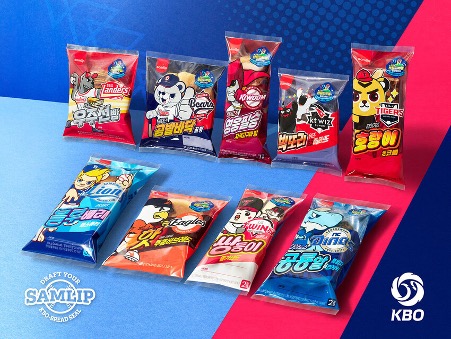
The SPC–KBO Collaboration: The Birth of KBO Bread
To gauge the popularity of professional baseball in Korea, you don’t have to rely only on stadium attendance or TV ratings. Just look at the little stickers hidden inside convenience-store bread packs, known as “띠부씰 (Tibucil).” Short for “떼었다 붙이는 스티커 (tear-and-stick stickers),” the term has long been a pop-culture symbol linking generations and industries. Today, it also serves as a barometer of baseball’s popularity.
The Seeds of a Fan Culture
The Tibucil craze began in the late 1980s, when stickers featuring celebrities or cartoon characters were slipped inside bread packaging. Kids swapped them during school breaks. In 1999, 국찐이빵 (Gukjin Bread), modeled after comedian Kim Guk-jin, and 찬호빵 (Chan-ho Bread), named for MLB pitcher Park Chan-ho, sold 600,000–700,000 packs per day, sparking a nationwide boom. In the 2000s, 포켓몬빵 (Pokémon Bread) pushed sticker collecting to its peak.
That generation of elementary school collectors are now thirty- and forty-somethings with spending power, sharing the habit anew with their children.

KBO League Joins In: The Arrival of KBO Bread
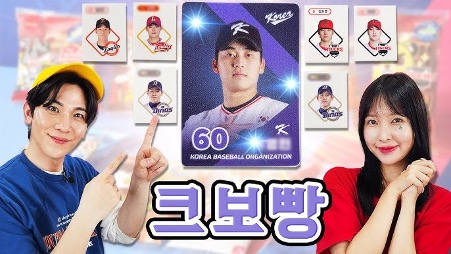
In spring 2025, this collecting culture fused directly with the KBO League. SPC Samlip launched “크보빵 (KBO Bread),” created with nine clubs and stuffed with 215 random baseball Tibucil across ten product types. The design encouraged fans to hunt down “내 팀, 내 선수 (my team, my player).”
The craze was instant. One million packs sold in just three days, and 10 million in 41 days, matching the blistering pace of Pokémon Bread’s 2022 revival. The sales surge coincided with KBO’s record 10 million spectators in 2024, and projections of 12 million in 2025. Stadium fever spilled over directly into Tibucil mania.
From Stickers to Baseball Culture
The KBO Bread phenomenon soon moved beyond limited-edition stickers. In May 2025, SPC released a follow-up line, “모두의 크보빵 (Everyone’s KBO Bread),” featuring 180 stickers of team uniforms and 26 of national-team uniforms.
The concept expanded, too. Popular “야푸 (yagu food / baseball food)” like chicken, nachos, and burritos were reimagined as bread and snacks: 끝내기 홈런 미트 부리또 (Walk-off Home Run Meat Burrito), 몸 쪽 꽉찬 양념치킨볼(Inside Fastball Spicy Chicken Balls), 4-6-3 카라멜 땅콩 베이스 샌드 (4-6-3 Caramel Peanut Base Sandwich). Product names themselves echoed baseball lingo, heightening fan engagement.Thus, what began as a small sticker evolved into an experience spanning culture, food, and merchandise, keeping baseball’s momentum burning.

Connecting Stadiums and Convenience Stores
From the start, KBO Bread became a central marketing tool. Between March 20 and April 21, 2025, SPC ran a “크보빵띠부씰 드래프트 이벤트 (KBO Bread Tibucil Draft Event)”: post your sticker with hashtags #크보빵 and #띠부씰드래프트 on social media for chances to win a pure-gold baseball, iPad Mini, national-team uniforms, team goods, or ballpark tickets.
Follow-up campaigns tied to 모두의 크보빵 (Everyone’s KBO Bread) included photo contests and “도감 완성 (album completion)” challenges. Convenience stores near stadiums handed out stadium-exclusive stickers. Clubs devised their own twists. The Hanwha Eagles offered the fiery 이글이글 핫투움바 브레드 (Eagle-Hot Ttuk-Ttu-mba Bread), NC Dinos sold 공룡알 흑임자 컵케이크 (Dinosaur Egg Black Sesame Cupcakes).
This spurred a lively ecosystem: buying bread at stores, swapping duplicates online or at meet-ups, and filling feeds with proof photos and unboxing videos. Rare Tibucil fetched premiums many times over retail. Much like MLB baseball cards, but in Korea, more entwined with everyday life.
A Sudden End After 73 Days
But after just 73 days, the KBO Bread boom came to a halt. The reason: an industrial accident at SPC’s Siwha factory and the resulting boycott.
SPC had already faced scrutiny after repeated workplace accidents, including the 2022 death of a 23-year-old female worker caught in bakery machinery. When another accident struck a production site in spring 2025, boycott calls surged. SPC halted production to stem the backlash, and the product disappeared.Scarcity drove prices sky-high. A Do-young Kim national-team sticker resold for ₩15,000, a Hyun-jin Ryu for ₩13,000, five to ten times retail. Ironically, the discontinuation only intensified the collector craze, birthing a new “단종템 프리미엄 (discontinued-item premium)” culture.
What Tibucil Teaches About Korean Baseball
The Tibucil boom revealed three lessons for Korean baseball:
- An affordable gateway. For under ₩2,000, kids could “own” their team or player, lowering the entry barrier compared to pricier caps or jerseys.
- An online–offline bridge. Though sold in convenience stores, Tibucil extended naturally into social media, secondhand markets, and stadium exclusives.
- A real-time popularity index. Sticker trade velocity and prices quickly signaled which players and teams were hot, providing insights for marketers.
Even though KBO Bread are gone for now, the message is clear: small collectibles, smartly tied to fandom, can expand touchpoints, blend online and offline, and serve as live metrics of buzz. One day, another little collectible might just set Korean baseball aflame again.

 SABR Asian Baseball Research Committee Blog
Leave a reply to Bryan Walko Cancel reply