
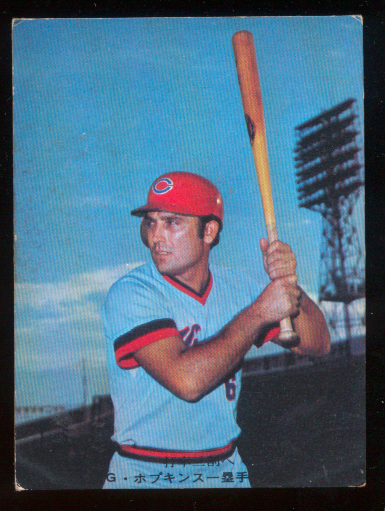
On October 15, 1975, the Hiroshima Toyo Carp arrived in Tokyo to play the Yomiuri Giants needing a win to clinch the Central League pennant. In the Carp’s 25-year history, they had never finished above third place.
Carp first baseman Gail Hopkins remembers:
There was obviously a lot of pressure on us, and the guys were starting to feel it. Wally Yonamine’s team, the Chunichi Dragons, had been even with us in the standings but we went up a game on them. We were at the point where we controlled our own destiny. If we won, we would win the pennant. If we didn’t win, then we had to play the next day and we’d still have to win that game and it would also depend on what happened with Chunichi, which was off in another place playing while we were playing in Tokyo.
The stands were packed. The stadium was full with 50,000 fans. That stadium was always full even though the Giants were 27 games behind us. They drew 3.05 million people that year. About 15,000 to 20,000 people came to the game from Hiroshima They had these rice spoons from Miyajima, which is an island right near Hiroshima. When something went well for us, our fans would smack these spoons together. So, there was this incessant clicking of the spoons going on during the game.
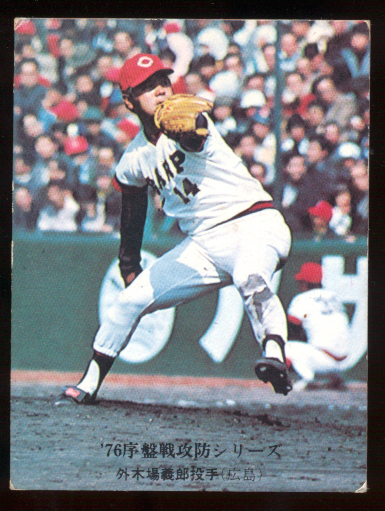
Pitching for us was Yoshiro Sotokoba and he was really throwing the ball very well. The pitcher they had throwing against us was a left-hander named Hisao Niura and he was a big guy, about six feet, and he threw pretty hard. He had pretty good stuff and he was pitching very well that night, so we didn’t have a whole lot of chances.
We scored the first run in the fifth inning. Our catcher, Hiroyuki Michihara, came to bat and he hit a ground ball down the third baseline. Davey Johnson was playing third base for the Giants, and he had to move toward the line. When he went to make the play, the ball hit off his glove and he obscured the baseline from the umpire. The umpire called the ball fair, and it was, but there was a big argument between the Giants manager Shigeo Nagashima and the umpire. Nagashima said it was a foul ball and put on a show. It was his first year as a manager and he was terrible. I mean he was truly terrible as a manager. But anyway, the ball was fair, and then our catcher was sacrificed to second. Then Tsuyoshi Oshita hit the ball off the wall and their left fielder could get there in time and Michihara scored to make it 1-0.
When the game started, we had a lot of fans supposing us, but most of the people there, at least half of the people or more, were Giants fans and were cheering for the Giants. As the game went along, it was getting more and more exciting and the fans were clearly engaged. There was also a change in the way the fans were cheering. We seemed to gain support.
In the sixth inning, the Giants had two runners on with one out and Sadaharu Oh coming up, so we walked Oh to load the bases. The next batter was a right-handed big outfielder named Toshimitsu Suetsugu. He was a formidable player. He hit a ground ball to Oshita at second base who turned it to shortstop Toshiyuki Mimura and Mimura threw it to me to turn the double play to get out of the inning. That was the biggest risk for us in the game. Had we not made that play at least one or two runs might have scored.

In the ninth inning, things were really pretty tight. The guys on the bench were getting kind of anxious. We had made a pitching change in the eighth inning and brought in Motoyasu Kaneshiro. He had won 20 games the year before, but he got into a car wreck and he didn’t play for a while, so Joe Lutz converted him from a starter into a relief pitcher. He was kind of a submarine pitcher—he wasn’t way down underneath but he was below sidearm, and he threw the ball pretty hard. Well, he led off the ninth inning and checked his swing on a pitch and hit a blooper into right center that dropped for a single. The next batter was Oshita, and Oshita put down one of the best bunts I’ve ever seen. Oshita could run fairly well, and he laid a bunt down the first baseline just like you’re supposed to do. The ball was about three feet off the line and by the time the pitcher and the first baseman got to the ball, Oshita was by them and it was a base hit.
So, with one out and runners on first and second in the ninth inning, they changed pitchers. They brought in this left-hander Kazumi Takahashi. He was their leading left-hand relief pitcher. Mimura came up and Takahashi struck out Mimura on really good pitch.
When I came up, my goal was to try to hit the ball hard somewhere and drive a run in. I wasn’t thinking about anything else. My style of hitting in 1975 was different than I did in the States. In the States, I had a wide stance and basically hit the ball where it was pitched. In Japan, I tried to pull everything. The first pitch he threw was a breaking ball away for a ball. For the second pitch, I was guessing fastball and if I didn’t get it, I would take it. He threw a breaking ball, so I took it for the first strike. Then he threw a fastball, and I checked my swing and it hit my bat for a foul. That really irritated me because it put me in the hole with the pitch count. At this point, my goal was just to put the ball in play. He came back and threw another breaking ball in the dirt.
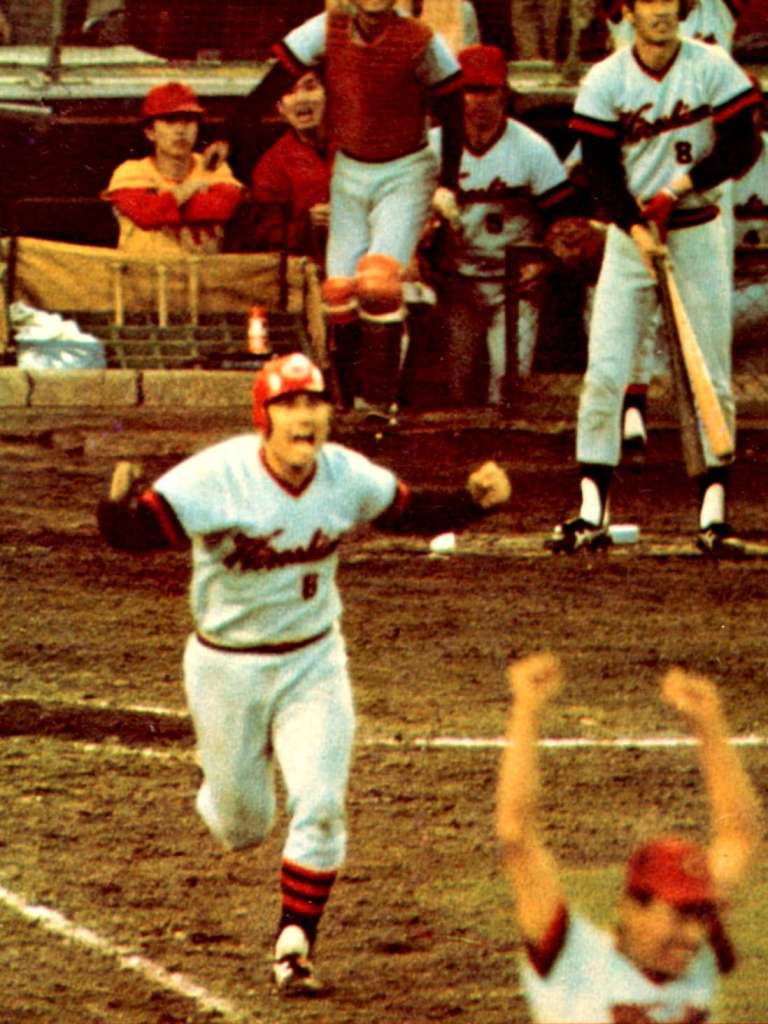
The Carp fans were clapping the rice spoons together and those things made a lot of noise! Then, Takahashi threw another breaking ball in the dirt [making it a full count]. Now, I knew that he had to throw a strike because if he didn’t, he was going to have to face Koji Yamamoto with the bases loaded. If I wanted a pitch to hit hard, it would be just like his next pitch, inside and around thigh high. And that was it. As they say, “Sayonara Aka-chan!” Of course, that was the ball game right there. When it’s 1-0, the worst hitter on their club could tie the game [with one swing] but now they had to come back and score three.
I, of course, was elated when I hit the ball out. I wasn’t thinking about that because at that point my goal was to make solid contact and just to drive in a run, but he put the ball right there in my wheelhouse. I didn’t over swing and it went all the way to the back of the stadium. It made the tension level in the dugout relax because we had pretty good bullpen and Kaneshiro was really doing well so we were in good shape.
The clubhouses were different [in Japan] from what we have here. We have big clubhouses, where you can get sandwiches and you’ve got all your personal stuff. There, the clubhouses weren’t big. They weren’t sophisticated. They didn’t have a place where you could sit down and have beer when the game was over. The visiting teams would even get dressed in their hotels! So, we didn’t have a big celebration after we clinched, like they do here with champagne or beer. We just went back home to Hiroshima on the train the next day and then we had a big parade.
 SABR Asian Baseball Research Committee Blog
Leave a comment