
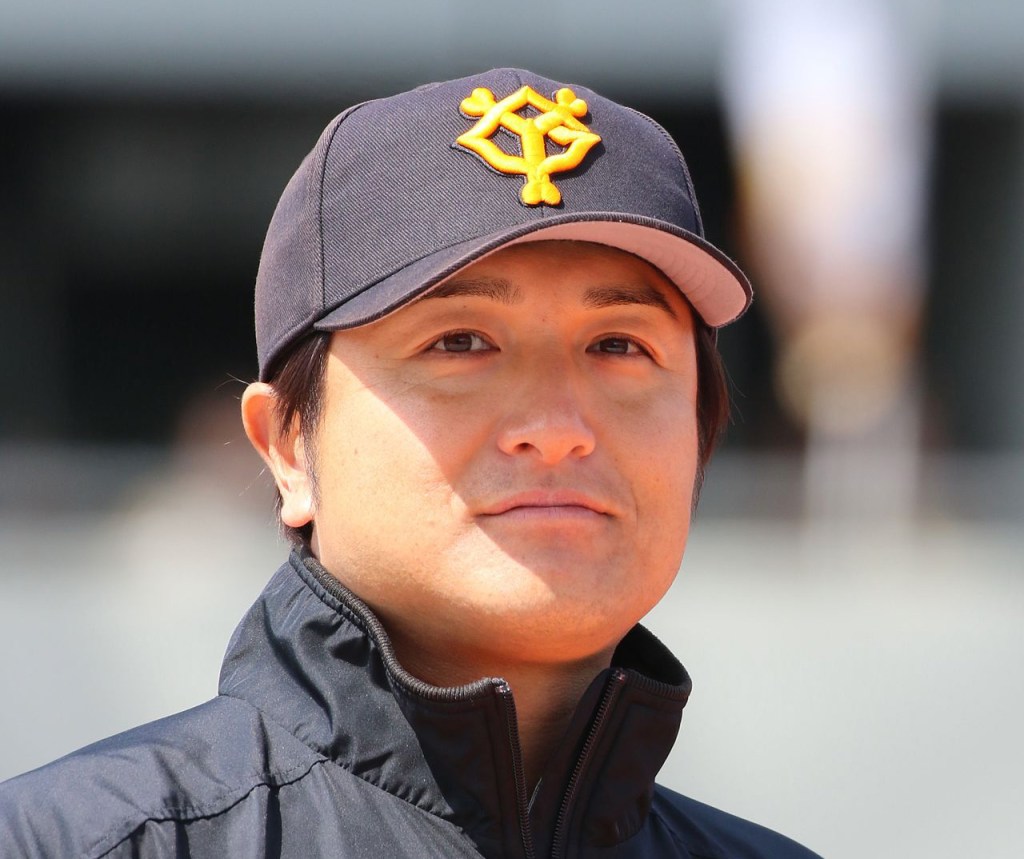
He never dreamed of being a professional, but ended up giving it his all
by Thomas Love Seagull
A recent poll for a TV special saw more than 50,000 people in Japan vote for their favorite retired baseball players. 20 players emerged from a pool of 9,000. Yes, they could only vote for players who are no longer active, so you won’t see Shohei Ohtani or other current stars on this list. Which is probably smart because I’m sure Ohtani would win by default. There are, however, players who were beloved but not necessarily brilliant, and foreign stars who found success after coming to NPB. Unsurprisingly, the list leans heavily towards the past 30 years, with a few legends thrown in for good measure.
Over the next few weeks, I’ll be profiling each of these players. Some of these players I know only a little about, so this will be as much a journey for me as, hopefully, it will be for you. It’ll be a mix of history, stats, and whatever interesting stories I can dig up.
For now, have a look at the list below and see how the public ranked them. I’ve included the years they played in NPB in parentheses.
20. Alex Ramirez (2001-2013); 19. Yoshinobu Takahashi (1998-2015); 18. Warren Cromartie (1984-1990), 17. Takahashi Toritani (2004-2021; 16. Suguru Egawa (1979-1987); 15. Katsuya Nomura (1954-1980); 14. Tatsunori Hara (1981-1995); 13. Kazuhiro Kiyohara (1985-2008); 12. Masayuki Kakefu (1974-1988); 11. Masumi Kuwata (1986-2006); 10. Atsuya Furuta (1990-2007); 9. Randy Bass (1983-1988); 8. Daisuke Matsuzaka (1999-2006, 2015-2016, 2018-2019, 2021); 7. Tsuyoshi Shinjo (1991-2000, 2004-2006); 6. Hiromitsu Ochiai (1979-1998); 5. Hideo Nomo (1990-1994); 4. Hideki Matsui (1993-2002); 3. Shigeo Nagashima (1958-1974); 2. Sadaharu Oh (1958-1980); 1. Ichiro Suzuki (1992-2000).
No. 19: Yoshinobu Takahashi (1998-2015)
Yoshinobu Takahashi never really wanted to be a baseball player.
Even as a kid in Chiba—already stronger and more skilled than the boys around him—baseball felt like something he did well, not something that belonged to him. When asked what he wanted to be when he grew up, he might say “baseball player,” but without conviction. It felt like a hypothetical. He thought his parents felt the same way.
He grew up the youngest of three brothers in a household where baseball was practiced daily. His father, who had played through high school, coached him relentlessly, yet tried to make sure baseball never crowded out education or life. He didn’t even have any idols when he was young. When Yoshinobu cried on the way to practice and declared he wanted to quit, his older brothers resorted to physical means to force him to go.
He tried to quit more than once. He never succeeded.
By middle school, Takahashi was dominant, pitching and hitting cleanup for a Pony League team that won national championships. Still, he believed baseball would end someday. His mother insisted he attend Toin Gakuen High School in Kanagawa as a boarding student. Takahashi resisted. His father resisted, too.
Years later, he would say that living away from home taught him independence and gratitude at the same time.
At Toin Gakuen, Takahashi stood out immediately. He hoped to remain a pitcher. His coach watched him hit once and moved him into the lineup. He played in two Summer Koshien tournaments, became team captain, and finished his high school career with 30 home runs. His final summer ended in disappointment, without a Koshien appearance.
If high school shaped his independence, Keio University shaped his worldview. He chose Keio not because it was a pipeline to professional baseball, but because of the Tokyo Big6 League and the desire to compete in the Waseda-Keio rivalry.
Takahashi enrolled in the law school, studying political science, and thrived in the Tokyo Big6 League. He won a Triple Crown, broke Koichi Tabuchi’s 30-year-old home run record*, and played every inning of every game for four years. Yet what he remembered most about Keio was not dominance, but diversity—older players, late starters, students who treated baseball as only one part of a larger life. Coaches respected individuality. Players were treated like adults.
*Tabuchi was drafted by the Hanshin Tigers and was named Rookie of the Year in 1969.
In 1997, before he played a professional game, Takahashi starred for Japan in the Intercontinental Cup. He hit .419, drove in 16 runs in nine games, played flawless right field, and helped Japan rout Cuba in the gold medal game by homering and driving in 5 runs, snapping a 151 game winning streak in international games for Cuba.
Drafted by the Yomiuri Giants, he hit .300 as a rookie, won a Gold Glove (the first rookie outfielder to do so), and made the All-Star team. He finished second in Rookie of the Year voting*. In 1999, he delivered what might have been the best season of his career: .315, 34 home runs, 98 RBIs, elite defense, Best Nine honors. The season ended early when he broke his collarbone crashing into the outfield wall.
*Kenshin Kawakami won the award by going 14-6 with a 2.57 ERA. I always thought he should have gotten more chances in MLB.
At the time, it seemed dramatic. Later, it felt like foreshadowing.
Takahashi played the outfield without caution. Diving catches, full-speed collisions, fearless throws, he did them all. He was told to stop diving. He understood the instruction, but he couldn’t follow it.
The legendary Shigeo Nagashima had taught him that a professional’s duty was to move the hearts of the fans, that someone in the stands might be seeing him play for the only time in their life. Takahashi took that literally. “The moment I think I can catch it,” he once said, “my head goes blank.”
The early 2000s were defined by excellence and accumulation: Gold Gloves, All-Star selections, steady power, international success with the national team. He starred in the 2001 Baseball World Cup, the 2003 Asian Championship, and the 2004 Olympics. He tied and set league records for consecutive hits and plate appearances reaching base. He helped the Giants win championships.
After 2004, his career changed shape. Injuries arrived in spades: shoulder surgery, ankle surgery, back pain, broken ribs, muscle strains. From 2005 onward, Takahashi played more than 100 games in a season only three times. He moved across the outfield, then to first base, always adjusting, always in pain.
In 2007, healthy again, he reinvented himself as a leadoff hitter and produced one of the finest seasons in the Central League: .308/.404/.579, 35 home runs, league-leading slugging, Gold Glove, Best Nine. He set an NPB record with 9 first-inning leadoff home runs. It was his last great, uninterrupted year.
Late in his career, the Giants cut his salary by more than half—the largest reduction in team history to that point. Takahashi smiled and signed immediately. “Of course it went down,” he said. “They still want me.”
That was enough.
He played 17 seasons with the Giants, appeared in four Japan Series, won three of them, reached 300 home runs, and never once seemed concerned with whether the numbers told the whole story. Even back in college, his coach remarked that while he was very particular about the outcome of games, he didn’t seem to care at all when it came to his own records or awards.
In 2014, his father died. The day after the funeral, Takahashi played and homered. He looked briefly toward the sky as he rounded the bases. That was all.
At the end of the 2015 season, with his body finally finished, the Giants offered him their managerial job. He accepted. He would say that managing allowed him to see baseball in a new light.
Takahashi never reached 2,000 hits. His body wouldn’t allow it. But he battled all the same. Even diminished, he reached base. Even injured, he delivered. He never stopped playing like someone might be seeing him for the first and only time.
And that, more than any career numbers or award totals, is how he earned the love and admiration of fans across the country.
Thomas Love Seagull’s work can be found on his Substack Baseball in Japan
 SABR Asian Baseball Research Committee Blog
Leave a comment