Tag: Thomas Love Seagull

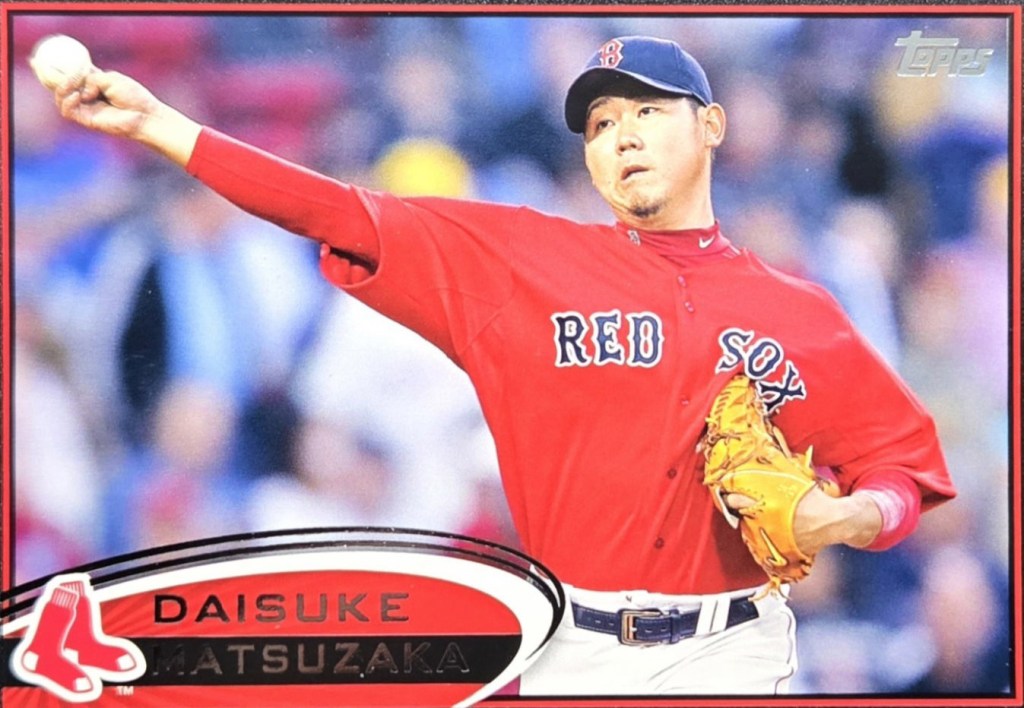
  • Japan’s Favorite Players: No. 8, Daisuke Matsuzaka

    Japan’s Favorite Players: No. 8, Daisuke Matsuzaka

    A recent poll for a TV special saw more than 50,000 people in Japan vote for their favorite retired baseball players. 20 players emerged from a pool of 9,000. Yes, they could only vote for players who are no longer active, so you won’t see Shohei Ohtani or other current stars on this list. Which is probably smart because I’m sure Ohtani would win by default. There are, however, players who were beloved but not necessarily brilliant, and foreign stars who found success after coming to NPB. Unsurprisingly, the list leans heavily towards the past 30 years, with a few legends thrown in for good measure.

    Over the next few weeks, I’ll be profiling each of these players. Some of these players I know only a little about, so this will be as much a journey for me as, hopefully, it will be for you. It’ll be a mix of history, stats, and whatever interesting stories I can dig up.

    For now, have a look at the list below and see how the public ranked them. I’ve included the years they played in NPB in parentheses.

    20. Alex Ramirez (2001-2013); 19. Yoshinobu Takahashi (1998-2015); 18. Warren Cromartie (1984-1990), 17. Takashi Toritani (2004-2021); 16. Suguru Egawa (1979-1987); 15. Katsuya Nomura (1954-1980); 14. Tatsunori Hara (1981-1995); 13. Kazuhiro Kiyohara (1985-2008); 12. Masayuki Kakefu (1974-1988); 11. Masumi Kuwata (1986-2006); 10. Atsuya Furuta (1990-2007); 9. Randy Bass (1983-1988); 8. Daisuke Matsuzaka (1999-2006, 2015-2016, 2018-2019, 2021); 7. Tsuyoshi Shinjo (1991-2000, 2004-2006); 6. Hiromitsu Ochiai (1979-1998); 5. Hideo Nomo (1990-1994); 4. Hideki Matsui (1993-2002); 3. Shigeo Nagashima (1958-1974); 2. Sadaharu Oh (1958-1980); 1. Ichiro Suzuki (1992-2000).

    The pitcher who turned Koshien into theater and emerged as the Monster of the Heisei Era

    Every baseball country has its sacred ground.

    In America, it might be Yankee Stadium. Or the old one, at least. In the Dominican Republic, it might be Estadio Quisqueya. In Japan it is a ballpark called Koshien.

    Generations of high school players have stood on that field dreaming of becoming legends. Most leave in tears, collecting a small bag of dirt from the infield as a souvenir.

    On August 19, 1998, a seventeen-year-old pitcher threw 250 pitches at Koshien Stadium.

    The game lasted seventeen innings. It started in the morning and stretched into lunchtime. By the end of it the pitcher could barely lift his arm.

    The next day he came back and helped his team win one of the most famous comeback games in the history of Japanese high school baseball.

    The day after that, he threw a no-hitter in the championship game.

    That pitcher was Daisuke Matsuzaka. He became known as Heisei no Kaibutsu—the Monster of the Heisei Era.

    Matsuzaka was born in Aomori Prefecture in 1980 but grew up in Tokyo’s Koto ward. His parents named him after another famous pitcher, Daisuke Araki, who had been a star at Waseda Jitsugyo High School.

    Before baseball, Matsuzaka trained in kendo, starting at age five. The training was harsh. His instructor was known for pushing young students relentlessly, but it built strength in his back and wrists. Years later, when a child asked him how to throw faster, Matsuzaka answered simply: try kendo.

    But at first, Matsuzaka was not quite the legend people remember. At Yokohama High he was known as “Sabori no Matsu,” roughly “Matsu the Slacker,” because he did not like to practice. Then, during a 1997 regional tournament, he lost a game on a wild pitch.

    The loss changed him. He began training obsessively.

    By his third year, he could throw over 150 kilometers per hour (93 mph), a rare velocity for a high school pitcher at the time. His slider was devastating. His stamina seemed limitless.

    In 1998, he helped lead his team to the spring championship. But it was during the summer tournament that he became something larger than life.

    Koshien is not simply a stadium. For Japanese high school baseball, it is something closer to a shrine. The tournament fills the stands every summer and attracts enormous television audiences. Families sometimes move so their sons can attend schools strong enough to reach it. High school kids become household names overnight.

    Even before the tournament began, opposing coaches knew what they were facing. Shiro Mabuchi of Meitoku Gijuku watched him pitch earlier that year and shook his head.

    “That kid,” he said, “is a monster.”

    Matsuzaka laughed when people repeated the nickname.

    “Monster? I don’t really look like one.”

    He didn’t. He looked like a skinny teenager with the face of an angel but the arm of a devil. And once he stepped onto the mound, his expression changed. The fastball exploded from his hand. The slider seemed to snap downward at the last instant.

    Yokohama’s path to the championship unfolded like a drama that kept growing more intense. In the quarterfinals, Matsuzaka threw 250 pitches over 17 innings against PL Gakuen in one of the longest games in tournament history.

    It began earlier than he liked. The first pitch came at 8:30 in the morning. For Matsuzaka, that meant waking around 4:30 a.m. after barely sleeping. Pitchers often struggle to sleep after throwing because their bodies remain wired with adrenaline, and that night he lay awake until nearly two in the morning.

    Later he joked that the biggest reason he struggled early in the game was simple.

    “It was too early.”

    Matsuzaka had another unusual pregame habit. On the bus to games he liked to eat potato chips and drink Coca-Cola. It was his way of relaxing before pitching.

    The game itself quickly turned into a test of endurance.

    PL Gakuen jumped ahead early, scoring three runs. For several innings Matsuzaka struggled to find his rhythm. Later he said that in those first innings he felt as if his body hadn’t quite woken up yet.

    Yokohama fought back. In the fourth inning, catcher and captain Yoshio Koyama hit a two-run home run. By the middle innings, the game had become a back-and-forth struggle.

    And gradually, Matsuzaka began to feel the change.

    By the late innings the ball started to come out of his hand with more life. The longer the game continued, the stronger he felt.

    Which was good because the game stretched into extra innings.

    At one point, Yokohama took a one-run lead in the eleventh inning. Matsuzaka himself reached base with a hard ground ball and eventually scored the go-ahead run.

    Yet even then he didn’t believe the game was over.

    Later he said that the strangest feeling during that game was the sense that it would never end. Even when Yokohama moved ahead, he somehow felt that the game would continue.

    Perhaps part of him didn’t want it to end. 

    There was also a moment of frustration. In the eleventh inning, Matsuzaka allowed a game-tying hit to Hiroaki Onishi on a curveball he had not wanted to throw. Catcher Koyama had called for it, and Matsuzaka followed the sign.

    Afterward he told him quietly, “We shouldn’t throw a curve to Onishi.”

    Koyama’s answer was simple.

    “Then shake me off.”

    But Matsuzaka rarely shook off his catcher. He preferred to trust the call and find a way to execute it.

    The game kept going. After sixteen innings of play, the game was tied at 7 apiece.

    At some point, teammate Ryota Tokiwa walked over and tapped Matsuzaka on the shoulder.

    “Don’t worry,” he said. “I’ll hit one.”

    In the seventeenth inning, Tokiwa did exactly that. Yokohama won 9-7.

    The next day brought an even stranger scene.

    After throwing 250 pitches against PL Gakuen, Matsuzaka did not start the semifinal against Meitoku Gijuku. Instead he appeared in the lineup as the cleanup hitter and left fielder, his pitching arm wrapped in tape.

    Meitoku dominated early. By the middle of the eighth inning, Yokohama trailed 6-0 and the game seemed finished. But Yokohama scored four runs in the bottom half to close the gap.

    Then Matsuzaka began throwing in the bullpen.

    Years later he admitted that no coach had told him to warm up. He had gone there on his own, hoping the staff would see him and realize he was ready to pitch.

    Even from the stands the change in atmosphere was obvious.

    When he tore the tape from his arm and walked to the mound in the ninth inning, the noise swelled into something closer to a roar. Matsuzaka later admitted he had noticed the television camera beside him before ripping off the tape. Even at seventeen, he understood the theater of the moment.

    Matsuzaka retired the side. In the bottom of the inning, Yokohama scored three runs and completed one of the most improbable come-from-behind victories in the history of the tournament.

    People often say that monsters live at Koshien. The phrase refers to the strange magic of the tournament—the sudden comebacks, the impossible reversals, the games that twist in ways nobody expects.

    But in the summer of 1998 it felt as if Yokohama had somehow learned how to tame those monsters.

    The team itself was unusually unified. Players such as Takeshi Goto and Masaaki Koike later said the atmosphere inside the team mattered as much as Matsuzaka’s pitching.

    During the tournament Goto struggled badly at the plate. One night he returned to the hotel discouraged. The phone rang. It was Matsuzaka calling from the next room.

    “Don’t worry about today,” he told him. “We’re counting on you tomorrow.”

    The next day Goto delivered key hits in Yokohama’s comeback victory.

    And then came the championship game against Kyoto Seisho. The final pitch of the tournament was a sweeping slider. Kyoto Seisho’s Yugo Tanaka swung through it.

    Matsuzaka turned toward the scoreboard and raised both arms into the air.

    Later he admitted he had partly turned for the cameras. This was his final stage, after all.

    The scoreboard still showed zeros in the column for hits.

    It was the first no-hitter in a championship game in nearly sixty years. Yokohama completed a season that included four national titles—Meiji Jingu, the spring and summer Koshien tournaments, and the National Sports Festival—and finished 44-0 in official games.

    Watching the tournament unfold, Kyoto Seisho’s manager later said simply:

    “It was Matsuzaka’s tournament.”

    The Monster of the Heisei Era had arrived.

    Yet Matsuzaka’s story was not only about domination. When he was in junior high school, his father’s company went bankrupt. The family sold their car so they could afford tuition at Yokohama High School. His mother worked part-time to support the household. His younger brother eventually attended a public school rather than a private one to reduce expenses.

    For Matsuzaka, success in baseball meant more than fame. He said openly that he wanted to turn professional and earn money.

    The 1998 draft quickly became the Daisuke Matsuzaka draft. Three teams selected him in the first round: the Saitama Seibu Lions, the Yokohama BayStars, and the Nippon-Ham Fighters.

    Matsuzaka himself hoped to join Yokohama and even suggested he might play corporate baseball if another team drafted him.

    Instead, Seibu manager Osamu Higashio drew the winning lottery ticket.

    “It’s not that easy,” Matsuzaka said afterward. “Out of courtesy I’ll talk with them, but my feelings haven’t changed.”

    Eventually he agreed to sign after Higashio presented him with the game ball from his own 200th career win. He took the traditional ace number: 18.

    Almost immediately the country experienced what newspapers called “Daisuke Fever.”

    Restaurants created dishes named after him. Fans packed spring training. The crowds became so overwhelming that the team once dressed pitcher Shinji Taninaka in Matsuzaka’s number 18 uniform as a decoy.

    His first professional start came on April 7, 1999 against the Fighters.

    The first pitch of his career was a fastball. 149 kilometers per hour.

    Strike one.

    After that, he struck out veteran slugger Atsushi Kataoka with a 155 km/h fastball. At one point during the game, veteran pitcher Tetsuya Shiozaki told him he was throwing too hard to last nine innings.

    Matsuzaka answered calmly: he had only thrown one pitch at full effort.

    He won the game.

    From there, the season only grew more spectacular.

    He faced Ichiro Suzuki and struck him out three times. He dominated the All-Star Game with five strikeouts. He declared after one outing that his confidence had changed “from belief to certainty.”

    By the end of the year he had 16 wins, the league lead, and became Rookie of the Year.

    A high school pitcher had entered professional baseball and immediately become one of its best players.

    For several years he became the dominant pitcher in Nippon Professional Baseball. Matsuzaka led the Pacific League in wins three straight years from 1999 through 2001. He piled up strikeouts and innings with astonishing durability, often pitching on short rest. He won the Sawamura Award in 2001*. He helped lead the Lions to a Japan Series victory in 2004.

    *He went 15-15 that year but led the league in games started, complete games, wins (and losses), innings pitched, and strikeouts.

    He threw from a three-quarter arm slot, pausing briefly in his windup before exploding toward the plate. His fastball averaged around 147 km/h and could climb into the mid-150s, paired with a devastating slider and a deep mix of secondary pitches. His quick delivery made it difficult for runners to steal.

    He loved pitching. He loved throwing deep into games. And sometimes he threw a lot: well over 150 pitches. He pitched 38 complete games across three seasons from 2004-2006.

    Command was not always perfect. Matsuzaka sometimes struggled with walks, partly because his release point could move and his lower body sometimes lost stability. But when his pitches were right, hitters described the ball as exploding.

    Some said his fastball moved like that of a left-handed pitcher.

    If Japan had a must-win game in those years, the ball usually went to Matsuzaka.

    At the 2000 Sydney Olympics. he pitched brilliantly despite Japan narrowly missing a medal. At the 2004 Athens Olympics. he helped secure bronze.

    Then came the World Baseball Classic.

    In 2006, Matsuzaka won all three of his starts—including the championship game against Cuba—and was named tournament MVP. When Japan repeated as champion in 2009, he won the award again.

    Across eight seasons with Seibu, he captured three Best Nine selections, seven Golden Gloves, four strikeout titles, and two ERA championships.

    After the 2006 season, the Boston Red Sox paid $51.1 million just for the right to negotiate with him.

    In Boston, he became known as Dice-K*.

    *My least favorite nickname of all time.

    In 2007, he struck out 201 batters and helped the Red Sox win the World Series. In Game 3, he became the first Japanese pitcher to start a World Series game and even drove in two runs with a hit. In 2008 he went 18-3, the most wins ever by a Japanese pitcher in a major-league season.

    Scouts marveled at the movement on his pitches, and for a time rumors circulated that he threw a mysterious gyroball. Matsuzaka himself seemed amused by the myth. He said he wasn’t sure what people meant by it.

    Injuries later reshaped his career. But he returned to Japan and even won Comeback Player of the Year for the Chunichi Dragons in 2018 before retiring in 2021.

    His final appearance came at Seibu’s home park. He faced one batter, Yokohama High alumnus Kensuke Kondoh, and threw five pitches. The fastest reached 118 kilometers per hour.

    Afterward, he walked slowly around the field while fans applauded.

    Then Ichiro Suzuki stepped onto the field and handed him flowers.

    Matsuzaka began to cry.

    He finished his career with 170 wins and more than two thousand strikeouts across Japan and Major League Baseball. He remains the only player to have won all four: the Summer Koshien, the Japan Series, the World Baseball Classic, and the World Series.

    But numbers alone do not explain why fans loved him.

    They loved him because he loved pitching and because he never seemed afraid of the moment. And because for a generation of fans, the story of modern Japanese baseball begins with one unforgettable image:

    A seventeen-year-old pitcher at Koshien, turning toward the scoreboard and raising his arms.

    Thomas Love Seagull’s work can be found on his Substack Baseball in Japan

    https://thomasloveseagull.substack.com

  • Nippon Professional Baseball Teams: A Primer

    Nippon Professional Baseball Teams: A Primer

    T-Ray (Trevor Raichura) & Thomas Love Seagull talked on March 7 about all twelve NPB teams, their appeal and history, in this podcast.

    What makes these teams unique? Why should you want to cheer for them? If you’re new to NPB, this is the episode for you! If you already know the league, this is still a good primer to help you remember what got you here in the first place!

    Listen here:

    https://trevorraichura.substack.com/p/nippon-professional-baseball-teams?utm_source=podcastemail%2Csubstack&publication_id=2412463&post_id=191839981&utm_campaign=email-play-on-substack&utm_medium=email&utm_content=play_card_play_button&r=3yqqjp&triedRedirect=true

  • Japan’s Favorite Players: No. 9, Randy Bass

    Japan’s Favorite Players: No. 9, Randy Bass

    by Thomas Love Seagull

    A recent poll for a TV special saw more than 50,000 people in Japan vote for their favorite retired baseball players. 20 players emerged from a pool of 9,000. Yes, they could only vote for players who are no longer active, so you won’t see Shohei Ohtani or other current stars on this list. Which is probably smart because I’m sure Ohtani would win by default. There are, however, players who were beloved but not necessarily brilliant, and foreign stars who found success after coming to NPB. Unsurprisingly, the list leans heavily towards the past 30 years, with a few legends thrown in for good measure.

    Over the next few weeks, I’ll be profiling each of these players. Some of these players I know only a little about, so this will be as much a journey for me as, hopefully, it will be for you. It’ll be a mix of history, stats, and whatever interesting stories I can dig up.

    For now, have a look at the list below and see how the public ranked them. I’ve included the years they played in NPB in parentheses.

    20. Alex Ramirez (2001-2013); 19. Yoshinobu Takahashi (1998-2015); 18. Warren Cromartie (1984-1990), 17. Takashi Toritani (2004-2021); 16. Suguru Egawa (1979-1987); 15. Katsuya Nomura (1954-1980); 14. Tatsunori Hara (1981-1995); 13. Kazuhiro Kiyohara (1985-2008); 12. Masayuki Kakefu (1974-1988); 11. Masumi Kuwata (1986-2006); 10. Atsuya Furuta (1990-2007); 9. Randy Bass (1983-1988); 8. Daisuke Matsuzaka (1999-2006, 2015-2016, 2018-2019, 2021); 7. Tsuyoshi Shinjo (1991-2000, 2004-2006); 6. Hiromitsu Ochiai (1979-1998); 5. Hideo Nomo (1990-1994); 4. Hideki Matsui (1993-2002); 3. Shigeo Nagashima (1958-1974); 2. Sadaharu Oh (1958-1980); 1. Ichiro Suzuki (1992-2000).

    The quiet slugger from Oklahoma who became a Kansai folk hero

    For a time in Japan, Randy Bass was mentioned in the same breath as gods.

    It wasn’t a metaphor. It was a chant.

    KamisamaHotokesamaBaasu-sama.

    God. Buddha. Bass.

    It rose from the outfield stands at Koshien, carried by brass horns and plastic bats and voices from the Tigers’ faithful that had long ago decided that baseball was not a sport but a way of life. The chant sounded playful at first, the way Osaka humor often does: there is always a wink somewhere in Kansai. Because the single-character abbreviation for Hanshin can also be read as kami, meaning “god,” television captions and newspapers sometimes labeled him simply: Bass (God)*. But by the fall of 1985, when the Tigers were winning in a way they had not won in a generation, the wink was gone.

    *Hanshin is written as 阪神. The shorthand for it is 神.

    They meant it.

    The unmistakably American Randy Bass, blond, bearded, and broad-shouldered, had become something that rarely exists in Japanese baseball: a foreign player who did not feel foreign.

    And like many greats in baseball, he wasn’t supposed to be great.

    He had already been labeled in America. A hitter whose power sounded bigger than it actually was. A man once described as capable of hitting a ball from New York to Los Angeles, but whose real reputation settled into something less romantic: a warning-track hitter, vulnerable to fastballs, limited defensively, and slowed by a childhood leg injury that never fully healed. He moved from team to team in Major League Baseball—Minnesota, Kansas City, Montreal, San Diego, Texas—never quite settling in anywhere long enough to become a fixture. In 1981, at the age of 27, with the Padres, he hit .210/.293/.313 with 4 home runs in 69 games. That would be the longest look he would get at the big league level.

    In the minors, though, oh boy. After being drafted by the Twins out of high school, he led the Florida Coast League with 10 home runs in 1972. At 20, he hit 30 home runs for single-A Lynchburg. At 23, he slashed .321/.456/.560 with 25 home runs and 117 RBI for Tacoma in the Pacific Coast League. By the early 1980s, he was the sort of player baseball produces by the hundreds: talented enough to reach the majors, not quite good enough to stay.

    In the winter of 1982, several Japanese clubs considered signing Bass. Yakult nearly did, but they had too many first basemen already. Hankyu was close to making an effort, but decided on Boomer Wells instead. When the Hanshin Tigers went shopping that winter, they did not circle Randy Bass’s name. Manager Motoo Andoh flew to the United States in search of power, yes, but not specifically his power. Bass was the second signing. Steve Stroughter was their first target. Bass was insurance.

    After all, he had only hit nine home runs in the major leagues.

    Nine.

    He had spent winters working at a pipe company because minor league paychecks have a way of disappearing faster than you think they will. He had been, in the most neutral baseball sense, a professional hitter. The kind you can find every spring in Arizona and Florida. The kind who hopes the next swing might change everything. The kind who usually learns it won’t.

    When Hanshin offered him roughly double what he could expect in the United States, he did not speak of destiny or desire to experience a new culture. He spoke of practicality.

    “I was honest,” he would later say. “It was the money.”

    That statement is important because nothing about this story begins romantically. Even his name posed a problem.

    Technically, it should have been rendered in Japanese as “Basu” like “bus.” But Hanshin was a railway company. It also ran buses. And someone in the front office imagined the newspaper headlines if the American slugger struck out three times in a big game.

    “Hanshin Bus Stalls.”

    Or if he had a slump.

    “Hanshin Bus Breaks.”

    It was too easy.

    So they stretched the vowel. “Baasu.” It was long enough just to avoid unwanted wordplay.

    And then he started playing.

    He was hit by a pitch in an exhibition game and missed time. First base belonged to Taira Fujita, a legend, which meant Bass was shuffled into the outfield, which meant everyone in Japan could see that he was not an outfielder. He ran like a man who had once broken both feet as a child because he had. His first at-bat ended in a strikeout. He opened the season hitless in seventeen at-bats.

    Someone in the front office joked that if the original spelling of his name had remained, the newspaper headline would already have written itself: “Bus Stop.”

    The Tigers, constrained by the league’s limit on foreign players, soon had to make a decision. Keep Bass or keep Stroughter, whose production was nearly identical. The club valued his effort and attitude, but Bass survived largely because he was two years younger.

    Bass did something that many foreign players do not do. He paid attention. He watched teammates crowd around a small dormitory table late at night, tiles clicking and laughter bouncing off the walls. Mahjong. He asked to learn. Akinobu Okada, who would one day manage the Tigers to another championship decades later, shrugged and told him it wasn’t worth it because he wouldn’t be in Japan long enough.

    There is something beautifully human about that moment. Or maybe just blunt honesty. Okada assumed Bass was only passing through. It made sense: most foreigners only lasted a season or two. But Randy Bass was not like most foreigners.

    When his wife Linda struggled with homesickness, it was those same teammates who helped her adjust. When veteran Kozo Kawato introduced him to shogi, Bass did not treat it as a novelty. He studied it seriously. Kawato would later say what struck him most was not the power in Bass’s swing but the care in his questions. Where should I stand? Why do pitchers throw this way? How do fans think here?

    He learned to use chopsticks with ease. He embraced Japanese food, developing a love for Kobe beef and even the stadium udon at Koshien. There are foreign players who live in a country for years and never lean into it. Bass leaned into it.

    And then he leaned into the strike zone. Japanese pitchers did not challenge him the way American pitchers had. They worked the edges relentlessly. They lived outside. And umpires, for reasons cultural and practical, granted that outside pitch, especially against foreigners. Players called it the “gaijin strike.” Bass could have complained. Many did. Instead, he recalibrated.

    Under batting coach Teruo Namiki, he shortened his swing. He studied Japanese baseball deliberately. He learned about ballparks and winds from fellow foreigner Boomer Wells. Teammate Masayuki Kakefu showed him how to use the famous Koshien breeze, teaching him to guide pitches toward left field. Bass expanded his approach until even a controlled swing could carry into the stands.

    By late 1983, something changed. He hit in 25 consecutive games. He finished with 35 home runs. He was no longer the insurance option. He was an established star. But a star is not yet divine. Divinity came later.

    And it began, as so many good baseball stories do, with the Giants. You cannot understand the Randy Bass story without understanding the Yomiuri Giants.

    The Giants were not merely a rival. They were the sun while the rest of the teams were merely planets. They were Tokyo. They were money and history and television contracts and Sadaharu Oh and Shigeo Nagashima and the assumption that, eventually, things would tilt in their favor. For decades, the Hanshin Tigers had been loud and loyal and theatrical but always second.

    Hanshin did not simply want to win. Hanshin wanted to beat Yomiuri.

    April 17, 1985, was only the fourth game of the season. That is important. This was not September. This was not a pennant race at its climax. The year before, the Tigers had finished in 4th place, behind the Giants, and twenty-three games behind the first-place Carp. But it was early enough that hope still existed and doubt had not yet hardened into place.

    Koshien was full, of course. It always was when the Giants came to town. Forty-five thousand voices, whistles bleating, yellow plastic bats clacking together, horns blaring in organized rhythm. The Tigers had lost two of their first three games. Bass was in a slump. Two hits in fifteen at-bats. Six strikeouts. No home runs.

    The Giants led 3-1 in the seventh inning. Warren Cromartie had hit a two-run home run in the first to give the Giants the lead.

    Hiromi Makihara, just 21 years old, stood on the mound. He would go on to have a long, distinguished career. That night he was young and confident and throwing well.

    Two outs. Runners on first and second.

    Bass walked to the plate. The number 44 stretched across his back.

    Makihara wanted a quick strike. The plan, as later told, was to induce contact. Perhaps a ground ball. Perhaps a fly ball that held up in the night air. But the pitch drifted too much toward the inside of the plate.

    He had been waiting for that pitch for two years.

    The ball left the bat with a sound that experienced hitters recognized instantly.

    It rose toward center field.

    Koshien’s batter’s eye loomed like a black rectangle against the night.

    The ball disappeared into it.

    The Tigers led 4-3. A come-from-behind three-run home run.

    Next, Masayuki Kakefu stepped in and hit one to almost the same place. He embraced Bass when he reached the dugout.

    Then Akinobu Okada did, too. He smiled as he rounded the bases.

    Three consecutive home runs to center field.

    The “Backscreen Three.” The phrase still lives on in Kansai.

    But players would later say something specific and revealing: it was Bass’s home run that mattered most. When he hit that ball, they believed. They won the game. And then they kept winning. What began as a comeback rally changed the course of the season.

    He hit third in a lineup that felt engineered for pressure. Akinobu Mayumi at the top, fast and dangerous. Bass was third, compact and merciless. Kakefu behind him, the long-time star of the franchise. Okada after that, the hometown pride. If you walked Bass, Kakefu punished you. If you pitched to him, he punished you.

    By the All-Star break, Bass had already hit 30 home runs and the Tigers stood in first place for the first time in years. “Tiger Fever” swept across the nation. In early August, he fouled a ball off his ankle and suffered a small fracture expected to sideline him for two weeks. Reporters immediately wondered how Hanshin could possibly survive without him.

    But only days later, when the Tigers arrived for a game in Tokyo, players were stunned to see Bass already sitting in the dugout, dressed in uniform despite the injury. Doctors had not cleared him to play, and the coaching staff suggested he limit himself to a pinch-hit appearance. Bass refused. With his ankle heavily taped and wearing modified shoes to dull the pain, he insisted on starting. That night he drove in a run with a line drive off the wall and slid hard into second base despite the injury.

    The Tigers won, and teammates later said the mere sight of Bass in the dugout had lifted the entire club. During the following days he continued hitting as if nothing had happened, and the momentum of the season never slowed. Hanshin hit 219 home runs that season, more than any other team. Four players topped thirty. The ball left Koshien in waves.

    But the real tension began when the number 55 entered the conversation. That was Sadaharu Oh’s record. Fifty-five home runs in 1964.

    In Japan, records are not just numbers. They are history. And they are protected.

    By late September, Bass had 54. Fifty-four with two games left. Both against the Giants. Managed by, of course, Sadaharu Oh. It could not have felt more scripted.

    Bass came to the plate nine times in those final two games. He drew six walks. The Giants pitched around him without apology. There was nothing subtle about it. Bass swung at balls he would not normally swing at. He chased. He reached. He tried to force the issue.

    He finished at 54.

    He understood something about baseball in Japan that took others longer to grasp: sacred numbers are not surrendered lightly. Oh denied ordering intentional walks. Bass later admitted disappointment but praised pitchers like Suguru Egawa who had faced him honestly.

    He had come within one swing of tying the most hallowed home-run record in Japanese history. He did not get that swing. But at the same time, something else was happening. He and Okada were racing for the batting title. With three games remaining, Okada briefly led.

    Imagine the tension in that clubhouse. Two teammates. Two friends. Both chasing something that would last forever. And then, almost ironically, it was the walks that helped Bass.

    While he was being pitched around in the home-run chase, his average did not drop. Okada pressed. He tried to do too much. When it was over, Bass had edged him by eight thousandths of a point.

    Triple Crown.

    .350 average. 54 home runs. 134 runs batted in.

    The Tigers clinched the pennant on October 16 at Jingu Stadium, their first one since 1964.

    Fans flooded the Dotonbori district in Osaka to celebrate. Supporters called out players’ names one by one, and for each name, a fan resembling that player leapt into the canal below.

    When it came time for Bass, there was a problem. There were no bearded American sluggers nearby. So they found the closest available substitute—a statue of Colonel Sanders from outside a Kentucky Fried Chicken—and threw it into the water instead.

    It sounds absurd. It was perfectly Kansai.

    They advanced to face the Seibu Lions in the Japan Series. Bass hit .368 in the Series with three home runs and 9 RBI to take home MVP. The Tigers captured their first championship of the two-league era that began in 1950.

    The Tigers would not win another title for decades. The statue would not be recovered until 2009. The “Curse of the Colonel” would become part of baseball folklore. But that night, there was no curse. For a fanbase that had waited generations, Bass was no longer just a foreign star. He was a god.

    Then came the next season. Because while maybe 1985 could be explained as magic, 1986 could not.

    There is something about the number .400 that makes reasonable people unreasonable. In American baseball, it is myth. Everybody knows Ted Williams was the last to do it in MLB. In Japanese baseball, it is impossibility. It had never been done.

    By the time the 1986 season began, Randy Bass was already something larger than a player. He had won a Triple Crown. He had helped deliver a championship that felt like civic duty. His beard was the most recognizable facial hair in Japan. Gillette had paid him an extraordinary sum to shave it for a television commercial. Candy bars bore his name. Children in Osaka wore fake blond beards to games.

    But in the beginning of the season, he looked ordinary. He arrived at spring camp heavier than ideal. He had trained lightly over the winter. There was a sense, perhaps subconscious, that he had climbed the mountain and could breathe a little. He dealt with back pain. Heel trouble. Blisters that split open on his hands. He struck out three times on Opening Day.

    Baseball specializes in humbling men who believe momentum carries over. Through April he lagged behind the leaders in all three Triple Crown categories. The Tigers stumbled out of the gate. Then, in late May, something aligned.

    It began quietly in a series against the Yokohama Taiyo Whales. Three games. Three home runs. Six hits. Eight runs batted in. The swing had been found again and by the end of May, his average had climbed past .340.

    In June, it exploded. He hit .473 for the month. Think about that number. Nearly half the time he walked to the plate, he walked back having reached base with a hit.

    On July 1, he was flirting with .390. On July 2, he crossed .400.

    Sports pages began printing his batting average daily in bold. Television commentators led broadcasts with updates. Opposing pitchers were asked before games how they planned to retire him. Retired pitcher Yutaka Enatsu, the man who struck out 401 while pitching for the Tigers in 1968, wrote a column that cut through the politeness: If Bass Hits .400, It Will Be the Shame of the Central League.

    Isao Harimoto’s .383 in 1970 stood as the modern standard*. To surpass it, to even approach it, felt like heresy.

    *Harimoto is ethnically Korean but born and raised in Japan. His Korean name is Jan Hun. He survived the atomic bombing in Hiroshima. He holds the NPB record for hits with 3,085 and is the only player in history to hit 500 home runs and steal 300 bases.

    He once said that if the Japanese Self-Defense Force worked as hard as the media had to find weaknesses in his swing, Japan would have the strongest military in the world.

    The joke landed because it carried the truth. There were magazine spreads analyzing his mechanics. Computer-generated charts mapping his contact zones. Articles detailing how to pitch him inside, how to change speeds, how to disrupt timing. It became a national project.

    Yet still, he hit.

    He tied Sadaharu Oh’s professional record with a home run in seven consecutive games, the seventh coming off Suguru Egawa. The poetry was impossible to ignore. Oh again, always Oh. Oh publicly complained that Bass was applying too much grip spray to his bat before stepping into the box.

    The umpires issued a warning. Bass shrugged then he hit another home run. He drove in runs in thirteen consecutive games, a Japanese record. Through his first sixty-nine games, he was hitting .399. The difference between .399 and .400 is microscopic. It is also infinite. When he went hitless in a game before the All-Star break and slipped to .399, it felt like a national event. When he collected three hits the next day and climbed again, the noise returned.

    Somewhere in the middle of that summer, Bass began thinking about something no one else knew. He worried that if his average fell below Harimoto’s .383, pitchers would simply stop challenging him altogether. They would walk him. They would pitch around him. They would protect the record through avoidance.

    He had seen it happen the previous year with 55. He quietly considered sitting out if necessary to preserve the average before it dipped below the record. But it never became necessary because he kept hitting.

    Multi-hit games appeared every few days. Hitless nights were rare and brief. In August, with its heat and humidity, he hovered around .390. In September he refused to collapse under the weight of attention.

    He finished the season at .389. 47 home runs. 109 RBI. Another Triple Crown. And the highest batting average in Japanese professional baseball history. A record that still stands.

    Even then, he sounded surprised.

    “I didn’t think I could hit this much,” he said later. “I was lucky.”

    There is something charming about that answer. Luck does not re-engineer a stance to conquer the outside strike. Luck does not survive two years of near dismissal. What Bass had done was not lucky. It was adaptive and patient. And it was a little unsettling.

    Because while he was climbing into the statistical stratosphere, the Tigers were descending. Hanshin finished third in 1986. A year after the parade, there was no parade. And in 1987, things worsened. The Tigers fell to last place. Bass still hit .320 with 37 home runs. But baseball has a way of reshaping narratives quickly. The man who had been called a god now felt mortal.

    And then, in 1988, the story stopped being about baseball at all.

    Early that season, Bass’s eight-year-old son, Zach, was diagnosed with a serious brain condition. Reports varied in translation—hydrocephalus, a tumor, complications requiring surgery—but the core was simple and devastating: his child needed treatment in the United States.

    Bass left Japan with the club’s permission. At first, the departure seemed straightforward. Family before baseball. That much everyone understood. But professional baseball, especially in 1980s Japan, did not operate only on sentiment. There were timelines. There were expectations, both spoken and unspoken.

    Hanshin manager Minoru Murayama, himself a Tigers legend, a man who won more than 200 games in his career, wanted his cleanup hitter back. Murayama was direct. “Bring him back,” he reportedly insisted. “As soon as possible.”

    Bass stayed in America with his son. Deadlines were discussed and formalized. Then they passed. So the Tigers announced his release. It was not a clean separation.

    Bass maintained that he had been granted permission to remain in the United States while his son underwent treatment. The club argued that uncertainty about his return left them little choice. There were disputes over medical expenses. There were disagreements over contractual interpretation.

    In Japan (especially at the time) loyalty to a company, to a team, to an institution carries enormous weight. Leaving midseason, even for family, complicated expectations. Would a Japanese star have left? Bass left the team to attend his father’s funeral in 1984 but Sadaharu Oh famously continued managing without missing an inning after his own father died the following year.

    At the same time, sympathy poured in from fans. Letters arrived by the thousands with origami cranes and messages of support. The man who had once been labeled selfish for returning home during his father’s illness was now seen through a different lens. Father first. Ballplayer second.

    The dispute with Hanshin grew public. Caught in the middle of it all was a man named Shingo Furuya.

    Furuya was a Hanshin executive. By all accounts, he was serious, diligent, and deeply conscientious. The Bass dispute was only one of several crises confronting the organization; there were also tensions involving Kakefu (who was injured and wanted to retire) and broader structural conflicts within the club. The pressure mounted.

    In July 1988, Furuya died by suicide, jumping from a hotel in Tokyo. He’d only been managing director of the club for six weeks.

    The news stunned the baseball world. For Bass, the tragedy added a layer of sorrow to an already fractured departure. Years later, he would say little publicly about that period. He spoke softly and described Furuya as a gentleman.

    He never returned to professional baseball. There was no farewell tour. No ceremonial goodbye. One day he was the centerpiece of the Tigers’ lineup. The next he was back in Oklahoma, tending to family and distance.

    In the years that followed, Hanshin entered what fans would call the “dark period.” The championships did not come. The Colonel Sanders statue lay in pieces at the bottom of the Dotonbori Canal. The chant quieted, but it never disappeared entirely. Bass was still a god in the hearts of the Hanshin faithful.

    Bass built a life in Oklahoma. He entered politics, serving in the state senate. He even worked as a scout for the Yomiuri Giants for a few years. The relationship with Hanshin was strained but slowly, it softened.

    He returned to Koshien, older, and the crowd, many of them older too, rose. Bass stood beside Kakefu and Okada again. They laughed. They remembered.

    In 2023, he was inducted into the Japanese Baseball Hall of Fame. In 2025, he received the Order of the Rising Sun from the Japanese government for his contributions to Japanese society.

    Think about that arc.

    A man who arrived for money. A man who nearly lost his job because he was two years older than another player. A man who was once criticized for leaving to tend to family. Now formally honored by the nation he once entered as an outsider.

    For a brief, incandescent stretch in the mid-1980s, Randy Bass was more than a foreign slugger. Across six seasons in Japan, Bass hit .337/.418/.660 with 202 home runs. It remains one of the most dominant peaks any hitter has ever produced in Japanese baseball.

    He learned the strike zone. He learned the wind. He learned board games and how to eat without a fork. He learned how sacred numbers are guarded. He learned how loud Koshien could become when belief replaces doubt. To this day, many foreign sluggers arrive introduced as “the next Randy Bass.”

    He hit 54 home runs and was denied 55. He hit .389 and threatened .400. He stood at the center of a lineup that finally defeated the Giants not just once, but psychologically.

    He left abruptly. He returned gently.

    And through it all, the chant remained.

    KamisamaHotokesamaBaasu-sama.

    God.

    Buddha.

    Bass.

    Thomas Love Seagull’s work can be found on his Substack Baseball in Japan

    https://thomasloveseagull.substack.com

  • Japan’s Favorite Players: No. 10, Atsuya Furuta

    Japan’s Favorite Players: No. 10, Atsuya Furuta

    by Thomas Love Seagull

    A recent poll for a TV special saw more than 50,000 people in Japan vote for their favorite retired baseball players. 20 players emerged from a pool of 9,000. Yes, they could only vote for players who are no longer active, so you won’t see Shohei Ohtani or other current stars on this list. Which is probably smart because I’m sure Ohtani would win by default. There are, however, players who were beloved but not necessarily brilliant, and foreign stars who found success after coming to NPB. Unsurprisingly, the list leans heavily towards the past 30 years, with a few legends thrown in for good measure.

    Over the next few weeks, I’ll be profiling each of these players. Some of these players I know only a little about, so this will be as much a journey for me as, hopefully, it will be for you. It’ll be a mix of history, stats, and whatever interesting stories I can dig up.

    For now, have a look at the list below and see how the public ranked them. I’ve included the years they played in NPB in parentheses.

    20. Alex Ramirez (2001-2013); 19. Yoshinobu Takahashi (1998-2015); 18. Warren Cromartie (1984-1990), 17. Takashi Toritani (2004-2021); 16. Suguru Egawa (1979-1987); 15. Katsuya Nomura (1954-1980); 14. Tatsunori Hara (1981-1995); 13. Kazuhiro Kiyohara (1985-2008); 12. Masayuki Kakefu (1974-1988); 11. Masumi Kuwata (1986-2006); 10. Atsuya Furuta (1990-2007); 9. Randy Bass (1983-1988); 8. Daisuke Matsuzaka (1999-2006, 2015-2016, 2018-2019, 2021); 7. Tsuyoshi Shinjo (1991-2000, 2004-2006); 6. Hiromitsu Ochiai (1979-1998); 5. Hideo Nomo (1990-1994); 4. Hideki Matsui (1993-2002); 3. Shigeo Nagashima (1958-1974); 2. Sadaharu Oh (1958-1980); 1. Ichiro Suzuki (1992-2000).

    The four-eyed catcher who changed Japanese baseball

    For a long time in Japanese baseball, there was an unwritten rule about catchers. They were supposed to look a certain way: broad-shouldered, rugged, unmistakably athletic. The catcher was the field general, the toughest player on the diamond, the one who absorbed punishment without complaint. Above all, he was not supposed to wear glasses.

    Scouts repeated it often enough that it became a sort of conventional wisdom.

    Atsuya Furuta was a catcher. And he wore them anyway.

    Scouts worried openly about whether a four-eyed catcher could handle night games, whether his vision would hold under stadium lights, whether runners would exploit him.

    In fairness, he did not look like a future star. He did not come from a powerhouse program. He never played at Koshien. As a child in Hyogo Prefecture, he joined a local team and became a catcher largely because no one else wanted to and because, as he later joked, he was a little overweight*. Catching suited him immediately. It allowed him to think, to organize, and to control the flow of the game.

    *I also wore glasses as a child and was more than a little overweight. Maybe I should have been a catcher.

    He remained largely unknown through high school and chose a nearby public school rather than a prestigious baseball program. Only at Ritsumeikan University did his ability begin to emerge. He became a four-time Best Nine selection in the Kansai collegiate league, captained the team, and earned selection to Japan’s university national squad. By his senior year in 1987, teams were expected to draft him.

    Nippon-Ham promised to draft him out of university and then quietly passed, the explanation whispered afterward: a catcher with glasses could not succeed. Furuta sat through draft day surrounded by cameras and celebration prepared in advance, waiting for his name to be called. It never came. His teammate, Shigetoshi Hasegawa, remembered Furuta’s face as something he had never seen before. Not one of anger, not disbelief, just exhaustion.

    Instead of turning professional, he joined Toyota, working in the personnel department while playing industrial-league baseball. He handled employee disputes, organized company events, and lived the routine of an ordinary working adult. Later he would say those years gave him a normal sense of money and responsibility, something many professional athletes never experience.

    He understood that visibility was his only path back to professional baseball. The 1988 Seoul Olympics became his opportunity. Determined to make the national team, he researched the coaching staff and deliberately adjusted how he presented himself during tryouts, playing with visible energy and constant communication. He earned a roster spot and helped Japan win a silver medal, proving he belonged at the highest level.

    The Yakult Swallows selected him in the second round of the 1989 draft.

    He had finally made it.

    But acceptance was not immediate. Yakult’s new manager, Katsuya Nomura, the greatest catcher in Japanese baseball history, initially doubted the idea of drafting an industrial-league catcher with glasses. The team needed pitching, and Nomura believed amateur success rarely translated cleanly to professional baseball. Early evaluations were blunt: a first-rate arm, second-rate bat, third-rate game-calling.

    What changed everything was the moment pitchers began throwing to him.

    From the first spring training camp in Yuma, Arizona, teammates noticed something unusual. His throwing motion was impossibly quick. His catching was quiet and stable. His hips were extraordinarily flexible, allowing him to sink low without losing balance, presenting a steady target that calmed pitchers instinctively. Coaches timed his release to second base and watched him win throwing contests against veterans. Nomura, observing quietly, realized the fundamentals were already elite.

    “All he needs,” the manager later thought, “is to learn how to think.”

    Furuta learned quickly because thinking was already his instinct.

    He read constantly on road trips, unusual enough that Nomura once remarked he had rarely seen a player reading serious books instead of magazines. The praise embarrassed Furuta but also changed him; afterward, he joked, he felt unable to return to comics.

    As a 24-year-old in 1990, he earned the starting job quickly. A veteran pitcher told him bluntly that rookie catchers were not allowed to call games; Furuta’s job was to signal inside or outside and catch whatever came. It stung his pride, but he treated the moment as a puzzle rather than an insult. He talked constantly with the pitcher, asked questions, blocked everything in the dirt, and threw relentlessly behind runners. Around their fifth start together, the pitcher finally told him, “From today, I’ll leave it to you.”

    Trust, Furuta learned, was earned one pitch at a time.

    He would later explain that young catchers misunderstood the position. Strategy came later. What came first was proof that nothing would get past you, that runners would be controlled, that pitchers could throw without fear. Only when a pitcher felt reassured could he accept guidance. He encouraged pitchers to shake off signs, believing responsibility sharpened their execution. The exchange of signals, he said, was a conversation conducted with fingers rather than words. Catching, he believed, was less about toughness than about understanding people.

    To understand teammates better, he spent time with them away from the field. Sometimes they played video games. Often they played shogi, which he loved deeply enough to earn formal certificates from the Japan Shogi Association. Shogi revealed personality and how a person performed under pressure. Pitchers brought those same habits to the mound.

    Nomura berated him constantly, sometimes during games, demanding explanations for every pitch sequence. “The catcher decides whether a pitcher lives or dies,” he would shout. Furuta endured the criticism by moving closer on the bench rather than retreating. If knowledge was hidden in those lectures, he was going to find it.

    By his second season, his transformation stunned the league.

    In 1991 he hit .340 and won the Central League batting title. During the All-Star Game he threw out three runners attempting to steal and earned MVP honors. Catchers were not supposed to dominate offensively; Furuta ignored the rule. Over his career he would hit .300 eight times, the most by any catcher in Japanese professional baseball history.

    The following year he added power, hitting 30 home runs. In 1993 he led the league in hits and produced one of the most astonishing defensive seasons ever recorded: a .644 caught-stealing rate, still a Japanese professional baseball record. Runners stopped trying.

    His defensive brilliance was subtle. He framed pitches with his lower body rather than his hands, shifting his hips so borderline pitches appeared centered. He rejected traditional mechanics when experience suggested better solutions, even persuading Nomura to reconsider long-held catching techniques. Teammates later said defensive positioning across the entire field flowed from Furuta’s decisions behind the plate.

    Yakult transformed alongside him. Under Nomura’s data-driven “ID Baseball,” the Swallows rose from perennial underperformers to champions. Furuta became the center of it all, winning league MVP awards in 1993 and 1997 while guiding the team to multiple Japan Series titles. In 1997 he delivered the decisive home run of the Japan Series and became the first Central League catcher to win both regular-season MVP and Japan Series MVP. In 2001, returning from a serious knee injury, he batted .500 in the championship series while neutralizing the feared offense of the Kintetsu Buffaloes, led by Tuffy Rhodes and Norihiro Nakamura*.

    *The pair combined for 101 home runs that season.

    Through it all, he remained approachable, smiling behind familiar glasses that earned him the early nickname”“Nobita,” after the main character from Doraemon. Fans embraced the contrast: a cerebral catcher who looked more like a student than a warrior.

    And because Furuta was Furuta, even exhibitions became opportunities to make history.

    In the 1992 All-Star Game at Chiba Marine Stadium, managers searching for ways to energize the exhibition made an unexpected decision*: a catcher would bat leadoff. Furuta’s name appeared at the top of the Central League lineup, an almost absurd choice in a sport that traditionally hid catchers deep in the order.

    *Masumi Kuwata was on the mound for the Central League. Leading off for the Pacific League? None other than his former high school teammate and the other half of the KK Combo, Kazuhiro Kiyohara.

    He responded by turning the game into a personal highlight reel. In his first at-bat he drove a ball to center for a triple. Later came a single, then a home run to right field. By the middle innings he stood one hit away from something never before accomplished in an All-Star Game: the cycle.

    His final chance arrived in the ninth inning. Already behind in the count, he shortened his swing and focused on contact, sending a drive over the center fielder’s head for a double. The cycle was complete. Furuta later admitted he had been aware of the stakes, joking that another player, Yomiuri’s Kaoru Okazaki, was also close and that whoever finished first might win the MVP. When the ball skipped past the outfielder, he felt relief as much as triumph. Asked why he stopped at second instead of stretching for third, he laughed and said his legs had gotten tangled up beneath him.

    Another improbable moment came toward the end of his career. On June 28, 2003, against Hiroshima, aged 37, Furuta hit four consecutive home runs in a single game, tying one of the rarest records in professional baseball. Even as teammates urged him to chase history, he reportedly asked manager Tsutomu Wakamatsu with a laugh whether it was acceptable to match Sadaharu Oh. After the fourth homer, a young fan retrieved the ball and tried to return it; Furuta told the boy to keep it and posed for a photograph instead.

    By then, the idea that a catcher wearing glasses could not succeed had become laughable.

    He leaned into the identity instead. When laser eye surgery became popular years later, Furuta refused it. The glasses, he decided, were part of who he was. If anything, succeeding while wearing them made the accomplishment more meaningful. Young players with poor eyesight began telling him they continued playing because they had seen him play. That, he would later say, mattered more than any record.

    In 1998, Furuta became chairman of the Japan Professional Baseball Players Association. At the time, it did not seem like a role destined to define his legacy. That changed in 2004.

    When news broke that the Kintetsu Buffaloes and Orix BlueWave planned to merge, the announcement triggered fears that Japanese baseball would contract into a single league with fewer teams. Owners framed the decision as financial necessity. Players saw something else: disappearing jobs and shrinking opportunity.

    Furuta immediately demanded explanations from league officials. At first, the requests were ignored. Decisions, owners implied, belonged to management. Players were expected to accept them.

    He refused.

    The issue escalated quickly. Rumors spread of further mergers and a potential ten-team or even eight-team league. Furuta argued publicly that contraction would shrink the sport’s market rather than save it. Baseball, he said, needed expansion and innovation, not retreat.

    Negotiations dragged on through summer. Fans, initially confused, began paying attention, especially after prominent owner Tsuneo Watanabe of the Yomiuri Giants dismissed the dispute with the phrase “mere players.” Public sympathy shifted dramatically. Furuta appeared repeatedly on television explaining the stakes calmly and methodically, apologizing to fans even while defending the players’ position.

    In September 2004, for the first time in seventy years of Japanese professional baseball, players went on strike.

    Games stopped for two days.

    Players held autograph sessions to thank fans for their patience. Furuta appeared on television again, visibly emotional as he apologized while explaining why the decision had become unavoidable. The strike was not about salaries, he insisted, but about preserving the structure of the sport itself.

    Negotiations reopened. Owners softened their stance and the creation of the Rakuten Golden Eagles preserved the twelve-team, two-league system that continues today. One franchise still disappeared—the Orix BlueWave and Kintetsu Buffaloes merged to become the Orix Buffaloes—but the broader collapse many feared never came.

    For many fans, Furuta’s leadership during the crisis mattered as much as anything he accomplished between the foul lines. He had protected not just players but the continuity of Japanese professional baseball itself.

    In 2006, the Yakult Swallows named him player-manager, the first in Japanese baseball in nearly three decades since Nomura himself.

    Furuta accepted without hesitation. To him, the role resembled what many forty-year-old professionals already did: balancing individual performance with organizational responsibility. Still, the reality proved exhausting. Managing required long-term planning, media responsibility, and constant decision-making layered atop the physical demands of catching.

    True to his analytical instincts, he challenged tradition. Japanese baseball had long treated the sacrifice bunt as sacred, especially for the second hitter. Furuta disagreed. Outs, he believed, were too valuable to surrender easily. He preferred aggressive offense, prioritizing hits and baserunners over automatic strategy, a philosophy that sometimes puzzled reporters expecting conservative tactics. Critics described his baseball as overly bold, but Furuta insisted he was just adapting to the roster he had: when pitching depth was limited, winning required scoring runs.

    The experiment produced mixed results. Yakult finished respectably at first, but injuries and roster imbalance caught up with the team. By 2007, he knew the end had arrived.

    After the Swallows were eliminated from postseason contention, he announced through tears that he would retire as both player and manager.

    His final game at Meiji Jingu Stadium felt less like a goodbye than a celebration of an era. Tickets sold out immediately and more than 33,000 fans filled the ballpark, holding green placards bearing his number 27. In his final at-bat, he faced longtime rival Shinji Sasaoka, who had held his own retirement ceremony only a day earlier. As chants of “Fu-ru-ta!” echoed from both fan bases, the at-bat ended with a routine ground ball. He embraced teammate Shingo Takatsu on the mound. The farewell ceremony ended with simple words: “Thank you for eighteen years. Let’s meet again.”

    After retirement, Furuta did something that surprised even those who thought they understood him. Three days after cleaning out his locker, he flew alone to New York.

    There was no baseball reason. He simply wanted to go because he had never been and people told him he should. He ran laps through Central Park, read on benches, watched theater at night, and wandered the city trying to understand what people meant when they called it stimulating. After about ten days, satisfied that he had experienced it for himself, he went home.

    In 2015, he was elected to the Japanese Baseball Hall of Fame with overwhelming support.

    He finished with 2,097 hits, becoming only the second catcher in NPB history to reach 2,000. He won two Central League MVP awards, two Japan Series MVPs, nine Best Nine selections, and ten Gold Gloves. He appeared in seventeen All-Star Games. He slugged 217 home. His career batting average of .294 remains extraordinary for a catcher who carried such defensive responsibility. His career caught-stealing rate of .462 remains a Japanese record.

    Oh, and he also threw out Barry Bonds trying to steal second during the 2000 MLB Japan All-Star Series.

    When asked during the induction what record made him proudest, he talked about his glasses.

    Nomura’s influence never disappeared. Their relationship was not sentimental but demanding, forged through criticism and relentless expectation. Nomura pushed him harder than anyone else, often publicly, believing that elite players required pressure rather than praise. Furuta responded not with obedience but with thought, absorbing ideas while shaping them into something uniquely his own.

    Over time, he became what Nomura valued most: not a copy, but a successor capable of independent judgment.

    Late in Nomura’s life, the two appeared together again at Jingu Stadium during an old-timers’ game. The aging manager, unsteady on his feet, stepped into the batter’s box supported by former players. Furuta stood nearby, watching the man who had once scolded him endlessly now swing slowly at a ceremonial pitch. The crowd roared anyway.

    Nomura often said that leaving money behind made a man third-rate, leaving fame made him second-rate, but leaving people behind made him first-rate.

    If that is true, then Atsuya Furuta’s greatest achievement cannot be measured in hits or championships. It lives in the catchers who learned to think differently, the players who gained a stronger voice, and the fans who watched Japanese baseball survive a moment when it nearly changed forever.

    Thomas Love Seagull’s work can be found on his Substack Baseball in Japan

    https://thomasloveseagull.substack.com

  • Japan’s Favorite Players: No. 11, Masumi Kuwata

    Japan’s Favorite Players: No. 11, Masumi Kuwata

    by Thomas Love Seagull

    A recent poll for a TV special saw more than 50,000 people in Japan vote for their favorite retired baseball players. 20 players emerged from a pool of 9,000. Yes, they could only vote for players who are no longer active, so you won’t see Shohei Ohtani or other current stars on this list. Which is probably smart because I’m sure Ohtani would win by default. There are, however, players who were beloved but not necessarily brilliant, and foreign stars who found success after coming to NPB. Unsurprisingly, the list leans heavily towards the past 30 years, with a few legends thrown in for good measure.

    Over the next few weeks, I’ll be profiling each of these players. Some of these players I know only a little about, so this will be as much a journey for me as, hopefully, it will be for you. It’ll be a mix of history, stats, and whatever interesting stories I can dig up.

    For now, have a look at the list below and see how the public ranked them. I’ve included the years they played in NPB in parentheses.

    20. Alex Ramirez (2001-2013); 19. Yoshinobu Takahashi (1998-2015); 18. Warren Cromartie (1984-1990), 17. Takashi Toritani (2004-2021); 16. Suguru Egawa (1979-1987); 15. Katsuya Nomura (1954-1980); 14. Tatsunori Hara (1981-1995); 13. Kazuhiro Kiyohara (1985-2008); 12. Masayuki Kakefu (1974-1988); 11. Masumi Kuwata (1986-2006); 10. Atsuya Furuta (1990-2007); 9. Randy Bass (1983-1988); 8. Daisuke Matsuzaka (1999-2006, 2015-2016, 2018-2019, 2021); 7. Tsuyoshi Shinjo (1991-2000, 2004-2006); 6. Hiromitsu Ochiai (1979-1998); 5. Hideo Nomo (1990-1994); 4. Hideki Matsui (1993-2002); 3. Shigeo Nagashima (1958-1974); 2. Sadaharu Oh (1958-1980); 1. Ichiro Suzuki (1992-2000).

    The thinking pitcher who survived by understanding the game

    Baseball has always loved its certainties: the tall pitcher, the overpowering fastball, the obvious prodigy. Masumi Kuwata was none of those things. He was small for a professional pitcher, barely 174 centimeters tall when he debuted, reserved where others were loud, thoughtful about his craft where others relied on instinct. Even as a teenager surrounded by giants, he looked ordinary enough to be overlooked.

    And yet, from almost the beginning, baseball seemed to bend toward him.

    He was born on April 1, 1968, in Yao City, Osaka, the youngest student in his class because of his birthday*. That detail followed him everywhere. He was always smaller, always younger, always forced to compete against boys who seemed physically ahead. Instead of discouraging him, it shaped him. Kuwata learned early that survival in baseball would not come from strength but from understanding.

    *In Japan, children start school in April after turning six. Those born on April 1 begin that same April, while those born on or after April 2 start the following year.

    He began playing in elementary school. Exactly when he joined is unclear, but one moment remained vivid to Kuwata: he quit. Bullied by older players, he walked away from organized baseball for a time and spent months throwing a ball alone against a wall. His father, Taiji, devised unusual training methods built on creativity rather than repetition, such as removing all the cotton from his son’s baseball gloves so that it would hurt if he caught the ball poorly. By fifth grade, Masumi was already a primary pitcher. Teammates remembered not just velocity but control and the uncanny sense that the ball went exactly where he wanted it to.

    By middle school, opponents spoke about him with disbelief. Catcher Shuji Nishiyama, his childhood friend and teammate and future two-time Best Nine award winner, later said Kuwata threw around 140 kilometers per hour (about 87 mph) even then, but what stunned hitters was precision. The ball arrived only where the mitt was set. Years later Nishiyama would say that among every pitcher he had ever seen, Kuwata remained the greatest in total ability.

    When he entered PL Gakuen High School in 1983, he arrived alongside a player who embodied certainty itself: Kazuhiro Kiyohara, already famous for prodigious power. Compared to towering teammates and fearsome sluggers, the quiet right-hander barely stood out. Coaches initially did not expect much from him as a hitter, and he was not immediately a regular. He even told his mother he was thinking of leaving the team. Her response was simple: even as a backup, remain a pitcher for three years and finish what you started.

    What changed everything was a simple throwing drill. While other players lobbed high, arcing throws to gain distance, Kuwata fired low, direct throws nearly eighty meters. When upperclassmen told him to throw higher, he simply replied, “I’m a pitcher,” and continued the same way. Coach Junji Nakamura decided at that moment to develop him as one.

    Opportunity arrived when other pitchers faltered. As a first-year student wearing number 17, he took the mound in the Osaka tournament and dominated. Soon he was leading PL Gakuen to Koshien, Japanese high school baseball’s grandest stage.

    At fifteen years old, Kuwata became the ace of a national champion.

    The partnership between Kuwata and Kiyohara, the KK Combo, became a social phenomenon. Together they carried PL Gakuen to five consecutive Koshien appearances, winning twice and finishing runner-up twice. Kuwata compiled 20 Koshien victories, a postwar record, and struck out 150 batters while also hitting six home runs. He pitched, fielded, and hit with startling completeness, once describing batting as feeling like playing catch: move the glove, or bat, precisely to the ball’s center.

    There were moments that already hinted at the player he would become. Facing elite competition, he sometimes sensed outcomes before they happened. On one famous home run, he later said he knew the ball would leave the park the instant it left the pitcher’s hand, as if guided by something beyond calculation, what he called an unseen force rather than his own power.

    Even then, Kuwata approached baseball differently. At the time, there existed a widely discussed belief in Japanese baseball that summer Koshien championship pitchers rarely succeeded as professionals. Many arrived famous and left injured. Kuwata, undersized and already heavily used, heard those doubts clearly. Rather than resist them emotionally, he treated them as a problem to solve. If Koshien heroes burned out early, how could he last longer? He began studying training methods, nutrition, recovery, and mechanics while still a teenager, determined to build a pitcher who could survive years into the future rather than dominate briefly in the present.

    He also believed baseball contained something spiritual, but never mystical without effort. He prayed not for success but to be guided toward “the best path,” convinced that hard work allowed the baseball gods to notice you.

    The path turned complicated in 1985.

    The professional draft that year centered on Kiyohara, who openly desired to join the Yomiuri Giants. Kuwata publicly declared he would attend Waseda University instead. Most teams respected that decision and avoided drafting him.

    Then the Giants selected him first overall.

    The moment detonated into controversy. Kiyohara, watching the draft, wept openly. Rumors spread that Kuwata and the Giants had arranged a secret agreement. Protest calls flooded his family home. The episode became known as the “KK Draft Incident,” one of Japanese baseball’s most bitter controversies since the Egawa affair. The Giants seem to be involved in a lot of those.

    Kuwata denied any secret deal. He had merely decided privately that if the Giants selected him first, he would turn professional; otherwise he would attend Waseda. The decision had not been deception so much as the hesitation and confusion of a seventeen-year-old caught between dreams. Giants manager Sadaharu Oh insisted the selection had long been planned, praising Kuwata’s situational intelligence and recalling a triple play he had executed at Koshien as evidence of extraordinary baseball instinct. Still, at seventeen years old, he entered professional baseball already cast, unfairly, as a villain.

    The burden followed him into his rookie season. He was given number 18, the number of ace pitchers. But while Kiyohara starred immediately for Seibu and won Rookie of the Year, Kuwata struggled, finishing 2-1 with a 5.14 ERA. Fans doubted him and critics mocked him. He later admitted fearing he might be released within a few years if nothing changed.

    Instead of retreating, he doubled down on study. He experimented with nutrition, recovery, and conditioning when few players did, icing his arm when coaches discouraged it and expanding his repertoire one deliberate step at a time.

    In high school he had limited himself to a fastball and curveball as a personal challenge. As a professional he added a slider, then began refining a split-finger fastball he continually modified throughout his career. He even gave it a name: the Thunderball. Kuwata approached pitching like a craftsman refining tools. He studied anatomy and sports science, arguing that some commonly feared pitches were misunderstood, and insisted that understanding the body mattered as much as throwing harder.

    The results arrived quickly. In 1987, his second season, Kuwata transformed into one of the league’s best pitchers, posting a 15-6 record with a 2.17 ERA, winning the Eiji Sawamura Award and the Central League ERA title while still a teenager, helping the Giants capture the pennant. He became the youngest Opening Day starter in Giants history the following year. He won a Gold Glove, made the Best Nine, and began a run of excellence that established him as one of the Central League’s defining pitchers.

    Kuwata could throw in the low 90s in his younger days. But his success came not only from overpowering hitters but through precision and imagination. Former Hiroshima Carp catcher Mitsuo Tatsukawa later said Kuwata could do everything—pitch, field, and hit better than many position players—recalling a moment when a coach suggested intentionally walking a batter to face Kuwata, only to be told Kuwata was the more dangerous hitter. He fielded brilliantly, won eight Gold Gloves (tied for the most ever by a pitcher) and later joked that defense was his greatest skill, batting second, pitching third.

    His curveball became legendary as a pitch that seemed to rise before dropping sharply, later complemented by a slow looping version that American observers would call a “rainbow curve.” Timing, not speed, became his weapon. He manipulated rhythm the way a musician manipulates tempo, sometimes choosing to fall behind in counts to exploit a hitter’s expectations.

    By the late 1980s, the Giants’ rotation revolved around three pitchers: Masaki Saito, Hiromi Makihara, and Kuwata*. They became known as the “Three Pillars,” and each represented a different philosophy. Saito, a sidearm power pitcher who would collect three Sawamura Awards and an MVP, imposed himself on hitters. Makihara, the 1983 Rookie of the Year and future author of a perfect game, relied on rare physical gifts. Kuwata won through strategy and control. Teammates later said no single ace existed among them; the strength of the staff came from the certainty that if one failed, another would win the next day.

    In 1989 Kuwata won a career-high seventeen games and helped lead Yomiuri to a Japan Series title. Yet controversy returned in 1990 when reports linked him to improper financial relationships through acquaintances, including leaking his scheduled pitching dates, sparking media outrage and even discussion in the Diet. Though cleared of gambling involvement, he received a one month suspension and heavy fine. The incident deepened a strange divide in his public image: respected within baseball for professionalism yet viewed by many fans through lingering suspicion.

    He responded the only way he knew: by pitching. After serving his suspension, he returned with consecutive shutouts and finished second behind Saito in wins and ERA. In 1994, everything came together. Kuwata went 14-11 with a 2.52 ERA, led the league with 185 strikeouts, and won the Central League MVP award. That year culminated in one of the most famous games in Japanese baseball history: the October 8 showdown between the Yomiuri Giants and Chunichi Dragons, winner take all for the pennant.

    The atmosphere felt national in scale. Early chances slipped away amid nerves. Defensive plays and baserunning mistakes hinted at the pressure both teams felt. Manager Shigeo Nagashima committed completely, deploying his three pillars in succession: Makihara, then Saito on short rest, and finally Kuwata.

    Dragons players later admitted their greatest fear was not whether Kuwata would pitch, but when. Late innings against him felt different; the game slowed to his rhythm.

    When Kuwata entered in the seventh inning, he was exhausted. He had prepared specifically for this game, even cutting short a previous start to preserve strength, yet fatigue weighed heavily. He later admitted he felt afraid. Not of failure, but of the magnitude of the moment.

    In the eighth inning, Kazuyoshi Tatsunami, Kuwata’s former teammate and roommate at PL Gakuen, reached base with a desperate head-first slide that dislocated his shoulder, symbolizing the Dragons’ final push. The tying run loomed. Kuwata escaped without allowing a run.

    In the ninth, with two outs remaining, he delivered a high curveball. The batter, Tetsuya Komori, swung through it for strike three. The Giants were pennant winners, and Kuwata stood at the center of one of Japanese baseball’s defining moments. For many fans, the image that remained was not the celebration but Kuwata’s fist, clenched in quiet triumph after surviving the most pressurized innings of his career. The Giants would go on to defeat the Seibu Lions in the Japan Series, with Kuwata finally overcoming Kiyohara on baseball’s biggest stage.

    By then, public perception had changed. The player once booed for entering the league, once suspected of gambling on baseball, was now indispensable.

    Then came the injury.

    In 1995, chasing a pop-up, Kuwata tore ligaments in his right elbow and underwent Tommy John surgery. The damage cost him nearly two seasons and altered his career permanently. He returned in 1997 after surgery, no longer overpowering but determined to survive through intellect.

    Adaptation defined him. In 1998 he won 16 games and captured the league’s highest winning percentage. In 2002, at age thirty-four, he achieved one of baseball’s most improbable resurgences, posting a 2.22 ERA to win the title again, fifteen years after his first, the longest gap between ERA titles in NPB history.

    That season captured Kuwata at his purest. In one complete-game shutout, he signaled to his fielders where the final out would land before throwing the pitch that produced exactly that result, a routine fly ball to right. Teammates laughed, but it revealed how he pitched: not reacting to outcomes, but imagining them first.

    Kuwata also challenged traditions throughout his career. He opposed corporal punishment in amateur baseball, criticized excessive training culture, advocated scientific conditioning, and insisted professionalism meant preparation as much as endurance. Teammates admired his discipline; younger players called him demanding but fair. At violent, hierarchical PL Gakuen, he became known as “an angel” for refusing to participate in hazing while still holding teammates to rigorous standards. He argued that violence reflected laziness in coaching.

    Despite his excellence, he finished his Japanese career with 173 victories, short of the symbolic 200-win milestone revered in Japan. Statistics alone never fully explained him. He hit .216 with seven home runs, fielded like an infielder, and won admiration for professionalism that extended beyond the field. A lifelong non-smoker, he even pushed for smoke-free locker rooms.

    Near the end of his career, as performance declined, he pursued one final dream. In 2007, at age thirty-nine, he signed a minor league contract with the Pittsburgh Pirates, aided by pitching coach Jim Colborn, who understood Japanese baseball. A freak collision with an umpire during spring training tore ankle ligaments and nearly ended the attempt before it began. Kuwata rehabbed, reached Triple-A, and soon received a call to the majors.

    On June 10, 2007, at Yankee Stadium, Masumi Kuwata became the third-oldest post-war rookie in MLB history after Satchel Paige and Diomedes Olivo. He allowed a home run to Alex Rodriguez but later struck out Ichiro Suzuki and recorded several scoreless outings. Struggles followed, and after nineteen appearances he was released. He finished with no victories and a 9.43 ERA, but by then numbers were beside the point.

    “I have no regrets,” he said afterward. How could he? He went from being the youngest kid in his class to one of the oldest kids in the majors.

    Kuwata often said, “Baseball is of the heart.” The phrase did not mean emotion alone. For Kuwata, heart meant preparation, curiosity, discipline, and respect for the game as something larger than results. Even in retirement he continued training, occasionally surprising observers by throwing sharp fastballs well into his fifties.

    He showed that baseball could be studied, shaped, and reimagined. That intelligence could compete with size. That resilience could matter as much as brilliance. That a career could contain both suspicion and redemption, injury and renewal, doubt and quiet mastery. Kuwata compared pitching to rock-paper-scissors. Control the timing of the reveal, and victory follows.

    He once said that success was not luck but effort witnessed by the baseball gods.

    Masumi Kuwata spent his career trying to become someone those gods would notice.

    And in the end, they did.

    Thomas Love Seagull’s work can be found on his Substack Baseball in Japan

    https://thomasloveseagull.substack.com

  • Japan’s Favorite Players: No. 12, Masayuki Kakefu

    Japan’s Favorite Players: No. 12, Masayuki Kakefu

    by Thomas Love Seagull

    A recent poll for a TV special saw more than 50,000 people in Japan vote for their favorite retired baseball players. 20 players emerged from a pool of 9,000. Yes, they could only vote for players who are no longer active, so you won’t see Shohei Ohtani or other current stars on this list. Which is probably smart because I’m sure Ohtani would win by default. There are, however, players who were beloved but not necessarily brilliant, and foreign stars who found success after coming to NPB. Unsurprisingly, the list leans heavily towards the past 30 years, with a few legends thrown in for good measure.

    Over the next few weeks, I’ll be profiling each of these players. Some of these players I know only a little about, so this will be as much a journey for me as, hopefully, it will be for you. It’ll be a mix of history, stats, and whatever interesting stories I can dig up.

    For now, have a look at the list below and see how the public ranked them. I’ve included the years they played in NPB in parentheses.

    20. Alex Ramirez (2001-2013); 19. Yoshinobu Takahashi (1998-2015); 18. Warren Cromartie (1984-1990), 17. Takashi Toritani (2004-2021); 16. Suguru Egawa (1979-1987); 15. Katsuya Nomura (1954-1980); 14. Tatsunori Hara (1981-1995); 13. Kazuhiro Kiyohara (1985-2008); 12. Masayuki Kakefu (1974-1988); 11. Masumi Kuwata (1986-2006); 10. Atsuya Furuta (1990-2007); 9. Randy Bass (1983-1988); 8. Daisuke Matsuzaka (1999-2006, 2015-2016, 2018-2019, 2021); 7. Tsuyoshi Shinjo (1991-2000, 2004-2006); 6. Hiromitsu Ochiai (1979-1998); 5. Hideo Nomo (1990-1994); 4. Hideki Matsui (1993-2002); 3. Shigeo Nagashima (1958-1974); 2. Sadaharu Oh (1958-1980); 1. Ichiro Suzuki (1992-2000).

    The unlikely star who learned what it meant to carry Hanshin

    Some players arrive in professional baseball destined to be stars due to their size or abilities or knack for performing in big moments. Some were already on the national stage due to legendary performances in high school tournaments or breaking records in university leagues. And still some other players grow into greatness slowly enough that, even while it is happening, nobody quite realizes what they are watching. 

    Masayuki Kakefu was not supposed to become “Mr. Tigers.”

    The men who carried that title before him had all entered professional baseball as celebrities. Fumio Fujimura was a Koshien* hero. Minoru Murayama was a national collegiate ace. Koichi Tabuchi arrived as the prince of university baseball, already famous for hitting home runs before he wore a professional uniform. The title belonged to players who were known long before they reached Hanshin.

    *Koshien refers to the high school baseball championship tournament that takes place every summer, held at Koshien Stadium, which is also the home of the Hanshin Tigers.

    Kakefu was different. He had reached Koshien once as a second-year student, but by his senior year there were no professional offers. He was small for a power hitter, 168 or 170 centimeters (around 5 feet 7 inches for my fellow Americans), and few scouts imagined him surviving in professional baseball. It is almost impossible, knowing what came later, to imagine that the boy who would eventually hit 349 home runs was once considered an unlikely prospect.

    His path opened only through chance and persistence. Through a connection to Hanshin’s Motoo Andoh arranged by his father Taiji, who had coached amateur baseball, Kakefu was allowed to participate in Hanshin’s autumn camp, effectively as a tryout. Manager Masayasu Kaneda saw something others had missed and insisted the young infielder be kept close to the first team. The Tigers selected him in the sixth round of the 1973 draft, not as a future centerpiece but as a hopeful project.

    After Kakefu’s rookie season, during a gathering with team officials, his father made a simple request: “Masayuki has been trained to endure anything. Please give my son a chance to become a regular.” It was a simple request, but it captured something essential. Before Kakefu became known for power or popularity, he had been prepared to withstand difficulty. That would prove to be his defining trait.

    Even after being drafted, nothing came easily. He was not taken to the main spring camp in Aki City and instead remained behind at Koshien with the leftover group. When he first watched the regular players train, he later recalled that everyone looked like monsters. Koichi Tabuchi in particular seemed enormous, “like he was two meters tall*,” and Kakefu wondered whether he truly belonged in that world. Unsure of himself, he asked Tabuchi whether someone with such a small body could survive as a professional. Tabuchi answered simply: professional baseball was interesting precisely because even smaller players could become great. Then he handed Kakefu one of his own bats. The words and the bat became treasures.

    *About 6’7” for my American friends.

    When he signed, he did not yet have a uniform number. Only later was he handed number 31. Stories would eventually claim the number combined Shigeo Nagashima’s 3 and Sadaharu Oh’s 1, or symbolized working three times harder to become number one. Kakefu laughed at those explanations. “All after-the-fact,” he said. It was simply the lowest number available. But he intended to make it his own.

    Opportunity arrived by accident. During an open-season stretch, injuries and personal absences forced the Tigers to summon him from the minors. Used first as a pinch hitter, he produced results immediately, then continued hitting when given a start at shortstop. Against expectations, he made the Opening Day roster. Chunichi Dragons pitcher Senichi Hoshino later remembered facing him early and noticing a violent full swing that produced a sharp foul tip. Even in an ordinary groundout, Hoshino felt instinctively that this was a future star.

    Strong performances earned him a roster spot, and by his second season he was locked in a fierce competition at third base with first-round draft pick Noriyoshi Sano. Endless defensive drills under coach Andoh pushed him to exhaustion: he once fell asleep during practice and was sharply reprimanded. Nothing about his rise was smooth. Errors came, confidence wavered, and his rookie numbers were modest at best. Yet he kept working. Even after nights out, he returned to the dormitory and swung a bat on the rooftop until one or two in the morning. Practice, he believed, was the only thing he possessed that others could not take away.

    By 1976, only his third professional season, now a little taller at 175 centimeters, he broke through with a .325 batting average, 27 home runs, Best Nine honors, and the confidence that came from finishing ahead of Sadaharu Oh in the batting rankings. At twenty-one years old, he became the face of a phenomenon. “Kakefu calls” echoed through Koshien Stadium. Banners bearing the number 31 appeared in the stands. Young fans and women in particular were drawn to the shy young player whose gentle smile disappeared the moment he stepped into the batter’s box, replaced by an intense, almost feral focus. A song titled “GO! GO! Kakefu” was even released, and the excitement surrounding him became known as the “Kakefu Fever.”

    Then came 1978. Tabuchi, the third Mr. Tigers, was traded away at the end of the season. Soon afterward he phoned Kakefu with advice that would follow him for the rest of his life: “Finish your career in the striped uniform.”

    Suddenly the responsibility of the franchise shifted. Kakefu did not ask for it, but he felt it immediately. When he struggled, newspaper headlines blamed him directly. When he struck out four times, his name filled the front pages. “Hitting and becoming a headline anyone can do,” he later said. “But becoming the headline when you fail is different. That’s when I understood what Tabuchi had been carrying.”

    In 1979 he responded with 48 home runs, breaking Fujimura’s long-standing franchise record and winning his first home run title. Yet the transformation required reinvention. Kakefu had been a gap-to-gap batter by nature. Now he was expected to be a slugger in Koshien, a park hostile to left-handed power.

    He engineered power through mechanics. By striking the ball millimeters underneath its center, he created spin that allowed the hamakaze, the sea breeze at Koshien, to carry drives toward left field. “Home runs are something you aim for,” he believed. “A single is often just a missed home run.”

    Of course, there were drawbacks to his transformation. The swing demanded violent rotation from his lower body and placed enormous strain on him physically.

    His rivalry with Giants ace Suguru Egawa soon became the defining confrontation of the era. Kakefu believed a cleanup hitter’s duty was to defeat an ace’s best pitch. Egawa’s rising fastball represented the ultimate risk. “You either win or you lose,” he said. “That’s the job of the fourth batter.” Their duels became the centerpiece of the Tigers-Giants rivalry.

    Fame, however, carried darker consequences. During slumps in 1980, fans shouted for him to return to Chiba. Harassing phone calls arrived at home and even letters containing knives were mailed to him. Newspapers, as they tend to do, speculated about trades. The pressure broke his trust in people outside a small inner circle.

    After injuries disrupted 1980, he returned in 1981 and made a radical decision. He abandoned the pursuit of home runs and returned to being what he believed he truly was: a line-drive hitter. He hit .341, rediscovering joy in baseball.

    He later described that season as a return to his original self and to the hitter he believed he had always been. But fans were dissatisfied. A supporter once asked why he had hit “only” 23 home runs.

    “I realized then,” he said, “if I didn’t hit home runs, I wouldn’t be forgiven.”

    So he changed and rebuilt his swing once again. The results were immediate: home run and RBI titles in 1982, another home run crown in 1984, and the elegant opposite-field blasts became known as the “Kakefu Arch.”

    More than statistics, he embraced durability. Advice from Japan’s ironman Sachio Kinugasa convinced him that the fourth hitter must appear every day, to endure in front of fans whether succeeding or failing. From 1981 through 1985, Kakefu played every game, anchoring the lineup without interruption.

    After years of shouldering expectations, the moment he had been preparing for finally arrived in 1985. Coming off of consecutive 4th place finishes, it was supposed to be a rebuilding year. Yoshio Yoshida, in his second stint as manager, described it as laying a foundation, and few were imagining a championship. That changed early in the season at home against the hated Yomiuri Giants.

    Randy Bass launched a towering home run toward the backscreen. Kakefu followed calmly with one of his own. Akinobu Okada completed the unforgettable sequence with a third blast to nearly the same spot. The three consecutive backscreen home runs felt like an announcement. Something had changed.

    Suddenly, Hanshin’s lineup was dangerous. Bass dominated pitchers, Okada broke out, and veterans like Akinobu Mayumi stabilized the offense. At the center stood Kakefu, the longest-tenured Tiger, redefining the cleanup role. Sometimes he forced pitchers to face Bass, sometimes he extended innings, and sometimes he accepted walks instead of chasing glory.

    Hanshin hit a league-leading 219 home runs and captured its first pennant in twenty-one years before winning the franchise’s first Japan Series title. Yoshida later credited victory to having the best cleanup hitter in Japan. Kakefu, hitting fourth every game, combined power with patience, drawing league-leading walks while driving in runs and protecting teammates in the lineup. At thirty years old, in his twelfth season, Kakefu finally experienced the reward that responsibility had promised.

    The celebration revealed his personality as much as his performance. During the beer-soaked victory party, teammates found him smiling while sitting inside a ceremonial sake barrel, drenched but joyful. It was a rare glimpse of playfulness from a player otherwise known for seriousness and responsibility.

    But men called Mr. Tigers rarely live peaceful careers. In 1986 a hit-by-pitch shattered his wrist and ended his streak of 663 consecutive games. More injuries followed—shoulder, back, hand—and the powerful swing that had defined him and carried the franchise began to fade. He later admitted something inside him changed after that first fracture, as if the tension that drove him loosened all at once. Criticism returned. Doubt followed. Personal struggles and declining performance marked his final seasons, and by 1988, still only thirty-three, he knew the end had come.

    Other teams offered opportunities to continue playing. Even Shigeo Nagashima suggested rebuilding quietly before returning. But Kakefu remembered something Tabuchi had told him years earlier after being traded: never take off the striped uniform midway. Kakefu chose to retire as a Tiger.

    His final appearance at Koshien came in October 1988 against Yakult. He started, as he had so many times, batting fourth and playing third base. The symbolism was unmistakable: the role remained even as the body no longer could. In his last plate appearance, he drew a walk. The opposing catcher reportedly urged him to swing, to give the crowd one last moment, but Kakefu did not. He accepted first base quietly.

    He left with 349 home runs, 1,656 hits, a .292 average, three home run titles, an RBI crown, seven Best Nine selections, six Golden Gloves, and ten consecutive All-Star appearances. Yet numbers alone never explained his meaning.

    I asked Trevor Raichura, a social media content creator who occasionally serves as an interpreter for the club, why Kakefu still means so much to Tigers fans. He didn’t hesitate. Kakefu had not arrived as a prodigy but as a late draft pick who forced his way into the lineup. He practiced relentlessly, played dependable defense, and appeared every day. Trevor noted that Randy Bass later said his own success depended on hitting in front of Kakefu, a reminder that the cleanup hitter’s role was not only to shine but to make others dangerous. He never celebrated at an opponent’s expense or carried himself as larger than the game, and when injuries shortened his career, fans saw not decline but sacrifice: a smaller player who had spent every ounce of himself generating power in a ballpark that rarely rewarded left-handed hitters. In that sense, Kakefu’s legend rests as much on how he played as on what he achieved.

    He once refused an offer to change his number to 3 out of respect for Nagashima, insisting that 31 should become his own identity. Later he said numbers should live on players still competing rather than be preserved in tribute. Baseball, to him, belonged on the field.

    Masayuki Kakefu never hit a walk-off home run in regular-season play. It feels oddly fitting. His career was less about single dramatic moments than about sustained responsibility and the daily weight of expectation carried through effort and endurance. He was not born a star, nor was he destined for greatness in the way earlier “Mr. Tigers” had been. He became one through relentless work, adaptation, and acceptance of a role larger than himself.

    For years, when Hanshin fans looked toward the batter’s box in moments that mattered most, they saw number 31 standing there, shoulders squared against impossible expectations.

    Because once he accepted what it meant to be the cleanup hitter of Hanshin, there was nowhere else he believed he could stand.

    Thomas Love Seagull’s work can be found on his Substack Baseball in Japan

    https://thomasloveseagull.substack.com

  • Japan’s Favorite Players: No. 13, Kazuhiro Kiyohara

    Japan’s Favorite Players: No. 13, Kazuhiro Kiyohara

    by Thomas Love Seagull

    A recent poll for a TV special saw more than 50,000 people in Japan vote for their favorite retired baseball players. 20 players emerged from a pool of 9,000. Yes, they could only vote for players who are no longer active, so you won’t see Shohei Ohtani or other current stars on this list. Which is probably smart because I’m sure Ohtani would win by default. There are, however, players who were beloved but not necessarily brilliant, and foreign stars who found success after coming to NPB. Unsurprisingly, the list leans heavily towards the past 30 years, with a few legends thrown in for good measure.

    Over the next few weeks, I’ll be profiling each of these players. Some of these players I know only a little about, so this will be as much a journey for me as, hopefully, it will be for you. It’ll be a mix of history, stats, and whatever interesting stories I can dig up.

    For now, have a look at the list below and see how the public ranked them. I’ve included the years they played in NPB in parentheses.

    20. Alex Ramirez (2001-2013); 19. Yoshinobu Takahashi (1998-2015); 18. Warren Cromartie (1984-1990), 17. Takashi Toritani (2004-2021); 16. Suguru Egawa (1979-1987); 15. Katsuya Nomura (1954-1980); 14. Tatsunori Hara (1981-1995); 13. Kazuhiro Kiyohara (1985-2008); 12. Masayuki Kakefu (1974-1988); 11. Masumi Kuwata (1986-2006); 10. Atsuya Furuta (1990-2007); 9. Randy Bass (1983-1988); 8. Daisuke Matsuzaka (1999-2006, 2015-2016, 2018-2019, 2021); 7. Tsuyoshi Shinjo (1991-2000, 2004-2006); 6. Hiromitsu Ochiai (1979-1998); 5. Hideo Nomo (1990-1994); 4. Hideki Matsui (1993-2002); 3. Shigeo Nagashima (1958-1974); 2. Sadaharu Oh (1958-1980); 1. Ichiro Suzuki (1992-2000).

    The Controversial Slugger who Never Ruled a Season

    Japanese baseball has produced many great hitters, but it has produced very few figures like Kazuhiro Kiyohara.

    From the beginning, Kiyohara was never simply a player. Before he was a professional baseball player, before he was a slugger or a symbol or a problem, he was already famous. He was famous in a way that made the rest of his career almost beside the point, in the way that only a high school baseball star could be. He arrived carrying more narrative weight than any teenager reasonably could, and for a long time he appeared strong enough to carry it.

    Until he wasn’t.

    This is not a story of wasted talent. Kiyohara’s numbers make that argument impossible. More than 500 home runs. More than 1,500 runs batted in. Over two decades in uniform. Championships in both leagues. He remains one of the most productive hitters Japanese professional baseball has ever known.

    And yet his name does not rest easily.

    In the mid-1980s, Japanese high school baseball revolved around a single axis, and that axis ran through PL Gakuen High School. Every summer, every spring, the cameras found the same faces, the same uniforms, the same two players whose names were already inseparable. They were called the KK Combo, a pairing so complete that it functioned as a unit rather than a rivalry: Masumi Kuwata, the ace pitcher, and Kazuhiro Kiyohara, the star slugger.

    Kiyohara arrived at PL Gakuen as a prodigy with a body that already seemed finished. He was large, broad, powerful in a way that made adults uneasy. As a freshman, he was handed the cleanup spot and treated as such. That alone told you everything about what the program believed him to be.

    From his first summer, Kiyohara’s presence at Koshien felt preordained. He did not simply appear in the tournament; he seemed to belong to it. His bat made a sound that separated itself from the noise of the crowd, and his home runs did not merely sneak over fences or ride the wind. They soared through the air. By the time his high school career ended, he had appeared in five consecutive Koshien tournaments* and set a record with thirteen home runs.

    *PL Gakuen qualified for the summer tournament in his first year, and for both the spring and summer tournaments in his second and third years. Japanese high school lasts three years.

    As a first-year player, PL Gakuen won it all. As a second-year, they reached the final and lost. As a third-year player, the pattern repeated. Kiyohara was productive in those runs, but he was never unaware of the comparison standing beside him. Kuwata, smaller, calmer, relentlessly precise, pitched complete games, dominated opposing lineups, and carried an aura of control that Kiyohara himself seemed to envy.

    In interviews years later, Kiyohara admitted as much. He did not want to be the second name. He wanted the order reversed. He wanted “Kiyohara and Kuwata,” not “Kuwata and Kiyohara.” Power alone was not enough to make that happen.

    By his final summer, something snapped into place. Over five games, Kiyohara went 10-for-16. Over the final three games, he was nearly untouchable, blasting five home runs and turning every at-bat into an event. In the championship game, he hit two more, prompting the call that would trail him for the rest of his life: “Is Koshien made for Kiyohara?”

    He was not simply good. He was supposed to be good.

    That distinction mattered. When the Yomiuri Giants, the team of national narrative, passed on him in the draft and selected Kuwata instead, the moment was framed not as a baseball decision but as a disruption of his identity. Kiyohara cried openly. His tears were later read as entitlement or weakness, but they were merely the normal response of a teenager whose future had been narrated for him by adults, and then suddenly revised.

    Kiyohara would say that the pain never left him, that the shock of that moment stayed with him no matter how many home runs he hit or how many championships he won. His mother* told him to stop feeling sorry for himself and prove them wrong. He listened. He just never forgot.

    *At PL Gakuen, first-years weren’t allowed sweets. His mother, trying to sneak comfort into a place where comfort was prohibited, hid caramel candies in the toes of socks.

    Instead of Tokyo, he went just outside of it to Saitama and the Seibu Lions. And almost immediately, he became something else again.

    On April 5, 1986, in the second game of the season, he stepped to the plate for just the second time in his professional career. He was eighteen years old. The stadium was full, the expectation already unreasonable. The pitcher was Shuji Fujimoto of the Nankai Hawks, working toward what looked like a complete-game victory.

    Kiyohara turned on an inside fastball and sent it screaming into the left-field seats.

    As he rounded first base, he leapt into the air. Not the restrained hop of a veteran, but a full-bodied jump, the kind you make when something you have imagined for years suddenly becomes real. The Lions lost the game 4-2, but it didn’t matter. The home run swallowed the night whole. Fujimoto, still the winning pitcher, walked into the postgame interview and muttered, “I won, but…”

    After the opening blast, reality arrived quickly. Pitchers adjusted. Night games under unfamiliar lights exposed timing issues. He went hitless for stretches long enough that whispers began to circulate about a demotion to the minors. Coaches debated it openly. Mori listened and declined.

    Instead, he waited.

    By midsummer, the waiting paid off. Kiyohara’s swing slowed down just enough to find its shape. His hands stayed back. His balance improved. The results followed in waves. In August, he hit over .320. In September, over .360. By October, he looked unstoppable.

    By the end of the season, the line looked unreal: .304 average, 31 home runs, 78 runs batted in. Rookie of the Year. The most home runs ever hit by a Japanese rookie. Attendance surged. Merchandise exploded. Television found a new face. Seibu’s patience with him, especially during his early struggles, proved decisive.

    For a brief moment, he was not “the uncrowned king,” not “the problem child,” not a symbol of anything larger than himself. He was Kiyoma, a nickname that captured youth, novelty, and something almost cartoonish in its brightness. He lived in the Seibu dormitory, his small room filled with gifts from fans after road trips. His monthly allowance was modest. His favorite meal was champon, a noodle dish, from the Ringer Hut near the dorm, eaten with teammates who treated him less like a prodigy than a younger brother who happened to hit the ball very far.

    The Lions won relentlessly and celebrated loudly. Robert Whiting once described a championship celebration that looked less like Japanese baseball tradition and more like controlled chaos: beer sprayed, cake smashed into faces, teammates dumped into barrels of sake, Kiyohara wearing a Ronald Reagan mask while pouring alcohol on a cameraman. Fans loved it. One woman said the Giants were too proper, too dull. The Lions, she said, were interesting. Kiyohara was the youngest player on the team and spoke like he belonged to no hierarchy at all.

    But even during those years, something was already slipping. During the 1987 Japan Series, Seibu was one out away from defeating the Giants. Kiyohara was at first base and he was crying. Not after the final out but before it. His legs shook. Teammates yelled at him to focus. He later said the tears came without warning, that once he took the field his body gave way. When the final fly ball settled into an outfielder’s glove, Seibu celebrated another title. Two years earlier, the Giants had passed on him. Now he was beating them on the sport’s biggest stage, as the cleanup hitter for a team that had become a dynasty almost overnight. The tears were victory and vindication tangled together, indistinguishable.

    From 1986 through the mid-1990s, the Lions captured league titles with such regularity that seasons began to blur together. Eight league championships in nine years. Six Japan Series titles. A dynasty for a franchise that had been an afterthought for nearly two decades.

    Kazuhiro Kiyohara stood at the center of it.

    He was not alone. Koji Akiyama ran the bases like a man late for something important. Orestes Destrade brought a foreigner’s blunt force to the middle of the order. Behind them, the pitching staff turned games into negotiations between balls and outs. But Kiyohara was the constant cleanup hitter who arrived first and stayed longest.

    From the outside, the numbers piled up neatly. Twenty-one consecutive seasons with double-digit home runs, beginning his rookie year. Thirteen straight seasons of twenty or more. Sixteen total seasons clearing that mark. Walks in bulk. Balls crushed to all fields. Hits absorbed by his body—196 of them, more than anyone in league history. Twelve walk-off home runs. Twenty walk-off hits. Eleven grand slams.

    He led the league in on-base percentage twice. He won Gold Gloves at first base five times, more than any Pacific League first baseman had before him, and contemporaries would later say that, at his peak, he was the best defensive first baseman in Japan. Jim Allen once put it plainly: Kiyohara saved more runs with his glove than people noticed because they were too busy watching his bat.

    And yet, for all of it, the major individual titles never arrived. No batting title. No home run crown. No RBI title. Not once.

    On paper, Kiyohara was one of the most productive hitters in the sport every year. In memory, he was something more complicated. He was the cleanup hitter for a dynasty who never ruled a season outright.

    Even Sadaharu Oh framed it this way: Kiyohara, he suggested, was too versatile for his own good. A hitter who drove the ball to all fields would never pile up the kind of pull-heavy totals that win home run titles. From Oh’s perspective, power requires commitment. From Kiyohara’s, a home run was simply a perfectly struck hit that kept carrying.

    Free agency turned him into the center of gravity of Japanese baseball. The Tigers were willing to say they would change their stripes to get him. Shigeo Nagashima told him to leap into his chest and even floated the idea of handing over number 3, a gesture Kiyohara understood was too heavy to accept. But he accepted the Giants uniform. It was, finally, the dream.

    In his first season, the numbers were solid: 32 home runs, 95 RBIs. On paper, it looked like the continuity of his Seibu years. In reality, it felt like insufficiency. The batting average dipped. The strikeouts climbed: 152 of them, a Central League record at the time. Each miss drew commentary. Each slump fed the idea that the player who once looked unstoppable was now fighting gravity.

    The criticism poured in. Too heavy. Too slow. Too emotional. Too indulgent. He had piercings in his ears. His skin was permanently tanned. His body looked different than it had in Seibu. He didn’t fit the Yomiuri aesthetic.

    There were moments when it almost worked. Early in the season, he shared the field with Kuwata again, this time as teammates. When Kuwata returned from injury, Kiyohara hit a home run in his comeback game, the two of them standing together afterward like an echo from another life. For a brief instant, the story felt complete. KK, reunited.

    But nostalgia does not protect you from fastballs inside. He tinkered with his swing. He altered his stance, his weight training, his body composition. The more he tried to adjust, the further he drifted from the hitter who had once trusted himself to react rather than plan. His body grew heavier. His legs betrayed him. Knee pain became chronic. Seasons fractured into stretches of usefulness interrupted by injury and recovery.

    In early March of 2000, in cold, wet conditions during an exhibition game, he tore a muscle in his leg. For the first time in his professional life, Kiyohara opened the season in the minors. The reaction from above was brutal. The team’s owner remarked that the Giants’ chances of winning had improved in his absence.

    And yet, something unexpected happened.

    When Kiyohara returned in July, the atmosphere at Tokyo Dome had changed. He was no longer announced as the centerpiece of a championship machine. He was introduced as a pinch hitter and when his name was called, the stadium rose. Fans sang. They cheered not because he would save the team, but because he was still there. A home run in his first game back triggered something close to collective release. Even when he failed, the applause remained.

    But still, the relationship with the Giants frayed. His body could no longer support the version of himself he needed to be in Tokyo. Playing time shrank. In 2005, he refused a high-five from the bench after a home run, a small act of defiance that became a large symbol. Not long after, the Giants told him he was no longer part of their plans.

    The dream ended quietly. In a parked car, alone, he cried. The call that changed things came from Akira Ohgi.

    Ohgi, already gravely ill, had taken on the thankless task of leading the newly merged Orix Buffaloes, a team born from contraction and resentment. He believed stubbornly that stars still mattered, that baseball owed something to memory and spectacle. He called Kiyohara directly.

    “Come home to Osaka,” he said. “Let me give you your last stage.”

    Kiyohara hesitated. His body was failing, his confidence was fragile. But Ohgi kept calling, speaking not of contracts but of responsibility and unfinished business. When Kiyohara finally agreed, it felt less like a comeback than an acceptance. Ohgi, tragically passed away before the 2006 season.

    When he hit a walk-off home run in May 2006, he spoke afterward not about himself, but about Ohgi and the fans.

    “This might be the happiest home run of my career,” he said. “It didn’t feel like it was just mine.”

    His body, however, would not cooperate. Knee surgeries followed. In 2007, he did not appear in a single game, the first such season of his professional life. He decided 2008 was going to be the end.

    His final game came in Osaka. Sadaharu Oh managed the opposing team. Ichiro watched from the stands. In his final at-bat, he struck out, swinging hard, fully committed.

    Afterward, with his two sons beside him, he apologized to the fans, the media, and the game itself.

    “I wasn’t always strong,” he said. “But I gave everything I had.”

    Oh took his hand and said, “In the next life, let’s be teammates. Let’s hit home runs together.”

    For a moment, improbably, it felt like closure.

    He left with 525 home runs, fifth all-time, without ever leading the league. Twenty-one seasons with double-digit home runs. Records everywhere. A shape no one else quite matched.

    But after baseball, everything fell apart.

    His marriage ended amid reports of domestic violence. He was arrested in 2016 for possession and use of stimulants. The trial revealed years of addiction. He admitted to using drugs after retirement, denied using them as a player, and spoke of emptiness, of having no next step. He was convicted and given a suspended sentence. His Hall of Fame candidacy was withdrawn. His finances collapsed. His health deteriorated. His arrest shocked the country not because it was unimaginable, but because it retroactively contaminated everything people wanted to believe about him.

    Kazuhiro Kiyohara will never be a clean legend. How should baseball remember someone like him?

    Thomas Love Seagull’s work can be found on his Substack Baseball in Japan

    https://thomasloveseagull.substack.com

  • Japan’s Favorite Players: No. 14, Tatsunori Hara

    Japan’s Favorite Players: No. 14, Tatsunori Hara

    by Thomas Love Seagull

    A recent poll for a TV special saw more than 50,000 people in Japan vote for their favorite retired baseball players. 20 players emerged from a pool of 9,000. Yes, they could only vote for players who are no longer active, so you won’t see Shohei Ohtani or other current stars on this list. Which is probably smart because I’m sure Ohtani would win by default. There are, however, players who were beloved but not necessarily brilliant, and foreign stars who found success after coming to NPB. Unsurprisingly, the list leans heavily towards the past 30 years, with a few legends thrown in for good measure.

    Over the next few weeks, I’ll be profiling each of these players. Some of these players I know only a little about, so this will be as much a journey for me as, hopefully, it will be for you. It’ll be a mix of history, stats, and whatever interesting stories I can dig up.

    For now, have a look at the list below and see how the public ranked them. I’ve included the years they played in NPB in parentheses.

    20. Alex Ramirez (2001-2013); 19. Yoshinobu Takahashi (1998-2015); 18. Warren Cromartie (1984-1990), 17. Takashi Toritani (2004-2021); 16. Suguru Egawa (1979-1987); 15. Katsuya Nomura (1954-1980); 14. Tatsunori Hara (1981-1995); 13. Kazuhiro Kiyohara (1985-2008); 12. Masayuki Kakefu (1974-1988); 11. Masumi Kuwata (1986-2006); 10. Atsuya Furuta (1990-2007); 9. Randy Bass (1983-1988); 8. Daisuke Matsuzaka (1999-2006, 2015-2016, 2018-2019, 2021); 7. Tsuyoshi Shinjo (1991-2000, 2004-2006); 6. Hiromitsu Ochiai (1979-1998); 5. Hideo Nomo (1990-1994); 4. Hideki Matsui (1993-2002); 3. Shigeo Nagashima (1958-1974); 2. Sadaharu Oh (1958-1980); 1. Ichiro Suzuki (1992-2000).

    Japan’s Favorite Players: No. 14, Tatsunori Hara

    The man asked to follow Sadaharu Oh and Shigeo Nagashima

    For a long time, Japanese baseball kept asking the same question.

    No, not who is the next great player, but something much harder, and much crueler:

    Who comes after giants?

    Sadaharu Oh had just finished rewriting what power meant. Shigeo Nagashima had already become something more than a ballplayer—he was posture, gesture, spirit, shorthand for what it meant to be Japanese. Together, they were not simply stars but a system. ON was the Yomiuri Giants’ and, by extension, Japanese baseball’s center of gravity.

    When they were gone, pro yakyu didn’t just need a hitter.

    It needed a successor.

    So when Tatsunori Hara arrived, the nation decided, almost instantly, that he would be the one.

    Hara had been trained for baseball since he was three years old by his father, Mitsugu, a famously strict high-school and college coach. He starred as a third baseman at Tokai University Sagami High School, then at Tokai University itself, where he won two Triple Crowns in the Metropolitan League and became the most polished amateur slugger in the country. He helped Japan win bronze at the 1980 Amateur World Series. He hit. He smiled. He looked the part. In his senior year of university, he further fueled expectations of being the second coming of Nagashima by hitting three home runs in a single game at the Meiji Jingu Baseball Tournament.

    Most importantly, he wanted to be a Giant.

    In the fall of 1980, the Yomiuri Giants were in turmoil. Nagashima had been dismissed as manager. Oh had retired. Fans protested. Newspapers, owned by the Yomiuri group, were boycotted. The franchise needed stability, and it needed a new face.

    At the draft, four teams competed for Hara. New Giants manager Motoshi Fujita drew the winning lot.

    People inside the Yomiuri building reportedly embraced. Newspapers ran banner headlines speculating whether Hara might even inherit Nagashima’s sacred number 3. He didn’t, but number 8 would soon become just as recognizable.

    From the moment he signed, Hara was not treated like a rookie. He was treated like a hero. Magazines followed him through spring camp, staged photo shoots, even placed him on horseback in the mountains. A cheer song, Our Beloved Big Brother Tatsunori*, was released on vinyl before he had played a professional game. Teenage girls wrote in to say they had switched allegiances to the Giants because of him. More than ten thousand fans showed up just to watch him practice. The team expanded its public-relations staff to manage the crowds.

    *It’s roughly “the big brother everyone admired” but I’m sure someone else has a better translation.

    With an established third baseman already in place, Hara prepared to play second and spoke earnestly about becoming something new, a large infielder who could hit home runs from a position that did not yet ask for them. He took notes obsessively, writing down how pitchers attacked him, what he swung at, what he should have done differently. When coaches suggested rest when he was sick, or when he was exhausted, he refused. “I’m fine,” he insisted. “I can do it.”

    The criticism arrived anyway. Nine games into his career, despite hitting safely in six straight, the phrase appeared: weak in the clutch. It would follow him for the rest of his playing life.

    But his first professional season in 1981 was, by any rational measure, outstanding. He hit .268 with 22 home runs, won Rookie of the Year, and helped lead the Giants to a league title and Japan Series championship. He hit a walk-off homer in April that sent fans spilling onto the field. He was promoted relentlessly on television, in magazines, and in advertisements. Marriage proposals arrived at the team office. Film studios called. He was voted Japan’s top male symbol of the year.

    The Giants had found their prince.

    And almost immediately, people began asking why he wasn’t a king.

    Hara followed his rookie year with equally impressive performances. Thirty home runs became routine. In 1983, he hit .302 with 32 homers, led the league in RBIs, won MVP, and captured a batting Triple Crown of his own kind: average, power, authority. It should have been the coronation for the new king.

    Instead, it became the high-water mark.

    He never again led the league in a major offensive category. He was always near the top, productive and present, but rarely first. Other sluggers outpaced him: Masayuki Kakefu, Hiromitsu Ochiai, Randy Bass. He made the Best Nine and won Golden Gloves but that wasn’t enough. And because Hara wore the Giants’ uniform, and because he was supposed to be more than merely excellent, closeness to greatness was interpreted as a failure.

    The criticism followed a familiar script: he wasn’t clutch enough; he should have hit forty home runs; he smiled too much. The expectations had been inherited, not earned and, therefore, impossible to satisfy.

    No one captured the tension better than Warren Cromartie, Hara’s American teammate in the 1980s. In his book Slugging It Out in Japan with Robert Whiting, Cromartie described Hara as the Giants’ “glamour boy,” endlessly promoted, endlessly photographed, endlessly scrutinized.

    Hara, according to Cromartie, endured constant extra practice, endless instruction, and relentless attention from coaches who believed that precision mattered more than instinct. He complied with everything. If told to sleep in the batting cage, Cromartie joked, Hara would ask whether he needed a futon.

    Cromartie believed Hara was overcoached, overexposed, and ultimately constrained by the very system that needed him so badly. Hara wanted to swing freely. He wanted to simplify. But the Giants, like Japanese baseball itself, wanted obedience and control.

    And Hara, above all, wanted to be worthy of the uniform.

    That desire reached its breaking point on September 24, 1986.

    The Giants were chasing Hiroshima for the pennant. Hara had already hit a career-high 36 home runs that season. During a game in August, he had injured his left wrist in the field. Painkillers allowed him to keep playing, but he later said he could only swing at sixty or seventy percent.

    In the ninth inning, with two outs and a runner on base, Hara came to the plate. On the mound for the Carp was Tsunemi Tsuda*, the Fiery Closer, pitching with full force, as he always did.

    *Tsuda tragically died in 1993 at the age of 32 from a brain tumor. He was inducted into the Japanese Hall of Fame in 2012.

    Hara knew holding back was safer. But he also knew restraint was unacceptable for a Giant.

    Tsuda came in hard. Hara swung as hard as he could. The ball went foul. There was a sharp cracking sound at contact, and Hara knew immediately.

    The bone in his wrist was broken.

    Years later, Hara said that was the swing that ended him as a hitter*. He said he never truly found the same feeling again. And yet, he never regretted it.

    *He hit .300 with 30 home runs for two consecutive years in 1987 and 1988, but if the man himself says he was never quite the same, he was never quite the same.

    “Even now,” Hara said, “I think that swing was my best one.”

    That sentence tells you everything about Tatsunori Hara.

    After that moment, even if he was never quite the same, he was never quite absent. He moved to the outfield. He continued to hit 20-plus home runs year after year. He adapted. He endured.

    And in 1989, when the Giants needed him one more time, he delivered the hit that would define his reputation more than any criticism ever could.

    In the Japan Series against Kintetsu, Hara went 18 straight at-bats without a hit. He was struggling. He was hurting. He was, once again, being questioned.

    In Game 5, with Yomiuri trailing the series 3 games to 1, the Giants loaded the bases. Kintetsu’s Masato Yoshii intentionally walked Cromartie to face Hara instead.

    Hara hit a grand slam.

    The Giants won the next three games and the championship. Although Hara struggled throughout the series and finished with only two hits, both were home runs—the grand slam in Game 5 and a two-run homer in Game 7—and he drove in six runs in total, surpassing even series MVP Norihiro Komada* in RBIs.

    *Komada was the first player in NPB history to hit a grand slam in his first plate appearance. He ended his career with 13 grand slams and one of the coolest nicknames ever, “Mr. Bases Loaded”.

    The decline came quietly. Achilles tendon injuries mounted. Playing time shrank. By the mid-1990s, the Giants were entering a new era, one of Hideki Matsui, free-agent stars, and a different kind of power. Hara was not only no longer the future: sometimes he was no longer even the present.

    And yet, something curious happened.

    As expectations fell, affection deepened. Older fans who had lived through the ON era often measured Hara against memory and found him lacking. Younger fans, those who had never seen Nagashima play, who knew Oh only through numbers, saw something else. They saw the cleanup hitter who took the licks meant for giants. The star who was told, year after year, that thirty home runs was not enough. The man who kept getting back up even after injuries knocked him out.

    In a role that demanded perfection, Hara survived by being human. His imperfections made him accessible. When he began to fade, the applause grew louder. Not because he was still great, but because he was still there, because he had persevered.

    In 1995, Hara retired after fifteen seasons. In his final game, he hit one last home run. At the ceremony afterward, he spoke about the Giants’ cleanup hitter as a sacred role, one that no one could claim lightly.

    “My dream ends today,” he said.

    “But my dream has a continuation.”

    That continuation arrived in the form of authority.

    As a manager, Hara won nine league titles, three Japan Series championships, and led Japan to victory at the 2009 World Baseball Classic. The system that never fully trusted him as a player eventually handed him everything.

    Even then, the burden of symbolism did not lift. In 2012, long after his playing days had ended but in the midst of his second managerial stint, reports surfaced of an extramarital affair from his playing days and of hush money paid years later under pressure from men later identified as having ties to organized crime: the yakuza. Hara admitted to the core facts and apologized publicly. The courts ultimately ruled that the reporting was substantially true. It was messy and uncomfortable.

    In the end, Tatsunori Hara did not become Nagashima. He did not become Oh. He became something else: the man who carried the weight between eras.

    To some, he will always be the prince who never became a king. To others, the superstar who was never free. But perhaps the truest version is this: Tatsunori Hara was Japanese baseball’s most successful act of containment. Loved loudly, corrected endlessly, and trusted completely. He did not break under expectation. He lived inside it, smiling for the cameras, swinging when allowed, and carrying the quiet burden of being exactly what Japan wanted him to be.

    History is cruel to its heirs.

    Thomas Love Seagull’s work can be found on his Substack Baseball in Japan

    https://thomasloveseagull.substack.com

  • Japan’s Favorite Players: No. 15 Katsuya Nomura

    Japan’s Favorite Players: No. 15 Katsuya Nomura

    by Thomas Love Seagull

    A recent poll for a TV special saw more than 50,000 people in Japan vote for their favorite retired baseball players. 20 players emerged from a pool of 9,000. Yes, they could only vote for players who are no longer active, so you won’t see Shohei Ohtani or other current stars on this list. Which is probably smart because I’m sure Ohtani would win by default. There are, however, players who were beloved but not necessarily brilliant, and foreign stars who found success after coming to NPB. Unsurprisingly, the list leans heavily towards the past 30 years, with a few legends thrown in for good measure.

    Over the next few weeks, I’ll be profiling each of these players. Some of these players I know only a little about, so this will be as much a journey for me as, hopefully, it will be for you. It’ll be a mix of history, stats, and whatever interesting stories I can dig up.

    For now, have a look at the list below and see how the public ranked them. I’ve included the years they played in NPB in parentheses.

    20. Alex Ramirez (2001-2013); 19. Yoshinobu Takahashi (1998-2015); 18. Warren Cromartie (1984-1990), 17. Takashi Toritani (2004-2021); 16. Suguru Egawa (1979-1987); 15. Katsuya Nomura (1954-1980); 14. Tatsunori Hara (1981-1995); 13. Kazuhiro Kiyohara (1985-2008); 12. Masayuki Kakefu (1974-1988); 11. Masumi Kuwata (1986-2006); 10. Atsuya Furuta (1990-2007); 9. Randy Bass (1983-1988); 8. Daisuke Matsuzaka (1999-2006, 2015-2016, 2018-2019, 2021); 7. Tsuyoshi Shinjo (1991-2000, 2004-2006); 6. Hiromitsu Ochiai (1979-1998); 5. Hideo Nomo (1990-1994); 4. Hideki Matsui (1993-2002); 3. Shigeo Nagashima (1958-1974); 2. Sadaharu Oh (1958-1980); 1. Ichiro Suzuki (1992-2000).

    No. 15, Katsuya Nomura:

    He caught nearly 3,000 games, hit 657 home runs, and never believed he was gifted


    If you were playing bar trivia and the category was baseball catchers, the answers would feel obvious.

    Who hit the most home runs?

    Mike Piazza.

    Who finished with the most hits?

    Ivan “Pudge” Rodríguez.

    Those are good answers. They are also incomplete.

    Because in Japan, one man redefined what a catcher could be—hitting more home runs than any catcher in baseball history, winning a Triple Crown at the position, and changing how the job itself was understood.

    And the irony is this: Katsuya Nomura never believed he was a natural home run hitter.

    That may sound like false modesty coming from a man who hit 657 of them—more than any catcher in the history of professional baseball, second-most in Japanese history behind Sadaharu Oh—but Nomura was serious. He believed power was borrowed, not owned. Something earned through preparation, positioning, and timing, but never brute force.

    He believed that if you wanted to understand baseball, you had to understand why the ball went where it did, and why people behaved the way they did under pressure.

    Those beliefs did not come from theory: they came from survival.

    Nomura’s father went to war when he was two years old and never came home. By three, his father was dead. What followed was not tragedy in the cinematic sense, but something quieter and more exhausting: illness, poverty, and responsibility arriving too early. His mother battled cancer—first uterine, then colon—and spent long stretches hospitalized in Kyoto. Nomura and his older brother Yoshiaki were sent to live with neighbors.

    Nomura would later say that poverty itself was survivable. Even hunger was survivable. What stayed with him was learning that in someone else’s house, you could not say you were hungry at all.

    When his mother finally returned, he waited for her train hours in advance at a tiny rural station surrounded by rice fields. Only a few trains passed each day. He waded into a nearby stream and chased fish to pass the time. When the train arrived, she stepped down supported by another woman, her face white, her body spent. There was no car so they borrowed a handcart, loaded her onto it, and walked home together—three people, a cart, and a future that suddenly felt very heavy.

    At home, she sat silently in front of a small dresser inside their equally small room. She didn’t move and she didn’t say anything. Nomura asked what was wrong. Still, she said nothing. Only later did he understand: she was trying to figure out how to keep her children alive.

    Help came from unexpected places. A local factory manager offered her work spinning yarn for carpets. Nomura learned, early, the value of kindness and the necessity of endurance. He delivered newspapers. He babysat. In summer, he sold ice candy wherever people gathered: factory lunch breaks, school fields, festivals.

    Without realizing it, he was learning how information worked. If you went where people were, the ice candy sold. If you guessed wrong, it melted in your hands. 

    When Nomura showed promise in middle school, he aimed for high school baseball. His mother told him to abandon the idea and apprentice somewhere after graduation. It was Yoshiaki who intervened, offering to give up his own plans for college so that Katsuya could continue. Nomura never forgot that trade. 

    He attended a small, obscure high school—so obscure that, by his own account, they sometimes had to bring in a university student just to hit fungoes before games. Nomura was everything at once: catcher, cleanup hitter, captain, and de facto manager. They barely won. Scouts did not come. He cheated on exams to keep the team alive. He did not know what pitch calling really was. He was, in his own words, just a wall.

    That turned out to be enough.

    When it came time to chase baseball seriously, he did so practically. He studied the player directory and looked for teams with aging catchers. Two teams fit the bill, Nankai and Hiroshima. Nomura entered professional baseball as a test player for the Nankai Hawks, one of hundreds trying out. Seven were selected. Four were catchers, all from rural areas. Nomura didn’t understand why until later: test catchers were cheap bullpen labor and country boys were thought to be obedient. No one expected them to matter.

    His first contract was ¥84,000, paid over twelve months. ¥7,000 a month. ¥3,000 went straight back to the team for dormitory fees. He only took home ¥4,000. When his hometown celebrated him as a professional player and people asked about his signing bonus, he smiled and deflected. “Use your imagination,” he said.

    After his first year, having barely played, a team official told him he was being released.

    Nomura went back to his dorm room, sat in the dark, and thought of home.

    The next day, he returned and begged for one more year. He even offered to play for free.

    The team relented and gave him another chance.

    His second year nearly ended the same way. Coaches suggested he abandon catching and move to first base; his arm wasn’t strong enough to behind the plate. Nomura accepted the logic but refused the conclusion. He stayed late, throwing long toss every day in an empty stadium. For months, nothing changed.

    Then one day, veteran outfielder Kazuo Horii noticed how Nomura gripped the ball.

    “That’s a breaking-ball grip,” he said. “You’re a pro and you don’t know how to hold the ball? Turn the seams sideways.”

    The throw changed instantly. Nomura had been teaching himself baseball from its first principles and had gotten one of the most basic ones wrong. He laughed about it later and remembered it forever.

    He returned to catching because he had done the math. Beating a star first baseman was impossible. Beating a mediocre catcher was not.

    He began to watch everything. How hitters reacted to pitches. How pitchers repeated mistakes. How counts shaped decisions. A former journalist working as a scorer agreed to chart pitch sequences for him. Nomura studied them obsessively. He discovered patterns where others saw randomness.

    That is the version of Katsuya Nomura that explains everything that followed: the refusal to rest, the obsession with preparation, the willingness to endure being unseen. Baseball did not teach him how to survive. Baseball merely gave survival a uniform.

    The numbers followed. Then the power, improbably. Nomura was never built like a slugger. He shortened his swing, widened his grip, focused on contact and rotation. “A home run that barely clears the fence counts the same,” he said.

    Catching every day, hitting every day, Nomura became something Japan had never seen: a catcher who did not wear down. A catcher who hit in the middle of the order. A catcher who led the league in home runs.

    During a Japan–U.S. exhibition series, Willie Mays nicknamed Nomura “Moose,” not for his size or speed, but because he stood still, watched everything, and reacted instantly when it mattered.

    He moved from sixth in the order to fifth to fourth. He won batting titles as a catcher—something no one thought was supposed to happen. He led the league in home runs eight straight years. In 1965, he became the first catcher in professional baseball history to win the Triple Crown.

    He thought it was terrifying. He had never believed the batting title was meant for him. He had won home run and RBI titles before, but batting average felt different. It depended too much on luck. The batting title arrived because other great hitters like Isao Harimoto and Kihachi Enomoto slumped.

    Late in the season, the final obstacle was Daryl Spencer, a former big leaguer playing for the Hankyu Braves. Nankai had already clinched the pennant. Manager Kazuto Tsuruoka was away scouting for the Japan Series. Acting manager Kazuo Kageyama* pulled Nomura aside before a crucial doubleheader.

    *In 1965, Tsuruoka stepped down and Nankai named Kageyama manager. Four days later, he was dead. The shock forced Tsuruoka’s return and left a lasting impression on Nomura.

    “I’ll take responsibility,” he said. “Walk Spencer every time.”

    Nomura hated it.

    He was the catcher. He had to call those pitches. Spencer grew visibly angry, eventually holding his bat upside down in protest. Days later, before the race could resolve itself cleanly, Spencer was injured in a motorcycle accident and ruled out for the season.

    When reporters congratulated him, he didn’t celebrate. He said only that he wasn’t the kind of person who could rejoice in another man’s misfortune. Later, he admitted something closer to the truth:

    “If I’m the only one allowed to be this lucky,” he wondered, “is that really okay?”

    He decided the only acceptable response was more work. More swings and more gratitude expressed through effort.

    “I am a second-rate hitter,” he said. “That’s why I work.”

    He whispered to hitters. He studied their lives. He categorized their minds. He manipulated timing and doubt. Some ignored him. Some rattled. Some fought back. Nomura accepted all of it. This was work.

    He worked for 26 seasons. He was behind the plate until he was 45, catching 2,921 games. He became player-manager when he was 35. He was named MVP five times. He endured doubleheaders, summer heat, stolen bases he could no longer stop. He believed the catcher did what no one else could: give shape to baseball’s scriptless drama. 

    The catcher sees everything first. The catcher absorbs every mistake. The catcher makes decisions that never appear in the box score and lives with consequences that always do. When things go wrong, it is the catcher’s fault. When things go right, it is simply how the game was supposed to go.

    When Nomura reached 600 home runs in 1975, the moment barely registered nationally. Nomura played for the Hawks, who played in the Pacific League, and everybody knew that what happened in the PL didn’t matter. Oh and Shigeo Nagashima were dominating headlines for the Giants in the Central League. Nomura understood. He prepared a line in advance.

    “If they are sunflowers,” he said, “then I am a moonflower, blooming quietly along the Sea of Japan.”

    It became his most famous quote. He even jumped rounding the bases, a rare display. The moonflower, it turned out, wanted to be seen, even if only once.

    When his playing career finally ended in 1980, it happened in a way that felt fitting. With the bases loaded and his team trailing by one, Nomura was lifted for a pinch hitter. Sitting on the bench, he caught himself hoping the substitution would fail.

    It did.

    On the drive home, Nomura realized something unforgivable had happened: he had put himself ahead of the team. That night, he decided to retire. After all, a player who no longer put the team first had already retired in spirit.

    Katsuya Nomura caught more pitches than anyone in the history of Japanese professional baseball. He endured more innings, more games, more seasons than anyone should have had to. He also grounded into more double plays than anyone in NPB history.

    At his retirement ceremony, Nomura put on his catcher’s gear one last time. His teammates lined up between first and third base. One by one, they stepped onto the mound, said a few words into a microphone, and threw him a ball.

    Nomura caught every one.

    Nomura once said that if you take baseball away from him, nothing remains.

    Zero.

    But that was never quite true. Because even when the uniform came off—when the knees finally stopped cooperating, when the dugout door closed for the last time after stints of managing Yakult, Hanshin, and the newly formed Rakuten, Nomura kept doing the same thing he had always done.

    He watched.

    Because to Nomura, baseball was never a game solely for the gifted.

    It was a game for the people who noticed.

    Thomas Love Seagull’s work can be found on his Substack Baseball in Japan

    https://thomasloveseagull.substack.com

  • Japan’s Favorite Players: No. 16 Suguru Egawa

    Japan’s Favorite Players: No. 16 Suguru Egawa

    by Thomas Love Seagull

    A recent poll for a TV special saw more than 50,000 people in Japan vote for their favorite retired baseball players. 20 players emerged from a pool of 9,000. Yes, they could only vote for players who are no longer active, so you won’t see Shohei Ohtani or other current stars on this list. Which is probably smart because I’m sure Ohtani would win by default. There are, however, players who were beloved but not necessarily brilliant, and foreign stars who found success after coming to NPB. Unsurprisingly, the list leans heavily towards the past 30 years, with a few legends thrown in for good measure.

    Over the next few weeks, I’ll be profiling each of these players. Some of these players I know only a little about, so this will be as much a journey for me as, hopefully, it will be for you. It’ll be a mix of history, stats, and whatever interesting stories I can dig up.

    For now, have a look at the list below and see how the public ranked them. I’ve included the years they played in NPB in parentheses.

    20. Alex Ramirez (2001-2013); 19. Yoshinobu Takahashi (1998-2015); 18. Warren Cromartie (1984-1990), 17. Takashi Toritani (2004-2021); 16. Suguru Egawa (1979-1987); 15. Katsuya Nomura (1954-1980); 14. Tatsunori Hara (1981-1995); 13. Kazuhiro Kiyohara (1985-2008); 12. Masayuki Kakefu (1974-1988); 11. Masumi Kuwata (1986-2006); 10. Atsuya Furuta (1990-2007); 9. Randy Bass (1983-1988); 8. Daisuke Matsuzaka (1999-2006, 2015-2016, 2018-2019, 2021); 7. Tsuyoshi Shinjo (1991-2000, 2004-2006); 6. Hiromitsu Ochiai (1979-1998); 5. Hideo Nomo (1990-1994); 4. Hideki Matsui (1993-2002); 3. Shigeo Nagashima (1958-1974); 2. Sadaharu Oh (1958-1980); 1. Ichiro Suzuki (1992-2000).

    There are players who dominate their era, and then there are players who disrupt it.

    Suguru Egawa did both.

    He finished his career with 135 wins, a 3.02 ERA, and one of the most overpowering fastballs Japanese baseball had ever seen. He led the Central League in wins twice, strikeouts three times, ERA once, and in 1981 captured the pitching Triple Crown while carrying the Yomiuri Giants to a championship. At his peak, he was the best pitcher in Japan. Americans who saw him said he was as good as Nolan Ryan. 

    And yet, for much of his career, he was treated not as a hero but as a problem.

    Egawa was called “Dirty Egawa” and was labeled “The Enemy of the People.” A verb—egawaru—entered the language, meaning to forcefully impose one’s opinion on others without regard for custom or consequence. Newspaper articles questioned his character. Fans booed him. Team executives worried he was changing baseball in the wrong direction. In hindsight, much of what angered people about Egawa now feels familiar: he managed his workload, he listened to his body, and he believed a career was something to steward, not sacrifice. The problem was timing: he was behaving like a modern athlete in a baseball culture that still worshiped obedience and working oneself to exhaustion.

    Long before he was framed as selfish or ungrateful, Egawa had already been turned into something other than a person. As a high school pitcher at Sakushin Gakuin*, he was labeled Kaibutsu—the Monster. The nickname began half as a joke, borrowed from a popular manga character, inspired by his ears as much as his velocity. But it stuck, and it hardened. In an era without video highlights or instant replay, rumors traveled faster than proof. Somewhere in Tochigi Prefecture, people said, there was a teenage pitcher throwing a fastball so violent that bats barely grazed it. Egawa threw no-hitters and perfect games. He piled up strikeouts in numbers that sounded implausible. Fans reacted audibly when hitters merely made contact. For years, he hovered at the edge of the national stage, not quite reaching Koshien, the national high school baseball championship, which only added to the mystique. By the time he finally arrived, crowds were not watching a pitcher so much as a legend.

    *New Astros pitcher, Tatsuya Imai, led Sakushin Gakuin to the Summer Koshien title in 2016.

    But he never won a Koshien championship. His final high school game in the tournament ended in a rain-soaked walk-off loss. Even then, the Monster felt unfinished. That sense—that Egawa was always incomplete and never quite fulfilling his potential—would follow him for the rest of his career.

    At Hosei University, Egawa refined himself. Surrounded by one of the most talent-rich eras in collegiate baseball, he learned to pace his power. He no longer tried to overpower every hitter. He learned restraint, timing, and how to reach back only when it mattered most. He won 47 games in Tokyo Big6 play and struck out 443 batters. 

    There is a story from his university days that explains more than any stat line. When Egawa had a date scheduled on a day he pitched, he didn’t give a time like everyone else. He said things like, “Meet me three hours after first pitch.” And if the game moved too quickly, he would deliberately waste a few pitches to slow the game down. He wanted the game to end when he said it would end.

    No one doubted what he would become. What complicated everything was that Egawa wanted only one thing: to pitch for the Yomiuri Giants.

    That simple and stubborn desire would reshape Japanese professional baseball.

    What became known as the “Blank Day” affair has often been portrayed as a clever loophole exploited by an arrogant young pitcher. Years later, even Egawa would quietly correct that version. A 23-year-old, he admitted, did not invent this plan. 

    During his senior year at Hosei, he was selected by the Crown Light Lions with the first pick of the 1977 draft. He turned down the Lions at the urging of relatives who begged him to stay in Tokyo, to play for the Giants or at least a Central League team. The following year, just before returning from baseball study in the United States*, his father called him. “There’s a way to get into the Giants,” he said.

    *At the time, the Lions were based in Kyushu, far away from Tokyo.

    Egawa signed a surprise contract with the Giants on November 21st, 1978, the day before the draft, claiming that the Lions’ exclusive negotiating year had expired. The Giants agreed. The Central League did not. The league declared the contract invalid, but the Giants boycotted the draft the following day. Four teams drafted him anyway; Hanshin won his negotiating rights by lottery but the Giants refused to recognize Hanshin’s right to negotiate with Egawa.

    Finally, under pressure from the commissioner, Egawa signed with Hanshin—then, the same day, was traded to the Giants for ace pitcher Shigeru Kobayashi.

    If you want to understand why so many people reacted so harshly, you just have to see what they saw: Kobayashi, who had won the Sawamura Award in 1977, was suddenly recast as the tragic hero in Egawa’s story. Kobayashi was traded without warning, but did not complain. At a late-night press conference, he said he needed no sympathy. The public adored him for it.

    Egawa was framed as selfish, cold, and ungrateful. Few asked how much control he had truly exercised and fewer noticed that he never celebrated the outcome. He had arrived where he wanted to be, but became a villain before he threw a pitch.

    What offended people most wasn’t the maneuvering and rule bending—it was Egawa’s attitude. At his first Giants press conference, reporters shouted accusations before the press conference even began. When Egawa tried to calm the room—asking everyone not to get so excited—the words were clipped, replayed, and transformed into evidence of arrogance. In a culture that prized ritual humility, plain speech became another offense. “Don’t get excited” turned into a national punchline.

    Egawa’s rookie season was delayed and uneasy. He finished 9-10. Kobayashi won 22 games and took home the 1979 Sawamura Award. The contrast was unavoidable. Then Egawa settled in. In 1980, he won 16 games and led the league in strikeouts. In 1981, everything came together: 20-6, a 2.29 ERA, 221 strikeouts, the pitching Triple Crown, league MVP, and a Japan Series championship in which he captured the final out himself.

    The Sawamura Award went to someone else. It went to his teammate Takashi Nishimoto.

    Nishimoto represented everything Egawa was supposed to be: tireless, durable, unquestioning. He threw more innings. He made more starts. He embodied the virtue Japanese baseball prized above all else: availability. Egawa never complained publicly. But from that moment on, Nishimoto became his measuring stick. They avoided eating together. They avoided joint interviews. From 1979 through 1987, Nishimoto never finished a season with more wins than Egawa. Even when Egawa’s shoulder began to fail, even when Nishimoto absorbed heavier workloads, Egawa stayed ahead.

    If Nishimoto represented the path Egawa rejected, Masayuki Kakefu represented the opponent Egawa chose. Egawa never pitched around Kakefu. Not once. Kakefu was Hanshin’s cleanup hitter, the emotional center of the Tigers, and everything Giants fans feared. On one occasion, the bench signaled for an intentional walk. Egawa ignored it and threw his best fastball. Kakefu later said Egawa’s pitches did not simply beat swings; they passed above them, forcing hitters to rethink what a fastball could do.

    Egawa hated avoidance. He hated walks. He believed pitching around a hitter was dishonest, not only to the batter, but to the crowd. Fans had come to see something decisive and he felt he owed them that. Against the bottom of the order, he saved his shoulder. Against the heart of the lineup, he emptied it. 

    When Randy Bass chased history in the mid-1980s, Egawa refused to pitch around him. Bass would later call Egawa the best pitcher he ever faced, in Japan or America.

    But by his sixth season, the shoulder was beginning to fail him. Even in university, he pitched through pain. As a professional, he hid it carefully. When the pain returned for good, he was mocked as having a “hundred-pitch arm.” When his shoulder hurt, he rested. When it didn’t respond, he adjusted. To many, that looked like weakness. To others, it was baseball heresy.

    Egawa still had flashes—like the 1984 All-Star Game where he struck out eight consecutive hitters and nearly broke the record of nine—but the strain was constant. On September 20, 1987, in Hiroshima, he took a one-run lead into the ninth inning. Two outs, no one on. The batter was Takehiko Kobayakawa. The catcher signaled for a curveball but Egawa shook him off. He threw his best fastball: elevated and down the middle. Kobayakawa hit it into the right-field stands for a walk-off home run. As Kobayakawa circled the bases, Egawa sank to his knees on the mound, unable to move.

    He knew.

    Egawa retired at 32, fresh off a 13-win season. Critics called it selfish. They said he quit too early. They said he should have pitched until his arm fell off. Egawa said his shoulder was done. 

    Years later, when he finally reconciled publicly with Kobayashi in a television commercial, Kobayashi said only this: “It was hard, wasn’t it? It was hard for both of us.”

    For a long time, Suguru Egawa was framed as a villain who won too easily and left too soon. What he never did was perform suffering on demand. Suguru Egawa did not pitch until his arm fell off. 

    He stopped.

    In the end, Suguru Egawa was less a rebel than a mirror. He reflected back to Japanese baseball the things it did not yet want to see: that exhaustion was not virtue, that loyalty could coexist with self-preservation, that excellence did not require ruin. The anger he provoked said less about his choices than about the fear of what those choices implied. By the time the game accepted those truths*, Egawa was already gone, carrying the weight of having been right too soon.

    Thomas Love Seagull’s work can be found on his Substack Baseball in Japan

    https://thomasloveseagull.substack.com

  • Japan’s Favorite Players: No. 18 Takashi Toritani

    Japan’s Favorite Players: No. 18 Takashi Toritani

    by Thomas Love Seagull

    A recent poll for a TV special saw more than 50,000 people in Japan vote for their favorite retired baseball players. 20 players emerged from a pool of 9,000. Yes, they could only vote for players who are no longer active, so you won’t see Shohei Ohtani or other current stars on this list. Which is probably smart because I’m sure Ohtani would win by default. There are, however, players who were beloved but not necessarily brilliant, and foreign stars who found success after coming to NPB. Unsurprisingly, the list leans heavily towards the past 30 years, with a few legends thrown in for good measure.

    Over the next few weeks, I’ll be profiling each of these players. Some of these players I know only a little about, so this will be as much a journey for me as, hopefully, it will be for you. It’ll be a mix of history, stats, and whatever interesting stories I can dig up.

    For now, have a look at the list below and see how the public ranked them. I’ve included the years they played in NPB in parentheses.

    20. Alex Ramirez (2001-2013); 19. Yoshinobu Takahashi (1998-2015); 18. Warren Cromartie (1984-1990), 17. Takashi Toritani (2004-2021); 16. Suguru Egawa (1979-1987); 15. Katsuya Nomura (1954-1980); 14. Tatsunori Hara (1981-1995); 13. Kazuhiro Kiyohara (1985-2008); 12. Masayuki Kakefu (1974-1988); 11. Masumi Kuwata (1986-2006); 10. Atsuya Furuta (1990-2007); 9. Randy Bass (1983-1988); 8. Daisuke Matsuzaka (1999-2006, 2015-2016, 2018-2019, 2021); 7. Tsuyoshi Shinjo (1991-2000, 2004-2006); 6. Hiromitsu Ochiai (1979-1998); 5. Hideo Nomo (1990-1994); 4. Hideki Matsui (1993-2002); 3. Shigeo Nagashima (1958-1974); 2. Sadaharu Oh (1958-1980); 1. Ichiro Suzuki (1992-2000).

    17. Takashi Toritani (2004-2021

    What is the most underrated skill in baseball?

    It isn’t power.

    It isn’t speed.

    It just might be something far less glamorous: showing up, every day, with the same seriousness, for a very long time.

    Takashi Toritani did that better than almost anyone who ever played the game in the history of Japanese professional baseball.

    From 2004 to 2019, Toritani was the Hanshin Tigers’ shortstop (and later third baseman and second baseman) in the way a metronome keeps time. He didn’t announce himself. He didn’t demand attention. He was simply there—day after day, inning after inning, season after season—until the routine itself became historic.

    If you were trying to explain his career in one sentence (and that is never a fair thing to do) it might sound something like this: he was always there. Not occasionally. Not usually. Always.

    He was there for 1,939 consecutive NPB games.

    He was there for 13 straight seasons without missing a single game.

    He was there through position changes, through declining numbers, through pain that would have sent many others quietly to the bench.

    And because he was always there, his career slowly accumulated into something enormous.

    That sentence, though, suggests inevitability. It suggests iron.
    The truth was far more messy.

    Toritani grew up in western Tokyo and learned balance before he learned baseball, excelling in judo as a boy. He was naturally left-handed, corrected to the right by a father who believed reliance was weakness, then nudged back toward the left by a coach who noticed what wouldn’t go away. Even early, his life in sports was shaped not by insistence, but by adjustment.

    In junior high school, severe knee pain nearly ended everything. He planned to quit. He didn’t. He watched practice before he joined in again. He learned to wait.

    What’s often missed is that this intensity was not always there. Toritani has said that he didn’t truly decide to become a professional until he reached university. Before that, baseball was something he loved among many things. He played because it was fun.

    Then the goal became clear.

    From that point on, he stripped his life down. When he wasn’t eating or sleeping, he thought about baseball. Not because anyone demanded it, but because he chose it. Reliability, for Toritani, was not a gift. It was a decision he made and kept honoring.

    At Seibo Gakuen High School the climb was steady, not spectacular. 

    At Waseda University it became unmistakable. He started immediately. He never left the lineup. He won a Triple Crown early, struggled later, recalibrated. He stripped his dorm room of distractions, trained obsessively, and studied movement with near-scientific devotion. Coaches trusted him because he removed anxiety: he would be there tomorrow.

    When the Hanshin Tigers drafted him in 2003, other teams wanted him. Toritani chose dirt infields over money and certainty over glamour. The choice fit.

    His rookie year was uneven—starts, demotions, survival. By 2005, survival turned into permanence. He played every game, became the everyday shortstop, and helped Hanshin win the league pennant. Rhythm took over.

    Shortstop is baseball’s truth serum. It exposes everything—range, hands, footwork, instincts, concentration. And it is merciless with age. Most shortstops don’t leave the position on their own terms. The position leaves them.

    Toritani resisted longer than almost anyone.

    Managers trusted him.
    Pitchers relied on him.
    Advanced metrics agreed.

    Calm, it turns out, is a measurable skill.

    At the plate, Toritani’s greatness came from something even rarer than power: refusal.

    He did not chase pitches. He did not guess. Most importantly, he did not negotiate with pitches he didn’t believe in. That stubbornness was trained deliberately. Even in practice, he would not swing at a pitch he judged to be a ball, even if the batting-practice pitcher threw it, even if an umpire might have called it a strike. He trusted his own definition more than authority.

    A thousand walks came from that belief.

    When Toritani reached 1,000 career walks, he did so without the usual resume of power. Few home runs. Very few intentional walks. Pitchers weren’t avoiding him. They were pitching to him and losing the battle.

    In 2011, during an era when offense collapsed across the league, Toritani led the Central League in on-base percentage. Hits were scarce. He simply found another way to help his team win.

    That was another gift of his: adaptation.

    And yes, sometimes he drove in runs.

    In 2010, as a shortstop, he drove in 104 of them—a number that still feels slightly unreal for baseball in Japan. Shortstops are supposed to connect lineups, not carry them. Toritani didn’t chase power or reinvent himself. He used bat control, favored the left side, and let situations dictate his swings. The runs accumulated quietly.

    In Nishinomiya, for a franchise defined by noise and emotion, Toritani was the stabilizer.

    When Toritani reached 2,000 hits, it did not come quietly. On September 8, 2017, at Koshien Stadium, he lined a pitch into the right-center gap, stopped at second base, removed his helmet, and stood there while the crowd applauded. A former college teammate, Hiroyasu Tanaka, crossed the field to hand him flowers. Toritani smiled.

    Later, he said the hit he remembered most wasn’t that one.

    It was the first.

    Two thousand hits were not a destination. They were the result of showing up every day and letting time do the work.

    Earlier that season, a fastball had broken his nose. He returned the next night wearing a face guard and swung anyway. He made outs. He fouled pitches off. He stayed in the game.

    People called him an Iron Man, and the streak justified the name. But “Iron Man” suggests invincibility, and Toritani was never that. 

    They also called him the Indomitable Man, which comes closer to the truth.

    He played through broken bones—back, ribs, face. He returned without ceremony. The streak survived not because he was never hurt, but because he kept playing anyway.

    Asked why, Toritani didn’t talk about records. He talked about responsibility. About fans who might only come to the ballpark that day. About the real fear that missing time could cost him his position. Over time, the streak itself became a reason to keep going.

    When the streak finally stopped, it did so without ceremony. He began the game on the bench, never entered, watched a 1-0 loss pass quietly, and afterward said only that consecutive games always end someday, offering thanks not for the record itself, but for the managers who had kept writing his name into the lineup.

    He knew that, eventually, time would demand compromise.

    The range faded. The metrics dipped. Positions changed. Shortstop gave way to third base, then second, and finally the bench. 

    Toritani accepted all of it.

    But when he became a part-time player, something unfamiliar happened. For the first time in his baseball life, he admitted he didn’t know how to prepare. He had always been a player whose value emerged over days, weeks, seasons. Reduce him to one at-bat, one moment, and the map disappeared.

    And yet, the instinct never left.

    Toritani once said that when he first turned professional, he set a simple, stubborn goal: to be ready to play shortstop at 40. Not to start. Not to be promised anything. Just to be ready.

    “I’m not someone who gets lost thinking about life,” he said. “I deal with what’s in front of me.”

    When Hanshin moved on, it wasn’t cruel. It was baseball. He finished the season anyway. He played shortstop one last time. He left with more than 2,000 hits, more than 1,000 walks, and a legacy defined not by moments, but by continuity.

    Then came winter. Silence. And finally, a call from the Chiba Lotte Marines.

    The role was small. The salary was modest. The number 00. He ran as a pinch runner, slid headfirst to score a walk-off run, played every infield position (including first base for the first time) and quietly set a national record* for games played at shortstop in a uniform few associated with him.

    *A record since broken by Hayato Sakamoto.

    At nearly 40, he was an Opening Day shortstop again. He returned to Koshien as a visitor and lined a pinch-hit RBI, drawing applause from both sides. Eventually even judgment and pain tolerance yielded. He retired. At the press conference, he didn’t linger on numbers. He said thank you.

    Looking back, Toritani said the most dangerous moment in a career is the instant a player believes a dream has already been fulfilled. His own great ambition had once been the major leagues, and when that passed, he replaced it with new goals guided by a phrase he had carried since childhood: don’t see a crisis as a pinch, see it as a chance.

    The day after his 2,000th hit, Toritani recorded his 2,001st.

    It was a walk-off home run.

    But that hit was never the point.

    The point was everything that came before it: the pitches not swung at, the ground balls converted into outs, the days answered with a quiet yes.

    He was always there.

    Thomas Love Seagull’s work can be found on his Substack Baseball in Japan

    https://thomasloveseagull.substack.com

  • Japan’s Favorite Players: No. 18 Warren Cromartie

    Japan’s Favorite Players: No. 18 Warren Cromartie

    by Thomas Love Seagull

    A recent poll for a TV special saw more than 50,000 people in Japan vote for their favorite retired baseball players. 20 players emerged from a pool of 9,000. Yes, they could only vote for players who are no longer active, so you won’t see Shohei Ohtani or other current stars on this list. Which is probably smart because I’m sure Ohtani would win by default. There are, however, players who were beloved but not necessarily brilliant, and foreign stars who found success after coming to NPB. Unsurprisingly, the list leans heavily towards the past 30 years, with a few legends thrown in for good measure.

    Over the next few weeks, I’ll be profiling each of these players. Some of these players I know only a little about, so this will be as much a journey for me as, hopefully, it will be for you. It’ll be a mix of history, stats, and whatever interesting stories I can dig up.

    For now, have a look at the list below and see how the public ranked them. I’ve included the years they played in NPB in parentheses.

    20. Alex Ramirez (2001-2013); 19. Yoshinobu Takahashi (1998-2015); 18. Warren Cromartie (1984-1990), 17. Takahashi Toritani (2004-2021; 16. Suguru Egawa (1979-1987); 15. Katsuya Nomura (1954-1980); 14. Tatsunori Hara (1981-1995); 13. Kazuhiro Kiyohara (1985-2008); 12. Masayuki Kakefu (1974-1988); 11. Masumi Kuwata (1986-2006); 10. Atsuya Furuta (1990-2007); 9. Randy Bass (1983-1988); 8. Daisuke Matsuzaka (1999-2006, 2015-2016, 2018-2019, 2021); 7. Tsuyoshi Shinjo (1991-2000, 2004-2006); 6. Hiromitsu Ochiai (1979-1998); 5. Hideo Nomo (1990-1994); 4. Hideki Matsui (1993-2002); 3. Shigeo Nagashima (1958-1974); 2. Sadaharu Oh (1958-1980); 1. Ichiro Suzuki (1992-2000).

    No. 18 Warren Cromartie

    He could have hit .400. Instead, he kept playing.

    By 1989, Japanese baseball was louder than ever. The consumption tax had just arrived, ticket prices rose across the league, and the Yomiuri Giants—charging more than any team in the country—still packed the Tokyo Dome nightly. Nearly every Giants game aired live in prime time. And at the center of all of it stood Warren Cromartie.

    This was not where he had expected to be. He had come to Japan planning to stay a few years, then leave baseball behind to become a professional drummer. He said this every spring. Yet each year, he stayed.

    In the season when he was most convinced he was finished, he played as if baseball were refusing to let him go.

    By August of 1989, Warren Cromartie was hitting .400, and everyone knew exactly what that meant. Nobody had ever hit .400 in Japanese baseball.

    They told him to sit down. Even his manager, Motoshi Fujita, offered to keep him out of the lineup.

    He had already reached the required plate appearances. If he stepped away now, the .400 would belong to him forever.

    Cromartie did not stop.

    He kept his name in the lineup for the Yomiuri Giants because the Giants were winning, because the season was still alive, and because baseball players are trained—almost against their own interest—to believe that the game comes before the number. The average slipped. .399. .395. .390. With every decimal, the tension grew. Japan had never seen a .400 hitter. It wanted one badly.

    By the end of the season, the number settled at .378.

    Cromartie won the batting title. He led the league in on-base percentage. He was named Central League MVP on a championship team. His .378 remains the highest batting average in the long, decorated history of the Yomiuri Giants.

    He recorded season batting averages of .360 or higher twice (1986 and 1989), a feat achieved by only two other players: Ichiro (1994, 2000) and Hiromitsu Ochiai* (1985, 1986).

    *Ochiai won the Triple Crown (leading the league in batting average, home runs, and RBIs) both seasons (and also in 1982) but was traded by Lotte to Chunichi due to his unhappiness with the direction Lotte’s management was taking.

    This was not a story that began in 1989, or even in Japan. But it was a story that only makes sense there: inside the Tokyo Dome, under the weight of expectation, with a season that dared him to choose between baseball immortality and the game itself.

    He chose the game.

    Warren Cromartie was never a baseball nobody. If anything, he arrived in Japan because he had been almost somebody for a very long time.

    In Montreal in the late 1970s, the Expos unveiled an outfield that felt like the future: Andre Dawson in center, Ellis Valentine in right, and Cromartie drifting between them. They were young, fast, and talented enough to make the Expos relevant for the first time. Cromartie hit close to .300, scored runs, played every day, and helped push Montreal into repeated pennant races that ended just short.

    That became the pattern. Cromartie was productive but unsettled, as he was shifted between left field, right field, and first base, good enough to keep his job, never quite secure enough to own it. He played on winning teams, reached the postseason once, and even stood in the on-deck circle when the Expos’ season ended in the 1981 NLCS.

    By 1983, with injuries mounting and his role shrinking, Cromartie became a free agent. He was thirty years old, far too young to be finished. 

    He expected to sign with the highest bidder. He did not expect the San Francisco Giants to be outbid at the last minute by the ones from Tokyo.

    Cromartie did not arrive in Tokyo as a curiosity. He arrived as a declaration. At the time, foreign players in Japan were often veterans at the end of their careers. Cromartie was different. He was still in his prime. The Giants signed him not as a stopgap but as a centerpiece, and Sadaharu Oh, baseball’s Home Run King, became his manager.

    Oh noticed something immediately. There was a hitch in Cromartie’s swing. During batting practice, Oh made him hit with a book tucked under his elbow to smooth it out. Cromartie listened.

    He hit, and hit, and hit some more.

    Thirty-five home runs in his first season. Game-winning RBIs. A broad, infectious joy that spread throughout Korakuen Stadium and, later, the Tokyo Dome. Cromartie chewed gum constantly, blew bubbles, and celebrated big hits with a now-famous banzai salute toward the outfield stands. Years later, he explained that it wasn’t choreographed or taught but was simply something he saw on TV and in Japanese celebrations and loved. It looked fun so he made it his.

    That joy mattered. Cromartie later said his success in Japan came not from changing who he was as a hitter, but from learning how to live there. Veteran foreign players, like Reggie Smith and the Lee brothers, taught him how to ride trains, eat the food, respect the routines, and understand the culture.

    Even his bond with Oh went beyond baseball. When Cromartie’s second son was born, he named him Cody Oh Cromartie.

    Cromartie’s Japanese career was not smooth. He was emotional, proud, sometimes combustible. He fought pitchers who he believed disrespected him. One infamous punch thrown in 1987 became a permanent part of his highlight reel and, later, a permanent regret.

    The drama began when Chunichi’s Masami Miyashita hit Cromartie with a pitch in the back. Enraged, Cromartie charged the mound, gesturing for Miyashita to take off his hat and apologize, as is customary in Japan. When Miyashita refused, Cromartie landed a powerful right hook to Miyashita’s left jaw, sparking a wild brawl that saw both teams involved in a chaotic fight.

    The altercation became the talk of the sports world, overshadowing a historic achievement that same day by Hiroshima’s Sachio Kinugasa. Kinugasa had tied Lou Gehrig’s record for 2,130 consecutive games played, but the next day’s newspapers were dominated by the brawl, relegating Kinugasa’s feat to an afterthought*.

    *The incident was so famous that when he started working after his retirement, Miyashita included a photo of him being punched by Cromartie on his business card.

    After the incident, Cromartie’s mother, who was in Japan for the first time to watch him play, was furious after seeing the scene on TV, and for a week, she wouldn’t speak to him.

    Years later, Cromartie and Miyashita crossed paths at the Tokyo Dome. Miyashita approached Cromartie, who immediately apologized for the punch. The two began to rebuild their relationship, with Miyashita insisting that it was he who should be apologizing.

    The defining moment, though, came a year earlier, with the Giants locked in a fierce pennant race.

    A pitch struck Cromartie in the head. He collapsed. He was taken to the hospital. The season—and perhaps something worse—felt like it might be over.

    The next day, Cromartie escaped the hospital and went to the ballpark.

    He did not start. He waited. When he was called upon as a pinch hitter, the bases were loaded. The stadium held its breath.

    He hit a grand slam.

    When he crossed the plate, he wept and embraced Sadaharu Oh. It was not bravery. It was stubbornness, belief, and love for the game colliding all at once. The Giants would not win the title that year, but the image lasted. Some moments do not require championships to become permanent memories.

    Which brings everything back to 1989.

    Cromartie announced, before the season began, that it would be his last. He had a music career to get to, after all. That season, he changed the way he hit. He stopped trying to force power, spread the ball across the field, and accepted fewer home runs in exchange for constant pressure. 

    Then he started hitting like a man unwilling to leave. .470 in May. .396 deep into June. Over .400 even after qualifying for the batting title.

    People begged him to sit. If he stopped playing, .400 would stand.

    Cromartie remembered that conversation clearly. “If it had been the final couple of weeks, maybe I would have,” he said later. “But it was still August. I couldn’t say I wanted to sit just for my own record. I was playing for the Giants.”

    There was also history layered quietly beneath the numbers. Cromartie became the first Central League MVP of the Heisei era, and in a coincidence that felt like a signal, both leagues named foreign players as MVPs that year—Cromartie in the Central League, Ralph Bryant of the Kintetsu Buffaloes in the Pacific. It was the first time that had ever happened, a subtle acknowledgment that maybe Japanese baseball was changing, and that its biggest moments were no longer reserved only for its native sons*.

    *Although the treatment of Randy Bass during the same time frame would suggest otherwise.

    The average fell. The number slipped away. The season became legendary anyway.

    MVP. Batting champion. Highest average in Giants history. A Japan Series title, sealed with a home run in the deciding game against Bryant’s Buffaloes.

    By the time Cromartie left the Giants, the record was unmistakable. In 779 games, he hit .321 with 171 home runs and 558 RBIs. Fans had adored him. Among foreign players in franchise history, no one has surpassed him in average, power, production, or longevity.

    But Warren Cromartie matters because baseball is not built only on the players who set records. It is built on the ones who stand at the edge of history and keep playing anyway.

    Years later, when asked if he had regrets beyond that single punch thrown in anger, Cromartie didn’t hesitate. He said he would sign the same Giants contract again. He would make the same choice again.

    Many foreign players have passed through Japanese baseball, but Warren Cromartie was absorbed into it.

    Thomas Love Seagull’s work can be found on his Substack Baseball in Japan

    https://thomasloveseagull.substack.com