
by Tae-in Chun
Reading Korean baseball news from the United States, I often come across stories that leave me puzzled. In Korea, a player’s drunk driving or record of school bullying is a major sports story, of course. But so are marriage and divorce, even activity on social media. A player can post the best numbers in the league, yet an old controversy may resurface during national-team selection. Fans talk about a player’s conduct as much as his statistics.
In the United States, too, players’ crimes, gambling, and drug use are taken seriously. Yet an outstanding player is often given another chance after serving a punishment. There is also a tendency, at least to a degree, to separate a player’s personal life from his performance on the field.
In Korea, by contrast, ability and character are often judged together. Consider Woo-jin An. He has developed into one of the KBO League’s leading pitchers, but the school-violence controversy from his high school years still sparks debate whenever national-team selections come around. Although the legal and administrative sanctions have already ended, the same question follows him: “Is he fit to represent South Korea?”
Jae-gyun Hwang’s divorce offers a similar example. In the United States, a famous athlete’s divorce is often treated as entertainment news. In Korea, it was frequently discussed in sports articles alongside his performance on the field.
“Why, in Korea, does a player’s private life matter as much as baseball itself?”
One common explanation points to Confucian culture or the Korean national character. Cultural background has certainly played a part, but it cannot explain everything. The importance of morality in Korean baseball has much more to do with the circumstances in which professional baseball began—and with the role society has long expected players to play.
In the United States, the market built professional baseball. In Korea, the state needed it.
Korean Professional Baseball Began as a ‘National Project,’ Not a ‘Market’
Major League Baseball developed naturally into an industry as private clubs and regional leagues grew during the nineteenth century. Teams earned revenue by drawing crowds, and the league expanded through market competition. Politics sometimes influenced sports, but professional baseball itself was an industry built by private enterprise.
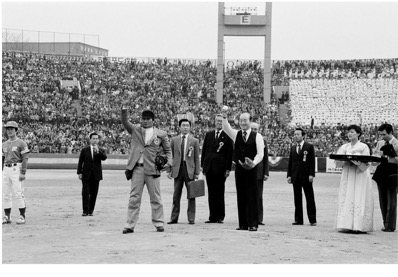
Korea was different. Professional baseball launched in 1982 with six teams. It was not long after the military government of Doo-hwan Chun had taken power, and political tensions had continued since the 1980 Gwangju Democratization Movement. The government sought to build a new national image through economic growth, international events, and popular culture. This period is often associated with the ‘3S policy’—Sports, Screen, Sex. The government actively supported the introduction and establishment of professional baseball, professional soccer, and professional ssireum (Korean wrestling), using sports both as popular recreation and as a way to project the nation’s image.
President Doo-hwan Chun’s ceremonial first pitch at the 1982 professional baseball opener captured this relationship. It meant something different from an American president throwing out the first pitch at a Major League Baseball opening game today. In Korea at the time, professional baseball was a new project driven by the state, and the president’s first pitch symbolized how important the league was to the government.
Professional baseball quickly became popular nationwide. As television spread, baseball became a favorite weekend program for families to watch together, and clubs came to represent their regions.
The 1982 Baseball World Cup in Seoul was especially important in making Korean baseball a symbol of national pride. South Korea defeated Japan in the final to win the championship, proving that it could compete on an international baseball stage long dominated by the United States and Japan. Baseball later appeared as a demonstration sport at the 1988 Seoul Olympics. International tournaments became a stage for showing Korean baseball’s standing in the world, and players came to be expected not only to perform well but also to fulfill a public role as representatives of their country.
This is the first difference between the United States and Korea.
Major League players have generally been seen as professionals under contract to their clubs. Korean professional players, on the other hand, were expected to act almost like public figures from the league’s earliest days. As professional baseball grew in popularity and the national team succeeded internationally, individual performances became linked to national achievement. Expectations rose—not only for how players performed, but also for what they said and how they behaved.
How Did the National Team, Military Service, and Corporate Clubs Come to Demand Players’ ‘Moral Character’ Too?
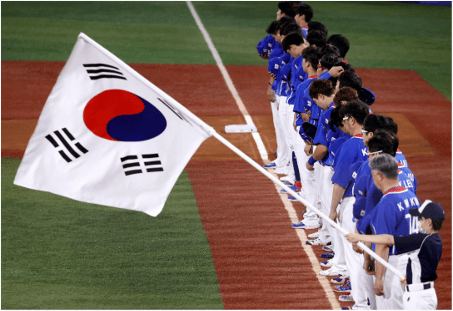
In Korea, the national team was not only a collection of the best players. It was also the face of South Korea.
This may seem unfamiliar to American fans, but in Korean sports, international tournaments have carried as much significance as professional leagues. From the 1980s onward, the Olympics and Asian Games were seen as stages for displaying the nation’s progress and international standing. Baseball grew within that larger story.
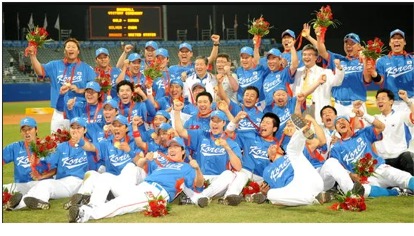
When South Korea’s baseball team went undefeated to win the gold medal at the 2008 Beijing Olympics, the players were celebrated as national heroes. Many people remember that championship less as ‘a KBO success’ than as ‘a victory for South Korea.’
Against this backdrop, selecting the national team was never simply a matter of judging talent. In Korea, alongside ‘Is he the best player?’ came another question: ‘Does he deserve to represent South Korea?’
The debate surrounding Woo-jin An can be understood in this light. Supporters say he has already served his punishment and should now be judged by his ability. Opponents argue that the national-team uniform symbolizes South Korea itself and therefore calls for a higher standard. At the heart of the dispute is not so much the school-violence incident itself as the question of who is ‘worthy of representing’ the country.
Military service makes national-team selection even more sensitive. In South Korea, adult men are required to serve in the military, while Olympic medalists and Asian Games gold medalists may qualify for special military-service arrangements[A1] . In South Korea, adult men are required to serve about 18 months in the military, but Olympic medalists and Asian Games gold medalists are effectively exempted: after just four weeks of basic training, they can continue their careers instead of leaving the game. Selection can shape not only a player’s chance to compete internationally but also the course of his career. Fans therefore scrutinize even more closely who deserves that opportunity.
The culture of corporate-owned clubs is another important part of the story. In Major League Baseball, a city gives a team its identity. In Korea, the parent company’s name appears in the club’s name: the Samsung Lions, LG Twins, Hanwha Eagles, and KIA Tigers. A player’s public controversy can affect not just the club but the corporate brand behind it. Clubs therefore often impose their own disciplinary measures, and companies place considerable weight on players’ social responsibility as well.
A Korean professional baseball player, then, is an athlete, a potential national-team member, and a representative of a corporate brand and a local community—all at once. In this environment, a culture took root that asks more social responsibility of players than of ordinary working professionals.
Today’s moral standards in Korean baseball are therefore less a reflection of any fixed national character than the accumulated result of the national-team system, military service, corporate-owned clubs, and the media environment.
What Kind of ‘Public Figure’ Does Korean Baseball Want Now?
As we have seen, Korean baseball’s high moral expectations of players took shape over time through the combined influence of the national team, military service, corporate-owned clubs, and the media.
But should those same standards still apply to professional baseball today? Actions that directly harm others, crimes, match-fixing, drunk driving, should be judged strictly. As long as professional sports depend on public trust, there is little difference between the United States and Korea on this point.
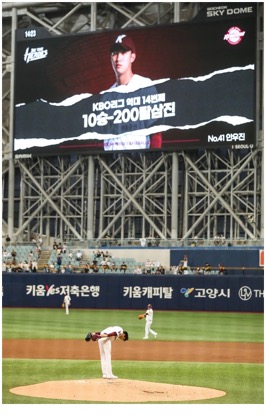
Whether lawful romantic relationships, marriage, divorce, political opinions, mistakes made long ago, and social-media activity should all be subjects of public judgment is a different matter. In Korea, debate continues over how far reporting on players’ private lives should go, and for how long mistakes made in adolescence should count against national-team selection.
These questions are not unique to Korea. The United States, too, has continued to debate the boundary between athletic performance and social responsibility, as seen in disputes over Pete Rose’s Hall of Fame eligibility and Trevor Bauer’s return to baseball.
More than forty years after its founding, Korean professional baseball has grown into an independent professional sports industry. Perhaps the standards by which players are judged also need to be reconsidered for the times. Social responsibility still matters for athletes. But how far that responsibility extends, and which actions should be judged separately from performance, cannot be decided by history alone.
The next forty years of Korean baseball may well be a process of drawing a new line between public responsibility and individual rights. And that question reaches beyond Korean baseball. How far should professional athletes be treated as public figures? It is a question every professional sport is grappling with today.
[A1]In South Korea, adult men are required to serve about 18 months in the military, but Olympic medalists and Asian Games gold medalists are effectively exempted: after just four weeks of basic training, they can continue their careers instead of leaving the game.


Leave a Reply