
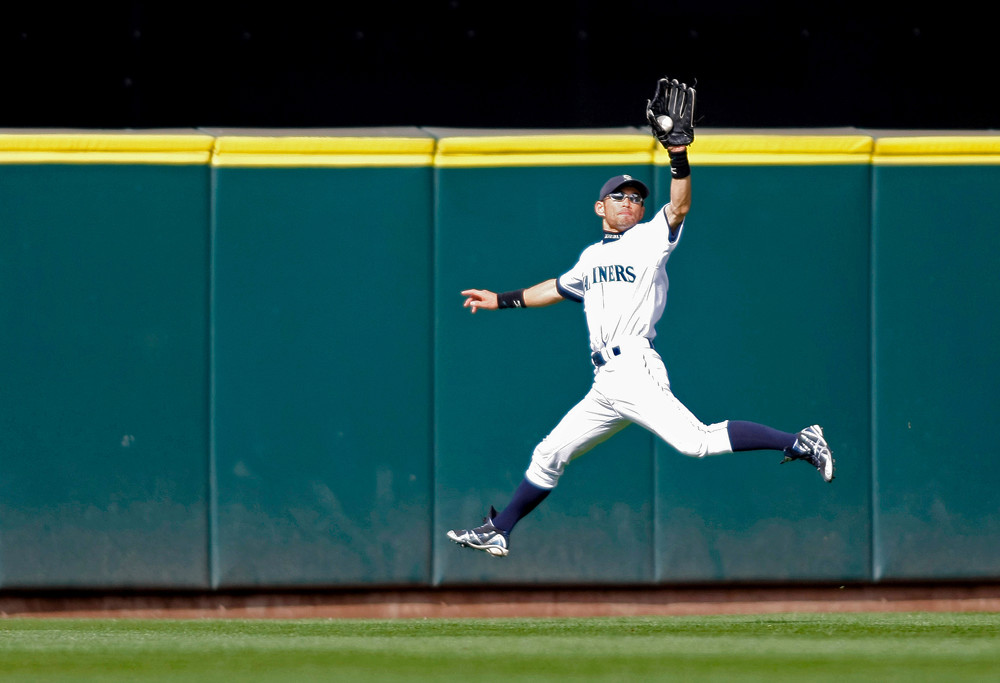
by Thomas Love Seagull
A recent poll for a TV special saw more than 50,000 people in Japan vote for their favorite retired baseball players. 20 players emerged from a pool of 9,000. Yes, they could only vote for players who are no longer active, so you won’t see Shohei Ohtani or other current stars on this list. Which is probably smart because I’m sure Ohtani would win by default. There are, however, players who were beloved but not necessarily brilliant, and foreign stars who found success after coming to NPB. Unsurprisingly, the list leans heavily towards the past 30 years, with a few legends thrown in for good measure.
Over the next few weeks, I’ll be profiling each of these players. Some of these players I know only a little about, so this will be as much a journey for me as, hopefully, it will be for you. It’ll be a mix of history, stats, and whatever interesting stories I can dig up.
For now, have a look at the list below and see how the public ranked them. I’ve included the years they played in NPB in parentheses.
20. Alex Ramirez (2001-2013); 19. Yoshinobu Takahashi (1998-2015); 18. Warren Cromartie (1984-1990), 17. Takashi Toritani (2004-2021); 16. Suguru Egawa (1979-1987); 15. Katsuya Nomura (1954-1980); 14. Tatsunori Hara (1981-1995); 13. Kazuhiro Kiyohara (1985-2008); 12. Masayuki Kakefu (1974-1988); 11. Masumi Kuwata (1986-2006); 10. Atsuya Furuta (1990-2007); 9. Randy Bass (1983-1988); 8. Daisuke Matsuzaka (1999-2006, 2015-2016, 2018-2019, 2021); 7. Tsuyoshi Shinjo (1991-2000, 2004-2006); 6. Hiromitsu Ochiai (1979-1998); 5. Hideo Nomo (1990-1994); 4. Hideki Matsui (1993-2002); 3. Shigeo Nagashima (1958-1974); 2. Sadaharu Oh (1958-1980); 1. Ichiro Suzuki (1992-2000).
The greatest hit-maker in the history of professional baseball started as a fourth-round draft pick
Let’s start with the father. Nobuyuki bought his son a glove and played catch with him when the boy was three years old. From then on, he began teaching him baseball every day. The boy’s name was Ichiro.
Nobuyuki built something like a baseball cathedral out of their ordinary life. One of his first decisions: teach the boy to bat left-handed. Not because the boy was naturally left-handed (he wasn’t) but because left-handed hitters reach first base faster. That was the reasoning. Practical, precise, and long-term. The father of Ichiro Suzuki was already thinking about the extra step.
By the time the boy, then just Ichiro Suzuki, was in third grade, they were going to the local batting cages six days a week, sometimes seven. The machines weren’t fast enough for him. So they ordered a special spring for the pitching machine. A spring made just for this boy. The staff would swap it in when he arrived.
Nobuyuki would later say that those years were fun for both of them. Ichiro’s recollection was just a little different. “It might have been fun for him,” he said. “But for me, it bordered on hazing and I suffered a lot. But I couldn’t say no to him. He was doing his utmost to help me.” Gratitude and pain were inseparable from the beginning.
He grew up with the understanding that the game was not a hobby but a calling. When he was twelve years old, he wrote an essay about his future. “My dream when I grow up is to be a first-class professional baseball player. I have the confidence to do the necessary practice to reach that goal. I only had five or six hours per year to play with my friends. That’s how much I practiced. So I think I can become a pro.”
Not a wish. Not a hope. A statement of fact, written by a child who had already done the math.
His high school batting average in local tournament play exceeded .700. His coach called him an alien. More specifically, he called him the most famous alien: E.T. He meant it as the highest compliment.
Once he turned professional, it really did seem like he came from another planet.
When Ichiro arrived in the major leagues in 2001, he was twenty-seven years old and he had already won seven batting titles in Japan, a record that ties the great Isao Harimoto, NPB’s hit king, and has never been surpassed. Oh, and he did it seven years in a row. He had already had 210 hits in a season, breaking a record that had stood for 44 years. He had already been named MVP three consecutive years. He had already, with the Orix BlueWave, helped a broken city heal.
In January of 1995, the Great Hanshin Earthquake struck the Hanshin region and the city of Kobe. The city that had become Ichiro’s adopted home, the city he would later say made him who he was, the city that was his second hometown, was devastated. The BlueWave played that year under the rallying cry Ganbarou Kobe—Stay Strong, Kobe. Ichiro won the batting title, the RBI crown, the stolen base title, the on-base percentage title, and the hits title that season. All five offensive crowns. Part of what drove it was the sting of 1994: the team had failed to win the pennant, and he had arrived after the off-season determined to do more. That year he hit 25 home runs. The league leader hit 28. Three home runs separated Ichiro from six batting crowns in a single season, a feat that has never been accomplished in Japanese baseball history. He was the symbol of a city’s refusal to stay down.
“I cannot explain who I am as a player,” he said later, “without Kobe.”
The BlueWave won their first pennant and that autumn, the team played the Yakult Swallows in the Japan Series. They lost four games to one. Ichiro went 5-for-19 against Yakult’s relentless pitching. He said it was tough in a way that the regular season never was.
In 1996, he put it right. In August, he hit an otherworldly .475 for the month with a record 48 hits. The team trailed by four games in late July and ended August in first place, and it was Ichiro’s bat that had done most of the hauling. The pennant came down to the final days of September in Kobe. On the night of the clincher, Orix trailed late, then tied it, then pushed into extra innings. In the tenth, with a runner on first, Ichiro came up against a pitch that was clearly outside, high and away, and nowhere near the zone. He swung anyway. The ball found the left field line, the runner scored, the game ended. “The greatest joy of my 22 years on earth,” he said. “Beyond anything I’d ever felt before.”
A reporter asked about failing to win the Japan Series the year before. Ichiro stopped and corrected himself. He had not, he said, failed to win—he had not won. In Japanese, the distinction is between something beyond your control and something that was in your hands. He placed it entirely in his own hands.
The BlueWave went on to win the Japan Series, beating the Giants in five games. When the final out was recorded, Ichiro did not immediately run to join the celebration on the mound. He turned instead toward the right field stands and raised both arms toward the crowd.
“It feels incredibly good,” Ichiro said afterward, expressing his joy in his characteristic style. “Like a top-tier feeling.”*
*He actually used the term 特A or Special A, the highest rating for rice quality.
There was also this, from the 1996 All-Star Game at the Tokyo Dome, home of the Yomiuri Giants. The Pacific League led 7-3 in the ninth inning, two outs, and the game nearly over. Hideki Matsui, Yomiuri’s and the Central League’s young star, stepped toward the plate. And then Akira Ohgi walked out of the dugout and made a pitching change. The pitcher he called in from right field, trotting toward the mound to a roar from the crowd, was Ichiro. Katsuya Nomura, managing on the other side, was furious. He walked slowly out of his dugout, pulled Matsui back, and sent up his closer, Shingo Takatsu, in protest. The crowd booed. Takatsu grounded out to short. Game over. Afterward, Nomura called the move an affront to the dignity of the All-Star Game. Ohgi said he wanted fans to see what Ichiro could do on the mound. Ichiro, asked how he felt about the whole thing, said: “I’m not a pitcher by profession. I feel various things, both good and bad.”
It was either, depending on your point of view, a wonderful piece of entertainment or a desecration of serious competition.
That winter, in the Japan All-Star series against major league players, Ichiro appeared in one game, got two hits off major leaguers including Hideo Nomo, stole a base that Ivan Rodriguez (the best-throwing catcher in the league) could not prevent, and then missed several games after a chair collapsed beneath him in the dugout and a spray can pierced his backside. Really.
He returned for the final game. Batting third, he went 3-for-4, hitting the ball to three different parts of the field. Cal Ripken watched and said the Japanese players had developed freer, more individual swings than they’d had a decade earlier. “You could see that clearly watching Ichiro.”
What Ichiro saw while watching the major leaguers was different. He said later that 1996 was when he first seriously started thinking about America. “They had a lightness,” he said. “Like children enjoying themselves. Everyone around them had that atmosphere. I wanted to be part of that.”
By 1997, the standard to which he was held had become so extraordinary that failure itself was news. On June 25 that year, in the fourth inning of a game against the Nippon-Ham Fighters at Tokyo Dome, a left-handed pitcher named Tsuyoshi Shimoyanagi struck him out. It was his first strikeout in 216 consecutive plate appearances, a Japanese record he had just set the day before and extended by seven more before it ended. The following morning, all major sports newspapers ran the same front-page headline: Ichiro Finally Strikes Out.
Shimoyanagi, for his part, earned the nickname “Ichiro Killer.”
That August, his batting average dipped to .296 for the month. This was treated as a crisis. A slump. He was asked about it repeatedly. Finally he said: “Give me a break. I’m not playing for numbers. It’s not like I should just rack up hits in meaningless situations to pad my average.” The man who would later say he valued hits over batting average was making a subtler point that even the hits had to mean something. That accumulation without purpose was just static on television.
He finished the season hitting .345, his fourth consecutive batting title. The next season, in 1998, he hit .358 to capture his fifth batting title in a row.
The most unbelievable part? He played in every single game over those five seasons.
But before all of that, before the five batting crowns in 1995, before the three consecutive MVPs, before all the record-breaking seasons, there was the question of what to call him. In the fall of 1993, working with coach Kenichiro Kawamura, he had built a new swing. The pendulum swing, they called it—the right leg lifting and swaying gently before the stride, unhurried, rhythmic, unlike anything anyone in Japanese baseball had taught or seen.
The previous coaching staff had spent two years trying to get him to abandon it. The new manager, Akira Ohgi, took one look and decided the only correct response was to build a lineup around it.
Ohgi also decided the young man needed a new name. The idea had originated with his hitting coach, Hiromasa Arai: change the registered name from Ichiro Suzuki to simply Ichiro. No family name, just the given name, standing alone, because there were too many Suzukis in the league as it was. At the same time, a teammate named Kazuhiro Satoh was being given the nickname Punch. Ichiro, when first told about his own new name, assumed it was a joke. Then on March 26, in a spring training game against Chunichi, he hit a grand slam. Ohgi leaned over with a grin: “Well, I guess we really have to do it now.” Ichiro understood then that it was serious. “When I first heard it,” he said, “I thought, oh no. It’s fine now, but being called Ichiro past 30 would be embarrassing.”
He’s in his 50s now and is still called Ichiro*.
*Punch is still known as such but sadly the nickname didn’t quite have the same impact on his playing ability. He retired after that season at the age of 30.
Ohgi was right to push for the change. In that 1994 season, Ichiro hit .385 and won the batting title. He became the first player in the history of Japanese professional baseball to collect 200 hits in a single season. By midsummer, opposing managers were so desperate they tried shifting the entire infield to the right side against him and Ichiro responded by bouncing a single over the pitcher’s head. He was named the league’s Most Valuable Player, the youngest position player ever to win that award in NPB history. He was twenty years and eleven months old. The legend had a name now, and the name fit. He said later that a letter addressed simply to “Ichiro, Japan” would reach him. That was how famous he had become.
Many years later, at his retirement press conference, he said something about that season that surprised people. His first two years, the years of going up and down between the first and second teams, never quite sticking at the top, had been fun. “But from 1994, when Manager Ohgi made me a regular, that’s where the fun ended,” he said. “Being suddenly elevated beyond your actual ability is painful.”
The greatest hitter of his generation, describing the moment his greatness was recognized, called it the end of joy. But what may have been painful for Ichiro was a great joy to anyone who saw him play.
Before that final season, there was 1999. Ichiro had been playing in consecutive games since Opening Day in 1994: 763 straight, the longest streak of his career, the first unbroken run of his career. On August 24, in the 103rd game of the season, a pitch from a Shimoyanagi struck him on the wrist. He left the game. He missed the next day. It was the first time since he had become Ichiro that his name had simply vanished from the scoreboard for a full game. He never returned that season. At 21 home runs, he had been on pace for a career-high (he hit 25 in ‘95). That, too, disappeared with the wrist.
In 2000, his last year with Orix before crossing the Pacific, Ichiro batted fourth in the lineup and hit everything in sight. On June 10, his average climbed to exactly .400. Ohgi, whose team had been badly beaten that day, could not help himself. “Honestly,” he said with a grin, “watching that was the only thing I was enjoying out there.” Ichiro, asked how he felt about it, said: “My feeling? Normal.”
An alien.
He kept it at .400 or above through 79 games, .398 through 97, and was at .392 through 102. Then in late August he tore a muscle in his right side and missed the rest of the season. He finished at .387, the highest single-season average in Pacific League history, in only 105 games.
Would he have made it back to .400? I think so. He was an alien.
None of this was known in America when he crossed over. The conventional wisdom—if you could call it that, since most Americans had no wisdom at all on the subject—was skepticism. He was small. He hit singles. Japan wasn’t really the major leagues. Pitchers could find success, sure, but could a Japanese hitter?
Then in just the eighth game of his rookie season stateside, Ichiro threw out a runner at third base from right field. Terrence Long tried to go from first to third on a slowly hit ground ball to right field. The ball arrived at third base well before Long did, before Long had even begun to slow down. The announcer Rick Rizzs screamed: A laser beam strike from Ichiro!
The alien had landed in America.
His new teammates with the Seattle Mariners tried to describe what he did with a bat. John Olerud, who had been in the major leagues since before Ichiro had played a professional game in Japan, counted five distinct swings. Five. The running one-hander. The leaner. The fistcuff. The chip shot. The power swing.
That first season Ichiro hit .350, led the American League in hitting, led the league in stolen bases, won the Gold Glove, won the Silver Slugger, won Rookie of the Year, and won the Most Valuable Player Award. He was the first player from Asia ever to win an MVP. He was the first player since Fred Lynn in 1975 to win MVP and Rookie of the Year in the same season. He set the record for hits by a rookie: 242.
He was 27 years old and he was just getting started in Major League Baseball.
The record he is most famous for came in 2004. George Sisler had set the major league mark for hits in a season in 1920 with 257. It had stood for 84 years, through the careers of Ted Williams and Stan Musial and Pete Rose and Tony Gwynn, through the entirety of the television era, through everything the game had thrown at it. Ichiro broke it on October 1, 2004, in the last week of the season, finishing with 262. The commissioner of baseball gave him a special award.
The New York Times wrote that season that it was more realistic to imagine Ichiro breaking Joe DiMaggio’s 56-game hitting streak than batting .400. Ichiro himself, when asked which was harder, chose the streak.
“Hits can be accumulated,” he once said. “That’s why I value them over batting average.”
His batting average could fluctuate. A hit was permanent. He knew because he flirted with .400 before he left Japan.
There was a philosophy behind everything he did, and it went all the way down. He used the same model of bat from the day he entered professional baseball, with an extremely thin barrel, 60.5 millimeters in diameter, demanding of the user a precision that most hitters could not sustain for an afternoon, let alone a career.
“I treat my bat,” he said, “not as a tool, but as part of my body.”
After an early game in his career with the BlueWave, he once threw his bat in frustration. Just tossed it, casually, the way young players do. He said afterward that he regretted it immediately, that the regret never fully went away, that the incident deepened his feeling for his equipment in ways he couldn’t fully articulate. From then on, he always set the bat down gently, no matter what happened at the plate.
His glove strings, at his insistence, were left partially untied. He wanted to feel the ball all the way to the tips of the leather. He wanted the glove to be an extension of his hand, not a mitt clamped to the end of his wrist. When his longtime gloveman Nobuyoshi Tsubota handed the work off to his apprentice Kosaku Kishimoto, Ichiro won the Gold Glove that year. In the interview afterward, he said: “If I hadn’t won the Gold Glove with Kishimoto’s glove, he probably would have blamed himself. I was determined not to let that happen.”
There is a reason that after Ichiro arrived in Seattle, the number of children in Japan who wanted to play right field increased dramatically. Right field had always been the position you gave the weakest outfielder in little league. Ichiro made it the place everyone wanted to be.
His range in right field was so extraordinary that his teammates called it Area 51: the restricted zone, the classified territory, where things happened that couldn’t be explained and shouldn’t be questioned. His arm, thanks to Rizzs, they called the laser beam and not because it was simply powerful, like Vladimir Guerrero’s bazooka, but because it was accurate. In a poll of 415 major league players in 2006, 48 percent named Ichiro as the outfielder with the best arm. Nearly half of all the players in baseball named the same player. Nearly half.
In 2003, in a survey of all 30 major league managers published in Baseball America, Ichiro was named best hitter, best bunter, best baserunner, fastest baserunner, best defensive outfielder, best outfield arm, and most exciting player. He was the best at everything.
He was drafted by Orix in 1991, in the fourth round, after eleven other teams passed on him. Part of the reason was Koshien. In the spring of that year, playing in the national high school tournament as his team’s cleanup hitter and ace pitcher, he went 0-for-5 in a first-round loss. His Koshien career totals: 1-for-9. For a player who would one day be the greatest hit-maker in the history of the game, it is nearly impossible to comprehend.
What happened, by the account of people close to the team, was this: the night before the game, Ichiro could not sleep. He started his warmup alone at 2 a.m., two full hours before his teammates were scheduled to wake up. By 4 a.m., when the rest of the team rose, he was already at peak condition. And then he stood in the batter’s box and his right shoulder kept flying open. He had wanted it too much. The responsibility had overwhelmed him. He had prepared for everything except his own nerves.
He had wanted to be selected by his hometown team, the Chunichi Dragons, the team he had grown up rooting for, the team with the hitters he most admired. They didn’t take him. A scout from the Hiroshima Carp who had watched that game said later: “With pitchers you can tell from a game. But with position players, you have to watch practice.” The man who did watch practice was a scout named Katsutoshi Miwada at Orix, who had tracked Ichiro through workouts and regional games and seen something the Koshien box score could not contain. He pushed hard for a fourth-round pick. He died years later. Ichiro, by the account of Miwada’s family, visited his grave every single year without exception.
When he was finally drafted, the news was covered in one line in the local sports paper. A single line, buried near the bottom of the page, for the kid who would become one of the great ballplayers in the world.
The 3,000th MLB hit came on August 7, 2016, in Denver, against the Rockies. On that night he was in the starting lineup for the first time in a week, batting sixth, and playing center field. He went 0-for-3. Then in the seventh inning, facing a left-hander on a 2-0 count, he hit a high fly ball to right field that bounced off the wall. He coasted into third. The 30th player in major league history to reach 3,000 hits. His teammates poured out of the dugout. The Rockies players applauded from their side. He took off his helmet to the standing crowd.
Reaching 3,000 in his 16th major league season tied Pete Rose for the fastest ever, from the age of debut. He had arrived in the major leagues at 27, older than most stars when they reach such milestones, and still he got there as fast as anyone.
He had 1,278 hits in NPB. Just two months prior to getting his 3,000th hit in America, he knocked a double for his 4,257th professional hit, passing Pete Rose for the most all-time.
When Ichiro passed Rose’s record, he was asked to reflect on what it all meant. He said: “Since I was a child, I have always achieved things people laughed at me for. When I was in elementary school, practicing baseball every day, the neighbors would say ‘does that kid think he’s going to become a professional?’ and laugh. It hurt. But I became a professional. In Japan I won the batting title, and when I said I wanted to win the batting title in America, people laughed at that too. But I achieved that twice. I have a history of painful moments of being laughed at, and I want to keep clearing those hurdles.”
Pride, hurt, and defiance, braided together. A whole career defined in just a few sentences.
He also said, more than once, that none of it would have started without Ohgi. In the autumn of 2000, in Kobe, Ichiro took his manager out for drinks and used the occasion to lobby him to support his posting to the major leagues. “Without that decision by Ohgi,” he said, “nothing would have begun.” The man who named him, believed in him, and finally let him go.
By the time he retired, the Emperor had mentioned him twice in his annual press conference. Tony Gwynn said Ichiro reminded the world of the value of the contact hitter. Wade Boggs sent his regards. Roberto Alomar said he would be waiting for him at Cooperstown.
Even Fidel Castro had chimed in and called him the best hitter in the world.
In January 2025, Ichiro was elected to both the Japanese Baseball Hall of Fame and the National Baseball Hall of Fame in Cooperstown. The same month, in his first year of eligibility for each. He was the first Japanese player, the first Asian-born player, ever inducted into Cooperstown.
In Japan, he appeared on 323 of 349 ballots, the sixth-highest vote share in the hall’s history.
Hall of Fame voting in Japan is stricter than it is in America. But in the hearts of every Japanese person, he’s a unanimous Hall of Famer. Ichiro proved that Japanese hitters belonged in the major leagues. Like Nomo, Ichiro helped change everything. Without Ichiro, there would be no Shohei Ohtani. I do not want to imagine baseball without Ohtani, and I do not want to imagine baseball without Ichiro.
In America, he received 393 votes out of a possible 394, tying Derek Jeter for the second-highest percentage ever recorded. One voter left him off. Somewhere, one person looked at everything Ichiro Suzuki had done across 28 professional seasons in two countries, looked at 4,367 hits and 10 Gold Gloves and a .322 career average and a single-season record that had stood since 1920, and decided: not quite. The other 393 disagreed.
Unbelievable.
And one final thing. Yes, this was a list of Japan’s favorite players. But Ichiro would have to rank at the top of America’s favorite players, too.
In right field at Safeco Field, for years and years, a woman named Amy Franz sat in the front row with a handmade scoreboard she called the Ichi-Meter. She counted every hit. She had started in 2004, the year of the single-season record. She followed him when he moved. When he was closing in on 3,000, she traveled to watch, flying city to city, spending down her savings, and when the money ran out she put up a fundraiser online and kept going. She was in Denver when the high fly ball left his bat and bounced off the right field wall and he coasted into third. She was there the night he got number 3,000.
Ichiro, somehow, in the middle of everything, the record-chasing and the Gold Gloves and the laser beams and the five different swings, knew her birthday. In 2014, when he was with the Yankees, he signed a ball for her. He wrote: Happy BD, Amy.
That’s the whole story of Ichiro, really. That’s all of it.
Thomas Love Seagull’s work can be found on his Substack Baseball in Japan


Leave a Reply