
by Thomas Love Seagull
Everyone knows the Black Sox. NPB had a scandal of its own that involved multiple players, multiple teams, and cost one young star everything.
Everybody knows about the Black Sox Scandal. Even casual fans know all about the 1919 White Sox, the fixed World Series, and Shoeless Joe Jackson. Heck, MLB just had another Field of Dreams game. Even after a hundred years, people are still pushing for Shoeless Joe to be put into the Hall of Fame. And he may well get his chance, as his permanent ban was lifted last year by Commissioner Rob Manfred.
What many don’t know is that Japanese baseball has its own famous scandal, and it even shares a word with its American counterpart: the Black Mist Scandal. It spanned multiple years, players from multiple teams, organized crime, auto-racing, and even an investigation from the Diet, Japan’s legislative body.
Let’s start on a July afternoon in 1969. The president of the Nishitetsu Lions, Kunihiro Naotoshi, was watching his team lose to the Nankai Hawks at Osaka stadium and noticed his pitcher didn’t seem to mind. We all know what a pitcher looks like when he’s getting hit hard, or when the calls don’t go his way. He winces or mutters to himself. Maybe throws up his hands in frustration or disbelief. But Lions pitcher Masayuki Nagayasu wasn’t doing any of those things. He just kept pitching and Kunihiro just chalked it up to one of those things that you notice but can’t really explain. Kunihiro wasn’t the only one—Carl Boles, the Lions’ imported slugger, had been telling a Hochi Shimbun reporter that there was a player on the team who was making mistakes on purpose. By October, the team had heard enough and launched its own investigation, and Nagayasu was asked, straight out, if he’d been fixing games.
Nagayasu didn’t say yes, and he also didn’t say no. He just sat, trembling slightly with sweat beading down his face, and the Lions took that as a confession. On October 8, the Yomiuri and Hochi papers ran the story: a Nishitetsu pitcher had been taking money from organized crime (the yakuza!) to lose games on purpose. Reports swarmed Nagayasu’s apartment before the sun even rose. He admitted that Kunihiro had confronted him back in August and that he’d denied it back then. He denied it once again to the reports outside his door and then left his apartment and didn’t return. It would be another six months before anyone got a real answer out of it.
Of course, it was against the rules to throw games. Heck, even if it wasn’t an official rule, anybody involved in playing sports knows that losing on purpose is an unthinkable act. But it had been an official rule in NPB since 1953 (remember that the league only started in 1950). There’s an article in the “Harmful Acts” section that says any player, coach, or official who lost a game on purpose, or who knew about someone losing a game on purpose and failed to report it, could be permanently banned from the sport by the Commissioner. League officials deliberated on what to do, as they worried that kicking him out of the sport would mean that Nagayasu couldn’t be compelled to talk anymore or answer more questions. But it didn’t matter because by the end of November, the league decided to ban him for life anyway—the first lifetime ban in NPB history for misconduct. Story over, right?
Not at all. It wouldn’t be much of a scandal if it only involved one player. In the same winter, a Giants pitching coach got tangled up in his brother-in-law’s business dispute when a middleman hired to pressure an executive into resigning turned out to have yakuza connections. It wasn’t game-fixing and it actually did not have anything to do with baseball at all. But it didn’t matter because baseball had a problem with organized crime. Newspapers borrowed the term kuro kiri—black mist—from a political corruption scandal from the mid-1960s, back when bribery was said to cover Japanese politics like a fog nobody could see through.
By the spring, the government had gotten involved. Roughly three hundred Diet members formed a caucus to take up baseball’s black mist on the legislative floor. Members from the Commisssoner’s office were called to testify in front of the committee. One lawmaker even floated a theory that Nagayasu, still missing, might be being held against his will. Police searched for him and concluded it probably wasn’t true since he was still making regular phone calls to his family. He was just in hiding, hoping for the story to blow away.
In the end, it was a freelance writer named Joji Otaki who tracked him down through his sister. Otaki had previously covered Nagayasu and had earned his trust. What Nagayasu wound up telling him was worse than anything that had come out by that point: he hadn’t acted alone, and Nishitetsu paid him to stay quiet about it all.
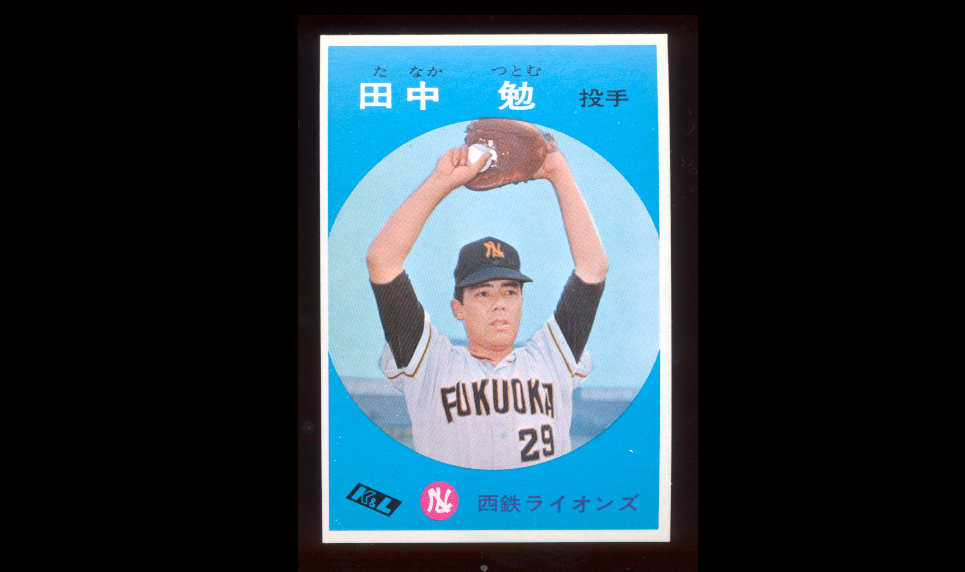
The story came out in bits and pieces throughout March and April, in a tabloid scoop here and a taped late-night interview there. Team owner Muneo Kusune, when reached by phone call while on business in Moscow, dismissed the whole thing as impossible. On April 6, a tabloid quoted Nagayasu using teammates’ initials, naming only one player outright: Tsutomu Tanaka, a Chunichi Dragons pitcher he said had recruited multiple Lions to join the scheme in the first place. Kyodo News identified the players by full name the next day, and by April 8 it was running in every sports paper in the country.
It all landed on April 10, at a press conference inside the Diet’s own office building, where Nagayasu finally agreed to say the whole thing himself, out loud, at once. The reporters in that room had spent months listening to his story arrive secondhand, always to whichever outlet had reached him first, and their patience was gone. Isn’t it disrespectful that you’ll talk to individual reporters and not to us? one of them asked. Nagayasu sat there with his head down, his face going a dark, blotchy red, his hands trembling. It took a sitting Diet member, seated right beside him, to finally talk him into finishing what he’d started: I understand not wanting to name your old teammates. Everyone here understands. Just say it.
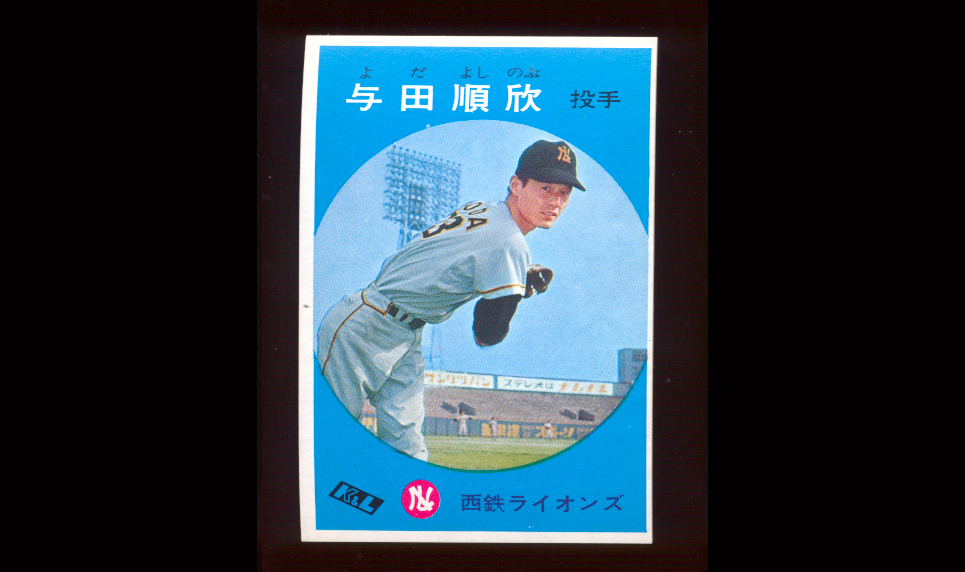
So he did. “On the pitching side was Masuda, Yoda, and myself. Also Funada, Motoi, Murakami, Ikenaga, and Tanaka-san. Tanaka-san is the one who told Ikenaga.” He said it all in a single breath, and then the color drained out of his face and his shoulders dropped since the weight of the world was no longer on him. A veteran reporter in the room said afterward it reminded him of watching a murder suspect finally confess.
1967 Kobaya-Leaf
Naturally, Nishitetsu denied it all. The six players who’d been named were all questioned and every single one of them denied involvement. The club cleared them all publicly. It took the another newspaper’s own digging to make the story impossible to keep denying. On April 28, Kusune finally admitted it but dressed the hush money paid to Nagayasu up as “rehabilitation money” for a man who’d come to him in tears. The next day, under questioning from prosecutors in Tokyo, Kusune finally admitted to the exact amount he’d given to Nagayasu.
The man who’d actually done the bribing had a name too: Hirotaka Fujinawa, a milk distributor with ties to organized crime and the person Nagayasu fingered as his contact throughout it all. Fujinawa denied it all until his own arrest on unrelated motorcyle race-fixing charges, at which point he confessed to bribing Lions players. He claimed he made ten attempts but only two were successful, and that he lost a whole lot of money for his efforts anyway.
With Tanaka’s name on the record, the story was now longer contained to one team. Kentaro Ogawa, Chunichi’s ace and the 1967 Sawamura Award winner—Japan’s Cy Young—got named in connection with the race-fixing. He was arrested in early May of 1970 at the same time as Tanaka. Over at the Toei Flyers, two more players were named in connection. One of them, Toshiaki Moriyasu, a 3x All-Star, admitted to accepting ¥500,000 and was banned for life that July. A reporter asked him afterward if it’d really been worth throwing away his entire career for money and he answered flatly, “I suppose so” before his composure quickly changed, saying he wanted to get down on his knees and apologize to every single fan. Smaller cases kept trickling out into 1971, too, at Kintetsu, Hanshin, Nankai, Taiyo, Lotte, and Yakult. More than half of the teams in NPB had players who were involved in either fixing games, having knowledge of fixing games, or having ties to organized crime.
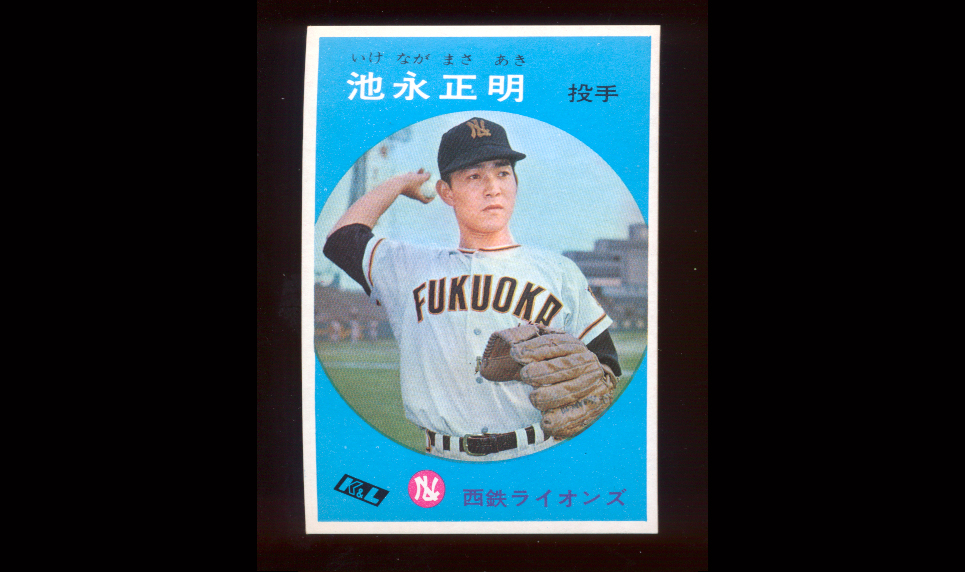
Back at Nishitetsu, the six players were questioned again for five hours on May 4, and every one of them denied it again. By May 9, the club finally admitted that it couldn’t call the six of them entirely clean anymore. Then the confessions finally came in: Masaaki Ikenaga admitted on May 10 that he’d taken ¥1 million from Tanaka. The others admitted to their own involvement over the following days, with some even clearing other teammates with their confessions.
On May 25, 1970, the league made its decision: Ikenaga along with fellow pitchers Yoshinobu Yoda and Akio Masuda were banned for life; catcher Kimiyasu Murakami and infielder Kazuhide Funada were suspended for the rest of the season; two more barred a full year from any baseball activity; and Mitsuo Motoi was given a warning because he’d refused the money, returned it, but failed to report it. Owner Kusune, whose own hush-money confession had made his position untenable, resigned from every post at the club that same day. Tanaka, the pitcher who’d started it all, was never formally banned but was blackballed by the league and never played again.
1967 Kobaya-Leaf
Of the six, Ikenaga was the one nobody in Fukuoka (the home of the Lions at the time) could believe. He’d been perhaps the best pitcher of his generation from the moment he debuted. He was Rookie of the Year in 1965 at 19 years old, had a league-leading 23 wins in 1967, and 99 total victories across his first five seasons. He was so good and so popular that he was named to the All-Star team in every one one of those five seasons. His win total had people doing the math on when he would reach 200 wins and then 300. He threw hard, but there was more to him than that. He used to say velocity accounted for maybe one or two parts out of ten of what made a pitcher good, the rest was reading a hitter’s stance and locating the ball just off the barrel of the bat. In 1970, before the ban, he was 4-3 with a 2.60 ERA in 9 games.
What happened, as best as anyone has managed to piece together, was something like this. Tanaka, who’d pitched for the Lions from 1961 through 1967, approached him and asked him to fix a game. Ikenaga said no but Tanaka kept pushing, claiming his own life was in danger if he couldn’t find someone to take the money. Ikenaga, unwilling or unable to humiliate his senior and former teammate, reluctantly took money. However, he never ended up pitching in the specific game he was asked to throw, and he was never criminally charged with anything. But the league’s own ruling cited three things: he’d kept the money rather than returning it; he hadn’t reported the solicitation; and, as supporting evidence, he’d been pulled early from two starts late in the 1969 season. Ikenaga, for the rest of his life, said the same thing: he never tried to lose a game.
Ikenaga was only 23 years old when the ban came down, with 103 wins and what everyone figured was a surefire Hall of Fame career ahead of him. Yoda and Masuda—who, by their own admission, were actually guilty of match-fixing—cried when the ruling was announced, telling reporters that punishing him the same as them was a loss the baseball world would never get back. Their cries fell on deaf ears as it didn’t change anything.
Well, I guess it changed some things. The Lions finished last in 1970, for the first time in franchise history, then again in 1971 and 1972. Attendance and popularity fell off a cliff and showed no signs of recovering. By the end of 1972, Nishitetsu sold the team and by the end of the decade, the team had relocated to Tokorozawa, Saitama to become the Seibu Lions everybody knows now.
Not everybody’s story had a sad ending. Murakami and Yoda were both traded after the 1971 season, to Lotte and Yakult, respectively; both won Japan Series titles with their new teams. There was even a real silver lining: a 1968 draft pick named Osamu Higashio, who’d lost enough confidence as a rookie to ask about becoming a position player, suddenly found himself pitching regularly once the scandal emptied the rotation around him. he called it, years later, the biggest break of his career, and became the ace of the Seibu teams that eventually made people forget what the franchise had been through. Higashio was elected to the Hall of Fame in 2010.
1967 Kobaya-Leaf
As for Ikenaga, he stayed in Fukuoka and opened a bar, trying to live an honest life. Fans who came in wrote messages of encouragement on the bathroom walls until there was no space left. But his plight was not forgotten by those who had played with him, either. Former teammates and coaches spent decades organizing campaigns to get him reinstated. Petitions to the league in 1997 and 2002 were both rejected, with the league arguing it had no authority to revert the original ruling. Uh, okay.
What seemed to finally move the needle was Ikenaga throwing three innings of no-hit ball in relief for an old-timers’ league in late 2001. It was the first time in thirty-one years anyone in Fukuoka had been able to see him pitch in public. A former teammate, managing the team, asked him so fans could see him take the mound one more time. Ikenaga said after that all he hoped was to eventually be forgiven.
In 2004, a new commissioner struck a different note, reasoning that even a man serving a life sentence usually gets a shot at parole after fifteen or twenty years. The following March, the league amended its own bylaws to let banned players petition for reinstatement after fifteen years, provided the commissioner judged they’d shown real remorse. Ikenaga applied. After thirty-five long years, on April 25, 2005, Nippon Professional Baseball let him back in.
Just a few weeks later, on May 11, Ikenaga threw out the ceremonial first pitch in Fukuoka for a game between the Hawks and Carp. He was 58 years old by then, and the newspaper couldn’t resist mentioning that his hair had gone completely white. Still, he managed to hurl the ball over the middle of the plate, showing off the pitching form that made him a star.
He died of cancer in 2022. Isao Harimoto, the man with more hits in NPB history than anyone, summed up Ikenaga best: black mist and all that came with it, the man still could have won 250 games.


Leave a Reply