
Forty-seven innings in one week and the origin of Japan’s most famous baseball chant
by Thomas Love Seagull
There are heroic performances in baseball. There are legendary ones. Then there are the ones that become something else entirely.
In the fall of 1958, a chant began to echo throughout Japanese baseball.
神様。仏様。稲尾様。
God. Buddha. Inao.
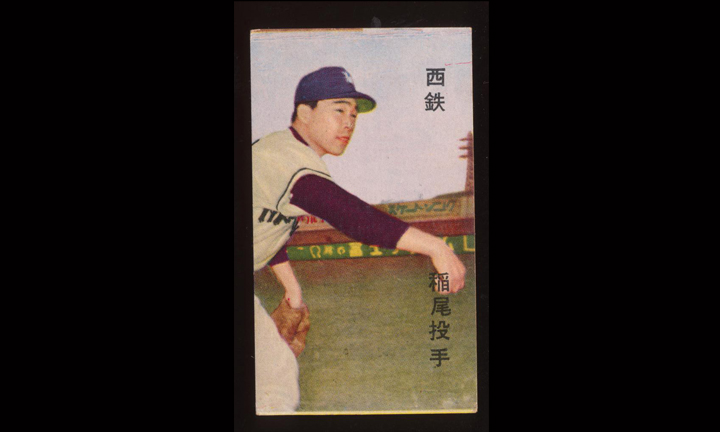
The phrase would become one of the most famous expressions in the history of Japanese baseball. It would be bestowed on Randy Bass in his Hanshin years. Yakult fans would use it for Munetaka Murakami when he was hitting home runs and setting records. At the time, it was the highest praise imaginable, reserved for a pitcher who seemed capable of delivering miracles. The words became immortalized after the Nishitetsu Lions completed one of the most astonishing comebacks in the history of the Japan Series. Down three games to none against their rival Yomiuri Giants, the Lions won four straight. Kazuhisa Inao pitched in 6 of the 7 games. He started five of them. He threw four complete games. And from Game 3 onward, he did not allow a run for twenty-six consecutive innings. When the series had ended, fans knew exactly what they had witnessed.
God.
Buddha.
Inao.
But the legend did not begin that October. By the end of the ‘58 pennant race, Inao had already become something close to a figure of worship. One newspaper described him as almost a religious presence for the Lions. When he took to the mound, fans sometimes pressed their hands together in mock prayer. Words like kami (God) and hotoke (Buddha) were already being shouted from the stands. His otherworldly performance in the Japan Series merely cemented what fans in northern Kyushu already knew.
He was the first professional baseball player spoken of in that way. Players such as Tetsuharu Kawakami, a first baseman who played for the Giants from 1938-58, was called the “god of batting” but that feels a little different than being directly called God.
Kazuhisa Inao was born in 1937 in Beppu, a coastal city in Oita Prefecture on the island of Kyushu famous for its hot springs, the youngest of seven children. His father was a fisherman, and as a boy Inao often helped him row small boats out to sea. Standing on the narrow planks of the boat, with the ocean beneath him, he had to learn balance and composure. Fishing also helped strengthen his lower body. Years later he said those mornings on the water had taught him something important. When you spend your childhood on a small boat where a misstep might drop you into the sea, a baseball mound must not feel very frightening in comparison.
He had almost signed with the Nankai Hawks based in Osaka but his father convinced him to sign with the Lions because they were based in Kyushu. When Inao arrived at the Lions’ spring camp out of high school in 1956, almost no one noticed him. Manager Osamu Mihara even said publicly that the club had signed him mainly as a batting-practice pitcher.
During camp he threw batting practice to the team’s powerful lineup, which featured future hall-of-famers Futoshi Nakanishi and Yasumitsu Toyoda, as well as Teruyuki Takakura, the dangerous leadoff hitter, and sluggers Hiroshi Oshita and Seiji Sekiguchi. Toyoda joked that the young pitcher was nothing more than a “manual pitching machine.”
Inao did not argue. Instead he treated batting practice like a real game.
When hitters were told to take a pitch outside the strike zone so they would not wear themselves out swinging, Inao tried to miss the corner by the smallest possible margin. Again and again he aimed for the edge of the plate. Slowly his control sharpened. Soon the hitters began to notice something unusual: the rookie’s inside pitch was not easy to hit. And he could put the ball exactly where he wanted to.
Nakanishi and Toyoda eventually told Mihara the kid deserved a real chance.
Even then he remained almost anonymous. In one exhibition game, the scoreboard spelled his name incorrectly. But he kept producing results and before long, he had forced his way into the starting rotation.
Inao finished his rookie season with 21 wins and a 1.06 ERA, winning Rookie of the Year and the league’s best ERA title.
At that time, he did not even throw a true breaking ball. He relied on his fastball that just simply moved.
When he aimed outside to right-handed batters, the ball drifted naturally into a slider. When he aimed inside, it turned the other direction, into a shuuto. What looked like a simple fastball often behaved like something a little more complicated. Whatever it was, it worked.
The Lions won the championship that year, defeating the Giants, and Inao appeared in all six games of the Japan Series, winning three of them. He had gone from batting practice arm to the ace of a championship team in the span of one season. He certainly wasn’t unknown anymore.
The next two seasons pushed him into another category entirely.
In 1957, he won 35 games, captured the pitching Triple Crown by leading the league in wins, strikeouts, and ERA, and reeled off twenty consecutive victories—a record that would last until Masahiro Tanaka broke it in 2013. He was named the league’s MVP and the Nishitetsu once again defeated Yomiuri in the Japan Series.
In 1958, he was somehow even better.
The Lions struggled early that year. On July 24, they trailed the Nankai Hawks by eleven games, a gap so large that the pennant seemed all but decided.
But after the All-Star break, the Lions caught fire. From August onwards, they went 36-10-2. Inao himself went 17-1 in the second half, beating Nankai four times himself.
By the end of the season he had pitched 373 innings, won 33 games, posted a 1.42 ERA, and struck out a league-record 334 batters. He would be named league MVP again, becoming the first player since the establishment of the two-league system in 1950 to win the MVP award for two consecutive years. The Lions completed a stunning comeback and overtook Nankai to win the pennant by a single game.
The Japan Series that year carried extra drama. For the third straight year, the Lions would face the Giants. The rivalry between Nishitetsu manager Osamu Mihara and Yomiuri manager Shigeru Mizuhara had become so intense that people compared it to the legendary samurai duel between Musashi Miyamoto and Kojiro Sasaki. Mihara had managed the Giants before Mizuhara took over.
The Giants also had a new hero by the name of Shigeo Nagashima. Nagashima had been a star at Rikkyo University in Tokyo. He turned down more money from Nankai to sign with Yomiuri. In his debut, he struck out four times in a row against the ace of Kokutetsu Swallows, Masaichi Kaneda*, but quickly settled in. The rookie third baseman electrified Japan all season, winning the home run and RBI titles and leading the Giants to the pennant. He also stole 37 bases and was named Rookie of the Year. The series felt like a clash between the sport’s newest star and its most unstoppable pitcher.
*Kaneda is the only pitcher in the history of Japanese baseball to win 400 games.
Game 1 opened at Korakuen Stadium in Tokyo. Inao had spent the previous few days in bed with a fever, but Mihara sent him to the mound anyway. In the first inning, Nagashima stepped to the plate and drove an outside slider off the right-field wall for a triple. Inao would later say it was a pitch that was not supposed to be hit. The hit shook him up and unsettled him. He gave up a home run to shortstop Tatsurou Hirooka in the third and would be finished after 4 innings of work. Nagashima later homered off Hidefumi Kawamura and the Giants won easily, 9-2.
Game 2 was probably worse. The Giants exploded for seven runs in the first inning and coasted to an easy victory. Inao did not appear in the game.
Game 3 moved to the Lions’ home of Heiwadai Stadium in Fukuoka. Inao pitched brilliantly that night, allowing only three hits over nine innings. His performance was all for nothing as the Lions could not score. A double by Hirooka drove in the only run of the game and the Giants won once again, 1-0.
Three games. Three losses. The series appeared to be all but over. The Giants were on the cusp of getting revenge for the last two series defeats.
Then the rain came. The baseball gods seemed to have other things in mind.
A steady rain postponed Game 4 for a day. The Giants were furious when the game was called early in the morning, especially when the skies later cleared. Mizuhara even telephoned Mihara to complain. But the delay gave Nishitetsu exactly what it needed: one day of rest for Kazuhisa Inao.
Game 4 began badly. The Giants jumped ahead 3-0 in the first two innings. The Lions’ bench grew quiet. Then something happened that seemed to be testing fate.
Behind the Nishitetsu dugout, the sounds of preparation drifted through the hallways. Officials had already begun preparing for the Giants’ victory celebration.
The Lions could hear them. Their anger boiled over. They were furious.
In the bottom of the second inning, Nishitetsu rallied to tie the game. Toyoda hit two home runs in the game, one to give the Lions the lead and another for good measure. Inao pitched a complete game despite allowing four runs. He threw 126 pitches and the Lions won 6-4.
Game 5 started off disastrously once again for the Lions. Starting pitcher Sadaki Nishimuru, who had pitched a perfect game over the summer, failed to record an out and the Giants scored three runs in the first inning. In the fourth inning, with Nishitetsu still trailing, Mihara summoned Inao from the bullpen. He began shutting the Giants down.
In the 7th, Nakanishi belted a two-run home run. In the 9th, Sekiguchi tied the game for the Lions and forced extra innings.
In the 10th, Inao came up to bat.
He swung and the ball soared toward the left field stands.
Inao had done it. He hit a walk-off home run.
As a pitcher.
The Lions had won again. Inao threw 67 pitches in his seven innings of relief, and won the game by himself. But he still wasn’t finished.
Game 6 returned to Tokyo three days later. It was a duel between Inao and the Giants ace, Motoshi Fujita. Fujita had already outdueled Inao in game 3 but a costly error in the first led to a two-run home run off the bat of Nakanishi. They would be the only runs of the game, but they would be enough.
At one point, Mihara signaled for an intentional walk to Nagashima. Inao shook his head. He wanted the matchup. A childhood on fishing boats had prepared him and steeled his nerves. He wasn’t going to back down from the challenge.
Nagashima lifted a foul pop near home plate. The inning was over.
Inao completed the shutout. He needed just 108 pitches to do so. The series was now unbelievably tied at three games apiece.
Mihara told him immediately after the game that he would be on the mound. He simply nodded. Inao, at this point, could not raise his shoulder the way he wanted and his grip strength was gone. But he thought to himself that as long as he could get ten hours of sleep that night, he would be fine.
Game 7 came the next day.
It would be Inao’s fifth consecutive game. Despite sleeping well until 11 in the morning, he was still exhausted. Warming up before the game, he could barely hold onto the ball. At one point, he even dropped the ball without realizing it.
Still, he kept pitching. He took the mound for the 2 o’clock start.
The Lions jumped ahead early on a three-run home run by Nakanishi. The Giants never recovered.
In the 9th with Inao still on the mound, Nagashima smashed a ball to center field and raced around the bases for an inside-the-park home run, sliding hard at the plate in frustration. But it wasn’t enough for Yomiuri. The miracle had already happened.
The Lions won 6-1. Inao pitched a complete game, using 110 pitches in the effort.
From three games down, Nishitetsu won four straight to capture its third consecutive Japan Series title. It was the first time a team overcame a 3-0 deficit to win the championship.
Inao appeared in six games, started five of them, completed four, and pitched forty-seven innings, including twenty-six scoreless in a row. He struck out thirty-two batters, and hit a game-winning home run. He had successfully figured out Nagashima and shut him down. He was named series MVP.
The next morning, the newspapers ran the only words that seemed to fit:
神様。仏様。稲尾様。
Mihara explained why he kept sending his ace to the mound. By the time the Lions had fallen behind three games to none, he said, he had already accepted that they would lose.
The only question was who should pitch. If they were going to lose, who could he put on the mound so that the players and fans would accept it?
There was only one answer:
Inao.
Of course, Mihara also had a habit of drawing his ace into games. After a complete game he might tell Inao to sit quietly on the bench. Then, during a tight moment, he would wander over and mutter that the bullpen pitcher was not quite ready yet. Before long Inao would drift toward the bullpen. The crowd would notice and begin to buzz.
Then Mihara would ask the question.
“Can you go?”
At that point, there was only one possible answer. Inao later laughed about it. He even thought to himself, “Thank you for using me. My salary will go up.”
In the 1958 season alone, Inao started 31 games and came in as a reliever 41 times. He pitched a total of 373 innings that year. Throughout his career, the Lions used him everywhere—starting games, relieving games, finishing games.
His greatness was not built on overwhelming speed. His fastball was not impossible to hit. What made him exceptional was command, movement, and imagination.
His signature pitch became the slider.
An opponent once told him, “Your slider flashes for a moment, and then disappears.”
But the slider was only part of the story.
Inao also possessed a shuuto that moved in the opposite direction. He spoke often about the slider so hitters would think it was his finishing pitch. When they focused on it, he surprised them with the shuuto inside.
Only one hitter, legendary catcher Katsuya Nomura, eventually saw through the trick.
Against another opponent, the Daimari Orions Kihachi Enomoto, Inao learned a forkball specifically to face him. Facing Enomoto, he said, felt less like a sport than a duel.
In 1961, Inao reached the peak of his powers. That season he pitched 404 innings and won 42 games, tying the Japanese professional baseball record set by Viktor Starffin* in 1939.
*Starffin was born in Russia and became the first professional pitcher in Japan to win 300 games. He mostly starred for the Giants in the Japanese Baseball League, the precursor to the NPB.
During that season, he began to experience something strange. When he stood on the mound, he said, it sometimes felt as if another version of himself hovered above him, offering advice whenever doubt appeared. At times he could even see his pitching motion like a slow-motion film in his mind.
Maybe he was a god after all.
Inao eventually reached a simple conclusion about pitching. At first he thought a pitcher’s job was to throw fast or throw strikes. Only later in his career did he realize something different. The purpose of pitching was simply to get batters out.
That philosophy shaped how he behaved on the field. When an inning ended and the opposing pitcher approached the mound, Inao always smoothed the dirt his spikes had torn up and placed the rosin bag neatly in its spot.
To him, being an ace meant more than statistics. An ace was the pitcher who could win when the team needed it most. An ace was someone who could be called on at any time to help the team win.
Inao’s durability earned him another nickname: Iron Arm Inao. His teammates had another name for him as well. Because of his broad build and gentle eyes, they called him Sai—the rhinoceros.
The nickname was fitting. He carried himself with a calm, almost sleepy presence, yet once the game began he seemed capable of carrying an enormous weight.
Over the course of his career he won 276 games, posted a 1.98 ERA, and strung together eight consecutive 20 win seasons.
When fans asked for his autograph he sometimes wrote a phrase beside his name:
“Iron Arm for life.”
But even iron arms eventually wear down. Years of relentless pitching caught up with him, and shoulder injuries eventually robbed him of his former power. He retired at the age of 32 and became Nishitetsu’s manager.
Years later, when Mihara was bedridden, he apologized to Inao during a visit:
“I’m sorry I rode you for four straight games. I shortened your pitching career.”
Inao’s response was simple:
“On that stage, in front of all those fans, I was just happy to get the ball. There’s nothing to apologize for.”
Reflecting on his career, Inao did not speak of those years with bitterness. A life with nothing but fair winds might not be a happy one, he said. It was through injury that he came to understand the pain of others and the kindness of people around him. After returning from an injury that caused him to miss most of his age-27 season, he won 42 more games over the final years of his career.
Those 42 victories meant as much to him as the 234 he had won before the injury.
The earlier wins came while he rode the momentum of his youth. The later ones had to be fought for after his body started to betray him.
And yet when people remember Kazuhisa Inao, they almost always return to that one October. The week when a pitcher seemed to appear everywhere—starting, relieving, closing games, hitting home runs, and carrying a team that refused to surrender. The week when baseball stopped feeling like baseball and began to feel like faith.
God. Buddha. Inao.
For a few years in Fukuoka, those three felt like the same thing.
Thomas Love Seagull’s work can be found on his Substack Baseball in Japan
 SABR Asian Baseball Research Committee Blog
Leave a comment